
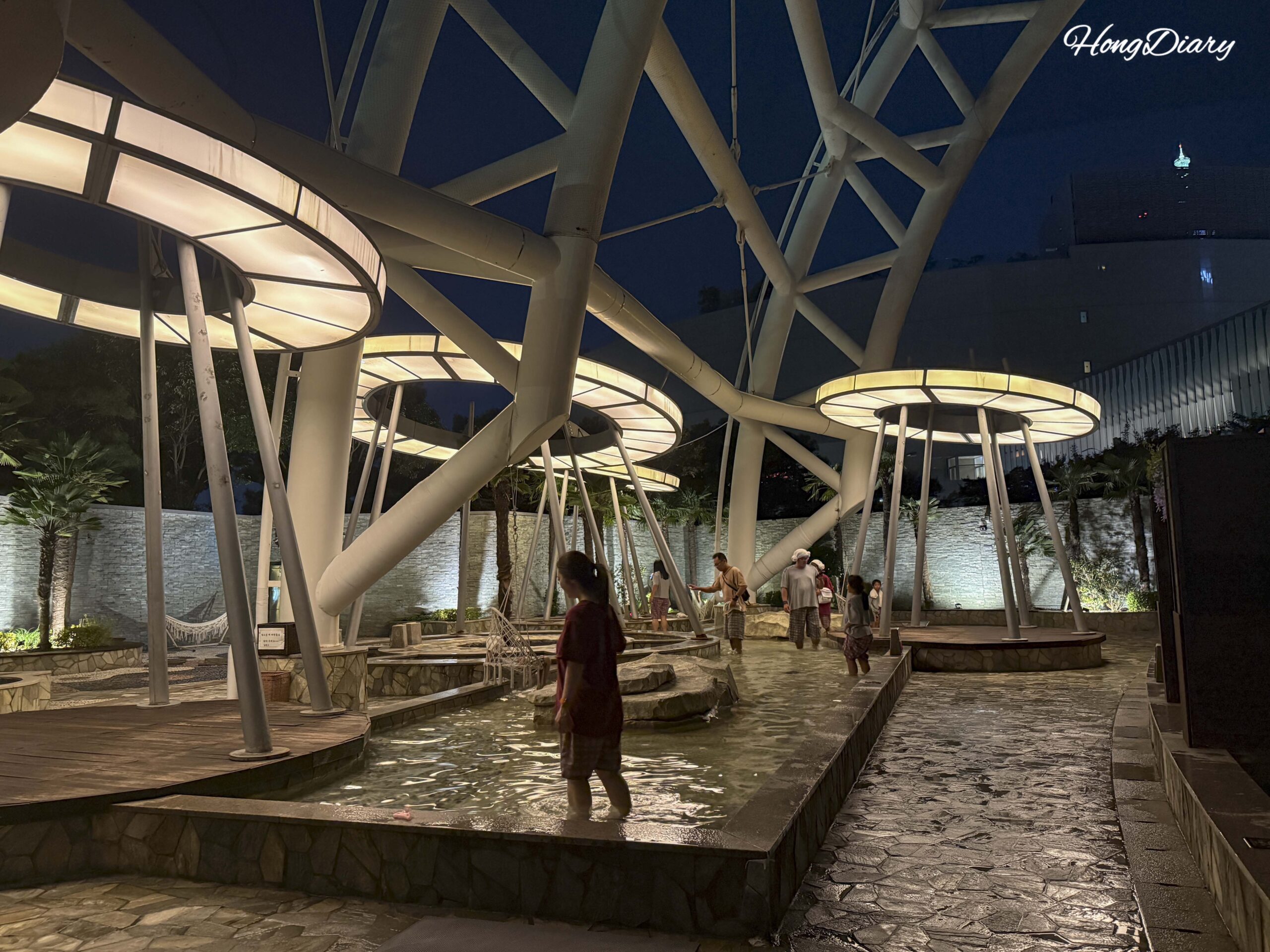
It was a late August evening — almost 8 PM — when my friend and I walked through the glass doors of Spa Land Busan, still carrying the salt-air smell of Haeundae on our skin. We had spent the whole day wandering around Busan together, and this was supposed to be our last stop before calling it a night. About three hours later, I walked out with pruney fingers, a full stomach, and the quiet thought that this should have been on the itinerary much sooner.
Spa Land — officially Spa Land Centum City — sits on the first floor of Shinsegae Centum City in Busan’s Haeundae-gu district. It is the largest jjimjilbang (a Korean-style combined sauna, bathhouse, and lounging complex) in the country, tucked inside what happens to be the largest department store on the planet. No preparation needed, no reservations required — just show up, and everything from spa clothes to toiletries is provided at the door.
Table of Contents
Spa Land Centum City: Essential Visitor Info, Hours, and Ticket Prices
| Detail | Info |
|---|---|
| Name | Spa Land Centum City |
| Address | 35 Centum nam-daero, Haeundae-gu, Busan (1F, Shinsegae Dept. Store Centum City) |
| Hours | 09:00 – 22:00 (last entry at 21:00) — Updated Sep 2026 |
| Time Limit | 4 hours per session |
| Overtime Fee | ₩5,000 (~$3 USD / ~€3 EUR) per extra hour |
| Admission — Adult | ₩26,000 (~$17 USD / ~€15 EUR) |
| Admission — Student | ₩21,000 (~$14 USD / ~€12 EUR) |
| After 7 PM Discount | ₩16,000 (~$11 USD / ~€9 EUR) |
| Getting There | Busan Metro Line 2, Centum City Station, Exit 12 (2-min walk) |
| Parking | 4 hours included (6 hours if you spend ₩10,000 / ~$7 USD / ~€6 EUR or more inside) |
| Age Restriction | Elementary school students and older (must be accompanied by a same-gender guardian) |
⚠️ Note: As of September 1, 2026, operating hours changed from 08:00–23:00 to 09:00–22:00 (last entry at 21:00). Many other guides still list the old hours. The after-7 PM night discount remains available.
Exchange rates used throughout this post: $1 USD ≈ ₩1,500 / €1 EUR ≈ ₩1,769. Rates are approximate and may fluctuate.
Why Busan Locals Talk About This Place
Busan’s relationship with hot springs goes back over a thousand years. The Dongnae district, about 20 minutes west of Centum City, has been a bathing destination since the Silla Dynasty — historical records from the Samguk Yusa (Memorabilia of the Three Kingdoms) mention officials traveling to Dongnae specifically to bathe in its natural hot springs. Heosimcheong, located inside the Nongshim Hotel in Dongnae, is Korea’s largest public bathhouse by floor area and remains a go-to for locals who prefer a traditional mokyoktang (public bath) experience.
Spa Land takes a different path. It draws two types of natural mineral water from 1,000 meters underground — sodium bicarbonate water and sodium chloride water — and wraps the whole thing in a sleek, multi-floor facility that feels closer to a themed wellness resort than a neighborhood bathhouse. If you ask Busan locals where to go for a sauna, the two names that come up most are Heosimcheong and this place. The difference is that Spa Land was built for visitors who want variety and comfort in one package, while Heosimcheong leans harder into the raw, no-frills tradition.
Getting Inside — Gate 4, Wristbands, and Zero Packing Stress
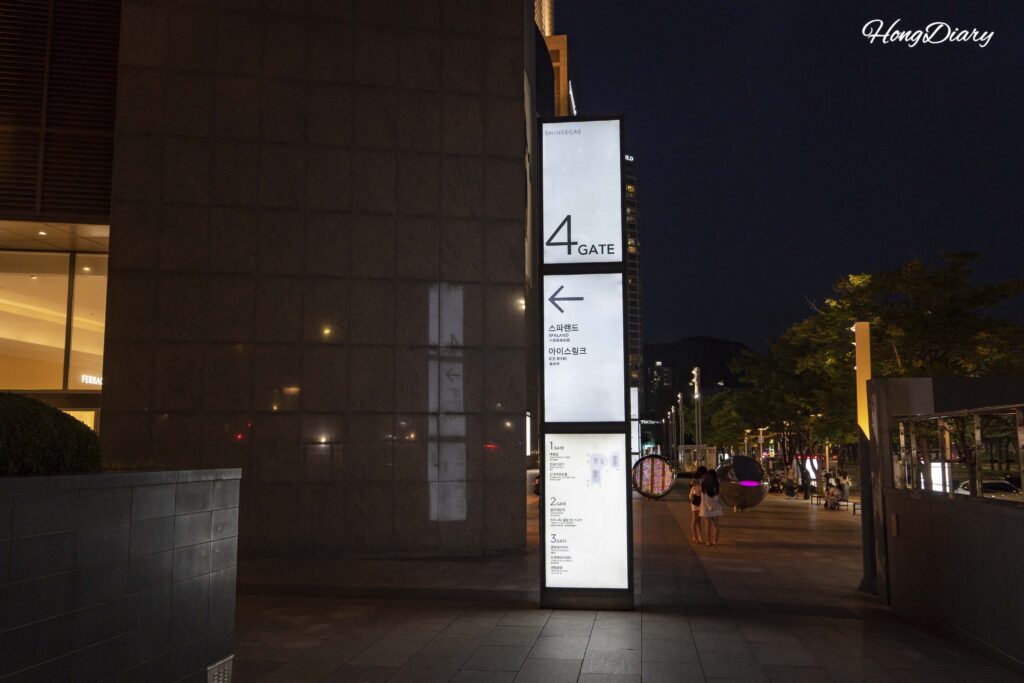
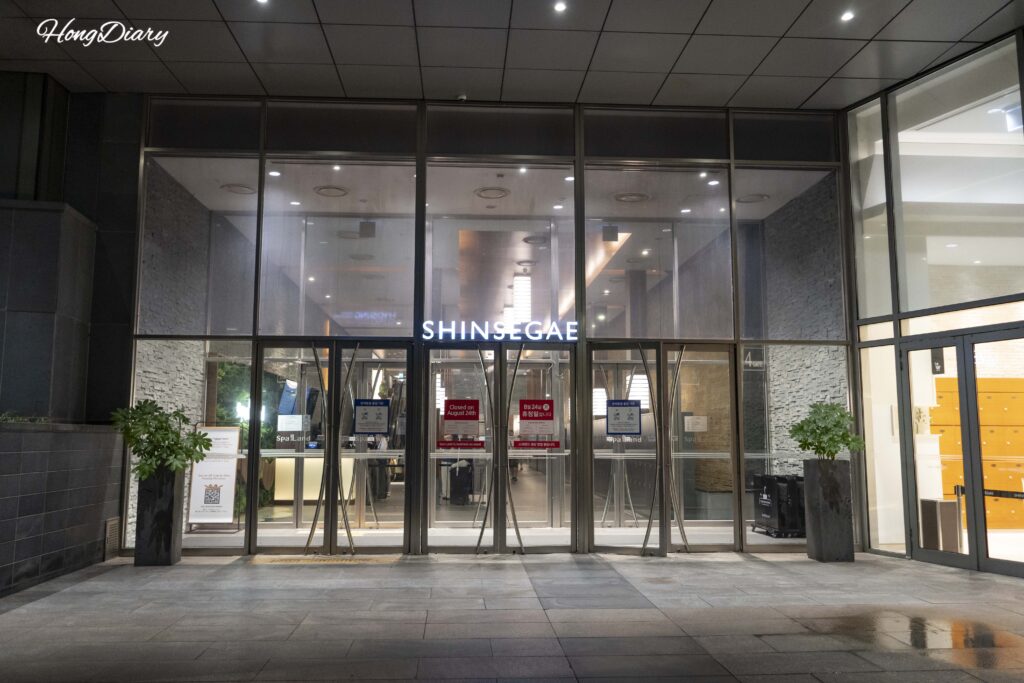
From Centum City Station Exit 12, you walk straight ahead and look for Gate 4 of the Shinsegae Department Store. There is a clearly marked entrance on the building’s exterior that leads directly into the spa lobby. If you happen to be shopping inside the department store already, you can also reach the entrance through the first floor — it sits between the Dior and Prada storefronts, which is a sentence I never expected to write about a bathhouse.
If you are traveling with luggage, there is a dedicated luggage storage area right next to the check-in counter. The fee is ₩3,000 (~$2 USD / ~€2 EUR) for the first 5 hours, with an additional ₩1,000 (~$1 USD / ~€1 EUR) per hour after that. One important detail: full-size suitcases are not allowed inside the spa’s internal lockers — those are only for bags, clothes, and smaller personal items. So if you have a carry-on or large backpack, store it at the entrance counter before heading in.
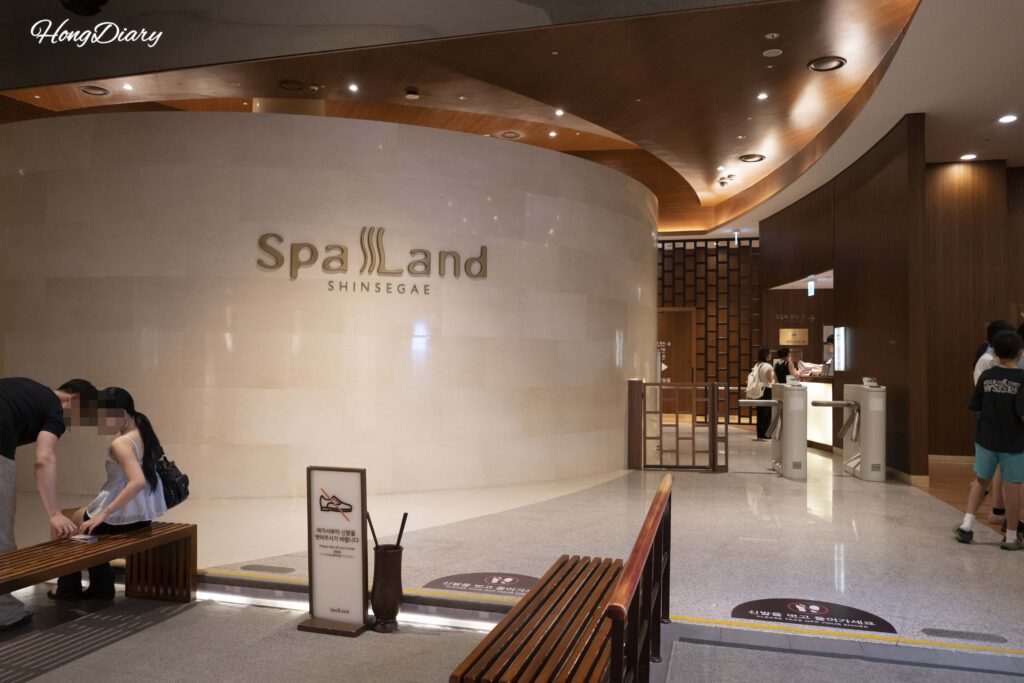
At the counter, you buy your ticket and receive a receipt with a locker number printed on it. Head to the shoe lockers, store your shoes in the numbered slot, and grab the wristband that is tucked inside. This wristband is your key for everything: it opens your clothing locker in the changing room, and it works as a payment method at every cafe, restaurant, and vending machine inside. You settle the total bill at the front desk on your way out, so there is no need to carry cash or cards around the facility.
After checking in, you pick up a set of spa clothes (a cotton T-shirt and shorts) and a towel, then head to the gender-separated changing room to get dressed. The bathing area — where you shower and use the hot spring pools — is inside the changing room zone and requires full nudity, which is totally normal at any Korean bathhouse. The communal sauna and lounge areas outside are co-ed, and everyone wears the provided spa clothes there.
One thing that caught me off guard: they provide almost everything. Shampoo, conditioner, body wash, toothpaste, and even a shower scrubbing cloth (called a ttaemiri towel) are all available at the washing stations. The only thing you might want to bring is a toothbrush, and even that can be purchased from a vending machine inside. For travelers coming straight from a day of sightseeing, this is a serious convenience — I literally walked in with nothing but my phone and wallet.
The 13 Themed Saunas — Sorted by What Your Body Can Handle
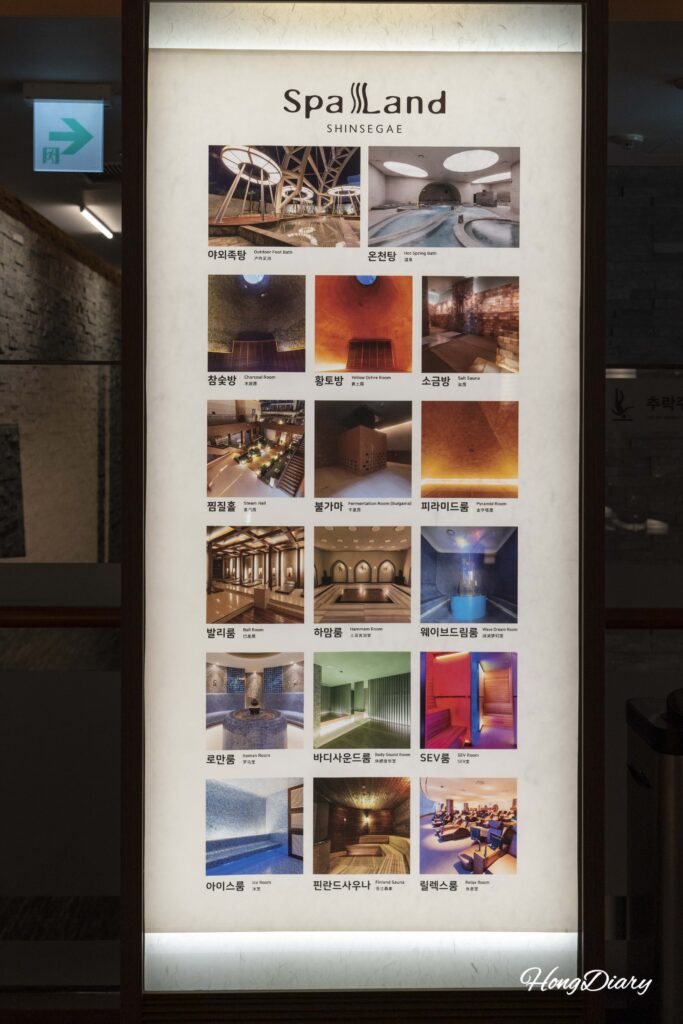
This is where Spa Land earns its reputation. The facility has 13 distinct sauna rooms spread across two floors, each with a different theme, material, and temperature range. I’ve sorted them below by heat level, because that turned out to be the most useful way to navigate them — especially if you’ve never been to a jjimjilbang before.
High Heat (for Experienced Sauna-Goers)
| Room | What It Is |
|---|---|
| Bulgama (Fire Kiln) | A dome-shaped kiln room built with yellow clay and heated stones — intense, dry heat |
| Finnish Sauna | A traditional Nordic sauna equipped with an authentic SAWO stove from Finland |
Medium Heat (the Sweet Spot for Most Visitors)
| Room | What It Is |
|---|---|
| Hwangtobang (Yellow Clay Room) | A dome-shaped room modeled after a traditional Korean hanjeungmak steam bath |
| Charcoal Room | Lined with oak charcoal sourced from Hoengseong, Gangwon Province |
| Salt Room | Walls and floor built entirely from Himalayan pink salt crystals |
| Roman Sauna | A steam room designed after ancient Roman public baths — humid and warm |
| Roman Room | A dry-heat version of the Roman Sauna — same aesthetic, less steam |
| Hamam Room | A Turkish-style marble sauna with gentle, radiant warmth |
| SEV Room | Uses natural mineral stones that emit far-infrared rays — a steady, moderate heat |
| Pyramid Room | A pyramid-shaped room with subtle heat — more curiosity-driven than intense |
Low Heat / Relaxation
| Room | What It Is |
|---|---|
| Wave Dream Room | A meditation space where rippling light reflects off water onto the ceiling |
| Body Sound Room | Equipped with a bone-conduction sound system — you feel the music through the floor |
| Bali Room | A Bali-themed lounge with low heat, designed purely for resting |
Cooling Down
| Room | What It Is |
|---|---|
| Ice Room | A chilled room to cool off between sauna rounds — the floor is still heated, so your feet stay comfortable |
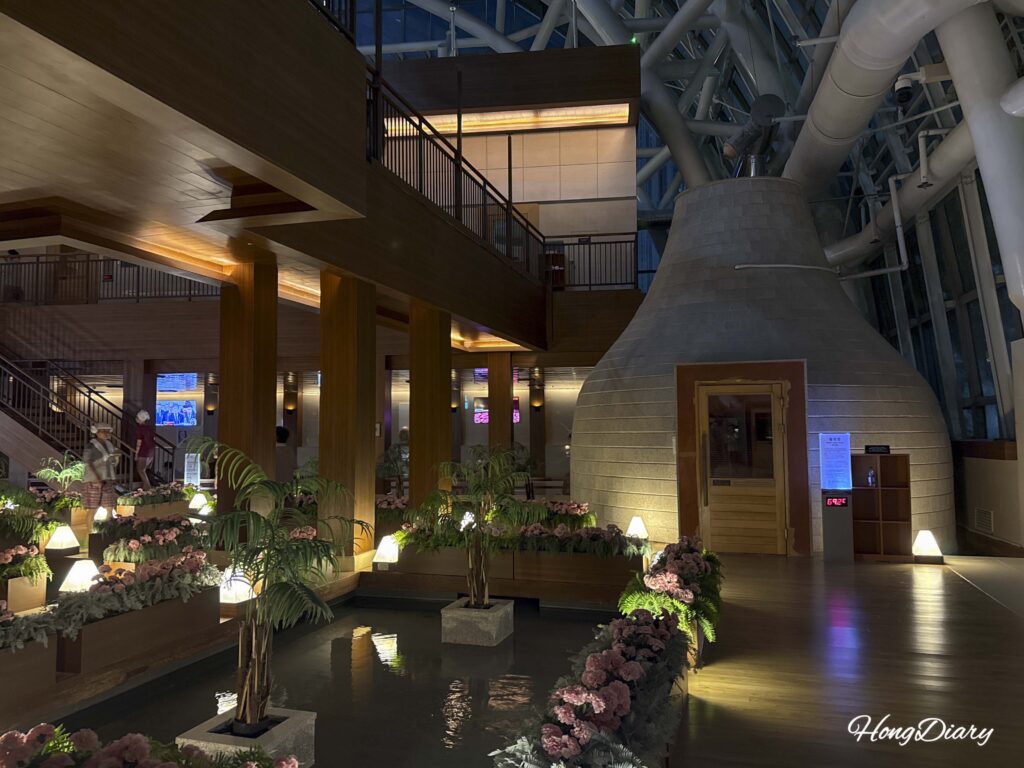
A practical note for first-timers: if you are not used to high-temperature saunas, I would suggest starting on the upper floor where the medium and low-heat rooms are located. The first-floor saunas — particularly the Bulgama and the Finnish Sauna — run above 60°C (140°F) and hit hard if you are not accustomed to that kind of dry heat. The rooms upstairs are milder, and even after just 10 minutes you will start sweating comfortably without feeling like you are being slow-roasted.
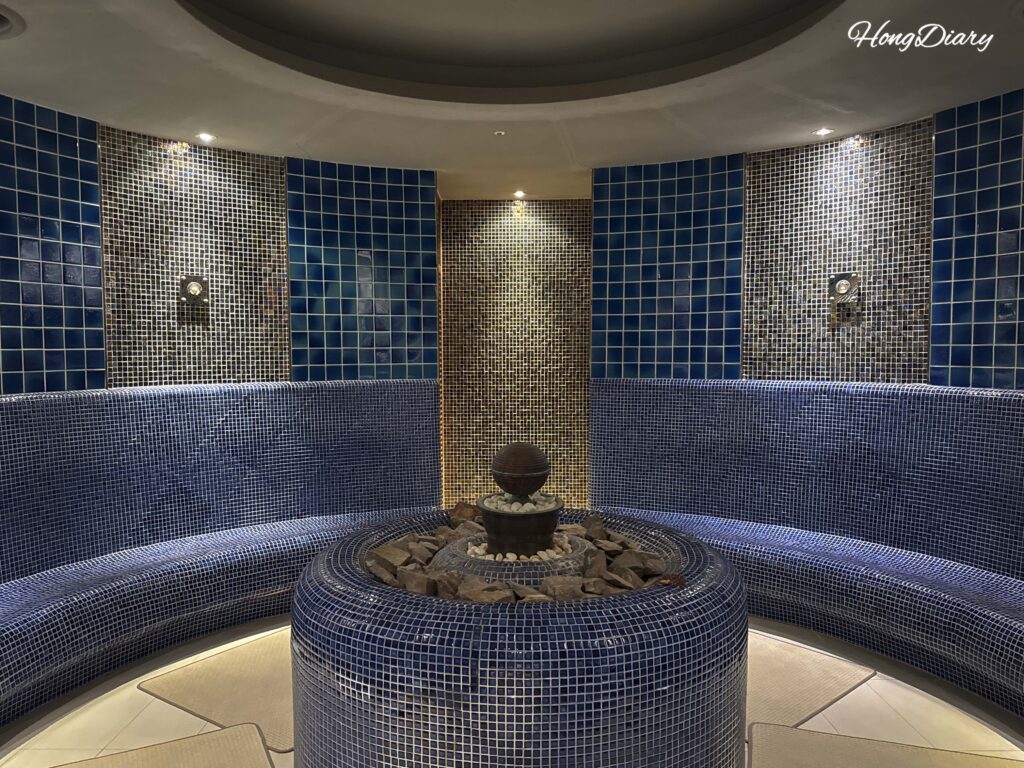
Fair warning: I didn’t take many photos inside the facility, mostly out of respect for other guests — most people are in spa clothes or using the rest areas, and pulling out a phone feels intrusive. I’ll do my best to describe the spaces in enough detail to give you a clear picture of what to expect.
The rooms themselves are well-maintained and clean, with temperature and humidity readings posted outside each door. Some rooms have mats to lie down on, others have stone platforms. Each one has its own character — the Salt Room felt noticeably different on my skin after just a few minutes, and the Wave Dream Room had an almost hypnotic quality with its water-light patterns dancing across the ceiling in near-silence. That said, my personal favorite ended up being outside the sauna zone entirely — but I will get to that in the next section.
The Outdoor Foot Bath and the Sheep Head Towel
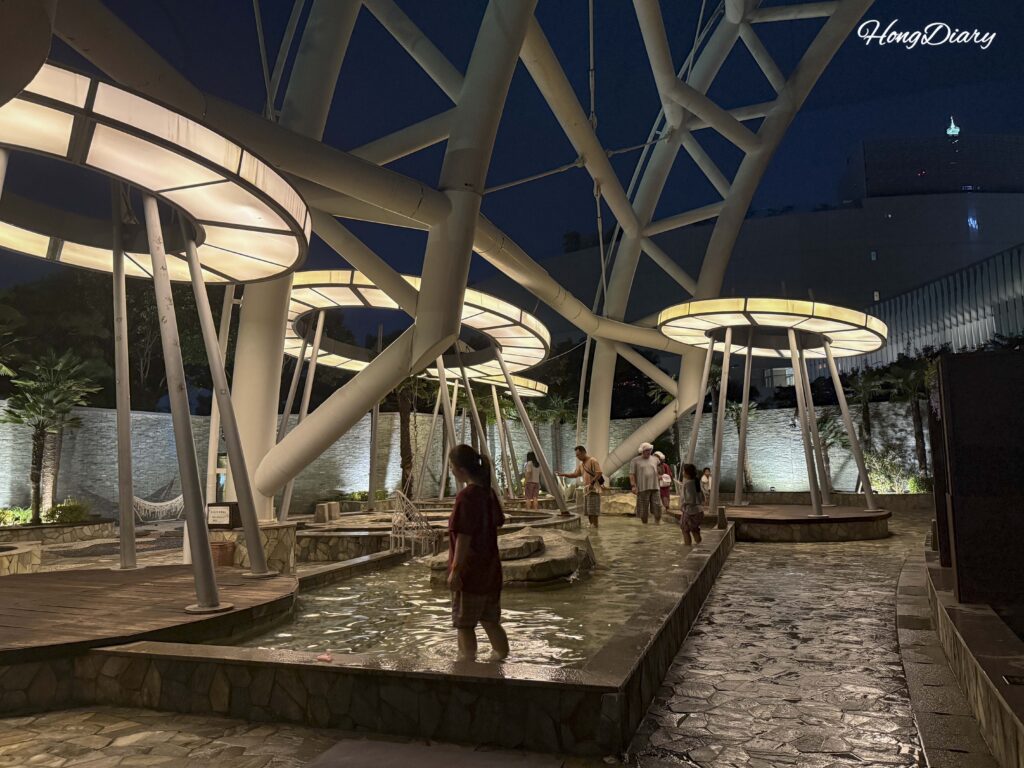
Of everything at Spa Land Busan, the outdoor foot bath (jokyo-ktang) caught me the most off-guard. It is located on the first floor, open to the sky, and surrounded by the high-rise skyline of Centum City. Sitting on the edge of a warm mineral pool with your feet soaking while cool night air hits your face — in the middle of a department store complex — felt genuinely surreal. If you visit in the evening like I did, the city lights and the contrast between the warm water and the cool air make it an unexpectedly atmospheric moment.
While I was there, I noticed something that might catch your eye too: quite a few Korean visitors walking around with what looks like a small towel sculpture on their heads. This is called a yangmeori — literally “sheep head” in Korean — and it is a small towel folded and twisted into a shape that resembles a sheep’s fluffy ears. The name comes from the resemblance to a sheep’s woolly head. It is one of those uniquely Korean spa culture moments: families make them for each other, parents fold them for their kids, and there is something genuinely endearing about watching a grandmother help a toddler adjust their towel horns.
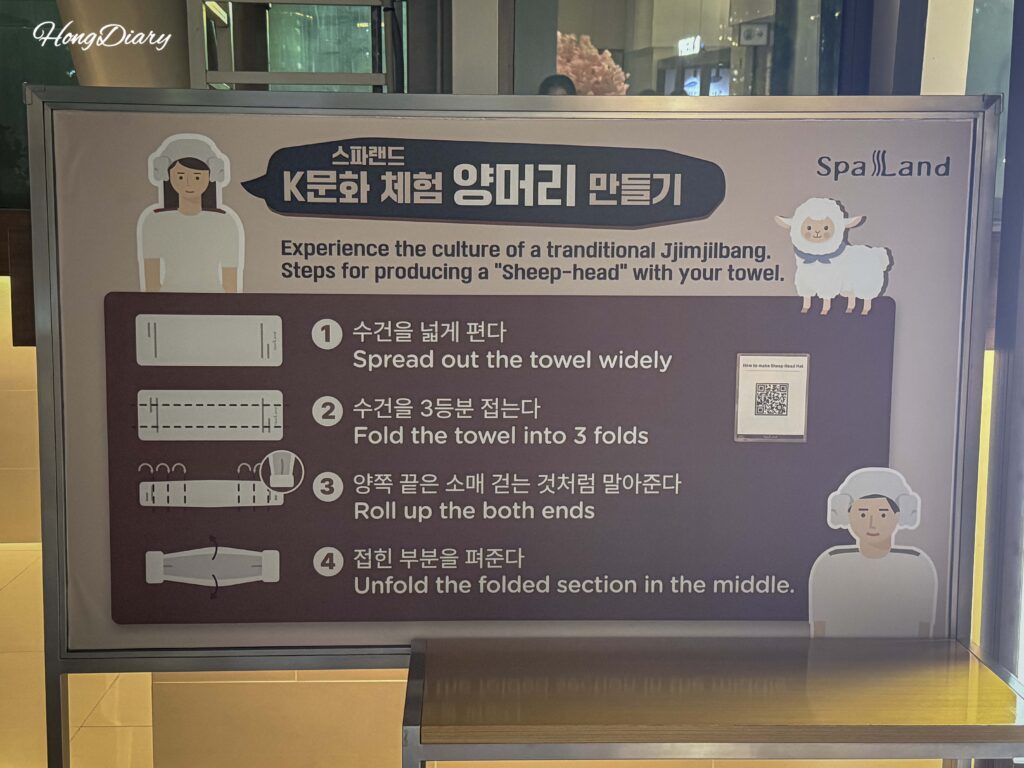
Spa Land actually has an instruction board near the sauna area that shows you how to fold one yourself — they label it as a “K-Culture Experience.” It takes about 30 seconds to learn, makes for a solid photo, and honestly just adds to the fun of the whole jjimjilbang atmosphere. The practical purpose is to keep sweat from dripping into your eyes, but the real purpose is that it is delightful.
Rest, Eat, Repeat: The 2F Entertainment Zone
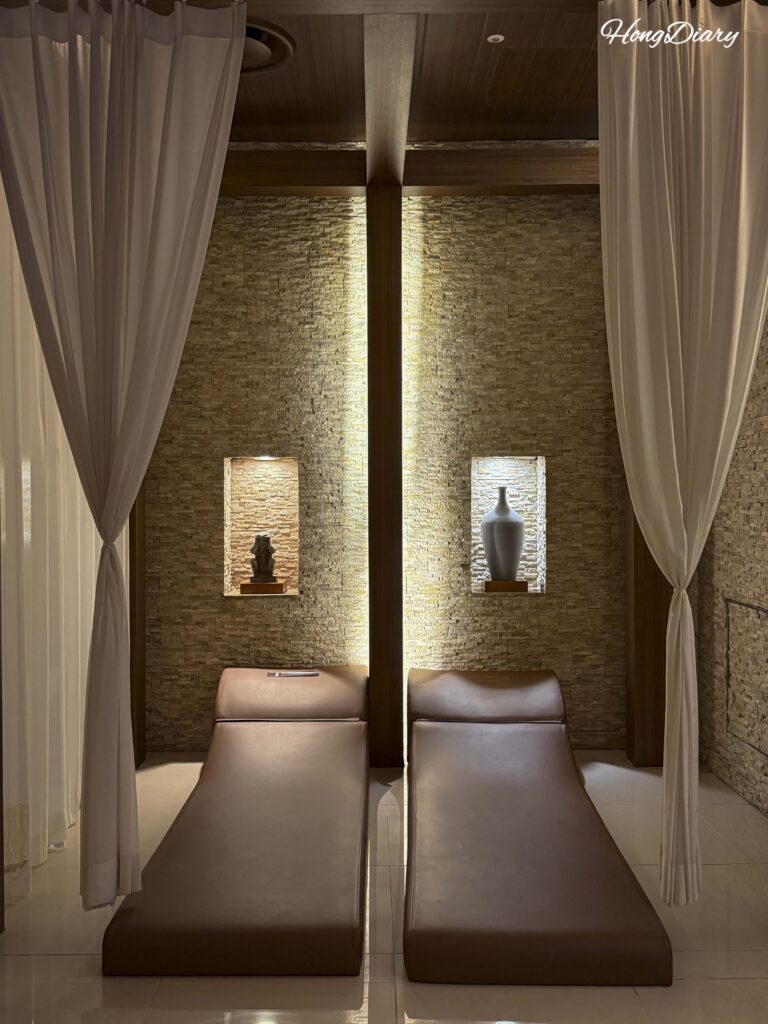
The second floor is where you go when you are done sweating and just want to exist horizontally for a while. The Relax Room has rows of padded recliners with individual curtains for privacy — pull the curtain shut, and you have a quiet, semi-private napping pod. On a busy evening, these spots fill up, but I had no trouble finding one around 9 PM on a weekday.
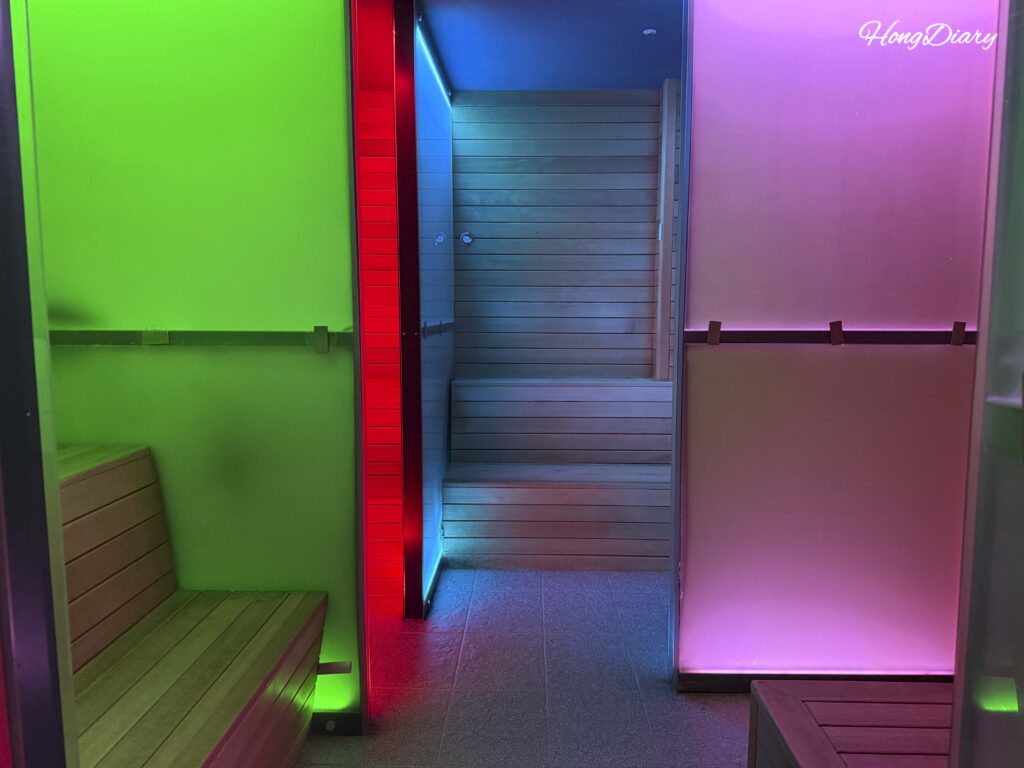
Beyond the Relax Room, the second floor also has a nail salon, an aesthetics center, and — most importantly for anyone whose stomach starts growling mid-soak — a full restaurant and a cafe.
What to Eat Inside Spa Land
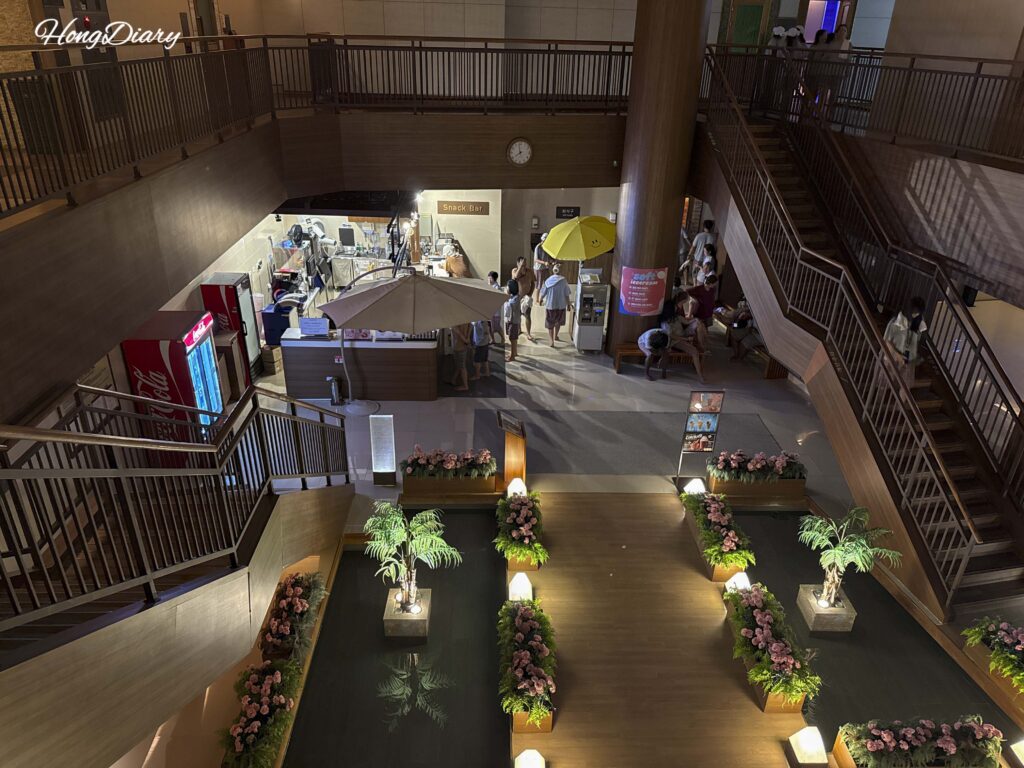
I was expecting the food to be overpriced, given that this is inside a luxury department store. It was not. Prices are roughly on par with what you would pay at a casual Korean restaurant outside, which was a welcome surprise.
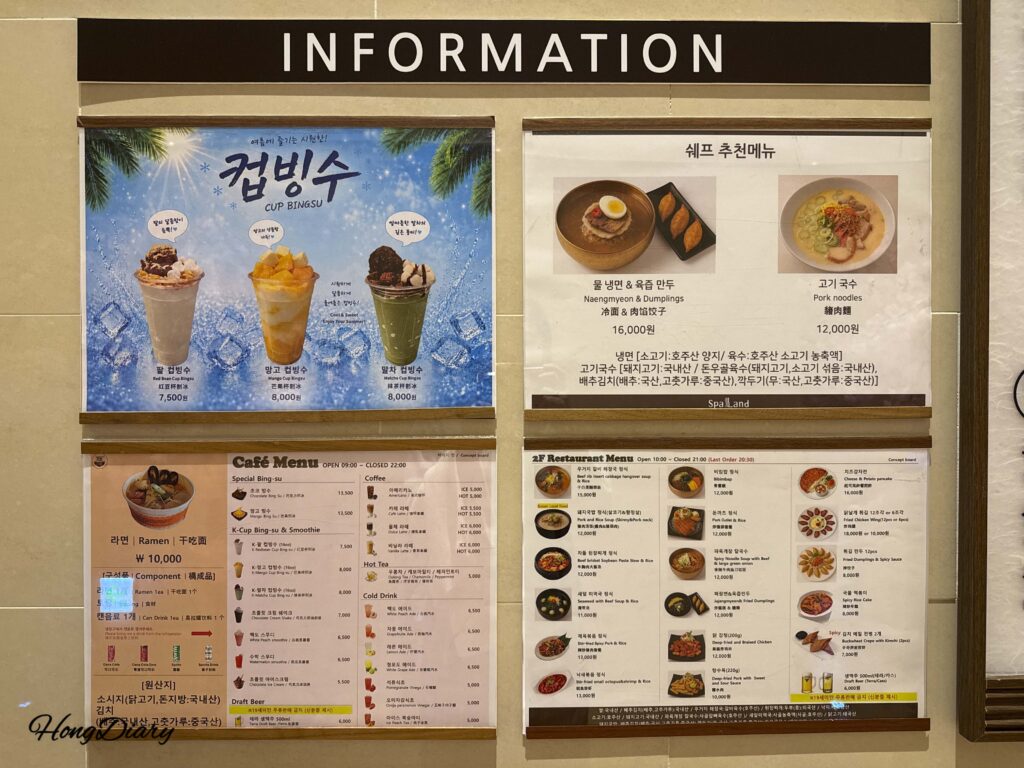
Here are some of the most popular items from the 2F restaurant and cafe:
2F Restaurant (Open 10:00 – 21:00, Last Order 20:30)
| Menu Item | Price |
|---|---|
| Cold Noodles (naengmyeon) & Dumplings | ₩16,000 (~$11 USD / ~€9 EUR) |
| Beef Rib Hangover Soup & Rice (haejangguk) | ₩15,000 (~$10 USD / ~€8 EUR) |
| Pork Bone Soup & Rice (gamjatang) | ₩13,000 (~$9 USD / ~€7 EUR) |
| Bibimbap (mixed rice bowl) | ₩12,000 (~$8 USD / ~€7 EUR) |
| Pork Cutlet & Rice (donkatsu) | ₩12,000 (~$8 USD / ~€7 EUR) |
| Soybean Paste Stew with Beef & Rice (doenjang-jjigae) | ₩12,000 (~$8 USD / ~€7 EUR) |
| Fried Chicken Wings (6 pcs) | ₩10,000 (~$7 USD / ~€6 EUR) |
| Japchae & Fried Dumplings | ₩8,000 (~$5 USD / ~€5 EUR) |
| Spicy Rice Cake (tteokbokki) | ₩8,000 (~$5 USD / ~€5 EUR) |
Cafe & Snack Bar (Open 09:00 – 22:00)
| Menu Item | Price |
|---|---|
| Ramen Land Set (ramen + unlimited toppings + canned drink) | ₩10,000 (~$7 USD / ~€6 EUR) |
| Cup Bingsu — Red Bean (shaved ice dessert) | ₩7,500 (~$5 USD / ~€4 EUR) |
| Cup Bingsu — Mango or Matcha | ₩8,000 (~$5 USD / ~€5 EUR) |
| Americano (hot / iced) | ₩5,000–5,500 (~$3–4 USD / ~€3 EUR) |
| Draft Beer (500ml) | ₩6,000 (~$4 USD / ~€3 EUR) |
Exchange rates: $1 USD ≈ ₩1,500 / €1 EUR ≈ ₩1,769. Rates are approximate.
A quick note about ordering: in the restaurant section, you order at the counter and can sit at either regular table-and-chair seating or traditional floor seating (low tables with cushions on the heated floor). During less crowded times, staff will bring the food to your table. On busy nights, you might get a buzzer and need to pick up your tray yourself.
There is also the “Ottogi Ramen Land” on the second floor, which is essentially a self-serve instant ramen station run by one of Korea’s major ramen brands. For ₩10,000 (~$7 USD / ~€6 EUR), you get a bowl of ramen, a canned drink, and access to an unlimited toppings bar — kimchi, green onions, cheese, egg, and whatever else they have stocked that day. I went for it. No photo of the actual bowl (the eating area was packed and I felt awkward pulling out my phone), but piling on toppings until the noodles were barely visible and then eating it in a spa robe at 9:30 PM was its own kind of experience. The flavor was solid — a hearty, spicy broth that tasted exactly right after a long soak.
Beyond proper meals, the classic jjimjilbang snack combo of sikhye (a sweet fermented rice drink) and gyeran (hard-boiled eggs sold warm from the counter) is also available. These are the quintessential Korean spa foods — you will see locals cracking eggs and sipping sikhye everywhere in the communal areas.
Tips Before You Go
Use the after-7 PM discount. If your schedule allows it, entering after 19:00 drops the price from ₩26,000 to ₩16,000 (~$11 USD / ~€9 EUR) — roughly a 30% discount off the door price. With the current 22:00 closing time, that gives you about 3 hours, which is still enough to rotate through several saunas, soak in the foot bath, grab a meal, and rest. When I visited in August (under the previous 23:00 closing), I entered around 8 PM and had about 3 hours — it went by faster than expected, but I still managed to hit the saunas, eat, and rest without rushing.
Parking is generous. You get 4 hours of free parking by default. If you spend ₩10,000 (~$7 USD / ~€6 EUR) or more inside the facility (easy to do if you eat anything), that extends to 6 hours.
You barely need to pack. As I mentioned above, everything from spa clothes to toiletries is provided. The only things worth bringing: a toothbrush, a hair tie if you have long hair, and a change of underwear. That is it.
Time flies faster than you think. Four hours felt generous on paper. In practice, between rotating through saunas, soaking in the foot bath, eating, and resting in the Relax Room, I barely made it out before my time was up. If you can, plan to arrive early enough that you are not rushing through the experience.
Mornings are quieter. I went at night and it was lively but manageable. If you want the place more to yourself, locals say weekday mornings — especially right after the 9 AM opening — are the calmest window.
Where to Stay and What to See Nearby
Spa Land Busan sits in the Centum City area of Haeundae, which puts it within easy reach of several major Busan attractions. If you are building an itinerary around this part of the city, here are a few spots I have covered in detail that pair well with a spa visit.
Haeundae Beach Area
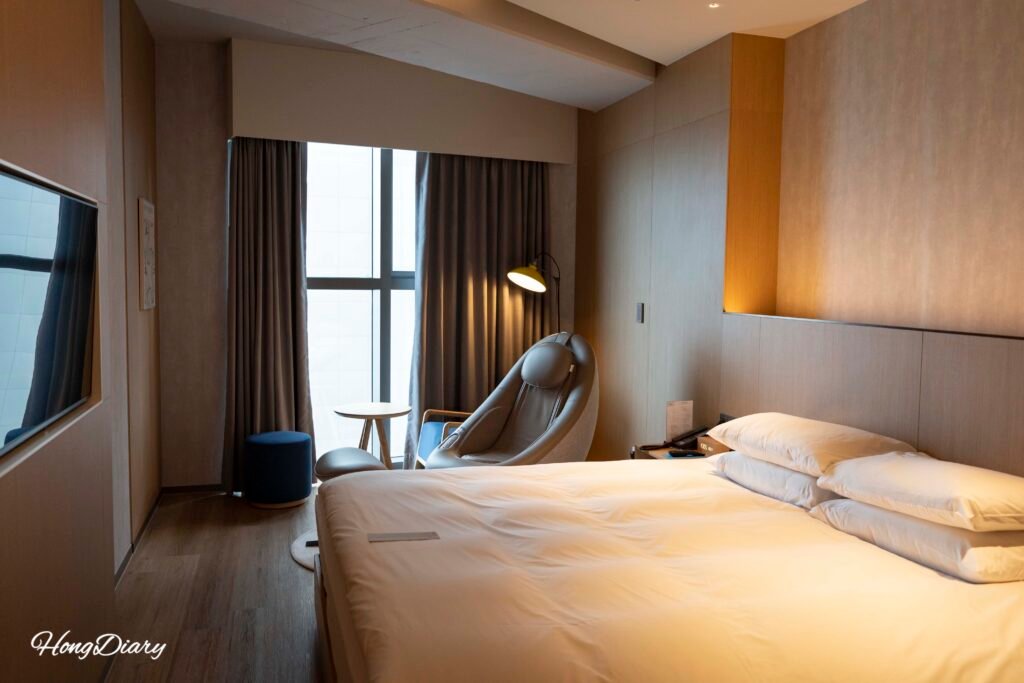
If you need a hotel near Spa Land Busan, L7 Haeundae by Lotte is right on the Haeundae beachfront and a short taxi ride from Centum City. Some rooms come with Korean-style massage chairs built into the suite — a nice touch if you are traveling with parents or anyone who appreciates a comfortable place to recover after a long day of walking. I covered the full room breakdown and pricing in my review.
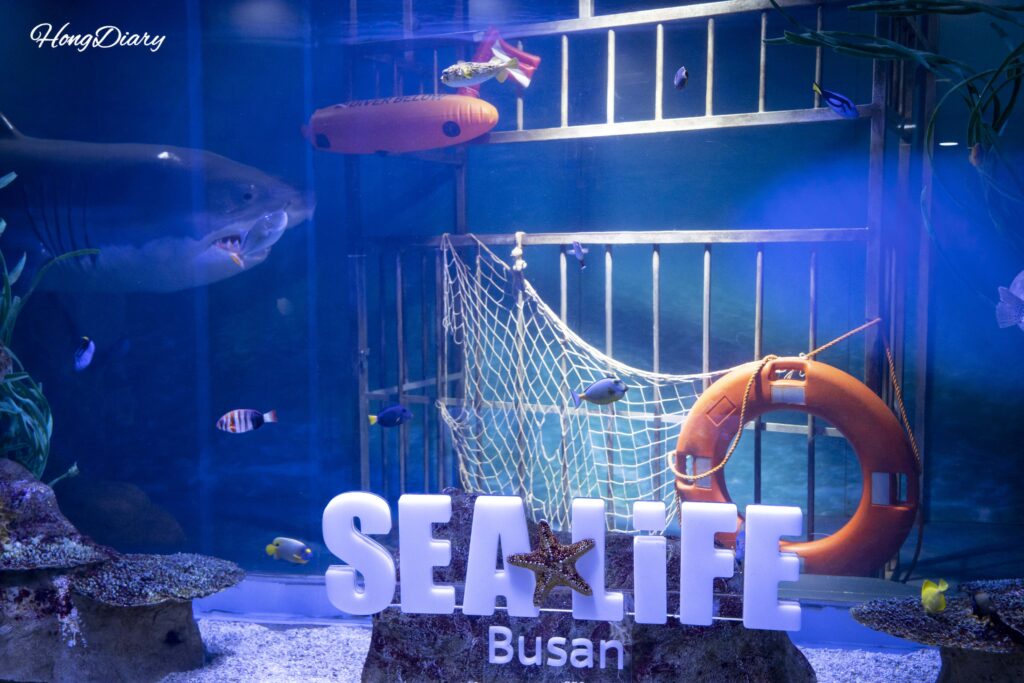
For a family-friendly daytime activity right on Haeundae Beach, SEA LIFE Busan Aquarium sits directly below the beachfront plaza. I managed to get in for 37% less than the gate price by booking online, caught a mermaid performance show, and spent about two hours inside — it is a good option for hot afternoons or rainy days when the beach is not cooperating.
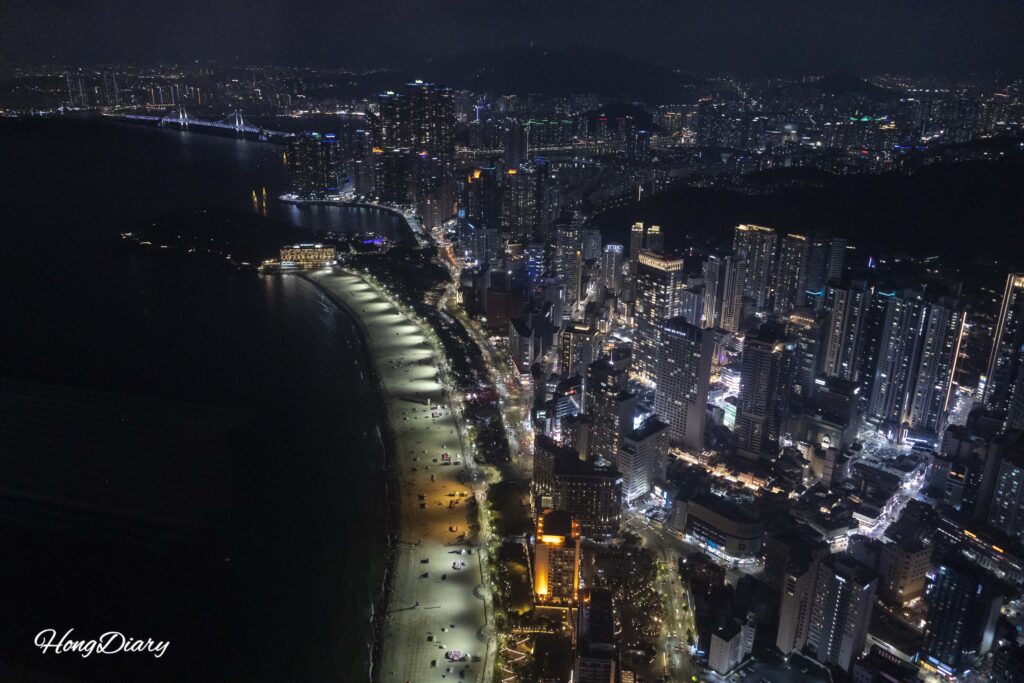
If you want one of the most striking city views in Busan, Busan X the Sky is an observation deck on the 100th floor of the LCT Tower in Haeundae. I spent about three hours there watching the coastline shift from afternoon blue to full neon nightscape — the kind of slow, absorbing experience that pairs well with the relaxation pace of a spa day.
Gwangalli Beach Area
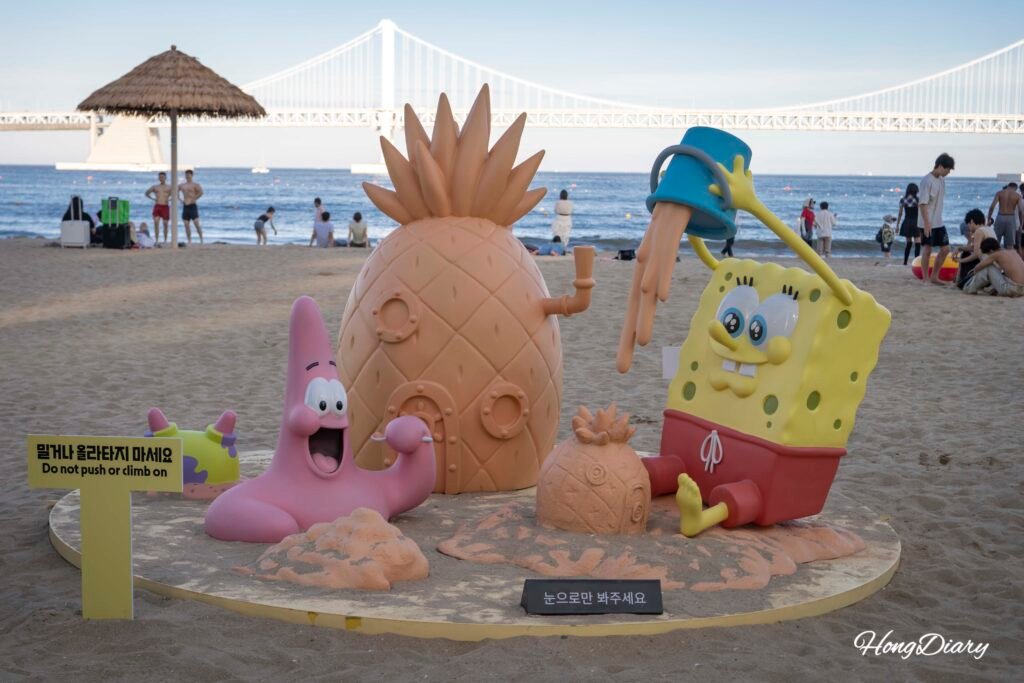
About 15 minutes from Centum City by taxi, Gwanganli Beach has a completely different energy from Haeundae — more local, more laid-back, with beachfront cafes, street food stalls, and a summer drone light show over the Gwangan Bridge. My guide covers the full stretch from the sand to the cultural spaces behind it.
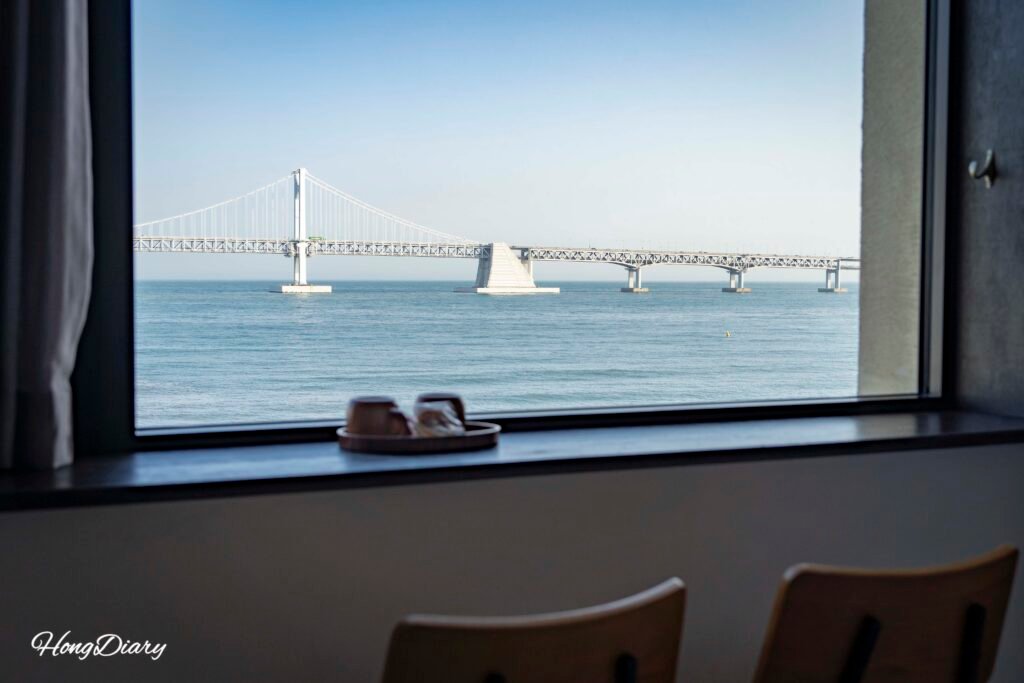
If you want to wake up to a direct view of Gwangan Bridge without spending a fortune, Gwangalli W Hotel is a beachfront option where I paid about $80 a night for a room facing the bridge. It is close enough to Centum City that you could easily pair it with a Spa Land visit on the same evening.
Final Thoughts
Spa Land Busan was, without exaggeration, the most effortless part of my entire trip. No reservations needed, nothing to pack, no language barrier to navigate — just show up, tap your wristband, and let the next few hours happen. The 13 saunas gave me more variety than I could realistically get through in one visit, the outdoor foot bath at night was the kind of quiet moment I did not know I needed, and the yangmeori towel thing was an unexpectedly charming cultural bonus.
If you are wrapping up a long day in Haeundae and want something that goes beyond just “a place to shower,” this is worth the stop. Walk in after 7 PM, pay ₩16,000 (~$11 USD / ~€9 EUR), and give yourself permission to do absolutely nothing productive for a few hours. That is the whole point.
Practical Tips for Your Visit: Discounts, Parking, and What to Bring
How much does it cost to enter Spa Land Busan?
Standard adult admission is ₩26,000 (~$17 USD / €15 EUR). Students pay ₩21,000 ($14 USD / €12 EUR). If you enter after 7 PM, the price drops to ₩16,000 ($11 USD / €9 EUR) for all visitors. Each ticket includes a 4-hour session. If you stay beyond 4 hours, an overtime fee of ₩5,000 ($3 USD / ~€3 EUR) per additional hour is applied and charged to your wristband when you check out.
Is there a night discount at Spa Land Busan, and is it worth going in the evening?
Yes. After 7 PM (19:00), admission drops from ₩26,000 to ₩16,000 (~$11 USD / ~€9 EUR) — roughly a 30% discount off the standard door price. As of September 1, 2026, operating hours changed from 08:00–23:00 to 09:00–22:00 (last entry at 21:00) — many other guides still list the old hours. With the current 22:00 closing, entering after 7 PM gives you about 3 hours inside, which is still enough to try several saunas, use the outdoor foot bath, eat at the on-site restaurant, and rest in the Relax Room. Going at night also means you can soak your feet in the open-air foot bath under the city skyline after dark, which is arguably the best time to experience it.
What do I need to bring to Spa Land Busan?
Almost nothing. The facility provides spa clothes (T-shirt and shorts), towels, shampoo, conditioner, body wash, toothpaste, and even a scrubbing cloth. The only items worth bringing are a toothbrush (also available from a vending machine inside for a few hundred won), a hair tie for long hair, and a change of underwear for after your bath. You do not need to bring your own toiletries, slippers, or robes — everything is included with your admission.
How do I get to Spa Land Centum City by public transit?
Take Busan Metro Line 2 to Centum City Station and use Exit 12. Walk straight for about 2 minutes and look for Gate 4 of the Shinsegae Department Store — the spa entrance is clearly marked. If you are already inside the department store, you can access the spa through the first-floor interior corridor, located between the Dior and Prada storefronts. If you are carrying a suitcase, there is a luggage storage area near the entrance counter that costs ₩3,000 (~$2 USD / €2 EUR) for the first 5 hours, with ₩1,000 ($1 USD / €1 EUR) per additional hour — full-size suitcases are not allowed inside the spa’s internal lockers. Parking is available in the Shinsegae garage with 4 hours included free, extending to 6 hours if you spend ₩10,000 ($7 USD / ~€6 EUR) or more inside.
Can I eat inside Spa Land Busan, and how much does food cost?
Yes, there is a full restaurant and a cafe on the second floor. The restaurant serves Korean dishes such as bibimbap (₩12,000 / ~$8 USD / ~€7 EUR), hangover soup with rice (₩15,000 / ~$10 USD / ~€8 EUR), and cold noodles with dumplings (₩16,000 / ~$11 USD / €9 EUR). The cafe side has coffee starting at ₩5,000 ($3 USD / €3 EUR), shaved ice desserts from ₩7,500 ($5 USD / €4 EUR), and draft beer at ₩6,000 ($4 USD / €3 EUR). There is also Ottogi Ramen Land, a self-serve ramen station where ₩10,000 ($7 USD / ~€6 EUR) gets you a bowl of ramen, unlimited toppings, and a canned drink. All purchases are charged to your wristband and settled at checkout.
Is Spa Land Busan foreigner-friendly, and what should first-time visitors know?
Spa Land is one of the most foreigner-accessible jjimjilbangs in Korea. Signage is available in English, and the wristband system eliminates the need for any Korean language interaction during your visit. For first-timers unfamiliar with Korean sauna culture, the key thing to know is that the bathing area (hot spring pools and showers) is gender-separated and requires full nudity — this is standard at all Korean bathhouses. The communal sauna rooms and lounges on the main floors are co-ed, and everyone wears the provided spa clothes. If you are not used to high-temperature saunas, start with the upper-floor rooms, which run at milder temperatures. The first-floor saunas (Bulgama and Finnish Sauna) exceed 60°C (140°F) and can be intense for beginners.
How long should I plan to spend at Spa Land Busan?
The standard admission covers 4 hours, which is enough to try several sauna rooms, use the outdoor foot bath, eat a meal, and rest in the Relax Room. However, time passes faster than expected — between rotating through 13 themed saunas, bathing, and eating, many visitors find 4 hours tight. If you spend ₩10,000 (~$7 USD / ~€6 EUR) or more inside the facility (easy to hit with a single meal), you are not charged extra time, though the official policy allows up to 6 hours with qualifying purchases. If you want a relaxed pace without clock-watching, arriving during weekday mornings right after the 9 AM opening gives you the most flexibility and the fewest crowds.