
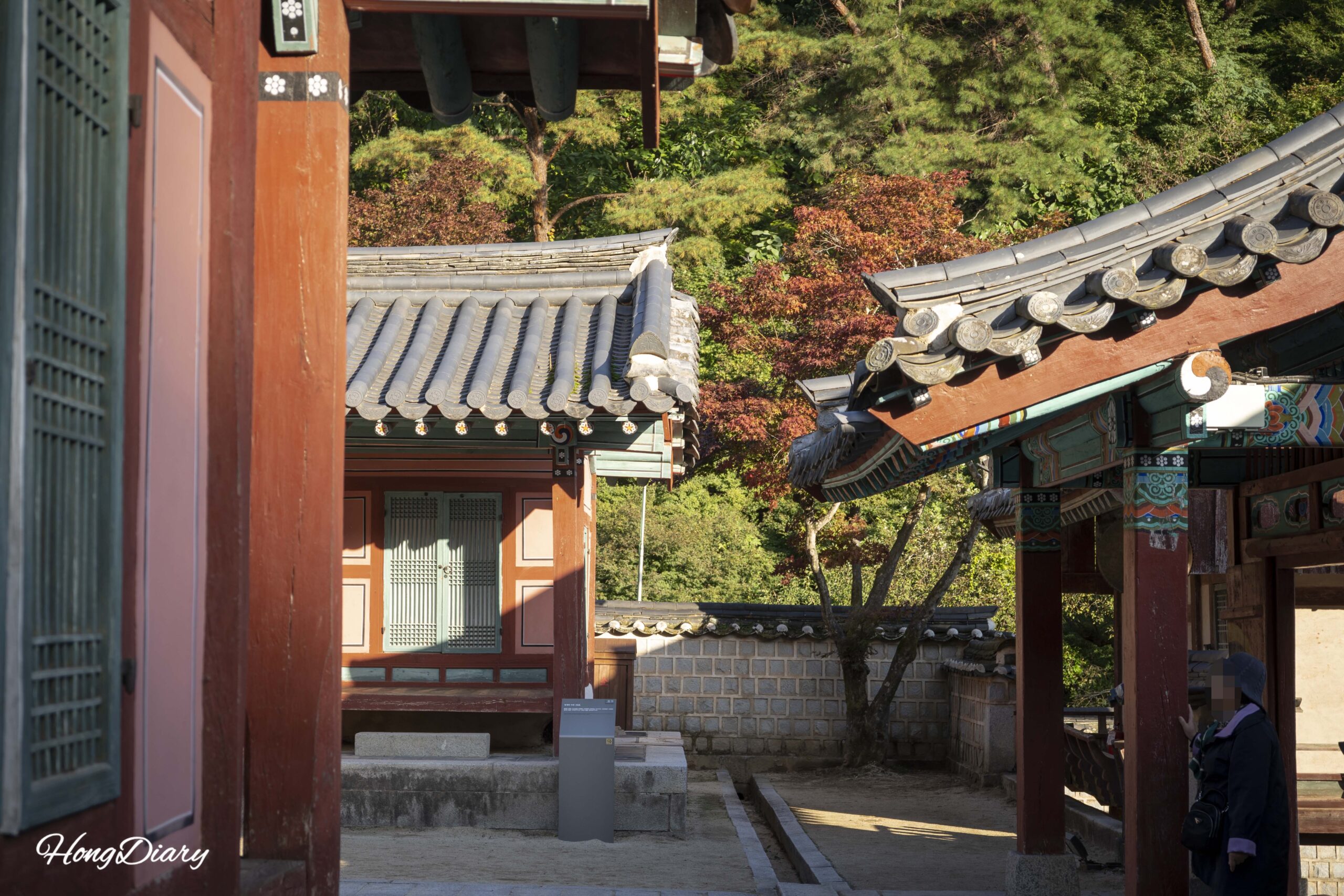
Take a look at the back of South Korea’s ₩1,000 banknote. Past the portrait of Confucian scholar Yi Hwang, there’s a painting of a man sitting in a wooden study, surrounded by trees and a river drifting by. That place is real — it’s called Dosan Seowon, a 16th-century Confucian academy built into the mountains outside Andong, and you can walk through it yourself.
Table of Contents
Basic Information: Address, Hours, Admission Fees, and How to Get to Dosan Seowon in Andong
| Detail | Info |
|---|---|
| Full Name | Dosan Seowon — a seowon is a private Confucian academy from Korea’s Joseon Dynasty (1392–1897), combining a school and a shrine to honor respected scholars |
| Address | 154 Dosanseowon-gil, Dosan-myeon, Andong-si, Gyeongsangbuk-do |
| Hours | Mar–Oct: 09:00–18:00 / Nov–Feb: 09:00–17:00 (last entry 30 min before closing) |
| Admission | Adults: ₩2,000 (~$1.43 USD / ~€1.27 EUR) · Youth & Children: ₩1,000 (~$0.71 USD / ~€0.63 EUR) |
| Free Admission | Seniors 65+, children under 6, visitors with disabilities (ID required) — also free for everyone on the last Wednesday of each month (Culture Day, a nationwide program offering free entry at major cultural sites across Korea) |
| Getting There | Express Bus No. 3 from Andong Terminal (~1 hr 10 min) |
| Parking | Free (compact lot near the entrance) |
| Website | Dosan Seowon – Andong City Official Site (English & Japanese pages available) |
| UNESCO Status | Inscribed in 2019 as part of Seowon, Korean Neo-Confucian Academies — a serial property covering 9 historic academies nationwide |
Prices converted at approximately $1 USD ≈ ₩1,400 / €1 EUR ≈ ₩1,575 (as of September 2026). Rates may fluctuate.
Getting to Andong from Major Cities
I came across Dosan Seowon while chasing autumn foliage through Korea’s smaller cities, winding through towns most international visitors skip entirely. After a stop in Namwon further south, I made my first trip to Andong — and this academy quickly became the highlight of the journey.
Andong sits in northern Gyeongsangbuk-do province, roughly centered in Korea’s eastern half. Often called the “Capital of Korean Spiritual Culture,” the city has deep Confucian roots stretching back centuries. Dosan Seowon itself is about 25 km north of downtown, set along the Nakdong River — South Korea’s longest. Compared to tourist-heavy Gyeongju or Jeonju, Andong sees far fewer international visitors, which is part of what makes it feel genuinely unhurried.
The city doesn’t have a subway system, so reaching Andong means either a bus or train.
From Busan, the most practical option is an intercity bus departing from Busan Nopo Bus Terminal, which sits right next to Nopo Station on Busan Metro Line 1. The ride takes about 2 hours and 10 minutes and costs ₩21,000 (~$15 USD / ~€13.33 EUR). Departures run frequently throughout the day, which is why I’d pick this over the train. Heading back from Andong to Busan takes slightly longer — about 2 hours and 30 minutes — due to routing differences.
If you prefer rail, KTX (Korea’s high-speed train) from Bujeon Station reaches Andong in about 2 hours for ₩27,700 (~$19.79 USD / ~€17.59 EUR). The slower ITX-Saemaeul, a semi-express train, covers the same route in 3 hours and 10 minutes at ₩20,500 (~$14.64 USD / ~€13.02 EUR). Between the three, the bus wins on schedule flexibility.
From Seoul, express buses from Dong Seoul Bus Terminal arrive in about 2 hours and 40 minutes. KTX-Eum trains from Cheongnyangni Station also make the trip in roughly 2 hours.
Once you’re in Andong, take Express Bus No. 3 from the terminal to Dosan Seowon. The ride is about 1 hour and 10 minutes each way, so check the return bus schedule at the information center before you start exploring — missing the last bus means a taxi ride back to town.
The Walk In — Autumn Colors Before You Even Arrive
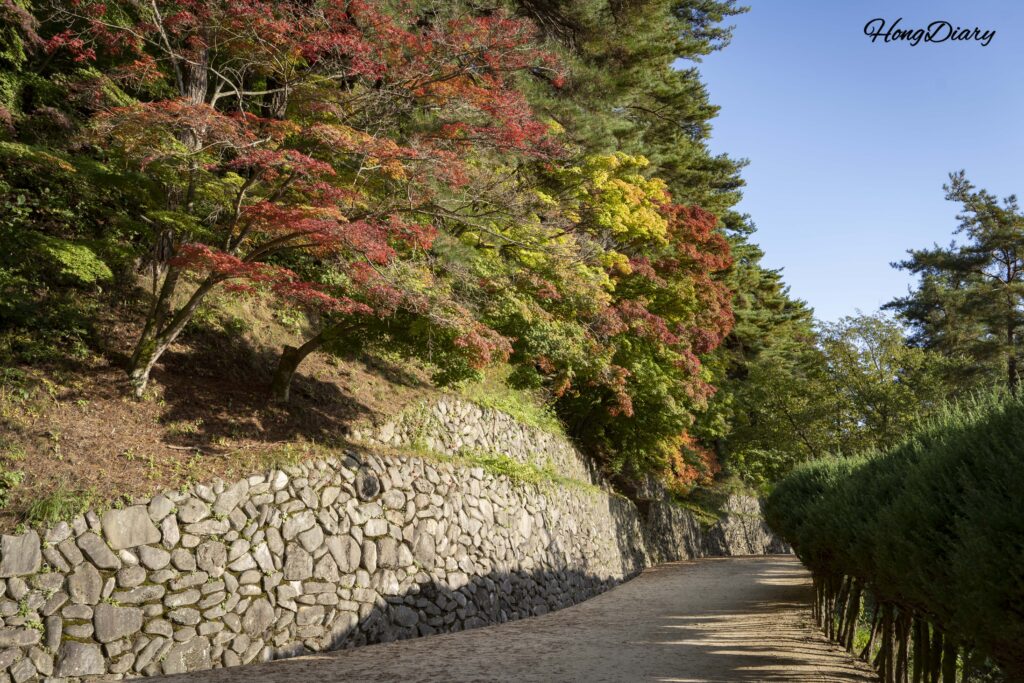
After picking up your ticket at the small booth near the parking lot — where you’ll also find a gift shop and a tourist information center — the path to Dosan Seowon opens up along a tree-lined walkway. When I visited as autumn was setting in, the maples lining the route were just beginning to turn, catching the first amber and crimson hues of the season.
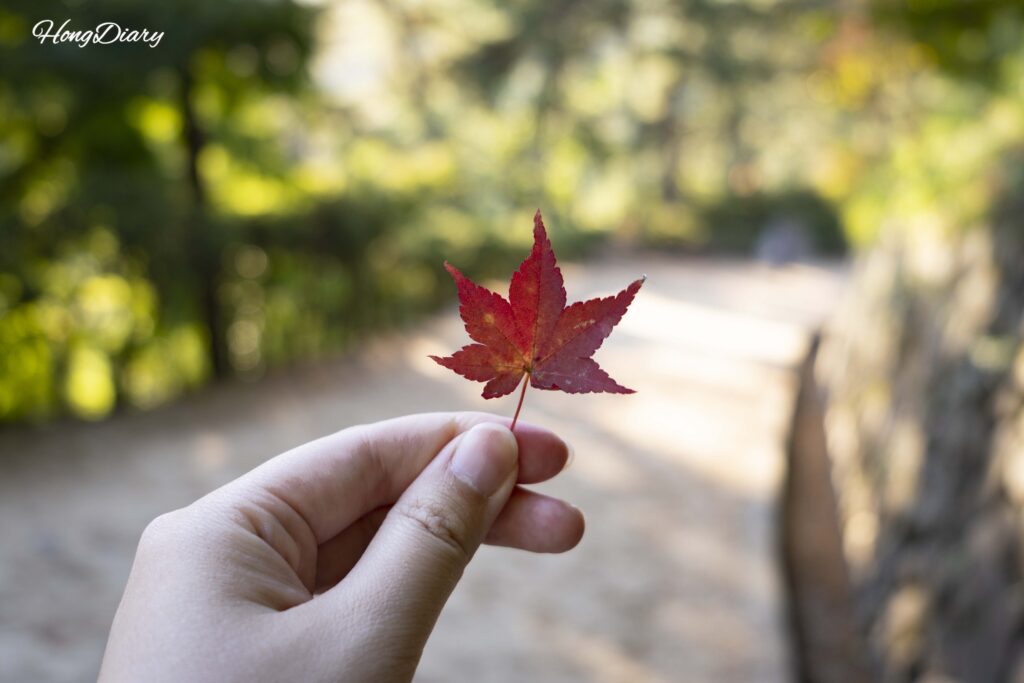
The walk from the entrance gate to the academy itself is a gentle, unhurried stretch through the trees. Both sides of the path are framed by branches, and through the gaps you catch your first glimpses of the Nakdong River below.
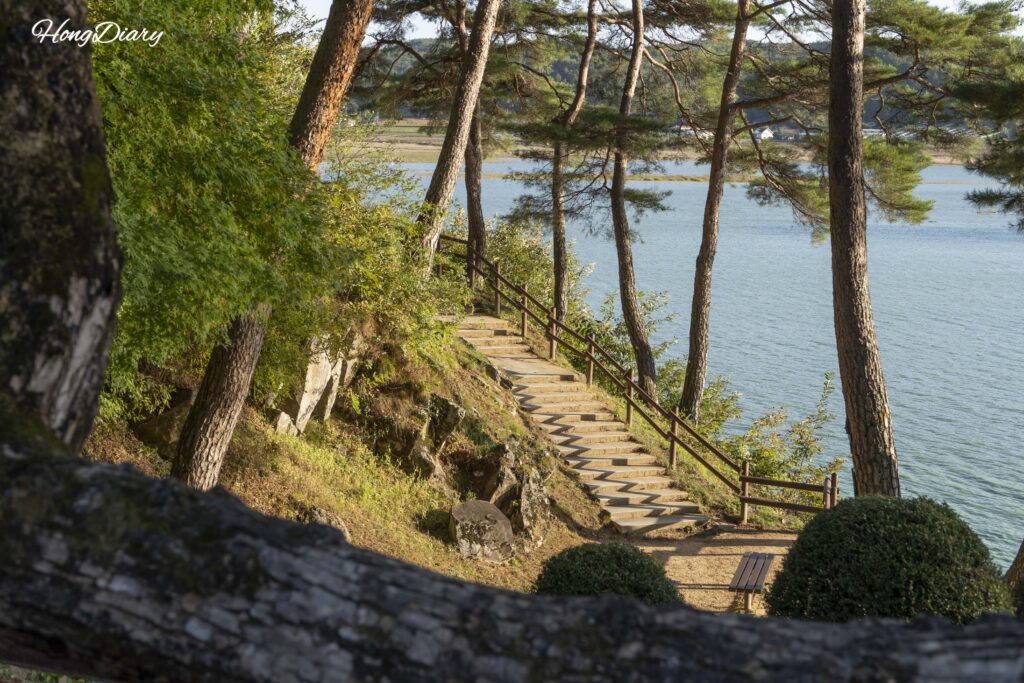
Slow down here. Dosan Seowon was built in a location deliberately chosen for its connection to nature — mountains behind, river in front — following the Confucian principle that a scholar’s environment should encourage clarity and reflection. That philosophy starts making sense before you even reach the gate.
Sisadan — The Stone Island in the Middle of the River
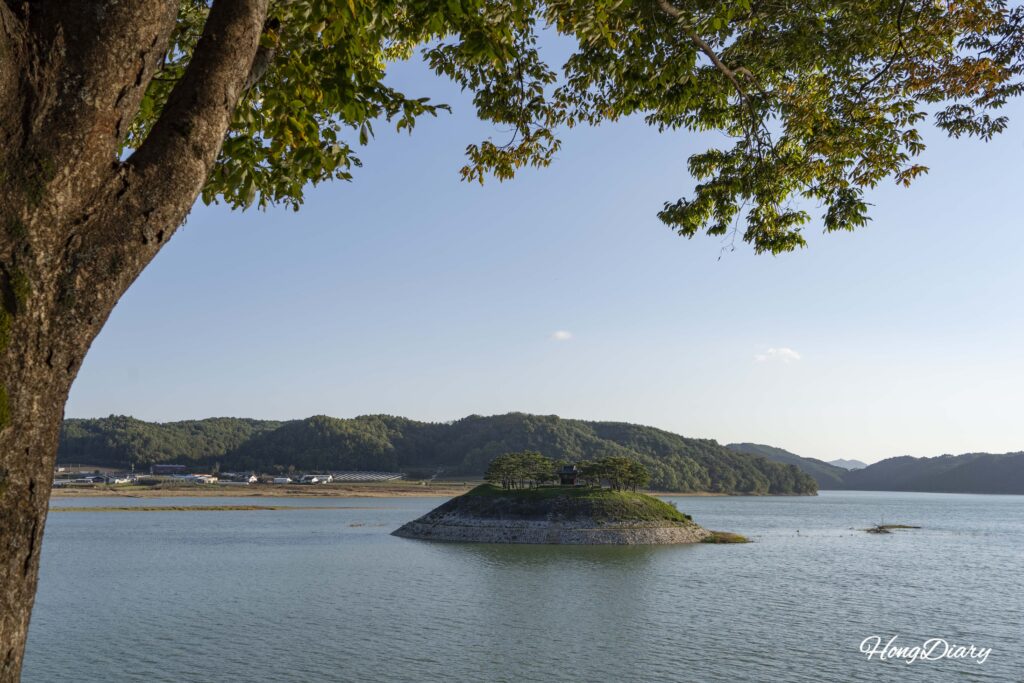
Before the academy comes into full view, something unusual catches your eye — a small stone platform standing on an island in the middle of the Nakdong River. This is Sisadan, a spot where the scholar Yi Hwang (pen name: Toegye, 1501–1570) used to gather his students to discuss philosophy and exchange poems. Special state examinations — a form of Korea’s historic civil service test — were also held at this location, making it both an open-air classroom and an official testing ground.
Yi Hwang is one of the two most influential Confucian thinkers in Korean history. He spent his final decades here in Andong, devoting himself to research and teaching at this very site.
In its original form, Sisadan sat closer to the water’s edge. But when the Andong Dam was constructed in the 1970s, the rising water level threatened to submerge it. To preserve the site, workers raised the stone platform, relocated the stele and its protective pavilion to higher ground, and reinforced the island’s foundation. What you see today is the result of that careful effort.
First Sight — The Scene Printed on the Banknote
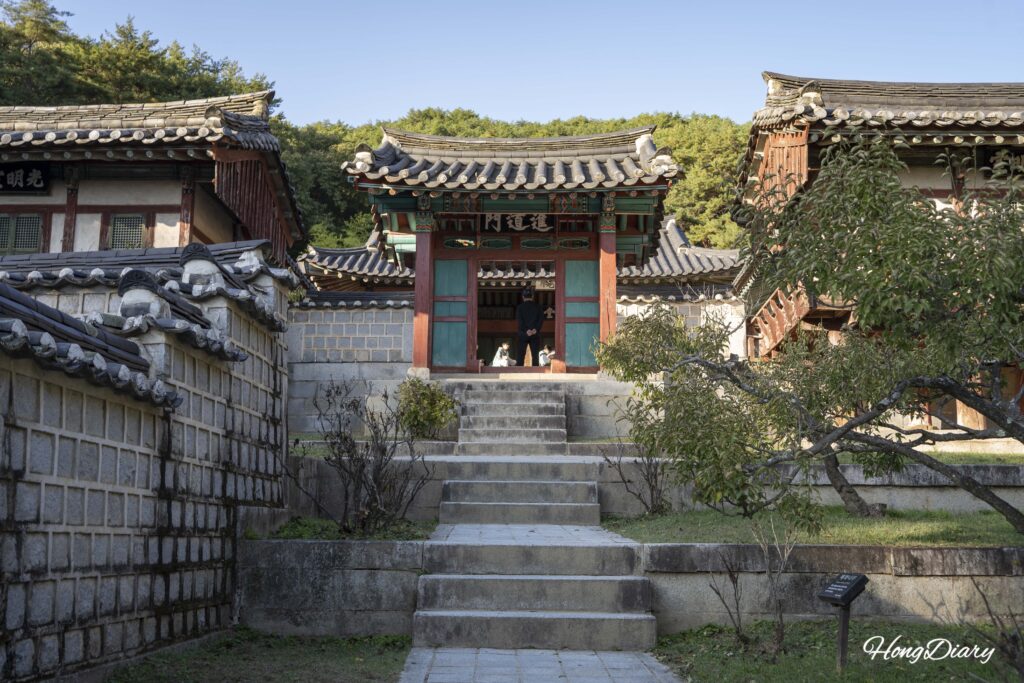
Turn a corner past Sisadan, and there it is — the same composition once depicted on Korea’s older ₩1,000 banknote (in circulation from 1983 to 2007). The current version of the bill still features a painted rendering of this view on its reverse side, titled Gyesangjeonggeodo — a work showing Yi Hwang sitting quietly in his study at this academy.
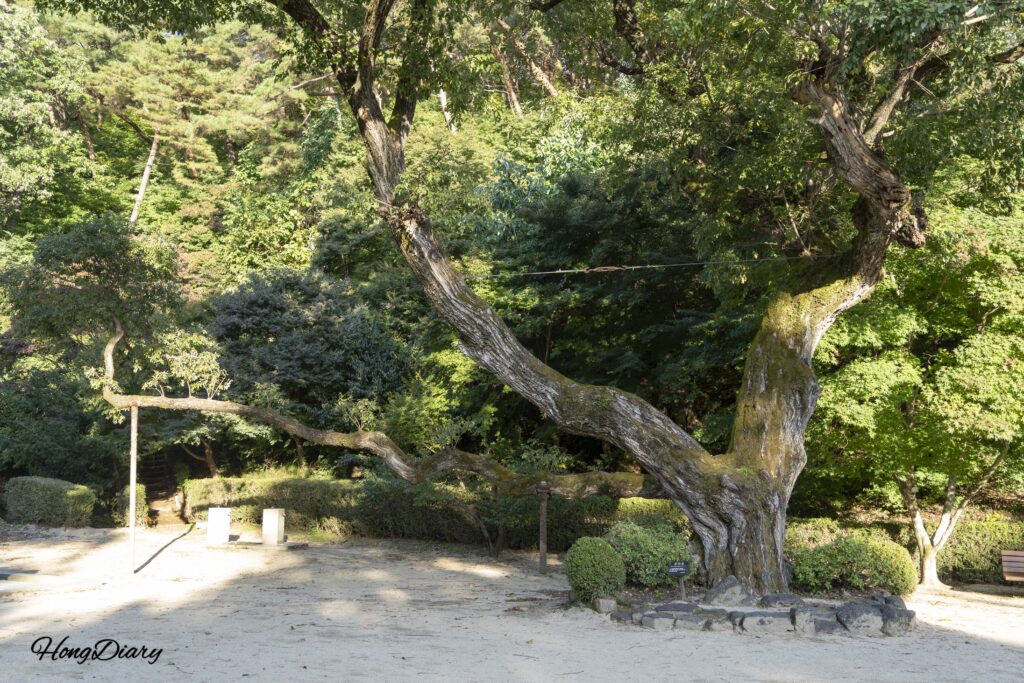
In person, the proportions feel deliberately modest. The buildings sit low, the colors muted — dark weathered wood, grey roof tiles, white plaster walls. Two old trees stand guard in the front courtyard: a royal willow and a zelkova, both reportedly planted when the academy was first built in the 1560s. Their sheer size gives a quiet sense of just how long this place has been standing here.
Inside Dosan Seowon — Where Scholars Lived, Studied, and Stayed
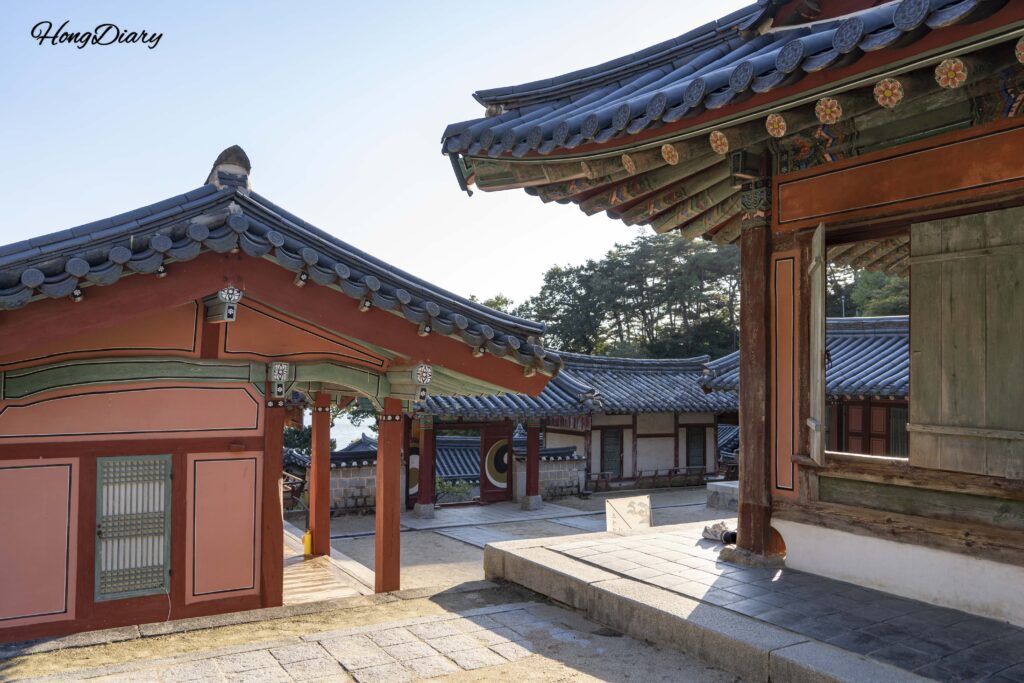
Dosan Seowon is made up of two distinct parts, built at different times for different reasons.
The older section is Dosan Seodang, completed in 1561. Yi Hwang designed it himself as a personal study and a place to teach small groups of students. This is where he spent his final years researching Neo-Confucian philosophy — a school of thought, originally from China, that shaped Korean governance, ethics, and education for centuries — and mentoring the next generation of scholars. Attached to the study hall is Nongunjeonsa, a dormitory where live-in students slept and studied. Think of it as a 16th-century boarding school with a river view.
The larger Dosan Seowon complex was completed in 1574, six years after Yi Hwang’s death. His former students and followers built it to honor his legacy and continue his teachings. Over the following centuries, the academy became the intellectual center of Neo-Confucianism in the Yeongnam region — Korea’s culturally rich southeast.
Key Buildings to Look For
The layout follows a symmetrical plan centered on Jeongyodang, the main lecture hall — designated as a Korean Treasure. This is where the academy’s head instructor taught formal classes and led philosophical discussions. The space is deliberately sparse — bare wooden floors, open walls, no ornamentation — designed to keep the focus on ideas rather than comfort.
On either side of the central courtyard sit the East and West Dormitories (Dongjae and Seojae), where students slept, ate, and prepared for their studies. Behind the west dormitory, Jangpangak served as the academy’s library, storing carved wooden printing blocks used to reproduce Confucian texts by hand.
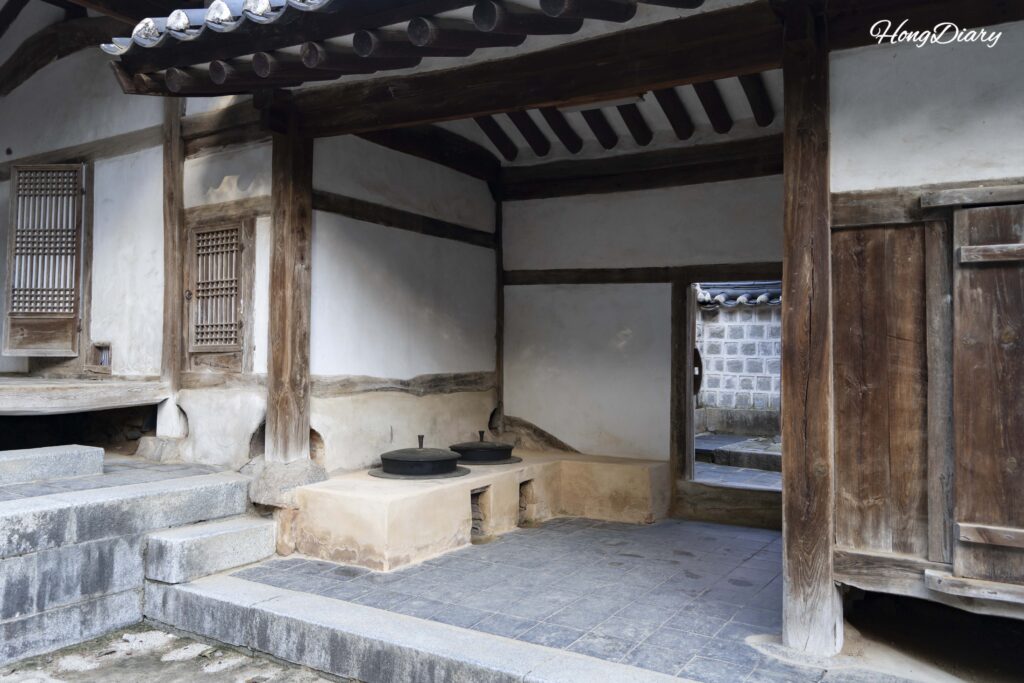
Near the entrance, Gojiksa housed the academy’s support staff — the people who handled cooking, cleaning, and general maintenance. In the Joseon Dynasty’s rigid social hierarchy, these workers were essential to keeping the academy running, though they lived in conditions far more modest than the scholars they served. It’s a small but honest reminder of how these institutions actually functioned day to day.
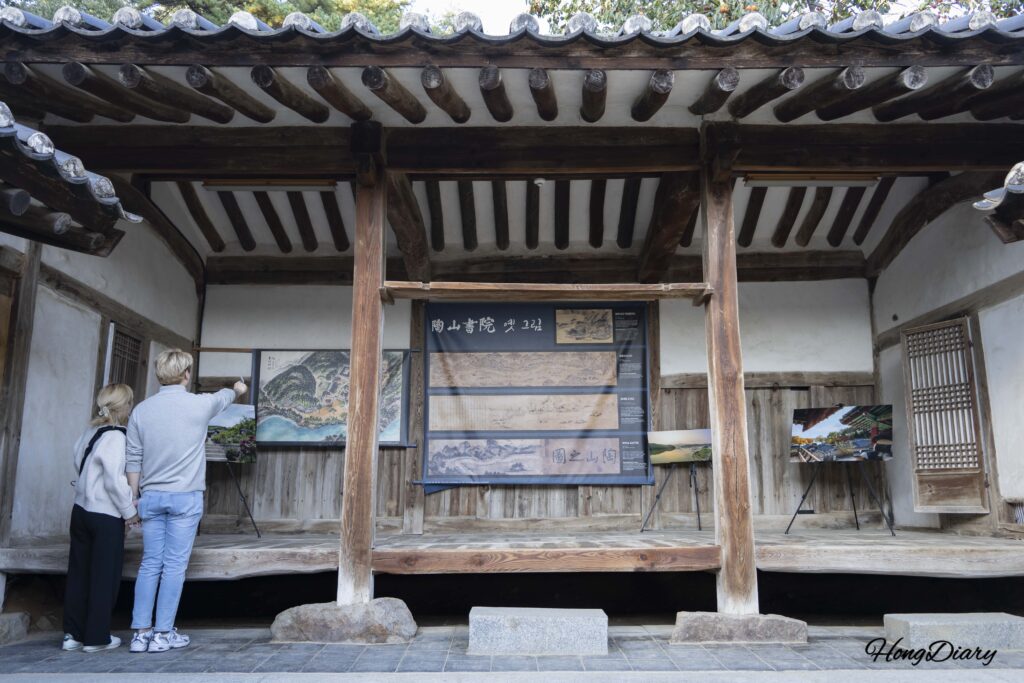
At the highest point of the compound sits Sangdeoksa, the shrine where Yi Hwang’s memorial tablet is kept. Twice a year — once in spring and once in autumn — a formal Confucian memorial ceremony called hyangsa is held here. The shrine’s elevated position reflects a core Confucian principle: reverence belongs above education, literally looking down over the lecture halls and dormitories below.
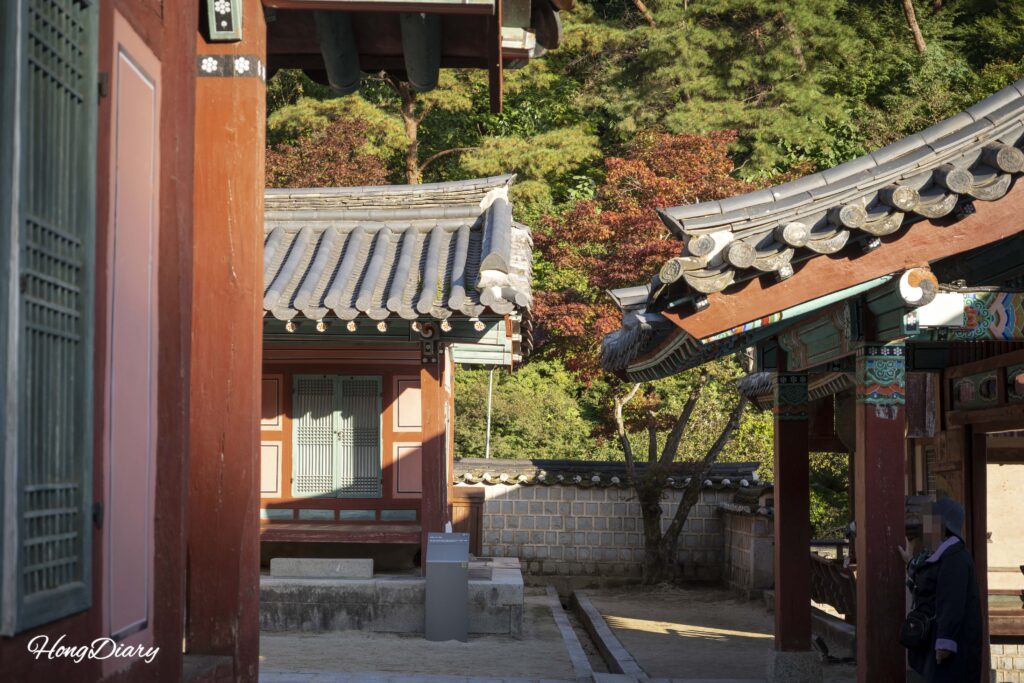
Many later seowon across Korea were modeled on this one. If you plan to visit other Confucian academies during your trip, Dosan Seowon gives you a useful baseline for understanding how these institutions were laid out and why.
The View from the Upper Courtyard
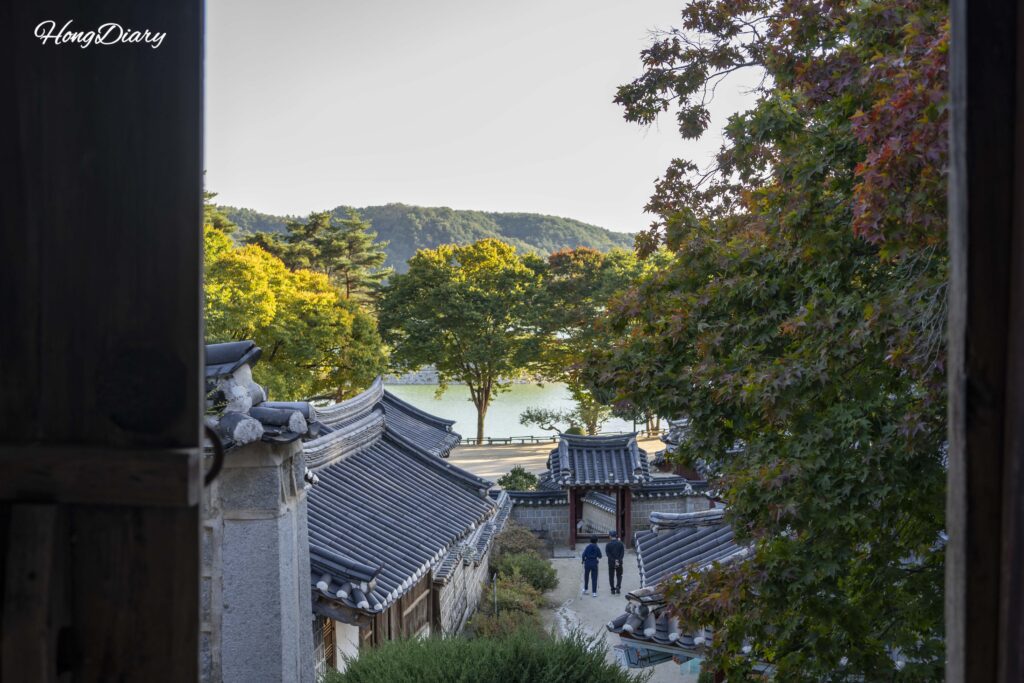
From the courtyard near Sangdeoksa, the grounds open into a wide view of the Nakdong River valley. On a clear autumn day, the water catches the light between bands of red and gold foliage, and the mountains rise softly in the background. There’s no signage telling you to stop and take it in — you just do.
It’s easy to see why Yi Hwang chose this location. The seowon tradition placed real emphasis on harmony between study and the natural world — the idea that a scholar’s mind should be as open and unhurried as the landscape around them. Standing at this vantage point, that concept stops being something you read about and starts being something you feel.
Okjingak Museum — Yi Hwang’s Books, Letters, and Daily Life
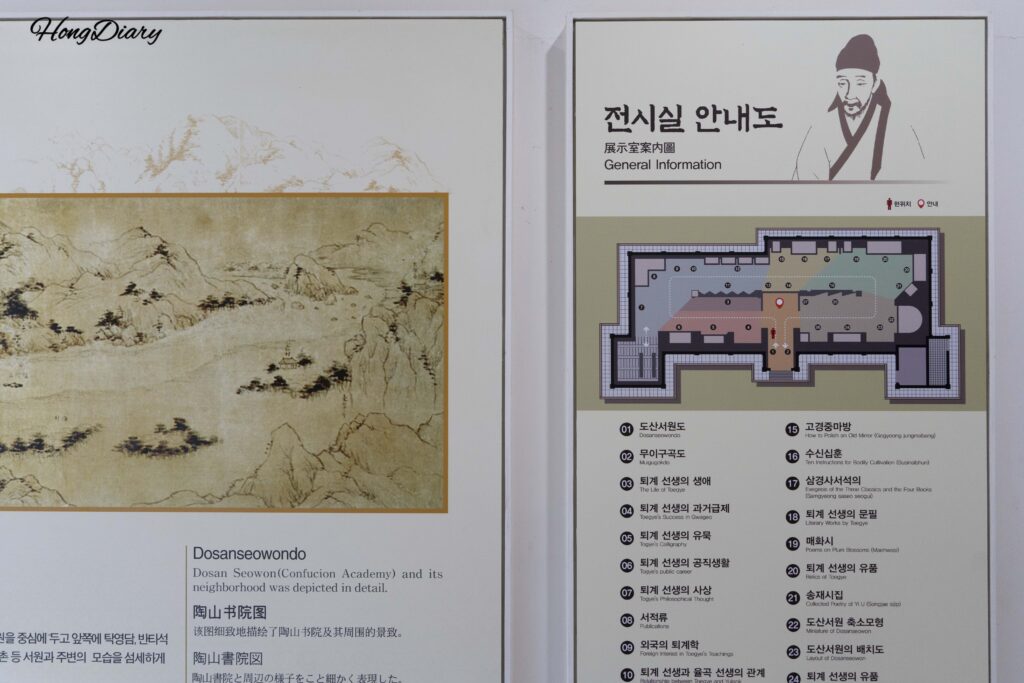
On your way back toward the exit, you’ll pass Okjingak, a small museum built in 1970 to house artifacts from Yi Hwang’s life. The name itself pays tribute to his scholarly reputation — okjin references the brilliance of jade, symbolizing the lasting value of his intellectual work.
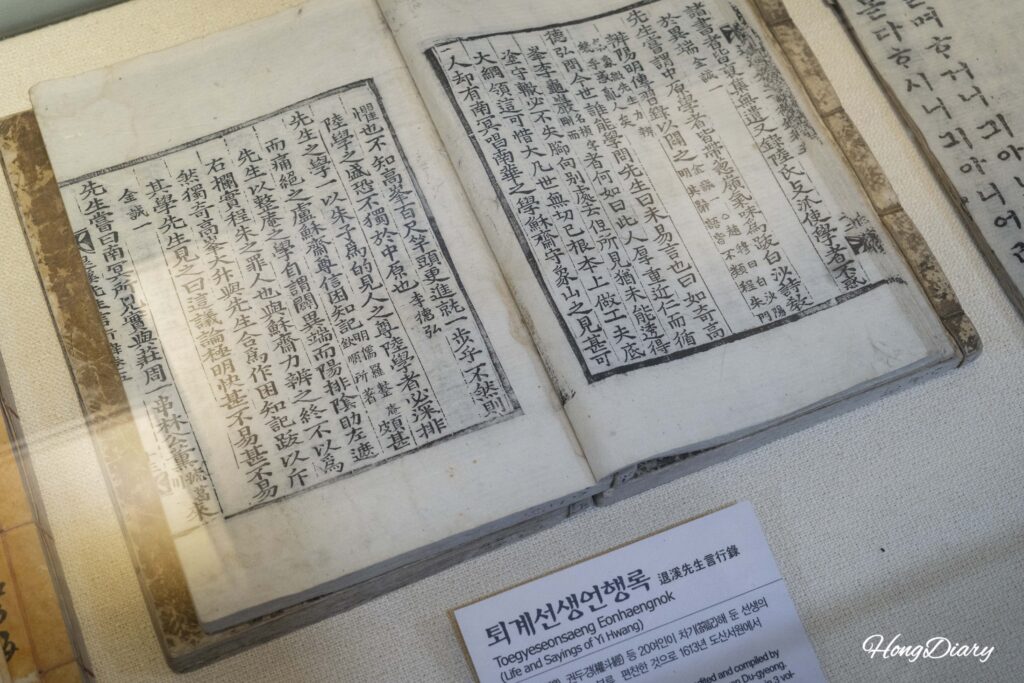
Inside, the collection includes personal books, writing instruments, ink stones, and letters exchanged with other scholars of the era. One particularly interesting item is the Eonhaengnok, a record of Yi Hwang’s words and daily conduct compiled by his students while he was still alive. It reads almost like a biography written in real time — small observations about how he made decisions, what he said to his students, and how he approached even routine moments. For anyone curious about who this man actually was beyond the banknote portrait, this room fills in a lot of gaps.
Best Time to Visit and Seasonal Tips
Dosan Seowon is open year-round, but the autumn foliage in the Andong area typically peaks in mid-to-late November. The combination of red maples against the dark wooden architecture and the Nakdong River winding below creates a color palette you won’t easily find at Korea’s more crowded leaf-viewing spots.
Spring — particularly April — is another strong window, when the hillsides turn green and the weather is mild enough for a long, unhurried walk. Summer brings heat and humidity, and winter, while atmospheric with frost on the rooftops, means shorter visiting hours and potentially icy paths.
A practical note on free entry: the last Wednesday of every month is Culture Day, a nationwide government program that waives admission fees at many historic and cultural sites across Korea, Dosan Seowon included. If your travel dates happen to align, it’s a small but welcome bonus.
Dosan Seowon is the kind of place that rewards patience. There are no flashy exhibits or dramatic viewpoints you need to race toward — just centuries of quiet intention laid out in wood and stone, surrounded by trees that have watched over this valley since the 1500s. It’s a spot where you walk slowly, read the interpretive signs, sit on a stone step for a while, and leave feeling like you understood something about Korea you didn’t expect to find.
If you’re building an autumn itinerary through Korea’s less-visited regions, Andong pairs well with other off-the-radar stops.
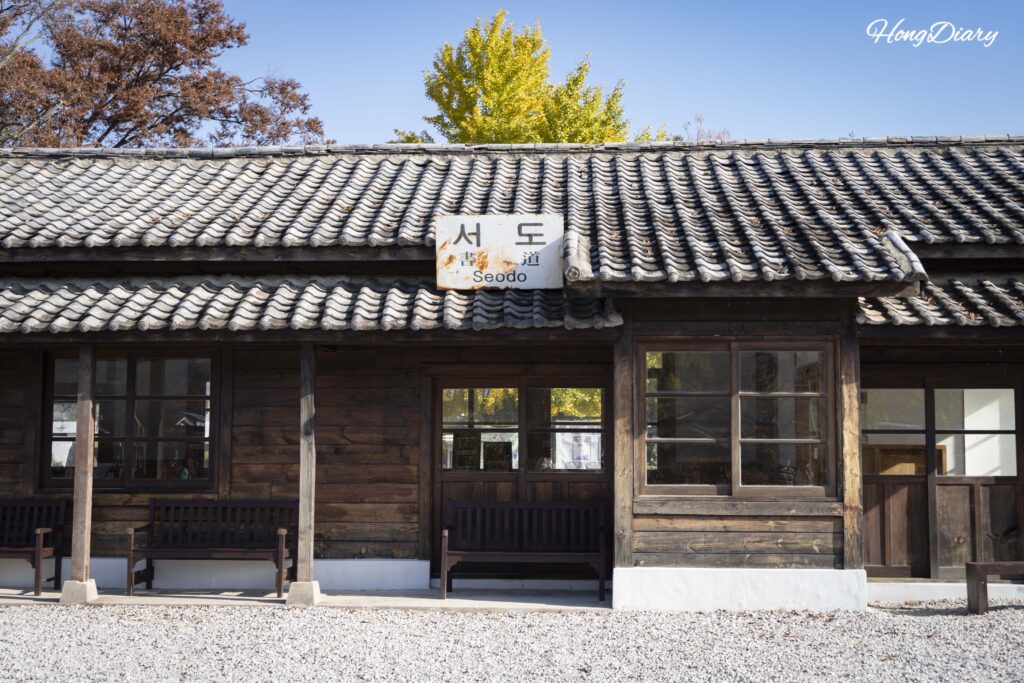
On the same trip, I also visited Seodo Station in Namwon — an abandoned 1932 railway that appeared in the Korean drama Mr. Sunshine, which made for a completely different but equally memorable autumn afternoon.
Together, these kinds of detours add up to a version of Korea that most visitors never get to see — and Dosan Seowon, quiet as it is, might just be the highlight.
Visitor Guide & FAQ: Best Season to Visit, Key Architectural Highlights, and Practical Travel Tips for Dosan Seowon
How much does it cost to enter Dosan Seowon?
Admission is ₩2,000 (~$1.43 USD / €1.27 EUR) for adults and ₩1,000 ($0.71 USD / ~€0.63 EUR) for youth and children. Seniors aged 65 and older, children under 6, and visitors with disabilities can enter free of charge with valid ID. Admission is also free for everyone on the last Wednesday of each month as part of Korea’s nationwide Culture Day program.
How do I get to Dosan Seowon from Seoul or Busan?
From Busan, the most convenient option is an intercity bus from Nopo Bus Terminal to Andong Terminal, which takes about 2 hours and 10 minutes and costs ₩21,000 (~$15 USD / ~€13.33 EUR). From Seoul, express buses from Dong Seoul Terminal reach Andong in about 2 hours and 40 minutes, and KTX-Eum high-speed trains from Cheongnyangni Station make the trip in roughly 2 hours. Once in Andong, take Express Bus No. 3 from the terminal to Dosan Seowon — the ride is about 1 hour and 10 minutes each way.
What is the best time of year to visit Dosan Seowon?
Autumn — specifically mid-to-late November — is when the foliage around Dosan Seowon peaks. The red and gold maples against the dark wooden buildings and the Nakdong River create some of Andong’s best seasonal scenery. Spring (April) is another strong option, with mild weather and green hillsides. Summer tends to be hot and humid, and winter brings shorter hours and icy walkways.
What exactly is a seowon, and why is Dosan Seowon important?
A seowon is a type of private Confucian academy from the Joseon Dynasty (1392–1897). These institutions served a dual purpose: educating young scholars in Neo-Confucian philosophy and honoring respected thinkers through memorial shrines. Dosan Seowon was built in 1574 to honor the philosopher Yi Hwang (pen name: Toegye). It became the intellectual heart of Neo-Confucianism in Korea’s Yeongnam region and was inscribed as a UNESCO World Heritage Site in 2019.
Why is Dosan Seowon featured on Korea’s ₩1,000 banknote?
The front of Korea’s current ₩1,000 bill shows a portrait of Yi Hwang, the Confucian scholar who founded Dosan Seowon. The reverse side features Gyesangjeonggeodo, a painting depicting Yi Hwang sitting in his study at the academy. The older version of the banknote (1983–2007) also showed the academy’s buildings on the back. Yi Hwang’s influence on Korean philosophy and education is the reason both he and the academy appear on national currency.
How long does a visit to Dosan Seowon take?
A thorough visit — including the walk from the ticket gate, exploring the academy grounds, stopping at the Okjingak museum, and enjoying the river views — takes about 1.5 to 2 hours. Budget extra time if you want to sit and take in the scenery, especially during autumn foliage season. Also factor in the bus schedule: Express Bus No. 3 from Andong Terminal runs on limited departures, so check return times before entering.
Is there English signage at Dosan Seowon?
Yes. Interpretive signs throughout the grounds are available in English, and the official Dosan Seowon website (operated by Andong City) offers English and Japanese language pages. The on-site Okjingak museum also has English-labeled exhibits explaining Yi Hwang’s life and the academy’s history. If you’d like a deeper understanding of each building’s function, the tourist information center near the ticket gate can point you toward available resources.