
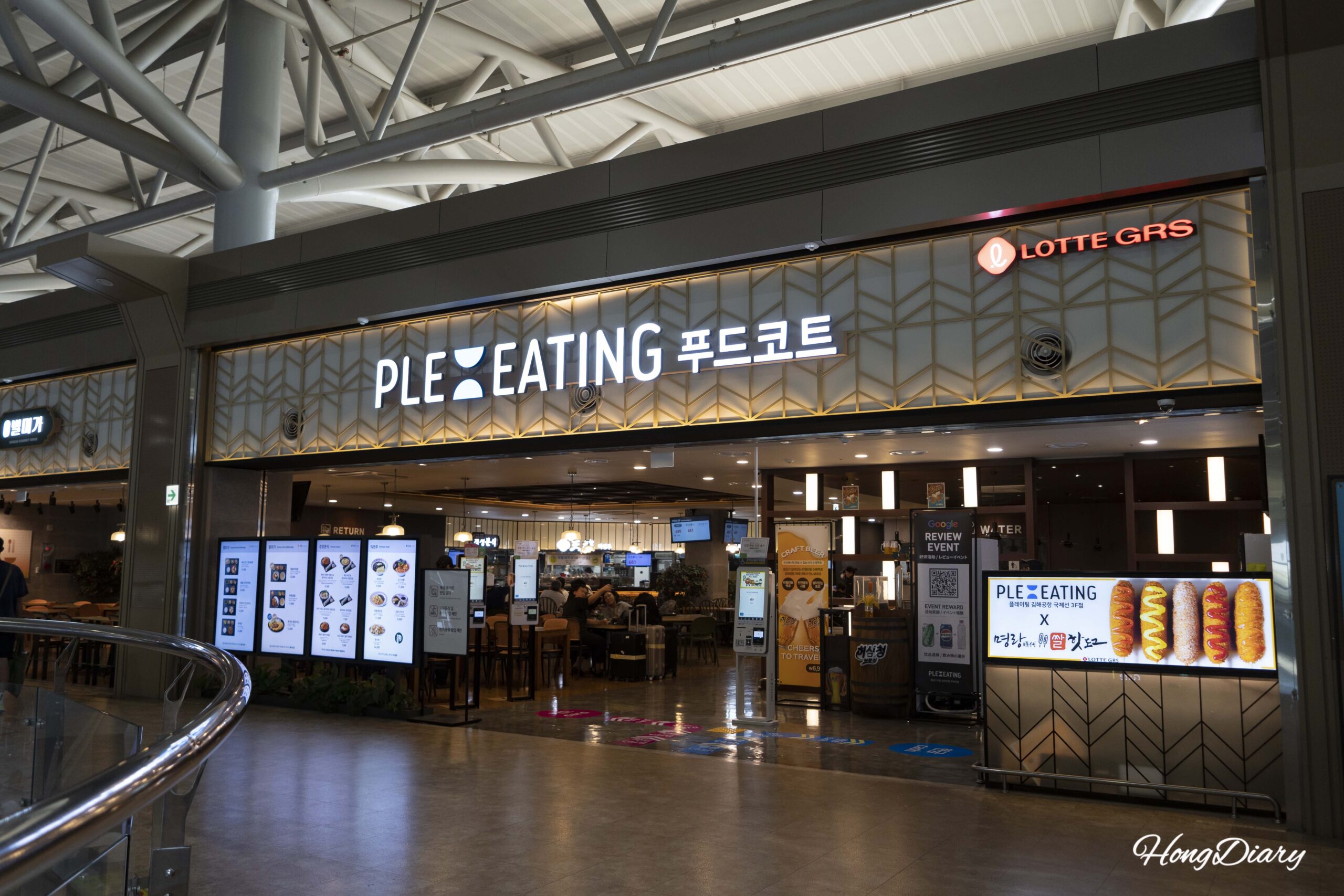
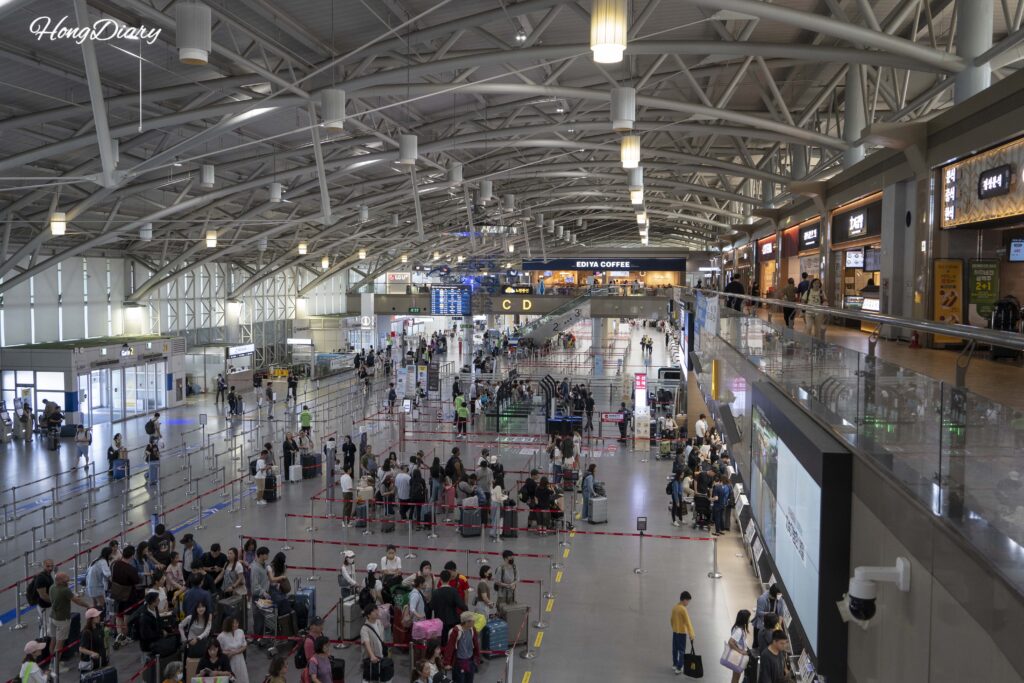
I had a late-night flight out of Busan and roughly two hours to kill after checking in. Rather than squeezing into a plane seat for a lukewarm in-flight tray, I headed to the 3rd floor of Gimhae Airport’s international terminal and found Plating — a self-service food court that turned out to be the most practical spot to eat among the Gimhae Airport restaurants. Here’s what to expect, what things cost, and whether the food is actually worth ordering.
Gimhae International Airport (IATA: PUS) sits in Gangseo-gu, on the western edge of Busan — South Korea’s second-largest city and a major gateway for flights to Japan, Southeast Asia, and China. The international terminal is compact compared to Seoul’s Incheon, and dining choices are limited, which makes knowing where to eat all the more useful.
Table of Contents
Gimhae Airport Plating Food Court: Essential Info, Location, and Hours
| Detail | Info |
|---|---|
| Name | Plating (International Terminal Branch) |
| Location | 3F, Gimhae International Airport, International Terminal (before security) |
| Address | 108 Gonghangjinip-ro, Gangseo-gu, Busan |
| Hours | Daily 06:00 – 21:00 (last order 20:30) |
| Format | Self-service food court (kiosk ordering) |
| Payment | Credit/debit cards at kiosks; cash accepted at the staffed counter |
| Seating | Open seating, spacious — grab any available table |
Why I Picked This Place
Plating operates as a shared food court housing three separate kitchens under one roof, each serving a different style of Korean cuisine. Because it sits on the landside (before the security checkpoint), you can eat here whether you’re departing, arriving, or just seeing someone off — which means you can share a meal with whoever drove you to the airport.
I was heading to Vietnam for a week-long trip and wanted something unmistakably Korean before leaving. The food court format sealed it: a solo traveler can walk in, order, and eat without any awkwardness, while families can order from different counters and eat together at the same table. The space is wide enough that you never feel crowded, and the turnaround from ordering to eating is fast — important when you’re keeping one eye on the departure board.
How to Order
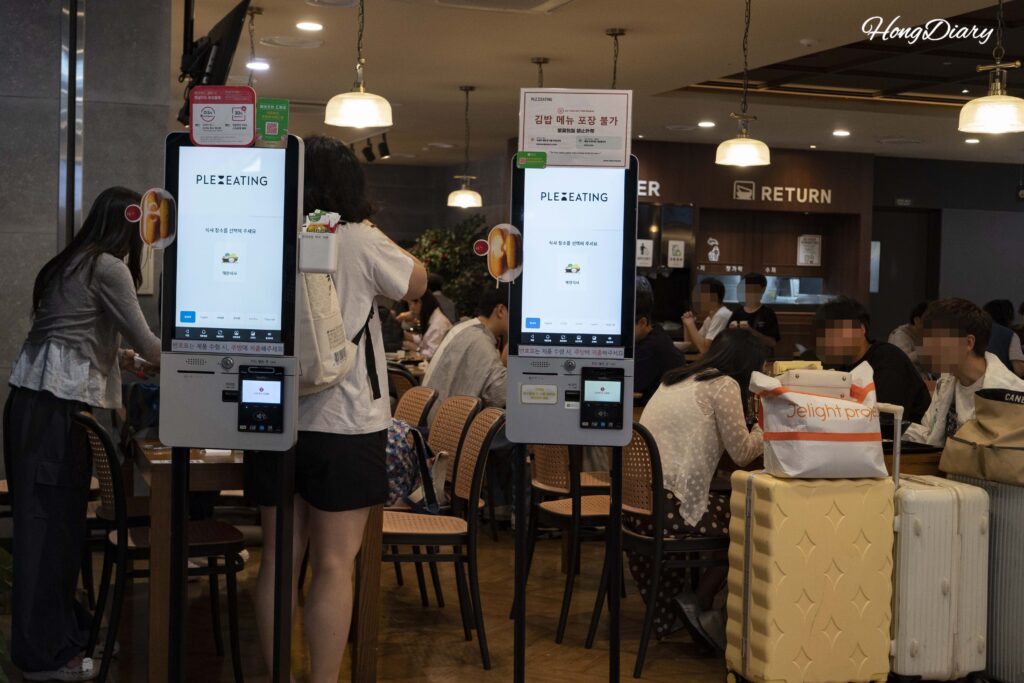
The process is straightforward — the kiosks support multiple languages including English, Japanese, Chinese, and Vietnamese, so ordering is manageable even if you don’t speak Korean. Every menu item has a photo, and prices are displayed clearly in numbers.
Step 1: Stow Your Luggage
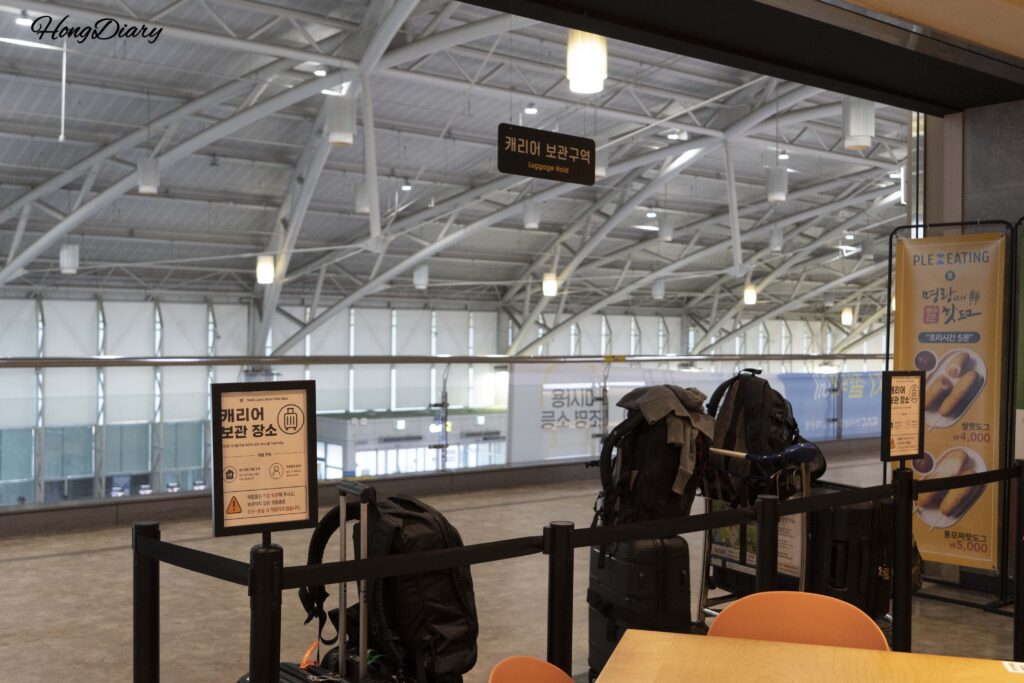
Before you walk in, there’s a designated luggage storage area right by the entrance. Large suitcases, strollers, or anything bulky can be parked there, so you don’t have to drag a carry-on between tables.
Step 2: Order at the Kiosk
Several touchscreen kiosks are lined up near the entrance. Browse the photo-based menu, tap what you want, and pay by card. You’ll receive a buzzer — a small vibrating puck — and a receipt. Then find any open seat.
If you need to pay with cash or want help navigating the menu, head to the staffed counter instead — a cashier will take your order manually.
Step 3: Pick Up Your Food
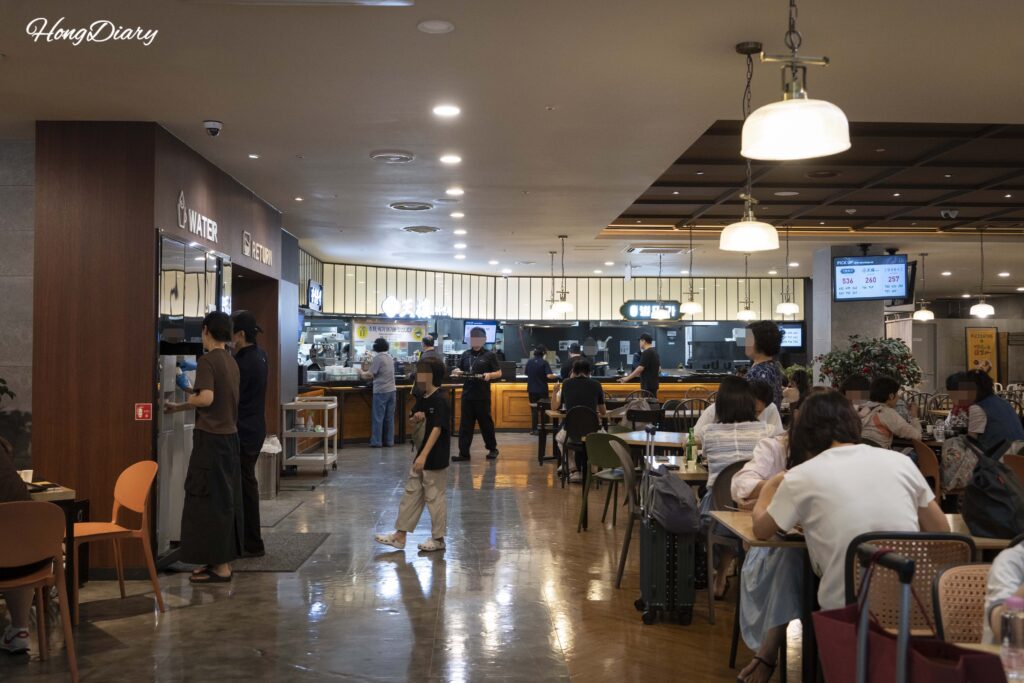
When your buzzer vibrates, collect your tray from the pickup window. Don’t forget to grab utensils (chopsticks, spoon, extra plates) from the self-service station near the counter — they’re not delivered to your table. Water is also self-service, available at a dispenser on the right side of the hall.
When you’re done eating, return your tray and dishes to the return station next to the water area.
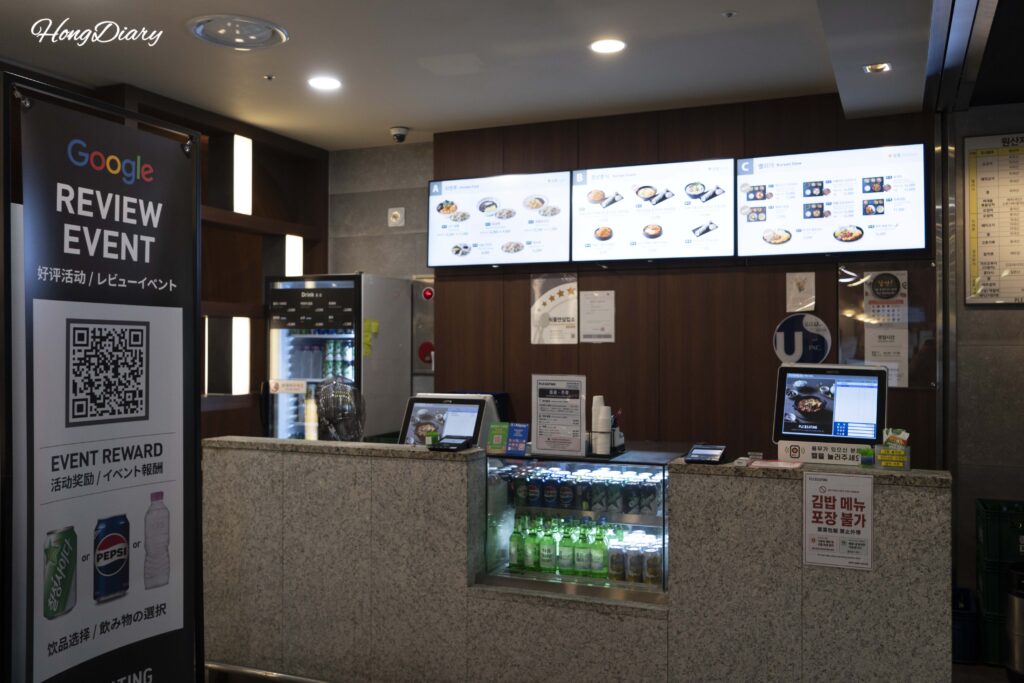
Tip: At the time of my visit, there was a promotion running — scan a QR code at the ordering station, leave a Google review, show it to a staff member, and you’ll receive a free drink: Pepsi, cider (a non-alcoholic sweet lemon-lime soda popular in Korea — similar to Sprite), or bottled water. A small perk, but worth the 30 seconds.
The Menu at a Glance
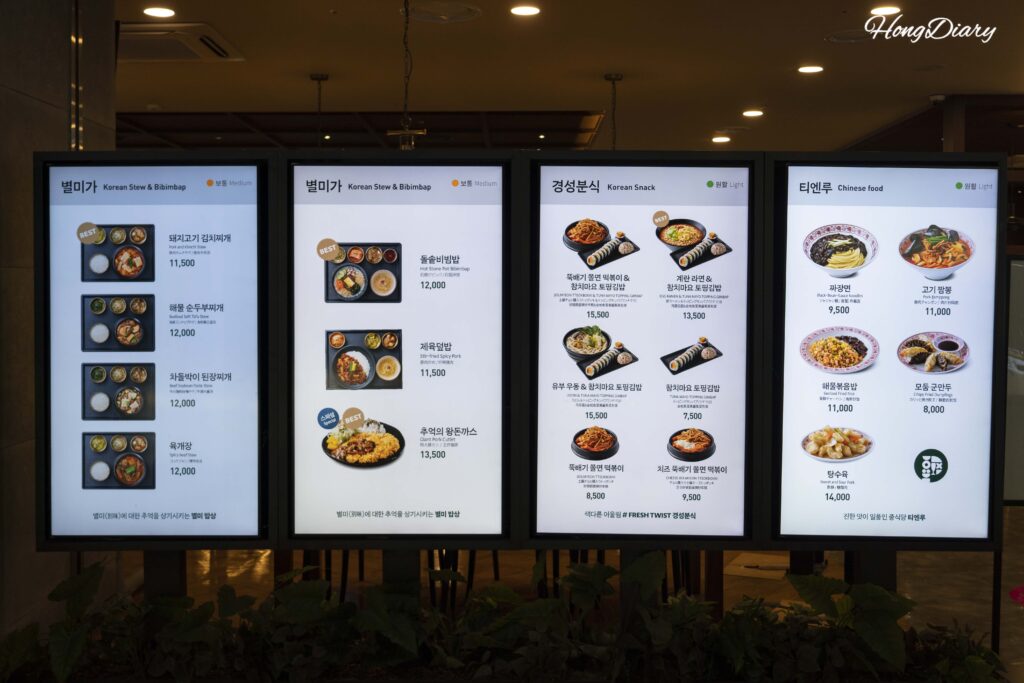
Plating hosts three kitchens, each covering a different genre. This is one of the reasons the food court format works well here — if you’re with family or a group, everyone can order something different and eat together.
Byeolmiga — Korean Stews and Rice Dishes
Byeolmiga (meaning “House of Special Flavors”) is the go-to counter for hearty, traditional Korean meals. Every dish comes as a bansang — a full set with rice, soup, and several small side dishes called banchan (think kimchi, pickled radish, and seasoned vegetables) arranged on a single tray.
| Menu Item | Price (KRW) | Price (USD) | Price (EUR) |
|---|---|---|---|
| Pork Kimchi Jjigae ⭐ — spicy stew with kimchi and pork belly | ₩11,500 | ~$8.20 | ~€7.30 |
| Seafood Sundubu Jjigae — soft tofu stew with seafood in spicy broth | ₩12,000 | ~$8.55 | ~€7.60 |
| Beef Brisket Doenjang Jjigae — soybean paste stew with thin-sliced beef | ₩12,000 | ~$8.55 | ~€7.60 |
| Yukgaejang — shredded beef in fiery red pepper broth with vegetables | ₩12,000 | ~$8.55 | ~€7.60 |
| Dolsot Bibimbap ⭐ — mixed rice with vegetables served in a sizzling stone pot | ₩12,000 | ~$8.55 | ~€7.60 |
| Jeyuk Deopbap — stir-fried spicy pork served over rice | ₩11,500 | ~$8.20 | ~€7.30 |
| Giant Pork Cutlet (Wang Donkkaseu) ⭐ — oversized, thin-pounded Korean-style pork cutlet | ₩13,500 | ~$9.65 | ~€8.55 |
⭐ = Best-sellers marked on the menu board
Gyeongseong Bunsik — Korean Snack Foods
Bunsik literally means “flour-based food” and refers to Korea’s beloved category of casual, affordable snack meals — think spicy rice cakes, noodles, and gimbap (seaweed-wrapped rice rolls with fillings). This counter skews lighter and slightly cheaper.
| Menu Item | Price (KRW) | Price (USD) | Price (EUR) |
|---|---|---|---|
| Tuna Mayo Topped Gimbap — seaweed rice roll with tuna and mayo | ₩7,500 | ~$5.35 | ~€4.75 |
| Jjolmyeon Tteokbokki (Clay Pot) — chewy noodles with spicy rice cakes | ₩8,500 | ~$6.05 | ~€5.40 |
| Cheese Jjolmyeon Tteokbokki — same as above, topped with melted cheese | ₩9,500 | ~$6.80 | ~€6.05 |
| Egg Ramyeon + Tuna Gimbap Combo | ₩13,500 | ~$9.65 | ~€8.55 |
| Jjolmyeon Tteokbokki + Tuna Gimbap Combo | ₩15,500 | ~$11.05 | ~€9.85 |
| Udon + Tuna Gimbap Combo | ₩15,500 | ~$11.05 | ~€9.85 |
T&Lu — Chinese-Korean Dishes
T&Lu serves Koreanized Chinese food — a distinct cuisine that evolved in Korea over the past century. These dishes look Chinese but taste uniquely Korean.
| Menu Item | Price (KRW) | Price (USD) | Price (EUR) |
|---|---|---|---|
| Jajangmyeon — noodles in thick black bean sauce (Korea’s go-to comfort dish) | ₩9,500 | ~$6.80 | ~€6.05 |
| Jjamppong — spicy seafood and pork noodle soup | ₩11,000 | ~$7.85 | ~€7.00 |
| Seafood Fried Rice | ₩11,000 | ~$7.85 | ~€7.00 |
| Assorted Pan-Fried Dumplings (Gunmandu) | ₩8,000 | ~$5.70 | ~€5.10 |
| Tangsuyuk — sweet and sour pork with crispy batter | ₩14,000 | ~$10.00 | ~€8.90 |
Prices converted at approximately $1 USD ≈ ₩1,400 / €1 EUR ≈ ₩1,575 (as of September 2026). Rates may fluctuate.
Most meals here fall in the ₩8,000–₩14,000 range (~$5.70–$10.00 / ~€5.10–€8.90), which is reasonable for an airport — roughly on par with what you’d pay at a casual restaurant in Busan’s city center.
What I Actually Ordered
I went with two dishes from Byeolmiga: the Giant Pork Cutlet (₩13,500 / ~$9.65 / ~€8.55) and the Seafood Sundubu Jjigae bansang (₩12,000 / ~$8.55 / ~€7.60).
After paying at the kiosk, I grabbed a seat and waited. The buzzer went off faster than I expected — maybe seven or eight minutes. For a food court handling a steady stream of travelers, that turnaround is solid. When you’re watching the clock before a flight, speed matters.
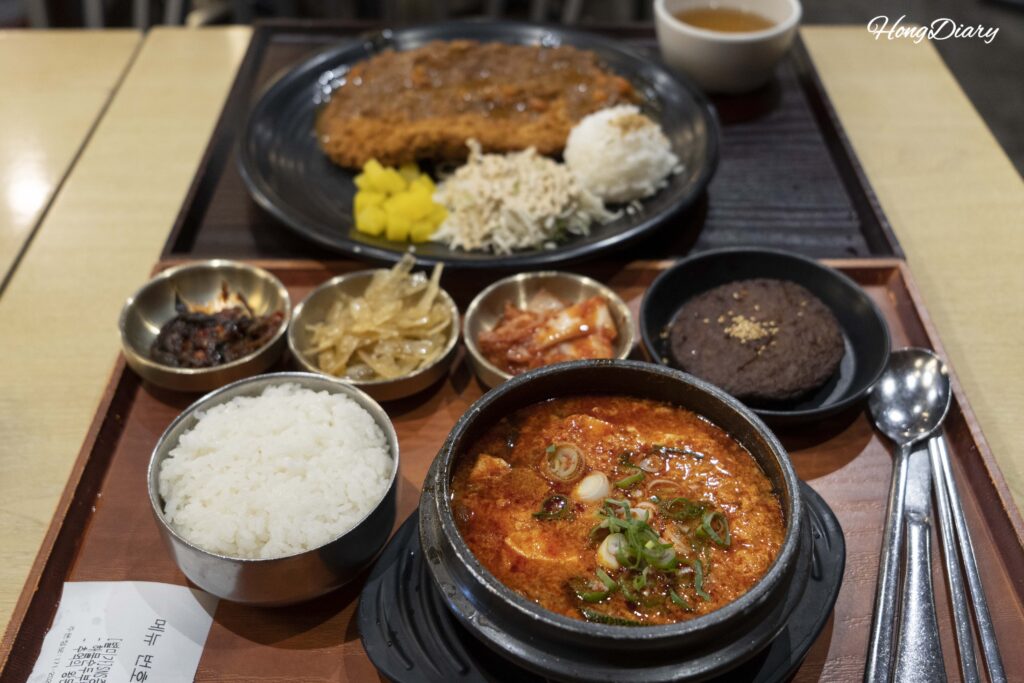
Giant Pork Cutlet (Wang Donkkaseu)
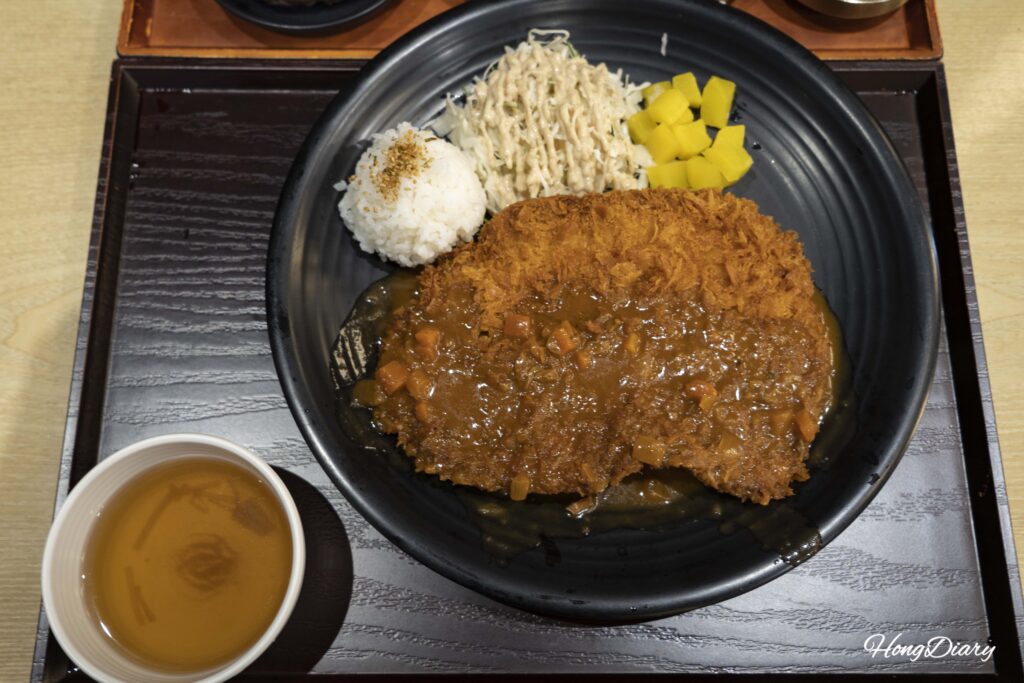
Korean-style donkkaseu is different from Japanese tonkatsu. Where tonkatsu tends to be thick-cut with a panko crust, Korean donkkaseu is pounded thin and wide, almost plate-sized, with a finer, crunchier batter. This one came with a dark, slightly sweet sauce drizzled over the top, a side of shredded cabbage salad, a light udon-style broth soup, rice, and strips of danmuji (bright yellow pickled radish — a staple side dish you’ll see everywhere in Korea).
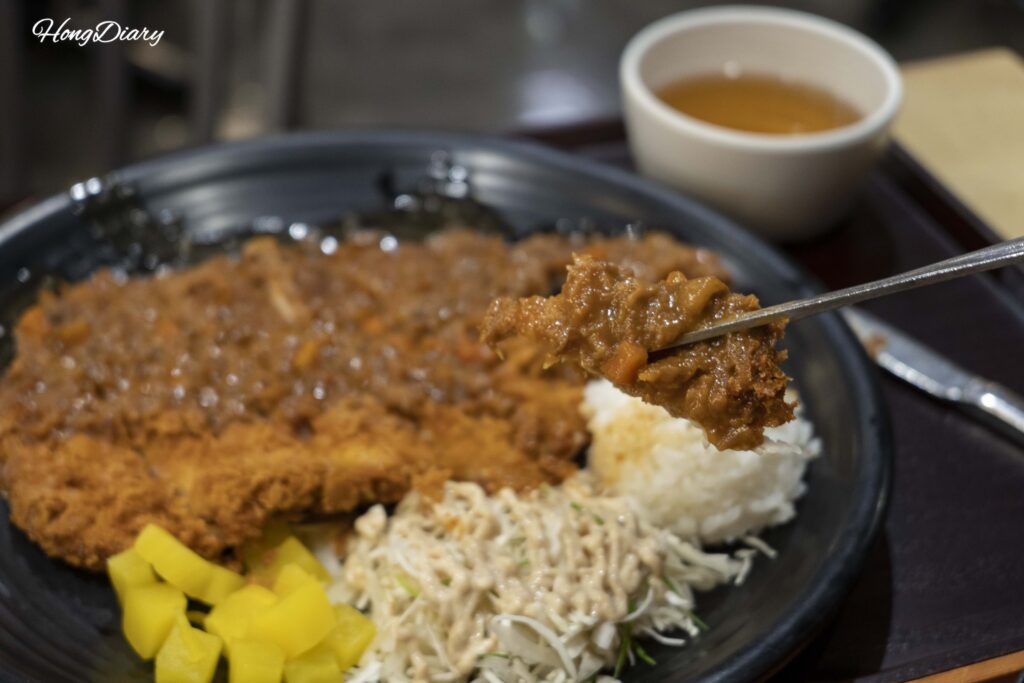
The cutlet was crispy, properly golden, and large enough to share. The pork was thin but not dry, and the batter held up well without turning soggy. It’s not going to win any culinary awards, but it does exactly what it’s supposed to: fill you up with something hot and satisfying that appeals to basically everyone.
If you’re traveling with kids, this is the safest choice on the menu — no heat, no unfamiliar flavors, and easy to cut into pieces.
Seafood Sundubu Jjigae Bansang
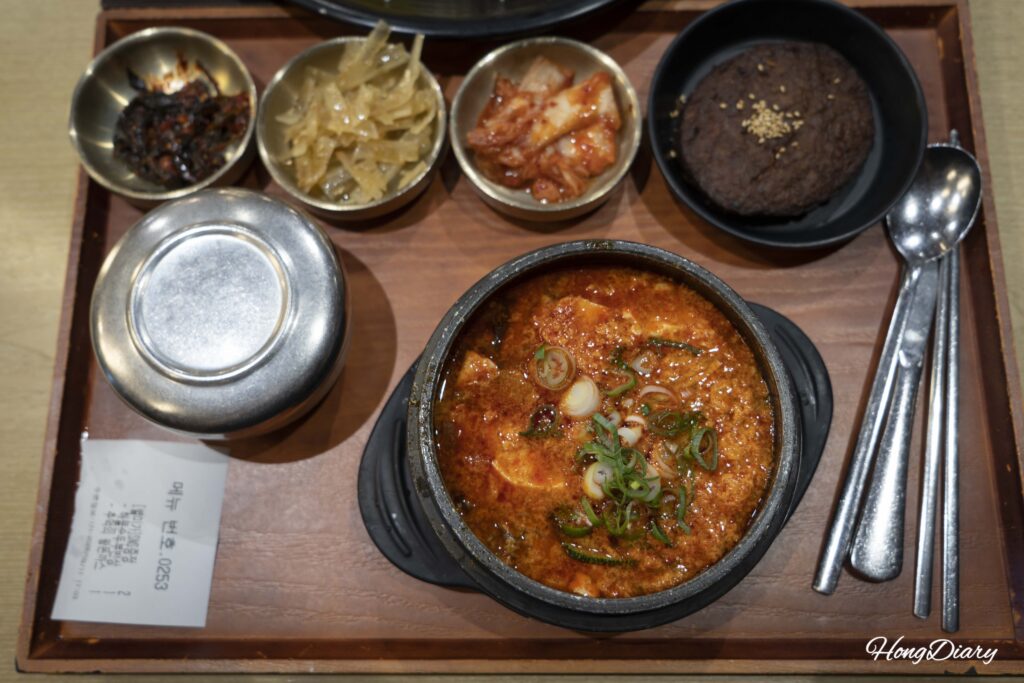
Sundubu jjigae is a Korean stew built around extra-soft, uncurdled tofu that’s silkier than regular tofu — almost custard-like — simmered in a spicy red pepper broth with clams, squid, and other seafood. It arrives at your table still bubbling.
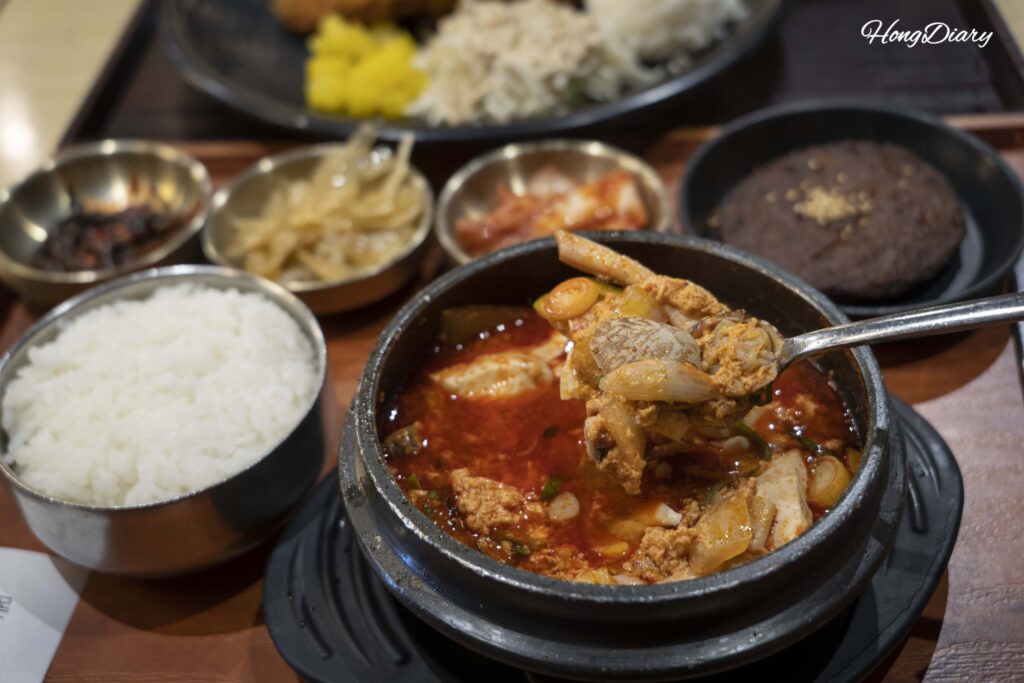
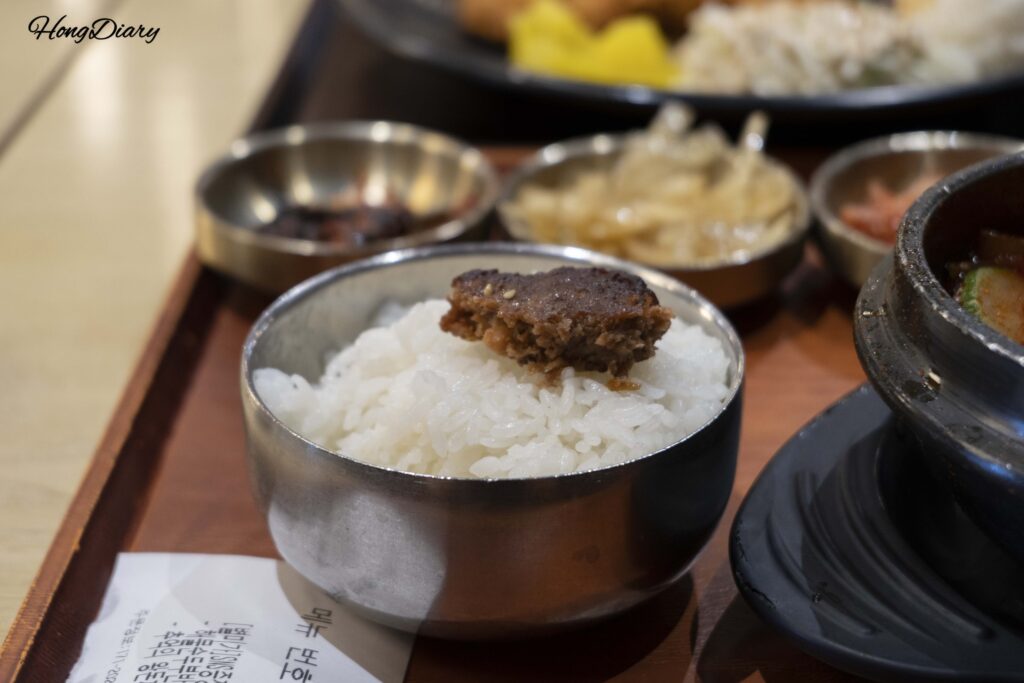
The bansang (set meal) format means you also get a tray of banchan — small side dishes that typically include kimchi, pickled radish, seasoned vegetables, and in this case, a piece of tteokgalbi (a seasoned, pressed ground meat patty shaped into a small disc — mild, savory, and nothing like a Western hamburger patty). That tteokgalbi turned out to be a useful bonus: if you’re eating with a child, you can set it on top of a bowl of plain rice for a simple, kid-friendly mini meal.
Flavor-wise, the stew had the right level of spice — present but not punishing — and the tofu was soft and fresh. Combined with the pork cutlet, the two dishes made a filling pair for one person (or a shareable spread for two lighter eaters).
The Honest Verdict
The food at Plating is mid-range airport fare. It’s not a destination restaurant, and nobody’s flying to Busan just to eat here. The stews are properly seasoned, the portions are fair, and the cutlet is crispy. That puts it comfortably above what you’d expect from a typical airport food court. The real value lies elsewhere: the ordering process is smooth, the wait is short, the seating area is spacious, and the price-to-portion ratio is honest. For a pre-flight meal, those practical factors matter more than a Michelin star.
Plating also works well for solo travelers. The food court layout means there’s no awkwardness about sitting alone at a table — everyone’s doing it. And for families, the variety across three kitchens means parents can order jjigae while kids get a pork cutlet, and you all eat at the same table.
Other Places to Eat at Gimhae Airport
Plating isn’t the only option. Here’s a quick look at every other dining spot across the international terminal, organized by whether they’re before or after the security checkpoint. Prices are listed where confirmed; chain stores follow their standard Korean pricing.
Before Security (Landside)
| Floor | Name | Type | Hours | Price Range |
|---|---|---|---|---|
| 1F | CU Convenience Store | Convenience store — snacks, gimbap, drinks | 06:00–22:00 | Varies |
| 1F | Mauritius Brown | Cafe — milk tea specialty | 06:00–21:30 | Varies |
| 1F | Nadri (Baengnyeon-gage) | Noodles — jjolmyeon (chewy cold noodles), udon, pork cutlet | 06:00–22:00 | ₩10,000–₩14,500 (~$7.15–$10.35 / ~€6.35–€9.20) |
| 1F | Yogerpresso | Cafe — yogurt-based drinks | 06:00–21:00 | Varies |
| 1F | Adela7 | Bakery — breads, pastries | 06:00–20:30 | Varies |
| 2F | Tous les Jours | Korean bakery chain — bread, cakes, coffee, drinks | 05:30–21:00 | Varies |
| 2F | Nuga Pharmacy | Pharmacy — motion sickness pills, travel essentials | 05:30–20:30 | — |
| 2F | Life4Cuts | Photo booth — Korean-style instant photo strips | 05:30–23:00 | Varies |
| 2F | Dunkin’ Donuts | Donuts, coffee — donuts can be brought on board | 05:30–21:30 | Varies |
| 3F | Ediya Coffee | Largest cafe in the airport — wide drink selection, near restrooms | 05:30–20:30 | Varies |
| 3F | Myeongga-ui Tteul | Korean set meals — bulgogi (grilled marinated beef), octopus noodles, bossam (pork wraps) | 06:00–21:30 | ₩11,000–₩16,000 (~$7.85–$11.45 / ~€7.00–€10.15) |
| 3F | Lotteria | Korean fast food chain — burgers, fries (burgers allowed on board, drinks not) | 06:00–21:00 | ₩4,500–₩9,300 (~$3.20–$6.65 / ~€2.85–€5.90) |
| 3F | Hyoja Gomtang | Beef bone soup (gomtang) — slow-simmered ox bone broth served with rice | 06:00–21:00 | From ₩12,500 (~$8.95 / ~€7.95) |
| 3F | Plating | Food court — Korean stews, snacks, Chinese-Korean (see above) | 06:00–21:00 | ₩7,500–₩15,500 (~$5.35–$11.05 / ~€4.75–€9.85) |
After Security (Airside)
Options shrink considerably once you clear the checkpoint. If you want a full sit-down meal, eat before going through security.
| Location | Name | Type | Hours | Price Range |
|---|---|---|---|---|
| Departure Area | Plabo6 Air Rail | Food court — bunsik (snacks), sushi, pork cutlet; food delivered by a rail conveyor on the counter | 06:00–21:00 | Varies |
| Departure Area | Hanwadam Soban | Korean dining — premium hanwoo (Korean beef) soup and noodles | 06:00–21:00 | From ₩14,000 (~$10.00 / ~€8.90) |
| Air Busan Gate Area | K-Ramyeon Bar | Korean and Japanese-style ramen, rice balls, dumplings | 06:00–21:00 | From ₩11,000 (~$7.85 / ~€7.00) |
| Center | CU Convenience Store | Gimbap, sandwiches, drinks — self-checkout, fast turnover | 06:00–End of flights | Varies |
| Left Wing | Angel-in-Us Coffee | Cafe — coffee, sandwiches, light pastries | Varies | Varies |
| Right Wing | A Twosome Place | Cafe — coffee, cake, sandwiches | Varies | Varies |
| 3F (via escalator) | Heineken Lounge Bar | Draft beer, sausage sets, coffee, kids’ drinks — easy to miss, rarely crowded | Varies | From ₩8,800 (~$6.30 / ~€5.60) |
Where listed, prices are converted at approximately $1 USD ≈ ₩1,400 / €1 EUR ≈ ₩1,575 (as of September 2026). Rates may fluctuate. “Varies” indicates standard Korean chain pricing; check in-store for current prices.
Insider tip: Most travelers don’t realize there’s a 3rd floor inside the departure area. Take the escalator in the center of the airside hall, and you’ll find the Heineken Lounge Bar — open to everyone, no lounge membership needed. Draft Heineken starts at ₩8,800 (~$6.30 / ~€5.60), and they also serve non-alcoholic drinks like coffee, juice, and milk for kids. There’s a small rest area and a children’s play space up there too. If you have an early-morning or late-night departure, this quiet corner is worth knowing about.
Tips That Could Save You Time
Gimhae Airport is compact, but there are a few things that aren’t obvious unless you’ve been through it more than once.
Skip the Morning Line: Gate 2 Departure
Early mornings (roughly 6–9 a.m.) get crowded at Gimhae, especially when multiple low-cost carrier flights overlap. The main departure gate (Gate 1) can have a long queue.
What most travelers don’t know is that there’s a second departure gate inside the same building, accessible through boarding procedure Zone D.
| Detail | Info |
|---|---|
| Location | International Terminal, boarding procedure Zone D |
| Hours | 05:40 – 10:00 (last entry 09:50) |
| Operation | Partial (mornings only) |
| Note | Passengers eligible for priority screening (first class, business class) should use Gate 1 |
If you see a long line at the main gate at 7 a.m., head to Zone D instead. There are also self check-in kiosks available if the check-in counter is backed up.
Currency Exchange: A Trap Worth Knowing About
For years, the only bank inside Gimhae Airport was Busan Bank. However, its contract with the airport ends in October 2026. If you arrive after that date, currency exchange inside the terminal may no longer be available.
The alternative is nearby: on the 1st floor of the Gimhae Airport Light Rail station, there’s a currency exchange shop called MoneyBox.
| Detail | Info |
|---|---|
| Name | MoneyBox, Gimhae Airport Branch |
| Location | Gimhae Airport Light Rail Station, 1st floor |
| Hours | Daily 06:00 – 21:00 |
| In-person counter | Cash only (no card-based exchange) |
| 24-hour unmanned machine | Available outside business hours (foreign currency sales only) |
The Light Rail station is a short walk from the terminal, so there’s no reason to panic if you land without any Korean won.
Final Thoughts
If you’ve been eating your way through Busan — grilling pork belly in Seomyeon, cooling down with a bowl of milmyeon (Busan’s signature chilled wheat noodles, served in a tangy iced broth), grabbing hotteok (a crispy Korean street pancake filled with crushed nuts and brown sugar) from a sidewalk stall — Plating won’t be the most memorable meal of your trip. But it doesn’t need to be. What it does is solve a real, practical problem: getting a hot, decent, reasonably priced Korean meal at the airport without stress, without a long wait, and without feeling rushed before your flight. The fact that it opens at 6 a.m. also means it works in reverse — if you’ve just landed and want your first bowl of Korean stew before even leaving the airport, the food court is right there on the 3rd floor.
Among the Gimhae Airport restaurants, Plating stands out for its range, its price point, and how smoothly the self-service system runs. It won’t blow you away, but it won’t let you down either — and sometimes, that’s exactly what you need at an airport.
Busan has a way of making every corner worth a second look.
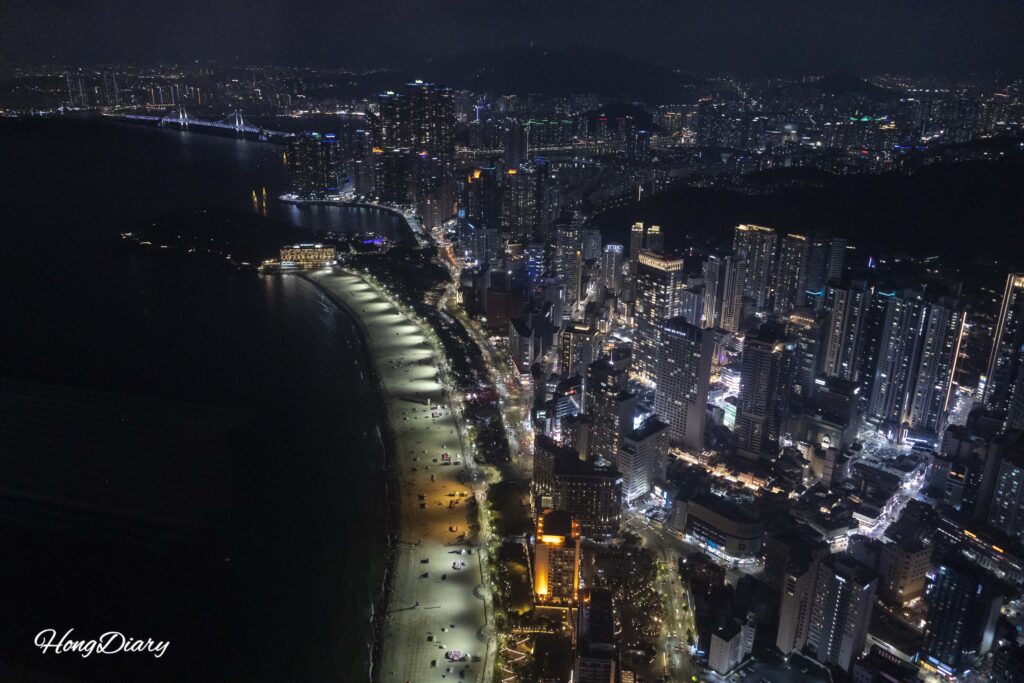
On this trip, I spent an evening watching the city shift from blue to neon from the 100th floor of Haeundae’s X the Sky observatory — the kind of panoramic view that makes you forget you’re standing indoors.
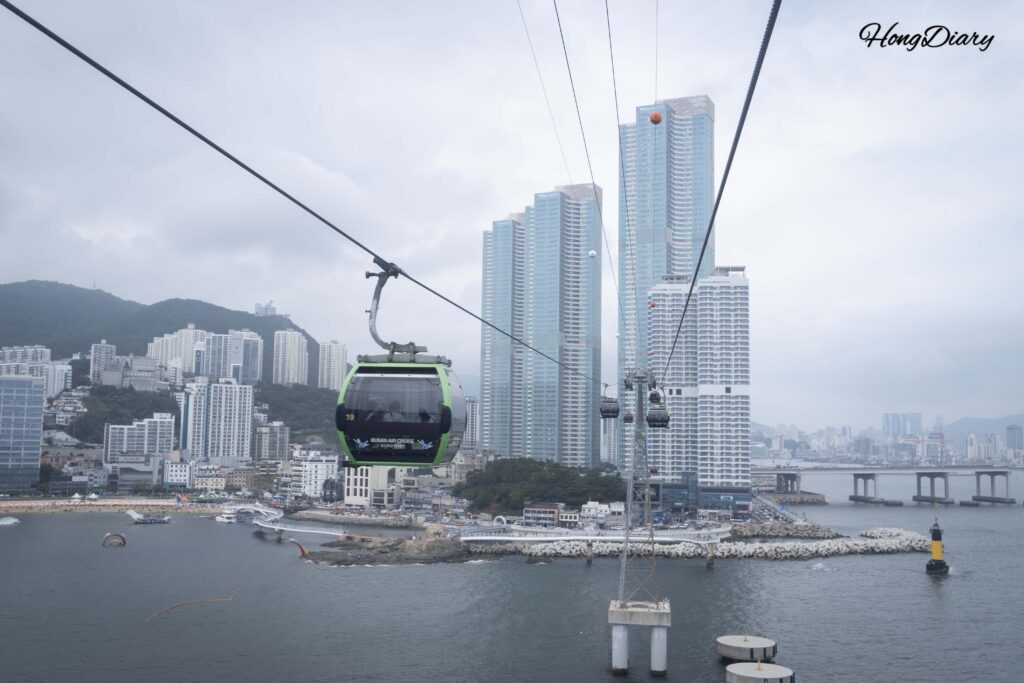
If you have a few hours to spare along the coast, the Songdo Cable Car glides you over open water between Songdo Beach and Amnam Park, with nothing but sea below your feet.
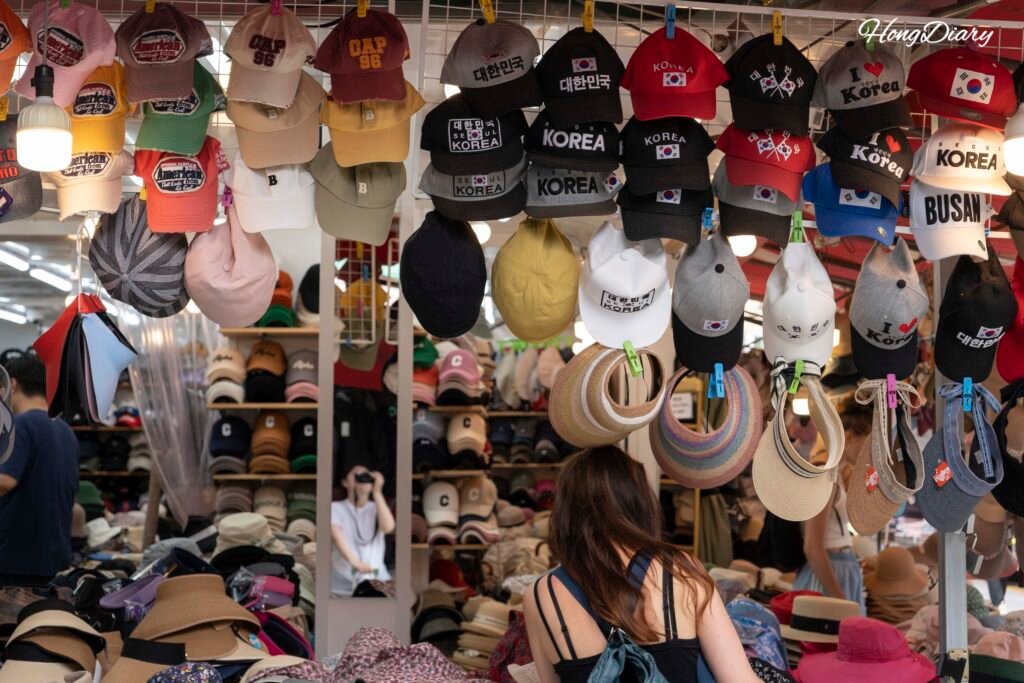
Sitting in the food court, waiting for my buzzer to go off, I found myself thinking about Gukje Market — the sprawling, 70-year-old international market in Jung-gu that most visitors speed-walk through without stopping to look.
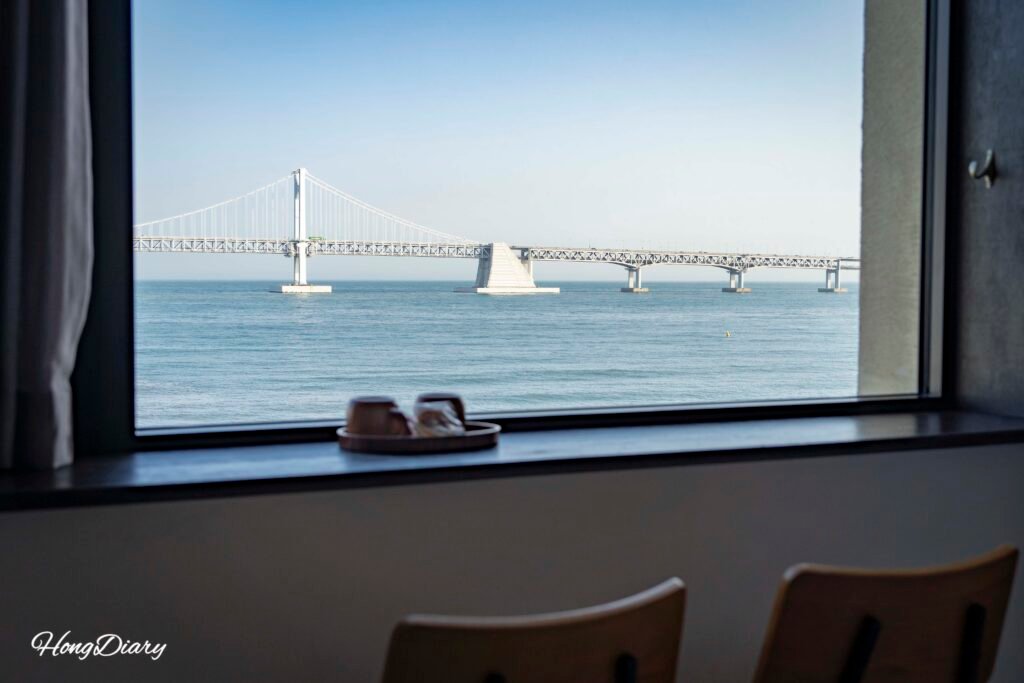
And then there was the night I stayed at a beachfront hotel in Gwangalli for around ₩112,000 (~$80 / ~€71) and watched Gwangan Bridge light up from the bed — the kind of view you keep checking isn’t a screensaver.
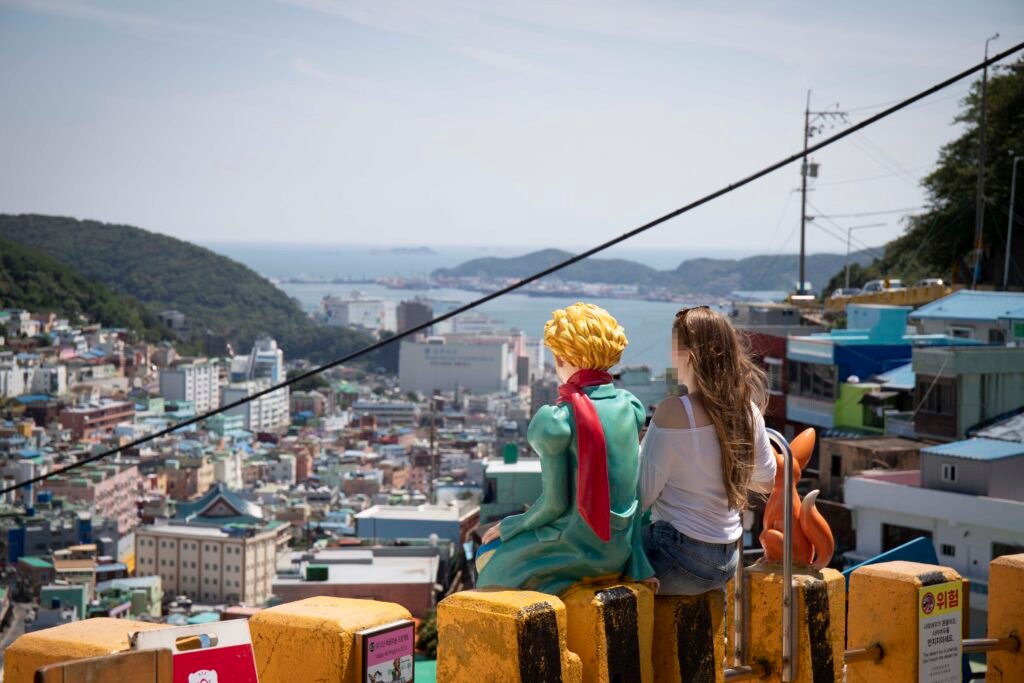
If you still have a day to fill before your flight, the pastel-painted alleys of Gamcheon Culture Village are worth the detour — eight stops, two viewpoints, and yes, the BTS mural everyone’s looking for.
A trip to Busan deserves a proper send-off. Among all the Gimhae Airport restaurants I’ve tried, Plating is the low-key, no-fuss place to get one.
FAQ: Navigating the Kiosks and Amenities at Gimhae Airport’s Best Food Court
What restaurants are inside Gimhae Airport’s international terminal?
The international terminal at Gimhae Airport has over a dozen dining options spread across three floors. On the 3rd floor (before security), the main choices are Plating — a food court with three kitchens serving Korean stews, snack foods, and Chinese-Korean dishes — along with Myeongga-ui Tteul (Korean set meals from ₩11,000 / ~$7.85 / ~€7.00), Hyoja Gomtang (beef bone soup from ₩12,500 / ~$8.95 / ~€7.95), and Lotteria (Korean fast food burgers from ₩4,500 / ~$3.20 / ~€2.85). After security, options include Plabo6 Air Rail (a rail-delivery food court), Hanwadam Soban (premium Korean beef soup from ₩14,000 / ~$10.00 / ~€8.90), K-Ramyeon Bar (Korean and Japanese-style ramen from ₩11,000 / ~$7.85 / ~€7.00), two cafes (Angel-in-Us and A Twosome Place), a CU convenience store, and a Heineken Lounge Bar on the hidden 3rd-floor mezzanine.
How much does a meal cost at Gimhae Airport restaurants?
Most full meals at Gimhae Airport’s landside restaurants range from ₩9,500 to ₩16,000 (~$6.80–$11.45 / €6.05–€10.15). At Plating food court, the most affordable option is a single tuna mayo gimbap (seaweed rice roll with tuna and mayo) at ₩7,500 ($5.35 / €4.75), while heartier dishes like the Giant Pork Cutlet cost ₩13,500 ($9.65 / €8.55) and stew sets run ₩11,500–₩12,000 ($8.20–$8.55 / €7.30–€7.60). Chinese-Korean dishes at T&Lu start from ₩8,000 ($5.70 / €5.10) for dumplings and go up to ₩14,000 ($10.00 / ~€8.90) for tangsuyuk (sweet and sour pork).
Prices are comparable to regular restaurants in Busan’s city center. (Rates: $1 USD ≈ ₩1,400 / €1 EUR ≈ ₩1,575 as of September 2026.)
Can I eat at Gimhae Airport before going through security?
Yes, and this is actually the recommended approach. The majority of Gimhae Airport’s sit-down restaurants are located on the landside (before the security checkpoint), concentrated on the 3rd floor of the international terminal. Plating food court, Myeongga-ui Tteul, Hyoja Gomtang, and Lotteria are all accessible without a boarding pass. This also means you can dine with friends or family who are seeing you off, since they don’t need to pass through security. Once you clear the checkpoint, dining options drop significantly — only a handful of small restaurants, two cafes, and a convenience store are available airside.
What is Plating food court at Gimhae Airport?
Plating is a self-service food court on the 3rd floor of Gimhae Airport’s international terminal, located before the security checkpoint. It houses three separate kitchens: Byeolmiga (Korean stews, bibimbap, and a signature oversized pork cutlet), Gyeongseong Bunsik (casual Korean snack foods like spicy rice cakes and gimbap), and T&Lu (Chinese-Korean dishes such as jajangmyeon and fried rice). You order at touchscreen kiosks — available in English, Japanese, Chinese, Vietnamese, and Korean, so language is rarely an issue — pay by card, receive a vibrating buzzer, and pick up your food when it’s ready, typically within 7–10 minutes. The hall has spacious open seating and a luggage storage area near the entrance. Hours are 06:00–21:00 daily, with last orders at 20:30. Meals range from ₩7,500 to ₩15,500 (~$5.35–$11.05 / ~€4.75–€9.85).
Are there kid-friendly food options at Gimhae Airport?
Several options work well for children. At Plating food court, the Giant Pork Cutlet (₩13,500 / ~$9.65 / ~€8.55) is a mild, non-spicy breaded pork dish that’s easy to cut into pieces for smaller eaters. The Seafood Sundubu Jjigae set (₩12,000 / ~$8.55 / ~€7.60) comes with a small tteokgalbi — a seasoned ground meat patty that’s mild and savory — which you can place on a bowl of plain rice for a child-friendly mini meal. At Gyeongseong Bunsik, the egg ramyeon and gimbap combo (₩13,500 / ~$9.65 / ~€8.55) is another safe pick. Outside Plating, Lotteria burgers (from ₩4,500 / ~$3.20 / ~€2.85) and Dunkin’ Donuts (donuts can be carried onto the plane) are familiar options for younger travelers. Inside the airside departure area, a small children’s play space is located on the 3rd-floor mezzanine near the Heineken Lounge Bar.
What time do restaurants open and close at Gimhae Airport?
Most restaurants at Gimhae Airport open between 05:00 and 06:00 in the morning, making early-morning flights manageable. Plating food court opens at 06:00 and takes last orders at 20:30, closing at 21:00. Tous les Jours bakery opens the earliest at 05:30, followed by Dunkin’ Donuts and Ediya Coffee at 05:30. On the airside, the CU convenience store stays open until the last flight of the day departs. Most sit-down restaurants close by 21:00–21:30. If your flight departs after 21:00, plan to eat before that cutoff or rely on the airside convenience store and cafes for sandwiches, gimbap, and drinks.
Where can I exchange currency at Gimhae Airport? Is it true the bank is closing in October 2026?
The only bank inside Gimhae Airport has been Busan Bank, but its contract with the airport is set to end in October 2026. After that date, currency exchange inside the terminal may no longer be available. The alternative is MoneyBox, a currency exchange shop located on the 1st floor of the Gimhae Airport Light Rail station, a short walk from the terminal. It operates daily from 06:00 to 21:00, and the in-person counter handles cash only (no card-based exchange). Outside business hours, a 24-hour unmanned exchange machine is available for foreign currency sales (converting Korean won to other currencies). If you arrive without any won, there’s no need to panic — the Light Rail station is just a few minutes on foot from the terminal building.