
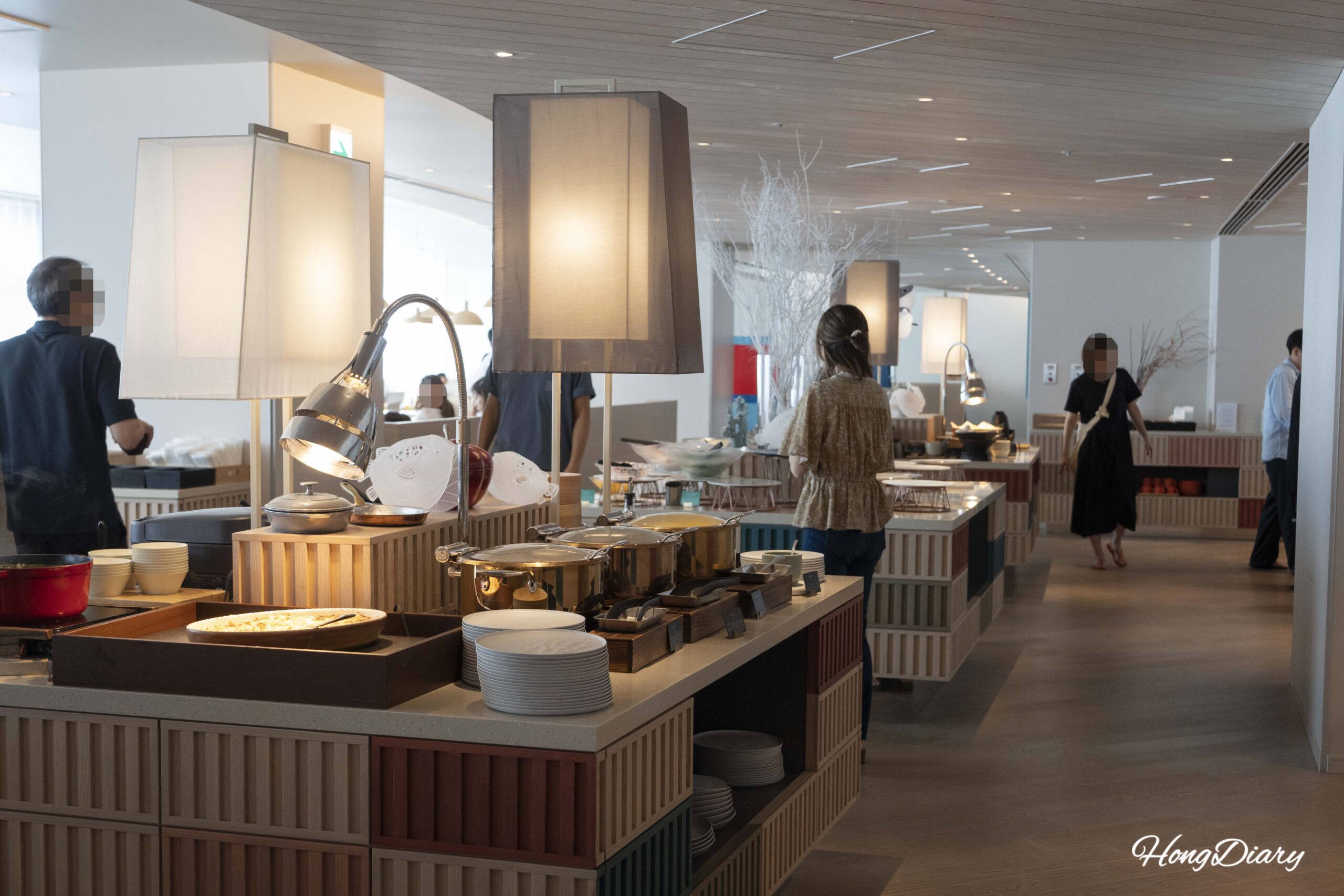
Shimonoseki handles more fugu than any other city in Japan. I knew that before checking into RISONARE Shimonoseki — a waterfront resort on the Kanmon Strait where that reputation shows up most clearly at the RISONARE Shimonoseki restaurant table. Over two days, I ate my way through a fugu-heavy buffet, a regional breakfast spread, and a nine-course Italian dinner built around the fish.
But what stayed with me longest from the restaurants here had nothing to do with what was on the plate.
The kitchens here source their primary seafood daily from nearby Karato Market (唐戸市場), a well-known local fish market. Staff mentioned that everything from the sashimi to the grilled fugu is bought and prepared the same day — which likely explains why nothing I ate over two days carried even a hint of fishiness.
Table of Contents
PUKU PUKU Buffet at a Glance
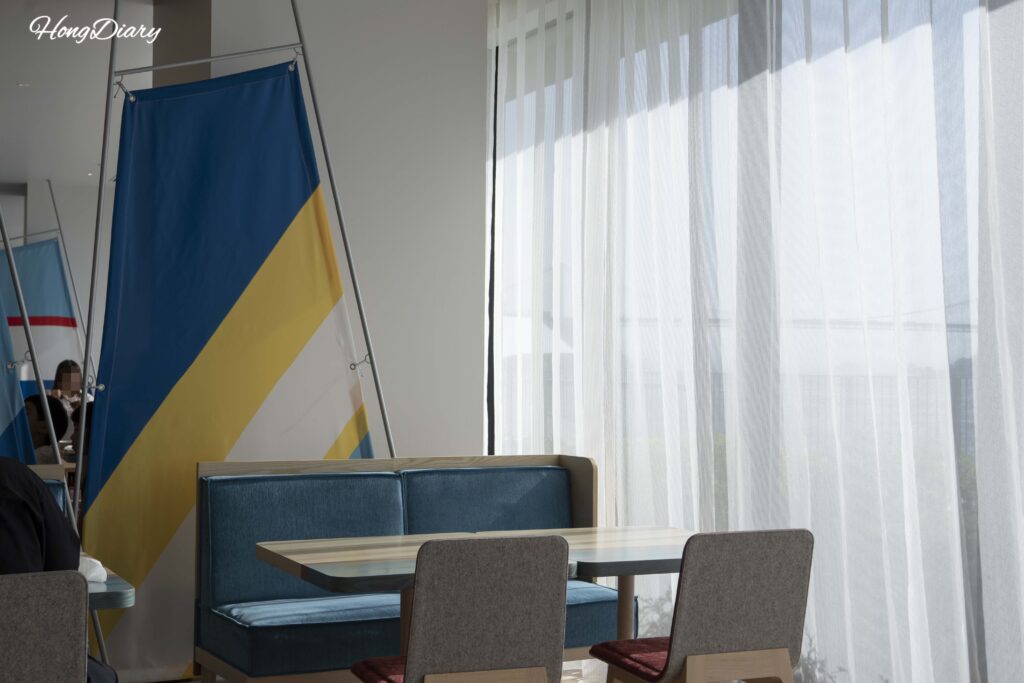
Both restaurants at RISONARE Shimonoseki — the PUKU PUKU (ぷくぷく) buffet and the Otto Sette fine-dining restaurant — are located on the second floor, with views of the Kanmon Strait through floor-to-ceiling windows.
| Detail | Dinner | Breakfast |
|---|---|---|
| Hours | 5:00 PM – 9:00 PM (last order 8:30 PM) | 7:30 AM – 10:00 AM (last order 9:30 AM) |
| Adults | ¥6,200 (~$39.24 USD / ~€35.03 EUR) | ¥2,900 (~$18.35 USD / ~€16.38 EUR) |
| Ages 7–11 | ¥4,340 (~$27.47 USD / ~€24.52 EUR) | ¥2,030 (~$12.85 USD / ~€11.47 EUR) |
| Ages 4–6 | ¥3,100 (~$19.62 USD / ~€17.51 EUR) | ¥1,450 (~$9.18 USD / ~€8.19 EUR) |
| Under 3 | Free | Free |
| Reservation | Required (by 2:00 PM same day via website) | Required (by 2:00 PM same day via website) |
Prices converted at approximately $1 USD ≈ ¥158 / €1 EUR ≈ ¥177 (as of October 2026). Rates may fluctuate. Hours may also vary — confirm with the front desk at check-in.
The buffet operates on a reservation system — more on why that matters and how to book in the “Before You Book” section below.
Dinner at PUKU PUKU — Where Fugu Takes Center Stage
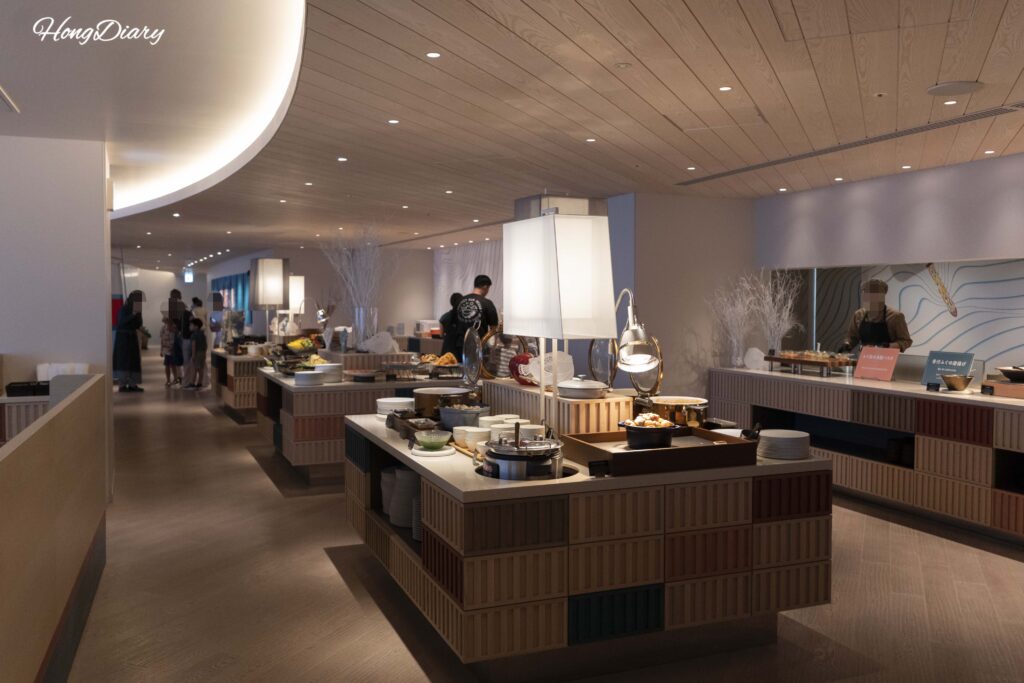
Walking into PUKU PUKU for dinner, the first thing that caught my eye was the Fugu Market Corner — a dedicated station showcasing dishes made exclusively from pufferfish. In a city where fugu is practically a civic identity, having an entire corner of a buffet devoted to it felt right.
The Fugu Market Corner
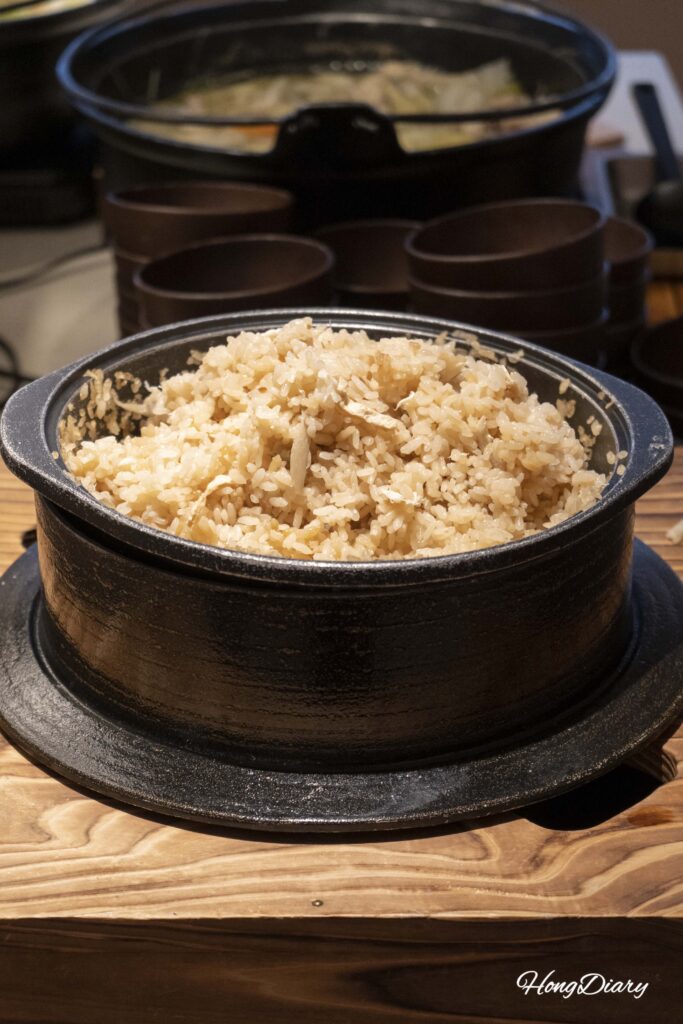
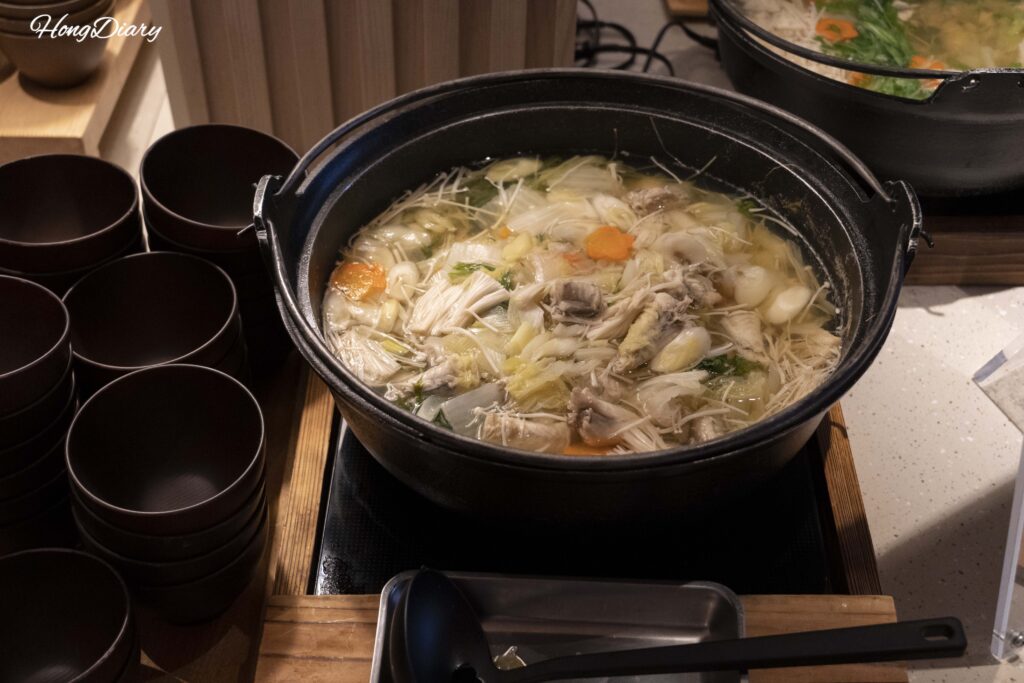
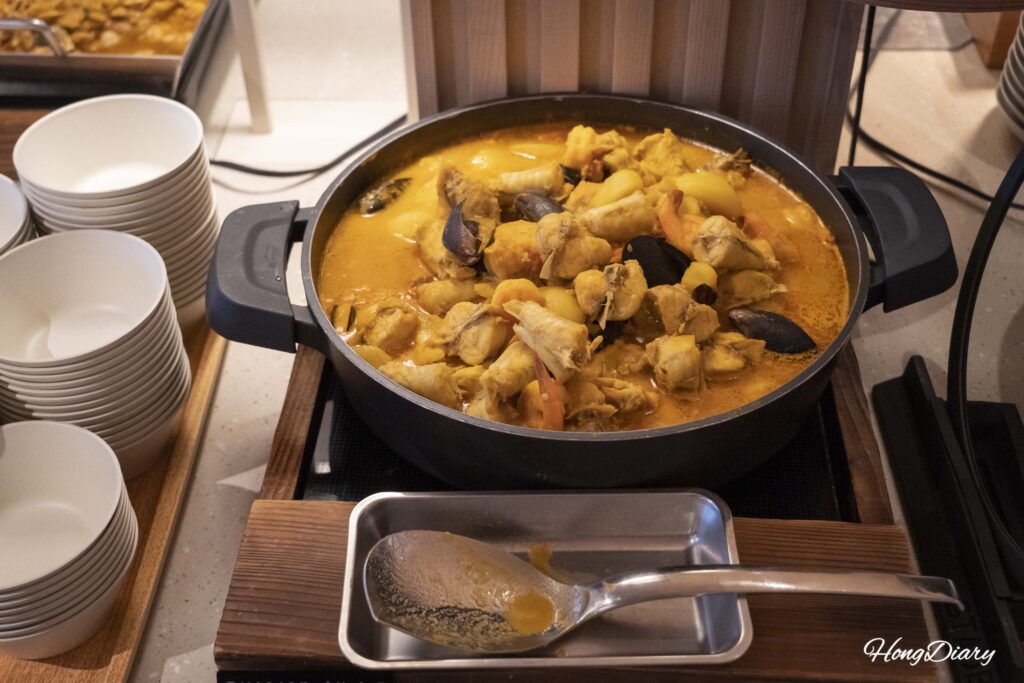
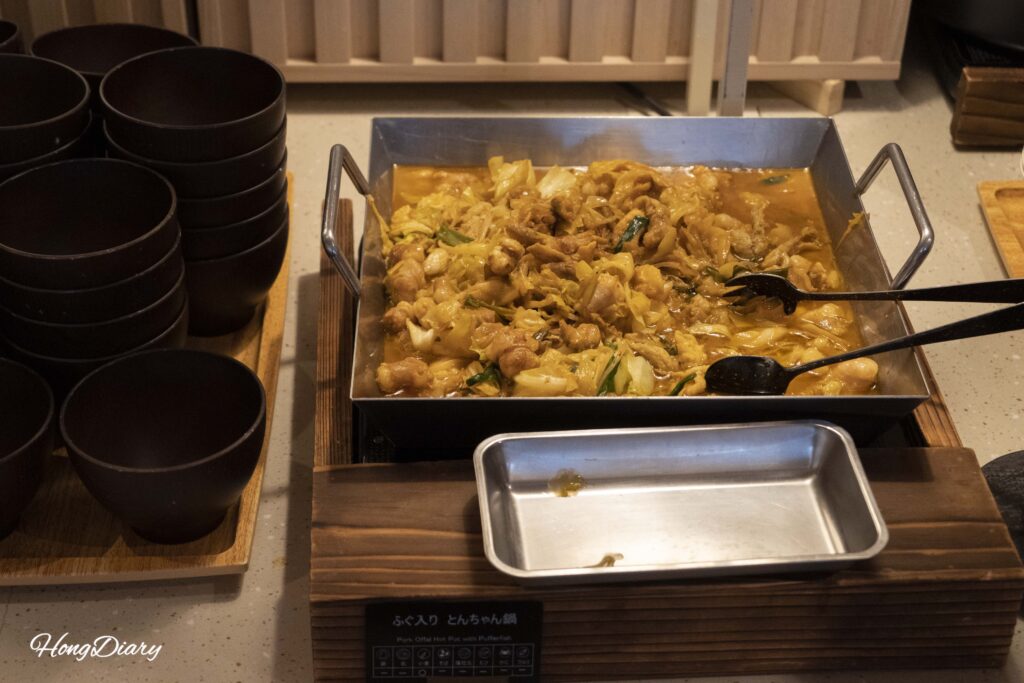
The variety here went beyond what I expected from a hotel buffet. Lined up across the station were fugu nabe (a Japanese hot pot with pufferfish, carrots, mushrooms, and green onions), a clay-pot fugu rice cooked with the fish mixed into seasoned rice, fugu bouillabaisse with bone-in pieces simmered in a rich broth, and a stir-fried dish combining thinly sliced pork with fugu in a savory soup base.
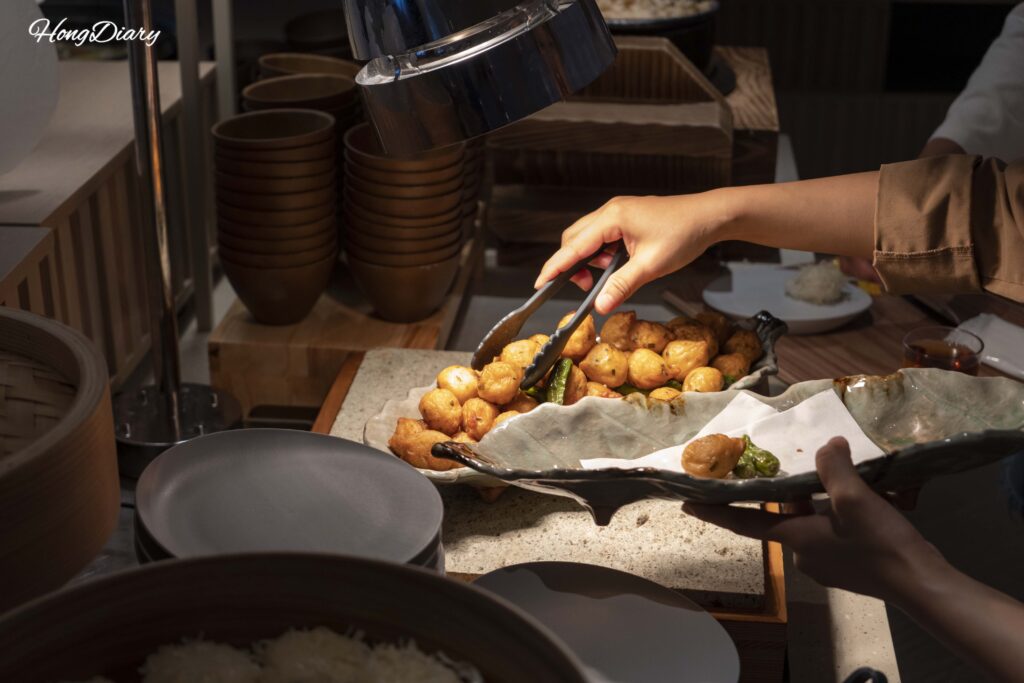
One of the more unexpected items was a cold pasta topped with fugu skin and tomato sauce — visually striking and texturally interesting, though admittedly more of a conversation piece than a comfort food. There were also fugu shumai (steamed dumplings) and the sleeper hit of the evening: fugu fish cakes. These had a satisfyingly chewy, bouncy texture that kept drawing people back for seconds — myself included.
The Live Grill Station
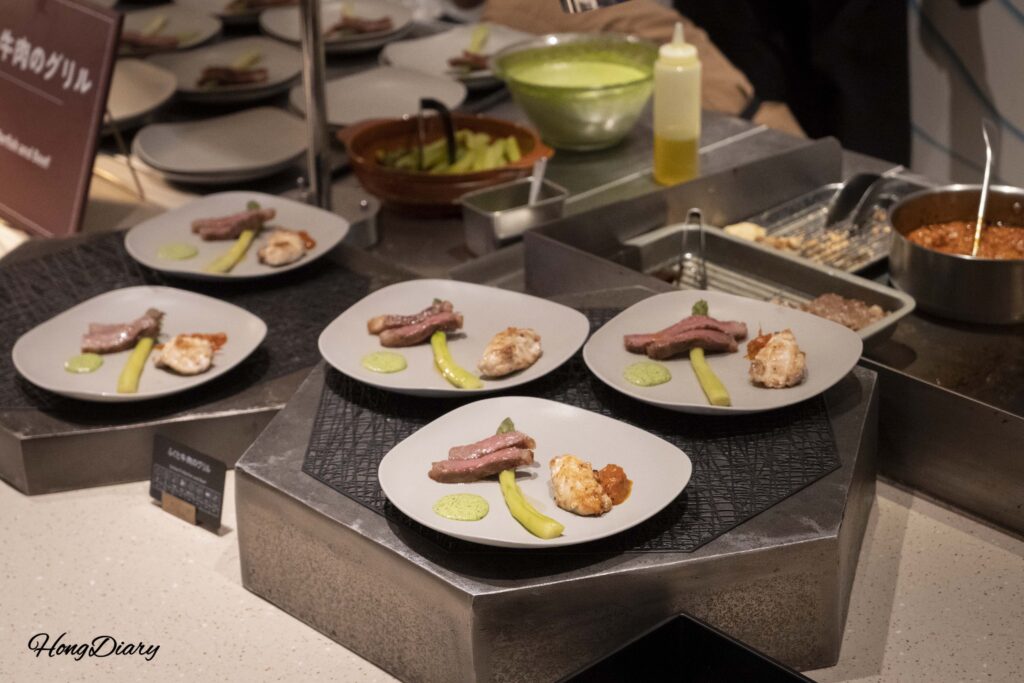
A dedicated chef was grilling wagyu steak, fugu fillets, and asparagus to order. The station was easily the most popular spot in the restaurant — there was a steady stream of guests all evening — but the staff worked fast enough that I never waited more than a minute or two, even on repeat visits. The reservation-based system clearly helped keep the crowd manageable.
Build-Your-Own Kaisen Don
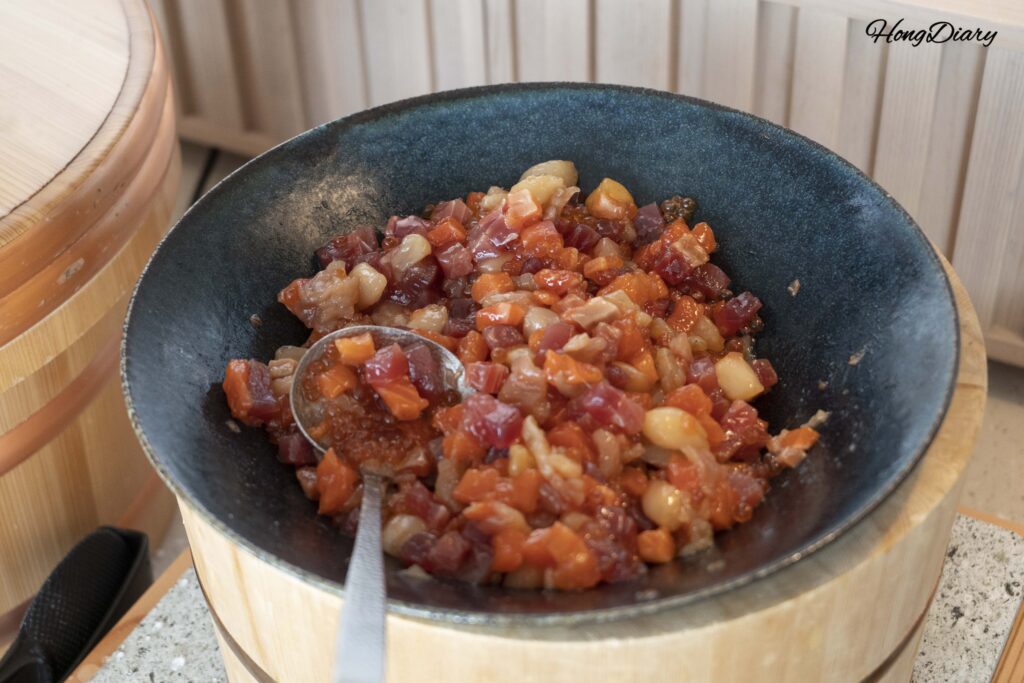
If I had to pick one dish that defined my meals at PUKU PUKU, it would be the kaisen don (海鮮丼) — a do-it-yourself seafood rice bowl. A large platter of pre-seasoned sashimi was set out for guests to pile over a bowl of rice however they liked. On the night I visited, the spread included salmon roe, raw salmon, shrimp, scallops, and a reddish fish I couldn’t identify, all lightly marinated. The seasoning was already worked into the fish, so you didn’t need soy sauce — just rice and toppings, and it was genuinely one of the better bites of the trip.
This station was popular enough that the platter emptied out every few minutes, but the staff kept cycling in fresh batches without anyone having to flag them down. I came back for this three times over two days. (Yes, it showed up at breakfast too.)
Sushi, Cold Dishes, and the Rest of the Spread
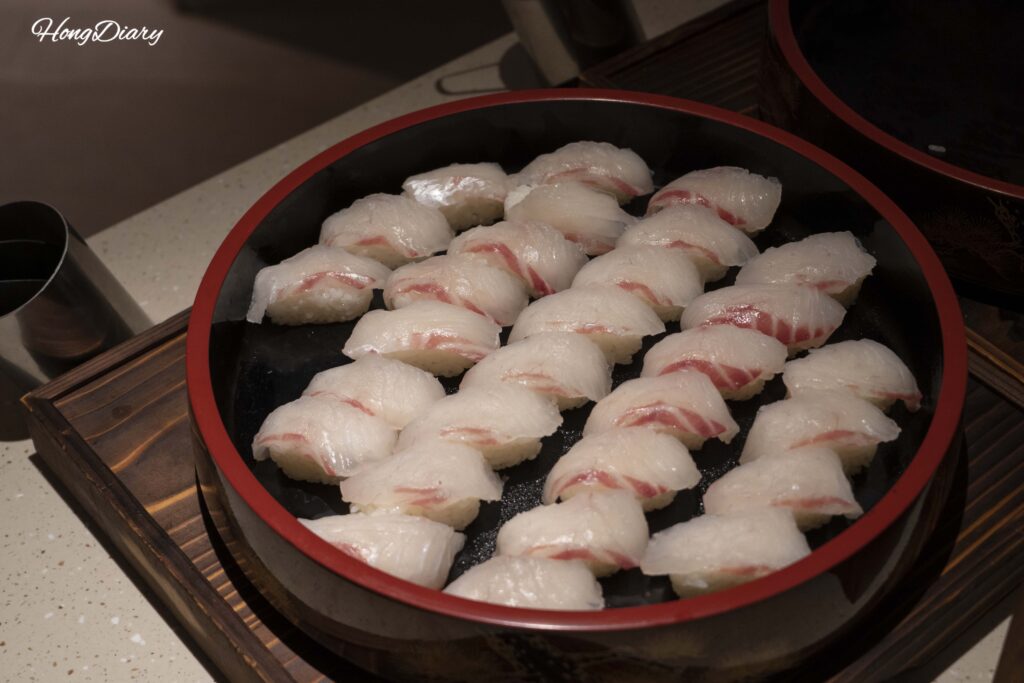
The sushi selection was modest — mostly white fish and salmon — with portions that leaned heavy on rice. The fish itself was fresh, no question. But I’ll be honest: given how much fugu was featured everywhere else, I had quietly hoped to find fugu sashimi here. It wasn’t available. If that’s what you’re after, you’ll want to head to Karato Market itself, which is close enough for a morning visit.
The cold dish section had a caprese salad with cherry tomatoes and small mozzarella balls that you could drizzle with basil pesto yourself — simple and well done. Smoked salmon, prosciutto, and a chilled mentaiko pasta (spicy cod roe tossed with noodles, served cold) rounded out the lighter options.
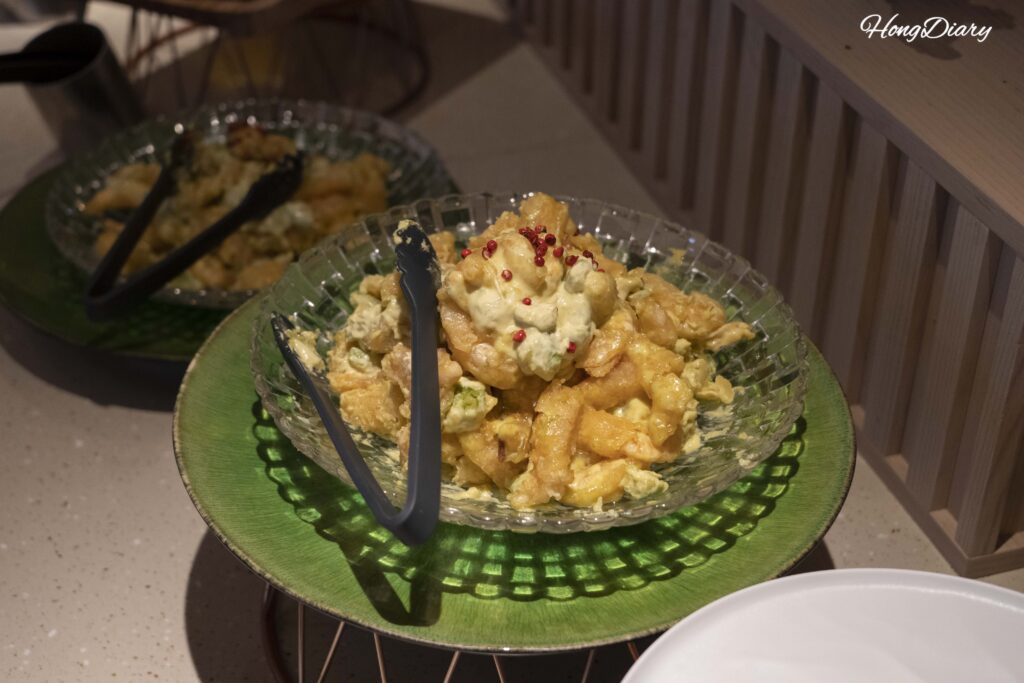
Over on the hot food side, there was risotto, sausages, Japanese-style mapo tofu, fried rice, a roast chicken with baked potatoes, and a Chinese-inspired fried dish with a mild mustard sauce that I couldn’t quite place but kept going back to. If you’ve been to a few hotel buffets in Japan, some of this will feel familiar — but the execution was consistently a notch above what I’ve come to expect.
What I Actually Loaded on My Plate
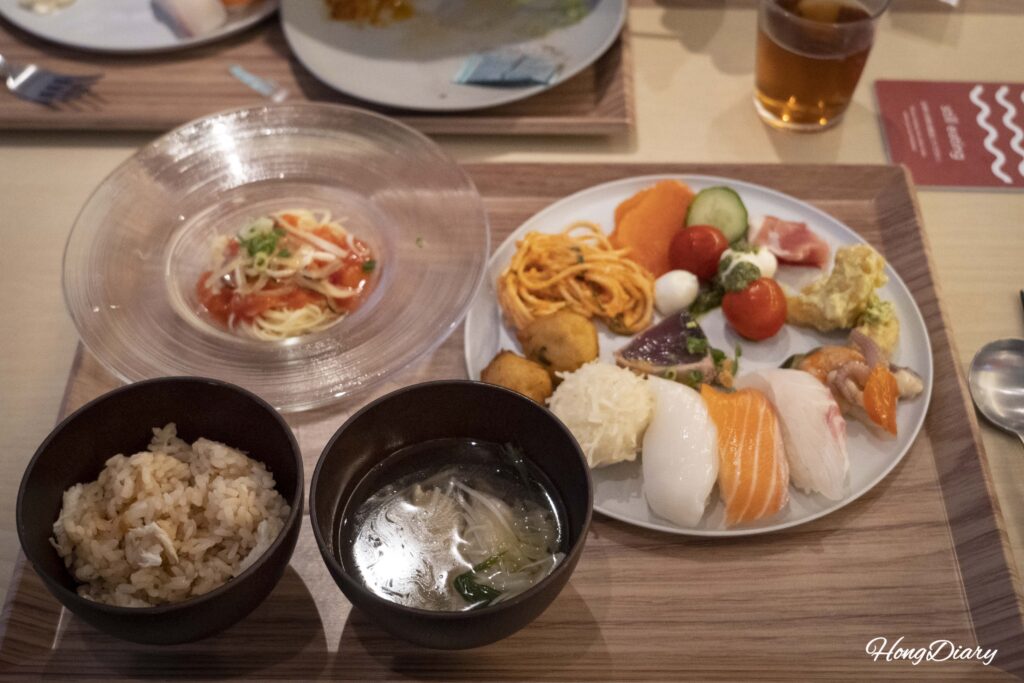
Here’s what my first round looked like: fugu rice, a small bowl of fugu soup, that cold pasta with fugu skin, fugu fish cakes on the side, a few pieces of salmon and white fish sushi, katsuo tataki (lightly seared bonito), and caprese salad. It was a lot of fugu, and I regret nothing.
If you’re someone who measures buffets by sheer number of dishes, PUKU PUKU might feel smaller than the mega-spreads at large city hotels. But I tend to prefer places where each dish is thought through over places that pad the line with forgettable filler. The sourcing from Karato Market makes a noticeable difference in freshness, and the fugu-focused stations give the buffet an identity that most hotel restaurants simply don’t have.
Breakfast at PUKU PUKU — Same Space, Different Energy
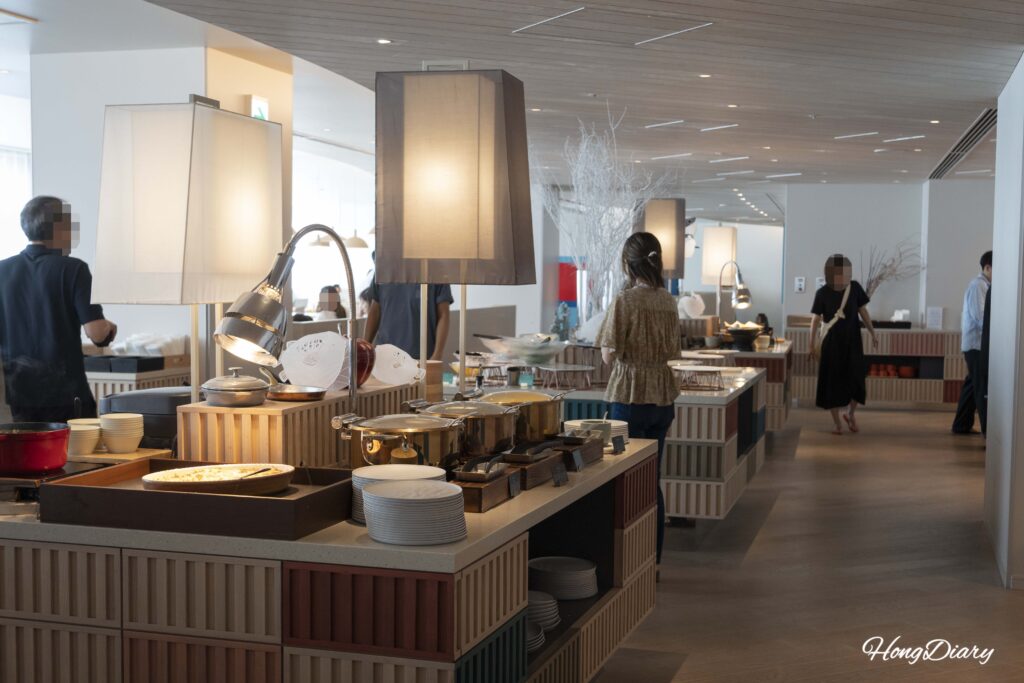
The next morning, the restaurant had a completely different feel. The fugu-heavy evening lineup gave way to a spread that leaned into local Yamaguchi ingredients and classic Japanese breakfast staples, alongside a few Western options.
Natsumikan French Toast — The Dish My Husband Ate Three Times
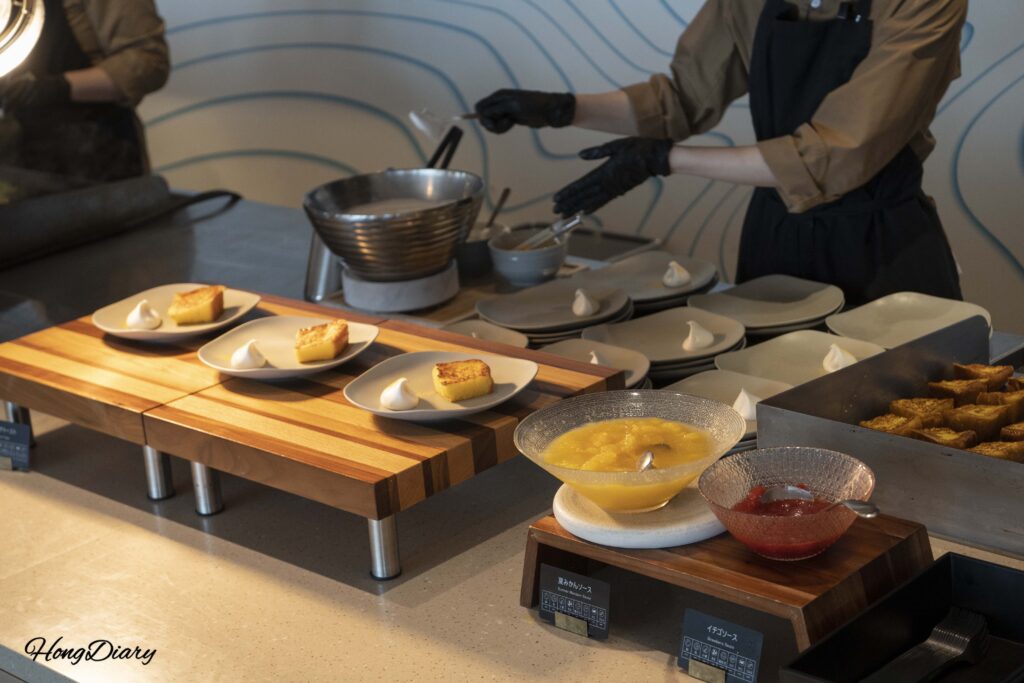
The live grill station from dinner was transformed into a French toast station at breakfast. A chef was turning out thick slices of French toast on the spot, topping each one with whipped cream and a touch of natsumikan — a citrus fruit native to the Shimonoseki area with a slightly bitter, fragrant character.
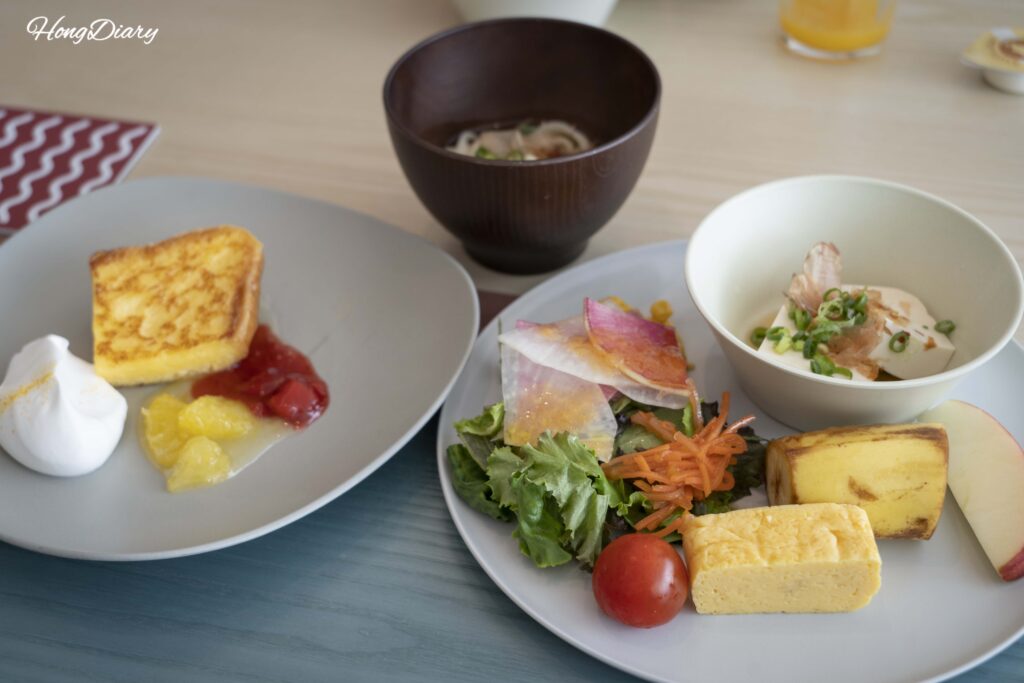
The whipped cream was what really made this stand out. It was unusually light, creamy, and rich at the same time — I suspect it was made in-house, given the generous bowl of it sitting at the station. There were also strawberry and orange sauces available, but my recommendation: skip the sauces. Just the toast with a spoonful of that cream and a cup of coffee. My husband agreed — he went back for this three separate times. Even our five-year-old kept asking for more when I cut small pieces off mine.
The chef running the station was alone but kept up with demand effortlessly. No wait, every time.
Kawara Soba with Fugu Broth
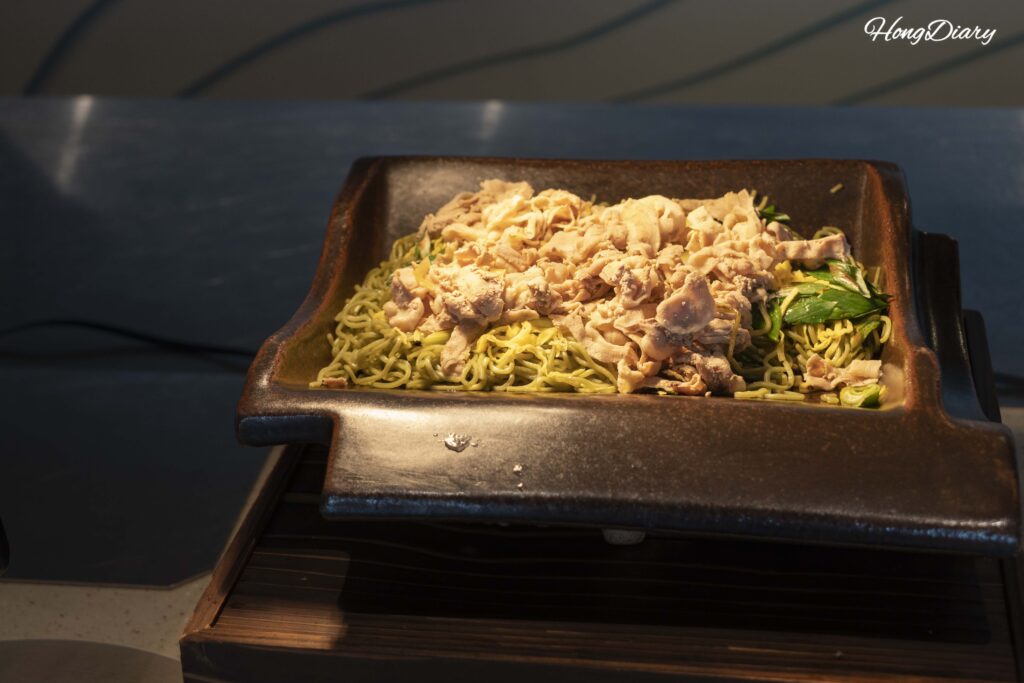
This was a new one for me. Kawara soba (瓦そば) is a regional specialty of Yamaguchi Prefecture — buckwheat noodles pressed onto a heated clay roof tile and served with various toppings including thin grilled slices of meat. What makes the version here distinct is the dipping broth: it’s made with fugu stock. The noodles pick up a light crisp from the tile, and the fugu broth adds a clean, savory depth without overwhelming the soba.
It’s not a flashy dish. It tastes like what it is — a local recipe made with care, the kind of food that asks you to slow down rather than reach for the next thing. If that sounds appealing, give it a try. If you’re expecting bold seasoning, it might feel understated.
Kaisen Don, Round Two
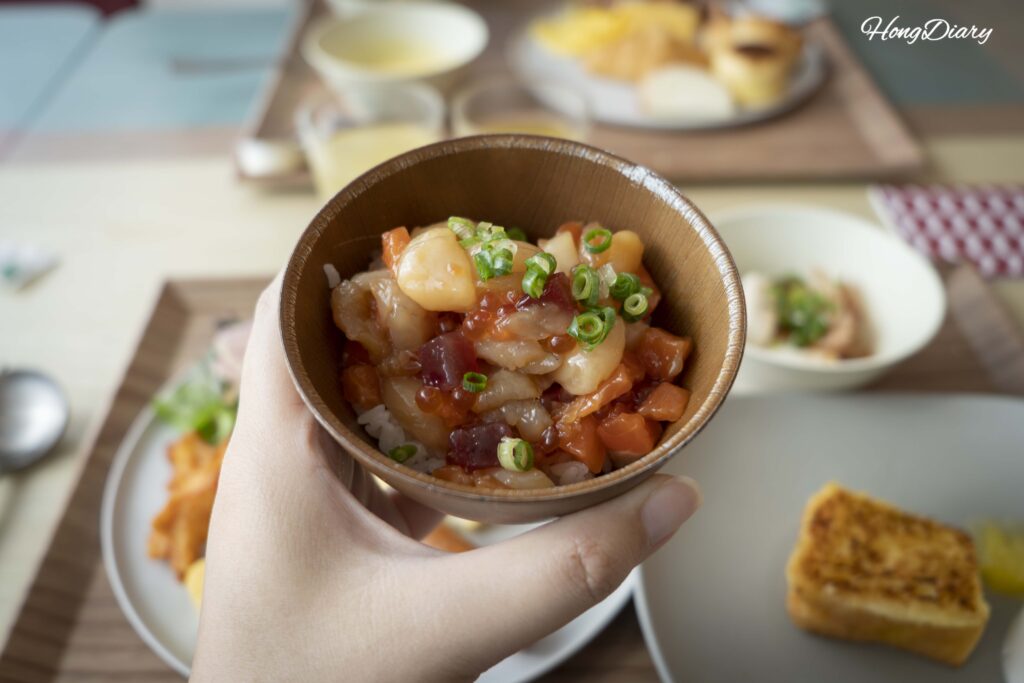
The kaisen don station that had been so popular at dinner was back for breakfast — and this time, they’d added a second serving bowl to keep up with demand. I built myself another bowl: salmon, scallops, salmon roe, shrimp, with chopped scallions on top. It was every bit as good as the night before. The fact that they brought this back at breakfast told me it wasn’t just my taste — this was clearly a guest favorite.
Bakery Corner and Japanese Breakfast Staples
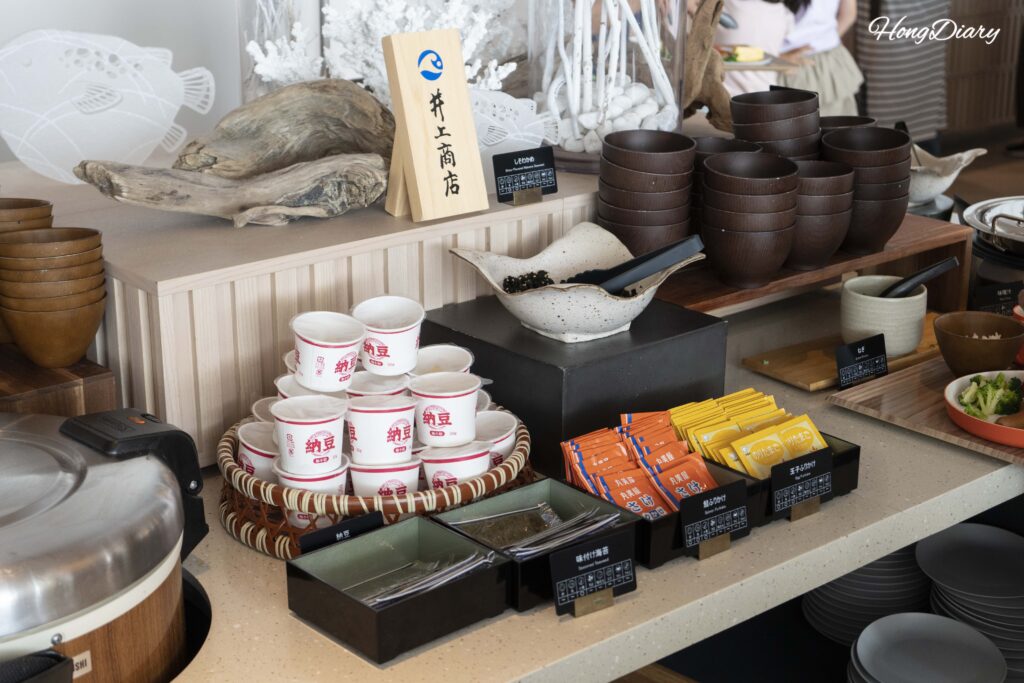
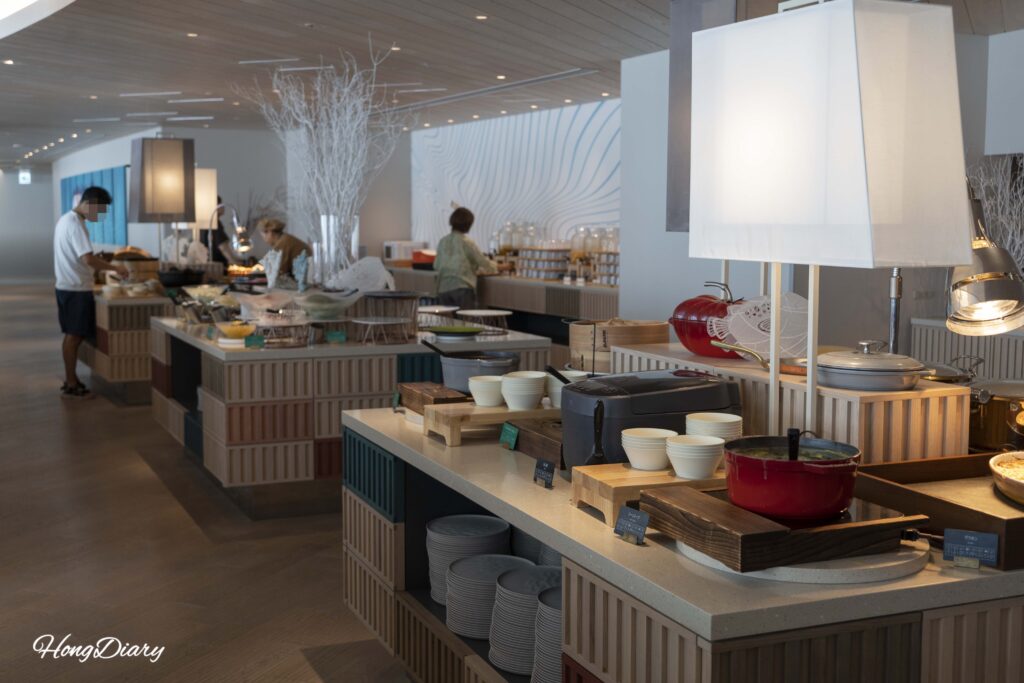
The rest of the breakfast spread covered the essentials well: nori (seaweed sheets), natto (fermented soybeans, an acquired taste), furikake (rice seasoning), tamagoyaki (Japanese rolled omelet), grilled salmon, a mild vegetable curry, a simple soup, and udon noodles in broth.
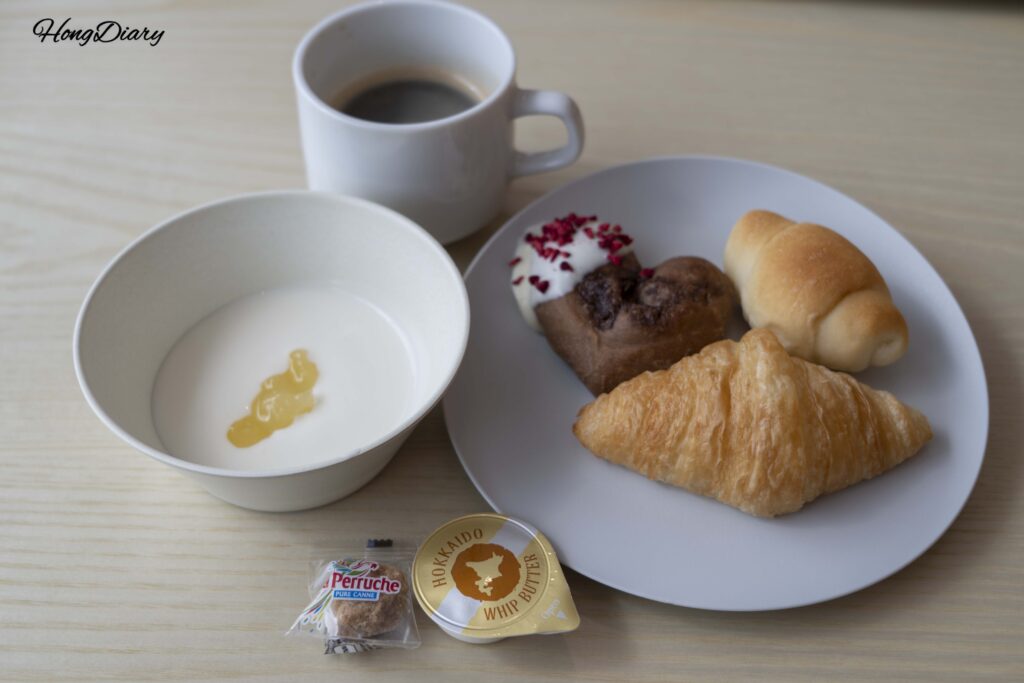
The bakery section expanded from dinner, adding more bread varieties alongside the existing croissants and melon pan (a sweet bun with a cookie-like crust). What I’d really recommend here is the Hokkaido butter — it came in small individual portions from Hokkaido, Japan’s northernmost island known for its dairy, and had a richness and depth that elevated a plain croissant into something worth savoring. Paired with coffee and a cup of yogurt, it made for a light, satisfying start.
One small miss: there was no mini toaster or oven available for warming bread. If you’re the type (like me) who prefers a crisp, warmed croissant, you’ll have to settle for room temperature. A minor thing, but worth noting.
Dining with Kids — Why Parents Can Actually Relax Here
Traveling with a young child means you develop a mental checklist for every restaurant before you sit down: Is there anything my kid will eat? Can I heat up baby food? Will we get stared at if things get loud? PUKU PUKU checked every one of those boxes without me having to ask.
Because the restaurant uses a reservation system, the staff already knew our party included a small child. When we arrived, a baby chair was pre-set at our table. No flagging anyone down, no waiting.
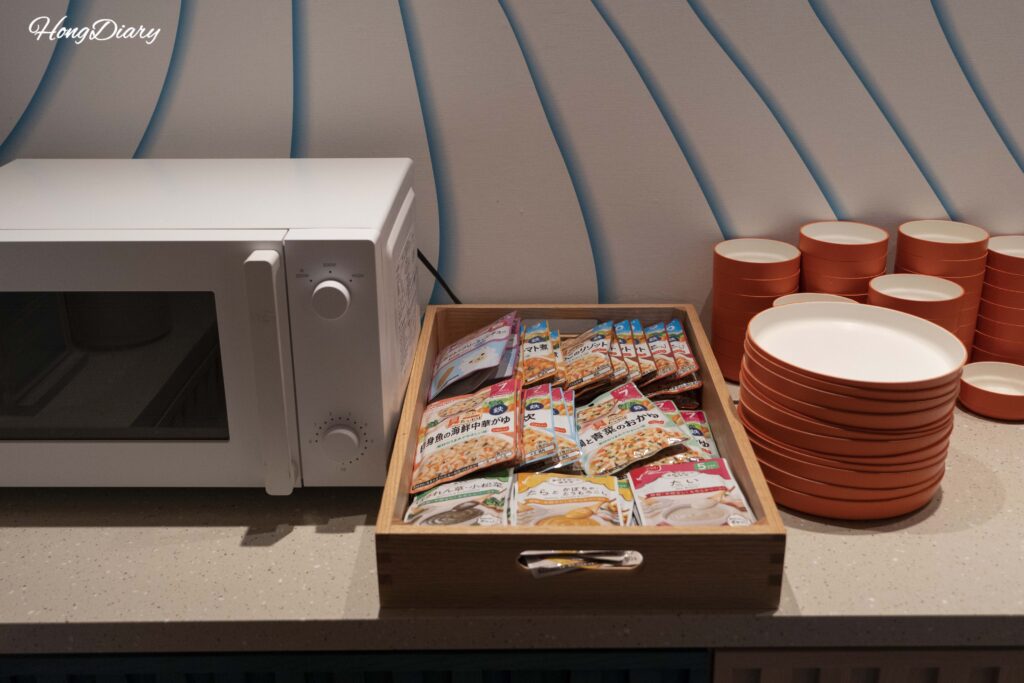
The baby food station had a range of commercial baby food pouches and jars — the kind you’d trust — along with a microwave, child-sized bowls, spoons, forks, and even bibs. As someone who used to pack half a suitcase with baby food and utensils for every trip (and spent more time than I’d like to admit hunting for microwave access in convenience stores and nursing rooms), seeing all of this laid out felt like genuine consideration, not a marketing checkbox.
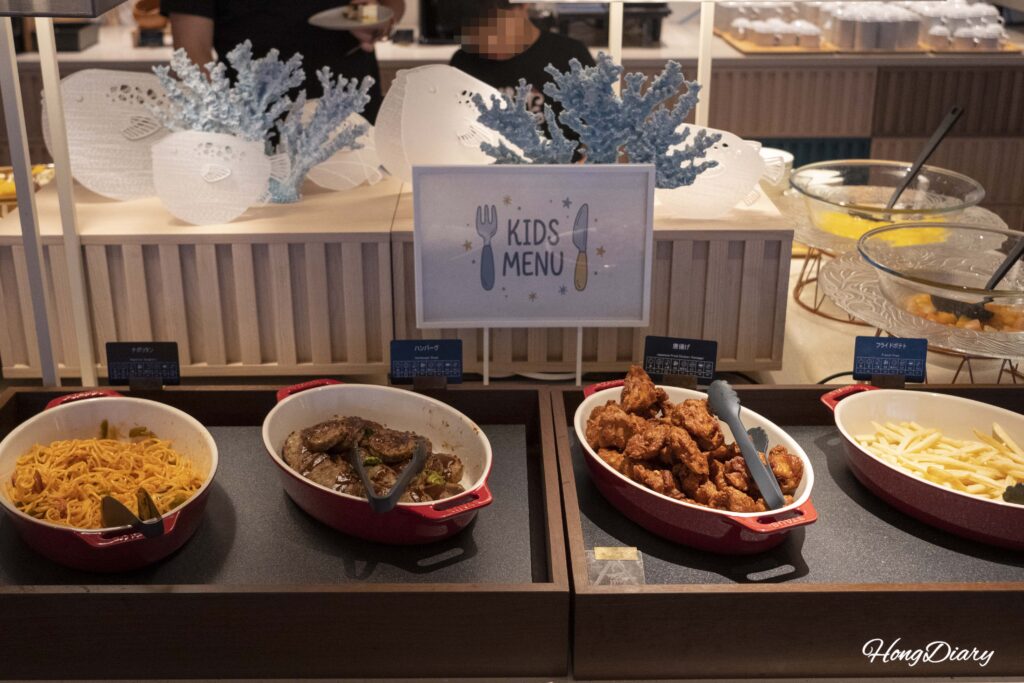
For older kids, there was a dedicated children’s menu section with spaghetti, hamburg steak (a Japanese-style hamburger patty, similar to Salisbury steak), karaage (Japanese fried chicken), and french fries. A cute paper fugu decoration behind the station added a playful touch. Other stations also had kid-friendly options like curry and plain rice with nori.
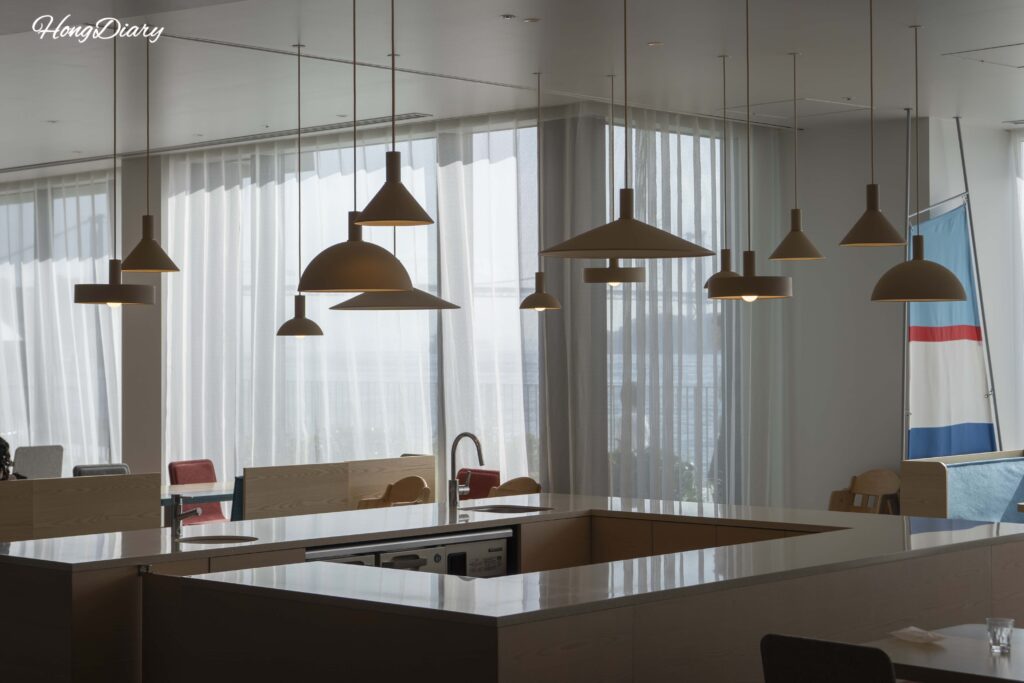
Then there was the Kids Patissier — a free program available to dinner guests with children. In a designated space near the restaurant, kids can decorate their own desserts (the theme rotates — it might be macarons, cakes, or ice cream on any given night). Chef outfits in children’s sizes are provided. No reservation needed, no extra charge. The night I was there, the sound of kids proudly showing their creations to their parents — and parents beaming back — was part of the restaurant’s ambient soundtrack. Nobody looked bothered. No side-eyes.
That atmosphere mattered more to me than any single dish. When you travel with a child, you spend a lot of energy managing the social tension of restaurants — will my kid be too loud, too messy, too present? At PUKU PUKU, that tension simply wasn’t there. Staff members smiled at my child whenever they walked past. The sounds of families — real, unfiltered family noise — filled the space naturally. I ate an entire meal without once feeling the need to apologize for my five-year-old’s existence.
Otto Sette Shimonoseki — A Restaurant I Remember for a Reason I Didn’t Expect
Otto Sette Shimonoseki is the resort’s fine-dining restaurant, also on the second floor. The concept — “Il Fascino Di Fugu,” or “The Charm of Fugu” in Italian — centers on a nine-course Italian dinner where pufferfish appears in six of the dishes, each highlighting a different texture or preparation. Wine pairings and Yamaguchi-region sake are available alongside the courses. A children’s course is also offered, and free childcare is available for children ages 1 to 6 during dinner and spa sessions — a rare combination at this level.
| Detail | Price |
|---|---|
| Adults | ¥18,000 (~$113.92 USD / ~€101.69 EUR) |
| Ages 7–11 | ¥12,600 (~$79.75 USD / ~€71.19 EUR) |
| Ages 4–6 | ¥9,000 (~$56.96 USD / ~€50.85 EUR) |
| Reservation | Required — at least 3 days in advance by 2:00 PM, via the official website |
The menu changes seasonally based on local ingredients and fugu availability.
I had planned to write a detailed course-by-course review. I took careful photos of every dish, made notes on the plating. This was supposed to be the section of this post where I walked through each course.
But I’m going to be honest about what actually happened instead.
I visited Otto Sette on our second night. My husband — the person I’d been looking forward to having a quiet dinner date with — came down with a fever and stayed in the room. So it was just me and our five-year-old, who was also starting to feel unwell. I sat down to what was supposed to be our first proper date-night dinner since our child was born, and instead I was alone with a tired, uncomfortable kid, trying not to show how disappointed I was.
The staff noticed. I don’t know if it was my expression or the empty chair across from me, but our server — without me saying anything — quietly mentioned that since there were no other guests that evening, I was welcome to lay my child down on the empty bench seat next to us. Then she offered to bring a blanket.
That was it. No fuss, no rehearsed hospitality script. Just a person reading the room and doing something kind.
I could tell you what the courses tasted like, or which wine paired well with which dish. But truthfully, I don’t remember those details the way I remember that moment. It wasn’t a memory of a restaurant. It became a memory of a brand — the kind of quiet, unhurried attention that you can’t fake and can’t train into a service manual.
I’d like to come back and give Otto Sette the proper review it deserves. For now, I’ll say this: the food and service details are well-documented elsewhere. What I can add is that the way they treated my family — in a moment that was less than picture-perfect — told me more about this place than any nine-course menu ever could.
A Few Things to Know Before You Book
The reservation system. PUKU PUKU requires advance reservations for both breakfast and dinner, which can be made through the official website by 2:00 PM on the day of your visit. If you booked your stay directly through Hoshino Resorts, you can log in with your membership or booking confirmation credentials. If you booked through a third-party platform, you’ll need to request a confirmation number and password first. It sounds more complicated than it is — once you’re on the site, the process is straightforward. Same-day walk-ins may be possible if you ask at the front desk before 2:00 PM, but availability is not guaranteed.
The reason for this system, as I understand it, comes down to sourcing. Because the kitchen purchases seafood daily from Karato Market, they need to know how many guests to prepare for. Over-purchasing leads to waste; under-purchasing means the quality drops. It’s a small inconvenience that directly supports the freshness of what ends up on your plate.
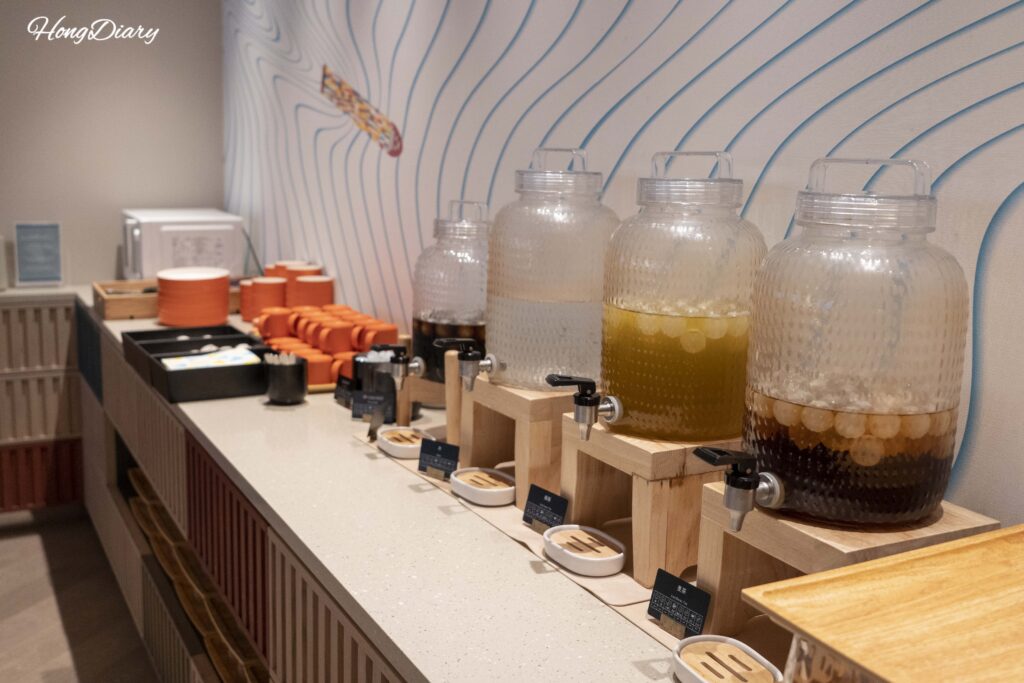
Drinks. Coffee, tea, juice, and the soft-serve ice cream machine are all included with the buffet. Carbonated drinks like cola are sold separately at around ¥600 (~$3.80 USD / ~€3.39 EUR), and alcoholic beverages — beer, wine, sake — run ¥800–¥1,600 (~$5.06–$10.13 USD / ~€4.52–€9.04 EUR). Local craft beers and fugu-fin sake (hire-zake) are on the menu if you want to keep things regional.
A tip for the evening. If you’d rather save on drinks at dinner, consider visiting the Nami Nami Terrace afterward — a small lawn area with lounge seating where complimentary wine and champagne are served to hotel guests from 7:00 PM to 9:30 PM. I skipped the paid drinks at dinner entirely and headed there instead.
Otto Sette reservations require booking at least three days in advance by 2:00 PM via the official website.
What I Took Home from RISONARE Shimonoseki’s Restaurants
Two days. Every meal spent between the buffet and the dining course. A fugu market corner, a French toast station, a self-made kaisen don I’d happily eat again tomorrow, and a moment of kindness from a server who read the room without being asked.
The restaurants at RISONARE Shimonoseki aren’t trying to be the biggest or the most extravagant buffet you’ve ever seen. What they are is intentional — in the sourcing, in the local identity baked into every station, and in the way they make families with young children feel genuinely welcome instead of merely tolerated.
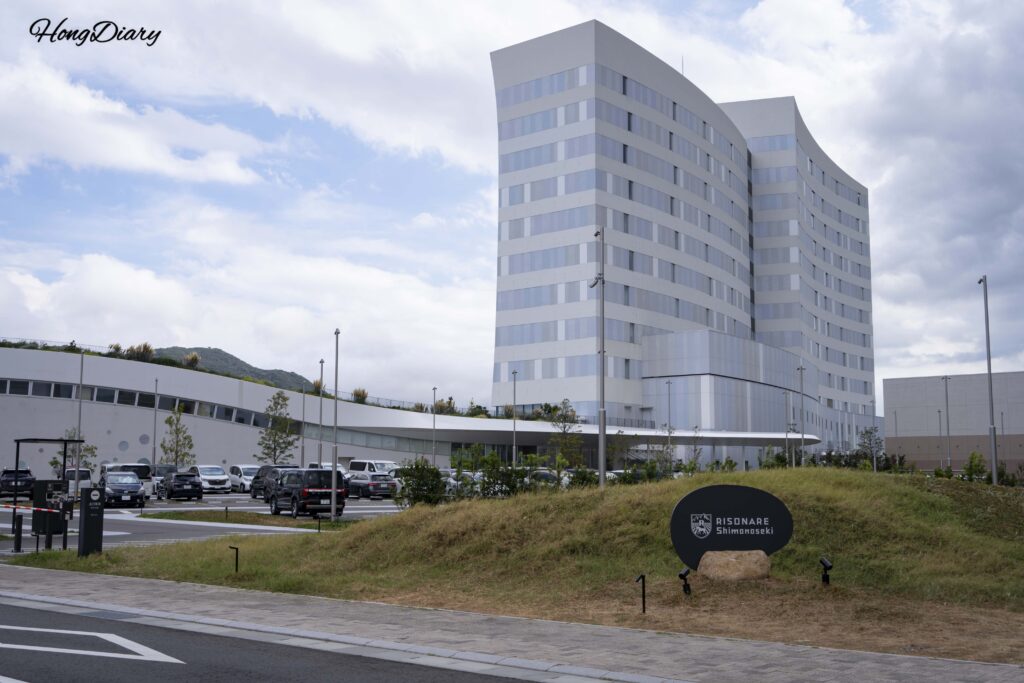
If you’re planning a stay and want to know what the resort itself is like — the rooms, the pool, the Kanmon Strait views from every window, and the little details that make it work for families — I put together a full walkthrough in my review of RISONARE Shimonoseki.
For the restaurants, the one thing I’d say is this: book your meals before you arrive. Don’t leave it to chance. And at breakfast, get the French toast with just the cream. Trust me.
RISONARE Shimonoseki Restaurant FAQ: Fugu Dishes, Kid-Friendly Services & Walk-ins
What restaurants are available at RISONARE Shimonoseki?
RISONARE Shimonoseki has two restaurants, both located on the second floor. PUKU PUKU is a buffet-style restaurant serving breakfast and dinner, with a strong focus on fugu (pufferfish) dishes and locally sourced seafood from nearby Karato Market. Otto Sette Shimonoseki is a fine-dining restaurant offering a nine-course Italian dinner where fugu appears in six of the courses. Both restaurants require advance reservations through the official website.
How much does the PUKU PUKU buffet cost?
For dinner, adult pricing is ¥6,200 (~$39.24 USD / €35.03 EUR), ages 7–11 are ¥4,340 ($27.47 USD / €24.52 EUR), ages 4–6 are ¥3,100 ($19.62 USD / €17.51 EUR), and children under 3 eat free. For breakfast, adults pay ¥2,900 ($18.35 USD / €16.38 EUR), ages 7–11 are ¥2,030 ($12.85 USD / €11.47 EUR), ages 4–6 are ¥1,450 ($9.18 USD / ~€8.19 EUR), and children under 3 are also free.
Prices are converted at approximately $1 USD ≈ ¥158 / €1 EUR ≈ ¥177 as of October 2026.
Do I need a reservation for the PUKU PUKU buffet?
Yes. Reservations are required for both breakfast and dinner at PUKU PUKU. You can book through the official Hoshino Resorts website by 2:00 PM on the day of your visit. If you booked your hotel stay through a third-party platform, you will need to obtain a booking confirmation number and password before you can access the meal reservation system. Same-day walk-in availability is not guaranteed, so booking ahead is strongly recommended.
Is PUKU PUKU at RISONARE Shimonoseki family friendly?
PUKU PUKU is designed with families in mind. The restaurant offers a dedicated kids menu section with items like spaghetti, hamburg steak, and karaage (Japanese fried chicken). A baby food station provides commercial baby food pouches and jars, a microwave, child-sized tableware, and bibs. Baby chairs are pre-set at your table when the reservation includes a young child. There is also a free Kids Patissier program during dinner where children can decorate their own desserts in chef outfits — no reservation or extra charge needed.
What is Otto Sette Shimonoseki and how much does it cost?
Otto Sette Shimonoseki is the resort’s fine-dining restaurant, built around the concept of “Il Fascino Di Fugu” — discovering the charm of fugu through Italian cuisine. The nine-course dinner uses pufferfish in six dishes, paired with wine and regional Yamaguchi sake. Adults pay ¥18,000 (~$113.92 USD / €101.69 EUR), ages 7–11 are ¥12,600 ($79.75 USD / €71.19 EUR), and ages 4–6 are ¥9,000 ($56.96 USD / ~€50.85 EUR). Reservations must be made at least three days in advance by 2:00 PM through the official website. Free childcare is also available for children ages 1 to 6 during dinner and spa sessions.
What is kaisen don and kawara soba at PUKU PUKU?
Kaisen don is a Japanese seafood rice bowl — at PUKU PUKU, guests build their own from a platter of pre-seasoned sashimi (such as salmon, scallops, salmon roe, and shrimp) served over white rice. Kawara soba is a regional specialty of Yamaguchi Prefecture — buckwheat noodles are pressed onto a heated clay roof tile and served with toppings like thinly grilled meat, and guests dip the noodles in a broth made with fugu stock. Both dishes are available at dinner and breakfast.
Are drinks included with the PUKU PUKU buffet?
Coffee, tea, juice, and a soft-serve ice cream machine are all included with the buffet price. Carbonated drinks like cola are sold separately at around ¥600 (~$3.80 USD / €3.39 EUR), and alcoholic beverages run ¥800–¥1,600 ($5.06–$10.13 USD / ~€4.52–€9.04 EUR) for beer, wine, sake, or cocktails. Local craft beers and fugu-fin sake are available. Hotel guests can also visit the complimentary Nami Nami Terrace lounge from 7:00 PM to 9:30 PM for free wine and champagne.