
Most day trips from Busan follow the same circuit — Haeundae, Gamcheon, maybe Taejongdae. Naewonsa Temple Yangsan sits just outside that loop, about an hour from the city, and most international visitors never make it there. That’s part of what makes it worth the effort.
I came for the forest walk, and the valley road on the way up turned out to be as good as the destination itself. The valley road leading up to the temple follows a stream the whole way, with the kind of cold, clean mountain air that makes you realize how much city air you’ve been breathing. By the time I reached the temple, the walk alone had already been worth the drive.
Naewonsa Temple is a Buddhist temple in Yangsan, Gyeongsangnam-do, located at the foot of Cheonseongsan Mountain, open daily from 06:30 to 18:00, with no admission fee.
| Info | Detail |
|---|---|
| Address | 207 Naewon-ro, Habuk-myeon, Yangsan-si, Gyeongsangnam-do |
| Hours | 06:30 – 18:00 (open year-round) |
| Admission | Free |
| Parking | Paid (see below) |
Table of Contents
Getting There — Why You Need a Rental Car
This is the one non-negotiable practical point of this post: Naewonsa Temple is not realistically accessible by public transport for most visitors. Public transport from Busan takes around three hours each way. Even locals drive here.
The good news is that the drive is easy and the location is close:
- From Gimhae International Airport: approx. 50 min by car (42 km)
- From Busan Station: approx. 1 hour by car (51 km)
If you’re planning to visit Naewonsa — or anywhere in the Yangsan area — a rental car makes the whole day significantly better. Having a car means you can set your own pace rather than working around bus schedules that don’t really serve this area.
Book a rental car for your Yangsan trip here
Parking
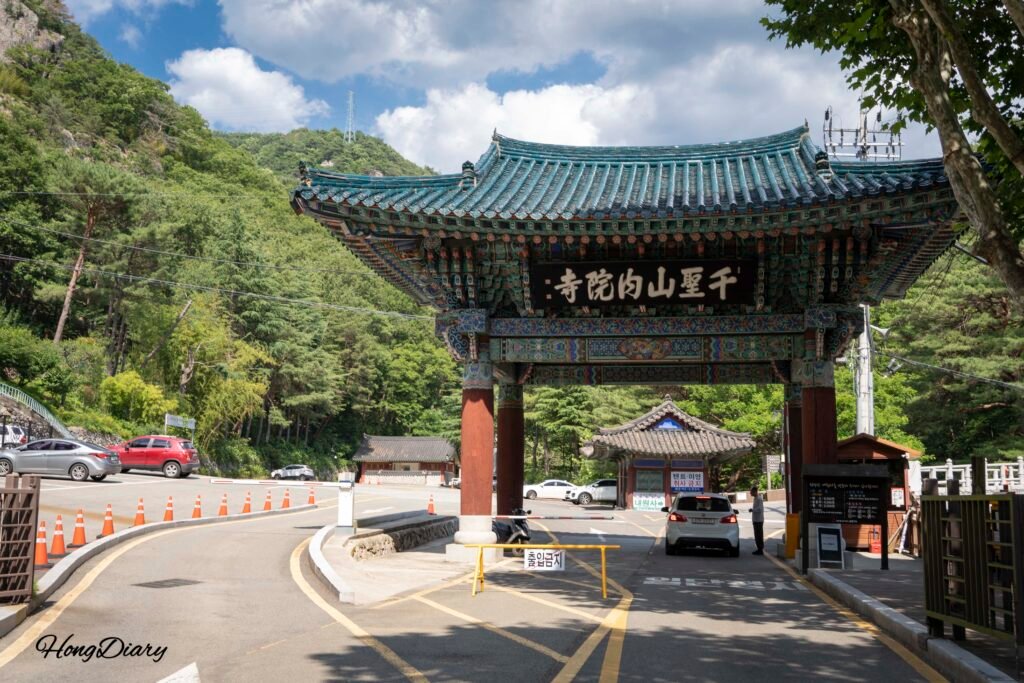
There’s no admission fee for Naewonsa, but parking is paid.
| Vehicle Type | Fee |
|---|---|
| Large(bus, large vehicles) | KRW 9,000 (approx. USD 6.00) |
| Medium / Small (sedan, compact car — most rentals) | KRW 4,000 (approx. USD 2.65) |
| Compact(Motorcycle) | KRW 2,000 (approx. USD 1.35) |
There’s a main parking area near the entrance, but during non-peak periods you can usually drive further up and park closer to the temple itself — which saves some walking on the way back. During peak summer season, arrive early as lots fill up quickly.
The Valley Walk
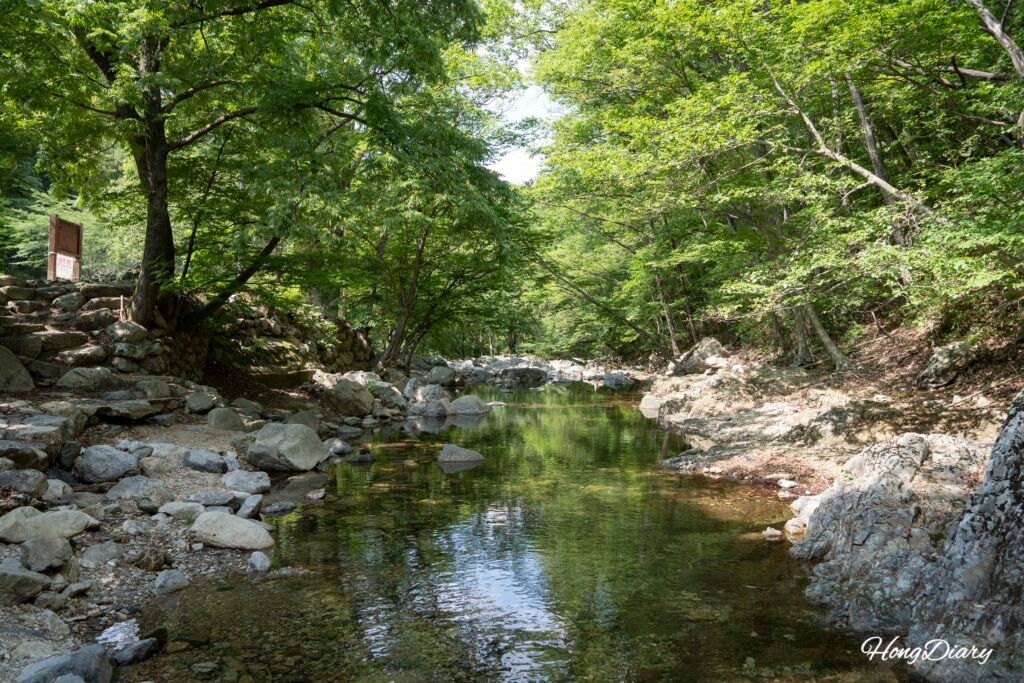
The road from the parking area to the temple follows a stream through the forest the entire way, and this is as much of the experience as the temple itself. The path is paved and gently sloped — easy walking even in summer heat, though the humidity in this region during summer means the air can feel heavier than the altitude suggests. The stream keeps the temperature noticeably cooler than the surrounding area.
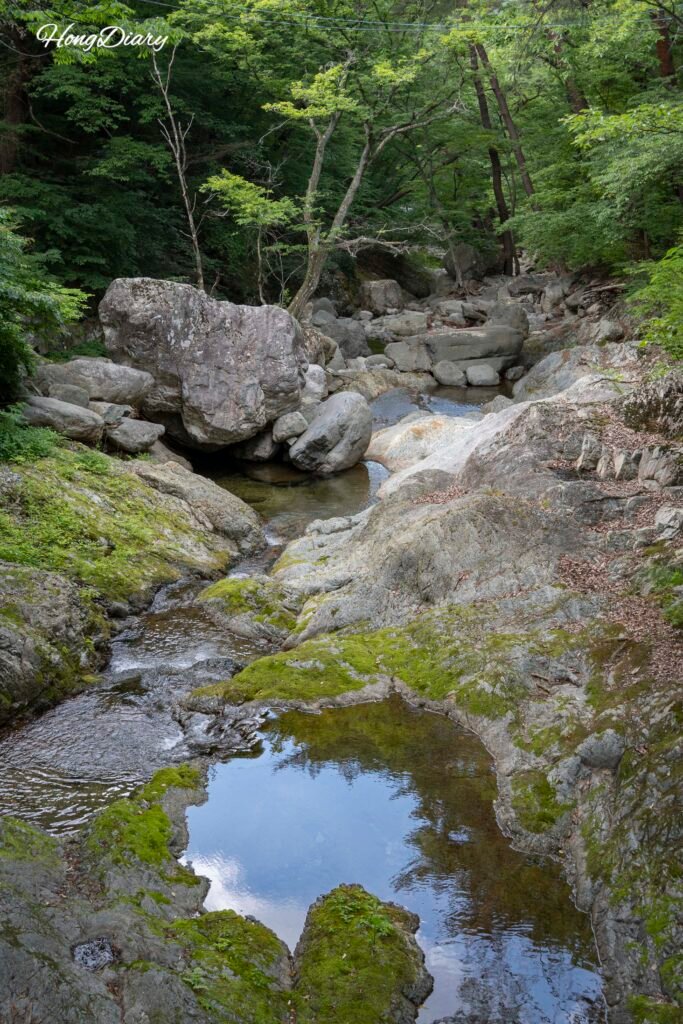
I walked the full stretch rather than driving all the way up, and I’d recommend the same. The sound of the water alongside the trail, the shade from the trees above, and the occasional large boulders appearing through the undergrowth give the walk a quality that’s hard to find this close to a city.
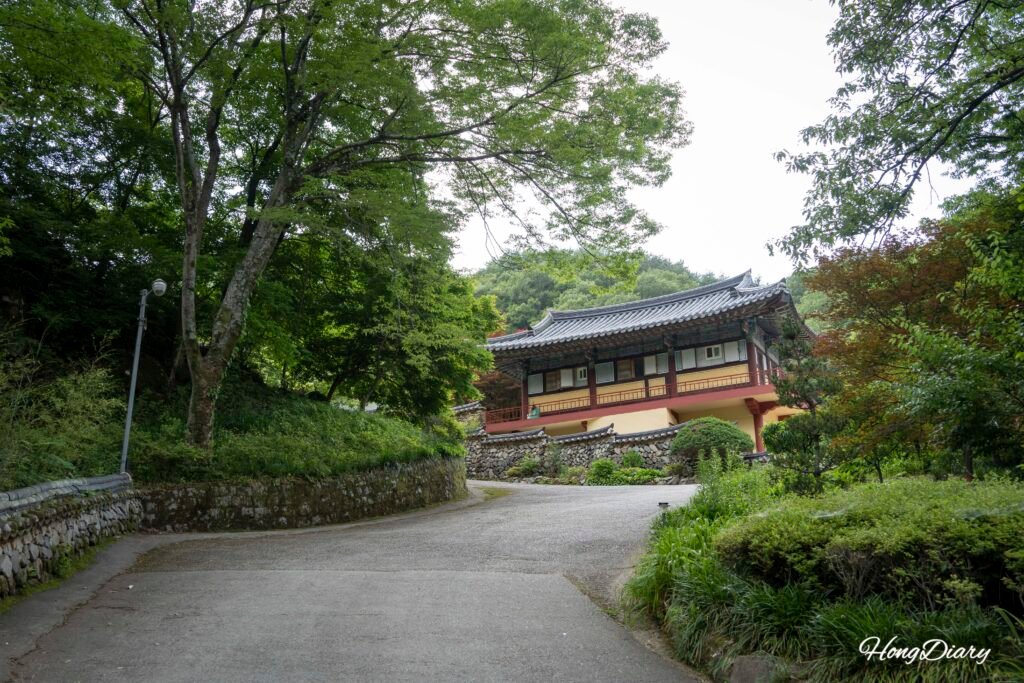
By the time you approach the upper section, the boulders get larger and the scenery opens up. Other visitors had already settled at various spots along the stream to sit in the water — a common summer practice in Korea. The valley here is sometimes called the “Little Geumgangsan” of the south, a reference to the scenic Geumgangsan Mountain range, and walking through it makes that comparison feel reasonable rather than overblown.
The valley stream runs for approximately 6 km through Cheonseongsan Mountain, staying clear and cold year-round. The whole route is gentle enough for most fitness levels.
Naewonsa Temple
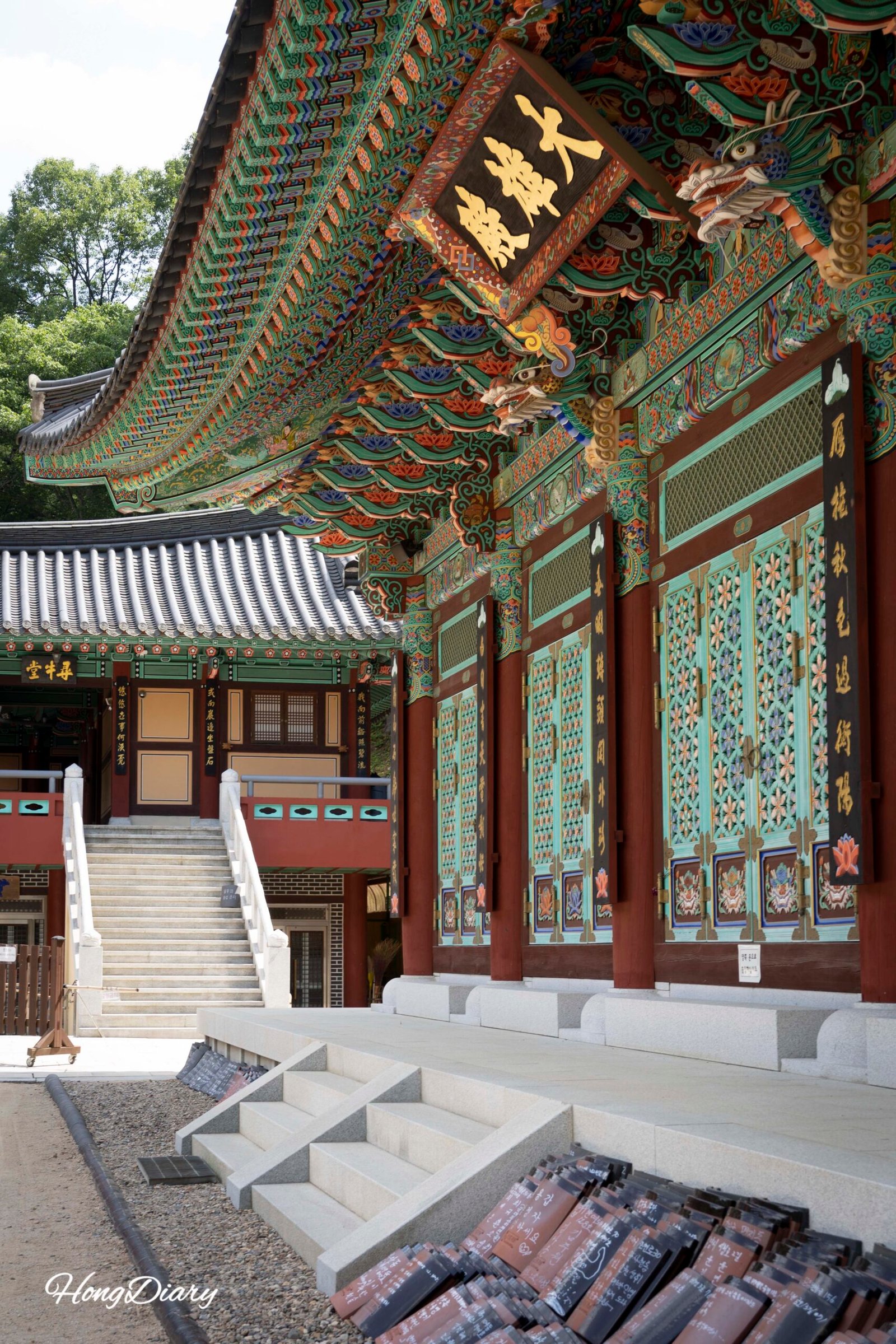
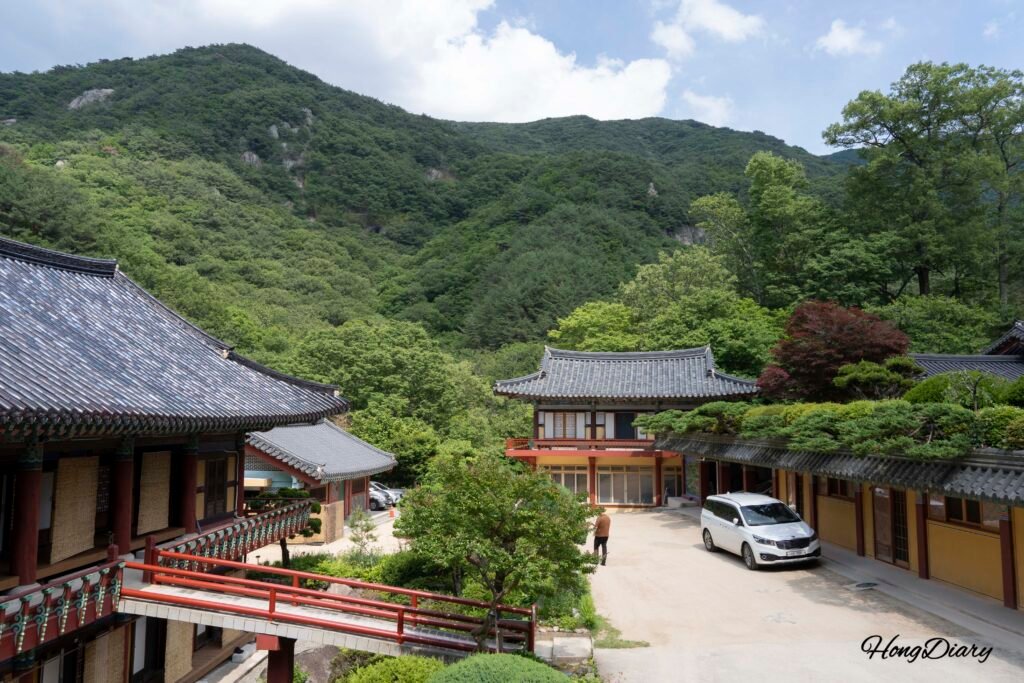
The temple sits at the top of the valley road, over a small bridge and up a short incline. It was founded during the Silla Dynasty — reportedly by the monk Wonhyo over 1,300 years ago — and destroyed during the Korean War. The nun Suok rebuilt it over ten years, and it became established as a practice center for Buddhist nuns.
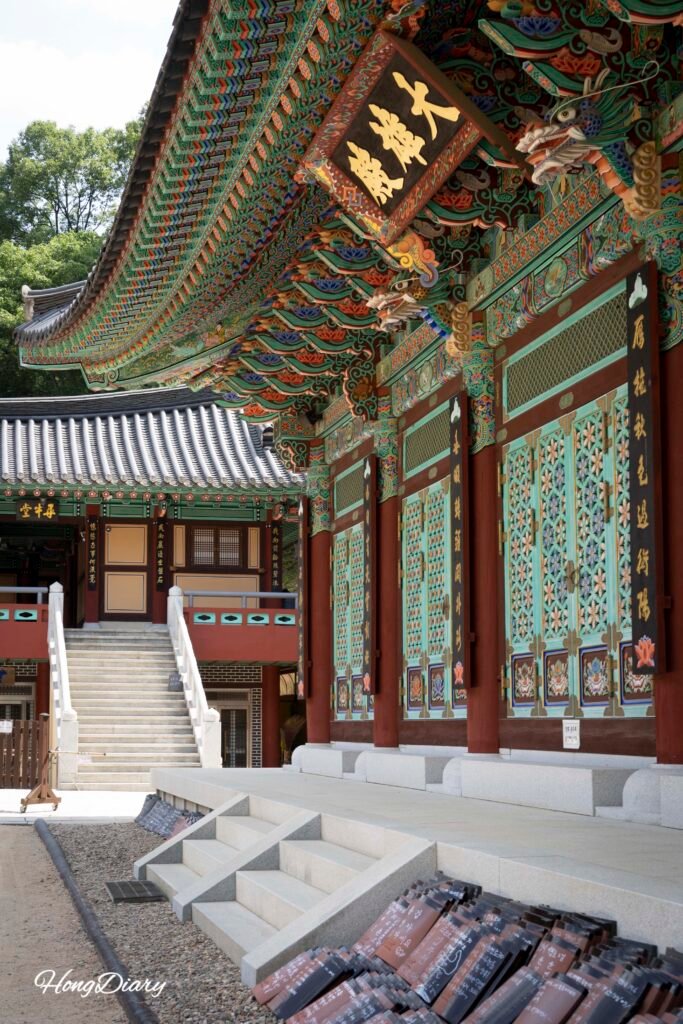
The complex centers on the main hall (Daeungjeon), with several other buildings arranged around it. It’s not a large temple by Korean standards — you can take it in at a glance — but the setting is distinctive. Mountains rise directly behind the buildings, and when I was there the treeline made the whole scene feel enclosed in a way that larger temples don’t.
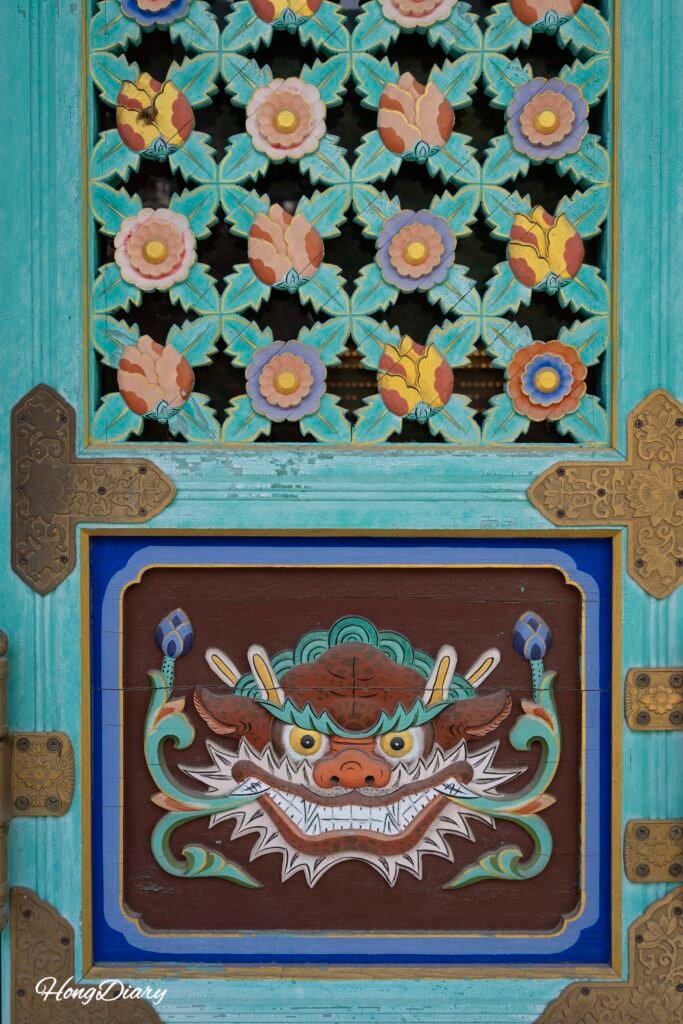
General visitors can take in the grounds and the atmosphere, though the inner areas are active practice spaces. I walked the perimeter, appreciated the view of the mountain behind the main hall, and headed back down.
Practical Tips
Best time to visit: The valley is popular for swimming in summer (July–August). If you want the trails quieter, visit on a weekday or come in spring or autumn when the forest colours change.
What to bring: Good walking shoes, water, and sun protection. The walk up is gentle but exposed in places.
Nearby: Tongdosa Temple is the largest temple in the Yangsan area and worth combining into a day trip if you have the car.
Compared to Tongdosa: Naewonsa is notably quieter and less visited, which makes the experience feel more immediate. Both are worth seeing, but they’re different kinds of visits.
Final Thoughts
Naewonsa Temple Yangsan is the kind of place that rewards people willing to get in a car and drive an hour outside of Busan. The valley walk is genuinely good — cool, shaded, and quiet in a way that’s hard to find near the city — and the temple at the top adds a reason to keep going. For anyone spending more than a couple of days in Busan and considering a rental car for the region, this is a solid half-day that most travellers skip entirely.
Rental car options for exploring Yangsan and beyond
Where is Naewonsa Temple and how do I get there?
Naewonsa Temple is located at 207 Naewon-ro, Habuk-myeon, Yangsan-si, Gyeongsangnam-do, at the foot of Cheonseongsan Mountain. The most practical way to get there is by rental car — from Gimhae International Airport it’s approximately 50 minutes (42 km), and from Busan Station approximately 1 hour (51 km). Public transport takes around three hours each way and is not practical for most visitors.
Is there an admission fee for Naewonsa Temple?
No. Naewonsa Temple has no admission fee. However, there is a parking charge: KRW 9,000 (approx. USD 6.00) for large vehicles, KRW 4,000 (approx. USD 2.65) for medium and small vehicles, and KRW 2,000 (approx. USD 1.35) for compact vehicles.
Why do I need a rental car to visit Naewonsa?
Public transport to Naewonsa from Busan takes approximately three hours each way, making it impractical for a day trip. Even most Korean visitors drive. A rental car from Gimhae Airport or Busan Station gets you there in under an hour, and gives you the flexibility to explore the valley at your own pace and combine the visit with other Yangsan-area sites.
What is the Naewonsa Valley like?
The valley runs for approximately 6 km along the base of Cheonseongsan Mountain, with a clear mountain stream flowing through it year-round. The water stays cold even in summer, and the valley is popular for swimming and wading from July to August. The surrounding forest provides shade and keeps the temperature noticeably cooler than the surrounding area. The scenery has been compared to Geumgangsan Mountain, and the valley is sometimes called the “Little Geumgangsan” of the south.
What are the opening hours for Naewonsa Temple?
Naewonsa Temple is open daily from 06:30 to 18:00, year-round with no closing days.
Is the walk to Naewonsa Temple difficult?
No. The road and path from the parking area to the temple is paved and gently sloped throughout. The full walk takes around 30 to 40 minutes at a comfortable pace and is suitable for most fitness levels. Walking is recommended over driving all the way up, as the valley scenery alongside the stream is a significant part of the experience.
What is the history of Naewonsa Temple?
Naewonsa Temple was originally founded during the Silla Dynasty, reportedly by the monk Wonhyo more than 1,300 years ago. The temple was destroyed during the Korean War and was rebuilt over ten years by the Buddhist nun Suok, after which it became established as a practice center for Buddhist nuns. The main hall (Daeungjeon) sits at the center of the compact complex.