
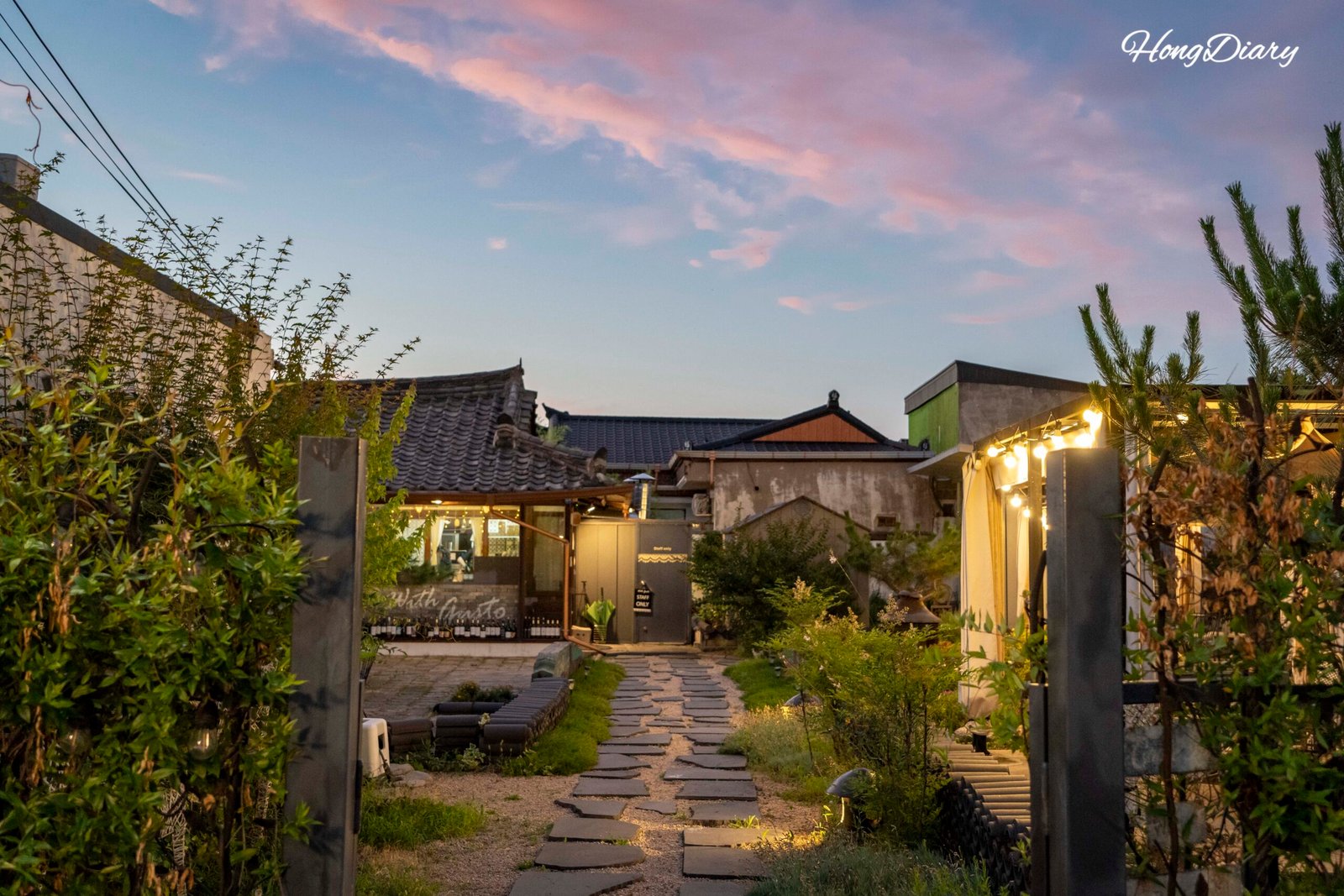
Gyeongju is one of those places where ditching the car actually makes the trip better. Most of the key attractions sit within walking distance of each other, and Hwangnidan-gil in Gyeongju is the street that ties them all together — a 1.5 km stretch of hanok storefronts, food spots, and quiet side alleys running right alongside a 1,500-year-old royal tomb complex. I started at Daereungwon in the late afternoon and drifted into the street as the light changed. The day-to-night shift gave both places a completely different feel. Before you set out, know that Gyeongju City provides free downloadable walking maps in English — including a dedicated Hwangnidan-gil map — through their tourism page. More on that below.
Gyeongju sits in the southeastern corner of Gyeongsangbuk-do Province. Once the capital of the Silla Kingdom (57 BC–935 AD), it’s now a UNESCO World Heritage city where ancient burial mounds share the streetscape with modern shops and restaurants.
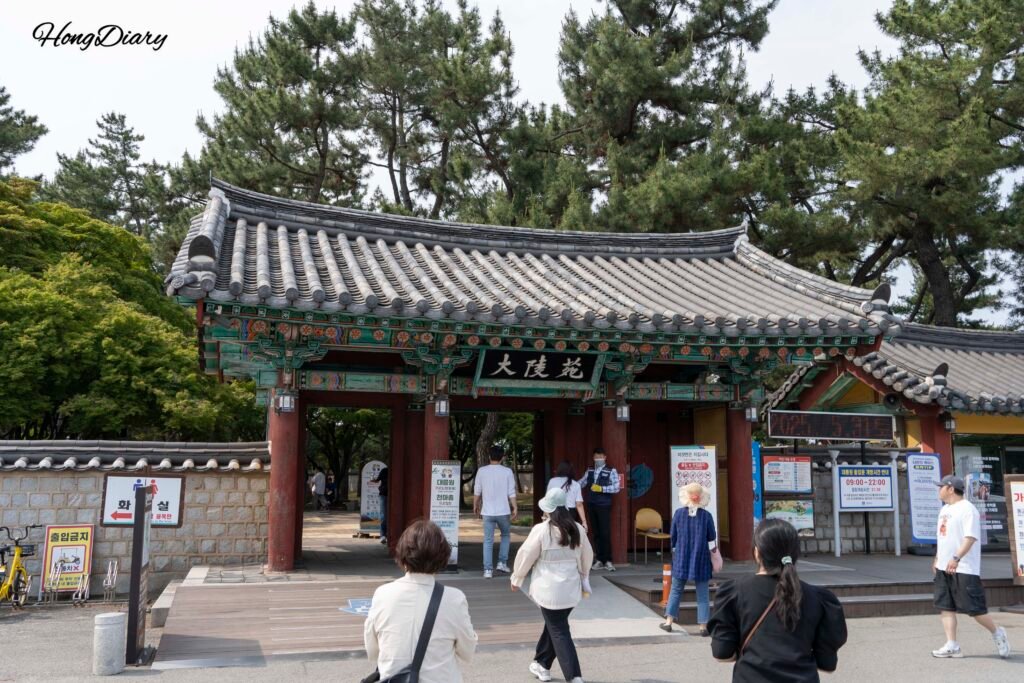
Table of Contents
Walking Through Daereungwon Tomb Complex
The Gyeongju Historic Areas earned their World Heritage status in 2000, and the downtown zone where Daereungwon sits is one of the densest clusters of Silla-era remains in the country. Unlike Jeonju’s Hanok Village or Seoul’s Bukchon, which occupy clearly defined blocks, Gyeongju’s historic layers are woven into the everyday fabric of the city. You’ll spot burial mounds rising behind convenience stores and tile-roofed houses sharing walls with small galleries. That overlap between ancient and ordinary is part of what makes this area worth walking slowly.
| Category | Details |
|---|---|
| Address | 31-1 Hwangnam-dong, Gyeongju-si, Gyeongsangbuk-do |
| Hours | 9:00 AM – 10:00 PM, year-round |
| Last Ticket | 9:30 PM |
| Park Entry | Free |
| Cheonmachong Tomb | Adults ₩3,000 (~$2 USD / ~€1.70 EUR) · Youth ₩2,000 (~$1.35 USD / ~€1.15 EUR) · Children ₩1,000 (~$0.70 USD / ~€0.60 EUR) |
| Tip | Combined tickets with nearby attractions are available at a discounted rate |
Free Walking Maps Gyeongju City’s tourism page offers free downloadable maps covering the entire historic district, Hwangnidan-gil, and Gyochon Village. Maps come in English, Japanese, and Chinese — useful for locating the smaller alleys that don’t show up clearly on Google Maps. Download walking maps here
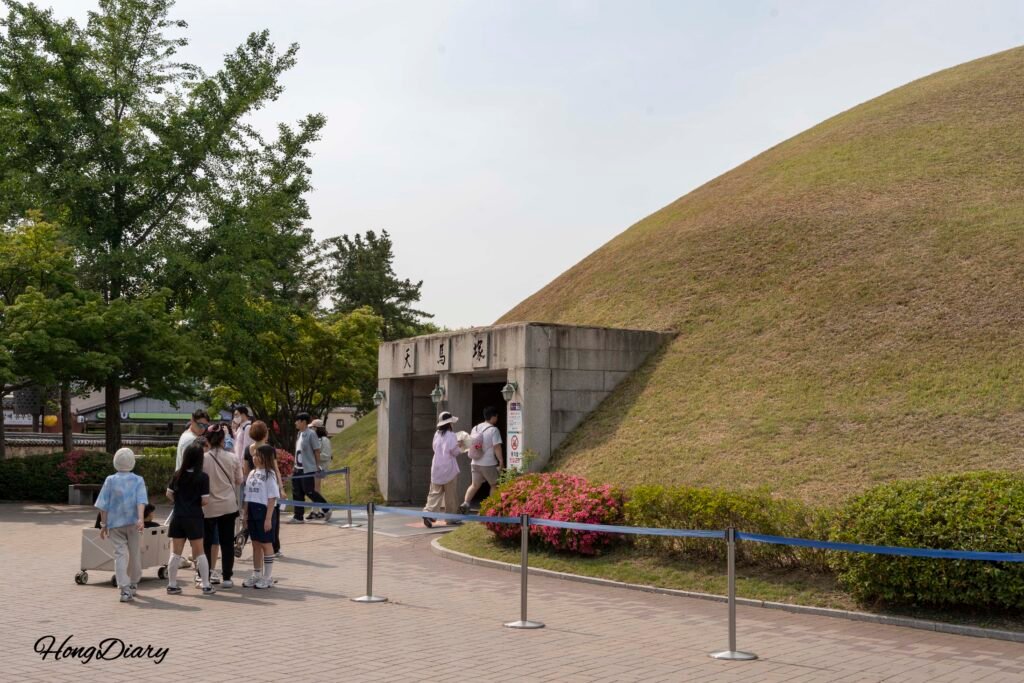
I got to Daereungwon around late afternoon, just as the light started to soften. The park holds 23 ancient burial mounds from the Silla period, and walking through them is oddly calming for a site sitting in the middle of a city. The grass-covered mounds have gentle, rolling shapes, and when the low sun hits them, the shadows between the hills stretch out in a way that photos never quite capture.
The paths loop you through the major mounds if you keep heading in one direction. I caught the park at that in-between moment — still bright enough to see everything clearly, but dim enough that the crowds had thinned. Families were wrapping up their walks, and the occasional couple sat on benches near the mounds, just taking it in. One thing to keep in mind: the signs asking you to stay on the designated walkways and off the grass are small and easy to miss. These are burial sites, not park hills, and climbing the mounds or cutting across the lawn is explicitly off-limits.
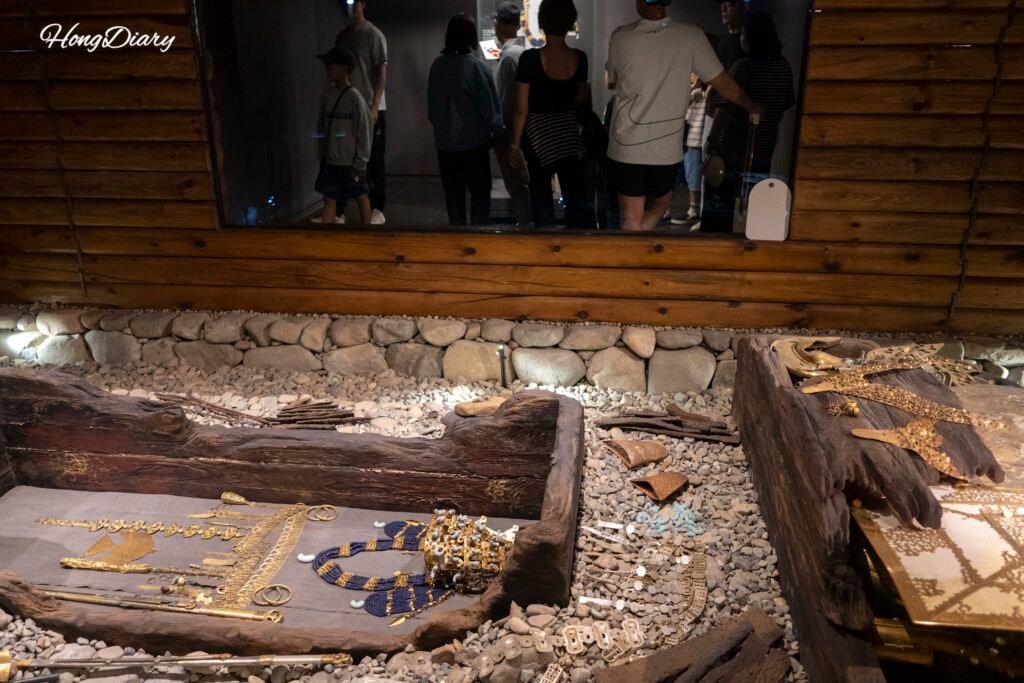
If you only see one tomb interior in Korea, make it Cheonmachong. It’s the only excavated tomb in the complex open to the public, and stepping inside gives you a real sense of how large these mounds actually are. From the outside, they look like grassy hills. Inside, the burial chamber held over 11,000 artifacts when it was excavated in 1973 — gold crowns, jewelry, weapons, and a painted birch-bark saddle guard depicting a galloping horse, which gave the tomb its name. The display pieces are reproductions, but the scale and structure of the chamber bring the Silla era into focus in a way that simply walking over the mounds doesn’t. The original artifacts, along with relics from the other tombs in the complex, are housed at the Gyeongju National Museum.
Give Daereungwon about 60 to 90 minutes. That’s enough to walk the loop, spend some time inside Cheonmachong, and still have energy for what comes next. The Cheonmachong admission might feel steep for what amounts to a short indoor stop, but standing inside a tomb that held a king for over a thousand years puts the ₩3,000 in perspective. When I stepped out, the sky had already started to turn. The mounds looked softer and quieter under dusk light, and I could see the warm glow of storefronts through the trees. The stone wall path along the park’s western edge leads directly to Hwangnidan-gil — about a six-minute walk.
Hwangnidan-gil Street: From Daylight to After Dark
| Category | Details |
|---|---|
| Address | Poseok-ro 1080, Gyeongju-si, Gyeongsangbuk-do |
| From Daereungwon | 430 m on foot (~6 min via the stone wall path) |
| Street Length | Approximately 1.5 km |
| Shop Hours | Most open 10:00 AM – 9:00 PM (varies by store) |
| Admission | Free |
| Best Time | Late afternoon through evening for the day-to-night transition |
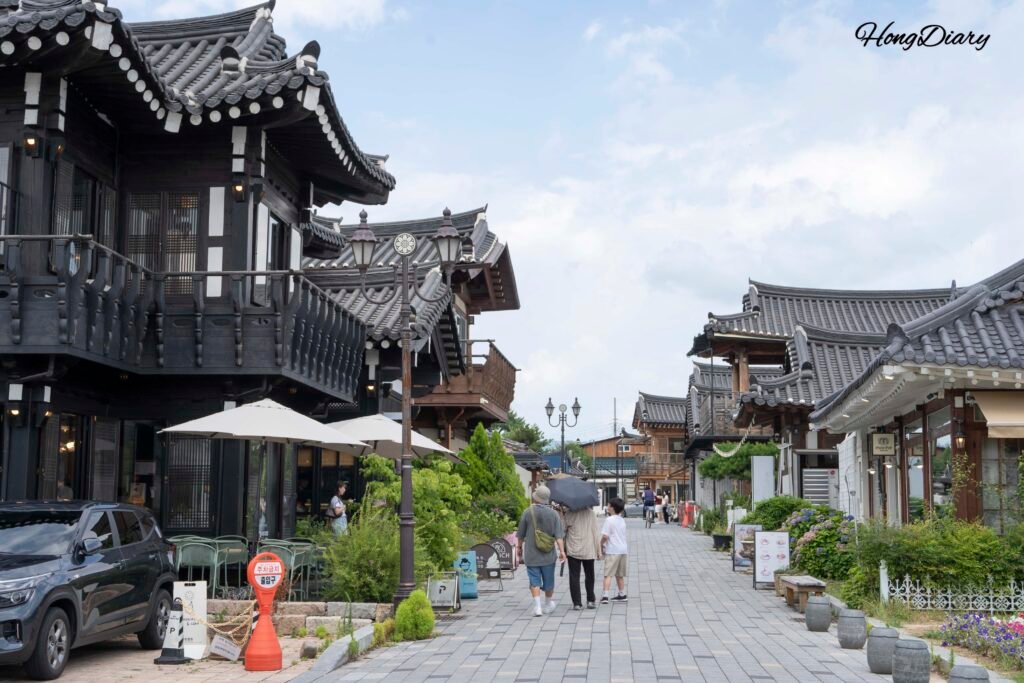
The stone wall bordering Daereungwon runs directly alongside the entrance to Hwangnidan-gil, so the shift from ancient tombs to a living commercial street happens in a few hundred meters. That contrast — earth-covered burial mounds on one side, hanok-style storefronts on the other — is one of the more interesting things about this part of Gyeongju. Both areas fall under the same cultural heritage protections, which is why the buildings along the street maintain their traditional rooflines and low profiles. This isn’t a staged theme park. The neighborhood operates under genuine preservation guidelines, and it shows.
I walked this street twice during my trip — once in the late afternoon and again the next morning — and the street felt like two entirely different places each time. During the day, the energy runs higher. Souvenir shops push their displays onto the sidewalk, groups of friends in rented hanbok pose for photos against every photogenic wall they can find, and street food vendors keep the alleys smelling good from every direction. Visitors end up spending an average of 93 minutes here — longer than at any other single attraction in the city — and once you start wandering the side alleys, it’s easy to see why. I was on my own this time, and honestly, this is the kind of street that’s better with company — the energy felt made for a group of friends rather than a solo walk. That said, even alone, I had no trouble filling the time.
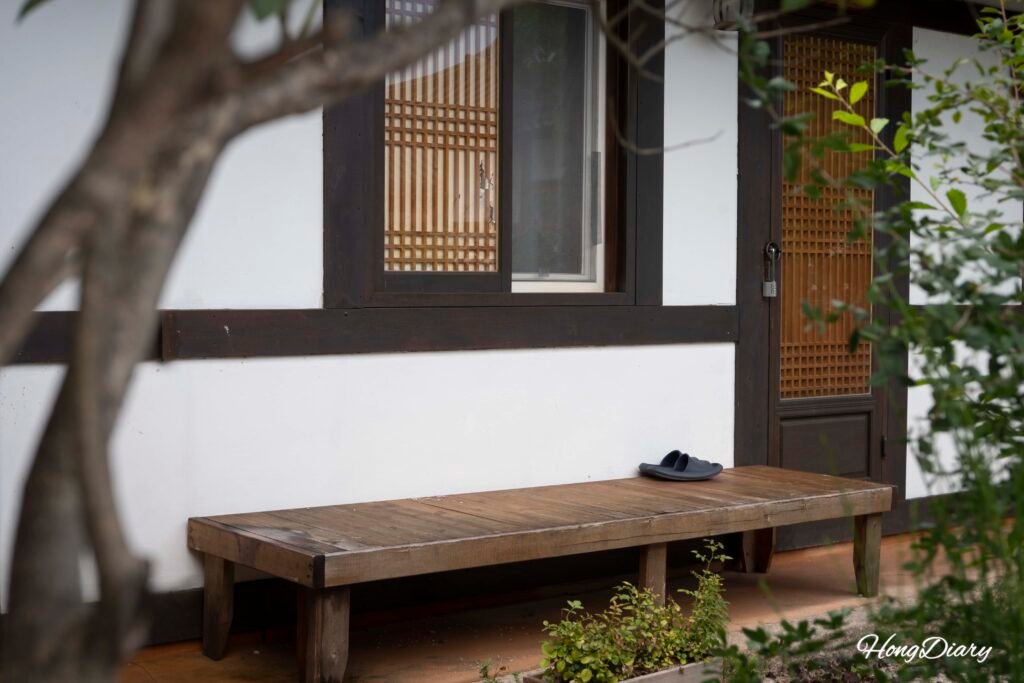
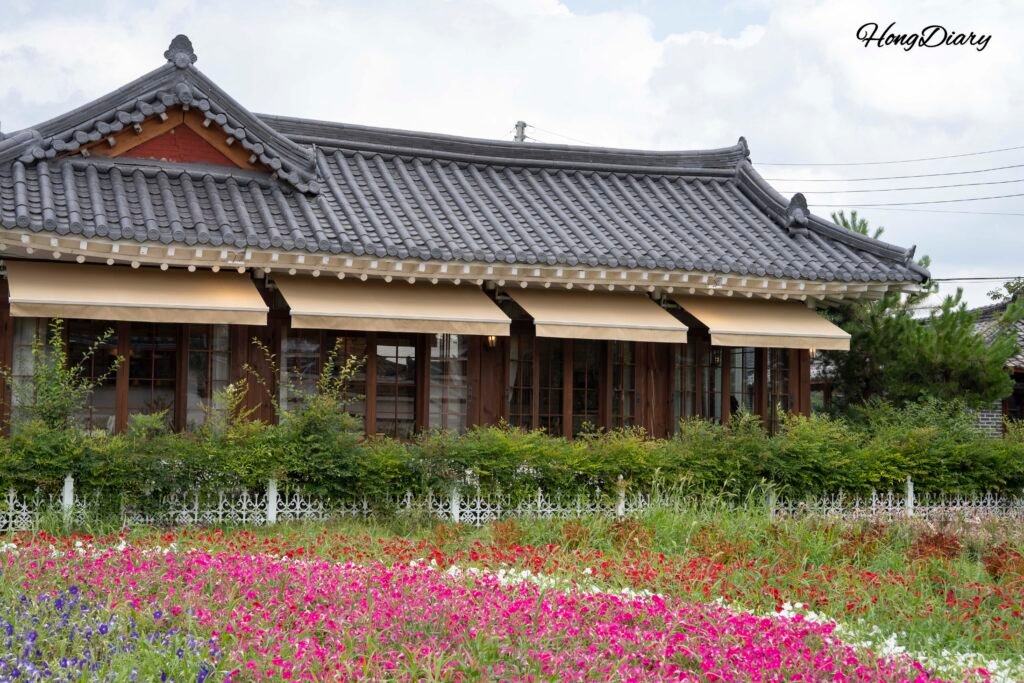
The hanok buildings along the main road are one of the reasons the street photographs so well. Some are genuine older structures that have been converted into shops and restaurants; others are newer builds designed to match. Either way, the combination of dark wooden beams, curved tile roofs, and modern signage gives the whole strip a character that’s hard to replicate elsewhere. It doesn’t feel like a museum, and it doesn’t feel like a shopping mall — it sits somewhere in between, which is exactly what makes it worth a slow walk.
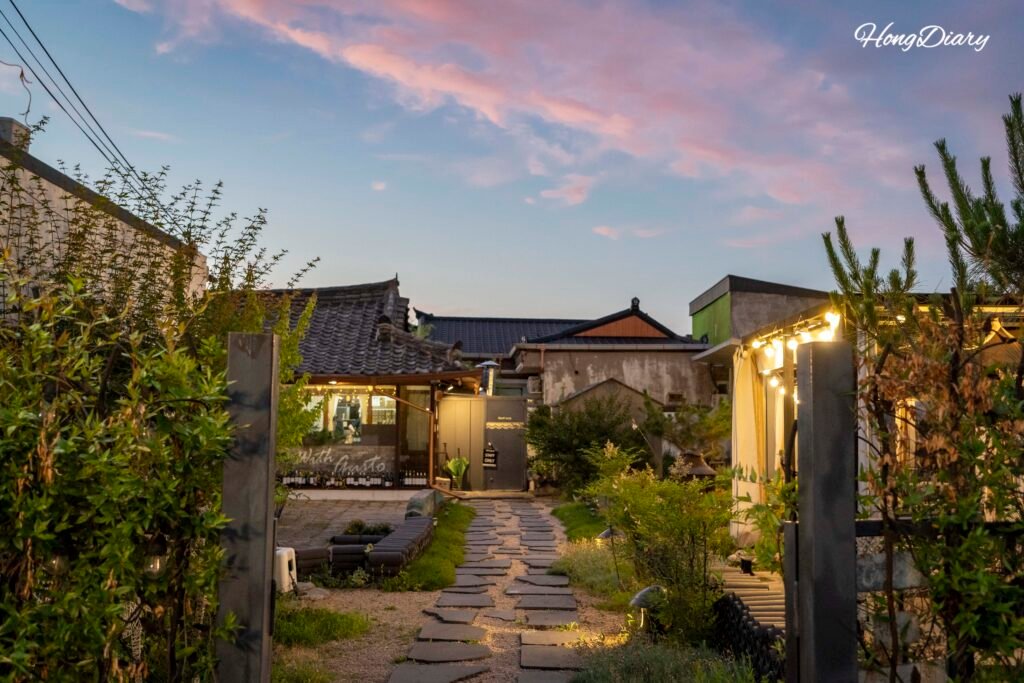
What caught me off guard, though, was how quickly the atmosphere shifts once the sun drops. The warm light from the storefronts catches the tile roofs differently, and the whole street goes from energetic and busy to something moodier and more settled. The crowds thin out, the pace slows, and the hanok silhouettes look their best against a dusky sky. If you’re choosing between day and night, night wins — but the real move is to catch both, the way the stone wall path from Daereungwon naturally sets you up to do.
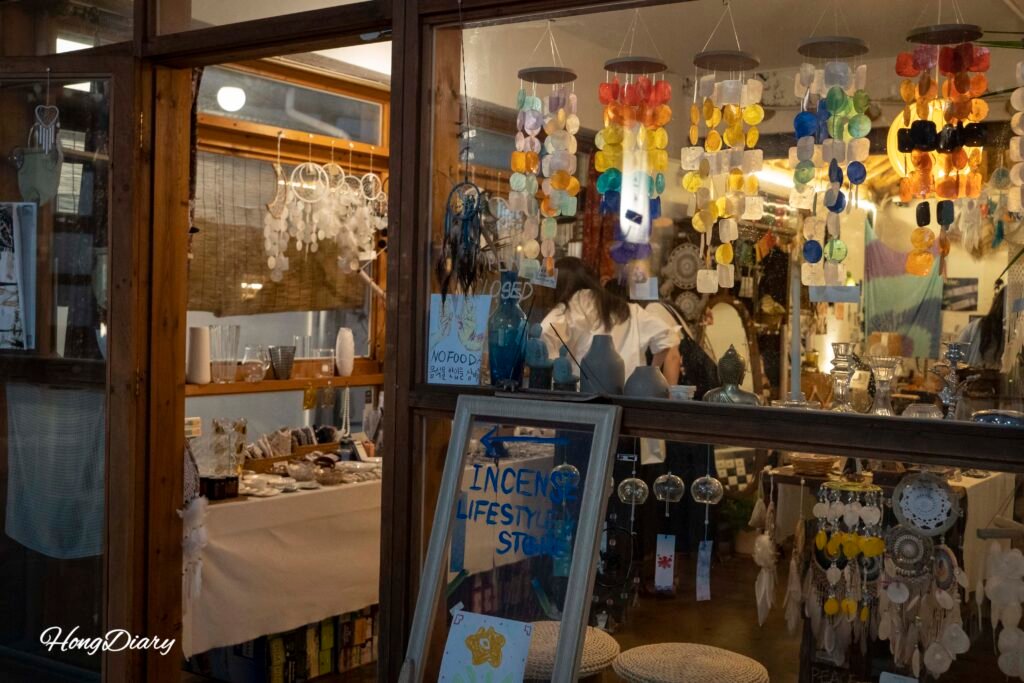
A few practical things worth noting: mornings on this street are quiet. Many shops don’t open until 10 or 11 AM, and some of the smaller dessert spots and gift stores close well before the evening crowd peaks. If you want the full range — food, shops, atmosphere — late afternoon through about 9 PM is the window to aim for. Also, the wider Gyeongju downtown is walkable but can wear you down over a full day. Electric scooter and bicycle rentals are easy to find now, and they’re a practical option if your legs start giving out after a few hours.
Before You Head Out
This street doesn’t need a complicated plan. Skip the car, start at Daereungwon while there’s still daylight, take the stone wall path into the street, and let the rest of the evening sort itself out.
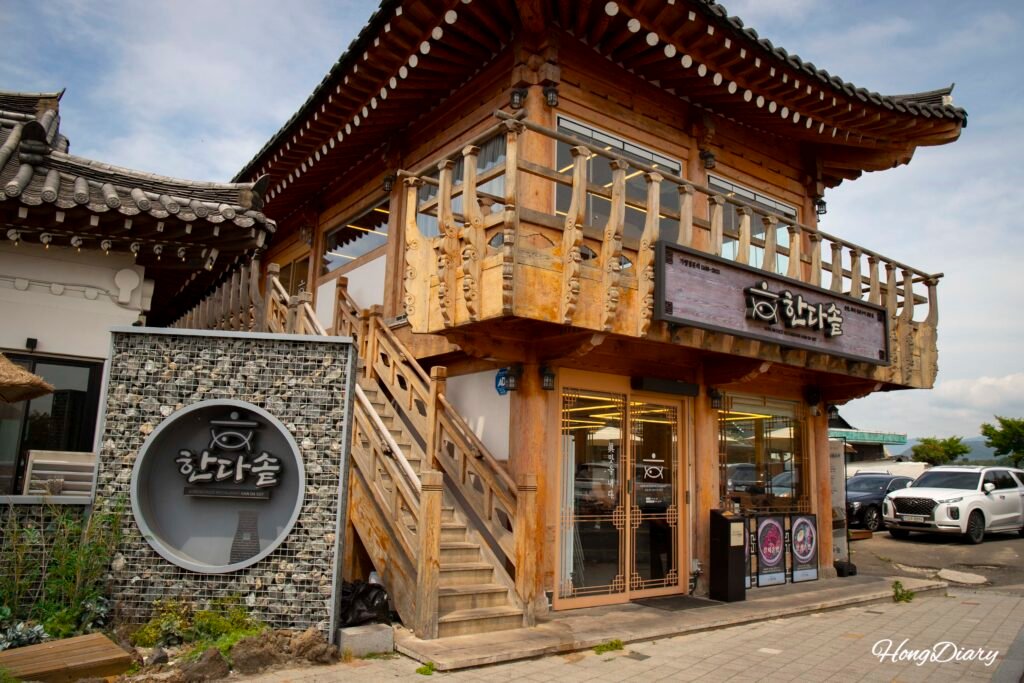
If you get hungry along the way, Handassot is right on the strip and does solid Korean comfort food — their stone pot rice and banchan are a reliable pick when you want something filling without the guesswork.
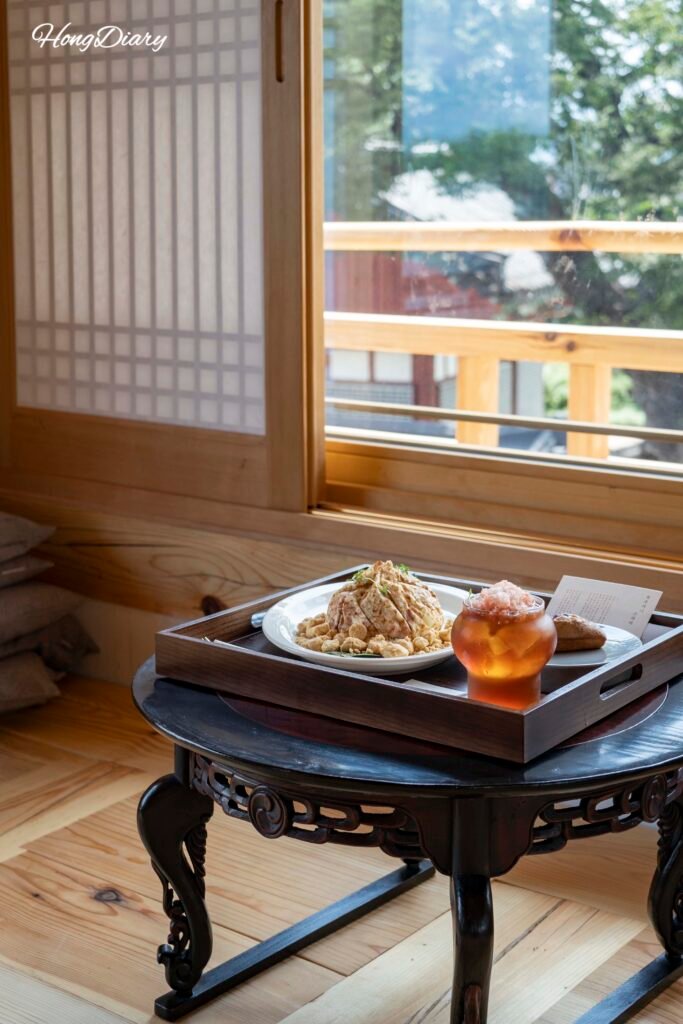
For a quieter break between stops, Bichae Bogette is a hanok cafe on Hwangnidan-gil worth stepping into, as much for the traditional wooden-beam interior as for the drinks.
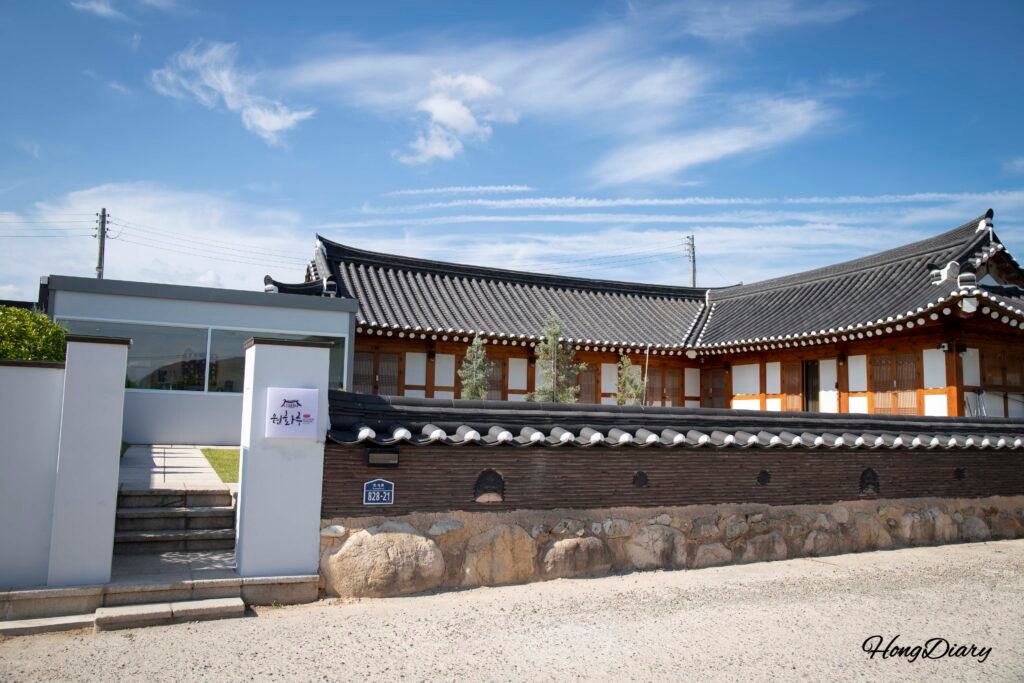
And if you’re spending a night in the area, Wonhwaru is a hanok guesthouse nearby with free breakfast and a resident cat who seems to enjoy the guests more than most hotel staff do — the rates are reasonable, and waking up in a Korean wooden-frame house after a full day in this neighborhood ties the whole experience together.
One last thing — grab the free Hwangnidan-gil walking map from Gyeongju City’s tourism page. It marks the side alleys and smaller streets that you’d likely walk right past without it, and comes in English, Japanese, and Chinese. There are separate maps for the wider Gyeongju historic district and Gyochon Village too — if you’re spending more than a day around Hwangnidan-gil in Gyeongju and the surrounding historic area, download them all before you go.
Daereungwon & Hwangnidan-gil FAQ: Cost, Timing & Routes
How do I get from Daereungwon to Hwangnidan-gil on foot?
Follow the stone wall path along Daereungwon’s western edge. The walk is about 430 meters and takes roughly six minutes. The stone wall runs directly alongside the entrance to Hwangnidan-gil, so the transition between the two is seamless. Use the rear gate of Daereungwon for the shortest route.
Is Hwangnidan-gil in Gyeongju worth visiting at night?
Yes. The atmosphere shifts noticeably after sunset — warm storefront lighting bounces off the traditional tile roofs, the crowds thin out, and the pace slows down. If you can only visit once, evening is the stronger option. But catching both the daytime energy and the nighttime mood by arriving in the late afternoon gives you the full picture.
How much does it cost to enter Daereungwon and Cheonmachong Tomb?
Walking through the Daereungwon Tomb Complex itself is free. Entering Cheonmachong Tomb costs ₩3,000 (~$2 USD / ~€1.70 EUR) for adults, ₩2,000 (~$1.35 USD / ~€1.15 EUR) for youth, and ₩1,000 (~$0.70 USD / ~€0.60 EUR) for children. Combined tickets with other nearby attractions are available at a discounted rate. The ticket office closes at 9:30 PM.
Where can I download a free walking map of Hwangnidan-gil in English?
Gyeongju City’s tourism page provides free downloadable walking maps in English, Japanese, and Chinese. The collection includes a dedicated Hwangnidan-gil map, a wider Gyeongju historic district map, and a Gyochon Village map. Download them at: Gyeongju Tourism Map Page
What are the best hours to visit Hwangnidan-gil?
Late afternoon through about 9:00 PM is the ideal window. Most shops open between 10:00 and 11:00 AM, and some smaller dessert spots and gift stores close earlier in the evening. Arriving around 4:00 or 5:00 PM lets you see the street in daylight and stay through the atmospheric transition into evening.
Can I explore central Gyeongju without a car?
Absolutely. Daereungwon, Hwangnidan-gil, Cheomseongdae Observatory, Gyochon Village, and Woljeonggyo Bridge are all within walking distance of each other in the downtown area. For longer stretches, electric scooter and bicycle rentals are widely available throughout the city. Local buses also connect the major tourist zones.
How long should I spend on Hwangnidan-gil?
Plan for at least 90 minutes to walk the full 1.5 km stretch, browse a few shops, and stop for food or a drink. Visitors spend an average of 93 minutes here — the longest average stay of any attraction in Gyeongju. If you’re combining the visit with Daereungwon and staying through the evening, two to three hours is a comfortable pace.
1 thought on “Hwangnidan-gil in Gyeongju: the Street Worth Staying For”