
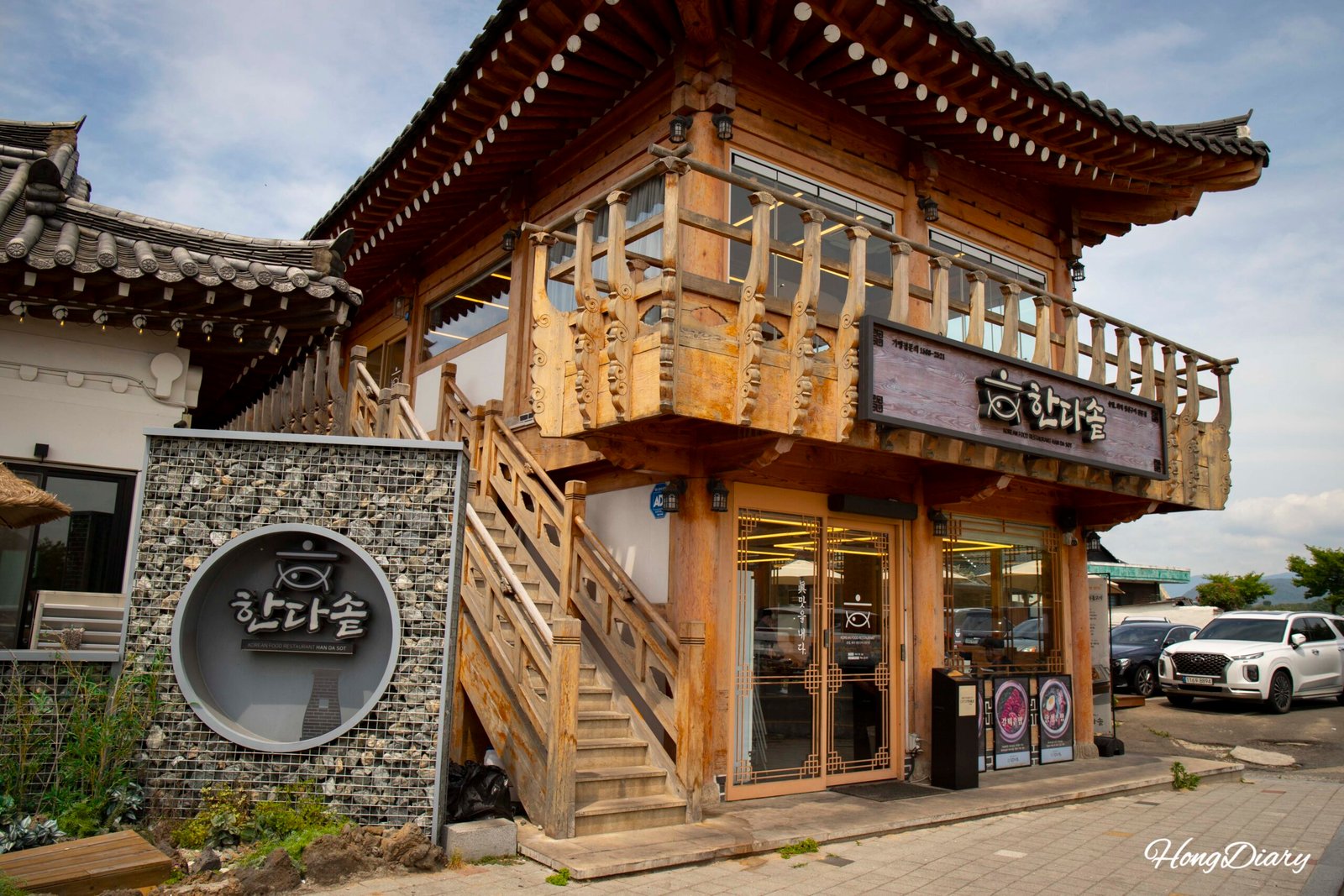
I hadn’t planned on sitting down for a proper meal. But after a morning of walking between ancient tombs and stone observatories, I found myself hungry in a way that a convenience store wasn’t going to fix. I wandered toward Hwangnidan-gil — the kind of street that pulls you in without trying — and that’s where I found Handassot.
Handassot Gyeongju is a Korean rice pot restaurant on Cheomseong-ro, a short walk from Hwangnidan-gil and about five minutes on foot from both Cheomseongdae Observatory and Daereungwon Tomb Park. It serves dolsot-style rice pot meals with a spread of side dishes that genuinely earns the word generous.
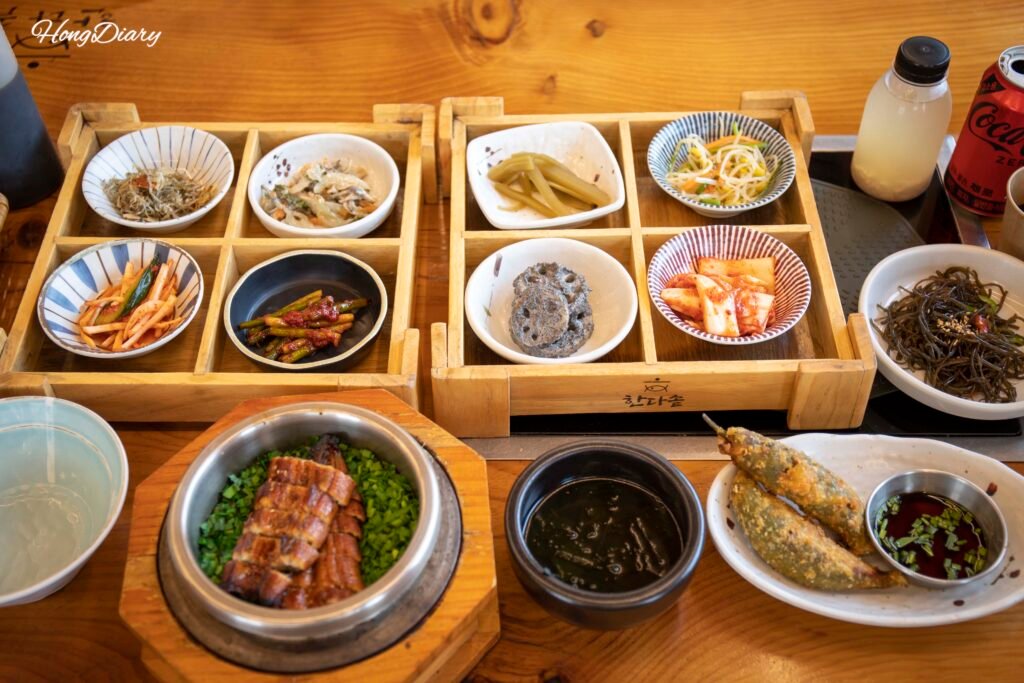
Table of Contents
Location and Access
| Detail | Info |
|---|---|
| Address | 111 Cheomseong-ro, Gyeongju-si, Gyeongsangbuk-do |
| Hours | Daily 10:30 – 21:00 (last order 20:30) |
| Nearest landmarks | Cheomseongdae Observatory (5 min walk), Daereungwon (5 min walk) |
| Parking | Free lot in front (4 spaces) — Jjoksaem, Daereungwon, and Hwangnidan-gil public lots nearby |
| Price range | ₩16,000 – ₩25,000 per person (approx. $10.67 – $16.67 USD) |
By bus: From Gyeongju Intercity Bus Terminal, take bus 60 or 61 and ride 6 stops (about 10 minutes) to Cheonmachong stop, then walk 120 meters. From Gyeongju Station, take the same bus for 13 stops (about 25 minutes) to the same stop.
What Is Handassot?
Handassot is a rice pot restaurant built around the dolsot experience — individual stone pots of rice, cooked to order, served alongside a spread of banchan (Korean side dishes) that would look at home in a traditional hanjeongsik spread.
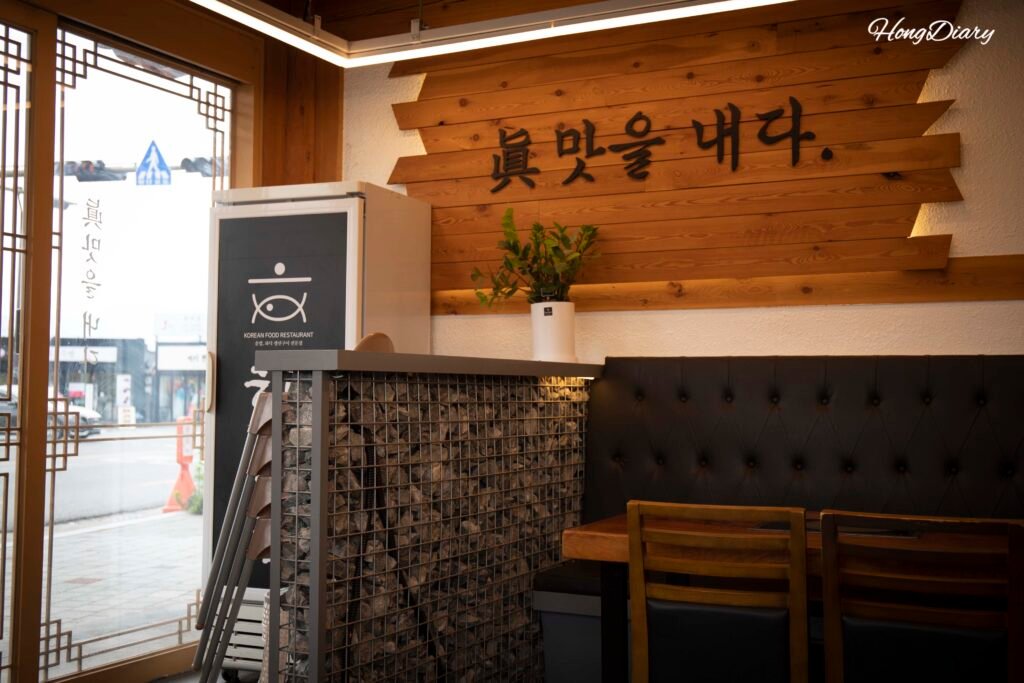
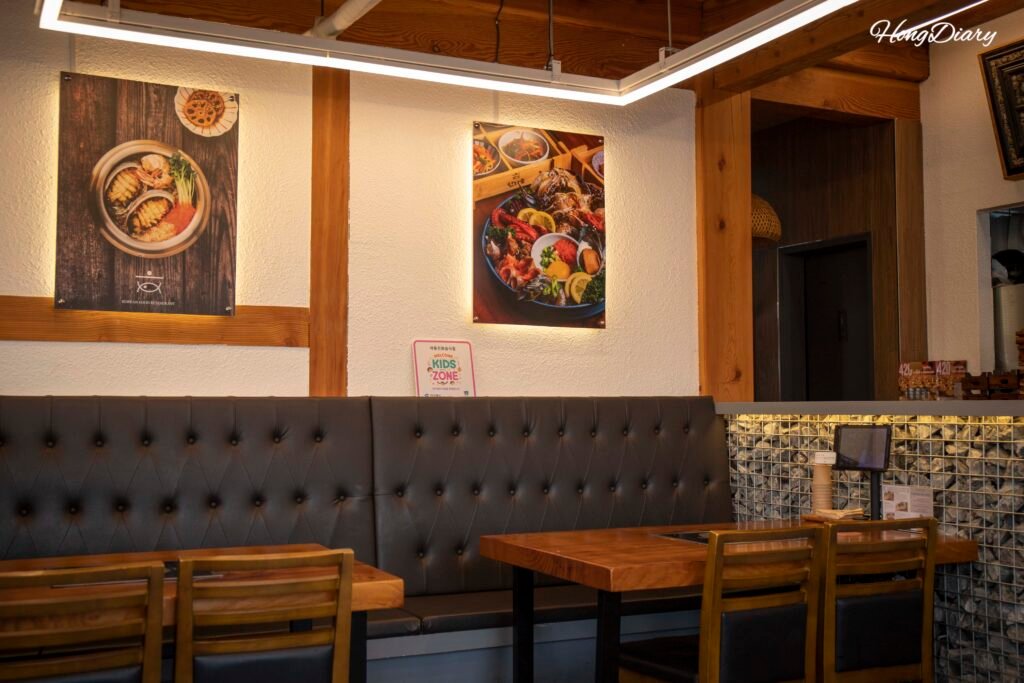
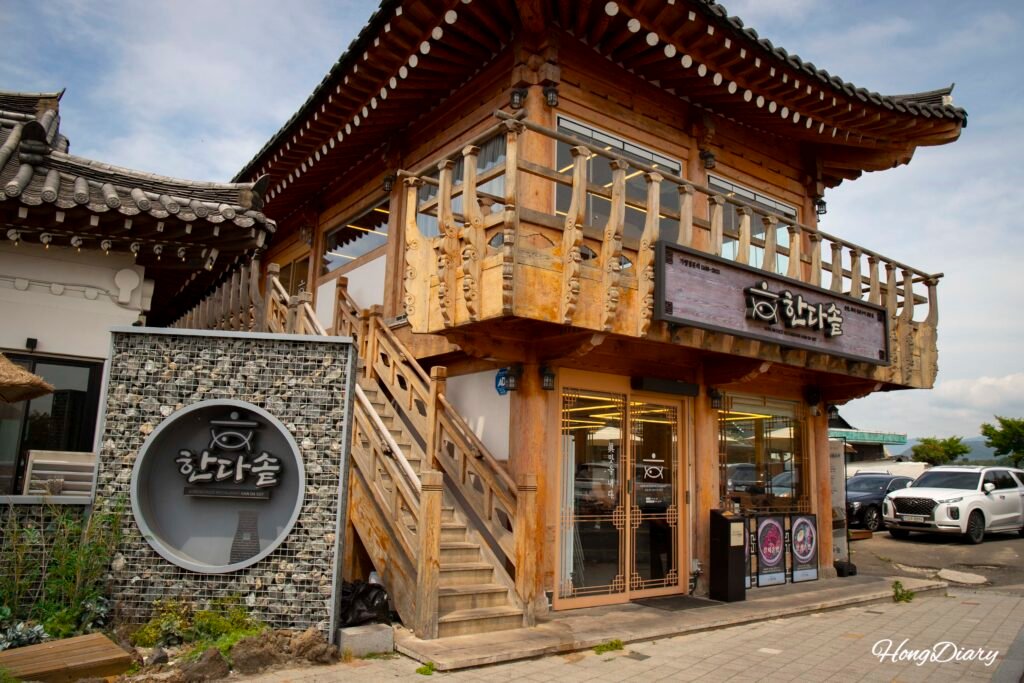
The building itself is two floors in a hanok-influenced style, and the layout inside is more comfortable than most restaurants in the area. Tables are well-spaced, and there are partitions between sections, which makes it feel like your own little corner even when the place is busy. It’s also certified as a child-friendly restaurant, and there were plenty of families around when I visited — a good sign for both the food and the atmosphere.
Ordering is handled through a tablet at the table, which makes it easy to browse the menu at your own pace without flagging down a server.
The Menu
The menu divides into two main categories: the Rice Pot Set and the Rice Pot Combo.
The Rice Pot Set is a single dolsot rice pot with your choice of topping — eel, abalone, galbi (short rib), salmon, or king crab — served with an extensive spread of banchan. The Rice Pot Combo pairs your dolsot rice with a charcoal-grilled main dish, and has expanded beyond the original grilled fish to include charcoal pork bulgogi, mackerel and kimchi stew, and a mixed seafood soy marinate. You can also add side orders to either option if you want to round out the meal.
Here are the highlights worth knowing before you order:
| Item | Price (KRW) | Price (USD) |
|---|---|---|
| Eel Rice Pot | ₩25,000 | approx. $16.67 |
| Abalone Rice Pot | ₩19,000 | approx. $12.67 |
| Galbi (Short Rib) Rice Pot | ₩17,000 | approx. $11.33 |
| Salmon Rice Pot | ₩17,000 | approx. $11.33 |
| Stuffed Chili Fritters (side) | ₩4,000 | approx. $2.67 |
What I Ordered
I went with the eel rice pot and added a side of stuffed chili fritters. The banchan arrived first — nine side dishes plus a bowl of miyeok-guk (seaweed soup). Before the rice pot had even arrived, the table already looked full.
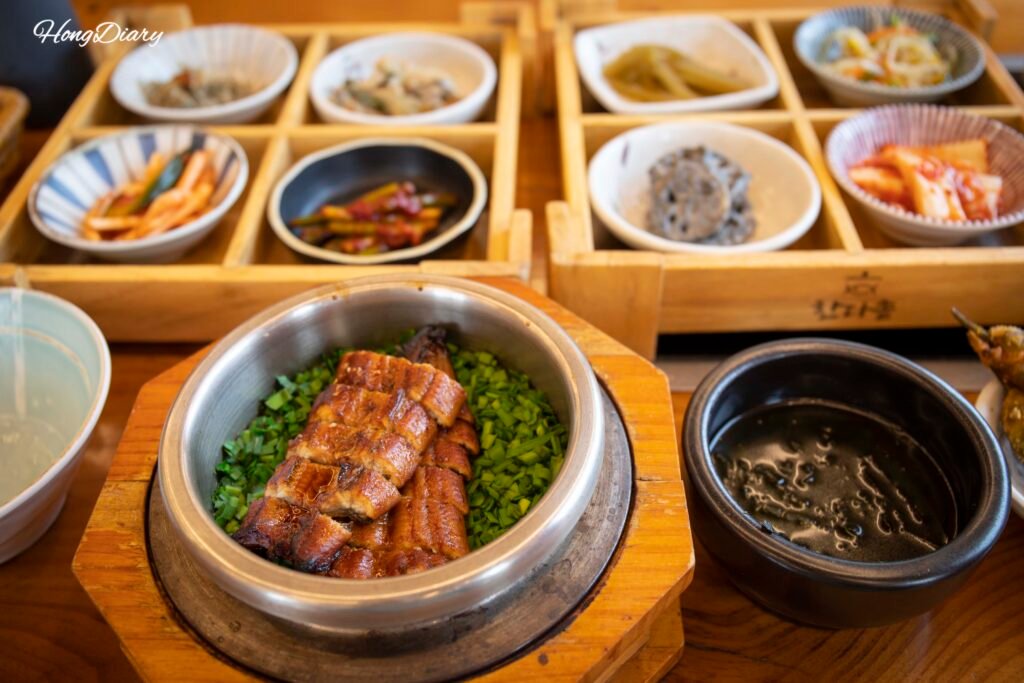
Eel Rice Pot — The eel is marinated in a special sauce and grilled at 500°C in a charcoal hearth before being placed over the rice. When I lifted the lid, the visual alone was worth the wait: glossy rice, charred eel, a faint scent of green onion from underneath.
The eel itself had already been seasoned, so it was perfectly good eaten as-is — clean, savory, the umami of the eel blending naturally with the rice without being heavy. Adding the provided sauce on the side deepened the flavor and made it saltier, which worked well. The texture was the standout: crispy on the outside from the charcoal heat, with flesh that had stayed soft and just pulled apart.
Freshwater eel can sometimes feel greasy or muddy, but this had none of that. The flavor was rich without being overwhelming, and the subtle green onion running through the rice kept everything feeling balanced.
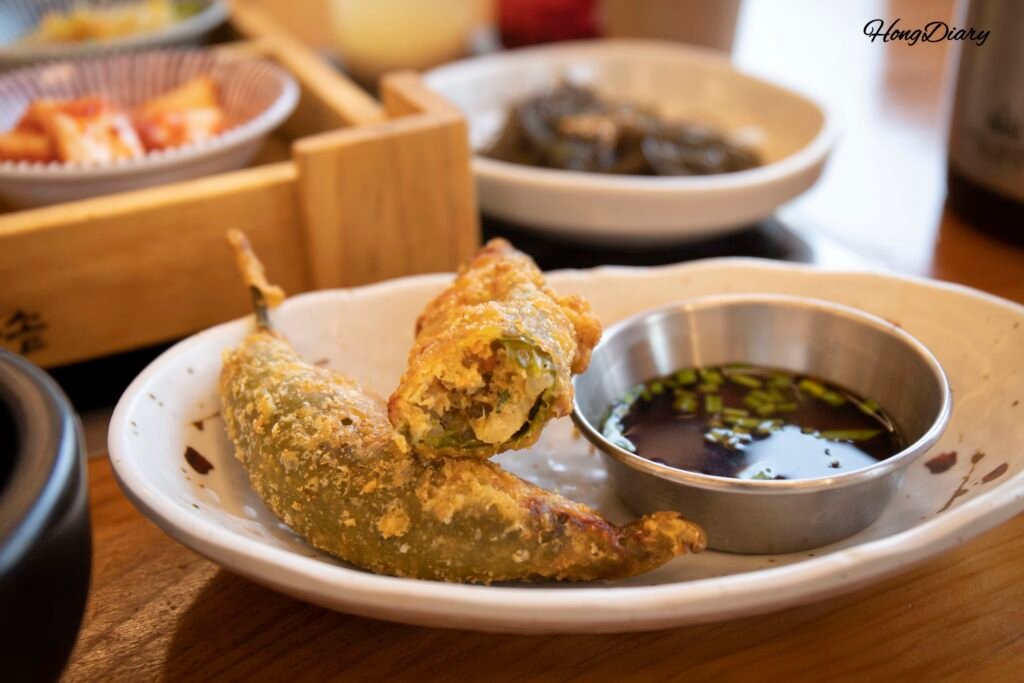
Stuffed Chili Fritters — I almost didn’t order these, but I’m glad I did. The filling was dense — more like a dumpling filling than the hollow versions you sometimes get — and the natural heat of the chili cut right through the richness of the eel. Eating one between bites of rice pot reset the palate in a way that made the whole meal feel lighter. A better pairing than I expected.
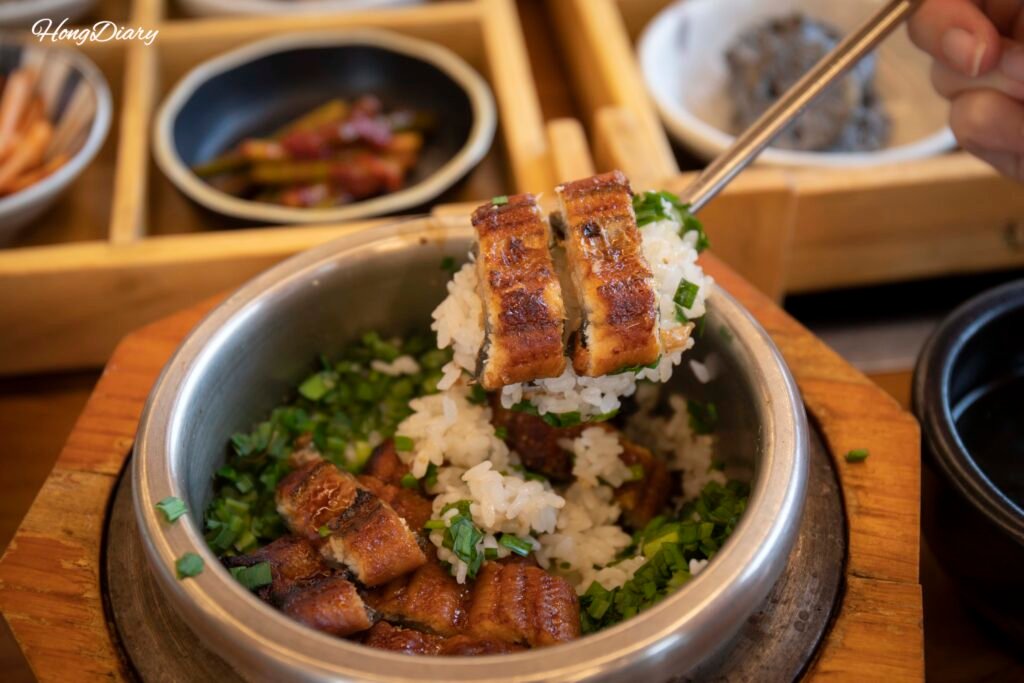
How to Eat the Rice Pot
One tip worth knowing before the food arrives: as soon as the rice pot comes to the table, scoop the rice out into your bowl first. This stops the bottom layer from overcooking. Then pour hot water (provided at the table) directly into the empty pot and let it sit. By the time you’ve finished eating, the scorched rice at the bottom will have softened into sungnyung — a traditional Korean roasted-rice water that works like a mild, nutty tea to finish the meal.
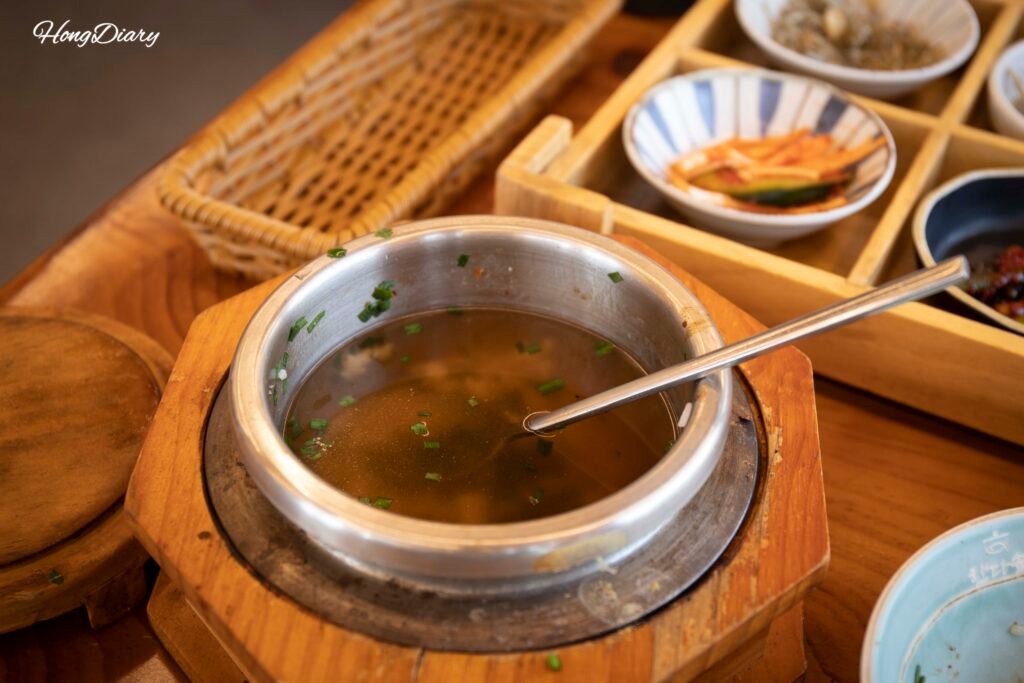
I was a little skeptical that the eel flavor would carry into the sungnyung and make it strange, but it didn’t. It came out clean and faintly toasty, doing exactly what it’s supposed to do: settle everything down after a rich meal. A cold drink alongside it — cola or sikhye (sweet rice punch) — makes a good ending.
Getting to Gyeongju and Getting Around
Gyeongju spreads out more than it looks on a map. The main sights are scattered across the city and its outskirts in a way that makes walking between them impractical. Most travelers who try to do Gyeongju on public transport end up spending more time waiting than exploring.
If you want to move at your own pace and actually cover the ground, renting a car makes the difference. You can book a rental car for Gyeongju here — it takes the logistics out of the equation and lets you build the day around the food and the sites rather than the bus schedule.
Planning Your Stay
Gyeongju is the kind of place where one day isn’t quite enough. There’s a rhythm to it — morning at the tombs, afternoon wandering Hwangnidan-gil, evening somewhere quieter — that only works if you’re not rushing back. Most people who visit once end up wishing they’d booked two nights instead of one.
If you’re planning to stay over, I’ve put together a separate guide to accommodations near central Gyeongju with options that put you close to the main sights without overpaying for the location.
After Lunch on Hwangnidan-gil
The street that Handassot sits near — Hwangnidan-gil — is one of those places worth wandering without a plan after you eat. Renovated hanok buildings line the alleys, and the mix of cafes, small shops, and dessert spots gives the area a pace that’s different from most tourist streets in Korea.
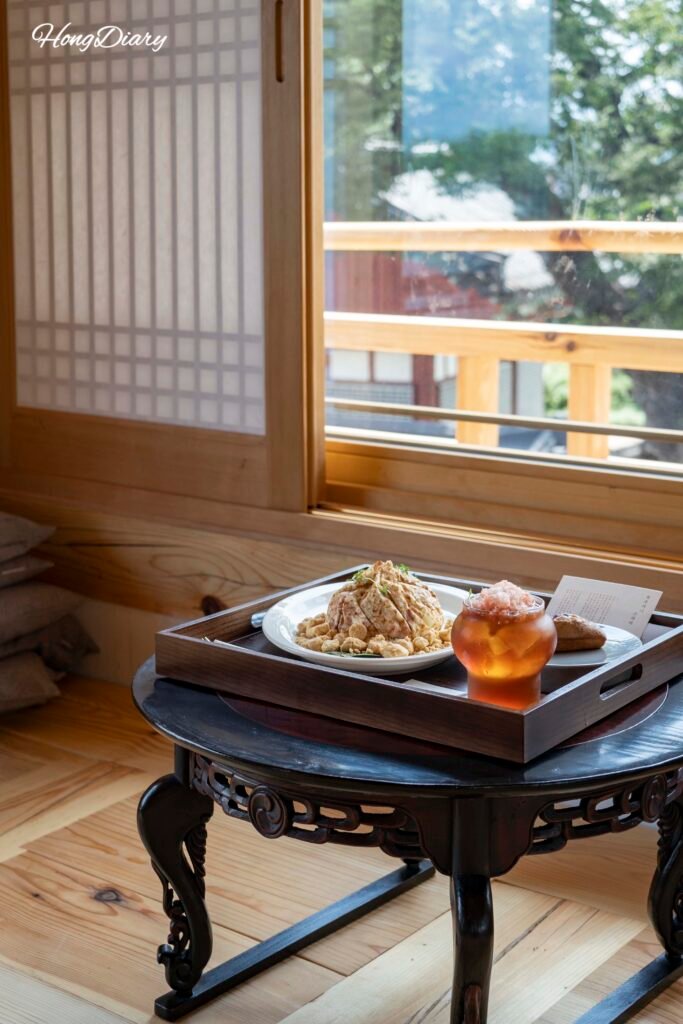
If you’re looking for somewhere to settle after the meal, Bichae Bogette is a hanok cafe a short walk away that’s worth the stop — distinctive desserts, a setting that actually matches the neighborhood, and the kind of place you end up staying longer than you meant to.
Final Thoughts on Handassot Gyeongju
I came in hungry and left genuinely satisfied in the way that only a proper sit-down Korean meal can manage. The eel rice pot was well-executed — the charcoal preparation made a real difference — and the side dish spread meant there was never a dull moment on the table.
It works well as a solo meal, but the setup and the atmosphere at Handassot Gyeongju suit a family lunch or a group sitting down between sights even better. If you’re building a day around Hwangnidan-gil and the surrounding area, this is a solid anchor for the midday meal.
Where is Handassot located in Gyeongju?
Handassot is at 111 Cheomseong-ro, Gyeongju-si, a short walk from Hwangnidan-gil. It’s about five minutes on foot from both Cheomseongdae Observatory and Daereungwon Tomb Park, making it easy to include in a sightseeing route.
What are the opening hours for Handassot Gyeongju?
The restaurant is open daily from 10:30 to 21:00, with last order at 20:30. There is no break time during the day.
What is the price range at Handassot Gyeongju?
The Rice Pot Set (dolsot rice with banchan) ranges from ₩16,000 to ₩25,000 per person (approx. $10.67 – $16.67 USD), depending on the main topping chosen. Rice Pot Combo sets with a charcoal-grilled main dish are also available.
What is the most recommended dish at Handassot?
The eel rice pot is a popular choice — the eel is marinated and grilled at 500°C in a charcoal hearth before being placed over the rice. Abalone and galbi (short rib) rice pots are also well-regarded options.
How do you eat the rice pot correctly at Handassot?
As soon as the rice pot arrives, scoop the rice into your bowl to prevent the bottom from overcooking. Pour hot water into the empty pot and let it sit while you eat. By the time you finish your meal, the scorched rice will have dissolved into sungnyung — a traditional Korean roasted-rice water that cleanses the palate.
Is Handassot suitable for families with children?
Yes. Handassot is certified as a child-friendly restaurant and is a popular choice for family meals. The interior has well-spaced tables and partitions for a comfortable dining experience.
1 thought on “Handassot Gyeongju — A Korean Rice Pot Meal Worth Slowing Down For”