
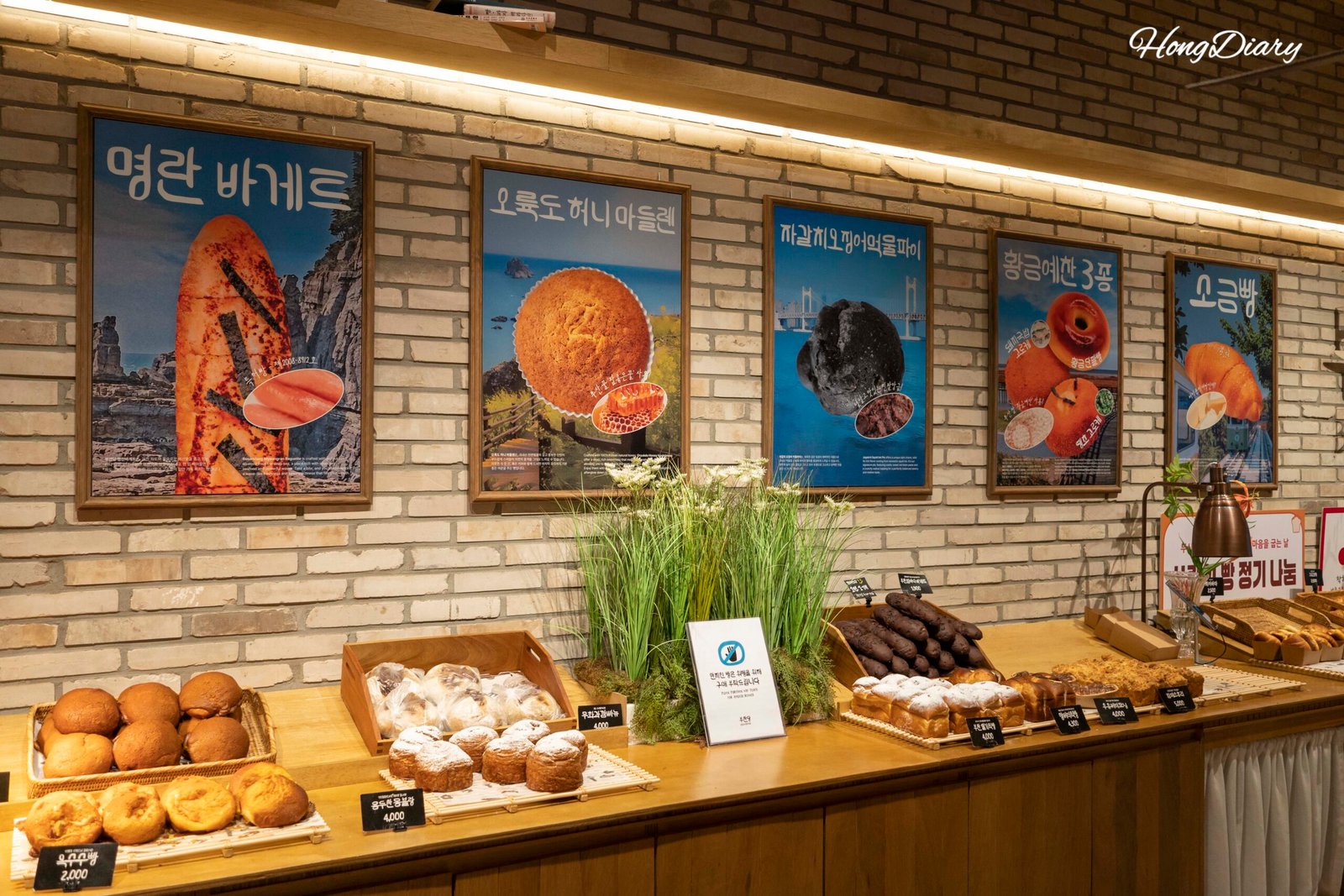
I wasn’t planning on stopping anywhere before my train. But walking out of Busan Station, I spotted a small crowd filing into a bakery just across the street — and curiosity won. That’s how I ended up at Busandang Bakery, tucked into the entrance of Texas Street, and honestly, I’m glad I went in.
Busandang is a Busan bakery steps from Busan Station Exit 7, rebranded from Baekjo Confectionery (est. 1983), specializing in locally inspired breads made with Busan ingredients such as squid ink, pollock roe, and Daejeo tomatoes.
Table of Contents
Location and Access
Exit Busan Station from Exit 7 and cross the street — it’s about a 1–2 minute walk to the entrance of Texas Street. Busandang is right there, sharing a building with Jeongjitgan, a popular local pork soup restaurant.
| Detail | Info |
|---|---|
| Address | 11 Jungangdae-ro 209beon-gil, Dong-gu, Busan |
| Hours | Daily 08:00 – 21:00 |
| Nearest Exit | Busan Station Exit 7 (1–2 min walk) |
| Price Range | ₩1,800 – ₩5,500 (approx. $1.20 – $3.67 USD) |
| Gift Sets | From around ₩10,000 (approx. $6.67 USD) |
| Parking | Public and private lots nearby |
What Is Busandang?
Busandang started its life as Baekjo Confectionery — a neighborhood bakery that had been quietly operating near Busan Station since 1983. After more than 40 years, it was rebranded into what it is today: a modern bakery that leans into Busan’s food identity rather than trying to be anything else.
The area around the bakery has a lived-in quality that makes it feel like something locals actually use. You’ll pass Brownhands Baekje (the old Baekje Hospital building) on the way in, and the block itself feels a step removed from the usual station commercial strip.
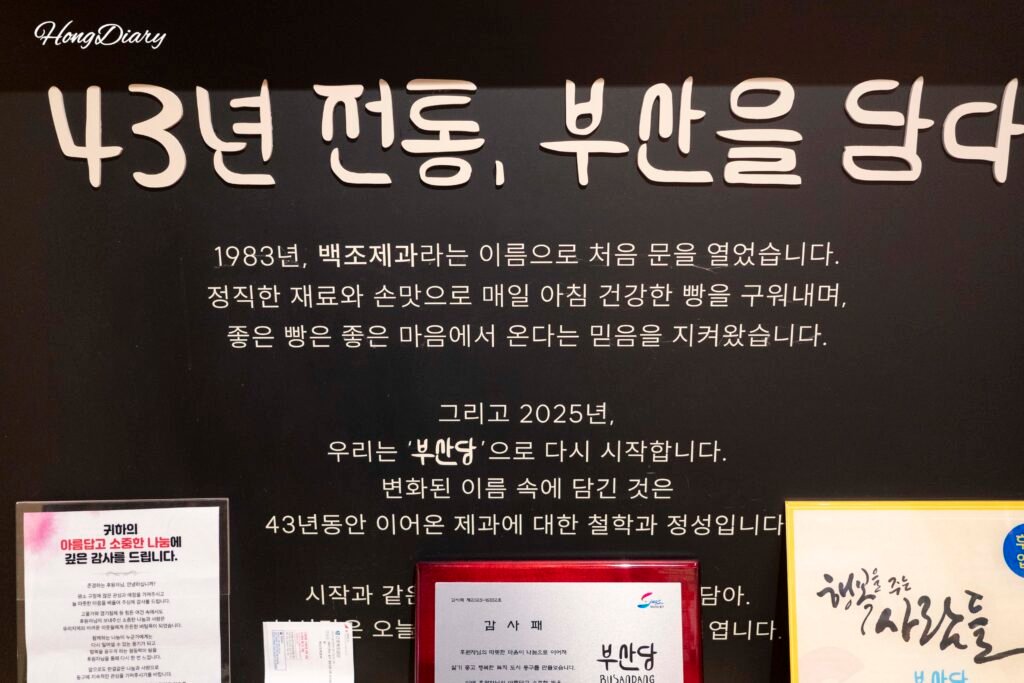
The rebrand made waves for an unexpected reason too. Some of its products — particularly a layered hill cake series — drew comparisons to Sungsimdang, a well-known bakery in Daejeon that’s something of a national institution in Korea. The visual similarities sparked a lot of online discussion, and Busandang briefly earned the nickname “Busan’s Sungsimdang.” I’d seen that conversation before visiting and went in curious rather than skeptical.
What I found was a bakery with its own clear identity: local ingredients, honest prices, and a menu that actually has something to say about Busan.
Menu Highlights
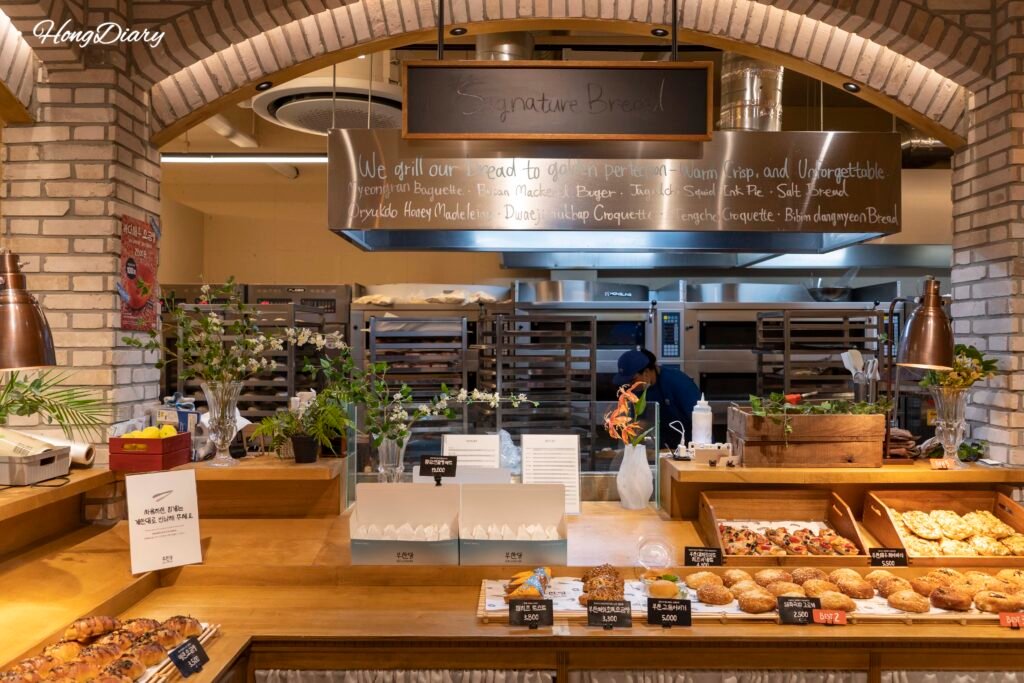
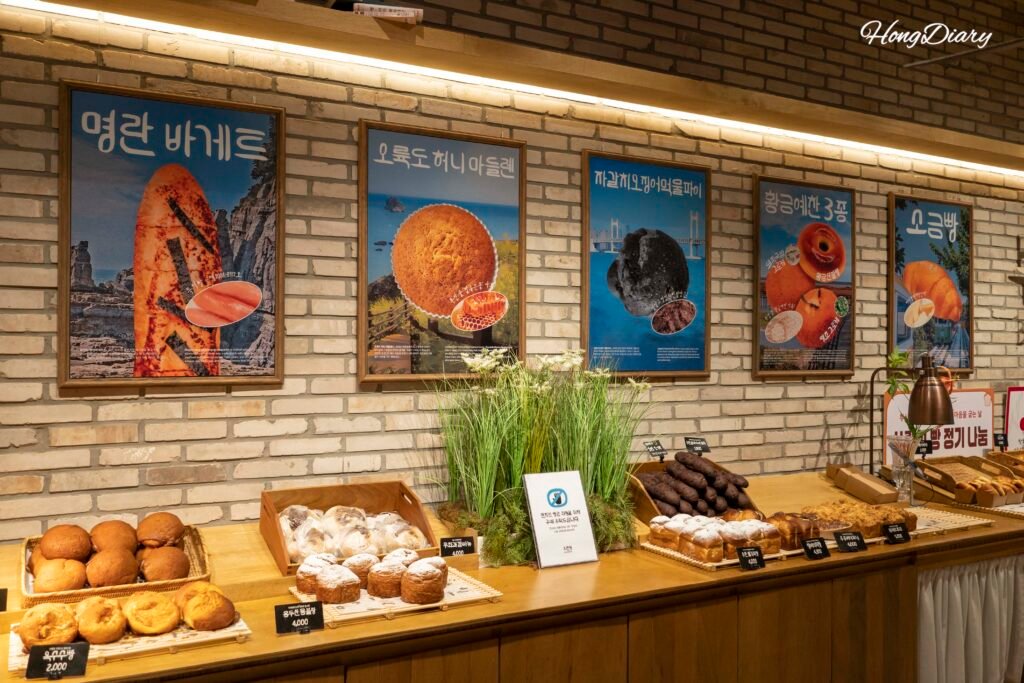
The menu isn’t just a lot of bread. It’s built around Busan — the ingredients, the neighborhoods, the local dishes. That’s what sets it apart from a standard bakery stop near a train station.
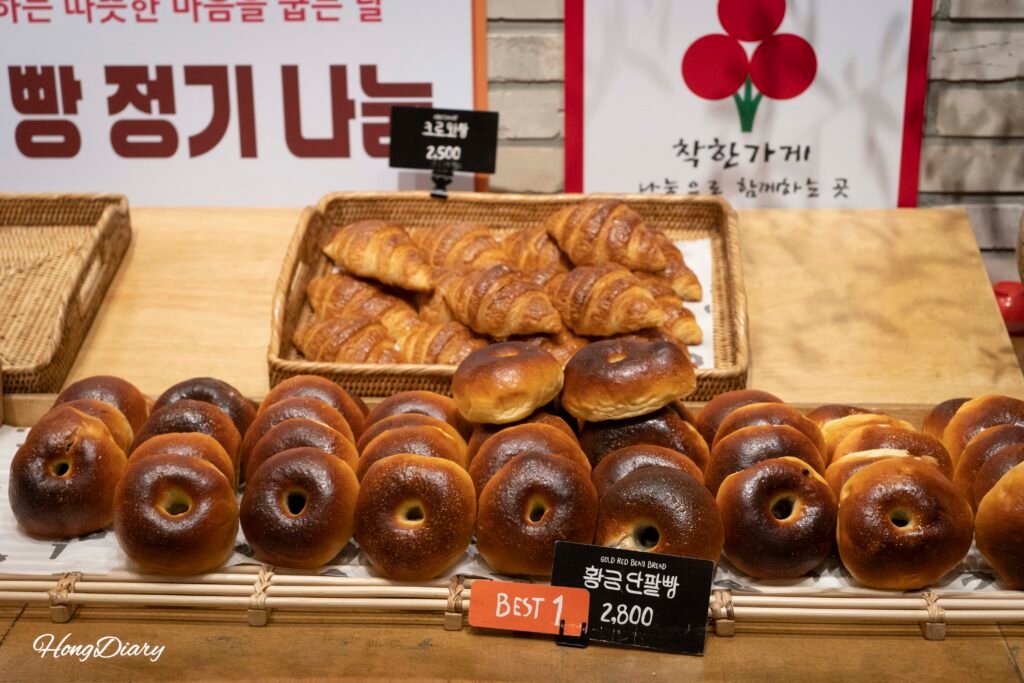
The three most-ordered items — the Golden Red Bean Bun, the Pork Soup Croquet, and the Spicy Pepper Croquet — are all made using Hwanggeum Yechan, a premium rice developed through a collaboration between Busan City and Korea’s Rural Development Administration. It’s a small detail, but it gives the bread a bit more meaning as a souvenir.
| Item | Price (KRW) | Price (USD) |
|---|---|---|
| Golden Red Bean Bun — Best #1 | ₩2,800 | approx. $1.87 |
| Pork Soup Croquet — Best #2 | ₩2,500 | approx. $1.67 |
| Spicy Pepper Croquet — Best #3 | ₩2,800 | approx. $1.87 |
| Jagalchi Squid Ink Pie Manju — Best #4 | ₩1,800 | approx. $1.20 |
| Myungran Baguette (pollock roe) | ₩4,500 | approx. $3.00 |
| Yeongdo Sweet Potato Bread | ₩2,500 | approx. $1.67 |
| Sea Shrimp Salt Bread | ₩2,800 | approx. $1.87 |
| Busan Shrimp Ciabatta | ₩5,500 | approx. $3.67 |
| Busan Mackerel Burger | ₩5,000 | approx. $3.33 |
| Busan Ssiat Hotteok Salt Bread | ₩3,300 | approx. $2.20 |
| Daejeo Tomato Cheese Baguette | ₩4,300 | approx. $2.87 |
Each item tells a small story about the city. The Jagalchi Squid Ink Pie Manju is named after Busan’s famous waterfront fish market. The Myungran Baguette — myungran is spicy pollock roe, a Busan staple — came loaded with more filling than I expected. The Mackerel Burger nods to one of the most iconic fish in the region. The Daejeo Tomato Cheese Baguette is named after a Busan neighborhood.
They also run seasonal and event-limited items. During my visit, there was a promotional Busan Night Sea Baguette — normally ₩4,800 (approx. $3.20 USD) — being sold at ₩1,900 (approx. $1.27 USD) per person, limited to 100 pieces a day. I made sure to grab one.
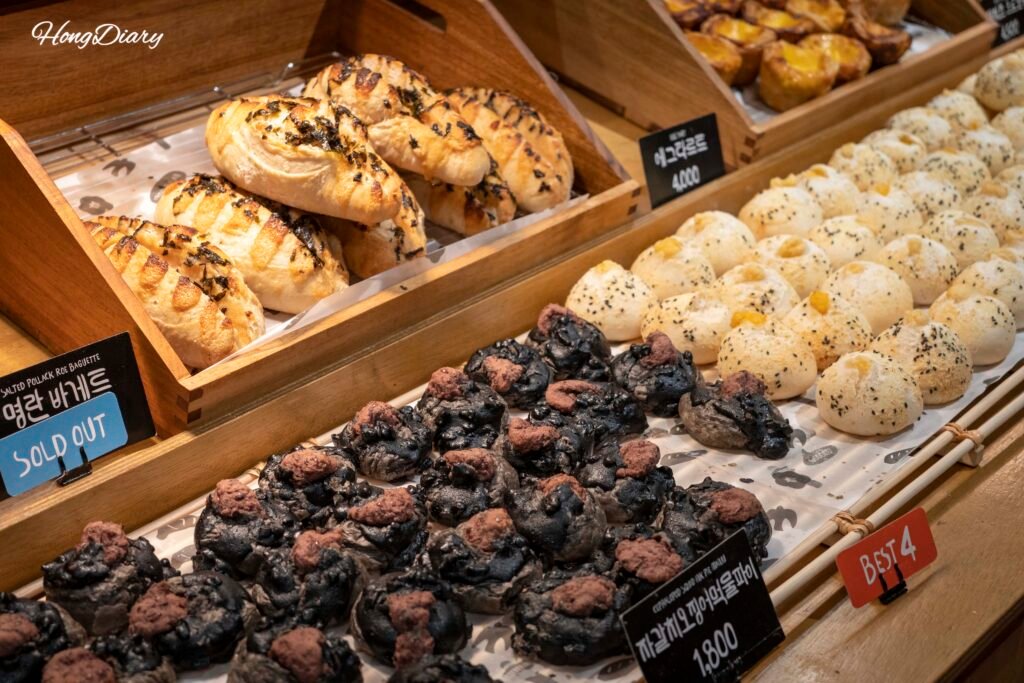
What I Actually Ordered
I tried not to go overboard on a first visit, but I ended up with four items: the Busan Night Sea Baguette on promotion, the Pork Soup Croquet, a corn bread, and the Myungran Baguette. Total came to ₩10,300 (approx. $6.87 USD) — which felt very reasonable for what I got.
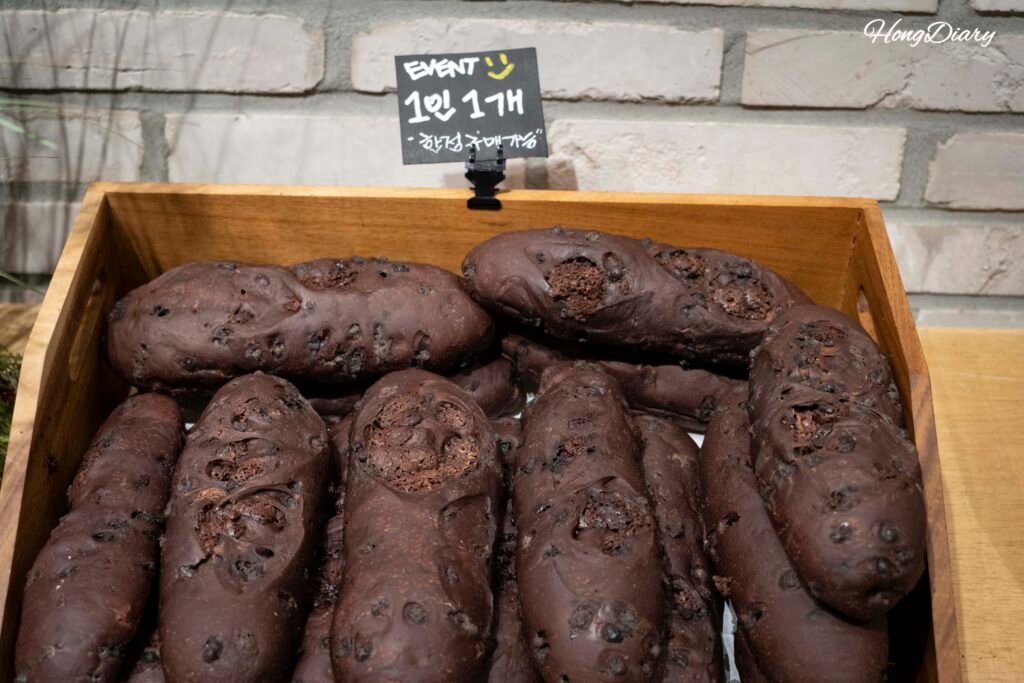
Busan Night Sea Baguette — The promotional price made this a no-brainer. The chocolate flavor was rich without being cloying, and the texture was chewier than a standard baguette — the kind of thing that pairs well with a hot drink on the train. My travel companion claimed it as a favorite before I’d even finished mine.
Myungran Baguette — I’m not always drawn to hard bread, but this one had a softer bite than expected. The pollock roe filling was more generous than I anticipated, and the savory punch worked well. It had sold out while I was browsing, and a fresh batch came out just before I left — so keep an eye on the shelf if you don’t see it at first.
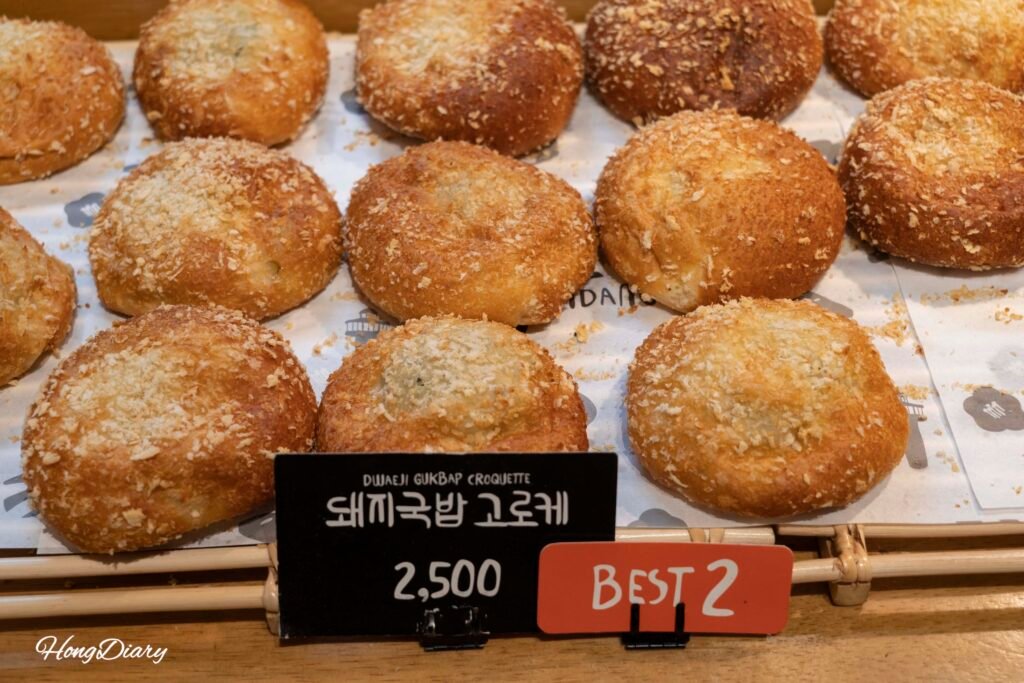
Pork Soup Croquet — This one caught me slightly off guard. It was spicier than I expected, and I’d strongly recommend eating it warm. I had mine after it cooled down, and the filling lost a lot of its appeal that way. Fresh and hot is the way to go.
Corn Bread — Picked this up for the kids. For my own taste, a bakery called Samsong still edges it out, but it disappeared quickly and nobody complained.
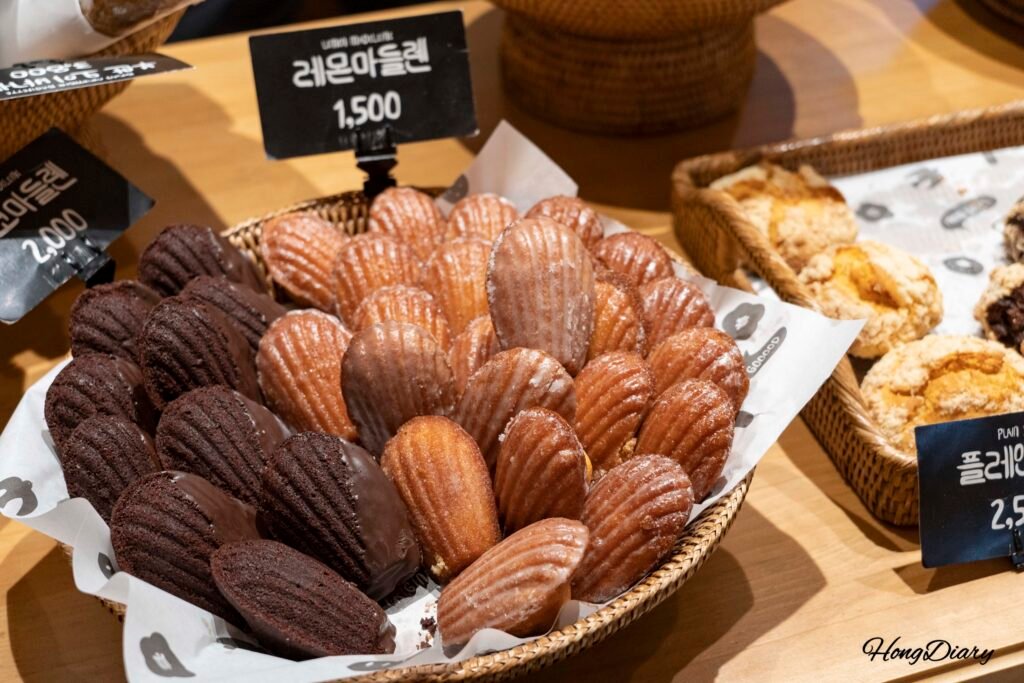
One note on the cake lineup: I went looking for the hill cake series I’d seen online, but it doesn’t seem to be available at the Busan Station branch. That may be a Haeundae flagship exclusive.
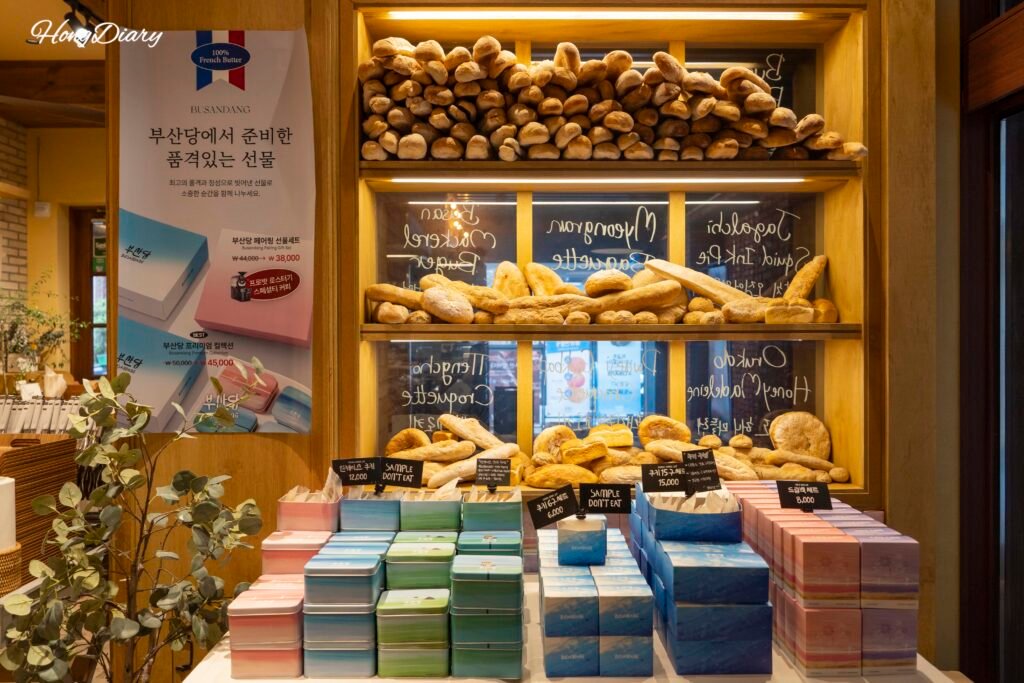
Gift Sets — Worth Grabbing Before Your Train
If you’re heading home or picking something up for people back in your city, the gift sets here are genuinely practical.
There’s a Croquet Set featuring the best-selling varieties, a Hwanggeum Set built around the signature rice-based items, and an O-hyungje Set — Five Brothers Set — that includes five types of salt bread. Most sets sit around ₩10,000 (approx. $6.67 USD), which is easy to justify as a travel souvenir.
The bread travels well enough for a train ride, and the local angle — Busan ingredients, Busan neighborhood names on the packaging — gives it more personality than a generic gift box.
Honest Thoughts After Visiting
Let me be upfront: Busandang isn’t trying to be a destination bakery in the way that Sungsimdang is for Daejeon — where people actually plan day trips just to queue for bread. That’s a different category entirely, and the comparison, while flattering, set expectations that weren’t quite fair.
What Busandang actually is — and does well — is a local bakery with a genuine point of view, sitting right where you need it most. The prices are honest, the Busan-themed menu is executed with care, and the location couldn’t be more convenient for train travelers.
It fills a gap that Busan Station didn’t really have before: a place with actual character, not just a convenience store shelf. Whether you go in for one piece to eat on the platform or a gift set to carry home, it’s a good use of whatever time you have before departure.
While You’re in the Area
Busan Station is more useful as a base than most people realize. If you have time before or after your train, the neighborhood rewards a bit of wandering.
On a separate visit, I stopped by Victoria Bakery Garden — a completely different kind of experience, quieter and more garden-like, but equally worth knowing about if you’re putting together a bread crawl around the area.

If you find yourself with an hour or so to spare, Big Dipper Library is a short walk from the station and one of the more unexpected places to stumble into before a train ride. Worth a look even if you’re not much of a reader.

And if you’re staying overnight, I’ve written about a family-friendly place to stay near Busan Station that works well for groups or anyone who wants more room than a standard hotel — a comfortable home base for exploring Busandang Bakery Busan Station and everything else the neighborhood has to offer.
Where is Busandang Bakery located near Busan Station?
Busandang is about a 1–2 minute walk from Busan Station Exit 7. Cross the street toward Texas Street and look for the entrance near Brownhands Baekje. It shares a building with the pork soup restaurant Jeongjitgan.
What are the opening hours for Busandang Busan Station?
The Busan Station branch is open daily from 08:00 to 21:00, including weekends and public holidays.
What makes Busandang different from other bakeries near Busan Station?
Busandang builds its menu around Busan’s local ingredients — squid ink, pollock roe, mackerel, and Daejeo tomatoes. Its signature breads also use Hwanggeum Yechan, a premium rice variety developed in collaboration with Busan City and Korea’s Rural Development Administration.
What are the most popular items at Busandang?
The top four best-sellers are the Golden Red Bean Bun (₩2,800 / approx. $1.87 USD), the Pork Soup Croquet (₩2,500 / approx. $1.67 USD), the Spicy Pepper Croquet (₩2,800 / approx. $1.87 USD), and the Jagalchi Squid Ink Pie Manju (₩1,800 / approx. $1.20 USD).
Does Busandang sell gift sets suitable for souvenirs?
Yes. The Busan Station branch carries several gift sets, including the Croquet Set, the Hwanggeum Set, and the O-hyungje (Five Brothers) Salt Bread Set. Most are priced around ₩10,000 (approx. $6.67 USD), making them a practical option for train travelers.
Is there parking available near Busandang Busan Station?
There is no dedicated parking for the bakery, but several public and private parking lots are located within walking distance of the Busan Station area.
Is the hill cake available at the Busan Station branch?
Based on my visit, the hill cake series does not appear to be available at the Busan Station location. It may be carried at the Haeundae flagship branch.