
I almost skipped the Jinju Silk Museum entirely. I was in Jinju for the fortress, maybe a walk along the Nam River, and then back to Busan. But a friend mentioned that KeySook Geum — the artist behind the “Snow Fairy” costumes from the 2018 PyeongChang Olympics opening ceremony — had a special exhibition running here, and that she’d be doing an in-person artist talk. That changed my plans.
Jinju sits in the western half of South Gyeongsang Province, a midsize city that most international visitors pass through on the way to somewhere else. That’s a mistake. Beyond Jinjuseong Fortress and the Namgang Yudeung (Lantern) Festival held every October, this city has quietly been Korea’s silk capital for over a century — roughly 70% of all silk produced in the country comes from here. The Jinju Silk Museum, which opened in late 2024, is the first museum in Korea dedicated entirely to this heritage. It sits within the Silk Specialized Complex in Munsan-eup, about 10 km west of the city center, which is probably why almost no English-language travel content mentions it.
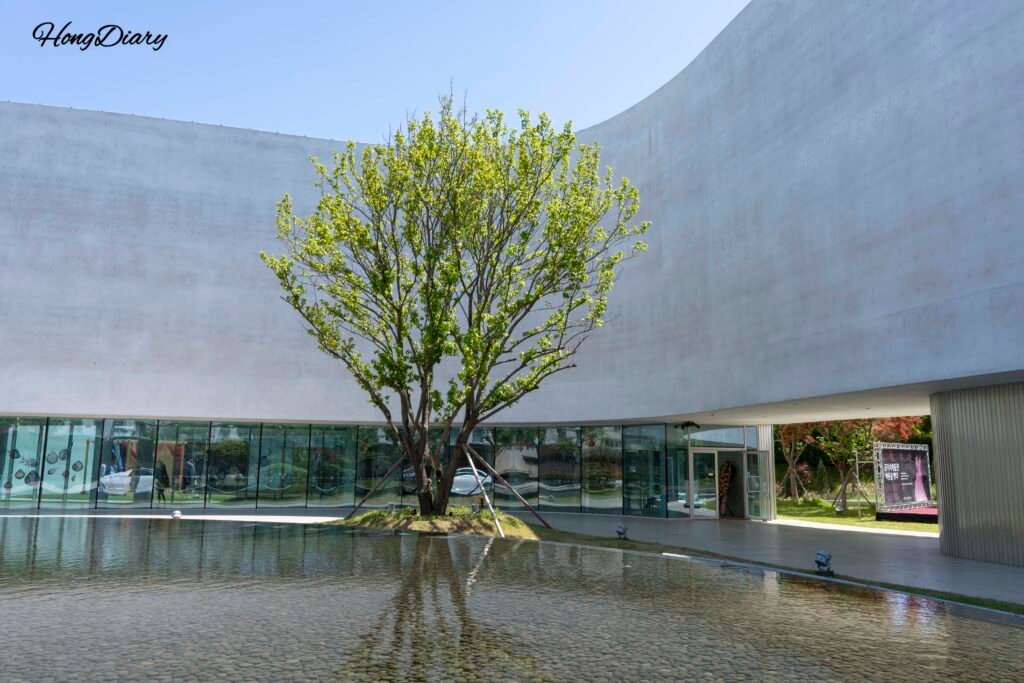
Table of Contents
Essential Information
| Detail | Info |
|---|---|
| Address | 994 Worasan-ro, Munsan-eup, Jinju-si, Gyeongsangnam-do |
| Hours | 10:00 AM – 6:00 PM (closed every Monday) |
| Admission | Adults ₩2,000 (~$1.30 / €1.10) · Youth ₩1,000 (~$0.70 / €0.60) · Children ₩500 (~$0.35 / €0.30) |
| Parking | Free |
| Indoor/Outdoor | Fully indoor — weather-proof year-round |
| Getting there | Route | Time | Cost |
|---|---|---|---|
| From Seoul | KTX from Seoul Station → Jinju Station | ~3 hr 30 min | ₩57,600 (~$38 / €33) |
| From Busan | Intercity bus, Seobu (Sasang) Terminal → Jinju | ~1 hr 30 min | ₩11,000 (~$7.30 / €6.20) |
| From Jinju Station | Taxi (recommended) | ~15 min | ₩9,000–10,000 (~$6–7 / €5–6) |
| From Jinju Bus Terminal | Bus 290/390/391 from Nonghyup Jungang stop | 20–25 min | ~₩1,500 (~$1 / €0.85) |
If you’re arriving by KTX, take a taxi from Jinju Station — the bus connections involve a transfer at Gaeyang Intersection, and the cab only costs around $6.
A century of silk, told on the second floor
I got there about an hour before the artist talk and wandered through the permanent exhibition on the second floor first. This turned out to be a smart move.
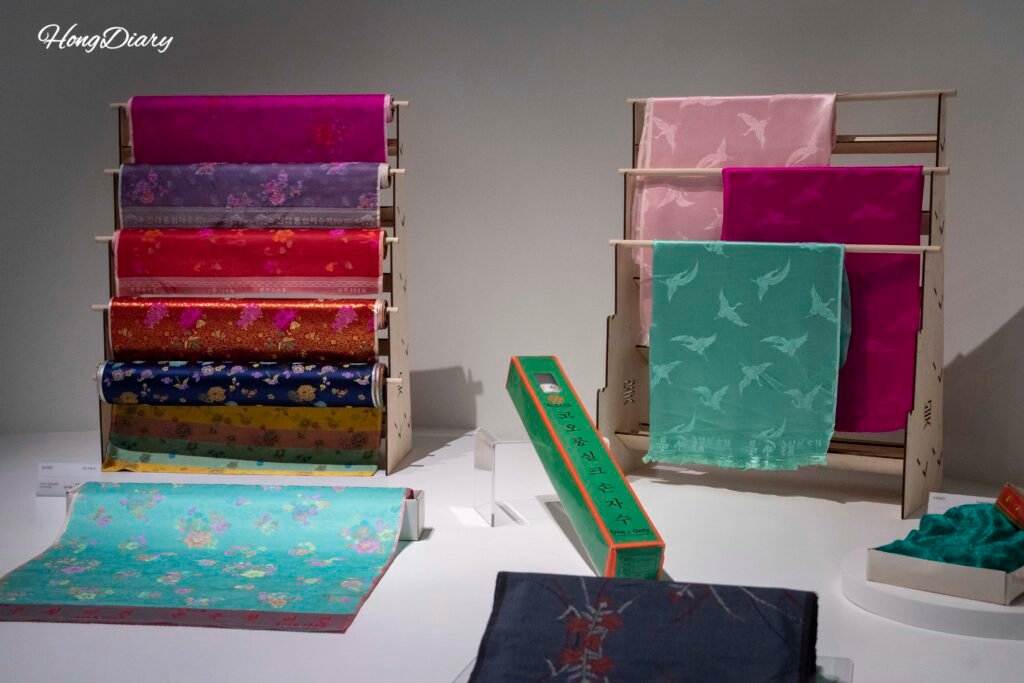
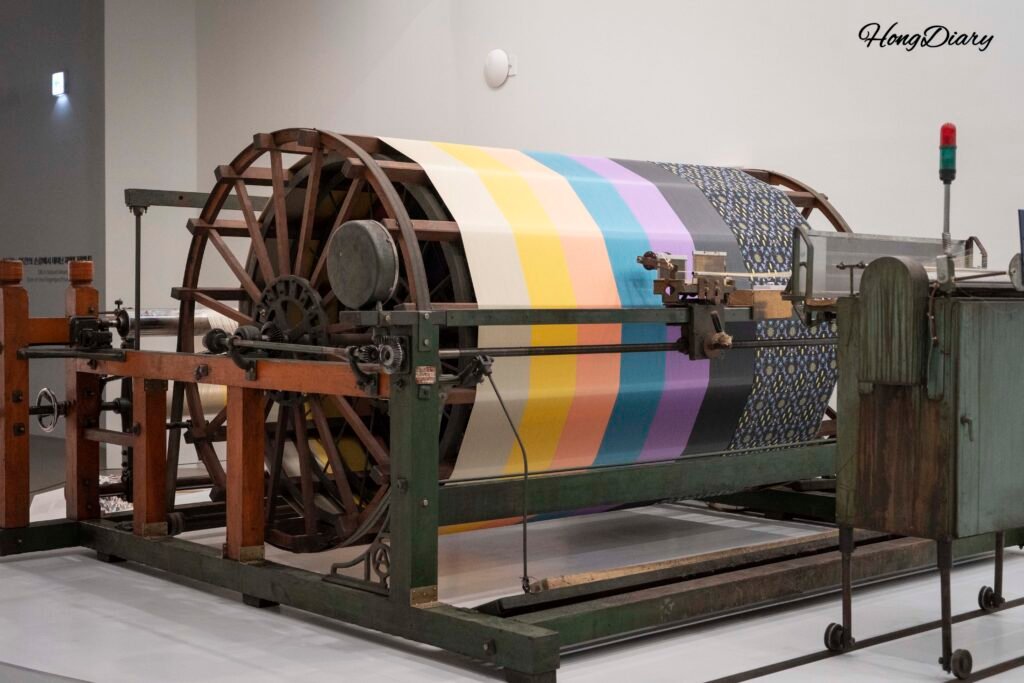
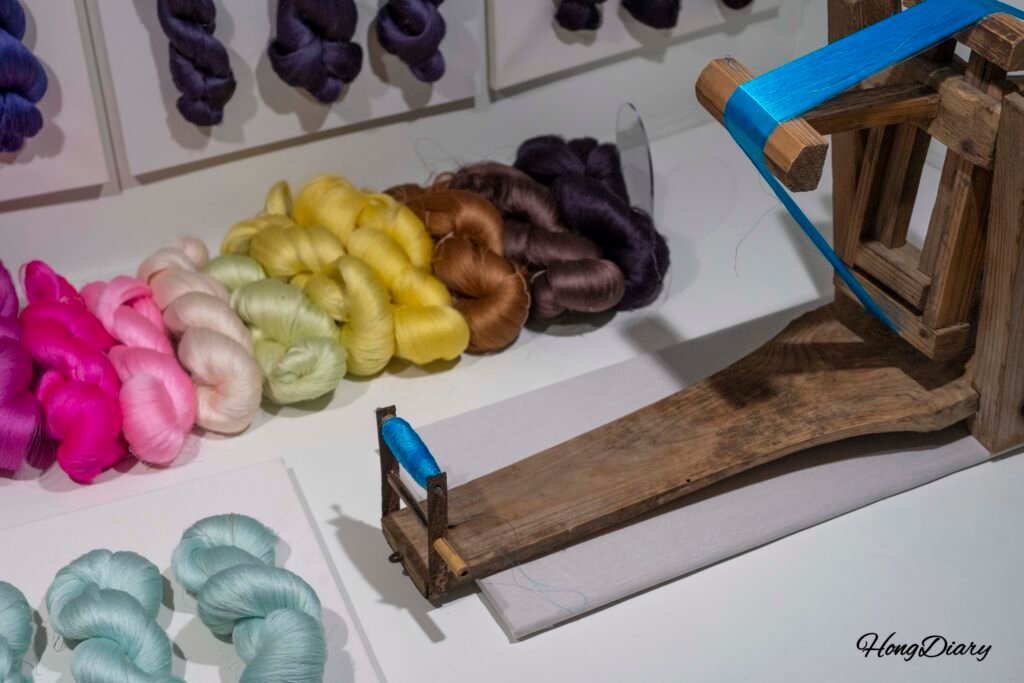
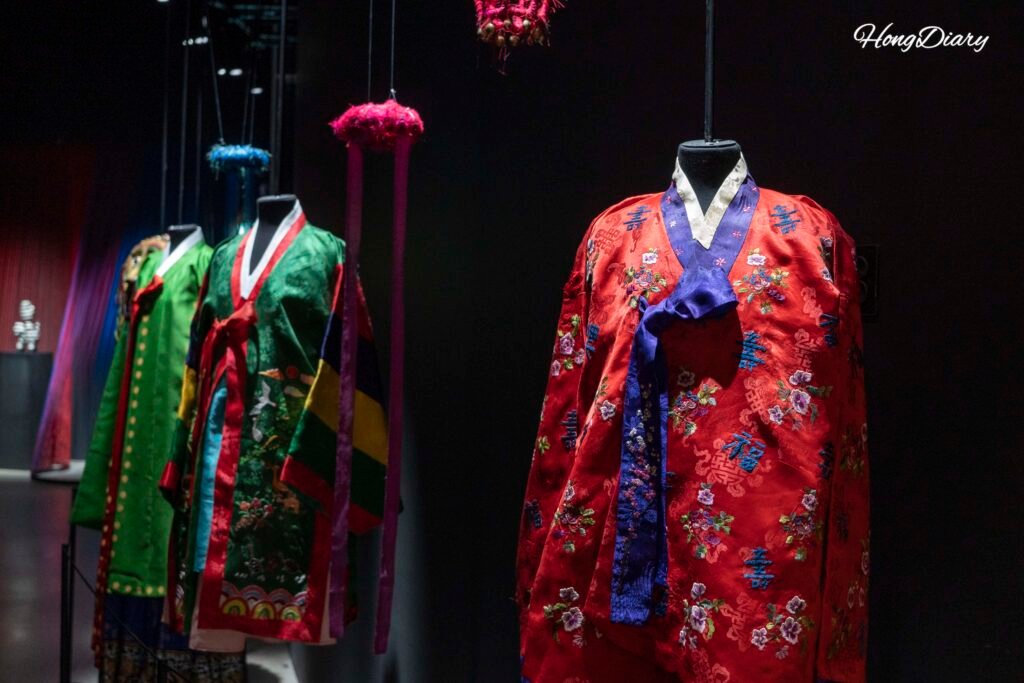
The galleries trace the full arc of Jinju’s relationship with silk — from the origins of sericulture in East Asia, through trade along the Silk Road, to how this particular city industrialized the craft and became the center of Korea’s modern silk industry. There are looms, dyeing tools, and fabric samples from different eras, along with traditional Korean garments woven from local silk.
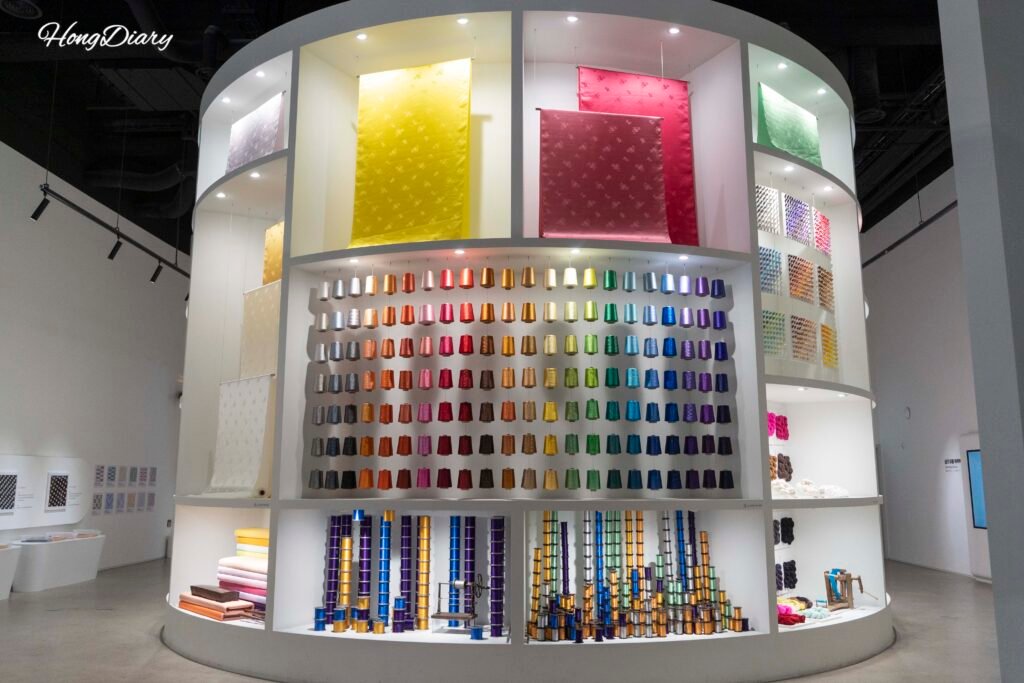
I’d always vaguely known Jinju was “famous for silk,” but seeing the actual machinery, the archival photographs, and the sheer variety of textiles gave that reputation real weight. You start to understand why the Korea Silk Research Institute was established here back in 1988, and why the city earned a UNESCO Creative City designation for Craft and Folk Art in 2019.
More importantly, starting with the permanent collection set up what came next. Walking from a century of traditional silk craft directly into a contemporary art exhibition made the transition feel completely natural — like watching the same material evolve across generations.
Floating in darkness: the KeySook Geum exhibition
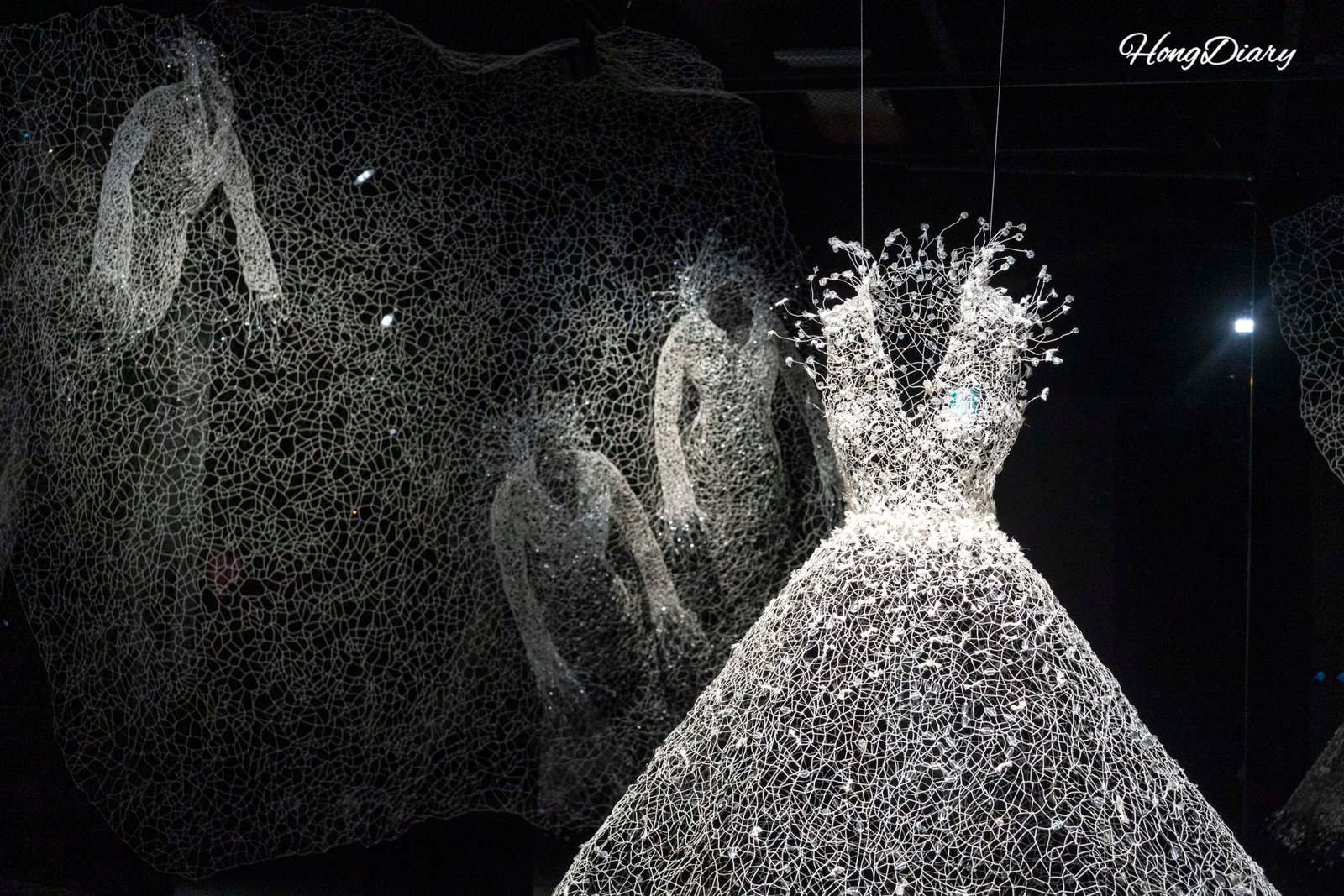
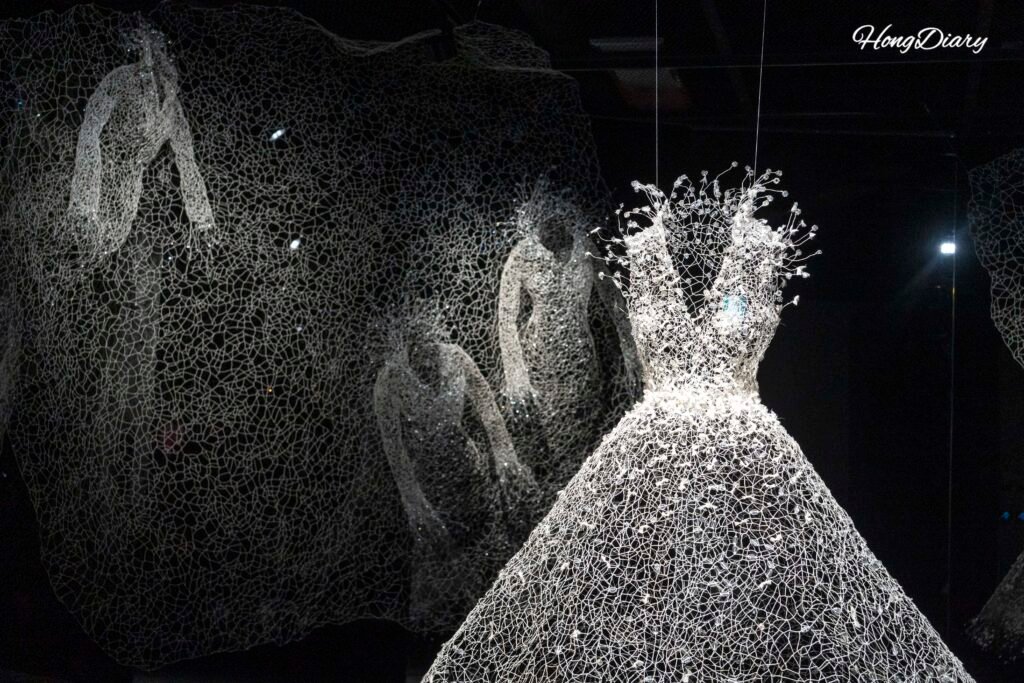
If you watched the PyeongChang 2018 opening ceremony, you’ve already seen KeySook Geum’s work. She designed the ethereal white costumes worn by the placard bearers — the ones viewers around the world nicknamed the “Snow Fairies.” Those flowing, wire-structured garments that seemed to catch light with every step? That was her.
Her Seoul exhibition at the Seoul Museum of Craft Art drew record-breaking attendance — over a million visitors during its run — making it the most-attended solo show in Korean museum history. Now her work has come to Jinju under the title “Weaving Emptiness,” running through late September 2026.
| Exhibition detail | Info |
|---|---|
| Title | Weaving Emptiness (by KeySook Geum) |
| Dates | May 5 – September 27, 2026 |
| Location | 2F Special Exhibition Hall, Jinju Silk Museum |
| Admission | Included with museum entry |
| Highlight | Why it matters |
|---|---|
| Nobang silk and silkworm cocoon sculptures | Traditional Jinju silk reimagined as contemporary sculptural material |
| Wire-armature dresses with beads and ribbons | Geum’s signature technique — the same approach behind the PyeongChang costumes |
| Black mirror floors (heukgyeong) | Reflective staging that doubles each piece, creating the illusion of floating |
| Directed lighting in darkened galleries | Up close you see the texture of every thread; step back and the work seems suspended in midair |
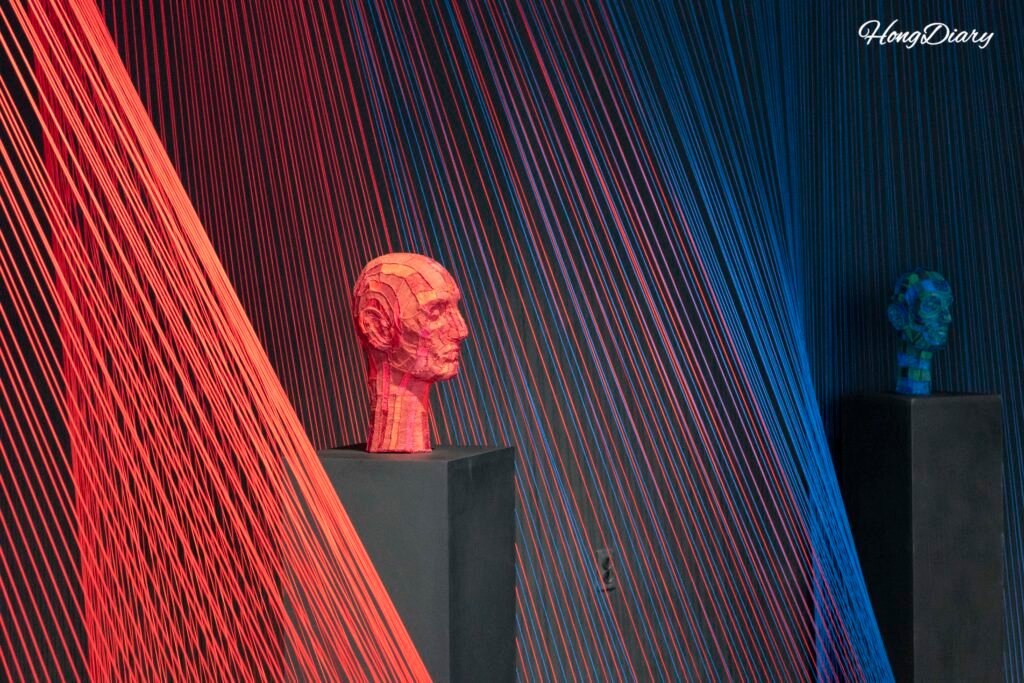
The staging alone is worth the visit. The gallery uses black reflective floors combined with carefully angled spotlights, so each sculpture appears to hover in darkness, mirrored by its own reflection below. I’d seen photos beforehand and thought they looked like costumes for a fairy tale. Standing in the actual space felt closer to walking through someone’s dream.
The artist talk that changed everything
This is where my visit went from “interesting afternoon” to something I haven’t stopped thinking about.
KeySook Geum led a guided walk through the exhibition that day. We gathered in the lobby and followed her through the galleries while she explained the story behind each piece. On my own, I would have admired the sculptures, taken some photos, and moved on. Hearing her narrate the process changed what I was looking at.
She told us that one of the central inspirations for this body of work was a childhood memory: a spool of red cotton thread her mother once gave her, and the persimmon flowers that grew near her family home. Over time, those memories transformed. The cotton thread became wire. The persimmon blossoms became beads and ribbons. The delicate sculptures hanging in front of us weren’t abstract experiments — they were physical translations of memory, built layer by layer across decades.
That reframing made me slow down. I started noticing how the wire structures caught different light depending on where I stood, how certain pieces seemed to breathe when air moved through the gallery. These weren’t just objects. Each one carried a specific decision about what to keep and what to let go of.
The exhibition’s subtitle, “Weaving Emptiness,” draws on an Eastern philosophical concept: by deliberately letting go, you create room for new meaning to enter. It’s not about absence. It’s about clearing space. You can see the idea in the materials themselves — the wire dresses are structurally open, light passes through them, and their shadows become part of the artwork. They’re garments no one will ever wear, and that’s the point.
Someone in the audience asked exactly that — why make clothes no one can put on? Her answer: emptying isn’t about leaving nothing behind. It’s about shedding noise. Other people’s expectations, the pressure to rush, the impulse to fill every gap. What remains is something you actually chose.
After the guided tour, there was a Q&A session and a book signing. Someone asked how she’d sustained a creative practice for over 40 years. Her response was simple: you endure. Not everyone will like what you do, she said, but some people will. And if your own sense of self-worth is intact, that’s enough to keep going. Standing in a quiet gallery surrounded by four decades of meticulous work, that advice landed differently than it would have anywhere else.
I walked into the Jinju Silk Museum expecting a quick local stop and left rethinking how I look at traditional craft, contemporary art, and the quiet discipline of making something for 40 years. The permanent collection gives you context. The KeySook Geum exhibition gives you goosebumps. And if you happen to catch an artist talk, you leave with something that stays with you well after the trip is over. If you’re already heading to Jinju for Jinjuseong Fortress or the Namgang Lantern Festival, this is an easy half-day addition that hits completely differently from the usual fortress-and-food circuit — and if you’re making a day trip from Busan, just 90 minutes by bus, it might end up being the highlight.
What is the Jinju Silk Museum?
The Jinju Silk Museum is Korea’s first and only museum dedicated entirely to silk. Located in Munsan-eup, Jinju, South Gyeongsang Province, it features permanent exhibitions on the history of Korea’s silk industry, a special exhibition hall, a panorama theater, and hands-on experience zones. Admission is ₩2,000 (~$1.30 / €1.10) for adults, and the museum is open daily from 10:00 AM to 6:00 PM except Mondays.
Who is KeySook Geum and what is the “Weaving Emptiness” exhibition?
KeySook Geum is a Korean fashion artist best known for designing the “Snow Fairy” placard-bearer costumes at the 2018 PyeongChang Winter Olympics opening ceremony. Her special exhibition “Weaving Emptiness” runs at the Jinju Silk Museum from May 5 through September 27, 2026, featuring sculptural works made from nobang silk, wire, silkworm cocoons, and beads, displayed with dramatic black-mirror lighting effects.
How do I get to the Jinju Silk Museum from Seoul or Busan?
From Seoul, take the KTX from Seoul Station to Jinju Station (approximately 3 hours 30 minutes, ₩57,600 / ~$38 / €33), then a taxi for about 15 minutes. From Busan, take an intercity bus from Busan Seobu (Sasang) Terminal to Jinju (approximately 1 hour 30 minutes, ₩11,000 / ~$7.30 / €6.20), then transfer to a local bus or taxi.
Is the Jinju Silk Museum worth visiting if I don’t speak Korean?
Yes. The exhibition displays are largely visual — silk garments, looms, fabric samples, and sculptural art — so language isn’t a major barrier. The permanent exhibition includes English signage for key information. The special exhibition by KeySook Geum is especially accessible since the artwork speaks for itself through its dramatic staging and craftsmanship.
What are the opening hours and admission fees for the Jinju Silk Museum?
The museum is open from 10:00 AM to 6:00 PM, closed every Monday. Admission is ₩2,000 (~$1.30 / €1.10) for adults, ₩1,000 (~$0.70 / €0.60) for youth, and ₩500 (~$0.35 / €0.30) for children. Parking is free for all visitors.
Can I visit the Jinju Silk Museum as a day trip from Busan?
Absolutely. The intercity bus from Busan Seobu (Sasang) Terminal takes about 1 hour 30 minutes each way. Combined with a visit to Jinjuseong Fortress and a walk along the Nam River, the silk museum fits well into a full-day Jinju itinerary from Busan.
What makes the KeySook Geum exhibition at the Jinju Silk Museum different from her Seoul show?
The Jinju exhibition is titled “Weaving Emptiness” and presents KeySook Geum’s work within the specific context of Jinju’s silk heritage. Viewing her contemporary fiber art in a museum dedicated to the raw material she works with — silk — creates a connection between traditional craft and modern sculptural art that the Seoul venue didn’t offer in the same way.