
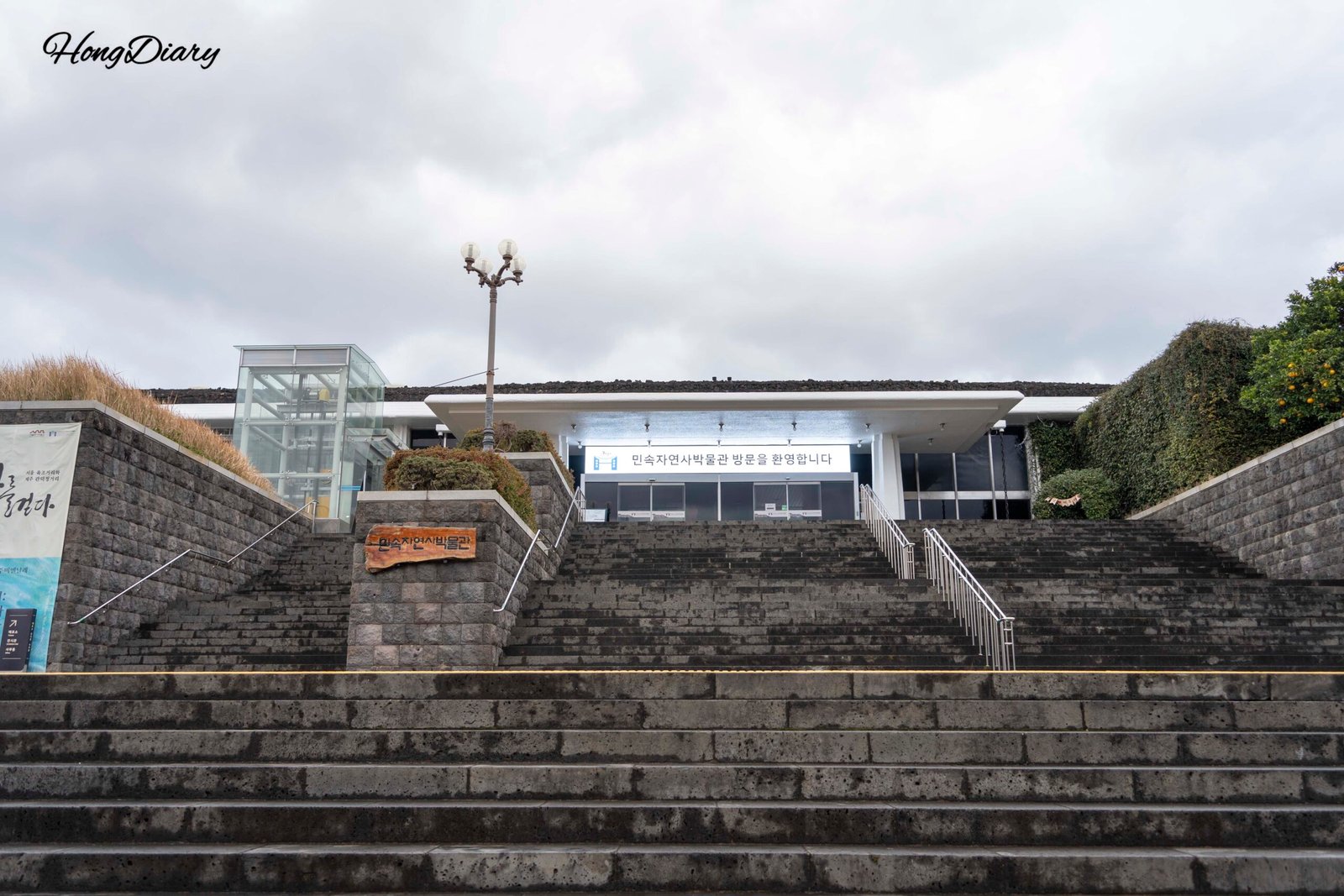
My Jeju itinerary was tight. I was using a tour taxi to cover as much ground as possible in a short trip, and at one point I had a gap — that awkward stretch of time too short to drive somewhere new but too long to just sit and wait. Someone mentioned the Folk and Natural History Museum near the airport. I looked it up: ₩2,000 admission. Closed on Mondays. Walking distance from the bus stop.
I went. And I came out two hours later having learned more about Jeju than I had in the days I’d already spent on the island.
The Jeju Folk and Natural History Museum sits in Jeju City, about 25 minutes by bus from the airport — close enough to use as a first or last stop on a Jeju trip, or to fill a gap in a day that’s already planned around something else. The building isn’t flashy, but what’s inside is genuinely worth the time.
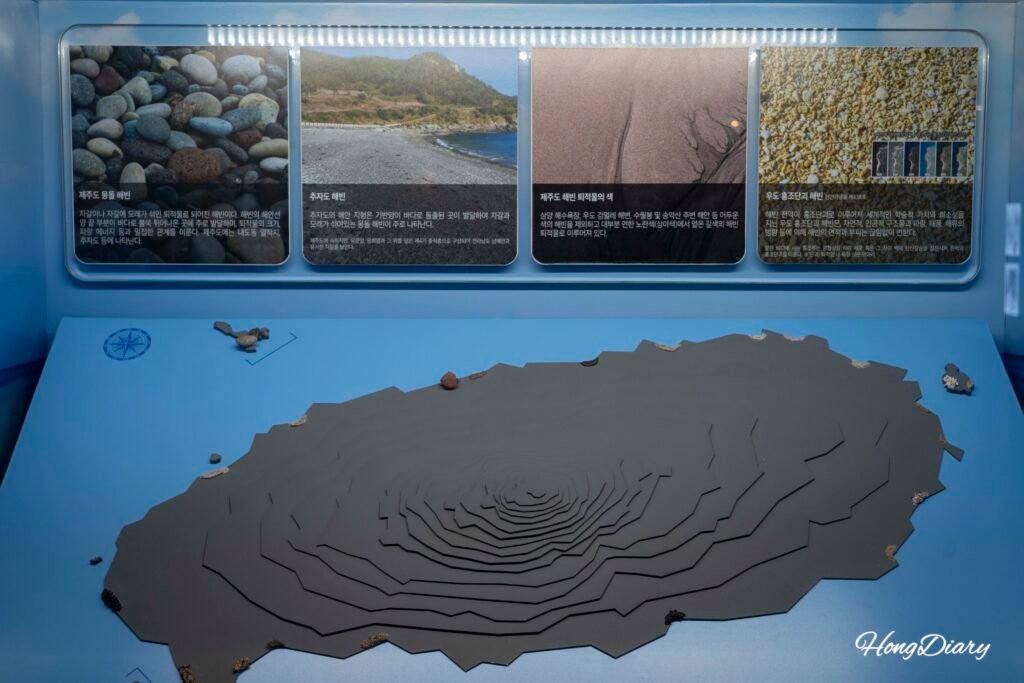
Table of Contents
Location and Access
| Detail | Info |
|---|---|
| Address | 40 Samseong-ro, Jeju-si, Jeju |
| Hours | 09:00 – 18:00 |
| Closed | Mondays, New Year’s Day, Lunar New Year, Chuseok |
| Admission | Adults ₩2,000 (approx. $1.33 USD) / Teens ₩1,000 (approx. $0.67 USD) |
| Parking | Available — ₩1,000 (approx. $0.67 USD) per hour for passenger cars |
| Website | jeju.go.kr/museum |
By bus from Jeju International Airport: Exit through Gate 3 and walk 120 meters to the Jeju International Airport 3 (Yongdam, City Hall/North) bus stop. Take bus 365 or 370, ride 11 stops (about 25 minutes) to Samseong Elementary School stop, then walk 500 meters.
By rental car: Jeju’s transport distances are short enough that a rental car makes sense for most multi-day trips. If you’re already driving around the island, renting a car in Jeju gives you the flexibility to add a museum stop without rerouting your entire day.
Before You Go In
Luggage storage is available near the main entrance — 7 lockers total, 3 of which can fit carry-on suitcases, 4 for smaller bags. Ask the staff to access them. Wheelchairs and strollers are available at the entrance free of charge — ask at the ticket counter.
One note on language: English translations are available but limited in places. The Korean explanations are more detailed, and some transitions between exhibits don’t have English notes at all. That said, most of the exhibits are highly visual — dioramas, physical specimens, scale models, and reconstructed environments — and I found I could follow the content without reading every panel. A translation app helps if you want to go deeper.
What’s Inside
Natural History Exhibition Hall
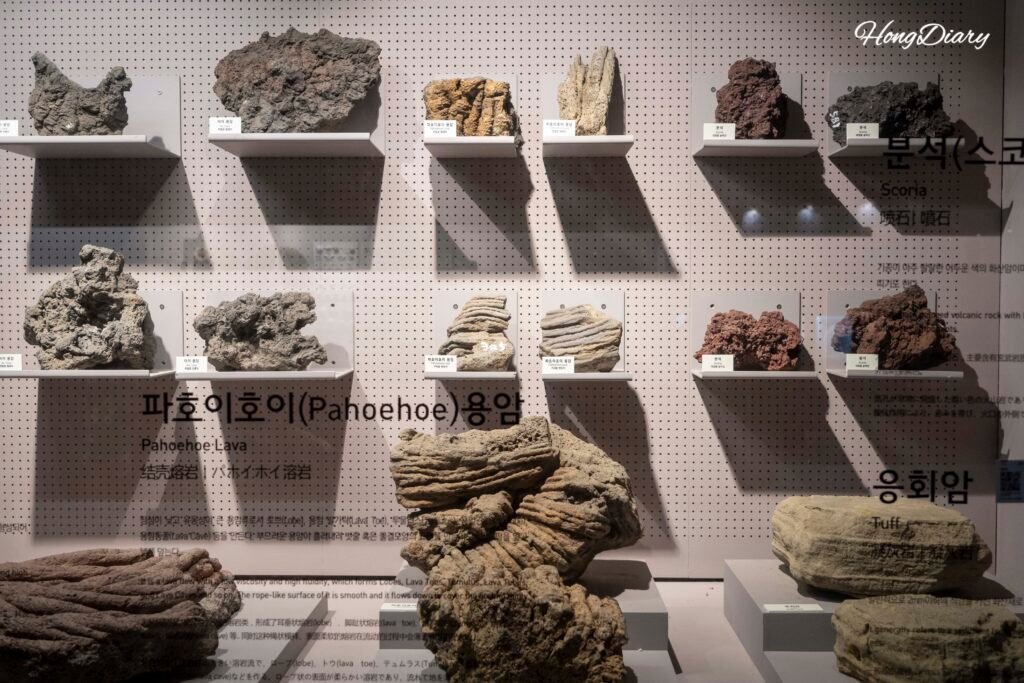
The museum starts with geology. This section covers how Jeju formed as a volcanic island — the lava flows, the rock formations, the lava tubes — laid out in a way that makes the landscape outside suddenly make more sense. If you’ve been wondering why Jeju’s coastline looks the way it does, or what’s underneath all that black rock, this is where it clicks.
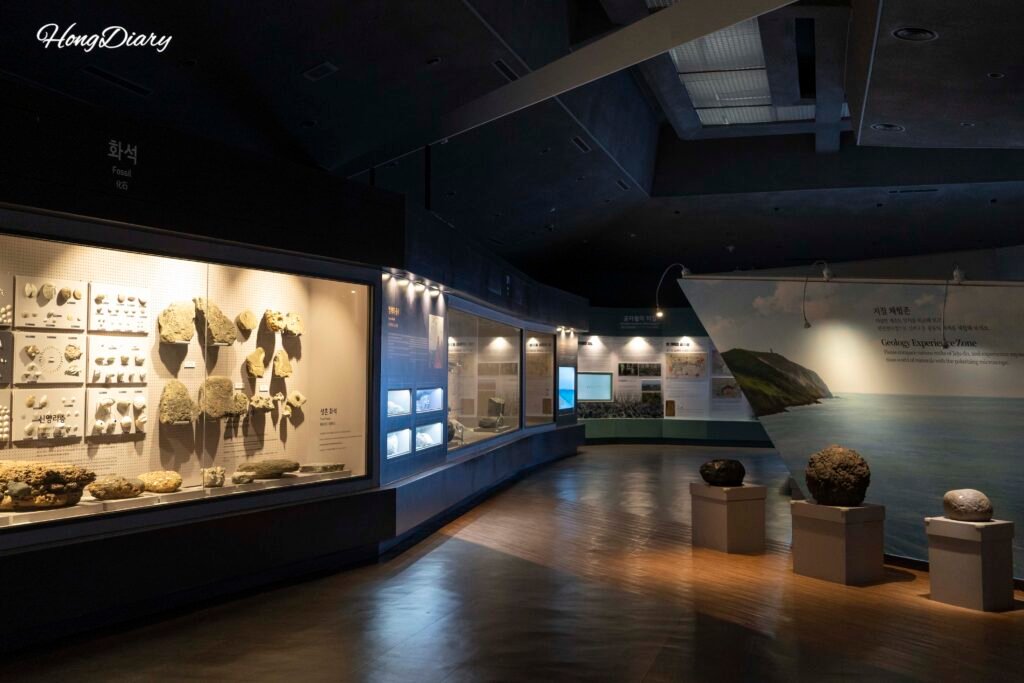
The terrestrial ecology section follows: the different forest ecosystems on the island, the insects and wildlife found there, the freshwater habitats. The dioramas here are well done — full-scale animal specimens in reconstructed environments.
Folklore Exhibition Hall 1
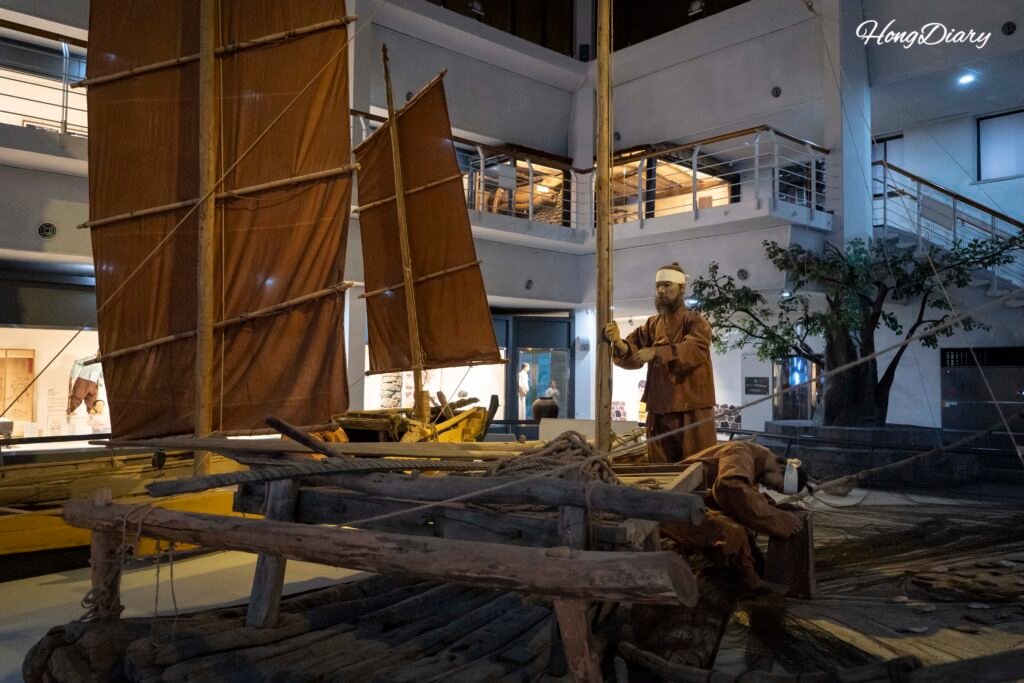
The centerpiece of this room is a traditional Jeju fishing raft called a tewoo — a flat wooden raft used before modern boats were available on the island. It’s large, and seeing the actual scale of what Jeju’s fishermen were working with changes how you think about their relationship with the sea. Alongside it are traditional garments, household objects, a reconstructed thatched-roof house, and examples of traditional Jeju meals.
Folklore Exhibition Hall 2
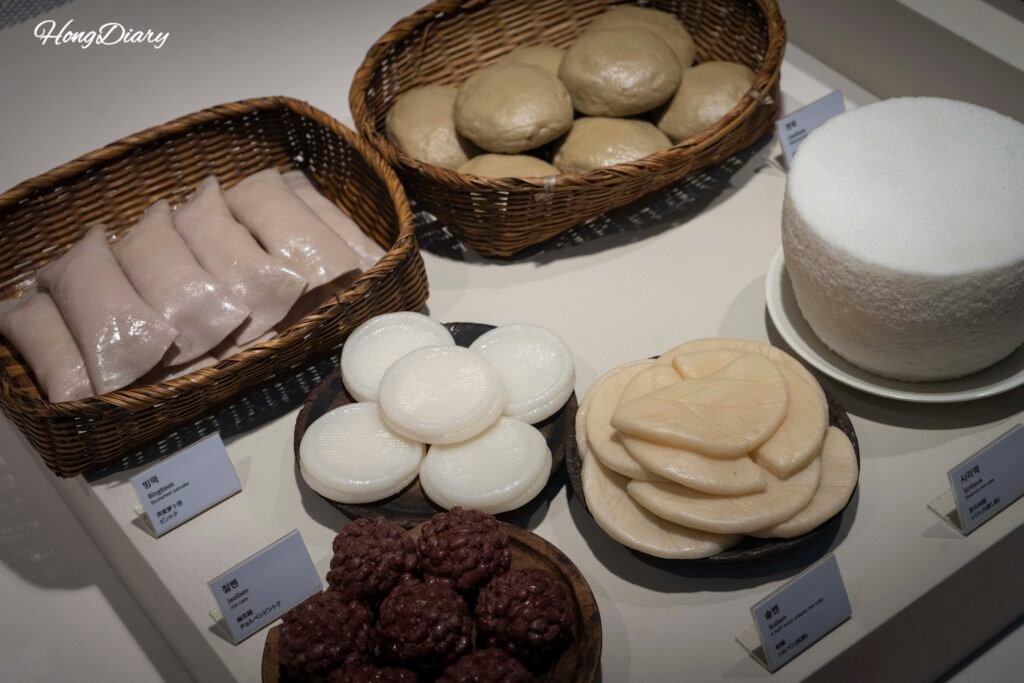
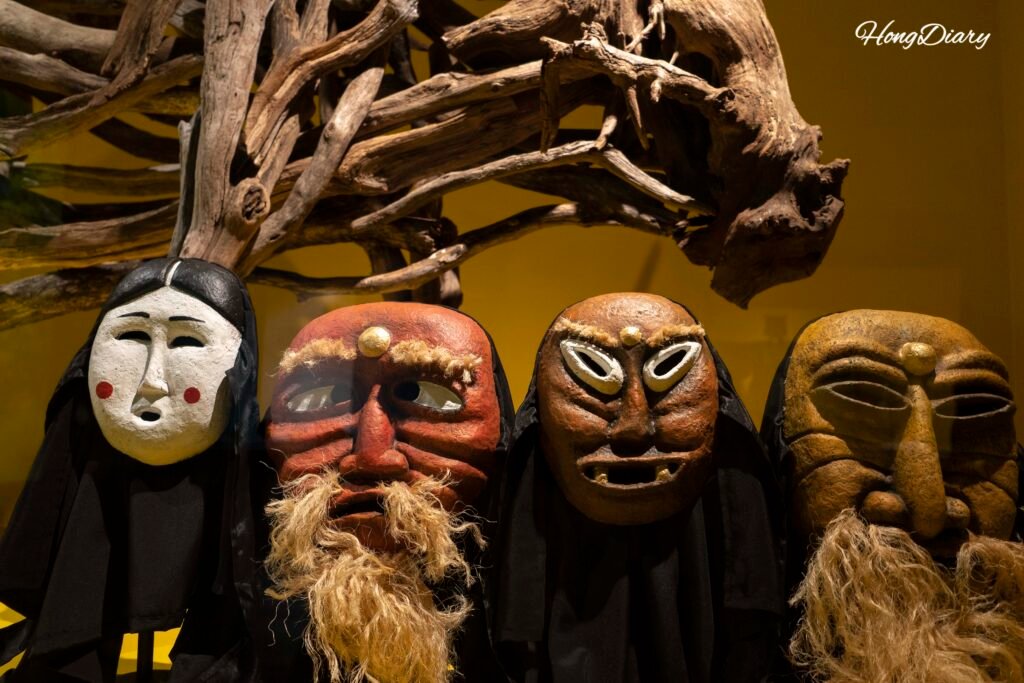
This section is organized around Jeju’s four seasons and the way each shaped daily life — food culture, seasonal customs, religious practices, and traditional crafts. The depth here is better than I expected. By the end of this room, you have a genuinely different picture of what everyday life on Jeju looked like across different centuries.
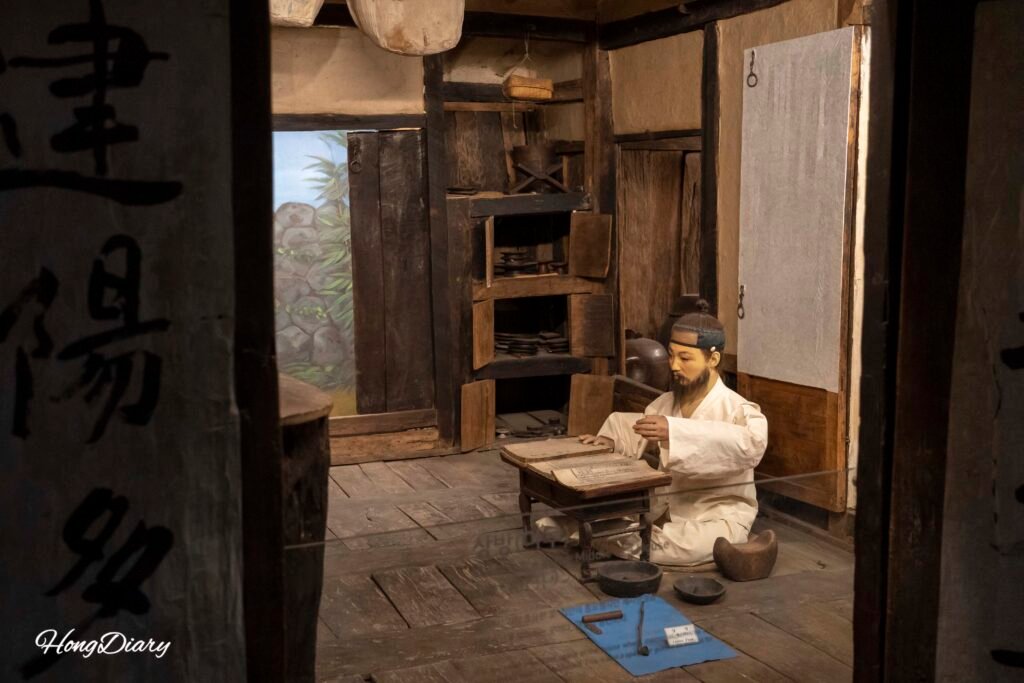
Modern Life Exhibition Hall
This was the section I found most surprising. The exhibit traces Jeju City — specifically the area around Chilseong-ro that was the commercial center from the 1960s through the 1980s — through photographs, reconstructed storefronts, and artifacts from that period. A fabric shop, a tailor, a jewelry store, a cinema, a tea house: the streetscape of a mid-20th century Jeju commercial district, rebuilt inside a museum. Walking through it feels like moving through actual memory rather than a history display.
Jeju Sea Exhibition Hall
I missed this one. I didn’t realize it was in a separate section of the building and moved past it without going in. The hall includes marine specimens from Jeju’s coastal waters — crustaceans, shellfish, sharks, fish — and the main attraction is a 13-meter Bryde’s whale skeleton, discovered on a Jeju beach in 2004. I only saw the oarfish specimen during a transition between halls, which was striking enough. I’m still thinking about what I missed with the whale.
I’m going back.
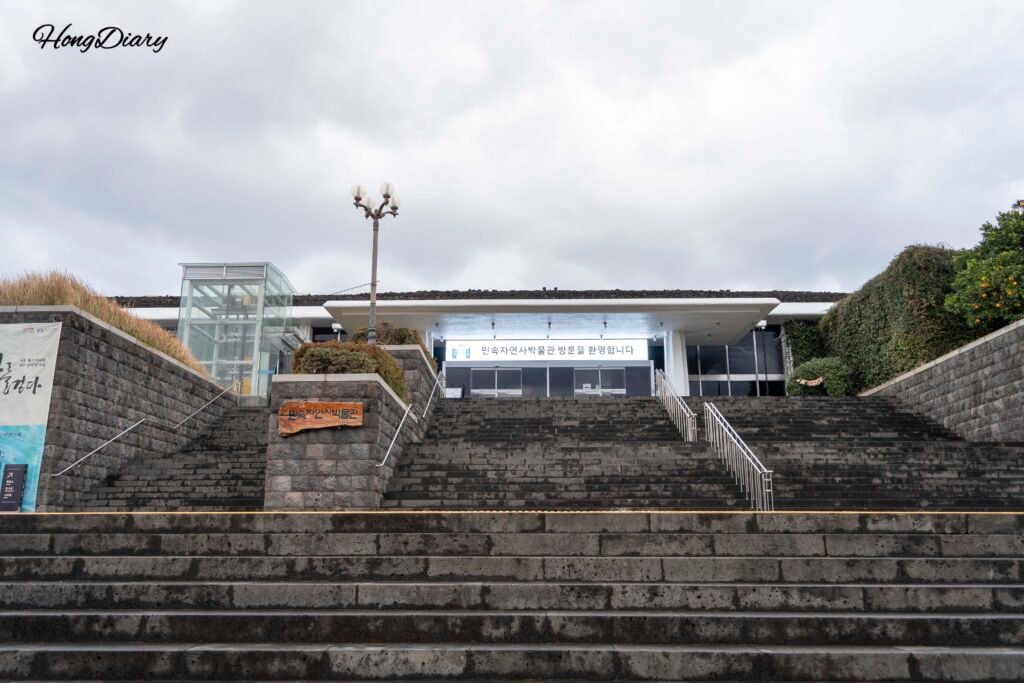
Why This Works as a Jeju Stop
Jeju’s weather is unpredictable in a way that catches most visitors off guard. Sunny at breakfast, rain by noon, wind by afternoon — the standard pattern. Most of Jeju’s headline attractions are outdoors, which means having one strong indoor option that doesn’t feel like a compromise is actually useful. The Folk and Natural History Museum is that option near the airport.
The admission price removes any hesitation. At ₩2,000, this is not a place where you’re trying to convince yourself it was worth it on the way out. The question is whether to spend one hour or two. I spent two and still missed a section.
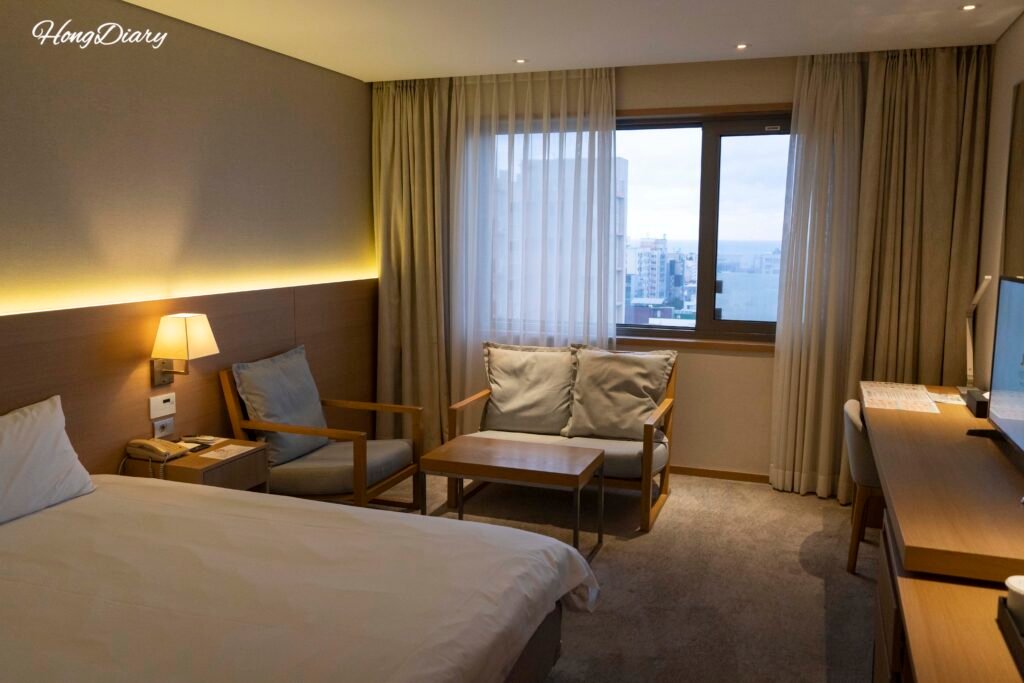
If you’re staying near the museum, Astar Hotel Jeju is about a 20-minute walk or 5 minutes by car — a useful base if you want to spend a full morning at the museum without planning around transport.
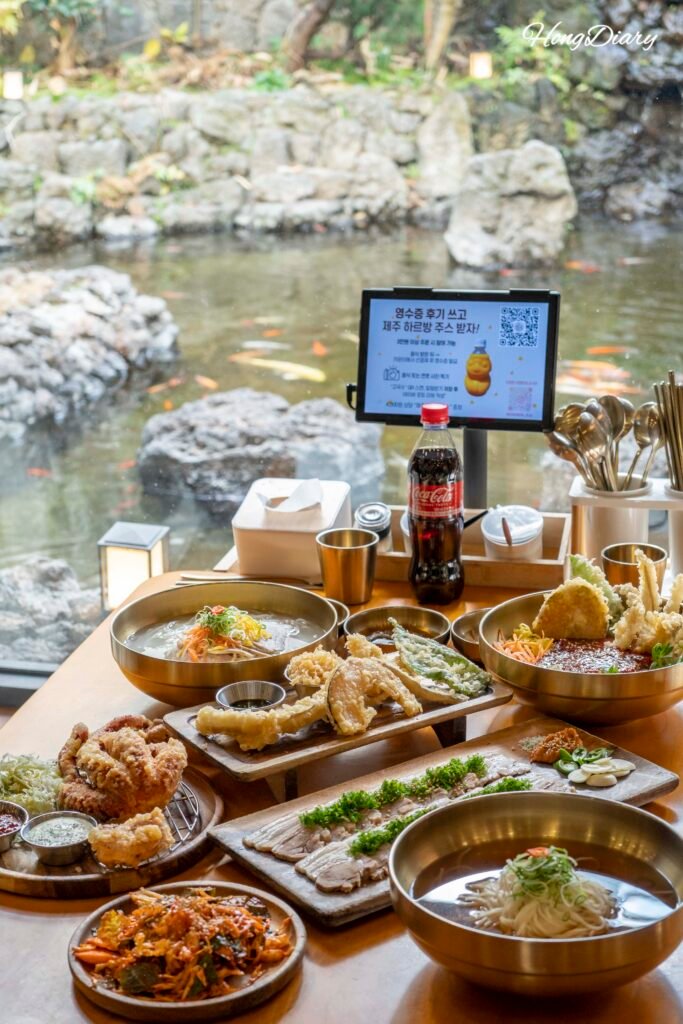
After the museum, Go Guksu is about 10 minutes away by car — a noodle restaurant near the airport that works as a straightforward meal before a flight or after a morning of walking through exhibits.
Where is the Jeju Folk and Natural History Museum?
The museum is at 40 Samseong-ro, Jeju-si, Jeju. It’s located in central Jeju City, about 25 minutes by bus from Jeju International Airport. From the airport, take bus 365 or 370 from Gate 3 to Samseong Elementary School stop, then walk 500 meters.
How much does it cost to enter the Jeju Folk and Natural History Museum?
Admission is ₩2,000 (approx. $1.33 USD) for adults and ₩1,000 (approx. $0.67 USD) for teenagers and military personnel. Parking for passenger cars costs ₩1,000 (approx. $0.67 USD) per hour.
What are the opening hours for the Jeju Folk and Natural History Museum?
The museum is open daily from 09:00 to 18:00. It is closed on Mondays, New Year’s Day, Lunar New Year (Seollal), and Chuseok (Korean Thanksgiving). Check the official website at jeju.go.kr/museum before visiting.
Is the Jeju Folk and Natural History Museum good for non-Korean speakers?
The museum has English translations on most exhibits, but they are limited in places — shorter and more simplified than the Korean text, and some transitions between sections have no English signage. However, most exhibits are highly visual — dioramas, physical specimens, reconstructed environments — and the content is followable without reading every panel. A translation app is useful for the more detailed explanations.
How long does it take to visit the Jeju Folk and Natural History Museum?
One to two hours covers the main exhibitions comfortably. The museum has five sections: natural history, two folklore halls, a modern life hall, and a sea exhibition hall. Moving at a normal pace without reading every placard takes about an hour. Two hours allows for more time in each section. The sea exhibition hall is in a separate part of the building — easy to miss if you’re not paying attention.
Is the Jeju Folk and Natural History Museum good for rainy days?
Yes — it’s one of the better indoor options near Jeju Airport. The entire exhibition is indoors, making it a useful backup when outdoor plans fall through due to Jeju’s frequently unpredictable weather. The admission price also removes any hesitation about whether the trip was worth it.
Is there luggage storage at the Jeju Folk and Natural History Museum?
Yes. There are 7 lockers near the main entrance — 3 large enough for carry-on suitcases, and 4 smaller ones. Ask the staff for access. Wheelchairs and strollers are also available free of charge at the entrance — request them at the ticket counter.