
Most people who visit Yangsan head straight to Tongdosa Temple and leave. I almost did the same thing. But a local told me to check out the Yangsan City Museum — free admission, four floors of artifacts, and almost no international visitors. I went in expecting a quiet municipal museum and walked out genuinely surprised by what a mid-size Korean city can put on display when it’s sitting on top of 1,500 years of buried history.
Yangsan sits just north of Busan in South Gyeongsang Province, and unlike most cities outside the capital, you can actually reach it by Busan’s subway system — no intercity bus required. The city is best known for Tongdosa Temple, one of Korea’s Three Jewel Temples and a UNESCO World Heritage site, but its archaeological footprint runs much deeper than that. Ancient burial mounds from the Silla era dot the surrounding hills, and many of the artifacts pulled from those tombs now sit in this museum. The Yangsan City Museum opened in 2013 and had already passed 950,000 visitors by 2023 — a strong number for a regional museum that most foreign guidebooks don’t mention at all.
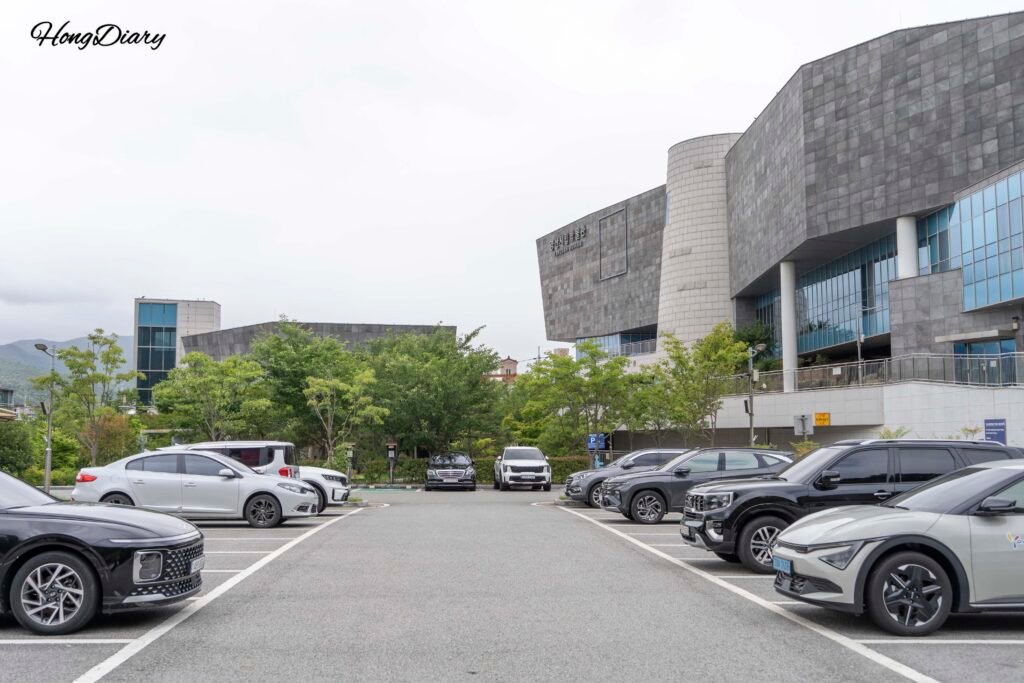
Table of Contents
Visitor information
| Detail | Info |
|---|---|
| Address | 78 Bukjeong-ro, Yangsan-si, Gyeongsangnam-do |
| Hours | 9:00 AM – 6:00 PM (last entry 5:30 PM) |
| Closed | Mondays, January 1, Seollal (Lunar New Year), Chuseok |
| Admission | Free |
| Parking | Free |
| Floors | B1 – 4F (4,200+ artifacts across history, tumulus, children’s, and special exhibition halls) |
| Getting there | Route | Time | Cost |
|---|---|---|---|
| From Busan Station | Subway Line 1 to Myeongnyun Station (13 stops), then Bus 1200 (26 stops) to Yangsan City Museum stop, walk 200 m | ~1 hr 15 min total | ~₩3,000 (~$2 / €1.70) |
| By car | From central Busan via Gyeongbu Expressway | ~40 min | Free parking at the museum |
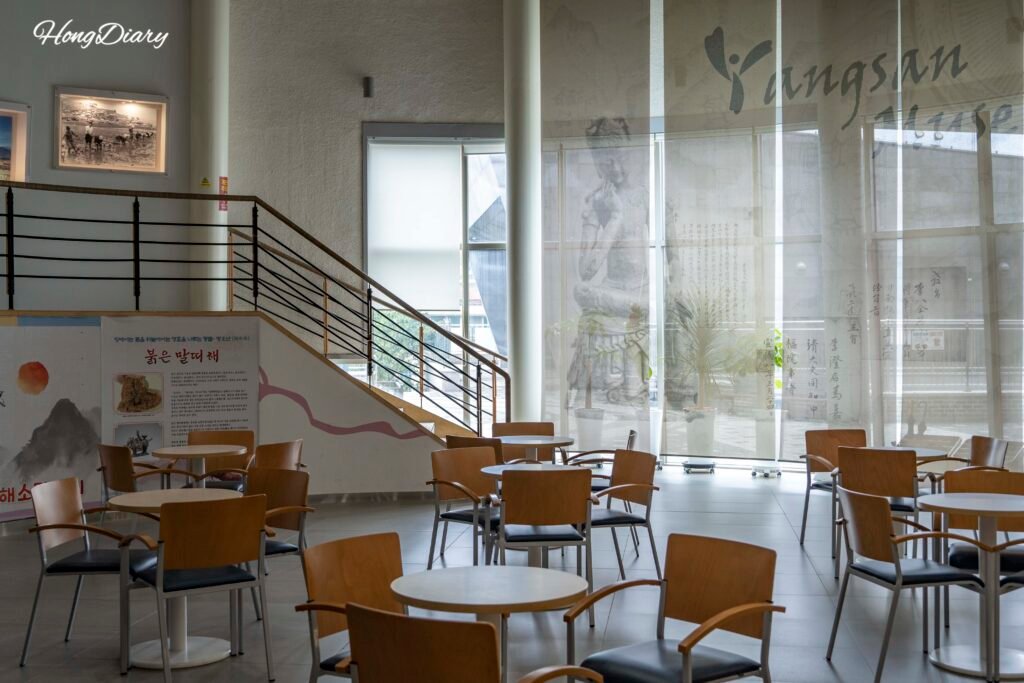
The recommended way to explore is to take the elevator straight to the fourth floor and walk your way down. Each floor covers a different era, so by the time you reach the ground level, you’ve moved through about 1,500 years of history in roughly 90 minutes.
Start at the top: the history hall
The fourth floor and mezzanine level make up the history hall, and this is where Yangsan’s story begins — literally, from the Neolithic period onward. The galleries are organized by era: prehistoric settlements, Bronze Age communities, iron-producing centers of the 5th and 6th centuries, Joseon-era figures, and the modern period.
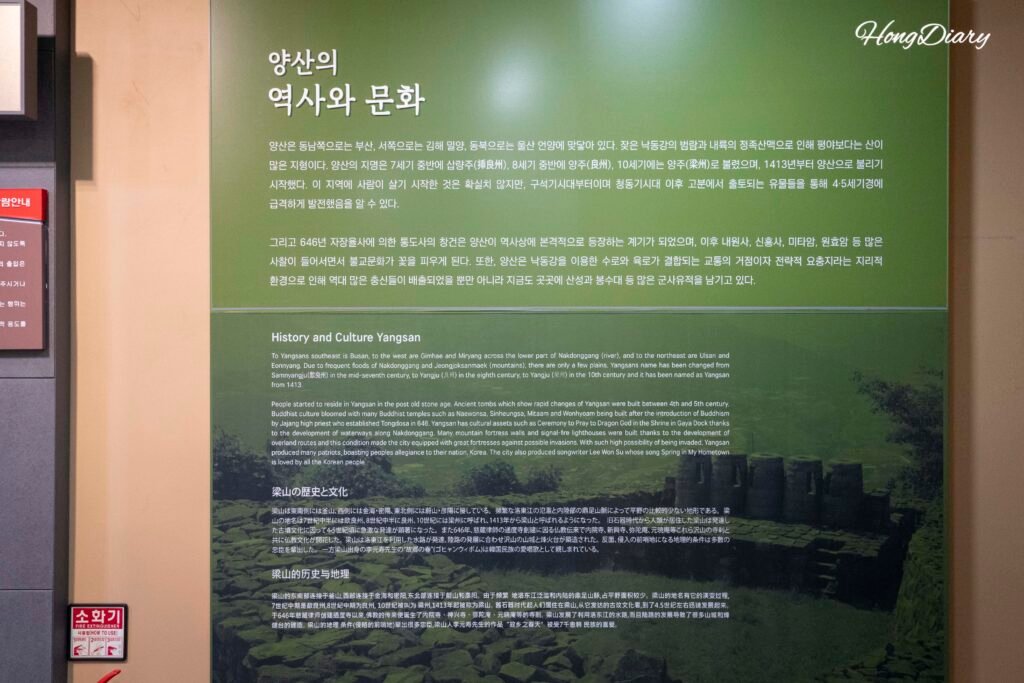
What kept me engaged was the presentation. This isn’t a museum that lines up artifacts behind glass and leaves you to read labels. The displays mix physical relics with scale models, dioramas, and short video segments, so even without deep knowledge of Korean history, the narrative pulls you forward. You’re following a timeline, not browsing a catalog.
| Artifact / Site | Period | Why it matters |
|---|---|---|
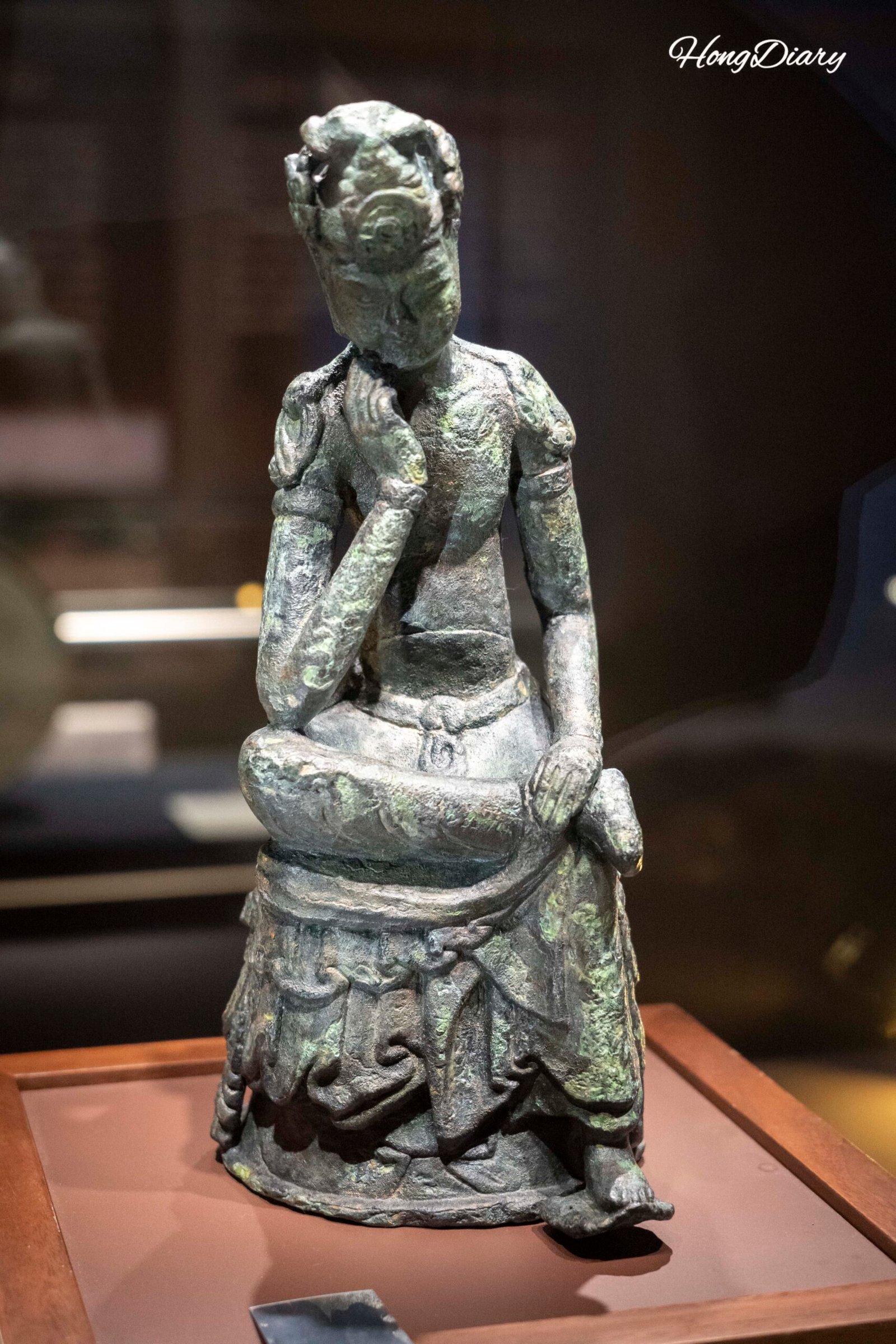
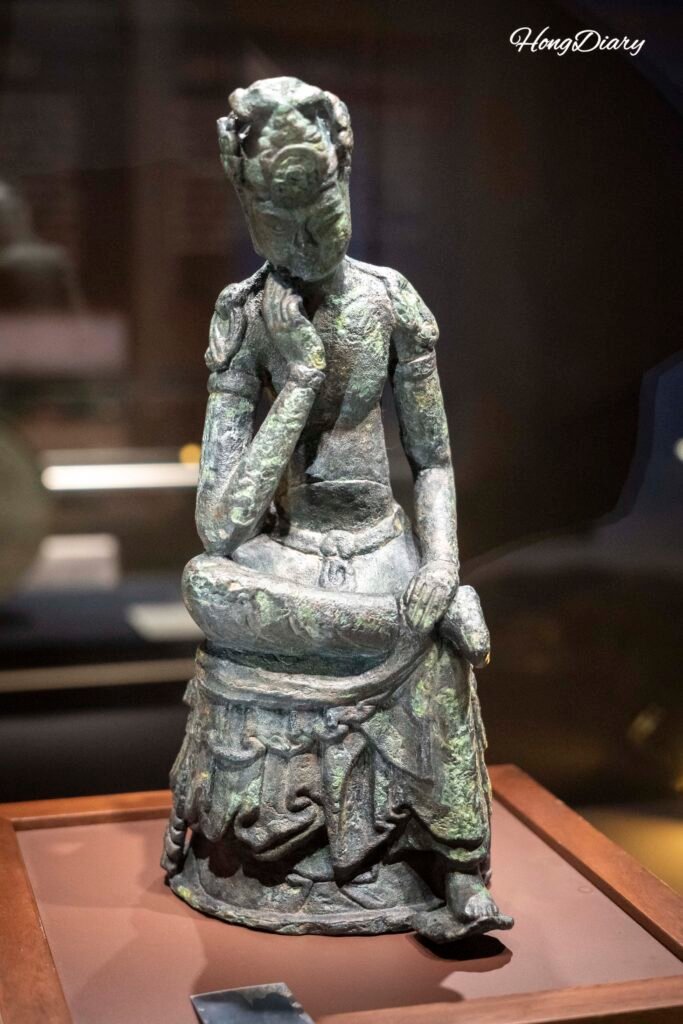
| Gilt-bronze Pensive Bodhisattva | Three Kingdoms (6th–7th c.) | Excavated in Yusan-dong, Yangsan. The gilding has worn away and green patina covers the surface, but the pose — head slightly tilted, two fingers resting on the cheek — is an unusually naturalistic detail for pensive bodhisattva statues of this era |
| Dabang-dong Shell Mound | Neolithic | Traces of daily life from Yangsan’s earliest communities. Along with the Dongnae and Gimhae shell mounds, it demonstrates the cultural role of the Nakdong River waterways |
| Habuk Sinpyeong site pottery | Bronze Age / Samhan | A complex site where 21 Bronze Age dwellings and Samhan-period burial grounds were found together |
| Mulgeum iron-smelting site | 5th–6th century | Evidence that Yangsan was a major iron-production center. Smelting furnaces and iron ore were excavated here |
The pensive bodhisattva was the piece I kept coming back to. Centuries of oxidation have turned the surface a mottled blue-green, and honestly, the weathering makes it more striking than a pristine gold finish would. The way the figure tilts its head and touches its own cheek with two fingertips has a gentleness that doesn’t feel “ancient” at all.
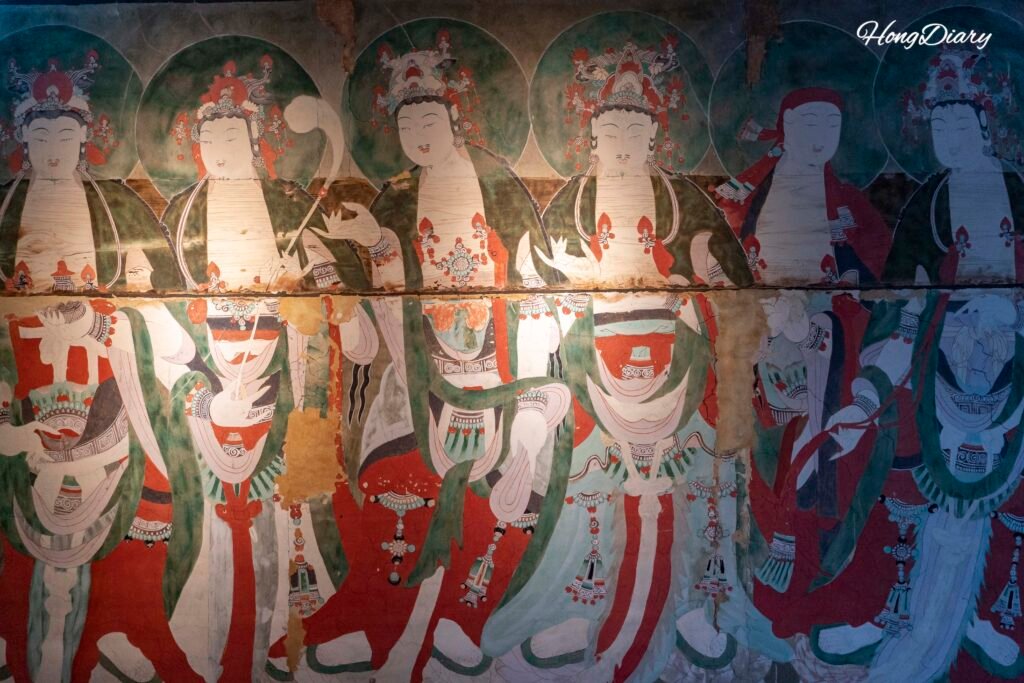
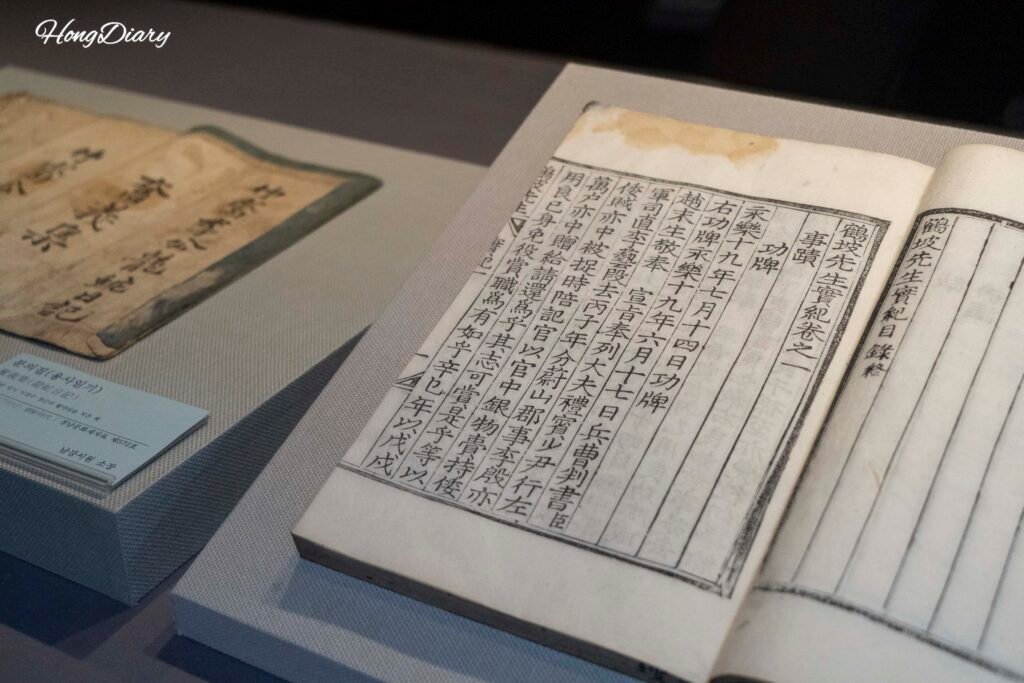
On the mezzanine level, the timeline continues into the Joseon Dynasty and beyond. There are clan documents designated as Korean Treasure No. 1001 (the Yangsan Yi Clan Archives), relics from an Imjin War–era military family (the Gwangju An clan), and — unexpectedly — the original handwritten manuscripts of Lee Won-su, the children’s author who wrote “Spring of My Hometown,” one of the most beloved Korean songs of the 20th century. Seeing his actual handwriting next to artifacts from ancient tombs gives the museum a surprisingly personal range.
The third floor: where the real treasures are
If you visit the Yangsan City Museum for one reason, make it the tumulus hall on the third floor. This is the gallery I didn’t expect.
Yangsan’s hills are scattered with ancient burial mounds — most notably the Bukjeong-dong Tumuli (Historic Site No. 93) and Singi-dong Tumuli (Historic Site No. 94). The artifacts pulled from these tombs are concentrated here, and they tell a story of a region with far more wealth and cultural sophistication than its current size would suggest.
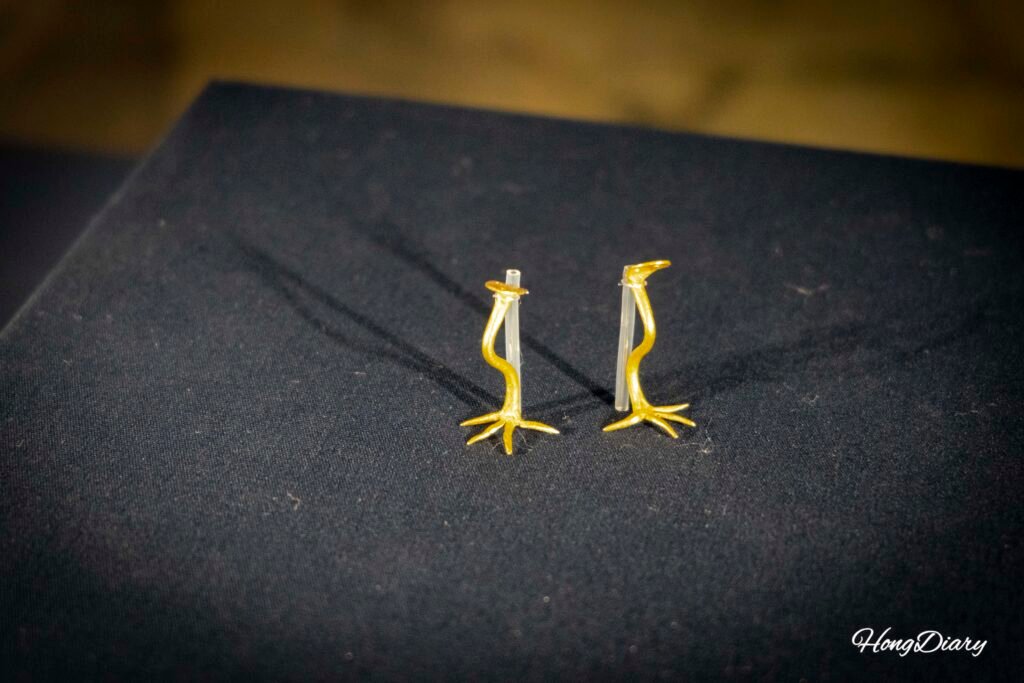
The centerpiece is a pair of gold bird legs excavated from the Geumjo-chong, the “Gold Bird Tomb.” They’re exactly what they sound like: a set of bird-shaped legs made from pure gold, with flat panels at the top pierced by three nail holes. The body of the original bird was likely made from wood or lacquer — materials that decomposed over the centuries — leaving only the gold legs behind. They’re designated as Korean Treasure No. 1921, and seeing them up close, the precision of the goldwork is striking for something made over 1,400 years ago.
| Artifact | Tomb | Designation | Detail |
|---|---|---|---|
| Gold bird legs (Geumje Jojok) | Geumjo-chong (Gold Bird Tomb) | Treasure No. 1921 | Pure gold bird-shaped legs with nail holes; the wooden body has decomposed |
| Gold earrings (Geumje Taehwan Isik) | Geumjo-chong | Treasure No. 1921 | Thick-ringed gold earrings ranked among the finest Silla-era jewelry found to date |
| Bronze cauldron with bird-shaped knob | Geumjo-chong | Treasure No. 1921 | A lidded bronze vessel with a bird-shaped finial on the lid cover |
| Singi-dong pottery collection | Singi-dong Tumuli | Historic Site No. 94 | Various pottery forms that illuminate ancient burial customs of the region |
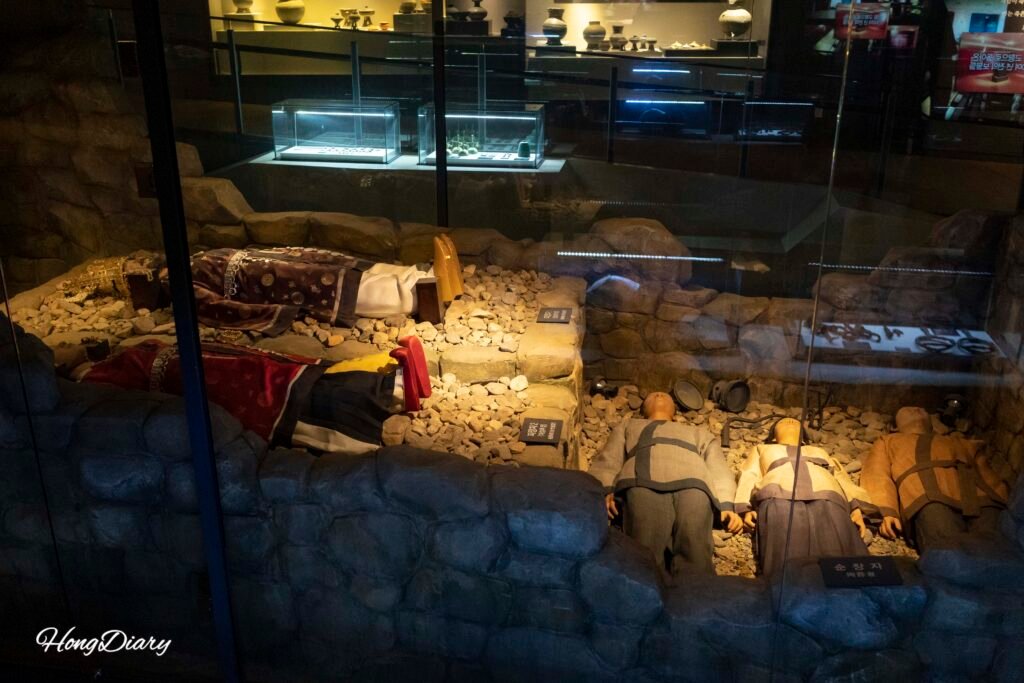
What makes the tumulus hall effective is context. The artifacts aren’t floating in isolation — the gallery reconstructs the burial environment, so you can see how these objects were positioned within the tombs and understand what their placement meant in the culture that made them.
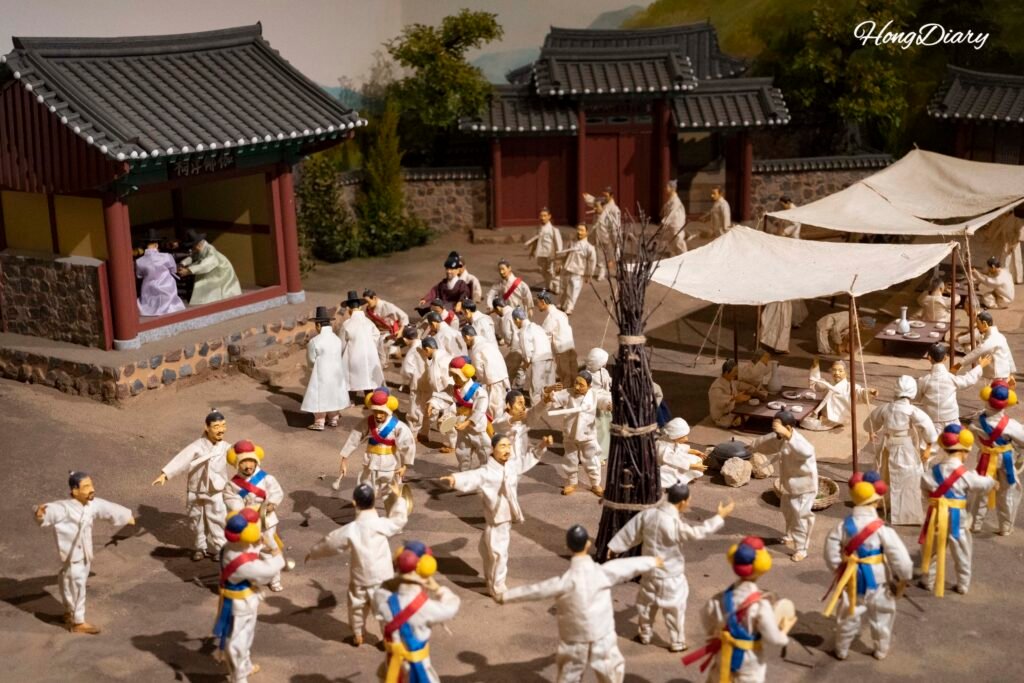
If you’re visiting with kids
The second floor houses “Aureum,” a dedicated children’s museum designed around Yangsan’s history. It’s not an afterthought — the space includes a Yangsan kiln experience, a Wonjeoksan beacon tower maze, and a Bubu-chong (Couple’s Tomb) playground, all built to teach through play.
| Session | Time | Capacity |
|---|---|---|
| 1 | 10:00 AM | 30 (first-come, first-served) |
| 2 | 11:00 AM | 30 |
| 3 | 2:00 PM | 30 |
| 4 | 3:00 PM | 30 |
| 5 | 4:00 PM | 30 |
| 6 | 5:00 PM | 30 |
Each session runs 40 minutes. The museum recommends reserving your slot as soon as you arrive, since later sessions can fill up — especially on weekends. On top of that, the museum screens family films on weekends in its auditorium (free of charge) and runs seasonal events like the “Moonlight Tomb Night Walk” and a museum forest concert series. Check the museum’s website before your visit for the current schedule.
I came to the Yangsan City Museum planning to spend maybe 45 minutes. I stayed for nearly two hours, and most of that time was on the third floor, standing in front of gold artifacts that have been underground since before the Silla Kingdom unified the peninsula. For a free museum reachable by Busan subway, that’s a rare return on a short detour.
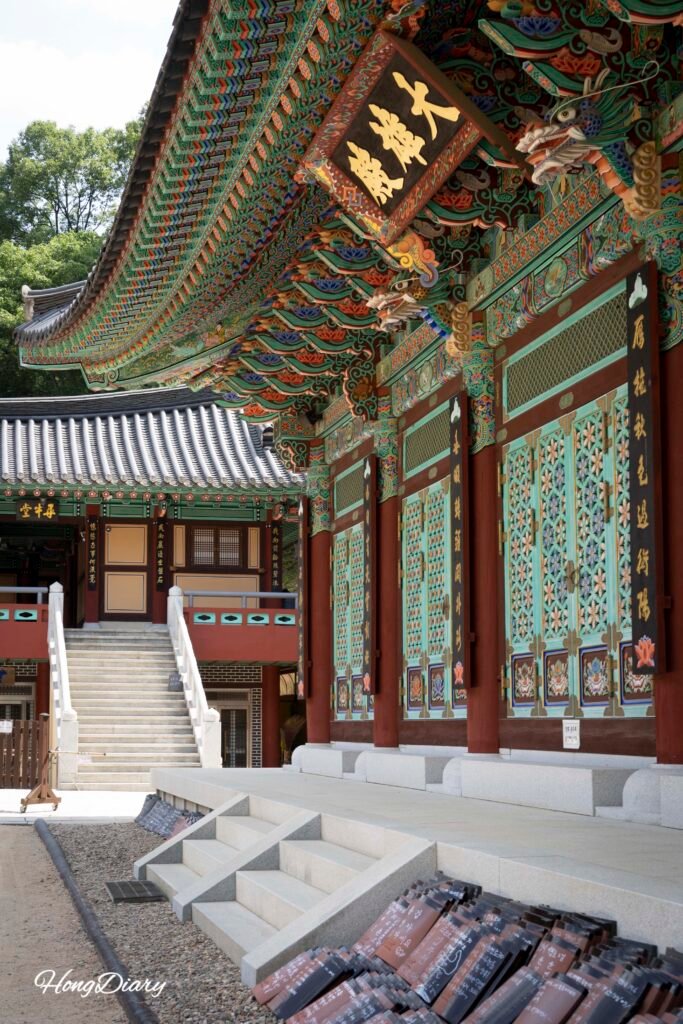
If you’re spending a day in Yangsan, pair it with a visit to Naewonsa Temple for a mountain hike and the valley pools that locals treat as their summer swimming spot
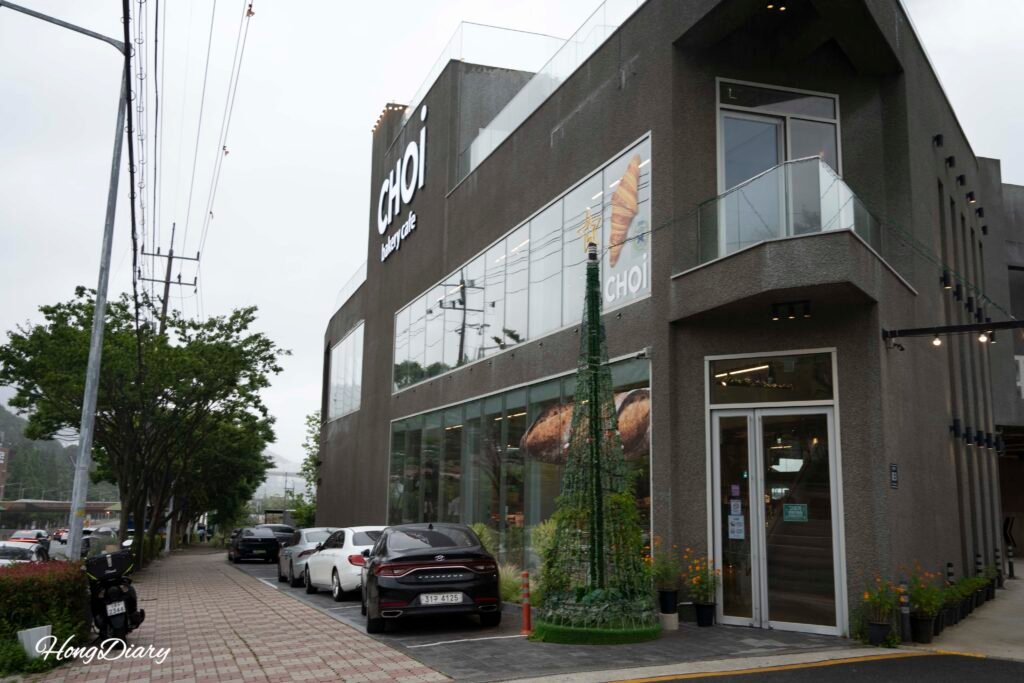
Cafe Choi, run by a baker who won a national croissant championship — a combination that makes a convincing case for Yangsan as a full-day trip from Busan.
What is the Yangsan City Museum?
The Yangsan City Museum is a regional history museum in Yangsan, South Gyeongsang Province, about 40 minutes north of central Busan. It spans four floors and a basement, housing over 4,200 artifacts that cover Yangsan’s history from the Neolithic period through the modern era. Admission and parking are both free, and the museum is open daily from 9:00 AM to 6:00 PM except Mondays and major Korean holidays.
How do I get to the Yangsan City Museum from Busan?
Take Busan Subway Line 1 to Myeongnyun Station (about 25 minutes from Busan Station), then transfer to Bus 1200 at the Myeongnyun Station bus stop. Ride 26 stops (about 45 minutes) to the Yangsan City Museum stop and walk 200 meters. The total trip takes roughly 1 hour and 15 minutes and costs about ₩3,000 (~$2 / €1.70). If you’re driving, free parking is available at the museum.
Is the Yangsan City Museum free?
Yes. Both admission and parking are completely free. The children’s museum on the second floor is also free, though sessions are limited to 30 visitors each and operate on a first-come, first-served basis.
What are the most notable artifacts at the Yangsan City Museum?
The standout pieces include gold bird legs from the Geumjo-chong (Gold Bird Tomb), designated as Korean Treasure No. 1921; a gilt-bronze Pensive Bodhisattva excavated from Yusan-dong with an unusually naturalistic pose; thick-ringed gold Silla-era earrings; and a bronze cauldron with a bird-shaped knob on its lid. The tumulus hall on the third floor concentrates the most significant finds.
Is the Yangsan City Museum suitable for children?
Yes. The second floor houses “Aureum,” a dedicated children’s museum with hands-on experiences including a kiln simulation, a beacon tower maze, and a tomb-themed playground. Sessions run six times daily (40 minutes each, maximum 30 children), so it helps to reserve a slot as soon as you arrive.
Can I visit the Yangsan City Museum as a day trip from Busan?
Absolutely. The museum is reachable by Busan’s subway and bus network in about 75 minutes. Combined with nearby attractions like Naewonsa Temple and its valley hiking trail, or a stop at one of Yangsan’s popular cafes, it makes a full and varied day trip from Busan.
What is the best way to explore the Yangsan City Museum?
Take the elevator to the fourth floor and walk down floor by floor. The fourth floor covers prehistoric and ancient history, the mezzanine continues into the Joseon era and modern period, the third floor focuses on artifacts from ancient burial mounds, and the second floor houses the children’s museum and special exhibitions. This top-down route follows a chronological flow that makes the collection easier to absorb.