
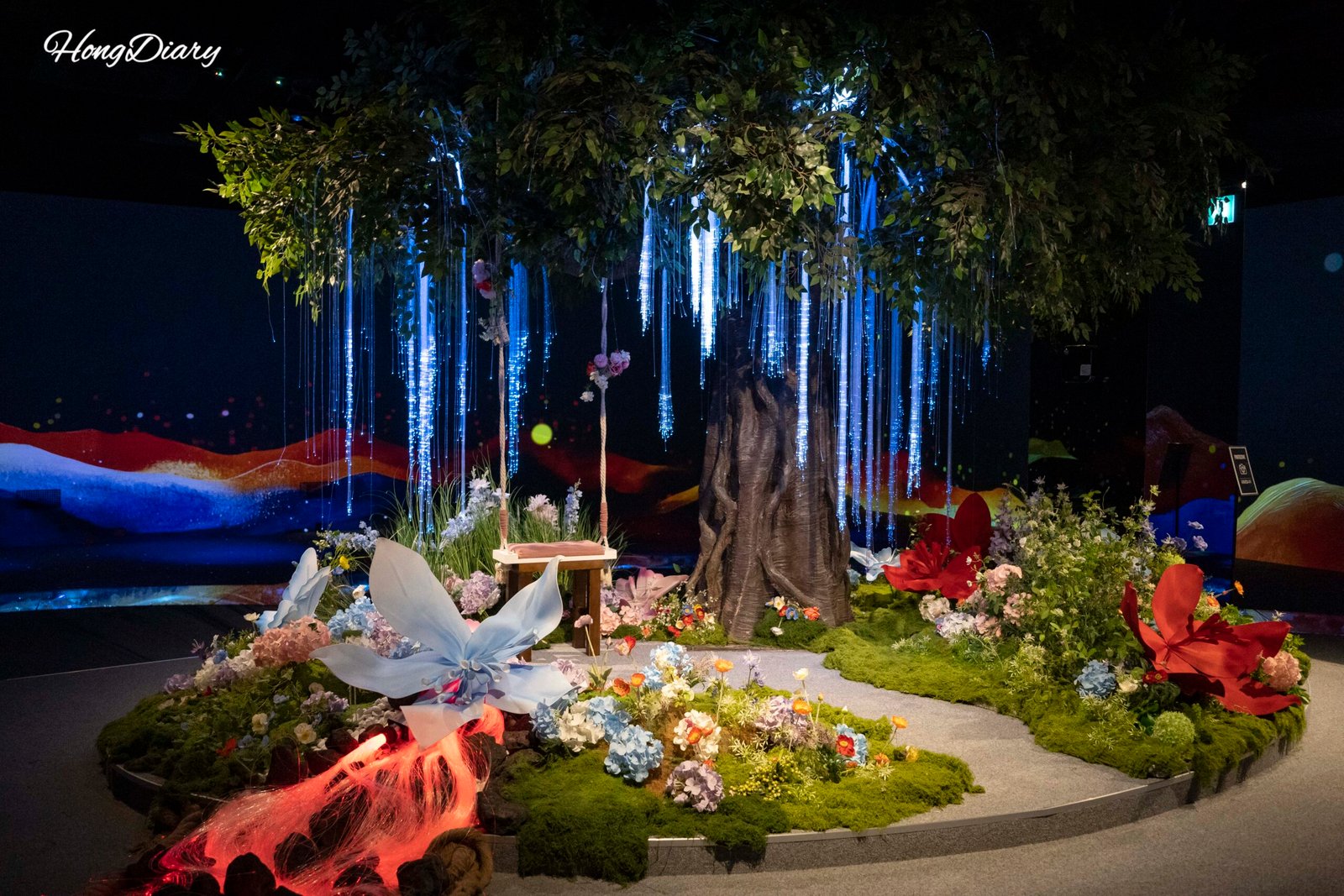
Most travelers heading to Korea’s Jeolla region stop at Jeonju and call it a day. But about an hour further south, in a city most foreigners have never visited, there’s a small immersive art space that quietly became one of the most talked-about indoor attractions in the area. Piorium Namwon is a media art exhibition built inside what used to be an abandoned construction site, and it turned out to be one of the more memorable stops on my trip through rural Korea.
Namwon sits in the southeastern corner of Jeollabuk-do (North Jeolla Province), about an hour by intercity bus from Jeonju and roughly two hours by KTX from Seoul. The city is historically known as the setting of Chunhyangjeon, Korea’s most celebrated love story from the Joseon Dynasty — often compared to Romeo and Juliet, though this one has a happier ending. Every spring, the Chunhyang Festival (running since 1931, making it one of the country’s oldest cultural festivals) draws over a million visitors. Outside festival season, though, Namwon is refreshingly quiet, with its attractions spread along the Yocheon River. Piorium sits on Sori-gil, a street named after pansori, the traditional Korean vocal art that also traces its roots to this region.
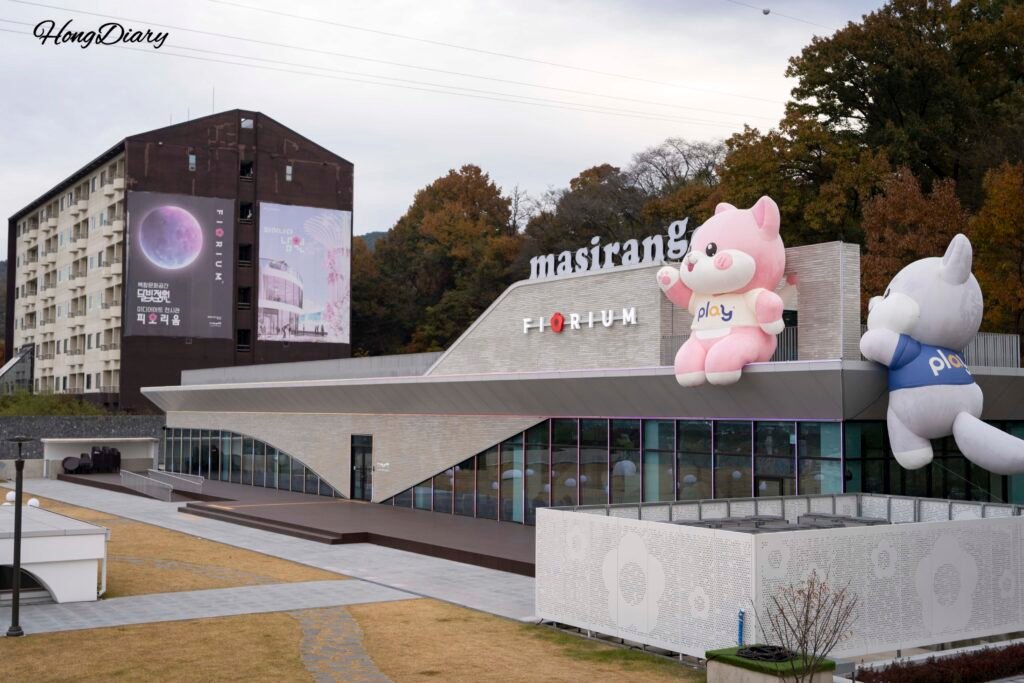
Table of Contents
Know Before You Go
| Detail | Info |
|---|---|
| Address | 50 Sori-gil, Namwon-si, Jeollabuk-do |
| Admission | Adults (19+): ₩12,000 / $8 USD / €7 EUR |
| Teens (13–18): ₩8,000 / $5 USD / €5 EUR | |
| Children (7–12): ₩6,000 / $4 USD / €3 EUR | |
| Hours | 10:00 AM – 7:00 PM (weekdays) / 10:00 AM – 9:00 PM (Fri & Sat) |
| Closed | Every Tuesday |
| Parking | Free on-site |
| Facilities | Lockers available in the lobby |

How an Abandoned Construction Site Became Piorium
The building wasn’t always an art space. The site was originally meant to be a condominium complex, but the project was abandoned mid-construction, leaving an empty shell on the hillside. Namwon’s city government eventually stepped in, repurposing the space through an urban regeneration project that turned it into a cultural complex. The result is Piorium at the center, flanked by an outdoor area called the Moonlight Garden and a cafe on the upper floor.
The name “Piorium” comes from the Korean word for “to bloom,” and the concept is rooted in the work of Kim Byung Jong, a globally recognized painter from the region. His landscape painting Hwahongsansu served as the creative motif for the exhibition, and once you step inside, the connection makes sense — projections of color and light unfold across the walls like brushstrokes coming to life.
Walking Through the Exhibition
You enter from the basement level (B1), where you pick up your ticket before heading deeper into the exhibition. The exit loops back to the same floor, so there’s no need to step outside or backtrack during your visit. It’s a straightforward, one-way flow.
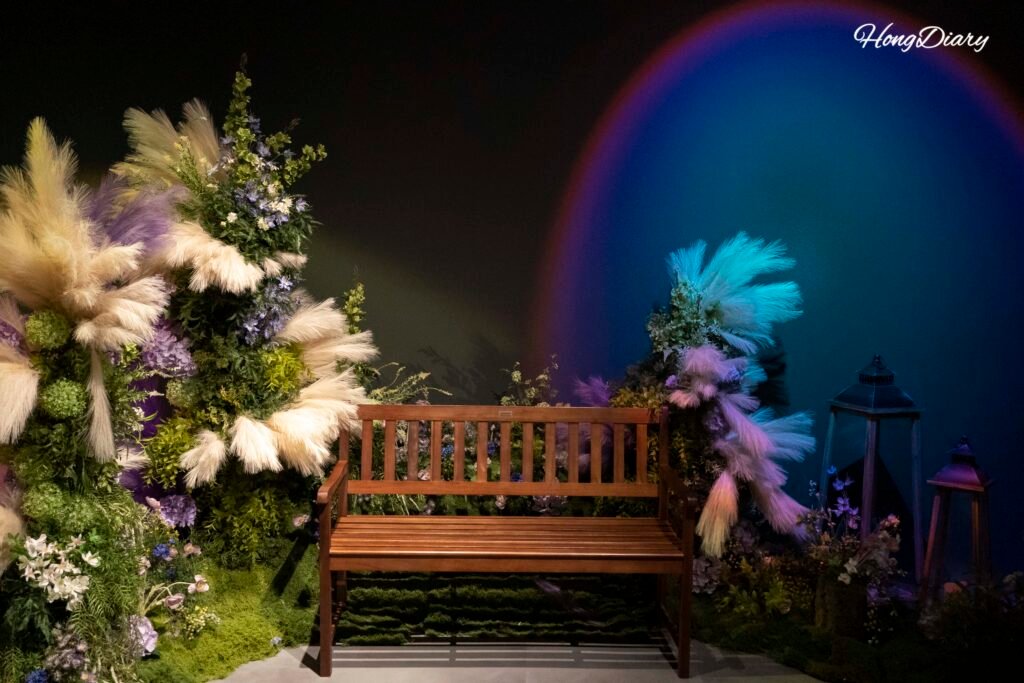
The interior is divided into six distinct spaces, each with its own visual theme. Early on, the rooms lean heavily on shifting colors and light patterns — abstract, slow, and meditative. As you move further in, the installations layer in surround sound and video projections that respond to the architecture of each room, pulling you into scenes rather than just showing them to you.
There’s no rigid guided tour or audio narration pushing you along. You set your own pace, stop where something catches your eye, and take photos whenever the mood strikes. The whole walkthrough took me around 35 minutes at a comfortable pace, though I saw other visitors linger much longer in the rooms with seating.
The Rooms That Actually Surprised Me
I’ll be honest — I’ve visited a well-known media art exhibition in Japan not long before this trip, and it left me a bit underwhelmed. It looked great in photos online, but in person, the installations felt repetitive. After the first two rooms, I was already checking how close I was to the exit.
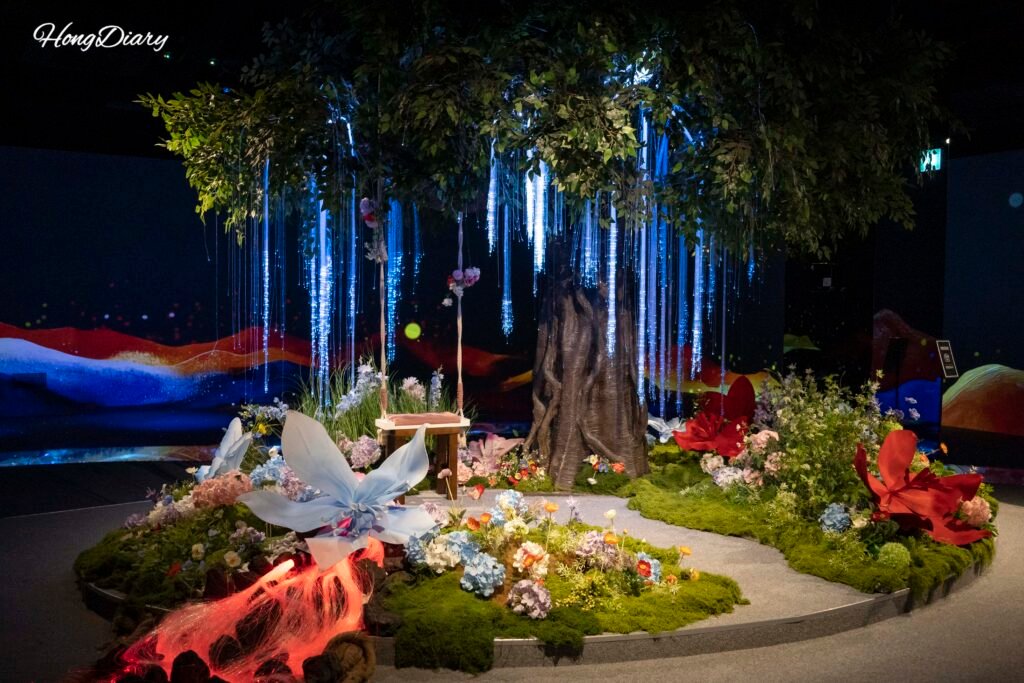
Piorium was different. Each of the six spaces had a genuinely distinct visual identity, and the later rooms were the strongest. One room in the second half is designed to feel like stepping into a garden inhabited by something out of a fairy tale: lush greens, soft floral projections, and light that shifts every few seconds. Because the projected imagery behind you keeps changing, every photo you take in the same spot looks completely different depending on your timing. It’s the kind of space where you want to just sit and watch for a while.

What made it work, I think, is that the exhibition doesn’t just ask you to look at art on a wall. You walk through it. The light wraps around you, the sound fills the room from every direction, and you stop feeling like a spectator. That shift from watching to participating is what kept me engaged through all six rooms.
Gift Shop, Cafe, and the Moonlight Garden
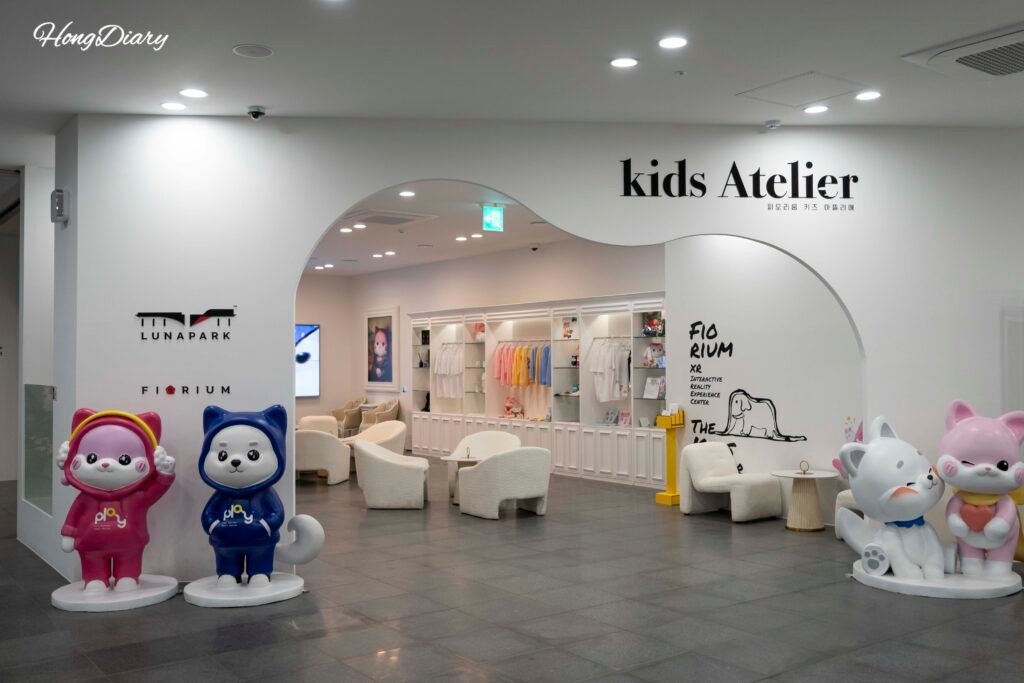
After the exhibition loops you back to B1, you’ll find yourself near the Kids Atelier — a bright, open space with seating and a small display of Namwon-themed merchandise. When I visited, some of the products were still in a preview stage and not yet available for purchase, which was a bit disappointing because the quality looked solid. Hopefully they’ve opened full sales by now.
Head upstairs to the first floor and you’ll reach the cafe area and the Moonlight Garden, an outdoor terrace with a view of the surrounding hills. The cafe serves local craft beer brewed in Namwon alongside standard desserts, and it’s a comfortable spot to decompress after the exhibition. I ended up spending more time here than I expected.
Just next to Piorium, there’s also a standalone cafe called Hidden Bridge. The interior has a reading-room vibe with postcards and a guestbook, and the view from inside is worth the stop even if you’re not a coffee person. It felt like a space designed for slow afternoons — the kind of place where you sit down for ten minutes and look up an hour later.
Planning a Half-Day Route
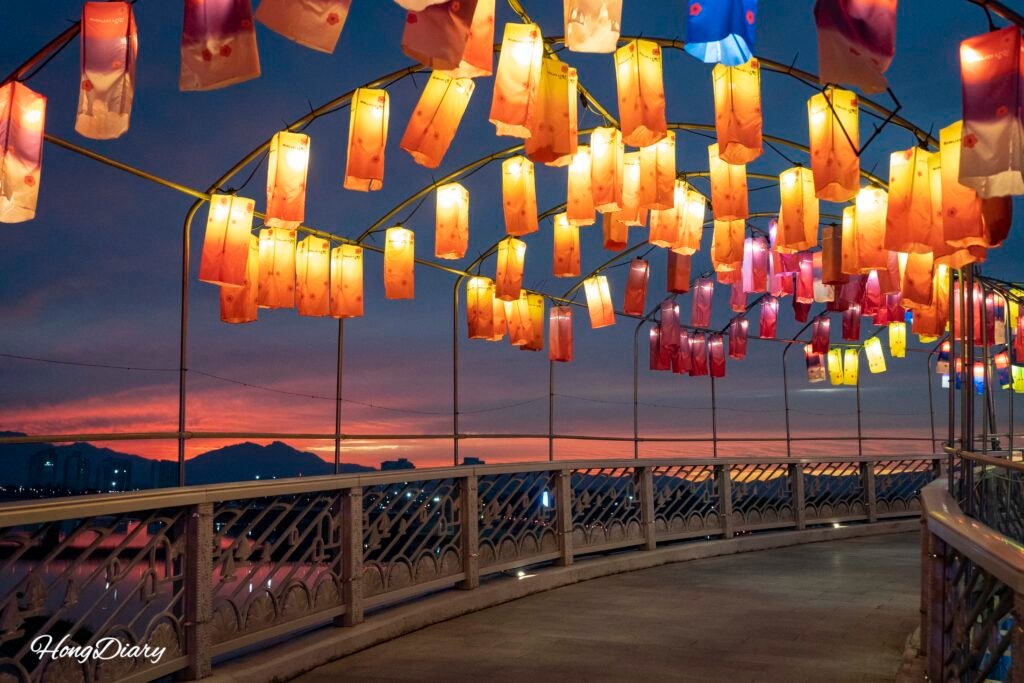
Piorium Namwon works well as the anchor for a relaxed half-day itinerary rather than a standalone destination. The exhibition itself takes about 30 to 40 minutes, plus time at the cafe and gift shop. Right across the street from the complex, you’ll find Seungwolgyo Bridge, a pedestrian bridge that’s become a popular photo spot in the area. Walk across, take in the view, and loop back — the whole detour adds maybe 20 minutes.
If you’re building a full day in Namwon, pair the Piorium visit with Gwanghalluwon Garden (the Chunhyang love story site) in the morning, grab lunch in the city center, and save the exhibition for the afternoon when you want to get off your feet. Because it’s entirely indoors and climate-controlled, it’s especially useful on rainy days or during Korea’s brutally hot summers, when most of Namwon’s outdoor attractions become hard to enjoy.
Is Piorium Namwon Worth the Trip?
For a city where most attractions are outdoors, having a polished indoor option like this makes a real difference in how you plan your day. The exhibition is compact enough that it doesn’t eat into your schedule, but engaging enough that it doesn’t feel like filler. I walked in expecting a quick photo-op detour and walked out impressed by how much thought went into the spatial design and pacing — more than I’d expected from a small-town exhibition.
If you’re already planning a trip to Jeonju or exploring the Jeolla region, adding Namwon to your route is easy — and Piorium Namwon gives you a reason to do it even when the weather doesn’t cooperate.
What is Piorium Namwon?
Piorium is an immersive media art exhibition space located in Namwon, Jeollabuk-do, South Korea. It features six themed rooms of light, video projection, and surround sound, inspired by the landscape paintings of artist Kim Byung Jong. The space was created through an urban regeneration project that transformed an abandoned construction site into a cultural complex.
How much does it cost to visit Piorium?
Admission is ₩12,000 ($8 USD / €7 EUR) for adults aged 19 and over, ₩8,000 ($5 USD / €5 EUR) for teens aged 13 to 18, and ₩6,000 ($4 USD / €3 EUR) for children aged 7 to 12. Parking is free.
How long does it take to walk through the Piorium exhibition?
The full exhibition takes approximately 30 to 40 minutes at a comfortable pace. However, if you plan to spend time at the on-site cafe, gift shop, and outdoor Moonlight Garden, set aside at least 60 to 90 minutes for the entire visit.
What are the opening hours and closing days for Piorium Namwon?
Piorium is open from 10:00 AM to 7:00 PM on weekdays and from 10:00 AM to 9:00 PM on Fridays and Saturdays. It is closed every Tuesday.
How do I get to Piorium from Jeonju or Seoul?
From Jeonju, Namwon is about an hour by intercity bus. From Seoul, you can take the KTX to Namwon Station, which takes roughly two hours. Piorium is located at 50 Sori-gil, Namwon-si, and is easily reachable by taxi from either the bus terminal or the train station.
Is Piorium suitable for children and families?
Yes. The exhibition is entirely indoors with a flat, one-way walking route, and there is a family-friendly space called the Kids Atelier near the exit with seating and merchandise displays. The visual nature of the installations tends to hold younger visitors’ attention, though very young children may find some of the darker rooms a bit intense.
What else can I visit near Piorium in Namwon?
Right across the street is Seungwolgyo Bridge, a scenic pedestrian bridge popular for photos. The on-site Moonlight Garden and Hidden Bridge cafe are also within walking distance. For a full-day itinerary, pair Piorium with Gwanghalluwon Garden, Namwon’s most iconic cultural site, which is a short taxi ride away.