
I’ve been to Geumsan more times than I can count — always for the food, always by car, always leaving with the same thought: this place doesn’t need to try hard. It’s a small farming county in the hills south of Daejeon, known across Korea as the ginseng capital (about 80% of the country’s ginseng passes through here), and most people outside Korea have never heard of it. This time I came with my husband and our baby, and instead of just eating and driving home, we made a stop at a hilltop observatory I’d been meaning to visit. It rained most of the morning, but by the time we reached Samrakwon, a patch of blue sky broke through — just enough to see what I came for.
Geumsan sits at the southernmost tip of Chungcheongnam-do, bordered by mountains and crossed by the Geum River (Geumgang). It’s about 50 minutes by car from Daejeon, which is the nearest major city and KTX hub. The town itself is quiet — no tourist crowds, no souvenir shops, just ginseng fields, river valleys, and small restaurants that have been feeding locals for decades.
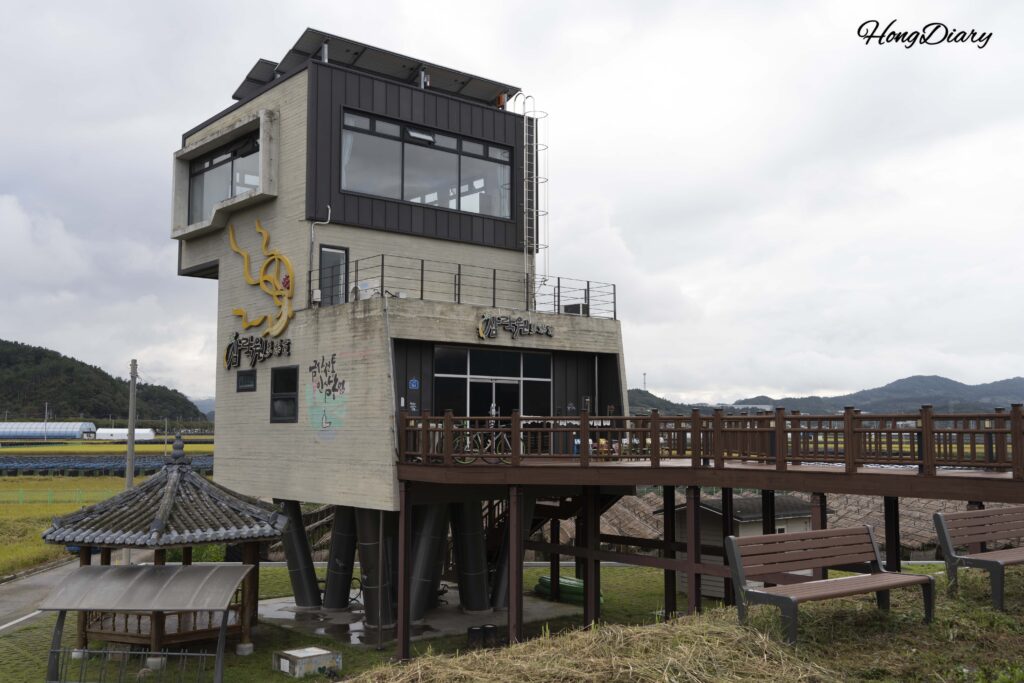
Table of Contents
Samrakwon Observatory
Samrakwon is a small observatory deck in Jewon-myeon, perched on a hill overlooking the point where rice paddies, ginseng farms, and the Geum River all converge. There’s no admission fee, but the hours are irregular — the observatory opens when the caretaker is on-site, so weekday daytime visits are the safest bet.
| Detail | Info |
|---|---|
| Name | Samrakwon Observatory |
| Address | 299-4 Jeogok-ri, Jewon-myeon, Geumsan-gun, Chungcheongnam-do |
| Admission | Free |
| Hours | Irregular — open when caretaker is present. Weekday daytime recommended |
| Getting There | Realistically requires a car (~50 min from Daejeon). Local bus runs once daily |
The day I visited was overcast and rainy for most of the morning, which had me worried. But by the time we pulled into the parking area, the clouds had started to break, and a stripe of blue appeared above the river. Sometimes the best views come with a little drama.
A note on getting here: Geumsan is realistically a car destination. Public transit exists — you can take a KTX to Daejeon Station, then an intercity bus to Geumsan Terminal, then a local bus to Jewon-myeon — but the local bus to the observatory and Eojuk Street runs only once a day, and taxis from the terminal are expensive for the distance. If you don’t have a car, I’d honestly recommend skipping Samrakwon and Eojuk Street and spending the day in Geumsan’s town center instead. The ginseng market and ginseng museum are walkable from the bus terminal and still give you a genuine taste of what this region is about.
The View
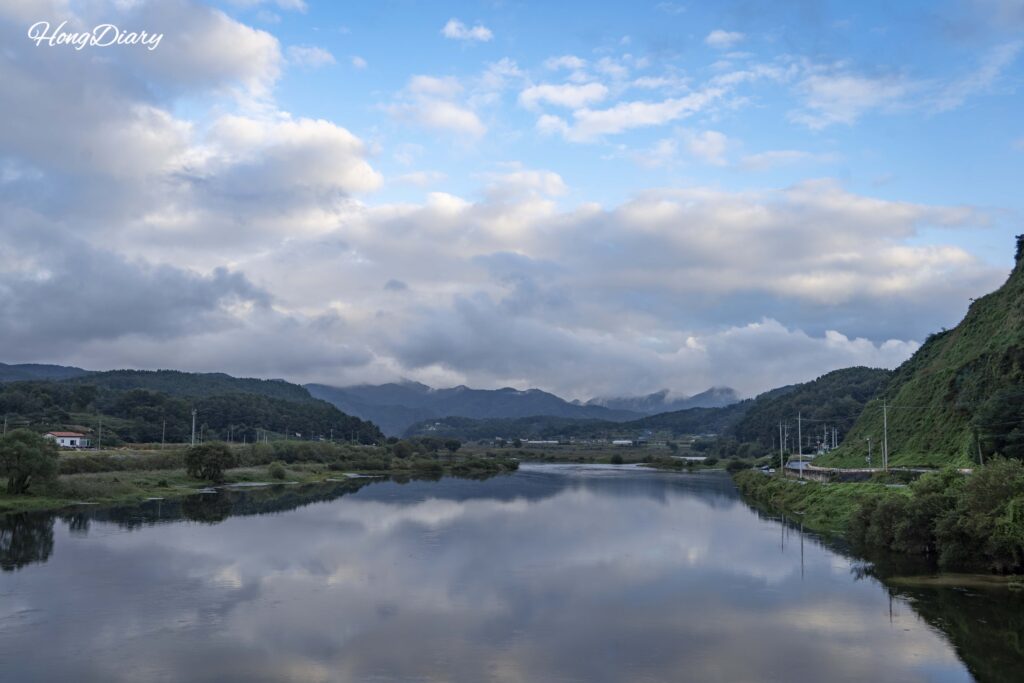
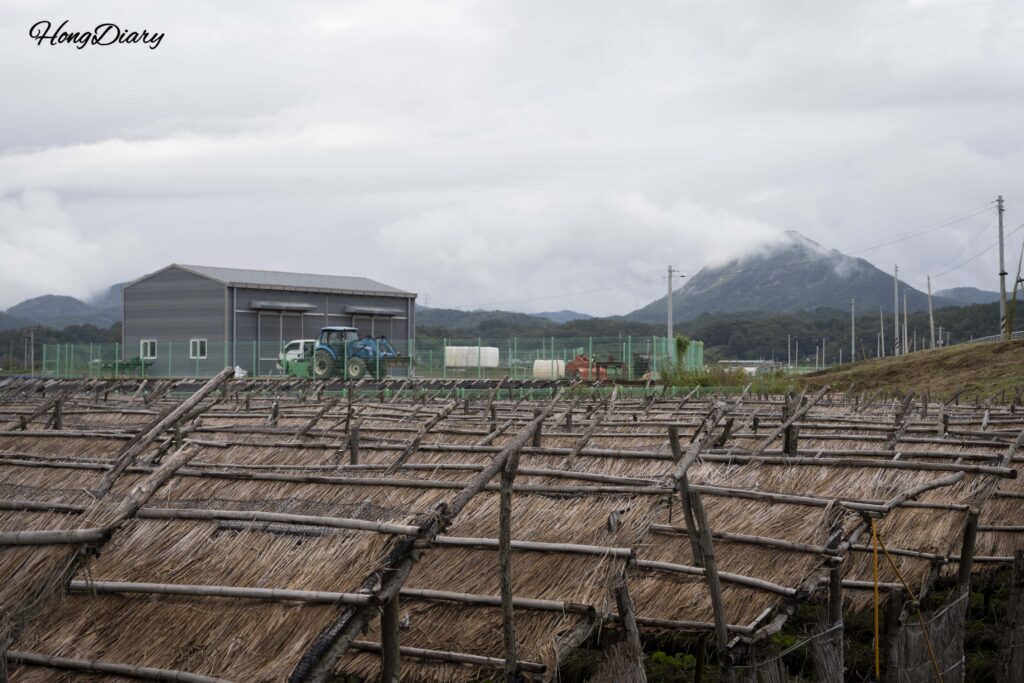
Even without climbing to the top of the observatory tower (it was closed that day), the deck area offers a wide, unobstructed panorama. Below you, golden rice paddies stretch toward the river. Between them, rows of ginseng fields are easy to spot — they’re covered in black shade nets that block direct sunlight, a signature of this region’s landscape.
Ginseng needs years of careful, shaded cultivation before harvest, and these nets are as much a part of Geumsan’s scenery as the mountains in the background. If you’ve never seen a ginseng farm before, the view from Samrakwon is the clearest way to understand the scale of what this county produces.
The Geum River curves through the middle of it all, and in autumn the combination of yellowing rice, dark ginseng covers, and the river reflecting whatever sky it gets is the kind of view that makes you sit down and stay longer than planned. I didn’t need to go anywhere else. The bench on the deck was enough.
Eojuk Street in Jewon-myeon
Jewon-myeon — the same small township where the observatory sits — is known locally for its eojuk street: a cluster of restaurants specializing in eojuk, a thick fish porridge that most people outside Korea have never encountered.
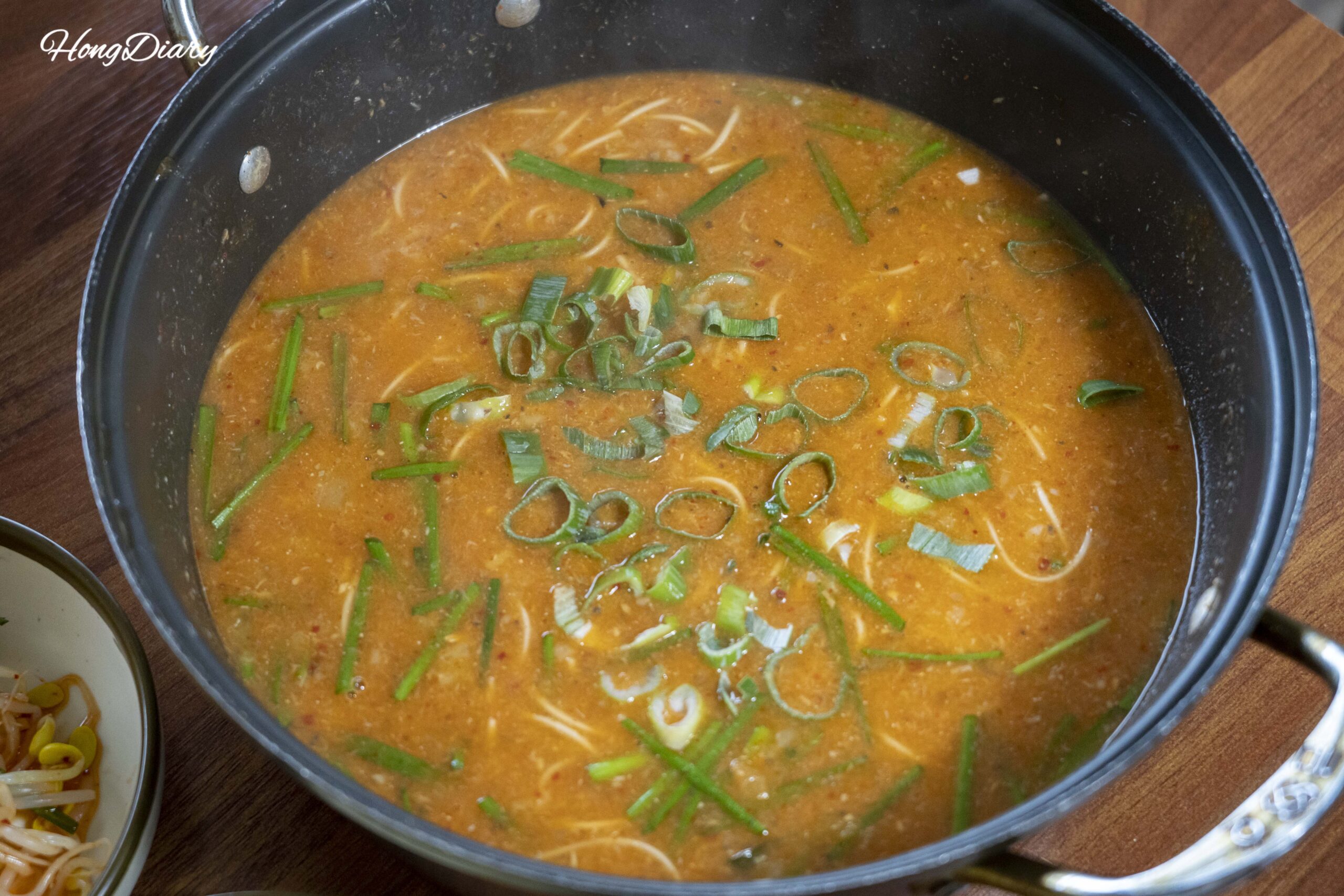
Eojuk is an inland dish. Freshwater fish — typically catfish and other native river species — are boiled down for hours until the flesh dissolves into the broth. Rice and hand-torn noodles (sujebi) are added, making it thick and filling, with a mild spicy kick. It’s comfort food in the most literal sense: warm, heavy, and made to be eaten slowly.
I’ve tried most of the restaurants on this street over the years. This time I picked Gangbyeon Garden — not because it’s the best (every shop has its own style), but because my husband was trying eojuk for the first time, and I wanted somewhere with a broader menu in case he didn’t like it. Our baby needed options too.
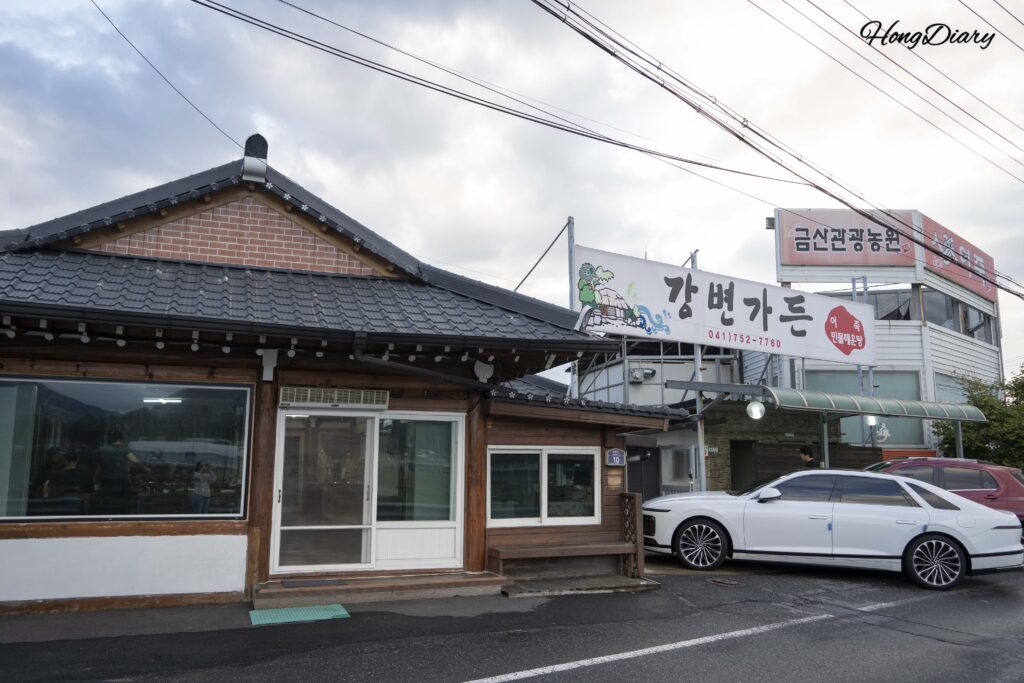
| Detail | Info |
|---|---|
| Restaurant | Gangbyeon Garden |
| Address | 10 Yonghwa-ro, Jewon-myeon, Geumsan-gun, Chungcheongnam-do |
| Hours | 10:30 AM – 6:30 PM, daily |
Gangbyeon Garden Menu
| Dish | Price (₩) | USD | EUR |
|---|---|---|---|
| Freshwater spicy fish stew | ₩40,000–55,000 | ~$27–37 | ~€23–31 |
| Ginseng eojuk (min. 2 people) | ₩8,000/person | ~$5 | ~€5 |
| Dori-baengbaengi (fried river fish) | ₩12,000 | ~$8 | ~€7 |
| Freshwater shrimp tempura | ₩12,000 | ~$8 | ~€7 |
| Ginseng tempura | ₩12,000 | ~$8 | ~€7 |
| Donkatsu | ₩7,000 | ~$5 | ~€4 |
| Ginseng makgeolli (rice wine) | ₩4,000 | ~$3 | ~€2 |
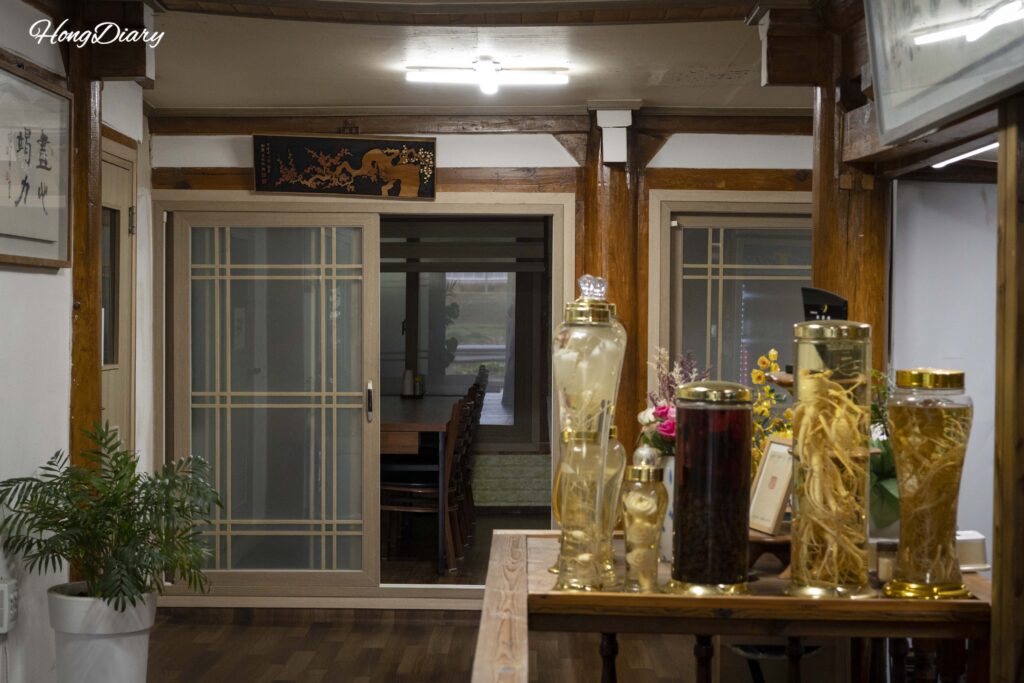
The Food
We ordered the ginseng eojuk and dori-baengbaengi to share.
The eojuk arrived in a stone pot, thick and bubbling. The texture sits somewhere between porridge and stew — the fish is completely dissolved into the broth, so there are no bones or chunks to navigate. The hand-torn noodles give it body, and the spice level is mild enough that it doesn’t overpower the flavor of the broth itself.
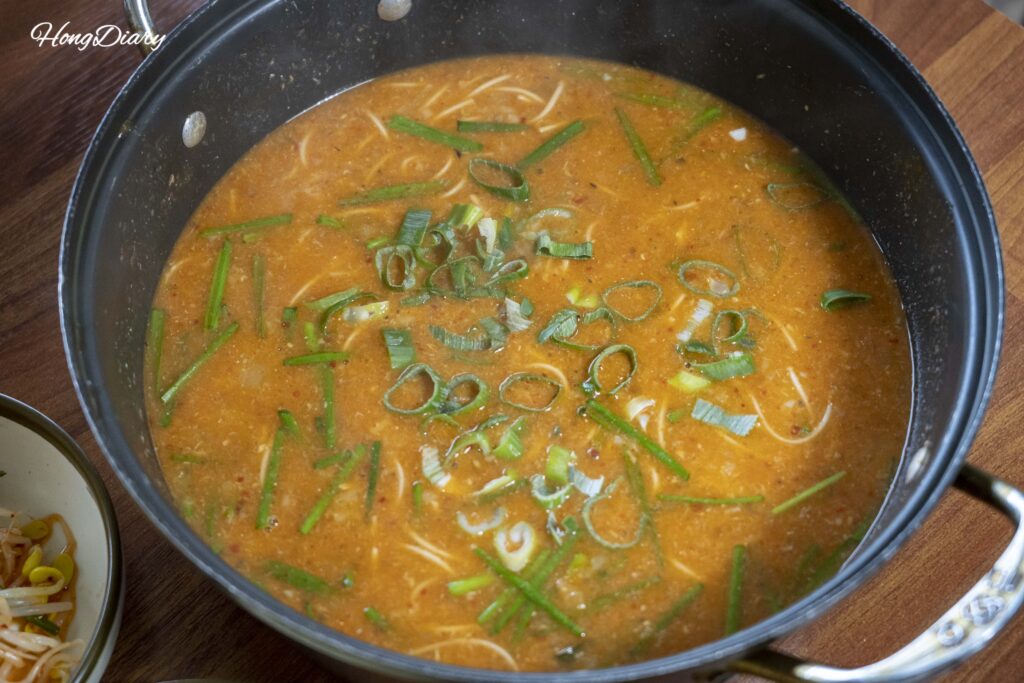
There’s a condiment called sancho — ground Sichuan pepper, popular in Korea’s Gyeongsang-do region — that you can sprinkle on top. It adds a numbing, herbal bite that pairs well with the richness of the porridge. Fair warning: even among Koreans, sancho is polarizing. Some people love it, some can’t stand it. I’d suggest trying a small pinch first.
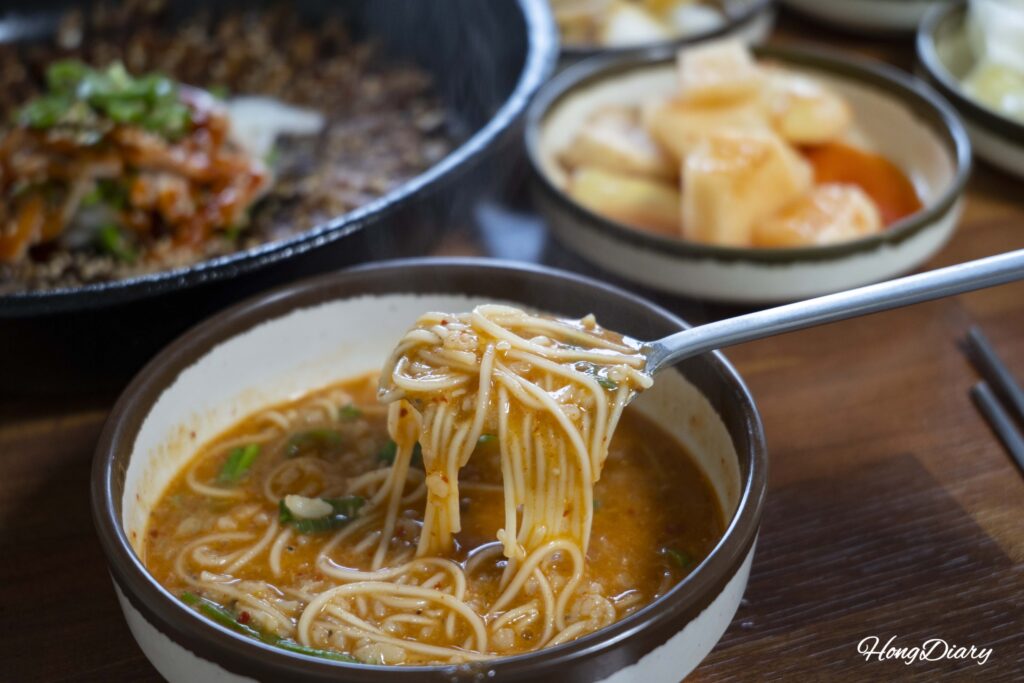
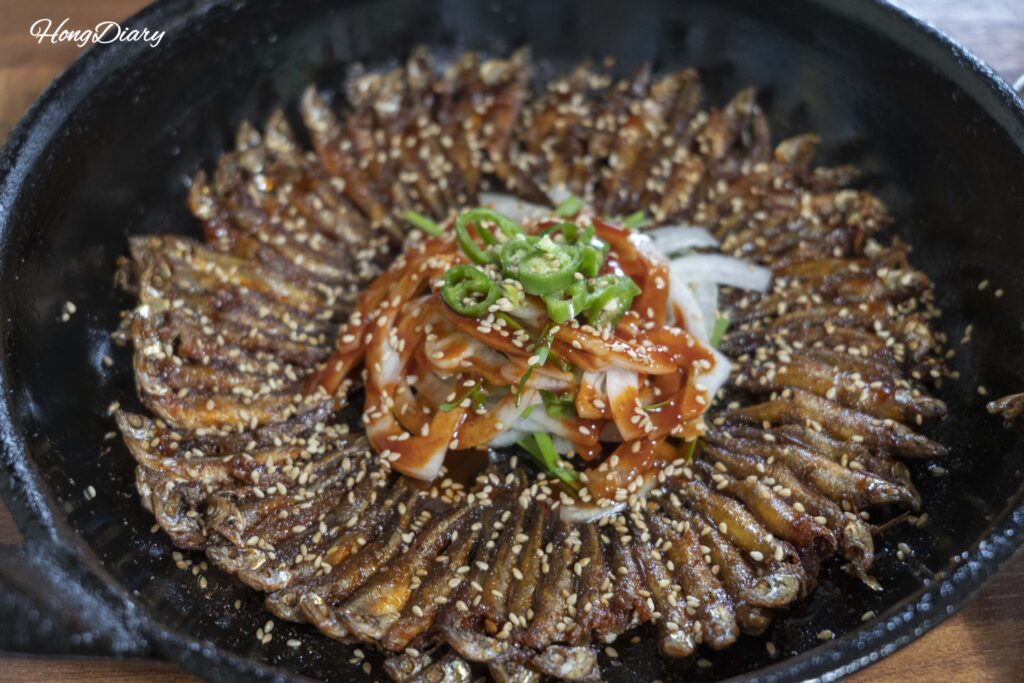
The dori-baengbaengi is a local specialty: tiny river fish, fried until crispy, then coated in a sweet and savory sauce. My husband said it reminded him of fried anchovies — crunchy, salty, and addictive. Paired with the pickled vegetable side dishes, it works as a snack, a side, or a drinking companion for the ginseng makgeolli (which, by the way, is worth ordering — it’s mild, slightly sweet, and only ₩4,000 / ~$3 USD).
I personally prefer the freshwater spicy fish stew (maeuntang) when I come here, but eojuk is the safer starting point if you’ve never had Korean freshwater cuisine. Each restaurant on the street has its own recipe and style, so if you visit more than once, try a different shop each time.
Final Thoughts
Geumsan isn’t a place that sells itself. There are no billboards, no Instagram campaigns, no tour packages. It’s a county that grows ginseng, cooks river fish, and sits quietly between mountains — and that’s about it. But “that’s about it” is exactly the point.
The view from Samrakwon — rice paddies, ginseng fields, the Geum River curving below — doesn’t ask you to do anything. You just sit and look. The eojuk at Gangbyeon Garden doesn’t try to impress you with presentation. It just fills you up. Coming here as a family for the first time, after years of visiting alone or with friends, felt like closing a quiet circle.
If you have a car and a free afternoon, Geumsan is the kind of detour that stays with you. If you don’t have a car, the town center — with its ginseng market, ginseng museum, and ginseng-infused everything — is still reachable by bus from Daejeon and worth the trip on its own. Either way, autumn is the season. The mountains and fields turn warmer with every passing week, and the eojuk tastes best when the air outside is cool.
Frequently Asked Questions
How do I get to Geumsan from Seoul or Busan?
The most practical way is by car — Geumsan is about 50 minutes from Daejeon by road. If you’re relying on public transit, take a KTX to Daejeon Station, then an intercity bus to Geumsan Terminal (about 50 minutes, departures every 5–10 minutes). From the terminal, local buses to Jewon-myeon (where Samrakwon Observatory and Eojuk Street are located) run only once per day, and taxis are expensive for the distance. Without a car, consider exploring Geumsan’s town center instead — the ginseng market and museum are walkable from the bus terminal.
Is there an admission fee for Samrakwon Observatory?
No, it’s free. However, the observatory has irregular hours — it opens when the caretaker is on-site. Weekday daytime visits give you the best chance of finding it open. Even if the observatory tower itself is closed, the deck area still offers a wide, unobstructed view of the rice paddies, ginseng fields, and the Geum River.
What is eojuk?
Eojuk is a thick freshwater fish porridge traditional to Korea’s inland regions. Freshwater fish — typically catfish and other native river species — are boiled down for hours until the flesh dissolves into the broth. Rice and hand-torn noodles are added, creating a thick, slightly spicy, filling dish. It’s served bubbling in a stone pot and is considered comfort food in the Geumsan area. Jewon-myeon has a street of restaurants specializing in it.
What is dori-baengbaengi?
It’s a local dish made with tiny river fish that are fried until crispy, then coated in a sweet and savory sauce. The texture is crunchy and addictive — similar to fried anchovies but with whole small fish. It’s commonly eaten as a side dish or as a snack with drinks, especially with ginseng makgeolli (rice wine).
When is the best time to visit Geumsan?
Autumn (October through November) is the best season. The rice paddies turn golden, the ginseng fields are at their most photogenic under their black shade nets, and the surrounding mountains shift to warm reds and oranges. The eojuk also tastes best in cooler weather. Spring and summer are fine for visiting the town center and ginseng market, but the Samrakwon Observatory view peaks in fall.
What are the black covers on the fields in Geumsan?
Those are shade nets covering ginseng crops. Ginseng needs years of shaded, carefully controlled cultivation before harvest, and the black nets block direct sunlight. They’re a signature part of Geumsan’s landscape — visible from the observatory and from roads throughout the county.
Is Geumsan suitable for families with young children?
Yes, with caveats. The observatory deck and the restaurants are both manageable with a small child. However, the drive from Daejeon is about 50 minutes, and there isn’t much infrastructure for tourists (no major hotels — only small pensions). It works best as a day trip rather than an overnight stay, especially with kids.