
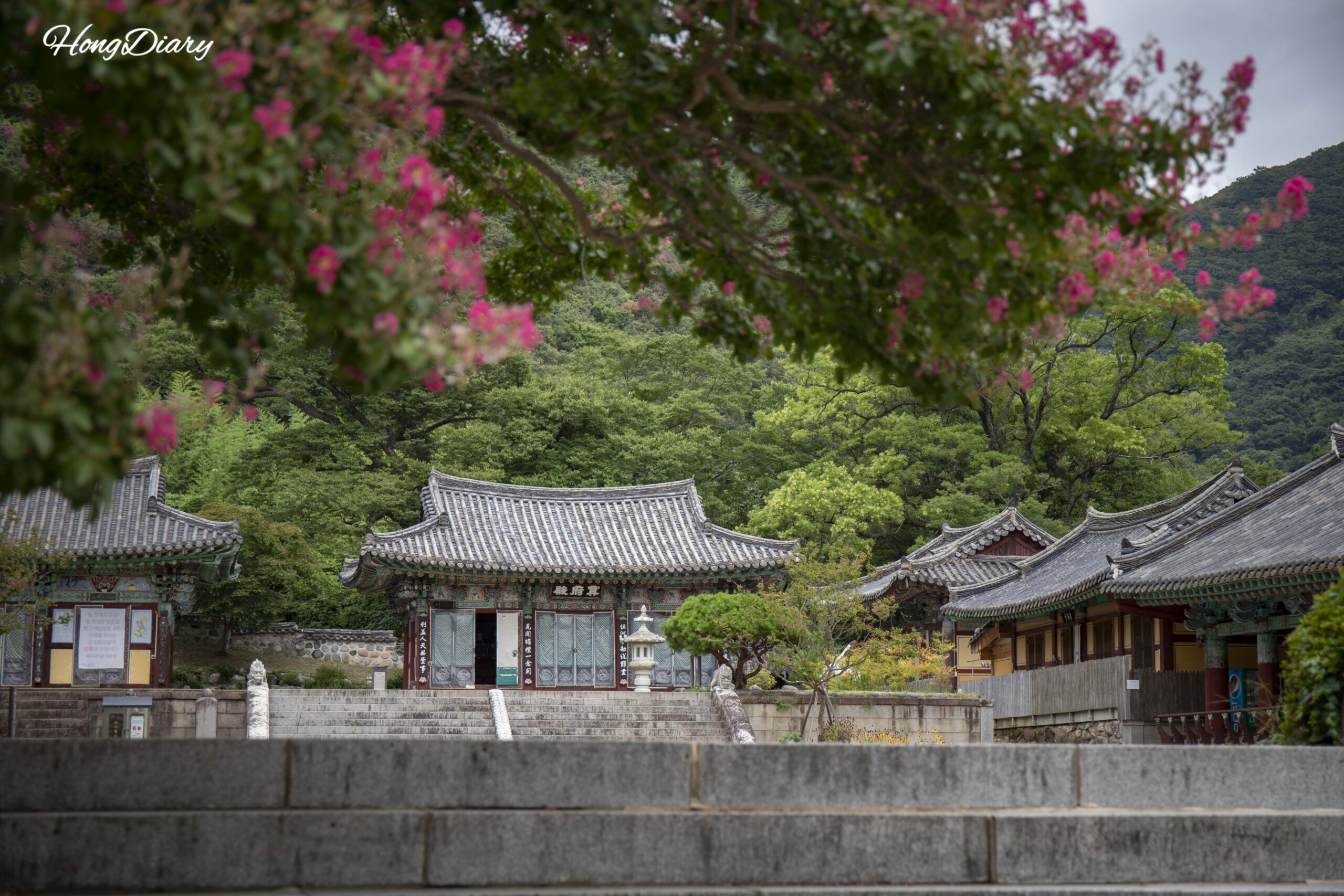
I’m not particularly religious, but whenever life feels heavy, I find myself heading to a temple — just to sit for an hour and let the silence do its work. This time, with crape myrtle season in full swing, I made my way to Pyochungsa Temple in Miryang, a place I’d been meaning to revisit for a while. What I didn’t expect was how much more there was to this temple than pink blossoms and mountain air.
Pyochungsa Temple sits at the foot of Mt. Jaeyaksan (1,119 m) in Danjang-myeon, Miryang, Gyeongsangnam-do — part of the Yeongnam Alps range that stretches across southeastern South Korea. Miryang itself is a compact city tucked between Busan and Daegu, reachable in about 30 minutes by KTX from Busan Station. Compared to the polished tourist circuits of Gyeongju or the coastal buzz of Busan, Miryang feels like stepping into a slower, older version of Korea — one where temples, pavilions, and river towns still set the pace.
Table of Contents
Pyochungsa Temple at a Glance
| Detail | Info |
|---|---|
| Name | Pyochungsa Temple (表忠寺) |
| Address | 1338 Pyochung-ro, Danjang-myeon, Miryang-si, Gyeongsangnam-do |
| Hours | 5:00 AM – 9:00 PM daily (access restricted from 9 PM to 5 AM) |
| Admission | Free |
| Parking | On-site lot: Large vehicles ₩7,000 (~$4.65 USD / €3.95 EUR), Standard vehicles ₩4,000 (~$2.65 USD / €2.25 EUR) |
| By train from Busan | KTX (high-speed), ITX (express), or Mugunghwa (local) from Busan Station to Miryang Station — multiple departures daily, ₩3,900–₩8,400 one way (~$2.60–$5.60 USD / €2.20–€4.75 EUR) |
| By bus to the temple | Route 22 from Miryang Station (Arirang Bus): 3 departures (09:30, 14:00, 16:30), 18 stops en route. Or intercity bus from Miryang Bus Terminal: 6 departures daily, ₩3,800 (~$2.55 USD / €2.15 EUR) |
| Distance from Miryang | About 30 min by car from central Miryang |
| Nearby attractions | Eoreumgol Ice Valley, Ice Valley Cable Car, Hobakso Valley, Wiyangji Pond, Yeongnamnu Pavilion, Mt. Jaeyaksan |
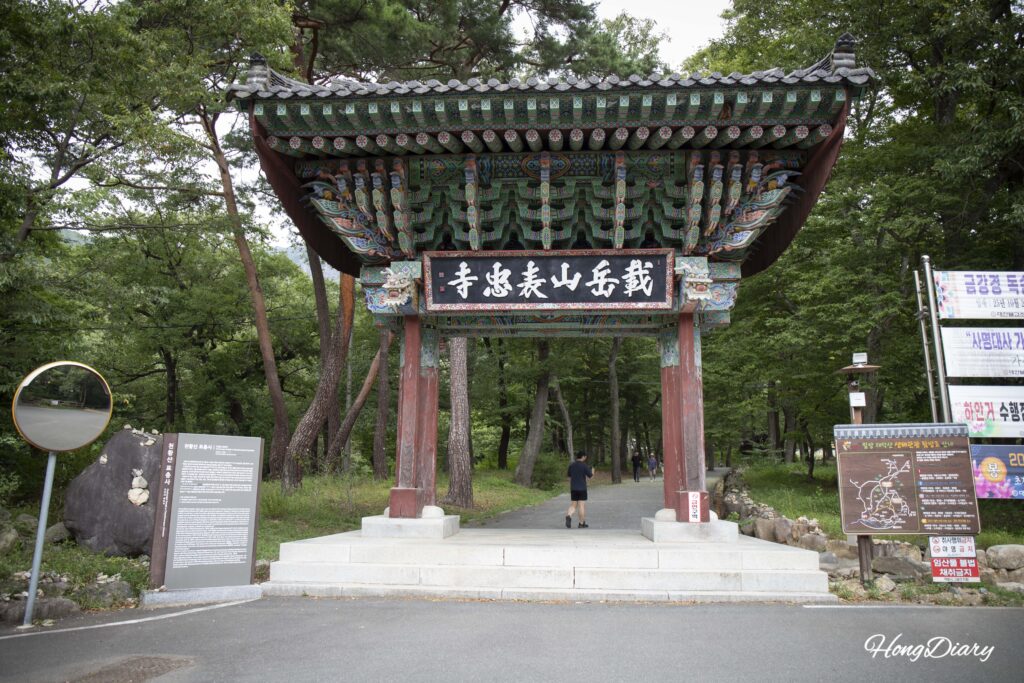
The Only Buddhist Temple in Korea with a Confucian Shrine Inside
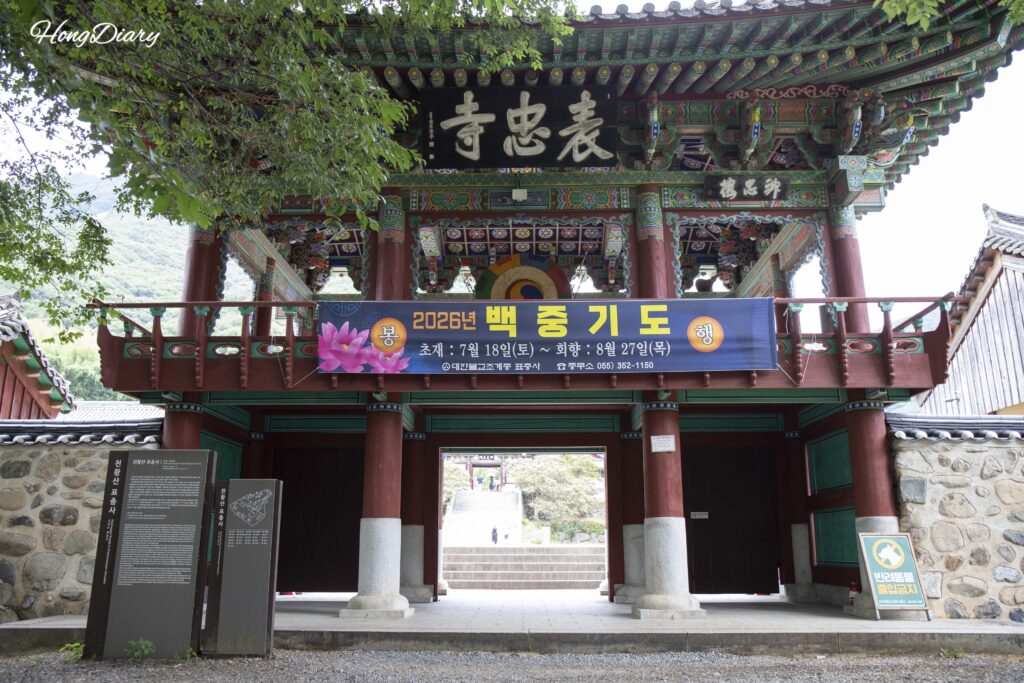
Pyochungsa was first established in 654 AD by the monk Wonhyo, one of the most recognized figures in Korean Buddhist history. For centuries, it functioned like any other mountain temple — quiet, meditative, tucked away from the world. That changed during the Imjin War (1592–1598), when the monk Samyeongdaesa rallied warrior monks from this very temple to fight against Japanese forces. His legacy was so significant that the Korean royal court later renamed the temple “Pyochungsa,” meaning “Temple of Displayed Loyalty,” in his honor.
Here’s where things get unusual. The name “Pyochungsa” isn’t unique — there are actually six temples across Korea that share it, in Gongju, Geumsan, Cheongju, Okcheon, Hapcheon, and here in Miryang. But the Miryang location stands apart for a reason you won’t find anywhere else in the country: inside the Buddhist temple grounds, there’s a Confucian academy — Pyochung Seowon — built to honor the loyalty of Samyeongdaesa and two other Buddhist soldier-monks, Seosandaesa and Giheodang.
The arrangement is striking. On one side of the compound, you have Daegwangjeon (the main Buddhist hall) and its surrounding prayer halls. On the other, the Confucian shrine with its memorial tablets and ceremonial architecture. Buddhist and Confucian spaces sharing a single walled compound — it’s a pairing that simply doesn’t exist elsewhere in Korea. Knowing this backstory made everything I saw afterward feel a little different.
Walking Through the Temple Grounds
Past the Iljumun (one-pillar gate), the path leads uphill through a thick corridor of pine trees. The approach road itself is worth the walk — there’s a playground for kids along the way and a well-maintained trail shaded by old pines. Even by car, the short drive from the parking lot felt like a proper transition into something quieter.
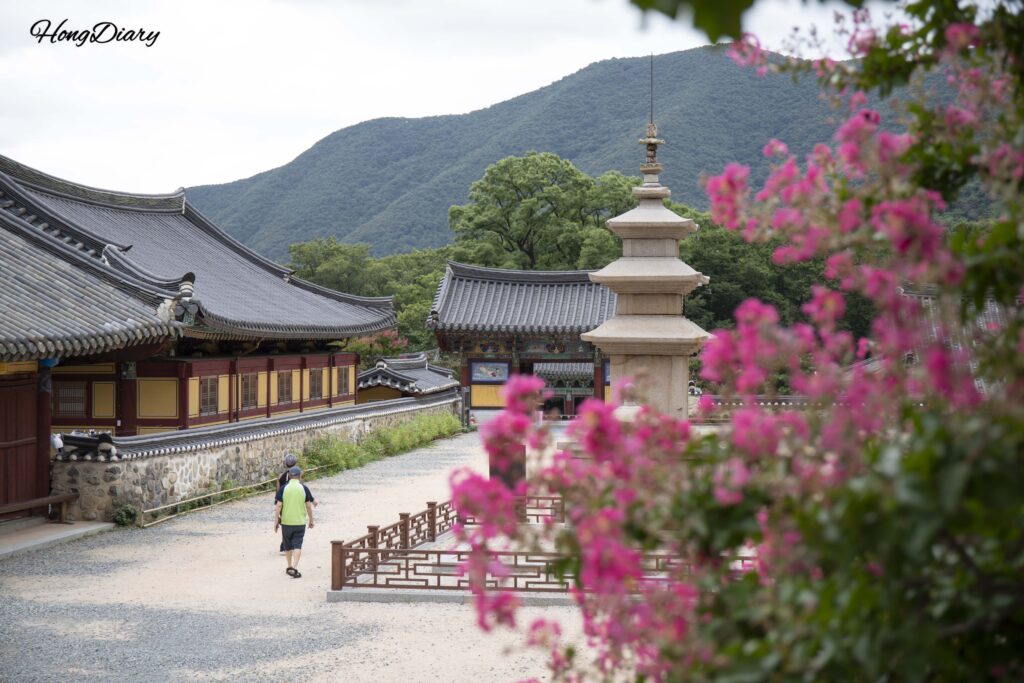
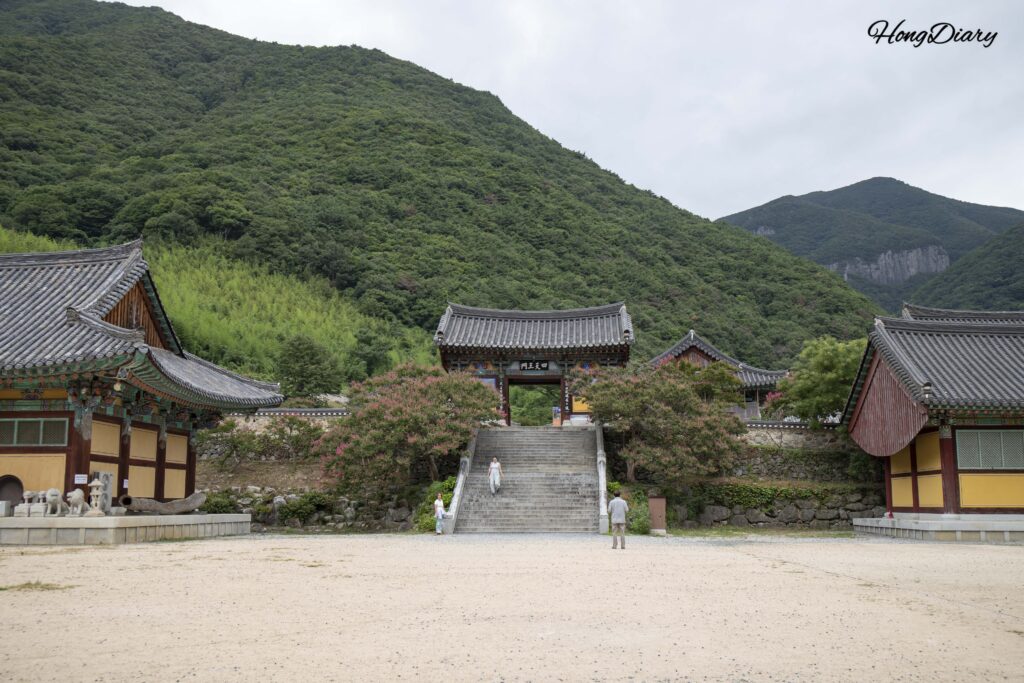
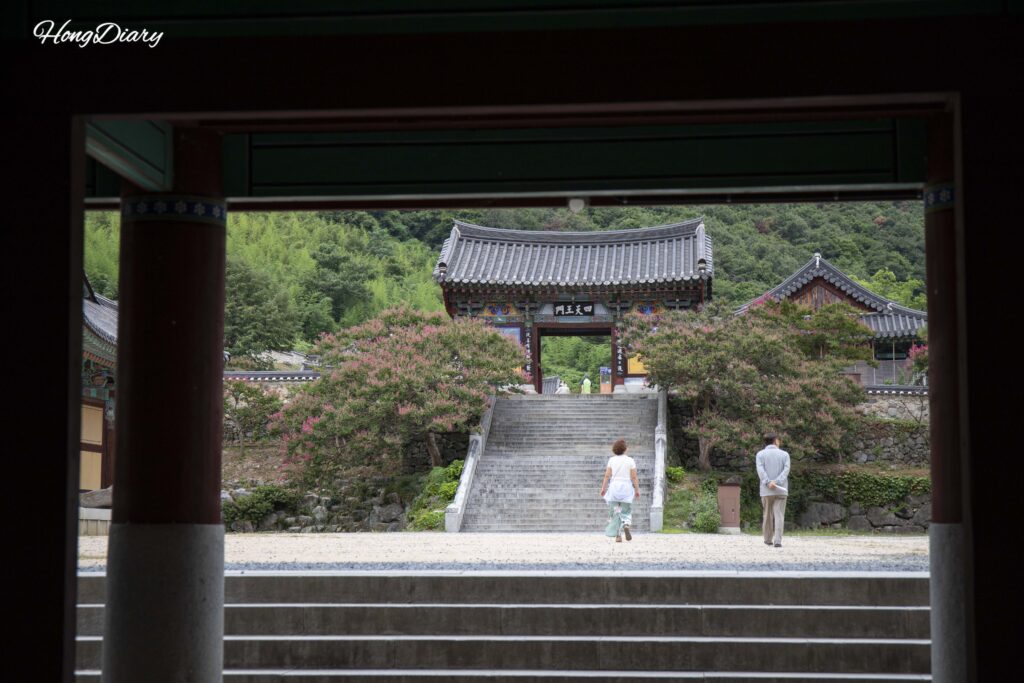
Climbing the stone stairs through Sacheonwangmun (the Four Heavenly Kings Gate), the first thing that catches your eye is a three-story stone pagoda standing in the center of the main courtyard. This pagoda, designated as a Korean Treasure, dates back to the Silla Dynasty under King Heungdeok, and is said to enshrine a sarira (a crystallized relic) of Shakyamuni Buddha. Behind it, Mt. Jaeyaksan rises like a painted backdrop — the kind of scene that makes you stop walking and just stand there for a minute.
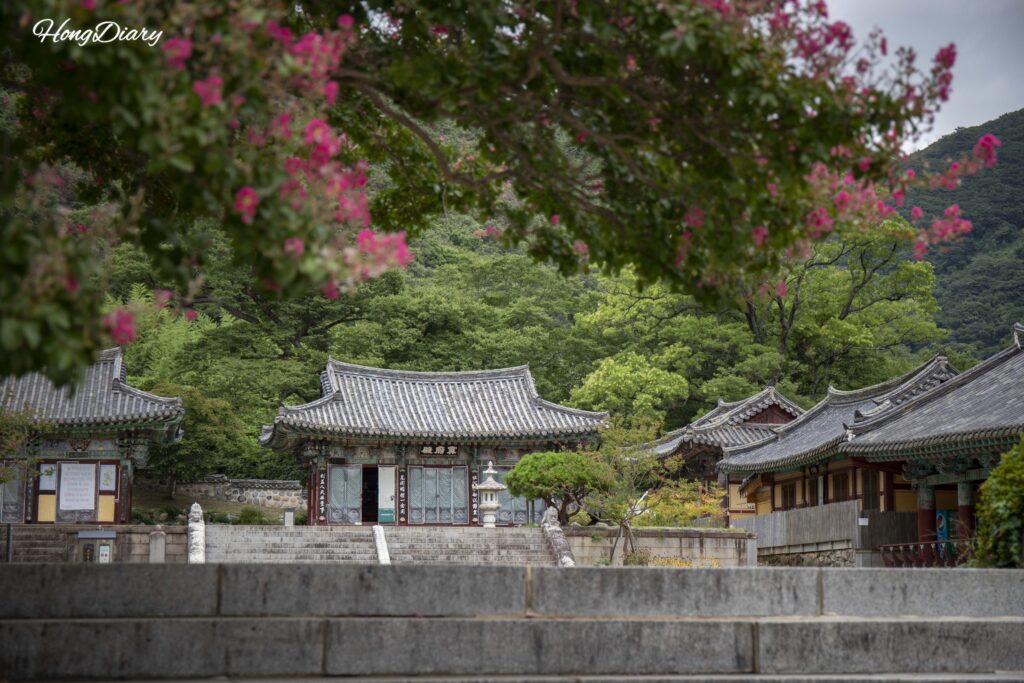
Deeper into the grounds, you start to notice the individual halls one by one. Myeongbujeon (the Hall of the Underworld King), visible from a distance, and Palsangjeon (the Hall of Eight Scenes from the Buddha’s Life) sit alongside quieter prayer halls. Most of what you see today, though, was rebuilt after a fire in 1926 that destroyed nearly the entire compound. Only Eungjinjeon (the Hall of Arhats) survived.
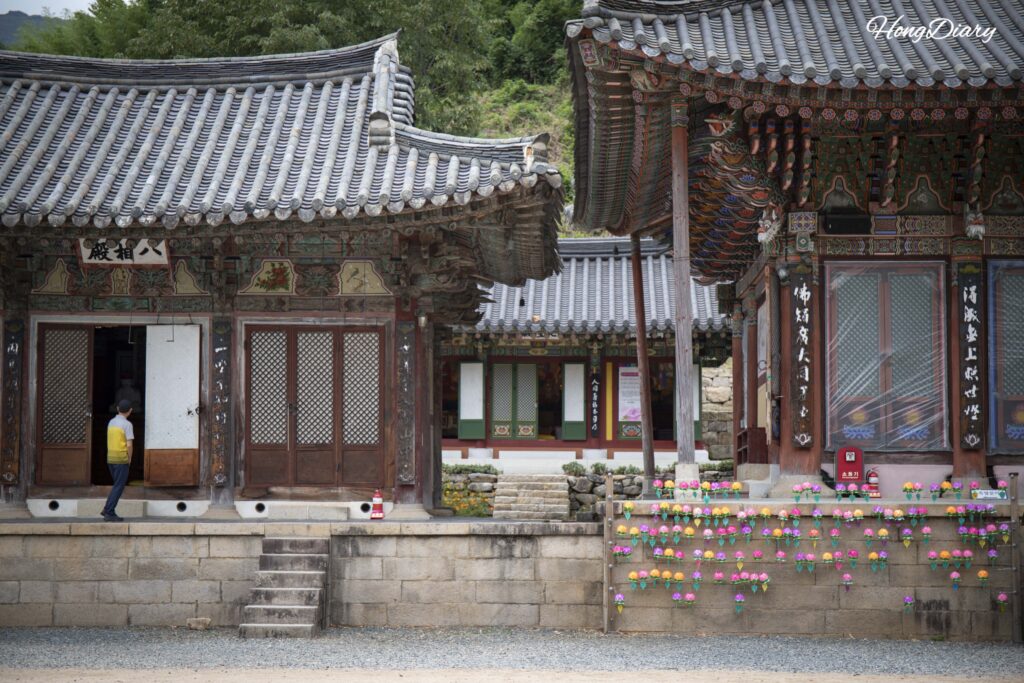
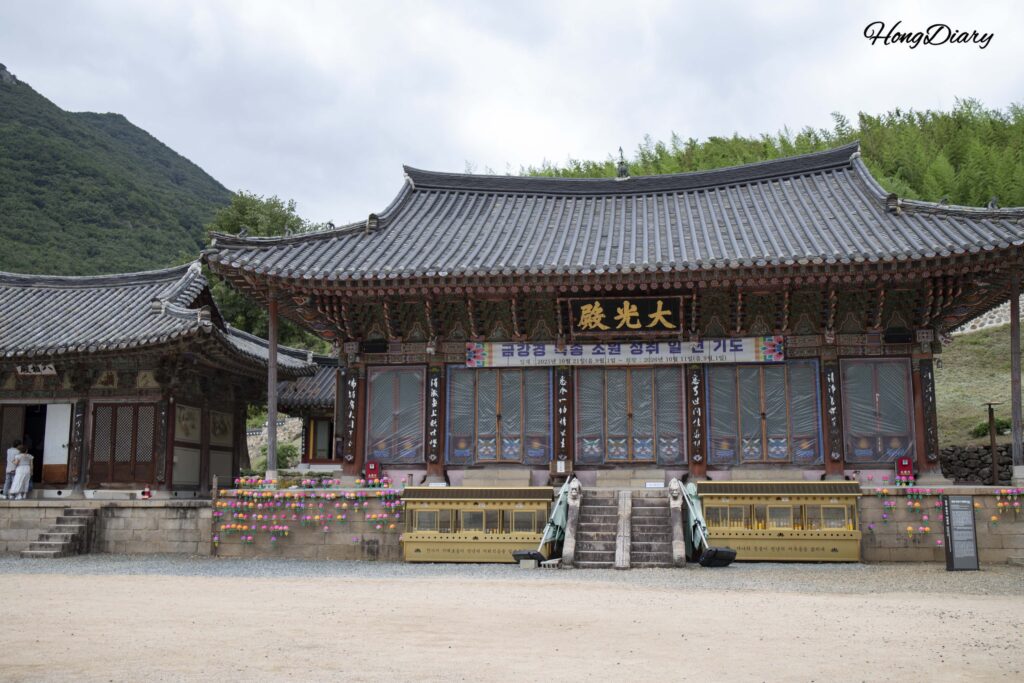
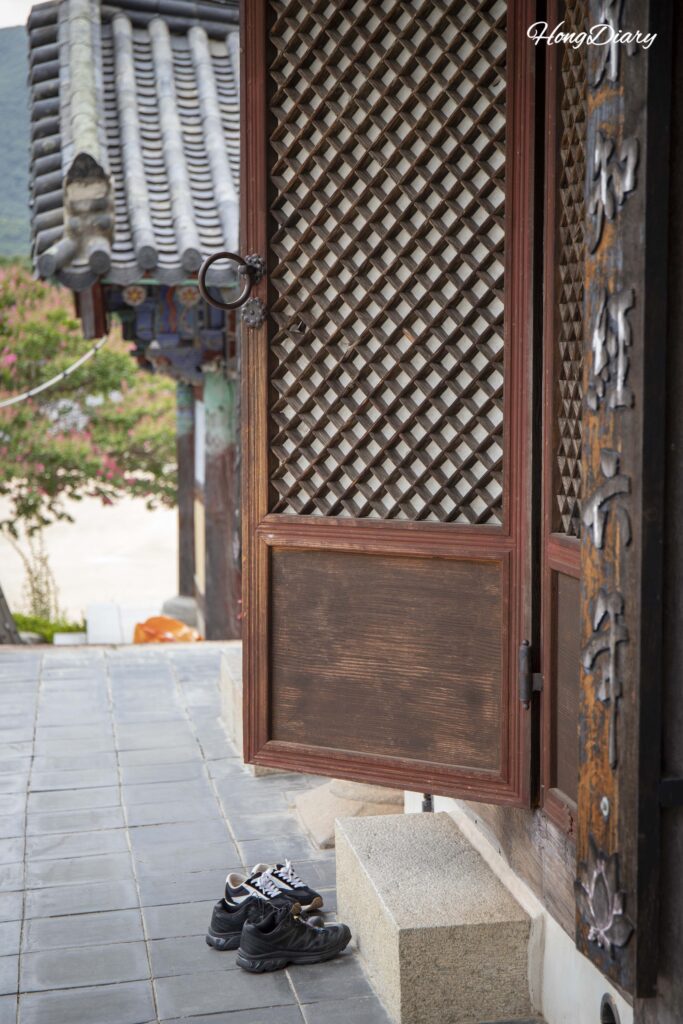
Daegwangjeon, the main dharma hall, houses a seated Vairocana Buddha — a figure representing universal truth in Korean Buddhism — and serves as the spiritual center of the complex. On the day I visited, a few pairs of shoes sat lined up at the entrance — visitors who had slipped inside to sit quietly for a while.
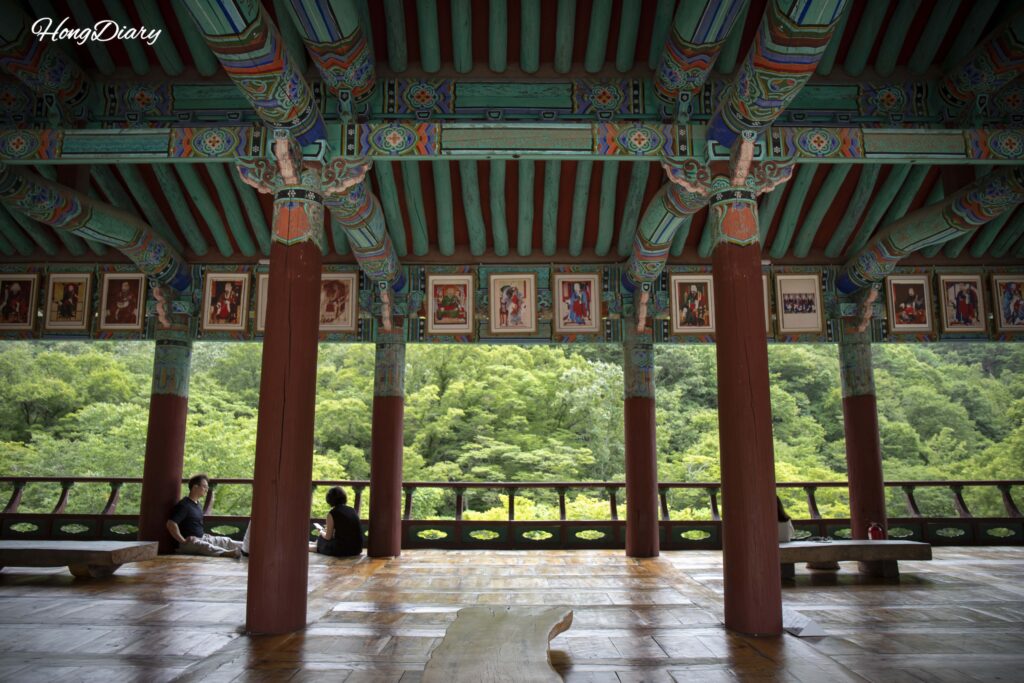
Nearby, Uhwaru Pavilion offers an open-air resting spot where you can sit and take in the surrounding hills. You’ll need to remove your shoes before stepping up onto the wooden platform, and lying down is not permitted — it is a temple, after all. Still, just sitting there with the mountains in view felt like enough.
The bell pavilion nearby deserves a mention, too. Dozens of small wind chimes hang from its eaves, filling the courtyard with a thin, clear ringing whenever the breeze picks up. I found myself just standing there, listening — it’s the kind of ambient sound that catches you off guard and makes you forget you were about to move on. One important note: there’s a sign posted here clearly warning visitors not to strike the large bell. It’s there for ceremonial use only, so please respect the notice.
The Museum: A National Treasure You Can See Up Close
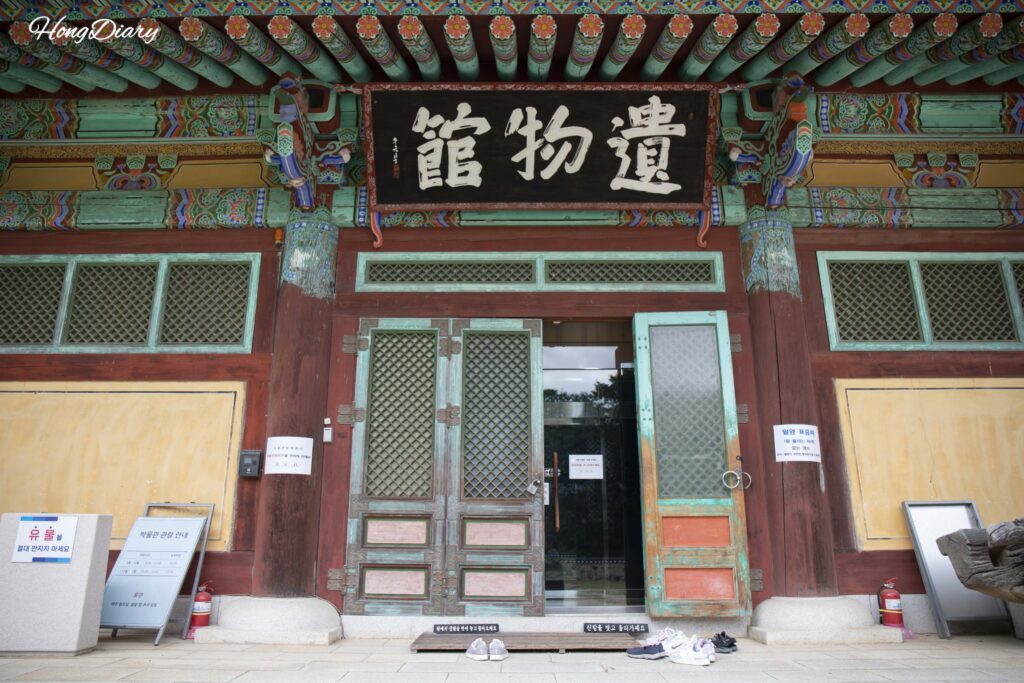
Tucked within the temple grounds, the Pyochungsa Museum holds over 300 artifacts connected to Samyeongdaesa and the temple’s long history. Among them is a bronze silver-inlaid incense burner (Cheongdong Eunibysa Hyangwan), designated as National Treasure No. 75 — one of the finest examples of Goryeo-era metalwork in Korea.
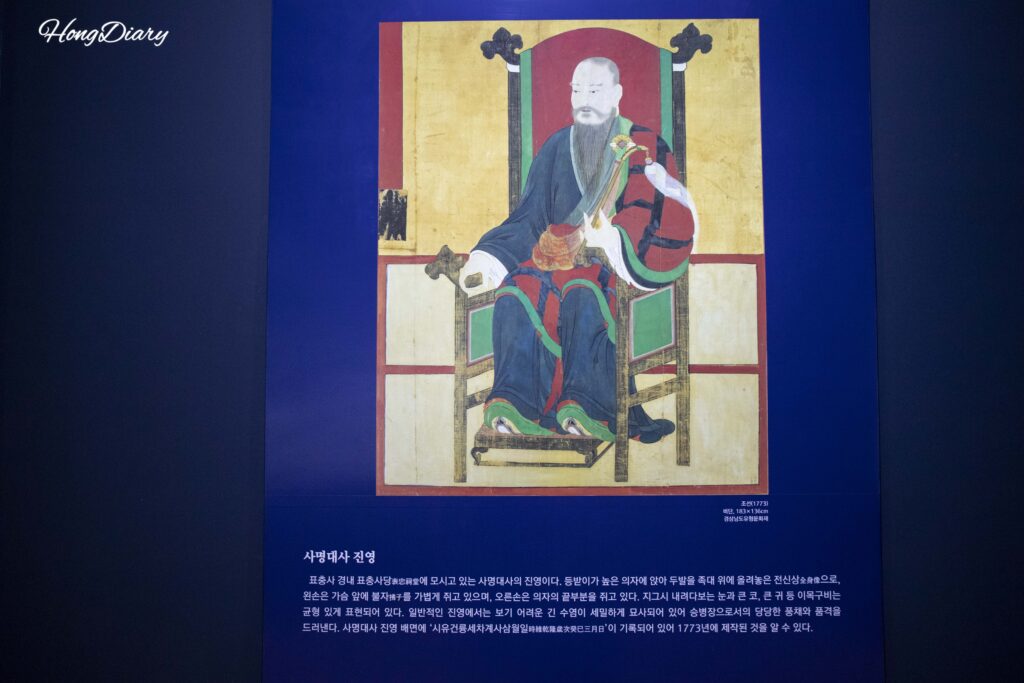
The museum also houses a full-length portrait painting of Samyeongdaesa, along with personal artifacts, documents, and ceremonial objects. Photography inside is strictly prohibited to protect the cultural heritage items, so take your time looking rather than reaching for your phone. It’s not the kind of collection you’d expect at a mountain temple this far from the big cities — I’d honestly put it on par with some of the smaller national museums I’ve visited elsewhere in Korea.
Crape Myrtle Season at Pyochungsa
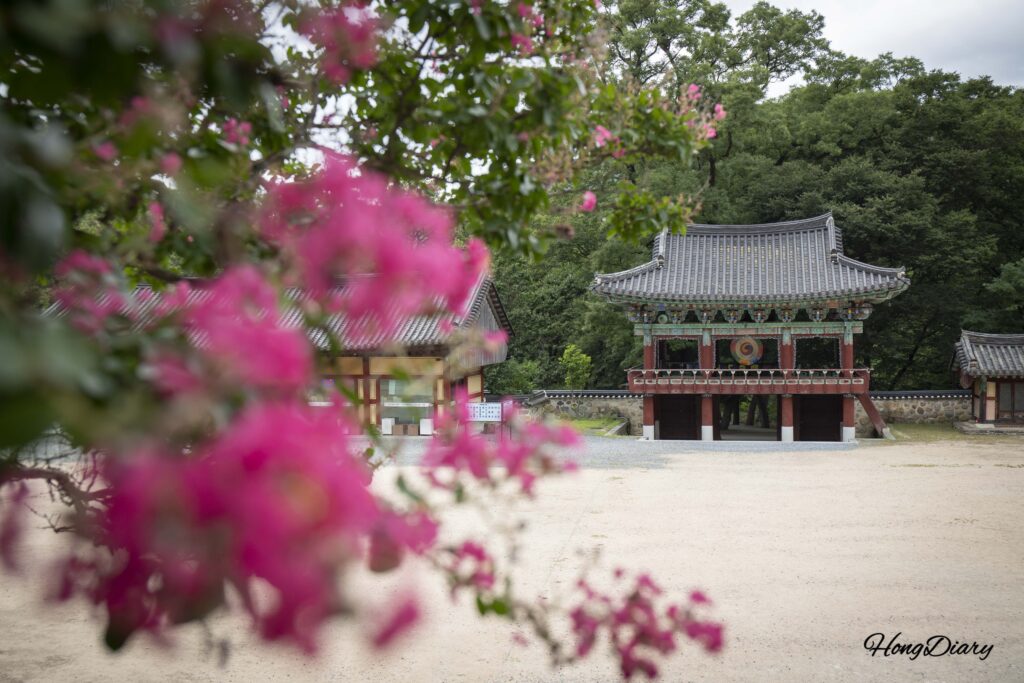
Summer at Pyochungsa brings one more reason to visit: crape myrtle trees (known as “baegilhong” in Korean, meaning “flowers that bloom for a hundred days”). The blossoms typically start appearing in early July and continue through September, though the peak — when the trees are most densely covered in pink — usually falls between late July and early August.
The stone staircase leading up to Sacheonwangmun Gate is lined with crape myrtle trees on both sides. During peak bloom, the branches form a pink tunnel overhead — a spot well known among photographers and one of the temple’s most recognizable summer scenes.
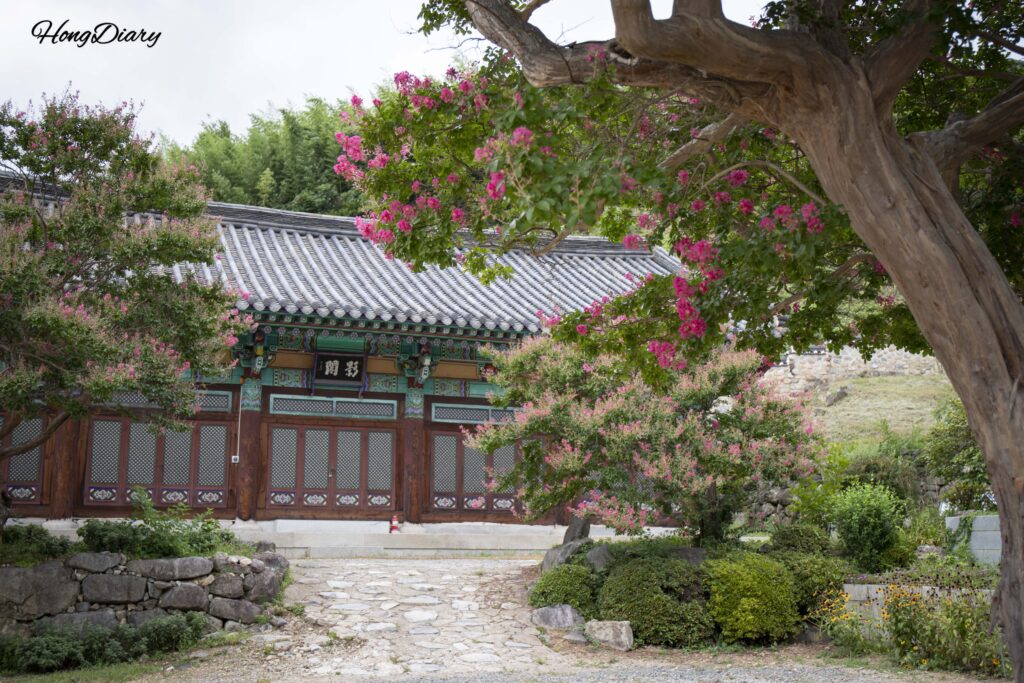
I visited on August 12, and to be honest, many of the blossoms had already dropped. The name “hundred-day flower” is a bit misleading — individual blossoms don’t last that long. Instead, different buds open and fall in succession, giving the impression of a continuous bloom across the season. Even past peak, though, the remaining clusters of pink against the gray tile roofs and green mountainside made the trip worthwhile. The Yeonggak hall — a building dedicated to portraits and memorial tablets of the temple’s past monks and masters — looked especially striking framed by the late-summer blossoms.
Getting to Pyochungsa Temple from Busan
Miryang is one of the most accessible day trip options from Busan. Trains run frequently — KTX, ITX, and Mugunghwa lines all stop at Miryang Station, with fares ranging from ₩3,900 to ₩8,400 one way (~$2.60–$5.60 USD / €2.20–€4.75 EUR). The ride takes roughly 30 to 50 minutes depending on the service.
From Miryang Station, Route 22 (Arirang Bus) heads directly to the temple three times a day. Alternatively, intercity buses from Miryang Bus Terminal run six times daily for ₩3,800 (~$2.55 USD / €2.15 EUR).
One honest warning: if you’re considering driving from Busan, be prepared for the mountain road. The scenery through the forested hills is genuinely beautiful, but the road to the temple is narrow, winding, and relentless for about 40 minutes. I drove it myself and spent the rest of the day dizzy from motion sickness. Public transport is strongly recommended — save yourself the nausea and enjoy the scenery from a bus seat instead. There’s also a cluster of local restaurants right near the temple parking lot, so fitting in lunch during your visit is easy.
If you’re spending a day or two exploring Miryang beyond the temple, the area around Pyochungsa Temple has no shortage of places worth a detour.
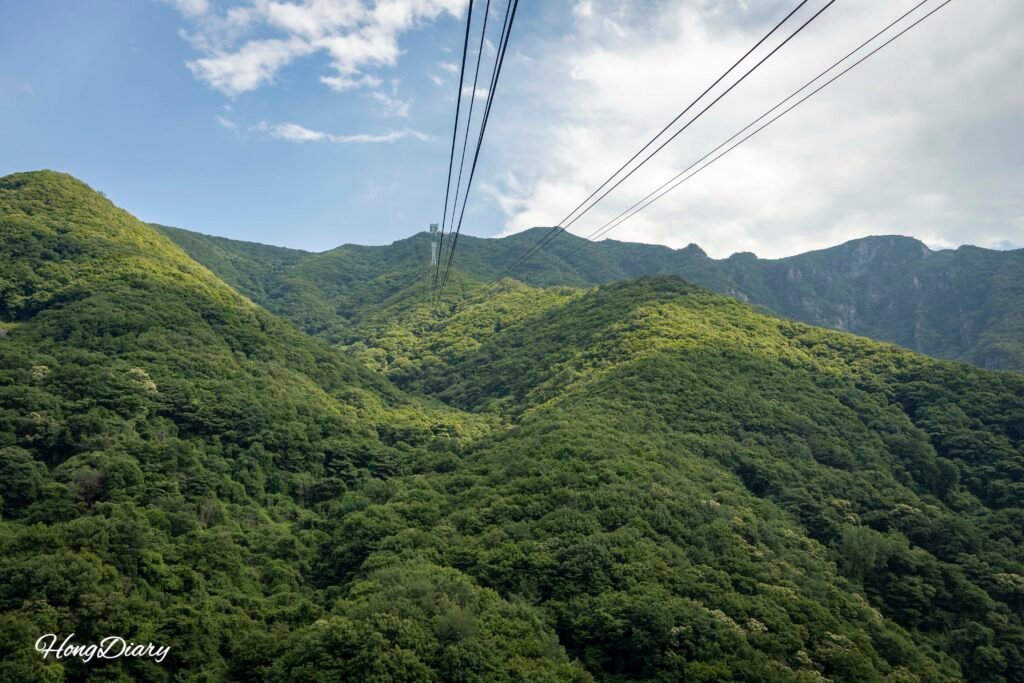
The Ice Valley Cable Car is Korea’s longest aerial gondola ride and takes you up into the heart of the Yeongnam Alps — the views from the top are worth the trip alone, and it’s less than 20 minutes by car from Pyochungsa.
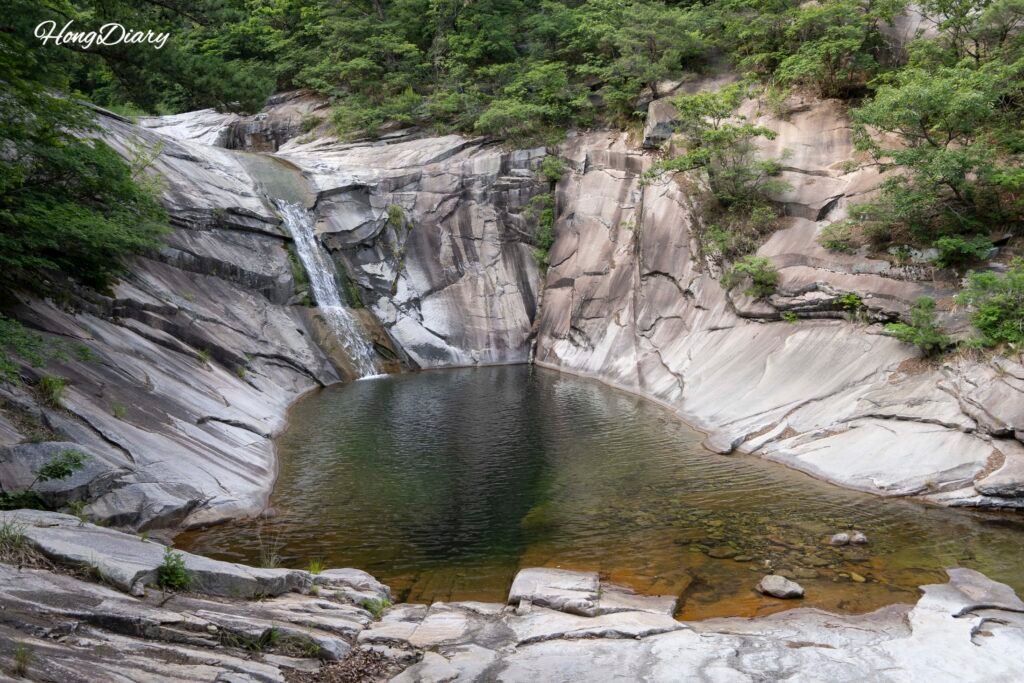
For something cooler on a hot summer day, Hobakso Valley offers an emerald-green natural pool carved into the rock, stunning to look at even though swimming isn’t allowed.
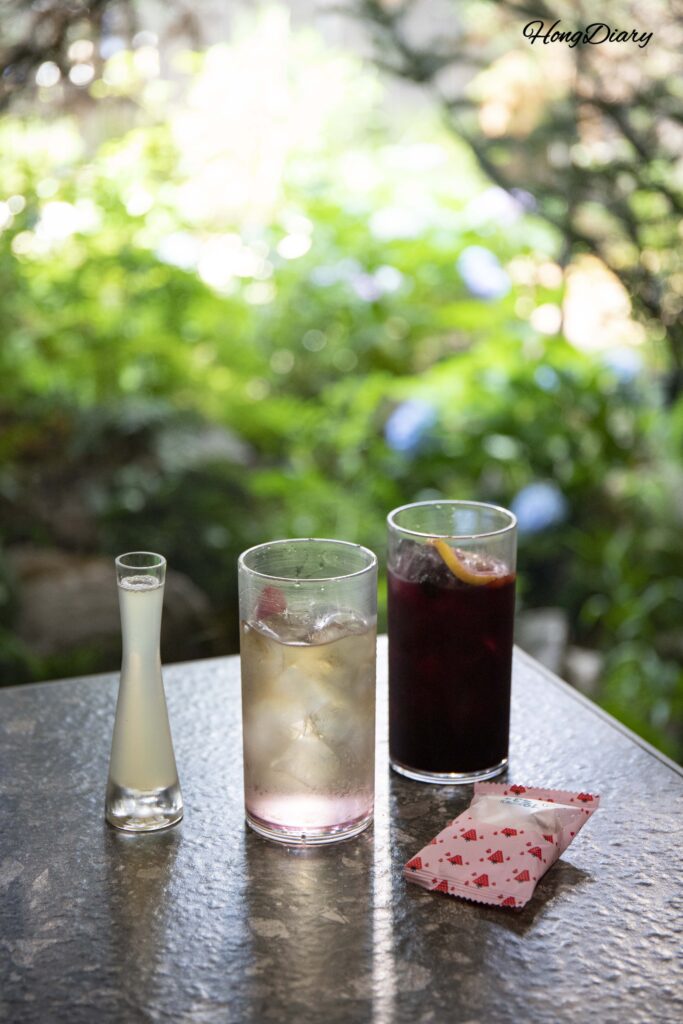
And if you’d rather unwind with a coffee after your temple visit, Yeoldudal Cafe in Miryang is a locally loved spot where each room is themed to a different season of the year, all featuring menus built around Miryang’s own agricultural produce.
For the best experience at Pyochungsa Temple in Miryang, I’d suggest visiting either in summer — when the crape myrtle blossoms paint the grounds pink — or in autumn, when the foliage along Mt. Jaeyaksan shifts into deep reds and golds. Either way, give yourself enough time to wander slowly. This isn’t the kind of temple you rush through.
Frequently Asked Questions (FAQ) about Pyochungsa Temple
Is Pyochungsa Temple free to enter?
Pyochungsa Temple is completely free. The only cost is parking, which is ₩4,000 (~$2.65 USD / €2.25 EUR) for standard vehicles and ₩7,000 (~$4.65 USD / €3.95 EUR) for larger vehicles. The temple grounds are open daily from 5:00 AM to 9:00 PM, with access restricted between 9 PM and 5 AM.
How do I get to Pyochungsa Temple from Busan without a car?
Take a KTX, ITX, or Mugunghwa train from Busan Station to Miryang Station. The ride takes 30 to 50 minutes and costs between ₩3,900 and ₩8,400 one way (~$2.60–$5.60 USD / €2.20–€4.75 EUR). From Miryang Station, Route 22 (Arirang Bus) goes directly to the temple with three daily departures at 09:30, 14:00, and 16:30. You can also catch an intercity bus from Miryang Bus Terminal, which runs six times a day for ₩3,800 (~$2.55 USD / €2.15 EUR).
What makes Pyochungsa Temple different from other Korean temples?
Pyochungsa is the only Buddhist temple in Korea that houses a Confucian shrine — Pyochung Seowon — within its grounds. This unusual arrangement exists because the temple was renamed to honor Samyeongdaesa, a warrior monk who led Buddhist soldiers during the Imjin War (1592–1598). The Buddhist dharma halls and the Confucian memorial buildings sit side by side in the same walled compound, a pairing found nowhere else in the country.
When is the best time to see crape myrtle flowers at Pyochungsa Temple?
Crape myrtle trees at Pyochungsa typically bloom from early July through September. The peak flowering period — when the pink blossoms are densest and the famous “pink tunnel” along the stone staircase is most photogenic — falls between late July and early August. Visiting after mid-August means some flowers will have already dropped, though scattered blossoms remain into September.
Can I take photos inside the Pyochungsa Museum?
No. Photography is strictly prohibited inside the museum to protect the cultural heritage items on display. The museum houses over 300 artifacts related to Samyeongdaesa, including a bronze silver-inlaid incense burner designated as National Treasure No. 75. Take your time observing the collection in person rather than through a screen.
Is Pyochungsa Temple suitable as a day trip from Busan?
Absolutely. The train ride from Busan to Miryang takes about 30 minutes by KTX, and buses connect Miryang Station directly to the temple. You can comfortably explore the temple grounds, visit the museum, and have lunch at nearby restaurants all within a half day. Combining the temple with other Miryang attractions — such as the Ice Valley Cable Car, Hobakso Valley, or Yeongnamnu Pavilion — makes for a full and rewarding day trip.
Is it better to drive or take public transport to Pyochungsa Temple?
Public transport is strongly recommended. While the forested mountain road from Miryang offers scenic views, it’s narrow and extremely winding for about 40 minutes, which can easily cause motion sickness. Taking the bus lets you enjoy the scenery without the discomfort, and the temple is well served by both local and intercity bus routes from Miryang Station and Miryang Bus Terminal.