
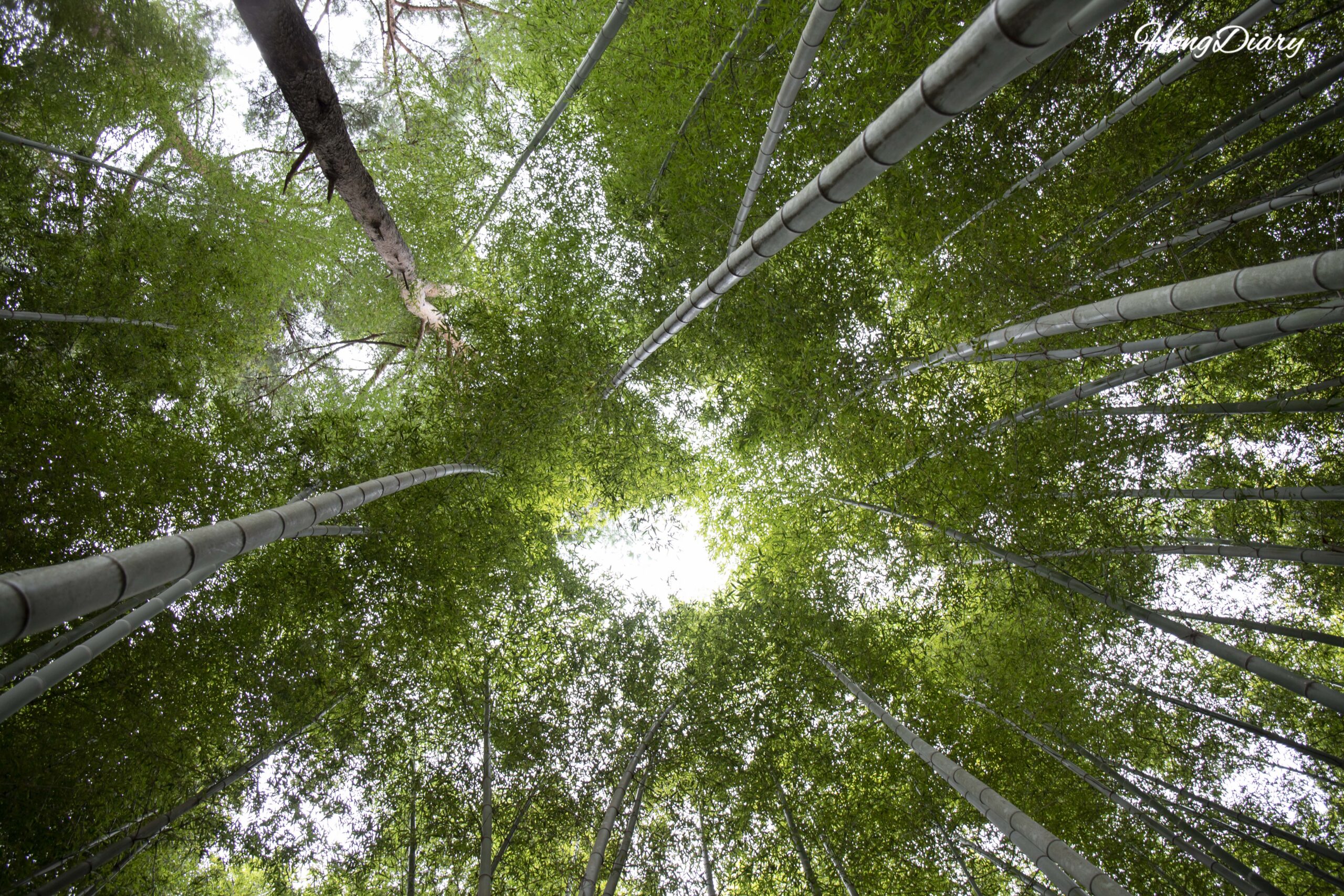
When most people think of Busan, they picture waves crashing against Haeundae Beach or the colorful rooftops of Gamcheon Culture Village. I did too, until I found myself standing in a bamboo grove so dense that the sky nearly disappeared. Ahopsan Forest is the kind of place that doesn’t show up on the typical Busan itinerary, and that’s exactly what makes it worth finding.
Tucked into the mountain folds of Cheolma-myeon in Gijang-gun, this privately owned forest sits about 40 minutes inland from central Busan. The area belongs to the rural eastern edge of the city, a world apart from the coastal high-rises and seafood markets that most visitors associate with Korea’s second-largest metropolis. Gijang-gun itself has grown in popularity thanks to the Osiria Tourist Complex and Haedong Yonggungsa Temple, but Cheolma-myeon remains quieter, hillier, and far less visited. That remoteness is precisely what kept this forest intact for four centuries.
Table of Contents
Ahopsan Forest: Essential Visitor Information & Guide
| Detail | Info |
|---|---|
| Name | Ahopsan Forest |
| Address | 37-1 Midong-gil, Cheolma-myeon, Gijang-gun, Busan |
| Hours | 09:00 – 18:00 (last entry 17:00) |
| Closed | Open year-round (no regular closing days) |
| Admission | Adults ₩8,000 (~$5 USD / €5 EUR) · Under 18 ₩5,000 (~$3 USD / €3 EUR) |
| Trail length | Approx. 3.2 km (2 miles), loop course |
| Estimated time | 1–2 hours (see my note below) |
| Parking | Free, but limited on weekends |
| Pets | Not allowed |
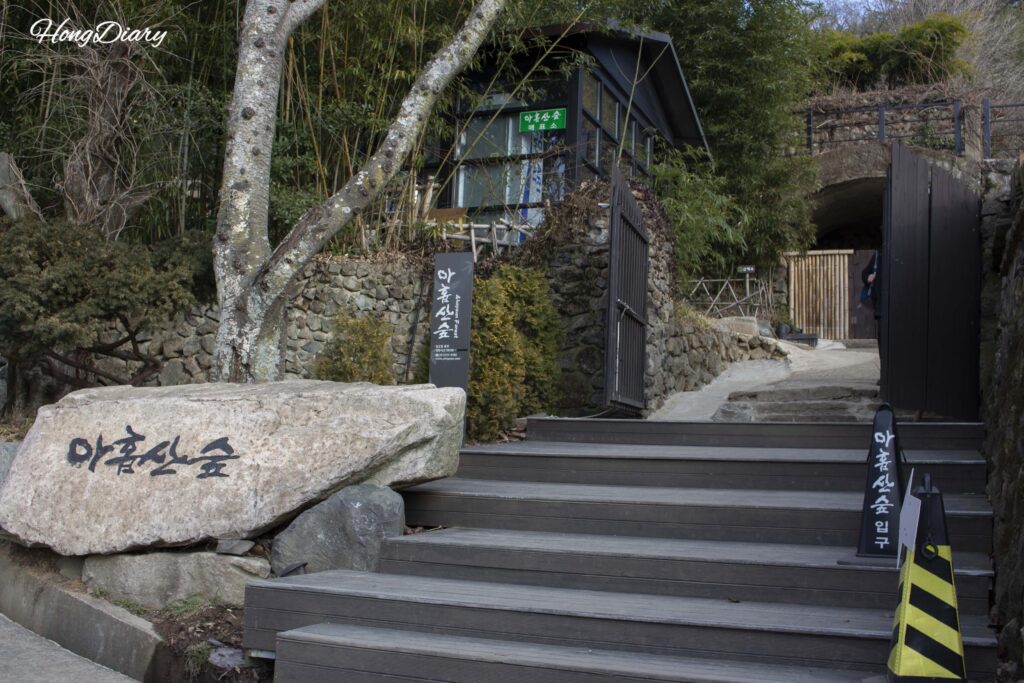
The Story Behind the Forest: Nine Generations, One Promise
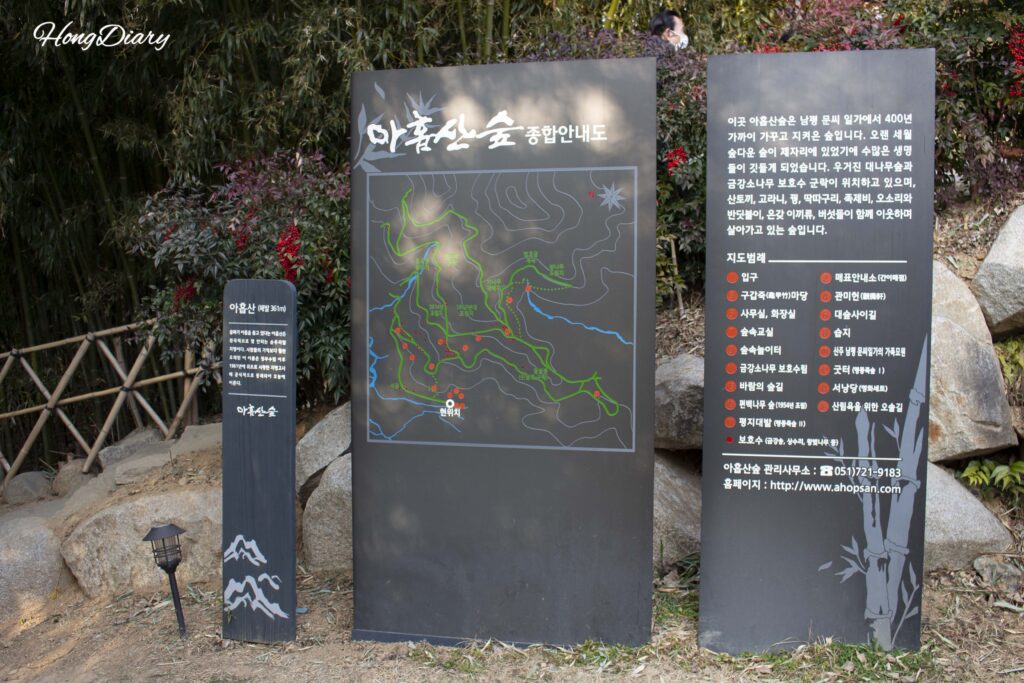
The name “Ahopsan” translates to “nine peaks” in native Korean, a reference to the cluster of low mountains that form a natural boundary around the property. For over 400 years, the Nampyeong Mun clan has guarded this land across nine consecutive generations. No logging, no development, no shortcuts.
During periods when forests across Korea were cleared for fuel or farmland, this family held firm. The result is a 520,000-square-meter ecological sanctuary where 116 trees carry official protection status from Gijang County, and Geumgang pines well over a century old still stand untouched. The forest only opened to the general public in recent years, after decades of being accessible to a limited number of visitors for conservation purposes.
That history changes the way you walk through it. This isn’t a city park that was landscaped last year. Every trail, every bamboo cluster, every towering pine carries generations of deliberate care behind it.
How to Get to Ahopsan Forest (The Honest Version)
Let me be upfront: getting here without a car takes patience. The forest is nestled deep in the Cheolma-myeon hillside, and public transit options are limited.
If you’re driving or renting a car, it’s straightforward. From Haeundae, it’s roughly a 30-minute drive. From Seomyeon or Nampo-dong, expect 40 to 50 minutes. Free parking is available near the entrance, though on weekends the lot fills up quickly. Staff will direct overflow parking to nearby roadside spots — a short walk that honestly feels like a warm-up for the trail.
If you’re relying on public transit, here’s the most practical route:
| Step | Detail |
|---|---|
| 1 | Head to Osiria Station (Donghae Line), near Lotte World and the Gijang shopping area |
| 2 | Take the train to Jwacheon Station, exit through Gate 1 |
| 3 | At the Donghae Line Jwacheon Station bus stop, board Village Bus No. 8 |
| 4 | Ride 15 stops (~20 min), get off at Dongwon Royal Duke 1-cha Apartment |
| 5 | Transfer to Bus No. 184, ride 4 stops (~10 min), get off at Ungcheon |
| 6 | Walk 450 m (~10 min) to Ahopsan Forest entrance |
By taxi, Ilgwang Station (Donghae Line) is the closest major station. The ride covers about 12 km and takes 15 to 20 minutes, costing roughly ₩13,000 (~$9 USD / €7 EUR).
One practical tip: ride-hailing apps like KakaoTaxi or Uber are a safer bet than hailing random cabs, especially in areas outside central Busan. There have been reports of inflated taxi fares targeting tourists, and app-based rides lock in the price before you get in.
Walking the Trail: What You’ll Actually See
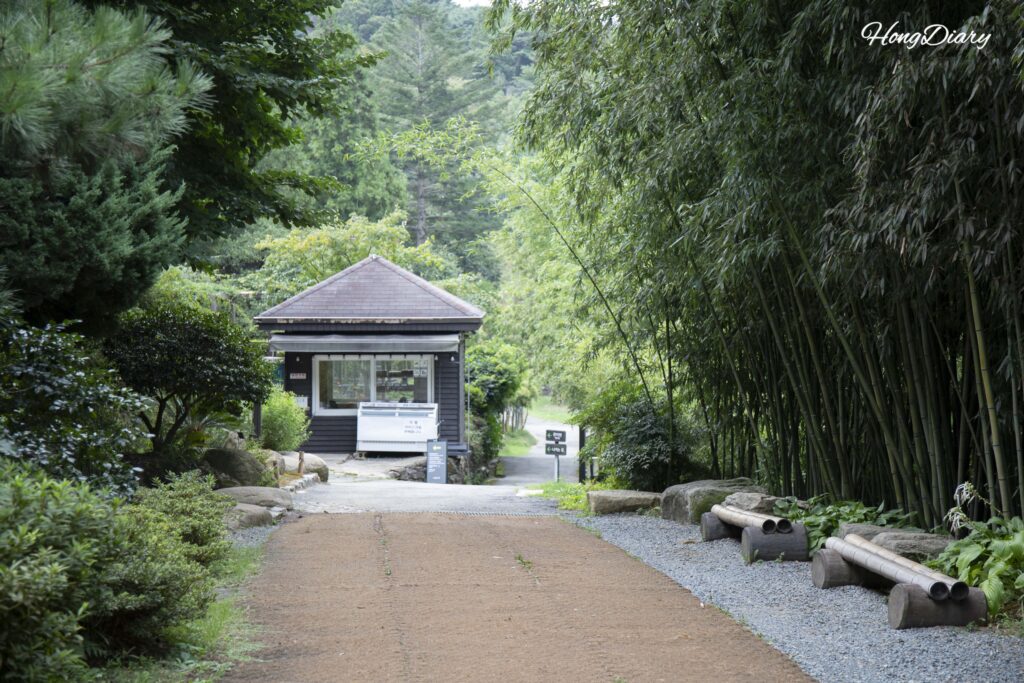
The trail follows a set course that loops from the ticket booth through several distinct zones: bamboo tunnels, wildflower clusters, Geumgang pine groves, the Maengjong bamboo forests, the Wind Path, a Seonangdang shrine site, cypress woods, the flat bamboo field, and finally Gwanmihyeon — the traditional rest pavilion near the exit.
The sign at the entrance says you can finish the whole loop in about an hour. I want to be honest: it took me well over two hours. Not because the trail is difficult — it’s flat, well-maintained, and easy enough for elderly visitors or young children — but because you’ll stop constantly. Every turn offers a different composition for a photo, a different quality of light filtering through the canopy, a different species of tree framing the path.
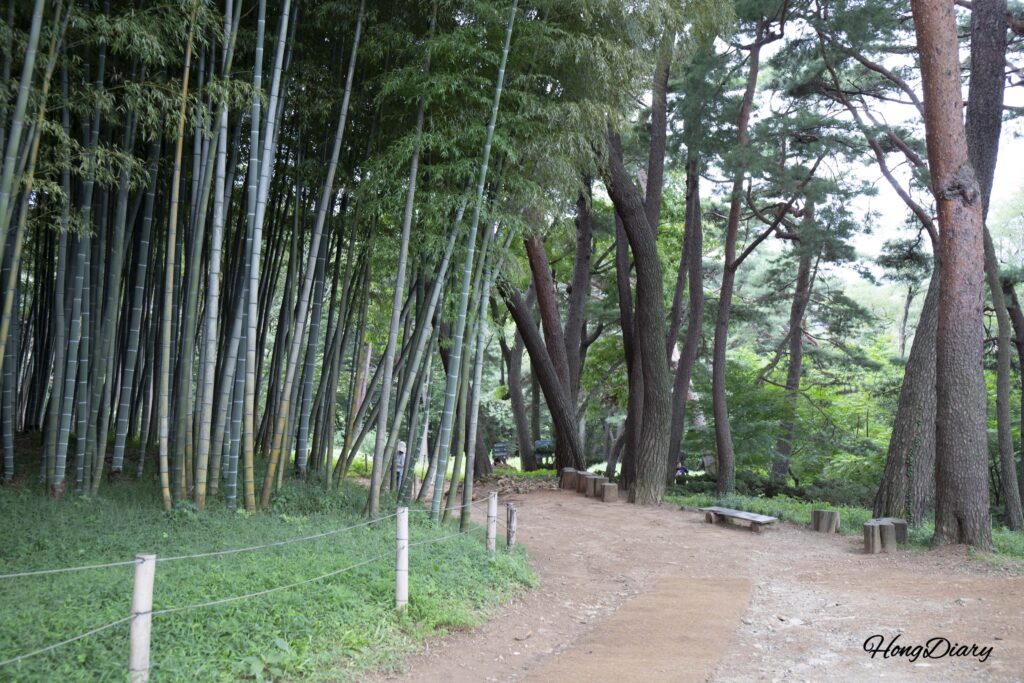
Right from the entrance, there’s a shortcut that cuts straight through the middle of the loop. I’d recommend ignoring it on the way in and saving it for the walk back. Follow the sign marked “Path to the Bamboo Forest” and let the trail unfold gradually.
Geumgang Pines and the First Glimpse of Bamboo
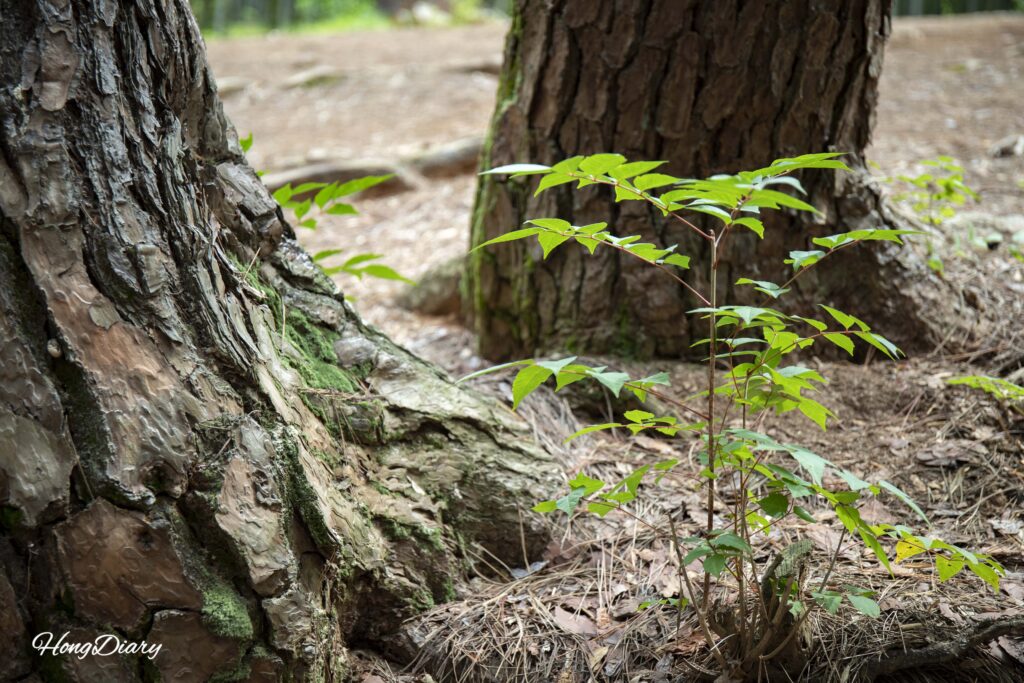
The first section of the trail passes through a mix of wetlands and old-growth Geumgang pines. These red-barked pines are a protected species in Korea, and some of the specimens here are over a hundred years old. Small plants and ferns push up between the roots, and the whole area carries a damp, earthy freshness.
I deal with chronic sinus congestion year-round, and within minutes of entering the forest, I could breathe more easily than I had in weeks. That’s not a sales pitch — it’s just what happened.
After the pine section, the bamboo begins to appear. Not all at once, but gradually, the way the forest transitions from one world to another without a hard border. And then the first real bamboo grove opens up, and everything changes.
Inside the Maengjong Bamboo Groves
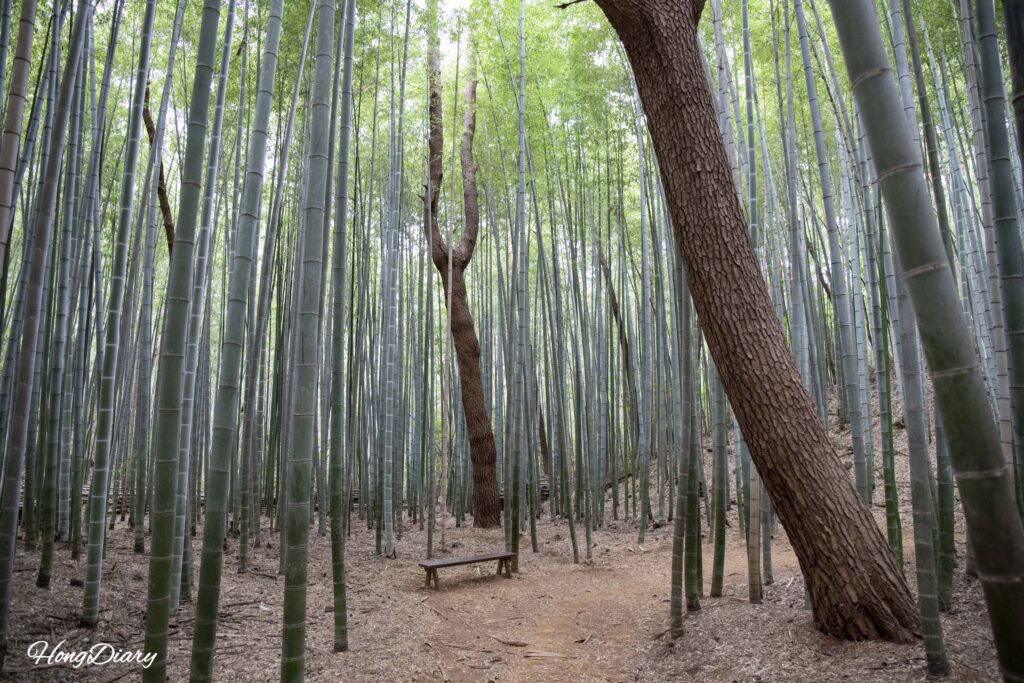
One of the things that surprised me most about Ahopsan Forest is that the bamboo isn’t concentrated in a single spot. The trail winds through multiple groves, each with its own character, separated by stretches of pine, cedar, and cypress. The scenery keeps shifting, which means you never hit that “I’ve seen it all” feeling that can happen at some nature attractions.
The forest contains two major Maengjong bamboo zones — the Guttor grove and the Pyeongji Daebat (flat bamboo field).
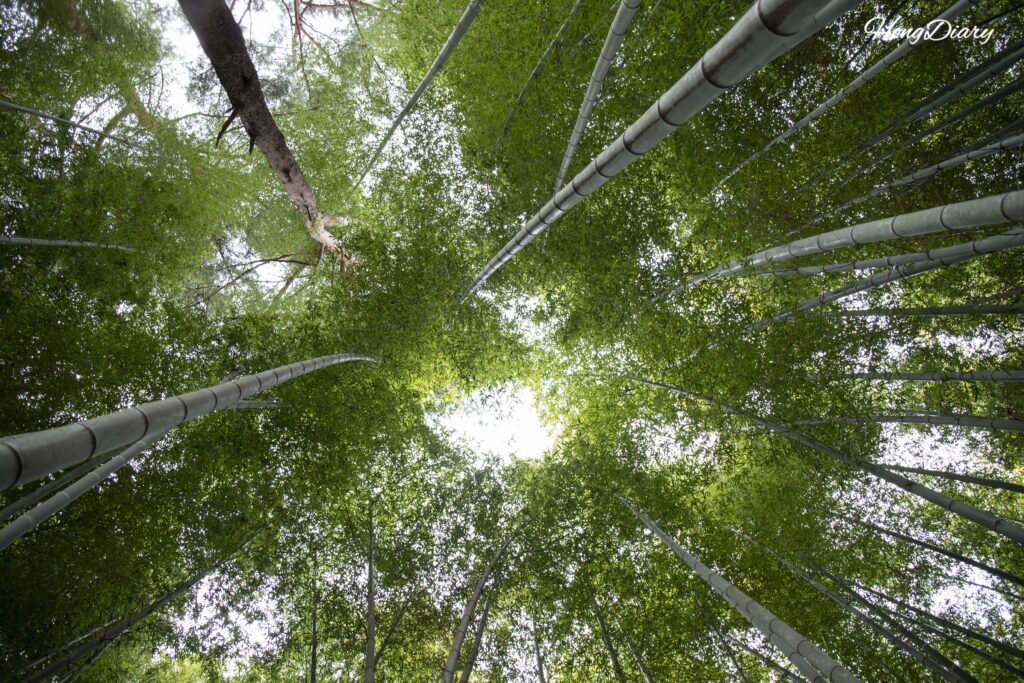
Guttor Maengjong Grove was established roughly 200 years before the second grove. Local villagers once considered this a sacred site, believing it held the spiritual power of a mountain deity. Walking through it, the bamboo trunks grow so close together that the canopy above weaves into a near-solid ceiling.
Pyeongji Daebat covers roughly 33,000 square meters — an enormous flat expanse of bamboo that was cultivated in the 1960s and 70s using compost made from restaurant scraps and night-soil collection from the Dongnae area. Standing inside feels cinematic, like stepping onto a film set.
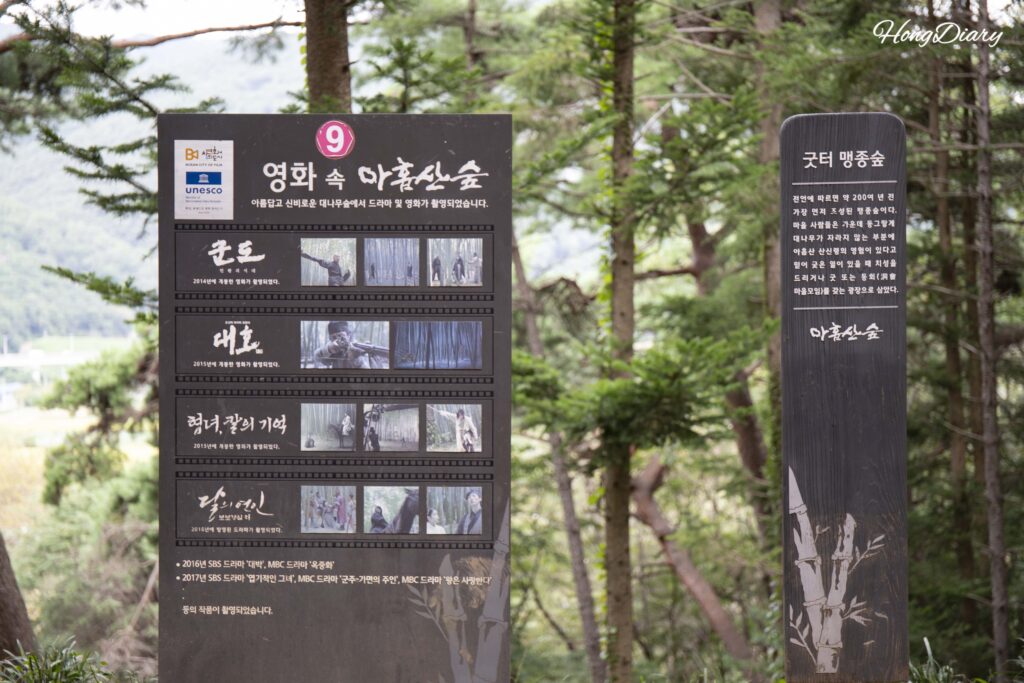
Which, as it turns out, is exactly what happened here: Ahopsan Forest has served as a filming location for several well-known Korean dramas and movies, including The King: Eternal Monarch, Kundo, and Moon Lovers: Scarlet Heart Ryeo.
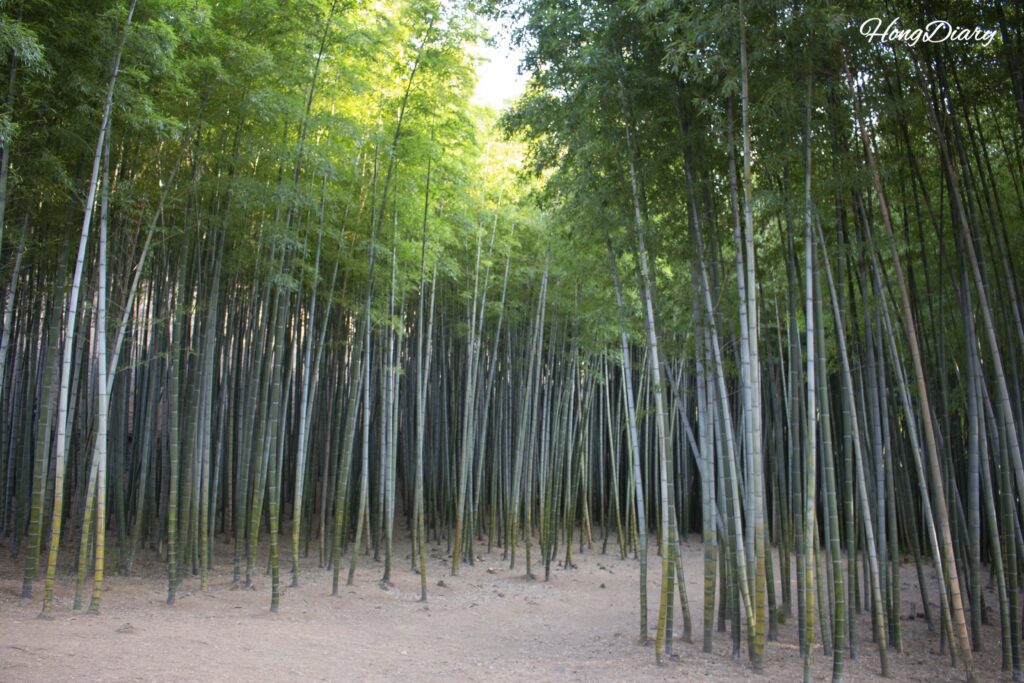
Once you’re inside the grove, it’s immediately clear why directors keep coming back. The bamboo creates its own atmosphere — a green-filtered light, a faint rustling even on still days, a sense of enclosure that photographs simply cannot replicate.
A Quick Note on Etiquette
While walking, I noticed something that genuinely bothered me. Many of the bamboo trunks had names, dates, and messages carved directly into the bark. This kind of graffiti causes lasting damage, and it’s especially disrespectful here. Ahopsan Forest is private property, nurtured by a single family for over 400 years. These trees aren’t replaceable on any reasonable timescale.
If you visit, please enjoy with your eyes and your camera only. Leave the bamboo as you found it.
The Final Stretch: Cypress, Cedar, and Gwanmihyeon
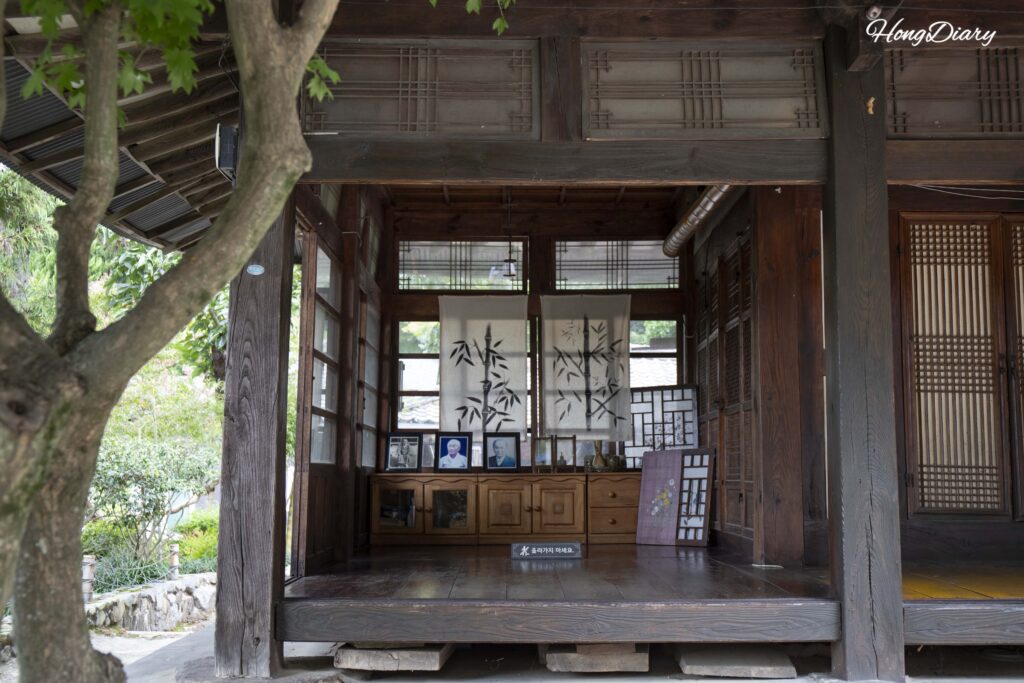
Past the second bamboo grove, the trail moves through a quieter section of cypress and cedar, then circles back toward Gwanmihyeon. This traditional pavilion sits near the exit and offers a moment to rest before heading out. Inside, you can see ink-brush paintings of bamboo — a fitting farewell to the forest.
Beyond the two main bamboo areas, the forest also contains artificial plantations of cypress, cedar, and ginkgo trees alongside the natural Geumgang pine groves. It’s that diversity — the sense that you’ve walked through four or five different forests in a single loop — that makes the experience hold up for the full two hours.
Is Ahopsan Forest Worth the Trip?
If you’re looking for another beachside selfie spot, this isn’t it. But if you’ve already done the Haeundae-Gamcheon-Jagalchi circuit and you’re craving something slower, greener, and genuinely different, Ahopsan Forest delivers in a way that few places in Busan can match.
Wear comfortable shoes (the paths are natural, not paved), bring water, and give yourself at least two hours — more if you’re serious about photography. The bamboo canopy keeps things cool even in the middle of summer, so it’s a solid pick for a hot day when the beach crowds feel unbearable.
Since Ahopsan Forest is in Gijang-gun, it pairs naturally with other attractions in the same district.
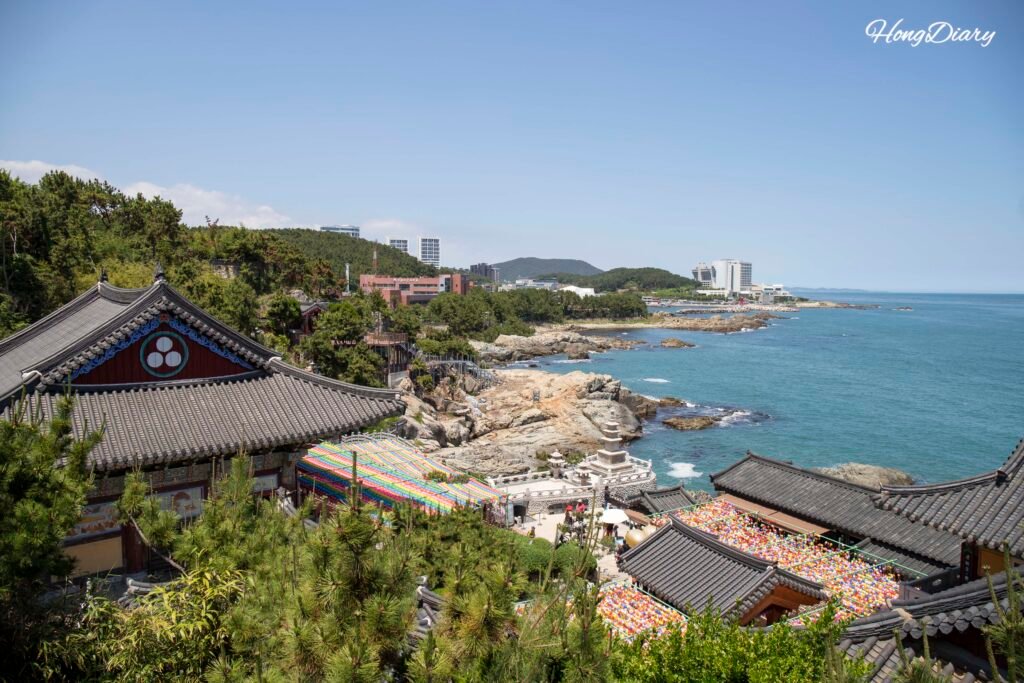
If you’re heading east toward the coast afterward, Haedong Yonggungsa is a seaside Buddhist temple carved into the cliffs — one of the few oceanfront temples in all of Korea, and the kind of place where crashing waves serve as the soundtrack to your visit.
It’s a stark contrast to the forest’s stillness, and that contrast is part of what makes a Gijang day trip so rewarding.
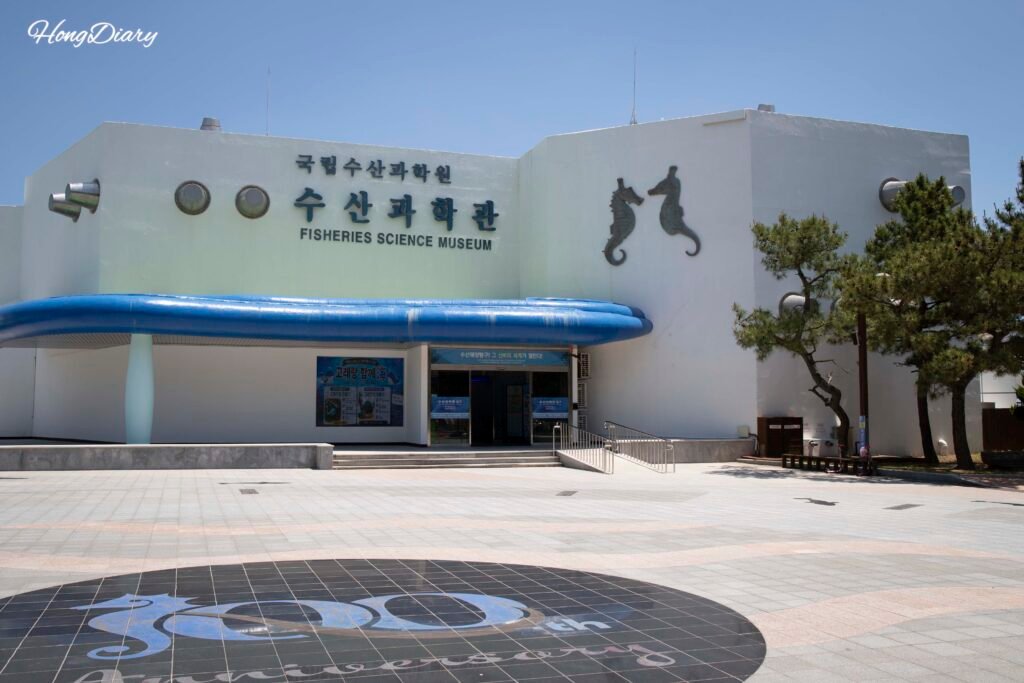
Just a short walk from the temple, the Fisheries Science Museum offers free admission and a surprisingly engaging collection, including a full whale skeleton and panoramic ocean views from its upper floors — an easy, low-key stop that rounds out the day without adding any pressure to your schedule.
Ahopsan Forest reminded me that Busan is more than its coastline. Somewhere in the hills of Cheolma, behind the bamboo and the pines, a family spent 400 years building something that doesn’t ask for your attention — it simply earns it. My steps felt lighter on the way out than they did going in, and I think yours will too.
Frequently Asked Questions (FAQ) About Visiting Ahopsan Forest
How long does it take to walk the full trail at Ahopsan Forest?
The sign at the entrance estimates about one hour for the full loop, but in practice, most visitors spend closer to two hours. The trail itself is 3.2 km (2 miles) on flat, well-maintained paths, but the constantly changing scenery — bamboo groves, Geumgang pines, cypress woods — makes it hard not to stop for photos and quiet moments along the way.
How much does it cost to enter Ahopsan Forest?
Admission is ₩8,000 (~$5 USD / €5 EUR) for adults and ₩5,000 (~$3 USD / €3 EUR) for visitors under 18. Tickets are purchased at the gate — no advance online booking is required for individual visitors.
How do I get to Ahopsan Forest from central Busan without a car?
The most practical public transit route starts at Osiria Station on the Donghae Line. Take the train to Jwacheon Station, then board Village Bus No. 8 for about 20 minutes, transfer to Bus No. 184 for another 10 minutes, and walk roughly 450 meters to the entrance. Alternatively, a taxi from Ilgwang Station costs around ₩13,000 (~$9 USD / €7 EUR) and takes 15 to 20 minutes. Ride-hailing apps like KakaoTaxi are recommended to avoid fare issues.
Is Ahopsan Forest suitable for children and elderly visitors?
Yes. The trails are flat and evenly maintained, without steep inclines or rough terrain. The loop is manageable for young children and older adults at a comfortable pace.
Which Korean dramas and movies were filmed at Ahopsan Forest?
Ahopsan Forest has served as a filming location for several well-known Korean productions, including The King: Eternal Monarch (2020), Kundo: Age of the Rampant (2014), and Moon Lovers: Scarlet Heart Ryeo (2016). The dense Maengjong bamboo groves provided the atmospheric backdrop for many of the most recognizable scenes.
What is the best time of year to visit Ahopsan Forest?
The forest is open year-round and works well in any season. The bamboo stays green throughout the year, so the atmosphere holds up regardless of when you visit. The forest is open year-round with no regular closing days.
Is there parking available at Ahopsan Forest?
Free parking is available near the entrance, but the lot is relatively small and fills up quickly on weekends and holidays. When the main lot is full, staff direct visitors to nearby roadside parking areas within a short walking distance of the gate. Arriving early in the morning is the safest strategy if you want a spot in the main lot.