
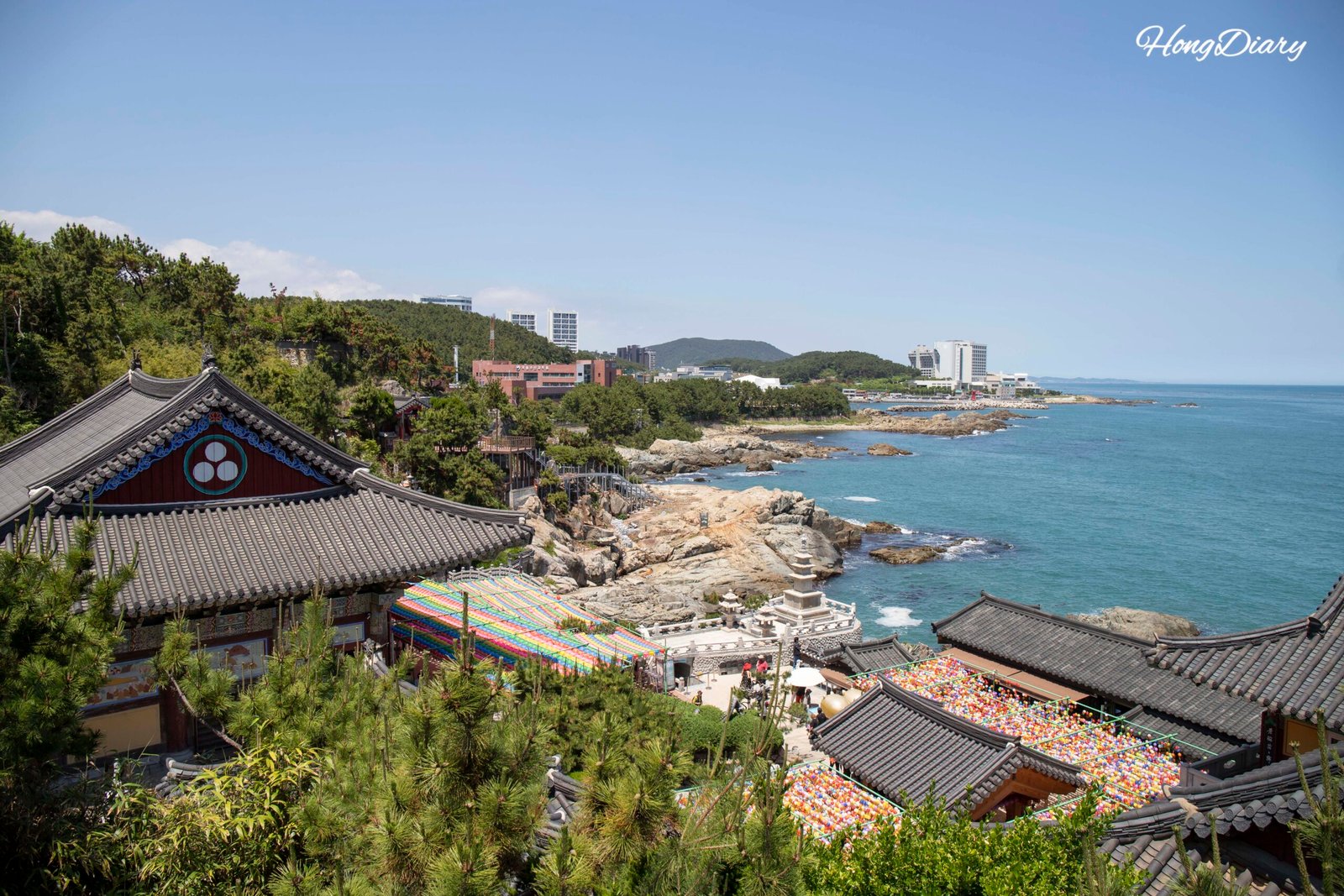
Haedong Yonggungsa is a Buddhist temple in Gijang-gun, Busan, built directly along the coastline — making it one of the few temples in Korea where the sea and the temple grounds can be seen together in one frame. Admission is free, the visit takes roughly 40 minutes to an hour, and the site holds more than a dozen wish-making spots scattered throughout the grounds. For travelers exploring Busan, Haedong Yonggungsa is consistently one of the most-visited stops in the city.
I live nearby and return to Haedong Yonggungsa more often than most tourist spots. Each visit feels a little different depending on the season and time of day. On my most recent visit, I noticed more foreign languages being spoken than Korean — a sign of how much international attention this temple has drawn in recent years. Some areas were under renovation, and the grounds looked partially refreshed, which made me curious to see what the next visit will bring.
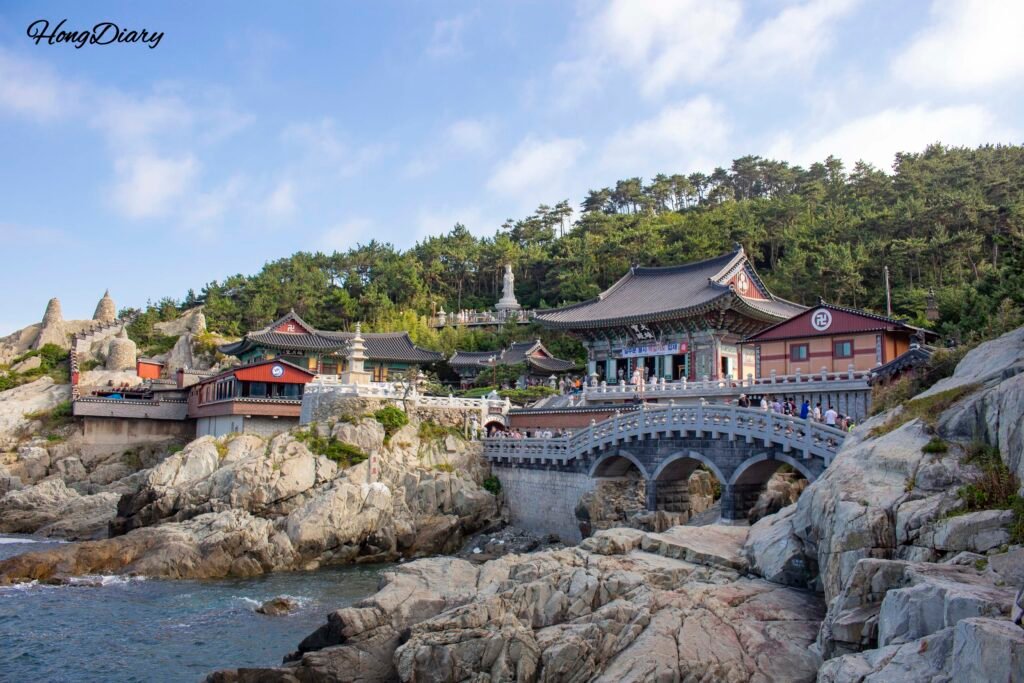
Table of Contents
What Makes Haedong Yonggungsa Different from Other Busan Temples
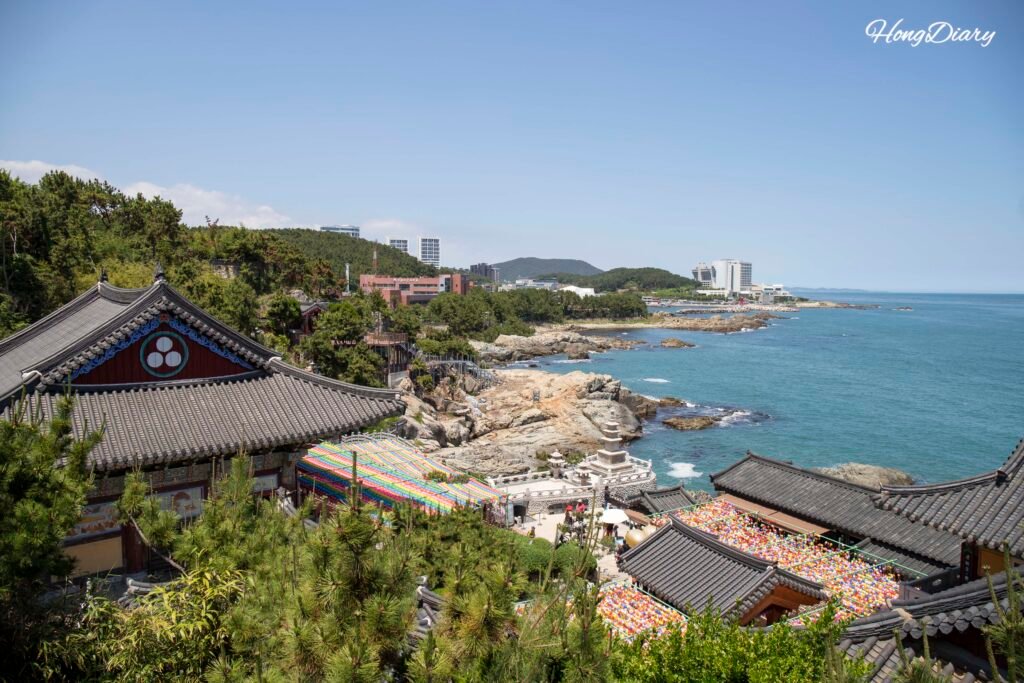
When people talk about famous temples in Busan, Beomeosa and Samgwangsa both come up. But among tourists, Haedong Yonggungsa tends to stand out for one reason: its location. Most Korean Buddhist temples sit deep in mountain forests, while Haedong Yonggungsa is built right against the sea. The temple buildings and the coastline appear together in the same view, which is uncommon.
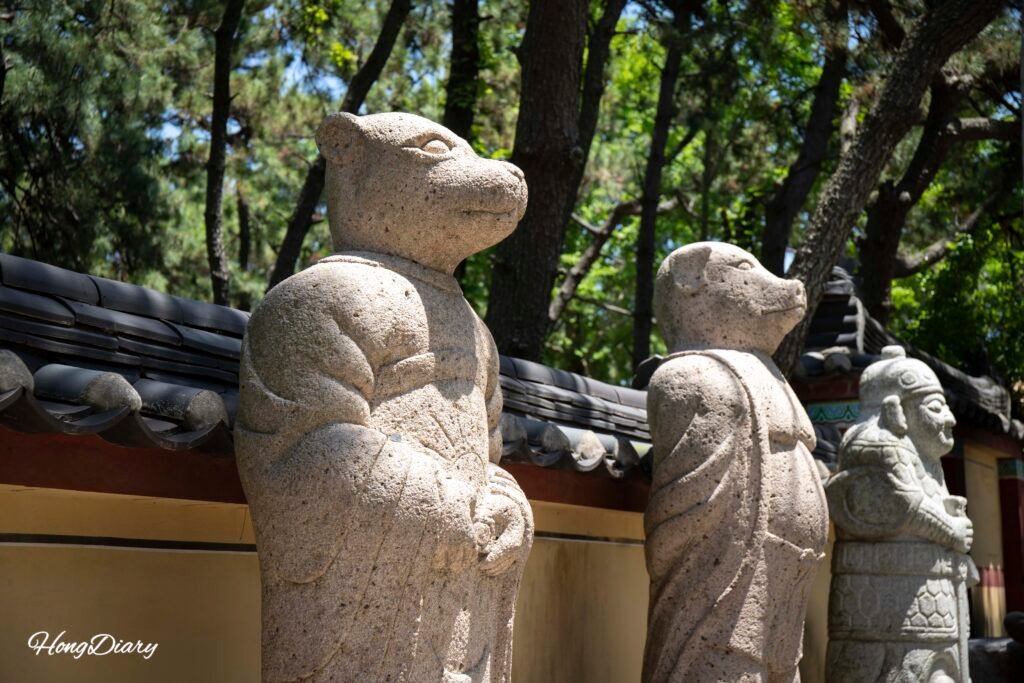
The site has become a regular stop for international visitors to Busan. Right at the entrance, a row of twelve zodiac animal statues greets visitors. Many people find their birth-year animal, place a coin on it, and take a photo — it has become one of the first things people do when they arrive.
Construction Notice (As of Early 2026)
A pathway renovation and restroom installation project is currently underway in the Osiria Tourist Complex area, scheduled from February 27, 2026 to June 26, 2026. The original main entrance path is currently blocked, and visitors are redirected along an alternate route. The area around the sunrise viewing spot and the coin-tossing pond and bridge is temporarily off-limits. The alternate path follows a gradual slope rather than stairs, which actually makes the walk up and down easier than the usual route.
Haedong Yonggungsa: Wish-Making Spots Inside the Grounds
Haedong Yonggungsa was founded in 1376 by the Buddhist monk Naong. It was destroyed during the Imjin War and later rebuilt, going through several rounds of restoration to reach its current form.
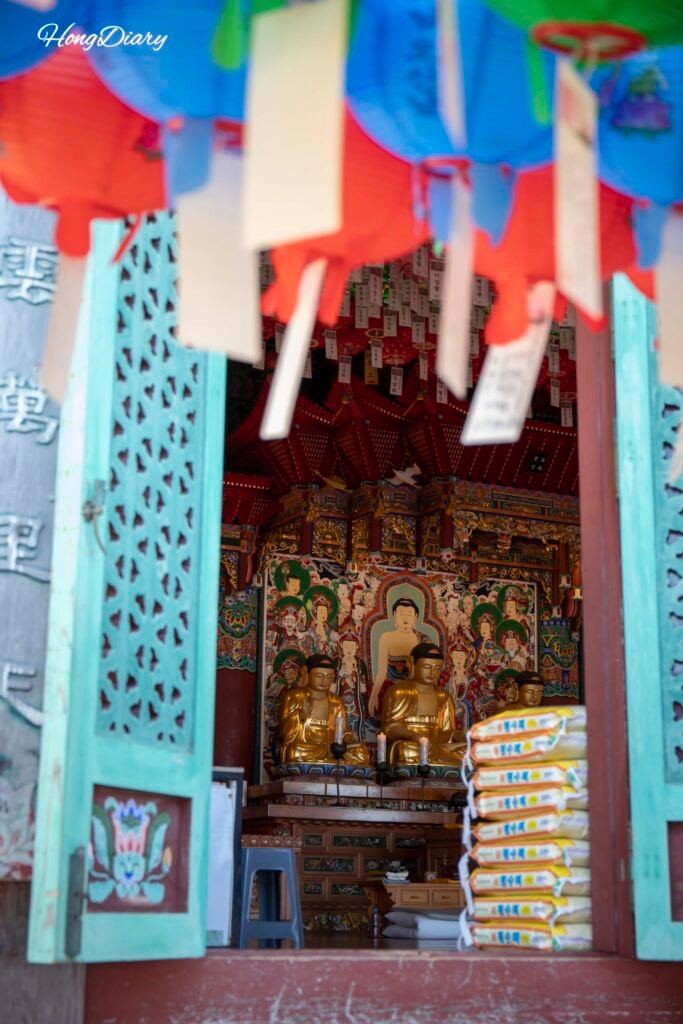
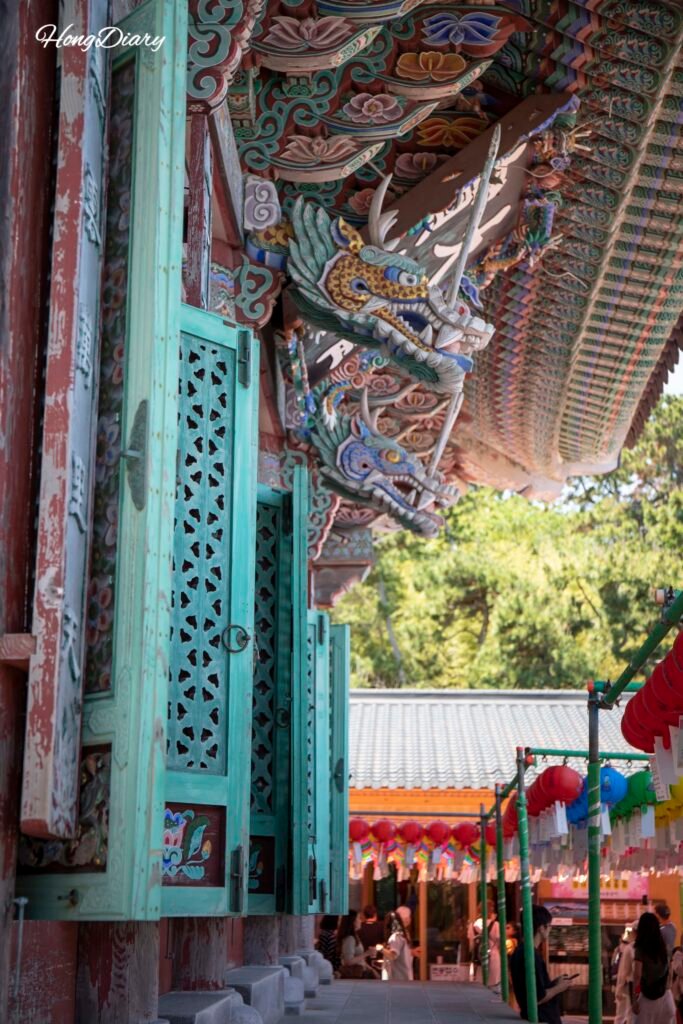
During my visit, colorful lanterns were hanging throughout the grounds following the Buddha’s Birthday celebrations. Even outside of special events, the temple is well known as a place for making wishes. Visitors come not only as tourists but also to pray for family health, exam success, employment, and other personal hopes.
Wish-Making Spots and Symbols at Haedong Yonggungsa
| Spot | Notes |
|---|---|
| Twelve Zodiac Statues | At the entrance; place a coin on your birth-year animal |
| Haesu Gwaneum Daebul | Large Goddess of Mercy statue overlooking the sea |
| Deungnam-bul (Mireuk Stone Buddha) | Stone buddha associated with wishes for a son |
| Yaksa Yeorae-bul | Medicine Buddha |
| Yonggungdan (Dragon King Altar) | Altar dedicated to the sea dragon |
| Yongmun Seokgul | Stone cave with dragon imagery |
| 108 Longevity Steps | 108 stone steps for prayer |
| Ilchulam (Sunrise Spot) | Currently off-limits due to construction |
| Dalma-sang | Bodhidharma statue |
| Traffic Safety Prayer Tower | Tower for road safety wishes |
| Academic Achievement Buddha | For students and exam-takers |
| Golden Pig | Wish-making statue |
Some of these spots are currently inaccessible due to the ongoing construction. It is worth checking which areas are open before planning your visit.
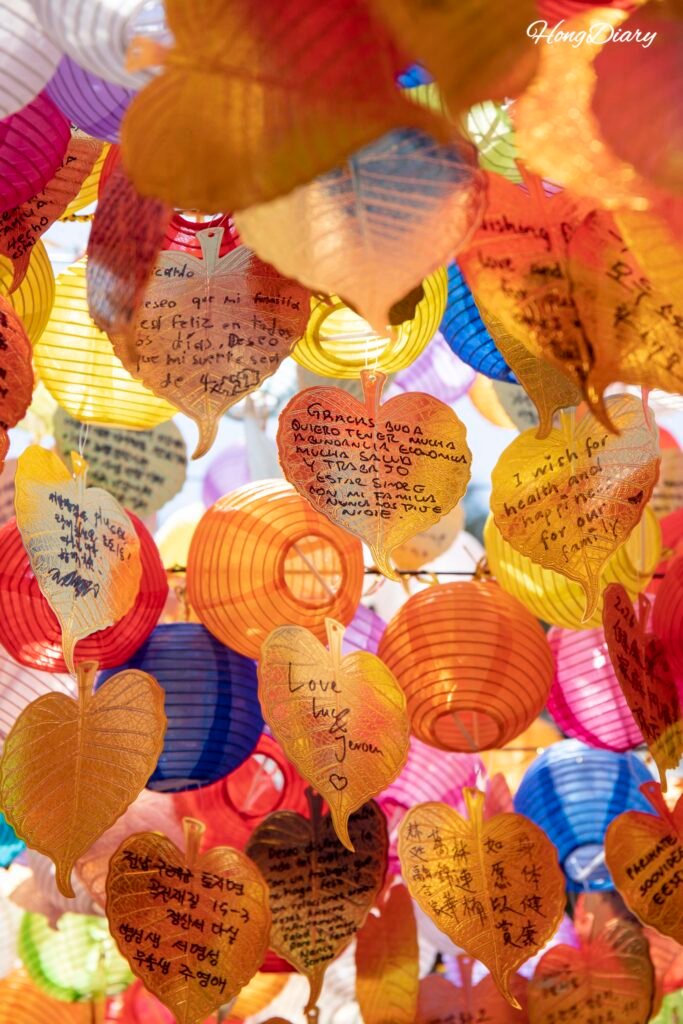
Photo Spots and Visiting Tips
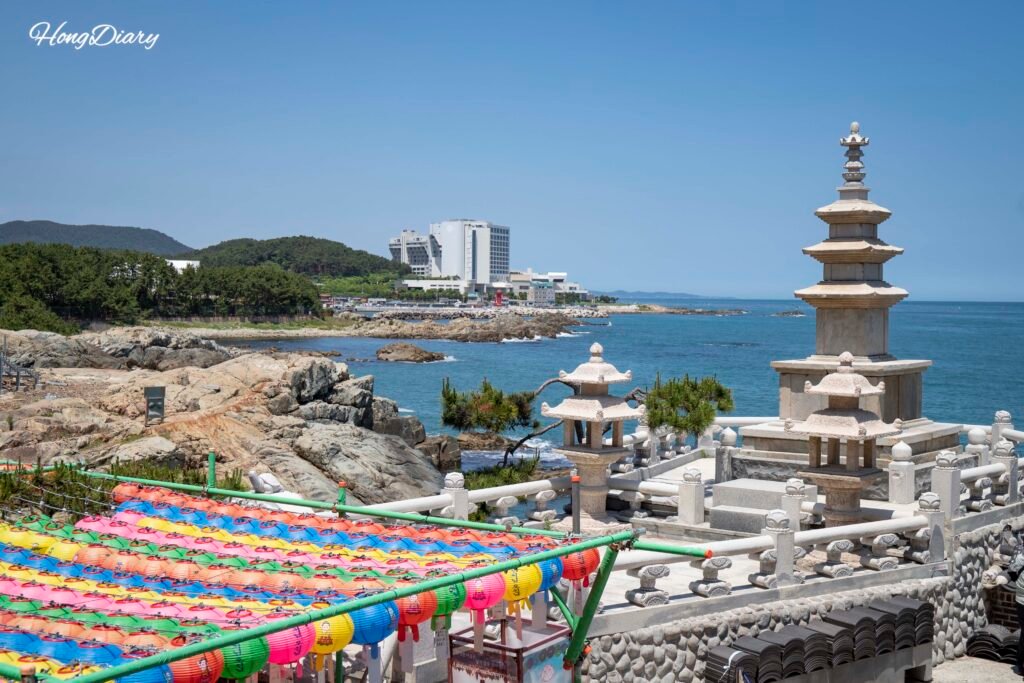
Haedong Yonggungsa has a strong character as a tourist destination, and nearly every corner of the grounds works as a photo spot — the sea and the temple buildings appear together from multiple angles throughout the site.
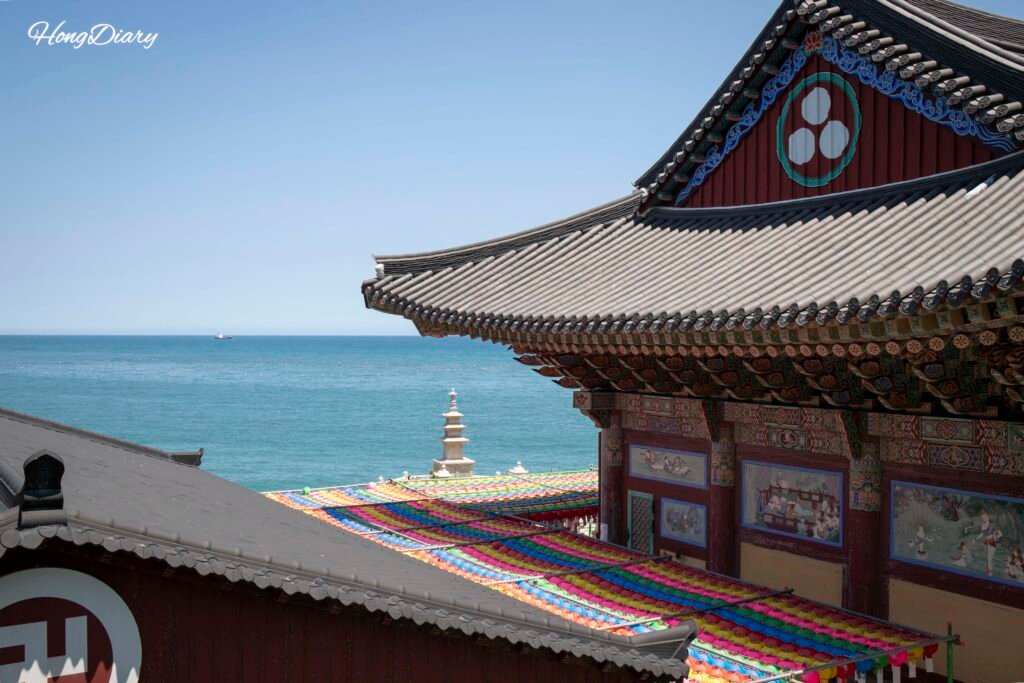
The sunrise viewing area has long been a favorite photo spot, but it is currently closed for construction. In its place, the viewpoint near the Haesu Gwaneum Daebul statue is the most visually rewarding spot available right now. From there, the temple buildings and the sea below spread out together on a clear day. The blue water in midday light looks good, but the spot works at any time from morning to evening.
The colorful lanterns still hanging from the Buddha’s Birthday period added extra layers of color during this visit. Whether you look down from a high point or look up at the lanterns from below, the colors carry well in photos. Inside the temple, there is also a viewpoint behind a small monk statue with hands covering eyes, ears, and mouth — from that spot, the temple buildings and the sea appear in the same frame.
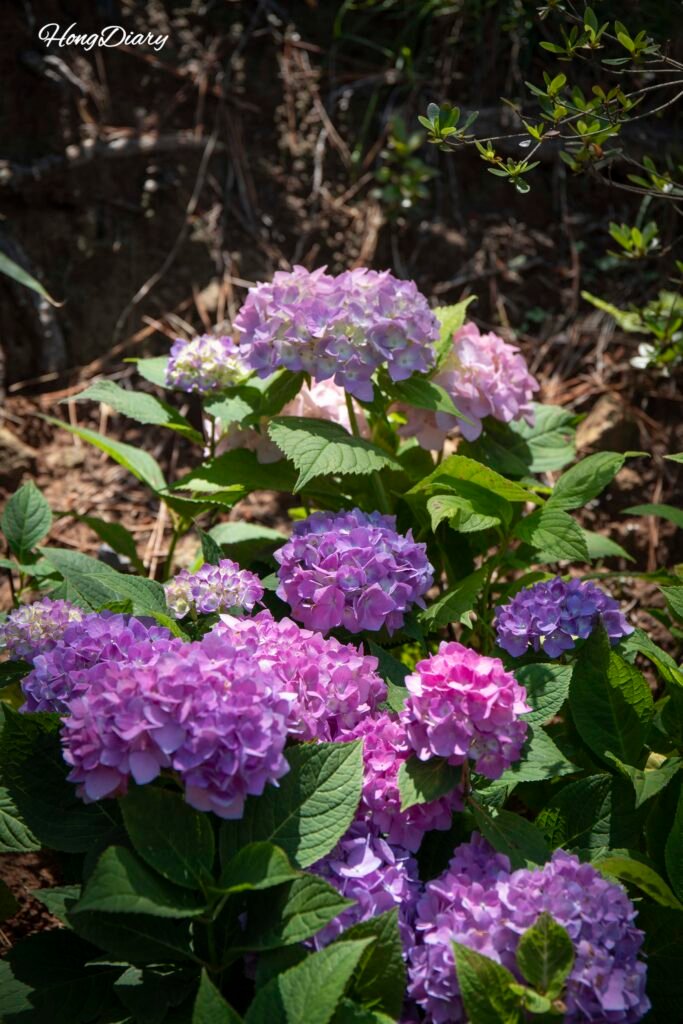
Hydrangeas were beginning to bloom along the paths during this visit, adding an early-summer element to the scenery.
Getting There by Public Transit
| Departure Point | Route | Walk | Total Time |
|---|---|---|---|
| Busan Station | Bus 1003 → transfer to Bus 1001 at Sindosi Market / ASEAN Cultural Center stop | 604m (~10 min) | ~90 min |
| Busan Station (alt.) | Bus 40 → transfer to Bus 181 at Centum City / BEXCO stop | 604m (~10 min) | ~100 min |
| Haeundae Station Exit 7 | Bus 100 or 181 | 604m (~10 min) | ~40 min |
| Gimhae Airport | Airport subway → Sasang Station → Line 2 toward Jangsan → Haeundae Station Exit 7 → Bus 100 or 181 | 604m (~10 min) | ~90 min |
All routes end at the Yonggungsa / National Fisheries Research & Development Institute bus stop, followed by a 604-meter walk (approximately 10 minutes).
Tabara Demand-Responsive Bus: Busan city operates a 15-seat on-demand bus service called Tabara within Gijang-gun. As of May 2026, it serves 21 stops, most of which are key tourist sites in Gijang. Fares are 1,550 KRW (~$1.03 USD) for adults (19+), 800 KRW (~$0.53 USD) for teenagers (13–18), and free for children 6–12 with a transit card. Payment is made via transit card or credit/debit card registered in the app. Download the app and book at tabara.kr. (Exchange rate used: 1 USD = 1,500 KRW)
Tabara Stop List (as of May 2026)
| # | Stop Name |
|---|---|
| 01 | Gongsu Village |
| 02 | Haedong Yonggungsa Temple |
| 03 | National Fisheries Science Museum |
| 04 | Ananti Cove |
| 05 | Orangdae Park |
| 06 | Yeonhwa-ri |
| 07 | Daebyeon Port |
| 08 | WaveRiz Apt |
| 09 | Gijang Station |
| 10 | Gijang Market |
| 11 | Osiria Station |
| 12 | Lotte World Adventure |
| 13 | Lotte Outlets |
| 14 | Eastbusan Tourism Complex |
| 15 | Skyline Luge in Busan |
| 16 | Busan National Science Museum |
| 17 | IKEA |
| 18 | LHOUR Senior Town |
| 19 | Songjeong Station Donghae Line |
| 20 | Songjeong Beach |
| 21 | Gwangeogol |
Access Information
| Item | Details |
|---|---|
| Address | 86, Yonggung-gil, Gijang-eup, Gijang-gun, Busan |
| Phone | +82-51-722-7744 |
| Hours | 04:30 – 19:20 (last entry 18:50) |
| Closed | No closing days |
| Note | Hours may vary slightly by season and sunset time |
Parking Information
A dedicated parking lot is located before the entrance gate. Payment is card-only.
| Duration | Fee |
|---|---|
| First 20 minutes | 2,000 KRW (~$1.33 USD) |
| Every 10 minutes after | 500 KRW (~$0.33 USD) |
| Full day | 30,000 KRW (~$20 USD) |
(Exchange rate used: 1 USD = 1,500 KRW)
Weekends and public holidays tend to be crowded, and the parking lot fills up accordingly. Weekday mornings are generally less congested. Along the path from the parking lot to the entrance, there are small snack stalls where you can grab something to eat before or after your visit.
Nearby Attractions
Haedong Yonggungsa is located near the Osiria Tourist Complex, which includes Lotte World Busan and Ananti Cove. Combining these into one day trip is a practical option if you are renting a car or have time to spare.
A Temple That Looks Different Every Time You Visit
The combination of sea and temple grounds is the consistent draw here, but the scene shifts with the season, the time of day, and whatever is happening at the temple. Whether you are there to make a wish, take photos, or simply look at the water from a different angle, Haedong Yonggungsa offers something that is not easy to find elsewhere in Busan. Once the current construction wraps up, there will be more of the grounds to explore again.
Is there an admission fee for Haedong Yonggungsa, and what are the opening hours?
Admission is free. The temple is open every day with no closing days. Hours are 04:30 to 19:20, with last entry at 18:50. Hours may vary slightly depending on the season and sunset time. A visit typically takes between 40 minutes and one hour. Note that some sections are currently off-limits due to ongoing construction (scheduled through June 26, 2026), so the walkable area is slightly reduced at present. The address is 86, Yonggung-gil, Gijang-eup, Gijang-gun, Busan, and the contact number is +82-51-722-7744.
How do I get to Haedong Yonggungsa by public transit?
The most convenient route from Haeundae is Bus 100 or 181 from Exit 7 of Haeundae Station, taking about 40 minutes total. From Busan Station, take Bus 1003 and transfer to Bus 1001 at the Sindosi Market / ASEAN Cultural Center stop (approximately 90 minutes), or take Bus 40 and transfer to Bus 181 at Centum City / BEXCO (approximately 100 minutes). From Gimhae Airport, take the subway to Sasang Station, transfer to Busan Metro Line 2 toward Jangsan, exit at Haeundae, then board Bus 100 or 181 — total time is approximately 90 minutes. All routes end at the Yonggungsa / National Fisheries Research & Development Institute stop, followed by a 604-meter walk of about 10 minutes.
Is there parking at Haedong Yonggungsa, and what is the cost?
There is a dedicated parking lot located before the entrance. It is card-payment only — cash is not accepted. The base rate is 2,000 KRW (~$1.33 USD) for the first 20 minutes, with 500 KRW (~$0.33 USD) added for every 10 minutes after that. A full-day pass costs 30,000 KRW (~$20 USD; exchange rate used: 1 USD = 1,500 KRW). The lot tends to fill up on weekends and public holidays, so weekday visits are easier for parking. Busan also operates a demand-responsive bus service called Tabara within Gijang-gun. As of May 2026, it covers 21 stops including Haedong Yonggungsa Temple (Stop 02) and nearby attractions such as Ananti Cove (Stop 04), Orangdae Park (Stop 05), and Lotte World Adventure (Stop 12). Book through the app at tabara.kr.
Is Haedong Yonggungsa accessible for people with mobility limitations?
The original main entrance path is currently blocked due to construction. The alternate route in use right now follows a gradual slope rather than stairs, which the author notes felt easier to walk up and down than the standard approach. However, the site does include uneven terrain and steps in parts of the grounds, so mobility conditions will vary by section.
What makes Haedong Yonggungsa different from other temples in Busan?
Most Buddhist temples in Korea are located in mountain forests, away from the coast. Haedong Yonggungsa is built directly along the shoreline in Gijang-gun, which means the temple buildings and the sea appear in the same view throughout the grounds. This coastal setting is the primary reason it draws a large volume of visitors, including many international tourists. The site also contains over a dozen distinct wish-making spots, from zodiac animal statues to altars dedicated to specific intentions such as health, academic success, and safe travel.
Is Haedong Yonggungsa connected to any notable figures or cultural references?
Haedong Yonggungsa was founded in 1376 by the Buddhist monk Naong. It was destroyed during the Imjin War and subsequently rebuilt, going through several rounds of restoration to reach its current state. The temple is particularly associated with wish-making traditions, and people visit to pray for family health, exam results, employment, and other personal wishes — not only as a sightseeing destination.
Is Haedong Yonggungsa worth visiting if I am not Buddhist or religious?
Yes. The coastal setting alone makes it a distinct experience compared to inland temples. The temple buildings, sea views, zodiac statues, lanterns, and various photo spots give non-religious visitors plenty to see and photograph. The author, who lives nearby and visits regularly, describes it as a place that looks and feels different depending on the season and time of day. Hydrangeas were blooming during an early-summer visit, and the lanterns from the Buddha’s Birthday celebrations were still hanging throughout the grounds, adding color to the scenery. Entry is free, and the visit takes under an hour.
1 thought on “Haedong Yonggungsa: Busan’s Seaside Temple Worth Every Step”