
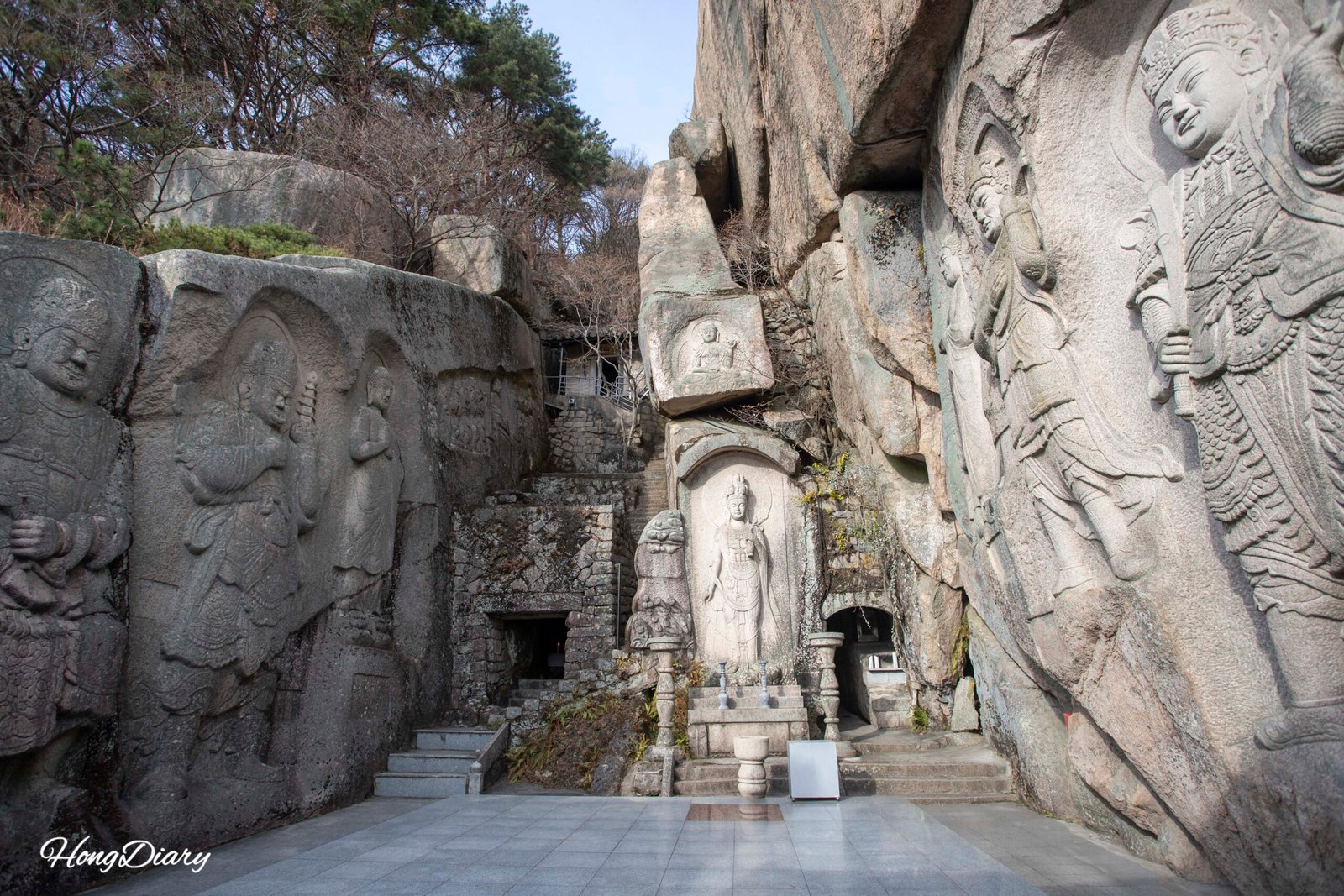
Tucked behind a curtain of towering rock cliffs on Geumjeongsan Mountain, Seokbulsa Temple is one of Busan’s most quietly extraordinary places to visit. Featured in Lonely Planet and listed as the final stop on the unofficial Jungkook trail through his childhood neighborhood of Mandeok-dong — as highlighted on the official Visit Busan website — this small temple punches well above its weight. The hike up is steeper than it looks, but the moment you step inside and the scale of the cliff face reveals itself, you’ll understand exactly why the effort is worth it.
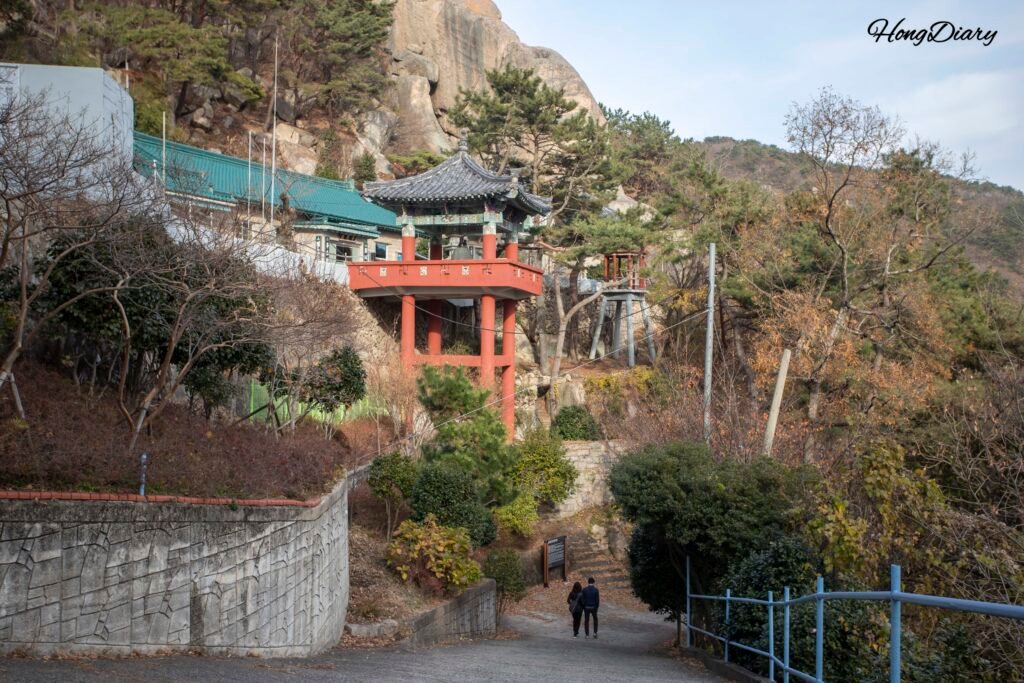
Table of Contents
How to Get to Seokbulsa Temple, Busan: Address, Hours & Admission
- Address: 143-121 Mandeokgogae-gil, Buk-gu, Busan
- Admission: Free
- Hours: Open year-round, 7:00 AM – 4:00 PM (gates close 30 minutes before sunset)
- Phone: 051-332-1690
Getting There by Public Transport
Take Busan Subway Line 3 to Mandeok Station, then walk approximately 200m (about 4 minutes) to Mandeok 1-dong Community Center. From there, board Bus 33-1 and ride three stops to the Seokbulsa Entrance stop. From the stop, it’s a 1.7km walk uphill (about 45 minutes) to the temple.
Be aware that the final stretch on foot gets noticeably steep. If you’re not used to mountain trails, this section can feel tiring.
Taxi from Mandeok Station (Recommended)
For most visitors — especially those unfamiliar with Korean mountain paths — taking a taxi directly from Mandeok Station is the easier option. The ride to Seokbulsa Public Parking Lot takes about 10 minutes and costs roughly 6,500–7,000 won (approximately $4.50–$5 USD). From the parking lot, it’s a 950m walk (about 25 minutes) up to the temple.
Temple Shuttle Van
Seokbulsa operates its own shuttle van, which departs daily (except Sundays) at 9:00 AM from in front of Seongdo Real Estate, located above Exit 4 of Mandeok Station (Subway Line 3). Note that seating is limited and this runs only once per day, so it’s worth arriving early. Also, on the 1st and 3rd days of the lunar calendar month, the departure point changes to above the Mandeok Tunnel 1 entrance.
Important: Before relying on the shuttle, call the temple directly at 051-332-1690 to confirm whether it’s operating on your planned visit date.
The Trail Up: Paved, Winding, and Steeper Than It Looks
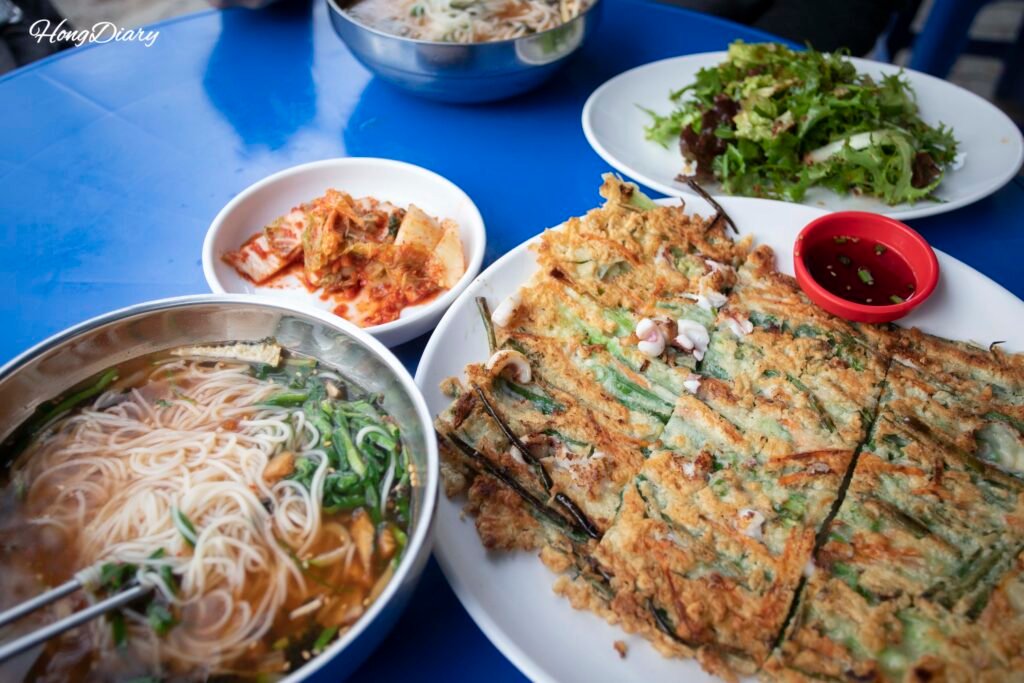
Before starting the climb, it’s worth stopping at the small snack shop next to the parking lot. The janchi guksu (Korean wheat noodles) and pajeon (green onion pancake) are simple food, but somehow everything tastes better on a mountain — fill up here before the trail begins.
The path to the temple is paved the entire way, so there are no muddy or uneven surfaces to contend with. What it does have is a consistent uphill gradient that winds its way through the mountain. In terms of distance it feels close, but the incline makes it feel considerably longer.
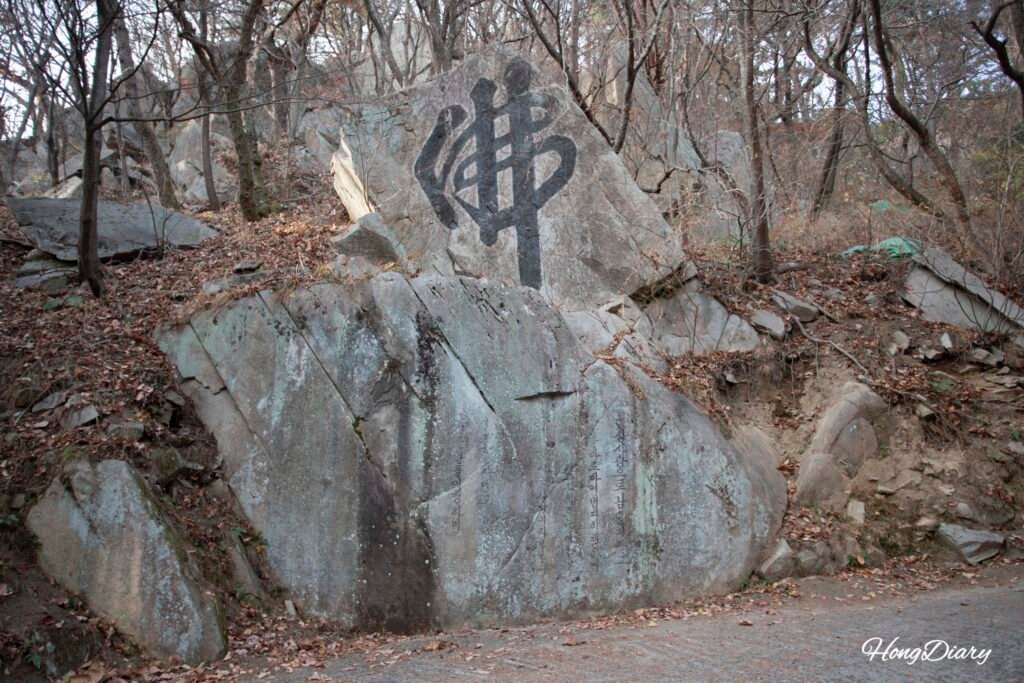
Keep a steady pace and you’ll reach the temple without needing to rush.
About Seokbulsa Temple Busan: Korea’s Only Cliff Buddha Complex
History and Setting
Seokbulsa sits on the ridge that connects Sanggye Peak on Geumjeongsan Mountain to Mandeok-dong below. The enormous rock face behind the temple tilts at an angle that resembles a traditional Korean folding screen — byeongpung — which is how the rock formation came to be called Byeongpungam, and why the temple itself is sometimes referred to as Byeongpungsa.
The temple was founded in 1927 by the monk Ilhyeondang Yongseon. While younger than many of Busan’s other temples and hermitages, Seokbulsa compensates with a level of sculptural detail that is genuinely unusual.
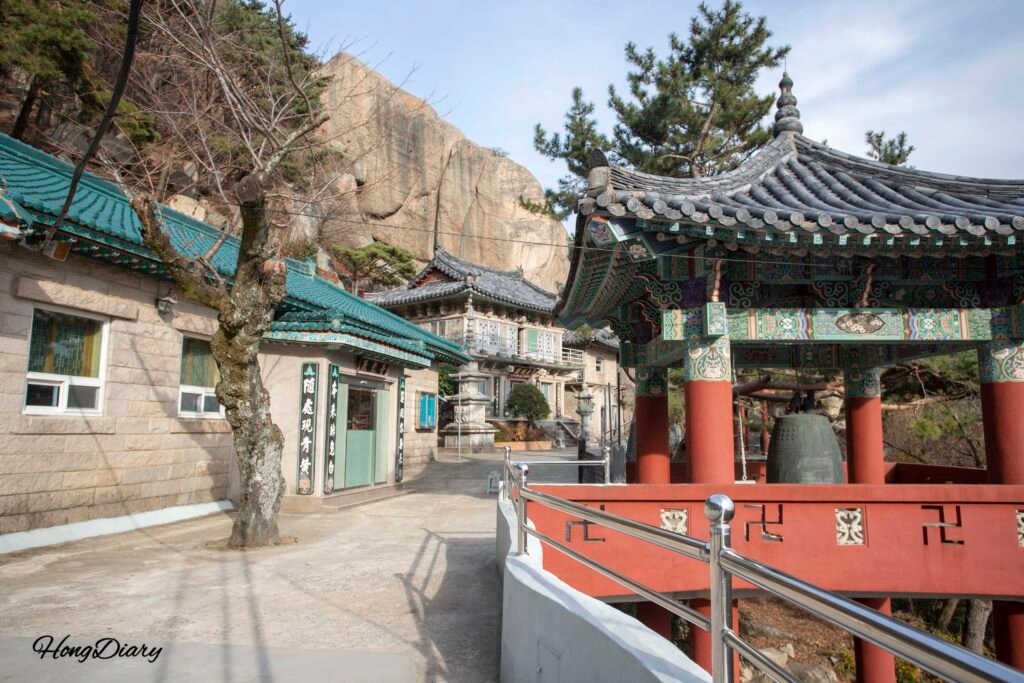
The Stone Buddhas
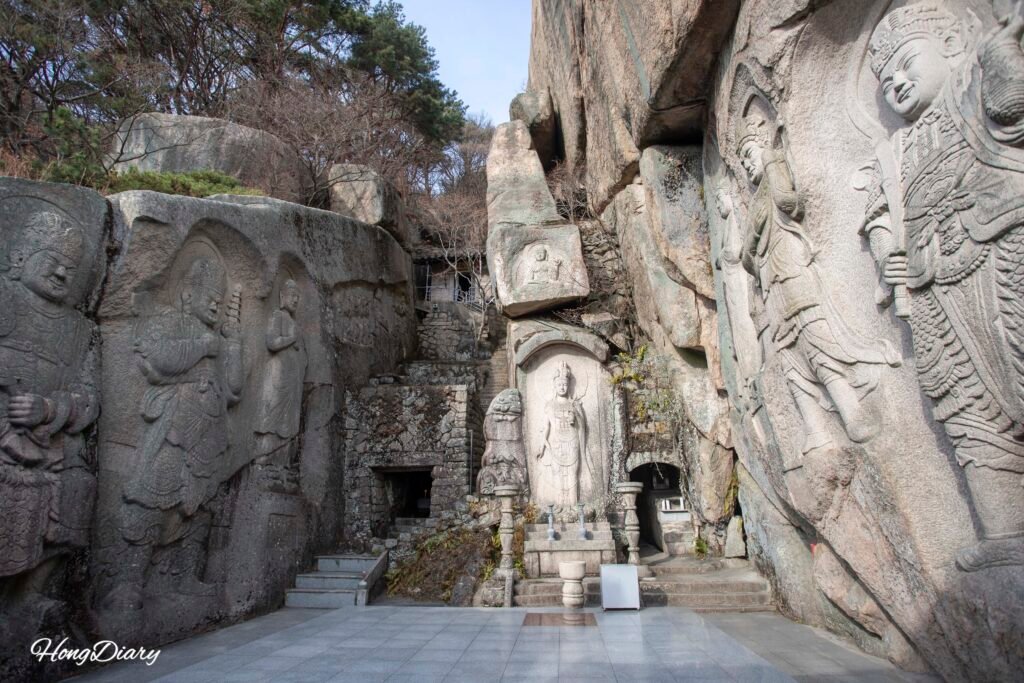
The main attraction — and the reason Seokbulsa stands apart from virtually every other temple in Korea — is the collection of 29 stone Buddha figures carved directly into the cliff face. This makes it Korea’s largest and only cliff-face Buddha complex (maae bulggun) of its kind at a single temple site.
Climbing the steps between Daeungjeon Hall and Chilseonggak Pavilion, the full scale of the rock wall comes into view. The arrangement follows a precise Buddhist mandala structure: the Four Heavenly Kings flank Vairocana Buddha and Bhaisajyaguru Buddha on either side, while an 11-faced Avalokitesvara Bodhisattva faces due south at the center, with Maitreya Buddha seated above. The carvings follow the 32 major marks and 80 minor characteristics of Buddhist iconography — an uncommon level of doctrinal precision in stone.
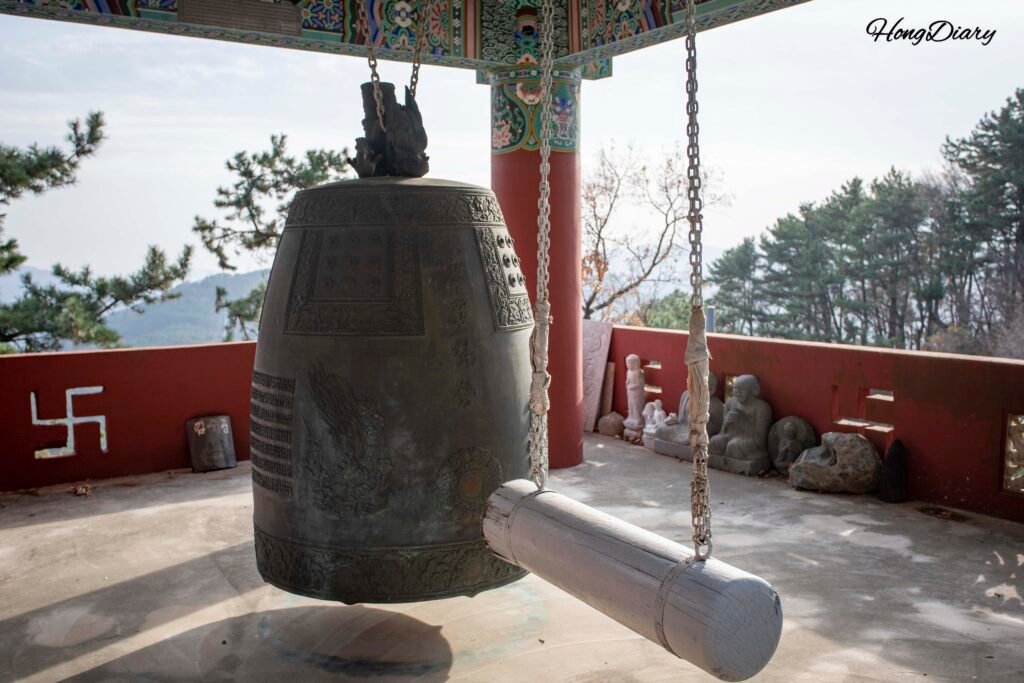
The View
Once inside the temple grounds, look outward. On a clear day, you can see across the Busan cityscape toward Yeongdo Island and the sea. It’s only once you’re standing here that you realise just how high up you’ve climbed. On hazy days the view softens, but the scale of where you are remains striking regardless.
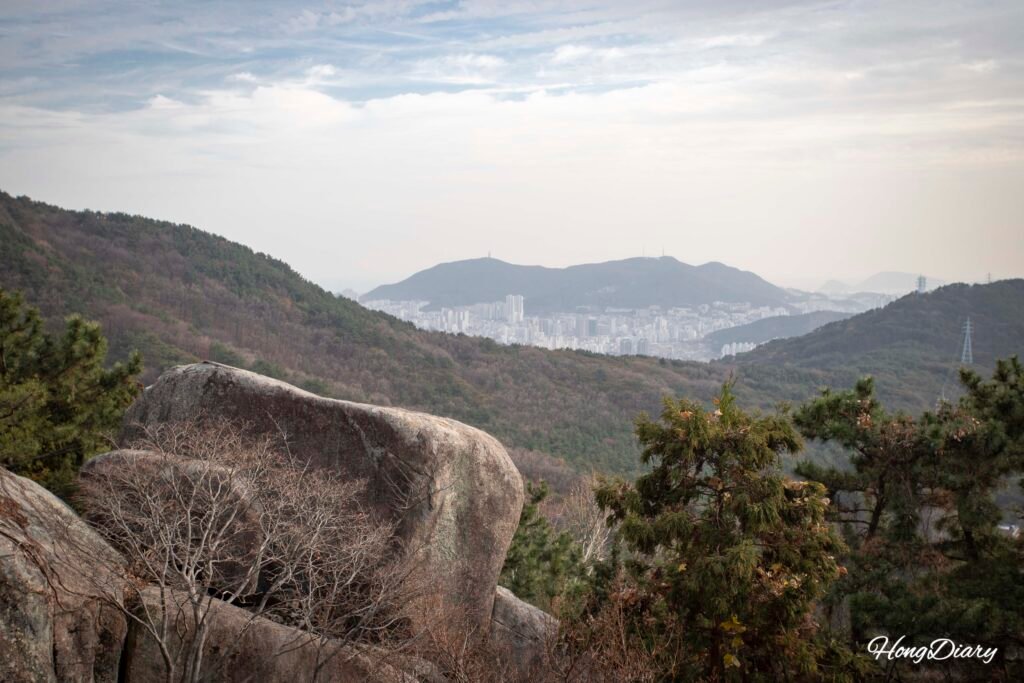
Seokbulsa and Jungkook’s Mandeok-dong
Seokbulsa is the final stop on what has become known informally as the Jungkook trail through Mandeok-dong — the Busan neighborhood where BTS member Jungkook grew up before moving to Seoul. The route, which is featured on the official Visit Busan website, takes in his elementary school, middle school, and the local landmarks of the neighborhood, with Seokbulsa as its natural endpoint. Whether you’re a fan making the pilgrimage or simply a traveler looking for a less-visited corner of Busan, the temple is worth the trip on its own terms.
Practical Tips Before You Go
- The temple closes 30 minutes before sunset — check sunset times before planning a late-afternoon visit.
- The paved path from the parking lot takes about 25 minutes at a comfortable pace; wear shoes with grip.
- The snack shop near the parking lot is the only food option on the way up — stop there before the climb.
- Parking space near the temple is very limited. Taking a taxi or bus from Mandeok Station is strongly recommended over driving.
- Call 051-332-1690 to confirm shuttle van availability before your visit.
- Weekdays tend to be quieter; weekends still see steady visitor traffic despite the remote location.
Seokbulsa is one of those places in Busan that rewards the effort of getting there. The climb is real, the crowds are minimal, and the sight of 29 stone Buddhas carved into a cliff face — with the Busan skyline fading into the distance behind you — makes it one of the more memorable temple visits you can do in Korea.
Is there an entrance fee for Seokbulsa Temple?
No, admission to Seokbulsa is completely free. The temple is open year-round from 7:00 AM to 4:00 PM, and the gates close 30 minutes before sunset.
How do I get to Seokbulsa Temple from central Busan?
Take Busan Subway Line 3 to Mandeok Station, then either take a taxi (about 10 minutes, roughly 6,500–7,000 won / approx. $4.50–$5 USD) to the public parking lot, or board Bus 33-1 from the Mandeok 1-dong Community Center (3 stops to Seokbulsa Entrance, then 1.7km on foot). The taxi-plus-walk option is generally easier for visitors unfamiliar with mountain trails.
Is there a shuttle to Seokbulsa Temple?
Yes. The temple operates its own shuttle van that departs once daily (except Sundays) at 9:00 AM from in front of Seongdo Real Estate, above Exit 4 of Mandeok Station. Seating is limited and there is only one departure per day. On the 1st and 3rd days of the lunar calendar month, the van departs from above Mandeok Tunnel 1 instead. Always call ahead to confirm: 051-332-1690.
How difficult is the walk up to Seokbulsa?
The path from the public parking lot to the temple is about 950m (roughly 25 minutes) and is paved the entire way — no rough terrain. However, the incline is consistent and steeper than it appears, so comfortable walking shoes with grip are recommended. Visitors who find long uphill walks tiring may want to use the temple shuttle van.
What makes Seokbulsa Temple different from other temples in Busan?
Seokbulsa is Korea’s only cliff-face Buddha complex (maae bulggun) at a single temple site, housing 29 stone Buddhas carved directly into the rock wall. The formation behind the temple — called Byeongpungam, meaning “folding-screen rock” — rises dramatically around the temple buildings. Most Korean temples feature wooden architecture; here, the stone carvings integrated into the living cliff are the defining feature.
Is Seokbulsa Temple connected to BTS member Jungkook?
Seokbulsa is the final destination on the unofficial Jungkook trail through Mandeok-dong, the Busan neighborhood where Jungkook spent his childhood. The route is featured on the official Visit Busan website and includes stops at his elementary school, middle school, and local landmarks before ending at the temple. The temple has seen a notable increase in international visitors since the connection became widely known.
Is Seokbulsa Temple worth visiting for non-Buddhist travelers?
Yes. The appeal of Seokbulsa goes beyond religion — the sight of 29 stone Buddhas carved directly into a towering cliff face is visually striking regardless of your background. The hike up is manageable, the entry is free, and the views of Busan from inside the grounds are an added reward. It tends to be quieter than major city temples, which makes the atmosphere noticeably more peaceful. Most visitors find the trip well worth the effort.