
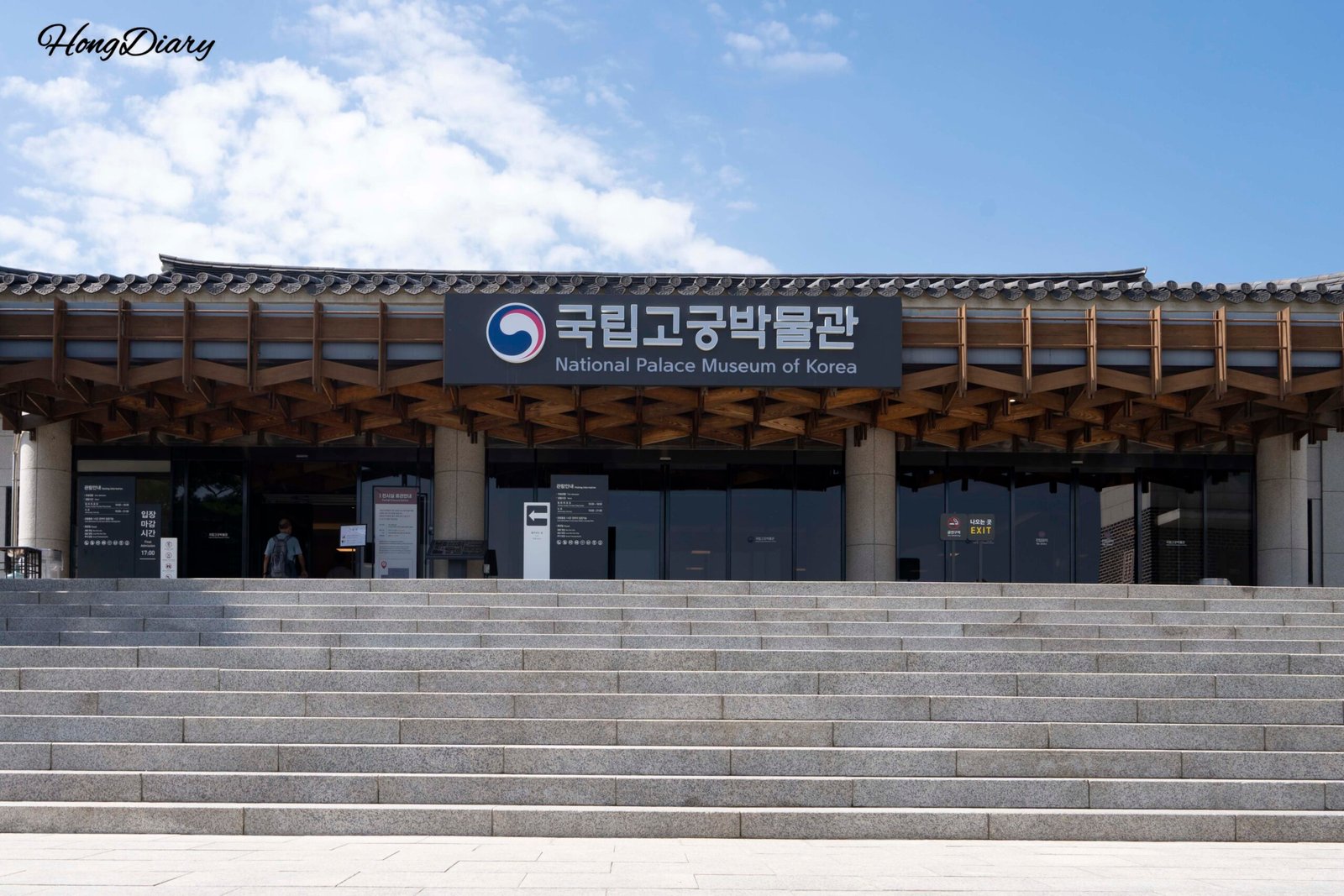
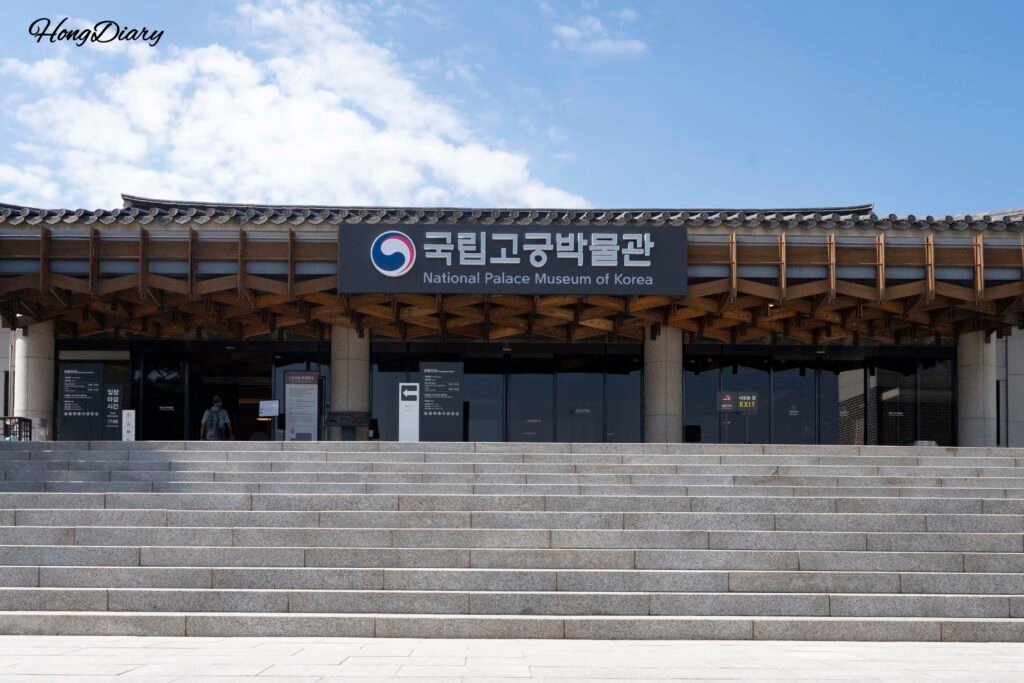
The National Palace Museum of Korea is located inside Gyeongbokgung Palace in Jongno-gu, Seoul. Entry is free, and the museum houses around 40,000 artifacts documenting the culture, rituals, and daily life of the Joseon royal court and the Korean Empire. It is one of the few major historical museums in Seoul that can be combined directly with a palace visit at no cost. A visit typically takes one to two hours depending on how much time you spend in each gallery.
I had been putting off a visit for a long time despite having the museum on my list. It was only on a recent trip to Seoul that I finally went — partly because many other museums happened to be closed on the Monday I was there. The National Palace Museum of Korea was open, and it turned out to be well worth the visit.
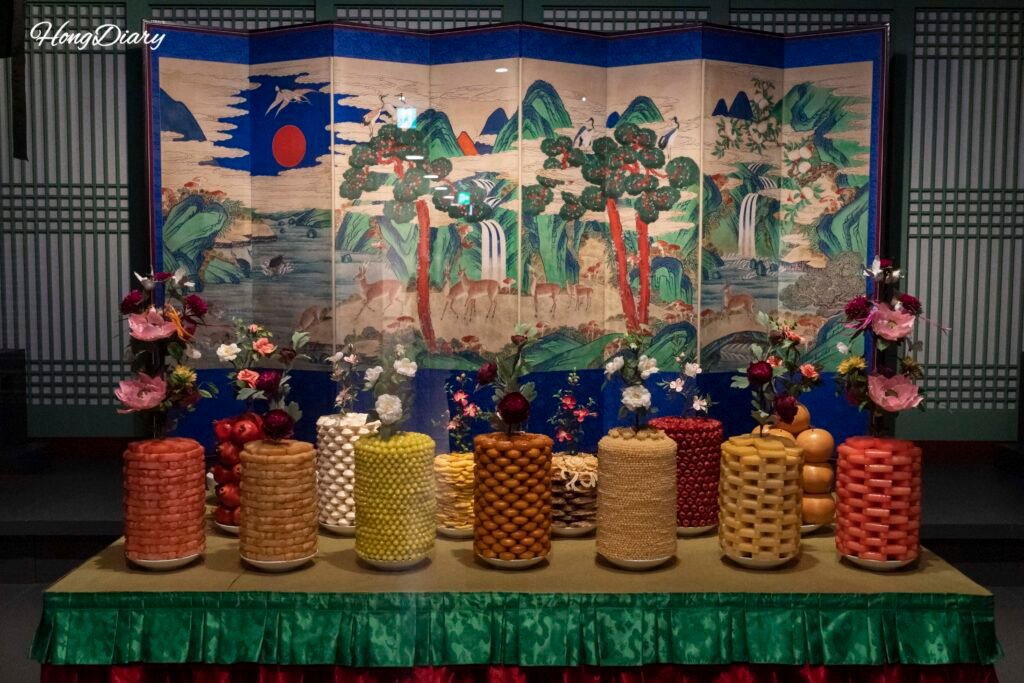
Table of Contents
What to See at the National Palace Museum of Korea
The museum spans from basement level 1 to the second floor, with permanent exhibitions on each level. On my visit, the second floor was undergoing renovation, so not all galleries were accessible. Even so, there was plenty to see across the open floors.
Ground Floor — Korean Empire Hall
The first stop was the Korean Empire Hall on the ground floor. This section covers the period beginning in 1897 when Emperor Gojong proclaimed the Korean Empire, marking Korea’s first imperial state. It is personally the period of Korean history I find most interesting, so I spent more time here than anywhere else.
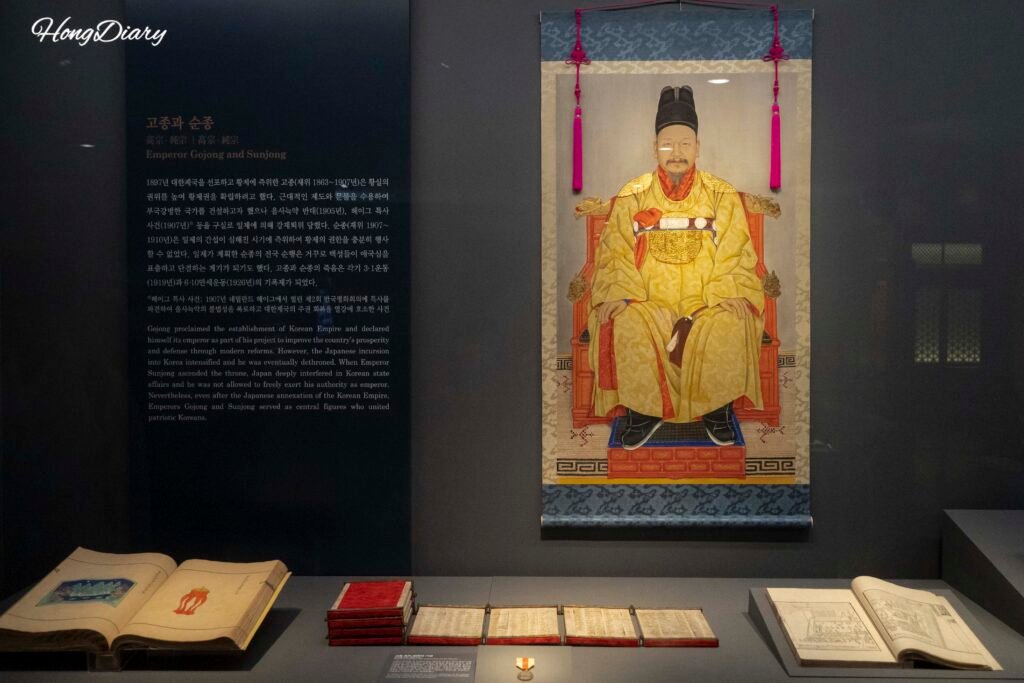
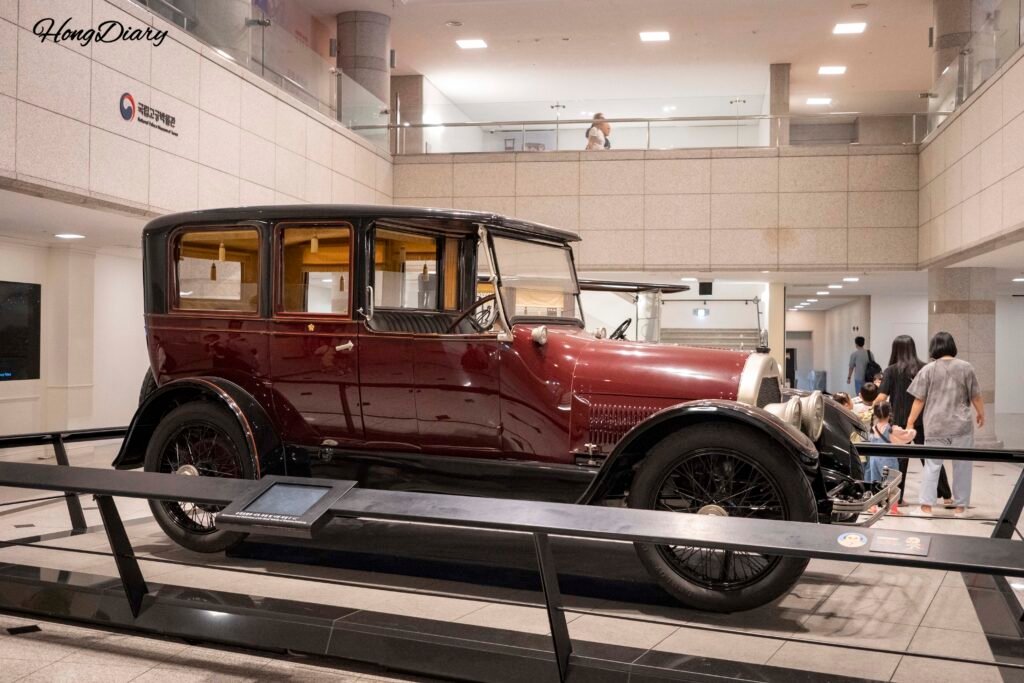
The hall displays imperial seals, state seals, and the Order of the Auspicious Stars (Seoseong Daehunjang) among other objects that symbolize the authority of the Korean Empire. Portraits of Emperors Gojong and Sunjong are on display alongside ritual objects used during official ceremonies. The imperial carriage of Emperor Gojong, visible near the entrance to the hall, is immediately striking. Objects and clothing belonging to the imperial family also show how Western influences were incorporated into Korean court culture during this period.
Basement Level — Court Paintings / Royal Rituals / Science and Culture
Moving down to the basement level, the Court Paintings Gallery covers the calligraphy and painting traditions of the Joseon royal court. Many of the works were produced under the supervision of the Royal Office of Painting, with an emphasis on symbolism and official record. Screens depicting reeds and wild geese appear frequently — these were a common motif associated with wishes for longevity and peace within the royal household, reflecting the Confucian values that shaped court culture.
Members of the royal family also practiced calligraphy and painting as a form of personal cultivation, and works made by the king and royal relatives are included in the collection.
The Royal Rituals Gallery follows. Joseon society was organized around Confucian principles of propriety, and royal rituals marked every major event in the life of the monarchy — from birth and marriage to state funerals. Among the displayed objects, the Myeongneungdo and the Gukjang-dogam-uigwe stand out as records of how carefully and precisely these ceremonies were carried out. The Hwangnyonggi royal banner and the royal palanquin, both used during the king’s processions, are notable for their elaborate ornamentation.
The Science and Culture Gallery focuses on astronomy and scientific instruments that the Joseon court used to support governance and agriculture. The Cheonsang Yeolcha Bunyajido star map, a national treasure, is the centerpiece of this gallery. It demonstrates that Joseon’s ruling ideology was grounded in astronomical observation. Nearby, a video installation explains the star chart and its significance in accessible terms. The armillary sphere, the hemispherical sundial, the self-striking water clock Jagyeongnu, and the rain gauge stand are also on display — all examples of the scientific precision developed during the Joseon period.
Second Floor — Under Renovation
The second floor, which covers symbols of the Joseon dynasty and royal daily life, was under renovation at the time of my visit. It will be interesting to see how it looks once the work is complete.
Gift Shop and Café at the National Palace Museum of Korea
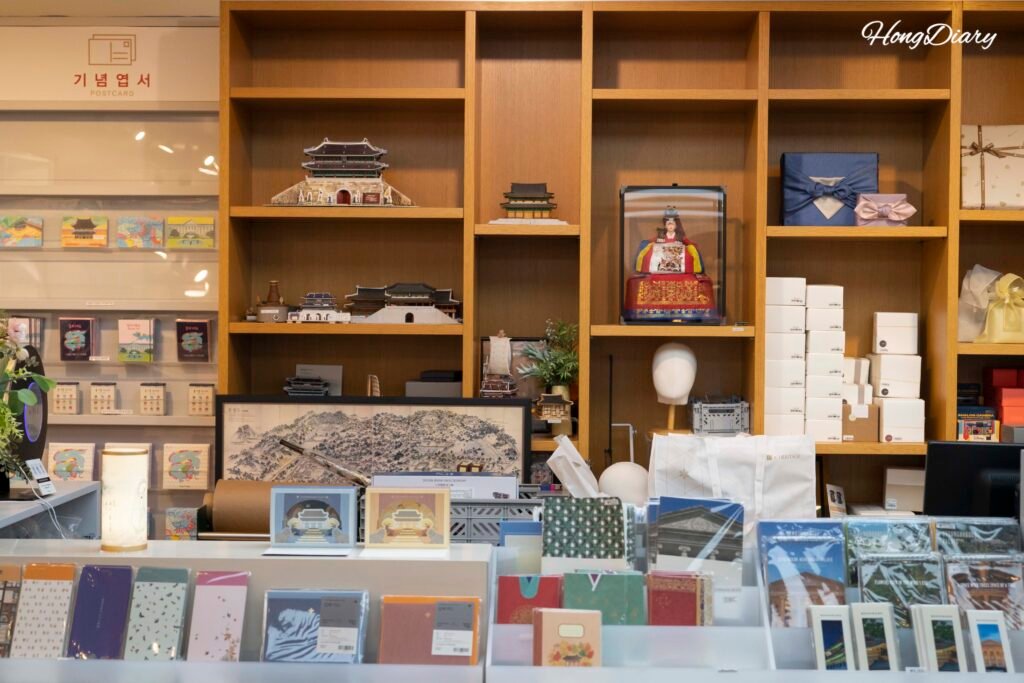
On the first floor, a museum shop carries merchandise based on royal artifacts and Joseon court culture. The range goes from practical everyday items using traditional patterns to more decorative pieces. The designs have become noticeably more refined over the years and are worth browsing even without a plan to buy anything.
There is also a café at the back of the building where you can take a break during your visit. The museum additionally offers media content, hands-on programs, and a reading area.
Foreign Language Guided Tours
The museum offers free guided tours in English, Chinese, and Japanese on selected dates each month. Tours are not available every day, and the schedule changes monthly.
| Language | Tour Time | Notes |
|---|---|---|
| English | 14:00 | Selected weekdays |
| Chinese | 13:00 | Selected weekdays |
| Japanese | 15:00 | Selected weekdays |
The schedule changes every month and tour times may vary. Check the official website at gogung.go.kr for the current monthly schedule before your visit.
Getting There and Practical Information
Access Information
| Item | Details |
|---|---|
| Address | 12, Hyoja-ro, Jongno-gu, Seoul |
| Phone | +82-2-3701-7500 |
| Website | gogung.go.kr |
| Admission | Free |
Opening Hours
| Day | Hours | Last Entry |
|---|---|---|
| Monday – Friday, Sunday | 09:30 – 17:30 | 17:00 |
| Saturday | 09:30 – 21:00 | 20:30 |
| Last Wednesday of each month | 09:30 – 21:00 | 20:30 |
Closed: January 1, Seollal (Lunar New Year’s Day), Chuseok (Korean Thanksgiving Day), and the last Monday of each month. If the last Monday falls on a public holiday, the museum closes on the following day instead.
Note: Many museums in Seoul are closed on Mondays. It is worth checking opening days before planning your visit.
Getting There by Public Transit
| Departure | Route | Walk |
|---|---|---|
| Gyeongbokgung Station (Line 3) | Exits 4 or 5 | 2–4 minutes |
| Gwanghwamun Station (Line 5) | Exits 1 or 2 | 10 minutes |
The museum is also connected to the subway station directly underground.
Combining with Gyeongbokgung and Nearby Attractions
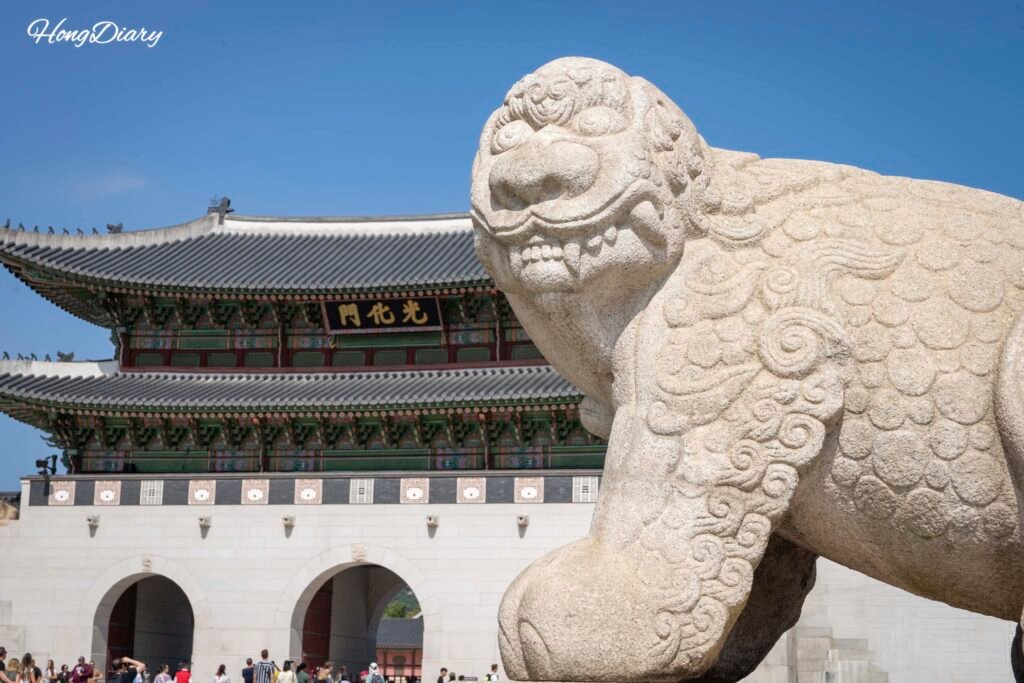
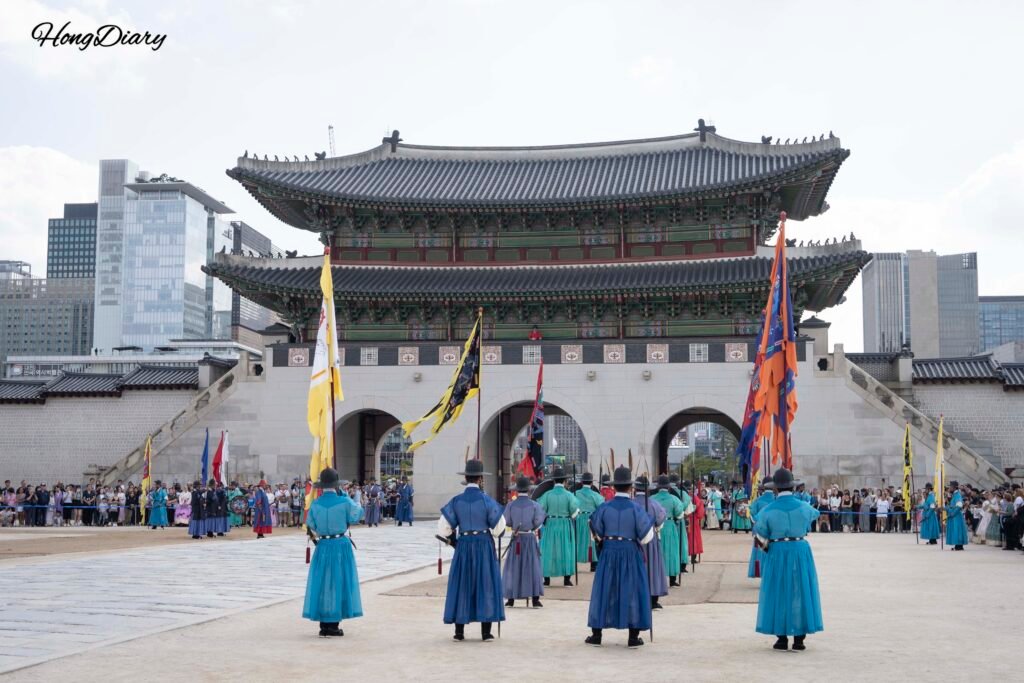
The National Palace Museum of Korea is located inside Gyeongbokgung Palace, making it easy to visit both in the same trip. After taking in the palace grounds, the museum offers a way to go deeper into the history and culture behind what you have just seen. Samcheong-dong and Bukchon Hanok Village are both within walking distance, so there is enough in the area to fill a full day in Seoul.
What are the opening hours and is there an admission fee for the National Palace Museum of Korea?
Admission is free. The museum is open Monday through Friday and Sunday from 09:30 to 17:30 (last entry 17:00), and on Saturdays and the last Wednesday of each month from 09:30 to 21:00 (last entry 20:30). The museum is closed on January 1, Seollal (Lunar New Year’s Day), Chuseok (Korean Thanksgiving Day), and the last Monday of each month. If the last Monday is a public holiday, the museum closes the following day instead. The address is 12, Hyoja-ro, Jongno-gu, Seoul, and the contact number is +82-2-3701-7500.
How do I get to the National Palace Museum of Korea by public transit?
The most convenient access is from Gyeongbokgung Station on Seoul Metro Line 3 — use Exit 4 or 5 and walk 2 to 4 minutes. From Gwanghwamun Station on Line 5, use Exit 1 or 2 and walk about 10 minutes. The museum is also connected directly to the subway underground.
Does the National Palace Museum of Korea offer guided tours in English?
Yes. Free guided tours in English are available on selected weekdays at 14:00. Tours in Chinese (13:00) and Japanese (15:00) are also available on selected dates. The schedule changes every month, so check the official website at gogung.go.kr before your visit to confirm available dates.
How long does a visit to the National Palace Museum of Korea take?
A typical visit takes between one and two hours, depending on how much time you spend in each gallery. The museum spans from the basement to the second floor. Note that as of the time of writing, the second floor is currently under renovation and not fully accessible.
What makes the National Palace Museum of Korea different from other museums in Seoul?
The museum is located inside Gyeongbokgung Palace, which means you can visit both the palace grounds and the museum in a single trip at no cost. The collection of around 40,000 artifacts covers the Joseon royal court and the Korean Empire, including imperial seals, royal portraits, astronomical instruments, ritual objects, and reconstructed ceremonial settings. It is one of the few places in Seoul where the history behind the palace can be explored in depth without an additional entrance fee.
What are the highlights inside the National Palace Museum of Korea?
The Korean Empire Hall on the first floor is a strong starting point, featuring the imperial carriage of Emperor Gojong, imperial and state seals, portraits of Emperors Gojong and Sunjong, and objects showing how Western influences entered Korean court culture. In the basement, the Science and Culture Gallery displays the Cheonsang Yeolcha Bunyajido star map — a national treasure — alongside instruments such as the armillary sphere, the self-striking water clock Jagyeongnu, and the rain gauge stand. The Court Paintings Gallery and Royal Rituals Gallery are also on the basement level.
Is the National Palace Museum of Korea worth visiting if I am not particularly interested in Korean history?
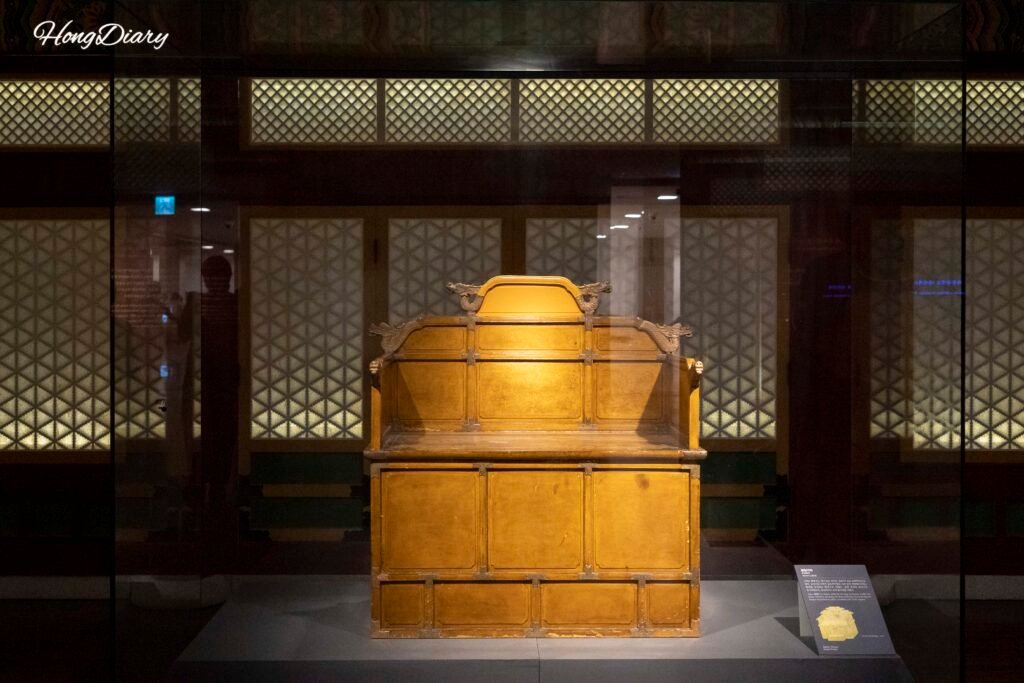
Yes. The museum is free, well-organized, and located inside Gyeongbokgung Palace, so it fits naturally into any visit to the palace. The imperial carriage, the reconstructed royal banquet table, the royal throne, and the star map are visually engaging even without prior knowledge of Korean history. The gift shop carries merchandise based on royal artifacts, and there is a café on site. Samcheong-dong and Bukchon Hanok Village are both nearby, making the area easy to explore as part of a longer day out in Seoul.