
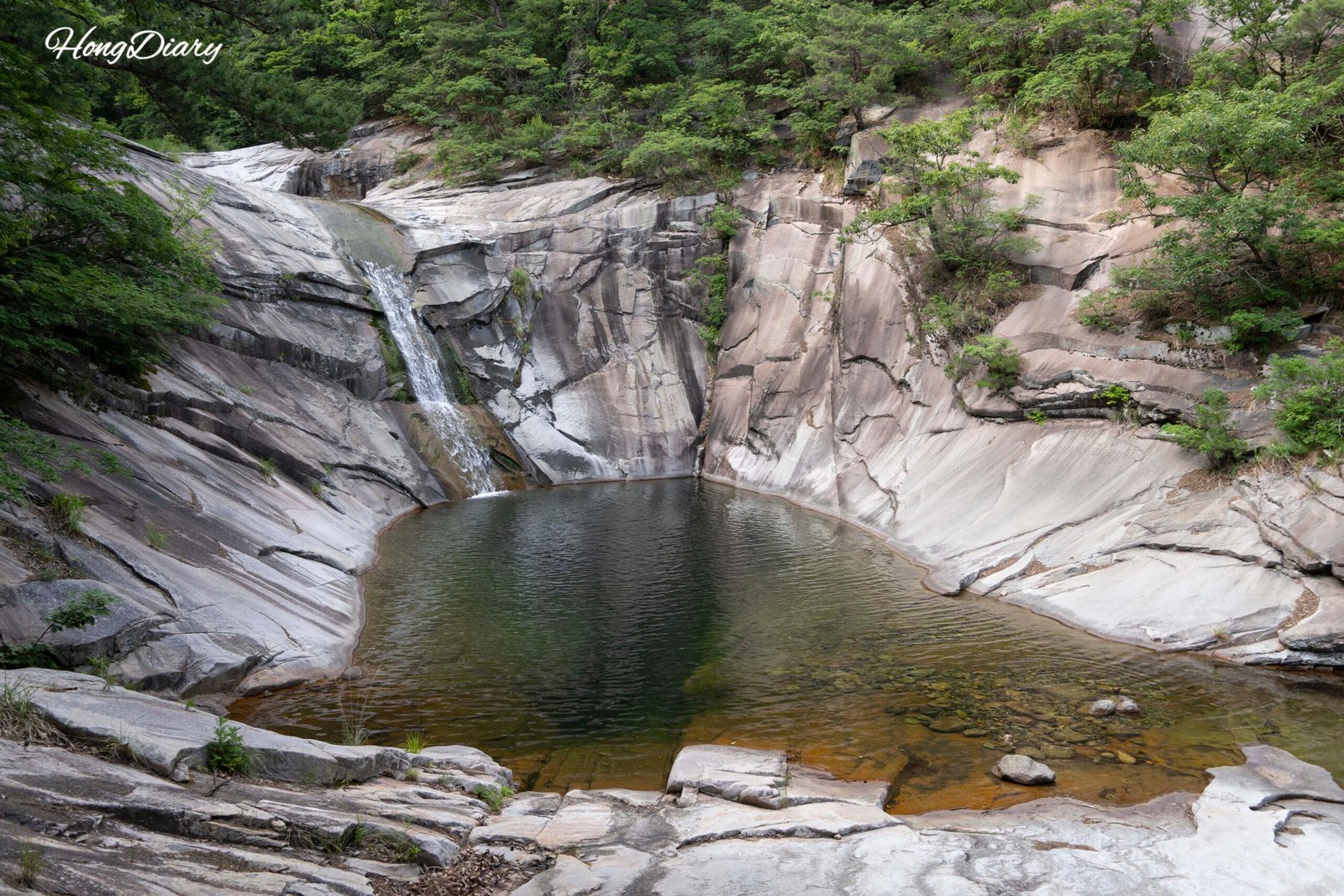
When I think about the valleys near Miryang, Hobakso is the one that comes to mind first. Not because it’s the most dramatic, or the most visited, but because it has a quality that’s harder to describe — the kind of place that doesn’t ask anything of you. You show up, you sit down, and the water does the rest.
I’d been wanting to visit for a while. On the day I finally went, the sky was overcast but the heat was still there, pressed down by the humidity. The moment I stepped into the tree cover, the air changed. That’s the thing about Hobakso — the forest gets thick quickly, and by the time you reach the water, the temperature has already dropped enough to feel it.
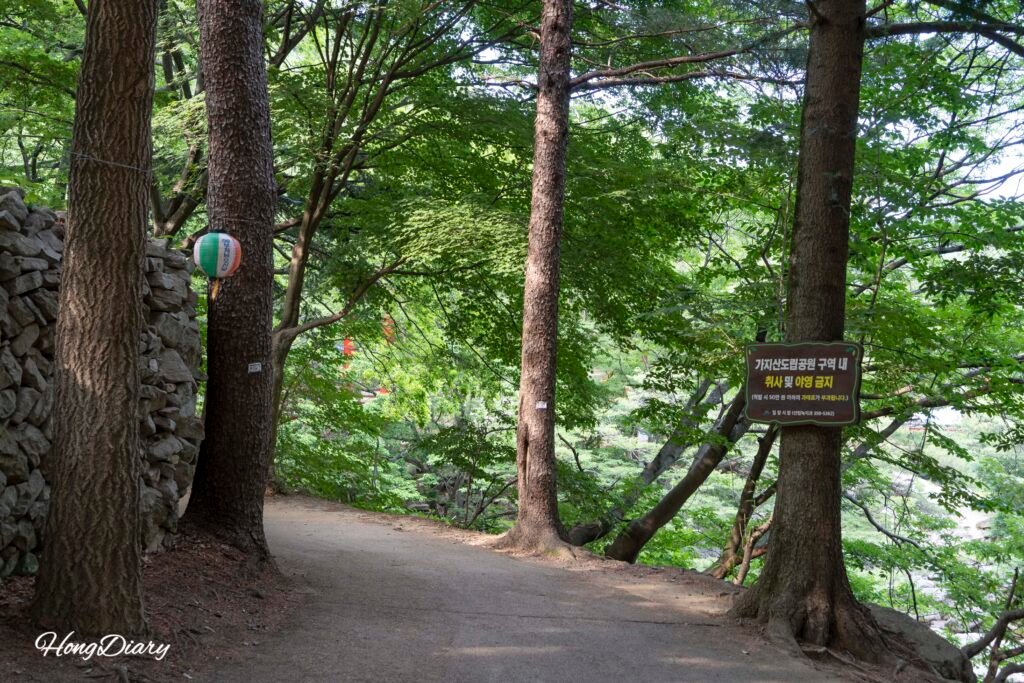
Table of Contents
Location and Access
| Detail | Info |
|---|---|
| Address | 334-1 Sannae-myeon, Miryang-si, Gyeongnam |
| Admission | Free |
| Parking | Free lot at entrance |
| Hours | Open year-round, no set closing time |
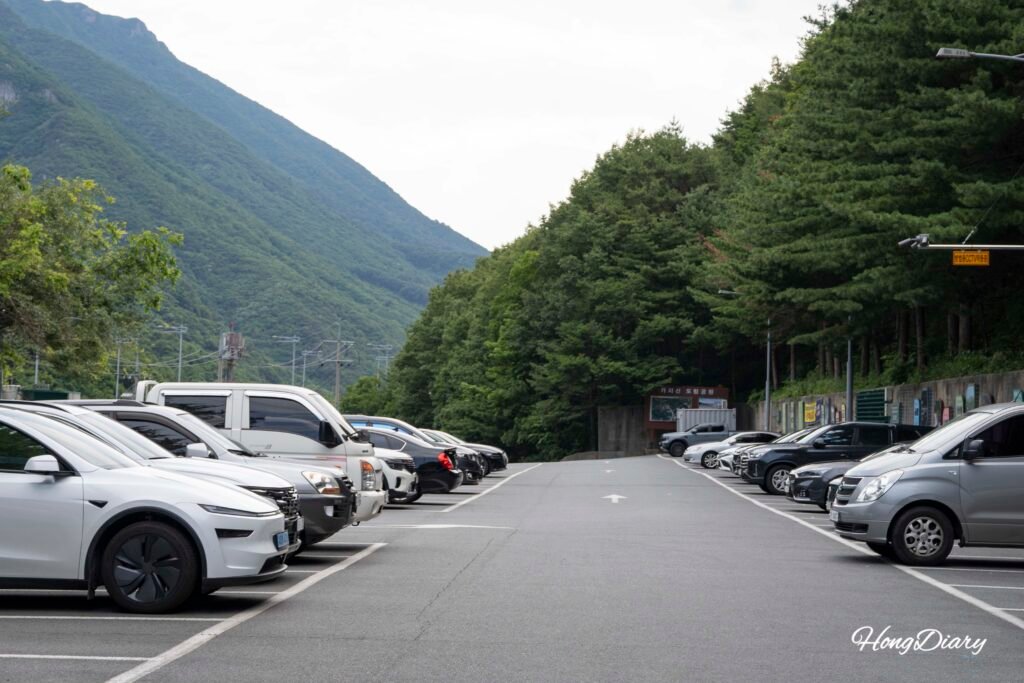
Hobakso Valley is about a 15-minute walk from the Ice Valley Cable Car lower station — the two make a natural pair if you’re already in the Eoreumgol area. If you’re coming specifically for Hobakso, the free parking lot at the entrance is straightforward to use. The path from the lot to the valley is flat and easy, suitable for most visitors regardless of fitness level.
What Hobakso Is
Hobakso Pond sits at the base of a 10-meter-high waterfall, with a circumference of around 30 meters. The name comes from an old Korean word for a grain-grinding tool — a mortar. Over centuries, the force of the waterfall carved the rock into a deep, rounded basin, and someone at some point noticed it looked exactly like the stone mortars used to grind garlic and spices across Asia. The name stuck.
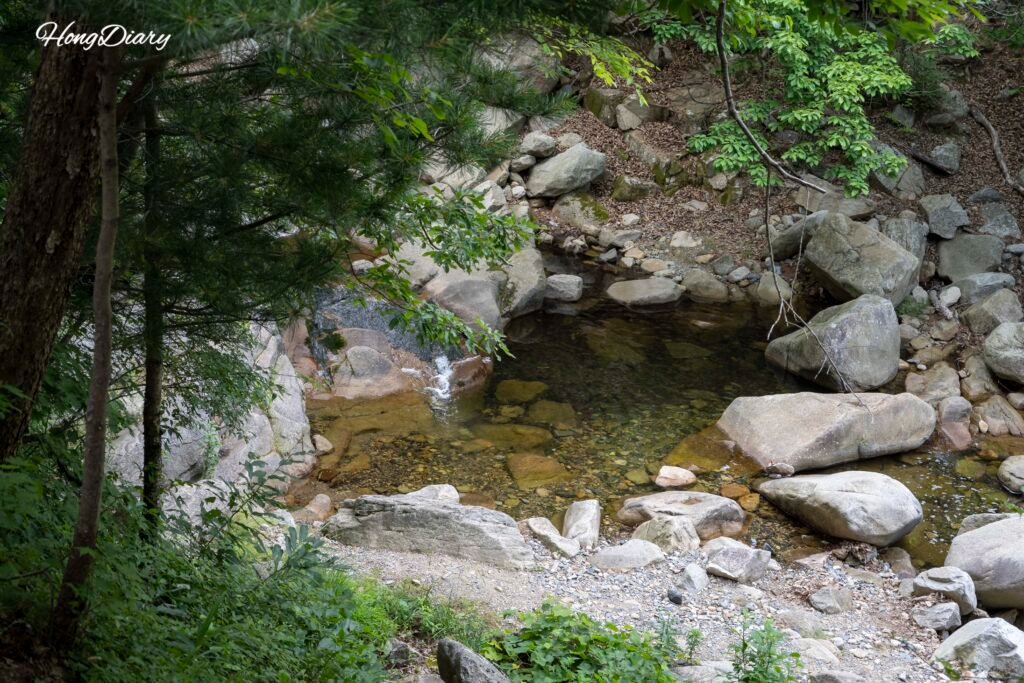
The valley is part of Gajisan Mountain, approximately 3 kilometers from Eoreumgol Valley, where the water originates. The rock throughout the area is white granite, and the combination of that pale stone and the depth of the water gives Hobakso its color — an unusually vivid green that turns almost emerald in direct light. The surrounding cliffs complete the picture.
According to old historical records, Hobakso also served as a site for ceremonies praying for rain during prolonged droughts. Local tradition holds that a mythical serpent-like creature called an imugi once lived in the pool — a being said to have the power to bring rain. One year, after a devastating drought and prayers from the villagers, rain finally came. The imugi, having fulfilled its purpose but failed to fully ascend, is said to have stayed in the pool. Whether or not you give any weight to folklore, the story explains why the place carries a different kind of atmosphere than a typical valley — Hobakso has been considered sacred by the people of Miryang for a long time, and that history is visible in how the place is treated.
Swimming and Activities — What You Need to Know
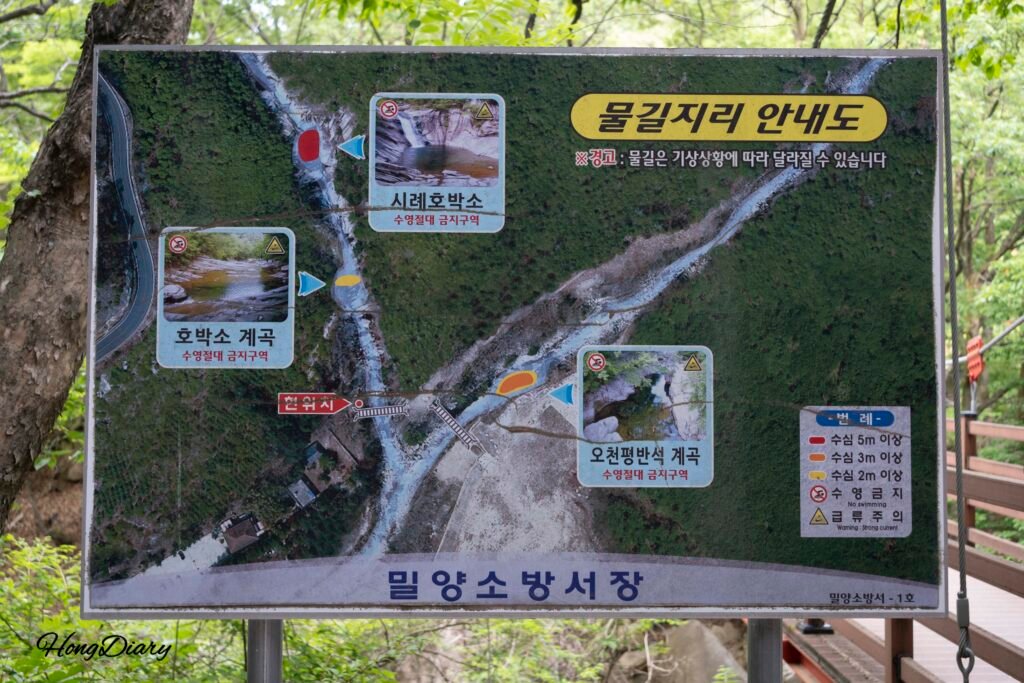
This is the part that surprises most visitors: swimming is strictly prohibited throughout Hobakso and the surrounding valley area. The signs are clear and the reasons are real. The pond is quite deep, and water depth in the valley itself reaches 2 to 5 meters or more in certain sections. The currents can change depending on weather conditions, and the combination of depth, current, and uneven underwater terrain makes it genuinely dangerous.
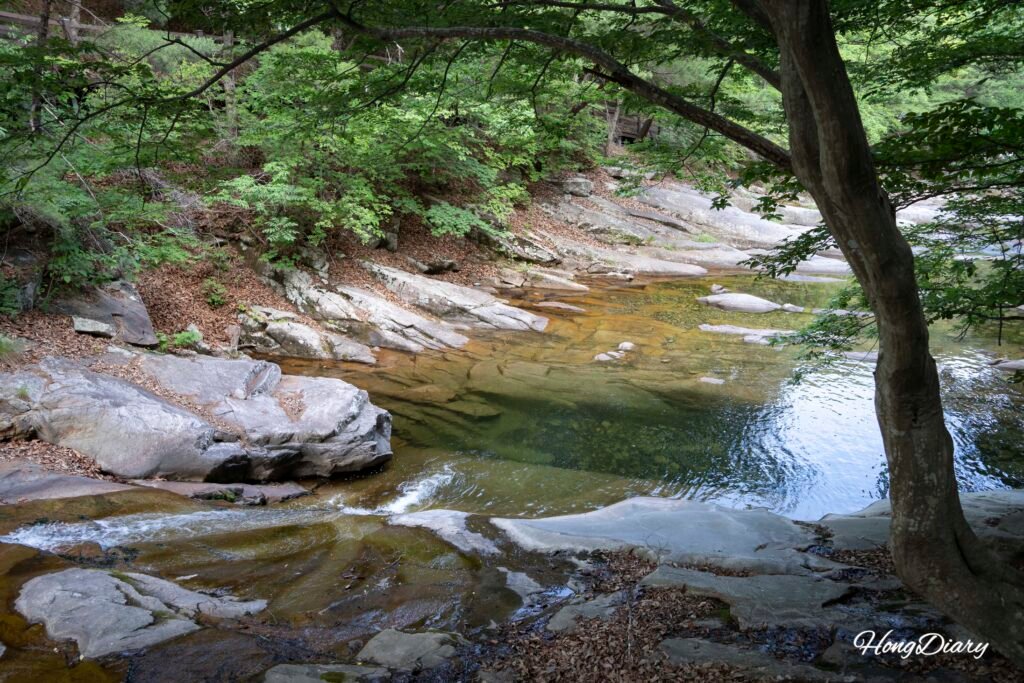
Taking a closer look at the water makes the depth obvious — the color alone tells you how deep it goes. The prohibition covers Hobakso pond, the valley up from it, and the Ocheonpyeong Rock area.
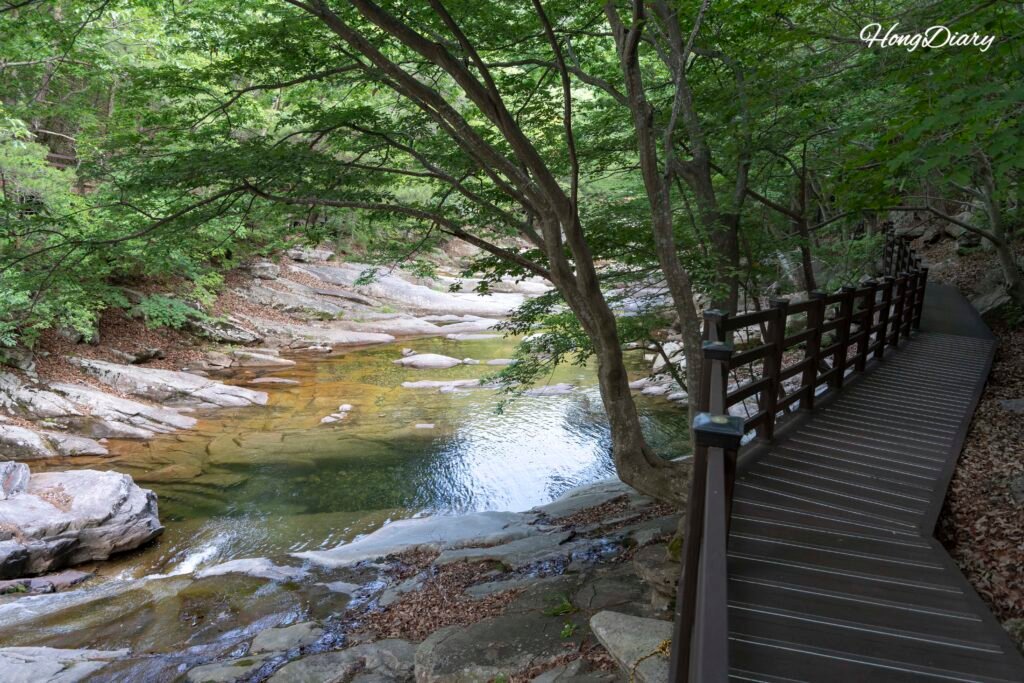
What’s allowed — and what most visitors do — is sitting along the shallower edges of the stream lower down, where the water is calm and accessible, and cooling off that way. When I visited, I saw families with camping chairs set up on the flat rocks, feet in the water, doing exactly nothing in particular. That’s the right approach here.
Cooking and campfires are also not permitted in the valley area.
The Walk to the Photo Spot
The actual Hobakso pond — the deep emerald pool at the base of the waterfall — requires a short additional walk from the main stream area. There are stone steps that lead up, followed by a well-installed deck trail. The deck makes the walk considerably easier than the stone steps might suggest at first, and the footing is manageable as long as you’re wearing proper shoes. Flat sandals or smooth-soled shoes aren’t ideal — the surface can be slippery in places.
One thing worth knowing: insects are abundant in this section, particularly in summer. A bug spray applied before heading up saves a lot of frustration.
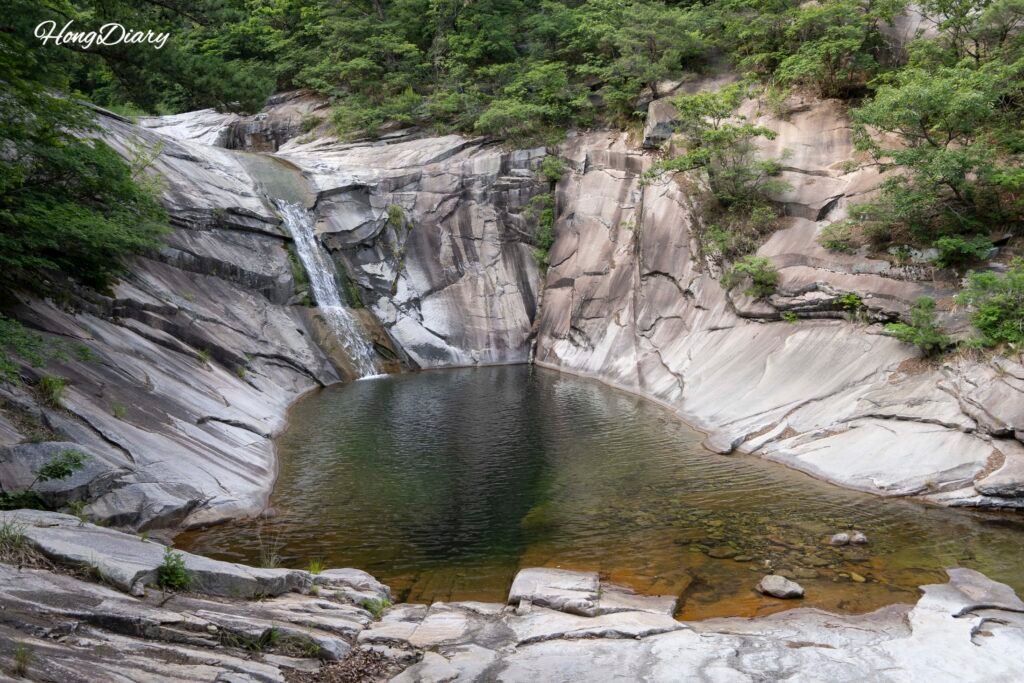
Once you reach the viewpoint, the full picture of Hobakso comes into view: the cliff face, the waterfall feeding the pool from above, and that striking green water held in the granite basin below. On a clear day it’s the kind of scene that stops you mid-step. On an overcast day — which was what I had — it’s still worth every step of the walk up.
Nearby
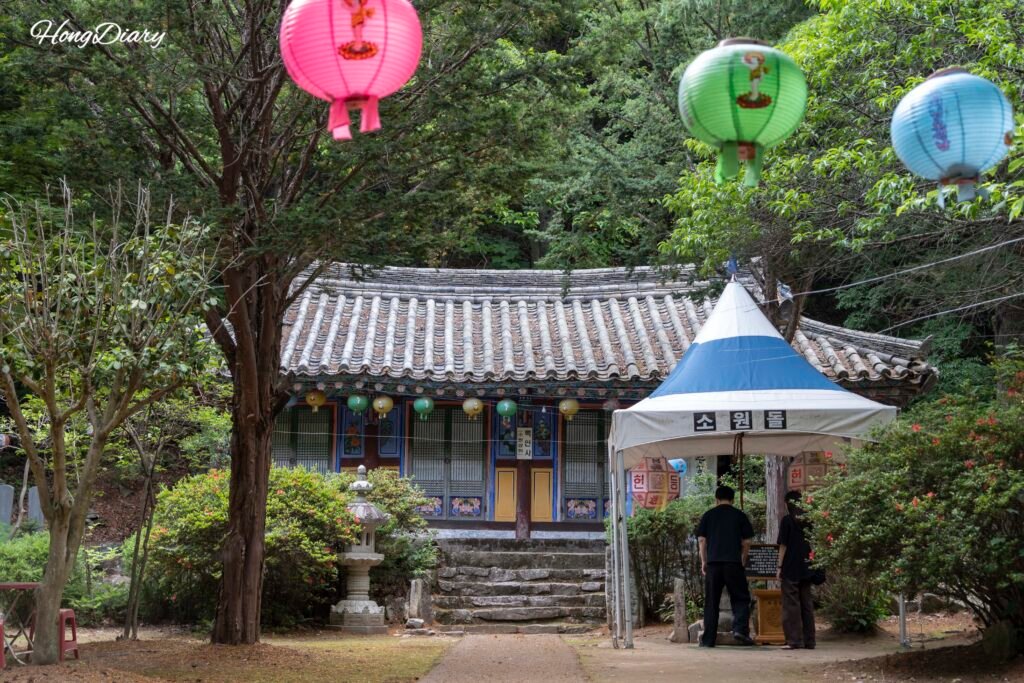
Baengnyeonsa Temple is also in the area — a small Buddhist temple you pass on the way in. It doesn’t take long to look around, and the setting suits the overall mood of the visit.
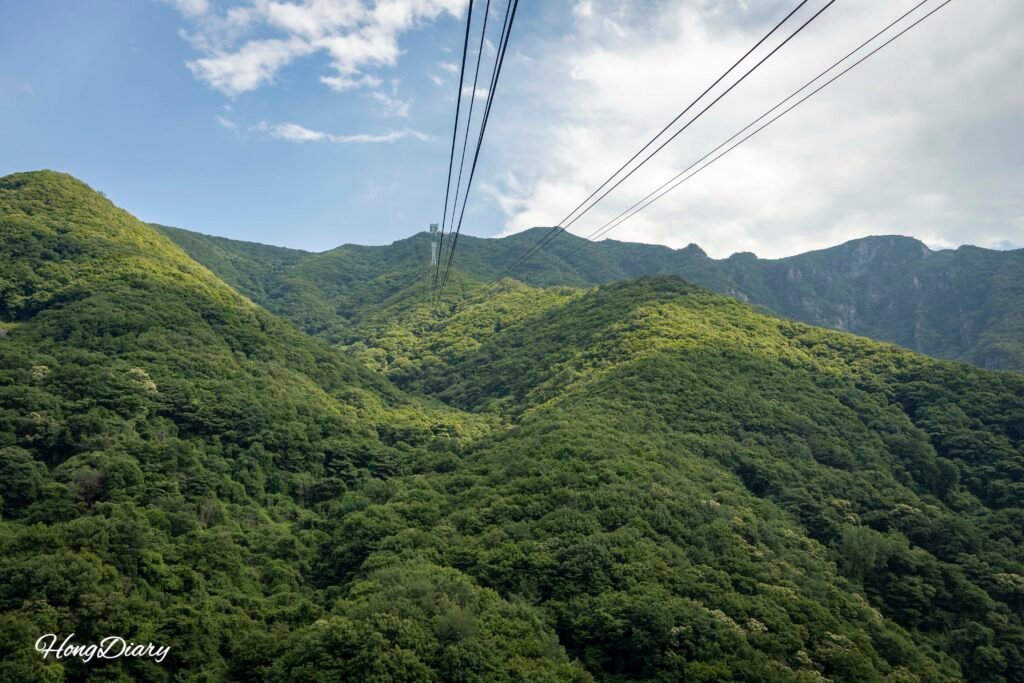
The Ice Valley Cable Car is about 15 minutes on foot from Hobakso. If you’re spending a half-day in the Eoreumgol area, combining the cable car ride up to the Yeongnam Alps ridge with a walk through Hobakso Valley makes for a well-rounded day without requiring significant additional travel.
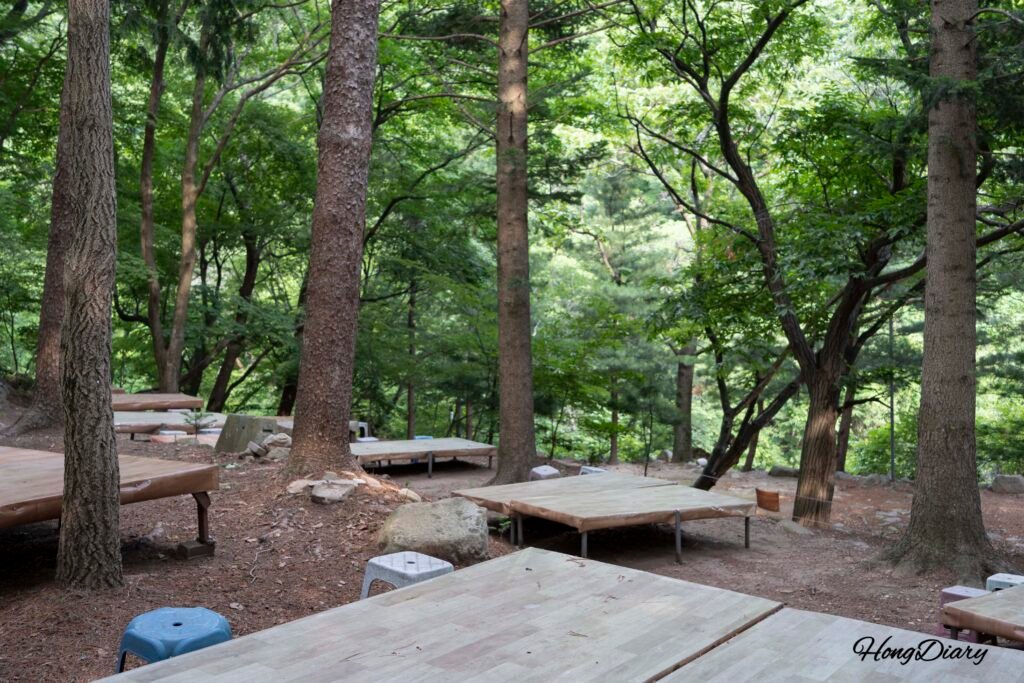
There’s a restaurant near the parking lot entrance with outdoor platform seating alongside the stream — a reasonable option if you want to eat with the valley view. There are also accommodation options with platform rentals in the area for those planning to stay longer.
What Hobakso Is Good For
Hobakso isn’t the place to come if your goal is active water play. It’s the place to come if you want a valley that looks like something from a painting, where the water is cold and clear and the forest is dense enough to make the heat outside feel like a different country.
It’s one of Miryang’s Eight Scenic Views — a designation that means something when you’re standing there looking at it. Free entry, free parking, a flat walk in, and a natural pool that’s been considered sacred for centuries. The swimming prohibition exists because the place is genuinely powerful, and the signs are there for good reason.
Come for the view. Bring bug spray. Wear shoes you can grip things with. Leave the swimming gear at home and bring a chair instead.
Where is Hobakso Valley located?
Hobakso Valley is at 334-1 Sannae-myeon, Miryang-si, Gyeongnam, within the Gajisan Mountain area of the Yeongnam Alps. It is approximately 3km from Eoreumgol Valley and about a 15-minute walk from the Ice Valley Cable Car lower station.
Is there an entrance fee or parking fee at Hobakso?
Both admission and parking are free. The parking lot is located at the entrance to the valley, and the path from the lot to the water is flat and easy.
Can you swim at Hobakso Valley in Miryang?
No. Swimming is strictly prohibited throughout Hobakso pond and the surrounding valley area. The pond is very deep and water depth in the valley reaches 2 to 5 meters or more in certain sections. Currents can change with weather conditions, making it dangerous. Sitting in the shallower edge areas of the stream lower down and cooling your feet is allowed and what most visitors do.
Is cooking or camping allowed at Hobakso?
Cooking and campfires are not permitted in the valley area. Visitors can bring chairs and snacks to enjoy in the natural setting, but cooking equipment should be left behind. There is a restaurant near the parking lot entrance with outdoor platform seating alongside the stream.
Why is the water at Hobakso such an unusual color?
The vivid green color of Hobakso pond comes from the combination of its significant depth and the white granite rock that surrounds it. The deeper the water, the more intensely the color appears. In direct light, it can look almost emerald green.
What is the best way to visit Hobakso and the Ice Valley Cable Car together?
The two are approximately a 15-minute walk apart. A half-day itinerary combining a cable car ride up to the Yeongnam Alps ridge with a walk through Hobakso Valley works well without requiring additional driving. If visiting by car, park at the lower cable car station or the Hobakso lot — both are free.
What should I bring to Hobakso Valley?
Wear shoes with good grip — the stone steps and deck trail to the Hobakso viewpoint can be slippery in places. Bring insect repellent, as bugs are particularly active in the upper trail section in summer. A portable chair or mat is useful for relaxing at the water’s edge. Swimming gear is not needed.