
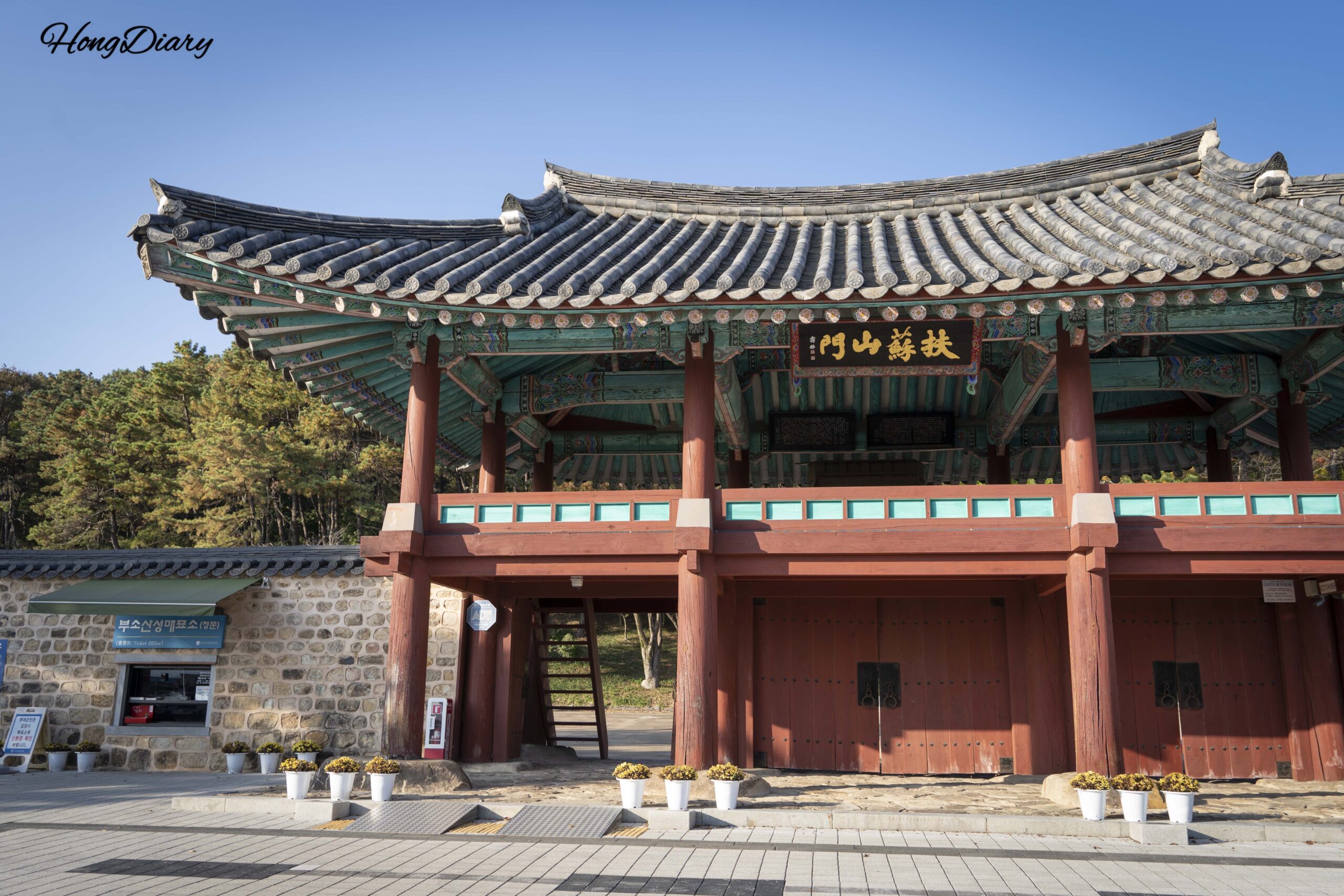
In 660 AD, as enemy forces stormed through the gates of a royal capital, the court women of the fallen Baekje Kingdom climbed to the edge of a riverside cliff and stepped off rather than face capture. Their billowing robes, witnesses said, looked like flower petals scattering in the wind. The cliff was named Nakhwaam — “The Rock of Falling Flowers.” It still stands today inside a quiet hilltop fortress called Busosanseong, in a small town called Buyeo. I walked there on a warm autumn afternoon, following leaf-covered trails through the same forest that once hid a kingdom’s last stand, and it turned out to be one of the most peaceful walks I have taken anywhere in Korea.
Table of Contents
Essential Information: Busosanseong Fortress Hours, Admission Fees, and How to Get There
| Detail | Info |
|---|---|
| Address | 31 Buso-ro, Buyeo-eup, Buyeo-gun, Chungcheongnam-do |
| Hours | Mar–Oct: 09:00–18:00 / Nov–Feb: 09:00–17:00 |
| Admission | Adults ₩2,000 (~$1.45 USD / ~€1.25 EUR) · Teens ₩1,100 (~$0.80 / ~€0.70) · Children ₩1,000 (~$0.70 / ~€0.65) |
| Getting There from Seoul | Intercity bus from Seoul Nambu Terminal to Buyeo Intercity Bus Terminal, approx. 2 hr 10 min, ₩18,700 (~$13.35 / ~€11.90) |
| Getting There from Daejeon | Intercity bus from Daejeon Complex Terminal to Buyeo, approx. 1 hr 10 min, ₩11,400 (~$8.15 / ~€7.25) |
| Local Bus to Fortress | From Buyeo Bus Terminal, take bus 200, 314, 328, 701, or 702 (approx. 5 min), get off at Tourism Parking Lot stop, then walk 230 m to the entrance |
Prices converted at approximately $1 USD ≈ ₩1,400 / €1 EUR ≈ ₩1,575 (as of September 2026). Rates may fluctuate.
Buyeo and the Baekje Kingdom: Why This Small Town Matters
Buyeo is a small, unhurried town in the southern part of South Chungcheong Province, roughly 150 km south of Seoul. For 123 years — from 538 AD until its fall in 660 AD — it served as Sabi, the final royal capital of the Baekje Kingdom, one of the three ancient kingdoms that shaped early Korean civilization alongside Silla and Goguryeo. Today, four Baekje-era sites in Buyeo, including Busosanseong Fortress, are collectively inscribed as a UNESCO World Heritage Site under the designation “Baekje Historic Areas” (2015). Unlike Gyeongju, where Silla Dynasty ruins draw busloads of visitors year-round, Buyeo remains remarkably quiet. There are no long entrance lines, no tour-group megaphones. It is the kind of place where you hear birdsong, wind in the trees, and your own footsteps on a leaf-covered path.
Before the Fortress Gate: Golden Ginkgos and a 3D Trip to Baekje
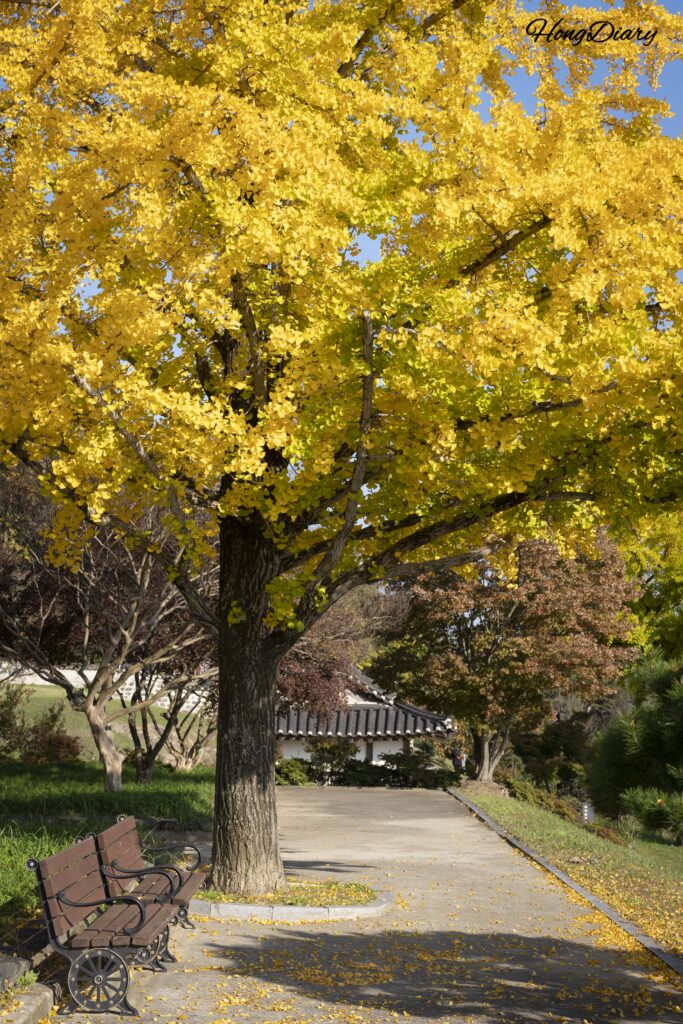
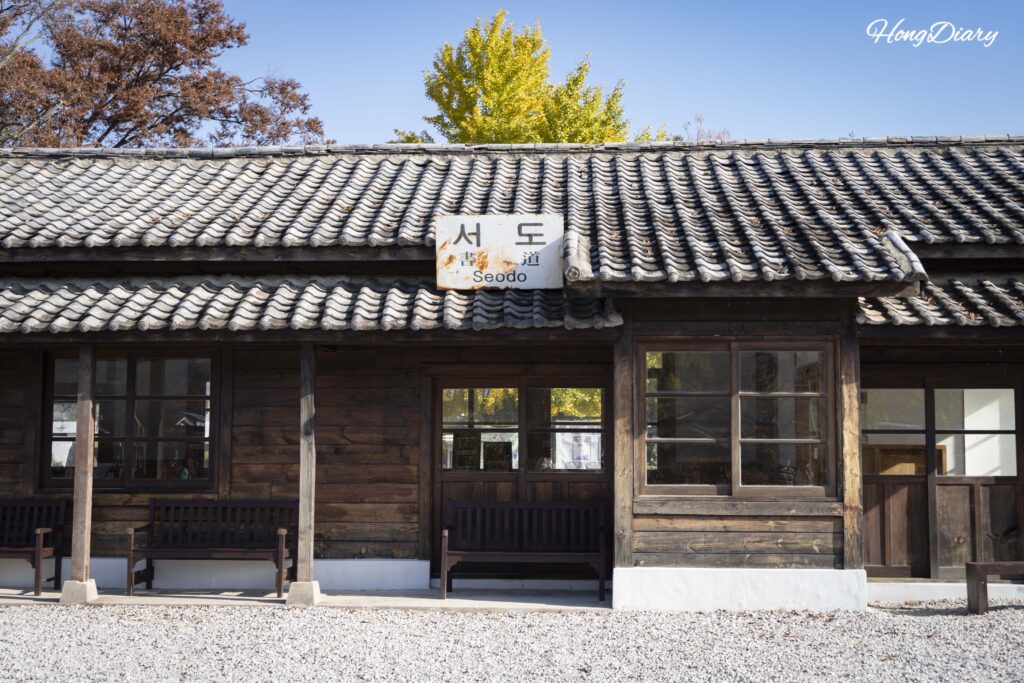
Busosanseong has two entrances — a main gate (Jeongmun) and a back gate (Gumun). I parked near the back gate side and immediately noticed a towering ginkgo tree that had turned a full, blazing gold. It stopped me in my tracks. That single tree, standing against a clear blue autumn sky, set the mood for the entire visit. If you are here in late October or early November, this spot alone is worth a few minutes and a dozen photos.
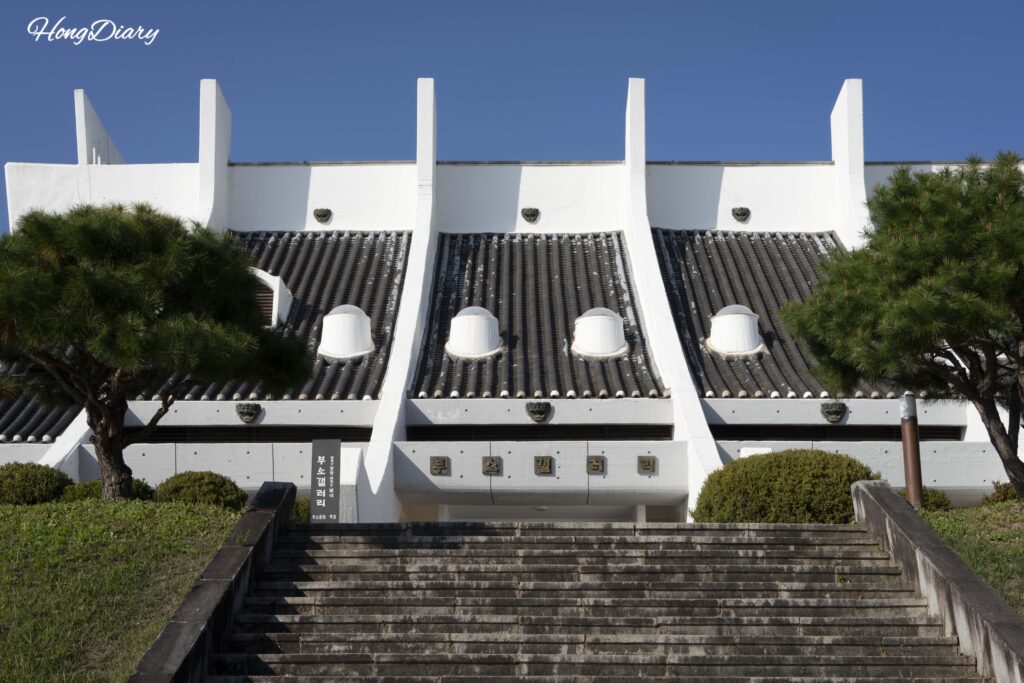
Just beside the ginkgo, before you even enter the fortress, there is a cluster of heritage buildings worth a quick stop. The Gwanbuk-ri Archaeological Site, the old Buyeo Guest House (Gaeksa, a traditional government lodging for traveling officials), and the Sabi Capital VR Experience Center all sit in this area. The VR center recreates the ancient Baekje capital Sabi in 3D, letting you walk through digitally reconstructed palaces and streets as they might have looked 1,400 years ago. It is a short, surprisingly well-produced experience that gives useful context before you head up the mountain.
| Detail | Sabi Capital VR Experience Center |
|---|---|
| Hours | Mar–Oct: 10:00–17:00 / Nov–Feb: 10:00–16:00 (Closed Mondays) |
| Admission | Adults & Teens ₩1,000 (~$0.70 USD / ~€0.65 EUR) · Children ₩500 (~$0.35 / ~€0.30) |
Hours and pricing for this center have changed in the past, so it is worth confirming on-site or at the nearby ticket counter before planning around it.
On the day I visited, the weather was warm enough that a few locals were resting on the wooden veranda of the old guest house, stretched out in the sun. That kind of unhurried, no-rush atmosphere is something you notice immediately in Buyeo — it is a town that moves at a different speed.
Entering the Fortress
I bought my ticket at the back gate counter — ₩2,000 (~$1.45 USD / ~€1.25 EUR) per adult, which felt like practically nothing for a UNESCO-listed site. Whether you enter through the main gate or the back gate, you eventually pass through the same checkpoint, so either route works. I ended up descending through the main gate later in the day and found that path equally scenic, with its own character — a wide stone staircase flanked by old fortress walls.
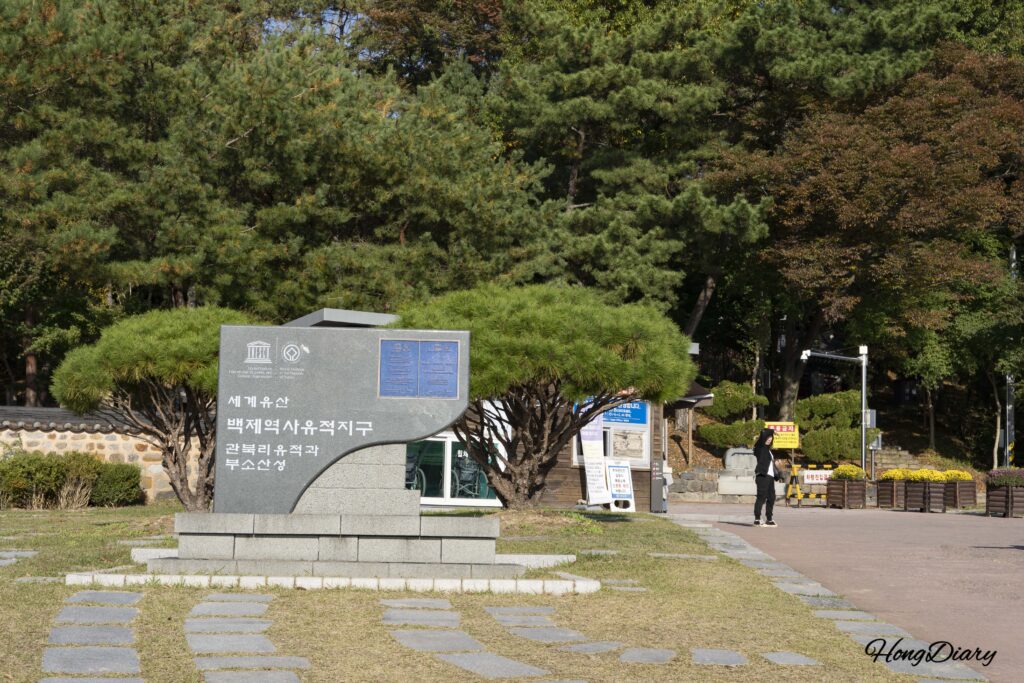
Busosanseong was built to defend Sabi, the Baekje capital, during the kingdom’s most prosperous period. The fortress wraps around Busosan Mountain (just 106 meters above sea level — more of a tall wooded hill than a mountain), and the remains of its walls, gates, and lookout pavilions are scattered along the trails. A signboard near the entrance outlines the history in Korean, English, and Japanese, explaining how the fortress once functioned as both the royal court’s private retreat in peacetime and its last line of defense during war.
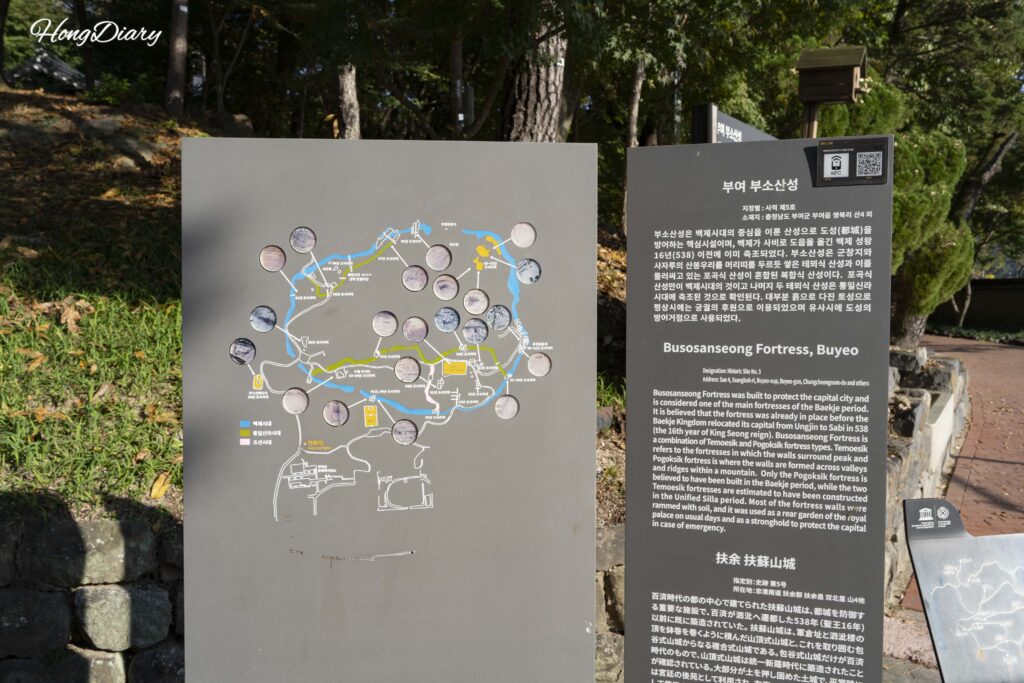
What struck me most about the historical context here is not the scale of the ruins — Busosanseong is modest compared to, say, Hwaseong Fortress in Suwon — but the weight of the story behind them. This is where a kingdom ended. The walls you walk along were the last thing standing between the Baekje royal family and the invading Silla-Tang alliance. That awareness adds a layer of gravity to what is otherwise a gentle, easygoing walk through the forest.
The Trail: 1,400 Years Under a Forest Canopy
The walking path from the fortress entrance to Nakhwaam Rock is approximately 1.2 km, and it takes roughly 20 to 30 minutes at a comfortable pace. The trail is wide, mostly flat or gently sloping, and well maintained — paved in some sections, packed earth in others. There are a few short staircase segments, but nothing that would challenge anyone in reasonable health. I saw families with young children, elderly couples, and solo walkers all sharing the path without difficulty. My own kid ran ahead the entire time without any trouble.
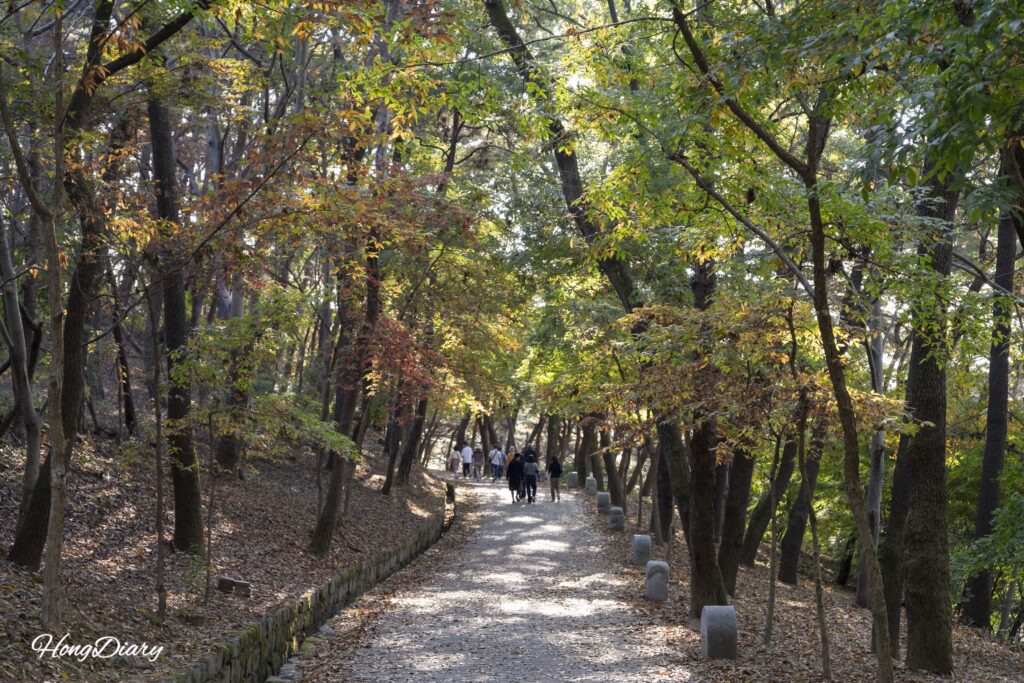
Even though the peak autumn color had not fully arrived yet when I visited, the forest was already shifting. Some branches had turned amber and copper, while most of the canopy was still a deep green. Fallen leaves covered the ground in thick, rustling layers. When sunlight broke through the tree cover and lit up the leaf-strewn path, the effect was genuinely calming — the kind of quiet beauty that makes you want to walk slower, not faster.
There are rest areas with benches along the way, and I recommend using them. Sit for a moment. Listen. The sounds here are wind, birds, and the occasional crunch of someone else’s footsteps on dry leaves. That is it. No traffic noise, no background music, no announcements. For a site within walking distance of a bus terminal, the silence is remarkable.
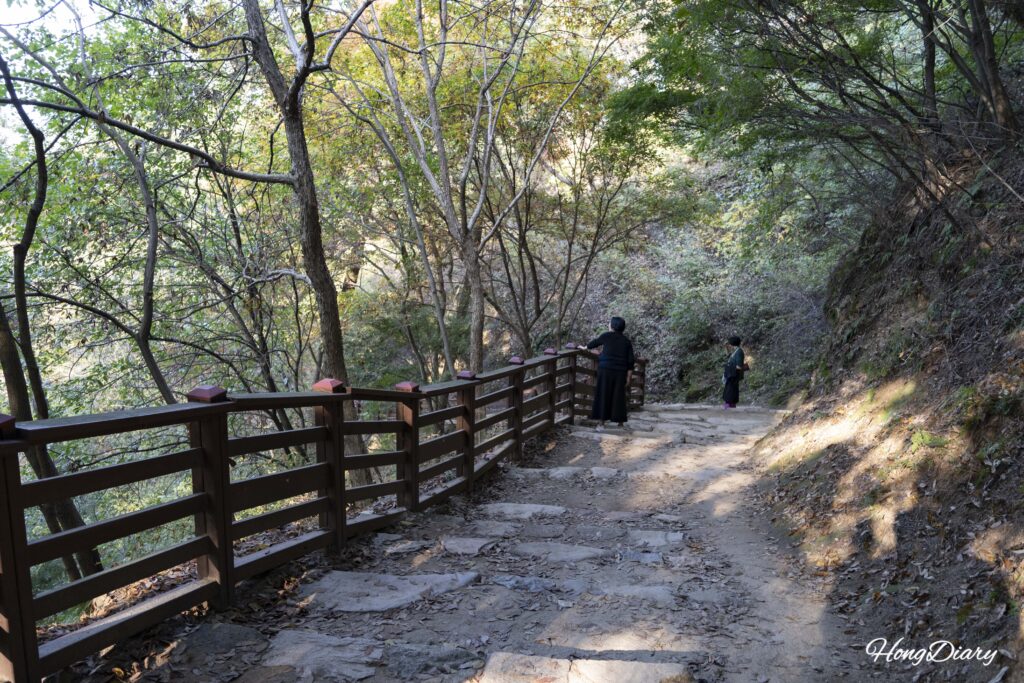
If you have more time, side trails lead to other historical structures within the fortress grounds — Banwollu (a crescent-moon-shaped pavilion with a breeze and a view), Sajaru (a wooden tower once used as a military lookout), and Samchungsa (a shrine honoring three loyal Baekje officials who refused to surrender). I kept my visit focused on the route to Nakhwaam and back, but any of these would be worth adding if you are not pressed for time.
Nakhwaam Rock and Baekhwajeong Pavilion: Where the Story Lives
The trail ends at a clearing where a small, elegant wooden pavilion called Baekhwajeong sits perched above the cliff. “Baekhwa” means “a hundred flowers” — a reference to the court women whose deaths gave this place its name. The pavilion was built to honor their memory, and its quiet, understated design feels appropriate for the story it carries.
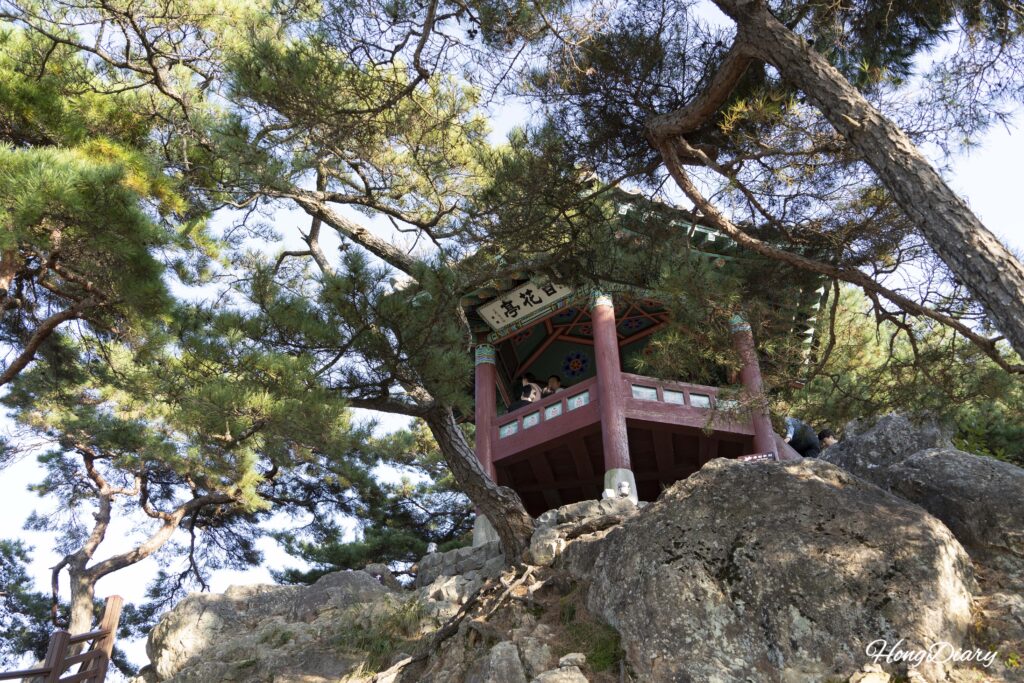
From here, the view opens up. The Baengmagang River (a historic section of the Geum River, sometimes called “White Horse River”) stretches out below in a wide, slow curve, flanked by forested hills. The cliff drops sharply — you can see the rocks below and the water beyond. The name Nakhwaam translates literally to “Falling Flowers Rock.” It refers to the legend that in the final days of Baekje, as the Silla-Tang army stormed through the fortress gates, the court women chose to end their lives rather than be captured. They jumped from this very cliff, and their falling figures, robes unfurling in the air, were said to resemble flower petals drifting from a tree.
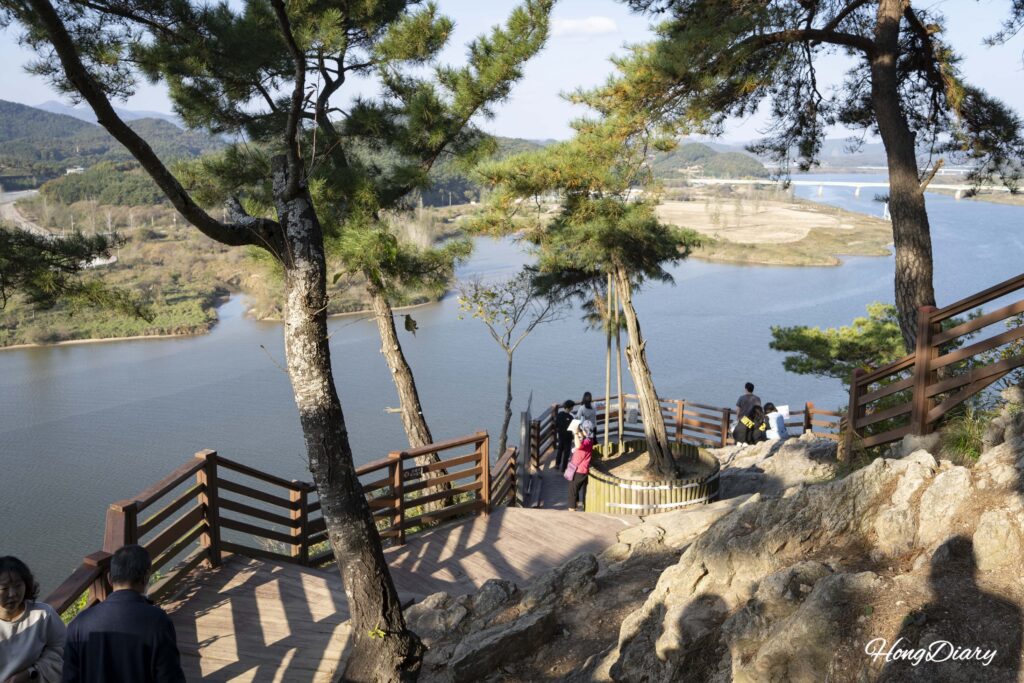
Historians debate the literal details — the often-cited number “3,000 court women” is likely symbolic rather than exact — but the emotional core of the story is not in question. This was the site of a kingdom’s collapse, and the people who lived through it made desperate, final choices on this ground. Standing at the edge of the cliff and looking down at the river, the weight of that history is hard to ignore. It is a beautiful spot, and it is a heavy one, and those two things exist at the same time.
Baengmagang River Cruise: Seeing Nakhwaam From Below
While I was standing at the cliff, I noticed a traditional-style boat drifting slowly along the river far below. That is the Baengmagang River Cruise — a sightseeing boat modeled after the hwangpo sailboats (yellow-sailed wooden vessels) used during the Baekje period. The cruise departs from Gudeurae Wharf and follows the river past Busosanseong, Nakhwaam Rock, and Goransa Temple (a Baekje-era Buddhist temple tucked into the mountainside below the cliff).
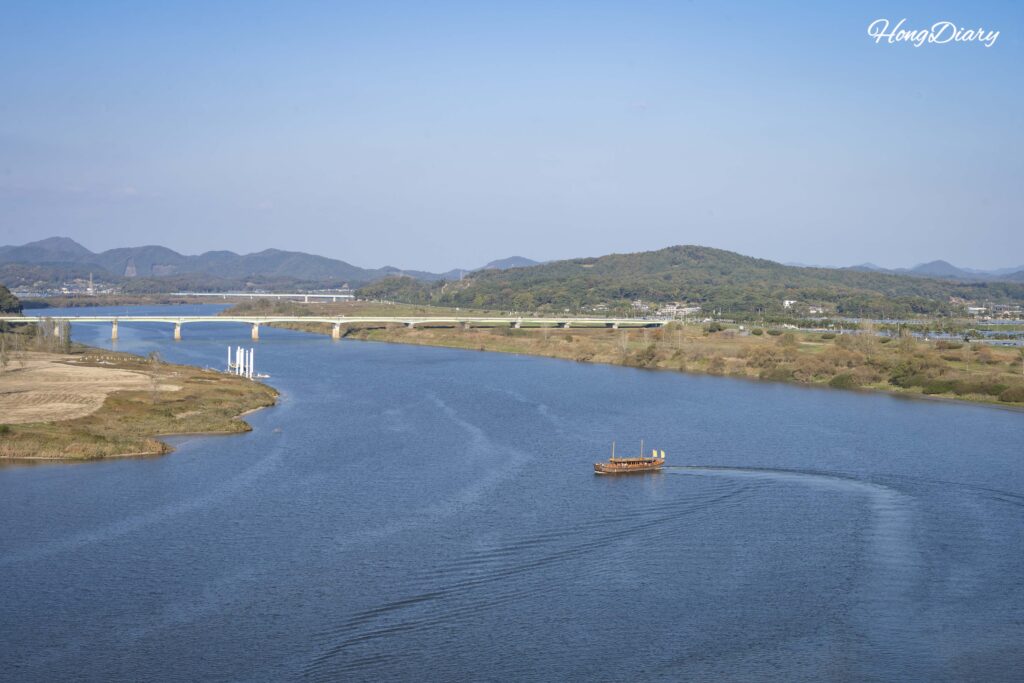
The boat ride offers a completely different perspective on Nakhwaam — you see the cliff towering above you from the water, which makes its height and the story behind it feel much more real. It is also a convenient shortcut: instead of hiking over the mountain to reach Goransa Temple, the cruise drops you right at the temple dock.
| Detail | Baengmagang River Cruise |
|---|---|
| Departure | Gudeurae Wharf, Buyeo |
| Route | Gudeurae Wharf to Busosanseong, Goransa Temple, Nakhwaam Rock, and Subukjeong Pavilion (round trip) |
| Price (Round Trip) | Adults ₩11,000 (~$7.85 USD / ~€7.00 EUR) · Children ₩7,000 (~$5.00 / ~€4.45) |
Walking Back: The Quiet Part
I retraced my steps from Nakhwaam Rock toward the main gate instead of going back through the rear entrance. The descent through the main gate route follows the old fortress wall — sections of rough stone stacked centuries ago, now partly overgrown with moss and framed by trees just beginning to show their autumn reds and oranges. It is a fitting way to end the walk: the colors deepen as you descend, and the fortress walls give a last reminder that this forested hill was once the boundary between a royal capital and the world outside it.
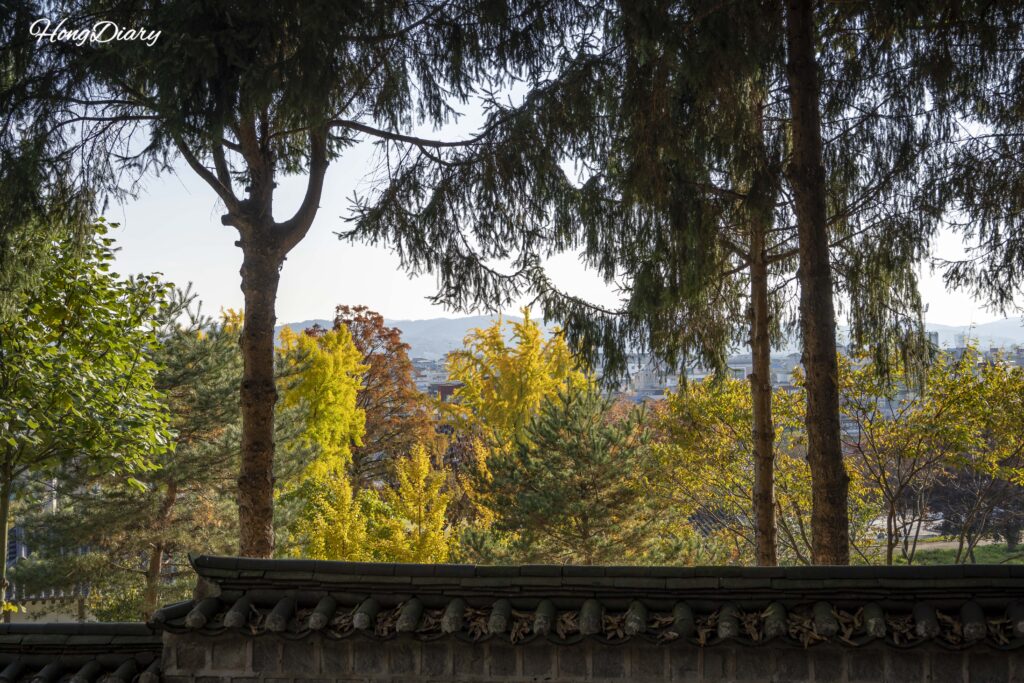
Buyeo is not a place that shouts for your attention. There are no flashy attractions, no viral-worthy photo ops engineered for social media. What it offers instead is something increasingly rare in Korea’s tourism landscape — a chance to walk slowly through real history in near-solitude, surrounded by forest and river and the kind of quiet that lets a 1,400-year-old story actually reach you. The autumn light filtering through the canopy at Busosanseong Fortress in Buyeo, the wide river below Nakhwaam Rock, the rustling of dry leaves underfoot — these are small things, but they stayed with me long after I left.
If Buyeo has you curious about other quiet Korean towns that come alive in autumn, I spent other days that same season exploring a few more.
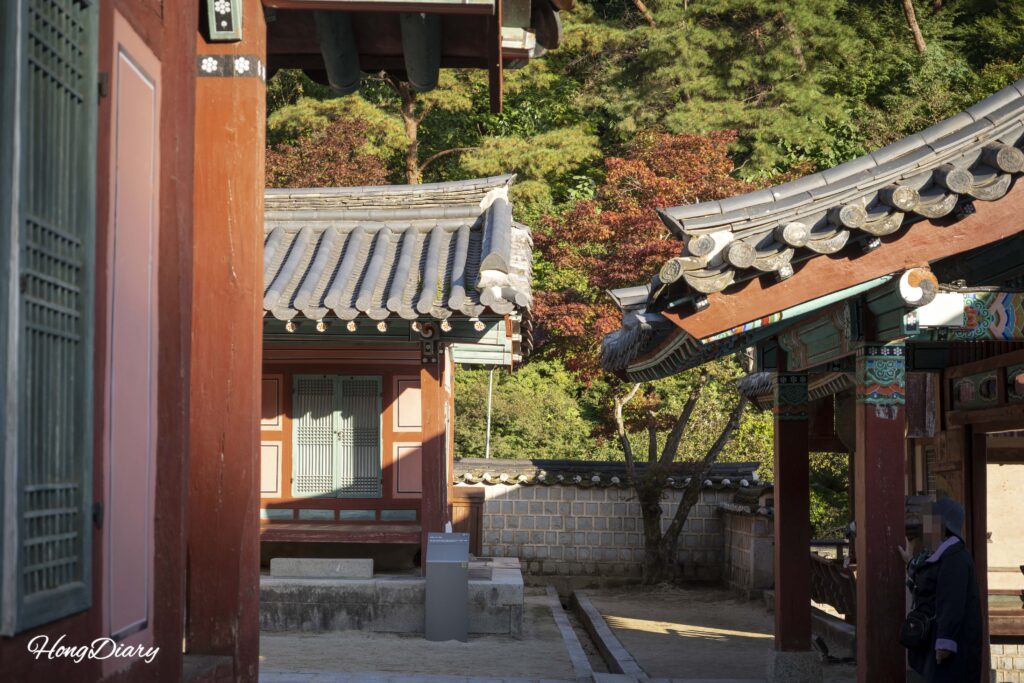
That same evening in Andong,
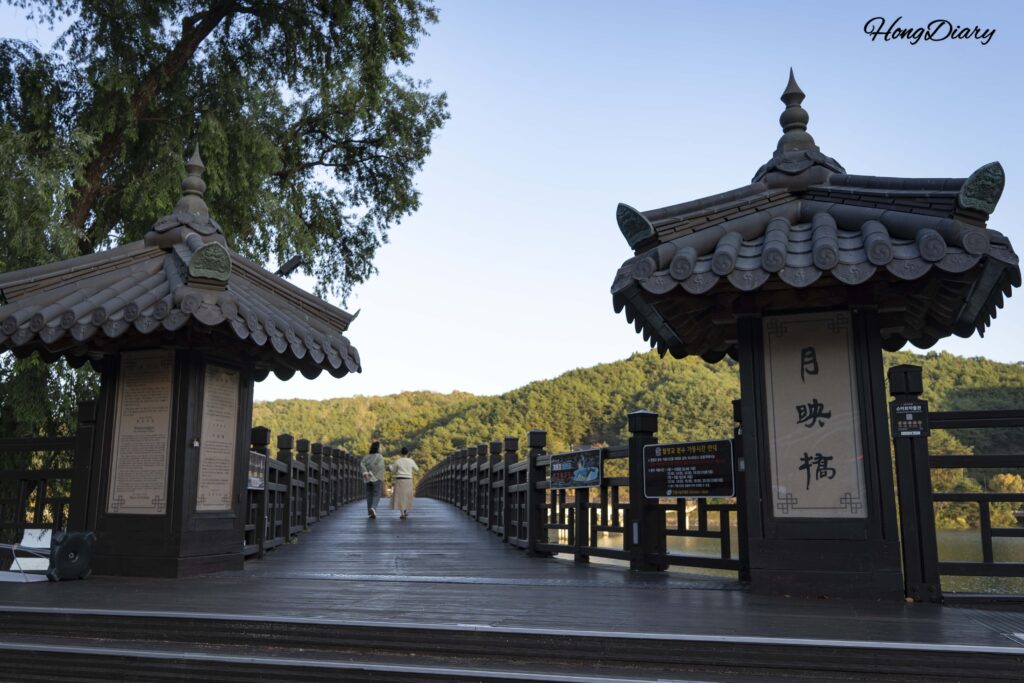
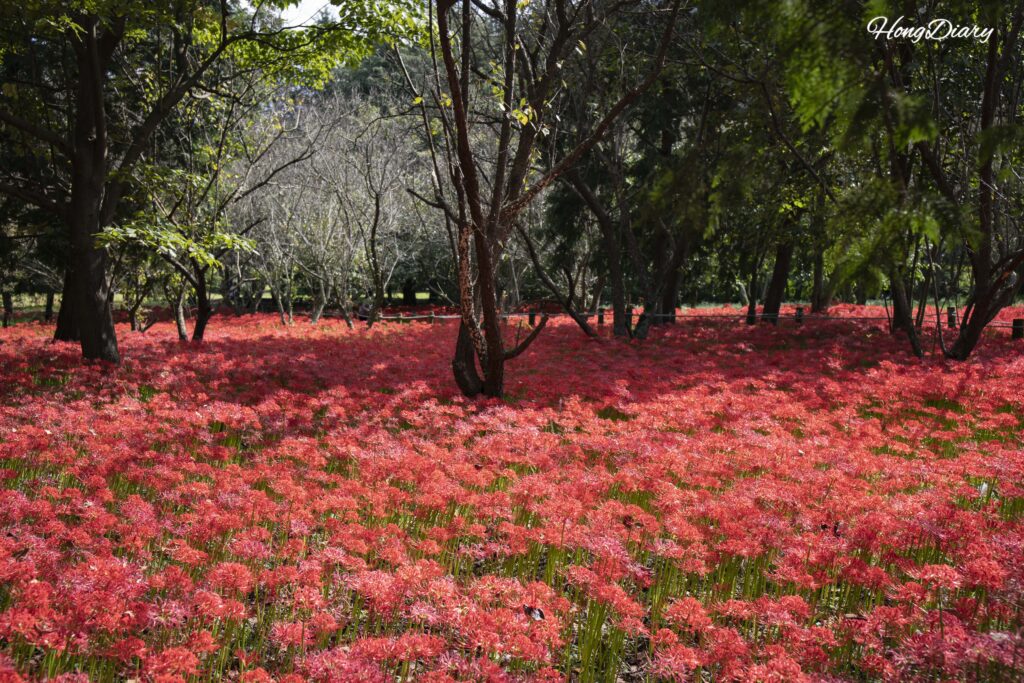
And for a completely different kind of autumn color, there was the day I accidentally missed my bus stop near Naejangsan and stumbled into a field of red spider lilies that looked like the ground was on fire.
Each of these towns offered its own version of autumn in Korea — quieter, slower, and more personal than anything you will find in Seoul or Busan.
Frequently Asked Questions (FAQ) and Practical Visitor Tips for Busosanseong Fortress
How do I get to Busosanseong Fortress in Buyeo from Seoul without a car?
Take an intercity bus from Seoul Nambu Terminal directly to Buyeo Intercity Bus Terminal. The ride takes about 2 hours and 10 minutes and costs ₩18,700 (~$13.35 USD / €11.90 EUR). From the bus terminal, local buses 200, 314, 328, 701, or 702 reach the Tourism Parking Lot stop in roughly 5 minutes — from there, it is a 230-meter walk to the fortress entrance. Alternatively, you can reach Buyeo from Daejeon Complex Terminal in about 1 hour and 10 minutes for ₩11,400 ($8.15 USD / ~€7.25 EUR).
How much does it cost to enter Busosanseong Fortress?
Admission is ₩2,000 (~$1.45 USD / €1.25 EUR) for adults, ₩1,100 ($0.80 / €0.70) for teens, and ₩1,000 ($0.70 / €0.65) for children. The Sabi Capital VR Experience Center nearby is a separate ticket at ₩1,000 ($0.70 / €0.65) for adults and teens, and ₩500 ($0.35 / ~€0.30) for children. Note that the VR center’s hours and pricing have changed in the past, so it is worth confirming availability on-site.
How long does it take to walk from the Busosanseong entrance to Nakhwaam Rock?
The trail from the entrance to Nakhwaam Rock is approximately 1.2 km and takes about 20 to 30 minutes at a relaxed pace. The path is mostly gentle slopes with a few short staircase sections, suitable for all ages and fitness levels.
What is the legend behind Nakhwaam Rock in Buyeo?
Nakhwaam means “Falling Flowers Rock.” According to the legend, when the Baekje Kingdom fell to the Silla-Tang alliance in 660 AD, the royal court women chose to jump from this cliff into the Baengmagang River below rather than face capture. Their falling figures, robes billowing in the wind, were said to resemble flower petals scattering from a tree — giving the cliff its poetic name.
What is the Baengmagang River Cruise, and how much does it cost?
The Baengmagang River Cruise is a sightseeing boat ride along the historic section of the Geum River that runs beneath Nakhwaam Rock. The boats are modeled after traditional Baekje-era hwangpo sailboats (yellow-sailed wooden vessels). The round-trip cruise departs from Gudeurae Wharf and passes Busosanseong, Nakhwaam Rock, Goransa Temple, and Subukjeong Pavilion. Tickets are ₩11,000 (~$7.85 USD / €7.00 EUR) for adults and ₩7,000 ($5.00 / ~€4.45) for children.
When is the best time to visit Busosanseong Fortress for autumn foliage?
The autumn colors at Busosanseong typically peak from mid-to-late October through early November, depending on the year. Even before the peak, the forest trail is atmospheric — fallen leaves cover the ground and the shifting light through the canopy creates a serene walking experience. The fortress is open from 09:00 to 18:00 during spring and summer (March through October) and from 09:00 to 17:00 in winter (November through February).
Is Busosanseong Fortress part of a UNESCO World Heritage Site?
Yes. Busosanseong is one of four Baekje-era heritage sites in Buyeo — along with the Neungsan-ri Royal Tombs, Jeongnimsa Temple Site, and the Buyeo Naseong City Wall — that are inscribed as part of the “Baekje Historic Areas” UNESCO World Heritage Site, designated in 2015. Together with sites in Gongju and Iksan, they represent the cultural legacy of the Baekje Kingdom, which ruled parts of the Korean Peninsula from 18 BC to 660 AD.
All prices converted at approximately $1 USD ≈ ₩1,400 / €1 EUR ≈ ₩1,575 (as of September 2026). Rates may fluctuate.