
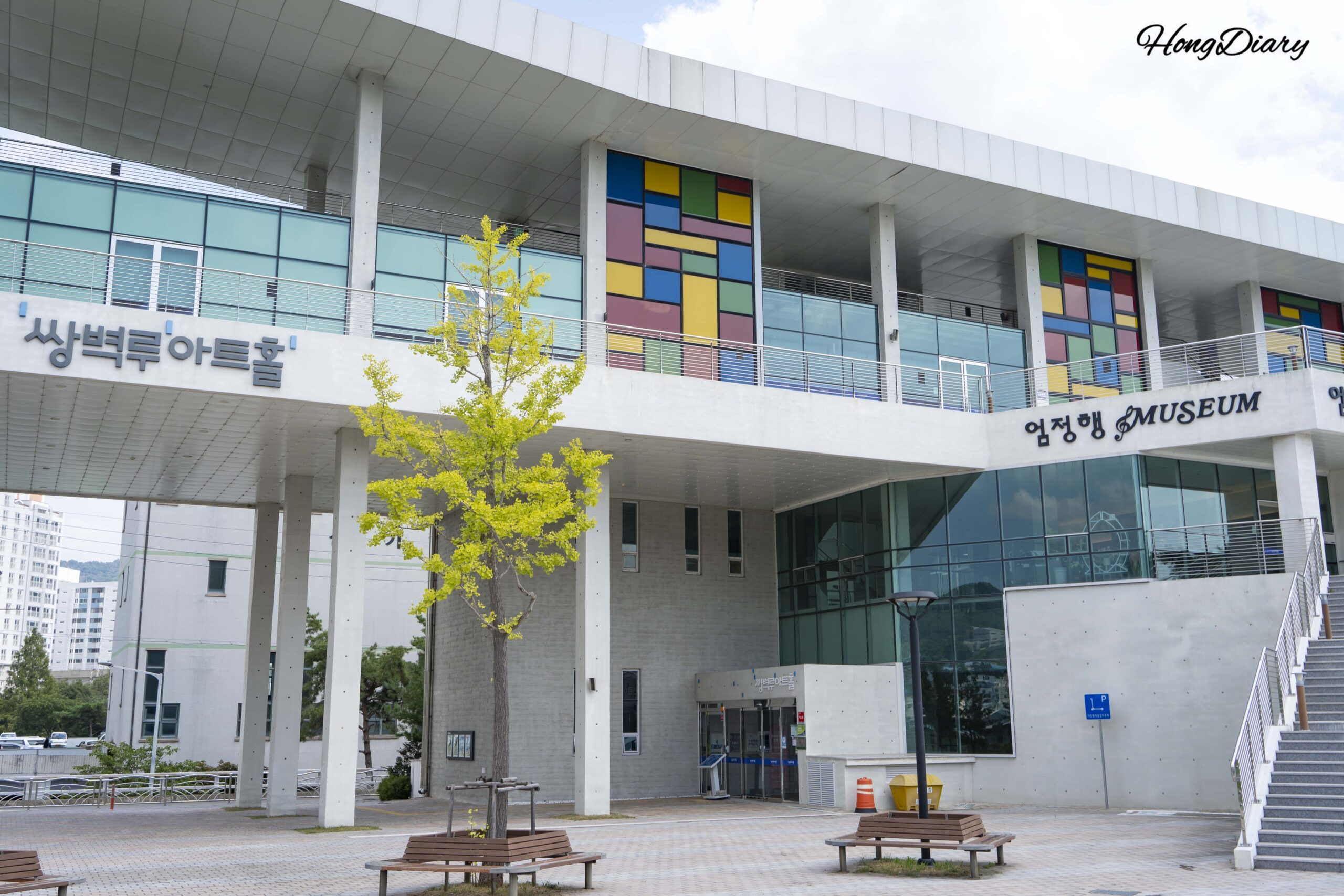
I’d passed this building a few times while walking along Yangsancheon Stream in Yangsan, a small city just north of Busan. Each time, I wondered what was inside. Ssangbyeokru Art Hall in Yangsan turned out to hold a 250-seat concert venue on its ground floor — but the real find was on the second floor: a free museum dedicated to tenor Eom Jeong-haeng, a pretty big deal in the world of Korean classical vocal music. On the day I visited, I was the only person there.
Table of Contents
Visitor Guide: How to Get to the Eom Jeong-haeng Museum from Busan
| Detail | Information |
|---|---|
| Name | Ssangbyeokru Art Hall — Eom Jeong-haeng Museum (2nd Floor) |
| Address | 26 Singi-gangbyeon-ro, Yangsan-si, Gyeongsangnam-do, South Korea |
| Hours | 10:00 AM – 5:00 PM |
| Closed | Sundays, Mondays, and Korean national holidays |
| Admission | Free |
| Parking | Free — available in front of the building (approximately 12 spaces) |
| Website | ssangbyeoklu.ycf.or.kr |
Prices in this article are converted at approximately $1 USD ≈ ₩1,400 / €1 EUR ≈ ₩1,575 (as of September 2026). Rates may fluctuate.
Getting to Yangsan from Busan
Yangsan is a city in Gyeongsangnam-do (South Gyeongsang Province), sitting right on Busan’s northern border. Administratively it’s a separate municipality, but in daily life it works as a satellite of Busan — tens of thousands of residents commute across the border for work, and the two cities share a public transit network. If you’re based in Busan, Yangsan is reachable by subway, bus, or car, and most visitors treat it as a comfortable day trip.
By public transit: Take Busan Metro Line 2 to Yangsan Station, then transfer to Yangsan Village Bus No. 2. In Korea, village buses (called maul-beoseu) are small community minibuses that cover short, local routes connecting subway stations to neighborhoods and nearby attractions — they’re easy to spot and accept the same transit cards as the subway. Ride six stops to the Haecheon-tang bus stop, then walk about 700 meters (roughly 10 minutes) to reach the building.
By car: Driving from central Busan to Yangsan takes approximately 30 to 40 minutes. The building has a small free parking lot with space for about 12 vehicles.
Coming soon: A new light rail line called the Yangsan Line is scheduled to open in December 2026, connecting from Nopo Station (the northern terminus of Busan Metro Line 1) and Busan’s main intercity bus terminal, which should cut travel time even further.
The city is popular among locals for its riverside cycling trails, camping parks, and proximity to Tongdosa Temple (a UNESCO World Heritage site), but it almost never shows up on English-language travel itineraries. That’s part of what made finding a place like Ssangbyeokru Art Hall here feel like stumbling onto something most visitors would never know about.
The Building: A Joseon-Era Pavilion, Reborn
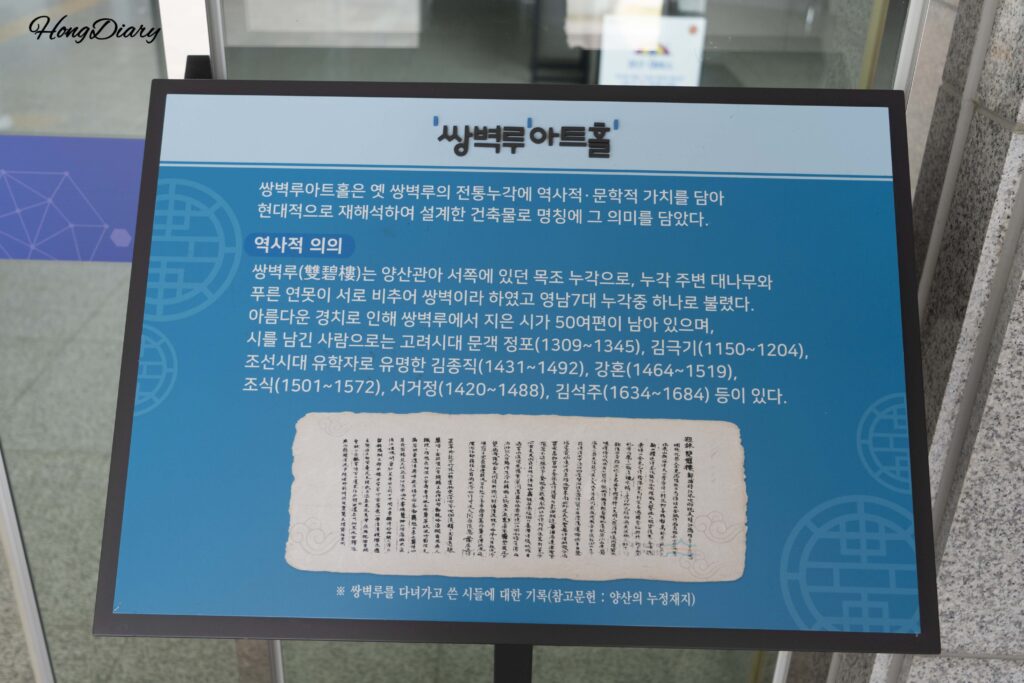
The name Ssangbyeokru is not arbitrary. It traces back to a pavilion that once stood inside the walls of Yangsan’s old fortress during the Joseon dynasty (1392–1897). That original structure was counted among the “Seven Great Pavilions of Yeongnam” — a historical designation for the most scenic elevated buildings across Korea’s southeastern provinces, a region historically known as Yeongnam. The original pavilion is long gone, but Ssangbyeokru Art Hall was designed to echo the proportions and character of that old structure, reinterpreted through a modern architectural lens.
It works, partly because of its setting. Yangsancheon Stream runs right alongside the building, and the surrounding landscape gives it a sense of rootedness that most contemporary performance halls lack. The ground floor houses the main concert hall with 250 seats. The second floor is dedicated to exhibition space — currently the permanent home of the Eom Jeong-haeng Museum. A third-floor cafeteria with large glass windows offers a spot to sit before or after a performance.
I wasn’t here for a concert, though. I headed straight to the second floor.
Stepping Into the Eom Jeong-haeng Museum
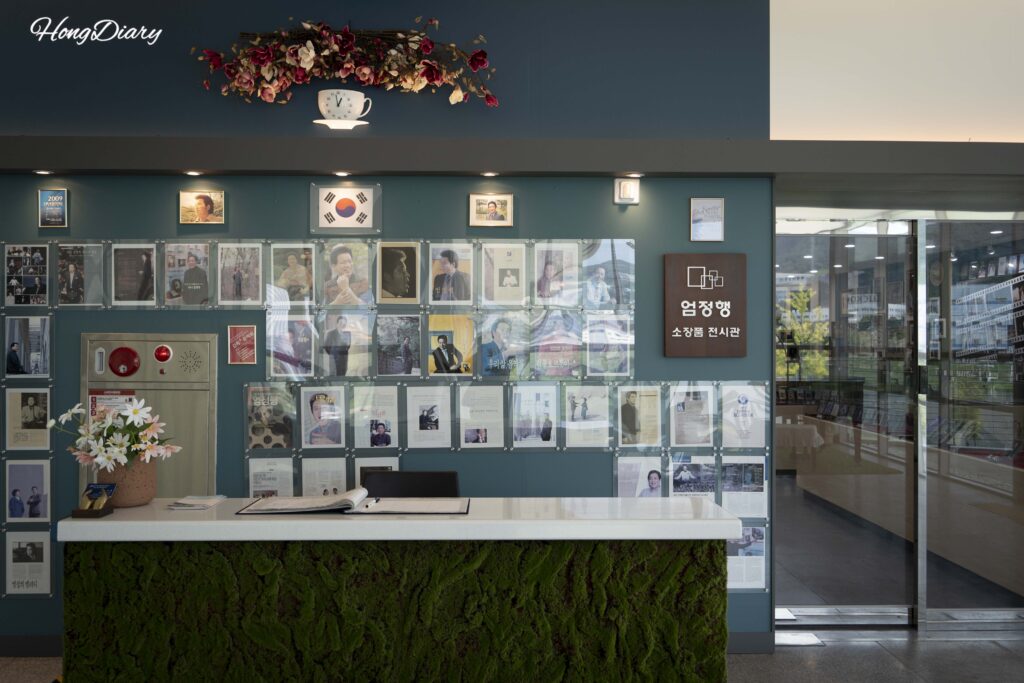
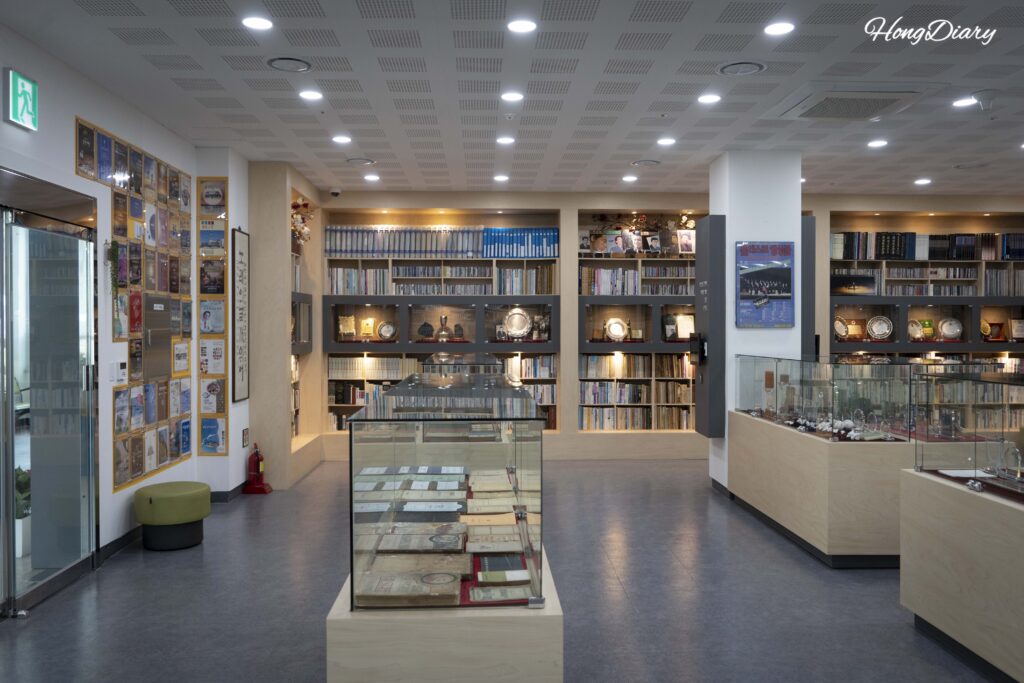
The museum occupies a single open room, but the sheer density of material packed into it caught me off guard. This isn’t a token tribute with a few framed photos — it’s a working archive of one musician’s entire career, donated by the artist himself.
From Volleyball Court to Concert Stage
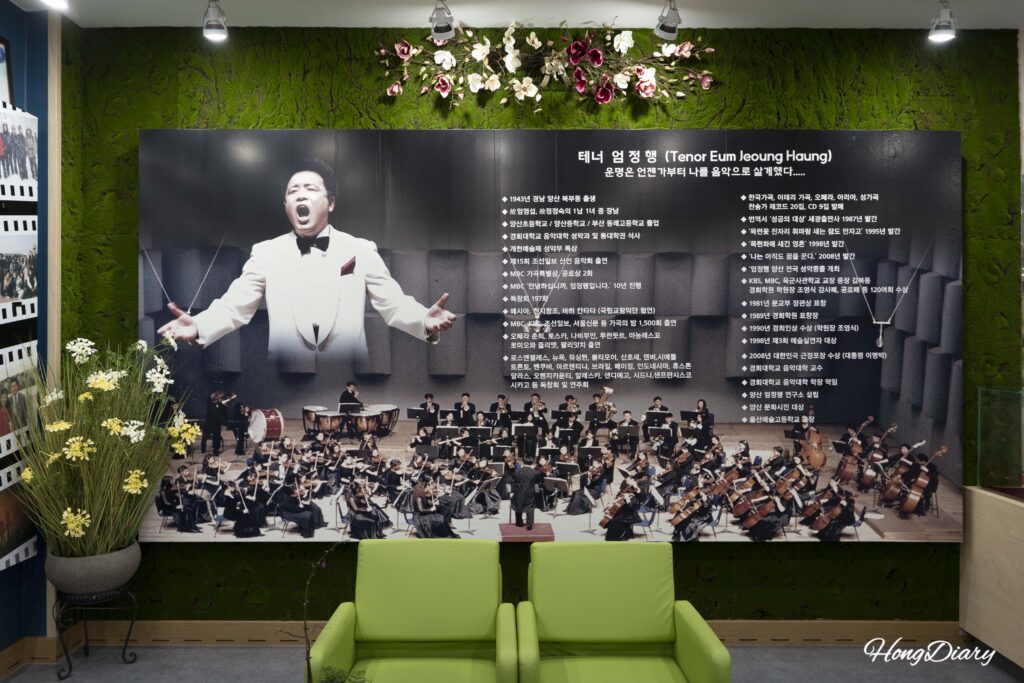
If you follow Korean classical music — specifically a genre called gagok, which I’ll get into shortly — the name Eom Jeong-haeng needs no introduction. For everyone else, including me until this visit, here’s the condensed version.
Born in 1943 in Yangsan, Eom Jeong-haeng spent his teenage years as a competitive volleyball player. He pivoted to vocal music right before university entrance exams — a dramatic shift by any measure. What sets his career apart, even within Korea, is that he never studied abroad. In an era when virtually every serious Korean classical musician went to conservatories in Italy or Germany, he built his entire career domestically. He went on to serve as a professor at Kyung Hee University’s College of Music for 32 years. Over his lifetime, he performed more than 1,500 concerts.
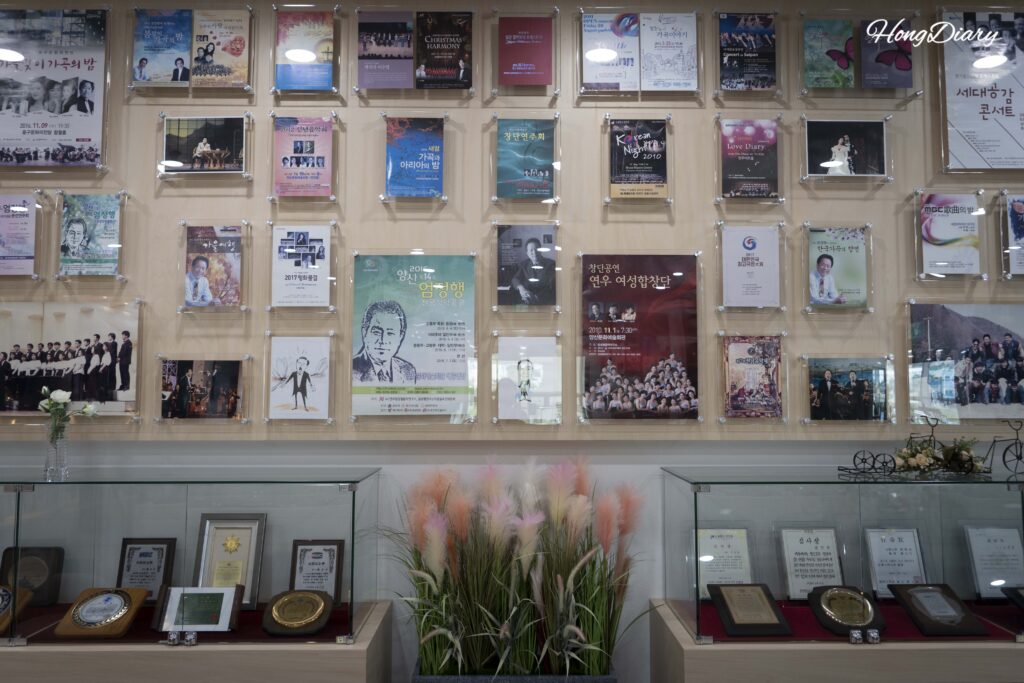
His signature piece, “Mongnyeonhwa” (Magnolia Blossom), came with its own backstory. He reportedly sang it more than 60 times in front of the composer, Kim Dong-jin, before the performance was deemed ready. That earned him the backstage nickname “Number 60” among fellow musicians.
During the 1970s and ’80s, Eom Jeong-haeng was one of the most recognized voices in the country. His popularity in the Korean classical vocal world has been compared to the fandom surrounding pop idols — which is rare for a classical singer anywhere, let alone in Korea. Songs like “Bimok” (Tombstone Without a Name), “Gagopa” (Longing for Home), and “Geuriun Geumgangsan” (My Beloved Mount Geumgang) became fixtures of Korean public life. You’d hear them at graduation ceremonies, national commemorations, and broadcast specials. For many Koreans, these are the songs they associate with formal occasions and collective memory, even if they can’t name the singer.
As a side note, Yangsan has produced a surprising number of notable figures for a city its size. Winter, a member of the globally popular K-pop group aespa, also grew up here — a very different kind of musical fame, but it speaks to the city’s under-the-radar cultural output.
What You’ll Find Inside
The museum displays a personal collection that Eom Jeong-haeng assembled across his entire career:
| Collection Category | Quantity |
|---|---|
| Music CDs and vinyl records | Over 1,200 discs |
| Opera and concert recordings | 80 productions |
| Music-related books and scores | Approximately 500 volumes |
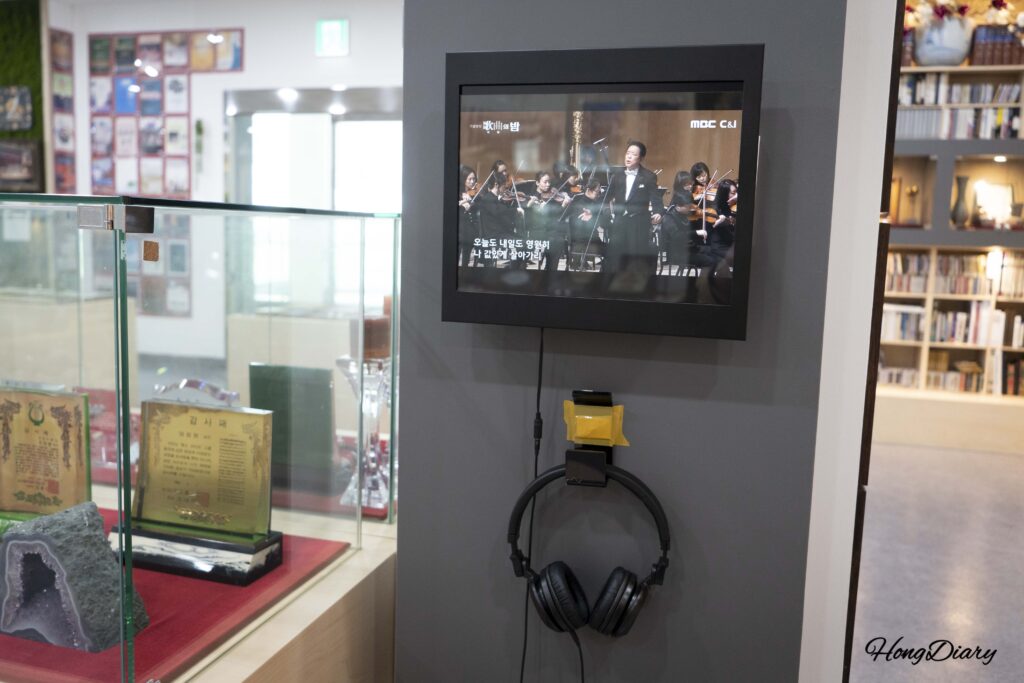
Along one wall, video screens loop archival footage of his performances. Next to them, listening stations with headphones let you sit and hear recordings at your own pace — a quiet, self-directed experience rather than a guided one. Even without understanding the Korean lyrics, the vocal technique and emotional range come through clearly. If you’ve ever listened to a German Lied or a Schubert art song, the format will feel familiar: a solo voice, a piano accompaniment, and a text drawn from poetry.
Korea’s First Classical Vocal Record — and How It Almost Didn’t Happen
This was the part of the exhibition that stayed with me longest.
Before 1975, no commercially released recording of Korean gagok existed. Gagok (literally “song composition”) is a genre of art song in which Korean-language poems are set to classical compositions and performed by trained vocalists — the Korean counterpart to the German Lied or the French mélodie. These are refined, lyrical works typically accompanied by piano, built on Korean-language poetry rather than folk melodies. Gagok is distinct from pansori, another well-known Korean vocal tradition, which is a form of narrative singing where a solo performer tells a dramatic story accompanied by a single drummer — a far more theatrical and improvisational format. Gagok, by contrast, is structured, composed, and performed in a concert setting.
The genre was well established in live performance circles, but no record label had seen enough commercial potential to produce a studio album. Eom Jeong-haeng, still relatively unknown at the time, approached record companies on his own. He was rejected.
Instead of stopping there, he spent three months tracking down individual composers and lyricists — visiting them one by one — to personally secure the copyright permissions needed to record their works. He then self-produced what became the first commercially available gagok record in Korean music history.
When that recording aired on FM radio, it sparked a nationwide interest in gagok that nobody saw coming. Gagok concerts started selling out. Radio stations added more classical vocal programming. What had been an insular, live-only art form suddenly had a national audience.
The original records, the correspondence, and the promotional materials from that era are all on display here. It’s a compact but well-assembled timeline of a moment in Korean music history that doesn’t get nearly enough attention — one that most visitors to Korea, and even many Koreans themselves, know nothing about.
A Donated Piano and a View Worth Pausing For
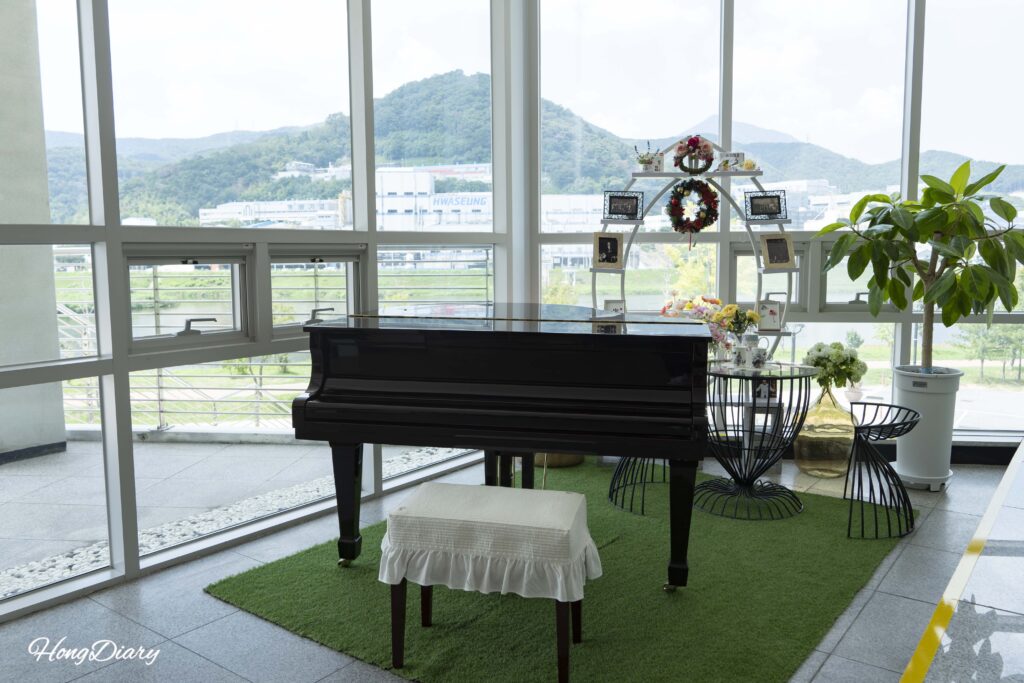
Near the exit, a piano sits beside a large window. The instrument was personally donated by Eom Jeong-haeng. The building’s oversized glass panels let in natural light and frame the greenery along Yangsancheon Stream outside. After spending time with the dense archival material inside, this final corner felt deliberately placed — a nice, quiet spot to sit for a minute before heading out.
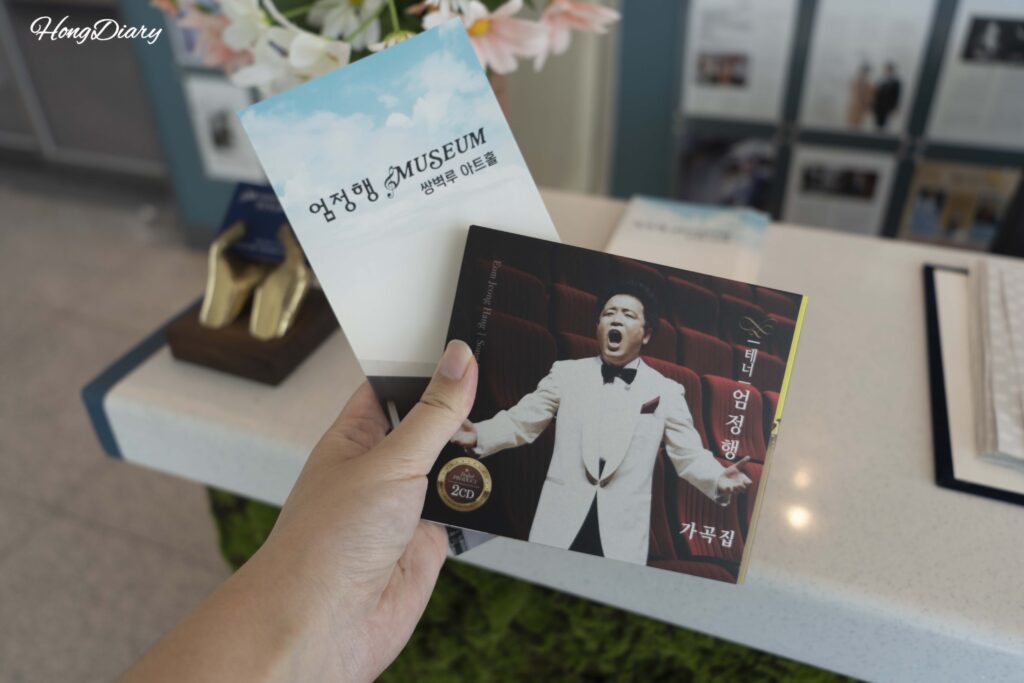
On the way out, I picked up a free informational pamphlet and a complimentary CD of Eom Jeong-haeng’s gagok recordings, both available at the entrance desk. Not a bad parting gift from a museum that charges nothing to begin with.
Yangsancheon Wildflower Garden: A Seasonal Bonus Right Next Door
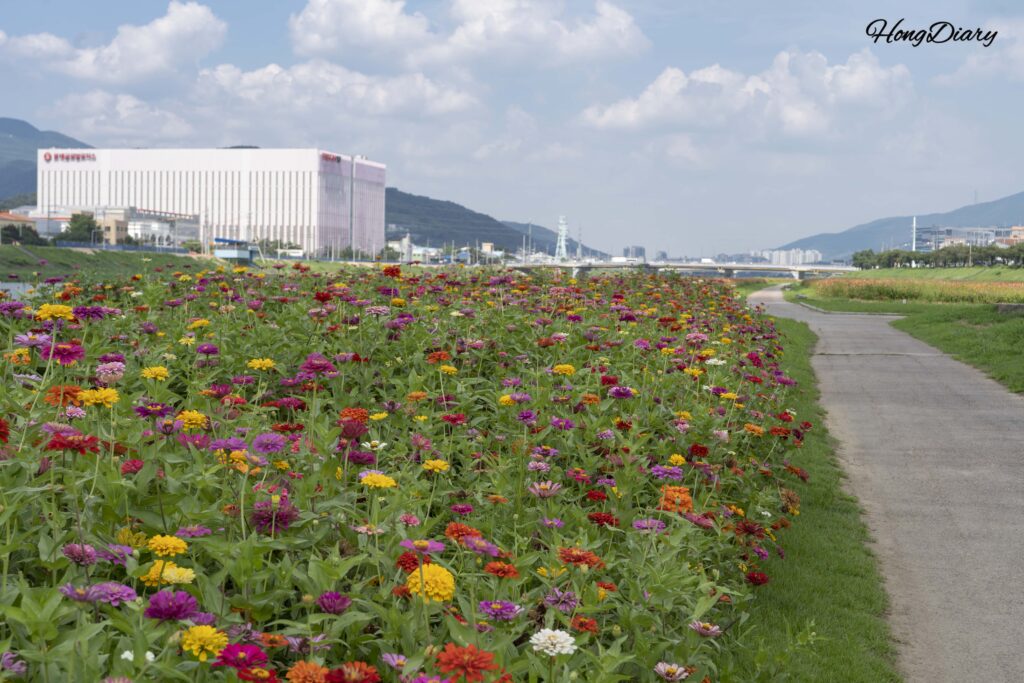
Step outside Ssangbyeokru Art Hall and you’re immediately beside Yangsancheon Stream, where a wildflower garden stretches along the riverbank. The plantings change with the seasons:
| Season | Months | What Blooms |
|---|---|---|
| Spring | April – May | Canola flowers (bright yellow rapeseed blossoms) |
| Late Summer – Autumn | July – October | Crepe myrtle, known in Korean as baegil-hong (“hundred-day red”) |
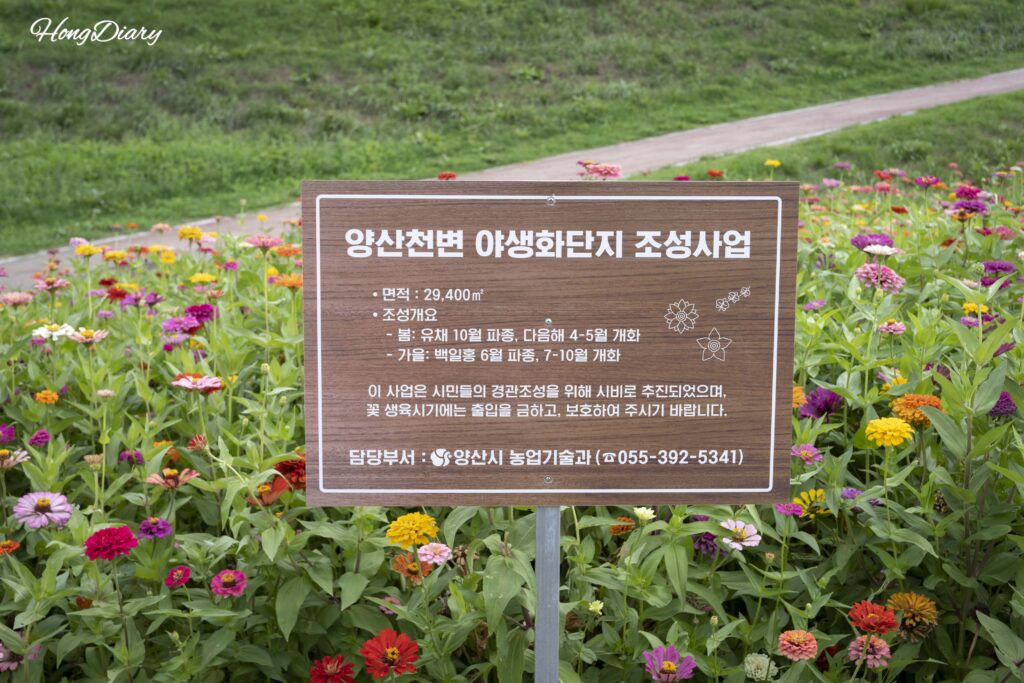
I visited in September, and the crepe myrtles were at full peak — dense clusters of pink, red, white, and magenta lining both sides of the stream. Against a clear autumn sky, with the water running alongside, it made for a genuinely scenic walk. This area is largely unknown even among Korean visitors, so expect minimal foot traffic. If your visit falls during either blooming season, it’s worth setting aside 20 to 30 minutes for a stroll before or after the museum.
Making the Most of a Day in Yangsan
Ssangbyeokru Art Hall in Yangsan occasionally hosts free concerts alongside its ticketed programming. During my visit, a free jazz performance called “The Jazz Voyage” — described as a blend of classical structure and jazz improvisation — was listed for October 8 (Thursday, 7:30 PM), with all seats free of charge. The hall’s website posts upcoming schedules, and complimentary shows appear more often than you’d expect. If your timing works out, catching one is a solid way to experience the venue beyond the museum.
Yangsan doesn’t have full-service hotels in the international sense — accommodations here are mostly budget motels (a standard lodging type in smaller Korean cities). Since Busan is connected by subway, most visitors treat Yangsan as a day trip, and that’s genuinely the most practical approach. You can combine a few stops here and head back to Busan for dinner and your hotel.
If you’re mapping out a full day in the area, the options are stronger than you might expect. About 30 minutes by car from here,
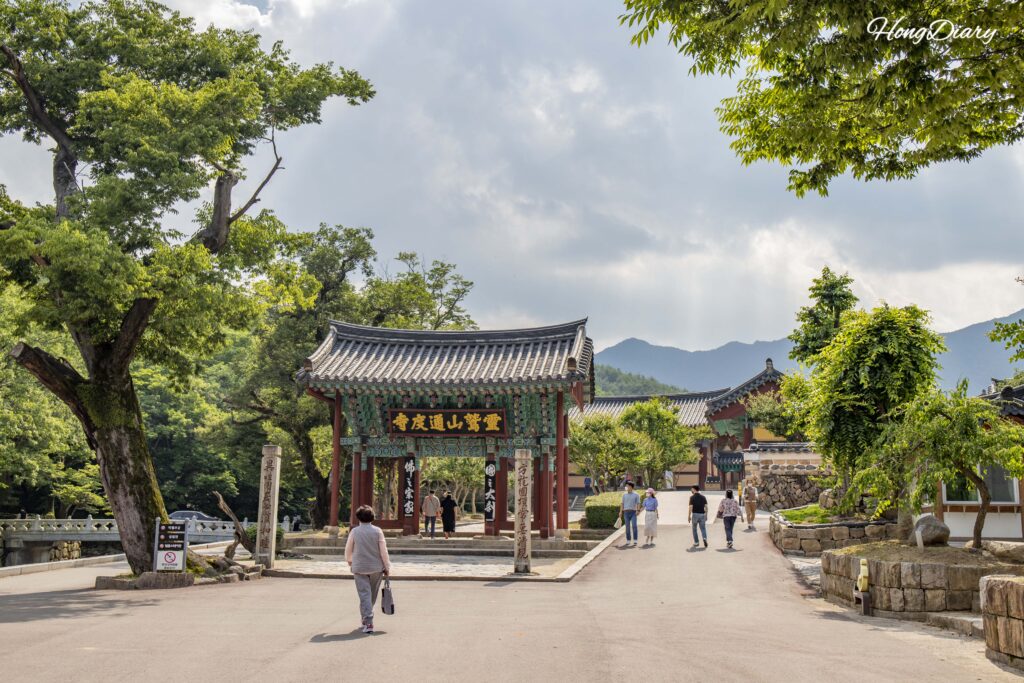
What most visitors don’t realize is that deeper within the Tongdosa complex,
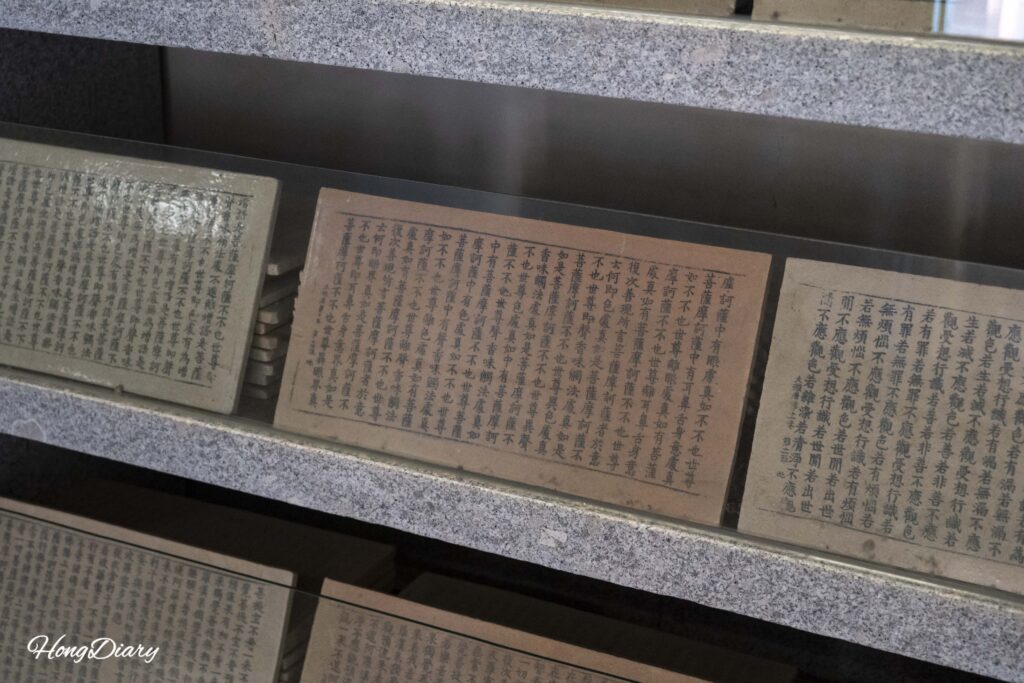
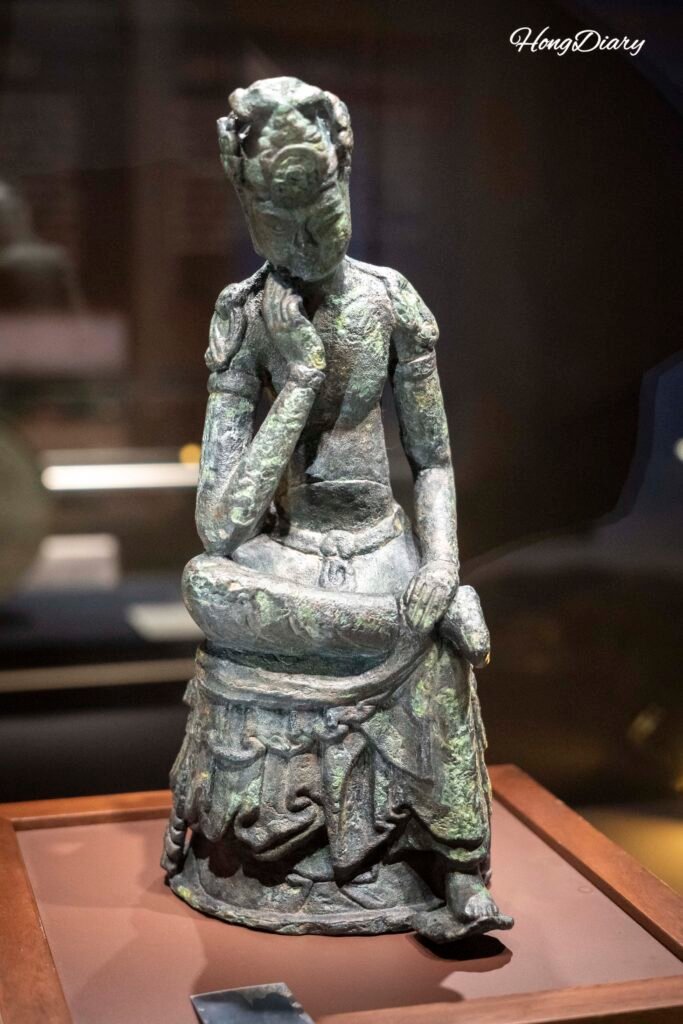
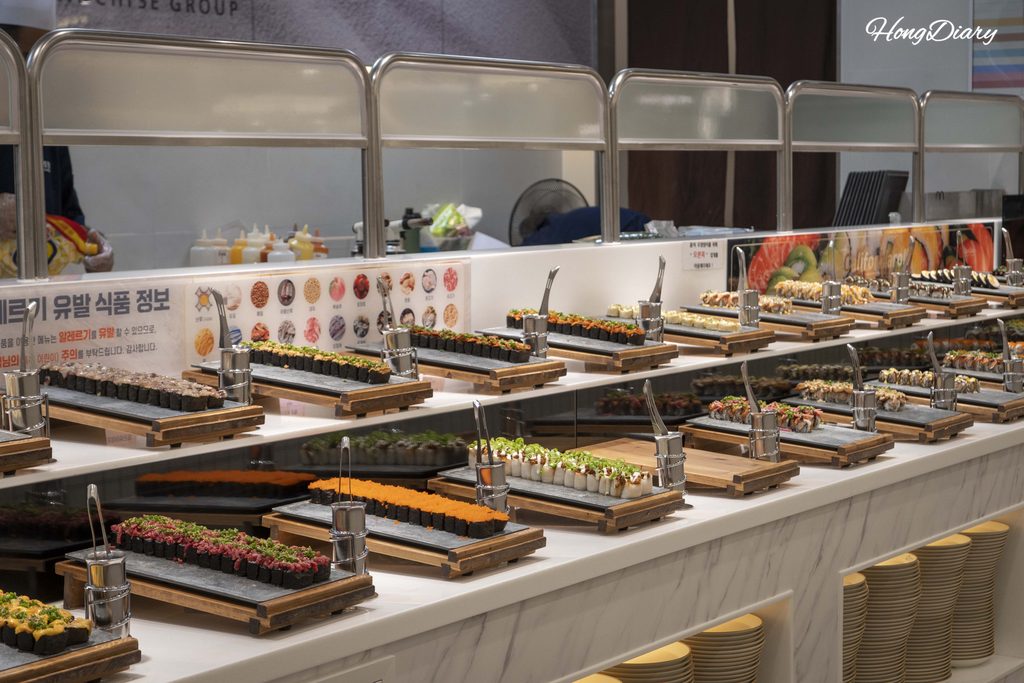
And when hunger sets in before the subway ride back to Busan, QooQoo Sushi Buffet has a Yangsan location of this popular Korean chain where local families line up for an all-you-can-eat spread at ₩23,900 (~$17 USD / ~€15 EUR) per person.
Between Ssangbyeokru Art Hall, the wildflower walk, and these nearby stops, a day in Yangsan holds enough to make a worthwhile detour from the well-worn Busan circuit — and this quiet museum on the second floor of a riverside concert hall is a fitting place to start.
Yangsan Travel FAQ: What to Know Before Visiting the Eom Jeong-haeng Museum
Is Ssangbyeokru Art Hall free to visit?
Yes. The Eom Jeong-haeng Museum on the second floor of Ssangbyeokru Art Hall is completely free — no tickets, no reservations, and no time limit. The museum is open from 10:00 AM to 5:00 PM, Tuesday through Saturday. It is closed on Sundays, Mondays, and Korean national holidays. Free pamphlets and a complimentary gagok CD are also available at the exit.
How do I get to Ssangbyeokru Art Hall from Busan?
By public transit, take Busan Metro Line 2 to Yangsan Station, then transfer to Yangsan Village Bus No. 2 — a type of small community minibus (called maul-beoseu in Korea) that covers short local routes connecting subway stations to nearby areas. Ride six stops to the Haecheon-tang bus stop and walk approximately 700 meters (about 10 minutes) to reach the building. By car, the drive from central Busan takes roughly 30 to 40 minutes, and the building has a free parking lot with space for about 12 vehicles. Starting in December 2026, the new Yangsan Line light rail is expected to open from Nopo Station (Busan Metro Line 1 terminus), making the trip even shorter.
Who is Eom Jeong-haeng, and why does he have a museum?
Eom Jeong-haeng (born 1943) is a Korean tenor widely referred to as Korea’s “National Tenor.” Born in Yangsan, he originally trained as a volleyball player before switching to classical vocal music before university. Unlike most Korean classical musicians of his generation, he never studied abroad — he built his entire career domestically. He served as a music professor at Kyung Hee University for 32 years and performed over 1,500 concerts. He also produced the first commercially released recording of Korean gagok (classical art song) in 1975. The museum was established after he donated his personal collection — over 1,200 music recordings, 80 opera videos, and 500 music-related books — to his hometown of Yangsan.
What is Korean gagok, and how is it different from K-pop or pansori?
Gagok is a genre of Korean classical art song in which Korean-language poems are set to formal compositions and performed by trained vocalists, typically accompanied by piano. It is the Korean equivalent of the German Lied or the French mélodie — refined, lyrical, and rooted in literary poetry rather than folk melodies. Gagok is distinct from pansori, another traditional Korean vocal genre in which a solo performer narrates a dramatic story accompanied by a single drummer — a far more theatrical and improvisational format. It is also entirely separate from contemporary K-pop. Before 1975, gagok existed only as a live performance genre with no commercial recordings, until Eom Jeong-haeng produced the first studio album himself.
Is Ssangbyeokru Art Hall worth visiting if there is no concert scheduled?
Yes. The Eom Jeong-haeng Museum on the second floor operates independently of the concert schedule and is open during regular hours regardless of whether a performance is happening downstairs. The museum includes listening stations with headphones where you can hear archival recordings, video screens showing past performances, and display cases with original records, manuscripts, and personal artifacts. The adjacent Yangsancheon wildflower garden also makes the visit worthwhile even without a concert — canola flowers bloom in spring (April–May) and crepe myrtle flowers fill the riverbank in late summer through autumn (July–October).
What else is there to do near Ssangbyeokru Art Hall in Yangsan?
Yangsan offers several other stops within a short distance. Tongdosa Temple, a UNESCO World Heritage site about 30 minutes away by car, is one of Korea’s most historically significant Buddhist temples. Yangsan City Museum, another free-admission museum, displays nationally designated treasures including Silla-dynasty gold artifacts. For dining, the local branch of QooQoo Sushi Buffet offers an all-you-can-eat spread at ₩23,900 (~$17 USD / ~€15 EUR) per person. Since Yangsan is connected to Busan by subway, most visitors combine these stops into a single day trip.
Can I visit Ssangbyeokru Art Hall during the wildflower season along Yangsancheon Stream?
Yes, and timing your visit with the blooming season adds a scenic bonus. The wildflower garden along Yangsancheon Stream, located directly next to Ssangbyeokru Art Hall, features canola flowers (yellow rapeseed blossoms) from April through May and crepe myrtle blooms — dense clusters of pink, red, white, and magenta — from July through October. The area is largely undiscovered even by Korean visitors, making it a quiet spot for photography or a short stroll. Budget an extra 20 to 30 minutes to walk the riverside path after visiting the museum.
Prices in this article are converted at approximately $1 USD ≈ ₩1,400 / €1 EUR ≈ ₩1,575 (as of September 2026). Rates may fluctuate.