
Most travelers who visit Tongdosa Temple explore the main halls, pay their respects, and head back to Busan — never realizing that 19 hermitages (smaller sub-temples, each with its own character) are scattered across the mountain slopes above. On a recent trip, my husband found one that sounded too strange to skip: Seounam Hermitage at Tongdosa, where prehistoric rock carvings have been recreated in lacquer and submerged underwater, and 160,000 ceramic plates hold the entire Buddhist canon. We drove out to see it, and it turned out to be one of the most genuinely surprising stops I have had in years of living in Korea.
Table of Contents
Basic Info: Hours, Parking & Access to Seounam Hermitage
| Detail | Information |
|---|---|
| Name | Seounam Hermitage (part of Tongdosa Temple complex) |
| Address | 108 Tongdosa-ro, Habuk-myeon, Yangsan-si, Gyeongsangnam-do |
| Hours | 06:00 – 17:30 |
| Admission | Free |
| Parking | Paid at Tongdosa Temple entrance: compact car ₩3,000 (~$2 USD / ~€2 EUR), standard car ₩6,000 (~$4 USD / ~€4 EUR), large vehicle/bus ₩15,000 (~$11 USD / ~€10 EUR). Walking visitors enter free of charge. |
| Getting There (from Busan) | Nopo Intercity Bus Terminal → bus to Sinpyeong Terminal (~30 min), then local bus or taxi to Tongdosa |
| Getting There (from Ulsan) | KTX Ulsan Station → Bus No. 13 to Sinpyeong Terminal (~30 min), or taxi (~25 min) |
| Getting There (from Gyeongju) | Gyeongju Intercity Bus Terminal → Busan-bound bus, get off at Tongdosa IC |
| Walk from Tongdosa | ~1.3 km uphill from the main temple grounds (~25 min on foot) |
Prices converted at approximately $1 USD ≈ ₩1,400 / €1 EUR ≈ ₩1,575 (as of September 2026). Rates may fluctuate.
One thing worth noting up front: admission to the hermitage itself is free, but parking at the Tongdosa entrance is not cheap — ₩6,000 (~$4 USD / ~€4 EUR) for a standard car felt steep for a temple complex. If you arrive on foot via public transit, you skip that cost entirely.
What Is Seounam Hermitage — and Why Does It Matter?
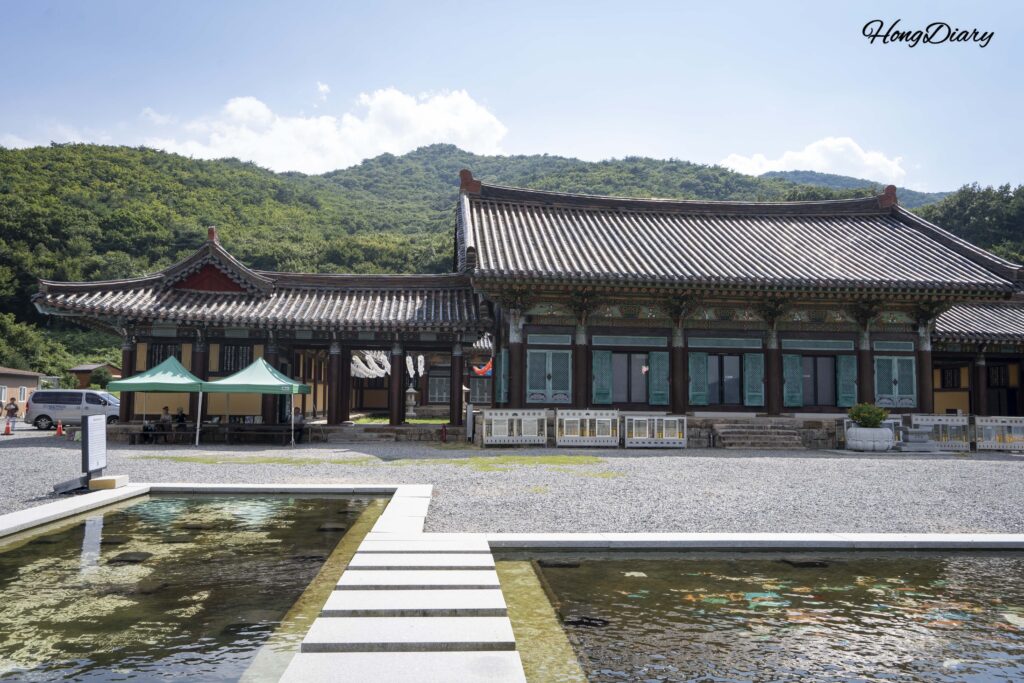
Seounam Hermitage sits on the southern slope of Mt. Yeongchuksan (1,081 m) in Yangsan, a small city in South Gyeongsang Province. Yangsan is wedged between Busan and Ulsan on Korea’s southeastern coast, and Tongdosa Temple — one of Korea’s Three Jewel Temples and a UNESCO World Heritage Site — is its most well-known landmark. From central Busan, the temple grounds are roughly 30 to 40 minutes away by car or intercity bus, making this a comfortable half-day or full-day trip. If you are coming from Ulsan or Gyeongju, the access is just as easy.
While Tongdosa is the main temple that draws visitors, the hermitages above it operate almost like independent sites — each one has its own buildings, its own courtyard, and often its own story. Most travelers never make it past the main complex. Seounam is a separate destination within the larger Tongdosa grounds, and it rewards the extra effort.
The hermitage was originally founded in 1346 during the late Goryeo Dynasty (918–1392) as little more than a single thatched hut. What stands today — multiple halls, a large scripture repository, expansive courtyards — is largely the work of Venerable Seongpa, a monk who served as head of Tongdosa Temple and was later named the 15th Supreme Patriarch of the Jogye Order, the largest Buddhist denomination in Korea. Beyond his religious role, Seongpa was prolific in the arts — ceramics, calligraphy, natural dyeing, and lacquerwork — and his fingerprints are visible on almost everything you encounter here.
The Walk Up to Seounam Hermitage
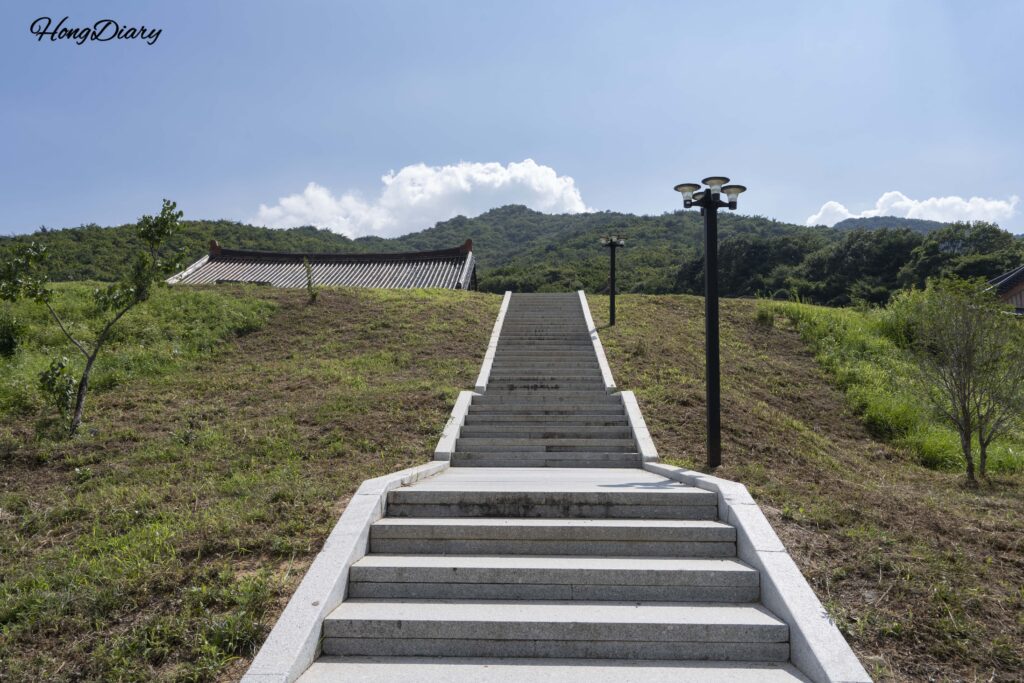
From the main Tongdosa Temple grounds, Seounam is about a 25-minute walk uphill. The incline is gentle enough that it never feels like a real hike, more like a steady stroll through the forest. I would recommend exploring the main UNESCO-listed temple complex first, then continuing upward — the walk itself is part of the experience, and the mountain scenery along the way is worth pausing for.
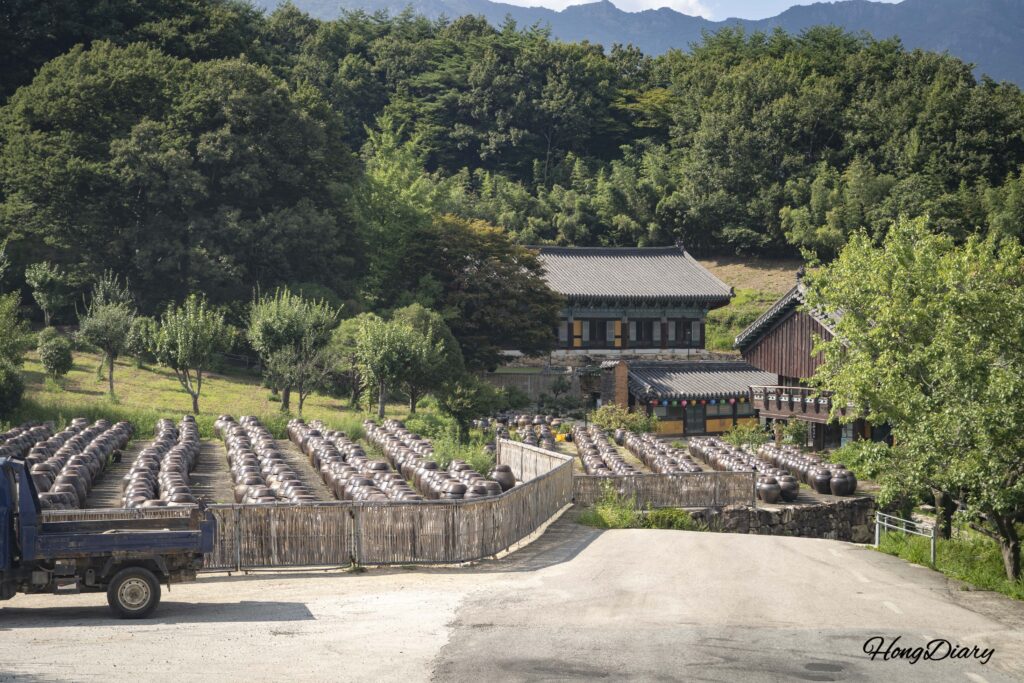
As you climb, you start passing clusters of jangdokdae — rows and rows of large, dark-brown clay pots traditionally used for fermenting soybean paste, soy sauce, and red pepper paste. Seounam actually earned the nickname “Doenjang Hermitage” (doenjang is a fermented soybean paste, similar to miso but with a deeper, earthier flavor) because the monks here were well known for producing high-quality artisanal jang (fermented pastes and sauces). Unfortunately, production has been paused since late 2025 due to the aging of the monks who made them, so you cannot buy or taste any at the moment — a loss that many Koreans have been vocal about.
Underwater Lacquer Art: Cheonjeon-ri Petroglyphs Reimagined
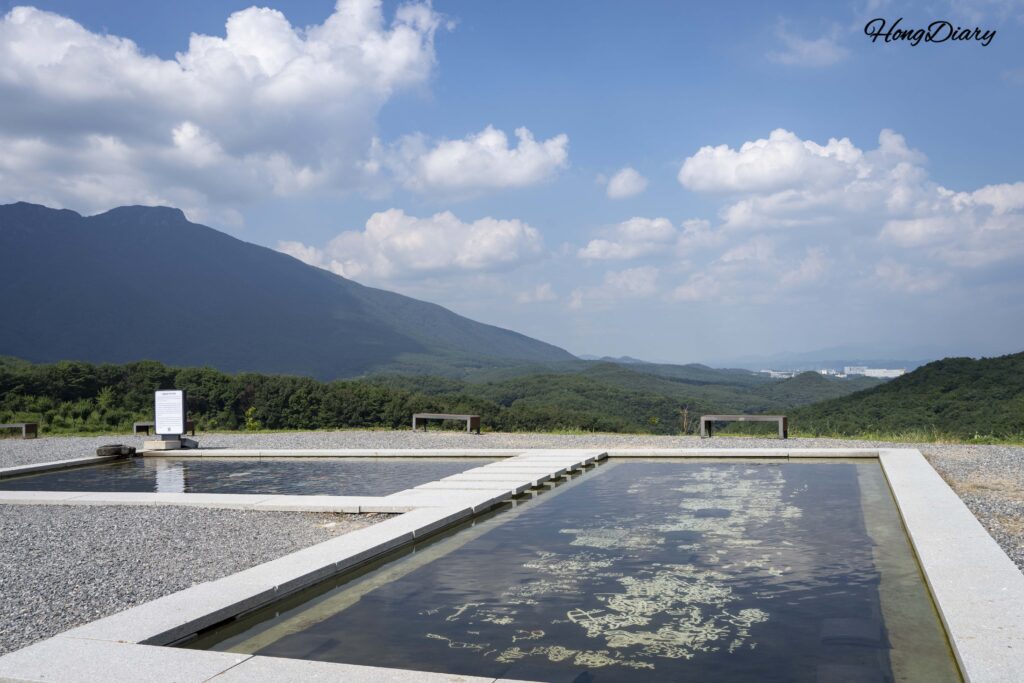
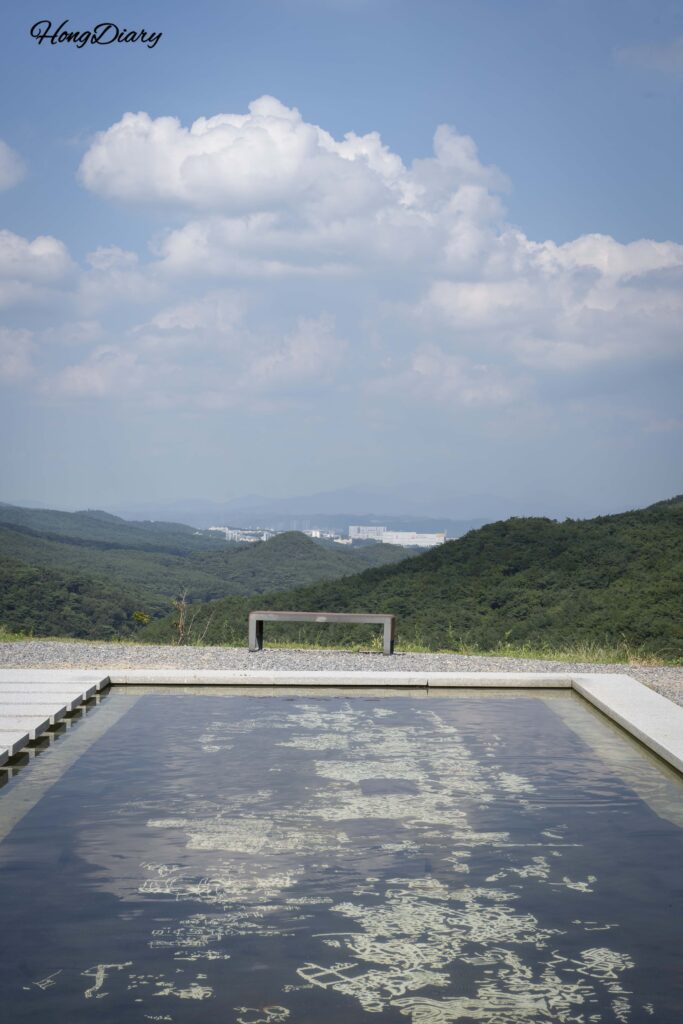
The first thing that stopped me at Seounam was a large rectangular water basin sitting in the front courtyard. I walked over expecting a koi pond, but instead found something completely different. Beneath the still water surface, dark panels covered in intricate designs were submerged — gold-toned figures of animals, concentric circles, and human-like forms standing out against the black background.
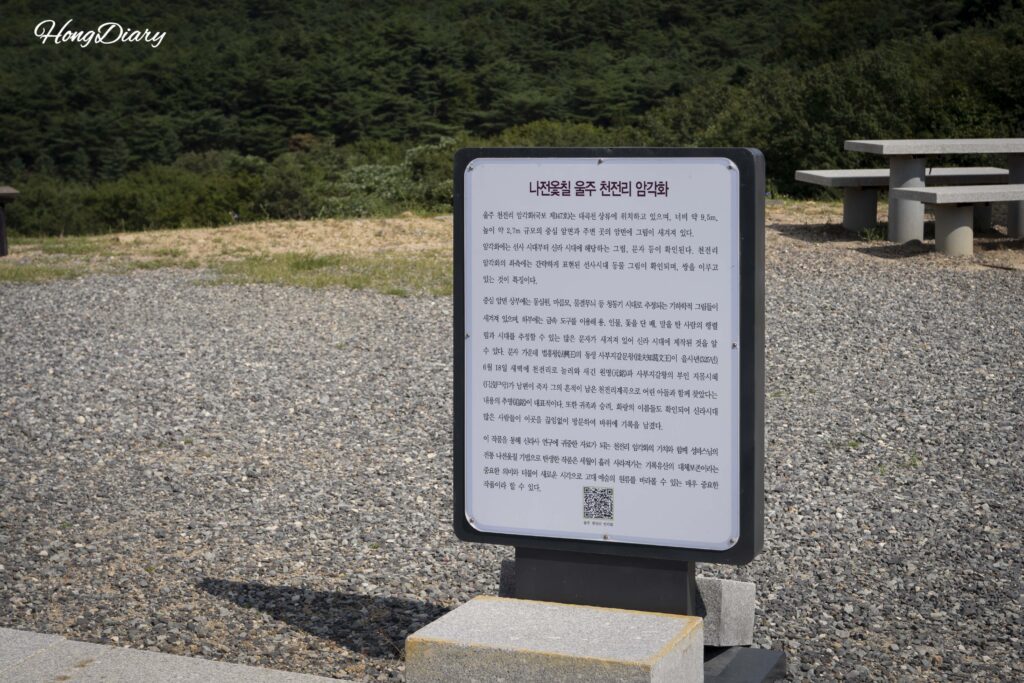
The information plaque explained that these panels are lacquerwork reproductions of two of Korea’s most significant prehistoric sites: the Bangudae Petroglyphs and the Cheonjeon-ri Rock Engravings, both located in Ulju, Ulsan. The Cheonjeon-ri engravings (National Treasure No. 147) are carved into a cliff face along the upper Daegok Stream and contain layers of imagery spanning thousands of years — from Neolithic-era geometric patterns like concentric circles and wave motifs, to detailed Silla Dynasty carvings of horseback processions, to inscriptions recording royal visits. It is, essentially, a stone timeline of Korean civilization.
The problem is that the original rock carvings are slowly deteriorating from weathering and water exposure. Venerable Seongpa spent three years recreating them using najeon otchil, a traditional Korean lacquer technique that inlays mother-of-pearl and metallic fragments into layers of natural tree sap lacquer. The finished panels were then deliberately placed underwater — because lacquer, unlike most materials, actually becomes more durable when kept moist. The whole project is both an art piece and a preservation statement: if the originals fade, this version is built to last.
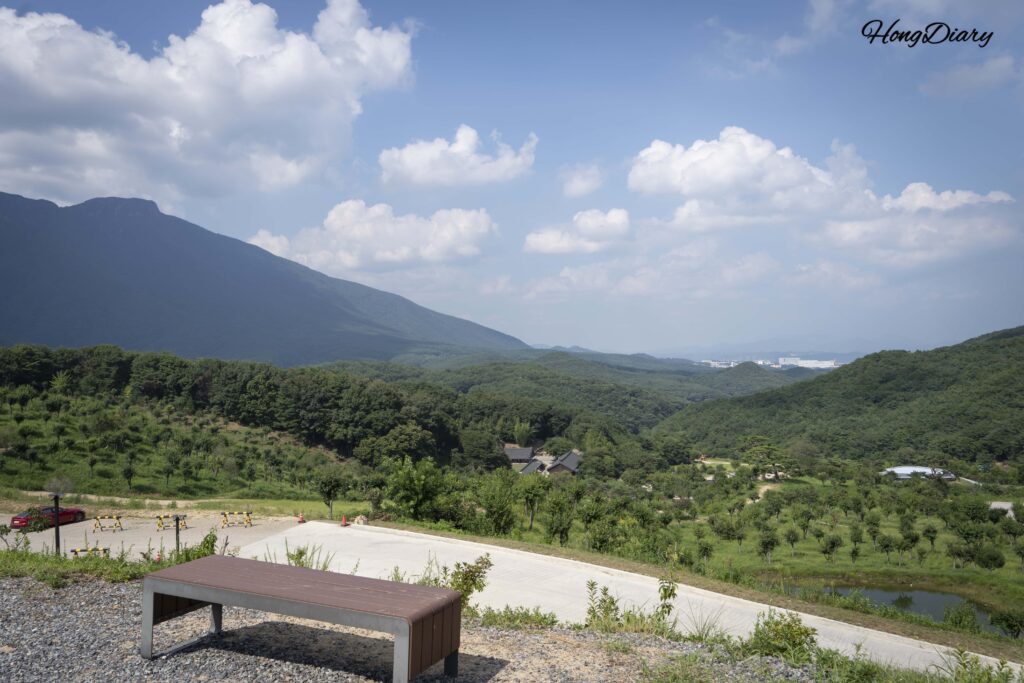
Standing there with the blue sky and clouds reflected on the water surface above the ancient motifs, I understood why this spot works so well as a photograph. The mountain view behind you opens up wide, and in autumn, the surrounding foliage would make this scene even more striking.
Janggyeong-gak: 160,000 Ceramic Plates of the Buddhist Canon
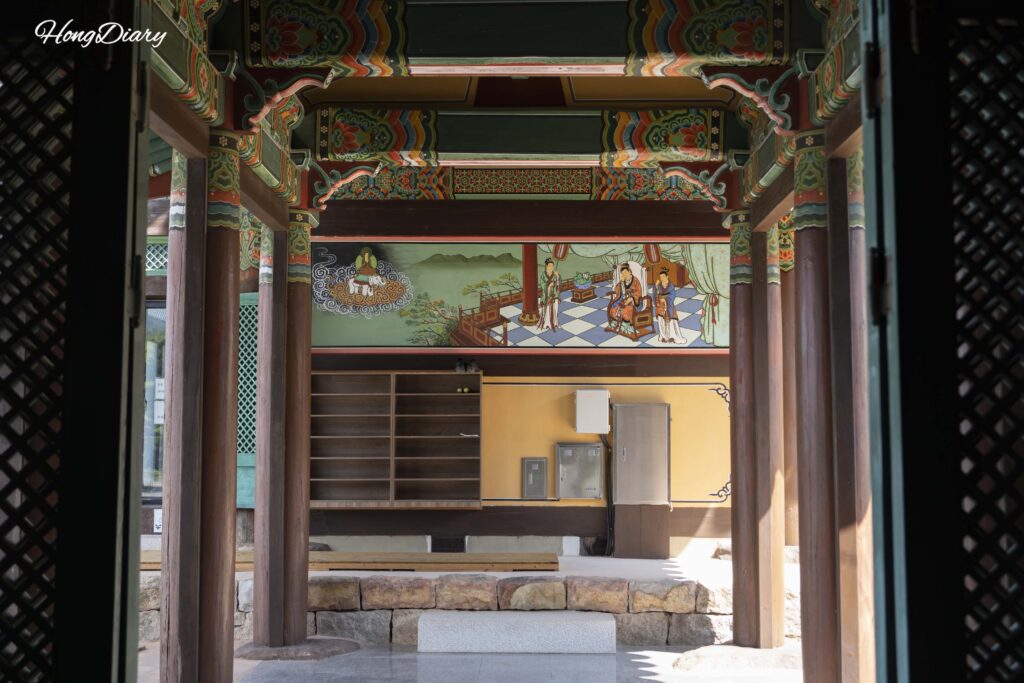
The second major stop — and the reason Seounam Hermitage at Tongdosa deserves to be better known — is the Janggyeong-gak, the scripture repository hall that dominates the upper courtyard.
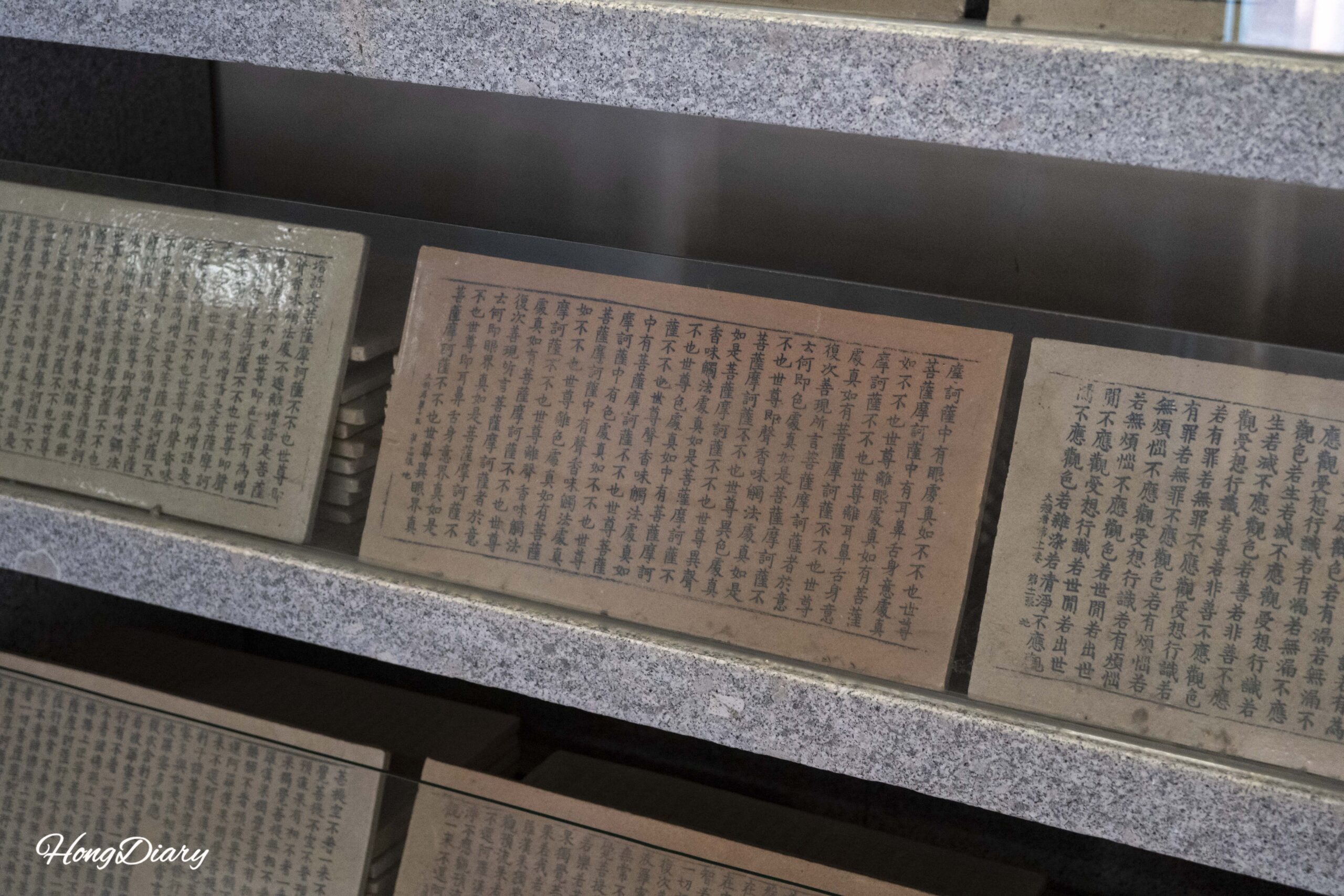
Most people who have been to Korea or studied its cultural heritage know about the Tripitaka Koreana at Haeinsa Temple — the complete Buddhist canon carved onto 81,258 wooden printing blocks in the 13th century, recognized by UNESCO as a Memory of the World. What almost nobody knows is that at Seounam, the entire Tripitaka has been transferred onto ceramic plates.
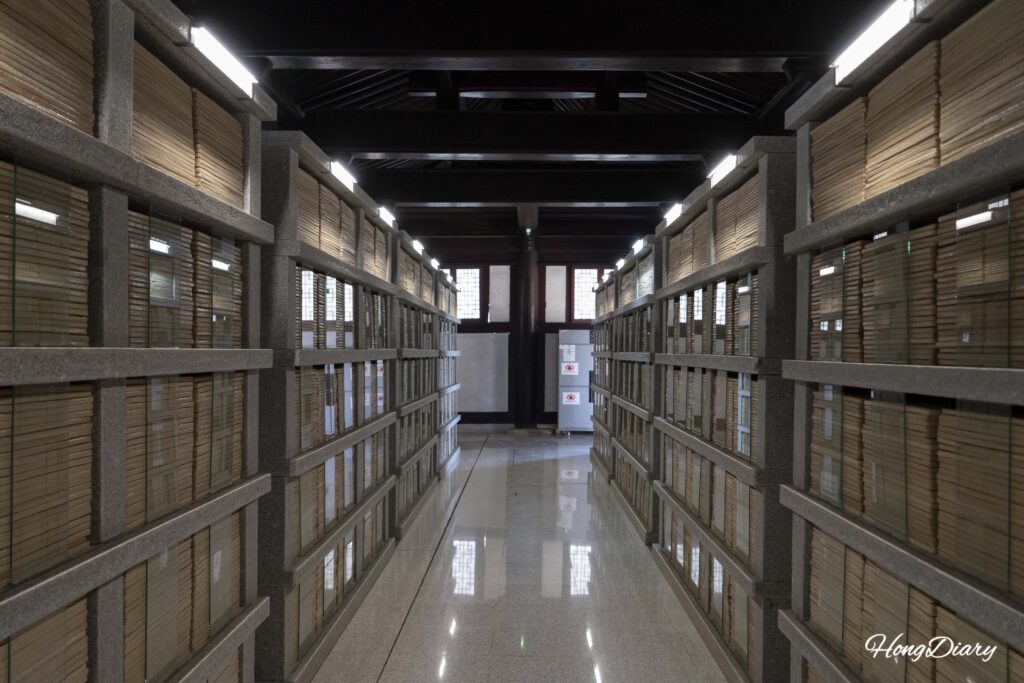
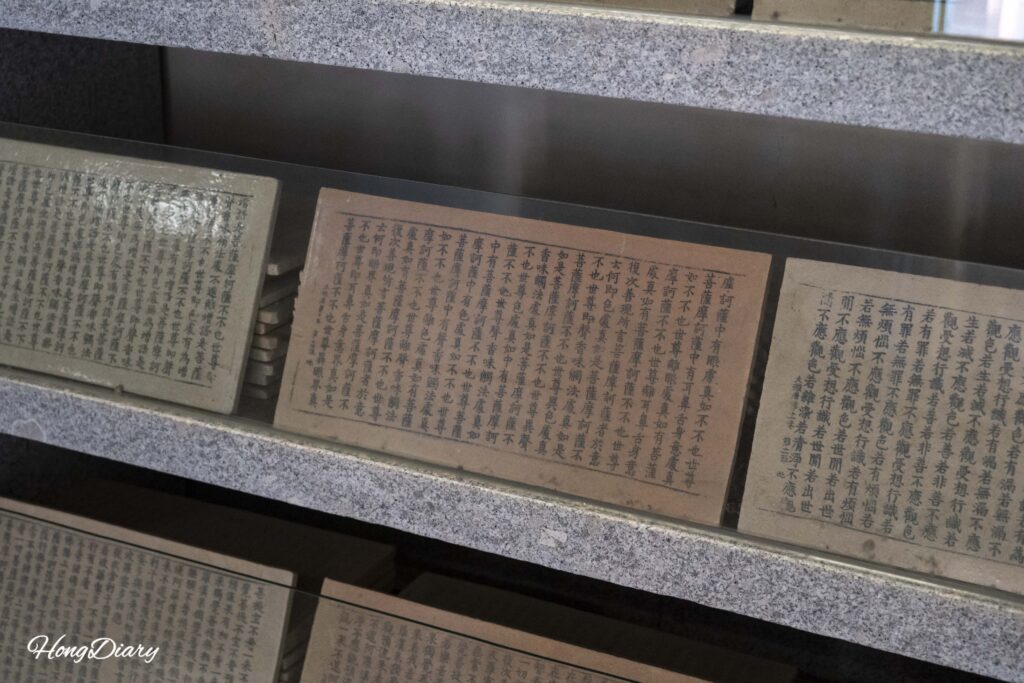
Here is what makes that significant: a wooden block can hold text on both sides, but a ceramic plate can only be printed on one face. That means the ceramic edition required roughly double the plates — 163,056 in total. Each plate measures 52 cm wide by 26 cm tall. After an initial firing at 900°C, the scripture text was applied using silkscreen printing, then glazed and fired again at 1,200°C. The result is a material that resists moisture, insects, and fire — problems that have threatened the wooden originals at Haeinsa for centuries.
Venerable Seongpa began this project in 1991 with a team of dozens of apprentices and ceramic technicians. It took 22 years to finish, wrapping up in 2013. Walking through the Janggyeong-gak, you can see the plates stacked floor to ceiling on both sides of narrow corridors. The walkways zigzag through the stacks, and the effect is genuinely maze-like — you lose your sense of direction for a moment, surrounded on all sides by these dense rows of fired clay.
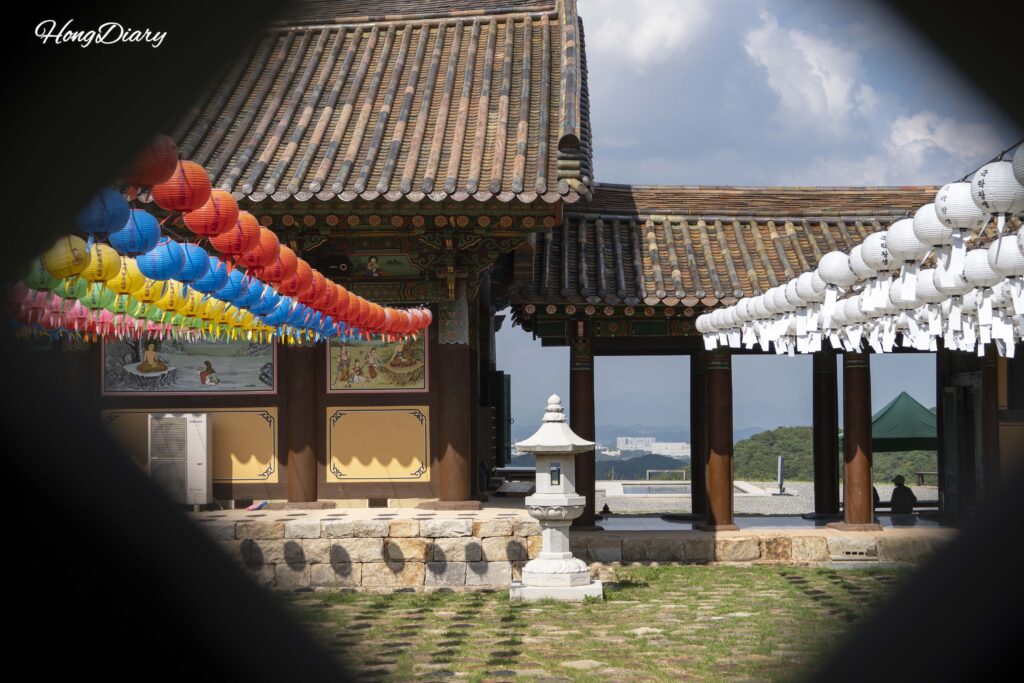
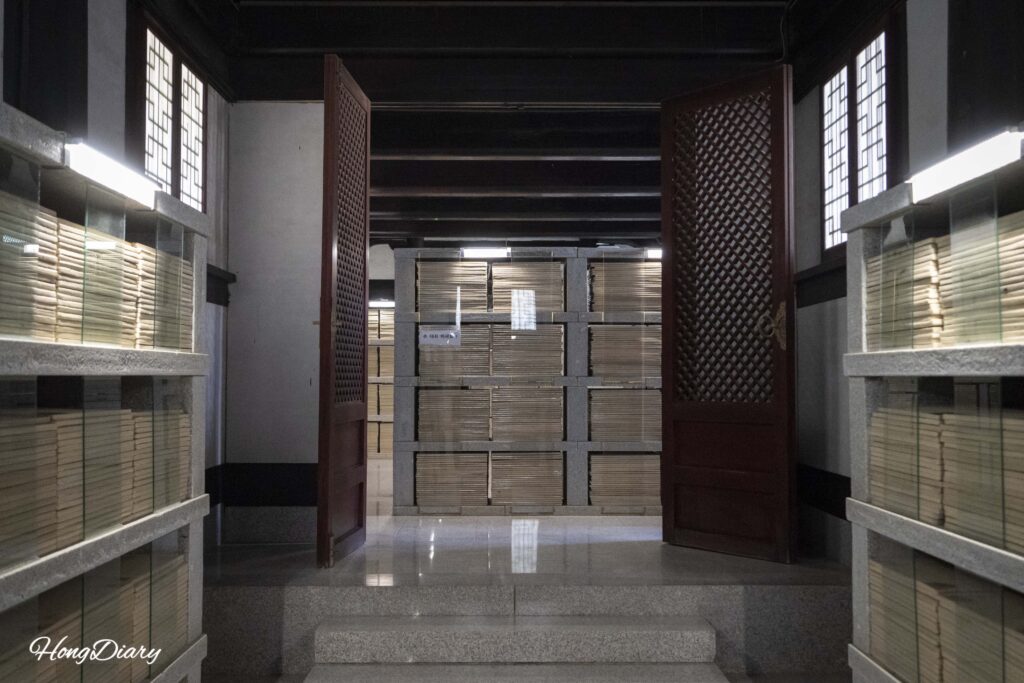
I had walked into Seounam expecting a small, quiet sub-temple. Standing inside this repository, I realized this place holds a cultural project as ambitious in its own way as anything in the main Tongdosa complex below.
Peacocks, Wind Chimes, and the Quiet Details
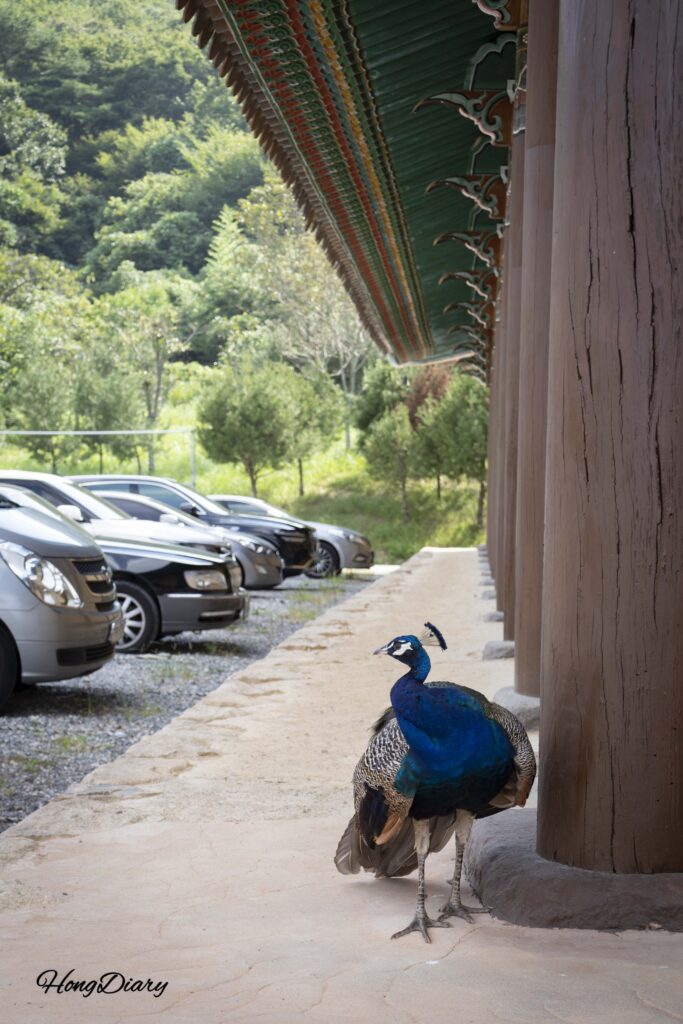
After stepping out of the Janggyeong-gak, I sat down in the courtyard to take it all in. That is when a peacock walked across the yard, casually preening its feathers as if it owned the place. Peacocks are not something you see outside of zoos in Korea, so the sight was disorienting at first. Turns out the hermitage keeps several of them free-roaming on the grounds. They are so used to visitors that they barely flinch if you walk right up — I ended up watching one for a good ten minutes, oddly mesmerized by how naturally it fit into the stillness of the temple.
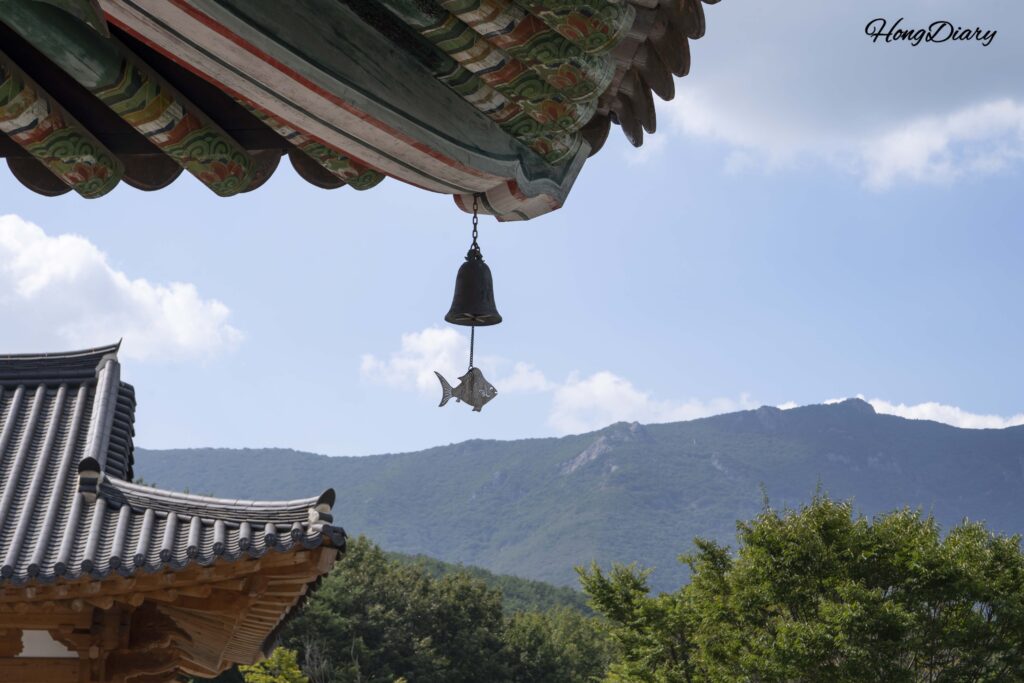
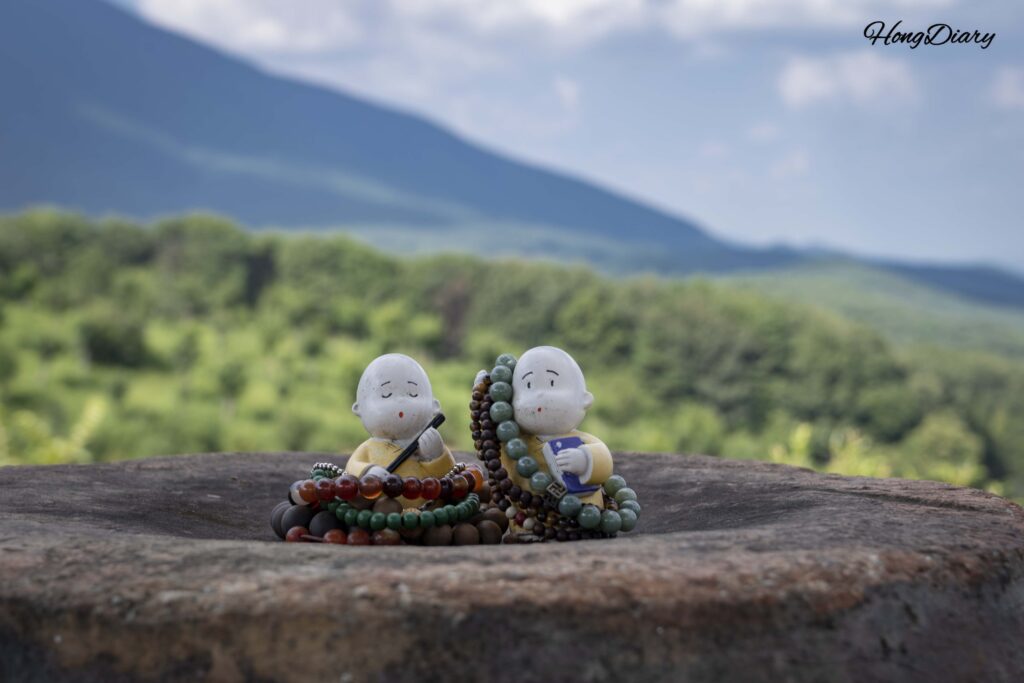
Small details kept catching my eye as I wandered. Iron wind chimes (punggyeong) hanging from the eaves, shaped like small fish — in Korean Buddhist tradition, fish never close their eyes, so the chime is a reminder to stay awake and mindful. A shelf near one of the halls displayed small ceramic figurines of monks alongside prayer beads (yeomju) left behind by visitors. None of it was signposted or curated for tourists. It was just there, part of the daily texture of the hermitage.
When to Visit and What Else Is Nearby
Seounam Hermitage at Tongdosa is open year-round, but two seasons stand out. In late April, over 100 species of wildflowers bloom across the hermitage grounds, and a small wildflower festival is held — a far cry from the crowds at the cherry blossom spots downtown. Autumn is the other sweet spot, when the mountain foliage turns and the views from the courtyard toward the valley below become especially photogenic.
If you are making the trip to this part of Yangsan,
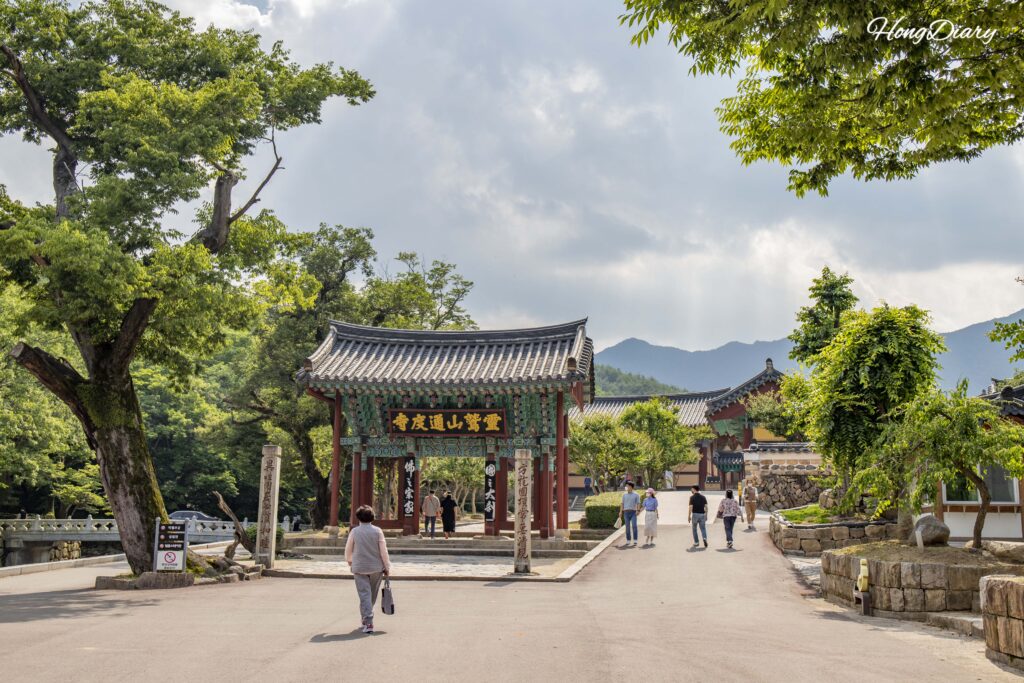
the main Tongdosa Temple complex is the natural starting point — it is one of Korea’s Three Jewel Temples, famously the only one with no Buddha statue in its main hall because it houses the actual relics of the historical Buddha. From there, the walk up to Seounam becomes an easy extension.
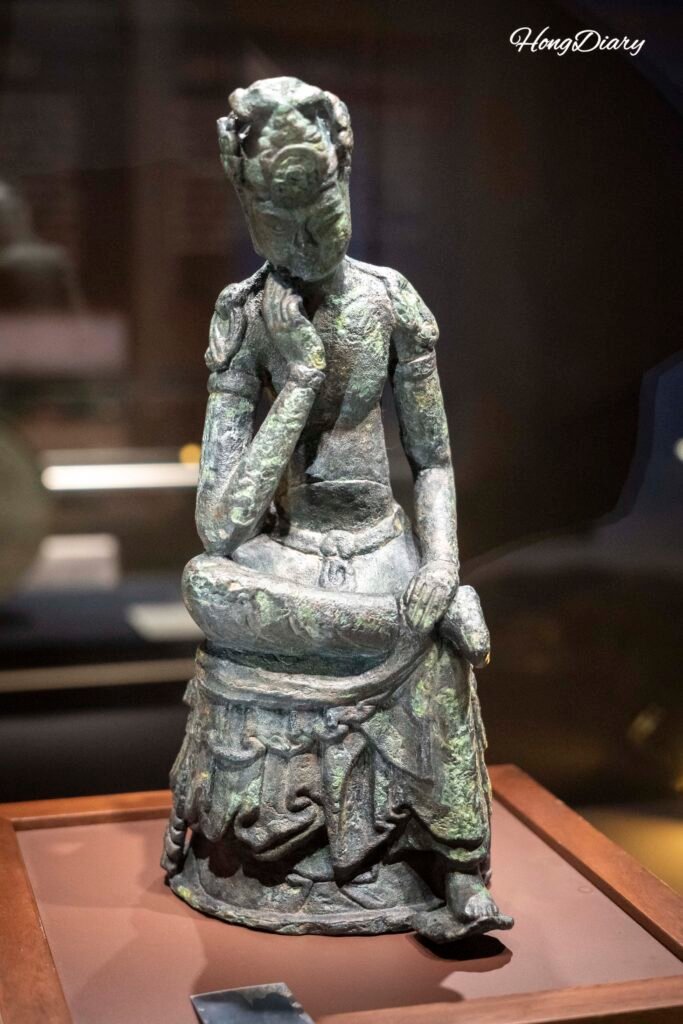
For a fuller picture of the region’s history, the Yangsan City Museum is a surprisingly rich stop with almost no crowds, housing artifacts like the gold-adorned bird-leg ornament and a gilt-bronze Pensive Bodhisattva statue.
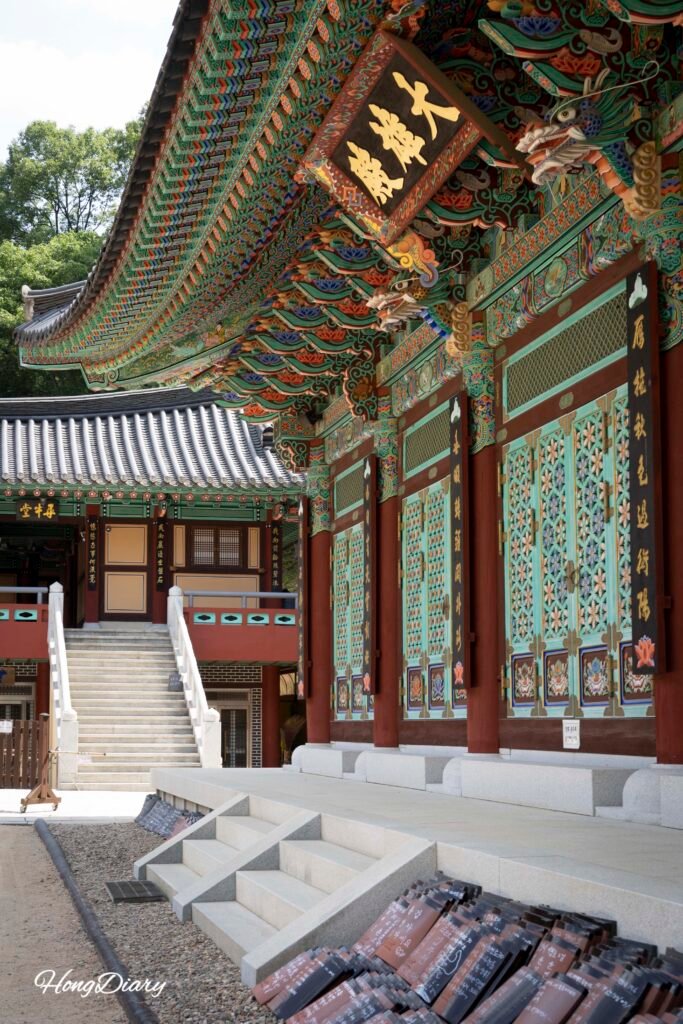
And if you want to pair your visit with more mountain scenery, Naewonsa Temple offers a valley hike through dense forest to another quiet temple deeper in the Yangsan mountains.
This was the kind of place that does not announce itself. No flashy signage, no social media campaigns, no tourist buses lined up outside. Just a centuries-old hermitage where a monk spent decades turning scripture into ceramic and ancient rock art into lacquer, quietly building something that will outlast all of us. If you have already been to Tongdosa and thought you had seen it all — or if you have never been at all — Seounam is worth the extra 25-minute walk uphill.
Frequently Asked Questions & Visitor Tips: What to See at Seounam
How do I get to Seounam Hermitage from Busan?
From Busan, take an intercity bus at Nopo Bus Terminal bound for Sinpyeong (Tongdosa) Terminal. The ride takes about 30 minutes. From Sinpyeong, transfer to a local bus or take a taxi to Tongdosa Temple. Once inside the temple grounds, Seounam Hermitage is a 1.3 km uphill walk (roughly 25 minutes) from the main complex. If coming from KTX Ulsan Station, Bus No. 13 reaches Sinpyeong Terminal in about 30 minutes, or a taxi takes around 25 minutes.
Is there an admission fee for Seounam Hermitage?
No. Admission to Seounam Hermitage itself is completely free. However, if you drive, you will need to pay the Tongdosa Temple parking fee at the main entrance: ₩3,000 (~$2 USD / ~€2 EUR) for a compact car, ₩6,000 (~$4 USD / ~€4 EUR) for a standard car, or ₩15,000 (~$11 USD / ~€10 EUR) for a large vehicle or bus. Visitors arriving on foot via public transportation do not pay anything at all.
Prices converted at approximately $1 USD ≈ ₩1,400 / €1 EUR ≈ ₩1,575 (as of September 2026). Rates may fluctuate.
What are the 160,000 ceramic scripture plates at Seounam?
The Janggyeong-gak hall at Seounam houses 163,056 ceramic plates that reproduce the entire Tripitaka Koreana — the same Buddhist canon preserved on 81,258 wooden blocks at Haeinsa Temple and recognized by UNESCO. Because ceramic plates can only be printed on one side (unlike double-sided wood blocks), the plate count is roughly double. Venerable Seongpa and a team of artisans worked on this project for 22 years, from 1991 to 2013. Each plate was fired at 900°C, printed using silkscreen, glazed, and refired at 1,200°C, making them resistant to moisture, insects, and fire.
What is the underwater lacquer art exhibit at Seounam Hermitage?
In the front courtyard, a large water basin holds lacquerwork panels submerged beneath the surface. These panels reproduce the Bangudae Petroglyphs and the Cheonjeon-ri Rock Engravings from Ulju, Ulsan — prehistoric carvings designated as National Treasure No. 147 in Korea. Venerable Seongpa recreated them over three years using najeon otchil, a traditional Korean lacquer technique involving inlaid mother-of-pearl into layers of natural tree sap lacquer. Lacquer naturally becomes more durable in moist conditions, so submerging the panels is itself a preservation method.
How difficult is the walk from Tongdosa Temple to Seounam Hermitage?
The trail is about 1.3 km with a gentle incline, taking roughly 25 minutes at a comfortable pace. It is not a strenuous hike — the slope is moderate and the path is paved, so it is accessible for most fitness levels. Along the way, you pass through forested areas and clusters of traditional clay fermentation pots (jangdokdae), which are worth stopping to see.
When is the best time to visit Seounam Hermitage?
Spring and autumn are the two recommended seasons. In late April, over 100 species of wildflowers bloom across the hermitage grounds and a small wildflower festival is held. In autumn (October to November), the mountain foliage turns vivid shades of red and gold, and the views from the courtyard overlooking the valley below are especially scenic. The hermitage is open daily from 06:00 to 17:30 year-round.
Can I still buy the famous soybean paste (doenjang) at Seounam?
Not at the moment. Seounam Hermitage was widely known for its artisanal fermented soybean paste, handmade by resident monks. However, production has been paused since late 2025 due to the advanced age of the monks responsible for making it. The large clay pot collection (jangdokdae) is still on display throughout the grounds, but the paste itself is currently not available for purchase. There is no confirmed timeline for when production may resume.