
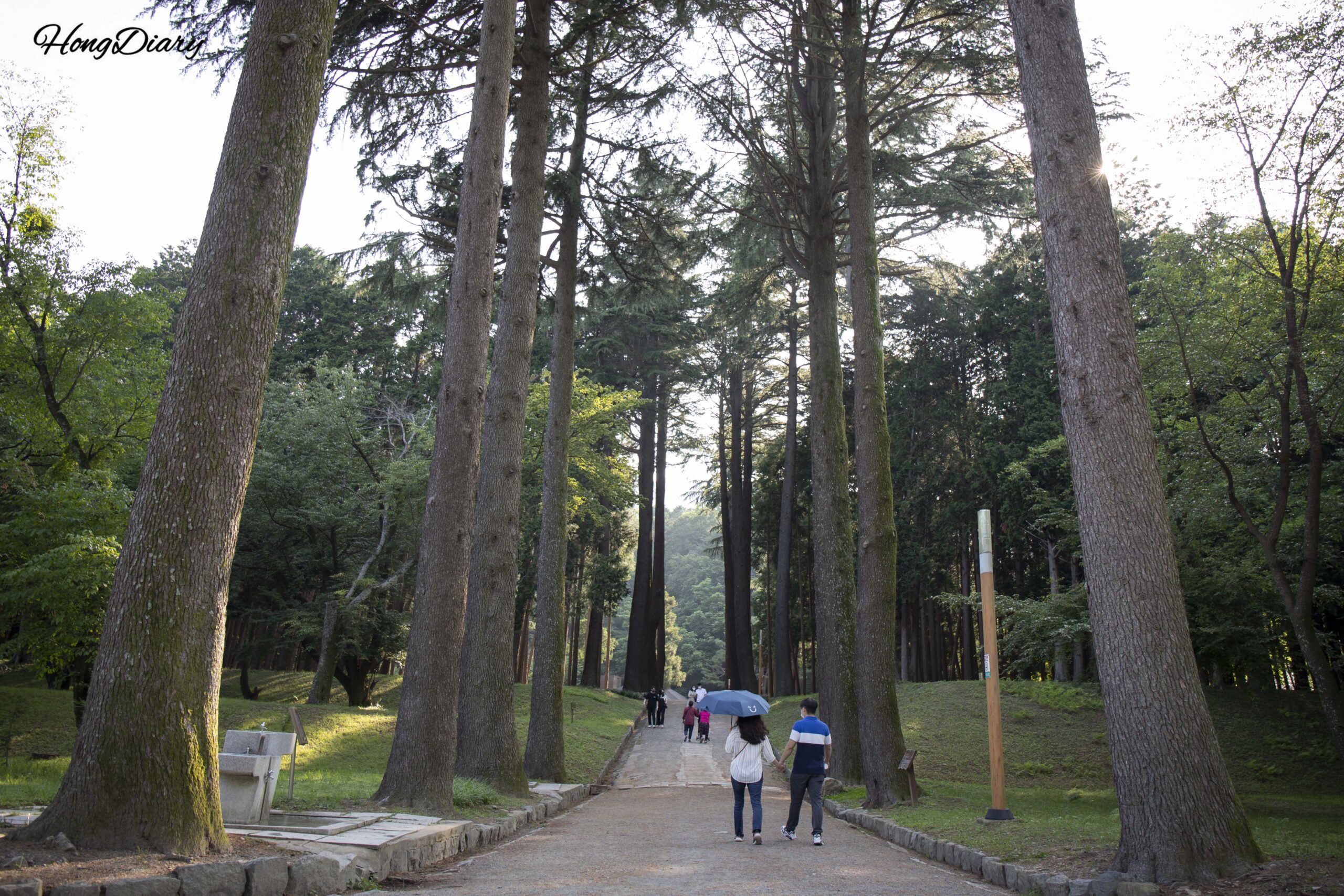
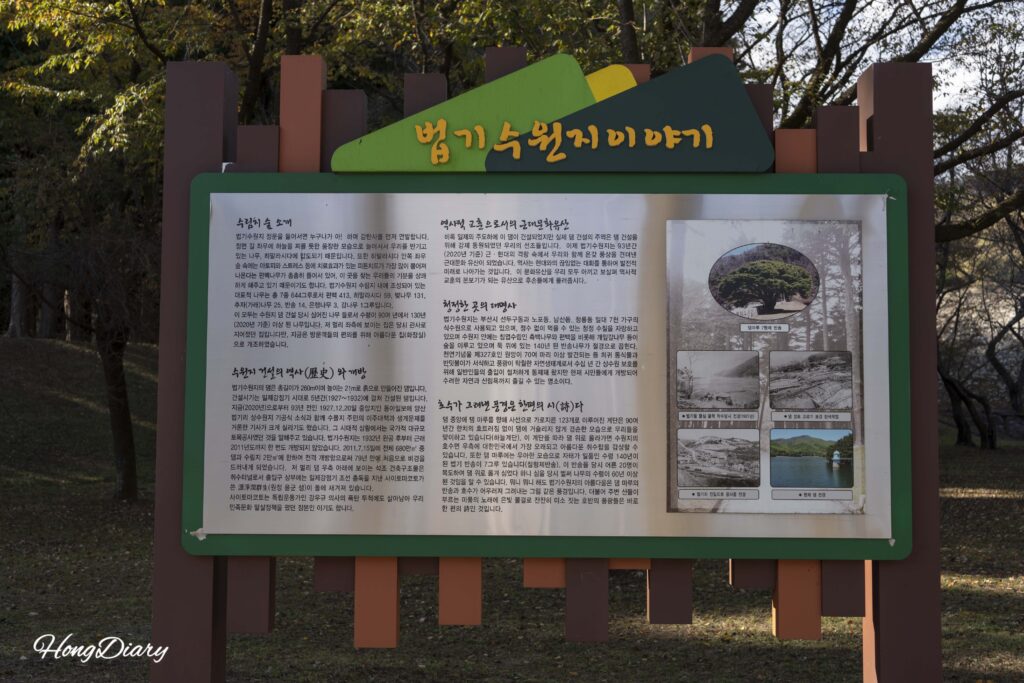
I wasn’t planning to visit Beopgi Reservoir that day. We were passing through Yangsan on the way back to Busan and the thought crossed my mind — I’d been here once before, years ago, and it had stayed with me in a way most places don’t. So we pulled over. What followed was an hour of walking through a forest that feels like it belongs to a different century, because in many ways, it does. Built in 1932 as a water supply dam, this reservoir and the forest surrounding it were sealed from the public for 79 years. No one walked these trails from 1932 until 2011. The trees grew without trimming, the wildlife settled in without disturbance, and by the time the gates finally opened, what was waiting inside looked nothing like the rest of Korea.
Beopgi Reservoir sits in Dong-myeon, Yangsan-si, Gyeongsangnam-do — technically outside of Busan, but barely. From Nopo Station at the northern end of Busan’s Metro Line 1, it’s a 30-minute village bus ride. Yangsan itself is a quiet city in the foothills east of Busan, better known for Tongdosa Temple than for tourism. But this reservoir, originally built to supply drinking water to around 7,000 households in Busan’s northern districts, has become one of the region’s most unexpected natural destinations. The water quality here is clean enough to drink without purification — a claim the area has maintained since 1932. The site was designated as one of Yangsan’s official twelve scenic spots in late 2025, and it’s also a filming location for the Korean drama Marry My Husband and the variety show 2 Days 1 Night.
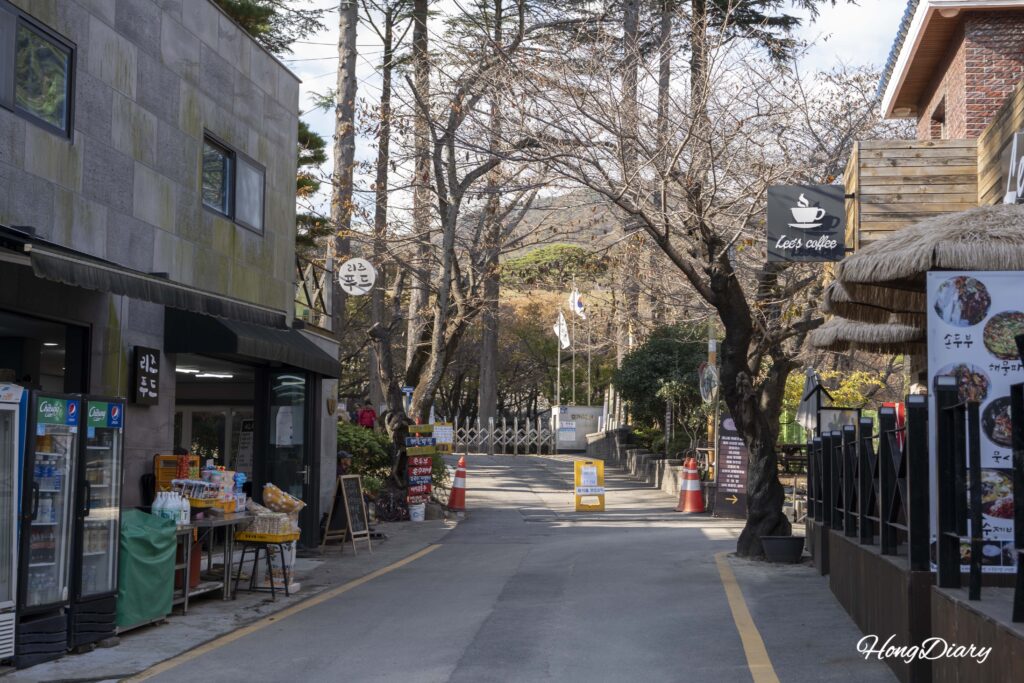
Table of Contents
Visitor Info & Transport
| Detail | Information |
|---|---|
| Place | Beopgi Reservoir |
| Address | 198-13 Beopgi-ro, Dong-myeon, Yangsan-si, Gyeongsangnam-do |
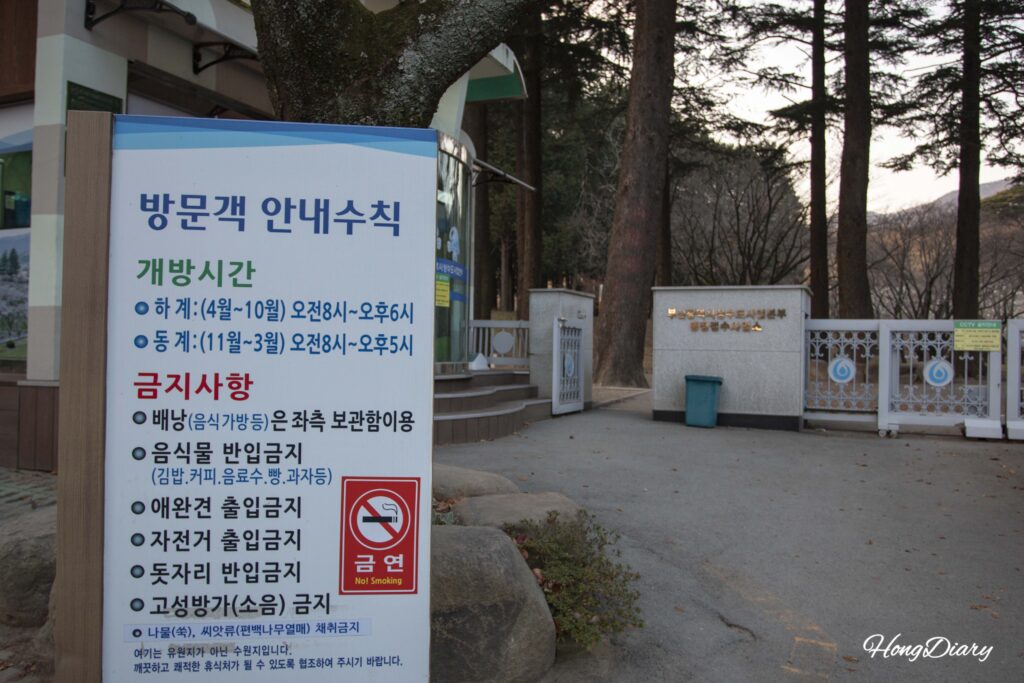
| Hours | Apr – Oct: 8:00 AM – 6:00 PM / Nov – Mar: 8:00 AM – 5:00 PM |
| Admission | Free |
| Rules | No food or picnic mats allowed inside (lockers available at the entrance) |
| Getting There | Busan Metro Line 1 → Nopo Station (Exit 1) → Village bus Beomseo 1 → 18 stops (~30 min) → Beopgi Reservoir stop → 30 m walk |
| Parking | ₩2,000 (~$1 / €1), prepaid |
The Forest at the Gate
The moment you step through the entrance, the scale of the trees hits you. Himalayan cedars — called deodar cedars — line both sides of the main trail, their trunks thick enough that you can’t wrap your arms around them. These are not young trees. Every tree inside the reservoir grounds was planted when the dam was under construction between 1927 and 1932, which puts their age somewhere between 90 and 130 years. You feel it. The canopy is high and dense, the light filters through in shafts, and the air carries a weight of green that’s hard to describe.
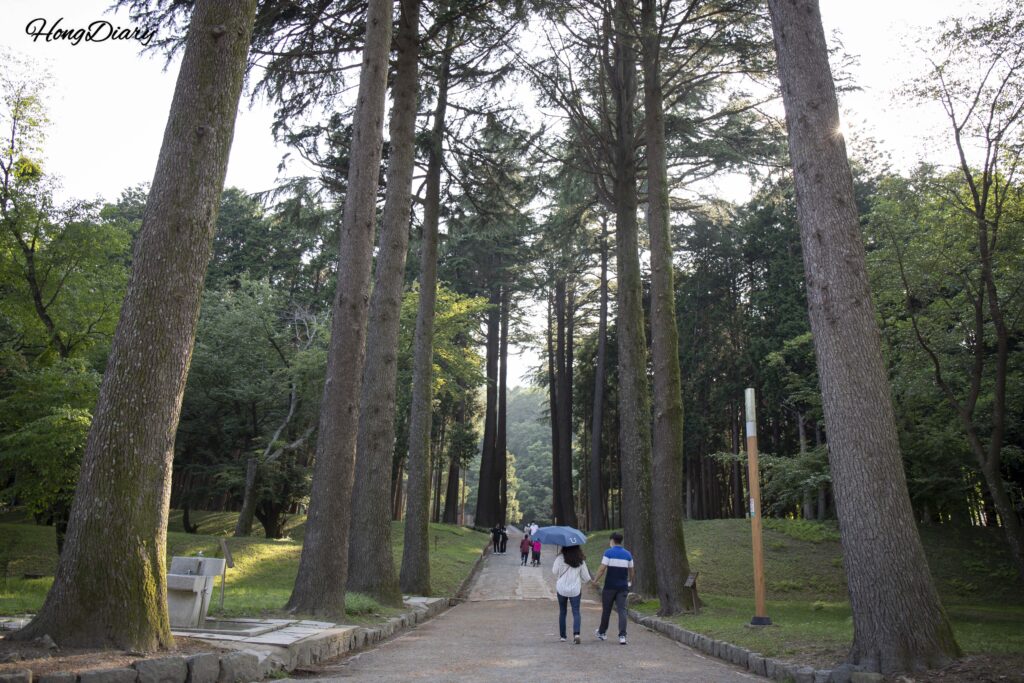
Mixed in with the Himalayan cedars are hinoki cypresses — the species most commonly associated with phytoncide, the compound that gives forest air its distinctive clean scent. The reservoir’s tree census breaks down like this:
| Species | Count |
|---|---|
| Hinoki Cypress | 413 |
| Cherry Tree | 131 |
| Himalayan Cedar (Deodar) | 59 |
| Hackberry | 25 |
| Half-Pine (Bansong) | 14 |
| Ginkgo | 3 |
| Persimmon | 1 |
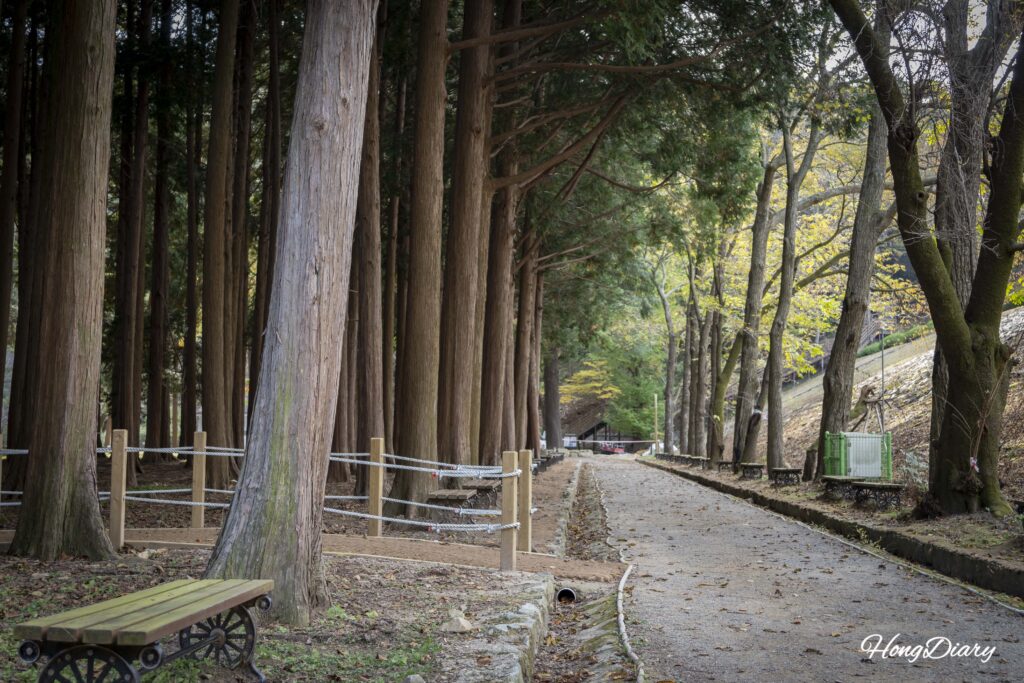
The trails are flat, wide, and easy to walk. There’s no scrambling, no elevation to worry about. It’s the kind of path where you find yourself slowing down without deciding to, because the forest around you is doing something your body responds to before your mind catches up. A cool breeze moved through the trees even on the humid summer day we visited, and for a while, the only sounds were leaves and our own footsteps.
What Lives Here
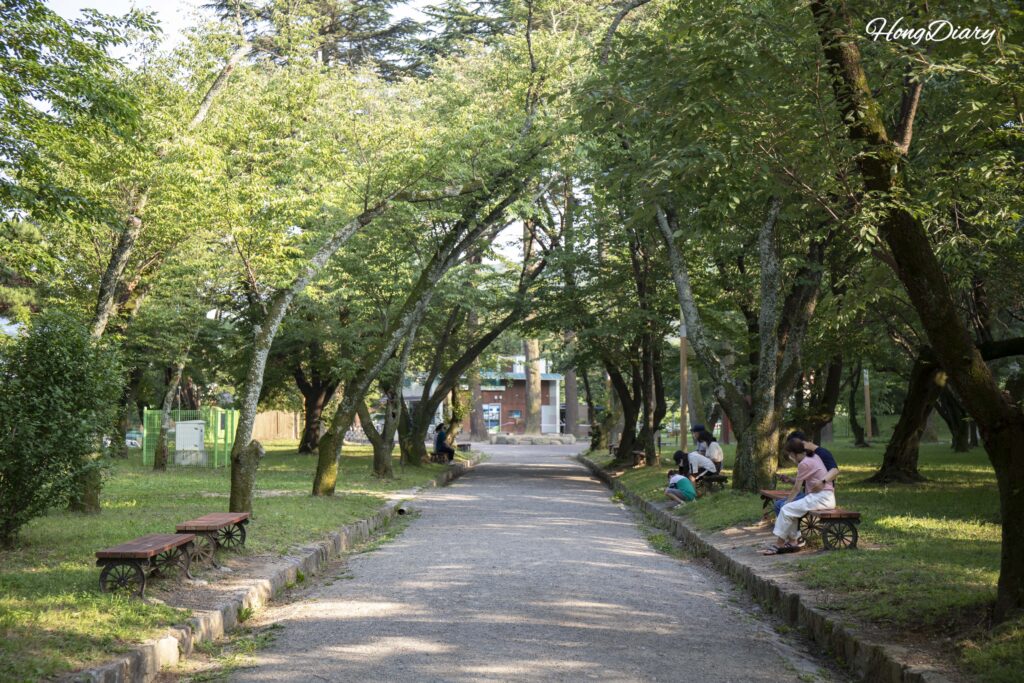
Walking deeper, we noticed snake warning signs posted along the trail — a lot of them. My partner and I joked about it, and within seconds, we spotted one on the edge of the path. The forest is dense and damp, with moss covering much of the ground and the lower parts of the tree trunks. It’s clearly the kind of ecosystem where things thrive without much human interference.
That’s not just snakes. The reservoir grounds are home to around 70 mandarin ducks — designated Natural Monument No. 327 in Korea — as well as fireflies and various other rare species. The fact that fireflies still breed here says something about the water and air quality that no certification could match. Seventy-nine years without foot traffic gave this place something most forests in Korea no longer have: an ecosystem that was never interrupted.
Beopgi Reservoir is also where scenes from the Korean drama Marry My Husband were filmed. The forest’s unusual density and the soft, filtered light make it look otherworldly on screen. The variety show 2 Days 1 Night has also filmed here. If you’ve seen either, walking through the same paths adds a layer of recognition to the visit.
The Dam and the Lake
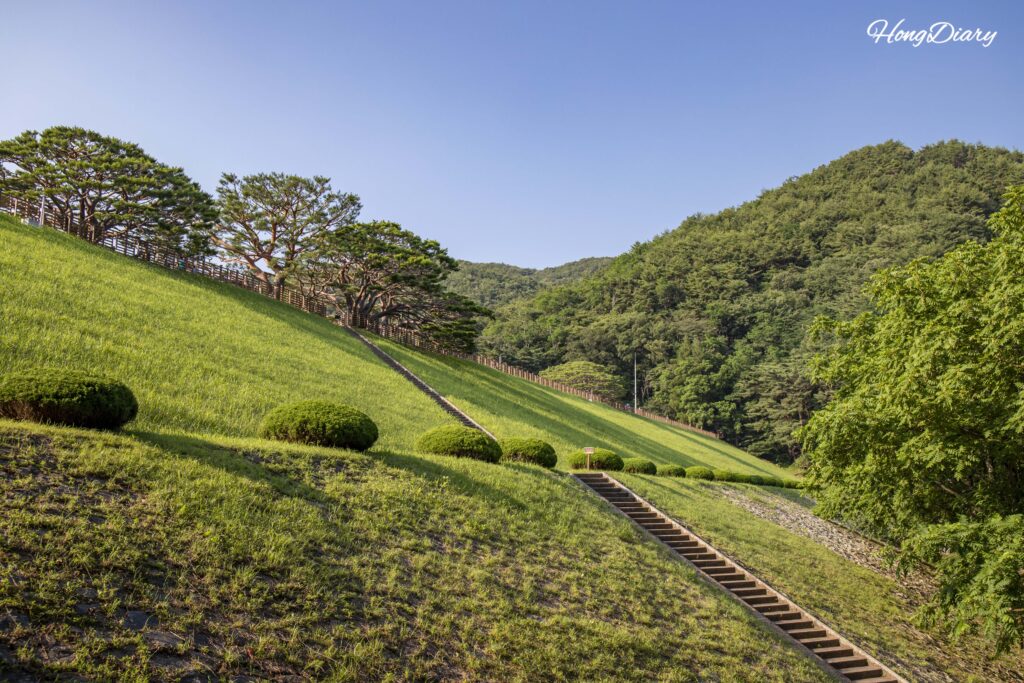
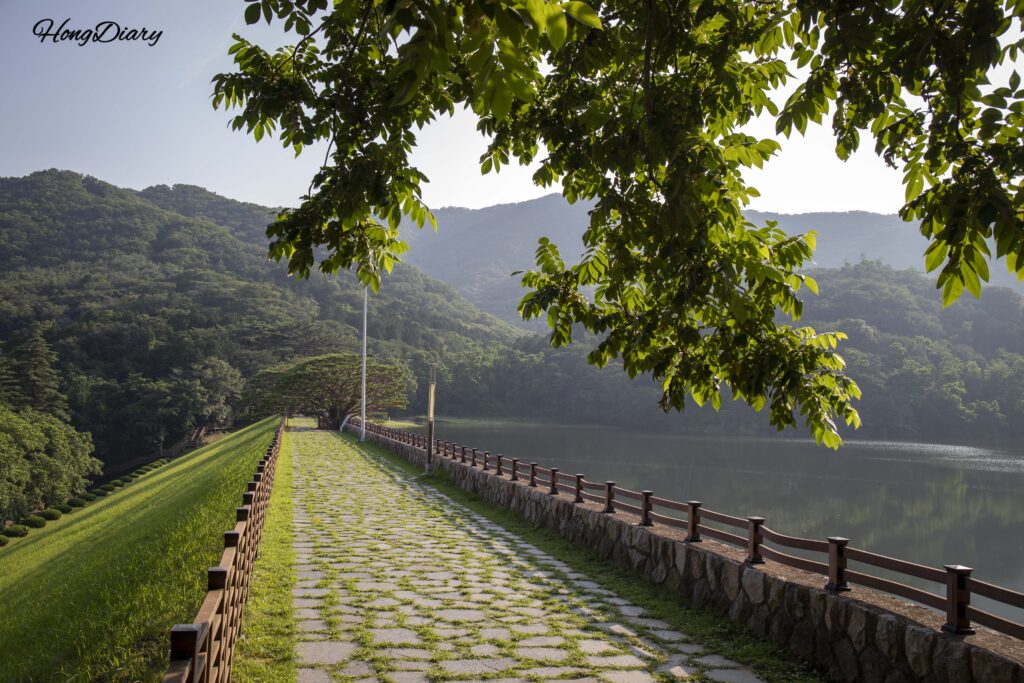
Following the trail deeper into the grounds and up a set of stone steps, you reach the dam itself. It’s an earthen dam — 260 meters long and 21 meters high — constructed between 1927 and 1932. The fact that it’s made of packed earth rather than concrete gives it a softer, more organic appearance that blends into the surrounding landscape rather than cutting through it.
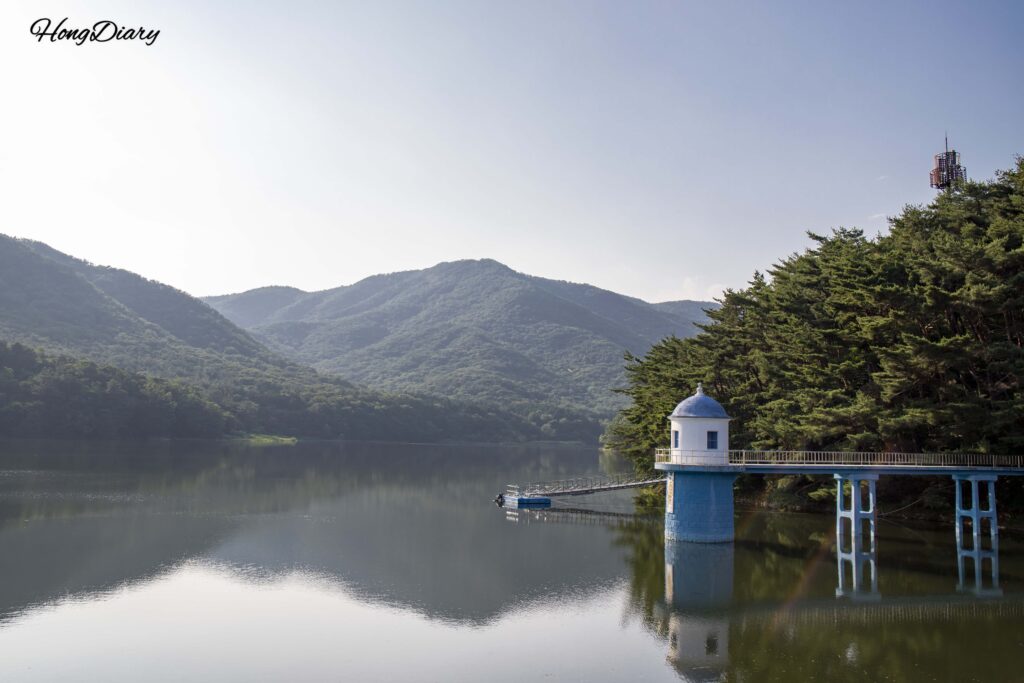
From the top of the dam, the reservoir lake opens up in front of you. It’s still and quiet in a way that feels deliberate, as if the water has been holding its breath since 1932. On the right side of the lake, you can see the water intake tower — reportedly the oldest of its kind still standing in Korea.
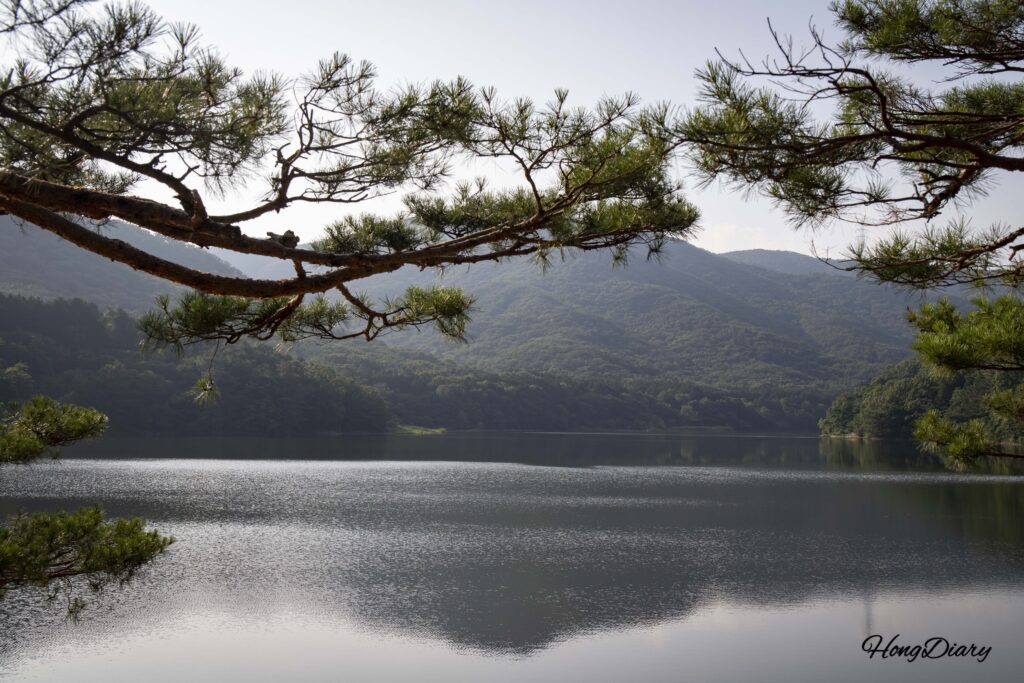
Walk along the dam’s crest and you’ll notice a row of unusually shaped trees ahead — their branches spreading wide and low, almost touching the ground. These are bansong, a type of Korean half-pine, and the reason many people make the trip here.
The Seven Brothers
Seven bansong trees stand along the top of the dam, collectively known as the Seven Brothers Half-Pine. They were transplanted to the dam’s crest when it was being built in the late 1920s — and at the time, they were already over 50 years old. That puts their current age at over 140 years. In a country where half-pines of this size are extremely rare, having seven of them standing in a row beside a lake is something you’re unlikely to see anywhere else in Korea.
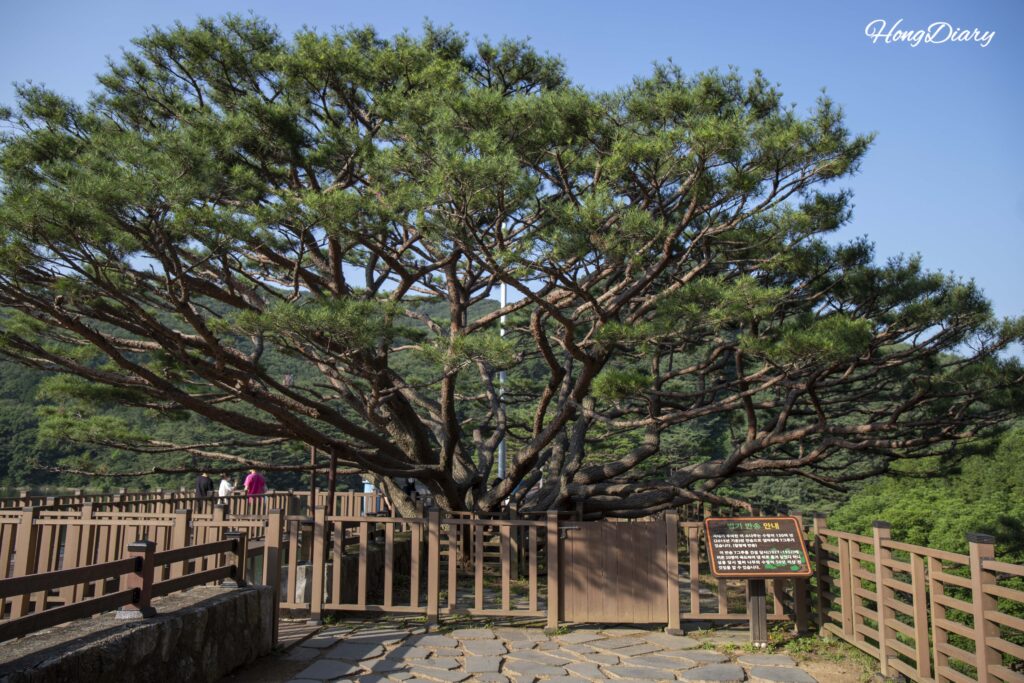
Their branches extend so low and wide that you have to duck as you pass beneath them — signs reading “Watch your head” are posted at each tree. It’s a minor inconvenience, but it means you end up walking slowly, looking up into the canopy, and noticing details you’d miss at normal speed: the texture of the bark, the way the branches frame the lake behind them, the light catching the water through the gaps.
The combination of the half-pines and the still water behind them is the image that stayed with me from my first visit years ago, and it’s the one that brought me back. On a sunny day, the lake surface catches the light while a breeze moves through the pine branches, and for a moment, the place feels like it could write its own poetry.
Before You Leave
Heading back toward the entrance, the trail passes through a cluster of cherry trees. Beopgi Reservoir is known locally as a cherry blossom spot in spring, but even in summer, the green canopy overhead provides shade dense enough to rest under. Near the gate, there’s a Himalayan cedar that was struck by lightning on July 21, 1980, at 7:00 PM — ending its 57-year life. A sign marks the tree, and it’s become an oddly specific landmark that people pause at on their way out.
Just outside the reservoir entrance, a few cafes and Korean restaurants are open. A warm meal followed by tea makes for a natural close to the visit, especially if you’re not in a rush to get back to Busan.
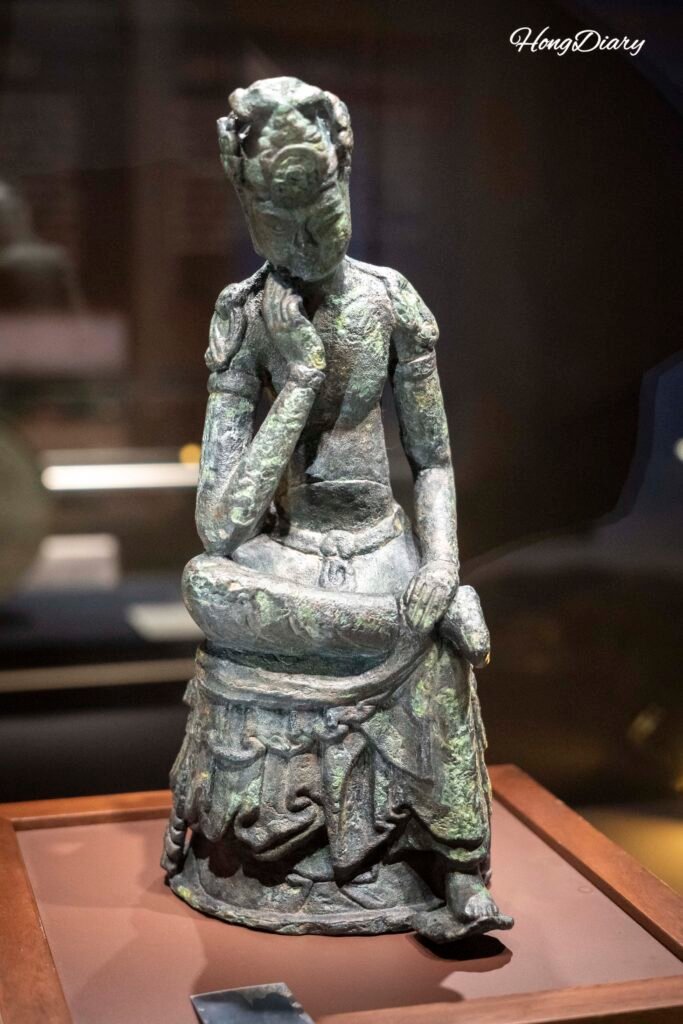
If you’re spending the day in Yangsan, there are a few other places worth combining with the reservoir. Gold Bird Legs, a Pensive Bodhisattva, and Zero Tourists — Inside Yangsan City Museum is a small but surprisingly well-curated museum in the city center, and you’re likely to have the exhibits to yourself.
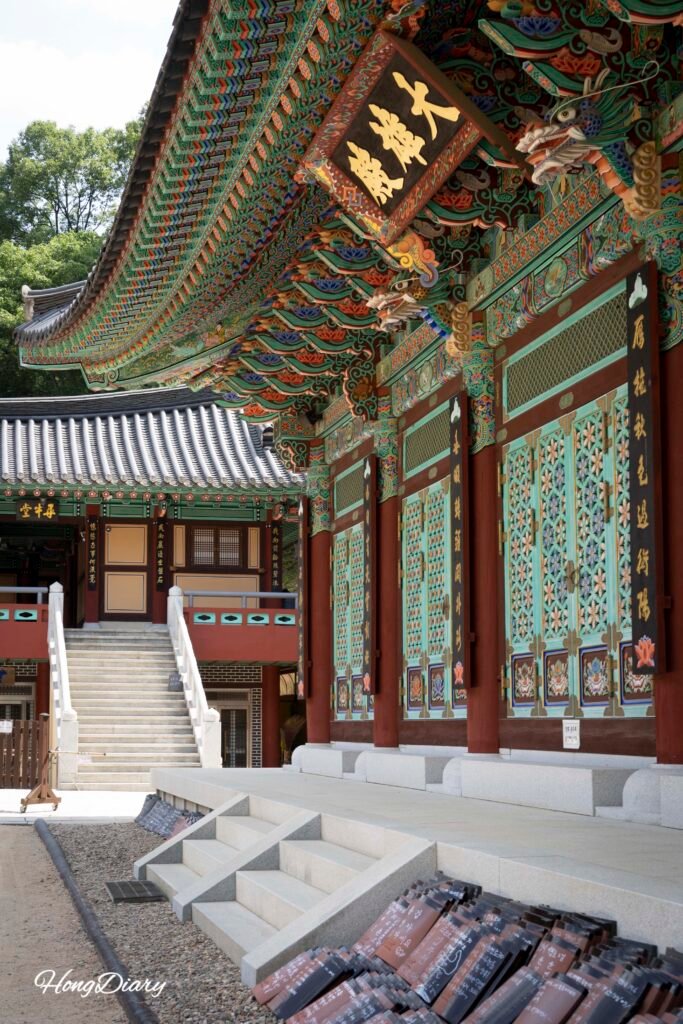
For something more active, Naewonsa Temple Yangsan: A Valley Hike and Hidden Temple Near Busan is a valley hike that leads to one of the quieter temples in the region.
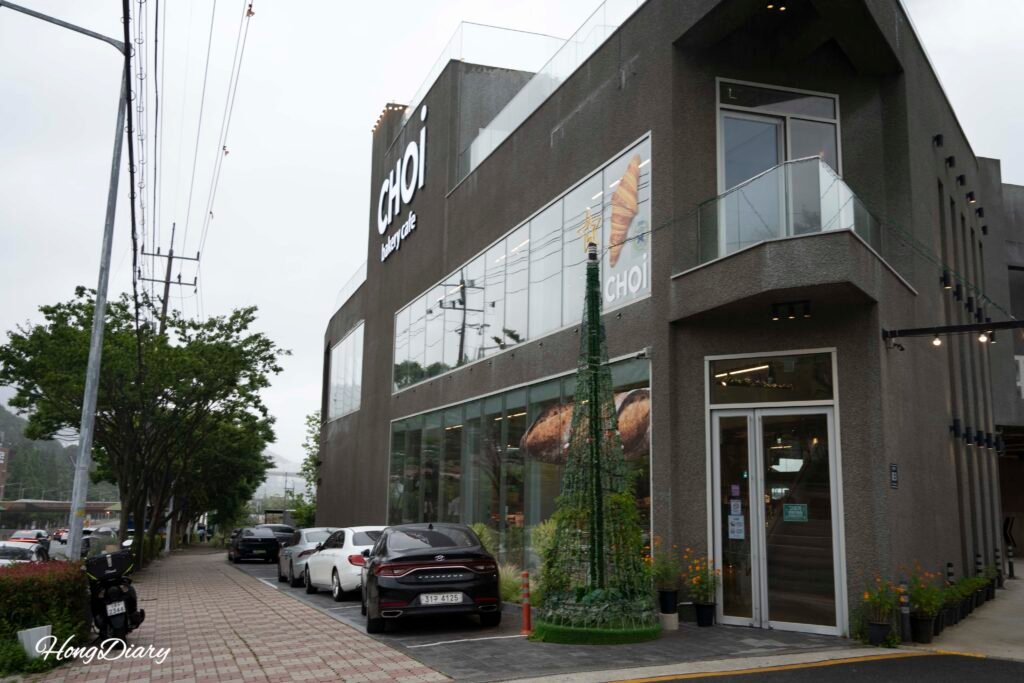
And if you want coffee before or after the reservoir, Cafe Choi Near Busan: The Croissant Champion’s Bakery Cafe You Can Reach by Subway is run by a Korean croissant competition winner and is reachable by subway.
Beopgi Reservoir is not the kind of place that shouts for attention. There are no ticket booths, no rides, no photo zones with props. What it offers instead is a forest that was left alone long enough to become something rare — and a lake that has been reflecting the same row of old pines for longer than most of us have been alive. It’s free, it’s quiet, and it’s 30 minutes from Busan. That’s more than enough.
Frequently Asked Questions About Beopgi Reservoir
How do you get to Beopgi Reservoir from Busan?
Take Busan Metro Line 1 to Nopo Station and use Exit 1. At the Busan General Terminal / Nopo Station bus stop, board the village bus Beomseo 1. Ride for 18 stops (approximately 30 minutes) and get off at the Beopgi Reservoir stop. The entrance is about a 30-meter walk from the bus stop. If driving, parking costs ₩2,000 (~$1 / €1) prepaid at the entrance.
Is there an admission fee for Beopgi Reservoir?
No. Admission is completely free. The reservoir is open daily within set hours: 8:00 AM to 6:00 PM from April through October, and 8:00 AM to 5:00 PM from November through March. Visitors should plan to arrive before closing time, as entry is not permitted after hours.
Can you bring food or picnic supplies inside?
No. Food and picnic mats are not allowed inside the reservoir grounds. If you’re carrying food or other restricted items, there are lockers at the entrance where you can store them. Cafes and Korean restaurants are available just outside the entrance for meals before or after your visit.
Why was Beopgi Reservoir closed for 79 years?
The reservoir was completed in 1932 as a water supply source for approximately 7,000 households in Busan’s northern districts. To protect the water quality, public access was restricted from the time of completion until 2011. During those 79 years, no visitors were allowed inside, which allowed the trees, wildlife, and ecosystem to develop without human disturbance. The water quality remains clean enough to drink without purification.
What are the Seven Brothers Half-Pine trees?
The Seven Brothers are a group of seven bansong (half-pine) trees that stand along the top of the reservoir dam. They were transplanted to the dam’s crest when it was being built in the late 1920s and were already over 50 years old at the time, making them more than 140 years old today. Half-pines of this size are extremely rare in Korea, and having seven in a row beside a lake is considered a unique sight even by local standards.
Is Beopgi Reservoir a filming location for Marry My Husband?
Yes. Beopgi Reservoir was used as a filming location for the Korean drama Marry My Husband. The forest’s dense canopy and soft, filtered light create an atmosphere that translates well on screen. The variety show 2 Days 1 Night has also filmed here. Even if you haven’t seen the shows, the setting is visually striking on its own.
Are there snakes at Beopgi Reservoir?
Yes — snake warning signs are posted throughout the trail, and the forest is dense and humid enough to be a suitable habitat. We spotted one near the edge of the path during our visit. Staying on the paved trail and watching where you step is generally enough to avoid any encounters. The same ecosystem that supports snakes also supports around 70 mandarin ducks (Natural Monument No. 327) and fireflies, which is a sign of how well-preserved the environment is.