
There’s a flower in Korea that blooms without leaves. When the leaves are there, the flower is gone. They share the same stem but never exist at the same time — and that’s why Koreans call it one of the saddest flowers in the country. I went to a rural temple in Geumsan to see it, and I got there about a week too late. The flowers were fading. But what I found at Boseoksa Temple Geumsan made the trip worth it anyway.
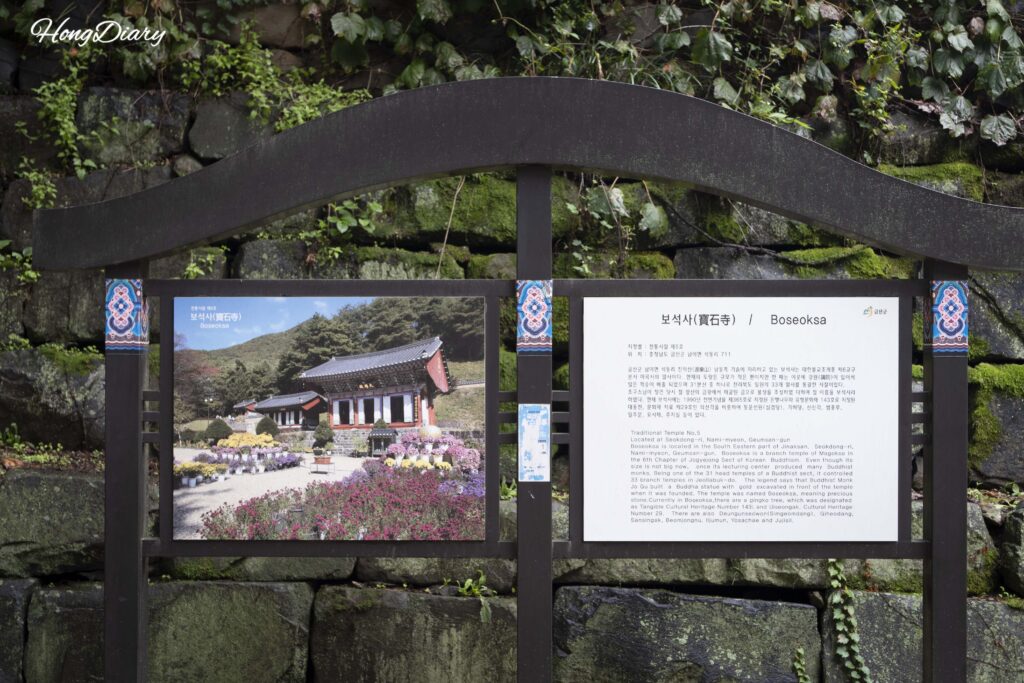
Boseoksa Temple sits on the southeastern slope of Jinaksan Mountain in Nam-myeon, Geumsan-gun, South Chungcheong Province. Geumsan is better known for its ginseng — it’s one of Korea’s main ginseng-producing regions — but tucked into the mountains south of town is this 9th-century Buddhist temple that comes alive every autumn when the spider lilies bloom. Getting there takes some effort: there’s no direct bus to the temple, and the nearest transit point still leaves you with a long walk.
Table of Contents
Quick Guide: Boseoksa Temple
| Detail | Info |
|---|---|
| Name | Boseoksa Temple |
| Address | Nam-myeon, Geumsan-gun, Chungcheongnam-do |
| Founded | 886 AD (Silla Kingdom), by the monk Jogu Daesa |
| Spider Lily Season | Late September – early October (peak: first week of October) |
| Getting There | Daejeon → Geumsan Terminal (intercity bus), then taxi ~15 min / ₩14,000 (~$9 USD / €8 EUR) |
| Bus Option | Bus 1, 68, 620, 640, 641, or 653 from Geumsan Terminal → Seokdong Junction stop, then 2 km walk (~30 min). Buses run once daily — taxi strongly recommended |
| Admission | Free |
The Flower That Never Meets Its Own Leaves
If you’ve traveled in Korea during autumn, you’ve probably heard of cosmos, pink muhly, and chrysanthemums. But there’s another flower — less famous among foreign visitors — that has a story unlike anything else in the country.
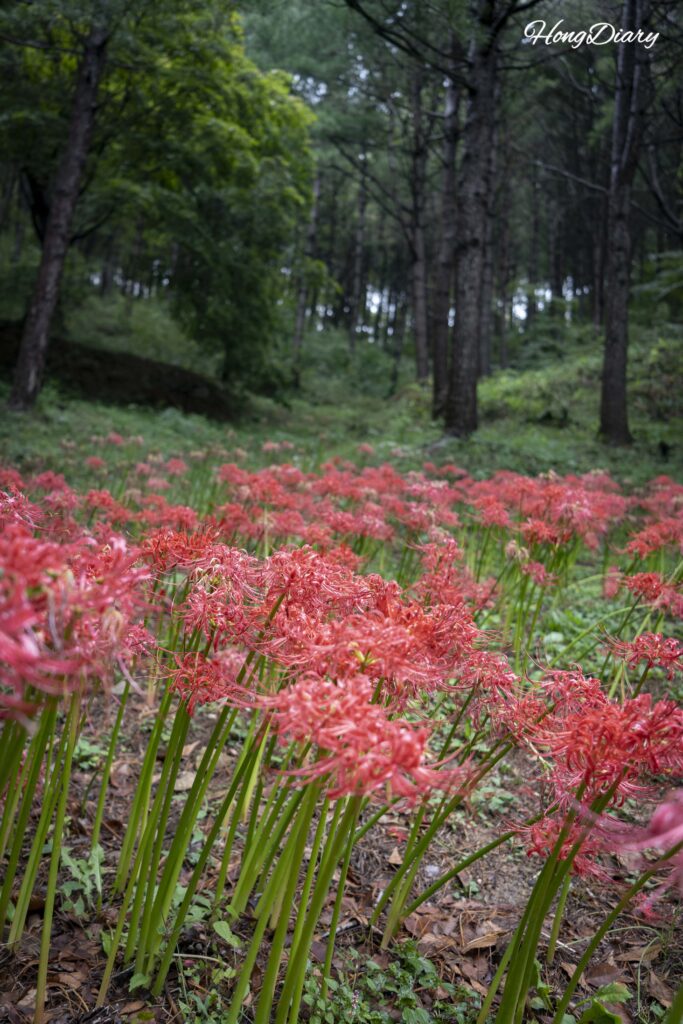
The red spider lily, known in Korean as kkotmureut and botanically as Lycoris radiata, follows a cycle that sounds like it was written for a novel. In spring, the leaves grow. By early summer, the leaves disappear completely. Then in early autumn, from the bare ground where the leaves once stood, a bright red flower shoots up and blooms — with no leaves in sight. When winter comes, the leaves return, but by then the flower is long gone.
The flower and the leaf share the same root but never coexist above the ground. They grow in turns, season after season, never once meeting.
That cycle is why the spider lily carries some of the most poignant flower language in Korean culture: love that can never be fulfilled, longing for someone you’ll never see again, the beauty of something that exists only in absence. Many Koreans consider it the saddest flower in the country. The flower is also deeply rooted in Japanese culture, where it’s known as higanbana — if you’ve seen fields of red near temples in Japan, it’s the same plant, carrying a similar weight of meaning.
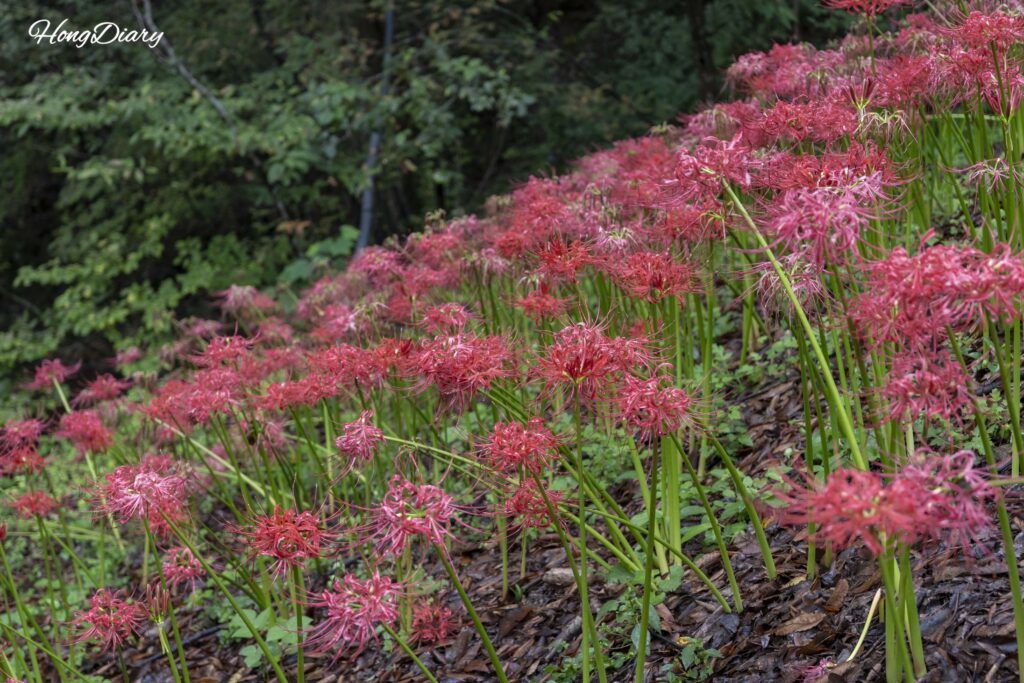
There’s a practical side to the story as well. Spider lily roots contain a toxin strong enough that it was historically used on hunting arrows in parts of Asia. That same toxin repels insects — and in a country where Buddhist temples are built almost entirely from wood, keeping insects away from the structures was a matter of survival. Monks planted spider lilies around temple grounds for exactly that reason, and over centuries, the flowers spread into the dense colonies you see today. That’s why so many Korean temples are surrounded by fields of red every autumn. The beauty is real, but the reason it’s there is entirely functional.
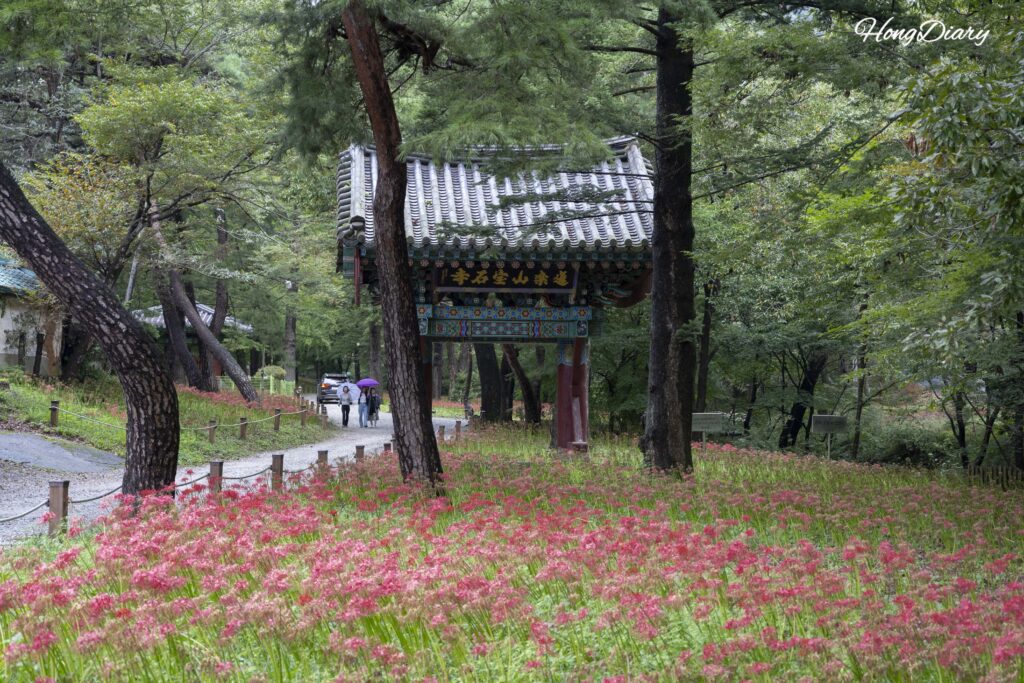
I visited Boseoksa in mid-October, about a week past the peak. Most of the spider lilies at the entrance had already started to wilt, but further inside the grounds, patches of full bloom remained — enough to see why this temple draws visitors every fall. If you’re planning a visit specifically for the flowers, aim for the first week of October. The window is narrow, and the season doesn’t wait.
Walking Through the Temple Grounds
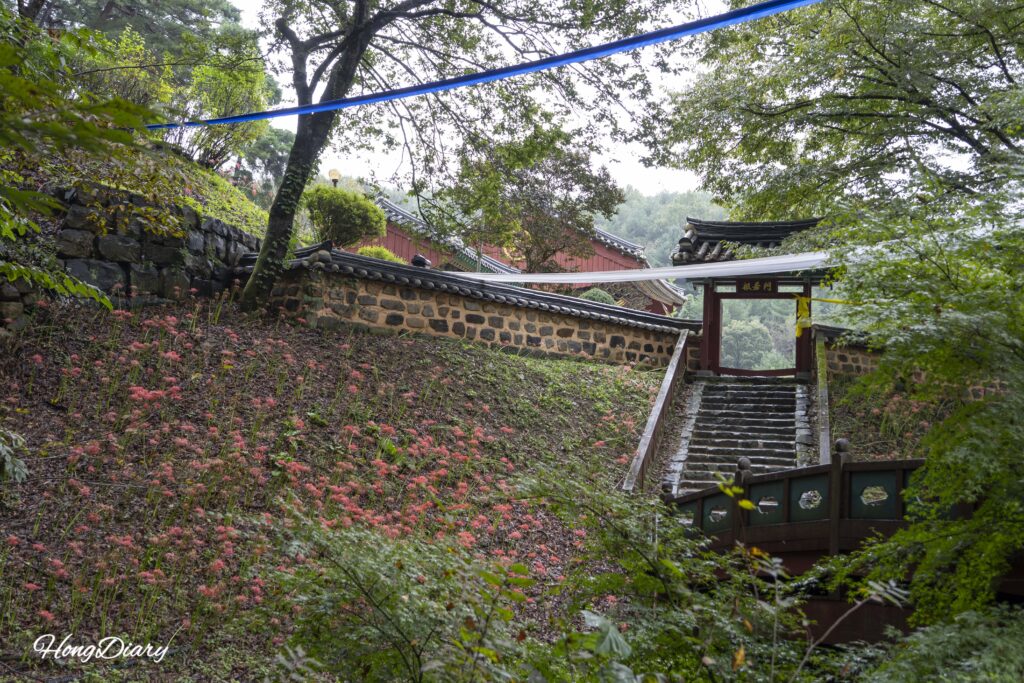
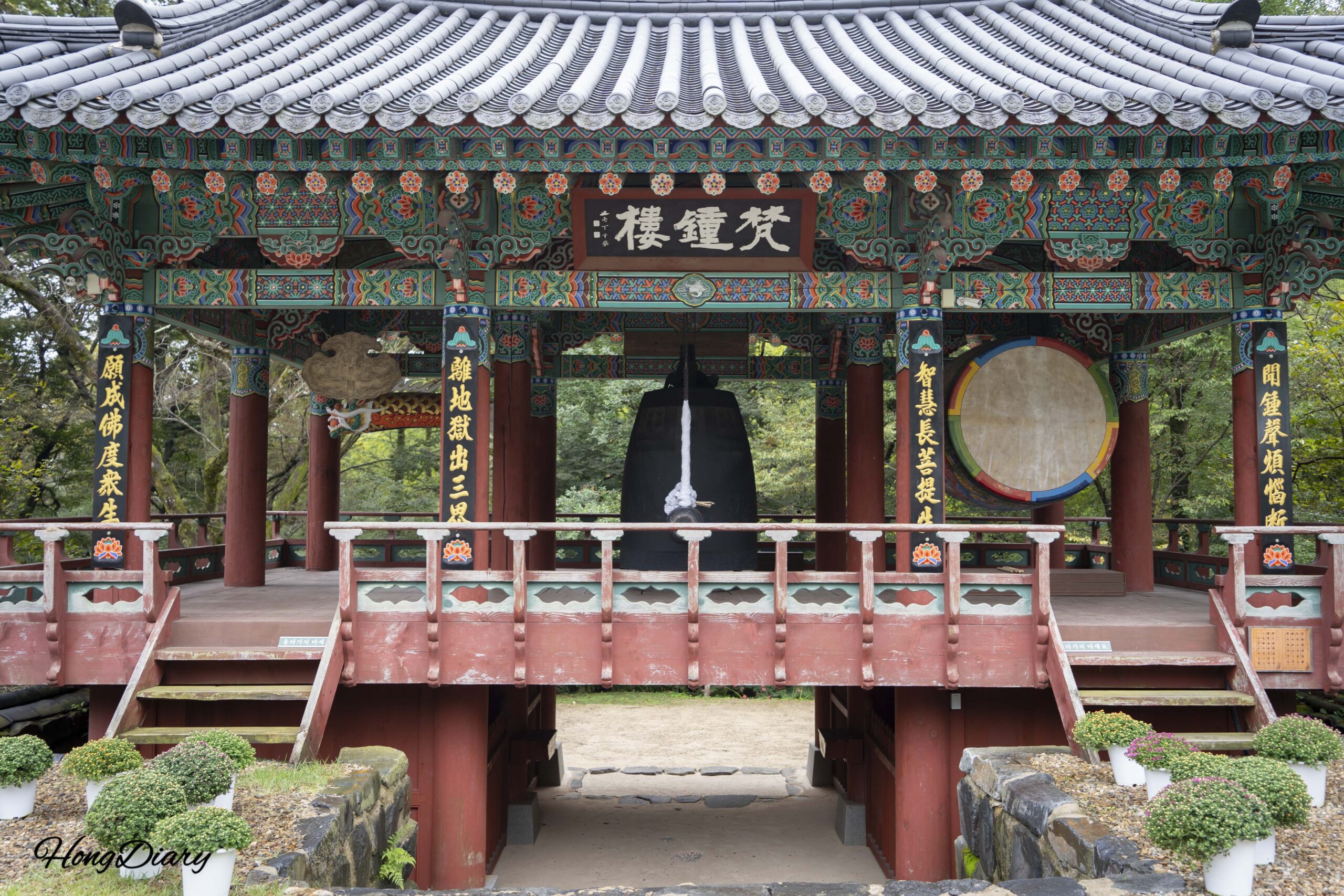
Beyond the spider lilies, the temple grounds are worth the visit on their own. The path uphill to the main buildings is shaded and quiet, lined with old trees and the occasional sound of running water from a nearby stream. Boseoksa was founded in 886 AD during the Silla Kingdom by the monk Jogu Daesa, and the temple’s name — boseok meaning “jewel” — comes from a story about gold found in the facing mountain, which was used to cast the temple’s original Buddha statue.
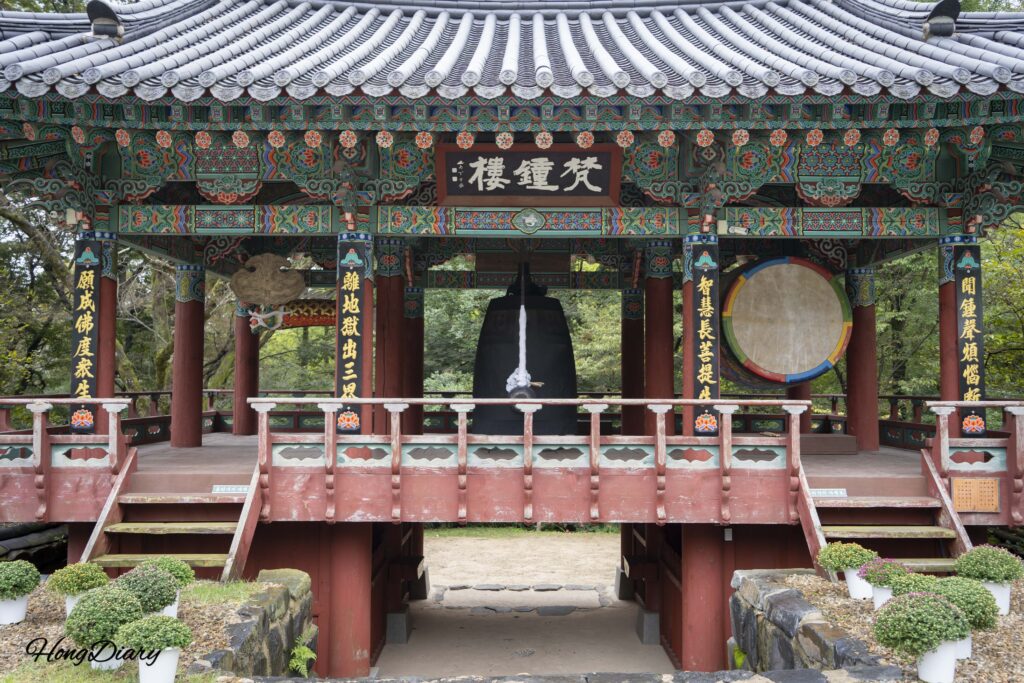
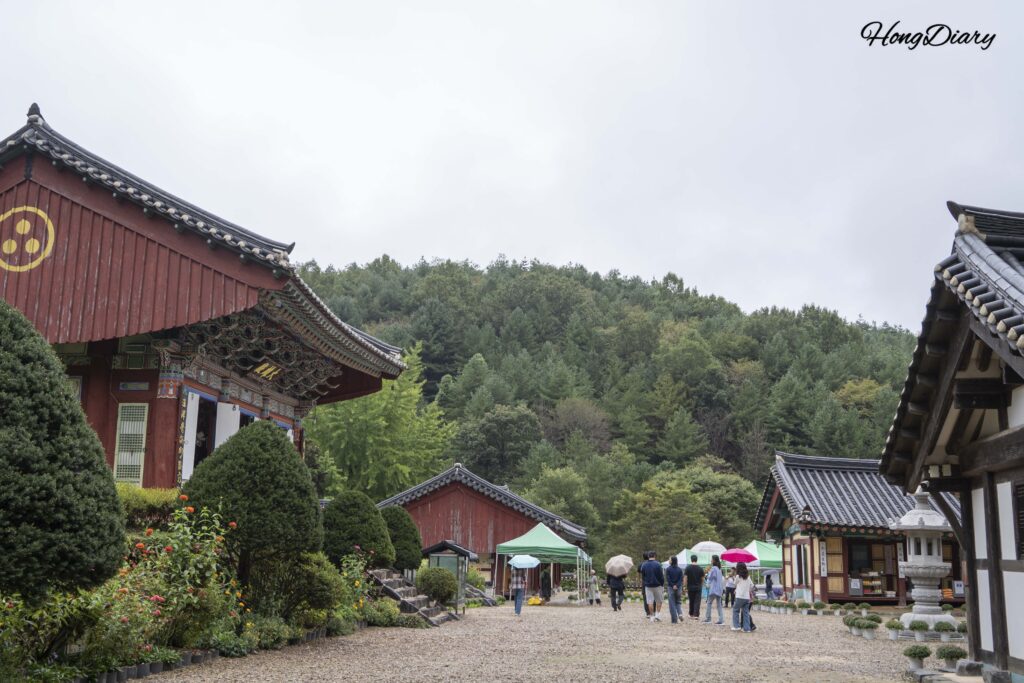
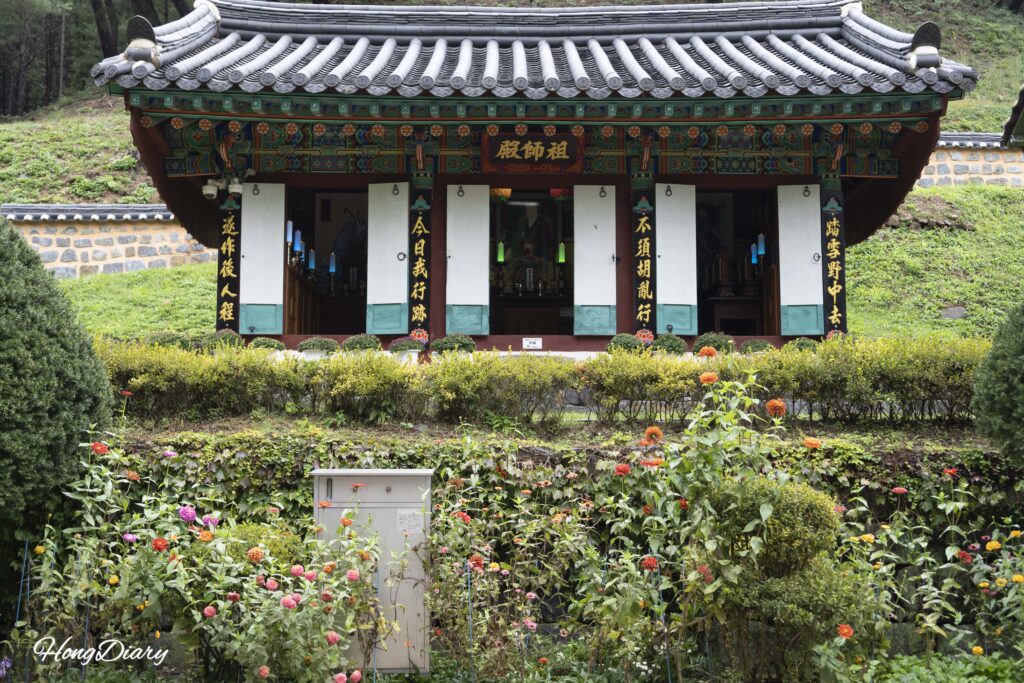
The compound includes Daeungjeon Hall (the main worship hall), a bronze bell, and several smaller shrines. One of them is Josajeon — a shrine dedicated to the temple’s founder and other revered monks, housing their portrait paintings. It’s not a large temple, and that’s part of the appeal. There are no crowds, no ticket counters, no gift shops. Just the buildings, the trees, and the mountain behind them.
The 1,000-Year-Old Ginkgo Tree
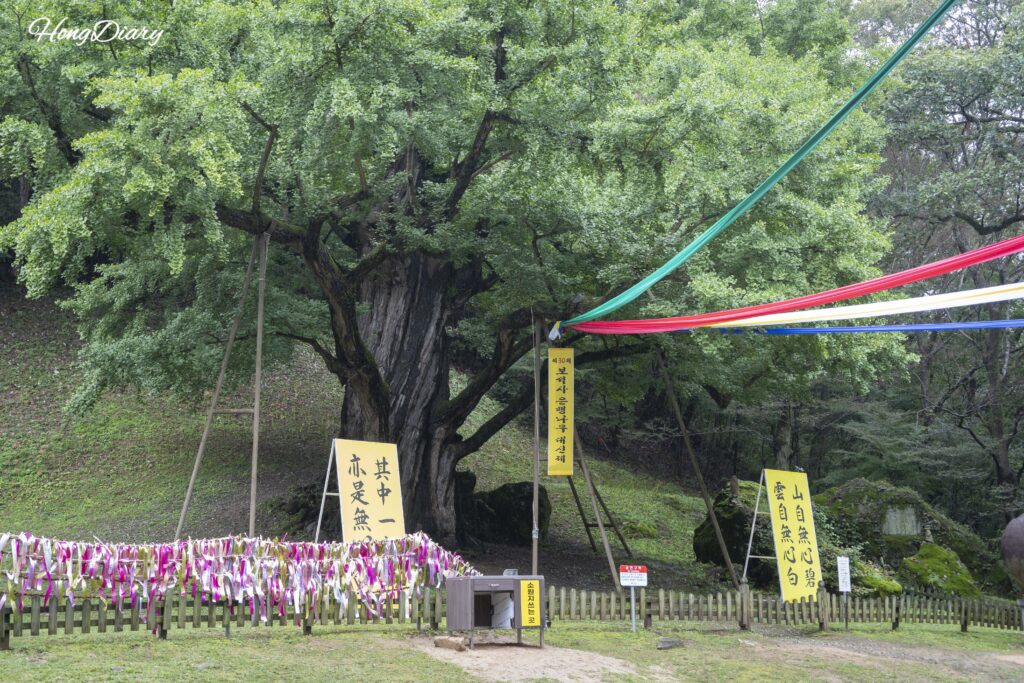
Deeper inside the temple grounds stands Geumsan Protected Tree No. 9 — a ginkgo tree estimated to be over 1,000 years old and standing 34 meters tall. According to local tradition, the tree was planted by Jogu Daesa and one of his disciples around the time the temple was founded.
What makes this tree more than just old is the legend attached to it. Locals say the tree has cried — audibly — before major national events: in 1945, when Korea was liberated from Japanese colonial rule; in 1950, at the outbreak of the Korean War; and in 1992, during a severe regional drought. Whether you take the legend literally or not, the tree has become a place where visitors stop, look up, and quietly make a wish — for health, for family, for something they’re carrying.
After the spider lilies fade, this ginkgo turns bright yellow and takes over as the main autumn attraction at Boseoksa. If you miss the flowers, you might still catch the tree at its peak.
Wrap-Up
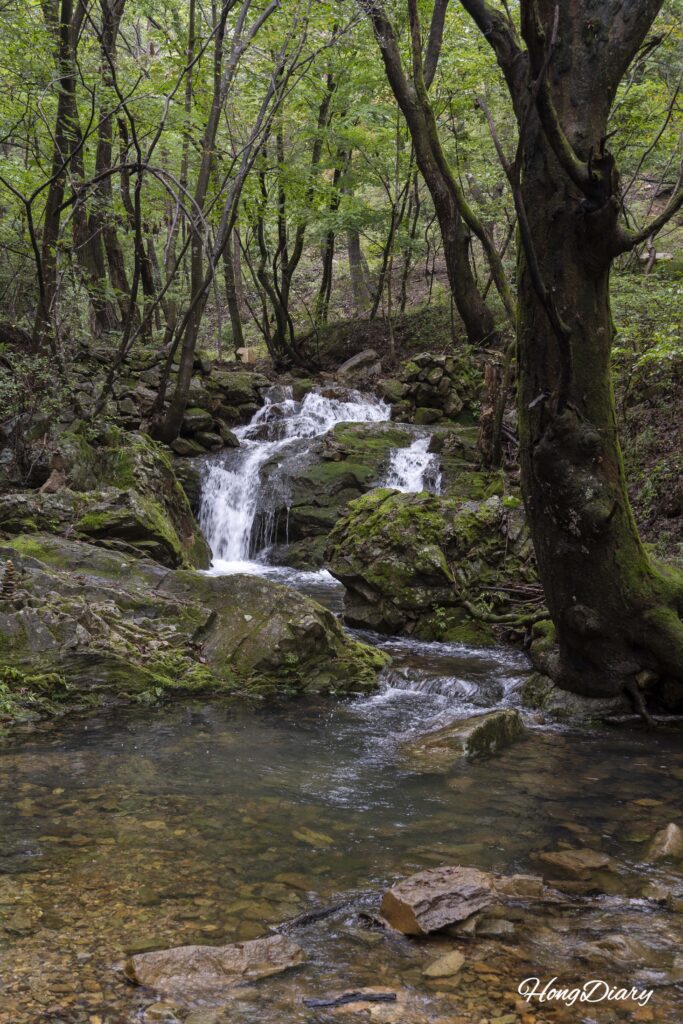
On the way down, I passed a stretch of stream valley where the rocks were entirely covered in moss — the kind of quiet, accidental scene that makes you stop walking and just stand there for a minute. Boseoksa Temple Geumsan isn’t a place you stumble into. It takes effort to reach, the flower season is short, and if you arrive a week late like I did, you’ll see more brown than red. But between the story of the flower that never meets its own leaves, the 1,000-year-old tree that locals say cries before crises, and the moss-covered silence of the mountain path, there’s enough here to make the trip feel earned rather than convenient.
I didn’t have time to hike the extra 1.4 kilometers to Yeongcheonam, a hermitage deeper in the mountain that belongs to Boseoksa. Its Muryangsu Pavilion was designated a National Treasure in 2026 — not flashy, but the kind of place built for stillness. If your schedule allows, it’s worth the walk.
If you’re making a day of Geumsan, the temple pairs well with the rest of the area.
Frequently Asked Questions (FAQ)
What is Boseoksa Temple in Geumsan?
Boseoksa Temple is a Buddhist temple on the slopes of Jinaksan Mountain in Geumsan-gun, South Chungcheong Province. It was founded in 886 AD during the Silla Kingdom and is known for its red spider lily colonies that bloom every autumn, a 1,000-year-old protected ginkgo tree, and its quiet, uncrowded mountain setting.
When is the best time to visit Boseoksa Temple for spider lilies?
The red spider lilies at Boseoksa typically bloom from late September to early October, with the first week of October being the peak. The bloom window is narrow — arriving even a week late means you’ll see fading flowers rather than full bloom. If you’re planning a trip specifically for the spider lilies, aim for early October and check local bloom reports before going.
How do I get to Boseoksa Temple from Daejeon?
Take an intercity bus from Daejeon to Geumsan Terminal. From there, a taxi to Boseoksa takes about 15 minutes and costs around ₩14,000 (~$9 USD / €8 EUR). There are local buses (lines 1, 68, 620, 640, 641, 653) but they each run only once daily and leave a 2 km walk from the stop to the temple. A taxi from Geumsan Terminal is strongly recommended.
What is the red spider lily, and why does it grow around Korean temples?
The red spider lily (Lycoris radiata), called kkotmureut in Korean, is a flower whose leaves and bloom never coexist. Leaves grow in spring and vanish by summer; flowers appear in autumn with no leaves present. The roots contain a toxin strong enough to repel insects, which is why Buddhist monks historically planted them around wooden temple structures to protect the buildings. Over time, these plantings spread into the dense colonies found at many Korean temples today.
What is the story behind the 1,000-year-old ginkgo tree at Boseoksa?
Geumsan Protected Tree No. 9 is a ginkgo estimated to be over 1,000 years old and standing 34 meters tall. It is said to have been planted by the monk Jogu Daesa when the temple was founded. Local legend holds that the tree has made audible crying sounds before major national events, including Korea’s liberation in 1945, the Korean War in 1950, and a severe regional drought in 1992. Visitors often stop at the tree to make wishes.
Is Boseoksa Temple worth visiting outside of spider lily season?
Yes. The temple grounds, mountain paths, moss-covered stream valleys, and the 1,000-year-old ginkgo tree are worth the visit year-round. In late October and November, the ginkgo turns bright yellow and becomes the main autumn attraction. The temple is also quiet and uncrowded compared to better-known Korean temples, making it a good destination for those looking for something off the beaten path.
What is Yeongcheonam hermitage near Boseoksa?
Yeongcheonam is a smaller hermitage belonging to Boseoksa, located about 1.4 kilometers deeper into the mountain (approximately a 30-minute hike). Its Muryangsu Pavilion was designated a National Treasure in 2026. The hermitage is not flashy, but the hike is peaceful and the setting offers the kind of quiet that’s difficult to find at more popular temple sites.