
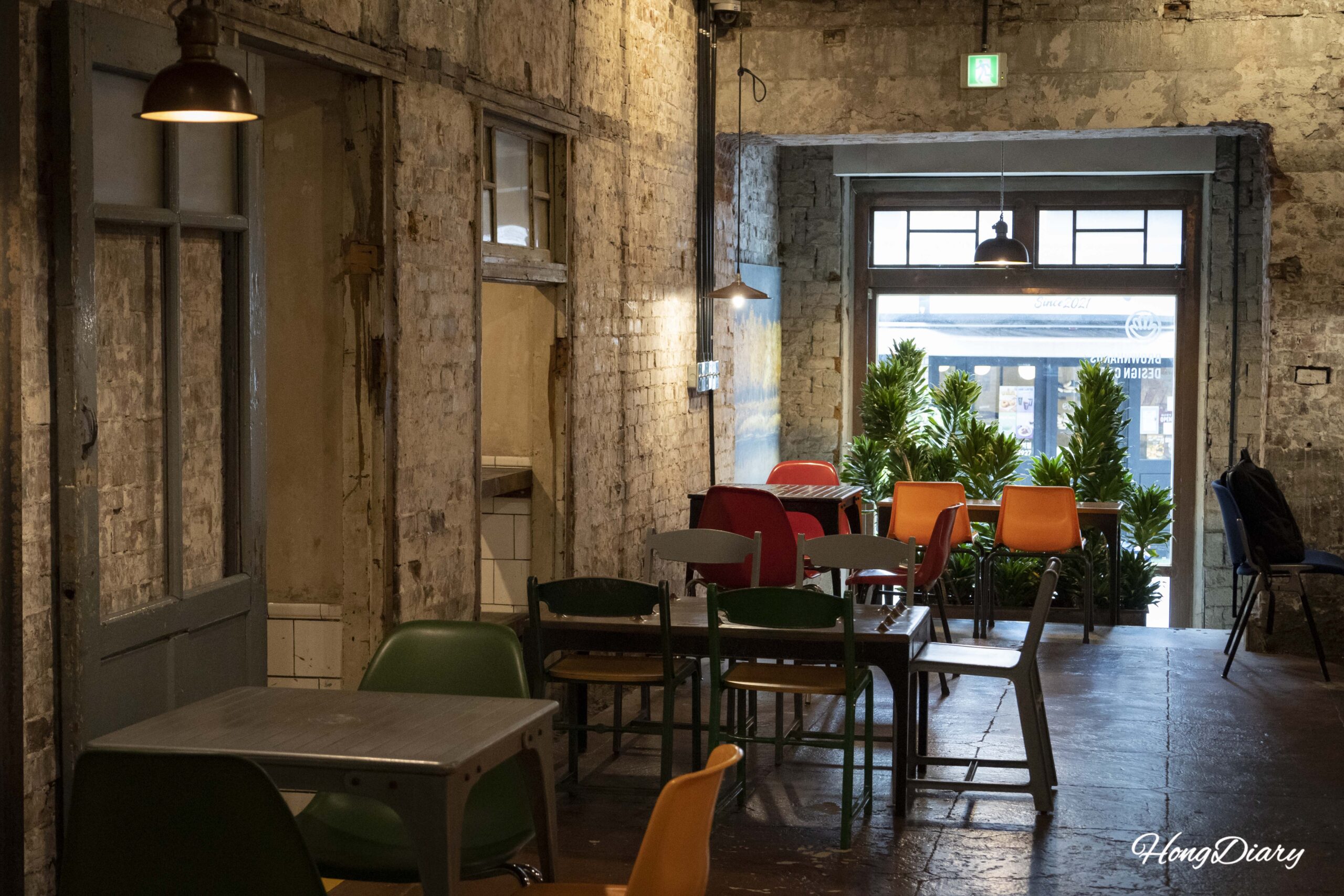
If you’ve ever had an hour to spare at Busan Station before your KTX (Korea’s high-speed train) departure, you know the usual options — a chain cafe, a convenience store snack, maybe aimless scrolling on a bench. But right across the street, tucked inside an alley you’d walk past without thinking twice, there’s a cafe sitting inside a building with nearly a century of stories layered into its walls.
Brown Hands Baekje operates on the ground floor of the former Baekje Hospital — Busan’s first modern private hospital, originally built in the late 1920s and now a nationally registered cultural heritage site (No. 647). From the outside, it’s a weathered red-brick structure that looks nothing like the franchise cafes lining the station plaza. From the inside, it feels like a place that quietly remembers everything it used to be.
Table of Contents
Brown Hands Baekje Basic Info: Address, Hours, and How to Get There from Busan Station
| Detail | Info |
|---|---|
| Address | 16 Jungang-daero 209beon-gil, Dong-gu, Busan |
| Hours | Daily 10:00 – 21:30 (last order 21:20). Occasional closures announced on their social media. |
| How to Get There | Exit 7 of Busan Station → cross the street → enter the alley next to the CU (a Korean convenience store chain) shop → the red-brick building is on your right. About a 2-minute walk. |
| Parking | None available. No validation offered. If you’re driving, you’ll need to find a nearby paid lot. |
| Nearby | Busan Chinatown, Choryang Ibagu-gil, Choryang Traditional Market |
The cafe sits in Choryang-dong, Dong-gu — the neighborhood directly across from Busan Station. This area also marks the starting point of Choryang Ibagu-gil, a 2-kilometer walking trail that climbs through a hillside village originally settled by Korean War refugees. “Ibagu” is Busan dialect for “story,” and the trail is named for the layers of personal history woven into its steep staircases and narrow alleys. Whether you’re planning to walk the trail or just looking for somewhere to sit for a while, Brown Hands Baekje is a natural place to begin.
From Operating Room to Coffee Shop: A Century of Reinvention
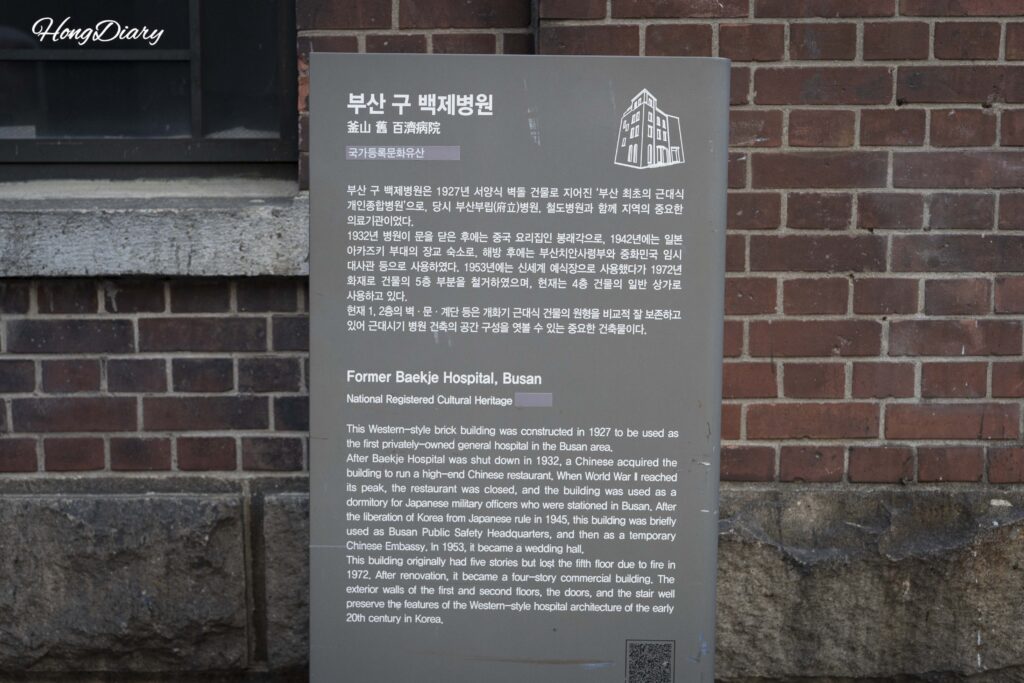
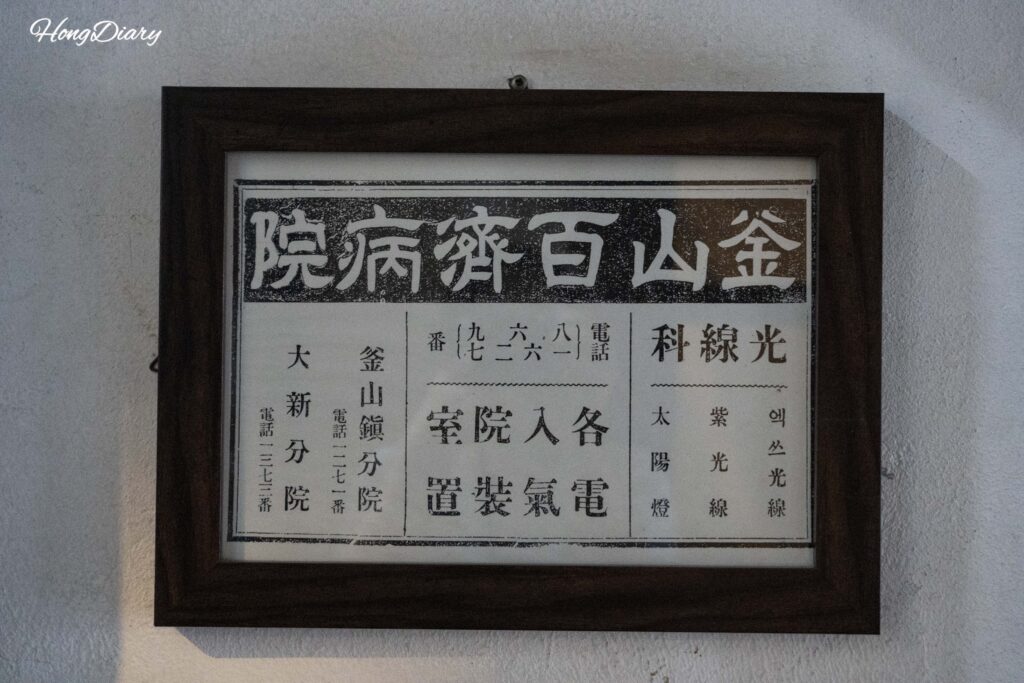
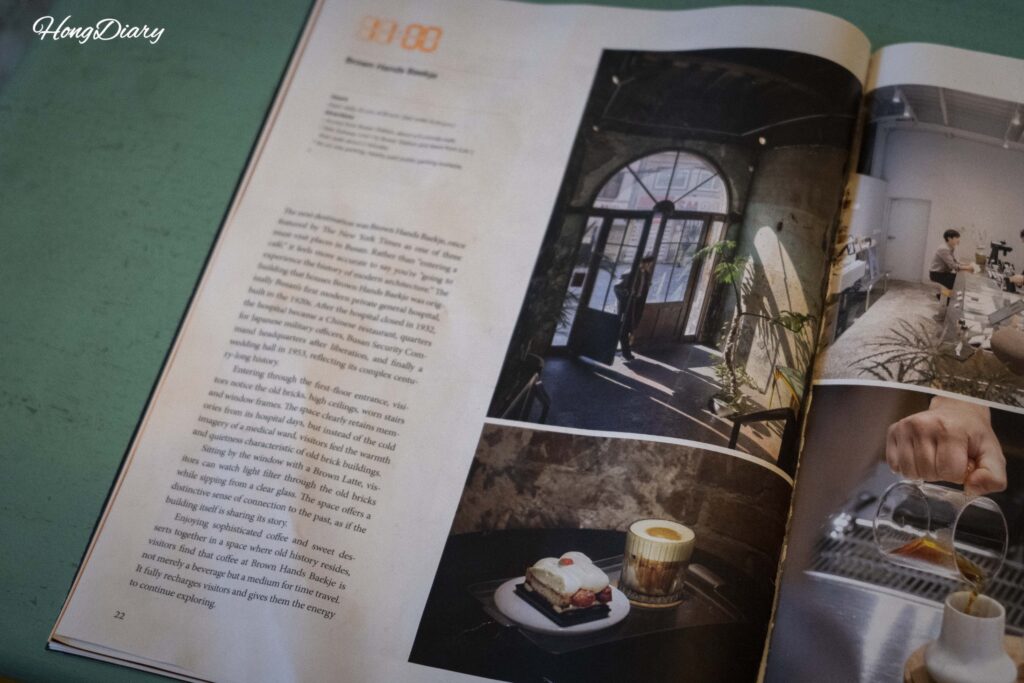
The building’s backstory reads like a compressed timeline of 20th-century Busan. In 1927, a doctor named Choi Yong-hae from Gimhae — a city just northwest of Busan — opened Baekje Hospital here as the city’s first modern private general hospital. For the era, the scale was significant: it housed departments for surgery, internal medicine, ENT, and dentistry under one roof, all inside this single red-brick structure.
That original chapter didn’t last long. In 1932, Dr. Choi abruptly closed the hospital and left for Japan. From that point on, the building cycled through a string of completely unrelated identities. It became a Chinese restaurant. Then it was repurposed as quarters for Japanese military officers during the colonial period. After Korea’s liberation in 1945, the Busan Security Command moved in. At one point, it even served as a wedding hall. Nearly a century of Korean history passed through these walls, leaving behind scuff marks, patched plaster, and layers of paint that nobody bothered to strip.
When the interior design brand Brown Hands took over the ground floor in 2016 and turned it into a cafe, they made the deliberate choice to leave most of that history visible. The rough brick, the worn window frames, the uneven walls — they’re all original. The cafe didn’t try to erase what came before. It just added espresso machines.
What the Space Feels Like
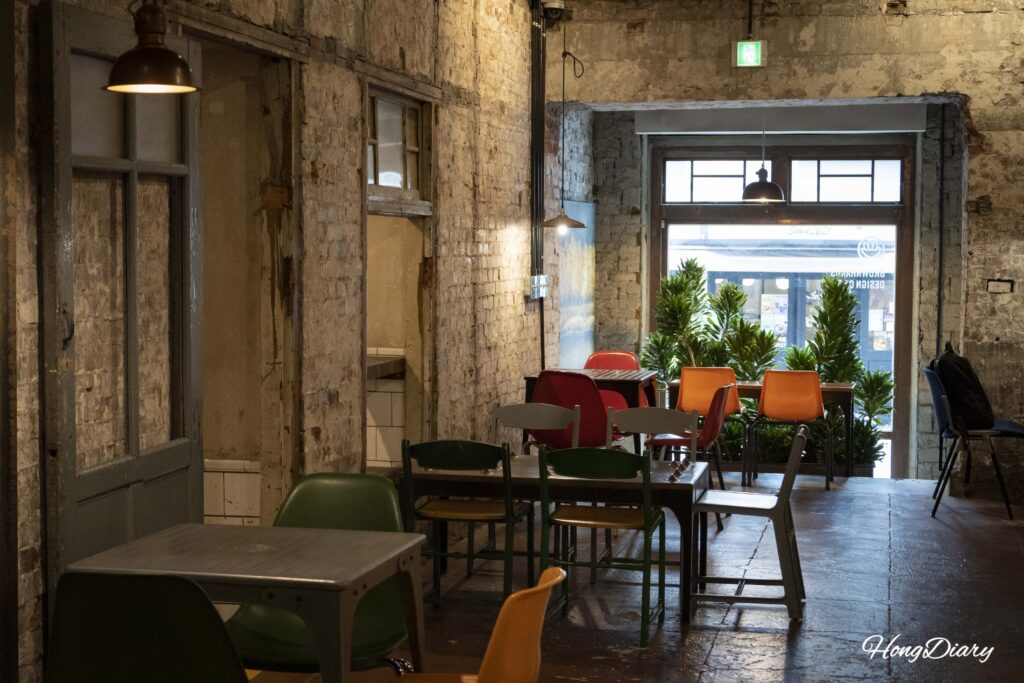
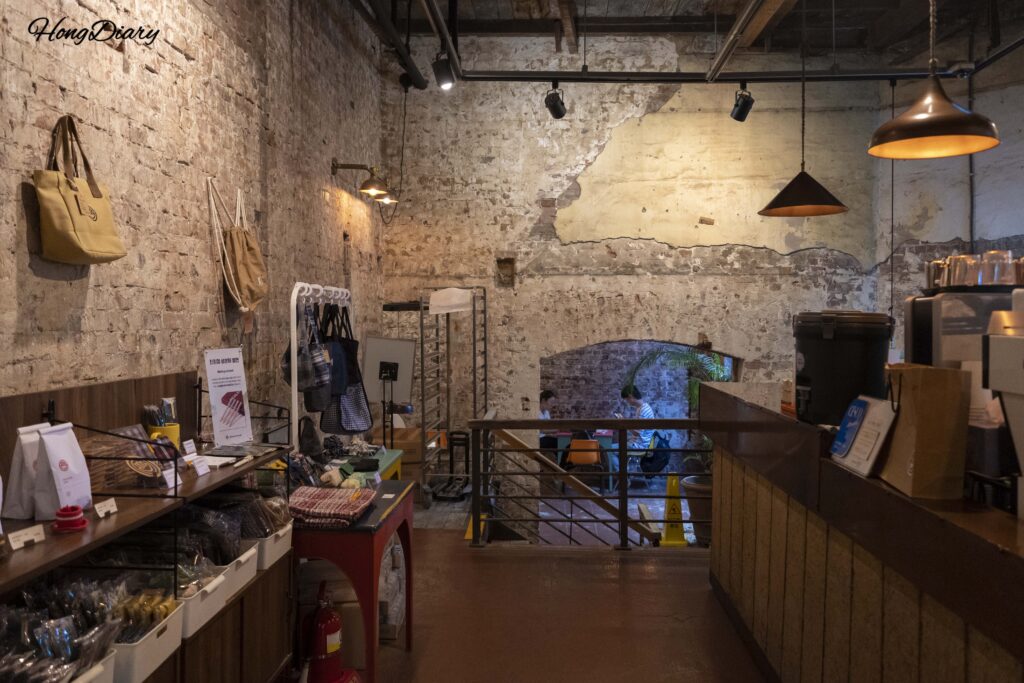
The moment you walk in, there’s a shift. The noise from the street drops away, and you’re standing in a room with high ceilings, exposed brick, and light filtering through tall, narrow windows that haven’t been replaced in decades. The furniture is modern — clean-lined wooden tables and chairs — but everything around it carries the weight of the building’s age. It’s a contrast that works without trying too hard.
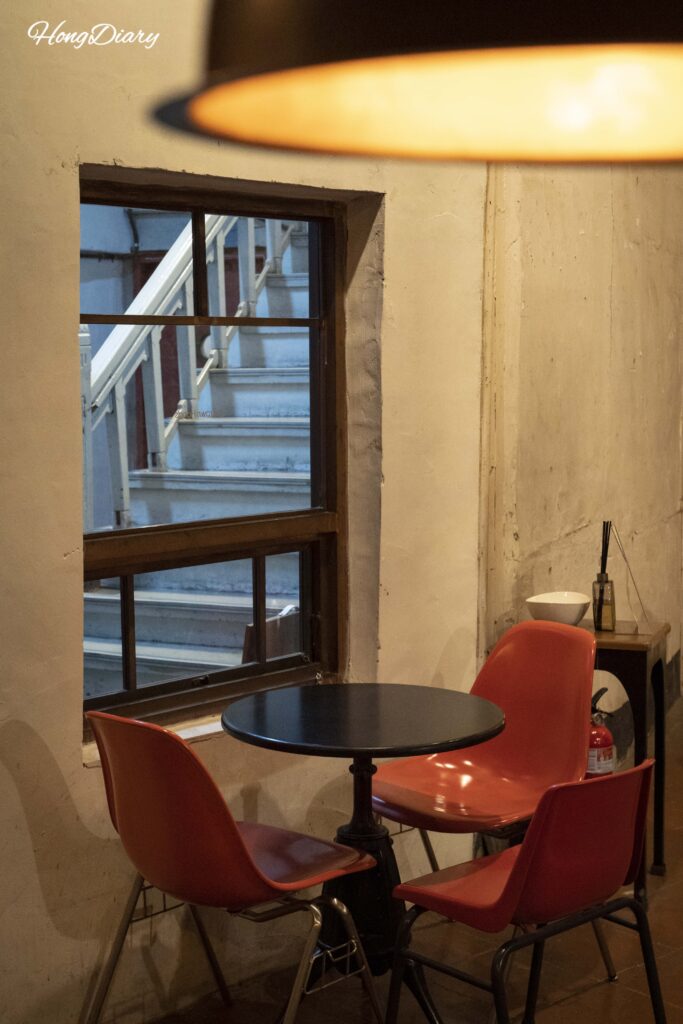
I spent a while picking a seat before settling into a spot near one of those old windows. The cafe has a good number of tables spread across the floor, so even on a moderately busy afternoon, finding a place to sit wasn’t difficult. What struck me was how quiet it was for a cafe this close to a major train station. The thick walls seem to absorb most outside sound.
At one point I got up to use the restroom and walked down the hallway toward the back of the building. The corridor is narrow, the lighting is low, and the age of the structure becomes much more obvious once you’re away from the main seating area. I’d been reading a horror novel at my table, which in retrospect was a questionable choice of genre for this particular setting — the old hallway made it feel a bit too immersive.
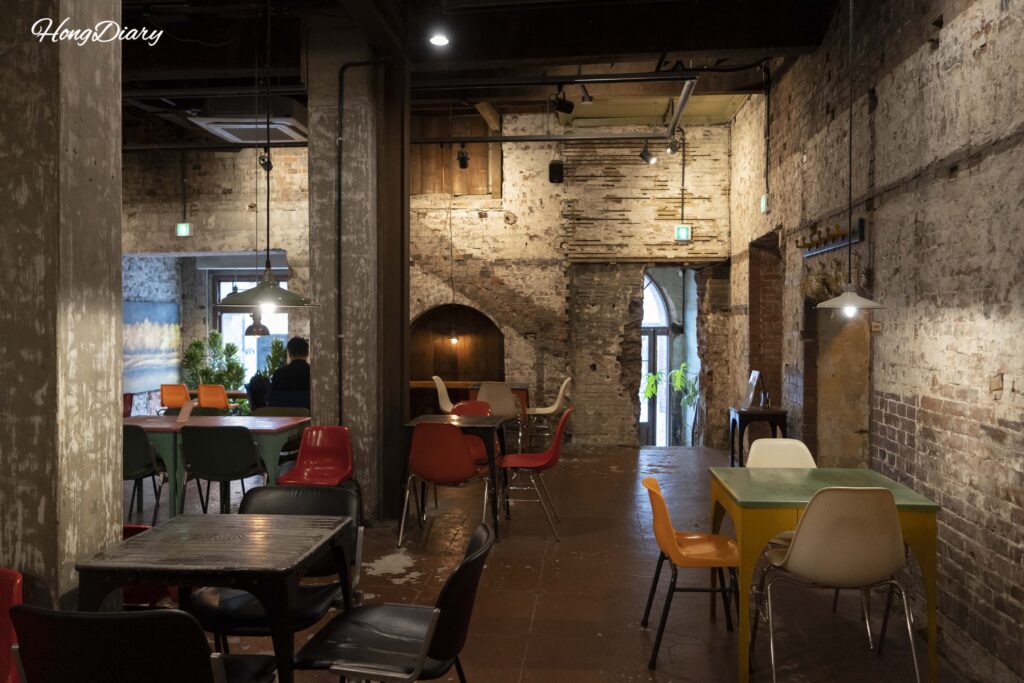
There’s also a small gallery space on the third floor called Ibinine Gallery, which hosts rotating exhibitions and is free to enter. The exhibitions change regularly, so it’s worth checking what’s on if you have extra time. On the second floor, there used to be a bookstore and cultural space called Changbi Busan, but it permanently closed in November 2025.
What to Order and What It Costs
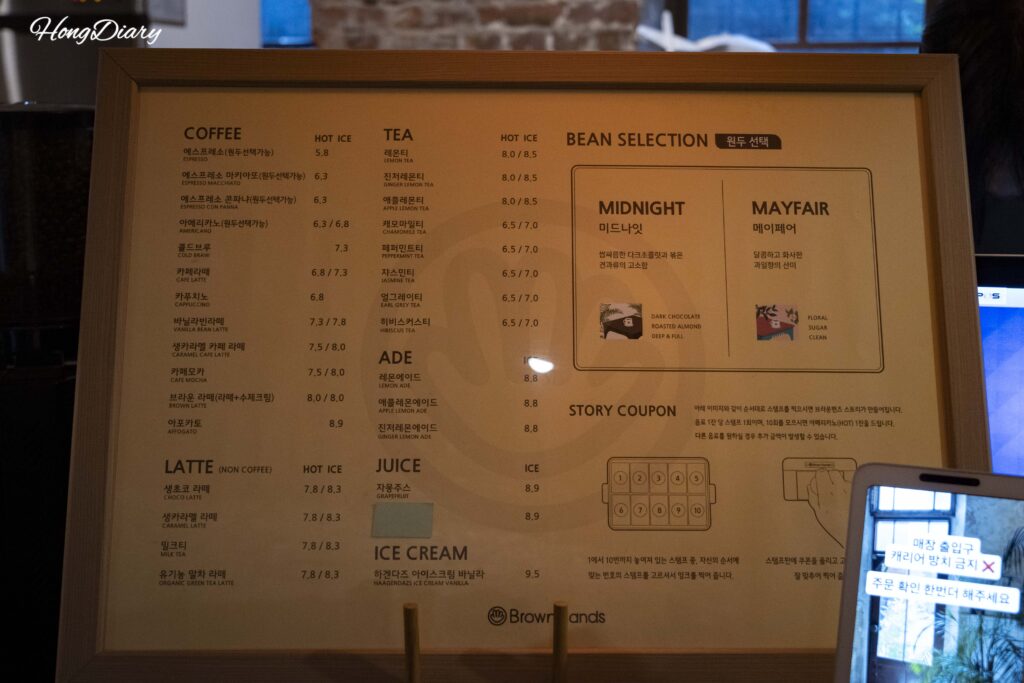
Brown Hands Baekje roasts its own beans, and when you order any coffee-based drink, you can choose between two house blends. Midnight leans toward dark chocolate and roasted almond — full-bodied and grounded. Mayfair goes in the opposite direction, with floral notes and a brighter, cleaner acidity. Your barista will ask which one you prefer when you order.
Here’s a quick look at some of the most popular items on the menu:
| Menu Item | KRW | USD | EUR |
|---|---|---|---|
| Americano (Hot / Iced) | ₩6,300 / ₩6,800 | ~$4.50 / ~$4.85 | ~€4.00 / ~€4.30 |
| Cafe Latte (Hot / Iced) | ₩6,800 / ₩7,300 | ~$4.85 / ~$5.20 | ~€4.30 / ~€4.65 |
| Brown Latte (Latte + Handmade Cream) | ₩8,000 | ~$5.70 | ~€5.10 |
| Iced Milk Tea | ₩8,300 | ~$5.95 | ~€5.25 |
| Cake Slice (Tiramisu, Cheesecake, Hazelnut Chocolate, etc.) | ₩8,900 | ~$6.35 | ~€5.65 |
| Lemon Ade | ₩8,800 | ~$6.30 | ~€5.60 |
| Chamomile / Earl Grey / Jasmine Tea (Hot / Iced) | ₩6,500 / ₩7,000 | ~$4.65 / ~$5.00 | ~€4.15 / ~€4.45 |
Prices converted at approximately $1 USD ≈ ₩1,400 / €1 EUR ≈ ₩1,575 (as of September 2026). Rates may fluctuate.
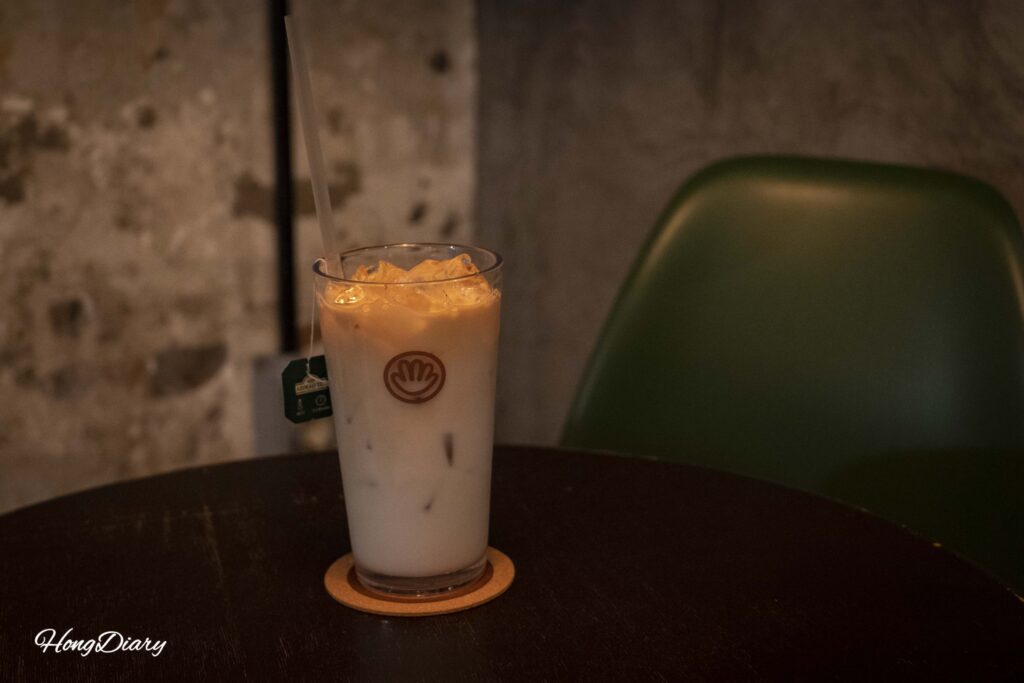
I went with the iced milk tea (₩8,300 / ~$5.95 / ~€5.25). It was smooth and well-balanced, though not wildly different from what you’d get at other specialty cafes in the city. Pricing across the board runs higher than a typical Korean cafe — an americano starting at ₩6,300 (~$4.50 / ~€4.00) is above average for Busan. You’re paying partly for the setting, which is fair enough if you appreciate the space.
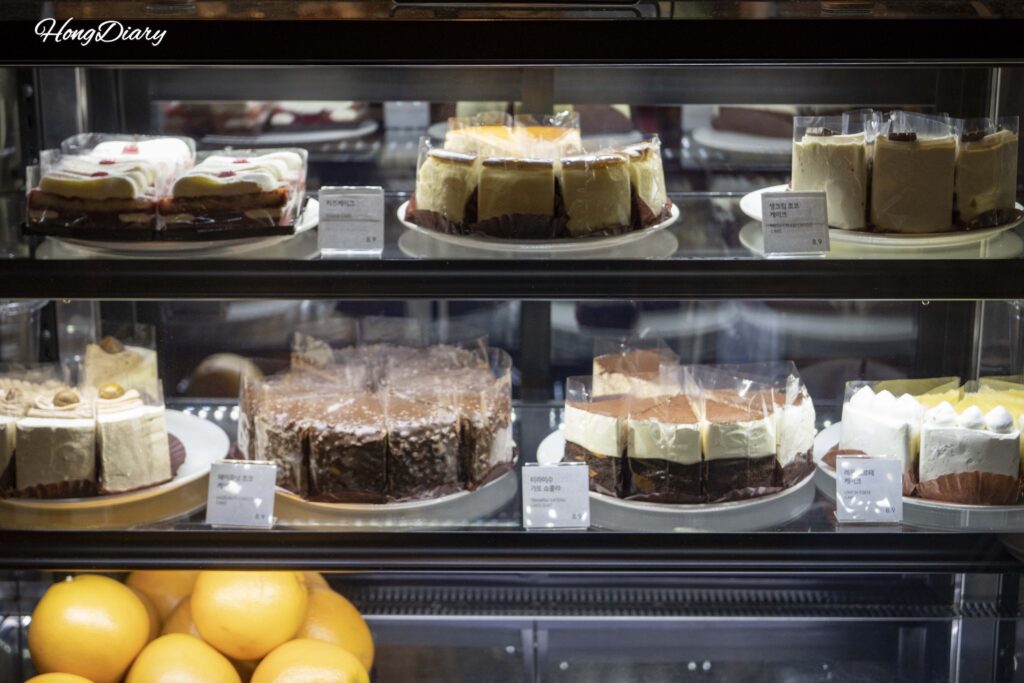
I thought about adding a slice of cake but held off. Their most popular dessert is the strawberry tiramisu, and they also carry cheesecake and hazelnut chocolate cake — all priced at ₩8,900 (~$6.35 / ~€5.65) per slice. The display case looked good enough that I mildly regretted the decision.
If you’re a decaf drinker, note that decaffeinated options are only available for the americano — no decaf lattes or other espresso-based drinks.
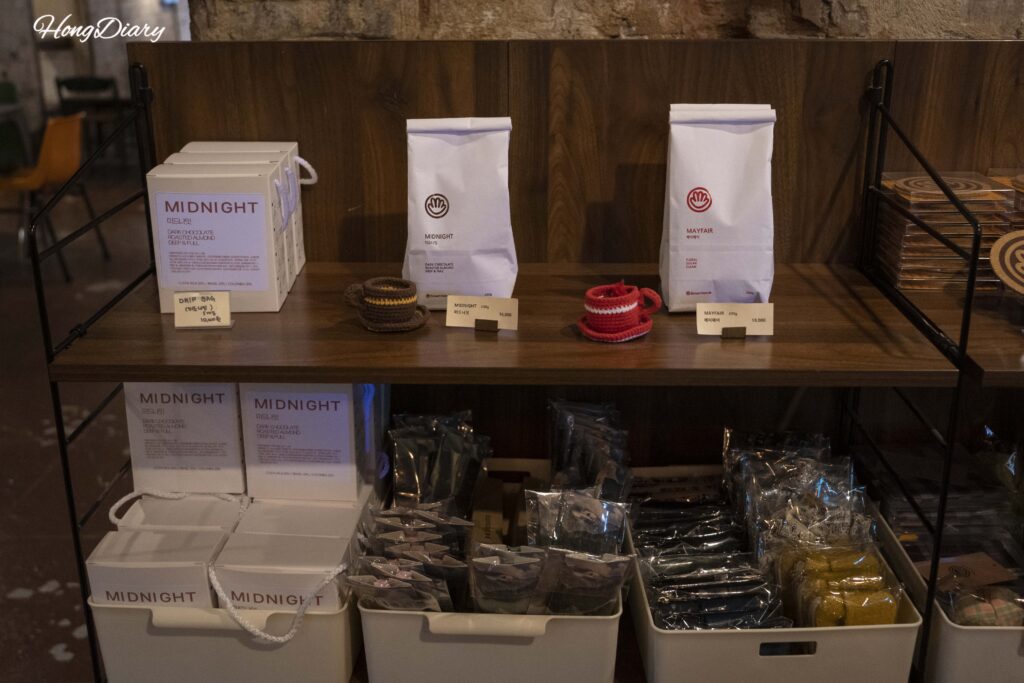
The cafe also sells branded merchandise and packaged coffee beans near the counter, in case you want something to take home.
A Few Things Worth Knowing Before You Go
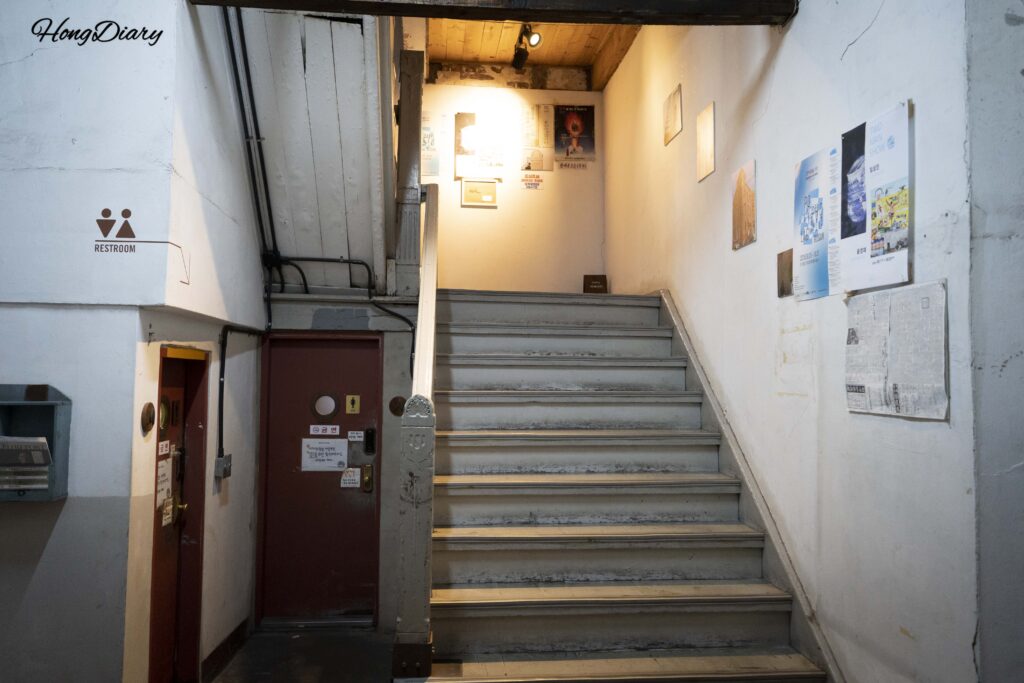
Restroom access: The restroom has a digital door lock. The password is printed at the bottom of your receipt, so don’t toss it after ordering.
Wi-Fi: The network name and password are also on the receipt. Hold onto it until you leave.
Loyalty program: Brown Hands runs a stamp card system they call “Story Coupon.” Collect 10 stamps (one per drink) and you earn a free hot americano. It’s printed on the card they hand you with your order.
No parking at all: The cafe has no lot and doesn’t validate nearby parking. If you’re arriving by car, you’ll need to find a public pay lot in the area. On foot from Busan Station, it’s genuinely a 2-minute walk.
Gallery on the third floor: Ibinine Gallery hosts free rotating exhibitions. Themes change with each run, so there’s no predicting what you’ll see — but it’s a nice bonus if you’re already in the building.
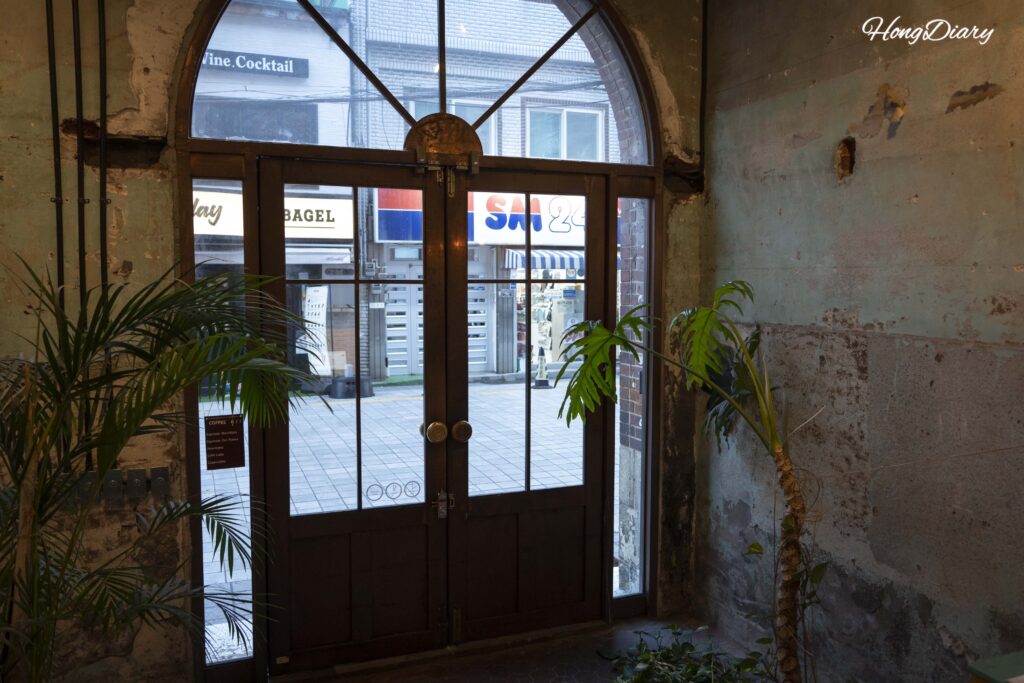
More to Do in the Neighborhood
The alley where Brown Hands Baekje sits isn’t just about the cafe. Within steps of the entrance, you’ll find a few other places that pair well with a visit here — enough to turn a quick coffee stop into a proper afternoon.
Right in the same alley is Busandang Bakery,
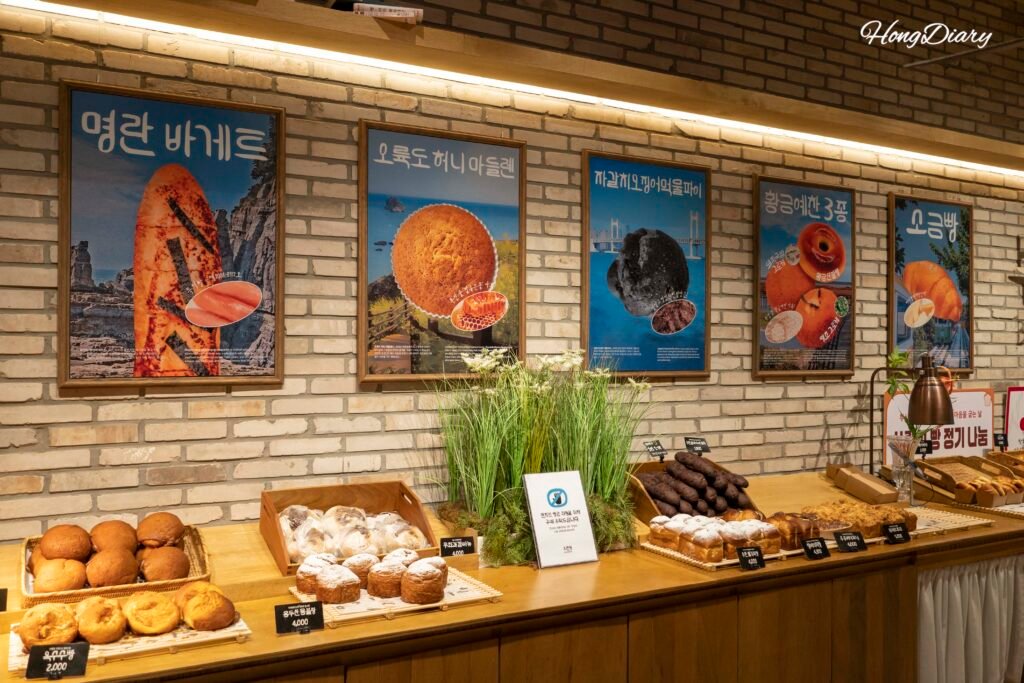
a local bakery chain that started in Busan and specializes in regional-style breads you won’t find in Seoul. Their lineup changes, but they’re known for using local ingredients and baking in small batches — it’s the kind of place where you grab a bag of something warm on the way out and eat it on the walk back to the station.
A few doors down from Busandang sits Jeongjitgan,
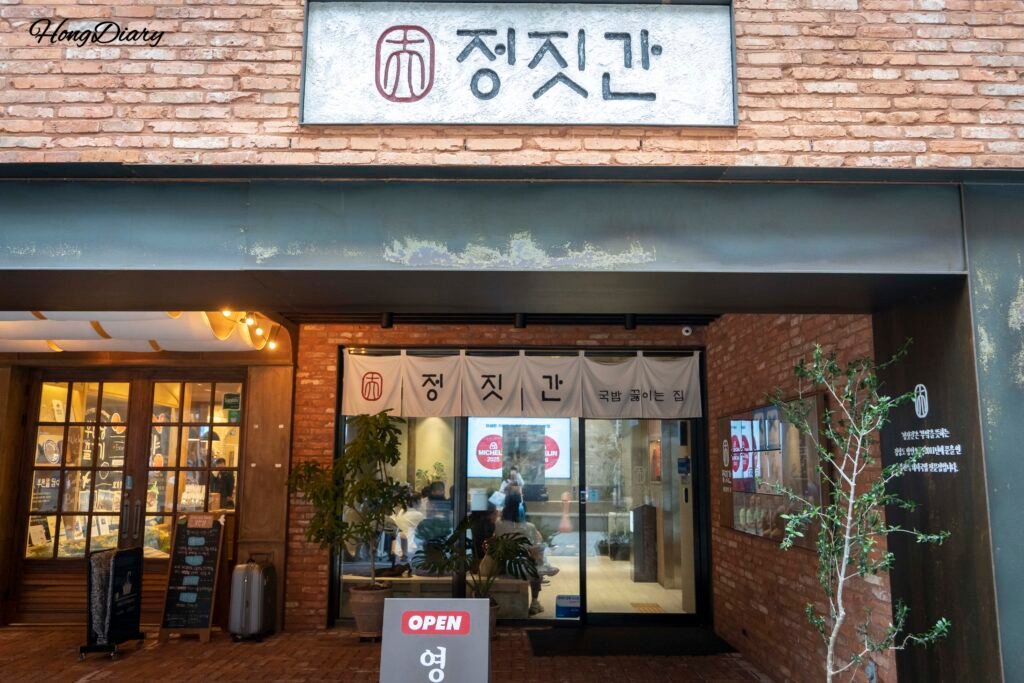
a Michelin-recognized restaurant serving dwaeji gukbap — a hearty pork and rice soup that’s essentially Busan’s soul food. The dish is a staple across the city, but this particular spot has earned a reputation for doing it at a high level. If you’re hungry before or after your coffee, this is one of the most dependable options in the area.
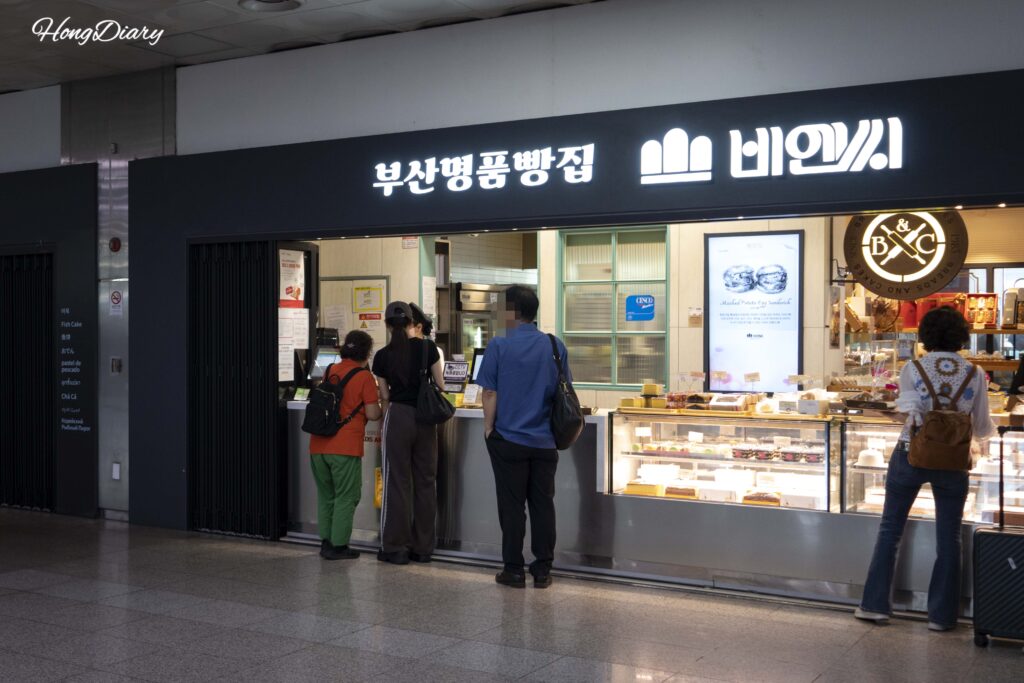
If you’re heading back through the station, it’s also worth popping into B&C Bakery on the second floor of Busan Station. They’ve been baking in Busan for over 40 years, and their station branch is a convenient last stop for picking up pastries or bread to eat on the train.
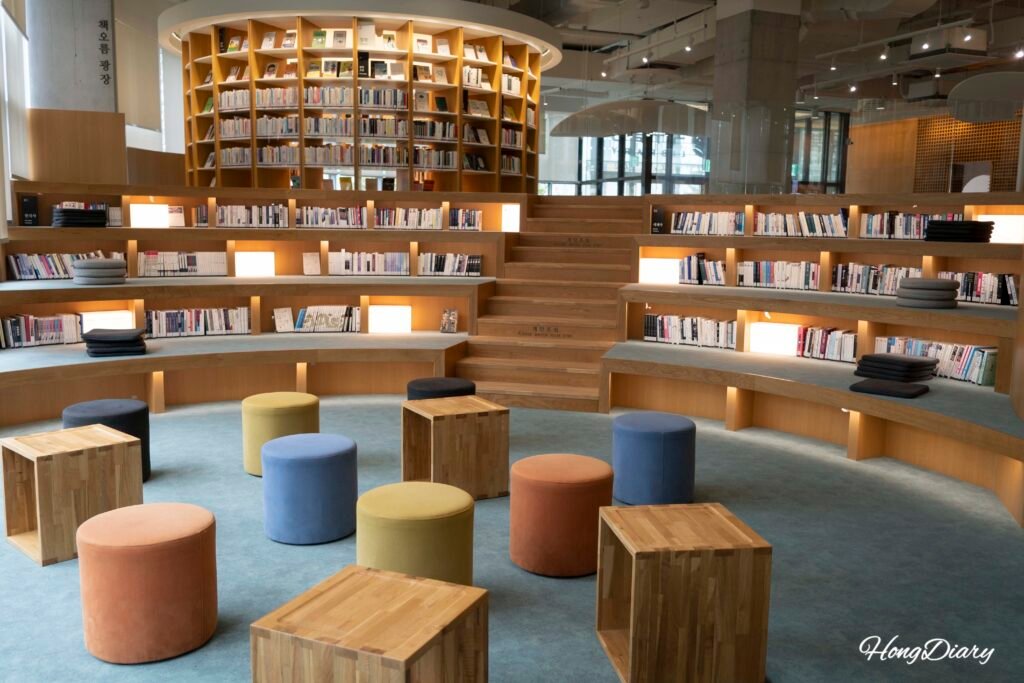
And if you still have time to spare before departure, Big Dipper Library is a free public library located just behind the station, near the Busan International Ferry Terminal. It’s a modern, architecturally striking space where you can sit and read without spending a won — a solid alternative if you’re looking for somewhere quiet.
Brown Hands Baekje isn’t going to change your life, and the coffee alone probably isn’t enough reason to make a special trip. But the combination of the setting, the building’s layered history, and the sheer convenience of it being steps from the train platform makes it worth carving out 30 or 40 minutes for. It’s the kind of place that rewards you for being curious enough to cross the street and turn into an alley — and that’s a pretty good return on two minutes of walking.
Brown Hands Baekje FAQ & Practical Tips: Wi-Fi, Restroom Access, Parking, and What to Expect
Where is Brown Hands Baekje, and how do I get there from Busan Station?
Brown Hands Baekje is located at 16 Jungang-daero 209beon-gil, Dong-gu, Busan — directly across the street from Busan Station. Take Exit 7, cross the road, and enter the alley next to the CU (a Korean convenience store chain) shop. The red-brick building will be on your right. The walk takes about 2 minutes.
What are the opening hours for Brown Hands Baekje?
The cafe is open daily from 10:00 to 21:30, with last orders accepted at 21:20. Occasional closure days are announced on their social media channels, so it’s worth checking before a visit if you’re planning around a tight schedule.
How much does coffee cost at Brown Hands Baekje?
An americano starts at ₩6,300 (~$4.50 USD / ~€4.00 EUR) for hot and ₩6,800 (~$4.85 USD / ~€4.30 EUR) for iced. Specialty drinks like the iced milk tea are ₩8,300 (~$5.95 USD / ~€5.25 EUR), and cake slices run ₩8,900 (~$6.35 USD / ~€5.65 EUR) each. Prices are above average for Busan cafes, reflecting the heritage setting. (Converted at $1 USD ≈ ₩1,400 / €1 EUR ≈ ₩1,575, September 2026.)
What is the history behind the Brown Hands Baekje building?
The building was originally Baekje Hospital, Busan’s first modern private general hospital, established in 1927 by Dr. Choi Yong-hae. After the hospital closed in 1932, it was repurposed as a Chinese restaurant, quarters for Japanese military officers, the Busan Security Command headquarters, and later a wedding hall. The interior design brand Brown Hands converted the ground floor into a cafe in 2016, preserving the original brick walls and architectural details. It is registered as Korean Cultural Heritage No. 647.
Is there parking at Brown Hands Baekje?
No. The cafe has no parking lot and does not offer parking validation. If you’re driving, you’ll need to use a nearby paid public parking lot. Most visitors arrive on foot from Busan Station, which is a 2-minute walk away.
Can I choose my coffee beans at Brown Hands Baekje?
Yes. The cafe offers two house-roasted blends for all coffee-based drinks. Midnight has a full-bodied profile with dark chocolate and roasted almond notes, while Mayfair is lighter with floral and fruity acidity. Your barista will ask which blend you prefer when you order.
Is there anything else to see inside the Brown Hands Baekje building?
The third floor houses Ibinine Gallery, a free exhibition space with rotating art shows that change regularly. The gallery is open during cafe hours. Note that the second-floor bookstore and cultural space, Changbi Busan, permanently closed in November 2025.