
There was no sign in English. No line out the door. No influencer ring light propped against a centuries-old wooden pillar. When I stepped through the gate of Byeotnwi, a hanok cafe in Miryang tucked inside a quiet heritage village, the only sound was a set of small ceramic wind chimes — called punggyeong — clinking softly from the eaves of a tile-roofed building. I had come looking for a place to sit and think, and what I found instead was one of the most quietly memorable stops in all of southern Korea.
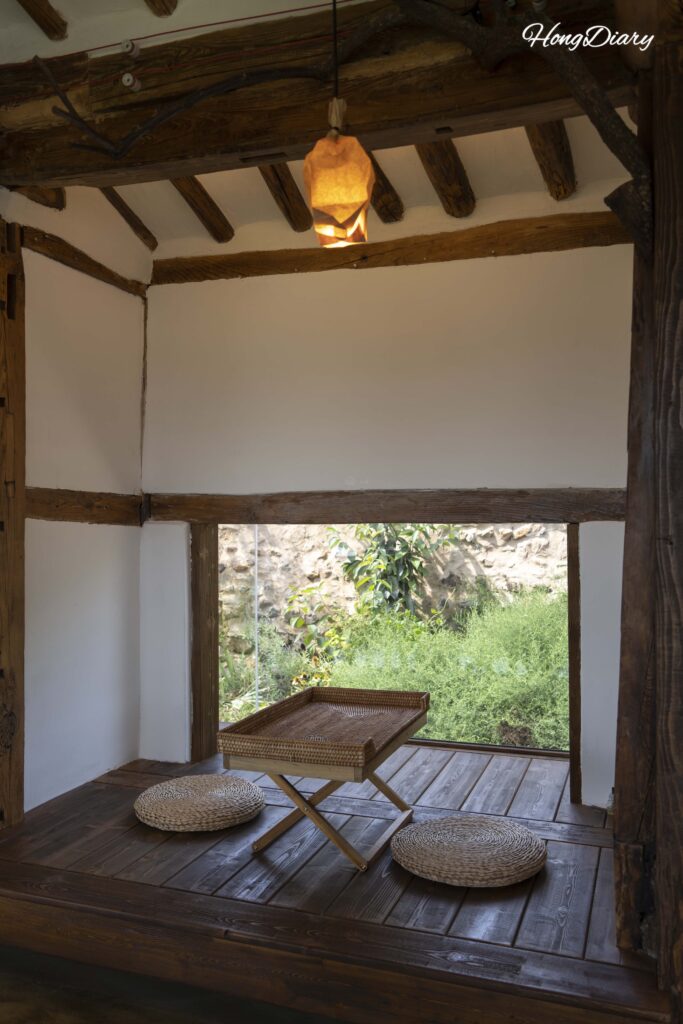
Byeotnwi is not a typical cafe. It is a bokham munhwa gonggan — a multi-purpose cultural space — built inside the restored Son family house (Son-ssi Gotak), a heritage residence that has stood in the Gyodong neighborhood of Miryang for generations. The name Byeotnwi itself is a pure Korean word meaning “a sliver of sunlight sneaking through a narrow gap,” and that image sets the tone for the entire experience: warm, understated, and easy to miss if you are not paying attention.
Table of Contents
Basic Info: Location, Hours, Public Transit, and Parking Guide for Byeotnwi Miryang
| Detail | Information |
|---|---|
| Name | Byeotnwi — Multi-Cultural Complex & Hanok Cafe |
| Address | 9 Miryang Hyanggyo 3-gil, Miryang-si, Gyeongsangnam-do |
| Hours | 11:00 AM – 7:00 PM (Last order 6:30 PM) |
| Closed | Every Monday |
| Parking | On-site lot, approx. 20 spaces |
| Getting there | From Miryang Station (KTX): Take Bus No. 1 or 2 at Miryang Station bus stop, get off at Gyodong Sageori, walk 390 m (approx. 30 min total) |
| Pet policy | Pets allowed in outdoor seating only |
| Note | Commercial photography is not permitted inside |
Why Miryang? A Small City With Outsized History
Most international visitors pass through Miryang on the KTX without a second thought — it is one stop south of Daegu and about an hour east of Busan by train. But this compact city in Gyeongsangnam-do Province has been a cultural crossroads for centuries. Byeotnwi sits in the Gyodong neighborhood, historically significant as the home of Miryang Hyanggyo, a Confucian academy — a type of state-run school that operated during the Goryeo and Joseon dynasties. Walking through the village, you will notice traditional tile roofs, narrow stone-walled lanes, and an atmosphere that feels remarkably untouched — a sharp contrast to the polished hanok cafe strips of Seoul’s Ikseon-dong or Bukchon. Yeongnamnu Pavilion, one of Korea’s designated National Treasures, is a 10-minute walk from here, and the famed Wiyangji Pond is a short drive away, making this area easy to fold into a full day of exploring.
Three Buildings, Three Atmospheres
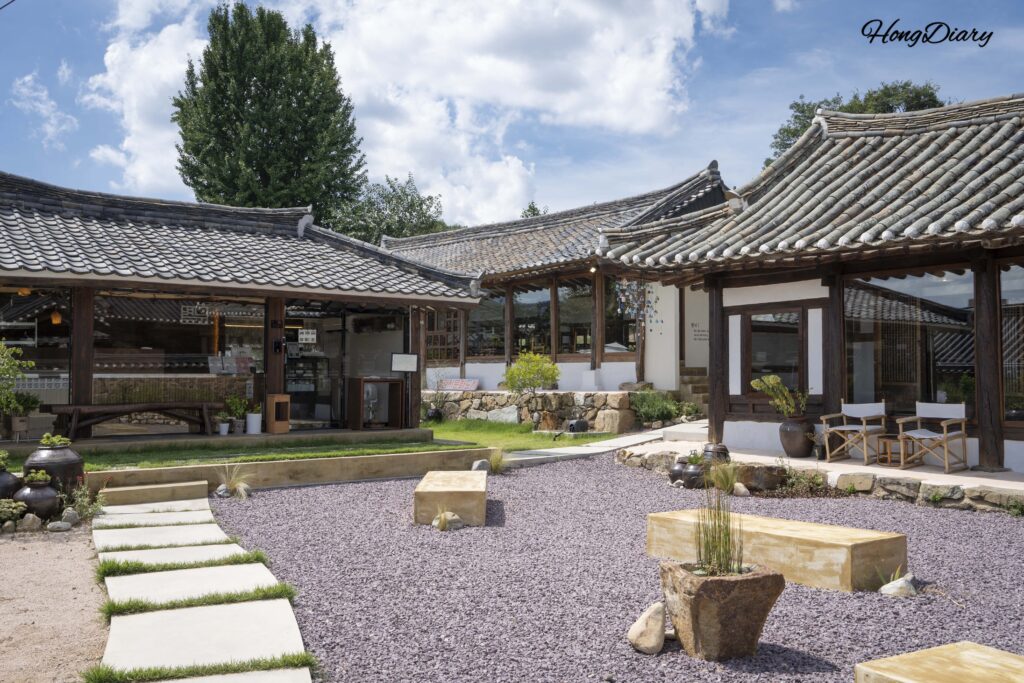
What makes Byeotnwi different from most hanok cafes is the scale and authenticity of the space. The Son family estate was renovated into three distinct buildings — bonchae (main hall), anchae (inner hall), and sarangchae (guest quarters) — each offering a different vibe while keeping the original architectural bones intact. The entire complex spans over 920 square meters of floor space on roughly 1,150 square meters of land, so there is real room to breathe.
Bonchae — The Main Hall
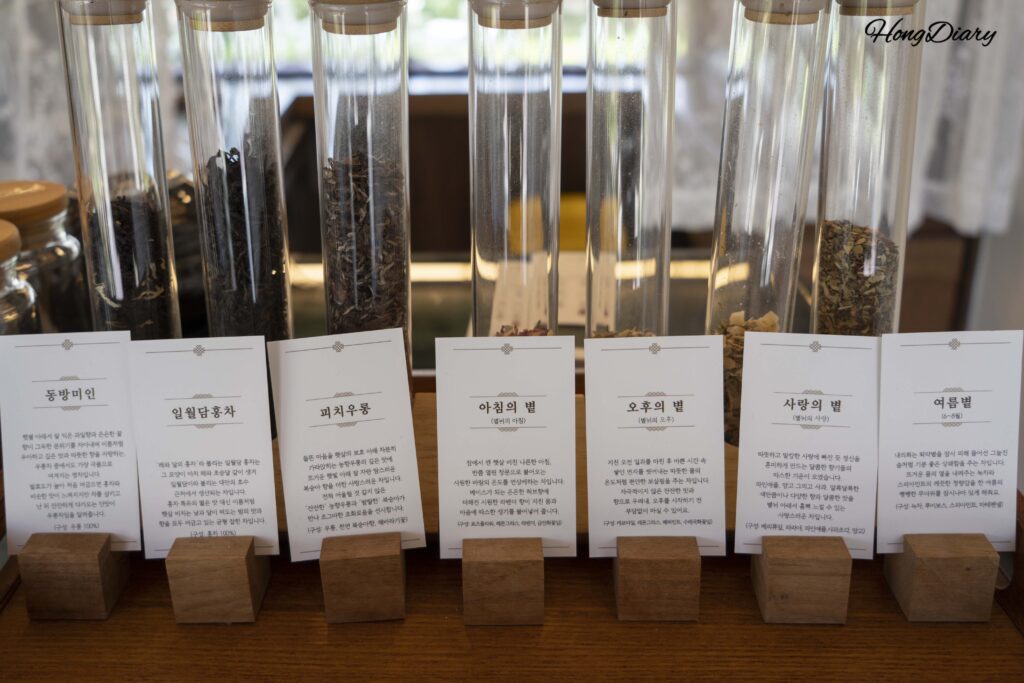
This is where you order. The counter sits inside the main building, surrounded by shelves displaying loose-leaf tea blends and handcrafted goods made by Miryang-based artisans. Seating here is straightforward — standard chairs and tables near the pickup area. If you are in a rush (though I would argue this is not the place for rushing), grab your drink and settle in right here.
Sarangchae — The Guest Quarters
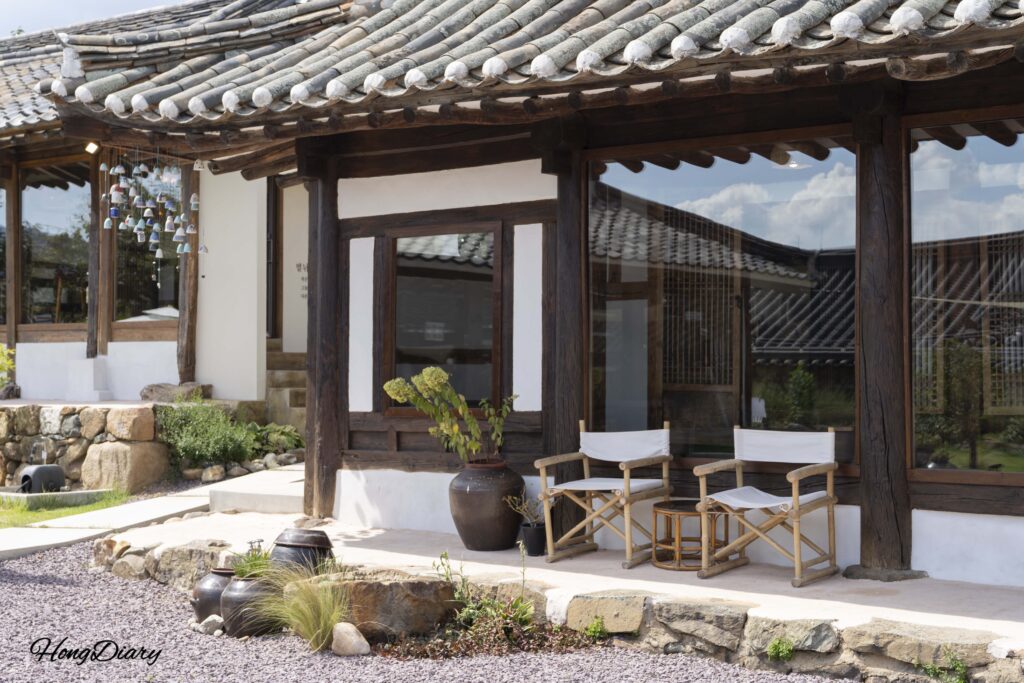
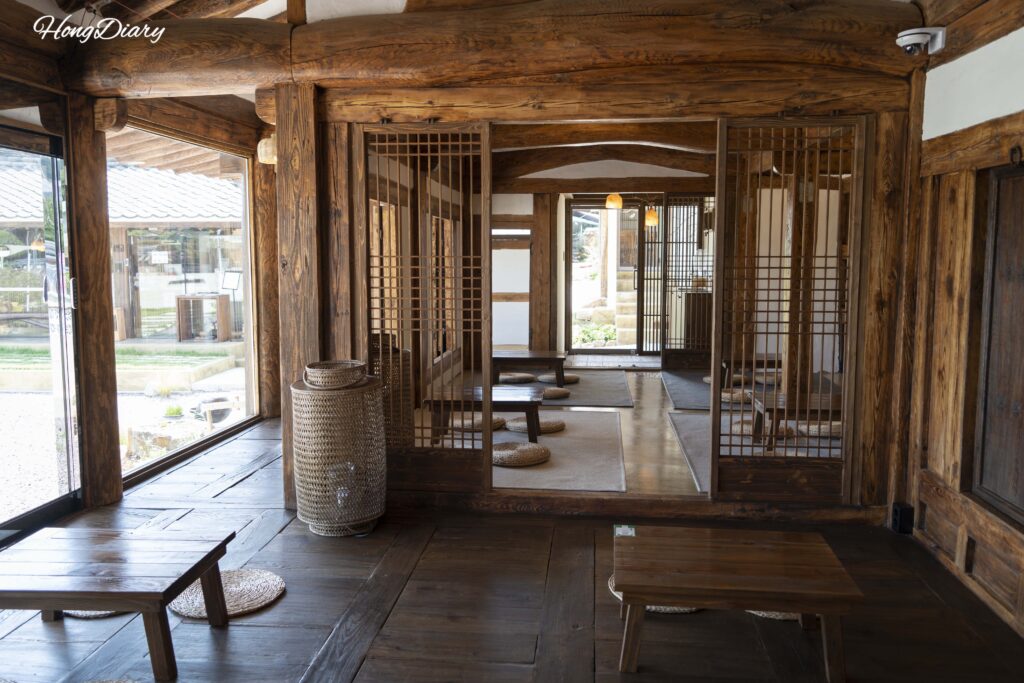
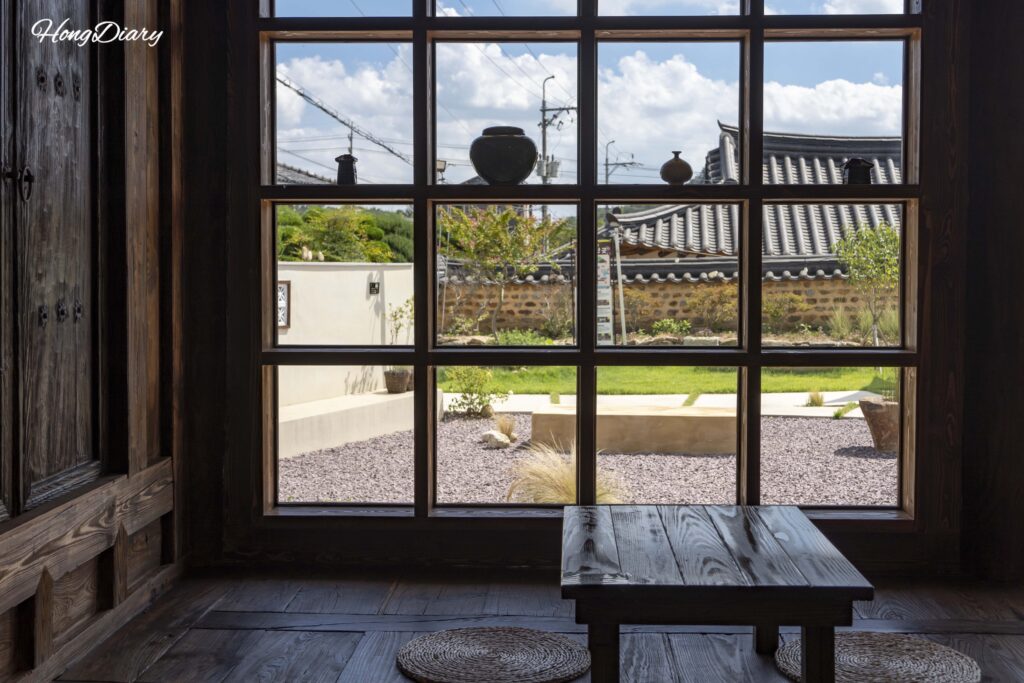
If you only visit one part of Byeotnwi, make it the sarangchae. You remove your shoes at the entrance and step onto warm wooden floors fitted with low tables — jwasik, or floor-level seating. The space feels like a private study from another era. Natural light filters through latticed wooden windows, and the silence is thick enough to notice. From inside, the framed view of the courtyard garden through the open doorway is a photograph waiting to happen.
Anchae — The Inner Hall
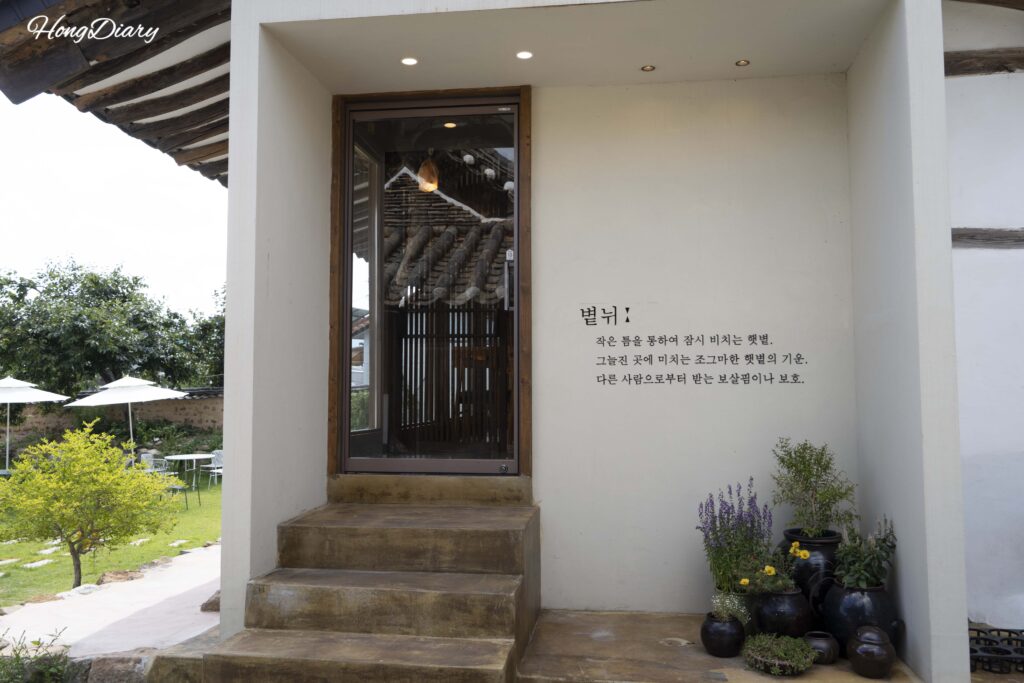
The anchae blends old and new more directly. Large modern windows have been set into the traditional frame, creating a bright, airy room with views of the courtyard garden. Seating here is mixed: some regular tables and chairs, plus a few floor-seating spots along the windows. If you prefer a chair but still want the hanok atmosphere, this is your best bet.
The Menu: Herbal Tea First, Coffee Second
This is where Byeotnwi takes an unexpected turn. Unlike most Korean cafes where espresso-based drinks dominate, Byeotnwi leads with caffeine-free herbal blended teas as its signature category. Coffee exists on the menu, but it is clearly not the main character here.
The three flagship drinks are the Signature Blends, each named after a time of day — or more poetically, after the stars:
- Morning Star (Achim-ui Byeol): A refreshing herbal blend with rosemary, lemongrass, and marigold petals
- Afternoon Star (Ohu-ui Byeol): A mellow, easy-drinking blend of chamomile, lemongrass, marigold, and cornflower
- Love Star (Sarang-ui Byeol): A fruity, aromatic blend with berry leaves, papaya, pineapple, apple, and mango
All three are caffeine-free, making them a smart choice if you are visiting in the afternoon and still want to sleep that night.
The full menu also includes Seasonal Star Teas — four blends rotating with the Korean seasons (Spring, Summer, Autumn, Winter) — plus standard teas, iced teas, and a short coffee list.
| Category | Highlights | Price |
|---|---|---|
| Signature Blends (caffeine-free) | Morning Star, Afternoon Star, Love Star | ₩6,000 ($4.00 / €3.39) |
| Seasonal Star Teas (caffeinated) | Spring, Summer, Autumn, Winter blends | ₩6,500 ($4.33 / €3.67) |
| Teas (caffeinated) | Peach Oolong, Sun Moon Lake Black Tea, Dongbang Meiin Oolong | ₩6,500–₩7,000 ($4.33–$4.67 / €3.67–€3.96) |
| Iced Teas (caffeine-free) | Sunset Glow, Lemon Thyme, Sweet Chamomile | ₩6,000 ($4.00 / €3.39) |
| Handmade Drinks (caffeine varies) | Black Tea Milk Tea, Plum Tea/Ade, Omija Tea/Ade | ₩6,000 ($4.00 / €3.39) |
| Lattes (caffeinated) | Strawberry, Chocolate, Matcha | ₩6,000 ($4.00 / €3.39) |
| Other Drinks | Ginger Tea (caffeine-free) | ₩6,000 ($4.00 / €3.39) |
| Coffee (caffeinated) | Americano / Cafe Latte / Vanilla Latte | ₩4,500–₩5,500 ($3.00–$3.67 / €2.54–€3.11) |
| Desserts | Injeolmi rice cake, Dasik set, Cake | ₩3,000–₩6,500 ($2.00–$4.33 / €1.70–€3.67) |
Exchange rates applied: $1 USD ≈ ₩1,500 / €1 EUR ≈ ₩1,769. Rates are approximate and may fluctuate.
The physical menu board is written only in Korean, so here is a quick cheat sheet for non-Korean speakers: Byeol means “star” and appears in all signature drink names, cha means “tea,” and ade refers to a sweetened iced drink. If you are unsure, pointing at the menu board works — the staff are used to it.
What I Actually Ordered
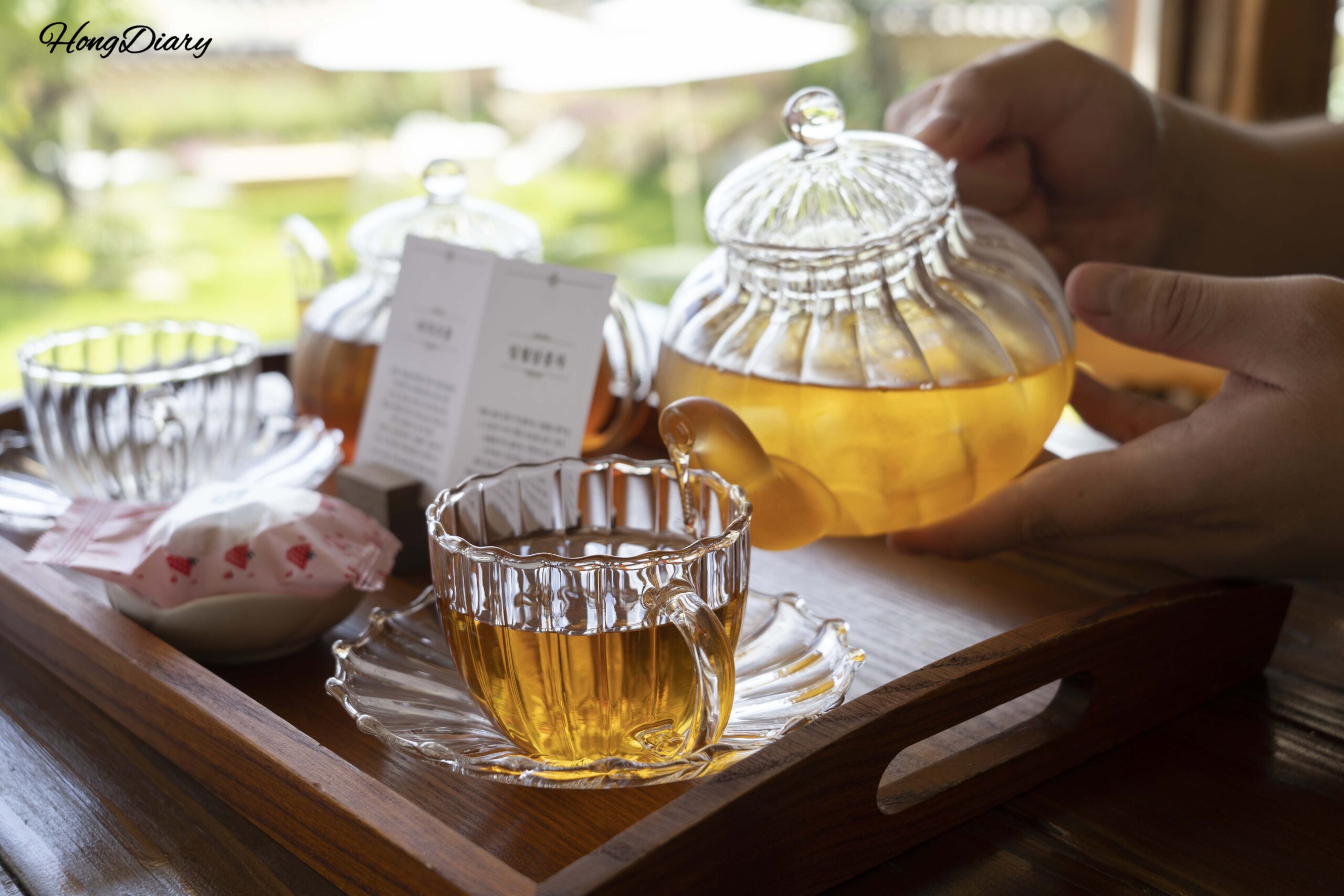
I went with Peach Oolong (₩6,500 / $4.33 / €3.67) and Sun Moon Lake Black Tea (₩6,500 / $4.33 / €3.67). The Peach Oolong arrived in a small clay teapot with a separate cup — you pour it yourself, which is part of the ritual. The first sip was floral and sweet, with a clean peach finish that was more fragrant than sugary. The Sun Moon Lake Black Tea, a 100% pure black tea, had a deeper, roasted character with honey-like undertones.
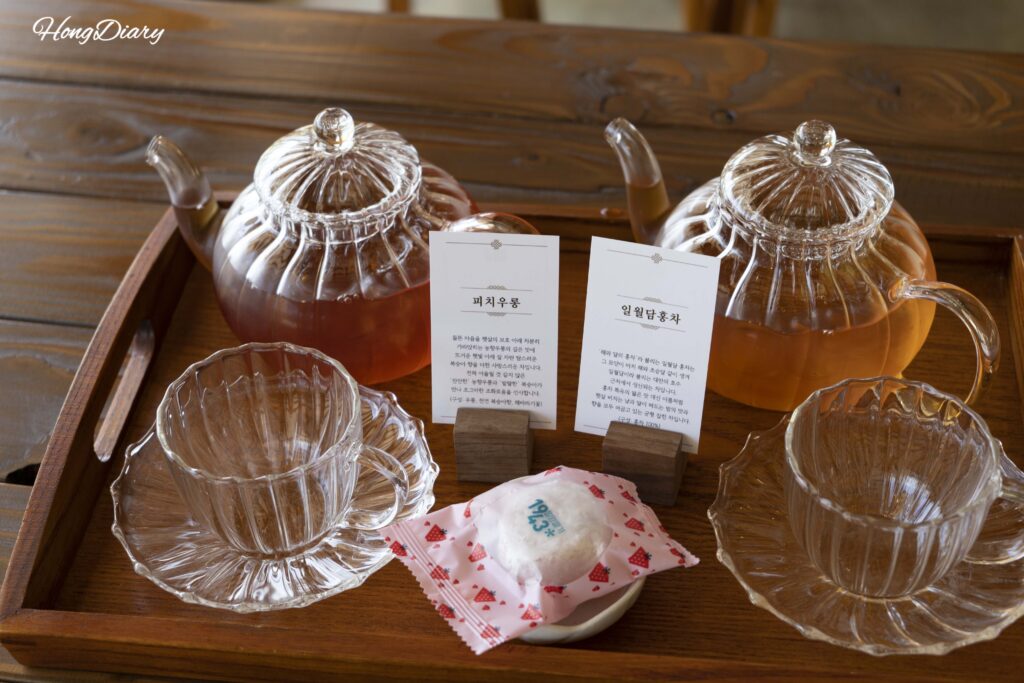
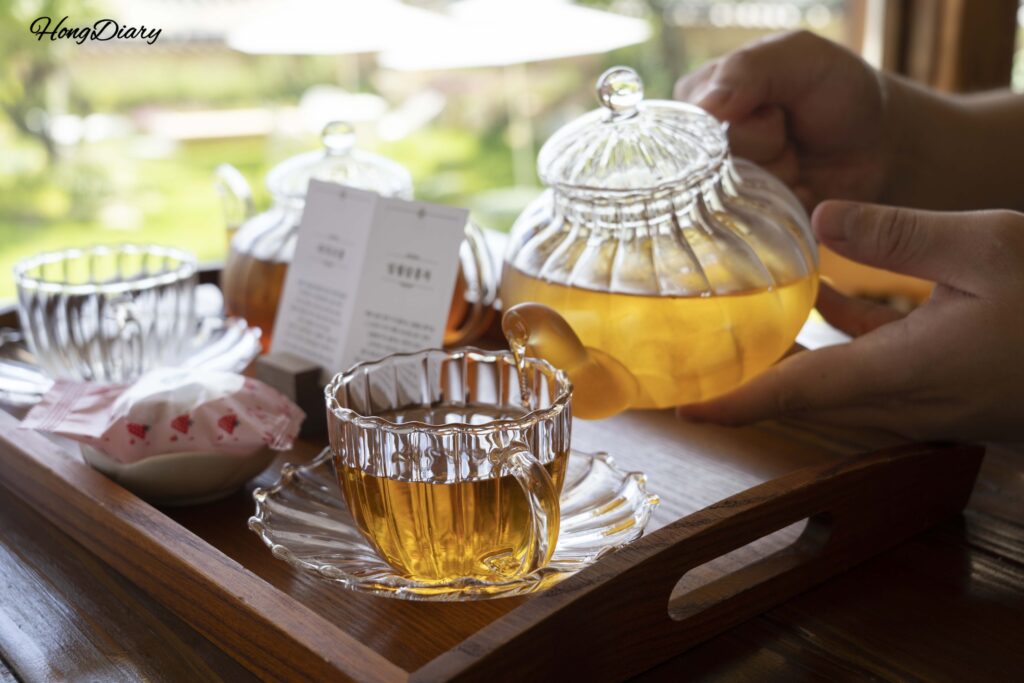
Both drinks cost ₩6,500 ($4.33 / €3.67) each. For context, a basic Americano at most Korean chain cafes runs ₩4,500–₩5,000 ($3.00–$3.33 / €2.54–€2.83), so you are paying roughly a dollar more for a much more distinctive experience.
The Dasik Set — A Traditional Korean Dessert Worth Trying
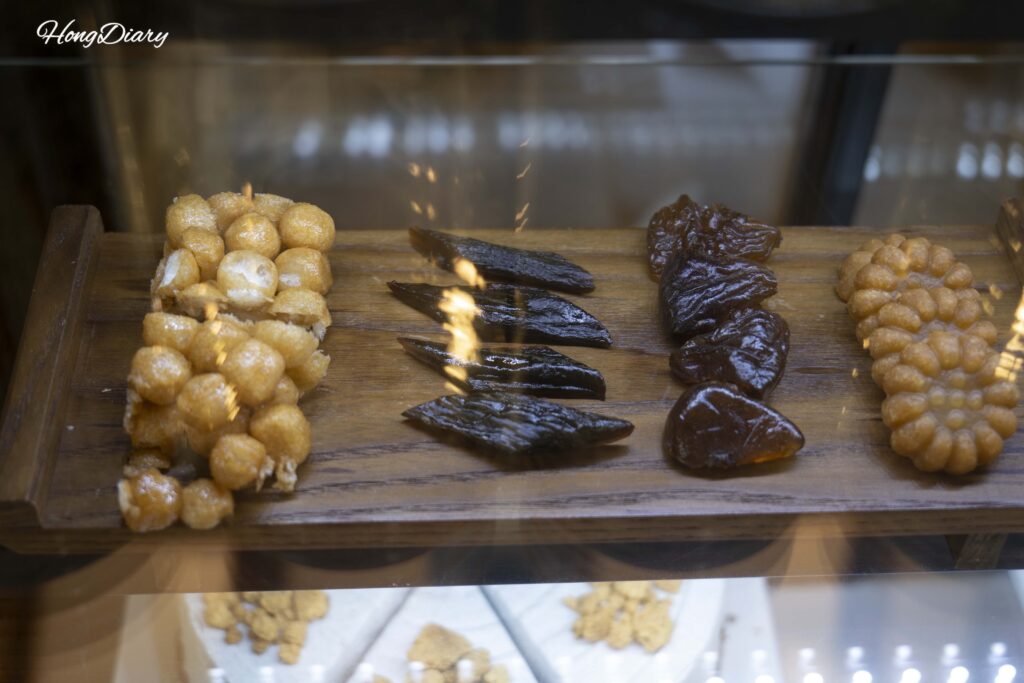
I also ordered the Dasik set (₩6,500 / $4.33 / €3.67). Dasik is a category of traditional Korean confection — small, pressed sweets historically served alongside tea during the Joseon dynasty. Think of them as Korea’s answer to French petit fours: decorative, lightly sweet, and meant to complement rather than overpower the tea.
The set at Byeotnwi includes candied Miryang fig (muhwa gwajeonggwa), candied balloon flower root (doraji jeonggwa), and yakgwa (a honey-and-sesame-oil pastry). All the ingredients are sourced from local Miryang farms, which gives the whole plate a sense of place that a random slice of cheesecake simply cannot replicate.
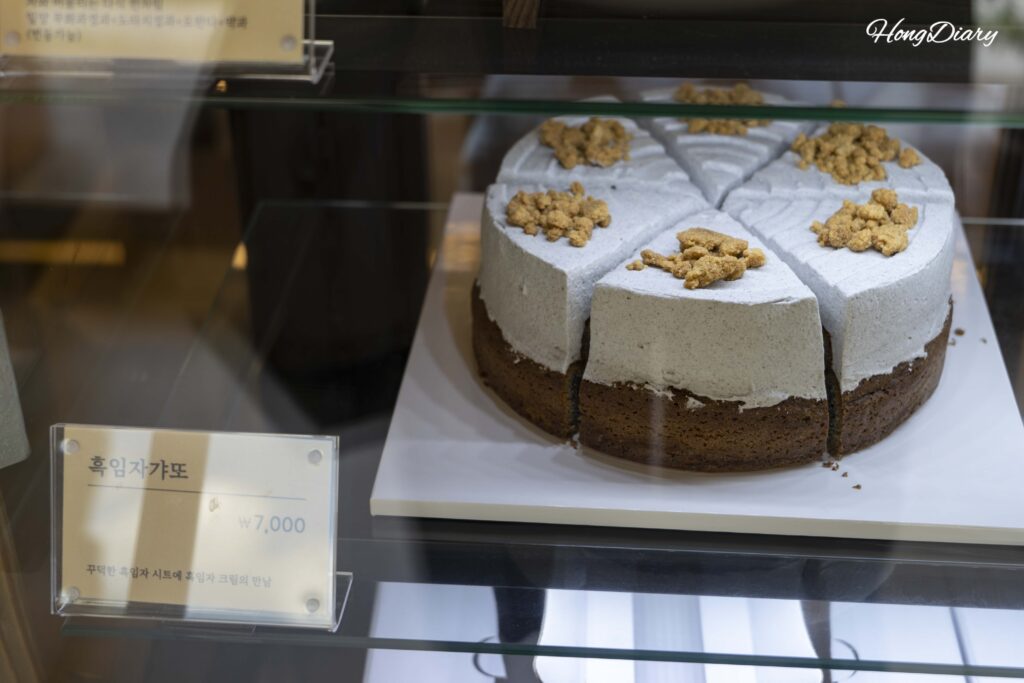
Other dessert options include Injeolmi (₩3,000 / $2.00 / €1.70), a chewy rice cake coated in roasted bean powder made with pumpkin, black rice, and mugwort, and a rotating selection of cakes (₩7,000 / $4.33 / €3.67) in flavors like tiramisu, chocolate, and cheese.
The Small Details That Stay With You
What I remember most is not the tea itself but the space between sips. While waiting for my order, I walked around the courtyard and noticed the ceramic punggyeong wind chimes hanging from the eaves of each building. Every time a breeze passed through, they produced a soft, clear tone — not quite a bell, not quite a chime, but something in between. These, I later learned, were handmade by local Miryang artisans as part of the city’s Cultural City Center initiative.
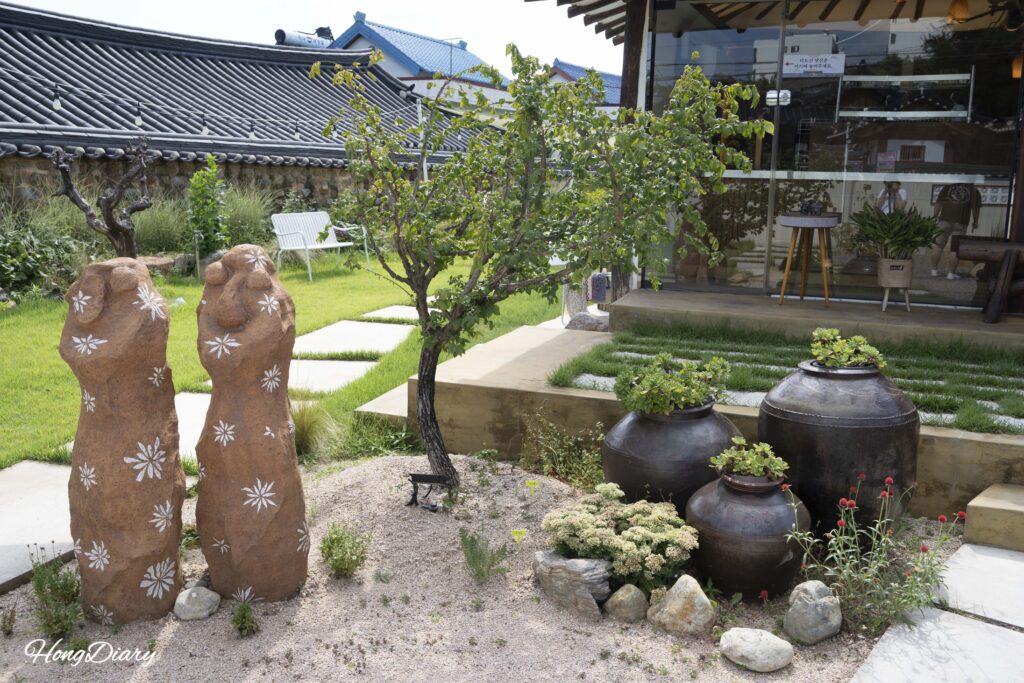
The shelves inside the bonchae are stocked with handcrafted items — ceramics, fabric goods, tea accessories — all produced by artists based in the Miryang area and available for purchase. Byeotnwi also occasionally hosts live performances by local musicians and seasonal cultural events, so it is worth checking their schedule if your visit coincides with a weekend.
Sitting in the sarangchae with a pot of Peach Oolong, listening to nothing but wind chimes and birdsong, I understood what this place was designed to be: not just a hanok cafe in Miryang, but a swimpyo — a comma, a pause — in the middle of a trip that might otherwise rush from one famous sight to the next.
Places Worth Visiting Near Byeotnwi
Byeotnwi sits in a pocket of Miryang that makes it easy to combine with some of the city’s best-known landmarks. Here are three spots I would pair it with for a full day.
Yeongnamnu Pavilion — One of Korea’s Three Great Pavilions
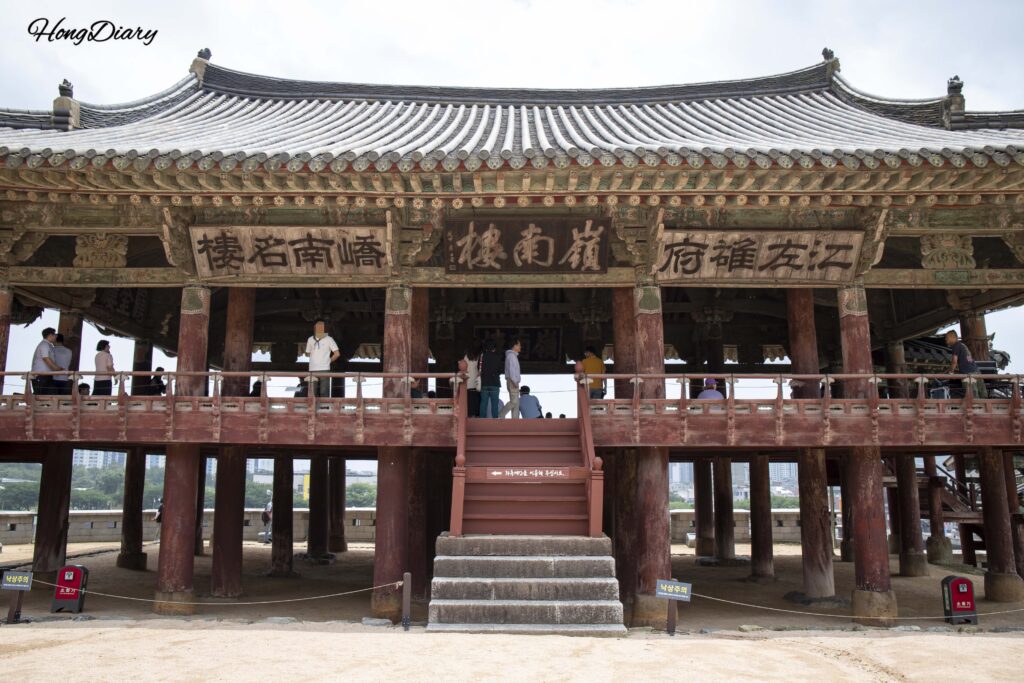
A 10-minute walk from Byeotnwi, Yeongnamnu is a designated National Treasure perched above the Miryang River. The wooden pavilion dates back to the Goryeo dynasty and offers wide-open views of the river bend and surrounding mountains. What surprised me most was that you can actually walk inside and sit on the raised wooden floor — it feels less like visiting a monument and more like borrowing someone’s favorite reading spot for an afternoon.
Pyochungsa Temple — Crape Myrtles and Warrior Monks
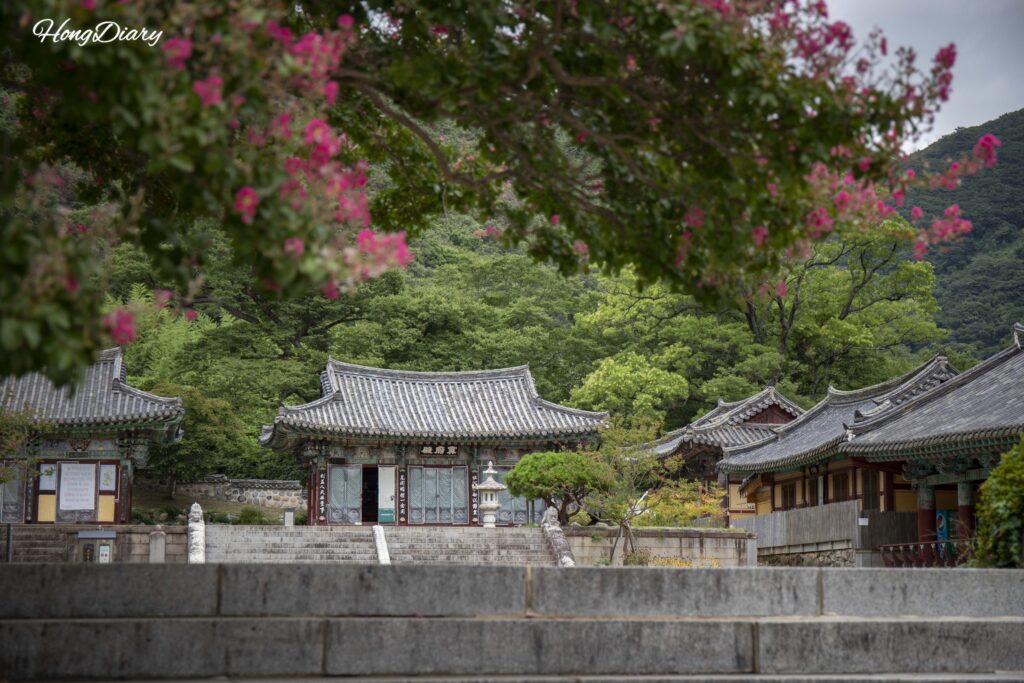
About 35 minutes by car from Byeotnwi, Pyochungsa is one of the major temples in the Yeongnam Alps region. The temple grounds are especially striking in late summer when the crape myrtle trees bloom in vivid pink along the approach road. The temple has a unique Confucian twist — it honors warrior monks who fought during the Japanese invasions of the 1590s, blending Buddhist and patriotic heritage in a way you rarely see elsewhere.
Ice Valley Cable Car — Korea’s Longest Gondola Ride
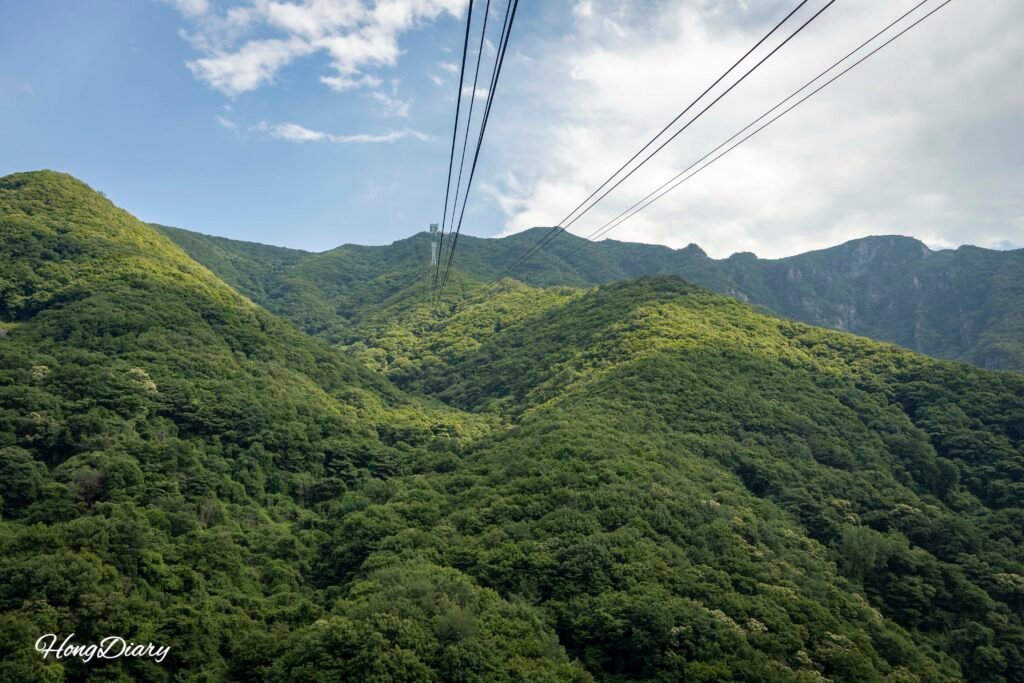
If you want altitude after all that tea, the Eoreumgol Cable Car is roughly 30 minutes east of Miryang’s city center. It is the longest cable car ride in Korea, climbing into the Yeongnam Alps with panoramic views of the ridgeline below. It pairs well with Byeotnwi as a morning-of-activity before you settle into the cafe for a slower afternoon.
Final Thought
I keep coming back to Byeotnwi when I need to clear my head. Not because the tea is the best I have ever had — though it is genuinely good — but because the space itself demands that you slow down. Just three old buildings, a courtyard, wind chimes, and whatever you brought with you to think about. No playlist competing for your attention, no pressure to post and leave. If you are traveling through the southern half of Korea and looking for a hanok cafe in Miryang that feels nothing like a tourist attraction, Byeotnwi is the stop worth making.
FAQ & Practical Tips: Menu Highlights, Pet Rules, and How to Plan Your Day in Miryang
What is Byeotnwi in Miryang?
Byeotnwi is a multi-purpose cultural space and hanok cafe located in the Gyodong neighborhood of Miryang, Gyeongsangnam-do. It was built inside the restored Son family heritage house and operates as part of Miryang City’s Cultural City Center project. The complex consists of three traditional Korean buildings — bonchae (main hall), anchae (inner hall), and sarangchae (guest quarters) — each offering different seating styles and atmospheres.
How do I get to Byeotnwi from Miryang Station (KTX)?
From Miryang Station, take Bus No. 1 or No. 2 at the station bus stop and get off at Gyodong Sageori. From there, walk approximately 390 meters to reach Byeotnwi. The total travel time is about 30 minutes. If you are driving, the cafe has its own on-site parking lot with space for around 20 vehicles.
What kind of drinks does Byeotnwi serve?
Byeotnwi specializes in caffeine-free herbal blended teas rather than coffee. The three Signature Blends — Morning Star, Afternoon Star, and Love Star — are the flagship offerings, each priced at ₩6,000 ($4.00 / €3.39). The menu also includes Seasonal Star Teas at ₩6,500 ($4.33 / €3.67), traditional teas like Peach Oolong and Sun Moon Lake Black Tea at ₩6,500–₩7,000 ($4.33–$4.67 / €3.67–€3.96), and a short coffee list starting at ₩4,500 ($3.00 / €2.54) for an Americano.
What are the opening hours and days off?
Byeotnwi is open from 11:00 AM to 7:00 PM, with last orders accepted at 6:30 PM. The cafe is closed every Monday. Operating hours are the same on weekdays and weekends.
Is the menu available in English?
The physical menu board is written only in Korean. However, the menu is visual and organized by category, so pointing and ordering is practical. A helpful tip: Byeol means “star” and appears in all signature drink names, cha means “tea,” and ade refers to a sweetened iced drink.
What is dasik, the traditional dessert on the menu?
Dasik is a category of traditional Korean confection — small, pressed sweets that were historically served alongside tea during the Joseon dynasty. At Byeotnwi, the Dasik set (₩6,500 / $4.33 / €3.67) includes candied Miryang fig, candied balloon flower root, and yakgwa (a honey-and-sesame-oil pastry), all made from locally sourced ingredients.
What other attractions are near Byeotnwi?
Byeotnwi is a 10-minute walk from Yeongnamnu Pavilion, a designated National Treasure overlooking the Miryang River. Miryang Hyanggyo, a historic Confucian academy, is located in the same neighborhood. Wiyangji Pond and Pyochungsa Temple are a short drive away, and the Eoreumgol Ice Valley Cable Car — the longest cable car in Korea — is about 30~40 minutes east of the city center.