
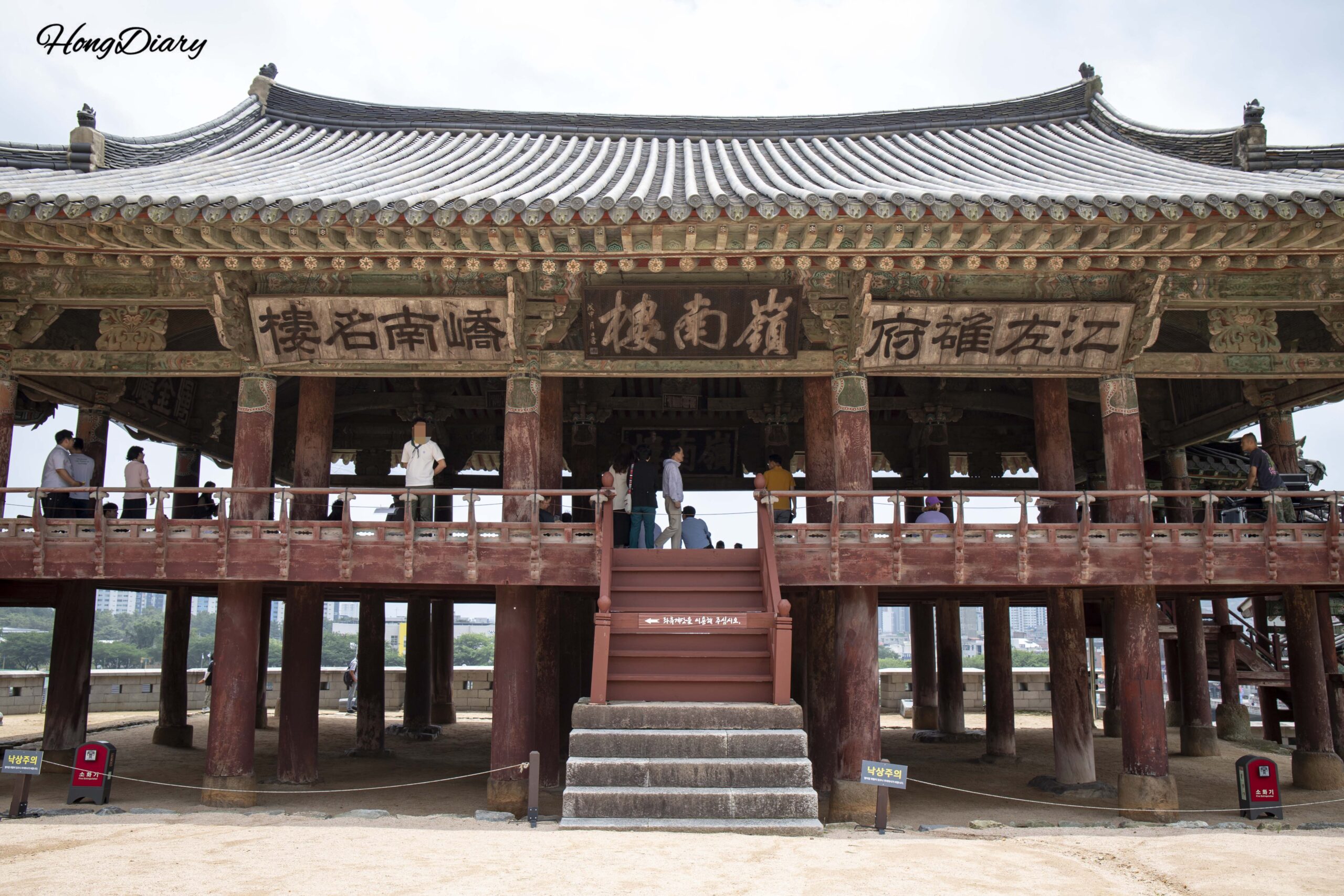
Most national treasures come with velvet ropes and security guards. Yeongnamnu Pavilion in Miryang flips that expectation entirely. I climbed the wooden steps, slipped off my shoes, and sat cross-legged on the same timber floor where Joseon-era scholars once composed poetry — with nothing between me and a sweeping view of the Miryang River but centuries of open air.
Miryang is a compact city tucked into the northeastern corner of Gyeongsangnam-do, about 58 km from Busan Station by car. Despite its small size, the city punches well above its weight in cultural significance. Yeongnamnu Pavilion is one of Korea’s three great pavilions, a distinction it shares with Chokseongnu in Jinju and Bubyeongnu in Pyongyang. While Jinju’s pavilion draws crowds for its fortress festival, Miryang’s counterpart sits quieter — perched on a cliff above the river, holding its ground the way it has since the Silla period over a thousand years ago.
Table of Contents
Essential Information: How to Get to Yeongnamnu Pavilion (Hours, Admission & Transit)
| Detail | Information |
|---|---|
| Address | 324 Jungang-ro, Miryang-si, Gyeongsangnam-do |
| Hours | 9:00 AM – 6:00 PM, daily (no closing days) |
| Admission | Free |
| By train from Busan | 40–50 min, ₩3,900–₩8,400 / $2.60–$5.60 USD / €2.20–€4.75 EUR (varies by train type) |
| Bus from Miryang Station | Bus 1, 1-2, 2, or 7 → 9 stops (~10 min) → get off at Yeongnamnu / Arirang Market South Gate stop, then walk 108 m (~2 min via stairs) |
| Taxi from Miryang Station | ~10 min (3 km), ₩6,000–₩7,000 / $4.00–$4.67 USD / €3.39–€3.96 EUR |
| Taxi from Miryang Bus Terminal | ~5 min (1.5 km), ₩5,000 / $3.33 USD / €2.83 EUR |
| Parking | Multiple lots (performance lot, riverside lot), ~₩1,000/hr / $0.67 USD / €0.57 EUR |
Climbing the Stone Steps
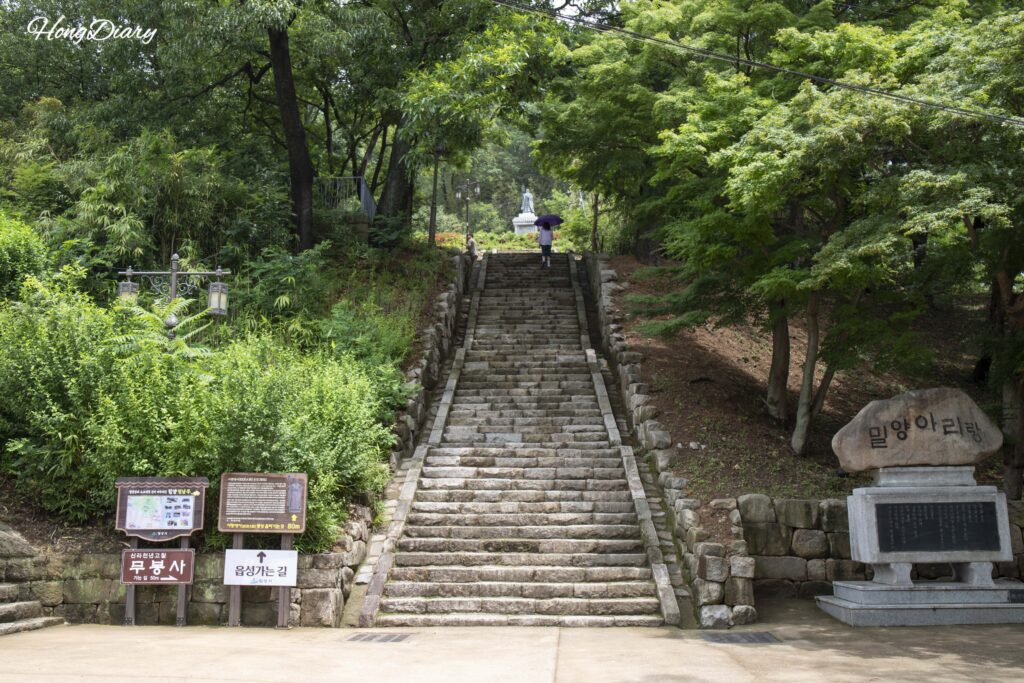
The approach sets the tone. A flight of stone stairs leads you up the hillside, and even before you reach the pavilion, you start to feel the shift — from the everyday noise of a small Korean city to something much older and stiller. Halfway up, there’s an information board detailing the pavilion’s timeline, though it’s mostly written in Korean. If you have a translation app ready, it’s worth a pause here.
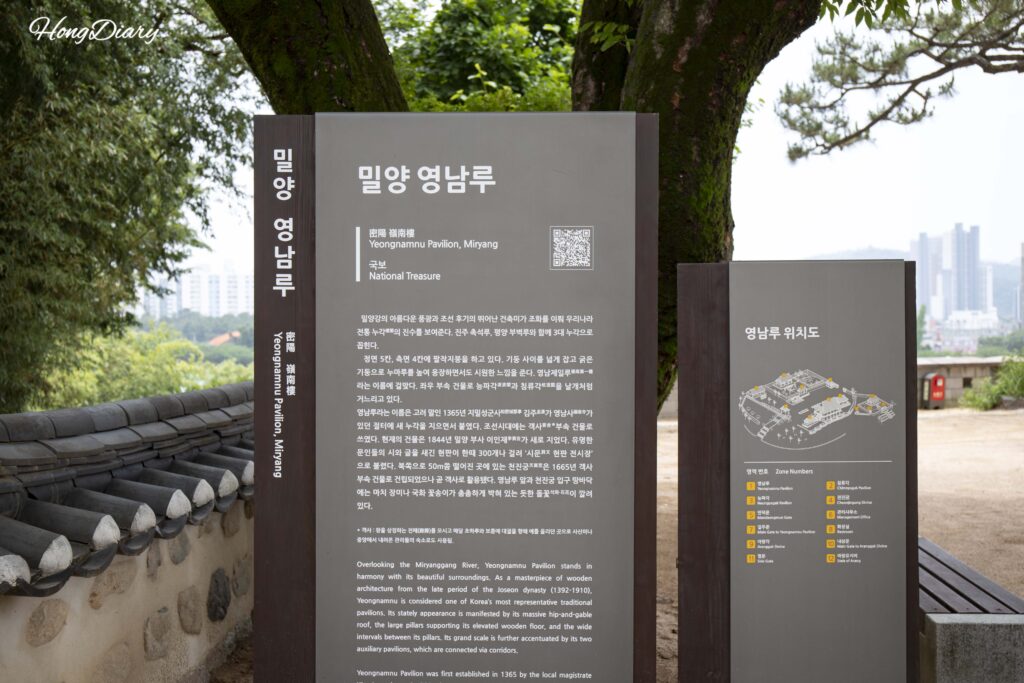
A quick note about the history: the first structure on this site dates back to the Silla dynasty, when it served as an annex of Yeongnamsa Temple, one of the era’s five great temples. It was expanded during the Goryeo dynasty, then lost and rebuilt multiple times over the centuries. What you see today is the 1884 reconstruction, ordered by the Miryang magistrate Yi In-jae. That cycle of destruction and renewal is part of what gives this place its character — it has earned its presence here.
Stepping Onto a National Treasure
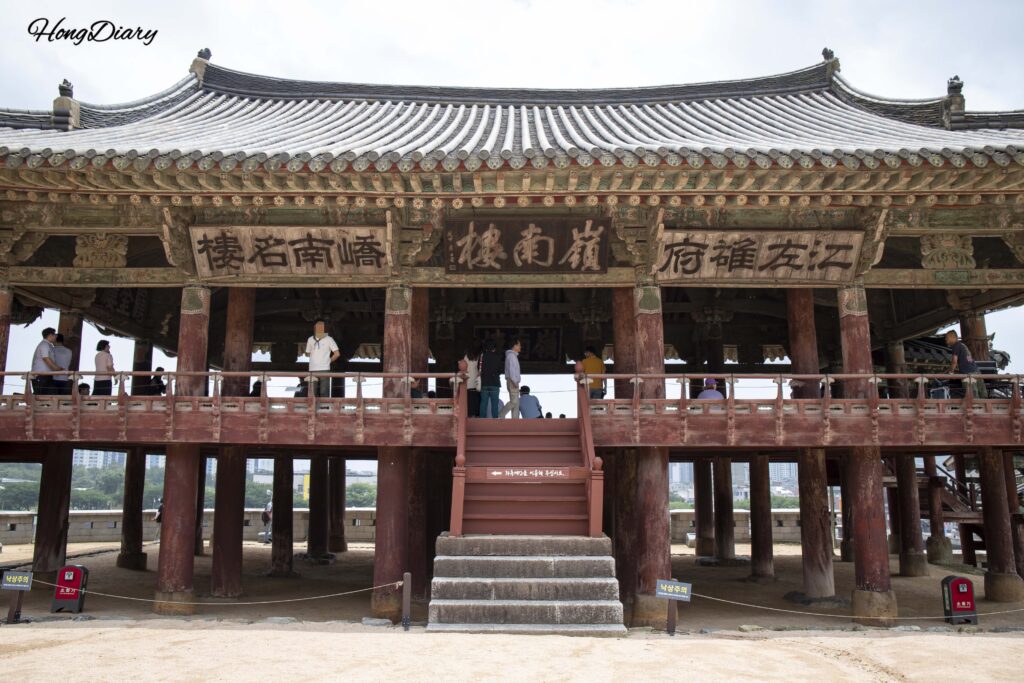
Here is where Yeongnamnu sets itself apart from most historic sites. Despite being designated as a National Treasure in 2023, the pavilion is not a museum piece behind glass. It is a living, usable space. Locals come here to sit and rest. Tourists do the same. The only rules: remove your shoes before stepping onto the wooden floor, keep your voice at a reasonable level, and leave food and drinks at the beverage stand near the base of the stairs. No lying down, no loud music, no alcohol.
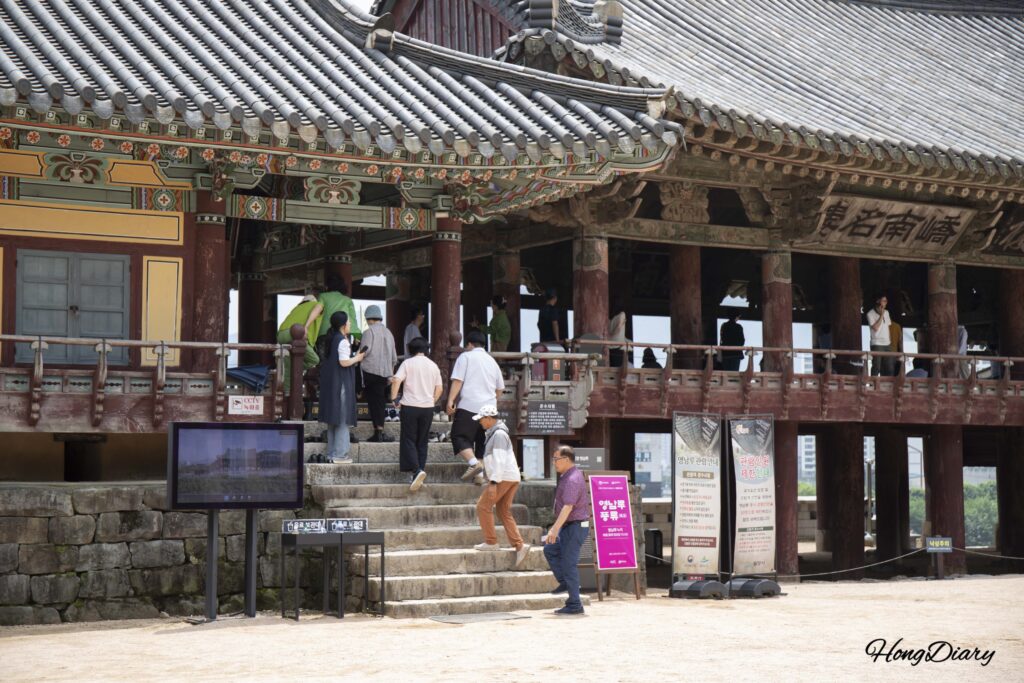
That beverage stand caught me off guard at first — a simple shelf where you park your coffee or water bottle before heading up. It is a small detail, but it tells you something about how Korea treats its cultural heritage: accessible, trusted to the public, but cared for with quiet discipline. I left my iced tea on the shelf and walked up barefoot.
Reading the Walls — Joseon-Era Calligraphy Up Close
Once you’re on the pavilion floor, take a moment before you look outward. Look up and around instead. The beams and columns are covered with poems and calligraphic inscriptions — some centuries old — left by those who sat in this exact spot over the centuries. Even without reading classical Chinese characters, the density and variety of brushwork is fascinating to take in.
One inscription stands out. It was written by the seven-year-old son of the magistrate who rebuilt the pavilion in 1884. A child’s calligraphy, preserved alongside the work of seasoned scholars, still hanging in place after more than a century. An on-site guide panel explains which inscription is which, but the text is in Korean only. I’d suggest using Google Lens or Papago to translate it on the spot — the backstory turns a decorative detail into something worth remembering.
The View That Made Scholars Stay
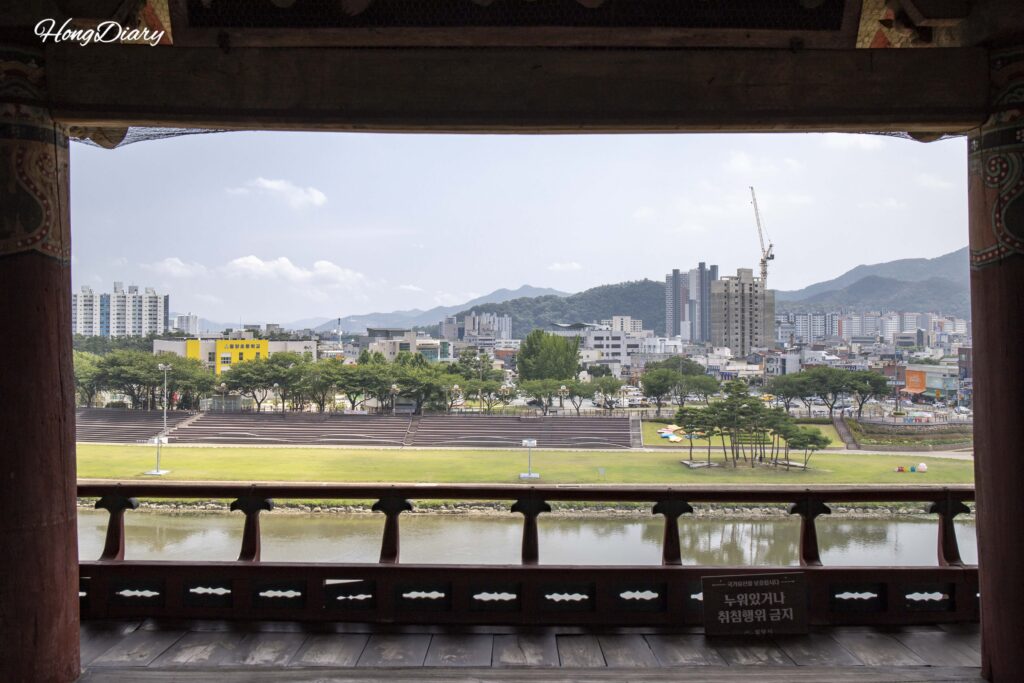
Then you look outward, and you understand why this pavilion has drawn people for centuries. The Miryang River curves below the cliff, framed on both sides by layered ridgelines and thick greenery. The breeze coming off the water is constant and cooling, the kind that makes you sit down and forget you had somewhere else to be.
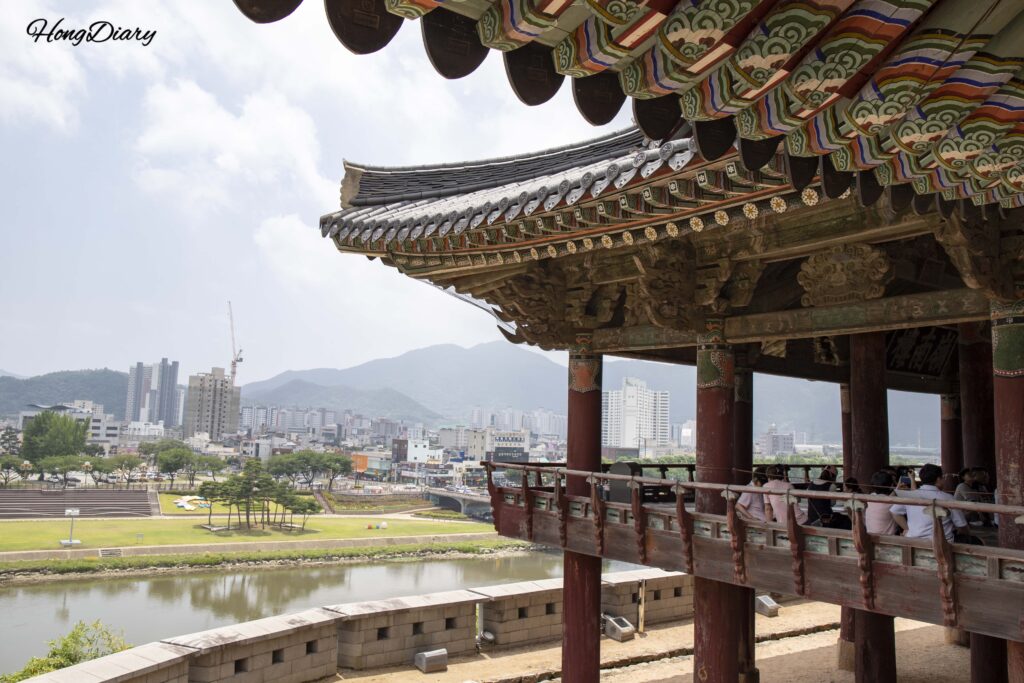
I spent a while just sitting, watching the river shift color with the light. The deep green of the surrounding trees, the quieter blue of the water, the dark wooden beams of the pavilion framing it all — it works. The day I visited, though, heavy clouds blocked the blue sky, which dulled the full effect. On a clear day, I imagine this view would feel like something out of a landscape painting. Still, even under grey skies, the sense of calm here was hard to shake.
An Unexpected Arirang Performance
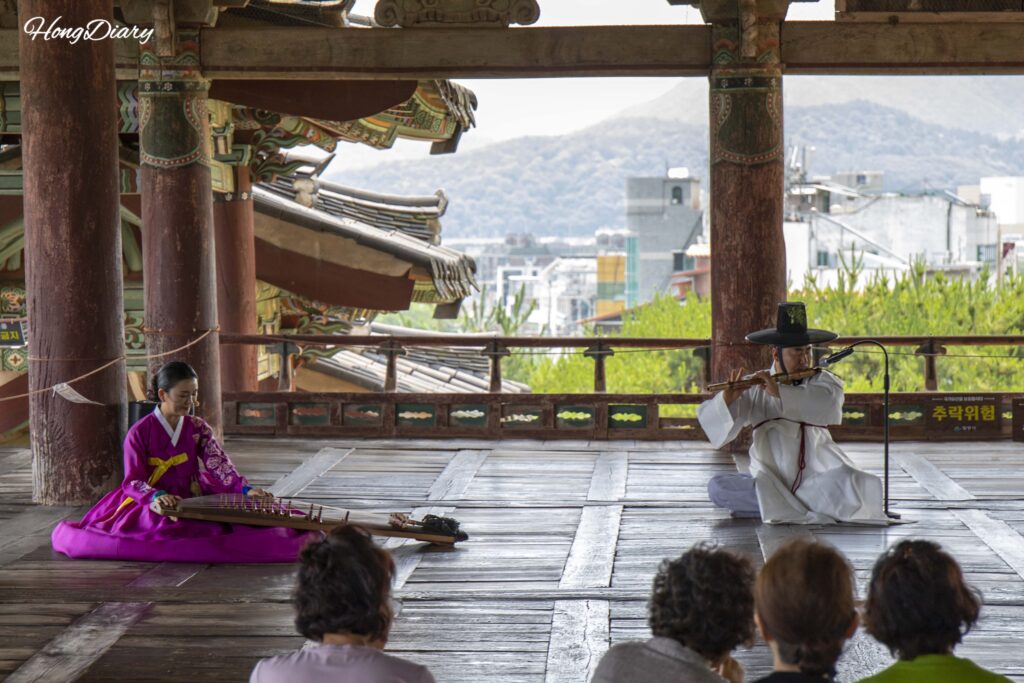
This was pure luck. While I was sitting on the pavilion floor, a traditional performance began in the courtyard below — a live rendition of Miryang Arirang, one of Korea’s most recognized folk songs. Arirang has been passed down orally for generations and varies by region. The three most well-known versions are Jeongseon Arirang from Gangwon-do, Jindo Arirang from Jeollanam-do, and Miryang Arirang from right here in Gyeongsangnam-do.
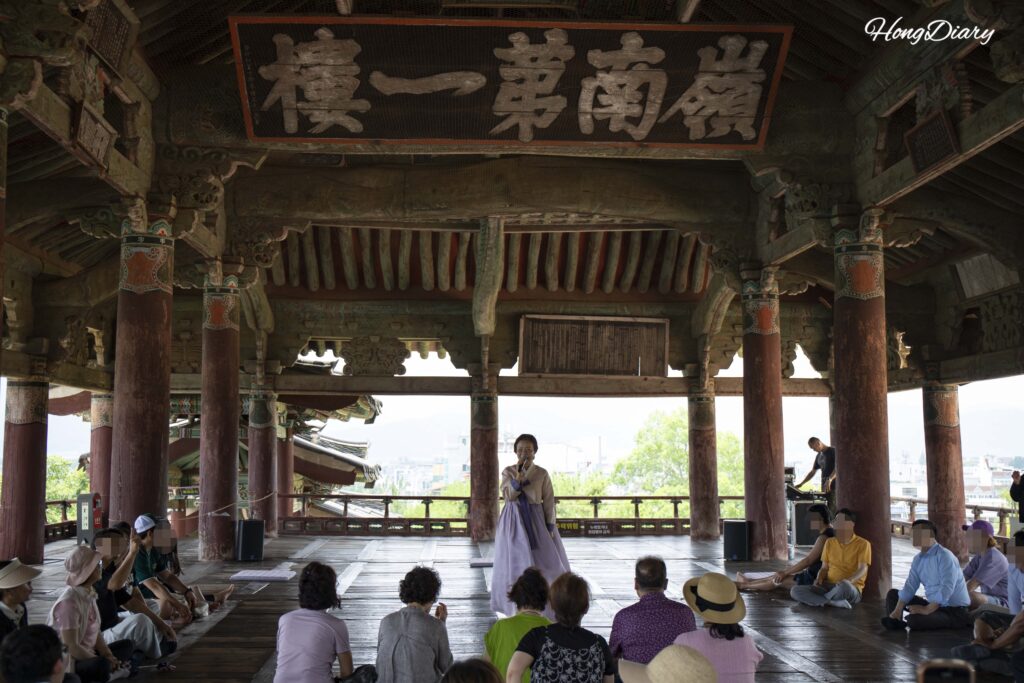
Hearing Miryang Arirang performed live, in the courtyard of the pavilion that overlooks the same river the song was born beside — that connected a few dots for me. It made sense why Joseon scholars kept coming back to this spot. The combination of sound, scenery, and open air is difficult to replicate anywhere else.
If you’re planning around this: from April through October (excluding July and August), intangible heritage performances are held on the first and third Saturday of each month at 1:00 PM in the Yeongnamnu courtyard. Worth timing your visit if the schedule lines up.
Cheonjingung Shrine — A Quick Detour Next Door
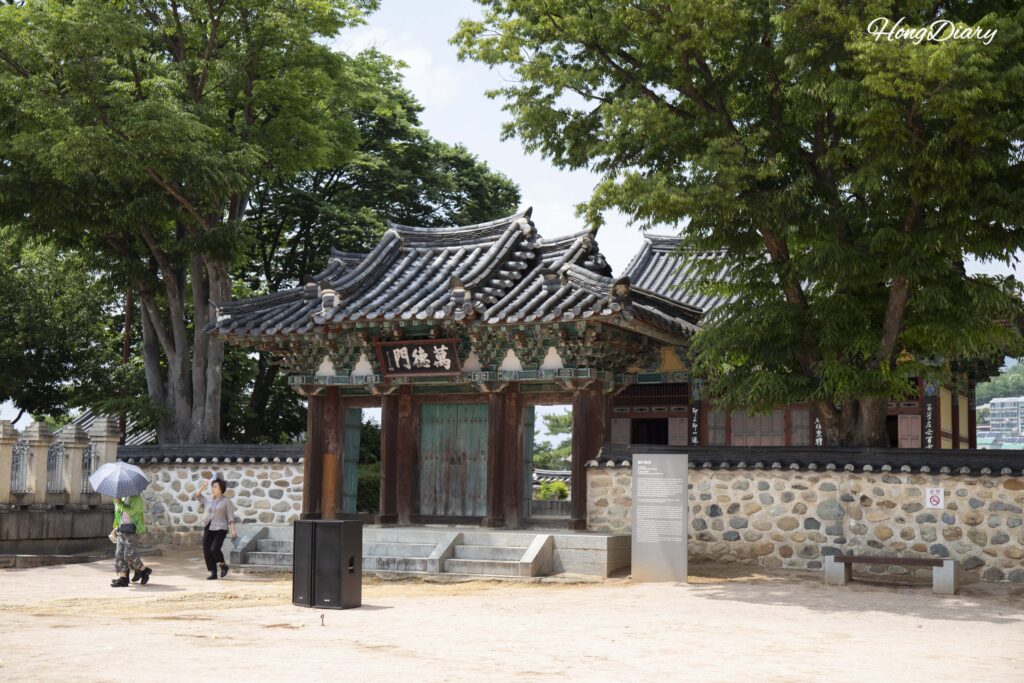
I almost skipped this, and I’m glad I didn’t. Just in front of Yeongnamnu stands Cheonjingung, a Gyeongsangnam-do-designated cultural heritage shrine. It enshrines the spirit tablets of Dangun — the mythological founder of Korea — along with the founders of subsequent Korean dynasties. The grounds are compact and quiet, and the contrast between the open-air pavilion and this enclosed, reverent space adds texture to the visit.
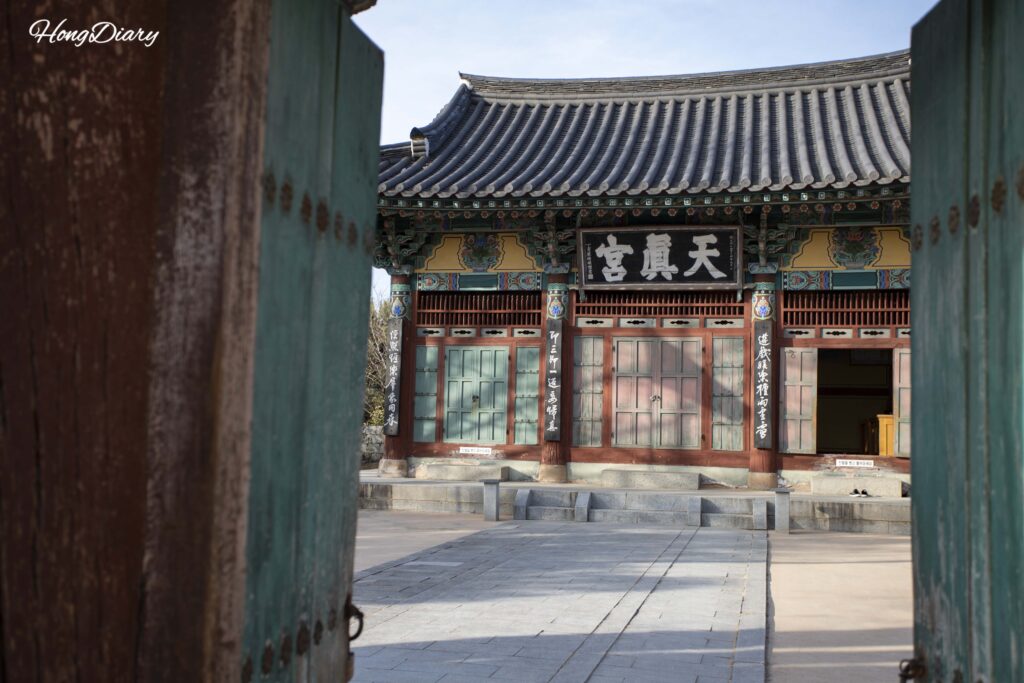
The shrine’s interior is modest but worth a look if you’re interested in how Korea’s origin mythology is physically preserved. It took no more than ten minutes, and it’s right there — skipping it would feel like leaving a chapter unread.
Making the Most of Your Miryang Visit
Once you’ve come down the stairs from Yeongnamnu, Miryang Arirang Market is directly in front of you. It’s a working local market — not a tourist-oriented one — so expect the kind of raw, unpolished energy that makes Korean traditional markets worth visiting. A good spot to grab a meal and watch daily life unfold in a small Korean city.
If Yeongnamnu has you curious about what else this town has to offer, Miryang has more depth than its size suggests.
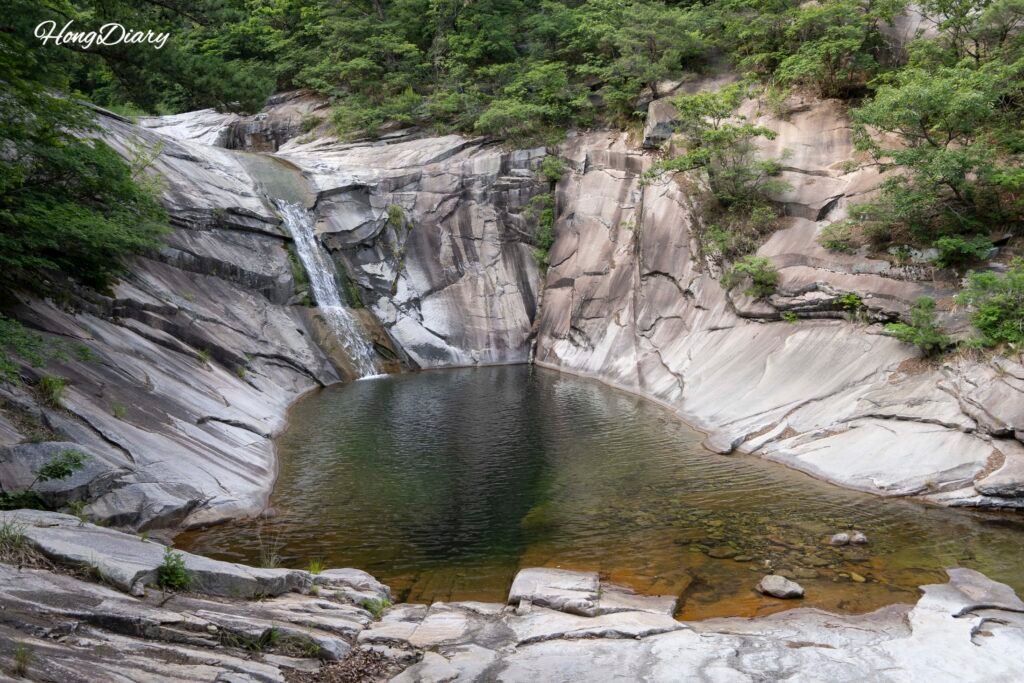
About 35 minutes south of the city center, Hobakso Valley hides an emerald-green pool tucked between narrow canyon walls — swimming is off-limits, but the color of the water alone is worth the detour.
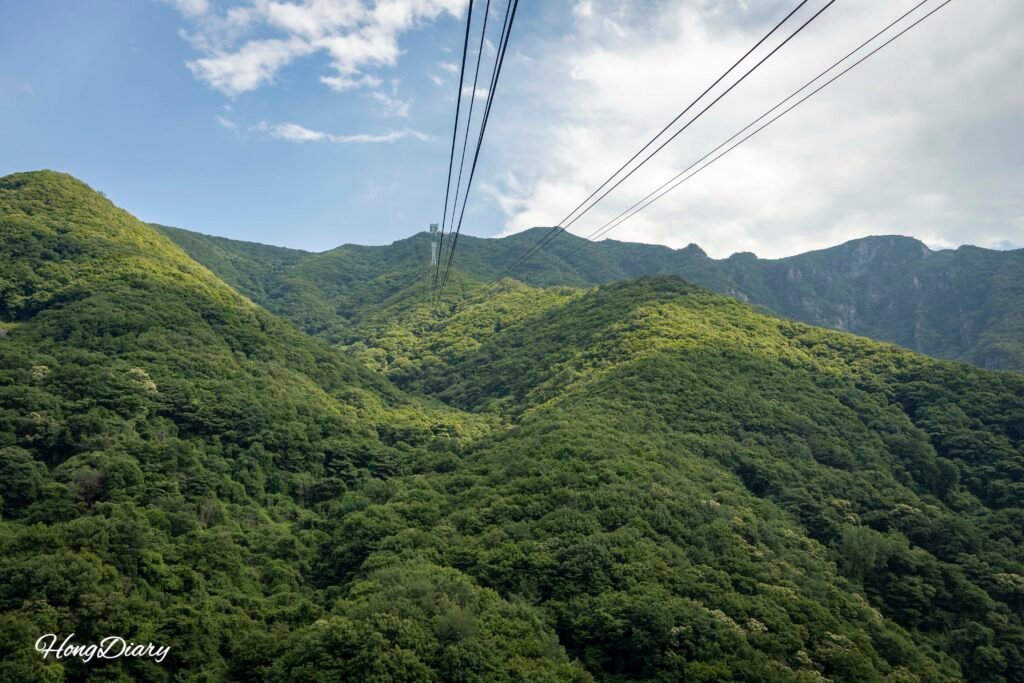
For something higher up, the Ice Valley Cable Car is Korea’s longest gondola ride, carrying you up into the Yeongnam Alps with panoramic views that shift dramatically with the seasons.
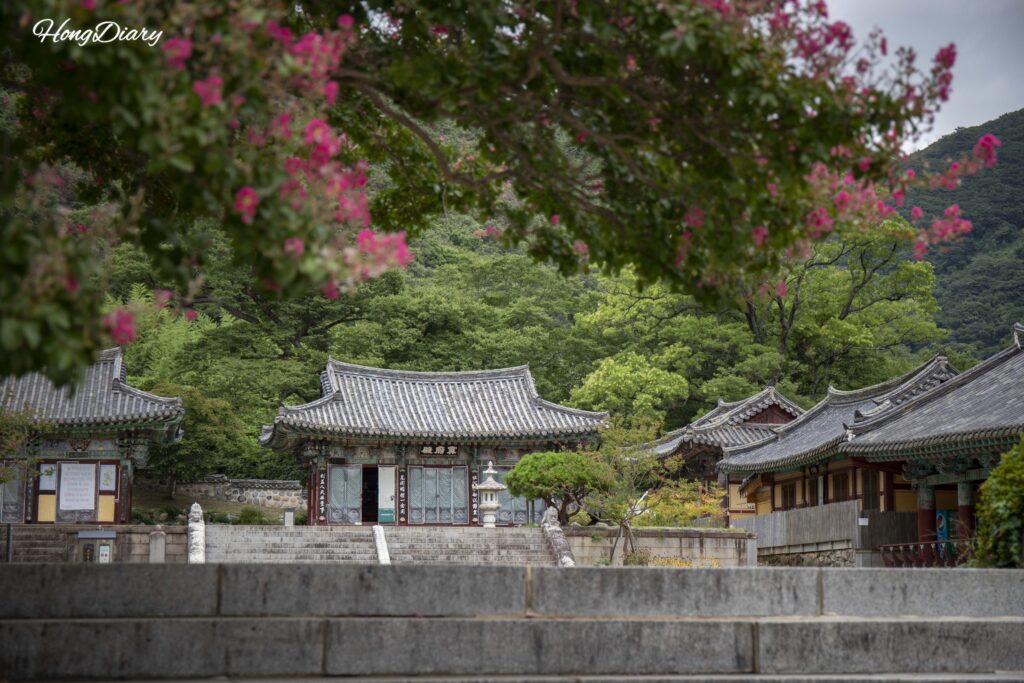
History-minded visitors should also consider Pyochungsa Temple, a mountain temple where crape myrtle trees, Confucian rituals, and warrior-monk legacies coexist in a way I haven’t encountered at other Korean temples.
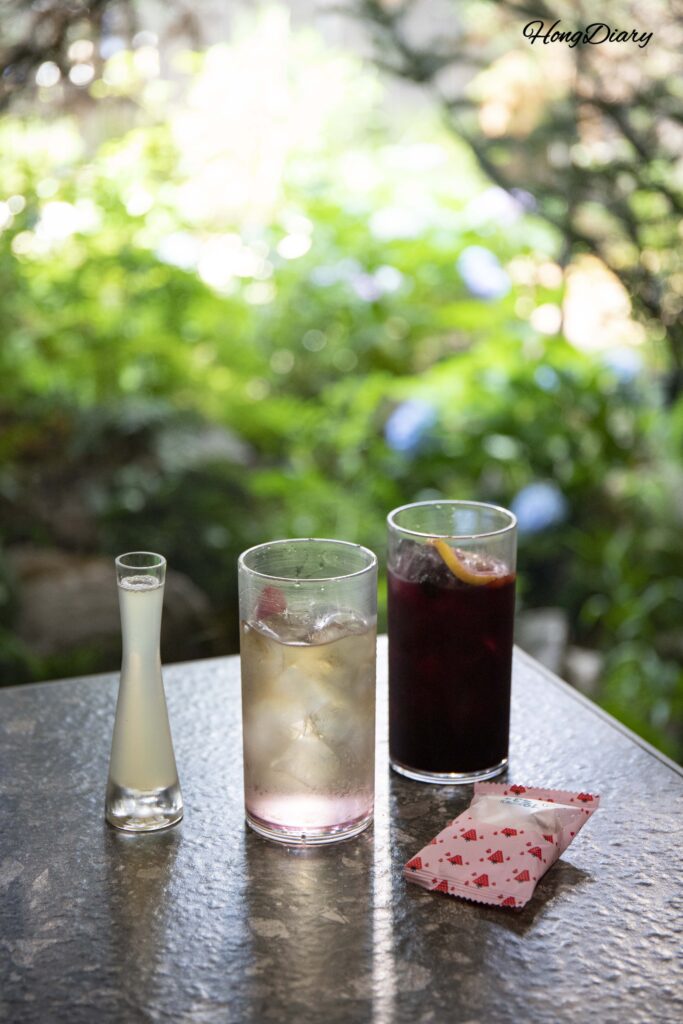
And when your legs need a break from all the walking, Yeoldudal Cafe in central Miryang changes its interior with each room to reflect a different season — a creative stop that caught me by surprise.
Miryang is just 40 to 50 minutes from Busan by train, making it an easy day trip with no overnight commitment. But Yeongnamnu Pavilion alone — sitting on the floor of a national treasure, watching the river below, and maybe catching a live Arirang performance if your timing is right — is reason enough to make the ride.
Frequently Asked Questions (FAQ) about Yeongnamnu Pavilion
Is Yeongnamnu Pavilion free to visit?
Yes. There is no admission fee to enter Yeongnamnu Pavilion in Miryang. It is open daily from 9:00 AM to 6:00 PM, year-round with no scheduled closing days. Visitors can walk up and sit inside the pavilion at no cost.
Can you actually go inside Yeongnamnu Pavilion and sit on the floor?
Yes, visitors are allowed to step onto the wooden floor and sit inside the pavilion, even though it holds National Treasure status. You must remove your shoes before entering. Lying down, loud talking, and consuming food or alcohol inside the pavilion are not permitted. A beverage shelf near the stairs is available to store your drinks before going up.
How do I get to Yeongnamnu Pavilion from Busan?
Take a train from Busan to Miryang Station, which takes 40 to 50 minutes depending on the train type (₩3,900–₩8,400 / $2.60–$5.60 USD / €2.20–€4.75 EUR). From Miryang Station, ride Bus 1, 1-2, 2, or 7 for about 10 minutes (9 stops) and get off at the Yeongnamnu / Arirang Market South Gate stop. Alternatively, a taxi from the station costs around ₩6,000–₩7,000 ($4.00–$4.67 USD / €3.39–€3.96 EUR) and takes about 10 minutes.
What are the traditional performances at Yeongnamnu Pavilion, and when are they held?
From April through October (excluding July and August), intangible heritage performances — including live renditions of Miryang Arirang — are held on the first and third Saturday of each month at 1:00 PM in the Yeongnamnu courtyard. These performances are free to watch.
What is Cheonjingung Shrine near Yeongnamnu Pavilion?
Cheonjingung is a Gyeongsangnam-do-designated cultural heritage shrine located directly in front of Yeongnamnu Pavilion. It enshrines the spirit tablets of Dangun, Korea’s mythological founder, as well as the founders of subsequent Korean dynasties. The visit takes about 10 minutes and is included in the free admission area.
Is Miryang a good day trip from Busan?
Yes. Miryang is only 40 to 50 minutes from Busan by train, making it one of the most accessible day trips from the city. In addition to Yeongnamnu Pavilion, the city offers attractions such as Hobakso Valley, Ice Valley Cable Car, Pyochungsa Temple, and the Miryang Arirang Market — enough to fill a full day without needing to stay overnight.
Are the information signs at Yeongnamnu Pavilion available in English?
Most signs and interpretive panels at Yeongnamnu Pavilion are written in Korean only. For the calligraphy inscriptions and historical plaques inside the pavilion, using a real-time translation app such as Google Lens or Papago is recommended. The backstories — including a calligraphy piece written by a seven-year-old in 1884 — are well worth translating on the spot.