
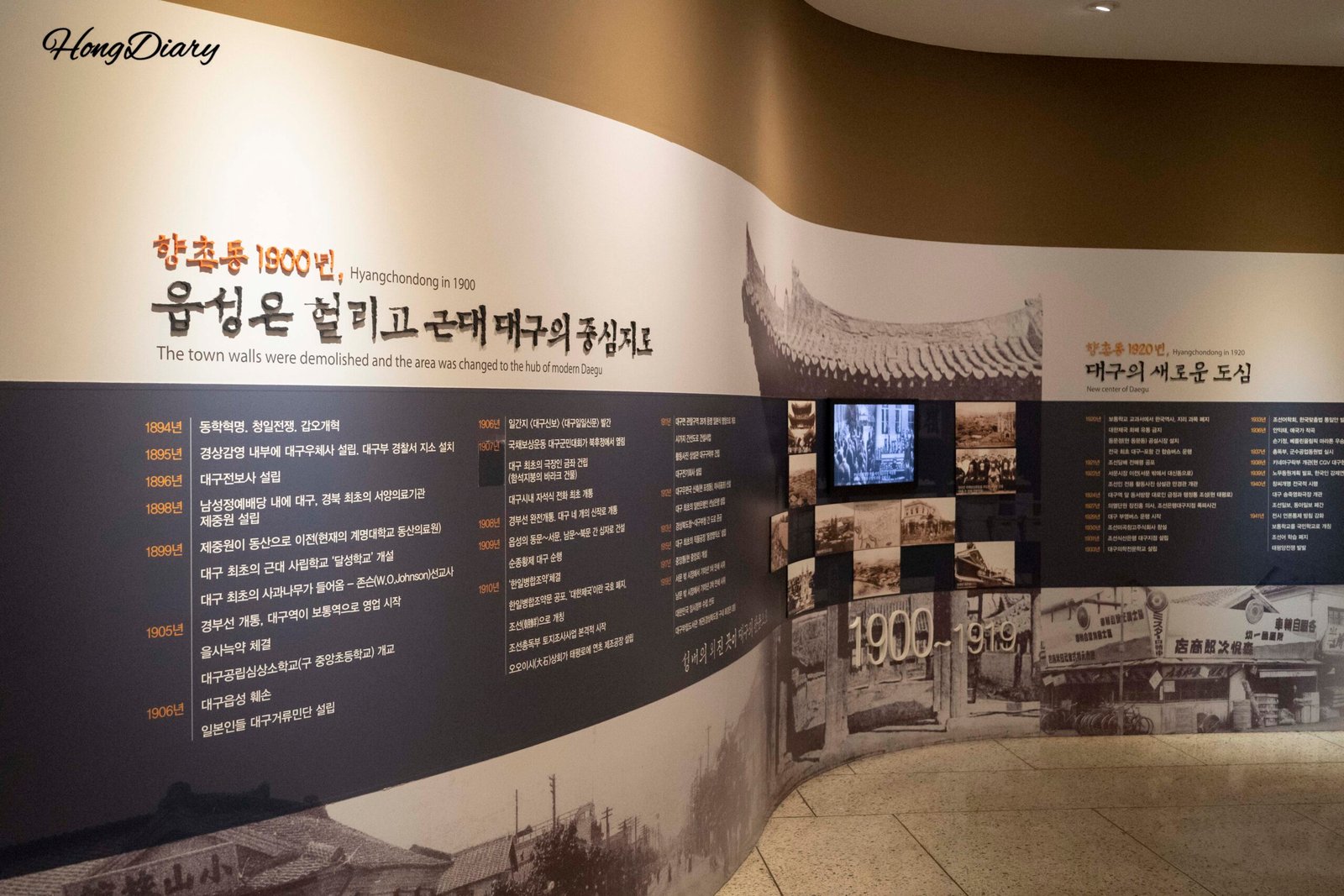
I wasn’t expecting much when I stepped through the front door. From the outside, it looked like any other remodeled heritage building — clean facade, modest signage. But once inside, I realized this wasn’t one museum. It was three completely different cultural spaces stacked on top of each other inside the Hyangchon Cultural Center building, each telling its own piece of Daegu’s modern history. A recreated 1950s street on the first two floors. A literature museum on the third and fourth. And in the basement, something I’d never encountered before: Korea’s oldest music listening room, operating since 1946.
The building sits on Jungang-daero in Jung-gu, Daegu’s central district — the same stretch of old downtown that includes the Daegu Modern Alley walking route and the area around Daegu Station. Daegu has more traces of Korea’s modern history than most cities, and this particular corner of the city packs a dense concentration of it into a walkable zone. The building itself is a piece of that history: it was originally the Daegu branch of Seonnam Commercial Bank, the first general bank ever established in the city. The structure was remodeled to house the three cultural spaces it holds today, but the bones of the original bank are still visible in the architecture.
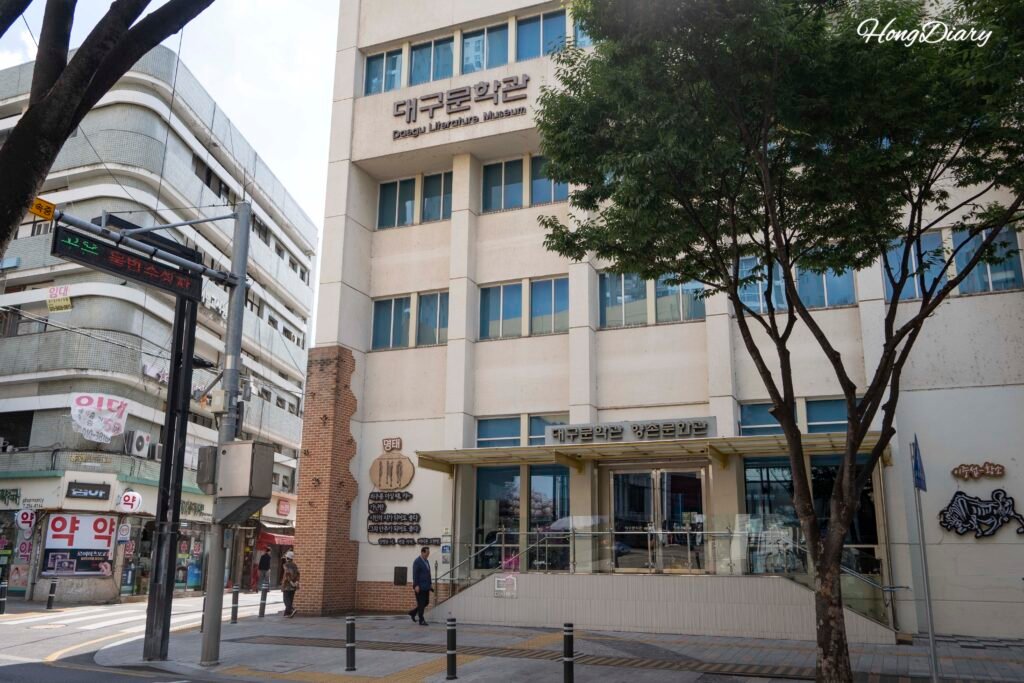
Table of Contents
Essential Info
| Essential Info | Details |
|---|---|
| Address | 449 Jungang-daero, Jung-gu, Daegu |
| How to get there | Subway Line 1, Jungang-ro Station Exit 4 — 5-minute walk / Daegu Station Exit 2 — 10-minute walk |
| Hours (Apr–Oct) | 9:00 AM – 7:00 PM (last entry 30 min before close) |
| Hours (Nov–Mar) | 9:00 AM – 6:00 PM (last entry 30 min before close) |
| Closed | Every Monday (if Monday is a holiday, closed the next day), January 1, Seollal, Chuseok |
| Hyangchon Cultural Center (1F–2F) | Adults ₩1,000 (~$0.65 USD / ~€0.55 EUR) · Seniors & Youth ₩500 (~$0.35 USD / ~€0.30 EUR) · Children (7 & under) Free |
| Daegu Literature Museum (3F–4F) | Free |
| Nokhyang Music Room (B1F) | Free with Hyangchon ticket, or buy a separate ticket at the vending machine at the entrance |
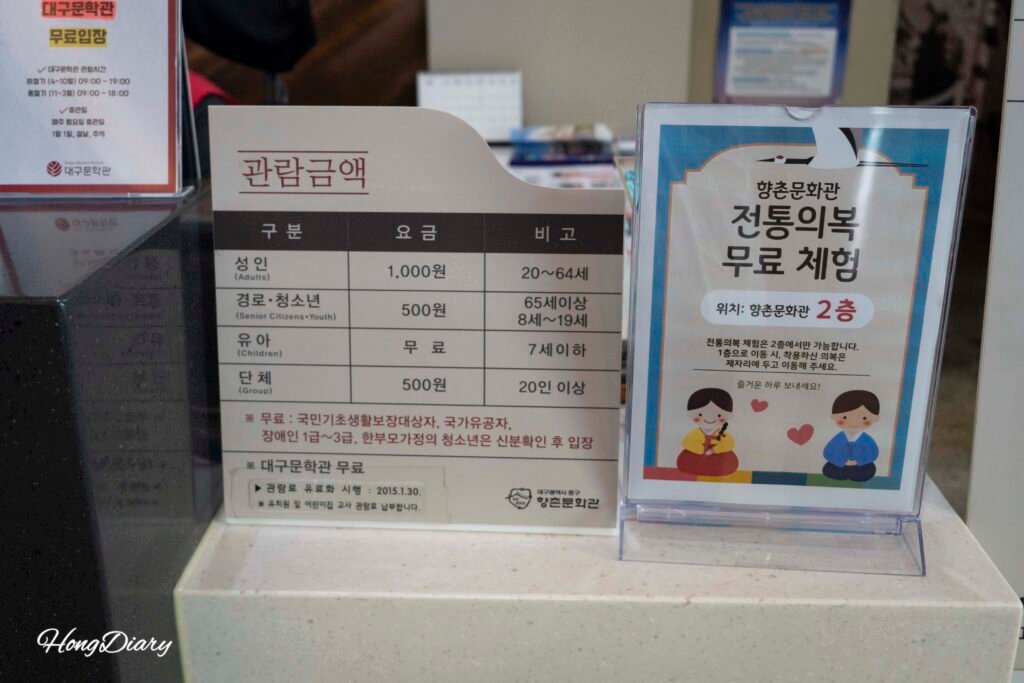
Adults pay ₩1,000 for the Hyangchon Cultural Center (1F–2F). The Daegu Literature Museum (3F–4F) is free.
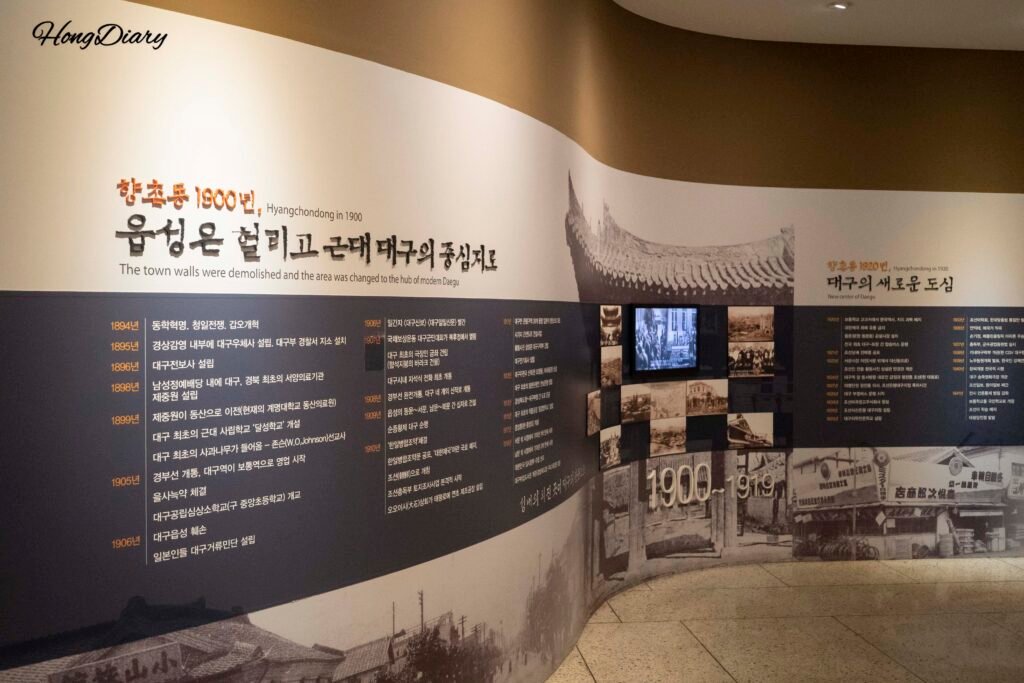
Hyangchon Cultural Center (1F–2F): Walking Into a Recreated Street
The ground floor opens into the Hyangchon Cultural Center, and the first thing you notice is that you’re not in a typical exhibition hall. The entire first and second floor has been built to resemble the streets of Hyangchon-dong as they looked during their peak decades.
Hyangchon-dong was originally a quiet village on the outskirts of the old Daegu fortress, where the city’s gunpowder storage once stood. When Daegu Station was built nearby, the neighborhood transformed into the city’s commercial and cultural center. By the mid-20th century, it was Daegu’s busiest district — and more importantly, it became the spiritual home of the city’s writers, poets, painters, and musicians.
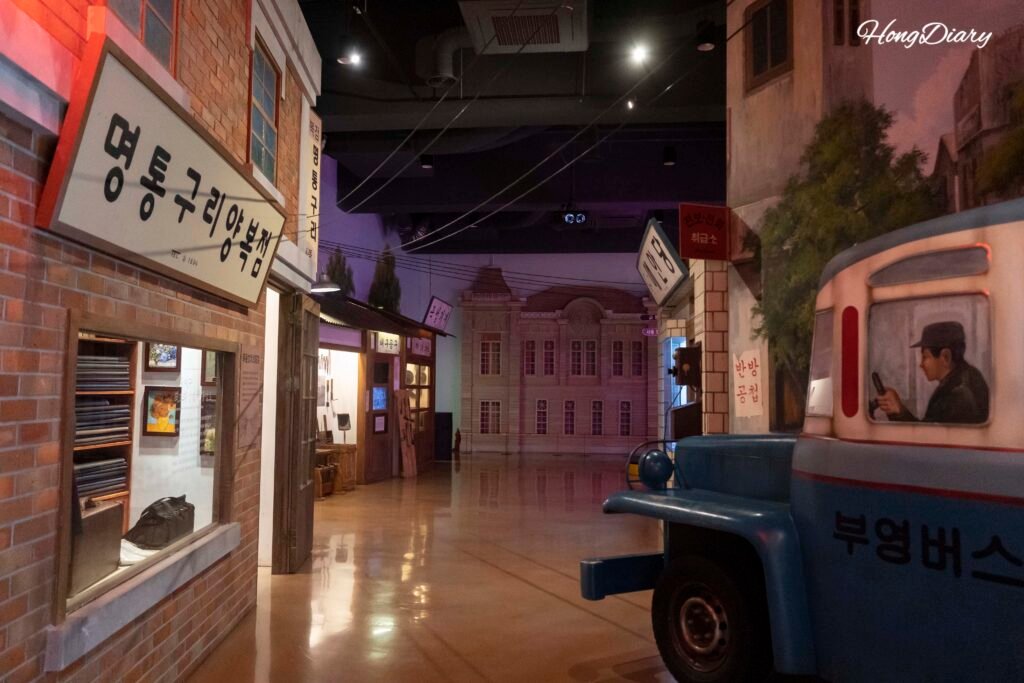
During the Korean War, when Seoul fell to advancing forces, Daegu became a refuge for many of the nation’s leading artists and intellectuals. Hyangchon-dong was the epicenter of this creative exile — painters like Lee Jung-seop and poets like Ku Sang gathered in these very tearooms daily, writing, sketching, and keeping Korean art alive while the rest of the country was in turmoil. That history is what gives the recreated street downstairs its weight: these aren’t generic 1950s storefronts. They’re based on the actual places where some of Korea’s most important cultural figures lived and worked during the war years.
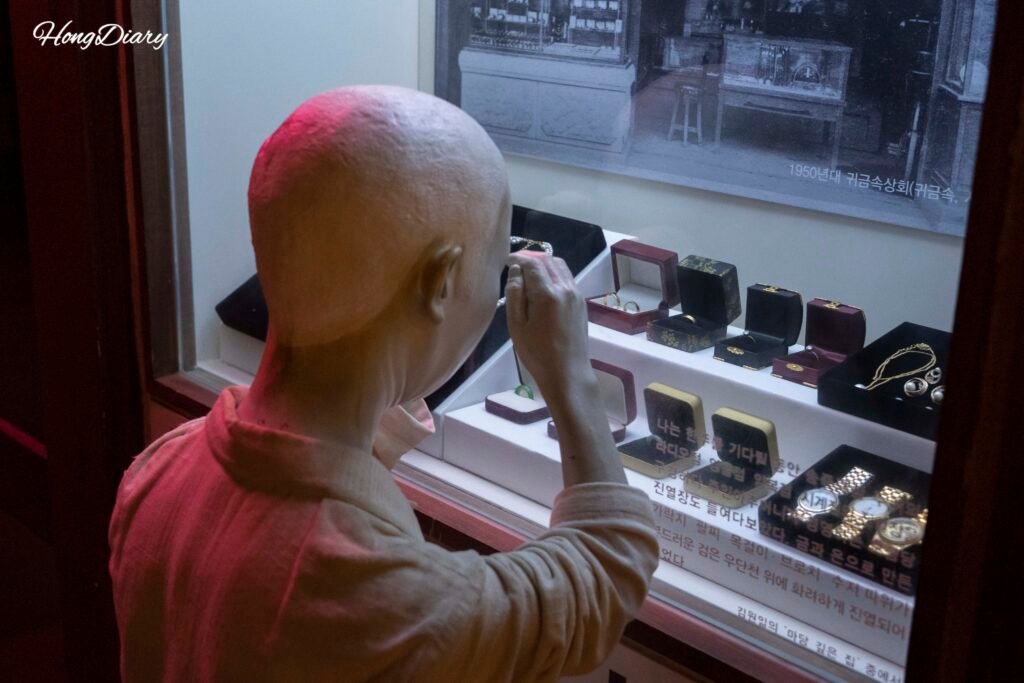
The recreated street captures that era in detail. Each storefront isn’t just a facade — the interiors are furnished and decorated to match. You can walk into a tailor’s shop, peer inside a 1950s movie theater, and sit in a dabang (a traditional Korean coffee house) that looks like it could still serve you a cup. In one section, you can step behind the screen of an old cinema and try your hand at being a byeonsa — the narrator who used to explain silent films to the audience. In another, you can listen to popular music from the 1950s and pretend to conduct.
Deeper inside the first floor, there’s a recreation of Gyodong Market — also known as the “Yankee Market” or “Dokkaebi Market.” After Korea’s liberation, returning compatriots formed a refugee settlement here, and the market grew around the trade of surplus goods from nearby US military PX stores. Cosmetics, clothing, and items that felt exotic at the time sold rapidly. The recreation includes the food stalls, the products, and painted scenes that bring the market’s busiest years back to life.
What makes this floor work is the balance between education and experience. The history panels are there if you want to read them, but the space also functions as something you simply walk through and absorb. Couples on dates, families with kids, groups of friends — I saw all of them moving through the space at their own pace, stopping wherever something caught their eye.
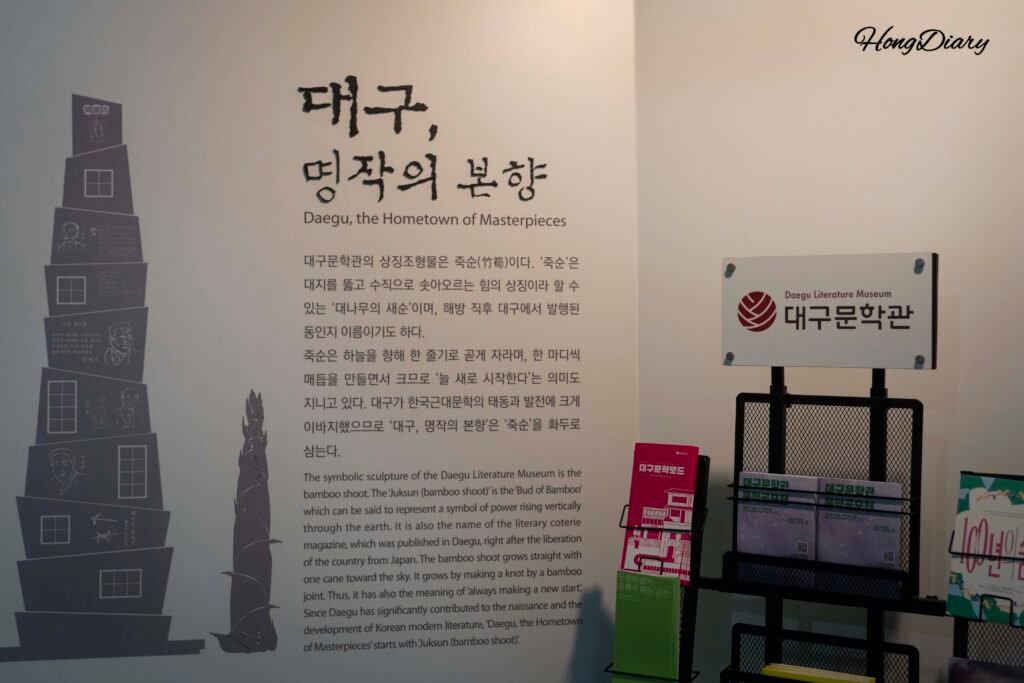
Daegu Literature Museum (3F–4F): A Free Archive of the City’s Literary Voice
Take the stairs or elevator to the third floor and you’ll find the Daegu Literature Museum, which is free to enter and covers two floors.
The first thing you notice is a bamboo shoot-shaped sculpture stretching from the third floor up through the fourth. It’s a reference to Juksun, a literary journal first published in 1946 — the first literary coterie magazine created after Korea’s liberation, written entirely in Korean. The poet Lee Yun-su declared that the journal would grow “as powerfully as bamboo shoots, as upright as green bamboo,” and serve as “a beacon for the poetry and literature of this region.”
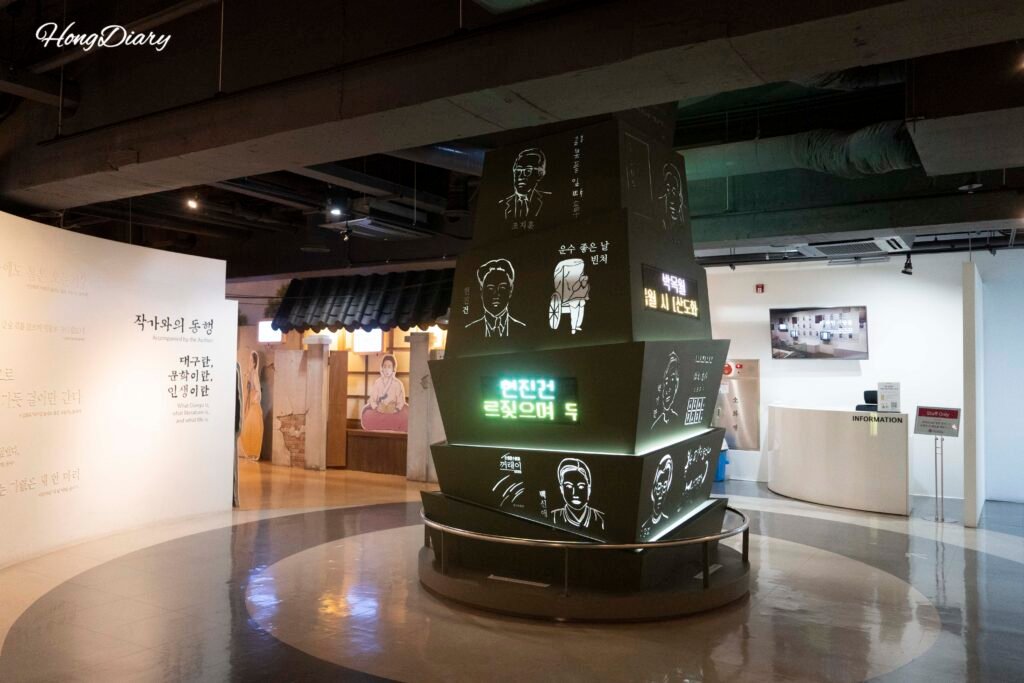
The museum traces the arc of Daegu’s literary scene from the 1920s through the 1960s, organized by decade. Each period is presented with the writers who defined it, the historical circumstances they worked under, and samples of their output. The collection includes materials classified as cultural heritage-grade modern literary documents — original manuscripts and early editions that are too fragile to handle but can be viewed in detail on the museum’s website.
Docent-guided tours are available from Tuesday to Sunday, running from 10:00 AM to 1:00 PM and again from 2:00 PM to 6:00 PM. If you’re interested in the literary context behind what you saw on the recreated street downstairs, the docents connect the dots between the writers and the coffee houses, the publishers and the movie theaters that made Hyangchon-dong what it was.
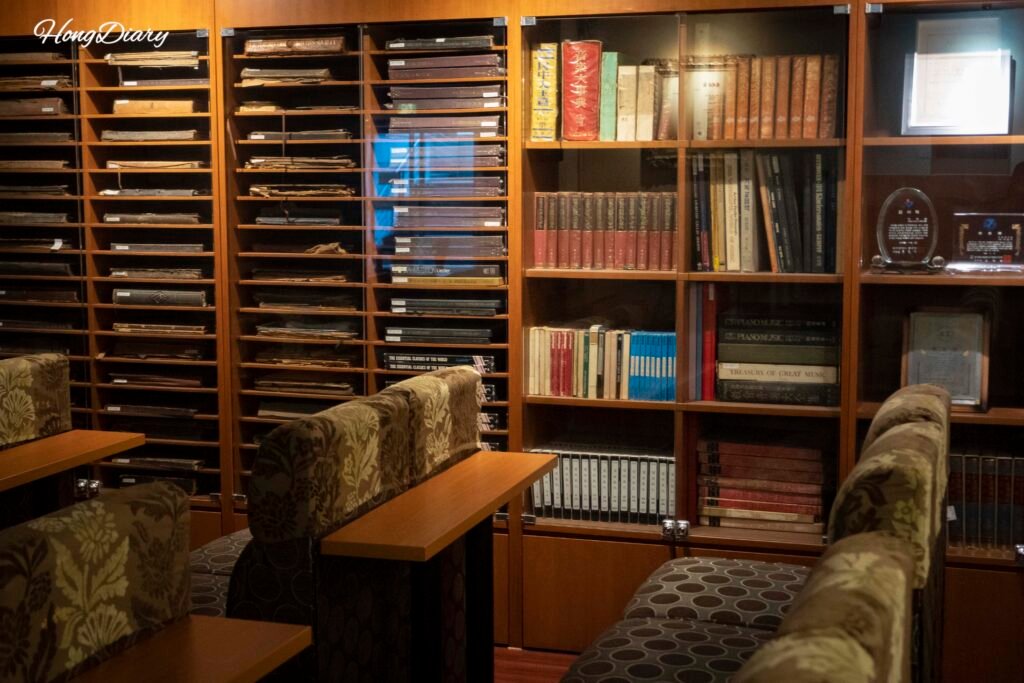
Nokhyang has been operating since 1946. No food, no drinks — just music, played on a daily rotation of classical, pop, and film soundtracks.
Nokhyang (B1F): Korea’s Oldest Music Listening Room
This is the part I didn’t know existed until I was already inside the building — and it turned out to be the most memorable.
Take the elevator down to the basement and you’ll find Nokhyang, a music listening room that has been in continuous operation since 1946. It was founded by Lee Chang-su, who opened the space in his own basement with a single gramophone and a collection of over 500 SP records. When the Hyangchon Cultural Center was established, Nokhyang was relocated to this basement — but the concept hasn’t changed.
There is no menu. No coffee. No food. You walk in, sit down in the listening room, and listen to whatever is playing. That’s it.
The schedule follows a set rotation:
| Time | What plays |
|---|---|
| 10:00 AM – 12:00 PM | Pop music and film soundtracks |
| 12:00 PM – 4:00 PM | Classical music and opera |
| 4:00 PM – 6:00 PM | Pop music and film soundtracks |
If you want to request a specific piece, there’s a desk near the entrance where you can submit your request directly.
Lee Chang-su has passed away, but his son now runs the room. There are regulars who come every single day — people who have made this small underground space part of their daily routine for years. When I visited, the room was quiet, the chairs were old but comfortable, and the music filled the space in a way that felt completely different from putting on headphones.
Nokhyang isn’t a tourist attraction in any conventional sense. There’s no gift shop, no interactive display, no photo spot. It’s a room where people sit and listen to music together, the way they’ve been doing here for nearly eighty years. If that sounds like your kind of place, it’s worth the trip down the stairs.
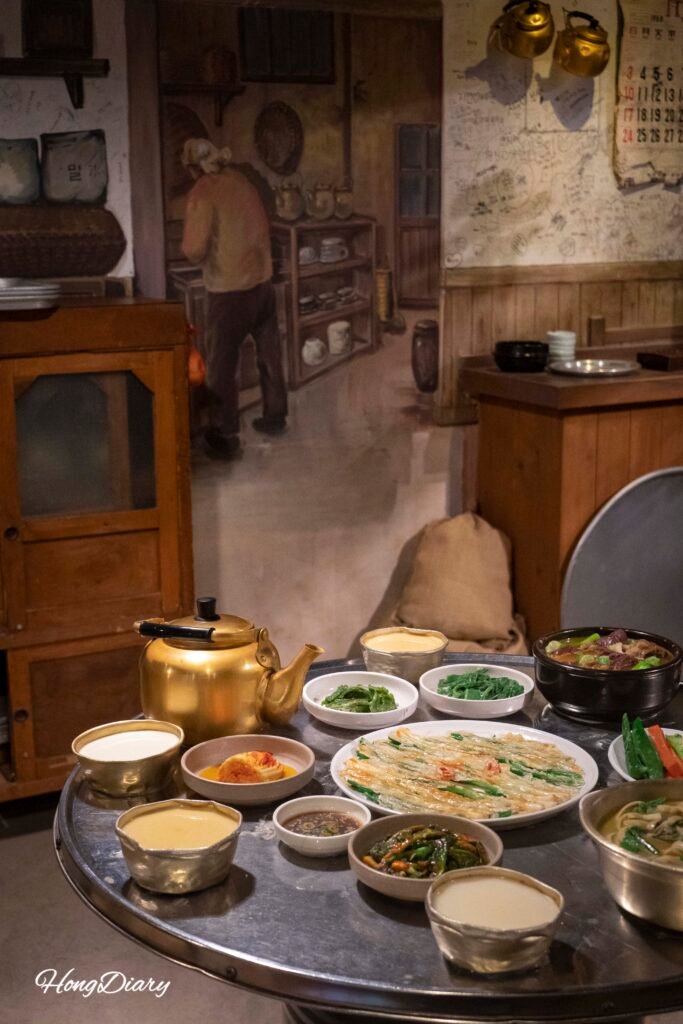
The recreations extend to daily life: dining tables, household items, and the textures of mid-century Korean living.
Where Time Moves at the Speed of Vinyl
Three cultural spaces, one building, one ticket. The Hyangchon Cultural Center gives you the visual experience of walking through a lost era. The Daegu Literature Museum gives you the intellectual context behind the city’s creative history. And Nokhyang gives you something harder to describe — a room where time moves at the speed of a vinyl record.
Daegu doesn’t always make it onto the standard Korea itinerary, and that’s part of what makes places like this feel genuine. There’s no crowd management, no timed-entry system, no rush. You walk in, you move at your own speed, and you leave with a piece of the city’s story that most visitors never encounter.
If you’re in Daegu and have a couple of hours to fill, this building is one of the better ways to spend them. And if nothing else, sit in Nokhyang for twenty minutes. You might not want to leave.
Exploring More of Daegu’s Nostalgic Charm
Since the Hyangchon Cultural Center sits right in the heart of Daegu’s historic downtown, it serves as the perfect anchor point for a day of exploring. If you want to continue your journey through the city’s unique local spots, consider these nearby destinations:
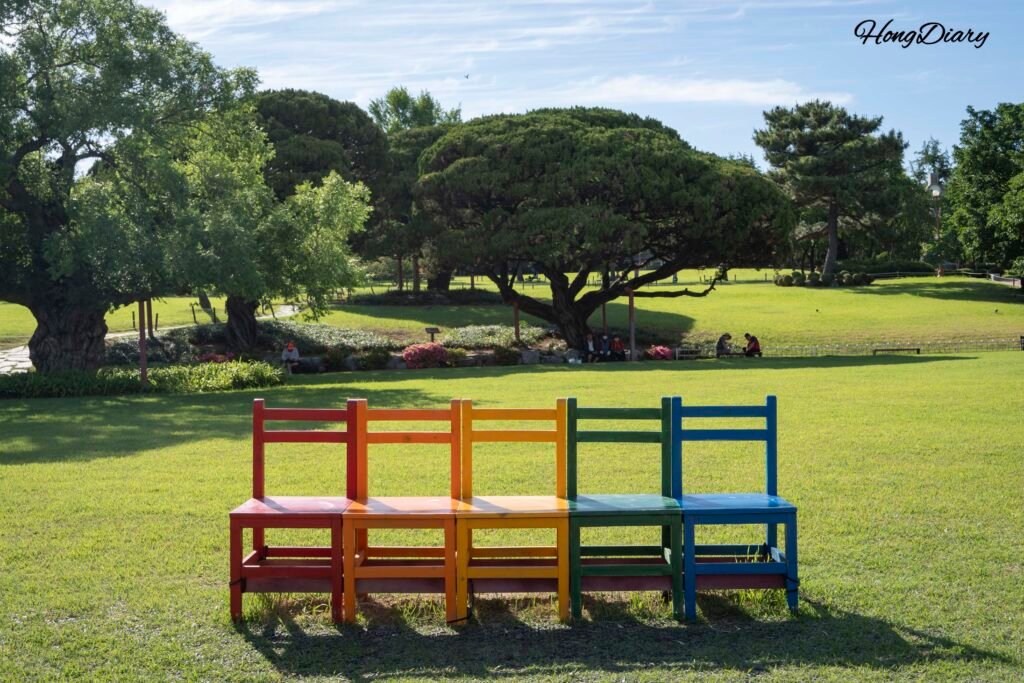
About 20 minutes by public transit from the Hyangchon Cultural Center, Dalseong Park Zoo is a free-admission park home to elephants, tigers, and a variety of other animals — one of the few places in Korea where you can visit a zoo at no cost.
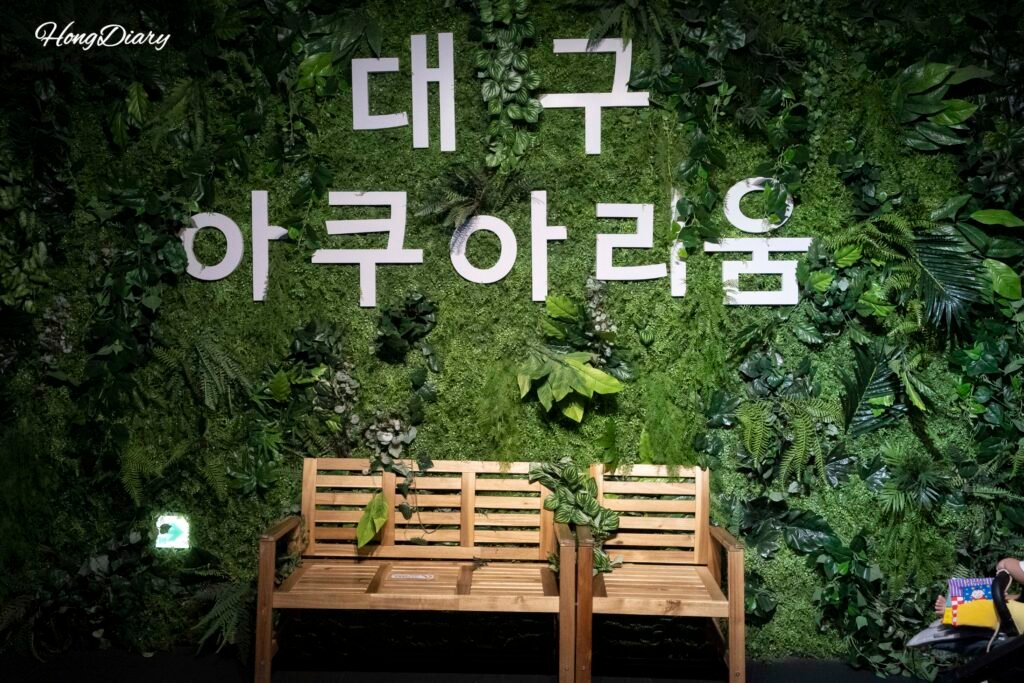
If you’re looking for more to do in Daegu, the Daegu Aquarium is about 15 minutes away by subway and makes for a good pairing with a Hyangchon Cultural Center visit, especially on rainy days.
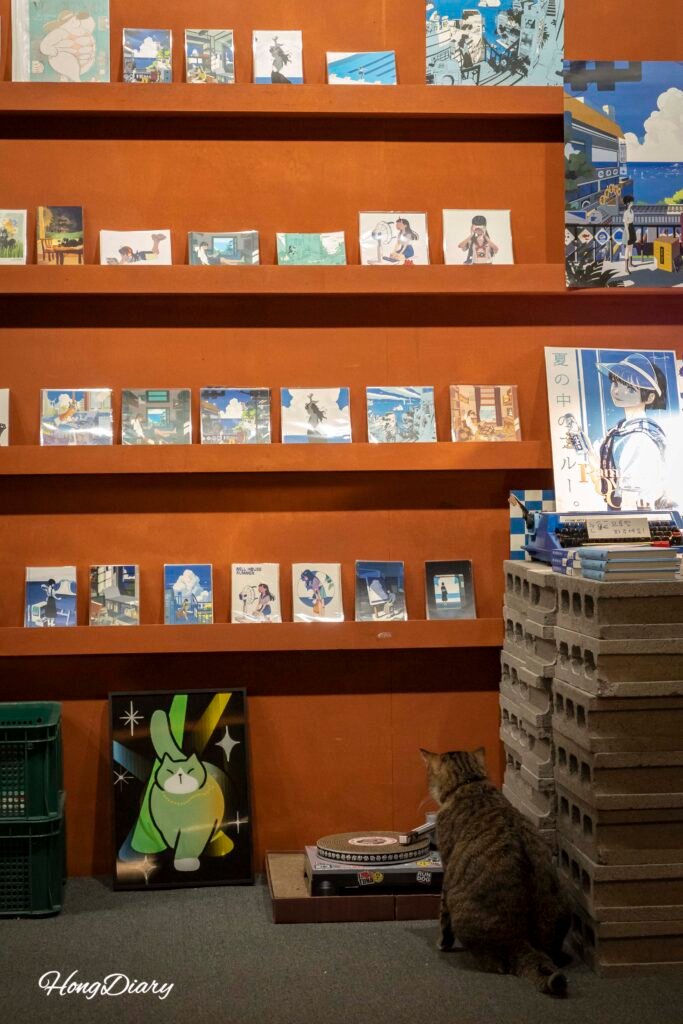
Right in front of the Daegu Aquarium, Simple Bookstore is a cafe-meets-independent-bookshop where resident cats roam between the shelves. If you enjoyed the literary atmosphere of the Daegu Literature Museum, this is a natural next stop.
Frequently Asked Questions
How much does it cost to visit the Hyangchon Cultural Center?
The Hyangchon Cultural Center (1F–2F) costs ₩1,000 (~$0.65 USD / ~€0.55 EUR) for adults and ₩500 (~$0.35 USD / ~€0.30 EUR) for seniors and youth. Children aged 7 and under enter free. The Daegu Literature Museum (3F–4F) is completely free. Nokhyang (B1F) is free with a Hyangchon ticket, or you can buy a separate ticket at the vending machine by the entrance.
How do I get to the Hyangchon Cultural Center?
Take Daegu Subway Line 1 to Jungang-ro Station and use Exit 4. The building is about a 5-minute walk from there. You can also walk from Daegu Station Exit 2 in about 10 minutes.
What are the opening hours?
From April to October, the building is open from 9:00 AM to 7:00 PM. From November to March, hours are 9:00 AM to 6:00 PM. Last entry is 30 minutes before closing. The building is closed every Monday, January 1, and on Seollal and Chuseok holidays. If Monday falls on a public holiday, it closes the following day instead.
Are there three separate spaces inside one building?
Yes. The Hyangchon Cultural Center occupies the first and second floors, the Daegu Literature Museum is on the third and fourth floors, and Nokhyang — Korea’s oldest music listening room — is in the basement. All three are in the same building, which was originally the Daegu branch of Seonnam Commercial Bank.
What is Nokhyang?
Nokhyang is a music listening room that has been operating since 1946, making it the oldest of its kind in Korea. There is no food or drinks — visitors simply sit and listen to music played on a set schedule. Classical music and opera play from noon to 4 PM, with pop and film soundtracks in the morning and late afternoon. You can also request specific songs.
Is the Hyangchon Cultural Center suitable for families?
Yes. The recreated 1950s street on the first two floors has interactive elements that work well for both adults and children — you can try on vintage clothing, step behind a movie theater screen, and explore detailed shop recreations. Strollers and wheelchairs are available for loan.
How long should I plan for a visit?
A thorough visit to all three spaces takes about 90 minutes to 2 hours. If you want to sit and listen to music in Nokhyang, add another 20 to 30 minutes. The spaces are compact enough that you can move through them at your own pace without feeling rushed.