
The station building still wears the same mint-green paint it got back in 1943. Tracks that once carried passengers across southern Korea now stop abruptly in front of a park bench, and a retired diesel locomotive sits quietly beside them. This is Jinyeong Railway Museum — a small, free museum in Gimhae that turned a 120-year-old train station into an open-air time capsule. I came here because my kid goes wild for anything with wheels, and a place where he could climb into a real train cabin sounded like an easy win. It was — but the museum ended up being far more interesting than I expected. A quick heads-up: all exhibit labels and signage are in Korean only, but the museum is almost entirely visual and hands-on, so you can follow along without reading a word.
Table of Contents
Jinyeong Railway Museum: Basic Info, Opening Hours, Admission, and Directions
| Detail | Info |
|---|---|
| Address | 145-1 Jinyeong-ro, Jinyeong-eup, Gimhae-si, Gyeongsangnam-do |
| Hours | 09:00 – 18:00 (last entry 17:30) |
| Closed | Every Monday, January 1, major Korean holidays. If Monday falls on a public holiday, closed the following business day instead |
| Admission | Free |
| Parking | Dedicated lot — 1st hour free, then ₩200 (~$0.14 / €0.13) per 10 min, capped at ₩6,000 (~$4.29 / €3.81) |
| From Gimhae Airport (transit) | Busan–Gimhae Light Rail (Airport Stn → Gaya University Stn, ~35 min) → Exit 1, walk 450 m to Joeungeumgang Hospital bus stop → Bus 140 (~30–35 min) → Junggu stop → walk 140 m. Total: ~1 hr 30 min |
| From Gimhae Airport (taxi) | Approximately 35–40 min, around ₩40,000 (~$28.57 / €25.40) depending on traffic |
Prices converted at approximately $1 USD ≈ ₩1,400 / €1 EUR ≈ ₩1,575 (September 2026). Rates may fluctuate.
From Railway Hub to Museum: 120 Years of Jinyeong Station
Jinyeong is a small township — called an eup in the Korean administrative system, roughly equivalent to a rural borough — on the western side of Gimhae. Most international travelers know Gimhae only as the city with Busan’s airport, and almost nobody makes it out to this corner. The station here opened in October 1905 as part of the Masan Line, Korea’s first branch railway, and for over a century it served as a key logistics hub along the Gyeongjeon Line connecting cities across Korea’s southern coast.
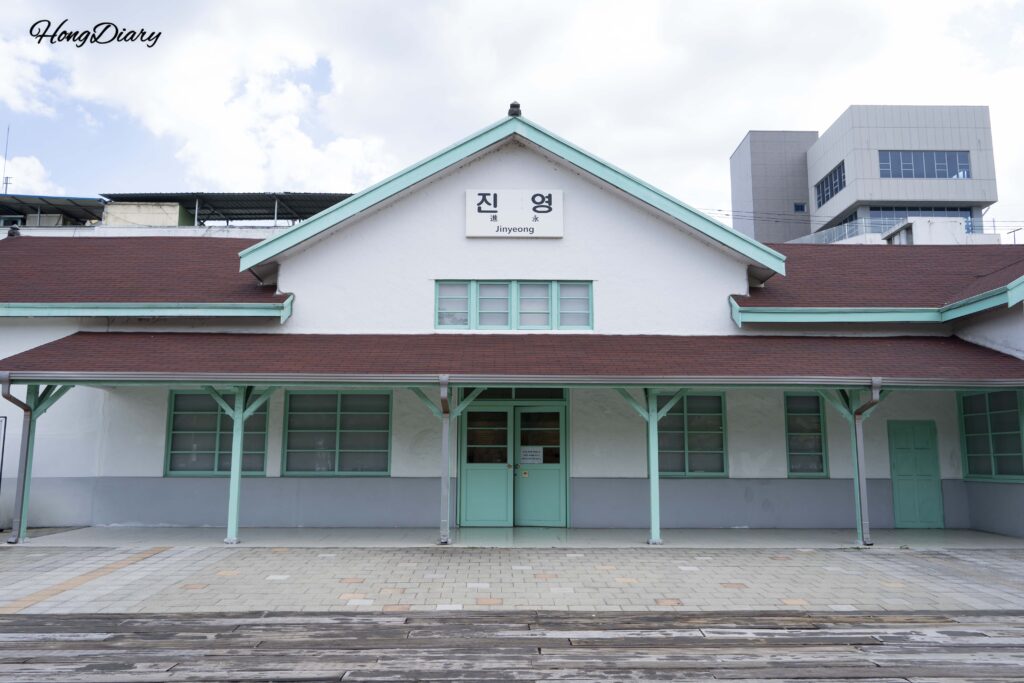
When the line was double-tracked in 2010, the station relocated to a modern building nearby, and this original 1943 structure was preserved and reopened as a public railway museum in October 2019 — making it the first registered public railway museum in the country. The area is also known for something entirely unrelated: dangam, a sweet and crisp variety of persimmon eaten fresh rather than dried. Jinyeong has been one of Korea’s primary persimmon-growing regions for over a century, and as you will see inside the museum, that story is more connected to this station than you might guess.
Exhibition Hall 1: A Century of Rail History Inside a 1943 Station
Walking up to the entrance, the first thing that stands out is how compact the station building is. With its low roofline, wooden-framed windows, and that faded mint-green exterior, it looks exactly like what it is — a rural Korean train station from a completely different era. Rather than renovating it into something modern, the city kept the 1943 structure intact and turned the interior into a chronological exhibition.
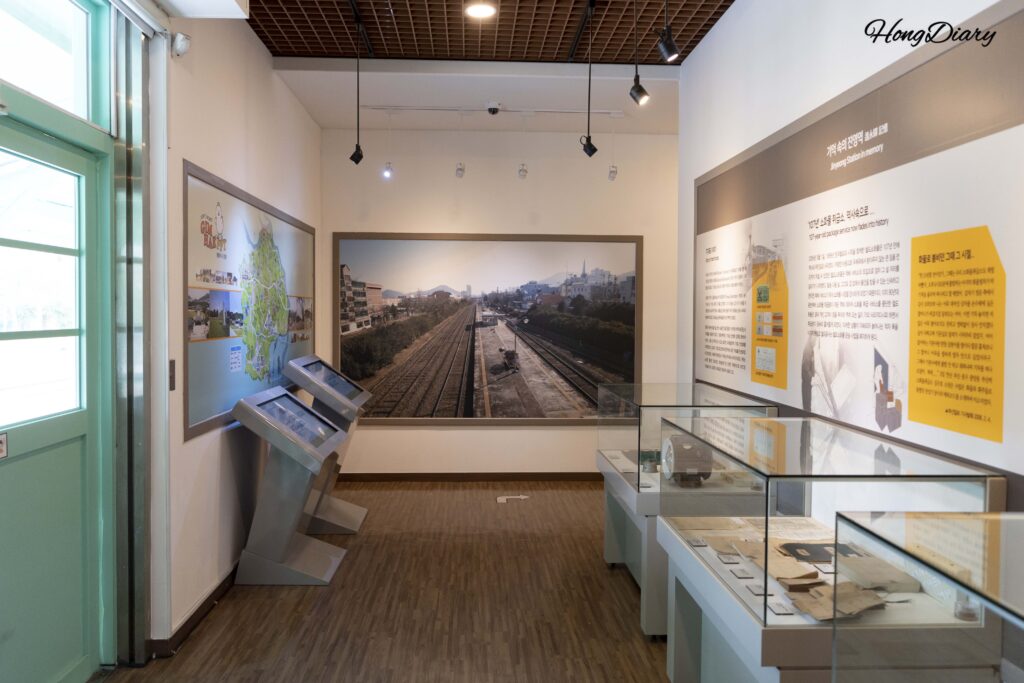
The front hall is set up as a recreation of the station’s old waiting room. A departure timetable hangs on the wall, a route map shows the Gyeongjeon Line as it looked decades ago, and a set of benches faces a ticket window that no longer sells anything. Activity worksheets are available near the entrance for younger visitors — a useful tool if you want to give a child something to focus on while you read the wall panels.
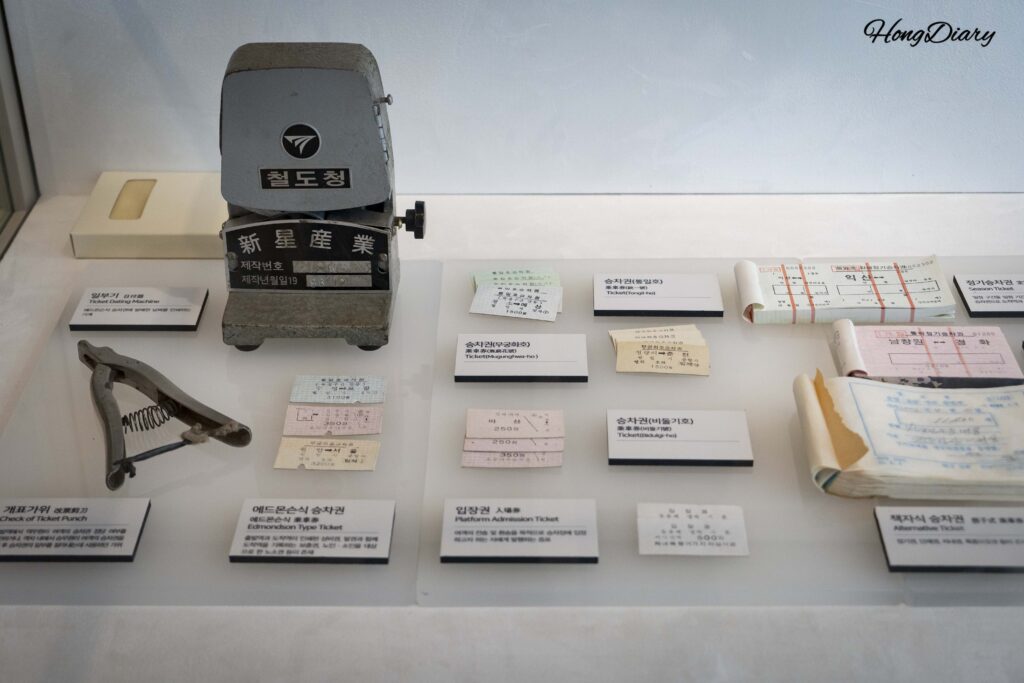
Along the walls, the exhibition traces Jinyeong Station’s 100-plus years through photographs, documents, and donated artifacts. Old paper train tickets sit behind glass alongside a manual ticket punch, a station clock, and various operational tools that station staff once used daily.
The Train Conductor Simulator
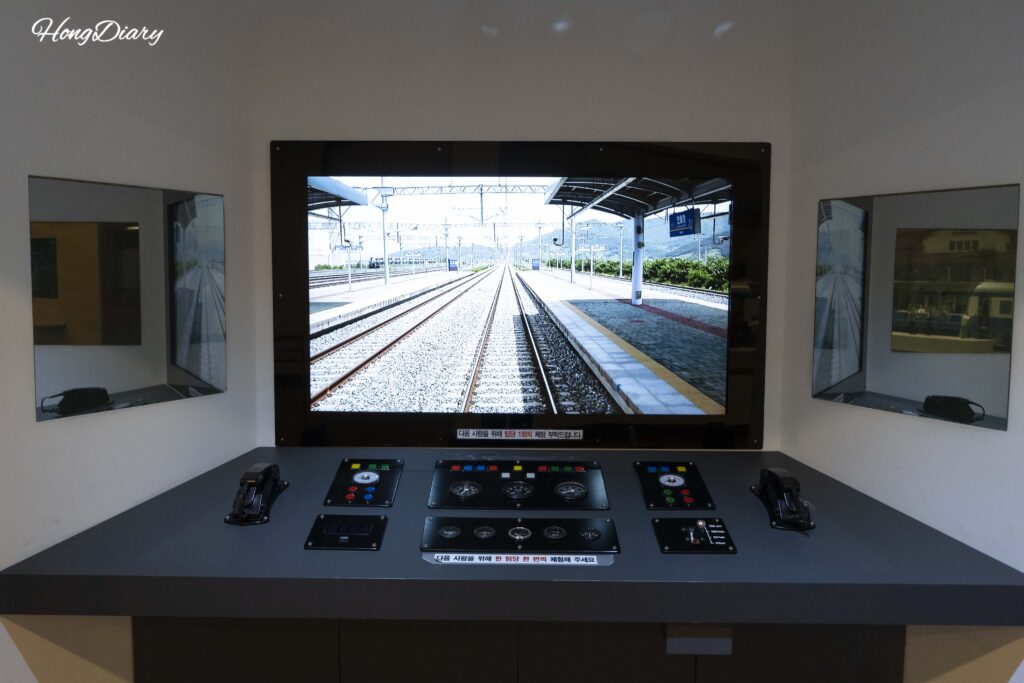
The standout feature for kids — and honestly, for most adults too — is the train conductor experience. You sit at a mock control panel while footage filmed from the front of a real Mugunghwa-ho plays on a screen ahead of you. Mugunghwa-ho is Korea’s standard express train service, roughly comparable to a regional or intercity rail class in Europe or the US. The video captures the sound of the engine and the rattle of the tracks, and the controls respond to your inputs — throttle, brake, horn. It is simpler than the high-end simulators at larger railroad museums, but it is free and genuinely entertaining for a few minutes.
From Station Masters to Persimmon Farmers
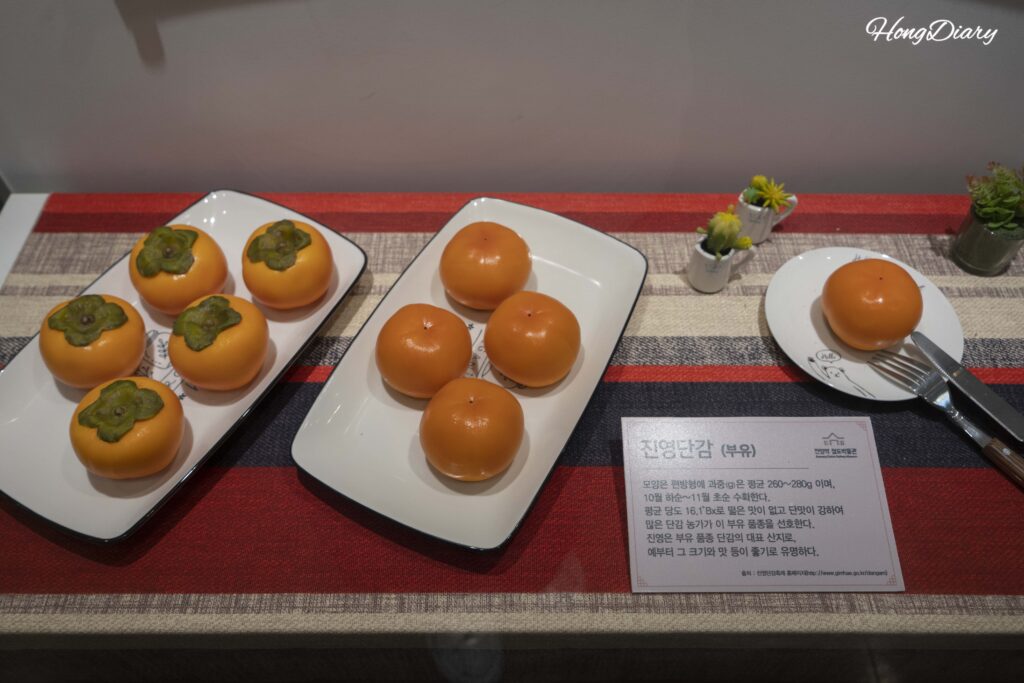
One display panel tells a story I did not expect to find in a railway museum. Jinyeong’s defining local product — those sweet dangam persimmons you will see on road signs and shop fronts throughout the township — traces back to this station. The person who first cultivated the fruit in this region was a former station master here, and the seedlings were shipped to farms across the country by rail from this very platform. It is one of those oddly specific historical details that ties an entire community’s identity to a single building.
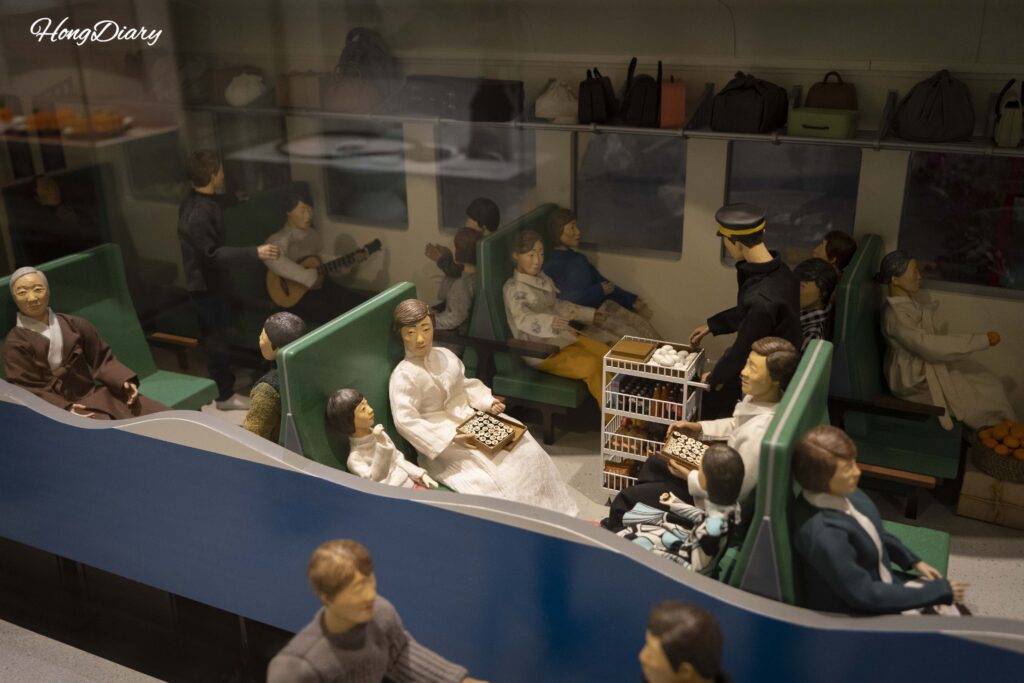
Elsewhere in the hall, a scale model recreates the interior of a vintage Korean railcar, with tiny seated passengers capturing what a journey on this line might have looked like decades ago. Nearby, a recreated scene of old Jinyeong Station gives you a feel for what the place looked like during its operating years.
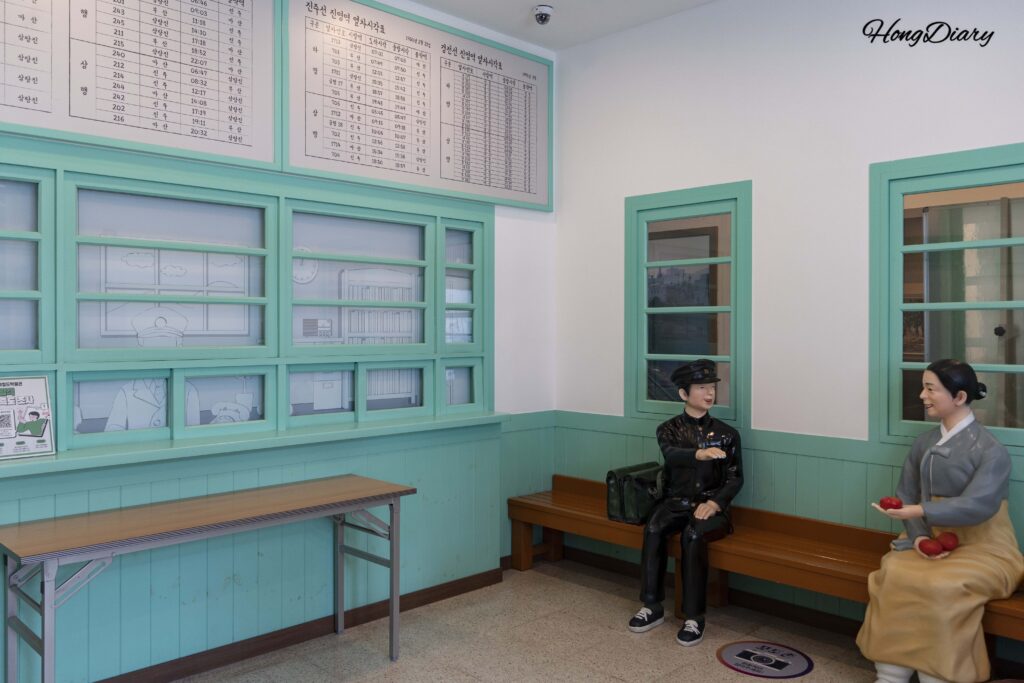
Exhibition Hall 2: A Miniature Jinyeong on Rails
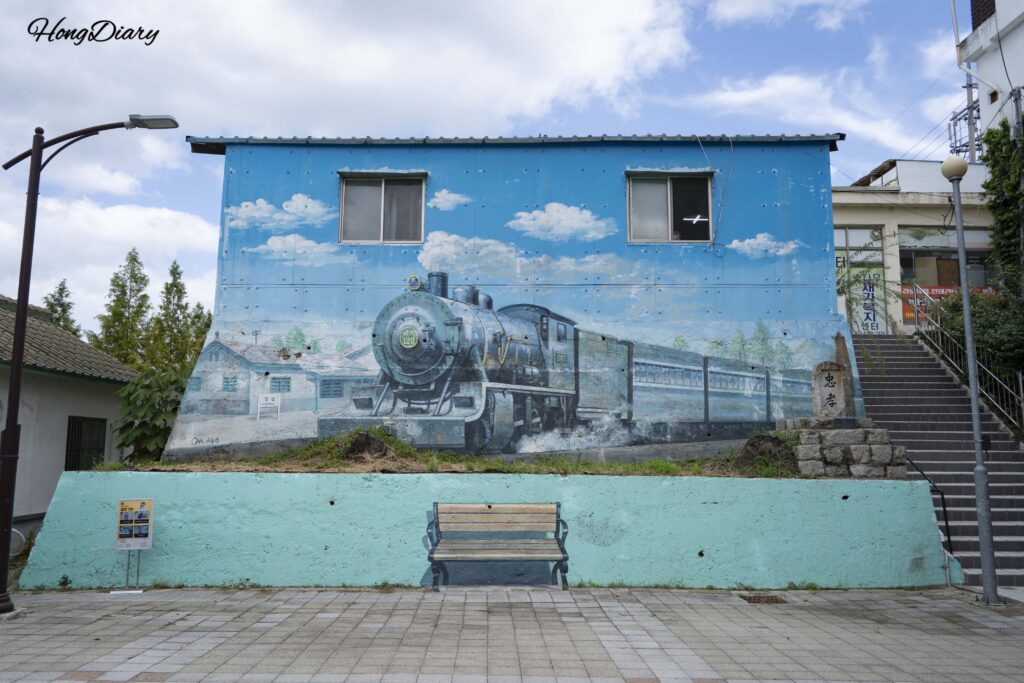
Stepping outside and crossing to the adjacent building, you pass a colorful railway-themed mural painted across the wall of an older structure — one of several retro photo spots scattered around the grounds.
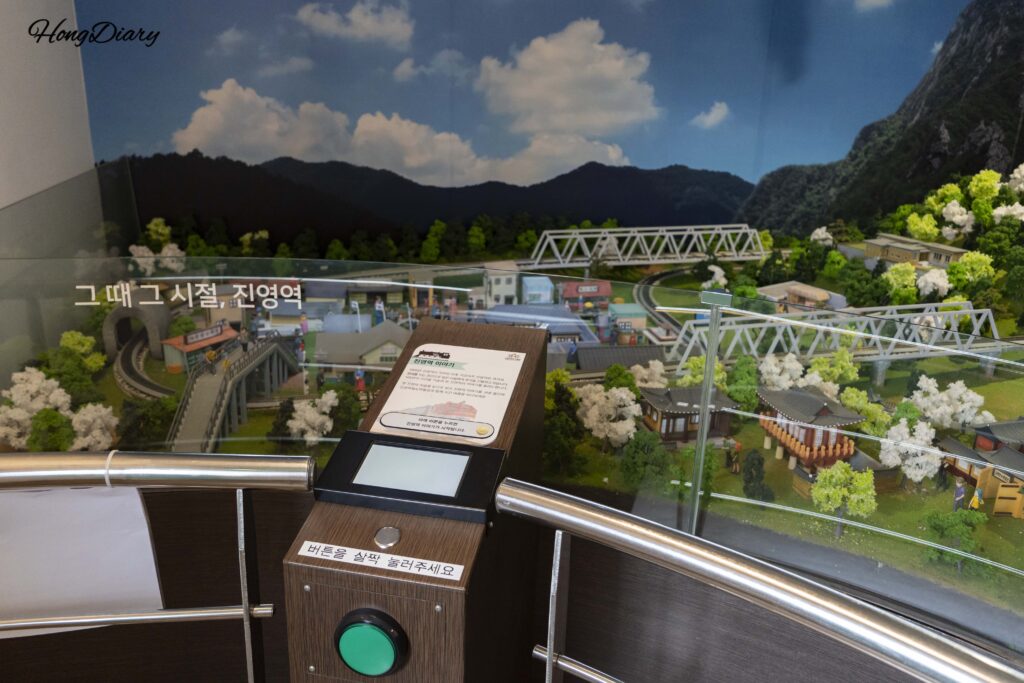
The second exhibition hall is a single room, but it held my attention the longest. A detailed diorama fills much of the floor space, recreating old Jinyeong in miniature: narrow alleys between tiled-roof houses, small storefronts, the station platform, and a model train that runs on a fixed schedule. It operates every 30 minutes for a 3-minute cycle, starting at 09:00 with the last run at 17:30. The mechanism is prone to occasional breakdowns — a reality of running a specialized exhibit in a small-town museum — so the fixed timetable helps keep it running. Catching even one cycle is worth the short wait.
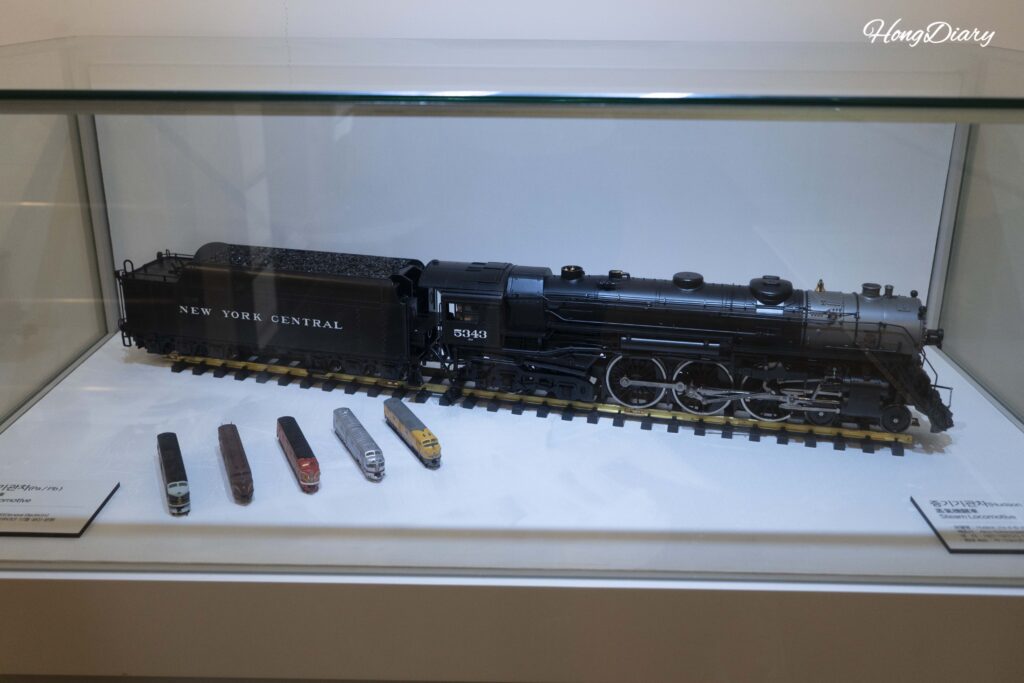
A separate display case holds a finely detailed model of a steam locomotive, the kind that would have pulled carriages through Jinyeong Station in its earliest decades.
Climbing Aboard: The Retired Train and Honeybee Travel Cafe
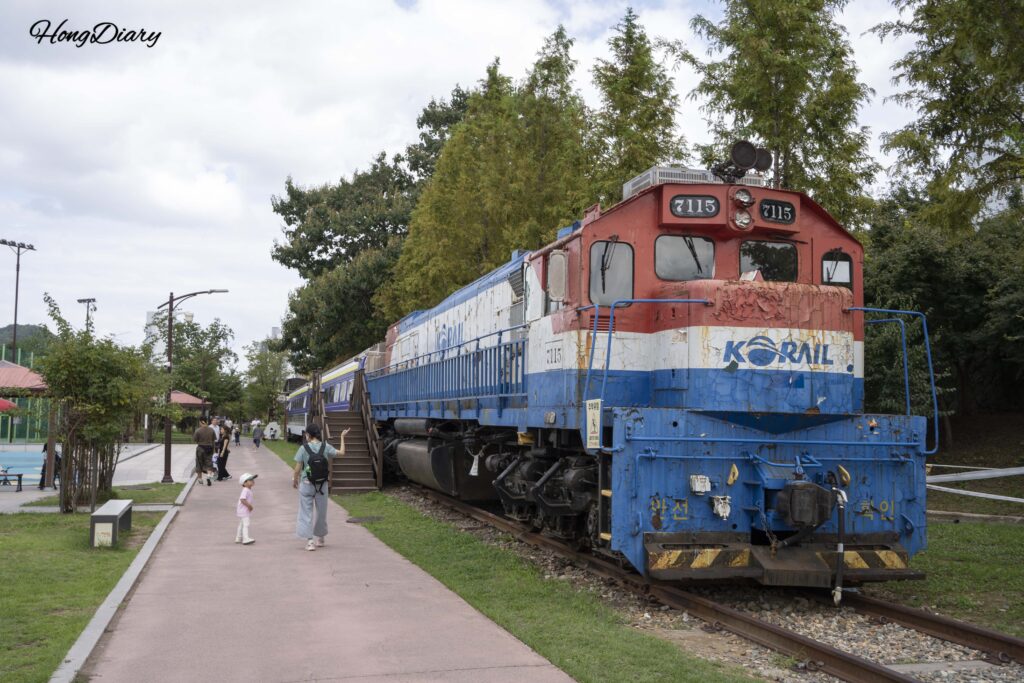
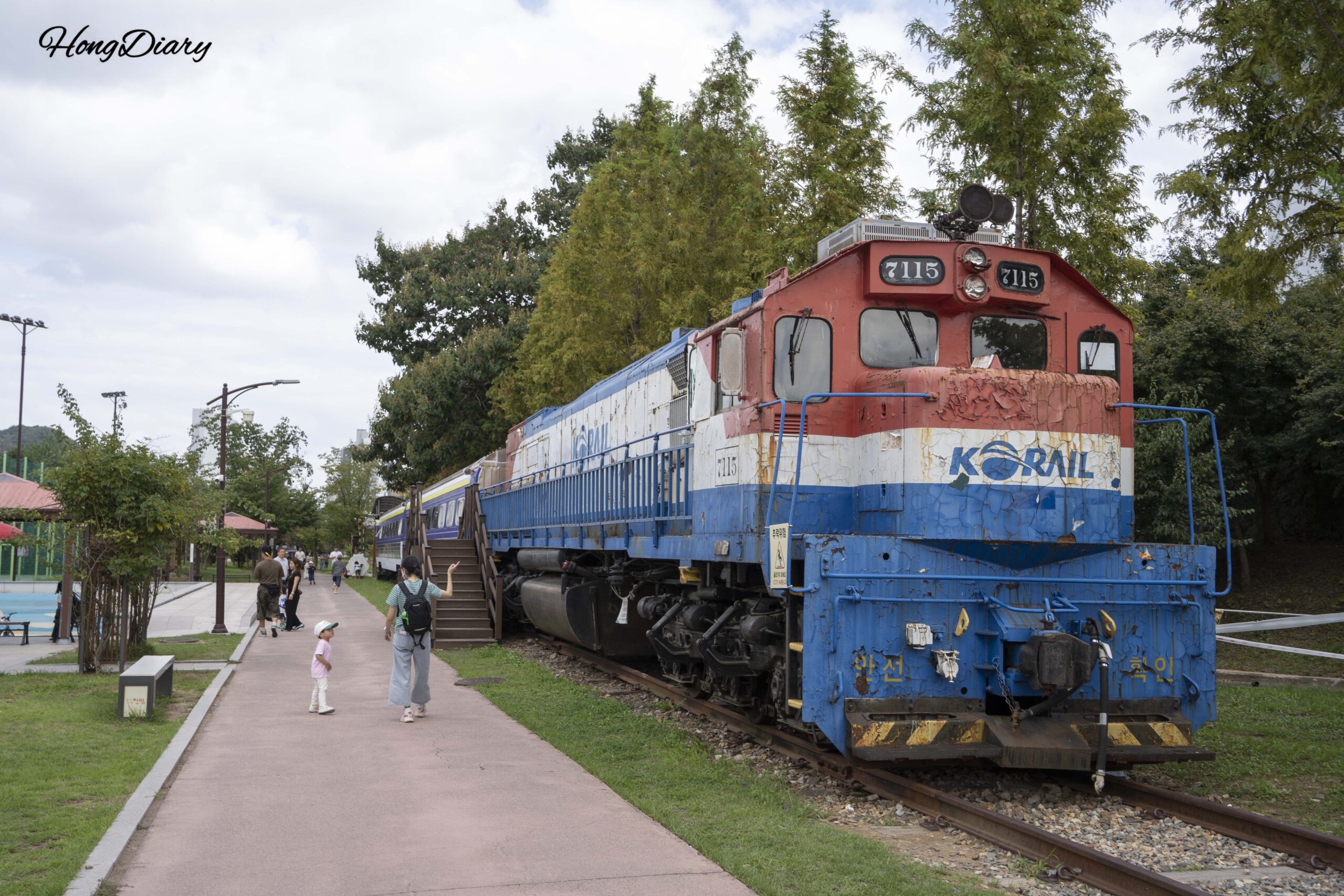
The real draw for younger visitors — and anyone who just wants to see a train up close — sits right outside. A complete retired Mugunghwa-ho train is parked on a short stretch of preserved track in the park: diesel locomotive No. 7115 up front, painted in Korail’s red, white, and blue livery, with passenger cars coupled behind it. The whole thing is one connected unit, and you can walk through from end to end. A small detail that might catch the eye of American visitors: locomotive No. 7115 is a GM EMD GT26CW model, built in La Grange, Illinois in 1975 and exported to Korea as part of a batch of 20 units. It spent decades hauling passengers along routes like this one before ending up here.
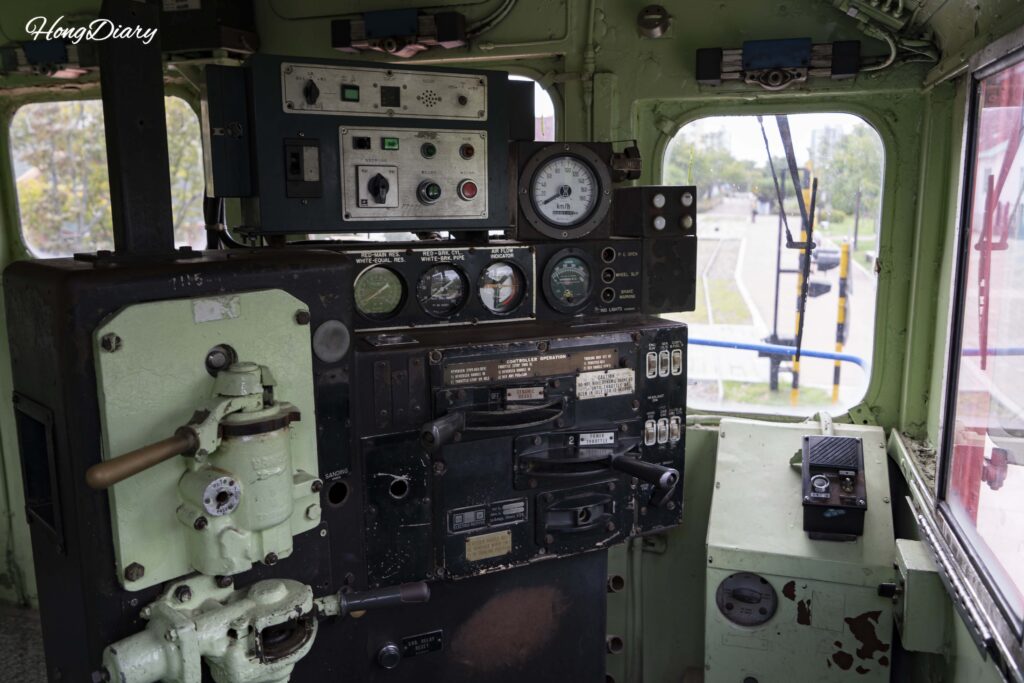
You can walk through the carriages freely, and the locomotive cab at the front is open for anyone to step inside. The instrument panel, the throttle levers, the narrow windshield looking out over the empty track — it is a perspective most passengers never see, and even with zero knowledge of rail engineering, standing in that cab and looking down the line is one of those moments that makes you pause.
Honeybee Travel Train Cafe
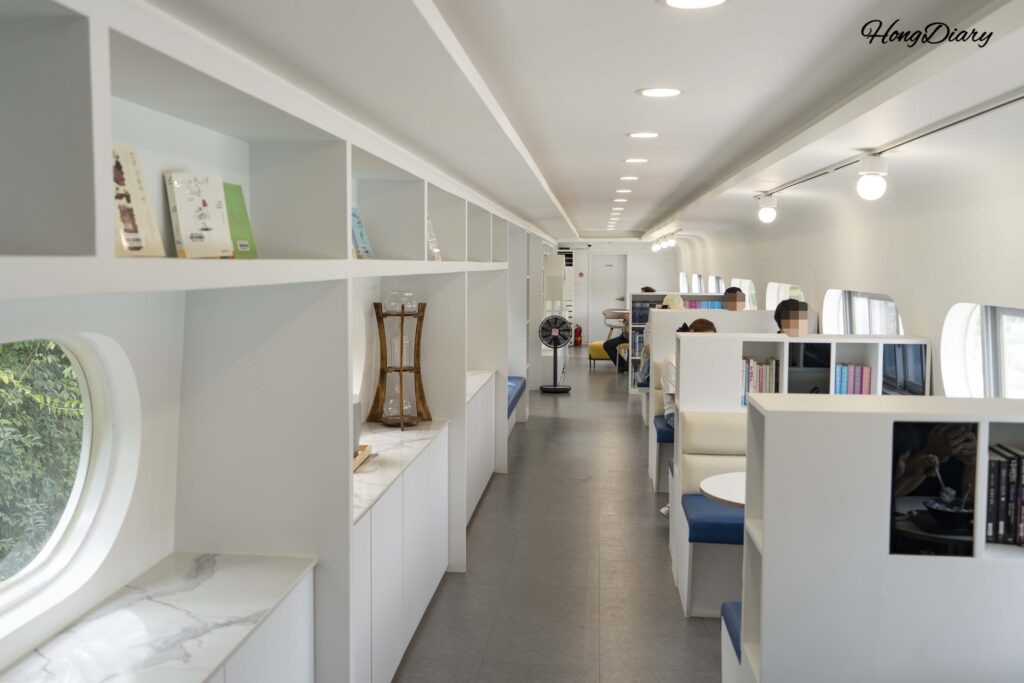
One of the passenger cars behind the locomotive has been converted into a small cafe called Honeybee Travel Train Cafe (Kkulbeol Yeohaeng Gicha Cafe in Korean). The interior keeps the original train layout — window-side seating, overhead luggage racks — with cafe tables and a counter fitted in between. It is a small, slightly eccentric spot to sit with a coffee after the exhibits, and the experience of drinking an iced latte inside a railcar that once carried actual passengers along this line has a charm that is hard to replicate.
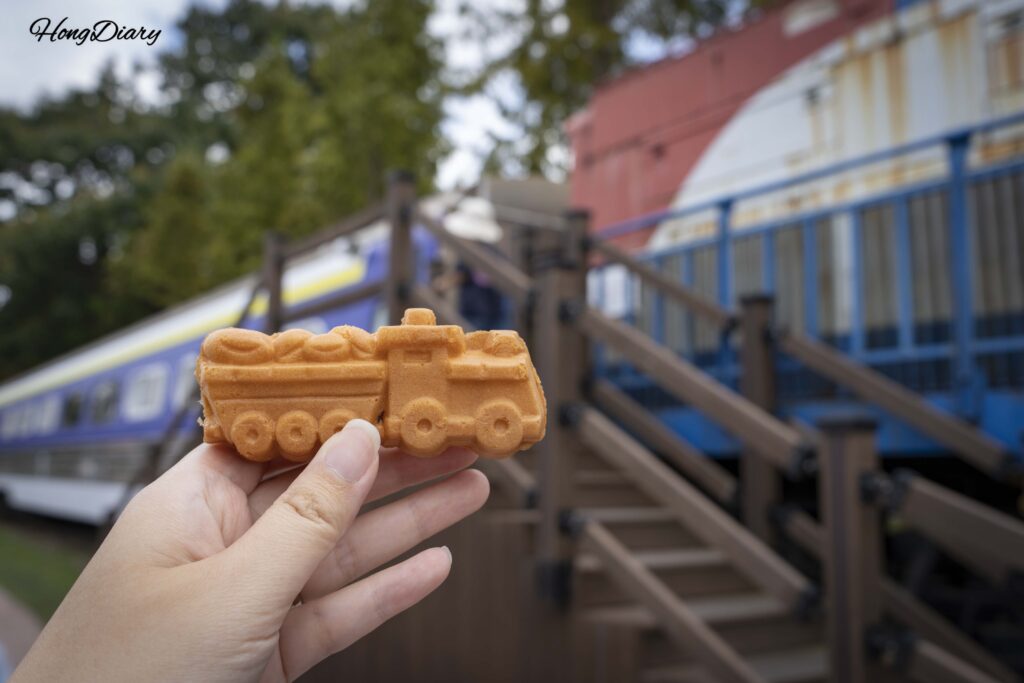
The signature item is the Railway Bread (gicha-ppang) — a small custard cream-filled pastry loosely shaped like a train car. At ₩1,500 (~$1.07 / €0.95) per piece, it qualifies as one of the cheapest souvenir snacks at any Korean attraction.
Honeybee Travel Train Cafe — Selected Menu
| Item | Price (KRW) | USD | EUR |
|---|---|---|---|
| Americano (Hot / Iced) | ₩2,000 / ₩2,500 | $1.43 / $1.79 | €1.27 / €1.59 |
| Railway Bread (custard pastry, signature) | ₩1,500 | $1.07 | €0.95 |
| Mini Donuts (2 pcs) | ₩1,500 | $1.07 | €0.95 |
| Mango Bingsu (Korean shaved ice dessert) | ₩8,000 | $5.71 | €5.08 |
Specialty lattes, fruit ades, and smoothies range from ₩2,500 to ₩5,500 (~$1.79–$3.93 / €1.59–€3.49). Desserts run between ₩1,000 and ₩5,000 (~$0.71–$3.57 / €0.63–€3.17). The cafe is open from 11:30 to 18:30 and closed on public holidays, so its hours are slightly shorter than the museum itself. As with most cafes in Korea, each person is expected to order at least one item if sitting inside.
Jinyeong History Park and the Match Museum
The museum sits inside Jinyeong History Park, a compact public space that also includes a playground, walking trails, tennis and basketball courts, and a small outdoor performance stage. If you are here with kids, the park adds an easy 30 minutes to an hour of downtime after the indoor exhibits — plenty of room for them to run around while you sit on a bench and take in the quiet of a Korean small town.
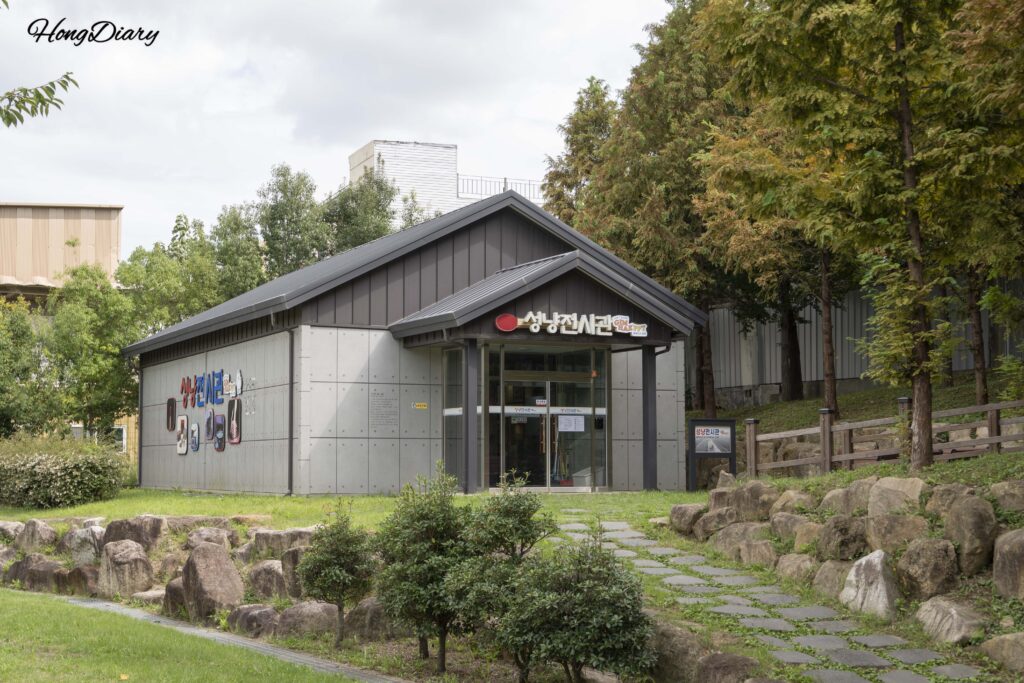
On the east side of the park, a separate building houses the Match Museum, also operated by Jinyeong Railway Museum and also free to enter. Korea’s last matchstick factory — Gyeongnam Industrial Corporation — was based right here in Jinyeong and ran until it finally closed in 2017. The museum displays the original manufacturing equipment, production tools, and a collection of vintage matchbox designs spanning several decades.
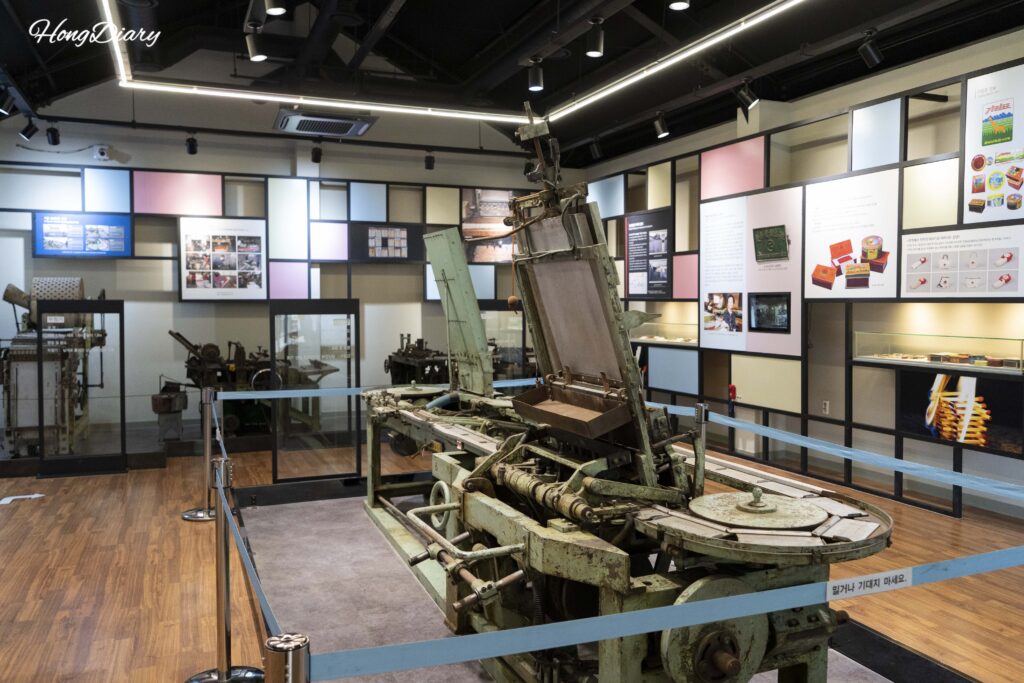

For anyone under 30, a matchstick might already feel like a relic from a previous century — which is precisely what makes this small exhibit interesting. Seeing the actual machinery that cut, coated, and boxed millions of thin wooden sticks, and browsing the graphic designs printed on old matchboxes, offers a brief and surprisingly engaging look at an industry that quietly disappeared.
Is Jinyeong Railway Museum Worth the Trip?
I want to be straightforward about this. Jinyeong Railway Museum is not the kind of destination you would build an entire day around if you are visiting Korea on a tight schedule. The exhibition halls are compact, the diorama runs on a fixed 30-minute cycle, and the content — while carefully put together — leans heavily toward local history rather than anything large-scale. If you are based in Busan and already have a packed week, the 90-minute transit journey here is a hard sell.
But that framing misses what a place like this actually does well. What Jinyeong Railway Museum offers is something larger attractions often cannot: an unfiltered, unpretentious look at a piece of Korean life most visitors never encounter. A 1905 station building that still stands. A retired train you can walk through at your own pace. A cafe inside a railcar where a custard pastry costs about a dollar. A miniature diorama of a town most people have never heard of, with a model train that loops for three minutes every half hour. It is the kind of place that rewards curiosity over spectacle.
If you are staying in the Gimhae area, have access to a car, or simply want something far from the usual Busan tourist circuit, this makes for an easy and completely free half-day outing — especially with children.
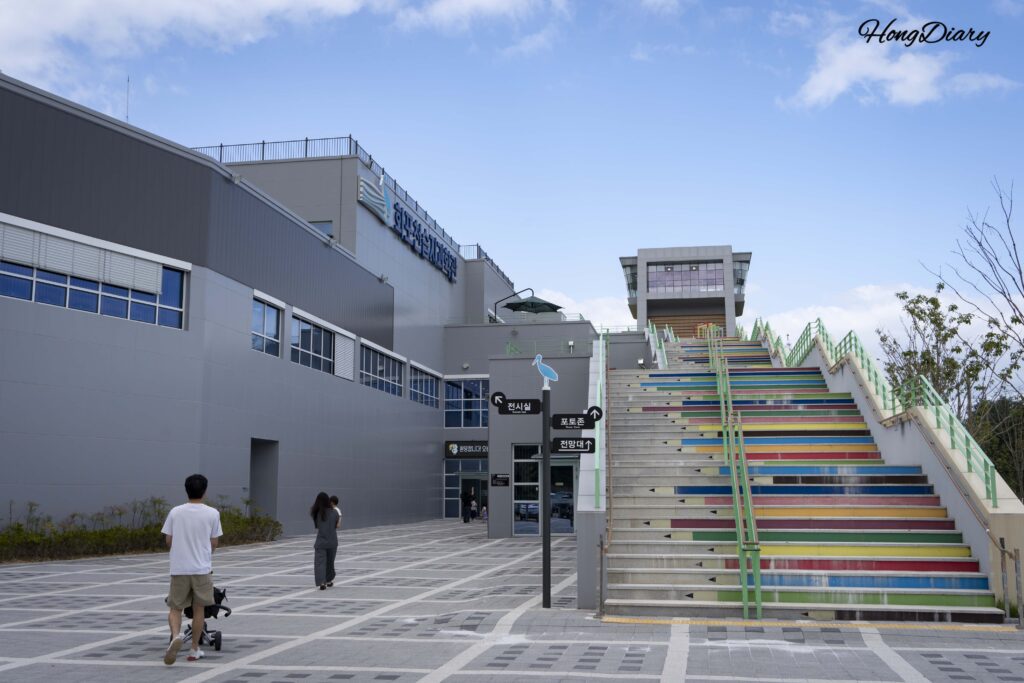
There is another free spot worth pairing with this visit if you have the time: Hwapocheon Wetland Science Museum, located in the same Jinyeong township, just a 10-minute bus ride or 20-minute walk from the railway park.
It sits alongside Hwapocheon, Korea’s largest river wetland and a Ramsar-designated conservation site (Ramsar is an international treaty that protects ecologically significant wetlands worldwide), with exhibits covering the local ecosystem in a way that works for both adults and younger visitors.
And if your day wraps up with a ride back to Gimhae Airport for your flight out, it helps to know what your dining options look like before clearing security.
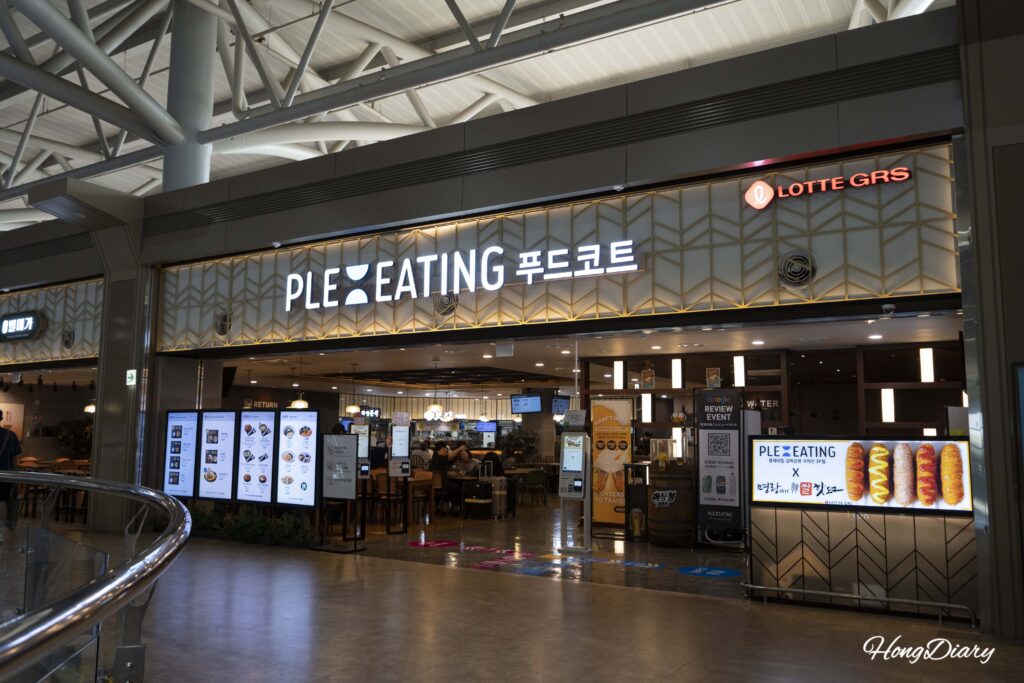
I put together a separate guide to the restaurants and cafes inside Gimhae Airport’s international terminal, covering the food court and shops on the departures level — handy if, like me, you end up eating your last Korean meal right there at the gate.
Jinyeong Railway Museum is small, quiet, and honest about what it is. Sometimes that is exactly the right speed for a day out.
Frequently Asked Questions (FAQ) & Practical Tips for Visiting Jinyeong Railway Museum
Is Jinyeong Railway Museum free to visit?
Yes. There is no admission fee for the railway museum, the Match Museum, or any of the outdoor exhibits including the retired Mugunghwa-ho train. The only potential cost is parking: the dedicated lot offers the first hour free, followed by ₩200 ($0.14 / €0.13) for every additional 10 minutes, with a daily cap of ₩6,000 ($4.29 / €3.81). If you visit for under an hour, parking is also completely free.
Prices converted at approximately $1 USD ≈ ₩1,400 / €1 EUR ≈ ₩1,575 (September 2026).
What are the opening hours and closed days for Jinyeong Railway Museum?
The museum is open daily from 09:00 to 18:00, with last entry at 17:30. It is closed every Monday, on January 1, and on major Korean national holiday days (such as Lunar New Year and Chuseok). If a Monday happens to fall on a public holiday, the museum closes on the next regular business day instead. Note that the Honeybee Travel Train Cafe on site has slightly different hours: it opens at 11:30 and closes at 18:30, and is closed on public holidays.
How do I get to Jinyeong Railway Museum from Gimhae Airport or Busan?
From Gimhae International Airport, take the Busan–Gimhae Light Rail from Airport Station to Gaya University Station (approximately 35 minutes, 17 stops). Take Exit 1, walk about 450 meters (~10 minutes) to the Joeungeumgang Hospital bus stop, and board Bus 140. Ride for roughly 30 to 35 minutes (26 stops), get off at the Junggu stop, and walk 140 meters (3 minutes) to the museum entrance. The full journey takes about 1 hour and 30 minutes. By taxi from the airport, the drive is roughly 35 to 40 minutes depending on traffic, and the fare runs around ₩40,000 ($28.57 / €25.40).
Is Jinyeong Railway Museum suitable for young children?
Yes, and it is one of the better free options in the Gimhae area for families with kids. Highlights include a train conductor simulator that plays real onboard footage from a Mugunghwa-ho (Korea’s standard express train), a miniature diorama with a model train that runs every 30 minutes, and a retired Korail train outside where children can climb into the actual locomotive cab. The surrounding Jinyeong History Park adds a playground, open green space, and walking paths. All areas are free, and there are no age or height restrictions. Exhibit signage is in Korean only, but the museum is almost entirely visual and hands-on, so language is not a barrier.
What is the Honeybee Travel Train Cafe at Jinyeong Railway Museum?
The Honeybee Travel Train Cafe is a small cafe built inside one of the passenger cars of a retired Korail train parked on the museum grounds. It keeps the original train interior layout with added cafe seating and a counter. An Americano starts at ₩2,000 ($1.43 / €1.27) for hot and ₩2,500 ($1.79 / €1.59) for iced. The cafe’s signature item is the Railway Bread — a small custard cream-filled pastry shaped like a train car, priced at ₩1,500 ($1.07 / €0.95) per piece. Other menu items, including lattes, fruit ades, smoothies, and desserts, range from ₩1,000 to ₩8,000 ($0.71–$5.71 / €0.63–€5.08). The cafe is open from 11:30 to 18:30 and closed on public holidays — slightly shorter hours than the museum itself. One order per person is required to sit inside, which is standard practice at Korean cafes.
How long should I plan to spend at Jinyeong Railway Museum?
A thorough visit covering both exhibition halls, the outdoor Mugunghwa-ho train, the Honeybee Travel Train Cafe, and the Match Museum typically takes around 1.5 to 2 hours. If you are visiting with children and plan to use the park’s playground and walking paths, add another 30 minutes to an hour. The diorama train in Exhibition Hall 2 runs every 30 minutes for 3-minute cycles (from 09:00 to 17:30), so factor in a short wait if you want to see it in action.
What is the Match Museum near Jinyeong Railway Museum?
The Match Museum is a small, free exhibition space located on the east side of Jinyeong History Park, operated by the same institution as the railway museum. It preserves the original manufacturing equipment, production tools, and vintage matchbox designs from Gyeongnam Industrial Corporation — Korea’s last matchstick factory, which was based in Jinyeong and operated until it closed in 2017. The museum is included in the same visit, requires no separate admission, and follows the same opening hours as the railway museum.