
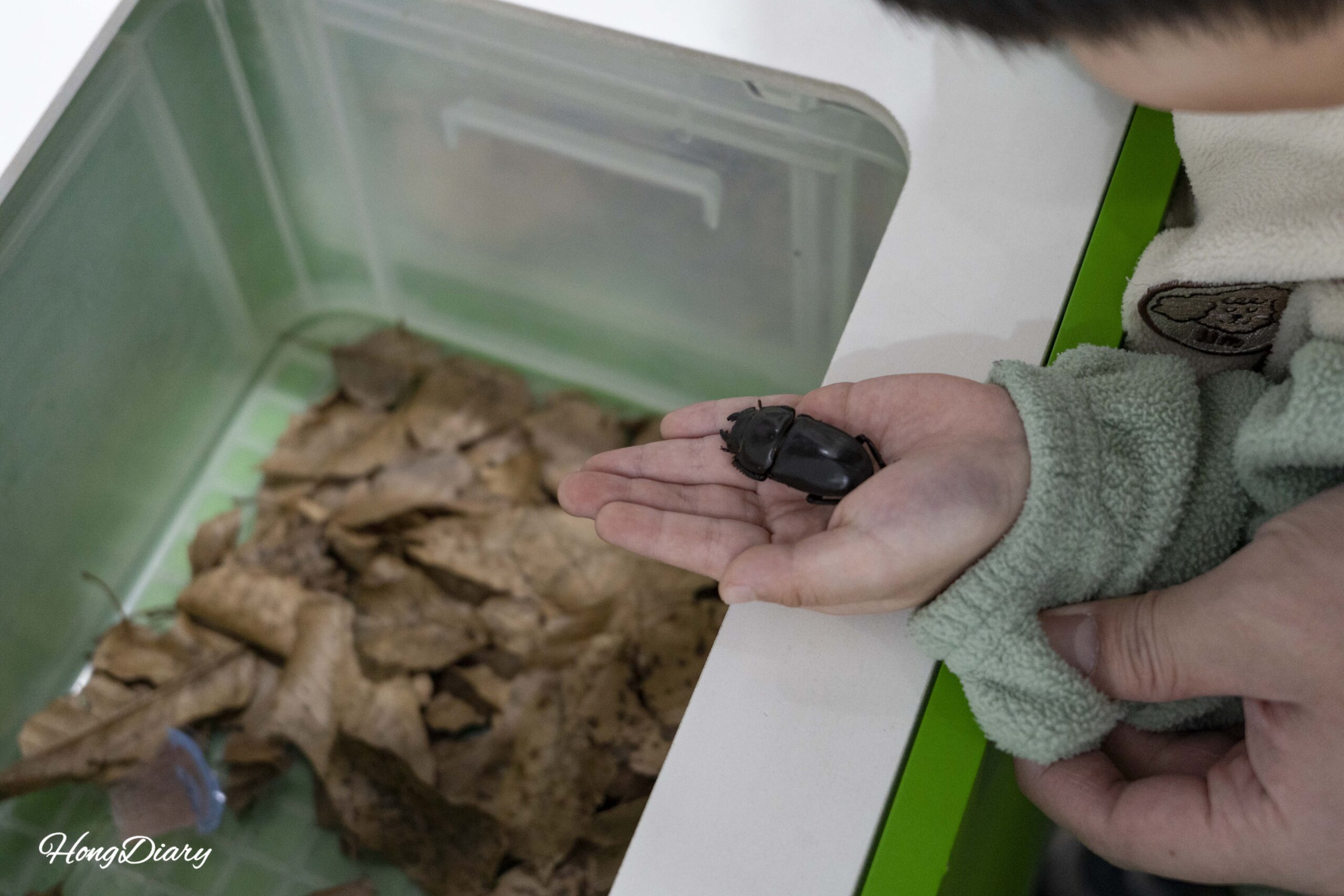
I came to Changnyeong for Upo Wetland — Korea’s largest inland marsh, migratory birds, peaceful trails. But with a toddler in tow and no real plan for how to experience the area with a small child, I ended up at Changnyeong Upo Insect World instead. Two packed exhibition floors, a tropical greenhouse, and one cockroach room later, I walked out with a kid who would not stop talking about beetle larvae — and a personal trauma I still have not fully recovered from.
Table of Contents
Changnyeong Upo Insect World: Essential Visitor Information, Hours, and Admission Fees
| Detail | Info |
|---|---|
| Full Name | Changnyeong Upo Insect World (Changnyeong Ecological Insectarium) |
| Address | 333 Upo 2-ro, Daehap-myeon, Changnyeong-gun, Gyeongsangnam-do |
| Hours | Tuesday – Sunday, 10:00 AM – 5:00 PM (last entry at 4:00 PM) |
| Closed | Every Monday (regular weekly closure) |
| Adult Admission | ₩8,000 (~$5.71 USD / ~€5.08 EUR) |
| Child Admission | ₩5,000 (~$3.57 USD / ~€3.17 EUR) |
| Parking | Free |
| Note | No food or drinks allowed inside the exhibition halls |
| Nursing Room | Available on the 1st floor (microwave, water dispenser, diaper changing station) |
Prices converted at approximately $1 USD ≈ ₩1,400 / €1 EUR ≈ ₩1,575 (as of September 2026). Rates may fluctuate.
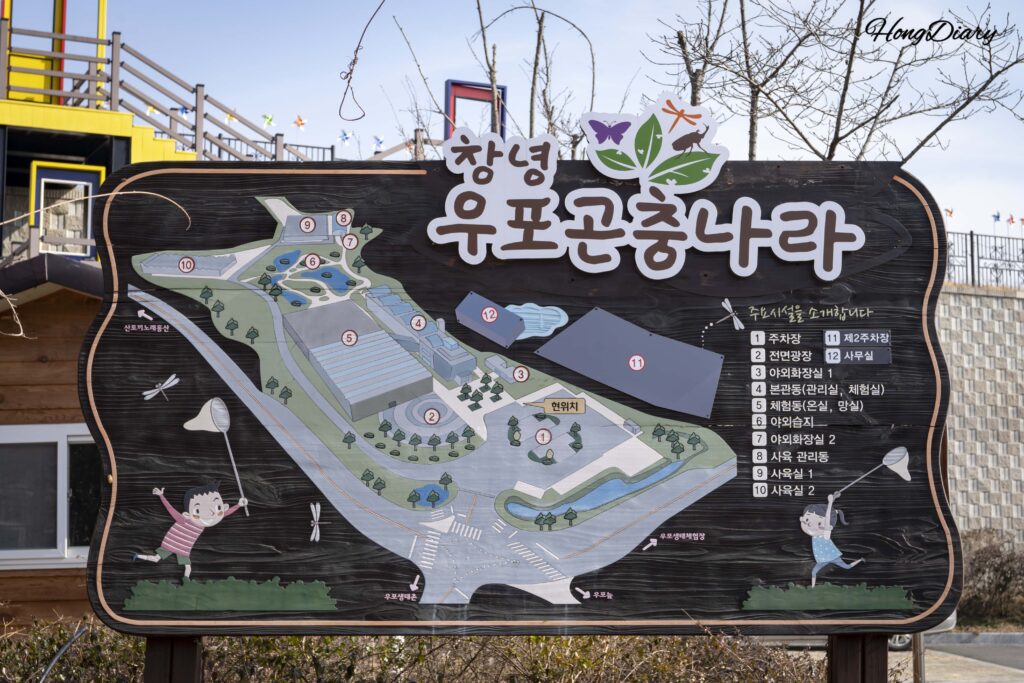
About Upo Wetland and Changnyeong
Changnyeong is a quiet, rural county in Gyeongsangnam-do (South Gyeongsang Province) in southeastern South Korea, roughly an hour’s drive west of Busan or about 40 minutes south of Daegu. Most international visitors have never heard of it, but the area holds one of the country’s most significant natural sites: Upo Wetland, a 2.3-million-square-meter natural marsh formed approximately 140 million years ago along the Nakdong River floodplain.
In October 2018, Changnyeong earned recognition as the world’s first Ramsar Wetland City at the 13th Conference of the Contracting Parties to the Ramsar Convention — a designation that puts it alongside globally protected wetlands. The entire Upo Wetland area is registered as Korean Natural Monument No. 524 and serves as a protected conservation zone. Changnyeong Upo Insect World was established right on the edge of this ecosystem in June 2018, originally built to support the conservation, restoration, and breeding of endangered wildlife species — though it quickly became a popular family destination in its own right.
How to Get There
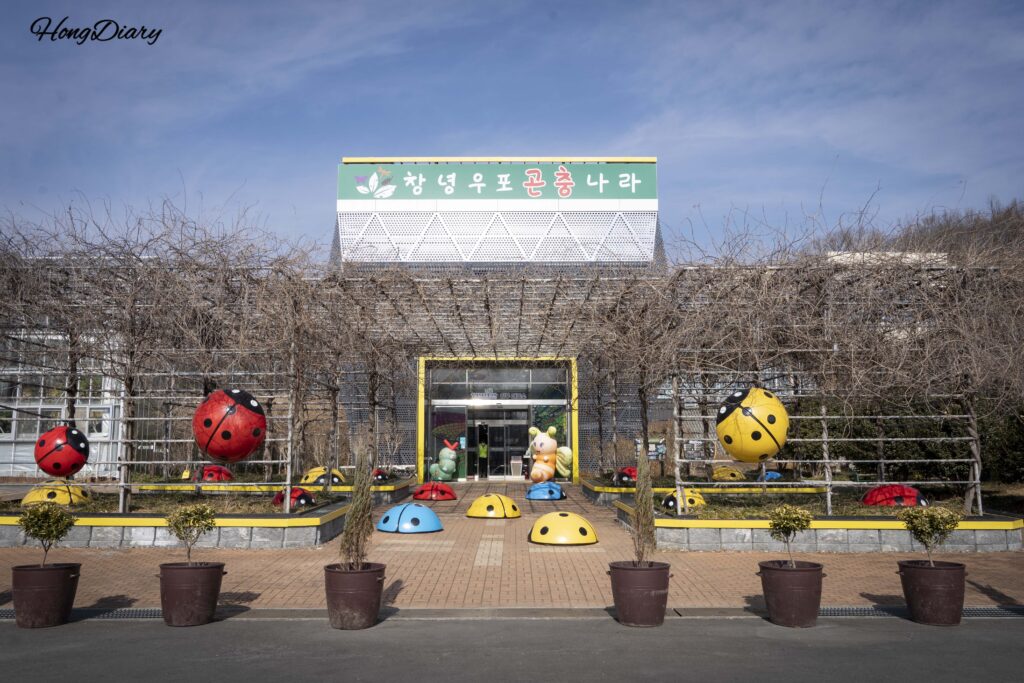
If you are relying on public transit, take a local bus from Changnyeong Intercity Bus Terminal. Walk about five minutes to the Yeongshin Bus Terminal stop, board Bus No. 9, and ride for approximately 15 minutes (eight stops) until you reach the Somok stop. From there, it is a short 150-meter walk to the entrance. That said, bus frequency is limited in rural Changnyeong, so renting a car or taking a taxi from the terminal is far more practical. The taxi ride covers about 10 kilometers and takes roughly 15 minutes, costing approximately ₩19,500 (~$13.93 USD / ~€12.38 EUR) one way.
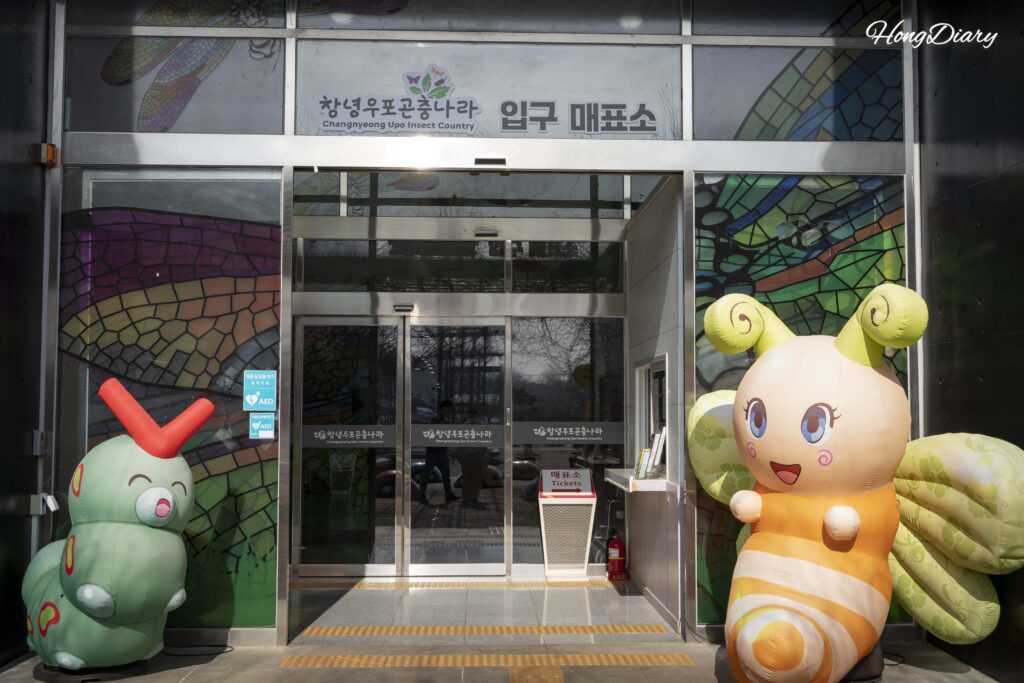
First Floor: Specimens, Fish Tanks, and a Beetle on My Hand
The museum is divided into two exhibition floors, a separate greenhouse, and a small outdoor wetland area — a larger setup than I expected for a rural county facility.
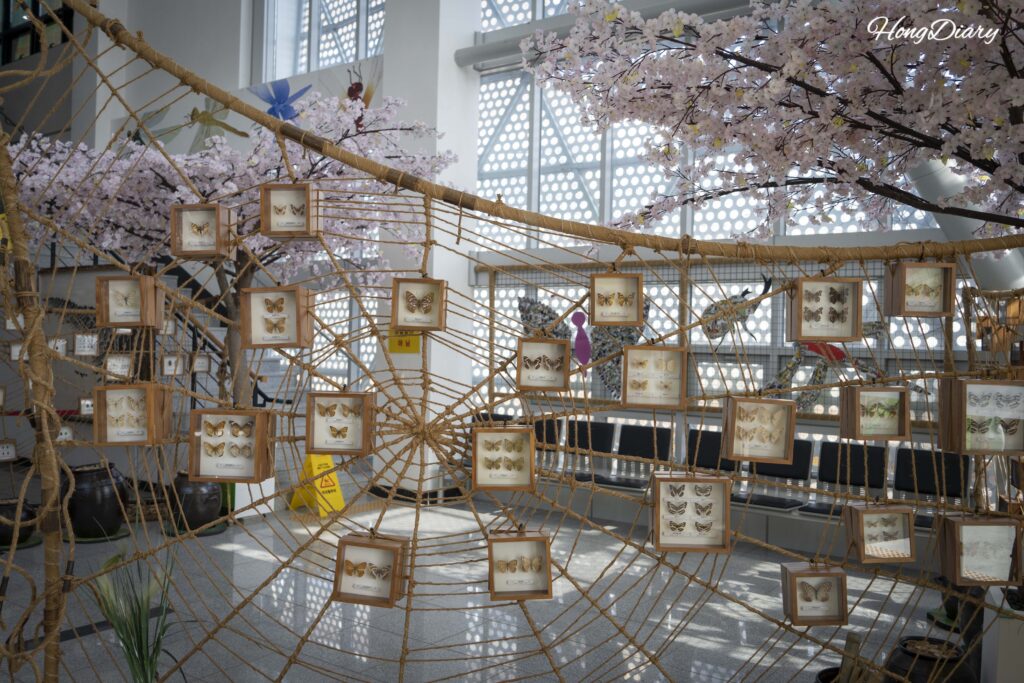
The moment you step into the lobby, the first thing you see is a display of butterfly specimens — dozens of framed collections hanging from woven ropes in an almost art-installation style arrangement. It sets the tone immediately: this is not a sterile science lab. It is a space designed for kids to explore at their own eye level.
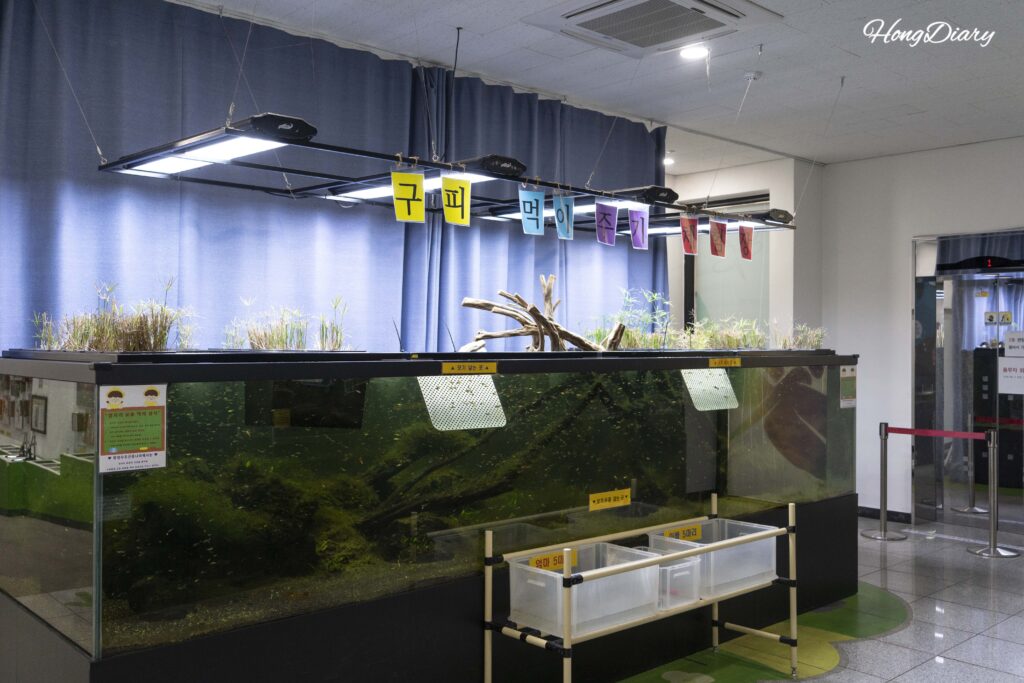
The first floor functions as the main specimen and aquarium area. Glass tanks line the corridors, housing live guppies, turtles, snails, and various small reptiles. One of the earliest interactive stations lets kids feed mosquito larvae to guppies — yes, real mosquito larvae dropped into a large aquarium full of hungry fish. My kid was mesmerized. The feeding experiences throughout the museum are all included in the admission price (₩8,000 / ~$5.71 USD / ~€5.08 EUR for adults, ₩5,000 / ~$3.57 USD / ~€3.17 EUR for children), which is a welcome detail considering how many Korean attractions charge separately for every single activity.
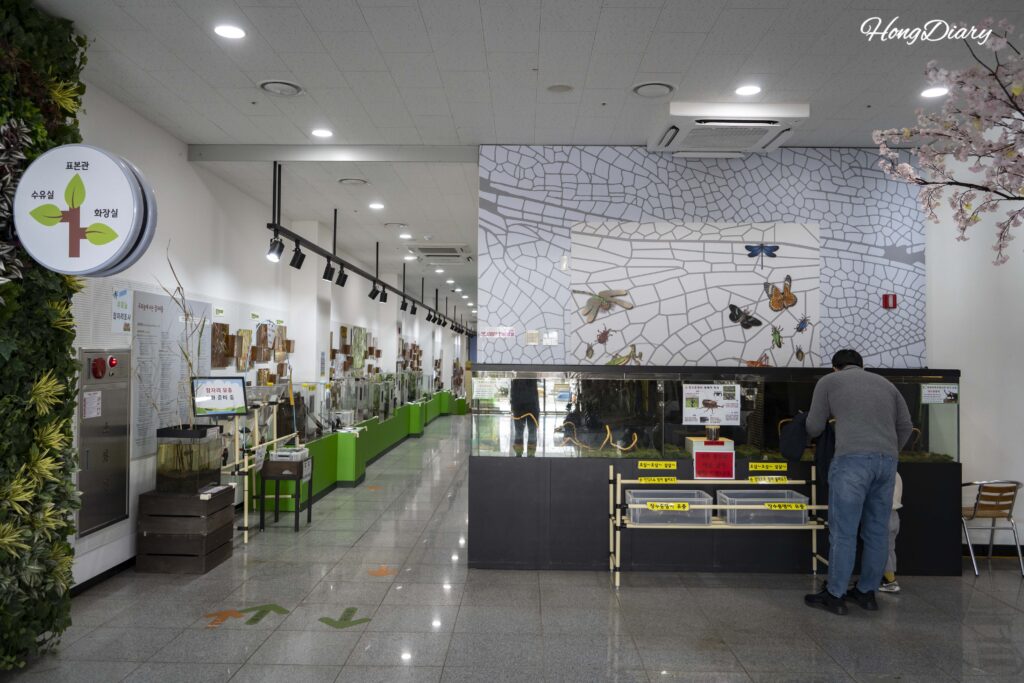
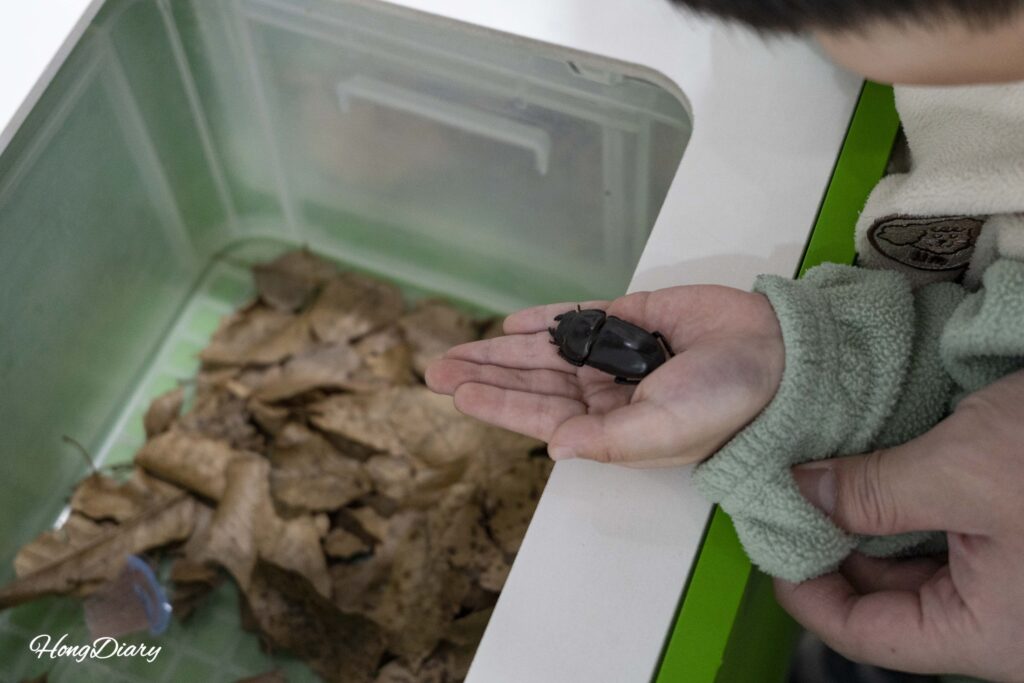
Further in, there is a station where you can hold a live rhinoceros beetle larva — a large, pale, grub-like creature roughly the size of your thumb. Rhinoceros beetles hold a special place in Korean and Japanese children’s culture; kids here grow up fascinated by them the way Western children obsess over dinosaurs. My toddler stared wide-eyed, touched one cautiously, and immediately wanted to hold another. Next to this station, a large open terrarium filled with stag beetles invites visitors to find the biggest one — a simple challenge that kept our child occupied for a solid ten minutes.
The specimen hall deeper inside the first floor displays insect collections from around the world. One particularly clever exhibit places insect figurines inside dark, enclosed boxes, and visitors reach in blindly to feel and guess what species they are touching. It is the kind of low-tech, tactile design that genuinely works — no screens, no gimmicks, just your hands and your nerve.
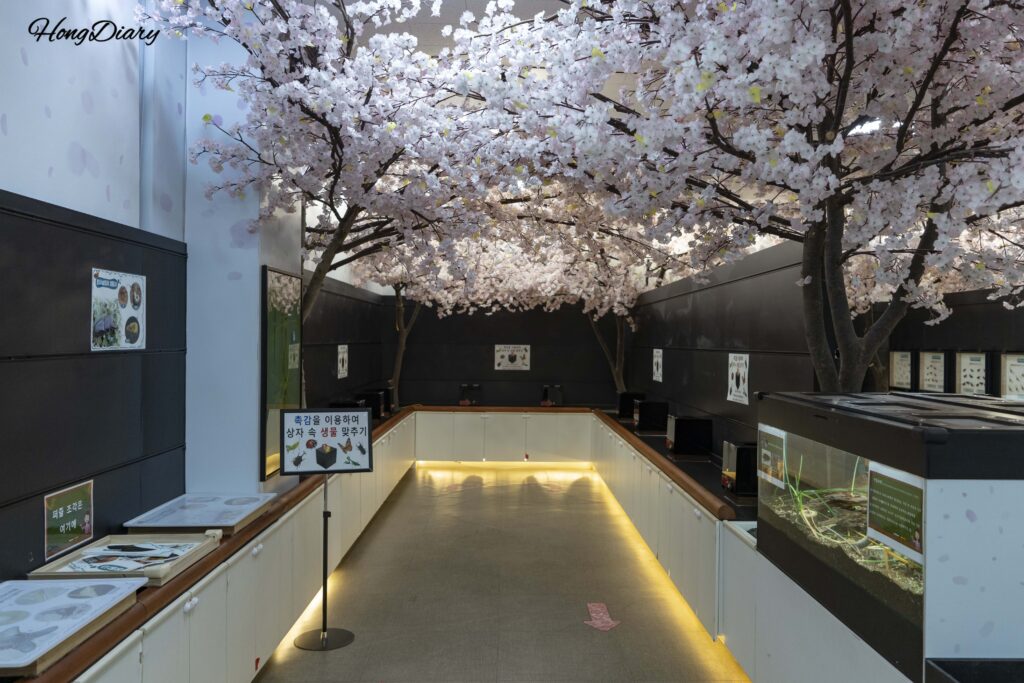
There is also a freshwater fish section showcasing species native to Korean rivers, including the Korean rose bitterling and the Korean striped bitterling — small, colorful freshwater fish you would never encounter in a typical aquarium abroad. A dragonfly larva identification corner rounds out the first floor, and by this point we had already spent well over an hour without realizing it.
One honest note: my husband, who keeps diamondback terrapins at home in a large aquarium, pointed out that a common musk turtle on display was kept in a small, dry acrylic enclosure without adequate water — a concern for a semi-aquatic species. This is a government-operated facility with professional staff, so it was disappointing to see that particular setup. The rest of the live animal habitats seemed reasonably maintained, but it is worth mentioning for anyone who cares about animal welfare standards.
Second Floor: Live Encounters and the Room That Nearly Broke Me
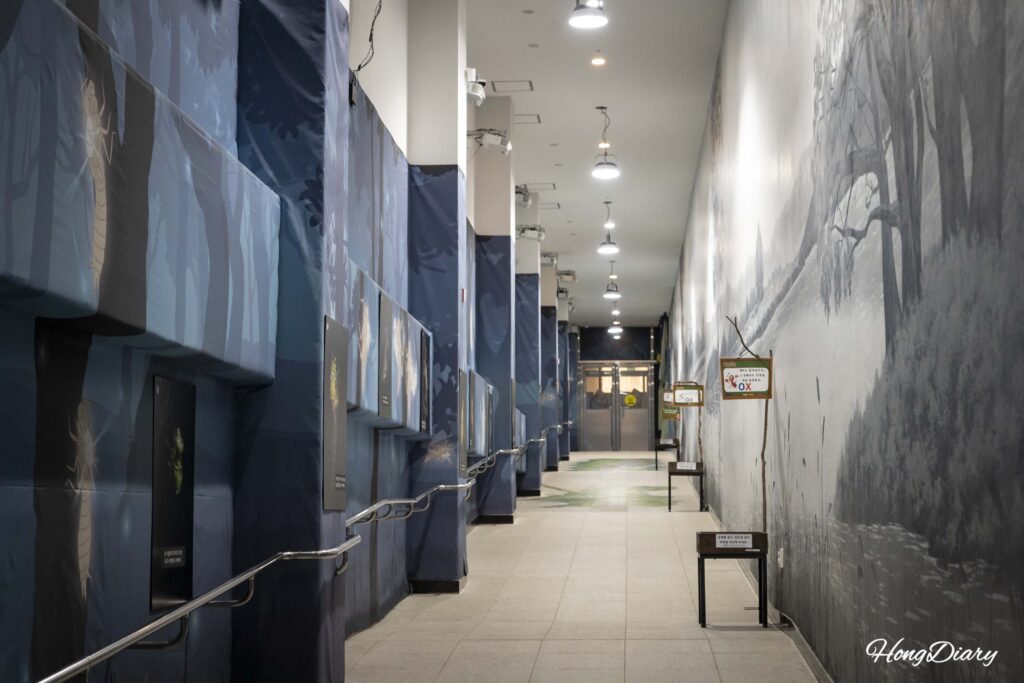
The ramp connecting the first and second floors is lined with true-or-false quiz panels — marked with O for correct and X for wrong, a format used everywhere in Korean educational settings. It is a small touch, but it keeps kids engaged during what would otherwise just be an uphill walk.
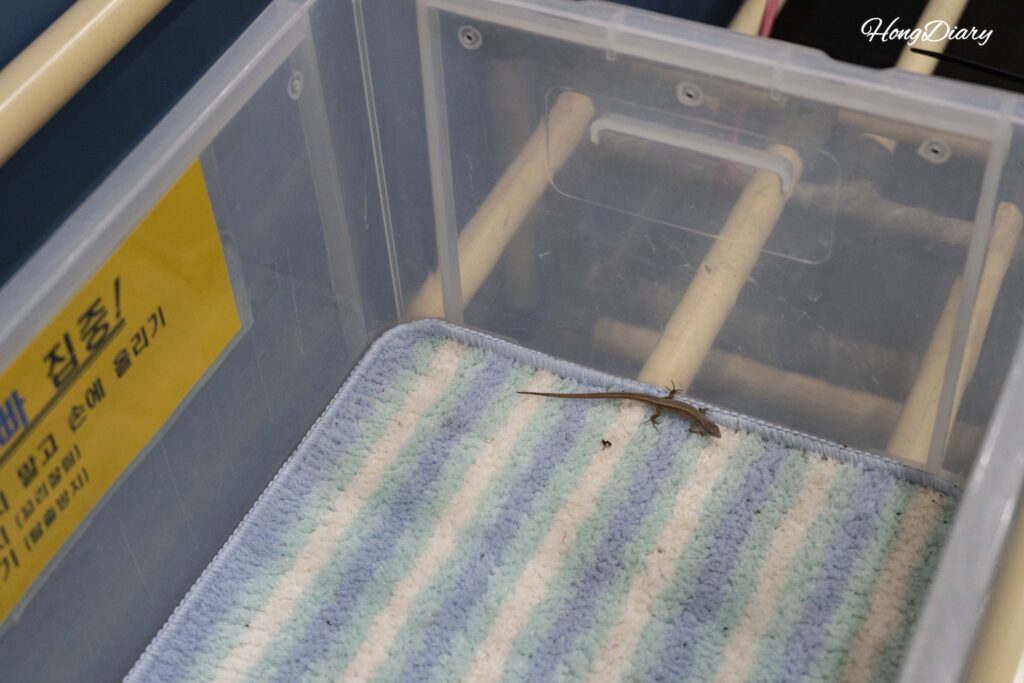
If the first floor is about looking and learning, the second floor is about touching and reacting. This level houses live insects and small animals that visitors can handle directly. There are stations where you can touch a long-tailed lizard (a small, harmless reptile native to Korea and parts of East Asia), crayfish, toads, and various fish species.
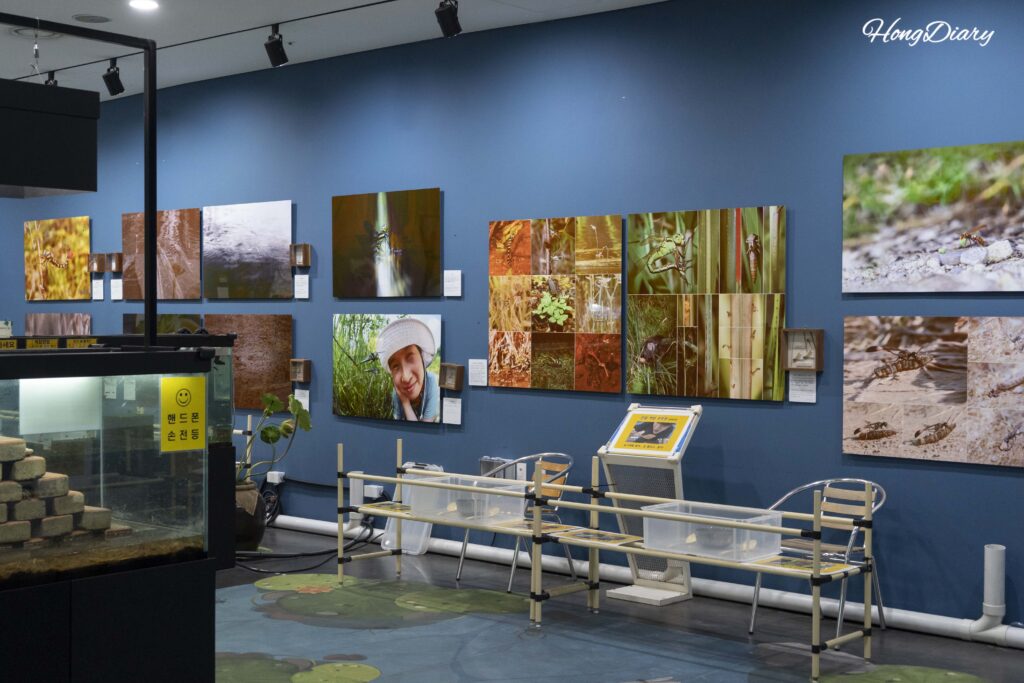
One darkened room houses giant water bugs — large predatory aquatic insects that can grow up to 6 or 7 centimeters long. The enclosure is intentionally dim to mimic their natural habitat, making it a fun hide-and-seek challenge to spot them. You can even handle these if you are brave enough. I passed.
The second floor also has a larger freshwater fish feeding section with Korean native species — this ended up being my personal favorite area of the entire museum, surprisingly. Watching the fish swarm toward scattered feed was oddly calming after all the insect handling.
And then, there is the room.
Right before the exit to the greenhouse, you have to pass through an exhibit dedicated to one of the largest cockroach species found in Korea. They are displayed in a massive glass breeding enclosure, hundreds of them crawling over each other, and visitors are invited to feed them pieces of carrot. A small sign near the enclosure explains that these cockroaches actually serve a useful ecological role — they consume mold and decomposing matter — and gently asks visitors to offer them a single piece of carrot before leaving, “even if you hate them.”
I did not give them a carrot. I could barely look at them. I had read other visitors’ reviews warning about this section, but nothing prepared me for the sheer density of cockroaches packed into that enclosure. My husband, my toddler, and I practically crawled out of that room in a three-person huddle, holding in screams so as not to traumatize any nearby children.
You may have noticed there is no photo of this exhibit. That is because I was too busy trying to survive it to pull out my phone.
The important thing to know: this cockroach room is the only way to reach the greenhouse. There is no bypass route. You walk through it or you turn around and go back the way you came. Steel yourself accordingly.
The Greenhouse: A Tropical Reset for Your Nerves
On the way out of the second floor toward the greenhouse, keep an eye out for a display of dried beehive specimens (the bees have been removed) from various species along the corridor walls — a small but interesting detail that is easy to miss if you are still recovering from the cockroach room.
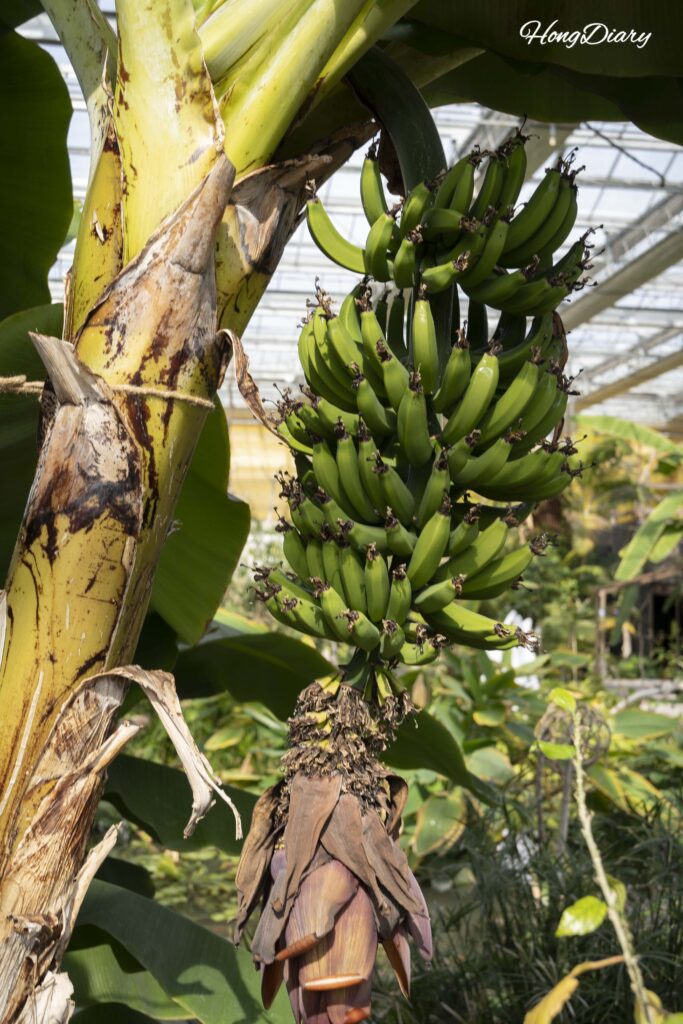
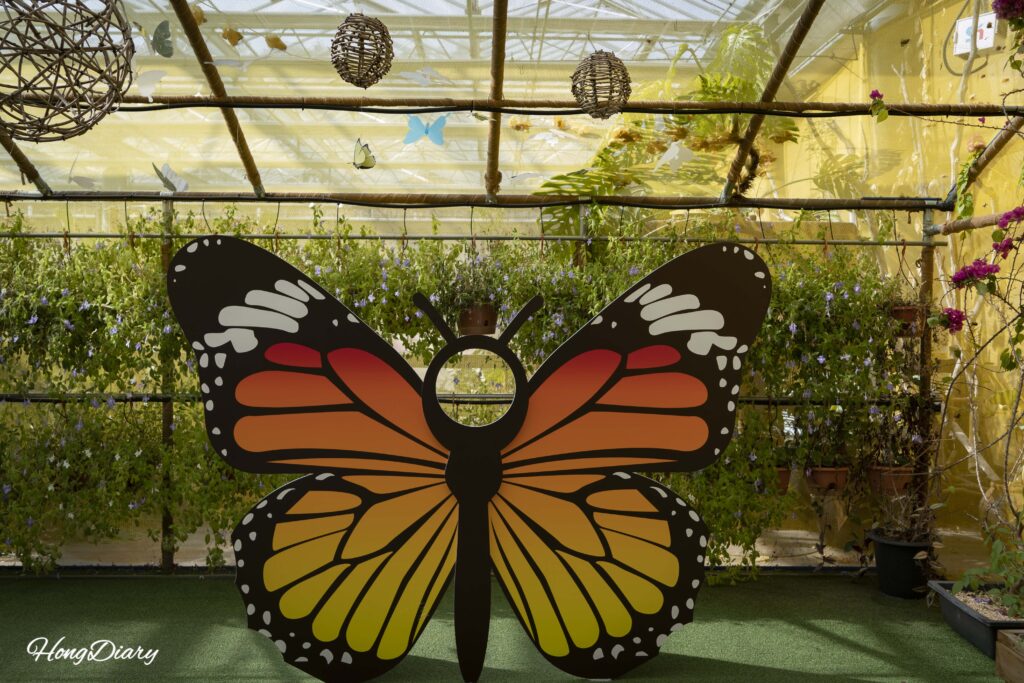
After the cockroach gauntlet, the greenhouse was exactly the palate cleanser I needed. It is a spacious, humid, glass-enclosed tropical garden growing banana trees, pineapple plants, and other vegetation you would never find outdoors in South Korea. The temperature runs noticeably warmer than the rest of the museum — it felt like stepping into a different season entirely.
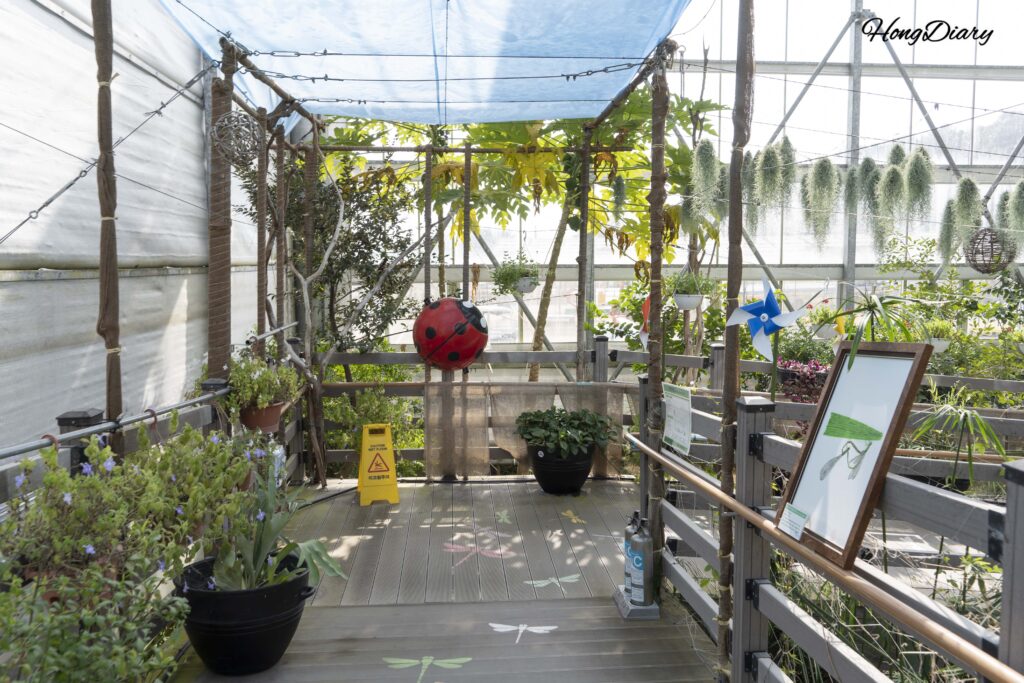
Even here, the hands-on philosophy continues. Kids can catch small rice fish — also known as medaka, the same tiny species popular in Japanese aquarium culture — using plastic cups from a shallow stream running through the greenhouse. When you bring the cup to a staff member, they release the fish back into the water and hand your child a scoop of koi pellets to toss into a large koi pond at the back of the greenhouse. My kid went back and forth three times.
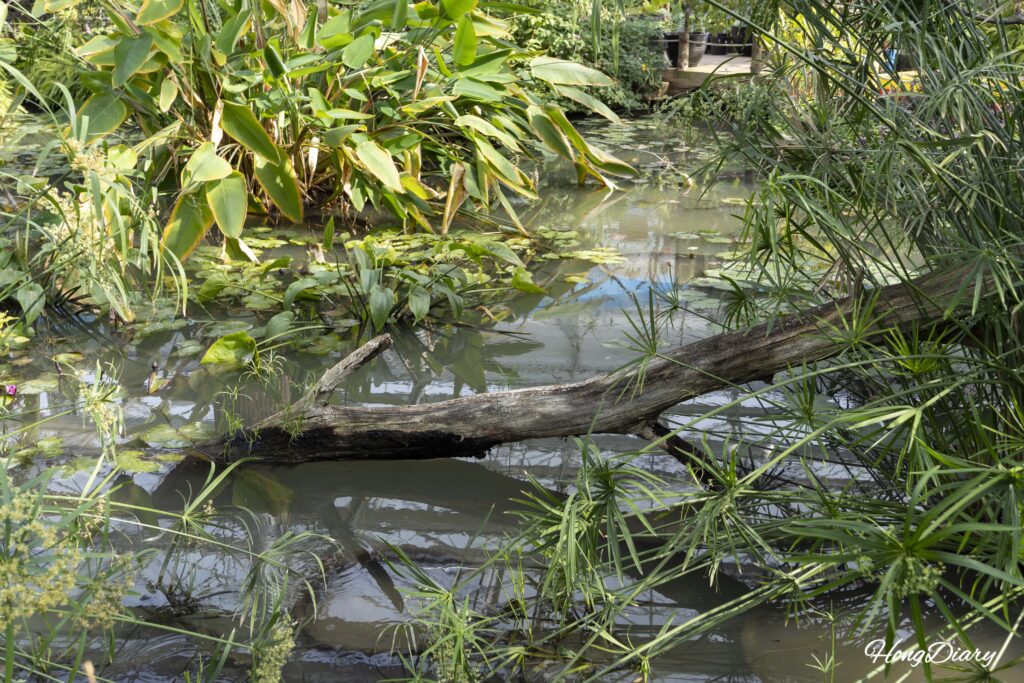
The space functions as a self-contained mini-ecosystem — tropical plants, flowing water, fish, insects, all coexisting in a single enclosed environment. It doubles as a surprisingly effective educational exhibit about how different organisms interact within a shared habitat. But honestly, after the cockroach room, I was mostly just grateful for the greenery and the calm.
Practical Tips Before You Visit
Plan at least two hours. We spent closer to two and a half, and we moved at a toddler’s pace. If your child is older and more engaged with the quiz elements and specimen identification, three hours is reasonable.
Bring a light jacket for the main building, and expect heat in the greenhouse. The exhibition halls are air-conditioned, while the greenhouse is intentionally tropical. The contrast is significant.
Prepare your child (and yourself) for the cockroach exhibit. It is unavoidable if you want to reach the greenhouse. If anyone in your group has a severe insect phobia, the first and second floor exhibits can still be enjoyed on their own — just turn back before the cockroach exit.
Parking is free and spacious. The lot sits directly in front of the building.
The nursing room on the first floor is well-equipped. It has a microwave for warming bottles, a water dispenser, and a diaper changing station — useful for families with infants.
Most signage inside is in Korean only. However, the exhibits are visual and interactive enough that language is rarely a barrier. Scientific names on specimen labels use Latin binomial nomenclature, which helps with identification regardless of your language.
Worth the Side Trip
Changnyeong Upo Insect World is not the kind of place that shows up on most international travel itineraries, and that is exactly what makes it worth visiting. It is affordable (₩8,000 / ~$5.71 USD / ~€5.08 EUR for adults, ₩5,000 / ~$3.57 USD / ~€3.17 EUR for children), fully hands-on, and designed with young children in mind from the ground up. My kid talked about the rhinoceros beetle larvae for days afterward. I, on the other hand, am still recovering from the cockroach room.
If this kind of off-the-beaten-path ecology experience appeals to you, Gyeongsangnam-do has a few more hidden spots worth exploring.
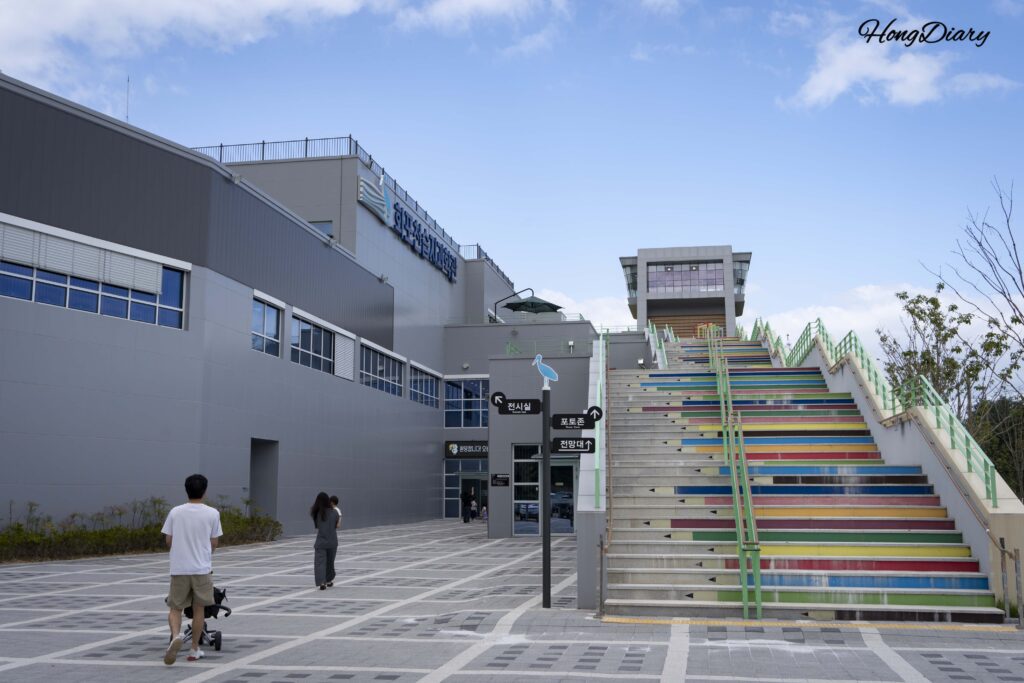
In the nearby city of Gimhae — another small city about 45 minutes east of Changnyeong — there is a free eco museum sitting next to Hwapocheon Wetland, another Ramsar-designated riverside wetland with a surprisingly well-curated science center that does not charge admission.
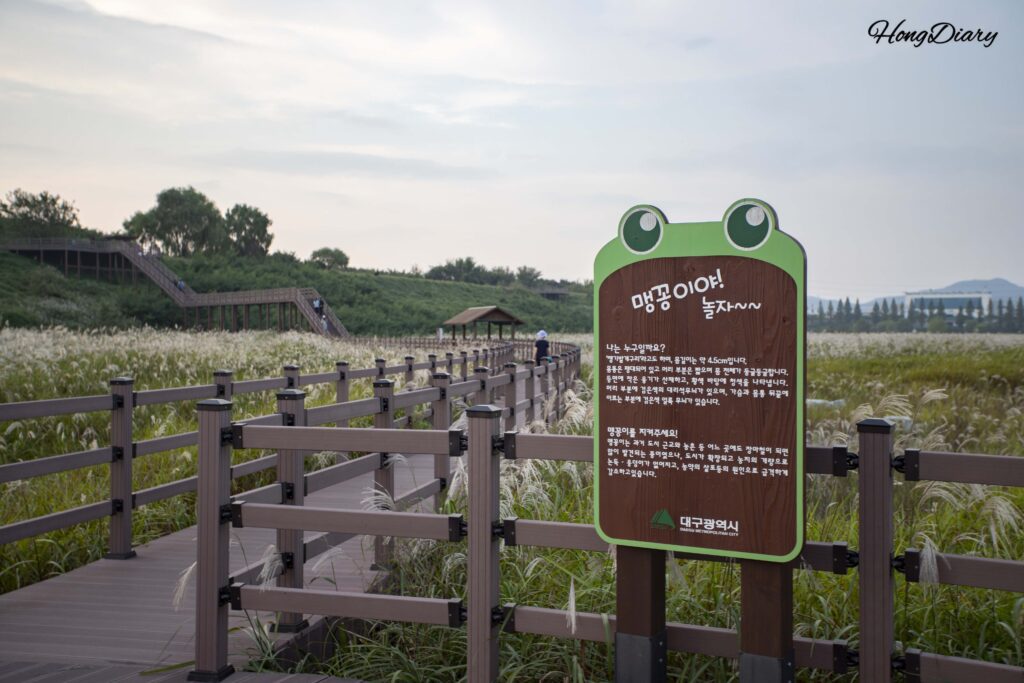
A bit further north, Daegu’s Dalseong Wetland offers a different kind of wetland experience — it is not Ramsar-certified, but the reed fields, rare toad habitats, and sunset walking paths make it a worthwhile detour, especially if you are already in the Daegu area.
Changnyeong Upo Insect World is not a world-class museum by any stretch. It is a small, local, government-run facility tucked into rural South Korea. But for families traveling with young kids — especially on a rainy day or when the wetland trails feel too ambitious — it delivers exactly what it promises: real bugs, real interactions, and at least one room that will test your courage more than you expected.
Changnyeong Upo Insect World FAQ: Practical Tips, Parking, and What to Know Before You Go
How much does it cost to visit Changnyeong Upo Insect World?
Adult admission is ₩8,000 (~$5.71 USD / €5.08 EUR) and child admission is ₩5,000 ($3.57 USD / ~€3.17 EUR). All hands-on experiences inside — including insect handling, fish feeding stations, and the greenhouse activities — are included in the ticket price at no extra charge. Parking is also free.
Prices converted at approximately $1 USD ≈ ₩1,400 / €1 EUR ≈ ₩1,575 (as of September 2026).
What are the opening hours and closing days?
Changnyeong Upo Insect World is open Tuesday through Sunday from 10:00 AM to 5:00 PM. Last entry is at 4:00 PM. The museum is closed every Monday as a regular weekly day off.
How do I get to Changnyeong Upo Insect World by public transit or taxi?
From Changnyeong Intercity Bus Terminal, walk about five minutes to the Yeongshin Bus Terminal stop and take Bus No. 9. Ride for approximately 15 minutes (eight stops) and get off at the Somok stop, then walk 150 meters to the entrance. However, rural bus frequency is limited. A taxi from the terminal covers about 10 kilometers in roughly 15 minutes and costs approximately ₩19,500 (~$13.93 USD / ~€12.38 EUR) one way, which is a more practical option for most visitors.
Is Changnyeong Upo Insect World suitable for toddlers and young children?
Yes, the museum is specifically designed for young visitors. Exhibits are set at a child’s eye level, and most stations allow direct hands-on interaction — kids can hold rhinoceros beetle larvae, touch long-tailed lizards, feed mosquito larvae to guppies, and catch rice fish in the greenhouse. A nursing room on the first floor is equipped with a microwave, water dispenser, and diaper changing station for families with infants.
Are the exhibit signs and descriptions available in English?
Most signage inside the museum is in Korean only. However, the exhibits are highly visual and interactive, so language is rarely a major barrier. Specimen labels use Latin scientific names (binomial nomenclature), which can help with identification regardless of your language background.
Can I visit Upo Wetland and the insect museum on the same day?
Yes. Changnyeong Upo Insect World sits right on the edge of Upo Wetland, Korea’s largest natural inland marsh. After your museum visit, you can walk or drive to the wetland’s ecological experience center and cycling trails within minutes. Plan for about two to three hours at the insect museum and another two to three hours for the wetland — a full day trip is easily possible.
Is there really a cockroach exhibit, and can I skip it?
Yes, the second floor ends with a large glass enclosure filled with one of the largest cockroach species found in Korea. Hundreds of them are visible crawling inside, and visitors are even invited to feed them pieces of carrot. Unfortunately, this room is the only pathway connecting the second floor to the greenhouse — there is no alternative route around it. If you want to reach the greenhouse, you must walk through the cockroach exhibit. If anyone in your group has a severe insect phobia, the first and second floor exhibits can still be fully enjoyed on their own by simply turning back before that final section.