
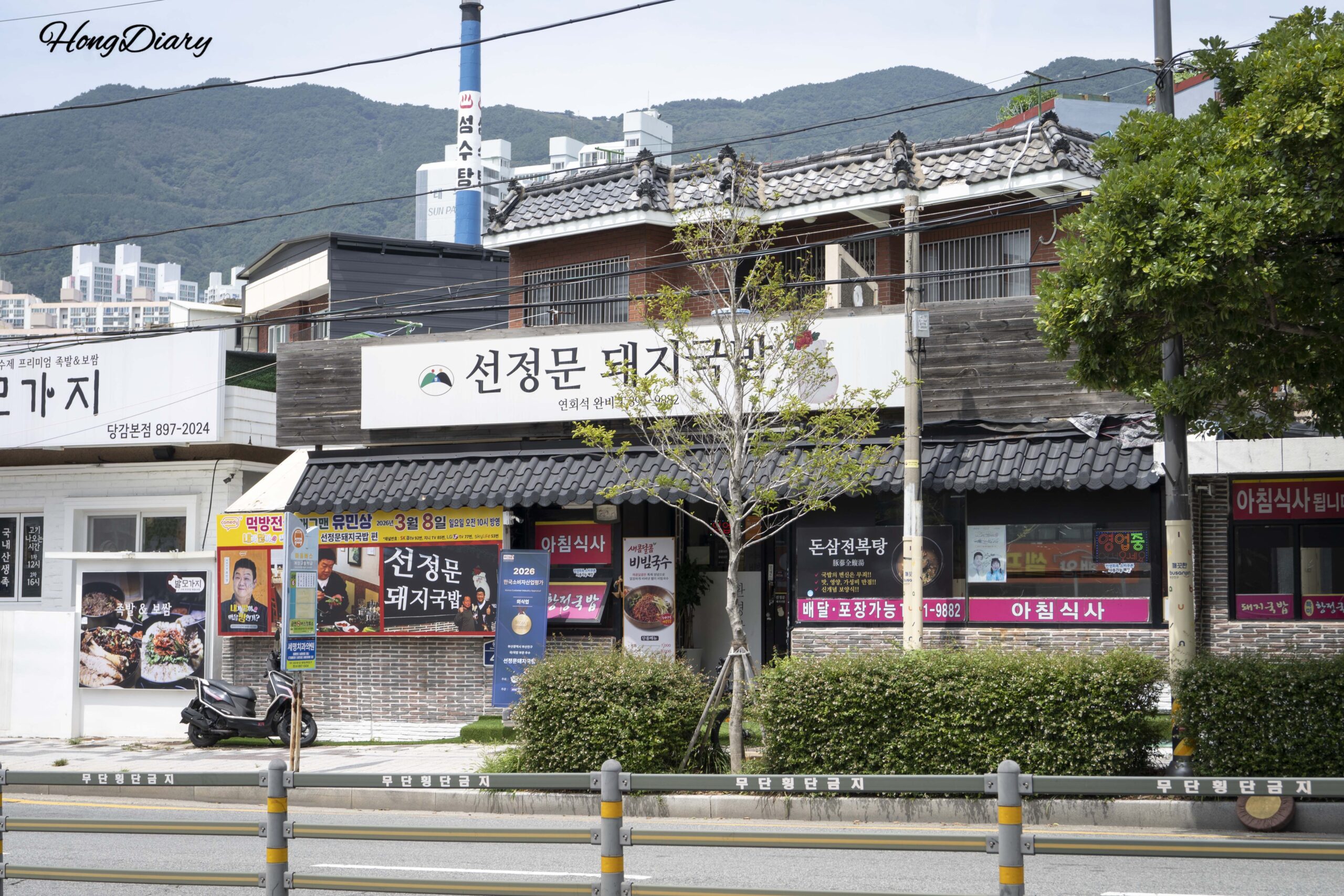
When a friend came to visit Busan, I told my husband I wanted to kick off her trip with a bowl of dwaeji gukbap. His response: “Why would anyone come all the way here just to eat this?”
He’s a Busan native. To him, dwaeji gukbap—a hearty pork bone soup served with rice—is the kind of meal you throw on slippers for when there’s nothing in the fridge. But for travelers, Busan dwaeji gukbap is the city’s signature comfort food, a must-eat on every food list. That gap between local indifference and tourist excitement is exactly why finding the right restaurant matters.
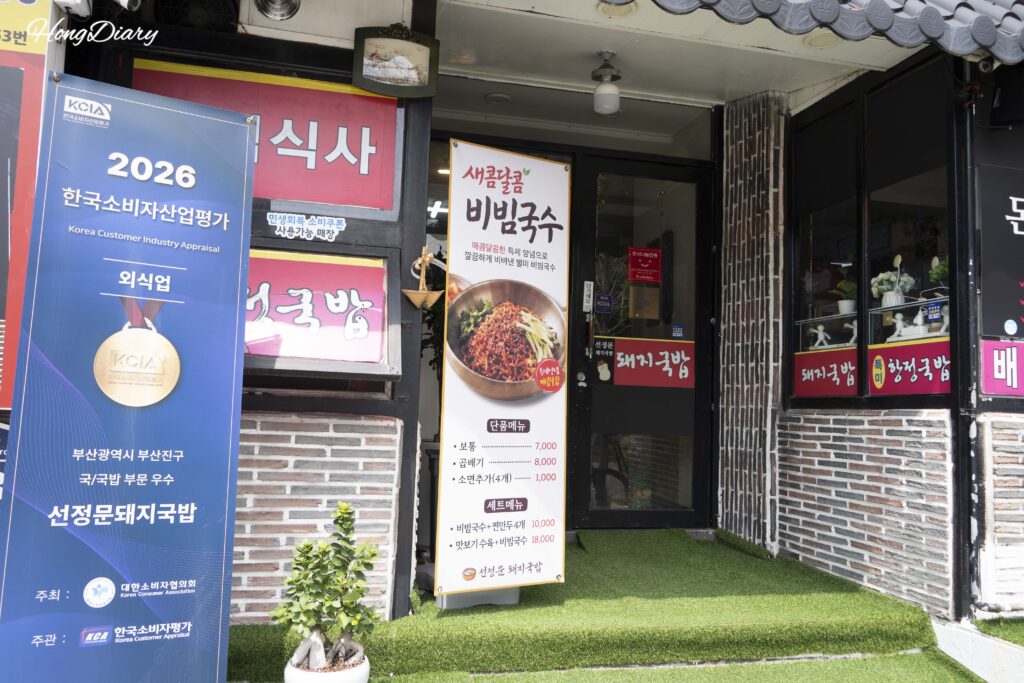
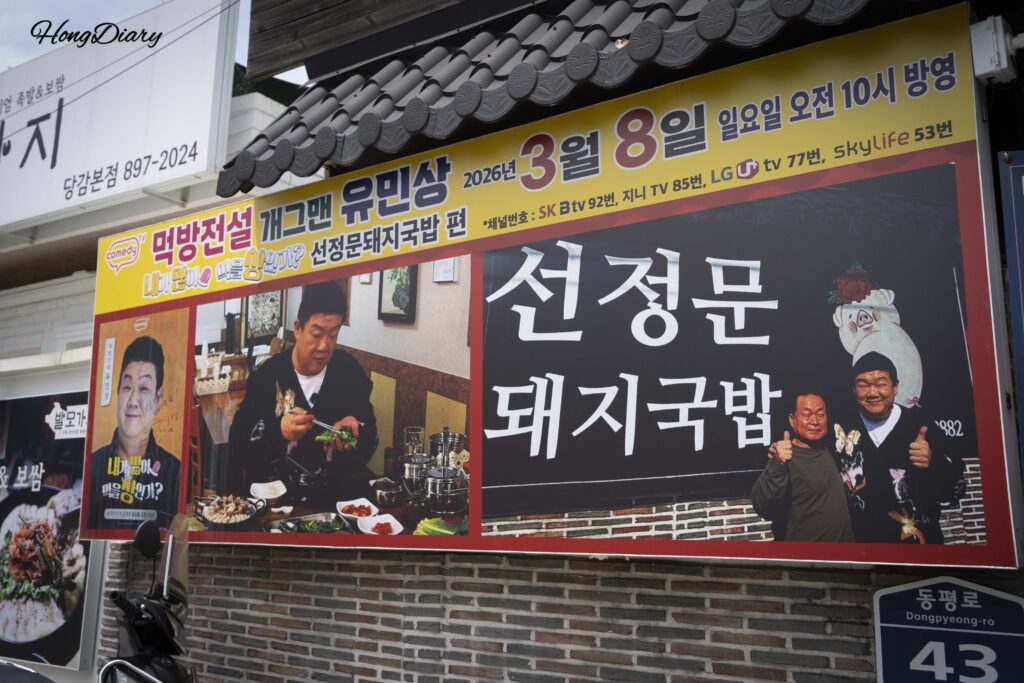
I’d heard that Danggam-dong, a residential neighborhood in Busanjin-gu, had some of the best under-the-radar gukbap spots in the city. The one that caught my attention was Seonjeongmun Dwaeji Gukbap, a place I’d driven past countless times without ever noticing. A Korean comedian had featured it on a food broadcast, and its menu had something I’d never seen before: an abalone and ginseng pork soup.
Table of Contents
Basic Information: Seonjeongmun Dwaeji Gukbap Location, Hours, and Directions
| Detail | Info |
|---|---|
| Restaurant | Seonjeongmun Dwaeji Gukbap |
| Address | 1F, 43 Dongpyeong-ro, Busanjin-gu, Busan |
| Hours | 7:00 AM – 9:00 PM (Break: 3:30 PM – 4:30 PM) |
| Closed | Every 2nd and 4th Wednesday of the month |
| Price range | ₩8,000–₩17,000 (~$5.70–$12.15 / €5.10–€10.80) |
| Getting there | Busan Metro Line 2 → Buam Station → Transfer to Bus 88, 179, 1009-1, or Sasang-gu 6 → Get off at Gaeseong High School Entrance stop → 1 min walk |
| Parking | No on-site lot; public parking available about a 5-minute walk away |
| Phone | 051-891-9882 |
| Tip | Search “Seonjeongmun Dwaeji Gukbap” on Naver Map or Google Maps to navigate. The restaurant previously operated as Baeknyeon Gukbap and later Jeongwon Dwaeji Gukbap, so longtime locals may still refer to it by those older names. |
Why Danggam-dong? A Neighborhood Most Tourists Never Find
Danggam-dong sits in the Busanjin-gu district, roughly between Seomyeon (Busan’s downtown commercial hub) and the residential hills to the north. It’s not on any standard tourist route—there’s no subway station within immediate walking distance, no famous landmarks nearby, and no English signage to speak of.
What it does have is a cluster of old-school restaurants that Busan locals have relied on for decades. The neighborhood operates on word-of-mouth: families pass down their go-to spots, and unless someone tells you about a place, you’d never find it tucked between the apartment blocks and narrow streets.
This is also why dwaeji gukbap here tastes different from what you’ll find in Seomyeon’s well-known Gukbap Alley or the tourist-facing spots near Haeundae. Restaurants in Danggam-dong cook for regulars, not visitors, which means the portions tend to be generous, the prices stay low, and the broth recipes haven’t been adjusted to appeal to a broader audience. What you eat is what locals eat—no filter.
From Wartime Survival Food to Busan’s Soul Dish: What Dwaeji Gukbap Actually Is
If you’ve had Japanese tonkotsu ramen, you already have a rough reference point—but dwaeji gukbap is its own thing. The dish is a bowl of slow-simmered pork bone broth served with sliced boiled pork and a separate bowl of steamed rice that you mix in yourself. It comes to the table bubbling hot in an earthenware pot called a ttukbaegi.
The origin story goes back to the Korean War in the 1950s. Busan was one of the few cities that wasn’t occupied during the conflict, and it became a refuge for displaced families from across the country. Meat was scarce, but pork bones and offal were cheap and accessible. People began boiling them into broth as a way to stretch whatever food they had—essentially mimicking seolleongtang (a traditional beef bone soup) with pork instead.
What started as wartime survival cooking eventually became the city’s defining dish. Today, you can find dwaeji gukbap restaurants on practically every block in Busan, each with slightly different broth styles and seasoning approaches.
How Locals Actually Eat It (and How You Should, Too)
Here’s what makes dwaeji gukbap fun for first-timers: you build your own flavor at the table. The soup arrives with a mild, savory base, and the rest is up to you.
Every table comes with a set of condiments, and the combination you choose changes the entire experience:
| Condiment | What it is | What it does |
|---|---|---|
| Saeujeot | Salted fermented shrimp paste | Adds a salty, umami depth—this is the classic Busan move |
| Dadaegi | Spicy red chili paste mixed with garlic and pepper flakes | Gives the broth heat and color; start with a small spoonful |
| Buchuchim | Seasoned garlic chive salad | Adds freshness and a mild bite |
| Salt | Just salt | For those who want the clean pork flavor without anything else |
| Kkakdugi | Diced radish kimchi (fermented, tangy, crunchy) | Pairs with everything and cleanses the palate between bites |
There’s no wrong combination. Some locals load up on dadaegi until the broth turns red-orange; others use only saeujeot and eat it clean. My husband, who grew up here, prefers the broth with the natural pork aroma untouched—a quality some call nurinne (a slightly gamey pork scent). Not everyone enjoys it, and that’s fine. Seonjeongmun’s broth leans clean and mild, making it a solid pick if you’re sensitive to strong pork flavors or trying the dish for the first time.
Inside Seonjeongmun: The Space, the Name, and What to Order
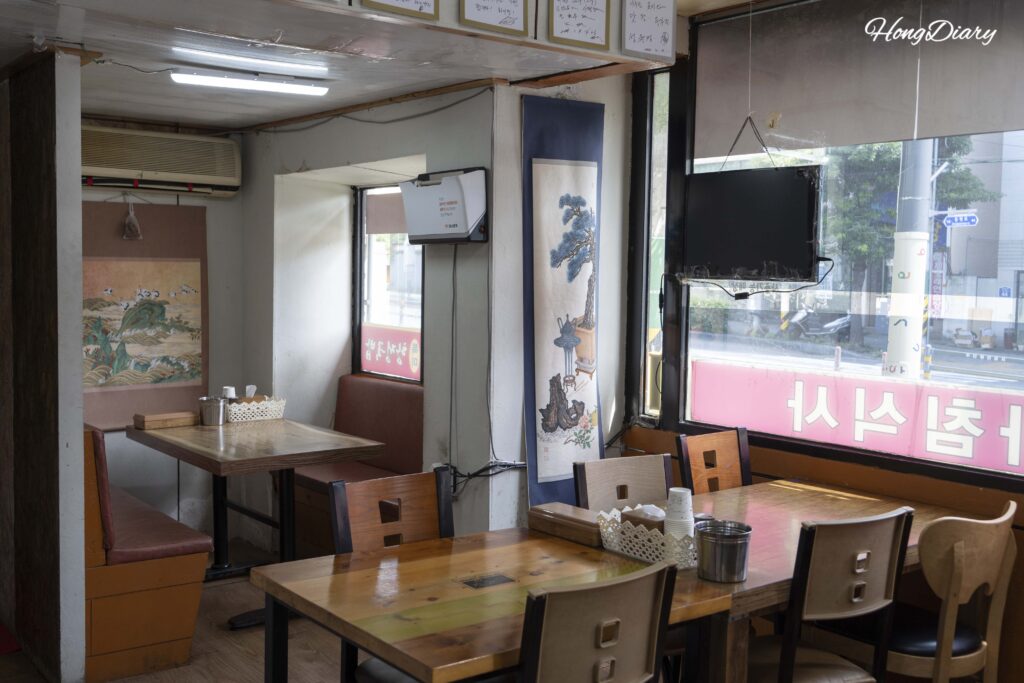
Walking in, the first thing I noticed was a framed calligraphy piece on the center wall explaining the restaurant’s name. Seon means the sun, mun means the moon, and jeong in the middle represents warmth and a place to stay. The owner came up with it personally—a small detail, but it sets the tone for the kind of place this is: no-frills, family-run, and quietly proud of what they serve.
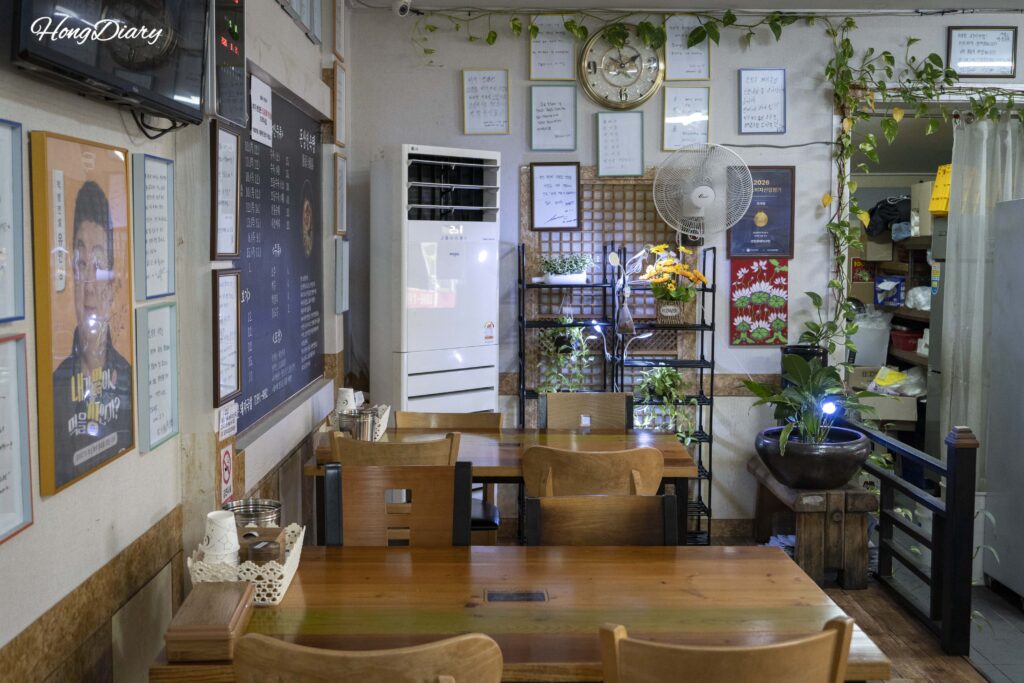
The walls are covered in autographed photos from Korean celebrities who’ve visited—including a sign noting the restaurant’s appearance on a Korean food TV show—a common mark of a popular local spot. Side dishes are self-serve from a banchan bar (a counter of small shared plates like kimchi and pickled radish), so you can grab as much as you’d like without asking.
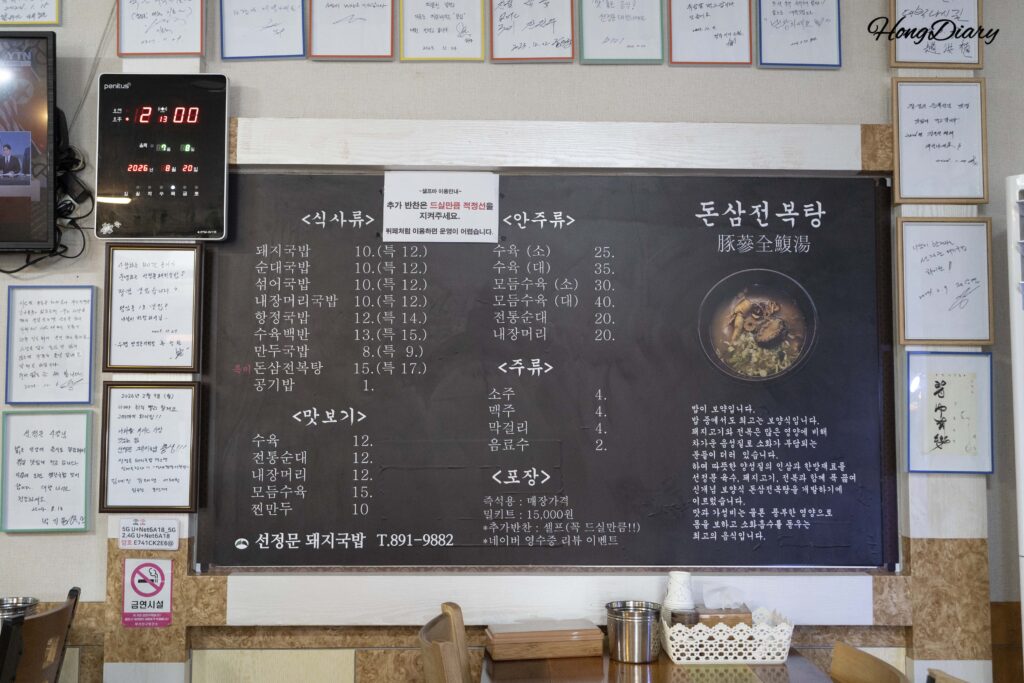
The Menu
The menu is posted on a large chalkboard behind the counter. Here’s what you need to know:
Main Dishes (Soup + Rice)
| Menu item | Regular | Large | What’s in it |
|---|---|---|---|
| Dwaeji Gukbap | ₩10,000 (~$7.15 / €6.35) | ₩12,000 (~$8.55 / €7.60) | The classic: pork bone broth with sliced boiled pork |
| Hangjeong Gukbap | ₩12,000 (~$8.55 / €7.60) | ₩14,000 (~$10.00 / €8.90) | Made with hangjeongsal only (pork jowl meat—fattier, more tender) |
| Donsamjeonboktang ★ Signature | ₩15,000 (~$10.70 / €9.50) | ₩17,000 (~$12.15 / €10.80) | Pork + ginseng + whole abalone in herbal broth |
| Mandu Gukbap | ₩8,000 (~$5.70 / €5.10) | ₩9,000 (~$6.40 / €5.70) | Pork broth with Korean dumplings instead of sliced meat |
Sides & Tasting Platters
| Menu item | Price | What it is |
|---|---|---|
| Matbogi Suyuk | ₩12,000 (~$8.55 / €7.60) | Tasting-size platter of boiled pork slices served with dipping sauces and wrapping greens |
| Jeongtong Sundae | ₩12,000 (~$8.55 / €7.60) | Traditional Korean blood sausage, stuffed with glass noodles and barley |
| Suyuk — Small | ₩25,000 (~$17.85 / €15.85) | Full boiled pork platter for sharing |
| Suyuk — Large | ₩35,000 (~$25.00 / €22.20) | Bigger platter, good for 3–4 people |
Adventurous Picks — for those who want to go deeper into Korean gukbap culture:
| Menu item | Regular | What it is |
|---|---|---|
| Sundae Gukbap | ₩10,000 (~$7.15 / €6.35) | Soup with Korean blood sausage (different from European sausage—milder, chewier, stuffed with noodles) |
| Seokkeo Gukbap | ₩10,000 (~$7.15 / €6.35) | Mixed: pork, blood sausage, and offal together |
| Naejangmeori Gukbap | ₩10,000 (~$7.15 / €6.35) | Offal and pork head meat soup—the most traditional version, closest to the wartime original |
Prices converted at approximately $1 USD ≈ ₩1,400 / €1 EUR ≈ ₩1,575 (as of September 2026). Rates may fluctuate.
The standout on this menu is easily the Donsamjeonboktang—a portmanteau of don (pork), sam (ginseng), and jeonbok (abalone). It’s labeled as the house signature, and I hadn’t seen it at any other gukbap restaurant before.
What I Actually Ate: An Honest Breakdown
I ordered three things: the standard Dwaeji Gukbap (₩10,000 / ~$7.15 / €6.35), the Donsamjeonboktang (₩15,000 / ~$10.70 / €9.50), and the Matbogi Suyuk tasting platter (₩12,000 / ~$8.55 / €7.60).
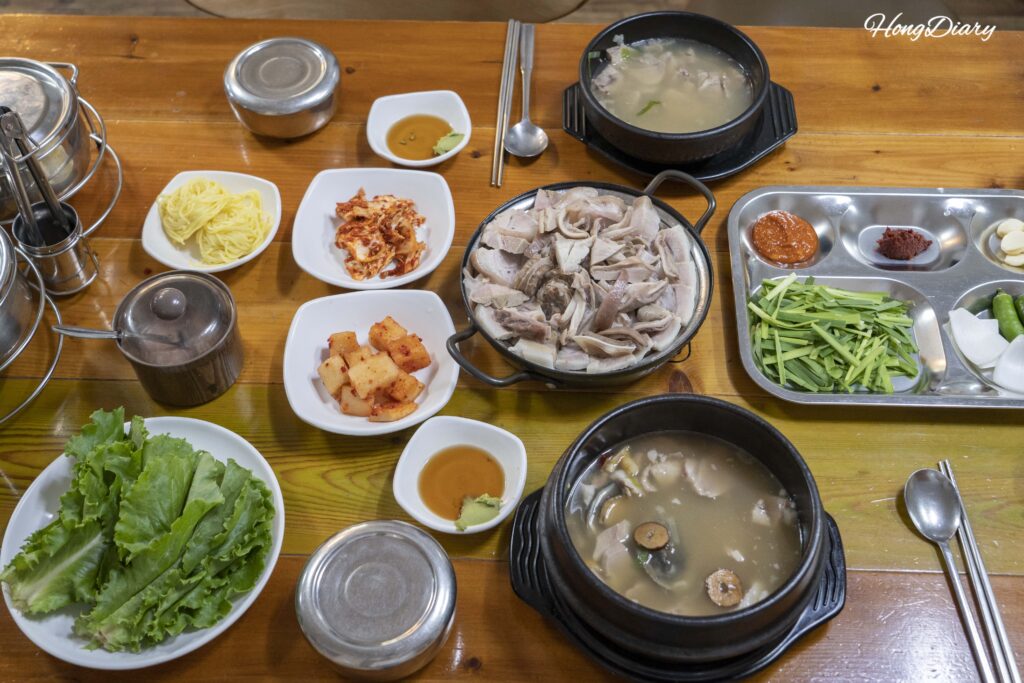
The Classic Dwaeji Gukbap
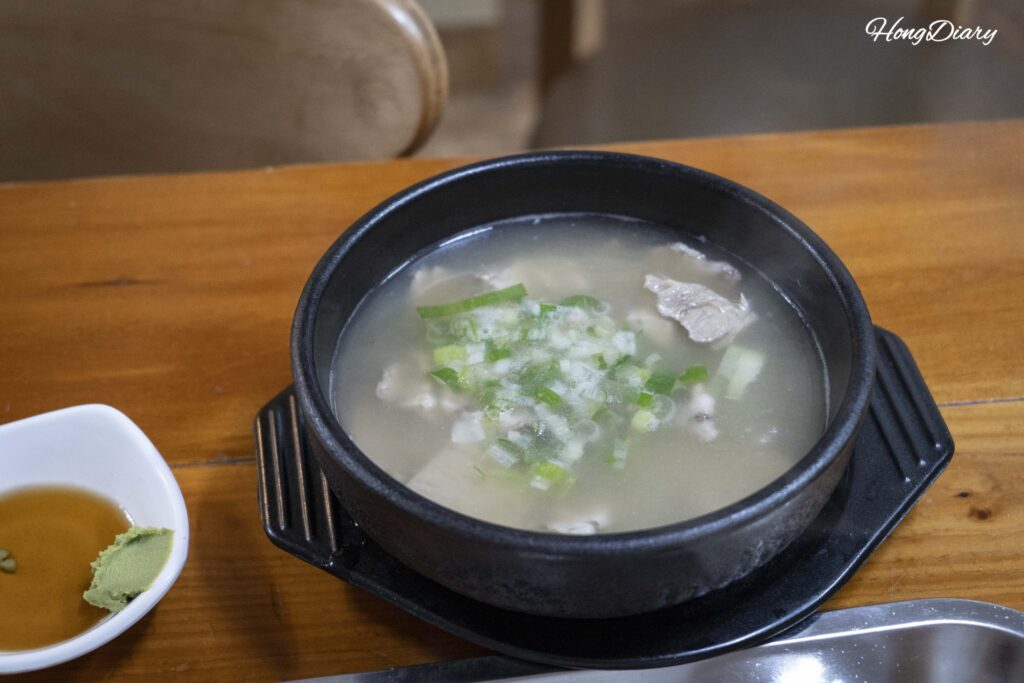
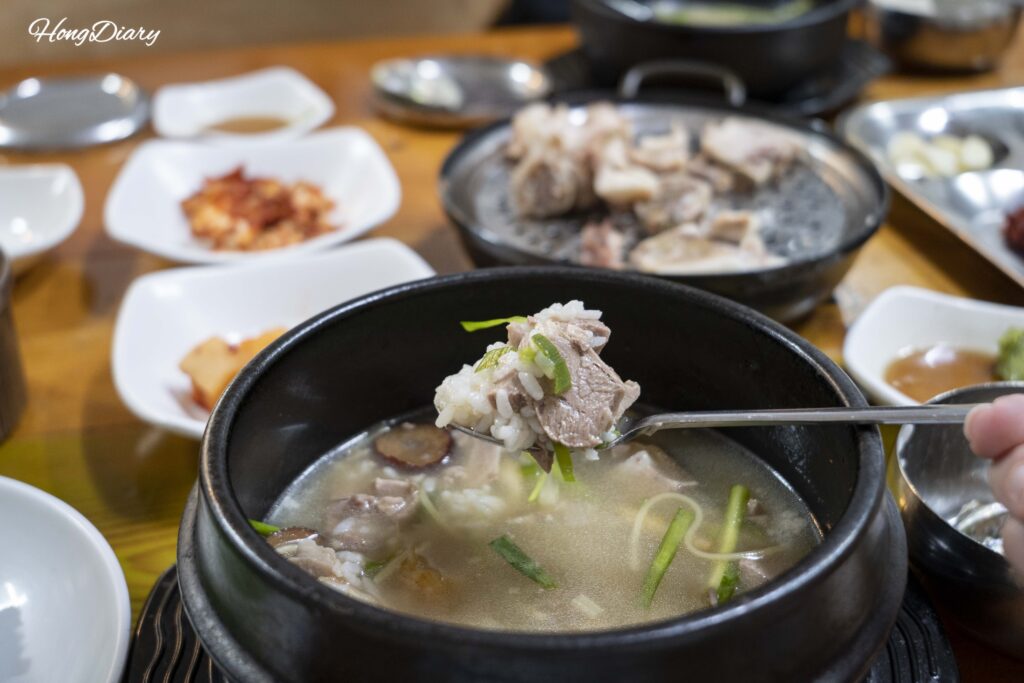
The soup arrived in a ttukbaegi, still bubbling. The broth was milky-white with a clean pork flavor—rich without being heavy, and noticeably free of the gamey pork smell that can be off-putting if you’re not used to it. The pork slices inside were tender, generously portioned, and soft enough to break apart with a spoon.
I kept my first bowl simple: just a small scoop of saeujeot (salted shrimp paste) stirred in. The fermented saltiness rounded out the broth in a way that salt alone can’t replicate. If this is your first time, I’d suggest starting this way before adding anything spicy—it lets you actually taste the base flavor.
One thing worth mentioning: a side of thin wheat noodles comes with every soup order at this restaurant. You can drop them into your broth or skip them entirely. I added mine partway through the meal, and it turned the soup into something closer to a noodle dish—almost like a stripped-down ramen experience, but with that distinct Korean pork broth. This isn’t standard at every gukbap restaurant; it’s a nod to the Korean War era, when rice was expensive and wheat flour (provided by the U.S. military) was more readily available. Some of the older restaurants that kept this tradition still serve noodles alongside the rice, and it’s a small detail that tells you something about the place’s roots.
Broth refills are free, so if you’re a soup person, you can keep going without worrying about the bill.
The Donsamjeonboktang (Pork, Ginseng & Abalone Soup)
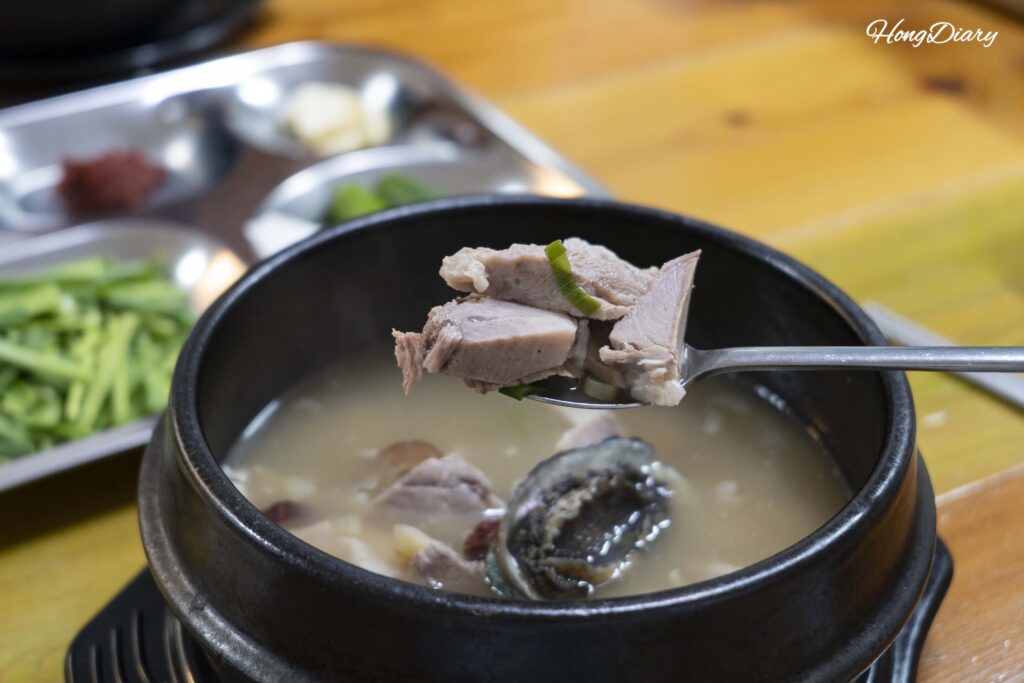
This was the wildcard order, and it turned out to be the highlight. Imagine the pork broth base of dwaeji gukbap crossed with the herbal warmth of samgyetang (a Korean ginseng chicken soup traditionally eaten for stamina). The broth had that slightly medicinal, earthy ginseng character with dried jujube (Korean red dates) floating in it, plus a whole abalone sitting at the bottom of the bowl.
The pork pieces were thick-cut and substantial—more stew-like than the regular gukbap. If you enjoy herbal soups or you’ve had samgyetang before and liked it, this is a natural next step. It’s especially popular in summer as a stamina dish in Korea, based on the traditional belief that hot, nutritious soups help your body recover from heat fatigue.
For what you get—thick pork, a whole abalone, ginseng, and jujube—the price felt like solid value at ₩15,000 (~$10.70 / €9.50). I’d go back specifically for this one.
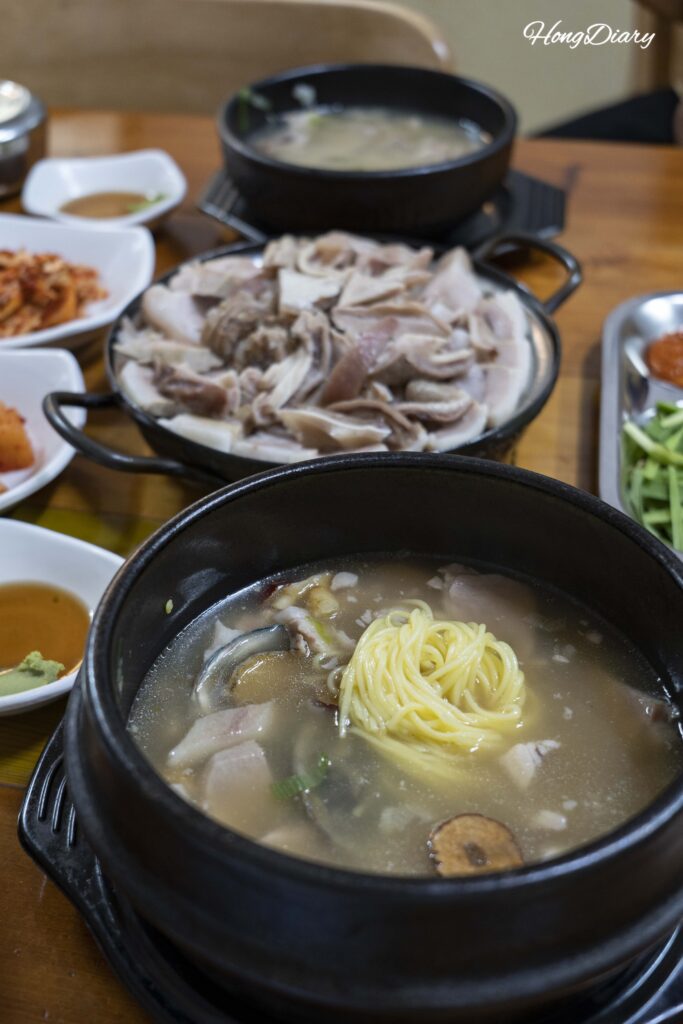
The Matbogi Suyuk (Boiled Pork Tasting Platter)
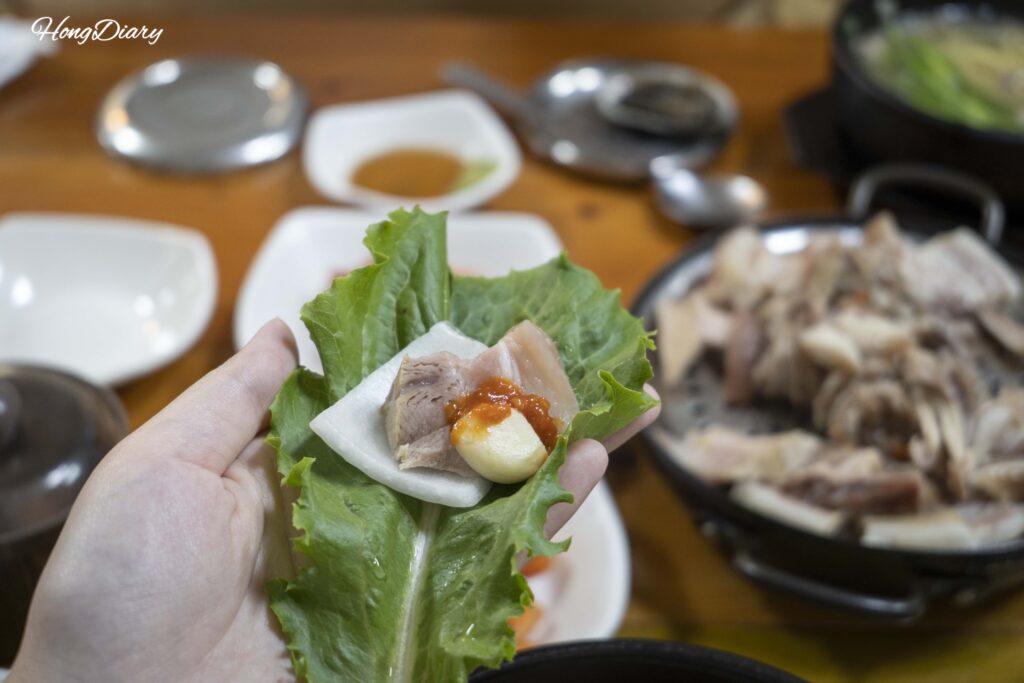
Suyuk is a Korean dish of pork that’s been slowly boiled until tender, then sliced thin and served on a platter with leafy greens, raw garlic, and dipping sauces for wrapping. Matbogi means “tasting size”—but the portion was more generous than that label suggests. The meat was clean-tasting, tender, and free of any off-putting pork odor.
The way to eat it: grab a perilla leaf (a broad, fragrant herb similar to shiso) or a piece of lettuce from the side dish bar, lay a slice of pork on it, add a sliver of raw garlic and a dab of ssamjang (a thick, savory dipping paste made from fermented soybean and chili), then wrap and eat it in one bite. This wrapping style is called ssam, and it’s one of those simple Korean eating rituals that makes the whole meal more interactive.
Alternating between spoonfuls of soup and bites of ssam kept the meal from feeling monotonous—each element reset my palate for the next.
Tips If You’re Going for the First Time
Start with the basics. The standard Dwaeji Gukbap is the safest entry point. If you want something more adventurous, add the Donsamjeonboktang. It’s a menu item you won’t find at most other restaurants.
Season in stages. Try the broth plain first. Then add saeujeot. Then, if you want heat, a small amount of dadaegi. Going all-in from the start means you’ll never taste the actual broth.
Try the noodles in the soup. Drop them into your bowl about halfway through the meal for a texture change. It’s a small thing, but it keeps the experience interesting.
Mornings work well. The restaurant opens at 7:00 AM, and gukbap is a traditional Korean breakfast food. Starting the day with a hot bowl of pork soup and rice is far more filling (and far more local) than grabbing toast at a cafe.
No on-site parking. If you’re driving, plan to use the public lot about five minutes away on foot. The restaurant is right next to a bus stop, though, so public transit is the easier option.
Broth refills are free. Don’t be shy about asking for more. The staff is used to it.
Worth the Detour to Danggam-dong
Seonjeongmun Dwaeji Gukbap is the kind of place that doesn’t try to impress you—and ends up doing exactly that. The broth is clean, the pork is tender, the prices are fair, and the Donsamjeonboktang is a genuine find that gives you a reason to come here over the dozen other gukbap restaurants closer to the tourist trail.
I brought a friend visiting Busan here for their first meal in the city—and even my husband, who couldn’t understand why anyone would travel for gukbap, wanted to know more about the Donsamjeonboktang when I told him about it afterward.
If you’re in the Busanjin-gu area and looking for what else to explore nearby,
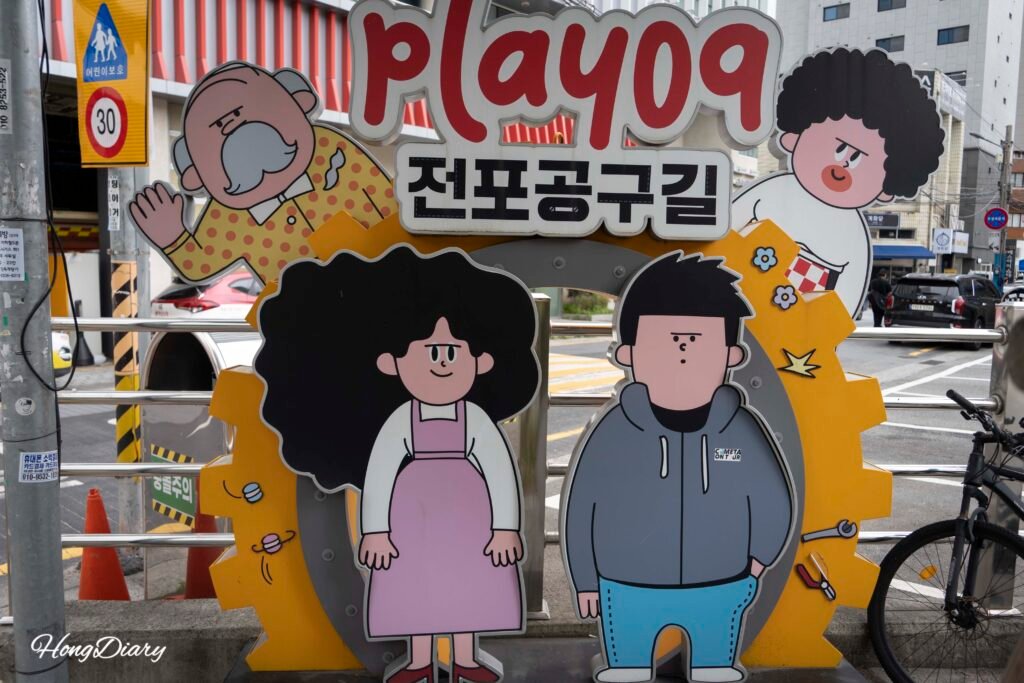
the Jeonpo Tool Street neighborhood is a short ride away—it used to be a hardware district and has quietly become one of Busan’s most interesting streets for independent cafes and creative shops.
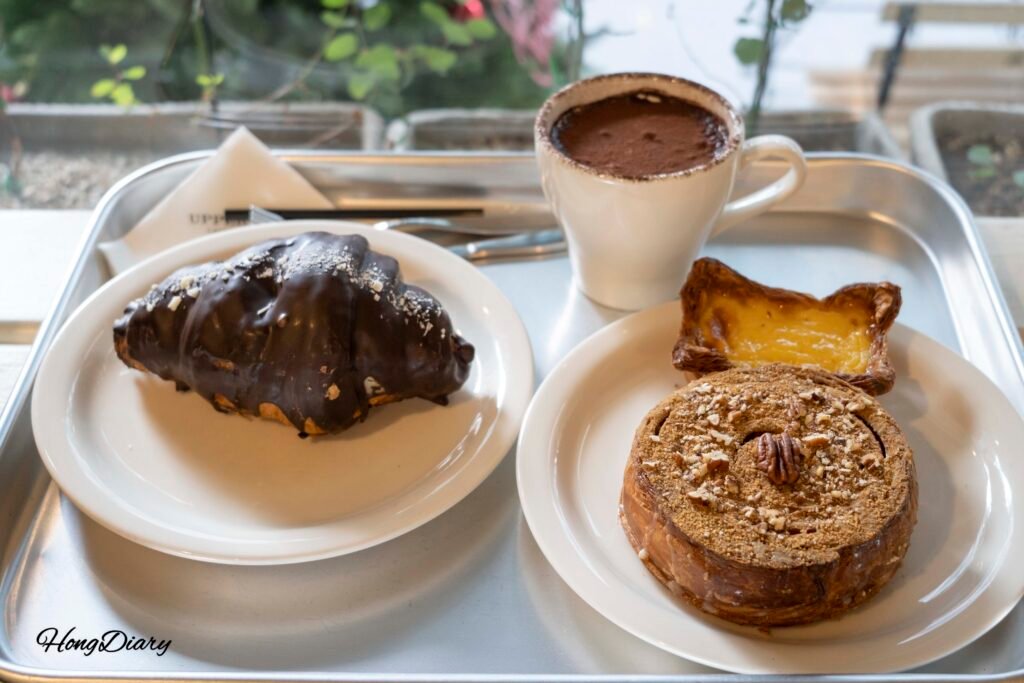
One standout on that stretch is Upper East Bakery, a pastry-focused cafe on Jeonpo Cafe Street that locals line up for on weekends, and it pairs well with a post-gukbap coffee run.
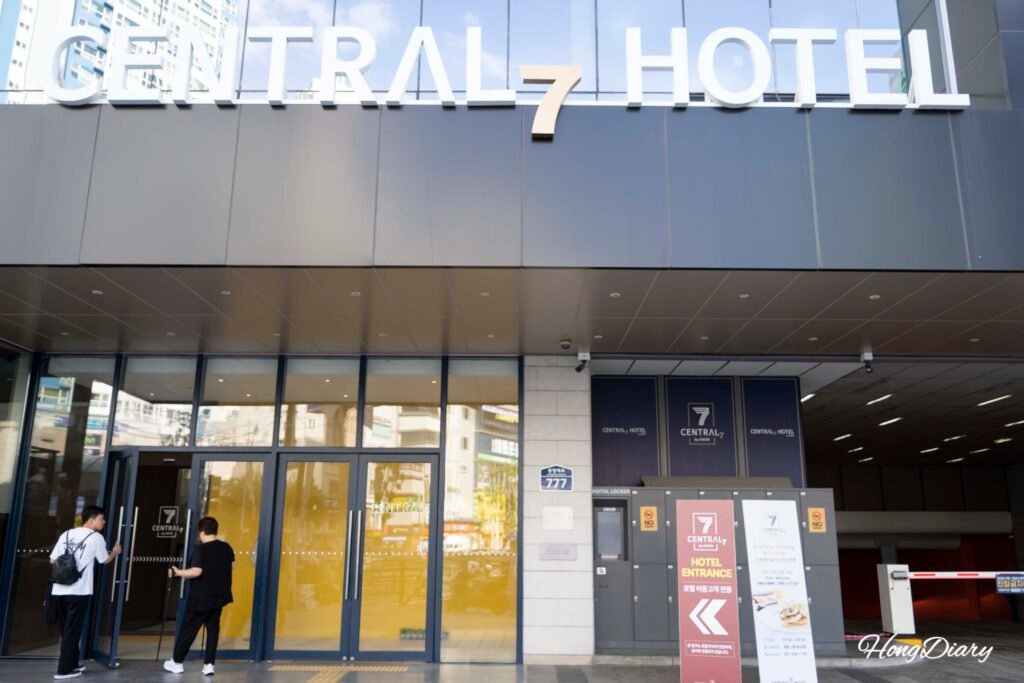
If you need a central, affordable base in the area, the Central Seven Hotel near Bujeon Station puts you right above the Bujeon Market with subway access in both directions.
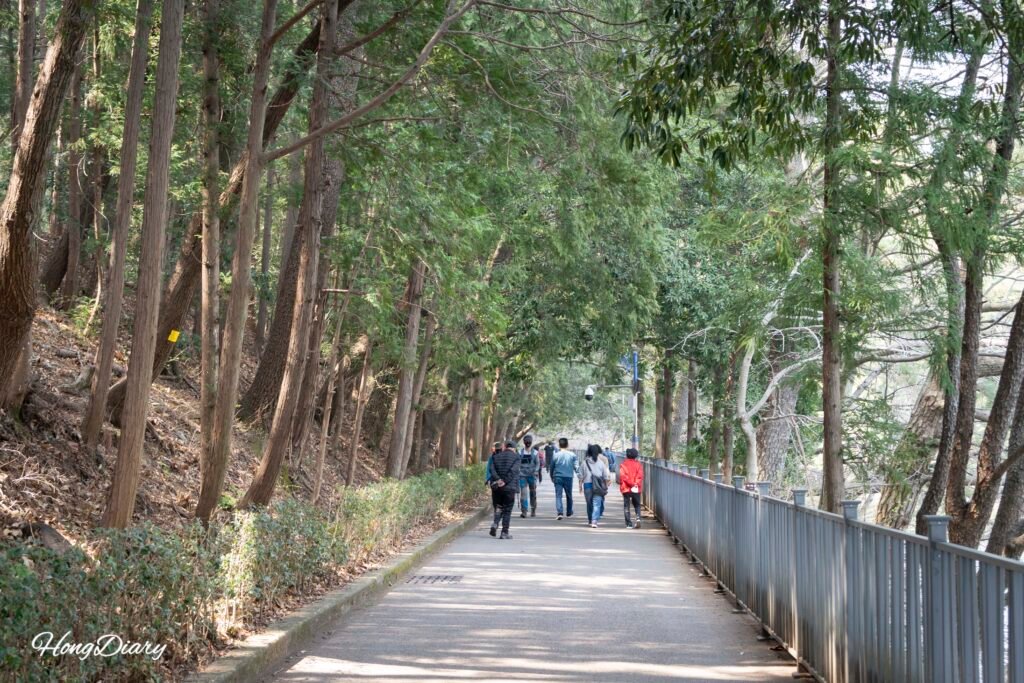
And if you’re traveling with kids or just want a quiet green space to walk off a big meal, the Busan Children’s Grand Park is one of Danggam-dong’s closest parks—a stroller-friendly forest trail with free admission that’s been a neighborhood staple since 1971.
Seonjeongmun opens early, keeps things honest, and gives you a bowl of Busan dwaeji gukbap that a local would eat without thinking twice—which, honestly, might be the best kind of recommendation.
Frequently Asked Questions and Visitor Tips: Menu, Prices, and How to Eat Dwaeji Gukbap
What is dwaeji gukbap, and why is it famous in Busan?
Dwaeji gukbap is a Korean pork bone soup served with rice, originating from Busan during the Korean War in the 1950s. Displaced families used affordable pork bones and offal to make a filling broth, mimicking seolleongtang, the traditional beef bone soup. It evolved from wartime survival food into Busan’s most iconic local dish, and today the city has hundreds of restaurants dedicated to it. The soup arrives bubbling in an earthenware pot, and each diner customizes it at the table with condiments like salted fermented shrimp paste (saeujeot), spicy chili paste (dadaegi), and seasoned garlic chives.
How do I get to Seonjeongmun Dwaeji Gukbap in Danggam-dong?
Take Busan Metro Line 2 to Buam Station, then transfer to Bus 88, 179, 1009-1, or Sasang-gu 6. Get off at the Gaeseong High School Entrance stop—the restaurant is about a one-minute walk from there. There is no subway station within immediate walking distance of Danggam-dong, so the bus transfer is necessary. If you’re driving, there is no on-site parking; a public parking lot is available roughly five minutes away on foot. The restaurant previously operated as Baeknyeon Gukbap and Jeongwon Dwaeji Gukbap, so searching any of these names on Naver Map or Google Maps will lead you there.
What is the Donsamjeonboktang on the menu, and is it worth ordering?
Donsamjeonboktang is Seonjeongmun’s signature dish—a combination of pork bone broth, ginseng, dried jujube (Korean red dates), and a whole abalone. The name is a portmanteau of don (pork), sam (ginseng), and jeonbok (abalone). It tastes like a cross between classic dwaeji gukbap and samgyetang (Korean ginseng chicken soup), with a warm, herbal character to the broth. At ₩15,000 (~$10.70 / €9.50), it offers strong value for the quality and portion, and it’s a menu item rarely found at other gukbap restaurants in Busan.
Is Seonjeongmun Dwaeji Gukbap foreigner-friendly?
Yes. While the menu and signage are in Korean, the ordering process is straightforward—you can point at the chalkboard menu or use a translation app. More importantly, the broth here is on the clean, mild side, without the strong pork aroma (called nurinne) that some visitors find off-putting at other gukbap restaurants. Side dishes are self-serve from a banchan bar (a counter of small shared plates), and free broth refills are available. The restaurant also opens at 7:00 AM, making it a convenient early breakfast spot before starting a day of sightseeing.
How much does a meal at Seonjeongmun Dwaeji Gukbap cost?
The standard Dwaeji Gukbap starts at ₩10,000 ($7.15 / €6.35) for a regular bowl. The signature Donsamjeonboktang is ₩15,000 ($10.70 / €9.50) for a regular and ₩17,000 ($12.15 / €10.80) for a large. Side dishes like the Matbogi Suyuk (a tasting platter of boiled pork slices served with wrapping greens and dipping sauces) cost ₩12,000 ($8.55 / €7.60). A filling solo meal typically comes to ₩10,000–₩15,000, and a generous meal for two with a side dish runs around ₩32,000–₩40,000 (~$22.85–$28.55 / €20.30–€25.40). Prices converted at approximately $1 USD ≈ ₩1,400 / €1 EUR ≈ ₩1,575 (as of September 2026).
What is the best way to season dwaeji gukbap for first-time eaters?
Start by tasting the broth on its own to appreciate the base flavor. Then add a small spoonful of saeujeot (salted fermented shrimp paste)—this is the most traditional seasoning and adds a salty umami depth without masking the pork flavor. If you want heat, stir in a small amount of dadaegi (spicy chili paste) next. You can also add seasoned garlic chives for freshness. The key is to season in stages rather than adding everything at once, so you can adjust to your preference as you eat.
Why should I visit Danggam-dong for dwaeji gukbap instead of Seomyeon’s Gukbap Alley?
Seomyeon’s Gukbap Alley near Seomyeon Station is the most well-known area for dwaeji gukbap in Busan and is easier to access by subway. However, Danggam-dong offers a different experience: the restaurants here cater primarily to neighborhood regulars rather than tourists, which means the cooking style tends to be more traditional and the prices are competitive. Seonjeongmun, in particular, offers the Donsamjeonboktang—a pork-ginseng-abalone soup that’s difficult to find elsewhere. Danggam-dong also gives you a glimpse of everyday residential Busan that most visitors never see.