
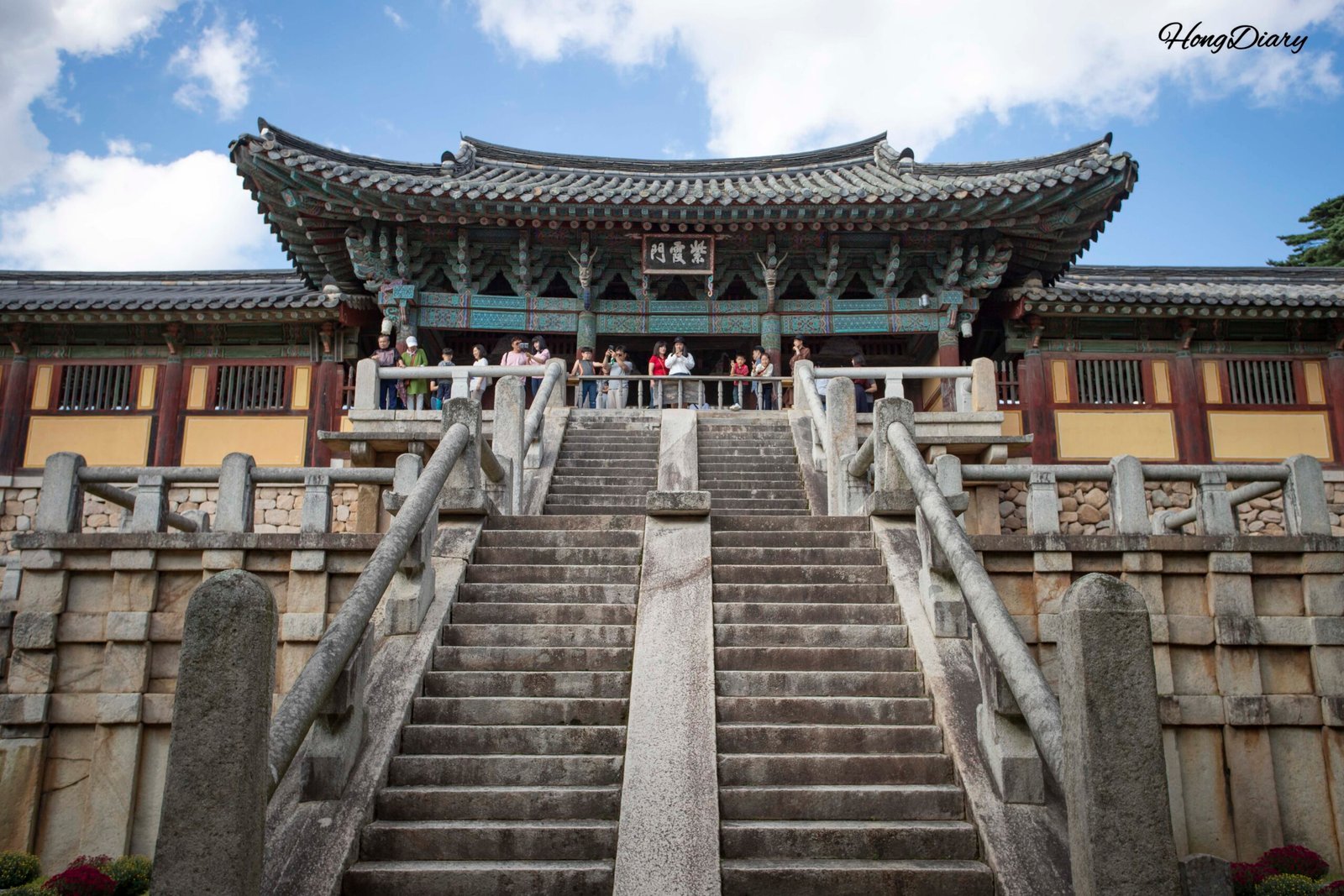
Bulguksa Temple in Gyeongju isn’t just another stop on the itinerary — it’s the one that stays with you. Built into the western slope of Mount Tohamsan, this Silla-era temple has been standing in some form since 528 AD, burned during the Imjin War, rebuilt through the 20th century, and designated a UNESCO World Heritage Site alongside the nearby Seokguram Grotto in 1995. What makes it feel different from other historic temples in Korea is how much weight the place carries: seven National Treasures sit inside a single compound, and the architecture was designed to represent the Buddhist concept of a Pure Land brought into the physical world. It’s also now completely free to enter — one of the country’s most significant heritage sites, open to everyone, no ticket required. I took the bus from Hwangnidan-gil, expecting a standard temple visit. It turned out to be the most layered stop of the whole Gyeongju trip.
Bulguksa sits in the southeastern corner of Gyeongsangbuk-do Province, about 16 km east of central Gyeongju on the slopes of Tohamsan. The temple is part of the Gyeongju Historic Areas, a UNESCO-designated zone that encompasses some of the densest collections of Silla-era remains anywhere in Korea. Unlike temples tucked away in remote mountain valleys, Bulguksa is reachable by local bus from the city center, making it one of the easier major heritage sites to visit without a car.
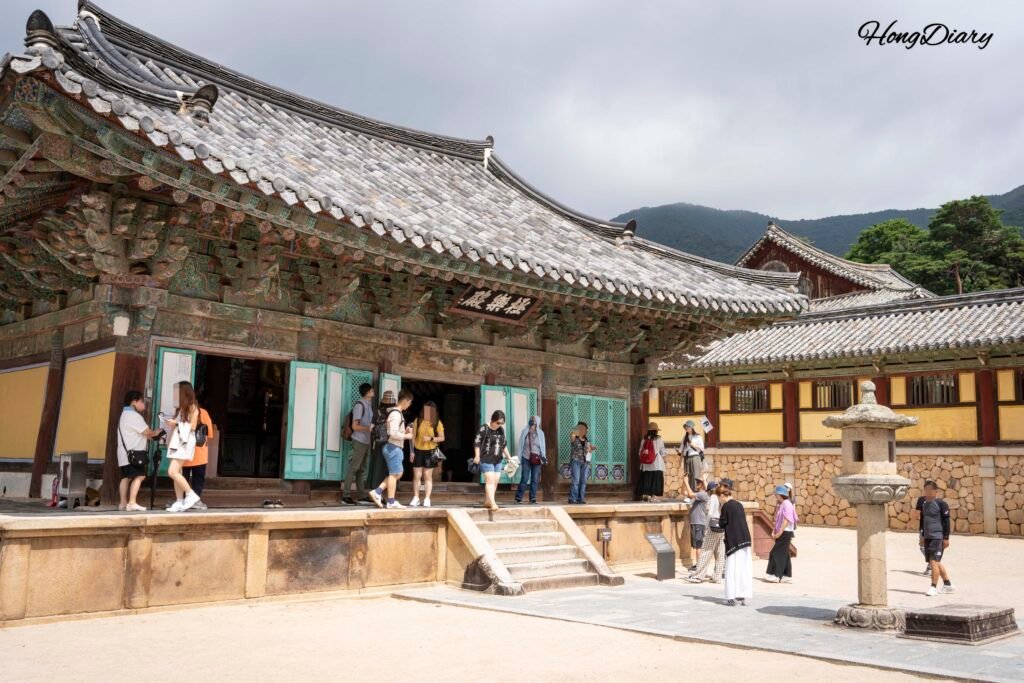
Table of Contents
Practical Information
| Category | Details |
|---|---|
| Address | 385 Bulguk-ro, Gyeongju-si, Gyeongsangbuk-do |
| Hours (last entry) | Mar–Sep: 9:00 AM – 6:00 PM · Feb & Oct: 9:00 AM – 5:30 PM · Nov–Jan: 9:00 AM – 5:00 PM |
| Admission | Free (since May 2023, under the Cultural Heritage Protection Act) |
| Parking | ₩2,000 (~$1.35 USD / ~€1.15 EUR) for small cars · ₩3,000 (~$2 USD / ~€1.70 EUR) for large vehicles · No time limit |
| Getting there | Bus 10, 11, 700, or 711 from Hwangnidan-gil or Gyeongju Intercity Bus Terminal · ~25–35 min ride · Get off at Bulguksa stop, 3-min walk |
| Pets | Not allowed |
| Tip | Arrive early on weekends and holidays — parking fills up fast and the grounds get crowded by midday |
| Category | Details |
|---|---|
| Hours | 9:00 AM – 6:00 PM (last entry 5:30 PM) |
| Admission | Adults ₩2,000 (~$1.35 USD / ~€1.15 EUR) · Youth & Children ₩1,000 (~$0.70 USD / ~€0.60 EUR) |
| Closed | Every Monday, January 1, Seollal (Lunar New Year) and Chuseok |
| Rules | No photography inside · No drinks allowed (lockers at entrance) |
The museum sits along the main path before you reach the temple itself. It houses around 3,000 artifacts related to Silla Buddhist art and the temple’s history of restoration. I didn’t make it in this time due to scheduling, but if Silla-era relics are your thing, it’s worth budgeting an extra 30 to 40 minutes. There’s also a screening room with footage of the Seokgatap pagoda dismantling, which is hard to find elsewhere.
Seokguram Grotto Shuttle
If you’re planning to visit both Bulguksa and the Seokguram Grotto, a shuttle bus runs between the two. It departs from the Bulguksa tourist information center starting at 8:40 AM, runs every hour, and the last bus back leaves at 5:20 PM. No need to figure out a separate bus route — just check in at the information center near the temple entrance.
For more details on temple events and seasonal programs, you can check Bulguksa’s own page.
Walking Through Bulguksa
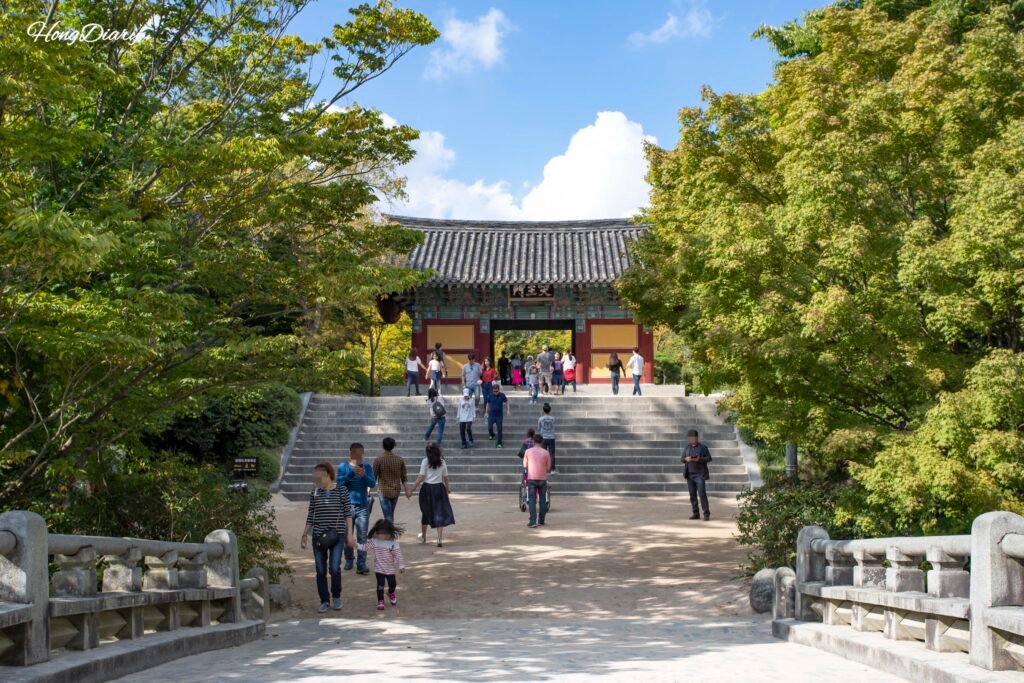
Past the Iljumun — the single-pillar gate that marks the formal entrance to the temple grounds — the path leads uphill through trees before opening onto a stone terrace that’s been here, in one form or another, for over a thousand years. The first thing that hits you isn’t a building. It’s scale.
Bulguksa was originally a much larger complex. At its peak during the Unified Silla period, the temple had more than 80 structures. Most were destroyed when Japanese forces set fire to the compound during the Imjin War (1592–1598). What stands today is the result of centuries of repair and reconstruction, with major restoration work carried out between 1963 and 1973. Knowing that context changes how you look at every beam and stone — some of what you’re seeing is original 8th-century masonry, and some is careful 20th-century reconstruction built to match.
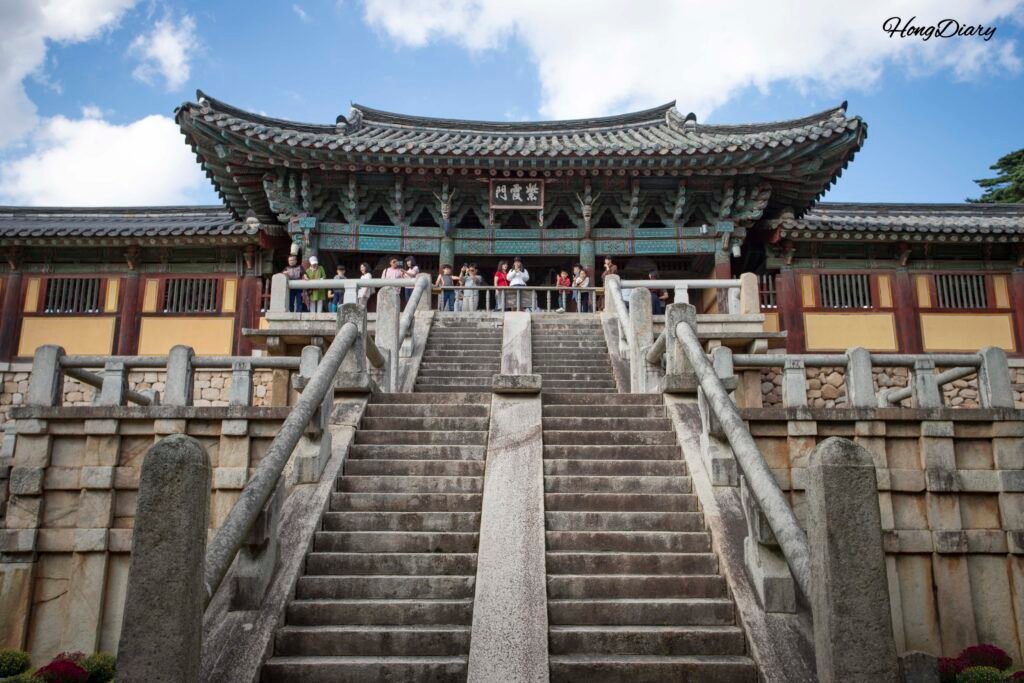
The most photographed spot in the complex is the pair of stone stairways leading up to Jahamun Gate: Cheongungyo (Blue Cloud Bridge) and Baegungyo (White Cloud Bridge). These aren’t just stairs — they represent a bridge between the earthly world and the Buddha’s realm, with 33 steps symbolizing the 33 heavens a human must pass through to reach nirvana. Originally, there was a lotus pond beneath them, fed by drainage from behind Daeungjeon Hall. The stairways are closed to foot traffic now for preservation, so you enter the temple from a side path instead. Still, standing below and looking up at the stonework gives you a clear sense of how the Silla builders conceived of this space as a literal threshold between worlds.
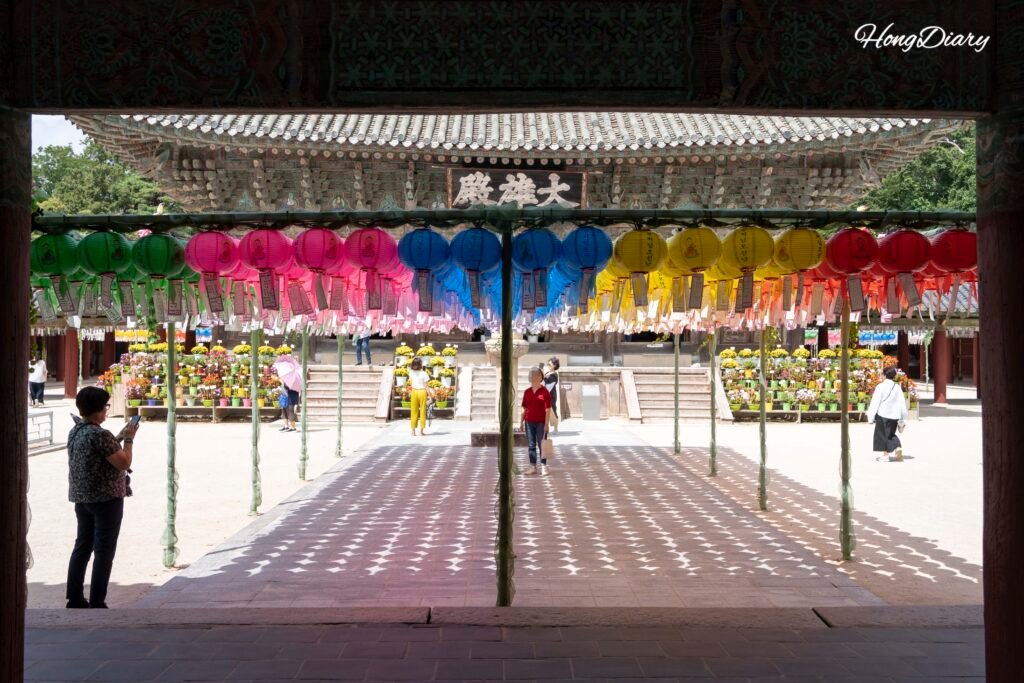
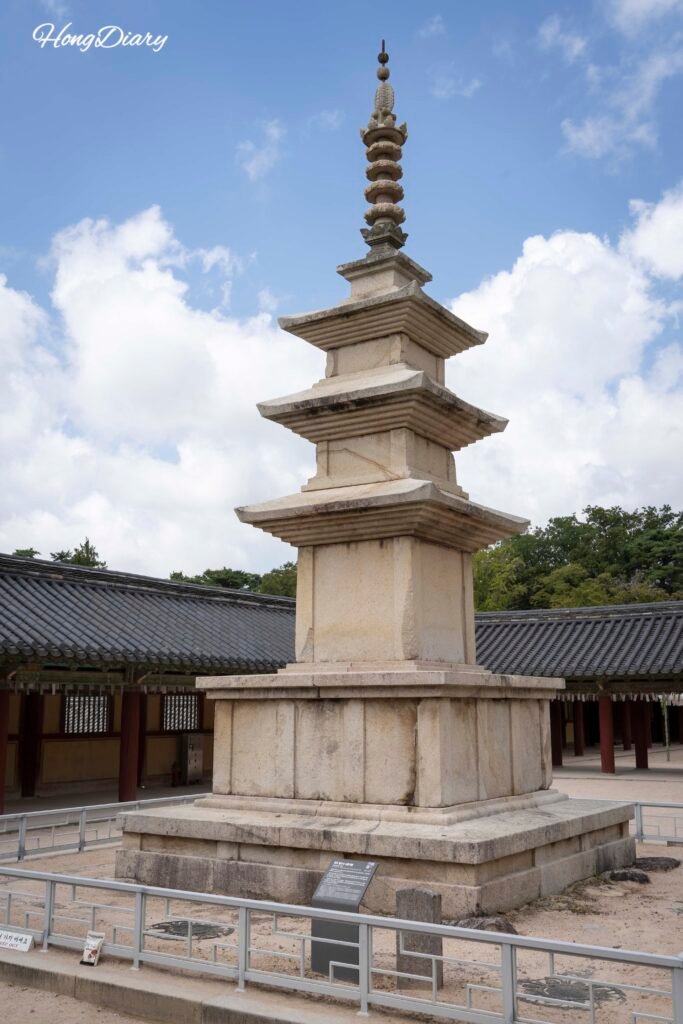
Inside the main courtyard, two stone pagodas face each other in front of Daeungjeon Hall — the temple’s central worship hall, which houses the Sakyamuni Buddha. Seokgatap, the three-story pagoda on the west side, is known for its clean, restrained proportions. During restoration work on Seokgatap, workers discovered the Mugujeonggwang Great Dharani Sutra inside — the world’s oldest known woodblock-printed document.
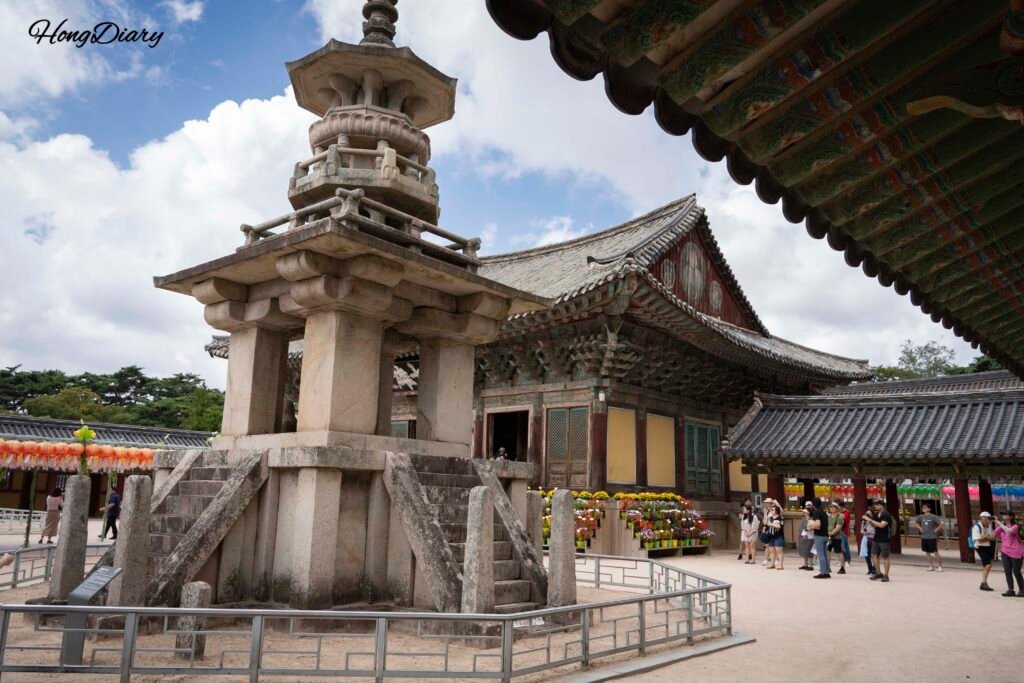
Dabotap, on the east side, is the more elaborate of the two, with an ornate, multi-layered silhouette that shows up on Korea’s 10-won coin. Seeing them side by side — one plain, one decorative — is a visual shorthand for two different approaches to Buddhist expression, and it’s one of those details that makes Bulguksa feel like more than a museum.
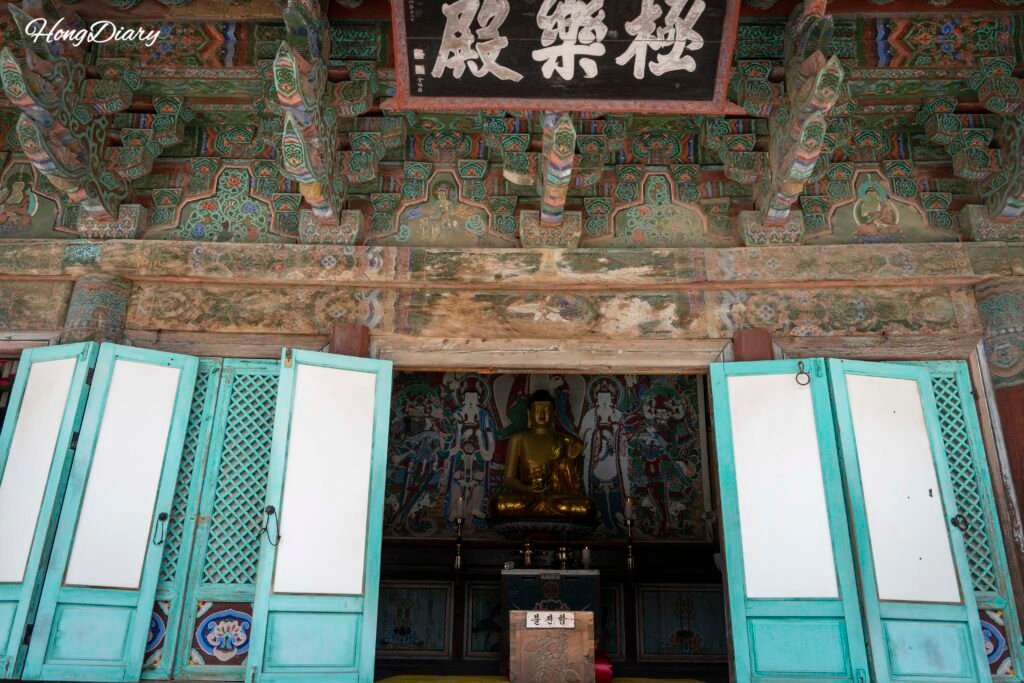
On the way through the complex, look for Geungnakjeon — the Hall of Supreme Bliss, dedicated to Amitabha Buddha. Next to it, there’s a golden pig statue that visitors touch for good luck. I did the same, not entirely sure what I was wishing for, but it felt like the right thing to do. If you spot it, give it a rub. It’s small and easy to walk past, but it’s one of those moments that turns a temple visit into something a little more personal.
Bulguksa shifts with the seasons. Cherry blossoms and magnolias frame the eaves in spring, deep green fills the courtyards in summer, and autumn turns the surrounding mountain into reds and oranges that are incredibly photogenic against the temple’s wooden beams. Even the quieter winter months have their own appeal — fewer visitors, sharper light, and the kind of silence that suits a place built for contemplation.
Before You Head Out
Give yourself at least 90 minutes for the temple grounds, more if you’re adding the museum or continuing to Seokguram. Comfortable shoes matter — the terrain is uneven stone in places, and there are stairs throughout. Weekday mornings are the quietest window if you want the grounds to yourself.
The temple is about a 25-minute bus ride from the city center, so it pairs naturally with a day spent around Hwangnidan-gil and Daereungwon.
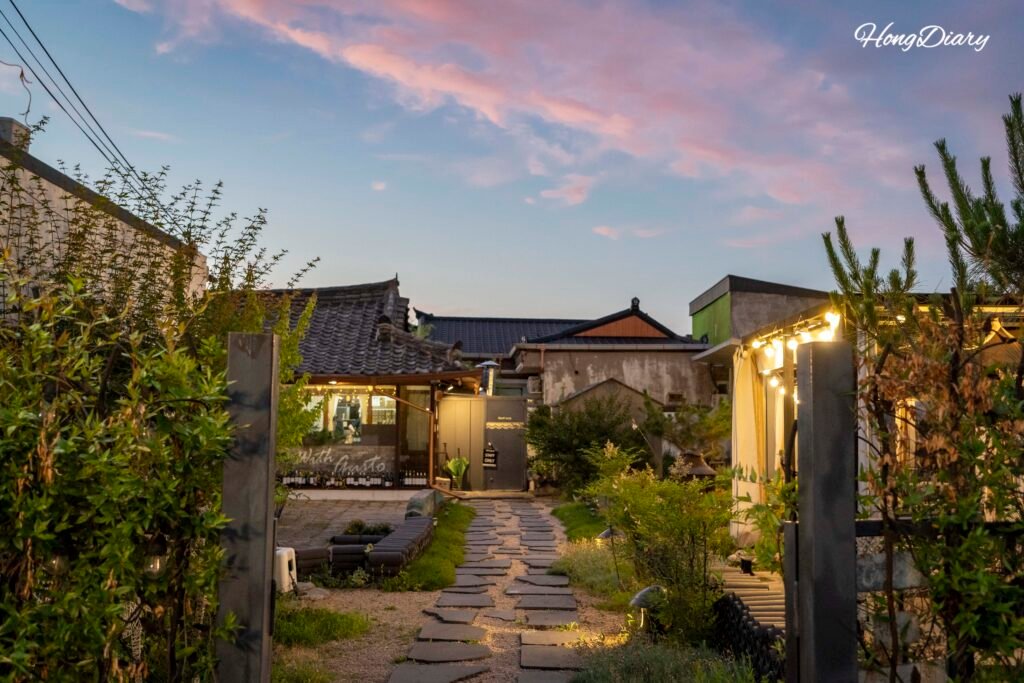
If you haven’t been yet, I put together a walking guide to Hwangnidan-gil and Daereungwon that covers the evening route from the tombs into the street — a good complement to a morning at the temple.
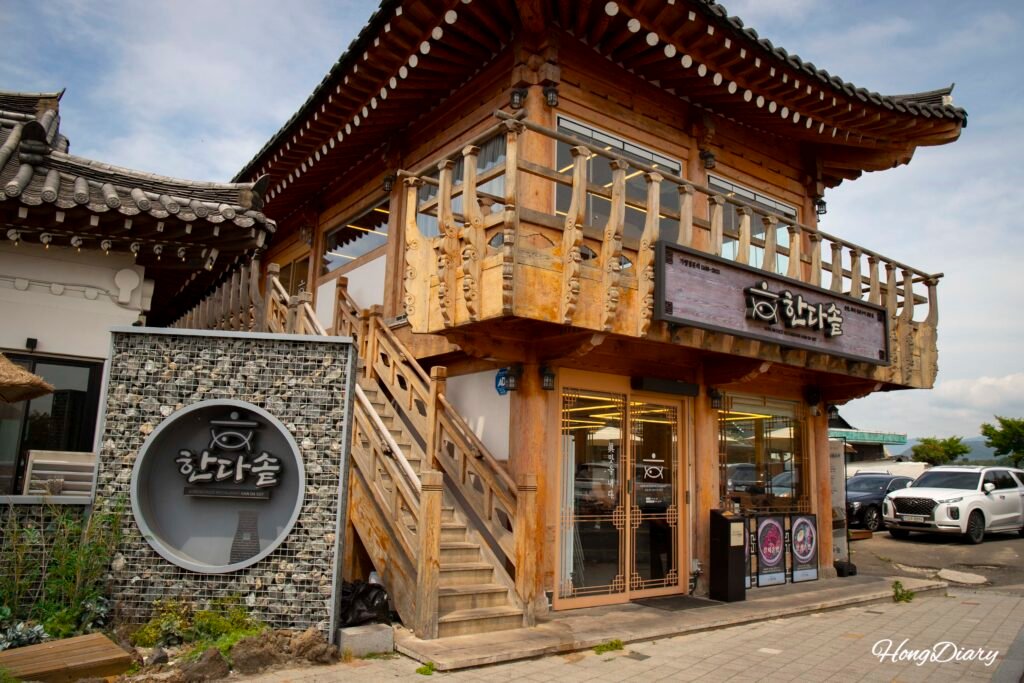
For food, Handassot is a highly convenient option located right on Hwangnidan-gil, serving delicious Korean-style stone pot rice (sotbap) accompanied by a diverse selection of side dishes.
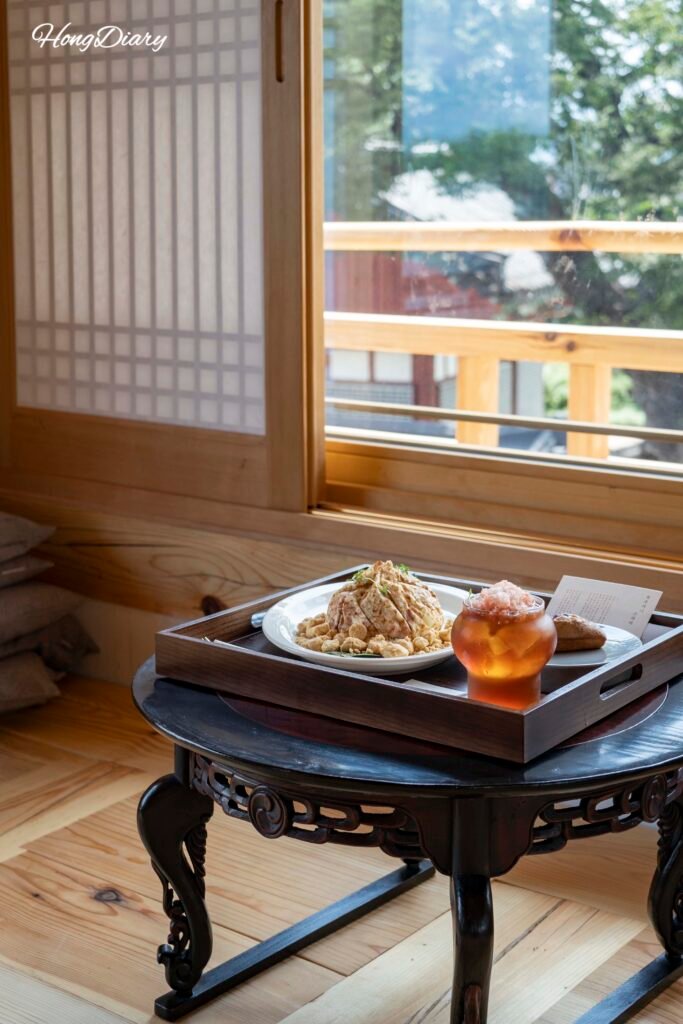
Bichae Bogette, a beautiful hanok cafe also located on Hwangnidan-gil, is well worth a visit for its diverse selection of delicious drinks and desserts.
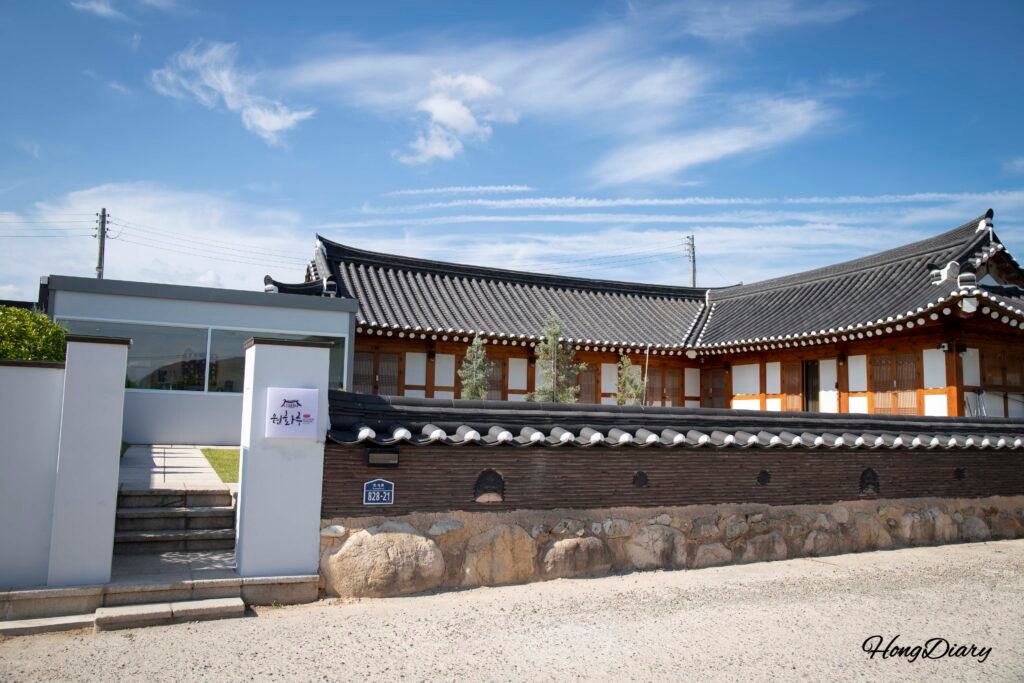
If you’re staying overnight, Wonhwaru is a hanok guesthouse nearby with free breakfast and a resident cat who’s earned a reputation among guests.
One last thing — you can download free walking maps of Gyeongju’s historic district, including Hwangnidan-gil and Gyochon Village, from the city’s tourism page. They’re available in English and Japanese, and cover side streets you’d likely miss otherwise — a useful companion for anyone spending a day around Bulguksa Temple in Gyeongju.
Things to Know Before You Go
Is Bulguksa Temple in Gyeongju free to enter?
Yes. As of May 2023, admission to Bulguksa Temple is completely free. The previous ₩6,000 (~$4 USD / ~€3.40 EUR) adult ticket was eliminated under a revision to Korea’s Cultural Heritage Protection Act, which removed entrance fees for all Jogye Order temples nationwide. Parking is also inexpensive at ₩2,000 (~$1.35 USD / ~€1.15 EUR) for small cars with no time limit.
How do I get from Hwangnidan-gil to Bulguksa Temple by bus?
Take bus 10, 11, 700, or 711 from Hwangnidan-gil or the Gyeongju Intercity Bus Terminal. The ride takes approximately 25 to 35 minutes. Get off at the Bulguksa stop and walk about 3 minutes uphill to the temple entrance. Buses run frequently throughout the day.
Is there a shuttle bus from Bulguksa Temple to Seokguram Grotto?
Yes. A shuttle bus runs between Bulguksa and Seokguram Grotto, departing from the Bulguksa tourist information center. The first bus leaves at 8:40 AM, runs every hour, and the last bus departs at 5:20 PM. You can board at the information center near the main entrance — no separate tickets or bus routes needed.
What are the opening hours for Bulguksa Temple?
Hours vary by season, and the times listed are last-entry deadlines. March through September: last entry at 6:00 PM. February and October: last entry at 5:30 PM. November through January: last entry at 5:00 PM. The temple opens at 9:00 AM year-round with no days off.
Is Bulguksa Museum worth visiting?
If you’re interested in Silla-era Buddhist art and the temple’s restoration history, yes. The museum houses around 3,000 artifacts and includes a screening room with footage of the Seokgatap pagoda being dismantled — content that’s hard to find anywhere else. Admission is ₩2,000 (~$1.35 USD / ~€1.15 EUR) for adults, and it’s closed every Monday, January 1, Lunar New Year, and Chuseok. No photography is allowed inside, and drinks must be left in lockers at the entrance.
How long should I spend at Bulguksa Temple?
Plan for at least 90 minutes to walk the main temple grounds comfortably. If you’re adding the Bulguksa Museum, budget an extra 30 to 40 minutes. If you’re continuing to Seokguram Grotto via the shuttle, a half-day is a realistic timeframe for both. Wear comfortable shoes — the paths involve uneven stone and stairs throughout the complex.
Where can I find a walking map of Gyeongju in English?
The city of Gyeongju provides free downloadable maps through their tourism page, available in English and Japanese. The collection includes maps of the Gyeongju historic district, Hwangnidan-gil, and Gyochon Village. They mark smaller streets and alleys that don’t show up well on Google Maps.