
I walked into Gyeongju National Museum just past 5 PM on a rainy Saturday, half-convinced I’d missed my window. Turns out, between March and October, the museum extends its Saturday hours until 8 PM — a detail I only discovered at the gate. What I expected to be a quick pass through one or two halls turned into nearly three hours of wandering past gold crowns, centuries-old Buddhist sculptures, and a Paleolithic boat that’s the oldest ever found in Korea. And the whole thing cost me exactly nothing: no admission fee, no parking fee, no reservation.
If you’re planning a trip to Gyeongju and wondering where to start — or what to do when the rain rolls in and outdoor sightseeing falls apart — the Gyeongju National Museum should be near the top of your list.
Gyeongju, in North Gyeongsang Province about 35 minutes from Busan by high-speed rail, served as the royal capital of the Silla Kingdom for nearly a thousand years (57 BCE–935 CE). Often called a “museum without walls,” the city is dotted with ancient burial mounds, temple ruins, and stone pagodas — and the Gyeongju National Museum, established in 1945, sits at the center of this UNESCO-listed historic district. With a collection exceeding 79,000 artifacts and over 80 years of continuous operation, it’s the country’s largest and most significant repository of Silla-era relics.
Table of Contents
Gyeongju National Museum: Essential Visitor Information & Practical Guide
| Detail | Information |
|---|---|
| Name | Gyeongju National Museum |
| Address | 186 Iljeong-ro, Gyeongju-si, Gyeongsangbuk-do |
| Hours | 10:00–18:00 (last entry 30 min before closing) |
| Saturday Extended | Until 20:00, March–October |
| Closed | January 1, Seollal (Lunar New Year), Chuseok (Korean Thanksgiving); temporary closures on 2nd Monday of March & November |
| Admission | Free for all permanent exhibitions (ticketed special exhibitions may apply) |
| Parking | Free on-site lot |
| English Guided Tour | Sundays only — Session 1: 10:00–11:30, Session 2: 14:00–15:30 (free, meet at Silla History Gallery 1F stairway) |
| Getting There | From Busan Station: KTX (34 min, ₩11,000 / ~$7.33 USD / ~€6.22 EUR) or SRT (35 min, ₩10,100 / ~$6.73 USD / ~€5.71 EUR) to Singyeongju Station |
| – | From Singyeongju Station (KTX/SRT): Bus 700 → Donggung & Wolji stop (approx. 25 min) → 3-min walk to the museum |
| – | From Gyeongju Bus Terminal: Bus 11, 153, or 600–609 (fare: ₩1,500 / ~$1.00 USD / ~€0.85 EUR) |
| Accessibility | Wheelchair and stroller rental available on-site |
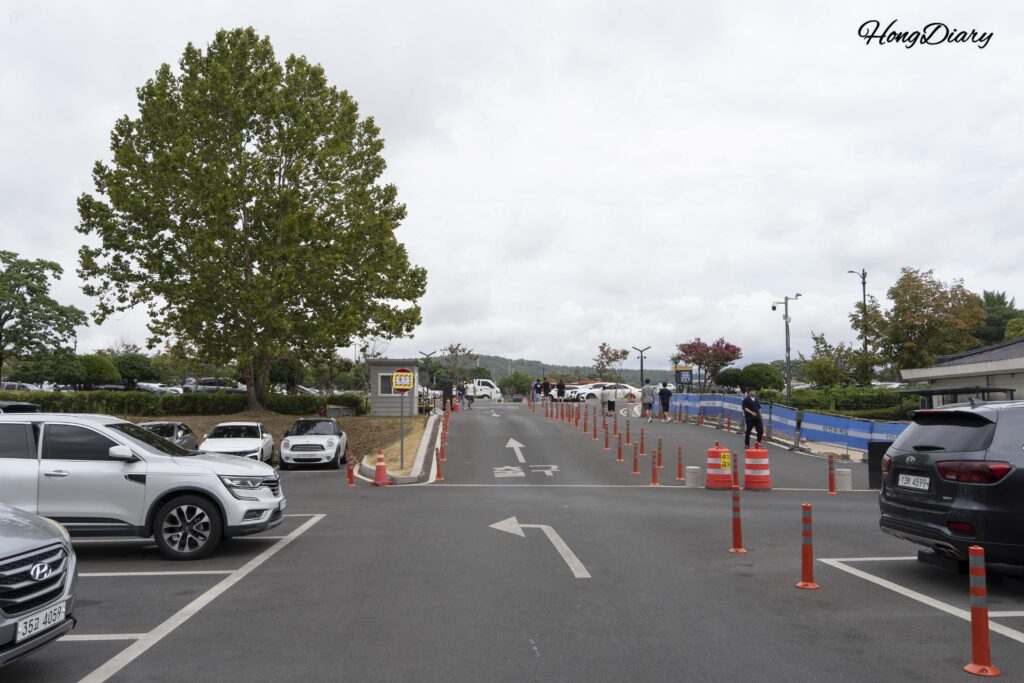
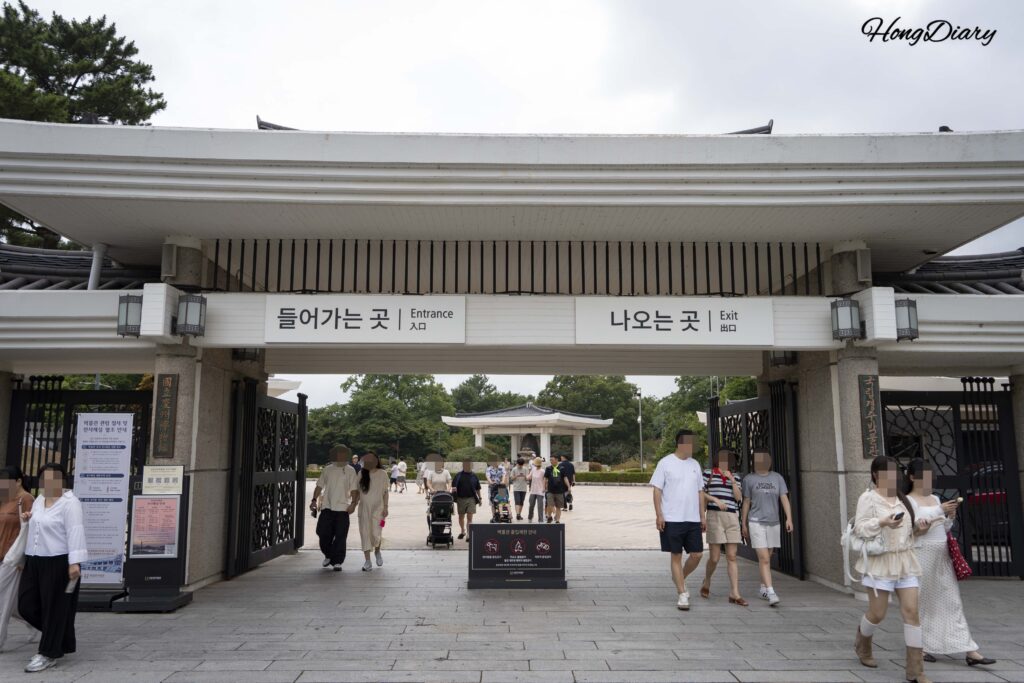
Entrance note: The main front gate has been closed since August 1 for construction work. Use the Wonhwa-ro entrance on the east side instead.
What’s Inside: Museum Layout Overview
The grounds are more extensive than they look from the gate. Four main exhibition buildings are spread across the campus, plus a sizable outdoor sculpture area with its own set of national treasures.
| Building | What You’ll Find |
|---|---|
| Silla History Gallery (Main Hall) | The centerpiece — Silla from prehistory through unification, including the famous gold crowns |
| Silla Art Gallery | Buddhist sculptures, Hwangnyongsa Temple artifacts, donated collections |
| Wolji Gallery | Artifacts from Donggung Palace and Wolji Pond (the former royal garden) |
| Special Exhibition Hall | Rotating temporary exhibitions |
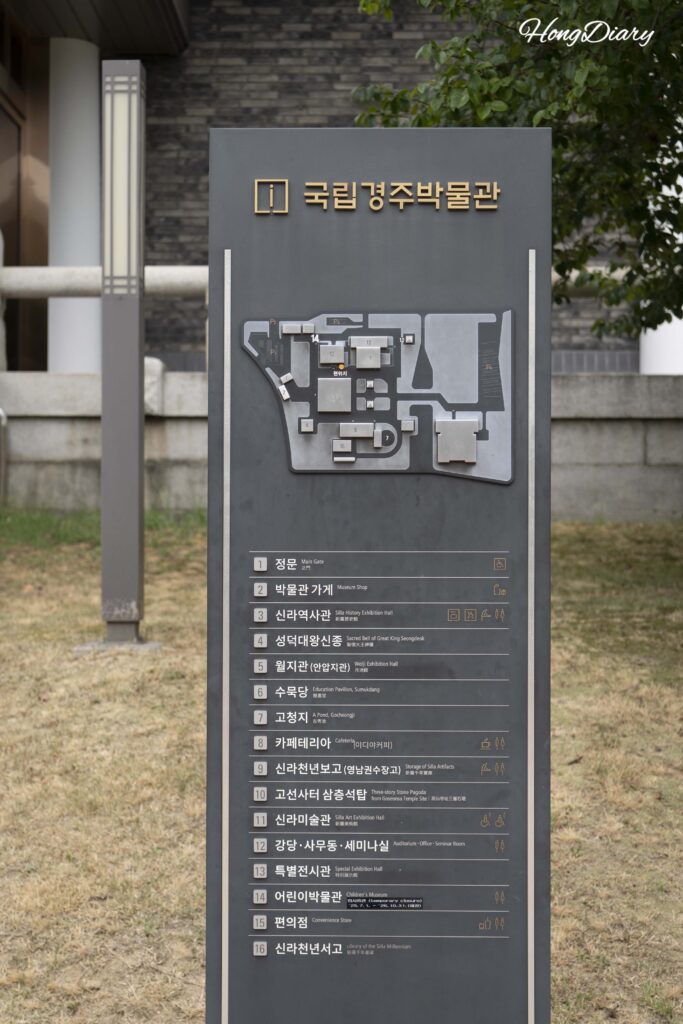
Beyond the four halls, there’s the Silla Millennium Treasure Archive (an open-storage conservation facility), an outdoor exhibit area with over 1,100 stone relics, a cafeteria run by Ediya Coffee, a convenience store, and a museum gift shop — so you can easily take breaks between galleries without leaving the grounds.
A couple of things worth knowing before you go in: there are no restrooms inside the individual exhibition halls. The nearest ones are on the first floor of the Silla History Gallery building, so make a stop before you start wandering. Also, the Children’s Museum is closed for renovation until October 2026, so families with young kids should plan accordingly.
Silla History Gallery: The Heart of the Museum
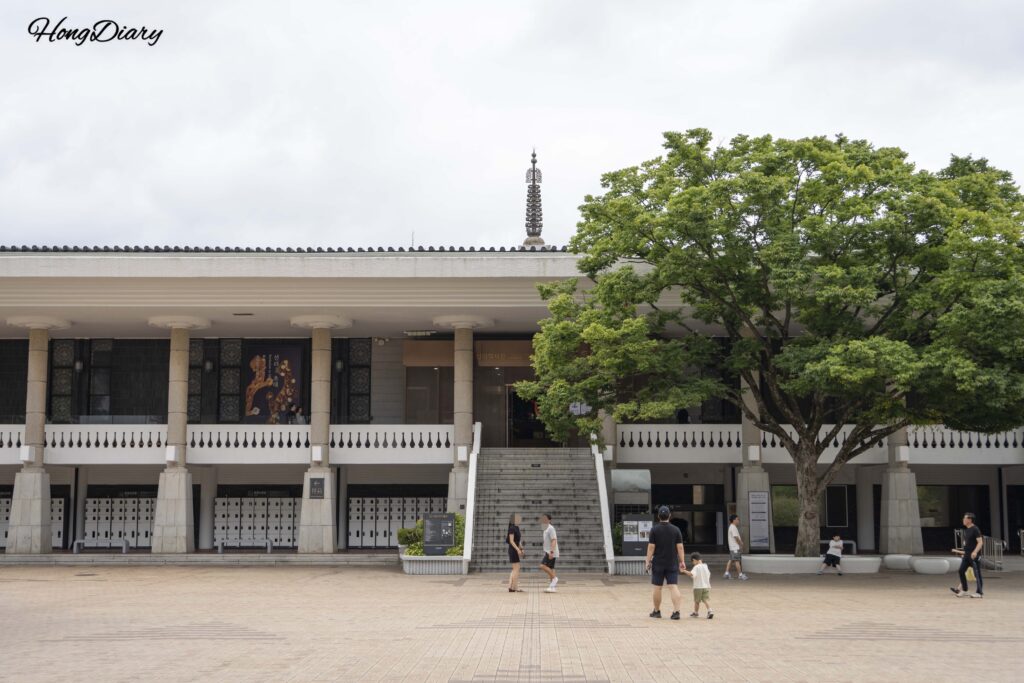
This is where I spent the most time, and where I’d suggest you start too. The Silla History Gallery is the museum’s main building, and the layout flows naturally from Room 1 through Room 3, ending at the Gukeun Memorial Hall. Each room covers a different chapter of Silla’s thousand-year arc, and the chronological flow makes it easy to follow even if you’re coming in with zero background knowledge.
Room 1 — The Birth and Rise of Silla
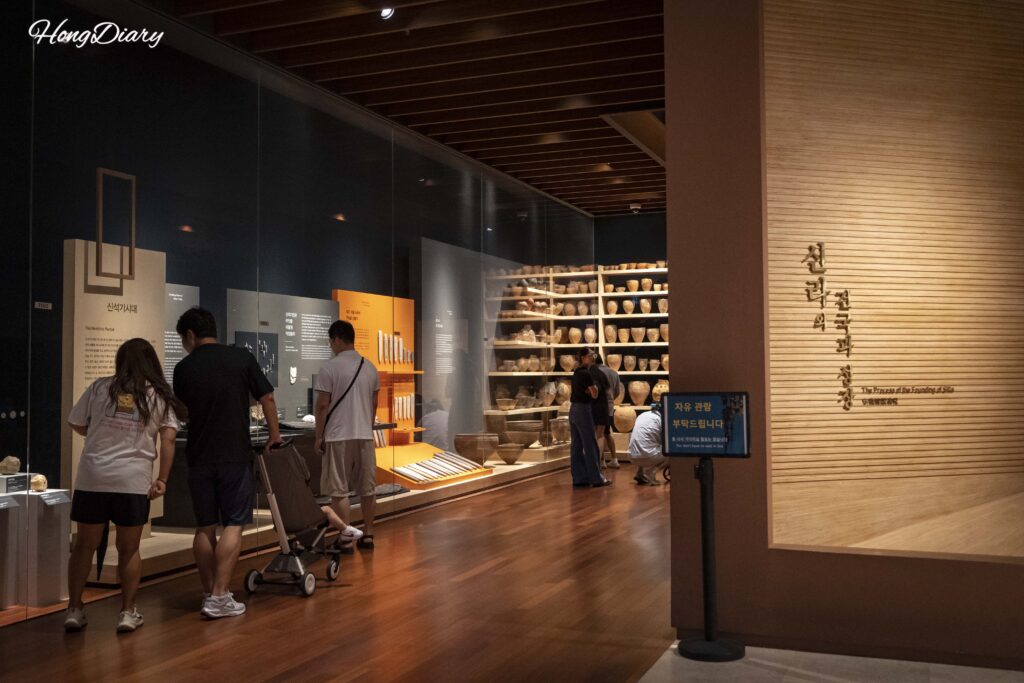
Room 1 traces the long arc from the Paleolithic era — roughly 780,000 years ago on the Korean Peninsula — to Silla’s emergence as a centralized kingdom around the 6th century CE. That’s a staggering amount of history compressed into a single gallery, but the curators have done a good job of anchoring the timeline with standout pieces rather than overwhelming you with density.
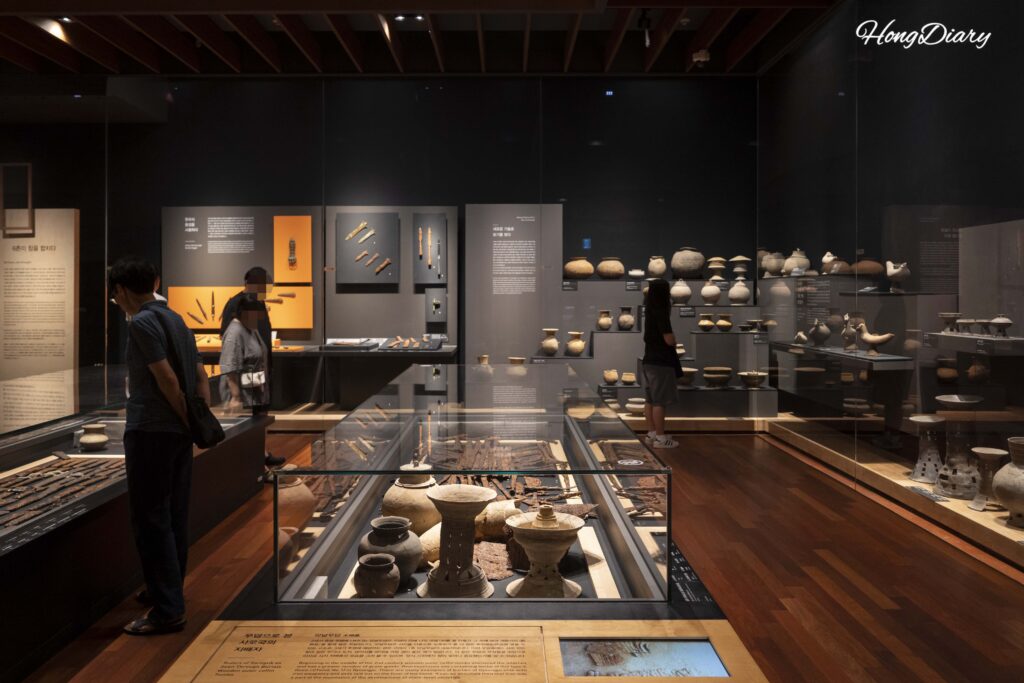
A few things stopped me mid-step. One was Korea’s oldest known boat and oar, excavated from Uljin Jukbyeon-ri on the east coast. There’s also the Gyodong Gold Crown and a collection of owl-shaped pottery that looks almost playful next to the more solemn bronze and iron weapons nearby.
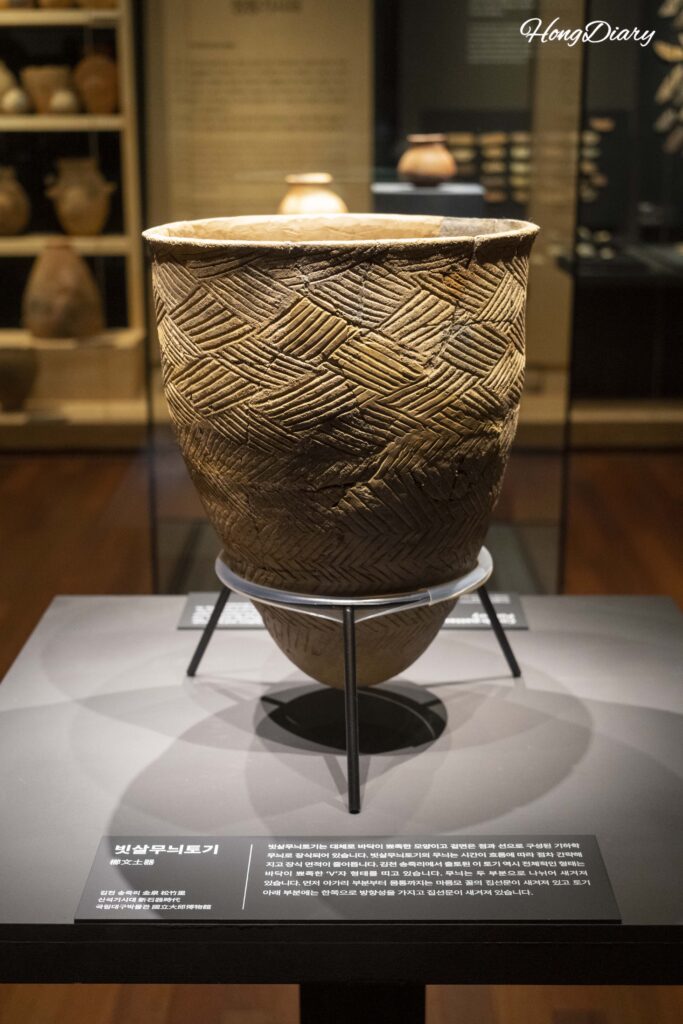
The comb-pattern pottery on display here — called Bitsal-muni Togi in Korean, a type of Neolithic earthenware scored with distinctive diagonal lines using a comb-like tool — is one of those artifacts that most Korean schoolchildren grow up seeing in textbooks. Seeing the real thing behind glass, thousands of years old and still intact, felt genuinely surreal.
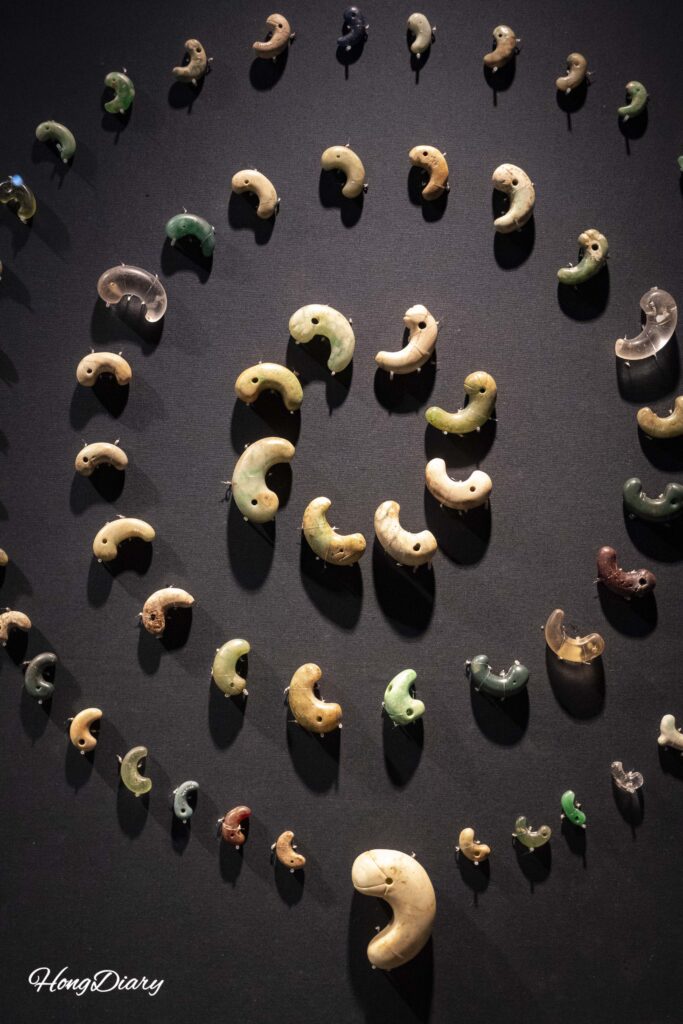
The jade ornaments (gogok — comma-shaped beads carved from jade, glass, or amazonite, commonly found in Silla royal tombs as symbols of spiritual protection and social rank) were smaller than I expected, but the precision of the carving was unmistakable even through the display case.
Room 2 — Silla, the Golden Kingdom
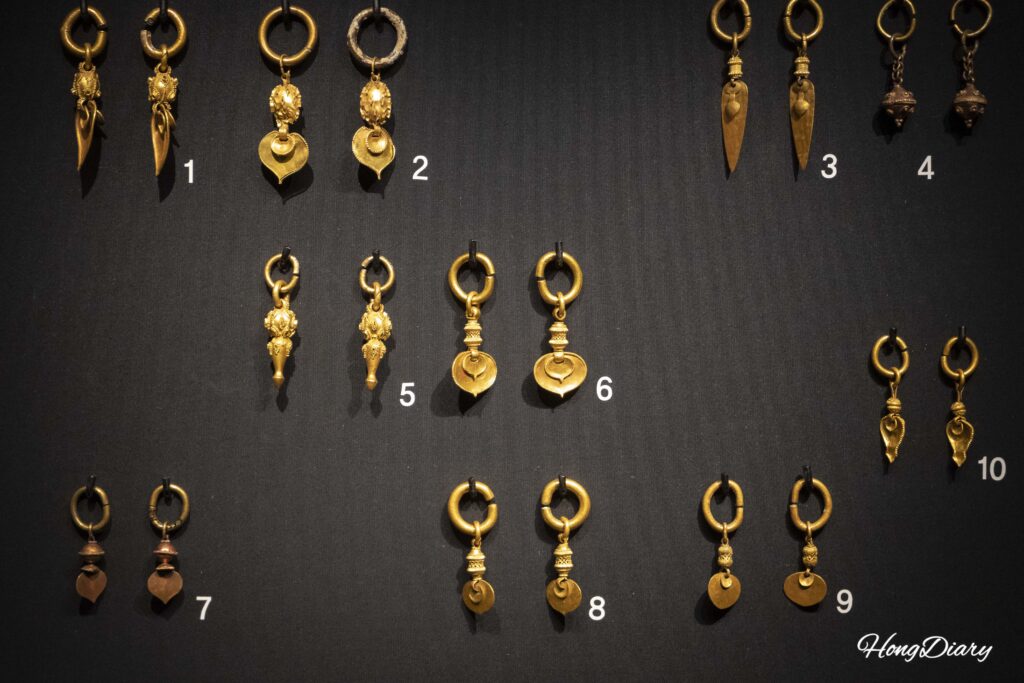
This was my favorite room in the entire museum. I spent more time here than anywhere else, and I suspect most visitors do the same.
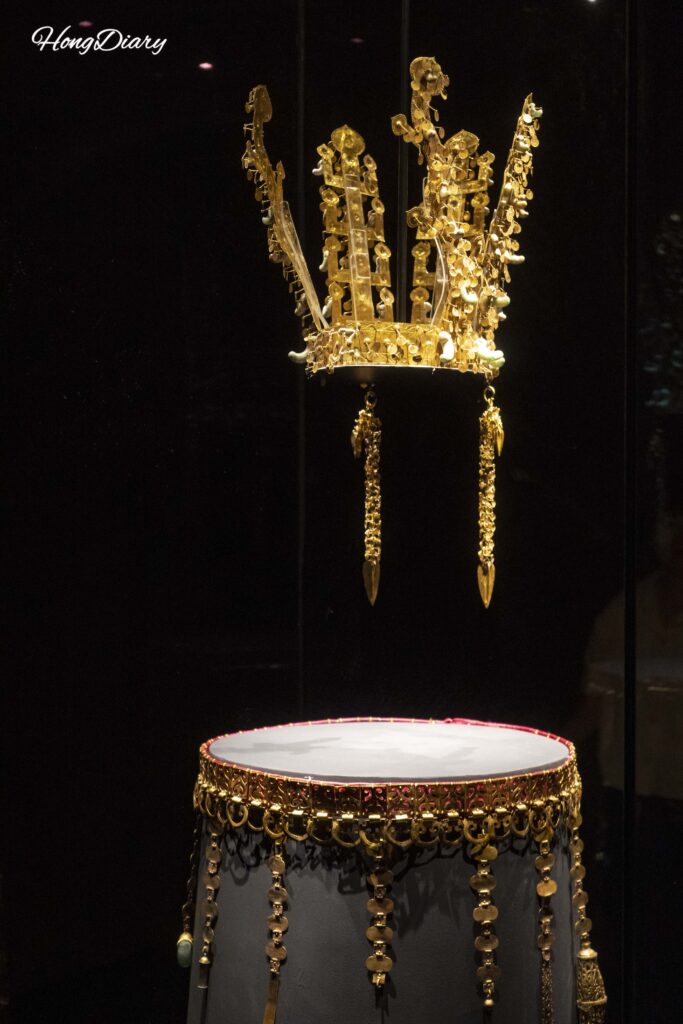
Room 2 is dedicated to the golden age of Silla metalwork, and the star of the show is the gold crown excavated from Cheonmachong Tomb — known in English as the “Heavenly Horse Tomb,” a 5th-century royal burial mound located in central Gyeongju that you can actually walk inside today. The crown is the most complete and ornate example of Silla goldwork in existence, with branching tree and antler motifs that rise from the headband, symbolizing the wearer’s role as a bridge between heaven and earth.
Displayed alongside it are gold belts, gold necklaces from Hwangnamdaechong Tomb (the largest Silla royal tomb ever excavated, with separate burial chambers for a king and queen), and a range of earrings, bracelets, and ornamental shoes — all made of solid gold. Collectively, these pieces are the reason Silla earned the title “the Golden Kingdom.”
What struck me wasn’t just the volume of gold in this room. It was understanding what the gold represented. These weren’t decorative accessories. For Silla’s ruling class, gold items were direct symbols of political authority and spiritual legitimacy. Only the highest-ranking royals were buried with them, and the craftsmanship — thin sheets of pure gold hammered into elaborate shapes and hung with jade ornaments that would have clinked softly with every movement — speaks to a kingdom that invested enormous skill into projecting power.
If you’ve already visited Cheonmachong Tomb in person, this room hits differently. I’d walked through that same burial mound the day before, and standing in front of the crown that had spent over 1,500 years sealed inside it added a layer of meaning I hadn’t expected.
Room 3 — The Height of Silla
Room 3 shifts its focus to the period of the Three Kingdoms unification (when Silla absorbed the rival kingdoms of Baekje and Goguryeo in the 7th century) and the cultural flourishing that followed under Unified Silla. The artifacts here move away from gold toward stone, bronze, and ceramic — reflecting how Buddhism, once officially adopted as the state religion, reshaped the kingdom’s artistic direction.
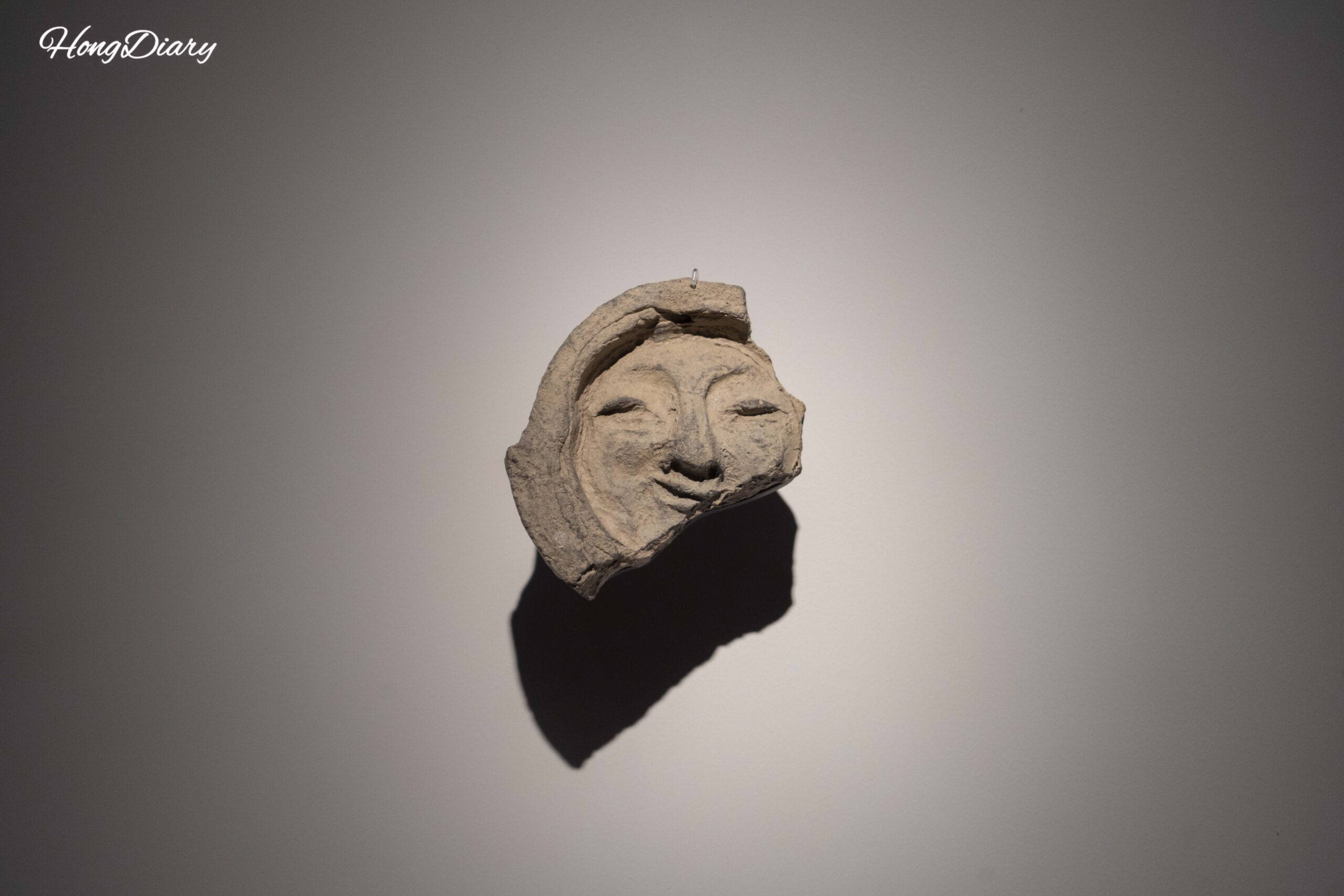
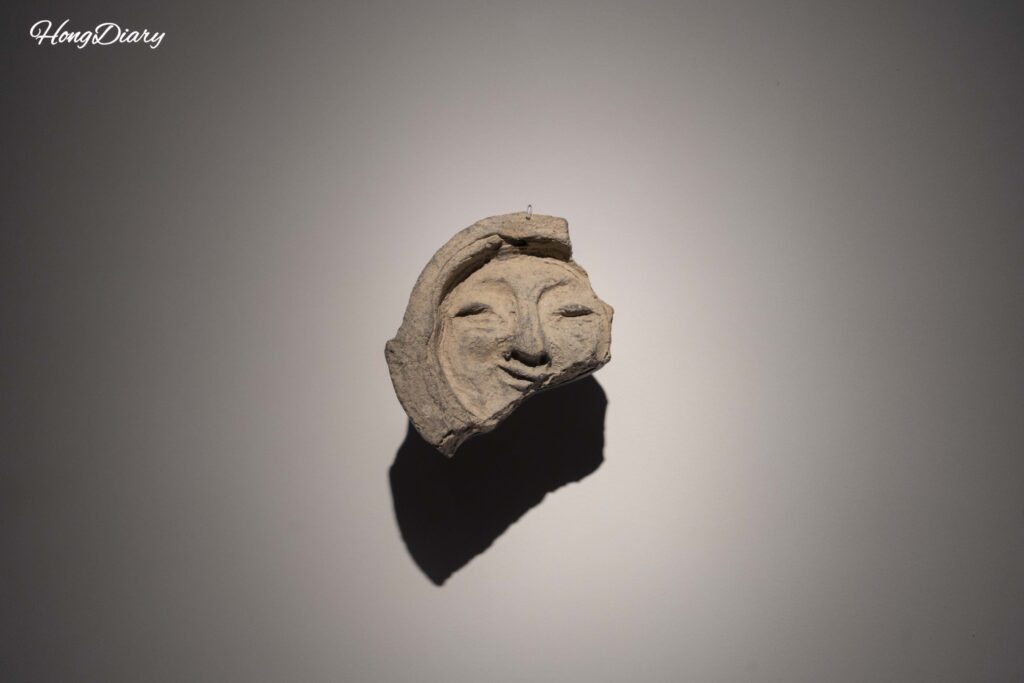
The piece that draws the most attention is the face-patterned roof tile end, widely known as the “Silla Smile.” It’s a round decorative tile cap featuring a human face with an unmistakable grin, designated as a Treasure of South Korea. You’ll see this face reproduced on souvenirs, street signs, and tourist brochures all over Gyeongju — but seeing the original, still cheerful after more than a thousand years, is something else.
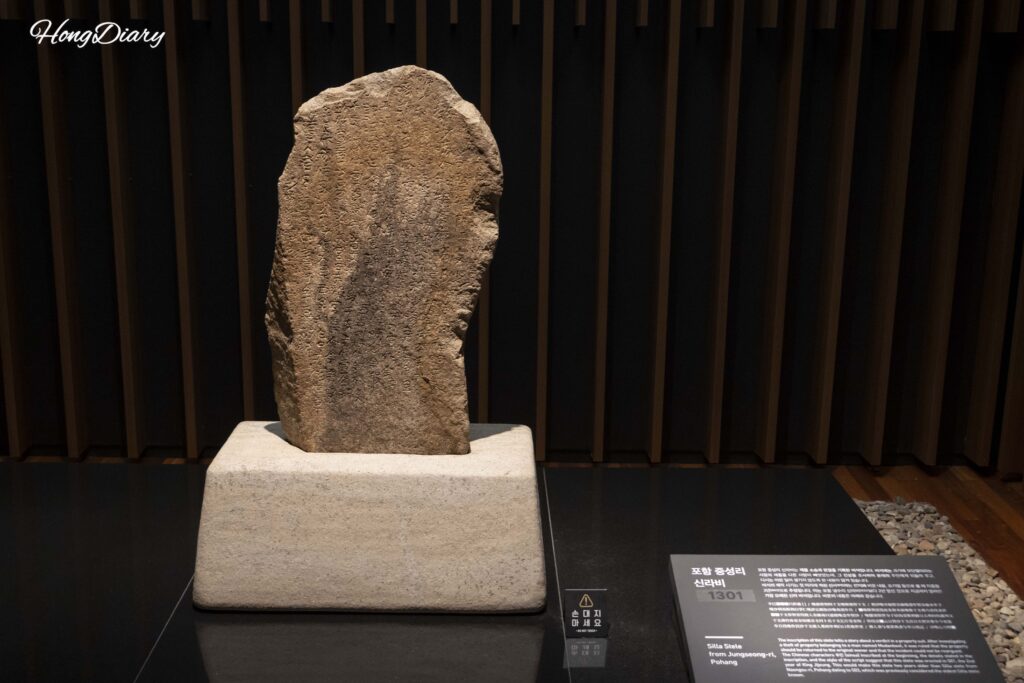
Also in this room: the Pohang Jungseong-ri Silla Stele, one of the earliest surviving stone inscriptions from the Silla period, and the Ichadon Martyrdom Stele, which commemorates a Buddhist monk whose execution — legend holds his blood ran white instead of red — became the catalyst for Buddhism’s official recognition in Silla.
Gukeun Memorial Hall
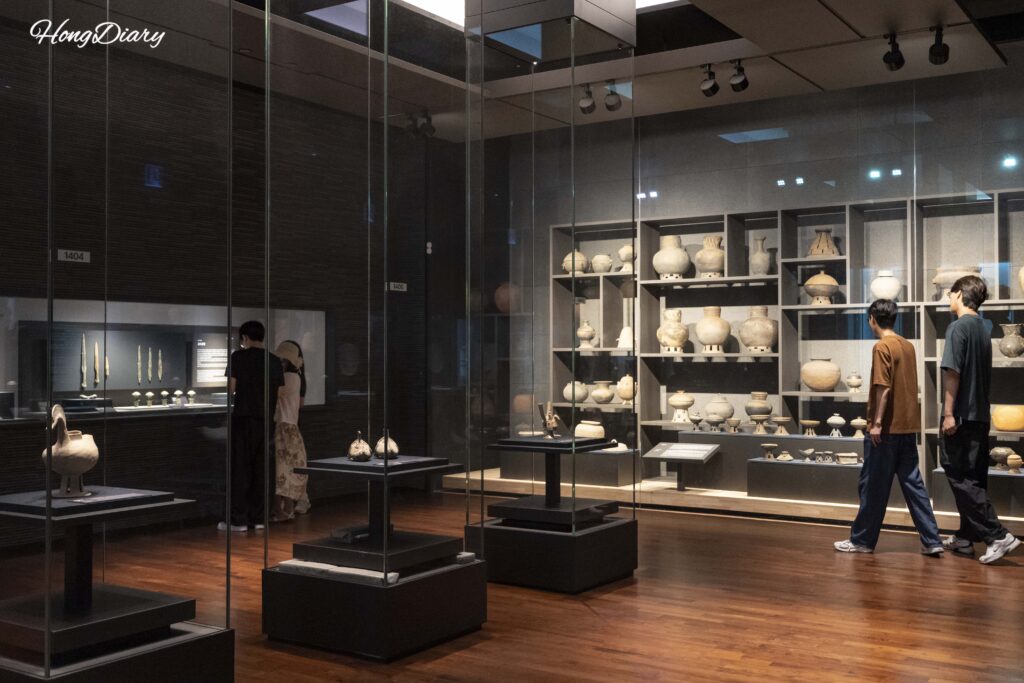
The final section of the Silla History Gallery is the Gukeun Memorial Hall, named after the late Lee Yang-seon, a private collector who donated his entire lifelong collection — 666 cultural artifacts — to the museum. It’s a quieter, more intimate space compared to the main galleries, and the curation reflects one person’s deep, personal relationship with Korean heritage.
The highlight here, and one of the most recognizable artifacts in the entire museum, is the Horseback Rider-Shaped Horn Cup (Dogi Gimainmulhyeong Ppuljan) — a ceramic drinking vessel sculpted in the shape of a mounted warrior on horseback. It’s designated as a National Treasure and appears in practically every overview of Korean art history. The level of detail, from the rider’s posture to the horse’s proportions, is remarkable for a piece made over 1,500 years ago.
Silla Art Gallery
The Silla Art Gallery occupies a separate building and shifts the lens from historical narrative to artistic and religious expression. Around 700 works from the Three Kingdoms and Unified Silla periods are displayed across four rooms. The ground floor holds two rooms of Buddhist sculpture — stone Buddhas, gilt-bronze figures, and sarira reliquaries (elaborately crafted containers used to hold sacred Buddhist relics such as bone fragments or ashes of revered monks) from the Three Kingdoms and early Unified Silla periods.
The second floor is where things get particularly absorbing. The Hwangnyongsa Hall is dedicated entirely to artifacts from Hwangnyongsa Temple, founded by King Jinheung in the 6th century as the largest and most important temple in the Silla Kingdom. The temple no longer stands — it was destroyed during the Mongol invasions of the 13th century — but the excavation site has yielded an enormous volume of artifacts. About 150 carefully selected pieces are displayed here: ornamental roof tiles, gilt-bronze Buddha statues, sarira containers, and decorative wall bricks. The fact that 150 items represent just a fraction of what was recovered from a single temple site gives you a sense of how vast Hwangnyongsa’s footprint truly was.
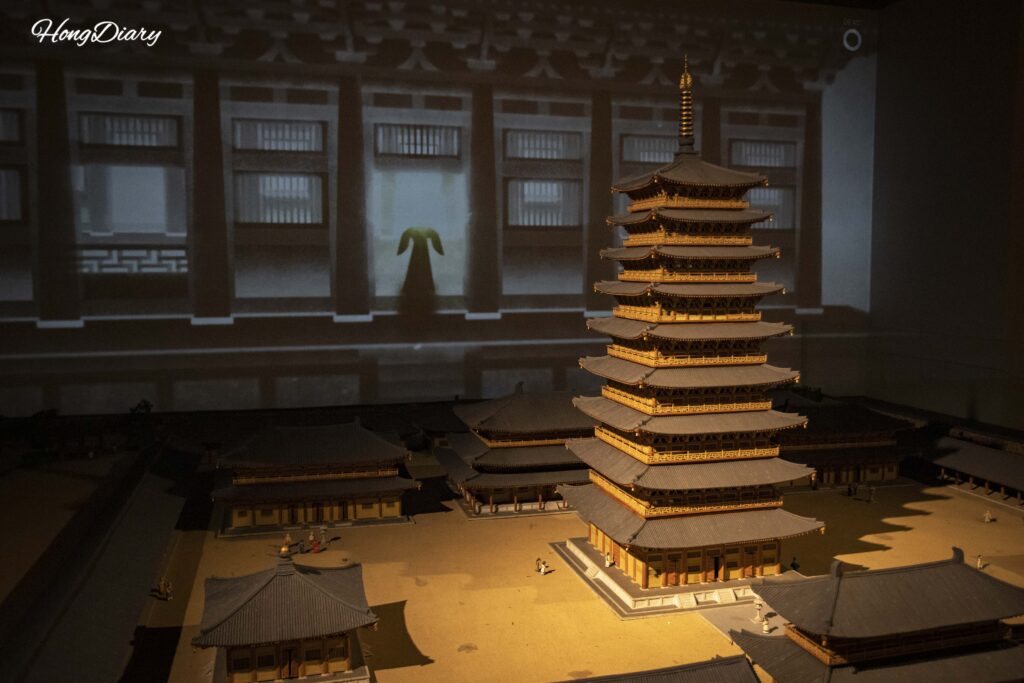
A scale model of the original temple complex is displayed in the same hall, and it helps contextualize the individual artifacts — you can trace where specific tiles or statues would have been placed within the temple grounds.
Compared to the Silla History Gallery, the art gallery has a quieter, almost meditative atmosphere. The stone Buddhas and bronze figures sit in softly lit rooms with far fewer visitors, and I found myself slowing down without meaning to. There’s something about standing alone in front of a centuries-old Buddhist sculpture that genuinely settles the mind — it was one of the most calming moments of the entire trip.
Wolji Gallery
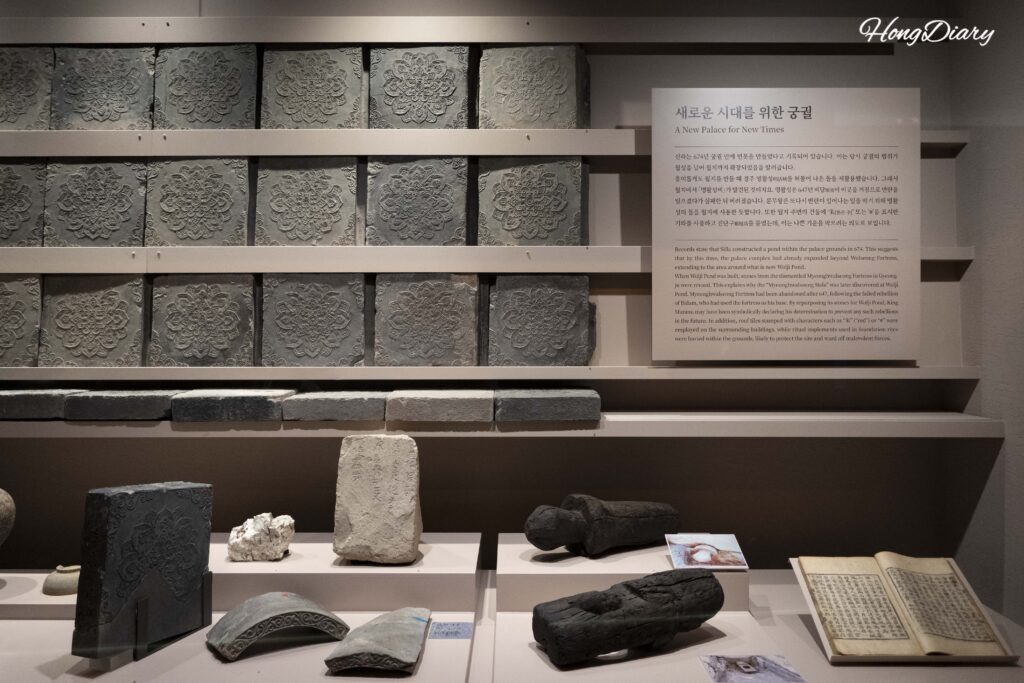
If you’ve visited — or plan to visit — Donggung Palace and Wolji Pond (one of Gyeongju’s most popular evening destinations, where Silla-era pavilions are reflected in still water under floodlights), the Wolji Gallery provides the backstory. The pond site yielded approximately 30,000 artifacts from the Unified Silla period during excavation, and about 1,000 of those are on display here, organized thematically.
The focus is on daily life at the Silla royal court: tableware, board games, grooming tools, decorative arts. It’s a different angle from the ceremonial gold and religious sculpture found elsewhere in the museum, and it fills in the texture of what life actually looked like for Silla’s aristocracy beyond the tombs and temples. If the gold crowns show how Silla projected power, Wolji shows how they lived with it.
Silla Millennium Treasure Archive
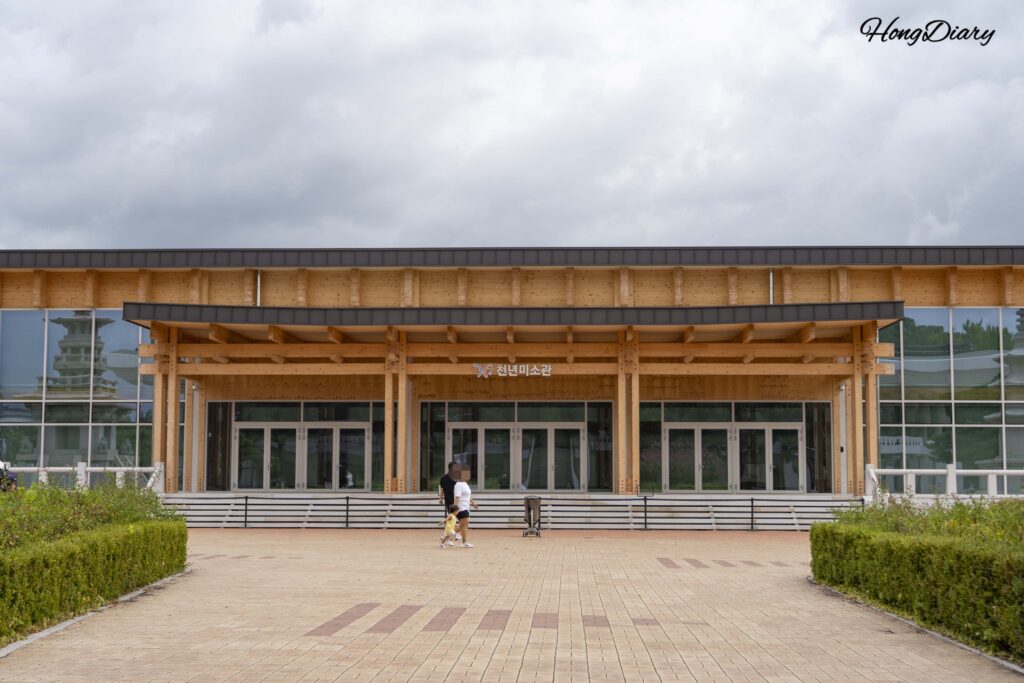
This facility surprised me. The Silla Millennium Treasure Archive (Silla Cheonnyon Bogo) is essentially an open-storage conservation center — part museum, part working archive — that houses artifacts excavated from across the Gyeongsang Province region. It also stores items belonging to the National Museums in Daegu, Jinju, and Gimhae.
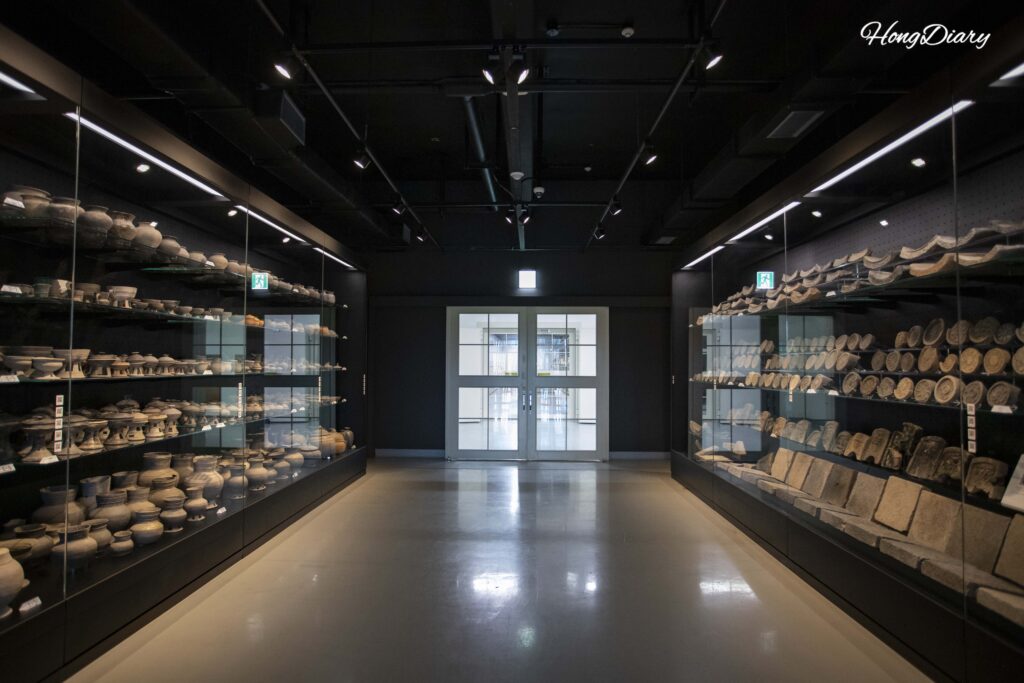
The building contains nine separate storage rooms, along with a disinfection chamber, a photography studio, and an archive reading room where researchers can request access to materials. For visitors, the appeal is a rare look behind the curtain — you can see how artifacts are cataloged, stored, and preserved, a process most museums keep entirely out of sight. It won’t be the most visually dramatic stop on your visit, but if you’re curious about the infrastructure of conservation, it’s worth a walk-through.
Special Exhibition: Hwangnyongsa — Enshrining the Buddha’s Sarira
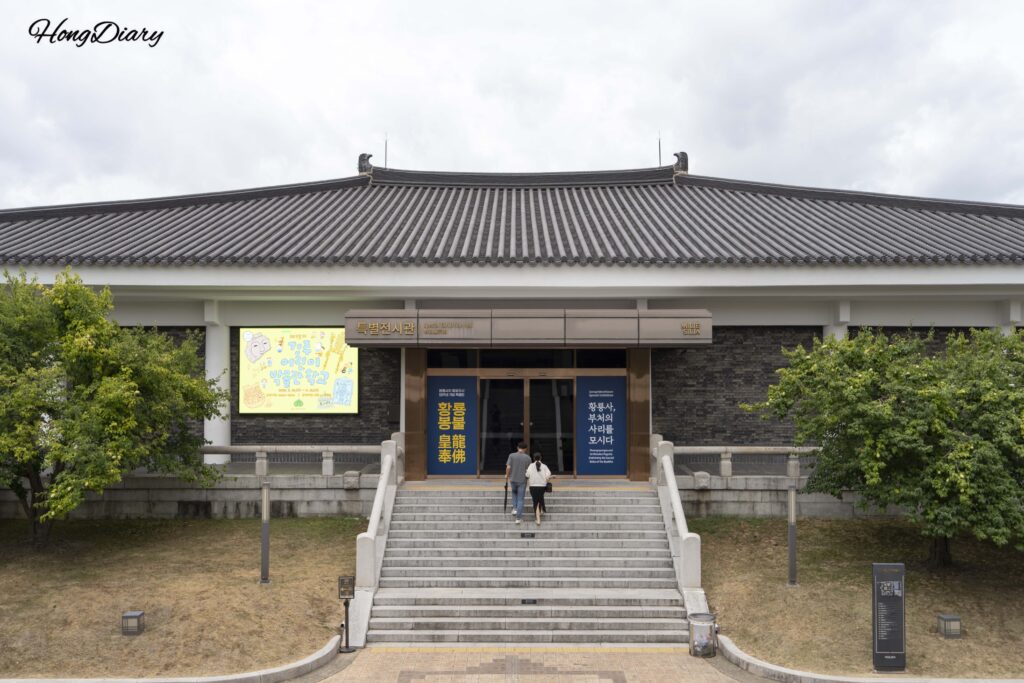
During my visit, the museum was running a special exhibition commemorating the 50th anniversary of the Hwangnyongsa Temple excavation. It was held in the Special Exhibition Hall and focused on sarira reliquaries and ritual objects recovered from the temple site.
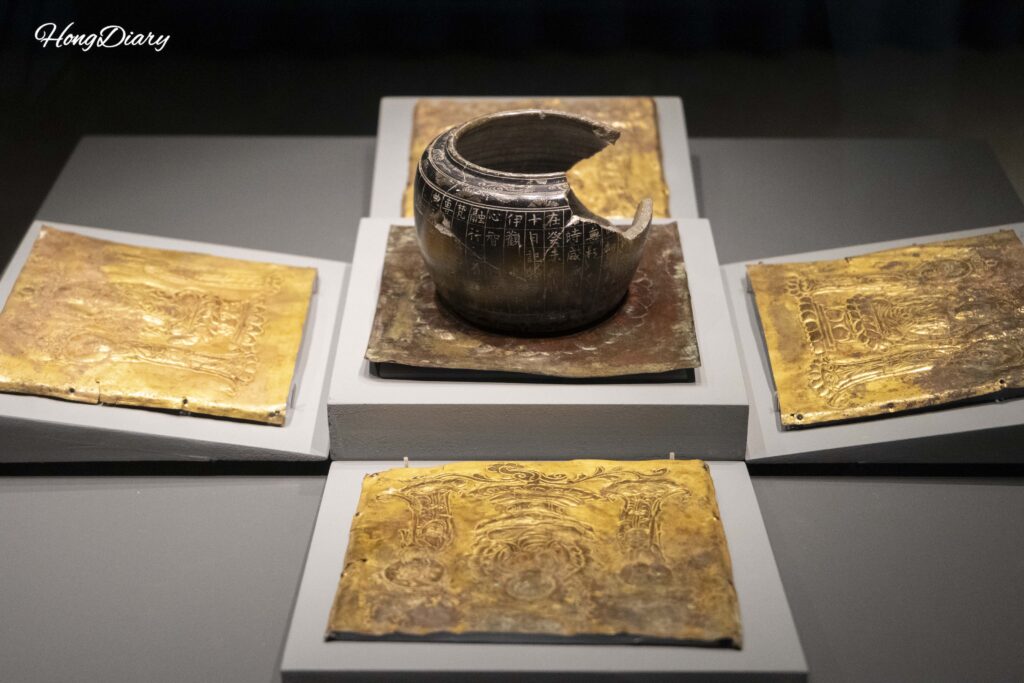
The gilt-bronze sarira container on display was the centerpiece — an intricately worked metal vessel that survived more than a thousand years underground. Unlike the 2025 Silla Gold Crowns exhibition, which required advance reservations and timed entry, this show was free and walk-in, with no booking needed.
Special exhibitions rotate, so what’s on view when you visit will likely differ from what I saw. Check the museum’s official exhibition page before your trip to see what’s currently running.
Outdoor Exhibits and the Divine Bell
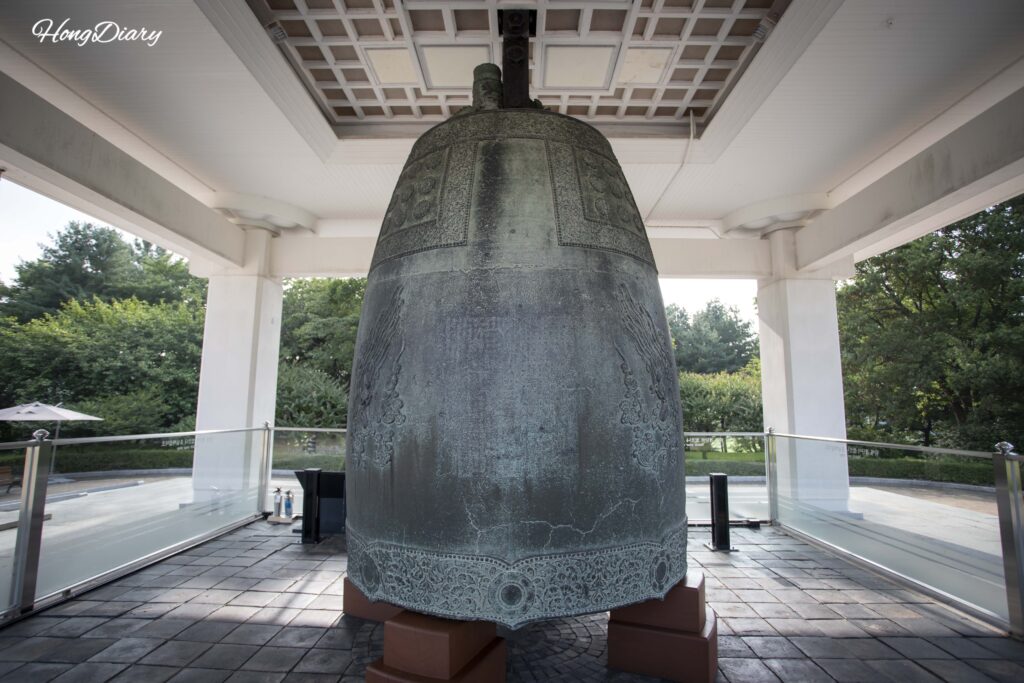
The museum grounds include a sizable outdoor exhibit area with over 1,100 stone artifacts — Buddhist temple bells, stone pagodas, stone Buddha statues, stone lanterns, and tortoise-shaped stele bases scattered across a landscaped garden.
The most significant piece outdoors is the Divine Bell of King Seongdeok (Seongdeok Daewang Sinjeong), designated as National Treasure No. 29. Weighing approximately 18.9 tons and standing over 3.6 meters tall, it was commissioned by King Gyeongdeok in honor of his late father, King Seongdeok, and completed in 771 CE by his son, King Hyegong. It’s one of the largest and best-preserved bronze bells in Asia, and its balanced proportions and elaborate surface reliefs are considered a high point of Silla-era metalwork.
I didn’t get to see the outdoor exhibits during my visit — the rain was too heavy to justify it — but if the weather cooperates, factor in an extra 30 to 45 minutes for a walk through the grounds. The bell alone is worth the detour.
Tips Before You Go
| Tip | Detail |
|---|---|
| Best time to visit | Weekday mornings for the fewest crowds. Saturdays offer extended hours until 20:00 (Mar–Oct) |
| Must-see if short on time | Silla History Gallery + Silla Art Gallery — these two alone are worth the visit |
| English guided tours | Sundays only, two sessions (10:00–11:30 and 14:00–15:30). Free. Meet at the 1F stairway of the Silla History Gallery |
| Restrooms | Only in the 1F of the Silla History Gallery building — go before starting your tour |
| Children’s Museum | Closed for renovation until October 2026 |
| Current entrance | Main front gate closed since Aug 1 — use the Wonhwa-ro (east side) entrance |
| Rainy day? | All galleries are indoors and air-conditioned — one of the best wet-weather options in Gyeongju |
| Museum app | Free on Google Play, with Bluetooth-based location info for key exhibits (download content via WiFi in advance) |
| Total cost | ₩0 ($0 USD / €0 EUR) — admission, parking, and English tours are all free |
Public buses connect most of Gyeongju’s major sites, but schedules can be thin — especially on weekdays — and waiting in the summer heat or winter cold with luggage or kids gets old fast. If you’re visiting with family or planning to cover multiple outdoor sites in a single day, renting a car through Klook.com makes the logistics considerably easier and gives you the flexibility to visit the museum, tombs, and temples on your own schedule.
Making the Most of Your Gyeongju Trip
The Gyeongju National Museum works well as either a starting point or a final stop on a Gyeongju itinerary. Visit it first, and you’ll have context that makes every tomb, temple, and stone pagoda you encounter afterward more meaningful. Visit it last, and you’ll recognize artifacts from places you’ve already walked through — which is its own kind of reward. Either way, it’s the kind of place where spending a few unhurried hours pays off more than rushing through a checklist of outdoor sites.
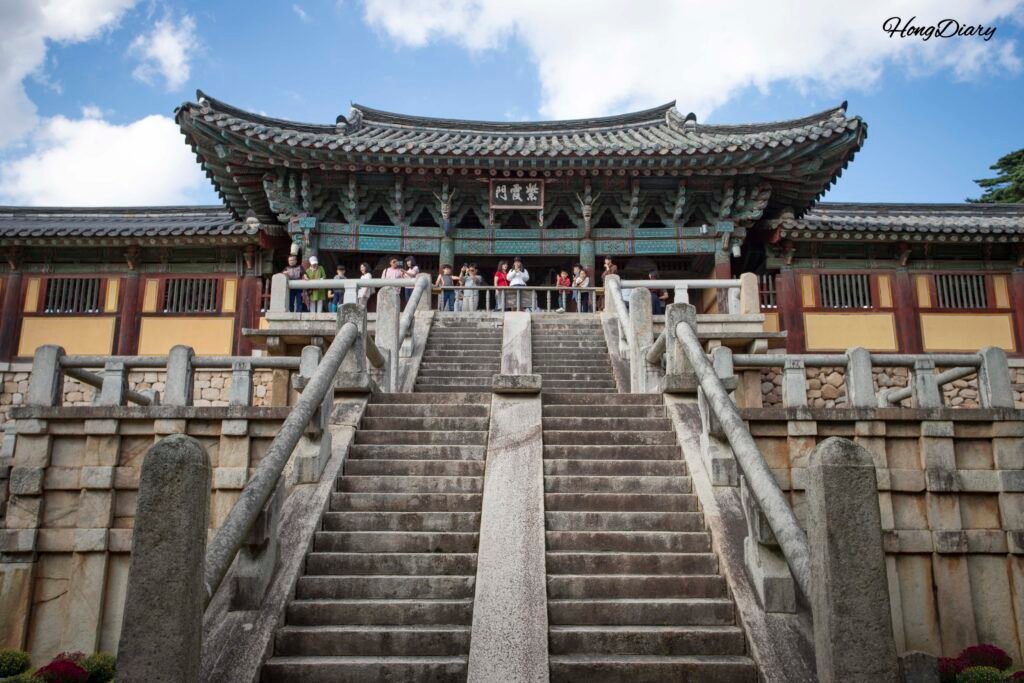
If you’re building out a longer trip, the museum pairs naturally with Bulguksa Temple, the UNESCO World Heritage site about 30 minutes east by bus, where Silla-era Buddhist architecture is preserved across tiered stone terraces and wooded hillsides.
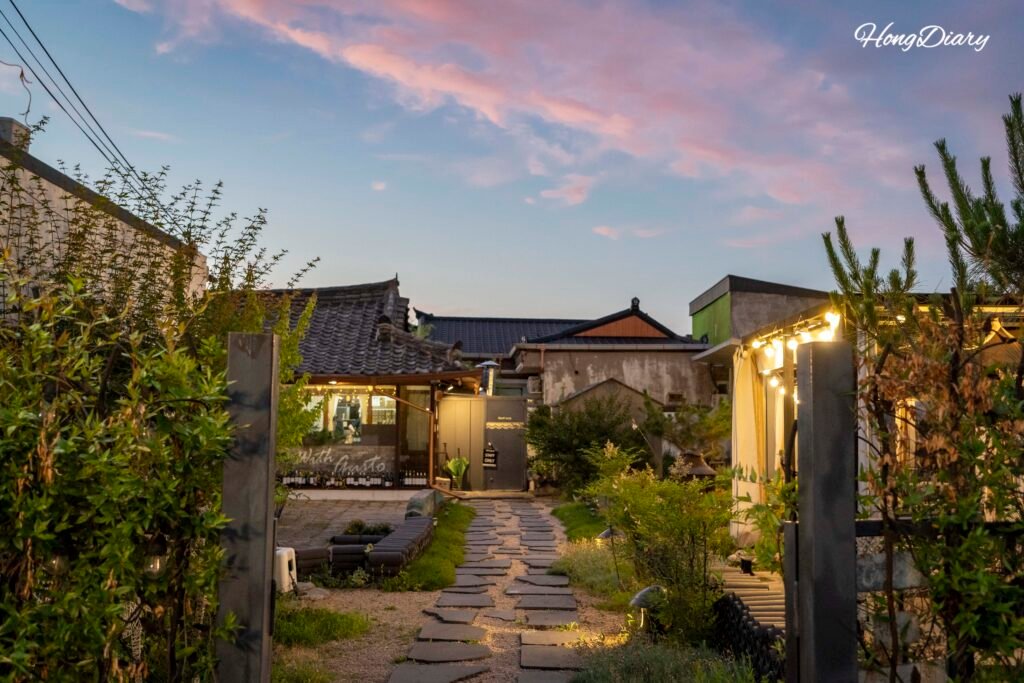
Closer to the museum, Hwangnidan-gil is a walkable strip of converted hanok buildings, indie cafes, and restaurants just south of the Daereungwon tomb complex — a good shift in pace after a museum-heavy afternoon.
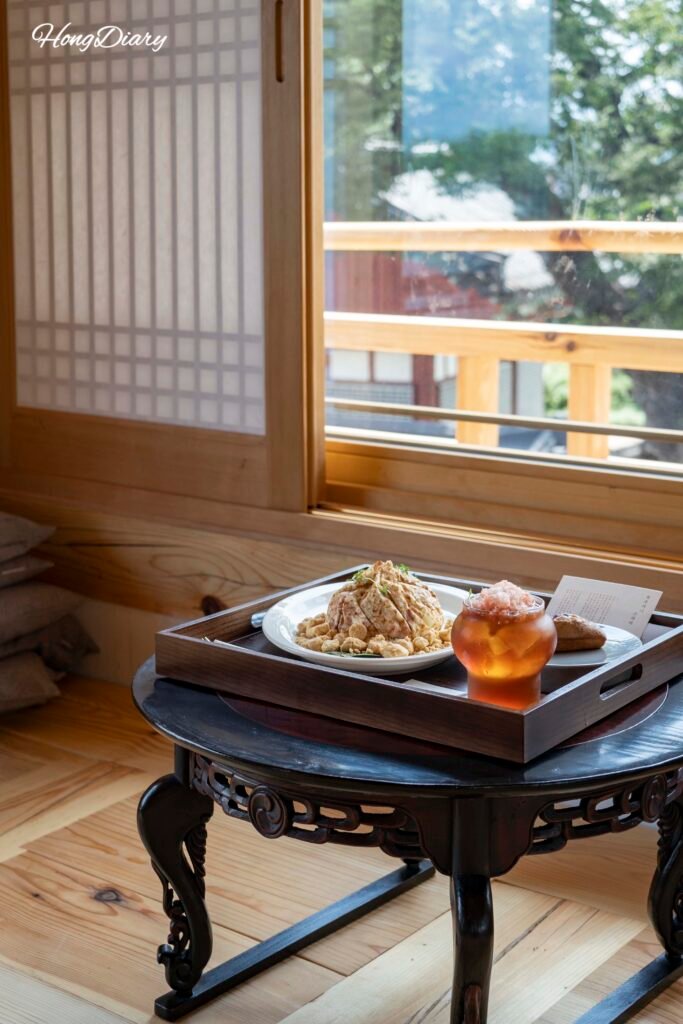
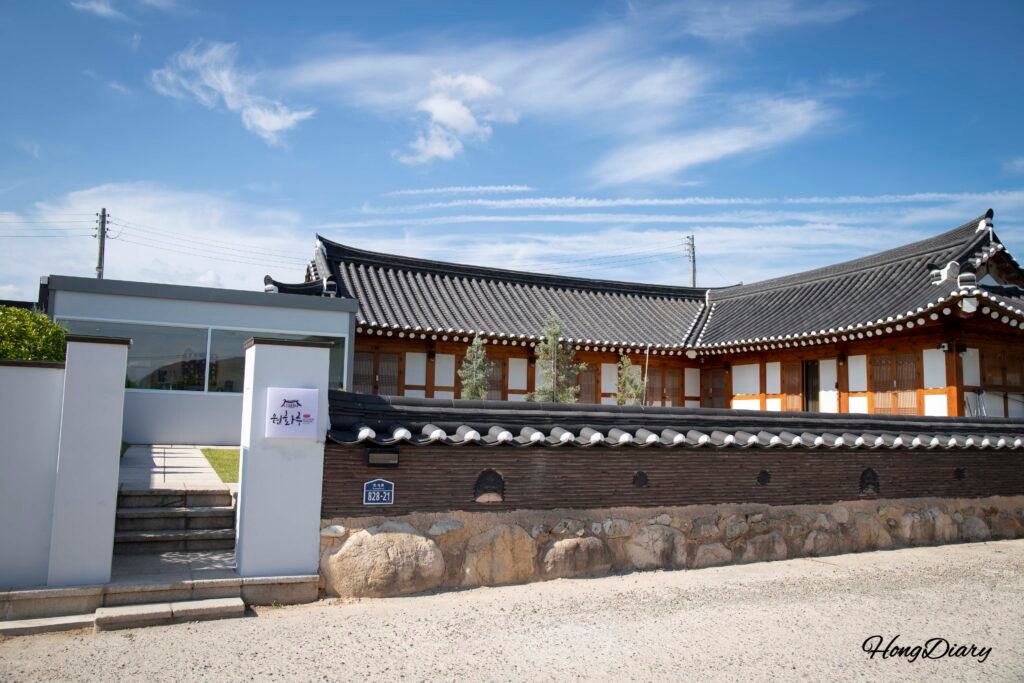
For accommodation, Wonhwaru is a traditional hanok guesthouse with a resident cat, complimentary breakfast, and the kind of stillness that makes you want to add another night to your stay. It’s not on Hwangnidan-gil, but it captures the same unhurried, historic character that makes Gyeongju feel different from most Korean cities.
The Gyeongju National Museum doesn’t charge you a thing — and in a city where entry fees to individual sites can add up quickly, that generosity matters. Whether you’ve got two hours before a bus or an entire rainy afternoon to fill, this museum earns every minute you give it.
Frequently Asked Questions (FAQ) About Visiting Gyeongju National Museum
Is Gyeongju National Museum free to enter?
Yes. All permanent exhibition halls — including the Silla History Gallery, Silla Art Gallery, and Wolji Gallery — are free to enter with no ticket or reservation required. Parking is also free. The only exception is certain special exhibitions, which may require a paid ticket or advance booking. The free English guided tour on Sundays is also complimentary.
How long does it take to visit Gyeongju National Museum?
Plan for at least two to three hours to see the main indoor galleries at a comfortable pace. If you also want to explore the outdoor exhibits (including the Divine Bell of King Seongdeok), the Silla Millennium Treasure Archive, and the museum gift shop, a half-day — roughly four to five hours — is more realistic. If you’re short on time, prioritize the Silla History Gallery and the Silla Art Gallery.
Are there English guided tours at Gyeongju National Museum?
Yes. Free English guided tours are available on Sundays only, with two sessions: 10:00–11:30 AM and 2:00–3:30 PM. No advance reservation is needed — just show up at the stairway next to the entrance of the Silla History Gallery on the first floor. The museum also offers a free smartphone app (available on Google Play) with Bluetooth-based exhibit information in English.
What are the most famous artifacts at Gyeongju National Museum?
The most iconic pieces include the Silla gold crown from Cheonmachong Tomb (one of only six Silla gold crowns ever found), the Horseback Rider-Shaped Horn Cup (a National Treasure in the Gukeun Memorial Hall), the face-patterned roof tile end known as the “Silla Smile” (designated as a Treasure), and the Divine Bell of King Seongdeok (National Treasure No. 29, an 18.9-ton bronze bell completed in 771 CE displayed outdoors).
Do I need a reservation to visit Gyeongju National Museum?
No reservation is needed for the permanent exhibitions. You can walk in during operating hours. However, certain high-profile special exhibitions — such as the 2025 Silla Gold Crowns show — have required advance reservations and timed entry in the past. Check the museum’s official website before your visit to confirm whether any current special exhibition requires booking.
How do I get to Gyeongju National Museum from Singyeongju Station?
From Singyeongju Station (the KTX stop), take Bus 700 and get off at the Donggung & Wolji stop. The ride takes approximately 25 minutes, and the museum is a three-minute walk from the bus stop. If you’re coming from Gyeongju Bus Terminal or the old Gyeongju Station area, buses 11, 153, and 600–609 all stop nearby. A single city bus fare costs ₩1,500 (~$1.00 USD / ~€0.85 EUR). If you’re traveling with family or in extreme weather, renting a car is a more practical option for getting around Gyeongju’s spread-out historic sites.
What are the extended opening hours at Gyeongju National Museum on Saturdays?
From March through October, the museum extends its Saturday closing time to 20:00, giving you an extra two hours compared to the standard 18:00 weekday closing. Last entry is always 30 minutes before closing. These extended hours make Saturday evenings one of the best times to visit, especially during the warmer months when you can combine a late museum visit with an evening walk to nearby Wolji Pond.