
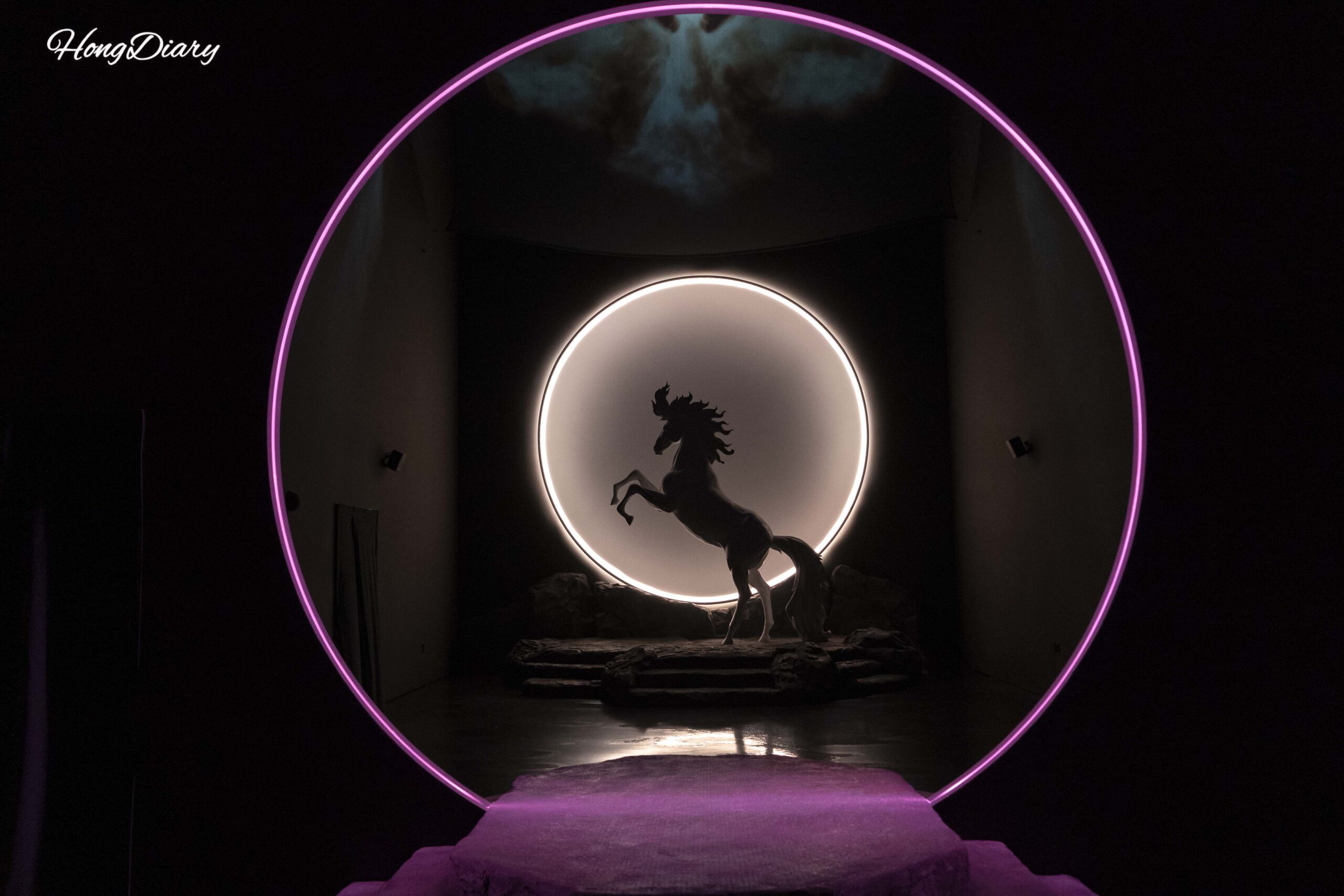
Most of Gyeongju’s must-see spots sit outdoors, which works in spring or fall — but turns into a real struggle during monsoon downpours or peak summer heat. I hit that wall on a recent trip, and after scrolling for indoor alternatives, a set of glowing, otherworldly photos on social media stopped me cold. That’s how I found Flashback Gyerim. It ended up being the highlight of the whole trip.
Table of Contents
Basic Info: Hours, Location, and Tickets for Flashback Gyerim
| Detail | Info |
|---|---|
| Name | Flashback Gyerim |
| Address | 14 Cheonbuknam-ro, Gyeongju-si, Gyeongsangbuk-do |
| Hours | 10:00 AM – 8:00 PM daily (last entry 7:00 PM), open year-round |
| Time needed | About 60–90 minutes |
| Transit | City bus No. 10, 18, or 100 — get off near Bomun Tourist Complex, then walk 7–10 min |
| Parking | Free for up to 4 hours (300+ spaces available) |
| Website | Flashback Gyerim (EN) — also available in Chinese and Japanese |
Ticket Prices
| Category | Age | Price |
|---|---|---|
| Adult | 19 and over | ₩25,000 (~$17 USD / ~€14 EUR) |
| Youth | 13–18 | ₩21,000 (~$14 USD / ~€12 EUR) |
| Child | 36 months – 12 years | ₩17,000 (~$11 USD / ~€10 EUR) |
| Infant | Under 36 months | Free |
Tickets are available for purchase on-site at the venue.
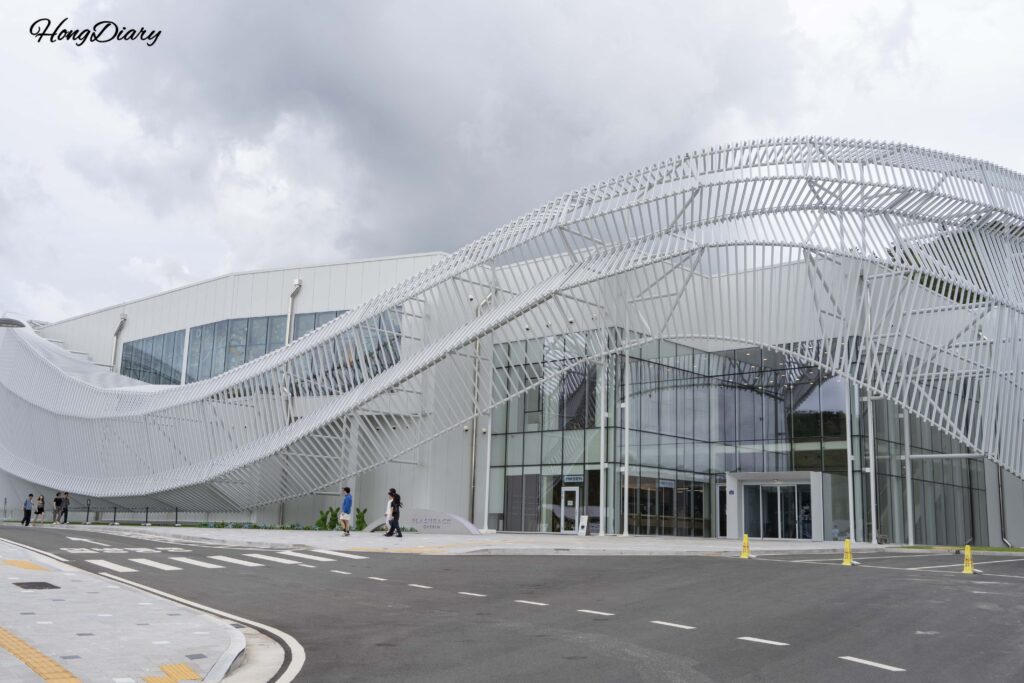
About Flashback Gyerim
Flashback Gyerim is a permanent immersive media art exhibition located inside the Bomun Tourist Complex, a large resort and leisure zone about 15 minutes east of central Gyeongju by car. The complex surrounds Bomun Lake, where hotels, bike rental shops, and Gyeongju World amusement park sit within walking distance. The exhibition itself is roughly a 5-minute walk from the complex entrance.
Gyeongju served as the capital of the Silla Kingdom for close to a thousand years (57 BCE–935 CE), and much of the city’s identity still revolves around that heritage. This exhibition was created by Dexter Studios — the VFX company behind Bong Joon-ho’s Academy Award-winning film Parasite and Netflix’s Parasite: The Grey — and opened in November 2025. Spanning roughly 5,600 m² (about 60,000 ft²), it uses projection mapping, spatial audio, and cinematic-quality visual effects to retell Silla’s founding mythology and folklore across 13 interconnected zones.
The name itself carries meaning: “Flashback” as in returning to the past, and “Gyerim,” which refers to a forest in central Gyeongju tied to a founding legend of the kingdom. According to the myth, a golden chest was discovered hanging from a tree branch in that forest, and a rooster crowed to alert nearby villagers — the baby inside turned out to be Kim Alji, the ancestor of the Gyeongju Kim clan. The forest’s name literally means “Rooster Forest,” and it once held enough significance that Silla itself was briefly renamed after it.
What to Expect Inside
The exhibition flows along a single fixed route through 13 zones, each functioning as a chapter in a continuous narrative. The arc moves from Silla’s creation myths through its golden age, using light, sound, and environmental design rather than text panels or display cases. Think of it less as a museum and more as stepping through a cinematic narrative — which tracks, given that the team behind it built their reputation doing exactly that.
The 13 zones, in order: Intro → The Red Gate (a threshold between the human and divine realms) → The Guardians (protectors of Silla, inspired by glazed guardian deity figures from the ancient Sacheonwangsa temple) → Samshinsan (the mountain of three goddesses) → Najeong (the sacred well where Silla’s founder, Park Hyeokgeose, was born) → Geoseogan (the title given to the first ruler of Silla) → Sindansu, the Sky Pillar (a sacred tree connecting heaven and earth) → Dragon’s Path → Hamdal Wave & the 28 Dragon Palace (a legendary undersea kingdom from the Samguk Yusa, Korea’s oldest collection of folklore) → The Sea the Dragon Guards (an encounter with King Munmu, who legend says became a sea dragon to protect Silla’s eastern coast) → Corridor of Light → Cheonjon Treasury (the royal vault of Silla’s golden artifacts) → Flashback (where the journey circles back as a single beam of light)
Every zone is fully indoors and climate-controlled.
The Zones That Stayed With Me
I won’t walk you through every room — part of what makes this place work is stepping into each space without knowing what’s next. But three zones left enough of an impression that they’re worth previewing.
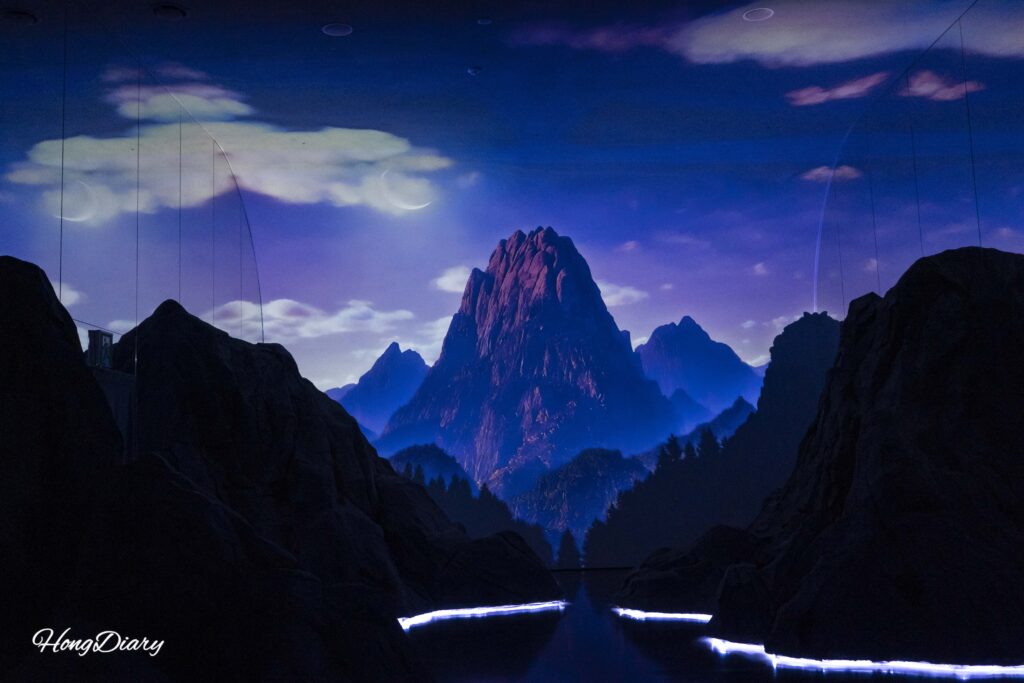
The Guardians
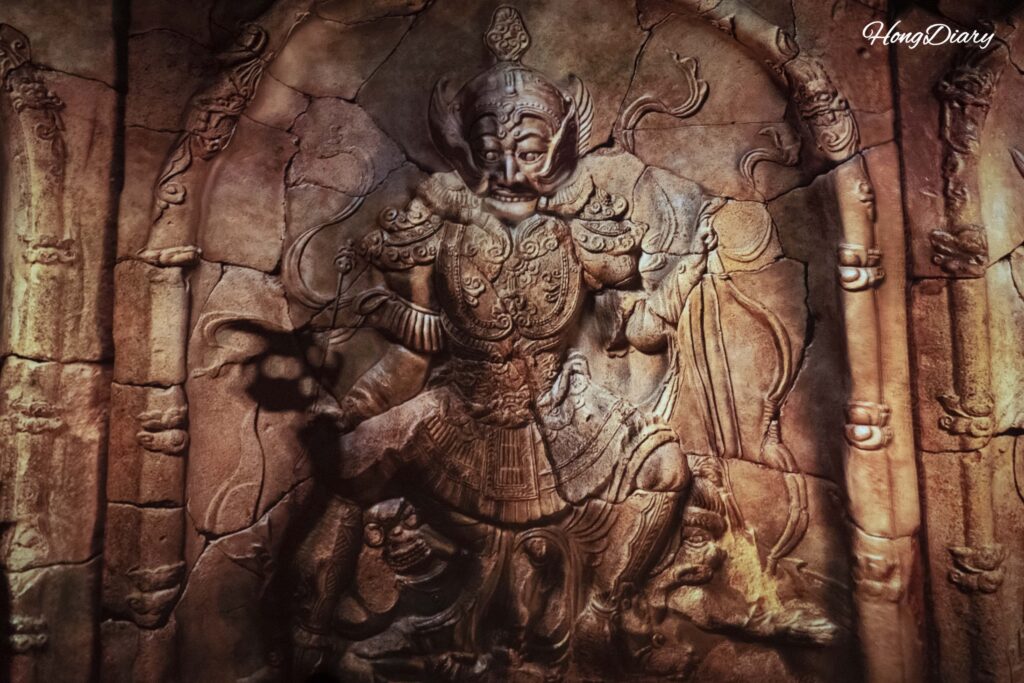
This room draws from glazed guardian deity figures originally housed at Sacheonwangsa, one of Silla’s most historically important temples. The walls respond to movement: as you walk, projected shadow figures shift and react in real time. My kid figured this out within about thirty seconds and spent the next five minutes running back and forth, watching digital silhouettes chase every step. It’s interactive without feeling gimmicky — the kind of element that keeps younger visitors locked in while adults appreciate the artistry behind it.
The Sky Pillar (Sindansu)
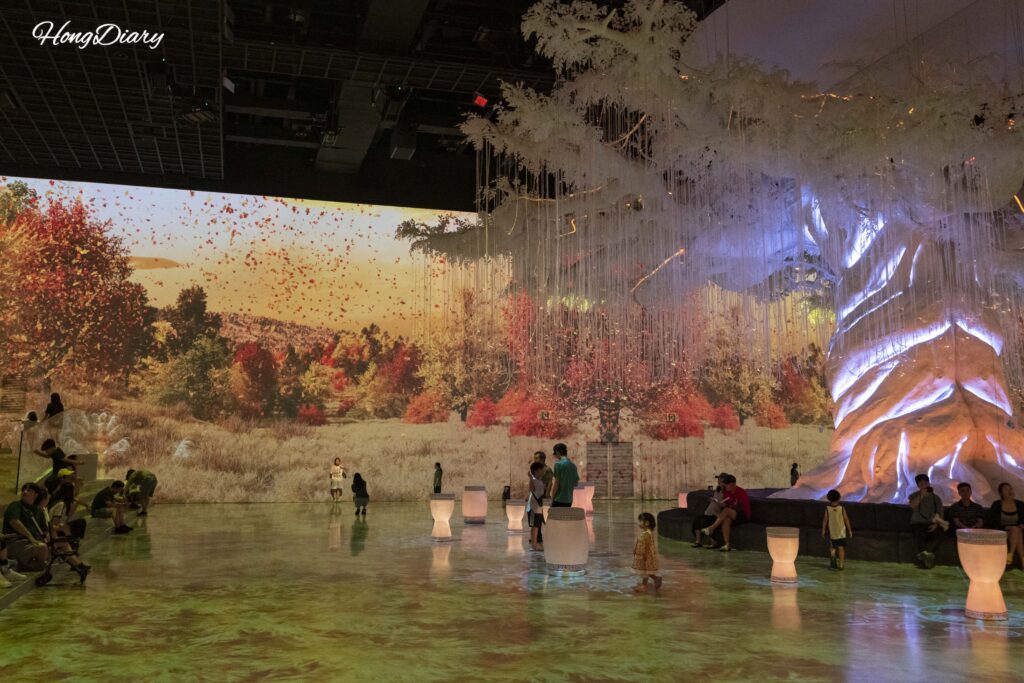
This is the one. If you’ve seen any photos of Flashback Gyerim circulating on social media, they’re almost certainly from this room.
A towering tree stands at the center, and projections cycle through all four seasons around it — spring blossoms drifting down, dense summer greens, amber autumn foliage, then bare branches against falling snow. Most visitors end up sitting on the floor, just watching the light shift. We sat through the full seasonal cycle, then stayed for a second round. The pacing is slow enough to feel meditative, but visually rich enough that you keep catching new details.
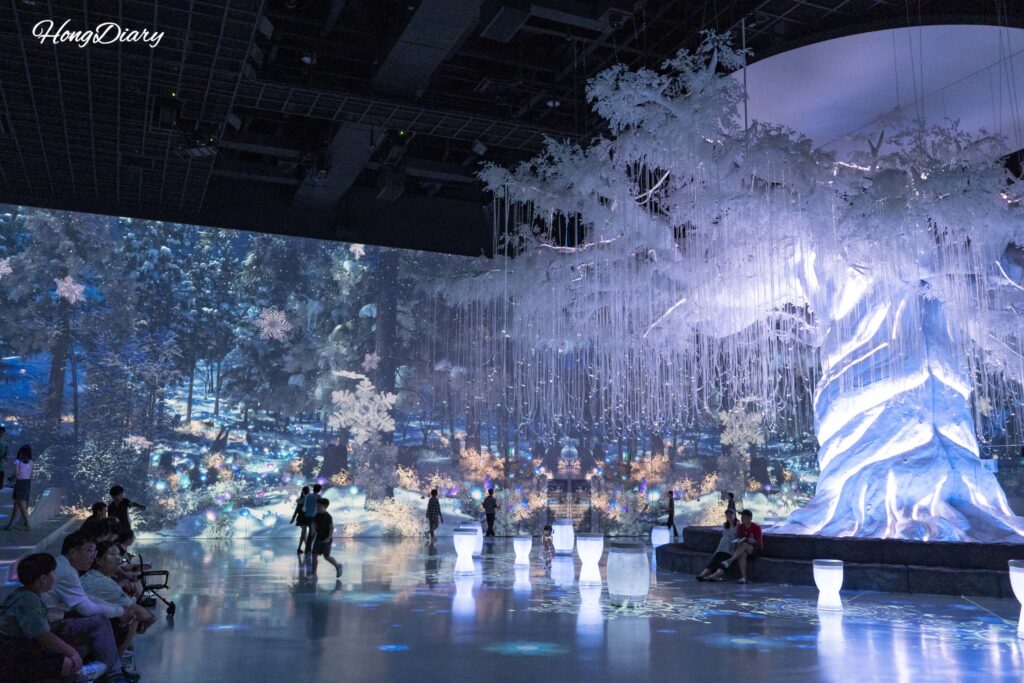
From a photography standpoint, this is the strongest spot in the entire exhibition. Every angle works, and the seasonal transitions give you completely different shots depending on when you press the shutter. If you pick destinations partly by how well they photograph, this room alone earns the visit.
The Golden Treasury (Cheonjon-go)
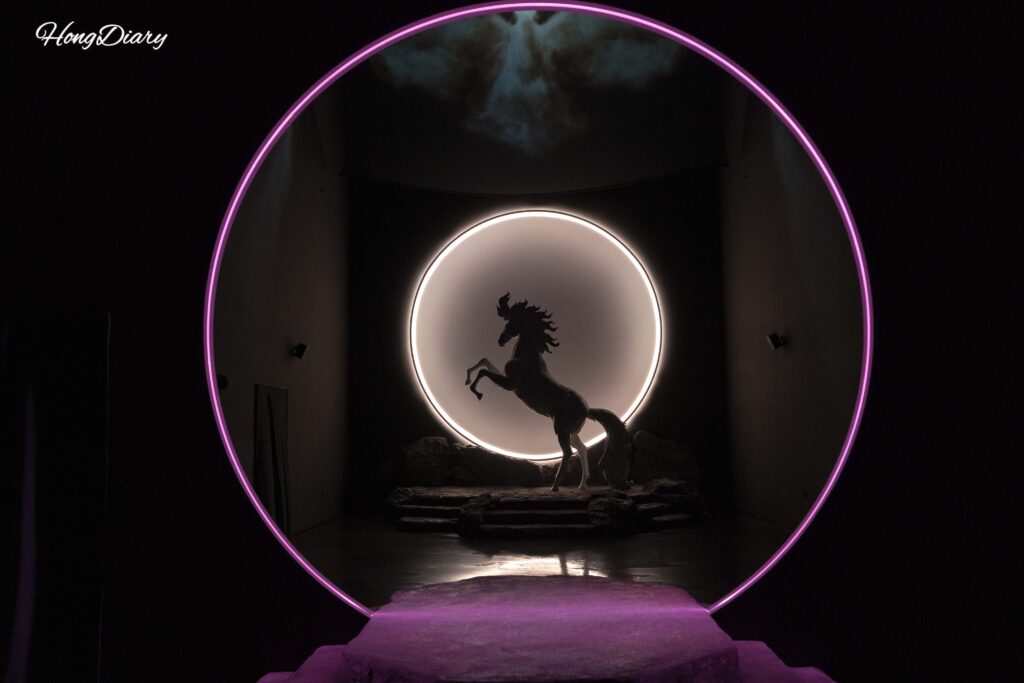
This zone hits near the end of the route and functions as a visual climax. It’s a digital recreation of Silla’s golden culture — crowns, ornaments, and royal treasures rendered in projected light rather than displayed behind glass. Gold tones wash across the walls and floor from every direction.
My kid called it a treasure vault, and that’s the most accurate description I can give. After twelve rooms of mythological buildup, stepping into a space drenched in gold feels like a payoff you didn’t know you were building toward.
Before You Go
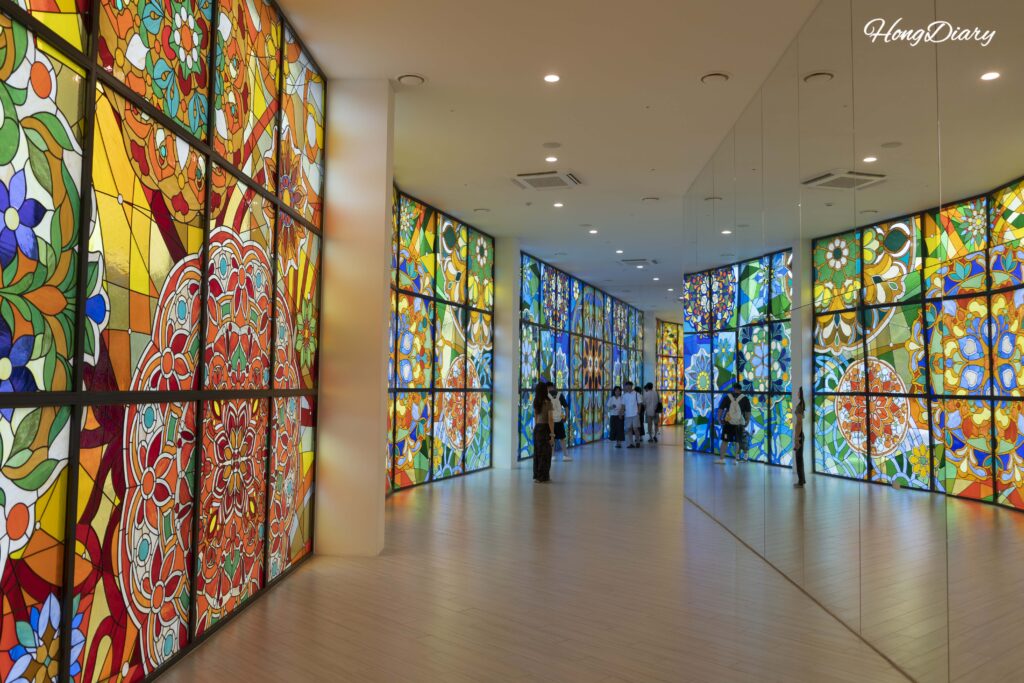
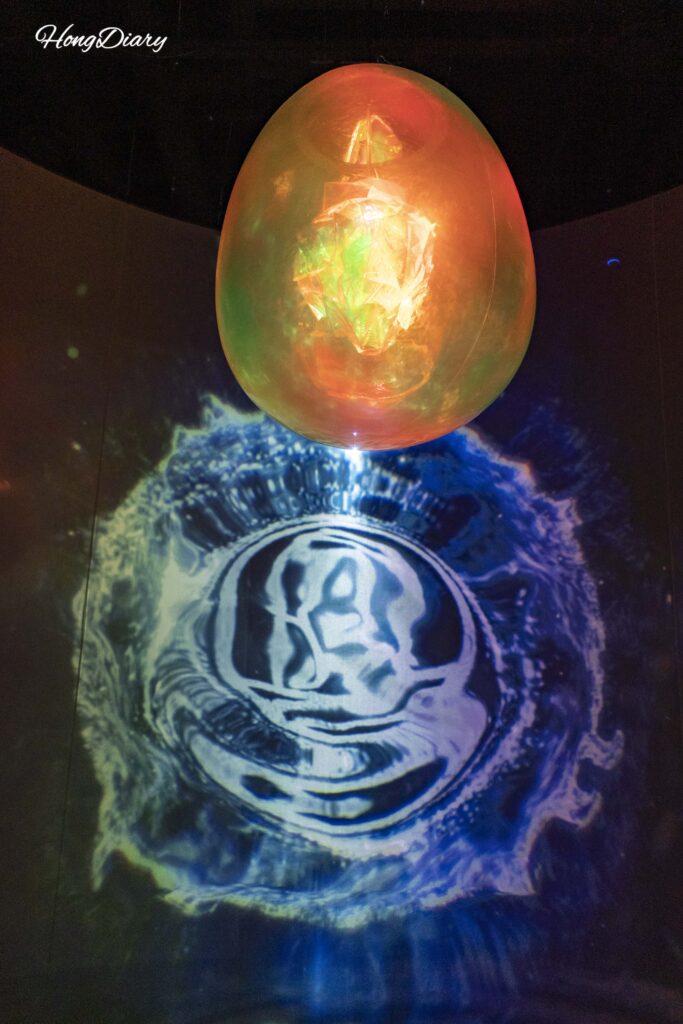
A few things worth knowing before your visit.
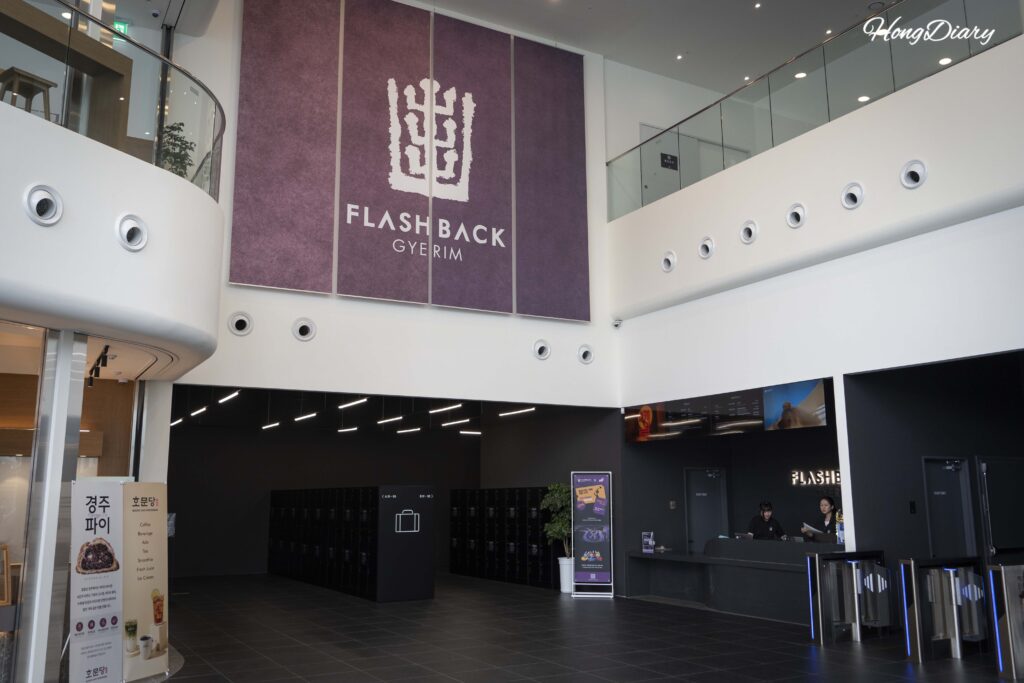
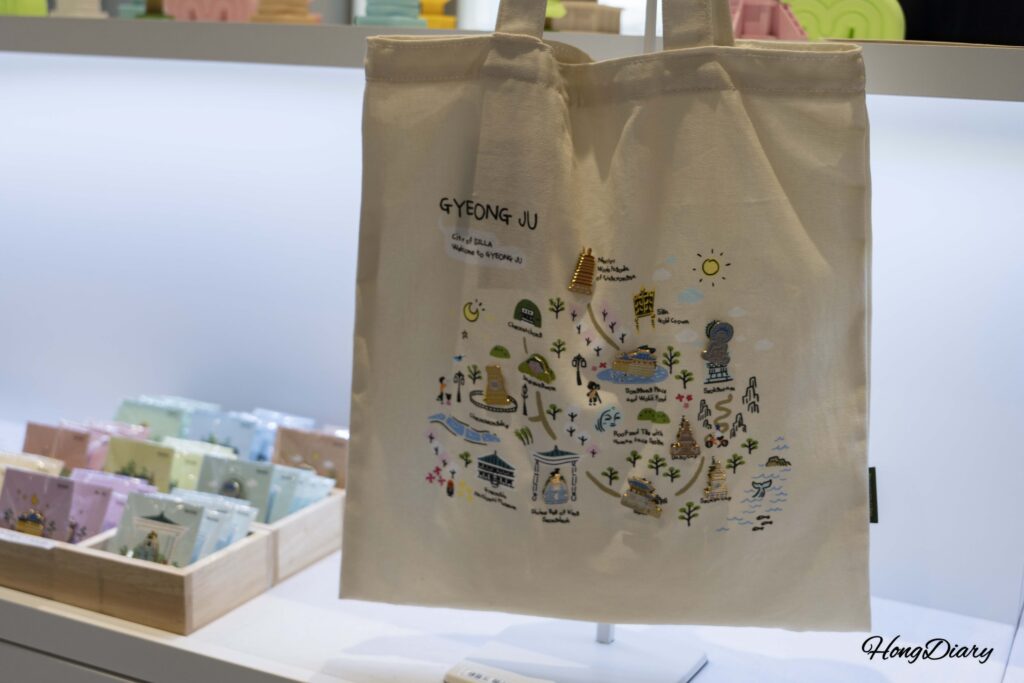
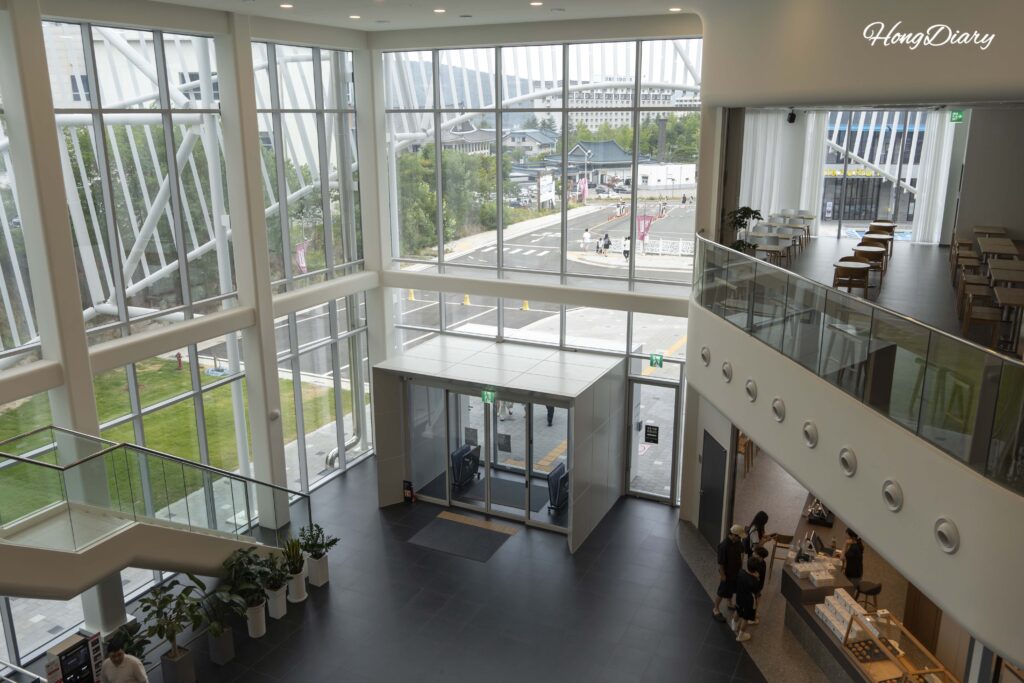
The ticketing area includes a lounge, coin lockers, and a nursing room, so families with small children are covered before heading in. At the exit, a gift shop stocks Gyeongju-themed merchandise — the locally designed eco-bags caught my eye as a lightweight souvenir.
Getting there by car: I drove, and parking was easy. The lot sits directly in front of the building with room for over 300 cars, and the first four hours are free. If you’re visiting during summer or winter with family, renting a car in Gyeongju is the most practical approach — the city’s attractions are scattered across a wide area, and bus frequency drops off outside the central zone.
Getting there by bus: City bus lines 10, 18, and 100 stop near the Bomun Tourist Complex entrance. From the bus stop, it’s a 7-to-10-minute walk to the exhibition.
Nearby stops to pair with your visit: Gyeongju Luge operates right next door. Gyeongju World (theme park) and Donggung Palace & Wolji Pond — the illuminated Silla-era palace ruins that look best after dark — are both under 10 minutes away by car.
Is It Worth the Price?
I’ll be direct — ₩25,000 (~$17 USD / ~€14 EUR) per adult isn’t cheap for an exhibition in Korea, and I hesitated before buying tickets. But walking out afterward, it felt like money well spent. The production quality sits closer to a high-end visual experience than a standard exhibition hall, and the 60–90 minutes inside moved quickly with no dead stretches. My kid asked to come back before we’d even reached the parking lot — for a child, that’s about as strong an endorsement as it gets.
That said, Gyeongju has no shortage of free or low-cost cultural sites. Cheomseongdae Observatory, the royal tombs at Daereungwon, and the atmosphere along Hwangnidan-gil are all worth experiencing without spending much. I’d suggest fitting those in first, then adding Flashback Gyerim if immersive media art appeals to you — or if you need a reliable indoor plan when the weather turns. For families, especially during monsoon season or winter cold, it’s one of the few spots in the city that keeps both adults and children engaged the whole time.
On the day we went, an afternoon downpour ended our outdoor plans early.
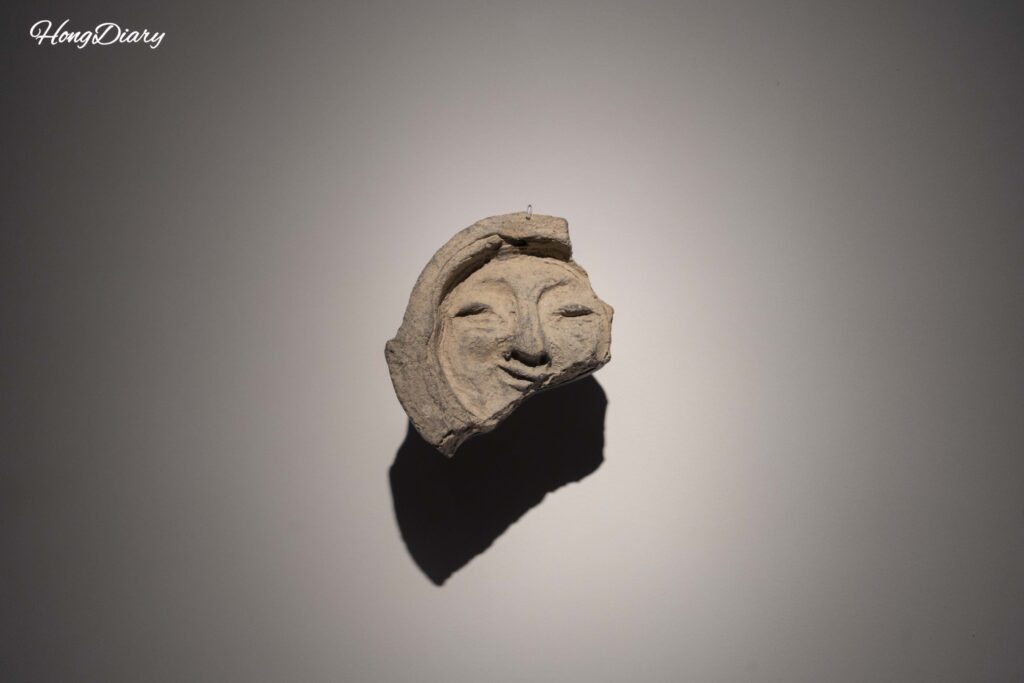
After the exhibition, we drove to Gyeongju National Museum — free admission, and home to one of the country’s most significant Silla artifact collections, including gold crowns and ancient relics that most visitors walk right past. The contrast was unexpected: after all the projected light, standing in front of actual 1,500-year-old gold felt grounding in a completely different way.
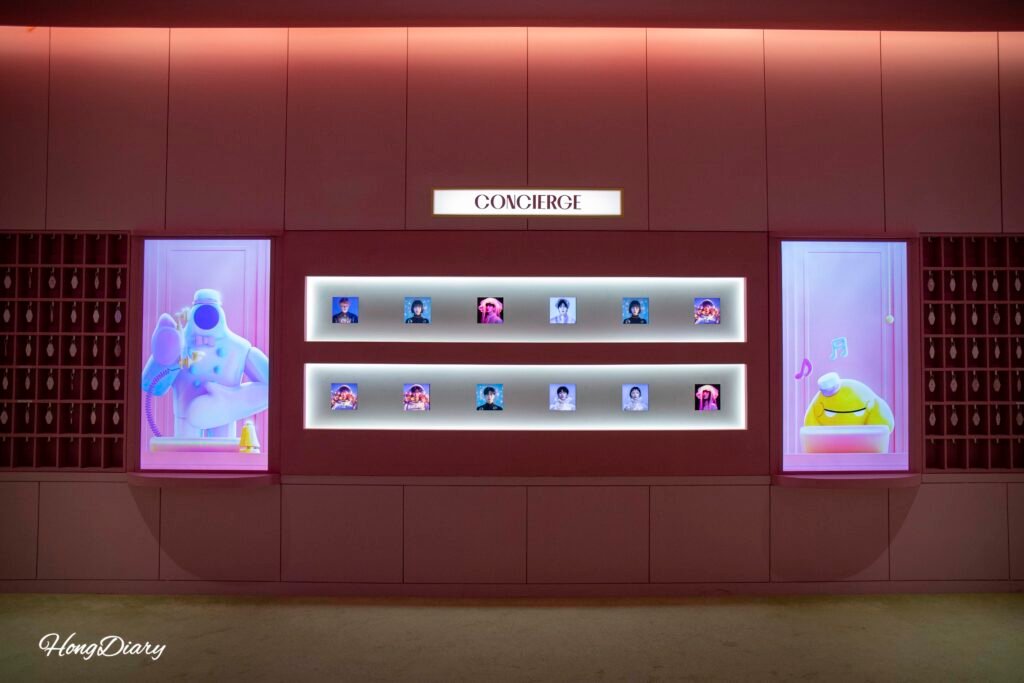
For another immersive option near Bomun, Cosmic Resort is a space-themed interactive experience within driving distance.
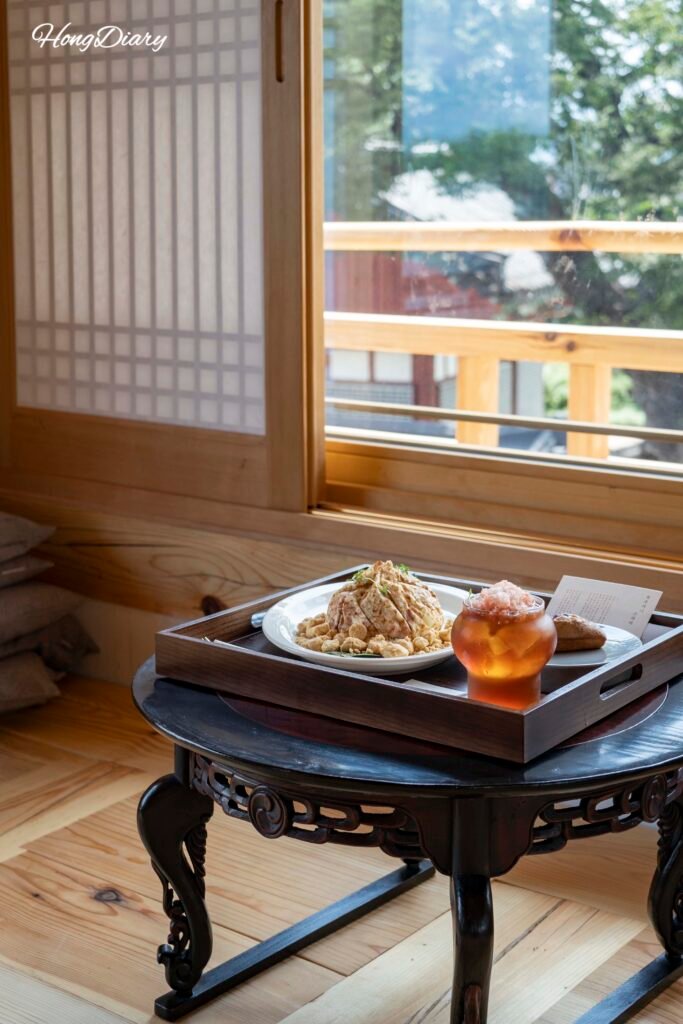
To wind down afterward, Bichae Bogette on Hwangnidan-gil is a hanok cafe serving traditional Korean tea and handmade rice-cake desserts — a quiet reset after all that sensory input.
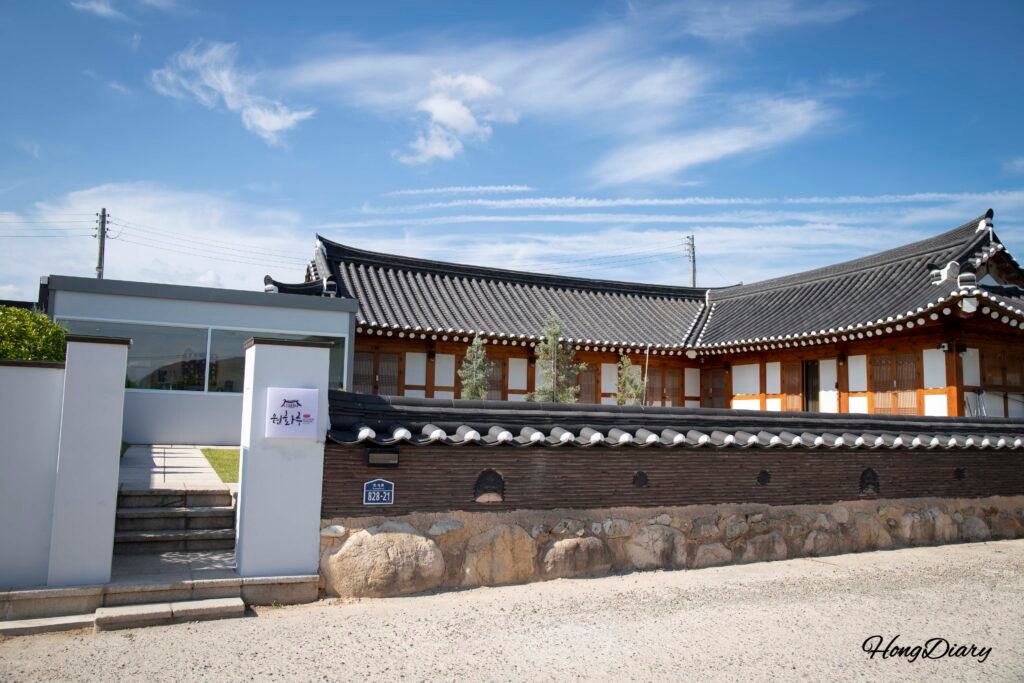
And for a stay that matches the Gyeongju pace, Wonhwaru is a hanok guesthouse with a resident cat, free breakfast, and the kind of quiet that makes a trip feel unhurried.
Flashback Gyerim is a permanent exhibition with no closing date, so there’s no rush. Whenever your Gyeongju trip happens — rain or shine, summer or winter — those 13 rooms of light, sound, and a thousand years of Silla mythology will be waiting.
Before You Go: Essential Tips and Frequently Asked Questions
How much do Flashback Gyerim tickets cost?
Adult tickets (ages 19 and over) are ₩25,000 (~$17 USD / €14 EUR). Youth tickets (ages 13–18) cost ₩21,000 ($14 USD / €12 EUR), and children’s tickets (ages 36 months to 12 years) are ₩17,000 ($11 USD / ~€10 EUR). Children under 36 months enter free. Tickets are available for purchase on-site at the venue.
How long does it take to walk through the entire Flashback Gyerim exhibition?
Most visitors spend about 60 to 90 minutes going through all 13 zones. If you like to take photos or sit and watch the seasonal projections in the Sky Pillar (Sindansu) zone — which most people do — plan closer to 90 minutes. The route is one-way, so you move through at your own pace without backtracking.
Is Flashback Gyerim suitable for young children and families?
Yes. The exhibition is fully indoors and climate-controlled. There are some stairs between zones, but the route is manageable for most visitors. Interactive zones like The Guardians, where wall projections respond to your movement, tend to hold kids’ attention especially well. The venue also provides coin lockers, a nursing room, and a lounge area near the entrance. Children under 36 months enter free of charge.
Where exactly is Flashback Gyerim located, and how do I get there?
It’s located at 14 Cheonbuknam-ro, inside the Bomun Tourist Complex in Gyeongju. If you’re driving, the parking lot holds over 300 vehicles and is free for up to 4 hours. By bus, city lines 10, 18, and 100 stop near the complex entrance, from which the exhibition is about a 7-to-10-minute walk. If you’re visiting with family during summer heat or winter cold, renting a car tends to be the easiest way to get around Gyeongju, since the major sites are spread across a wide area.
What are the opening hours of Flashback Gyerim?
Flashback Gyerim is open daily from 10:00 AM to 8:00 PM, with last entry at 7:00 PM. It operates year-round with no regular closing days. Seasonal extended hours may apply during peak periods, so it’s worth checking the exhibition’s website before your visit.
Who created Flashback Gyerim, and what makes it different from other media art exhibitions in Korea?
The exhibition was created by Dexter Studios, the VFX company known for its work on Bong Joon-ho’s Academy Award-winning film Parasite and Netflix’s Parasite: The Grey. Flashback Gyerim is built entirely around the historical mythology of the Silla Kingdom, using cinematic-quality visual effects to tell a continuous walk-through narrative across 13 zones spanning 5,600 square meters.
Can I visit Flashback Gyerim on a rainy day or during extreme weather?
That’s actually one of its biggest strengths. Every zone is fully indoors and climate-controlled, so it works just as well during a monsoon downpour as it does on a scorching summer afternoon. The parking lot sits right in front of the building, so you won’t need to walk far in the rain either.