
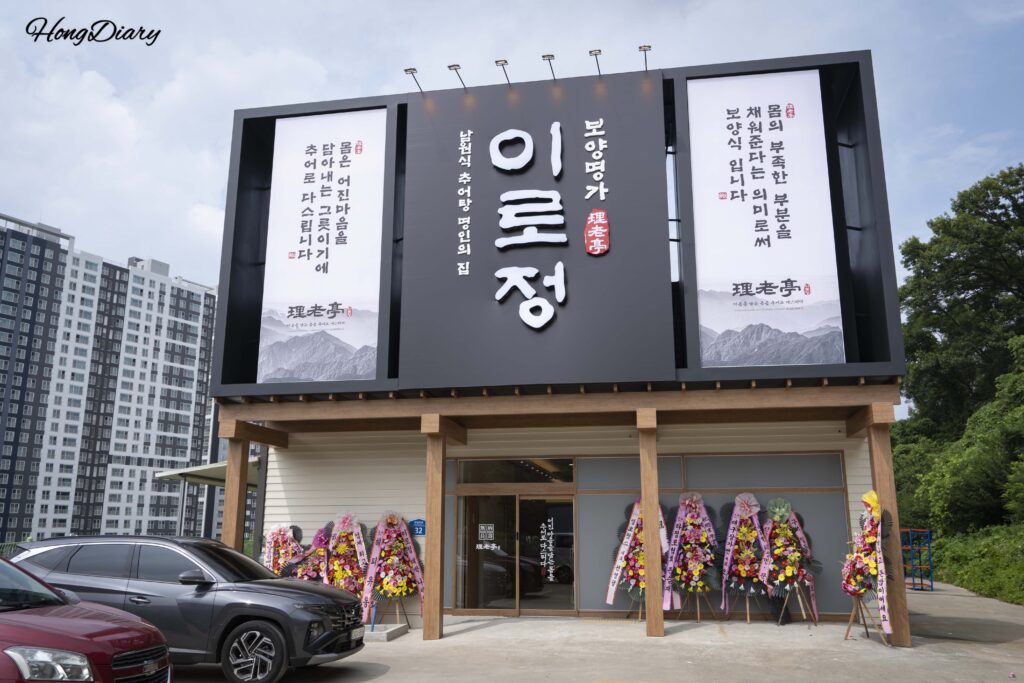
Gumi was never on my radar. Every time I drove the Gyeongbu Expressway between Seoul and Busan, it was just another exit sign I passed without a second thought. But on a recent weekend, with my kid buckled in and no real plan, we finally took that exit — and ended up at Irojeong, a restaurant specializing in chueotang, a traditional Korean stamina soup made from finely ground loach (a small freshwater fish).
Gumi sits in northern Gyeongsangbuk-do (North Gyeongsang Province), roughly 30 minutes north of Daegu and about midway along the Seoul–Busan corridor. The western side of town is anchored by Geumosan Provincial Park — designated in 1970 as Korea’s first provincial park. Irojeong’s Gumi branch sits five minutes from the Nam-Gumi Interchange, along the road that leads up toward the park.
Table of Contents
Irojeong Gumi Geumosan Branch: Essential Visitor Info & Parking
| Detail | Info |
|---|---|
| Name | Irojeong Gumi Geumosan Branch |
| Address | 32 Bakjeonghui-ro, Gumi-si, Gyeongsangbuk-do |
| Hours | Daily 11:00 AM – 9:00 PM |
| Break Time | 3:30 PM – 5:00 PM |
| Last Order | 8:30 PM |
| Closed | Major Korean holidays only |
| Parking | Free on-site lot (approx. 60 spaces) |
| Seating | Private rooms (10–30 guests), standard hall seating |
| Access | 5 min by car from Nam-Gumi IC ・ 9 min walk from Park Chung-hee Birthplace ・ Bus No. 960 from Gumi Station to Sangmo High School stop, then 5 min walk (250 m) |
What Makes Irojeong Different
What sets Irojeong apart from other chueotang restaurants is one addition: sangwhang mushroom, a type of tree fungus used in Korean herbal medicine. The restaurant says it was the first in Korea to build a chueotang menu around this ingredient, and they prepare the mushroom extract on-site.
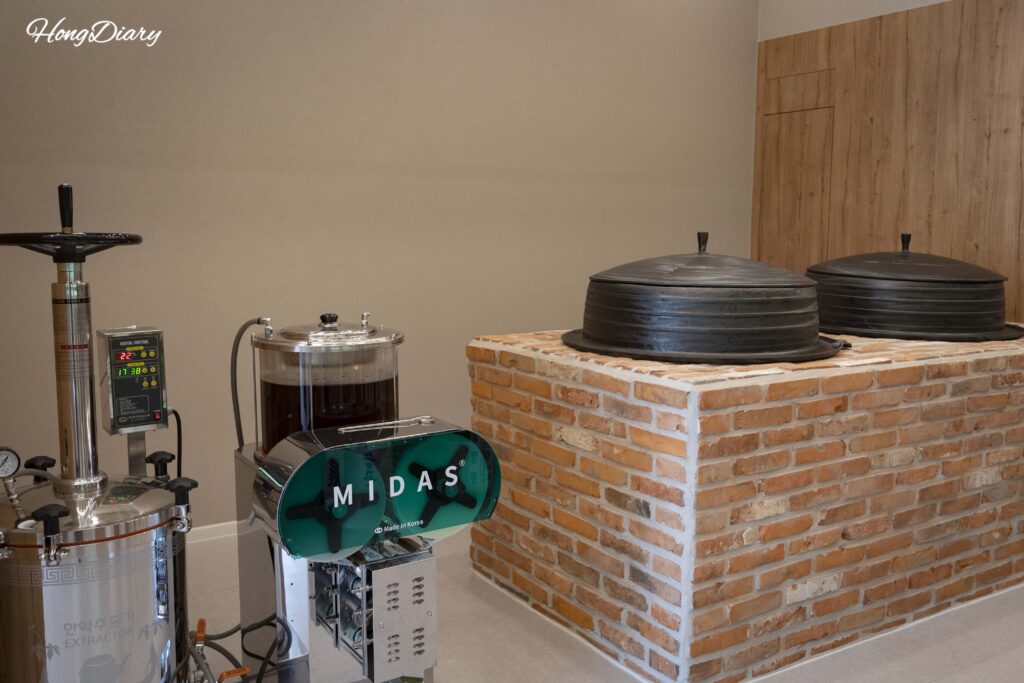
Behind the front desk, a yaktaggi (herbal medicine brewer) is used to prepare the extract that goes into every pot of chueotang. Irojeong operates three branches across Korea — in Miryang (Gyeongsangnam-do), this Gumi location, and one in Dalseong-gun (Daegu).
What Is Chueotang? A Guide to Korean Loach Soup for First-Timers
If you’ve read anything about Korean food, you’ve almost certainly come across samgyetang — ginseng chicken soup. It’s the stamina dish that gets all the international press. But chueotang has been part of Korean food culture for just as long, and it’s the one most travelers never hear about.
The dish dates back centuries to Korea’s farming communities. Loach was abundant in rice paddies and streams, making it one of the most accessible protein sources for rural families who couldn’t afford expensive meat. They’d grind the fish into a broth with vegetables and fermented soybean paste, and the result was a thick, restorative soup that could fuel a full day of fieldwork.
Over time, chueotang became closely tied to boknal — the three hottest days on Korea’s lunar calendar, falling roughly between mid-July and mid-August. On these days, Koreans traditionally eat stamina foods to fight summer fatigue: samgyetang, baeksuk (whole chicken or duck simmered with medicinal herbs), and chueotang are the three most common choices.
Chueotang is one of the more polarizing dishes even among Koreans, mostly because it changes so much depending on the region:
| Regional Style | Broth | Spices & Key Ingredients |
|---|---|---|
| Seoul / Gangwon-do | Spicy, with gochugaru (red chili flakes) and gochujang (chili paste) | Minimal additional spices; loach often left in visible pieces |
| Gyeongsang-do (incl. Busan) | Clear and light | Bang-a (wild mint) and sancho powder (similar to Sichuan pepper) |
| Namwon, Jeolla-do | Thick, almost porridge-like | Doenjang (fermented soybean paste), deulkkae (perilla seed powder), chopi (Korean prickly ash) |
Irojeong follows the Namwon tradition. The loach is completely ground into the broth, so the texture is smooth throughout — no visible fish, no bones, nothing to pick around.
One tip from personal experience: if it’s your first time trying Namwon-style chueotang, go easy on the chopi (prickly ash) or skip it entirely. It has a strong numbing, citrusy kick that can catch you off guard.
What We Ordered
We were a party of three — two adults and a toddler — and went with the following:
| Menu Item | Price |
|---|---|
| Boyangjeongchan (Full-Course Stamina Set) — includes chueotang, grilled mackerel, turmeric rice, banchan spread, and ginseng-loach tempura | ₩18,000 / $12 USD / €10 EUR per person (min. 2 persons) |
| Insam Chueo Modeum Twigim (Ginseng & Loach Assorted Tempura) | ₩12,000 / $8 USD / €7 EUR |
| Nakji Hanmari Haemul Pajeon (Whole Octopus Seafood Pancake) | ₩20,000 / $13 USD / €11 EUR |
The Boyangjeongchan already comes with a portion of ginseng-loach tempura as a built-in starter, so in hindsight, we could have ordered a different side instead of doubling up. That said, the portions were generous enough that nothing went to waste — and the restaurant packs leftovers to go without any fuss.
For families with young children who might not be ready for chueotang, the menu also offers miyeokguk (seaweed soup) and pork cutlet as separate options.
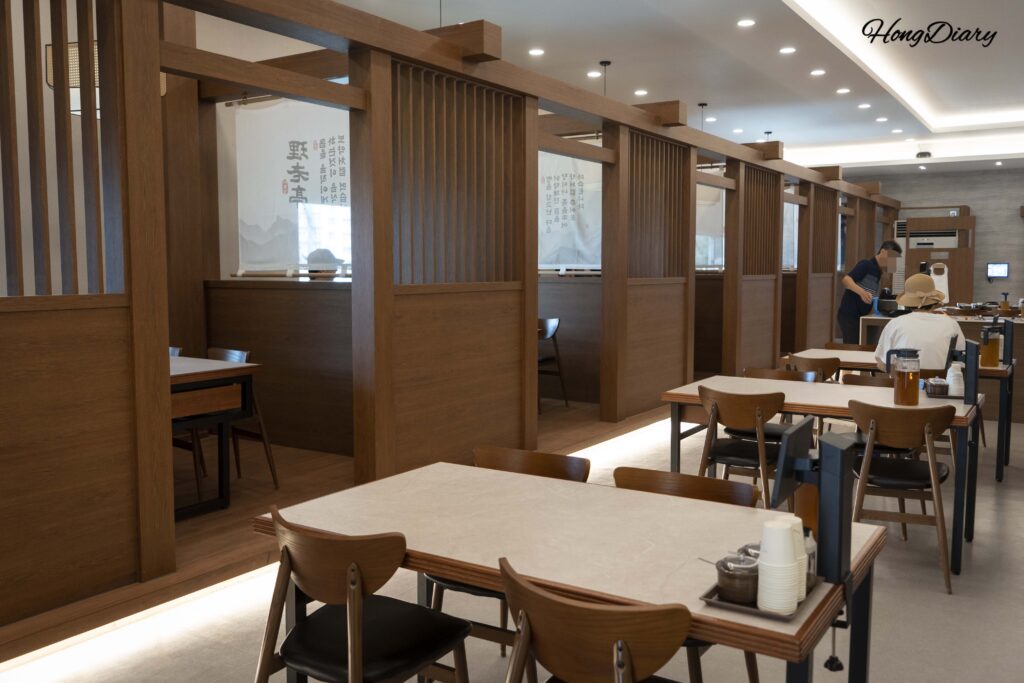
We were seated in a private room, which made a real difference with a toddler in tow. The kids’ play area was visible from our room — a small but thoughtful touch from the staff who clearly placed us there on purpose.
How It All Tasted
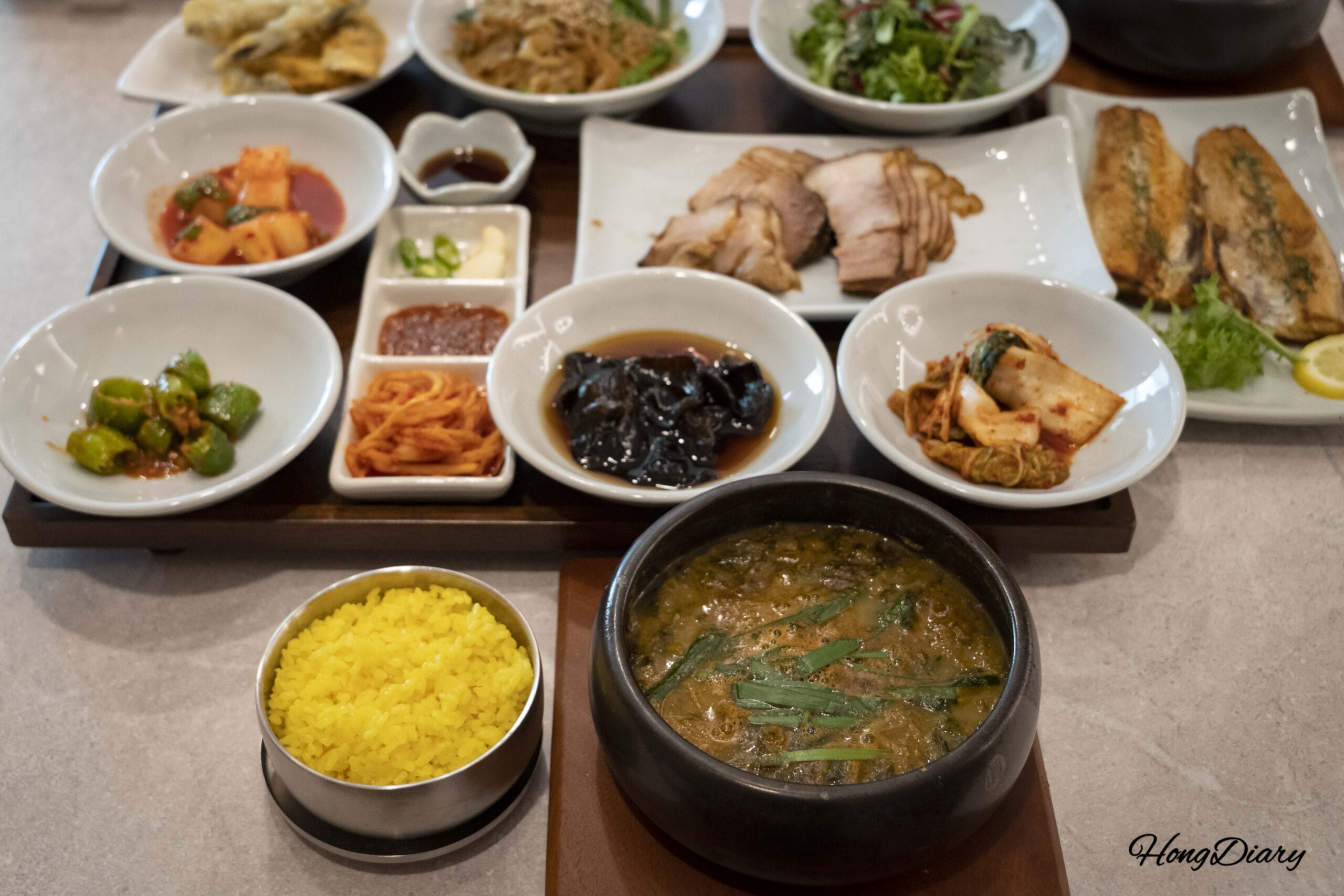
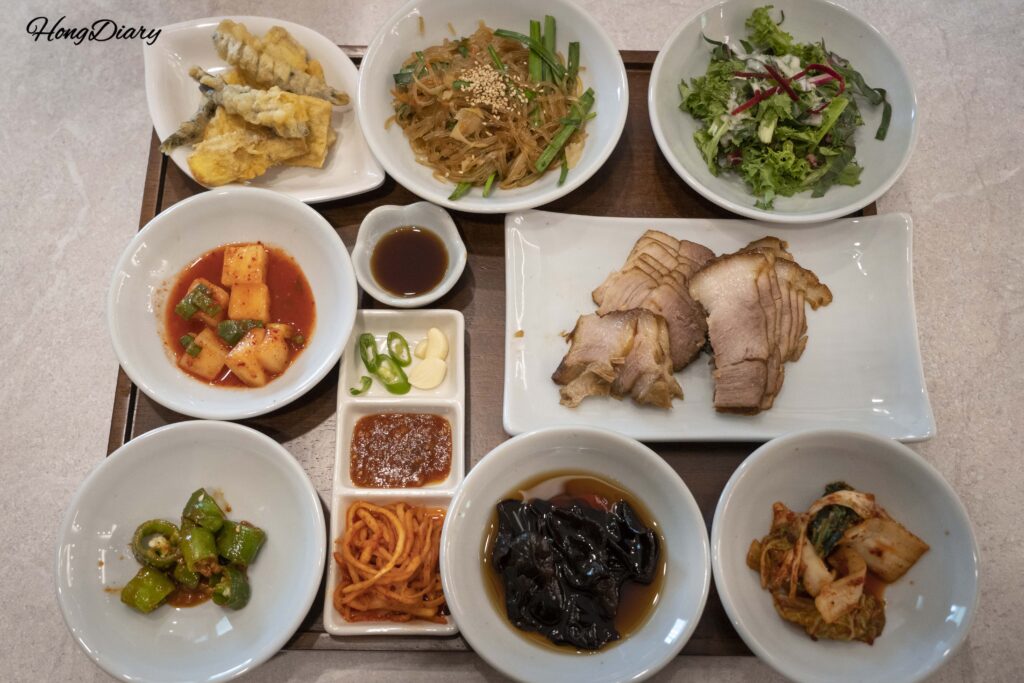
The banchan (side dishes) arrived first and covered the entire table: japchae (glass noodles with vegetables), kkakdugi (cubed radish kimchi), seasoned green peppers, salad, boiled pork slices, and more — easily over ten dishes. For a set meal at ₩18,000 ($12 USD / €10 EUR) per person, the spread was bigger than I expected.
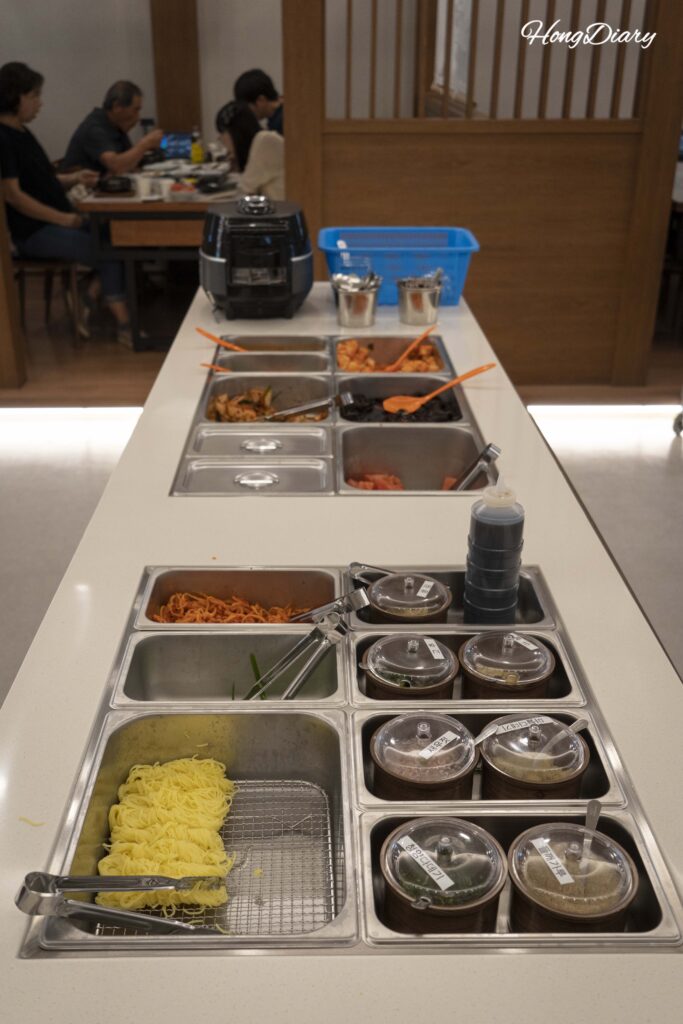
Beyond the table spread, a self-service station in the center of the restaurant offers plain white rice, seasonal fruit, and additional side dishes. If your child doesn’t take to the turmeric rice — ours happened to like the bright yellow color, but that’s not guaranteed — the white rice here is a reliable backup.
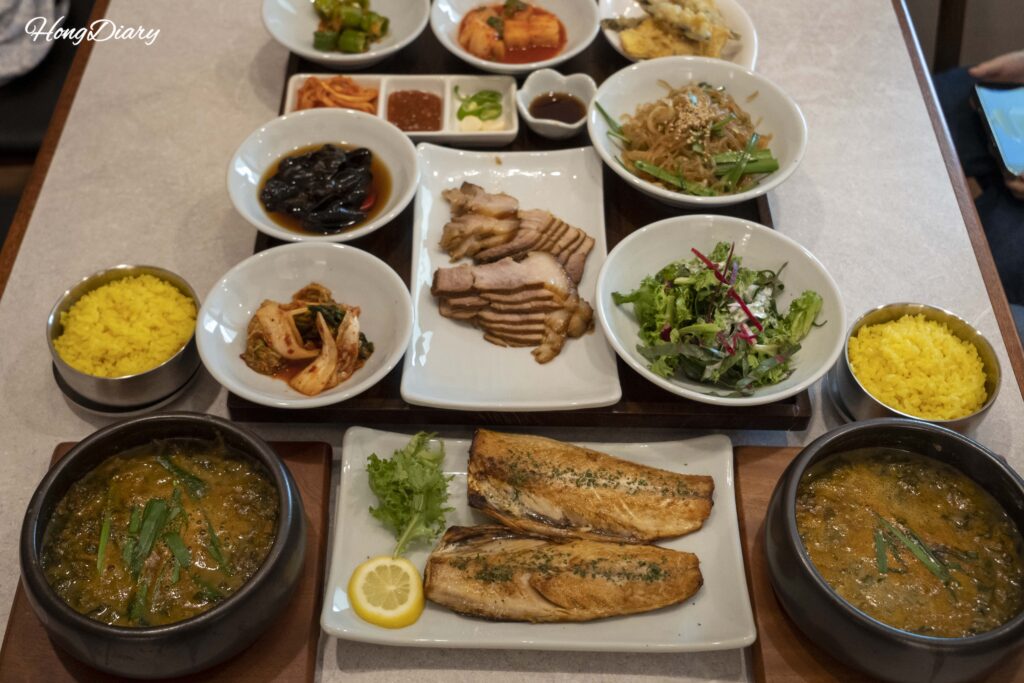
Once the chueotang and grilled mackerel arrived in their respective stone pots and plates, the full set was on the table. It’s a lot of food for the price.
The Chueotang Itself
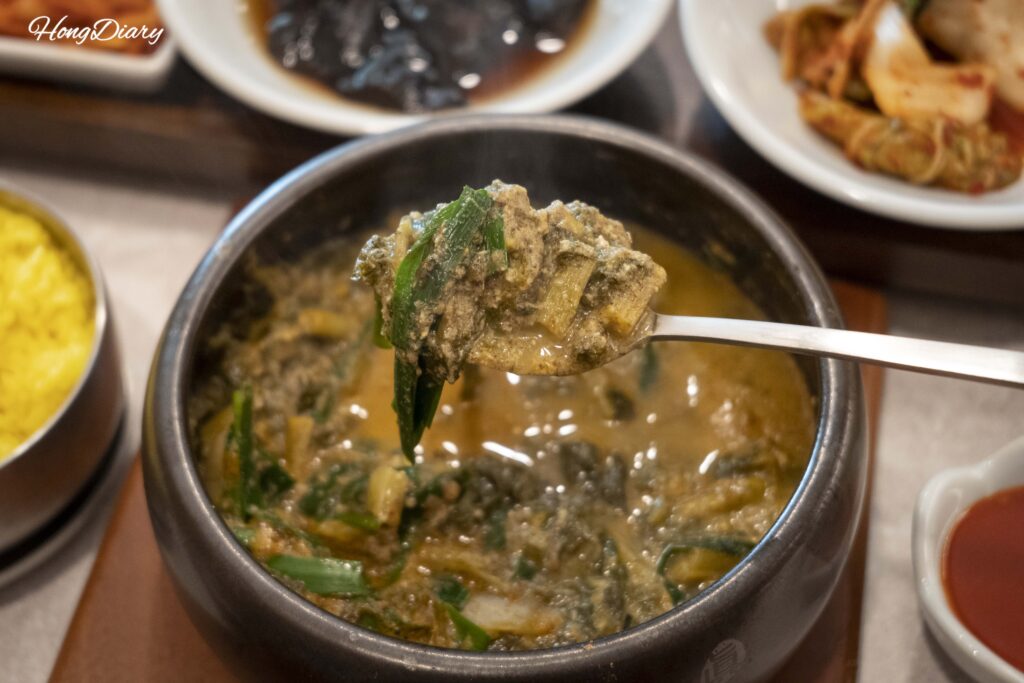
The soup came bubbling in a stone pot — thick, savory, and closer to a stew than a broth. The loach had been ground so finely that the texture was smooth throughout, with no trace of fish in sight. The combination of doenjang and perilla seed powder gave the broth an earthy, nutty depth, and there was zero fishiness.
At the table, you can customize the flavor with raw minced garlic, sliced hot peppers, and sancho powder — a peppery, slightly citrusy seasoning in the same family as Sichuan pepper. Each addition nudges the soup in a different direction, so it’s worth experimenting.
The grilled mackerel alongside was well executed — crispy skin, a lemon wedge on the side, and just the right amount of salt. It paired well with the turmeric rice and gave our kid a straightforward, no-explanation-needed side to eat.
Sides Worth Adding
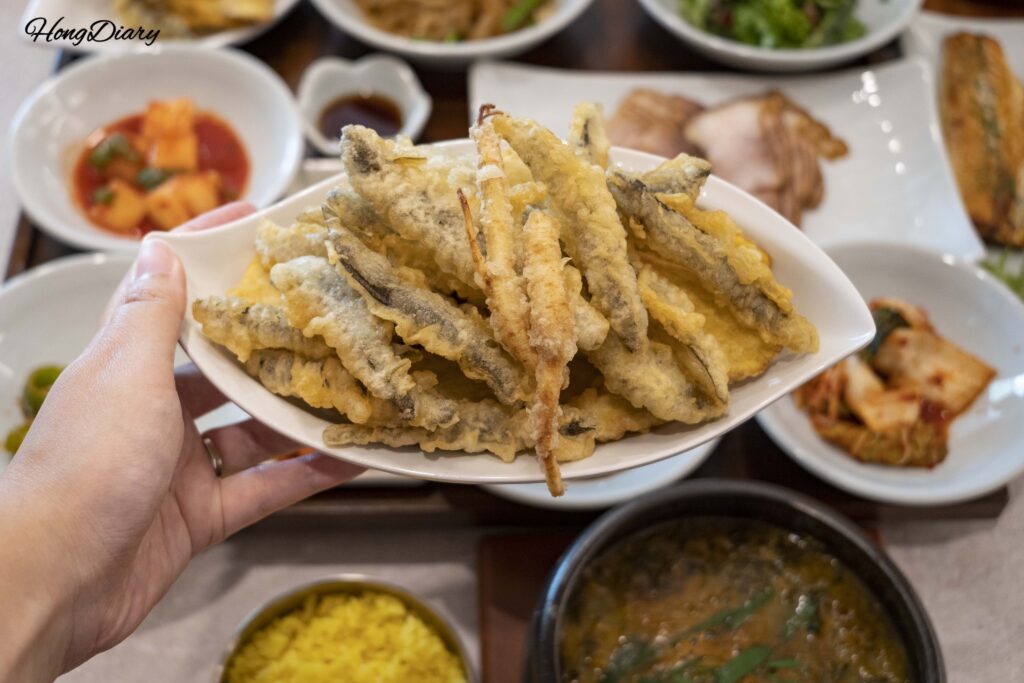
The ginseng and loach assorted tempura plate (₩12,000 / $8 USD / €7 EUR) was a solid choice. The ginseng pieces had a mildly bitter, herbal taste that came through the light batter — an acquired flavor that leans more toward adult palates. The loach tempura, on the other hand, was crispy enough to work as finger food; our toddler ate several pieces without hesitation. A soy-based dipping sauce on the side rounded it out.
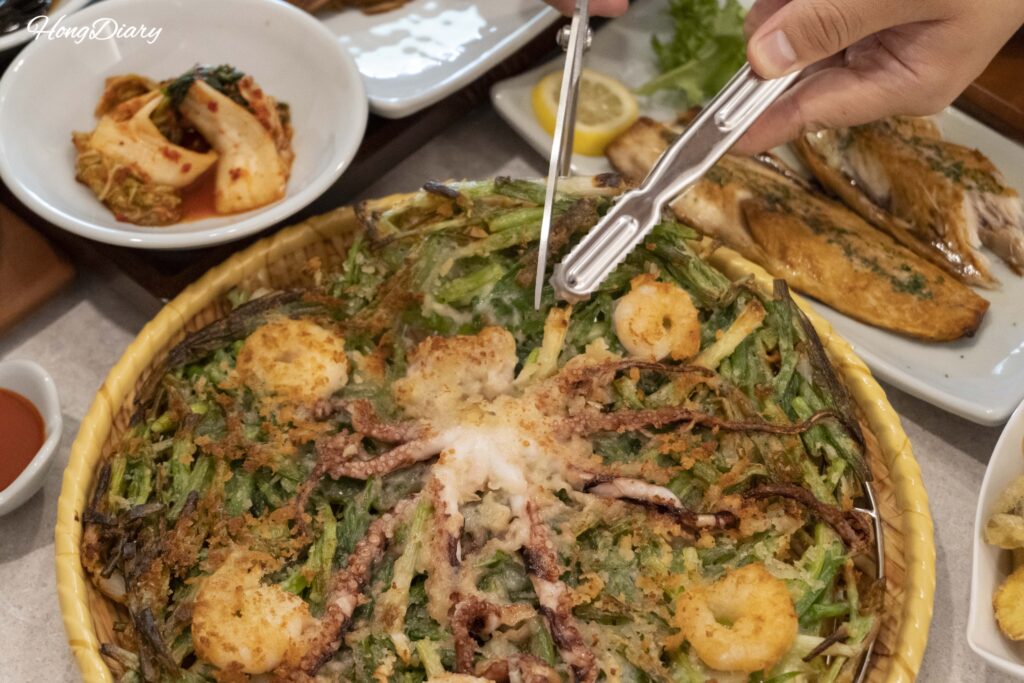
The seafood pajeon — a Korean savory pancake loaded with scallions and seafood — arrived with a whole octopus pressed into thin, crispy batter. The batter was thinner than what you typically get at most places, which let the scallions and octopus carry the flavor instead of the dough. The octopus was tender enough for a small child to chew comfortably, and the chojang (vinegar-chili dipping sauce) on the side gave each bite a tangy lift.
This one works as a makgeolli (rice wine) snack for adults or a shareable side for families.
Free Desserts and a Play Area for Kids
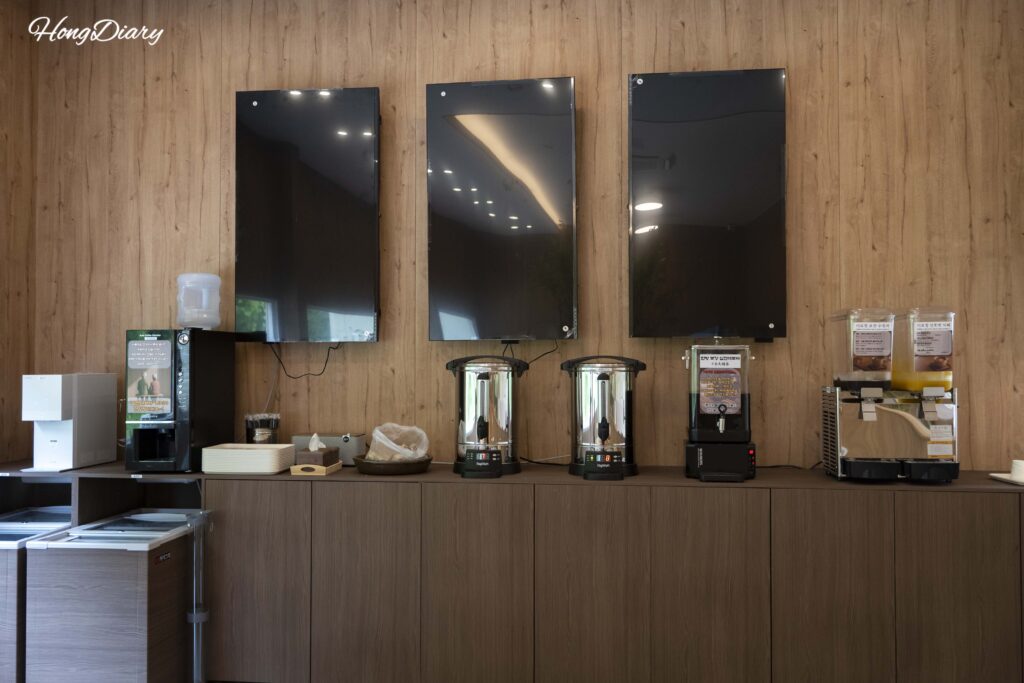
Near the exit, a rest area doubles as a self-service dessert station. Sujeonggwa (a chilled Korean punch made with cinnamon and dried persimmon), danhobak sikhye (a lightly sweet pumpkin-and-rice drink), hot coffee, and gangjeong (crispy puffed rice snacks coated in syrup) were all available at no extra charge. Ice cups were set out separately, and several diners were making iced coffees to take out. For a mid-range restaurant, the after-meal spread was more thoughtful than most.
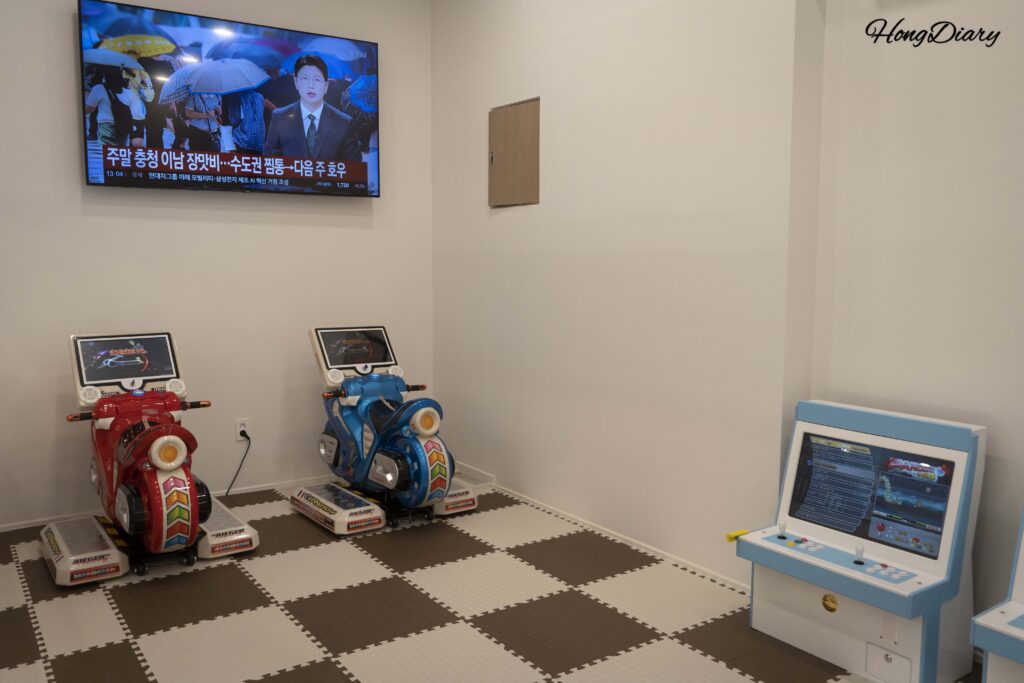
The kids’ play area near the entrance was compact but functional — enough to keep a toddler busy while the adults finished their drinks. With young children in tow, these small touches make a real difference.
After the Meal: A Full Day Around Geumosan
Geumosan Provincial Park is close enough to the restaurant that combining the two into a single day trip makes practical sense. After lunch, we drove a few minutes up the road toward the park, where a compact amusement park sits right at the base of the mountain.
It has just enough rides and attractions to keep young kids entertained for a solid afternoon — without the overwhelming crowds of the bigger theme parks. We spent a couple of hours here before heading to the Geumosan Cable Car, and the whole day felt like the kind of easygoing family outing that doesn’t need much planning to work.
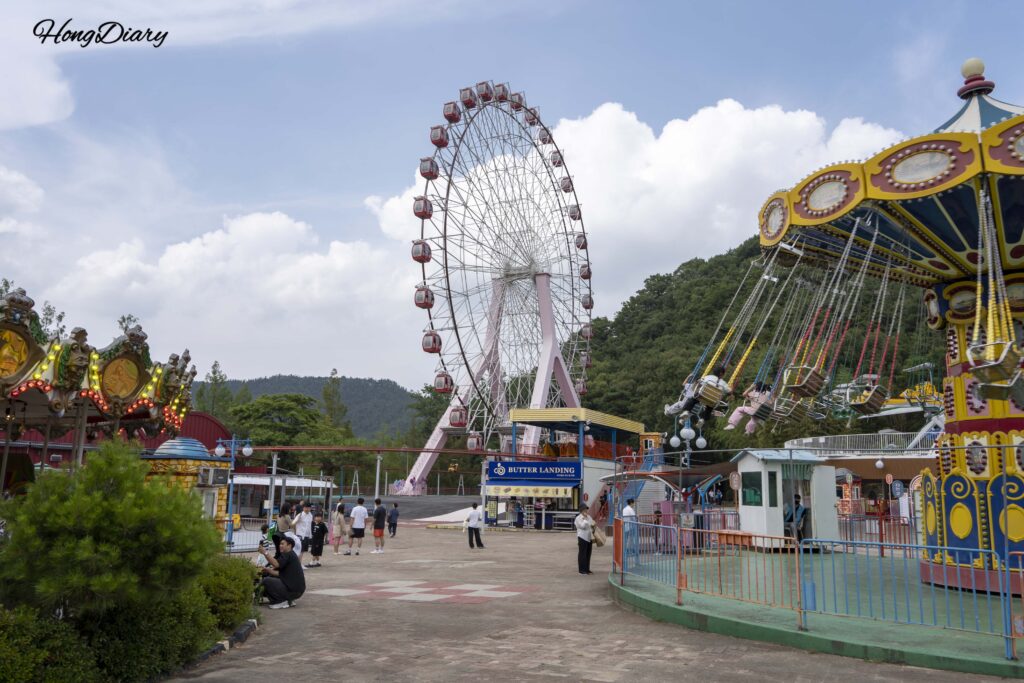
If you’re curious about the park itself, I covered it in detail here: Geumo Land: A Small-Town Amusement Park Korea Forgot About
A bit further up the same road, the Geumosan Cable Car takes you up the mountainside for panoramic views of the city and surrounding valley. Here’s a quick look at the fares:
| Ticket Type | Adult | Child |
|---|---|---|
| One-Way | ₩7,000 / $5 USD / €4 EUR | ₩5,000 / $3 USD / €3 EUR |
| Round-Trip | ₩12,000 / $8 USD / €7 EUR | ₩7,000 / $5 USD / €4 EUR |
On a hot summer day when hiking with a toddler wasn’t realistic, the cable car was the right call — a chance to take in Geumosan’s scenery without the physical toll.
Gumi isn’t a city that shows up on most travel itineraries, and I get that. But if you’re driving between Seoul and Busan, or spending time in Daegu with a free afternoon, pulling off at the Nam-Gumi exit is a detour worth making. And if chueotang has been sitting somewhere on your list of Korean foods to try, Irojeong is a solid place to finally make it happen.
Irojeong Gumi Chueotang FAQ: What First-Timers Need to Know
What is chueotang, and what does it taste like?
Chueotang is a traditional Korean stamina soup made from loach, a small freshwater fish. In the most common preparation (Namwon style), the loach is finely ground into the broth along with doenjang (fermented soybean paste) and perilla seed powder, creating a thick, earthy, nutty stew. Despite being a fish-based dish, properly made chueotang has no fishy smell, and the texture is smooth enough that you won’t see any trace of fish in the bowl.
Is chueotang at Irojeong different from other restaurants?
Irojeong says it was the first restaurant in Korea to incorporate sangwhang mushroom — a type of tree fungus used in Korean herbal medicine — into its chueotang recipe. The mushroom extract is brewed on-site using a traditional herbal medicine brewer and added to every pot of soup.
How much does the full-course set meal cost at Irojeong in Gumi?
The Boyangjeongchan (Full-Course Stamina Set) is priced at ₩18,000 per person (approximately $12 USD / €10 EUR), with a minimum order of two persons. The set includes chueotang, grilled mackerel, turmeric rice, over ten banchan (side dishes), and a portion of ginseng-loach tempura. Additional sides like the seafood pajeon (₩20,000 / $13 USD / €11 EUR) and the ginseng-loach tempura platter (₩12,000 / $8 USD / €7 EUR) can be ordered separately.
Is Irojeong in Gumi family-friendly for visitors with young children?
Yes. The restaurant has private dining rooms that are well suited for families, a kids’ play area near the entrance, and child-friendly menu options including seaweed soup and pork cutlet for children who may not be ready for chueotang. A self-service station also provides plain white rice and fruit, and the post-meal dessert bar — offering drinks like sikhye (sweet rice punch) and coffee — is free of charge.
What is the difference between Namwon-style and Seoul-style chueotang?
In Namwon-style chueotang, the loach is completely ground into the broth with doenjang and perilla seed powder, resulting in a thick, porridge-like consistency with no visible fish. Seoul-style chueotang uses gochugaru (red chili flakes) and gochujang (red chili paste) for a spicier, more broth-forward soup, and the loach pieces are sometimes left partially intact. Gyeongsang-do style takes a third approach with a clear broth seasoned with wild mint and sancho powder.
How do I get to Irojeong from Daegu or Seoul?
From Daegu, the drive takes roughly 30 minutes via the Gyeongbu Expressway. Take the Nam-Gumi Interchange exit, and the restaurant is about five minutes away by car. From Seoul, it is approximately a 3-hour drive south on the same expressway. By public transit, take a train to Gumi Station, then board Bus No. 960 and get off at the Sangmo High School stop. The restaurant is a 5-minute walk (250 meters) from the bus stop.
When is the best time to eat chueotang in Korea?
Chueotang is available year-round, but it is traditionally associated with boknal — the three hottest days of the Korean lunar calendar, typically falling between mid-July and mid-August. During this period, Koreans eat stamina foods like chueotang, samgyetang, and baeksuk to combat summer fatigue. That said, the rich, warming broth also makes chueotang a popular choice during the colder months from late autumn through winter.