
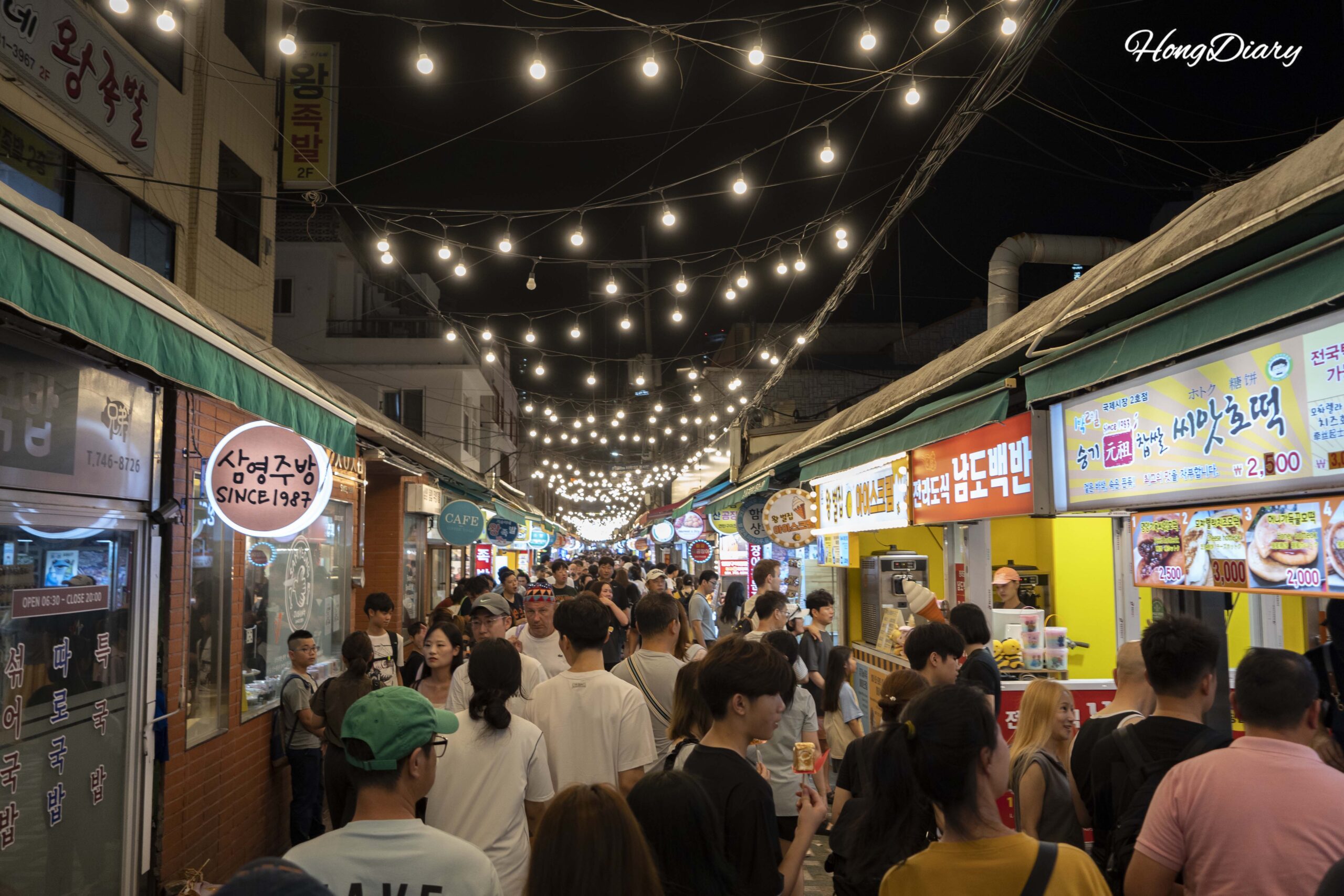
After a full day on the sand at Haeundae Beach, the question always comes up: what do you eat for dinner? If you walk about five minutes inland from the shore, past the hotels and convenience stores, you will find the answer where the crowds are already heading. Haeundae Traditional Market runs a few blocks deep, and by evening, the whole street turns into a loud, smoky, neon-lit food corridor that stays packed until closing.
The market sits in Haeundae-gu, Busan, at 22-1 Gunam-ro 41beon-gil. It dates back to the 1910s and was renovated in 2008, making it one of the oldest and most accessible traditional markets in the city.
Table of Contents
Haeundae Traditional Market: Essential Visitor Info
| Detail | Info |
|---|---|
| Address | 22-1 Gunam-ro 41beon-gil, Haeundae-gu, Busan |
| Hours | 9:00 AM – 10:00 PM (varies by stall) |
| Closed | Open year-round |
| Getting there | Subway Line 2, Haeundae Station Exit 3 → 5-minute walk |
| Parking | Haeundae Market public lot (20-11 Gunam-ro 29beon-gil): ₩1,500 for first 30 min (~$1 USD / €1 EUR), then ₩500 per 10 min. Open until 10 PM |
| Highlights | Tteokbokki, jeon (Korean pancakes), grilled hagfish, seafood, hotteok, kalguksu |
| Nearby | Haeundae Beach (5-min walk), SEA LIFE Busan Aquarium, X the Sky observatory |
What This Market Is (and Isn’t)
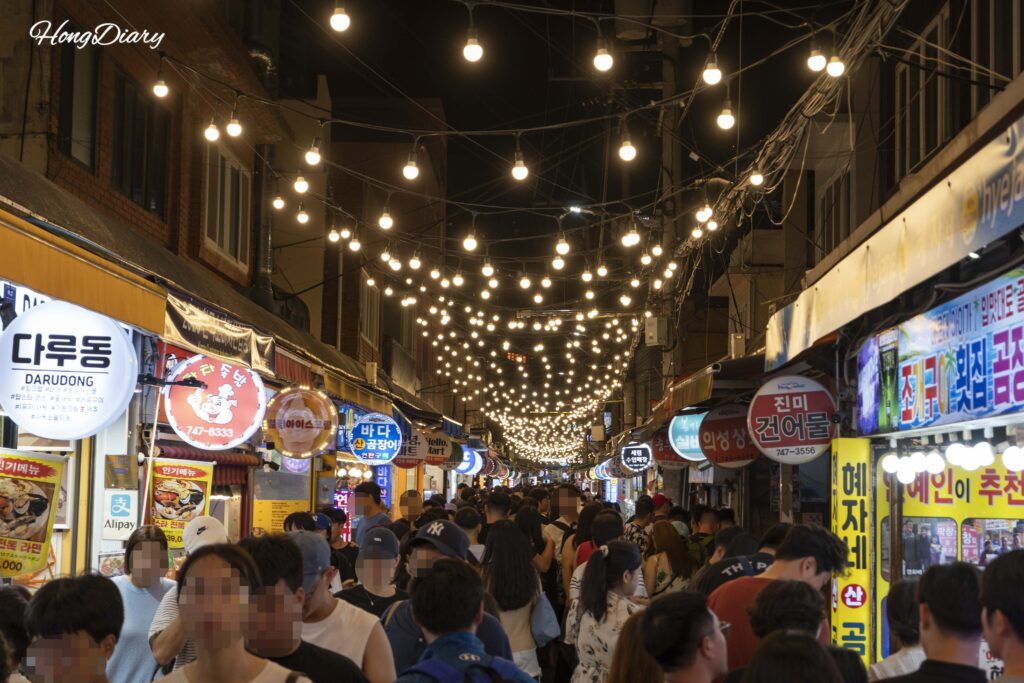
I live in Busan and have been coming here for years. It has changed a lot — more tourist-oriented now, more Instagram-friendly stalls, more shops selling Japanese snacks and K-beauty products. But that is not necessarily a bad thing. For visitors, it means the food is curated toward what travelers actually want to try, the stalls accept cards, and the atmosphere after dark is genuinely fun. During the day it operates as a quieter local market; at night, the food stalls take over and the crowd shifts almost entirely to tourists. During peak summer, the main alley gets so packed that walking in a straight line becomes a challenge. For locals, there are still a handful of stalls that have not changed at all. This is an honest walk through both sides.
Street Food — The Stalls Everyone Lines Up For
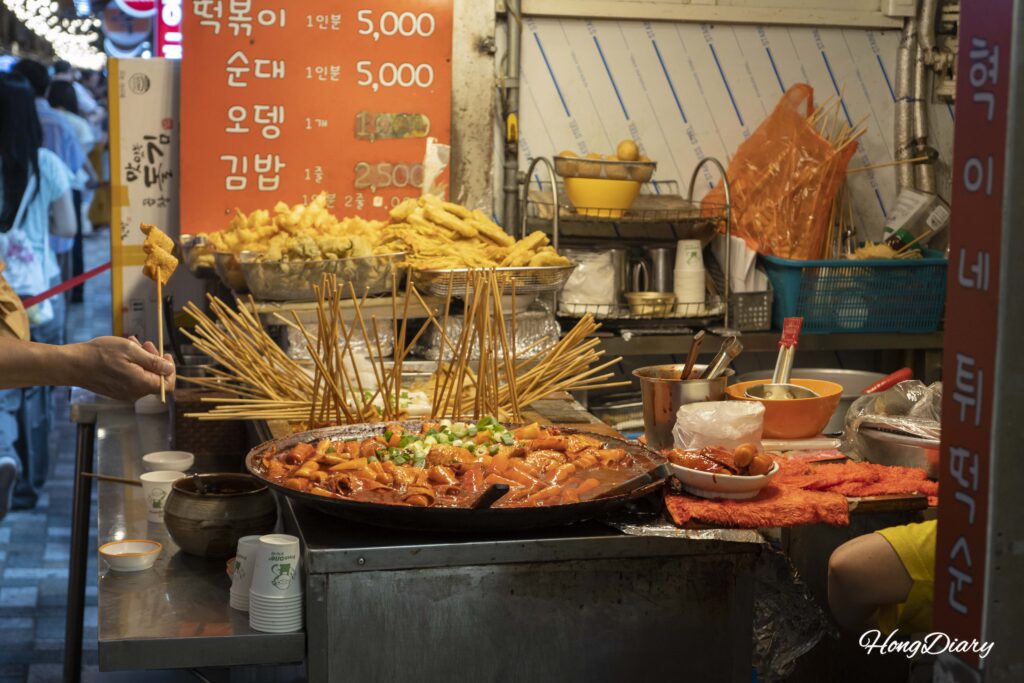
The most famous stall in the market is Sangguk-ine, known for its tteokbokki — chewy rice cakes in a spicy-sweet red sauce that is probably the single most iconic Korean street food. The line here is consistently long, and on a hot summer evening, waiting in that line is not something I would recommend. There are several other tteokbokki stalls nearby with shorter waits and similar quality. If you do go to Sangguk-ine, here is the price breakdown:
| Item | Price |
|---|---|
| Tteokbokki (spicy rice cakes), 1 serving | ₩6,000 (~$4 USD / €3 EUR) |
| Twigim (assorted fried snacks), 1 piece | ₩1,500 (~$1 USD / €1 EUR) |
| Eomuk (fish cake on a stick), 1 piece | ₩1,500 (~$1 USD / €1 EUR) |
| Mulddeok, 1 piece | ₩1,500 (~$1 USD / €1 EUR) |
| Yubu (fried tofu pocket), 1 piece | ₩1,500 (~$1 USD / €1 EUR) |
| Sundae (Korean blood sausage), 1 serving | ₩6,000 (~$4 USD / €3 EUR) |
| Gimbap (seaweed rice roll), 1 roll | ₩4,000 (~$3 USD / €2 EUR) |
My personal favorite on that list is mulddeok — soft, chewy rice cakes served warm in savory fish broth. This is a street snack that originated right here in Busan and has since spread across the country, but most visitors have never heard of it. You eat them by dipping into either the tteokbokki sauce or a small dish of soy sauce. The combination of the mild, brothy warmth and the chew of the rice cake is hard to beat on a humid evening. If there is one thing I would tell every visitor to try at this market, it is this.
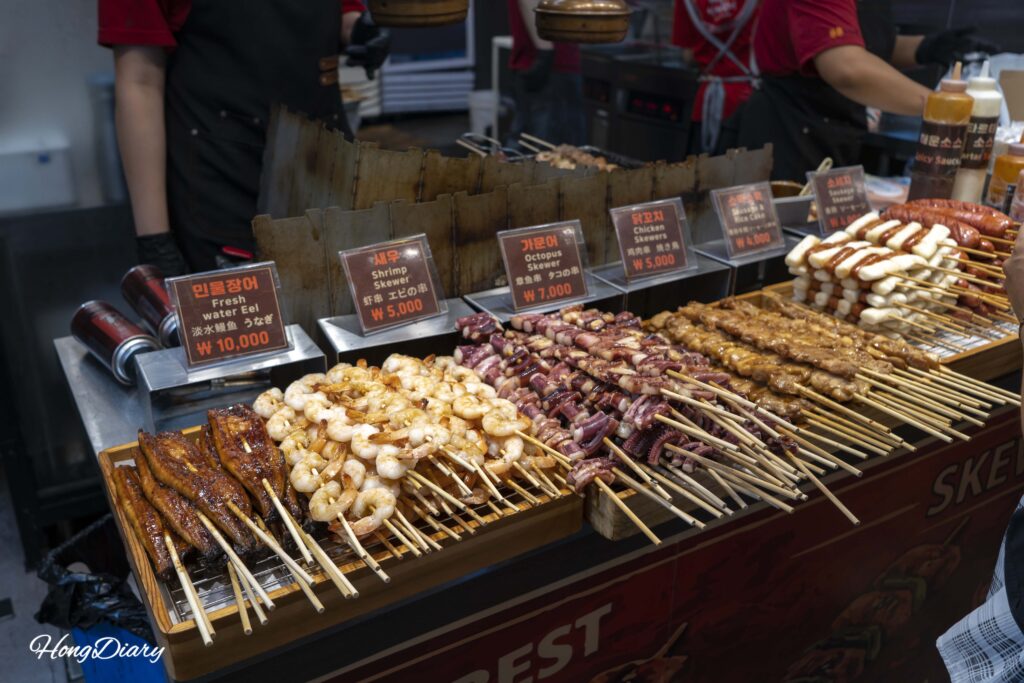
Grilled, Raw, and Everything From the Sea
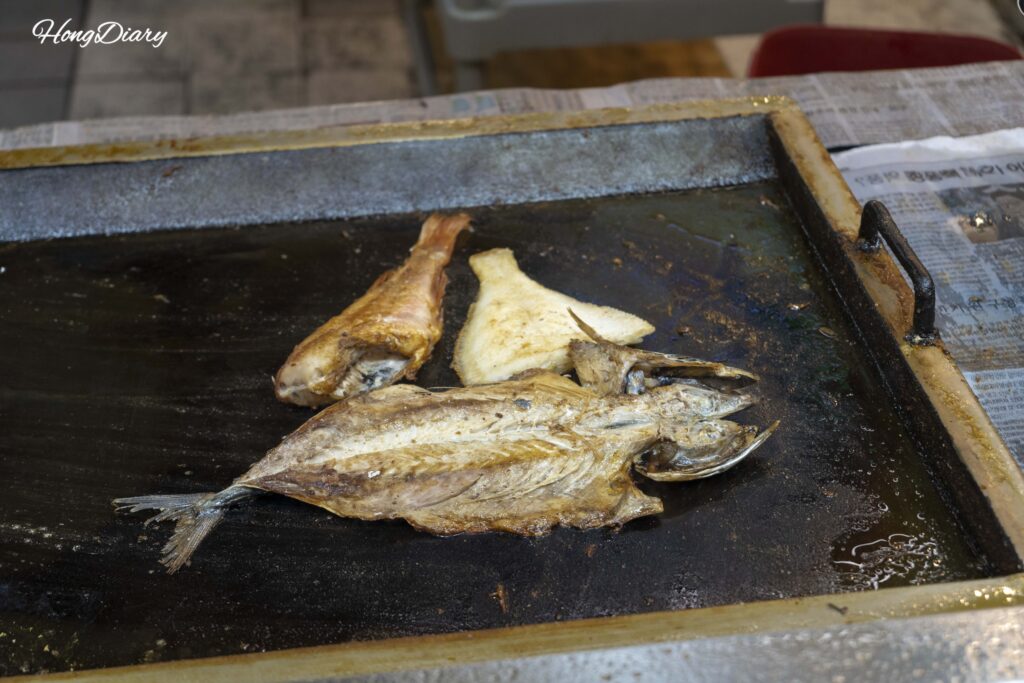
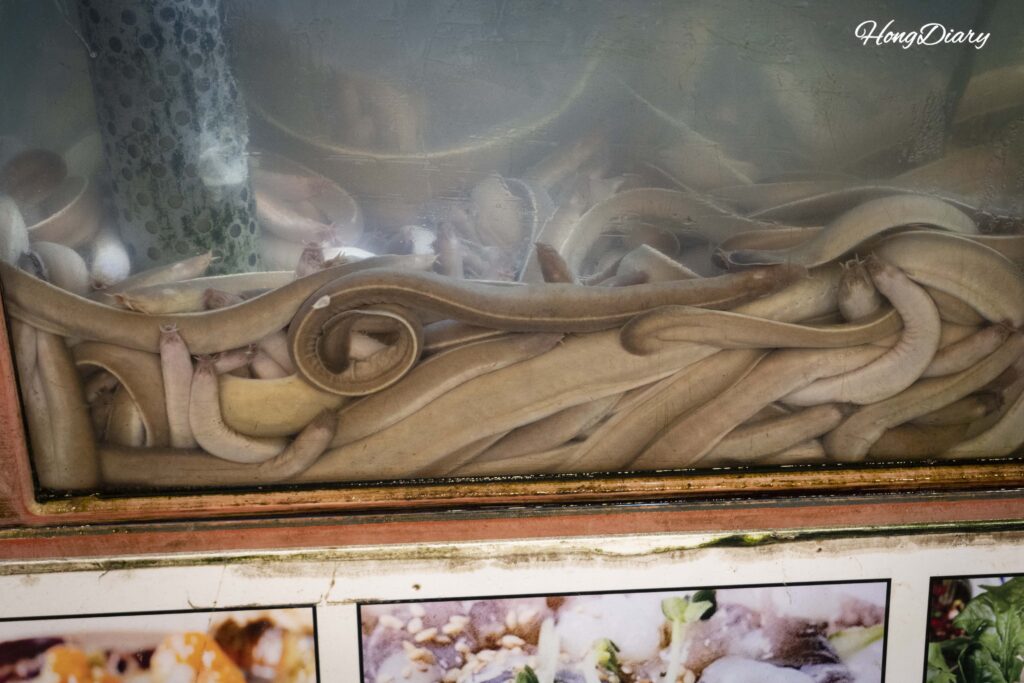
One thing you will notice quickly is the smoke. Multiple stalls grill kkomjangeo — hagfish — over charcoal, and the smell pulls people in from across the market. Kkomjangeo is a Busan classic, traditionally eaten as a drinking snack by older generations but now trending with younger visitors and foreigners thanks to social media. It is usually grilled with salt or stir-fried with a spicy red sauce and vegetables.
I will be honest: I have not tried it myself. The look of it has kept me from ordering, which is exactly the kind of thing you would not hear from a typical guide. But people who love it are borderline obsessed with it, and every kkomjangeo stall I walked past was full.
| Dish | Price (small/medium/large) |
|---|---|
| Kkomjangeo (grilled hagfish) | ₩40,000–60,000 (~$27–40 USD / €23–34 EUR) |
| Seafood platter (sea squirt, sea cucumber, abalone) | ₩35,000 (~$23 USD / €20 EUR) |
| Sannakji (live octopus) | ₩30,000 (~$20 USD / €17 EUR) |
| Nakji-bokkeum (stir-fried octopus) | ₩40,000 (~$27 USD / €23 EUR) |
| Grilled fish | ₩20,000 (~$13 USD / €11 EUR) |
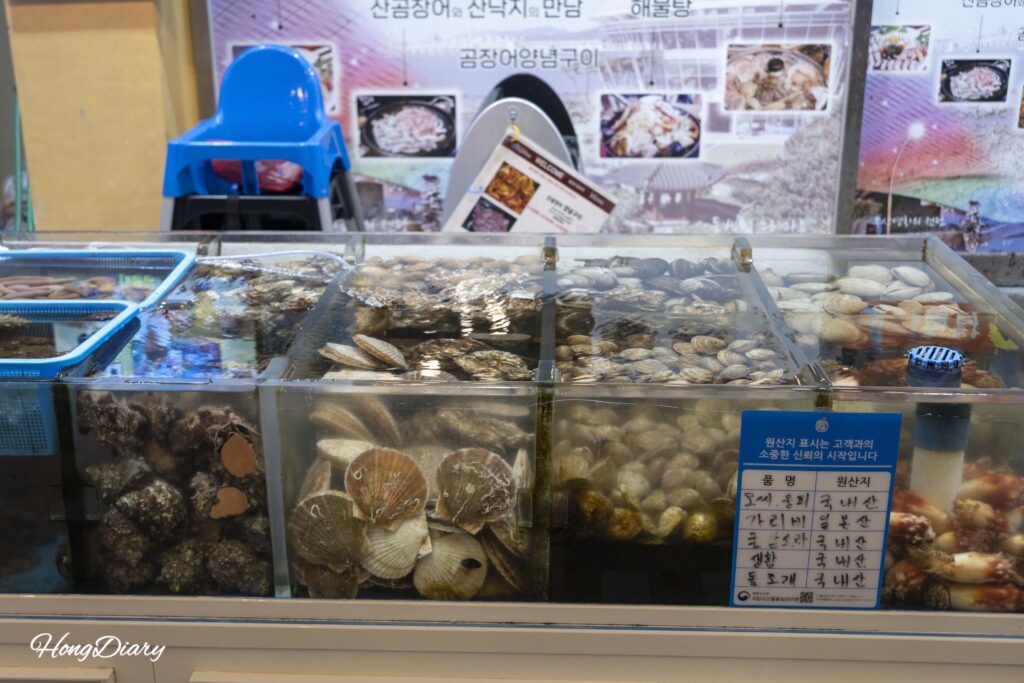
These seafood spots usually double as drinking restaurants, so if you want to sit down and make an evening of it with soju or beer, this is the section of the market to aim for.
Jeon and Makgeolli — The Combination That Fits This Place
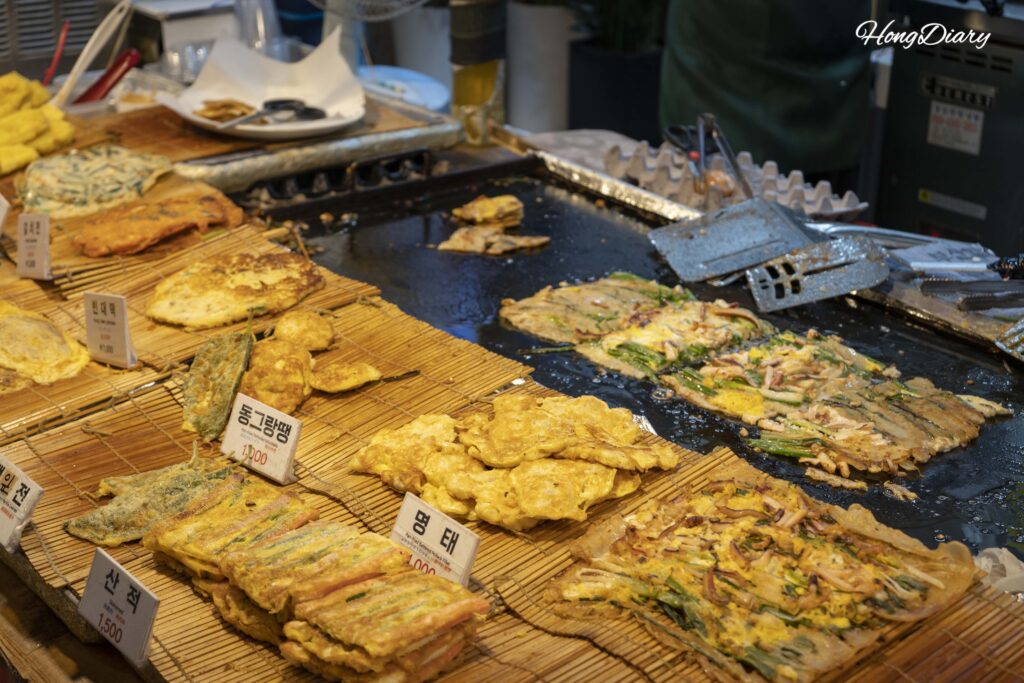
If there was one food where the line surprised me, it was jeon — Korean savory pancakes fried to a crisp in oil. Stalls display towering stacks of them: chive jeon, kimchi jeon, perilla leaf jeon, cabbage jeon, pollack jeon, tofu jeon. The sight alone is enough to stop you mid-walk.
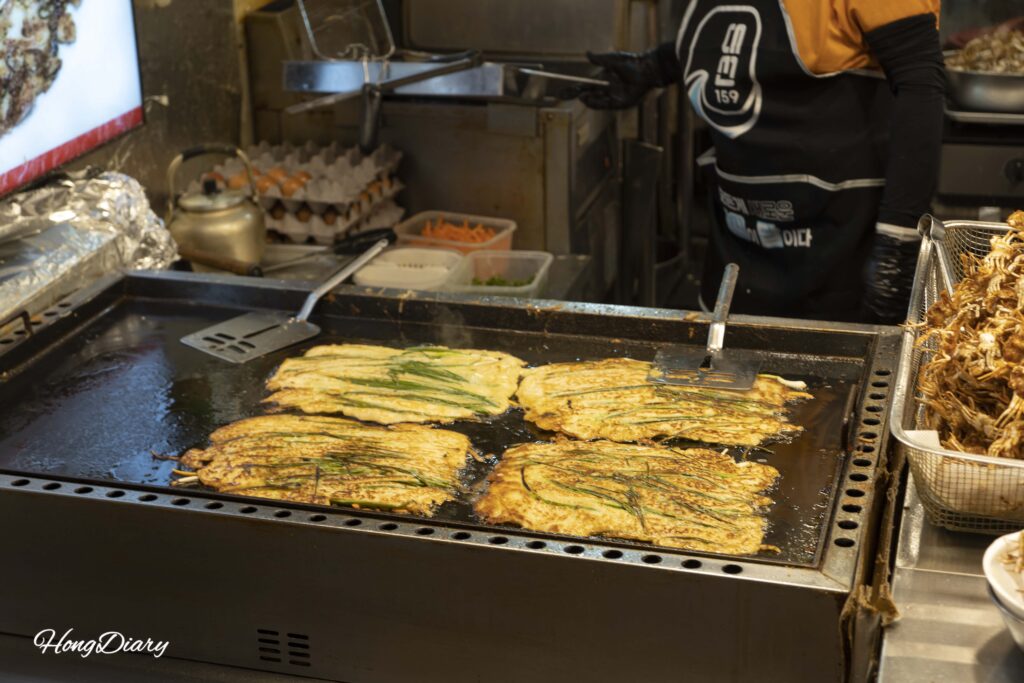
| Item | Price |
|---|---|
| Individual jeon (chive, kimchi, perilla leaf, etc.) | ₩7,000–8,000 per type (~$5 USD / €4 EUR) |
| Single piece (any variety) | ₩1,000 (~$0.70 USD / €0.60 EUR) |
| Haemul pajeon (seafood and green onion pancake) | ₩15,000 (~$10 USD / €8 EUR) |
Pair a plate of haemul pajeon with a bottle of makgeolli — a milky, slightly sweet Korean rice wine — and you have the most traditional-market-appropriate meal possible. It is the kind of combination Koreans have been eating at markets for generations, and having it surrounded by the market buzz at night makes it taste even better.
Quick Bites Under ₩5,000 (~$3 USD / €3 EUR)
Not everything here requires a sit-down. The market is lined with grab-and-go options that cost ₩5,000 (~$3 USD / €3 EUR) or less:
There is a branch of Nampo-dong’s famous ssiat hotteok — a deep-fried sweet pancake stuffed with seeds, nuts, and brown sugar syrup — right here in the market. Kalguksu (hand-cut knife noodles in broth), twisted doughnuts (kkwabaegi), skewers, and mandu (Korean dumplings) fill the gaps between the larger stalls.
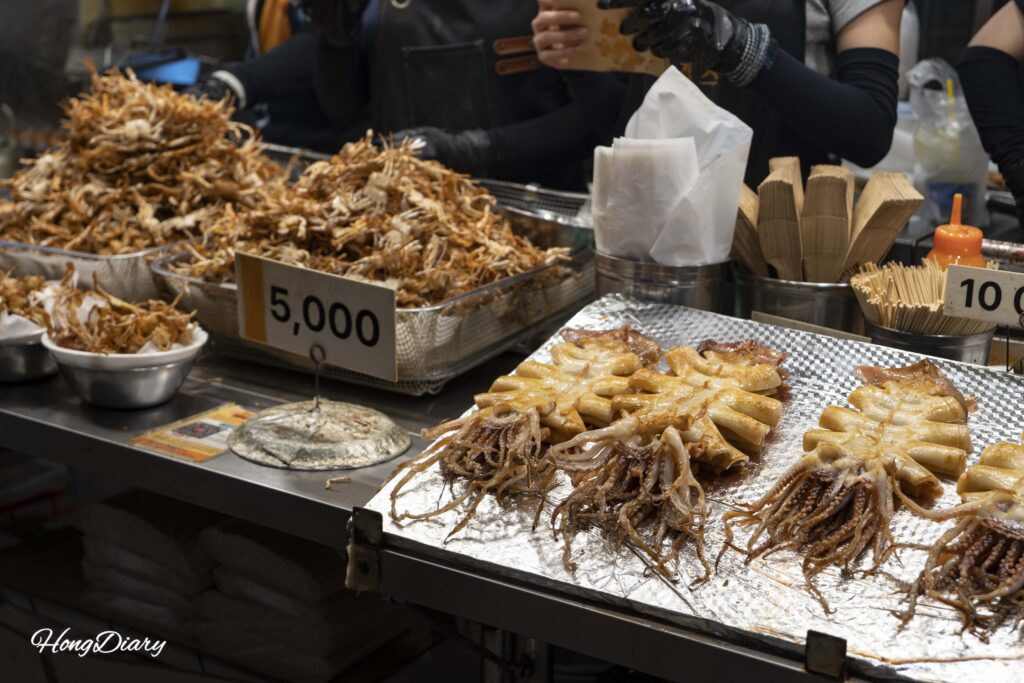
You will also spot butter-grilled squid vendors along the main alley, pulling in crowds with the sizzle and the smell. It is one of those things you buy on impulse and eat while walking.
Korean prices have gone up across the board in recent years, so eating your way through the entire market adds up. But even if you do not buy anything, the atmosphere alone — the smoke, the noise, the neon signs reflecting off the wet pavement — is worth the walk.
Beyond Food — Souvenirs and Surprises
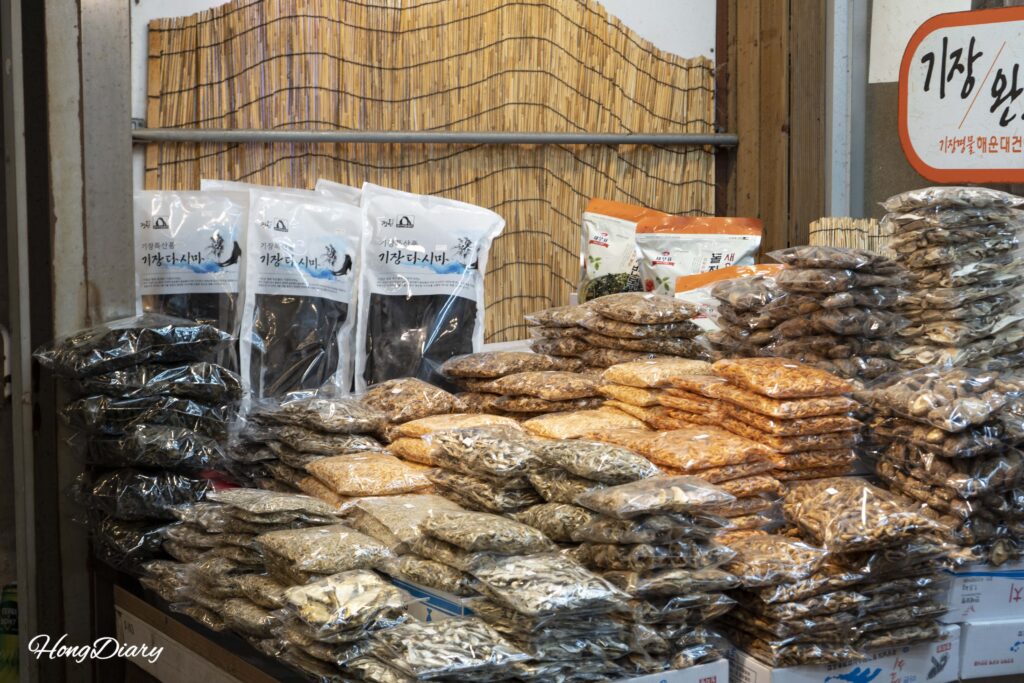
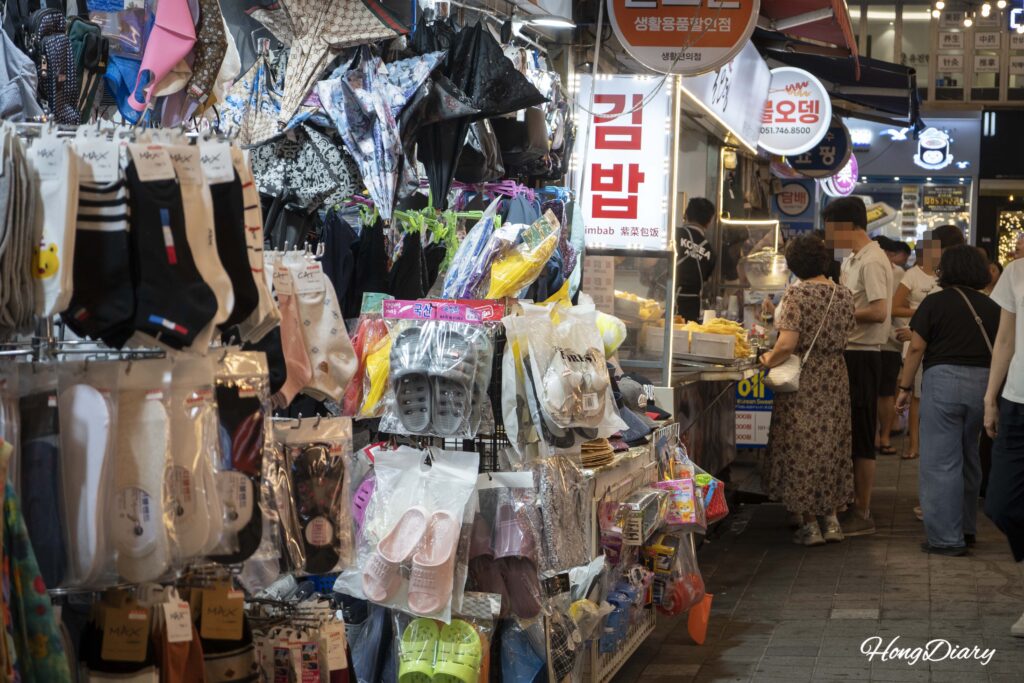
If you are looking for something to bring home, skip the tourist trinkets and head for the dried goods section. Gijang-gun, the district just north of Haeundae, is famous for its seaweed, and the market sells locally sourced miyeok (seaweed), dashima (kelp), and dried anchovies at prices lower than what you will find in grocery stores. These pack flat, last for months, and make genuinely useful gifts.
The market has also changed in ways I did not expect on my latest visit. Japanese import snack shops have multiplied, pharmacies targeting foreign visitors have appeared, and some stalls have rotated their inventory to match whatever is trending on social media that month. The core of the market — the fishcake broth, the jeon stacks, the dried goods — remains the same. But the edges keep shifting, which makes it a slightly different walk each time.
Before You Go — Practical Notes
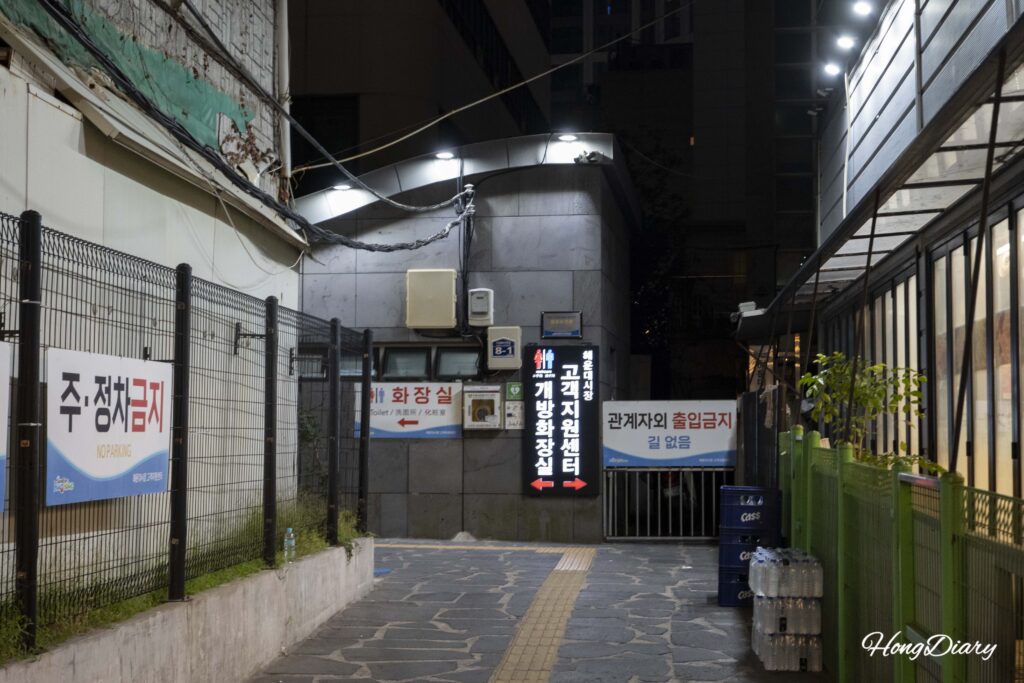
There is a public restroom inside the market — useful to know since options are limited in this part of Haeundae at night.
Parking is available at the Haeundae Market public lot (20-11 Gunam-ro 29beon-gil): ₩1,500 (~$1 USD / €1 EUR) for the first 30 minutes, then ₩500 per additional 10 minutes. The lot is open until 10 PM, which covers the night market window. That said, this area is congested year-round — not just in summer — so public transit is the easier option. Haeundae Station (Line 2, Exit 3) puts you five minutes away on foot.
The best time to visit is late afternoon into the evening, when the food stalls are fully running and the market has the most energy. Weekday evenings are noticeably less crowded than weekends.
What Else to Do Near Haeundae Traditional Market
Haeundae Traditional Market is five minutes from the beach, which means you are already in the middle of one of Busan’s most packed neighborhoods. Here are a few things that pair well with a market visit, depending on your timing:
If you are spending the day at Haeundae Beach, there is a side that most English guides skip entirely.
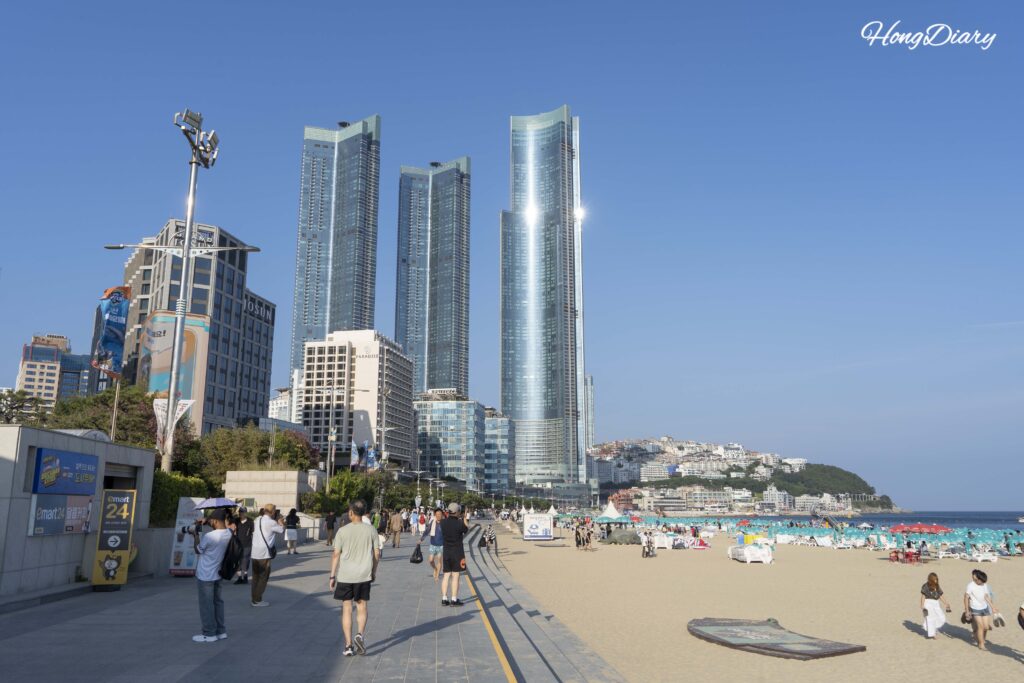
There is a free ground-level fountain area running behind the main strip all summer, parasol rentals have fixed prices, and the showers run on coins. I covered all of that — including the prices nobody else publishes — in this guide.

Right underneath the beach, SEA LIFE Busan Aquarium is a solid option for the hottest part of the afternoon. I paid 37% less than the gate price, watched a live mermaid show, and stayed cool inside for two full hours. It pairs well as a mid-afternoon stop before heading to the market for dinner.
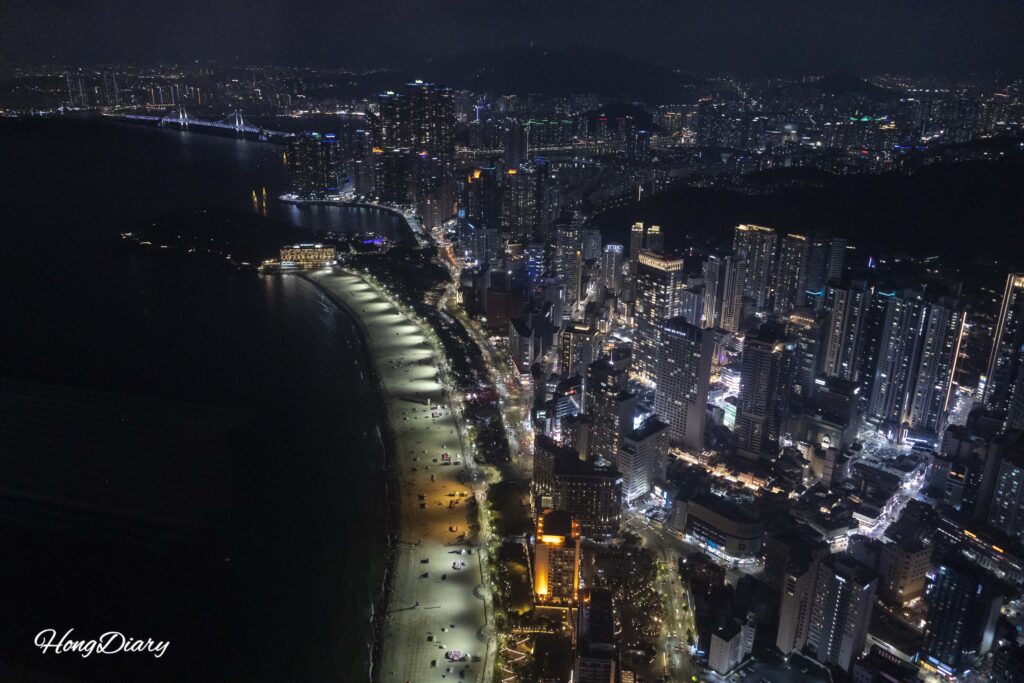
For a different kind of evening view, the Haeundae LCT Landmark Tower houses Busan X the Sky, a 100th-floor observatory where I watched the ocean shift from blue to neon over three hours. If you time it right, you can catch the sunset from the tower and then walk to the market for a late dinner.
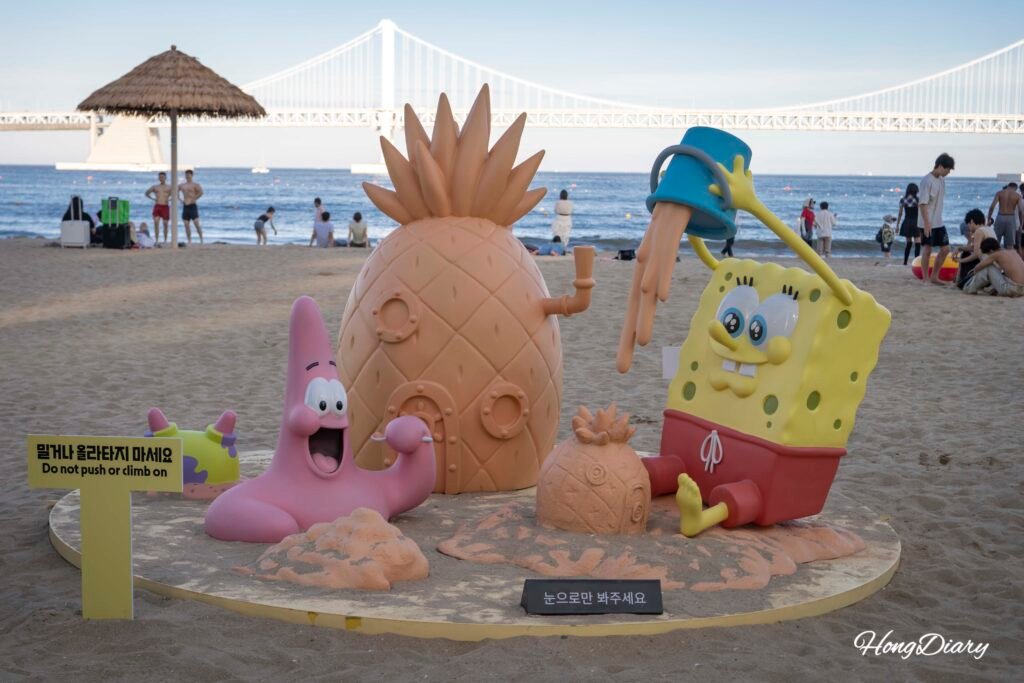
If you want a completely different coastal vibe after your market visit, Gwanganli Beach is about 15 minutes away by taxi. I spent a full summer day there — cafes, a SpongeBob sand event, drone shows, and an open-air cinema on the beach at night.
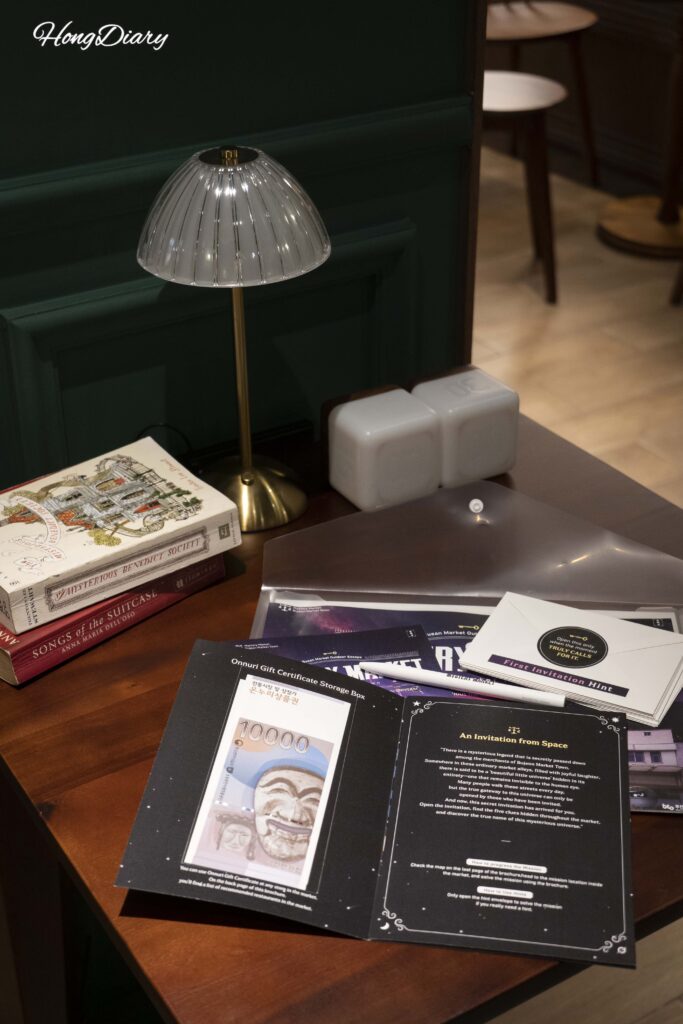
And if traditional markets are your thing but you want something more adventurous, Busan’s largest market — Bujeon Market in Seomyeon — has a secret outdoor escape room hidden in its alleys. I spent two hours following clues between the stalls and got rewarded with handmade dumplings at the end. A completely different way to experience a Korean market.
After the Smoke Clears
Haeundae Traditional Market is not pretending to be something it is not. It is a tourist market now, and it knows it. The stalls are curated for visitors, the signs are in multiple languages, and the prices reflect the location. But that does not make it a bad place to spend an evening. The jeon is still fried to order, the mulddeok still warms you from the inside, the dried seaweed from Gijang is still the real thing, and the atmosphere after dark — crowded, loud, smoky, alive — is the kind of thing you remember about a trip.
If Haeundae Beach is already on your itinerary, the market is a five-minute walk from the sand. You do not need a plan. Just follow the smoke.
Haeundae Traditional Market FAQ: What Visitors Need to Know
What are the opening hours for Haeundae Traditional Market?
The market is open daily from around 9:00 AM to 10:00 PM, though hours vary by individual stall. Most food stalls are fully running by late afternoon, and the night market atmosphere peaks in the evening. The market operates year-round with no regular closing days.
How do I get to Haeundae Traditional Market?
Take Busan Metro Line 2 to Haeundae Station and use Exit 3. The market is about a 5-minute walk straight toward the beach along Gunam-ro. If you are already at Haeundae Beach, the market entrance is roughly a 5-minute walk inland. Parking is available at the Haeundae Market public lot for ₩1,500 (~$1 USD / €1 EUR) for the first 30 minutes, then ₩500 per additional 10 minutes, but the area is congested and public transit is recommended.
What is the most popular food at Haeundae Traditional Market?
The most well-known stall is Sangguk-ine, famous for its tteokbokki (spicy rice cakes). Other popular items include jeon (savory Korean pancakes fried on a griddle), ssiat hotteok (deep-fried seed pancakes), kkomjangeo (grilled hagfish, a Busan specialty), and various seafood dishes. A lesser-known local favorite is mulddeok — soft rice cakes served in warm fish broth, a street snack that originated in Busan.
How much does food cost at Haeundae Traditional Market?
Street snacks like tteokbokki, sundae, and gimbap range from ₩4,000 to ₩6,000 (~$3–4 USD / €2–3 EUR) per serving. Individual fried items such as twigim, eomuk, and mulddeok are ₩1,500 each (~$1 USD / €1 EUR). Jeon varieties run ₩7,000–8,000 (~$5 USD / €4 EUR) per type, with single pieces available for ₩1,000. Sit-down seafood like kkomjangeo costs ₩40,000–60,000 (~$27–40 USD / €23–34 EUR), and a seafood platter is around ₩35,000 (~$23 USD / €20 EUR).
Is Haeundae Traditional Market good for tourists or only for locals?
The market has shifted significantly toward tourists over the years, with stalls curated for what visitors want to try, signs in multiple languages, and card payment widely accepted. For visitors, this makes it accessible and easy to navigate. Locals still come for specific stalls — particularly the dried goods, jeon shops, and a few legacy tteokbokki vendors — but the overall atmosphere is geared toward evening foot traffic from Haeundae Beach.
What can I buy as a souvenir at Haeundae Traditional Market?
The dried goods section sells locally sourced Gijang seaweed (miyeok), kelp (dashima), and dried anchovies at competitive prices. These are lightweight, pack flat, and make practical gifts. The market also has an increasing number of Japanese import snack shops and K-beauty stores, though these rotate inventory frequently based on social media trends.
When is the best time to visit Haeundae Traditional Market?
Late afternoon into the evening offers the best experience. Food stalls are fully open, the night market atmosphere is in full swing, and the energy is highest. Weekday evenings are noticeably less crowded than weekends or holidays. During peak summer, expect dense crowds regardless of the day. Arriving before sunset gives you time to browse the non-food stalls before the dinner rush.