
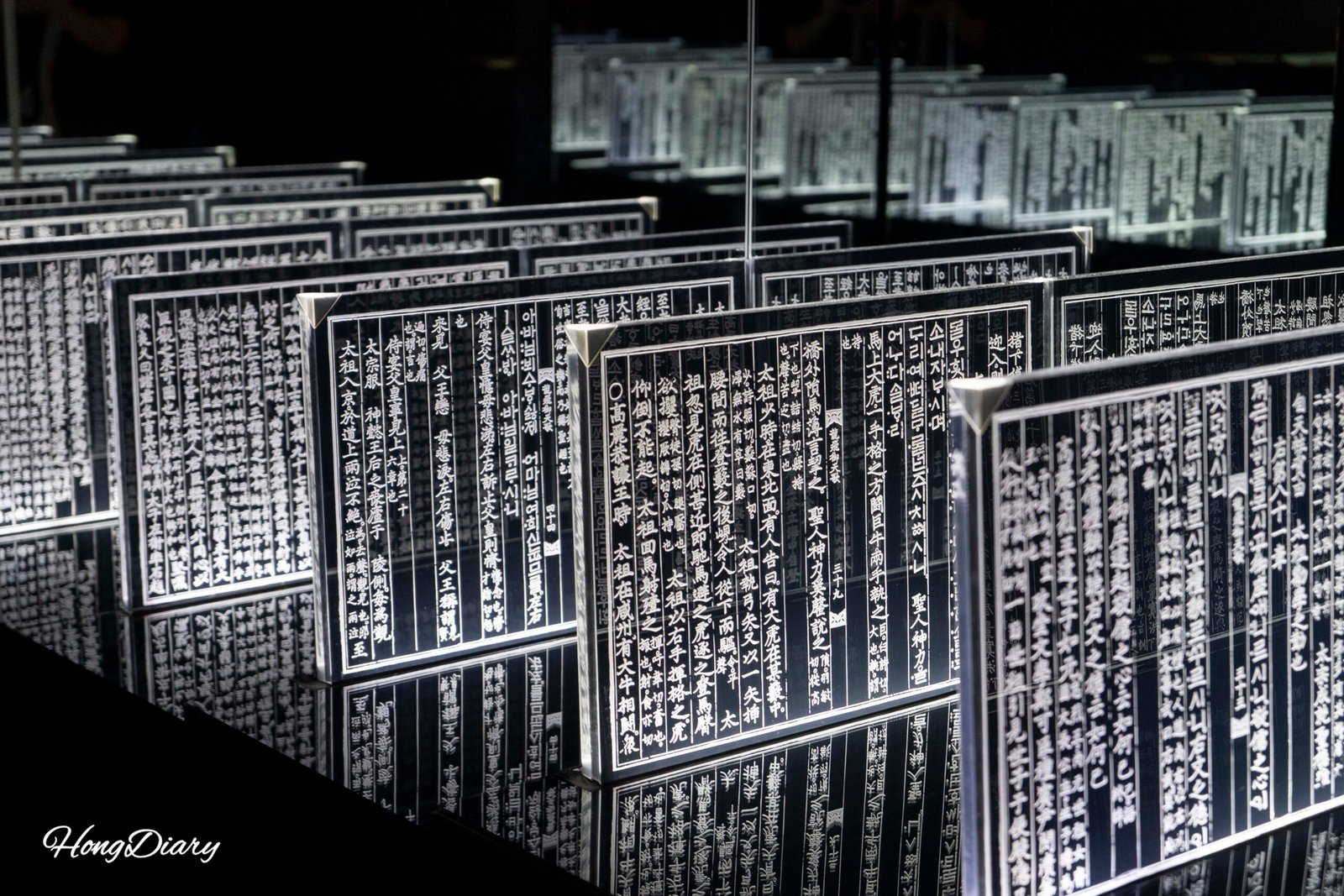
Most travelers who land at Gimhae Airport make a beeline for Busan. I almost did the same thing — until a quick search turned up a place I hadn’t seen mentioned in a single English-language travel guide: the Gimhae Hangeul Museum, Korea’s first public museum dedicated entirely to the Korean alphabet.
Gimhae is a small city in Gyeongsangnam-do province, tucked into the southeastern corner of the Korean Peninsula. Long before it became known as “the city with Busan’s airport,” this was the heartland of the Gaya Confederacy, an ancient kingdom that thrived alongside Goguryeo, Baekje, and Silla from roughly 42 to 532 AD. Traces of that era are still everywhere — royal tombs, archaeological sites, and themed museums dot the landscape. In spring, Yeonji Park fills with cherry blossoms and draws visitors from across the country. But what caught my attention was something newer: a three-story museum that opened in November 2021, built to honor two local scholars who spent their lives preserving the Korean writing system during some of the country’s darkest years. Getting here from the airport is straightforward — take the Busan–Gimhae Light Rail for about 30 minutes (13 stops), get off at Surowangneung Station, and it’s a six-minute walk from Exit 1.
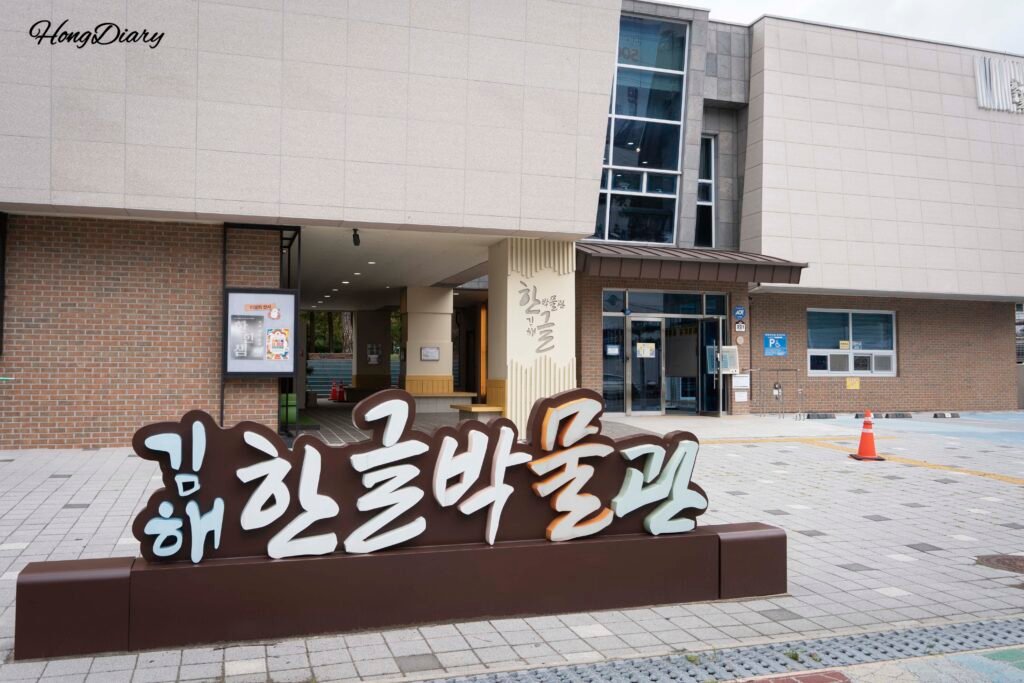
Table of Contents
Basic Info
| Detail | Info |
|---|---|
| Address | 221 Bunseong-ro, Gimhae-si, Gyeongsangnam-do |
| Hours | 9:00 AM – 6:00 PM (last entry 5:30 PM) |
| Closed | Every Monday, January 1, Seollal (Lunar New Year’s Day), Chuseok (Korean Thanksgiving Day) |
| Admission | Free |
| Parking | Free (6 spaces) |
| Light Rail | Surowangneung Station, Exit 1 — 6-minute walk |
| Bus | Routes 7, 14-1, 21 — get off at Gimhae Public Health Center |
Two Scholars Who Saved an Alphabet
There are only two Hangeul museums in all of Korea. The larger one — the National Hangeul Museum in Seoul’s Yongsan district — is currently closed for expansion and won’t reopen until late 2028. That makes the Gimhae Hangeul Museum the only operating Hangeul museum in the country right now.
The reason it was built here comes down to two people. Yi Yunje was a linguist who joined the Joseon Language Society during the Japanese colonial period, a time when speaking and teaching Korean was actively suppressed. He poured his life into compiling the Joseonmal Keun Sajeon — the Great Korean Dictionary — a project that was as much an act of cultural resistance as it was a work of scholarship. He dedicated his entire life to the project and never saw it completed.
His student, Heo Ung, picked up where his teacher left off. Where Yi Yunje had fought to collect and record the language, Heo Ung worked to analyze its inner workings — the phonetic system, the grammar rules, the structural logic behind the alphabet. A quote from Heo Ung is displayed in the museum: “A nation’s language is its spirit, and the driving force of its culture.”
Without these two scholars — both from this region — the Korean alphabet as it exists today might look very different, or might not have survived at all. The museum traces their story, and through it, the broader arc of Hangeul from its creation in 1443 to the present day.
What You’ll See Inside
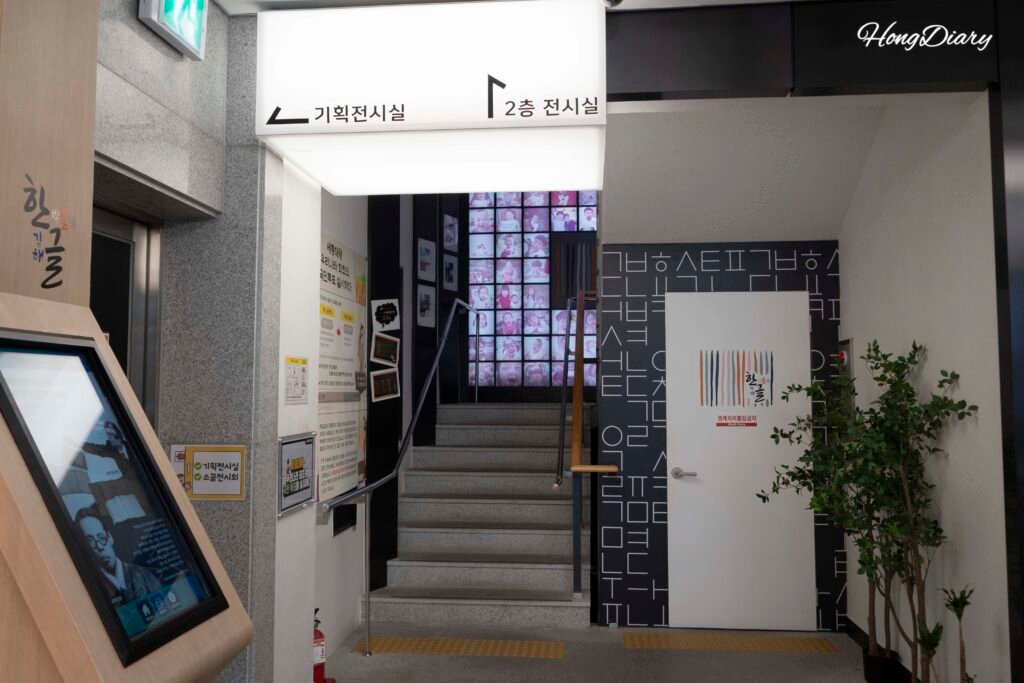
The building has three floors. Don’t let its modest size fool you — the museum holds thousands of artifacts, and the curation keeps a pace that makes each room feel distinct.
| Floor | What’s There |
|---|---|
| 1F | Information desk, rotating planning exhibition, offices |
| 2F | Exhibition Hall 1 (Yi Yunje), Exhibition Hall 2 (Heo Ung), Special Exhibition Hall |
| 3F | Reading lounge, rooftop garden |
Exhibition Hall 1: The Man Who Wrote the Dictionary
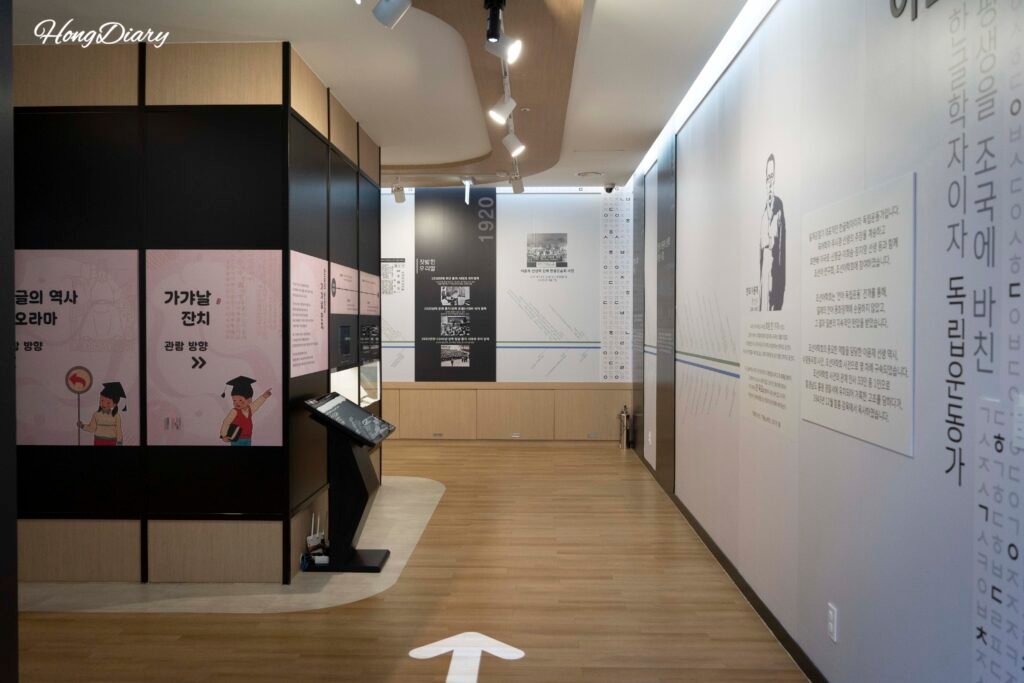
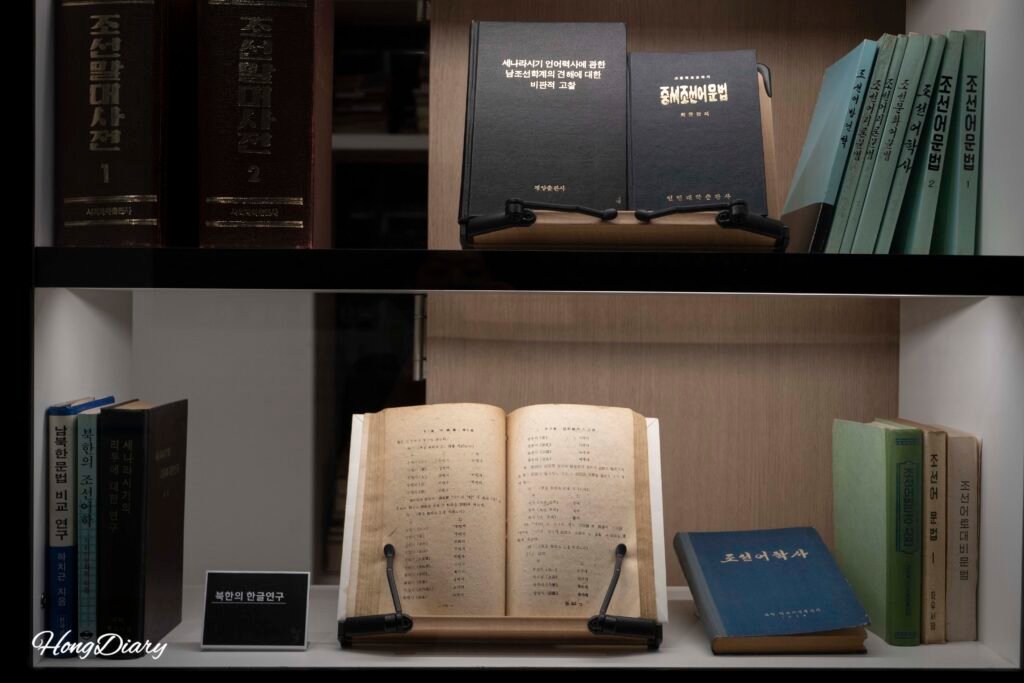
The second floor opens with a space dedicated to Yi Yunje’s life and work. Display cases line the walls with documents and publications from the colonial era, but the real draw is the visible storage vault behind glass panels — you can peer through and see original copies of the dictionary manuscripts, old grammar textbooks, and literary readers from the colonial era.
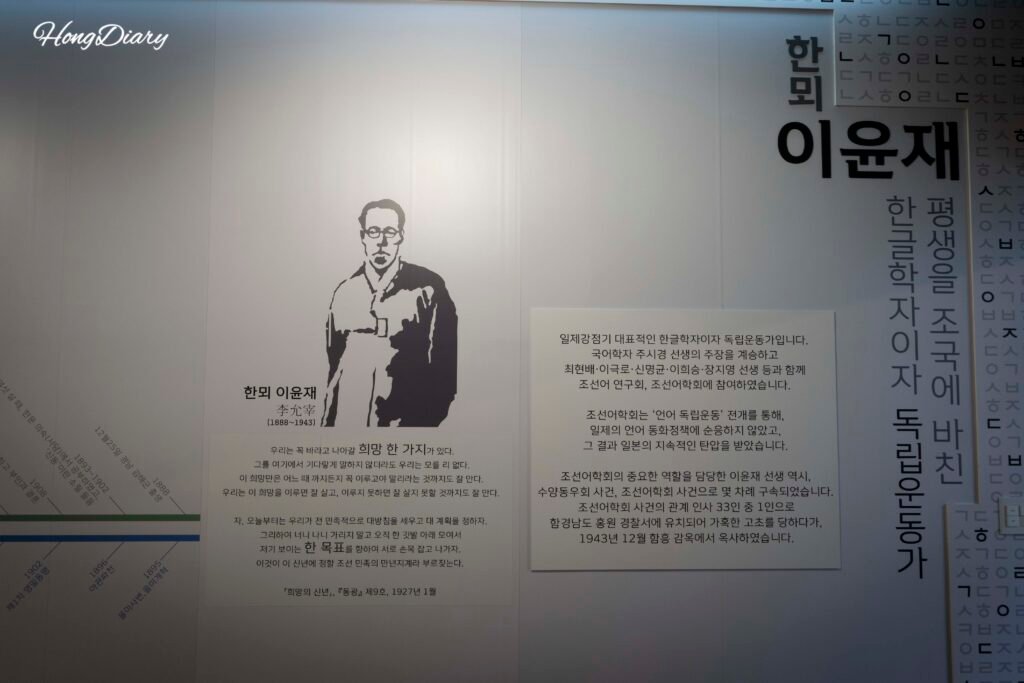
A few pieces here are worth slowing down for:
| Artifact | Significance |
|---|---|
| King Seonjo’s Hangeul Decree | Designated Treasure No. 951 — the first official government document written entirely in Hangeul, issued during the Imjin War (1592–1598) so common citizens could understand it directly |
| Kim Seungtae Manse Undongga | A folk song from the Gimhae Jangyu independence movement, recorded in Hangeul by the activist’s mother — a rare example of women using the alphabet to document resistance |
| Hangeul Magazine (1927) | The inaugural issue of a journal published by the Korean Language Research Society; Yi Yunje’s own writing appears in this first edition |
| The Great Korean Dictionary | Original manuscripts of the dictionary that Yi Yunje dedicated his career to compiling |
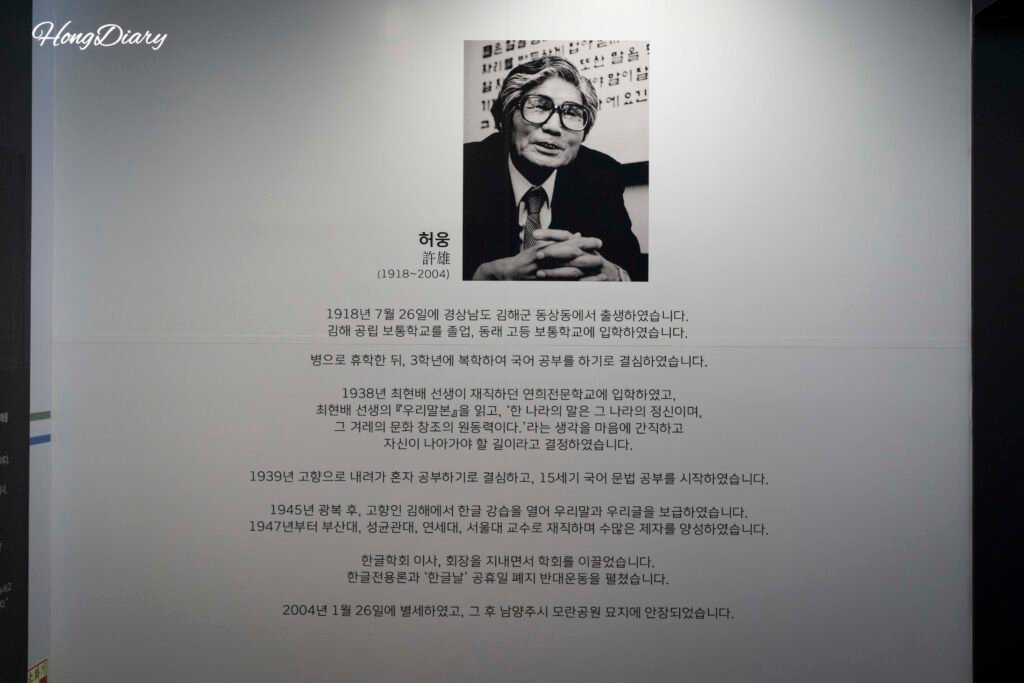
Exhibition Hall 2: The Student Who Carried the Torch
The adjacent hall shifts focus to Heo Ung. Where the first room feels archival — documents under glass, manuscripts behind panels — this one takes a broader view of how knowledge passes between generations. Heo Ung’s research on Korean phonology and grammar is presented alongside the educational tools and textbooks that shaped how the language was taught over the decades.
One corner is set up as a replica of a Korean classroom from decades past, complete with textbooks from different eras. For anyone who has studied Korean — or picked up enough through K-dramas to recognize the basics — flipping through these old readers is oddly absorbing. You can trace how the look and feel of the textbooks changed decade by decade.
Bookshelves along the far wall hold reference materials that visitors can browse freely. It’s a quiet space, the kind of room where you sit down for five minutes and look up twenty minutes later.
What stayed with me after walking through both halls was how many different people — in different ways, across different decades — had worked to keep this alphabet alive. Some compiled dictionaries. Some published magazines. Some recorded folk songs by hand. The methods were different each time, but the intent behind them was the same.
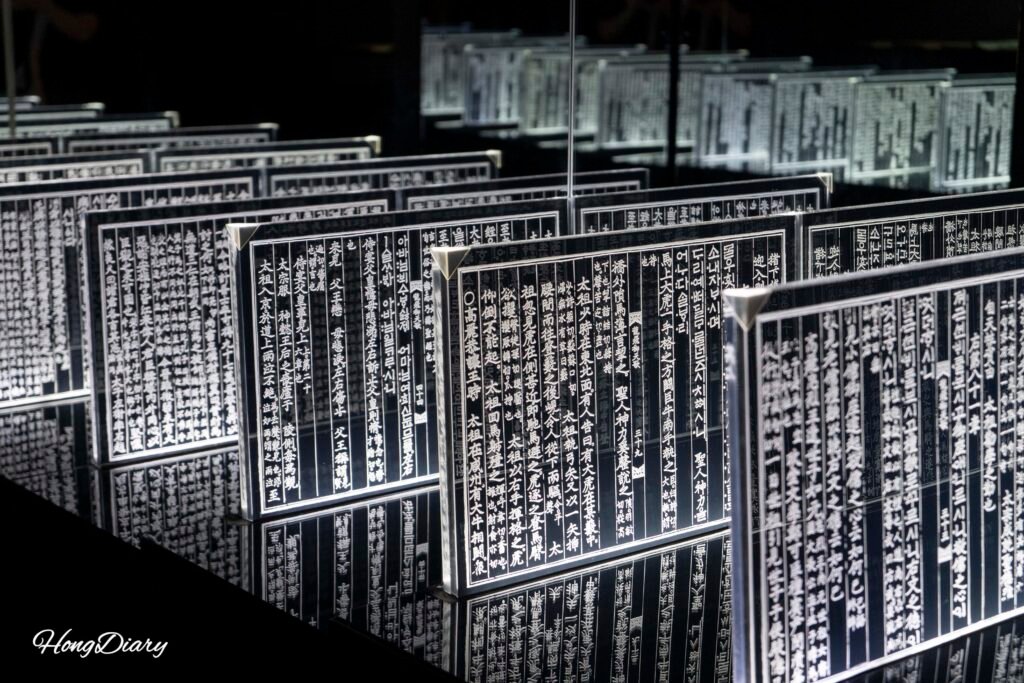
Special Exhibition: Korea’s First Song Written in Hangeul
The final exhibition space on the second floor focuses on the Yongbieocheonga — “Songs of the Dragons Flying to Heaven” — the first literary work ever composed in Hangeul. Written in 1447, just a year after King Sejong formally introduced the alphabet, it spans 125 cantos across ten volumes and five books.
The room plays recordings of the traditional court music composed to accompany the text: Chihwapyeong, Chwipunghyeong, and Yeominrak. The instruments create an atmosphere that’s meditative and slightly haunting — not background music, but something that pulls your attention into the era. It’s one of those moments where you stand still and just listen.
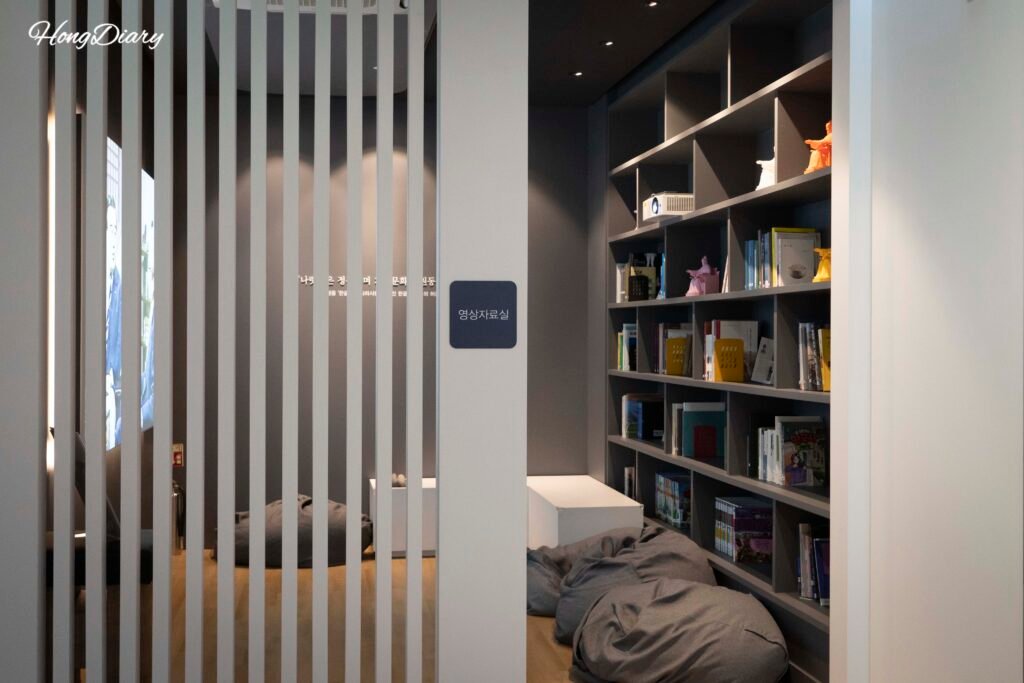
Ground Floor, Third Floor, and the Park Out Back
A stairway from the second floor leads up to a reading lounge on the third floor, stocked with books and reading materials. There’s also a small rooftop terrace that overlooks the surrounding neighborhood — nothing dramatic, but a calm spot to sit for a few minutes after the exhibitions.
Back on the ground floor, the rotating planning exhibition is easy to walk past but worth ducking into. When I visited, it featured a show called “Smart Korean Language Life,” which tracked how elementary school Korean textbooks have changed across the decades. For Korean visitors, it tends to trigger nostalgia. For foreign visitors, it’s a compact window into how a country teaches its own language to its children — with old classroom song recordings you can listen to along the way.
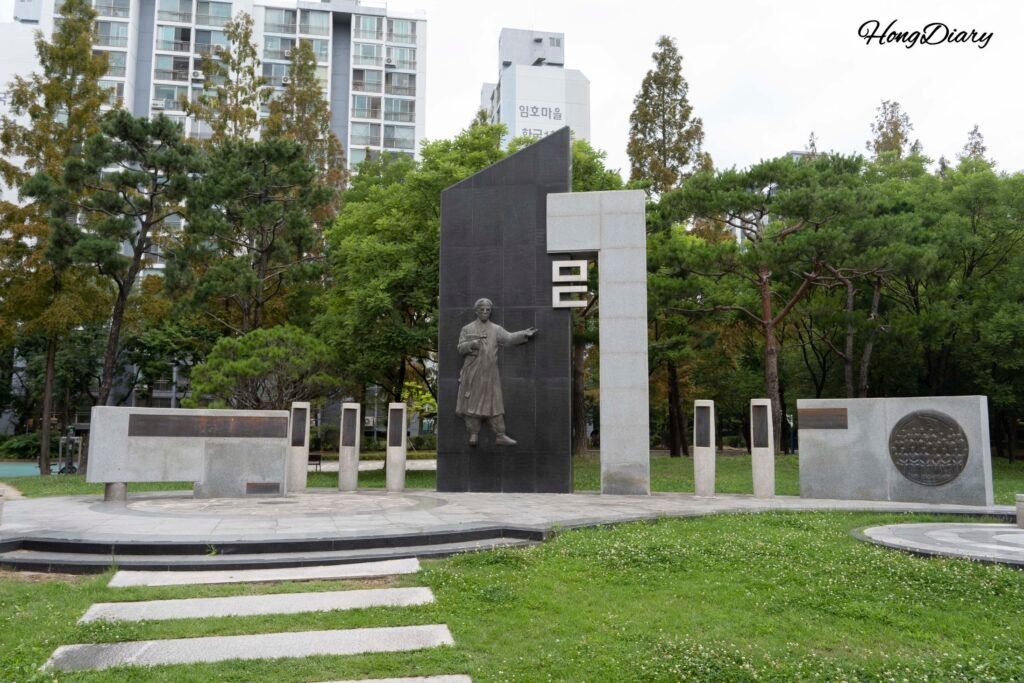
Behind the museum, a walking path leads into the Hangeul Culture Park, a green space with a playground and benches. It’s a practical bonus if you’re visiting with kids, and a natural way to stretch your legs after an hour or so indoors.
Beyond the Museum: What Else to Do at Surowangneung Station
One thing that surprised me about this stop was how much is packed around a single light rail station. The museum turned out to be just one piece of a half-day itinerary that practically builds itself.
| Place | What to Expect |
|---|---|
| Royal Tomb of King Suro | The burial site of the legendary founder of the Gaya Kingdom (42 AD), surrounded by traditional stone sculptures, a shrine complex, and quiet parkland. Free entry, about a 5-minute walk from the station. |
| Daeseong-dong Tomb Museum | An archaeological exhibition covering the UNESCO-listed Gaya-era burial sites, with excavated relics on display. Also nearby on foot. |
| Shinsegae Department Store | Directly in front of the station — a full-scale Korean department store with tax-free shopping for international visitors and dining options inside. |
| E-Mart | Korea’s answer to Target or Walmart. Pick up Korean snacks, K-beauty products, instant noodle packs, and other souvenirs at local prices — often noticeably cheaper than airport shops. |
| Gimhae Bus Terminal | The city’s main intercity bus terminal, within walking distance from the station. Direct routes run to Busan and other cities across the region, so you can continue your trip without backtracking to the airport. |
The combination works well as a plan: culture and history in the morning, lunch at Shinsegae, souvenirs at E-Mart, then a bus straight to Busan or wherever you’re headed next.
Worth the Detour
I had planned to spend maybe 40 minutes here, and ended up staying close to two hours. Each floor had something that made me linger a little longer — the vault in Hall 1, the old classroom in Hall 2, the court music in the special exhibition, and then the park out back where I just sat for a while.
The Gimhae Hangeul Museum isn’t the kind of place that shows up on “Top 10 Things to Do in Korea” lists — and honestly, that’s part of what makes it worth visiting. It’s quiet, it’s free, and it tells a story that most visitors to this country never hear: how an alphabet was nearly lost, and how two scholars from this small city helped make sure it wasn’t.
If you’re flying into Gimhae Airport and have a few hours before heading south, this is one of the more meaningful ways to spend them. The light rail gets you to Surowangneung Station in about half an hour, the station puts you within walking distance of everything listed above, and by the time you board a bus for Busan, you’ll read every Hangeul sign along the way with a bit more context than you had that morning.
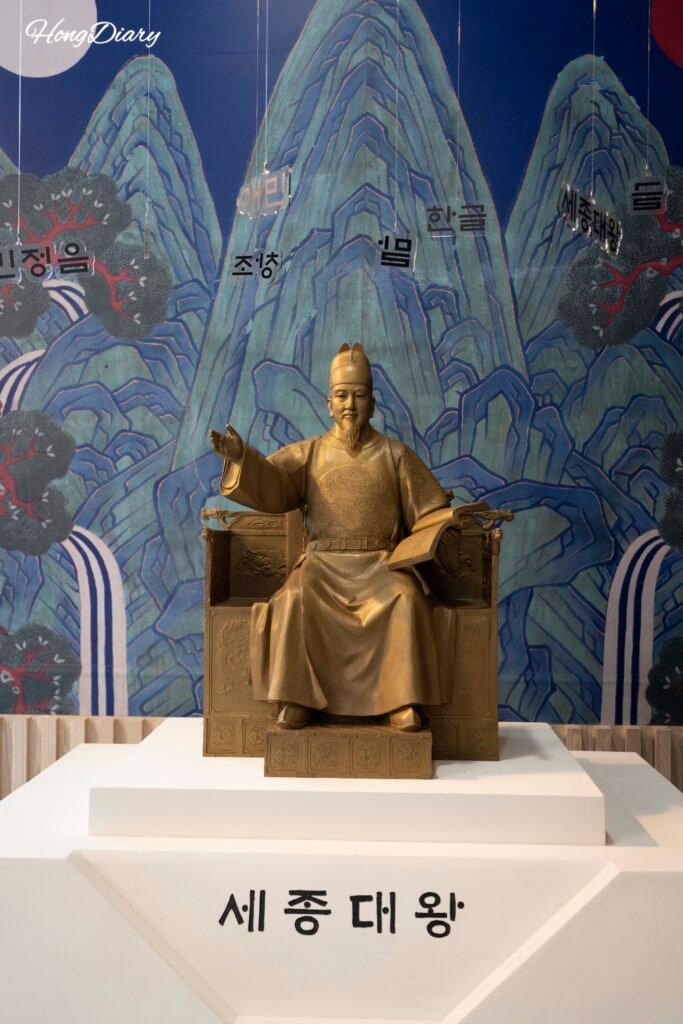
King Sejong created the Hangeul alphabet in 1443 to promote literacy among common people.
Frequently Asked Questions
Is the Gimhae Hangeul Museum free to visit?
Yes. Admission is completely free, and so is parking, though only six spaces are available on-site. The museum has been free since it first opened in November 2021.
How do I get to the Gimhae Hangeul Museum from Gimhae Airport?
Take the Busan–Gimhae Light Rail from the airport station and ride 13 stops to Surowangneung Station. The trip takes about 30 minutes. From Exit 1, the museum is a six-minute walk along Bunseong-ro.
What are the Gimhae Hangeul Museum’s opening hours?
The museum is open daily from 9:00 AM to 6:00 PM, with last entry at 5:30 PM. It is closed every Monday, on January 1, and on the day of Seollal (Lunar New Year) and Chuseok (Korean Thanksgiving).
How long should I plan for a visit to the Gimhae Hangeul Museum?
Most visitors spend about 60 to 90 minutes inside the museum itself. If you also plan to explore the Hangeul Culture Park behind the building and the Royal Tomb of King Suro nearby, allow two to three hours for the full area.
Is there English signage inside the museum?
The museum provides some English labels and descriptions alongside the Korean text. The visual exhibits — original manuscripts, traditional instruments, and the restored classroom — are engaging on their own, but having a translation app on your phone can help with the more detailed wall panels.
Is the Gimhae Hangeul Museum suitable for children?
Yes. The hands-on classroom exhibit lets kids flip through old textbooks and listen to recordings of Korean songs. The special exhibition hall plays traditional court music, and the Hangeul Culture Park behind the museum has a full playground. Combined with the free admission, it makes for a low-pressure family outing.
What else is within walking distance of the Gimhae Hangeul Museum?
Surowangneung Station — the closest light rail stop — also gives you access to the Royal Tomb of King Suro, the Daeseong-dong Tomb Museum, Shinsegae Department Store (with tax-free shopping), E-Mart (for Korean snacks and souvenirs at local prices), and the Gimhae Bus Terminal for direct buses to Busan and other cities.