
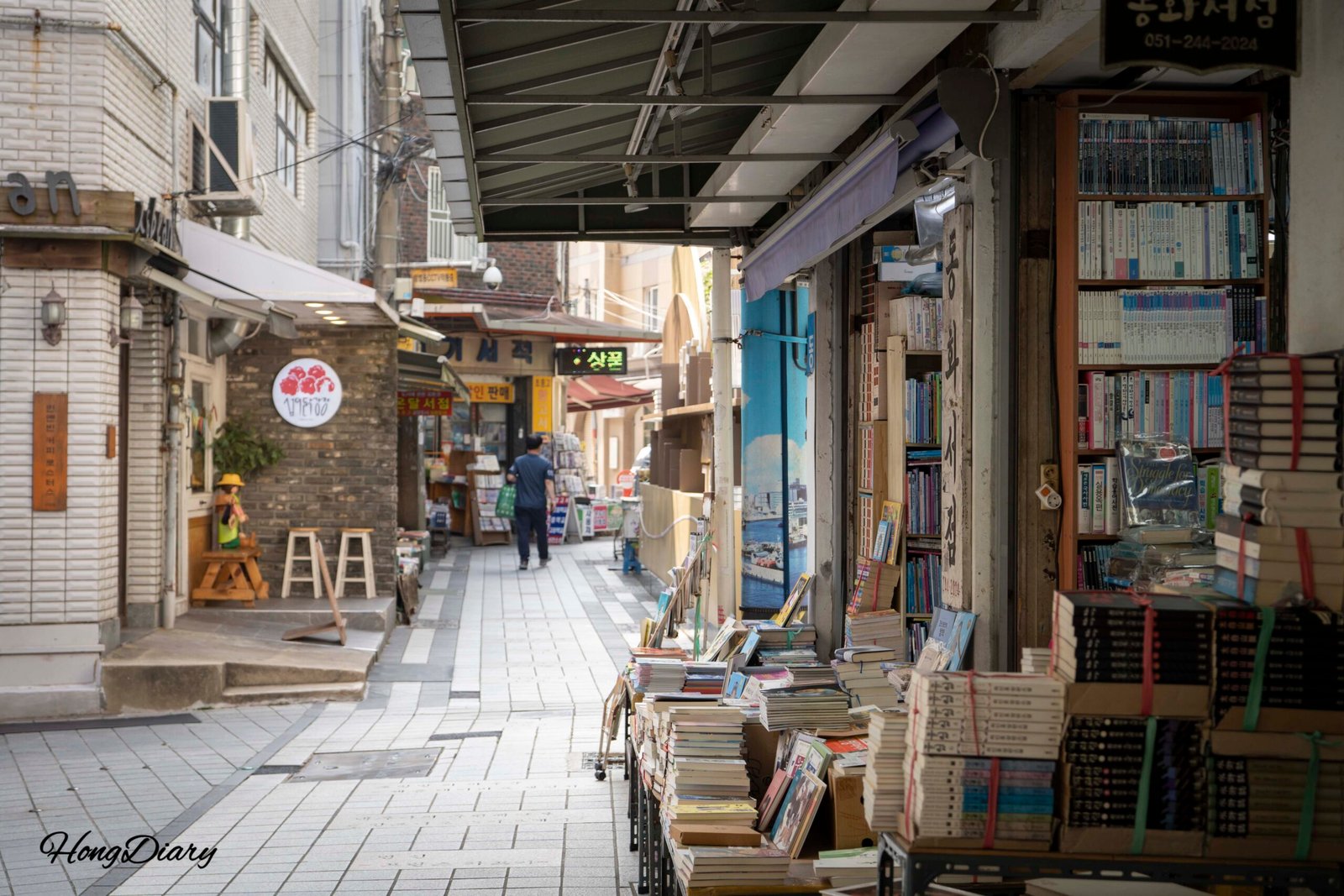
When I was in college, buying brand-new textbooks was a luxury I couldn’t always afford. So, at the start of every semester, I made the exact same pilgrimage — weaving through the narrow alley between Gukje Market and Bupyeong Market, past towering stacks of paperbacks and yellowed spines, searching for whatever copies the upperclassmen had sold off. That hidden alley was Bosu-dong Book Street, a place that has been keeping the spirit of printed words alive since the 1950s.
Bosu-dong Book Street sits in the Jung-gu district of Busan, right in the heart of the old downtown area that most visitors already walk through when they hit Nampo-dong. If Gukje Market, BIFF Square, Jagalchi Fish Market, and the Kkangtong Night Market are already on your itinerary, this alley is a short detour north — ten minutes on foot from the same subway station. The area around Nampo-dong is one of Busan’s most walkable zones: the original downtown strip where markets, department stores, and decades of city life are layered on top of each other. Bosu-dong Book Street is one of those layers, tucked just above the market district where most people turn around and head back. Going a little further is what makes it worth the visit.
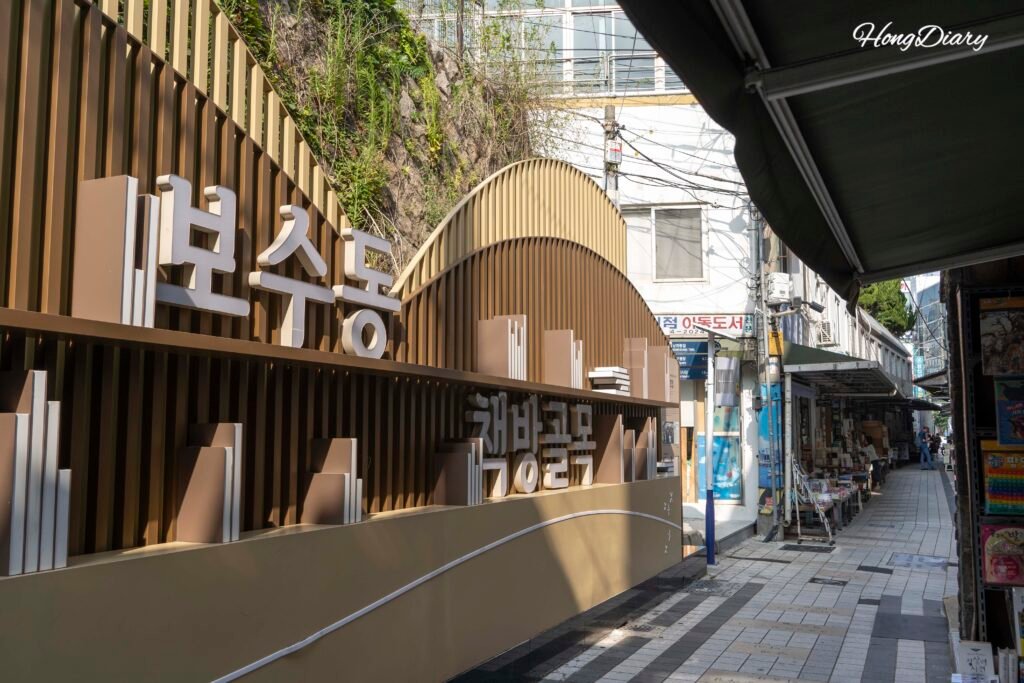
Table of Contents
Know Before You Go
| Detail | Info |
|---|---|
| Address | 67-1 Daecheong-ro, Jung-gu, Busan |
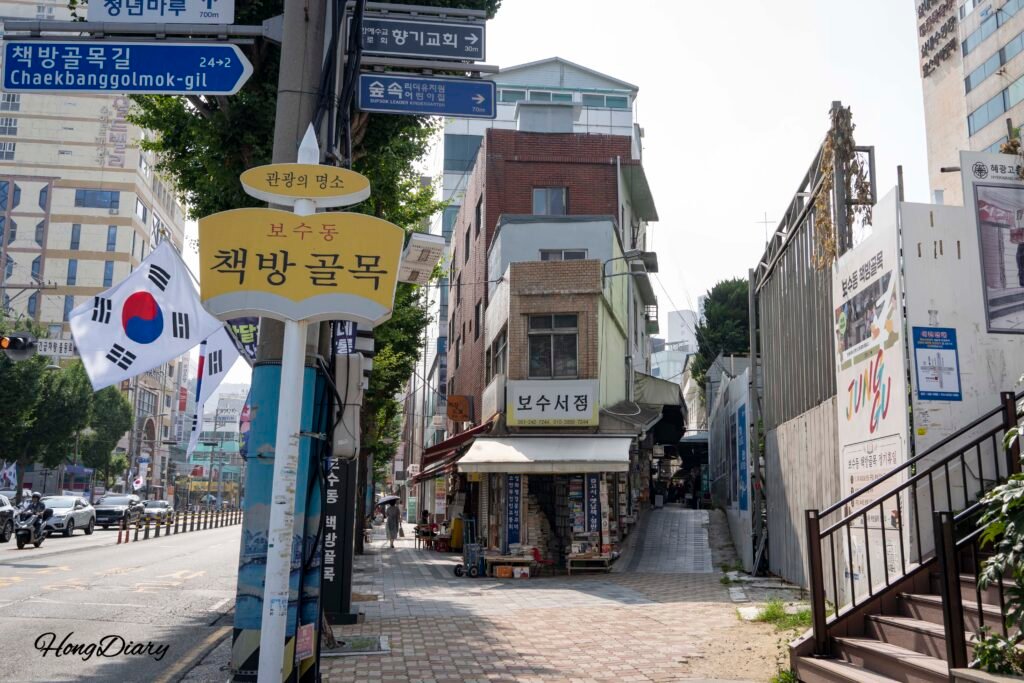
| How to get there | Subway Line 1, Jagalchi Station Exit 3 — walk 680m north along Junggu-ro (about 10 minutes) |
| Bookshop hours | Vary by store |
| Cultural Center hours | 10:00 AM – 6:00 PM |
| Regular closing days | 1st and 3rd Tuesday of every month, January 1 |
| Admission | Free |
How a Bookstore Alley Was Born from a War
The story behind Bosu-dong Book Street starts with the Korean War. When Busan became the temporary capital in the early 1950s, hundreds of thousands of refugees poured into the city. Many of them settled around Gukje Market and scrambled to make a living however they could. Some brought books with them from the north and started laying them out on boxes along the street. Magazines left behind by US military personnel ended up in the mix too.
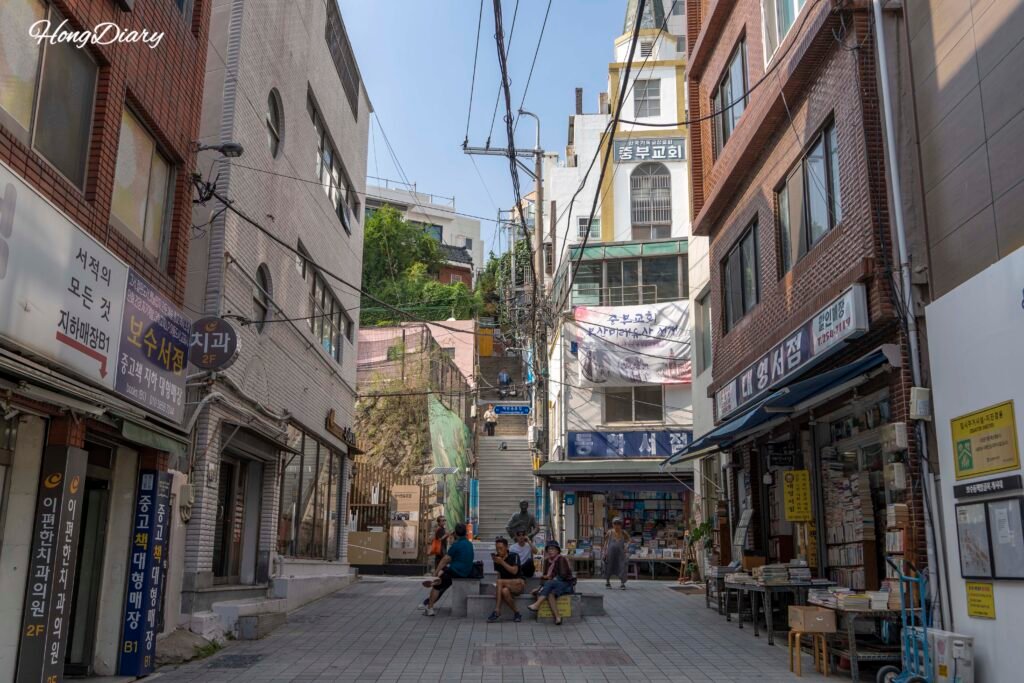
Students and intellectuals who had fled to Busan still wanted to study, and these informal book stalls were often the only place they could find reading material. One stall turned into two, two turned into a dozen, and before long the alley had become a full-blown used bookstore district. That was over seventy years ago, and the alley is still here.
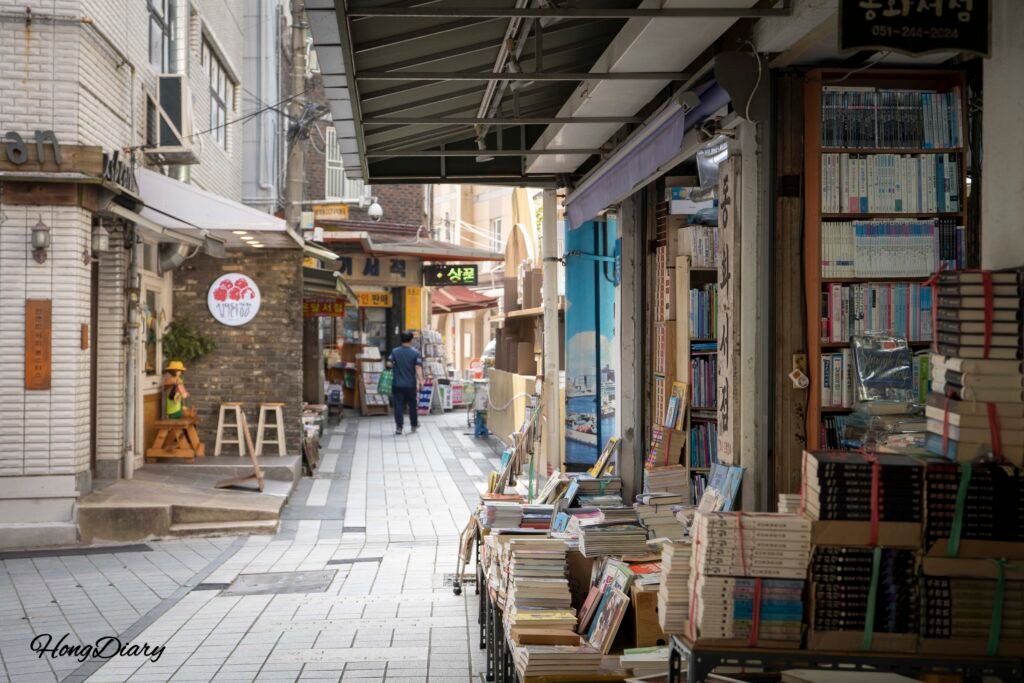
Walking Through the Alley
The first thing that hits you when you enter Bosu-dong Book Street is the visual density. Books are stacked from floor to ceiling in every shop — sideways, upright, crammed into corners, spilling out onto the pavement. Magazines from decades past sit next to current bestsellers. College textbooks share shelf space with old comic books, children’s readers, and the occasional rare volume that stopped being printed years ago.
That last part is where the treasure-hunting feeling comes in. If you’ve ever been looking for a book that’s long out of print, there’s a real chance it’s sitting in one of these shops. I’ve found titles here that I couldn’t track down anywhere online. Part of the appeal is the randomness — you don’t browse these shelves with a plan. You just walk in, scan the spines, and see what finds you.
The shopkeepers are part of the atmosphere. Many of them sit outside their stores, chatting with neighbors or reading. Some shops are so full that there’s barely room to stand, let alone browse, but the owners usually know where everything is and can point you in the right direction if you ask.
One thing to keep in mind: a few shops along the alley do not allow photography inside. The alley itself is fine to photograph, but if you see a sign that says photos aren’t permitted in a particular shop, please respect the request.
| What you’ll find | Examples |
|---|---|
| Used books | Out-of-print titles, vintage magazines, secondhand novels |
| Academic books | University textbooks, reference guides, professional manuals |
| Comics and children’s books | Korean manhwa, Japanese manga, illustrated children’s readers |
| Current titles | Bestsellers, new releases, popular nonfiction |
Most books are in Korean, but you’ll occasionally spot titles in English and Japanese — particularly older ones. Even if you can’t read Korean, the visual experience of walking through the alley is engaging on its own. The book stacks, the hand-painted signs, and the narrow passageways have a quality that feels like stepping into a different decade.
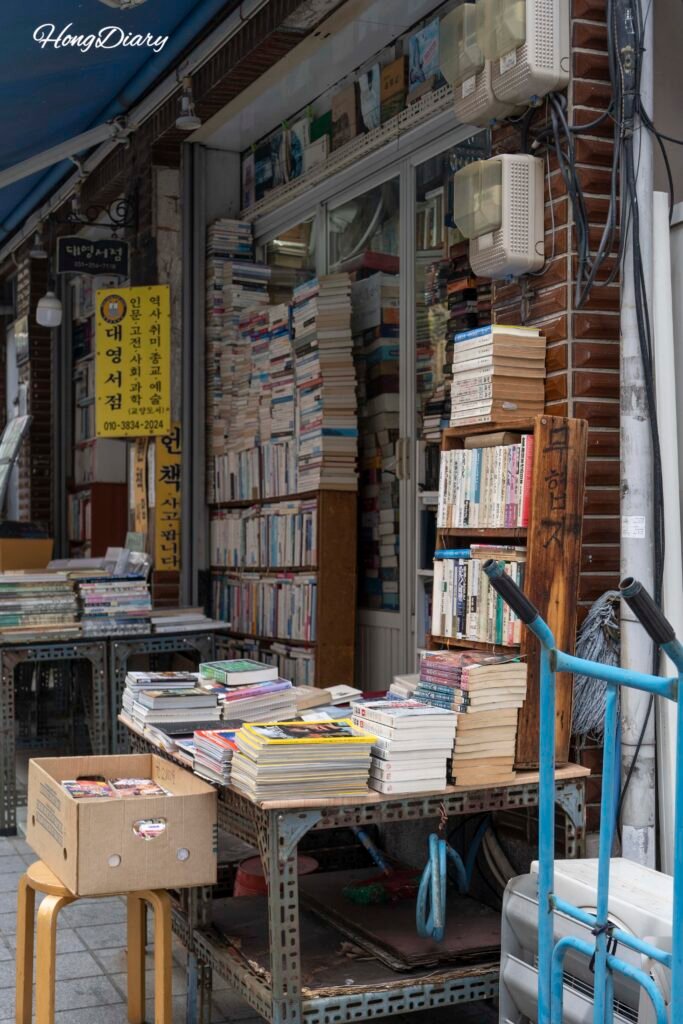
From out-of-print titles to current bestsellers, the shops carry a mix that spans decades.
What’s Changed — and What Hasn’t
The crowd that comes to Bosu-dong Book Street today is different from the one that came thirty years ago. Fewer people buy used textbooks when they can order them online, and large chain bookstores have taken over much of the market. But the alley has adapted without losing its character.
In recent years, a few additions have appeared alongside the old bookshops: a black-and-white photo studio that shoots portraits with a vintage feel, cafes where you can sit with a book and a coffee, and stretches of colorful murals painted along the walls. None of these feel forced or out of place — they fill gaps without changing the atmosphere that makes the alley what it is.
On quiet weekends, I used to pick a book from one of the shops, walk to a nearby cafe, and read for an hour or two. It was the kind of ritual you don’t realize you’ll miss until it’s gone. The alley still has that energy — the kind of place where you slow down and stay longer than you planned.
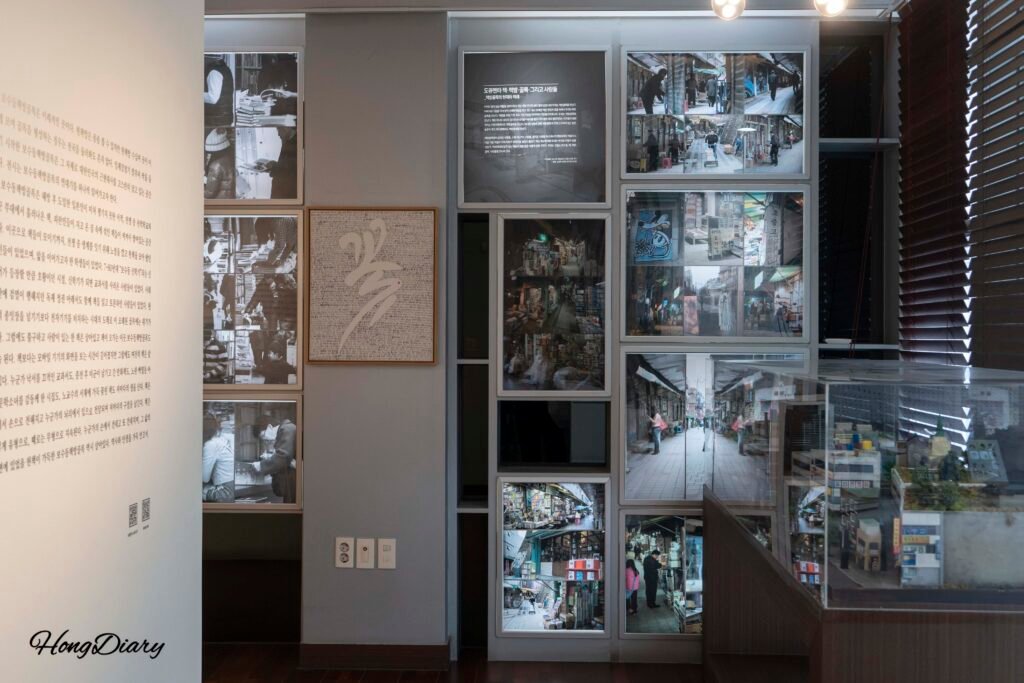
The Bosu-dong Book Street Cultural Center
Across from the Kkangtong Market entrance, you’ll find the Bosu-dong Book Street Cultural Center — an eight-story building dedicated to the history and culture of this alley.
| Floor | What’s inside |
|---|---|
| 2F – 3F | Permanent exhibitions on the history of Bosu-dong and the bookstore alley — dioramas of old book stalls, historical context, and the stories of the people who kept this street alive |
| Upper floors | Book cafe, rest areas, cultural event spaces |
The exhibitions on the second and third floors trace how the alley evolved from a row of refugee book stalls into a cultural fixture of the city. The displays include recreated scenes of how books were sold and studied in the post-war years.
From Friday to Sunday, between 10:00 AM and 3:00 PM, cultural guides who have lived in the Bosu-dong area for decades are available on the second floor. They share firsthand stories about the neighborhood and the book alley’s past — the kind of details you won’t find on an information panel. If your timing works out, this is one of the more memorable parts of a visit.
The center also runs monthly cultural lectures and educational programs, so it’s a space that stays active rather than sitting as a static exhibit.
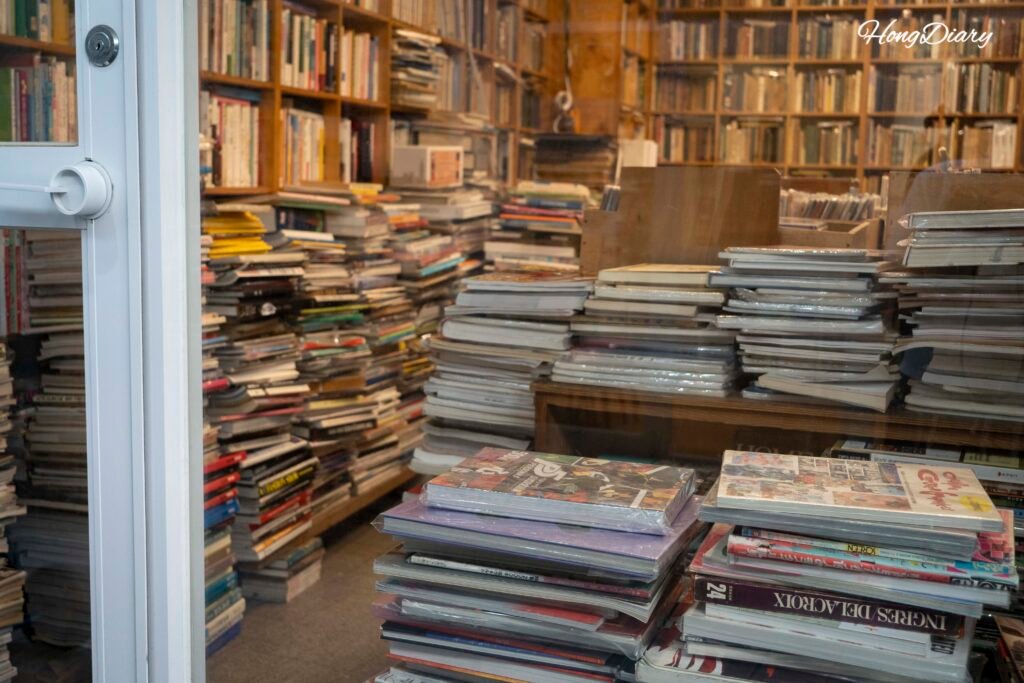
A Place That Holds On
I still think about the books I bought in this alley — the underlined passages left behind by students I never met, the dog-eared pages marking where someone stopped reading. Each book had been through a journey before it reached my hands, and that feeling stays with you.
Bosu-dong Book Street has made it through seventy years of change. Chain bookstores, online shopping, e-readers — none of it has closed this place down. The alley is quieter than it used to be, and that’s an honest thing to say. But the shopkeepers are still here, the books are still piled high, and people still wander in and find something they weren’t looking for.
If you’re walking through the Nampo-dong area and you’ve already done Gukje Market, keep going north for ten more minutes. The alley doesn’t ask for much of your time, but it tends to keep more of it than you expected.
Continuing Your Journey Through Old Busan
Because Bosu-dong sits at the historic heart of the city, it makes for the perfect anchor point to explore the rest of Busan’s original downtown. If you want to build a full day around this nostalgic neighborhood, here is how you can weave your visit into a broader West Busan itinerary:
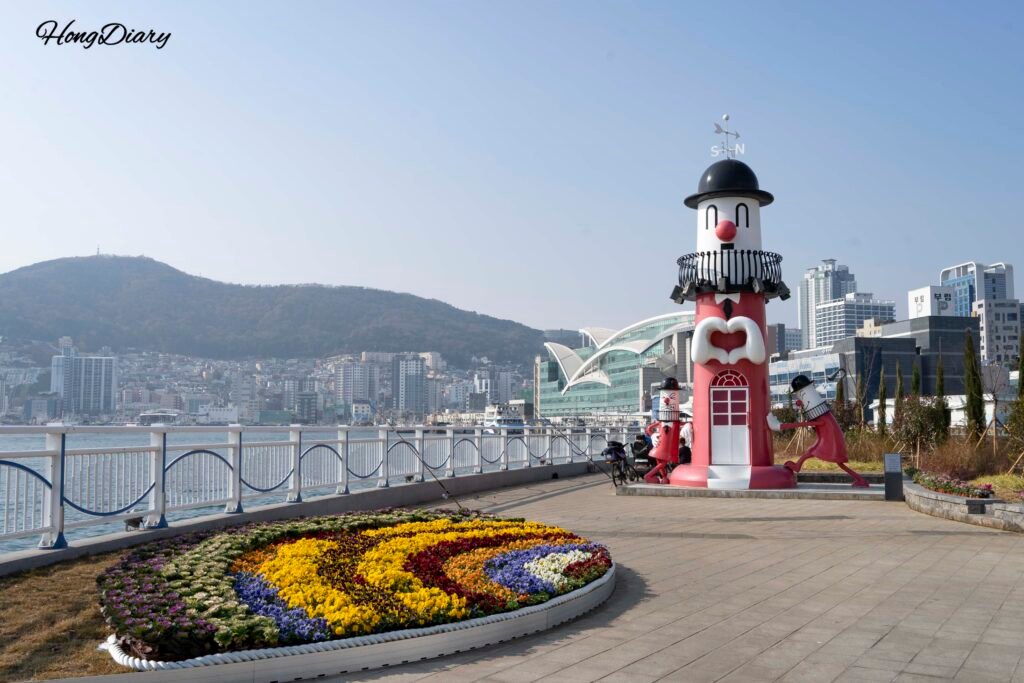
If the retro murals along Bosu-dong Book Street caught your eye, there are even more waiting across the bridge. The Ganggangyi Art Village on Yeongdo Island is a short trip from Nampo-dong, with an entire waterfront neighborhood filled with street art and maritime history.
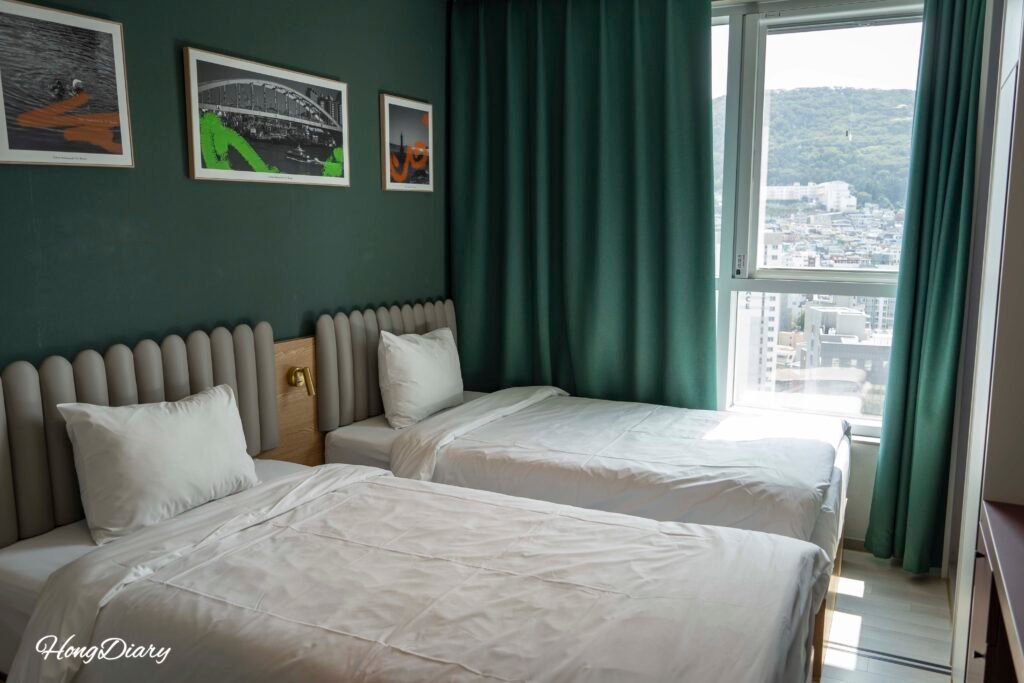
Looking for a place to stay near the old downtown area? Cotice The Ground Busan sits right in front of Jagalchi Station, with reasonable rates and easy access to everything in western Busan — including Bosu-dong Book Street.
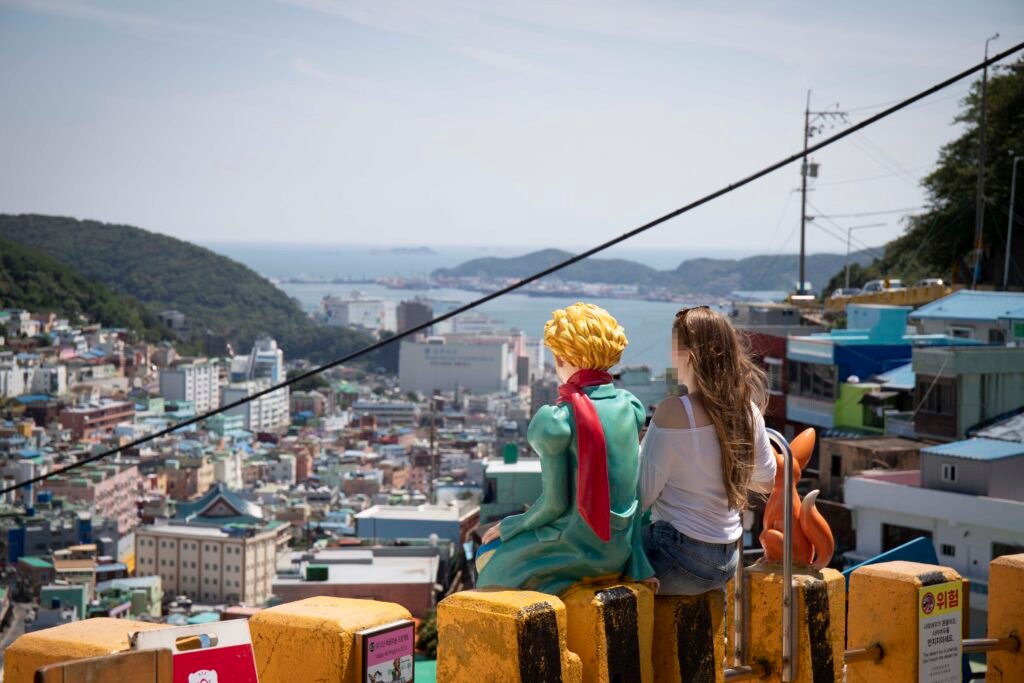
Most visitors exploring Busan’s old downtown also head to Gamcheon Culture Village, the hillside neighborhood known for its layered houses and art installations. It pairs well with a Bosu-dong visit as a full-day western Busan itinerary.
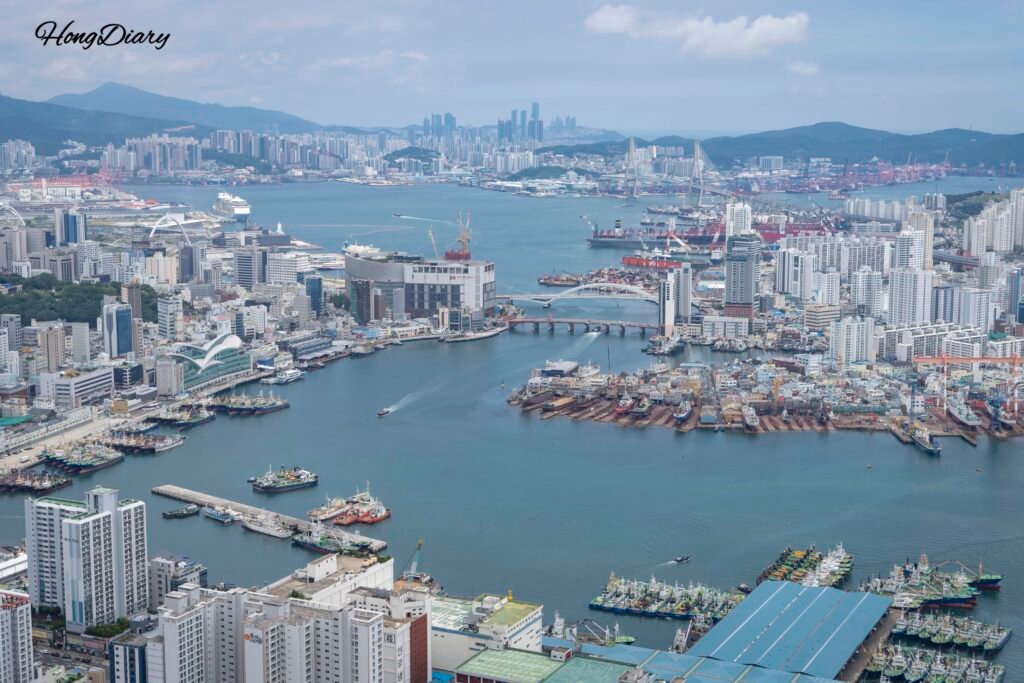
If you make it to Gamcheon, consider continuing to the Cheonmasan Observatory — a recently opened complex with panoramic views over western Busan, reachable from the village area
Frequently Asked Questions
Is Bosu-dong Book Street free to visit?
Yes. There’s no admission fee to walk through the alley or browse the bookshops. The Bosu-dong Book Street Cultural Center is also free to enter.
How do I get to Bosu-dong Book Street from the subway?
Take Busan Subway Line 1 to Jagalchi Station and use Exit 3. Walk north along Junggu-ro for about 680 meters (roughly 10 minutes). You’ll pass between Gukje Market and Bupyeong Market before reaching the book alley.
What are the opening hours and closing days?
Individual bookshop hours vary by store, but most are open during standard daytime hours. The Bosu-dong Book Street Cultural Center operates from 10:00 AM to 6:00 PM. The alley is closed on the 1st and 3rd Tuesday of every month and on January 1.
Are there books in English at Bosu-dong Book Street?
Most books are in Korean, but you’ll find some titles in English and Japanese scattered across various shops — particularly older volumes, magazines, and occasionally newer books. Availability depends on what has come in recently.
Can I take photos at Bosu-dong Book Street?
The alley itself is fine to photograph, and the stacks of books and vintage shopfronts make for great shots. However, some individual shops do not allow photography inside. Look for posted signs and respect each store’s policy.
How long should I plan for a visit?
A casual walk through the alley takes about 30 to 45 minutes. If you also visit the Cultural Center and stop at one of the cafes, plan for around 90 minutes. The alley is compact, so it fits easily into a broader Nampo-dong walking itinerary.
What else is nearby?
Bosu-dong Book Street is a 10-minute walk from Gukje Market, BIFF Square, Jagalchi Fish Market, and the Kkangtong Night Market. It fits naturally into any Nampo-dong walking route — most visitors combine it with these nearby attractions.