
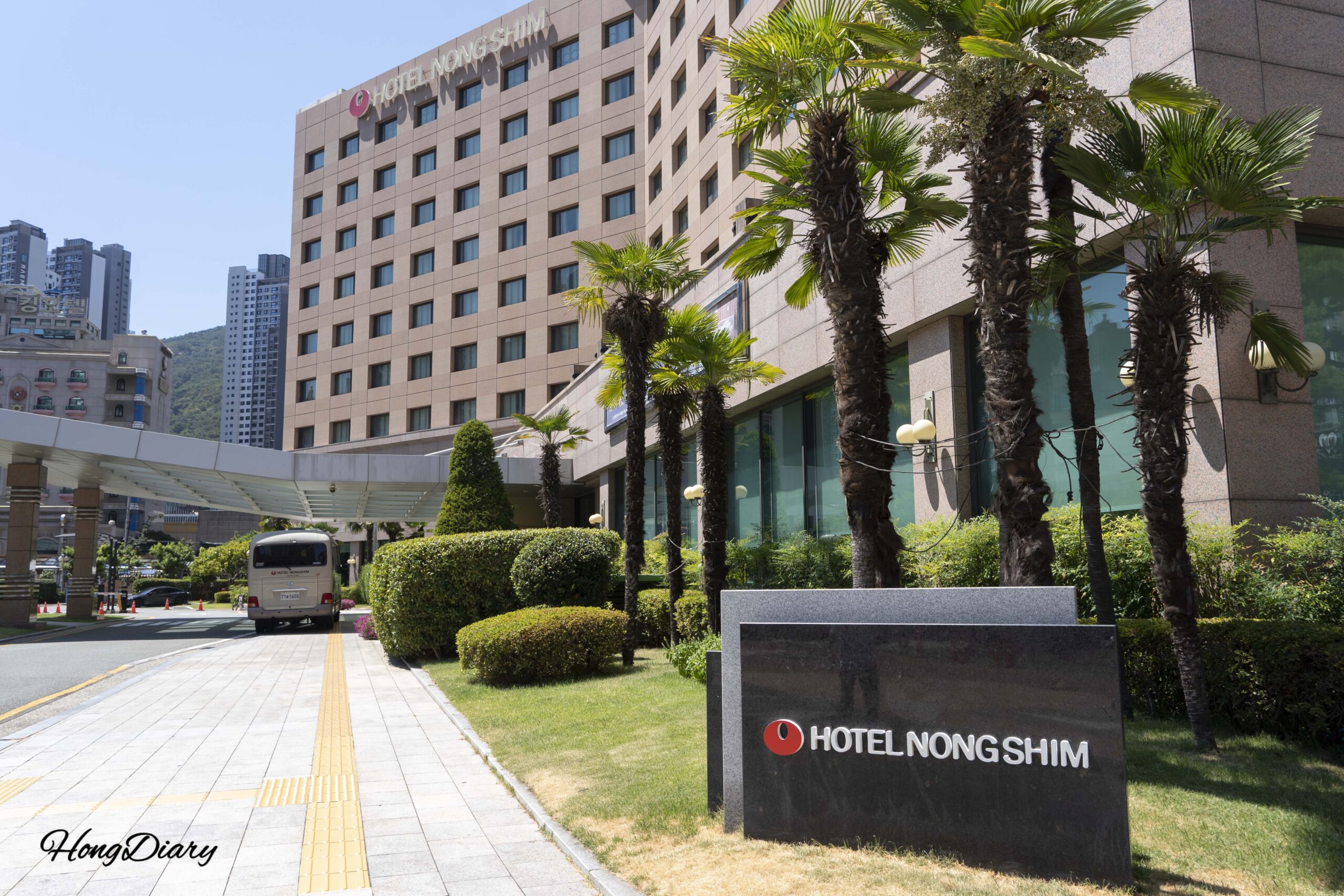
If your Busan itinerary only covers Haeundae and Gwangalli, you’re missing one of the city’s most interesting neighborhoods — and one of its best meals. Oncheonjang, tucked into the Dongnae district along Metro Line 1, is where Busan locals go for natural hot springs, not beaches. The Hotel Nongshim Busan buffet at Ristorante, set inside a five-star hotel at the heart of this district, turned out to be one of the most satisfying lunches I’ve had in the city. Here’s what my husband and I found.
Table of Contents
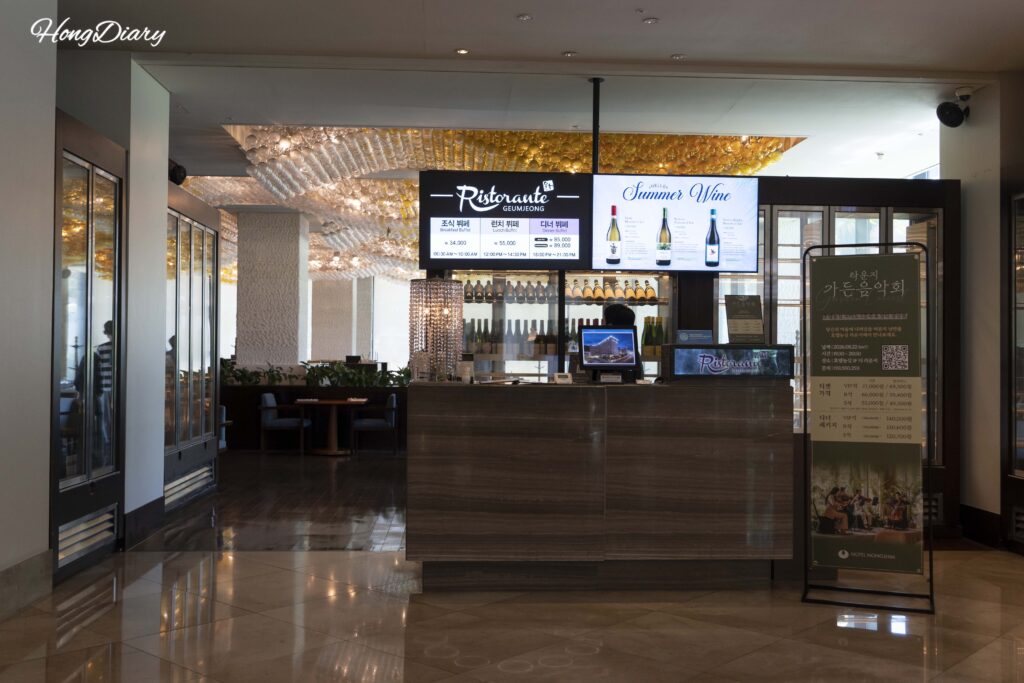
Quick Info: Ristorante at Hotel Nongshim
| Category | Information |
|---|---|
| Location | 1F Main Building, Hotel Nongshim, 23 Geumganggongwon-ro 20beon-gil, Dongnae-gu, Busan |
| Hours | Breakfast 06:30–10:00 / Lunch 12:00–14:30 / Dinner 18:00–21:00 |
| Lunch | ₩55,000 (~$37 USD / ~€31 EUR) per adult |
| Dinner (Sun–Thu) | ₩85,000 (~$57 USD / ~€48 EUR) per adult |
| Dinner (Fri/Sat/Holidays) | ₩89,000 (~$59 USD / ~€50 EUR) per adult |
| Breakfast | ₩34,000 (~$23 USD / ~€19 EUR) per adult |
| Seating | 130 total — 106 in the main hall, 12 per private room (2 rooms, for 6–16 guests) |
| Getting There | 7-min walk from Exit 5, Oncheonjang Station (Busan Metro Line 1) |
| Parking | First 240 min free (registration required), then ₩1,000 (~$0.67 USD / ~€0.57 EUR) per 10 min |
| Reservations | CatchTable Global app (email sign-up, no Korean phone number needed) or walk-in |
First Impressions
Most visitors to Busan have no idea Oncheonjang exists, but this neighborhood has been drawing people for centuries — long before the beaches became famous. The hot springs here date back to the Joseon Dynasty, and by 1915, a dedicated streetcar line was built just to shuttle visitors from downtown Busan to the thermal waters. For much of the 20th century, Dongnae was one of Korea’s premier hot spring destinations. That legacy still runs through the area today, and at its center stands Hotel Nongshim — a property that has anchored this district for over 50 years. On the first floor of the main building is Ristorante, a buffet restaurant whose menu was developed in collaboration with Edward Kwon, a celebrity chef known for his time at the Burj Al Arab in Dubai.
We booked the noon lunch slot and drove straight into the hotel’s underground parking garage. If the main lot is full, there’s a separate parking building directly across the street. Just make sure to register your vehicle at the front desk — that activates the four-hour complimentary parking window.
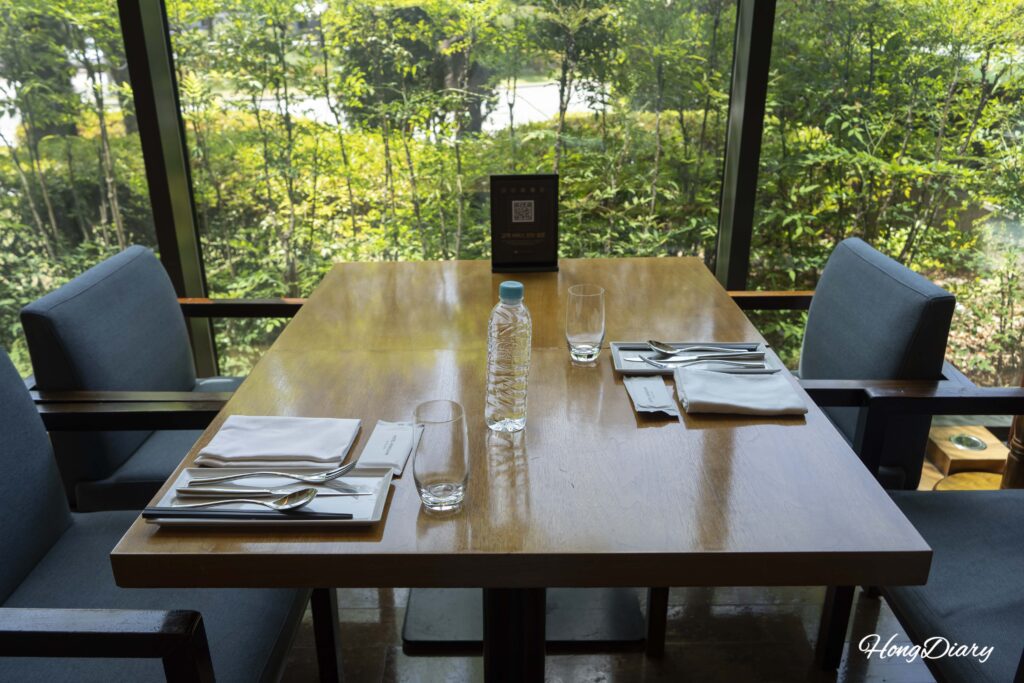
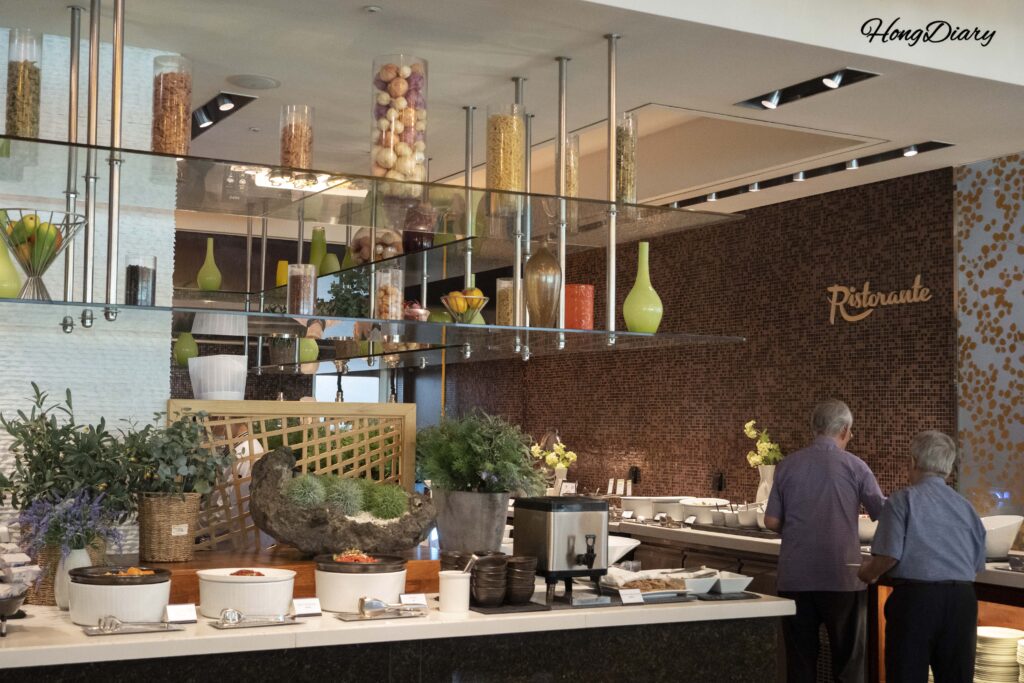
From the lobby, Ristorante is just a short walk past the front desk. The first thing that struck me was how quiet the room felt. Soft lighting, a muted color palette, and enough space between tables that conversations stayed private. It felt more like a proper dinner venue than a standard buffet hall — the kind of place that works just as well for a date as it does for hosting guests you want to impress. Glancing around the dining room, I noticed a few flight attendants still in uniform and several older Korean couples who looked like regulars. This is very much a neighborhood institution, not a spot that ends up in tourist guidebooks.
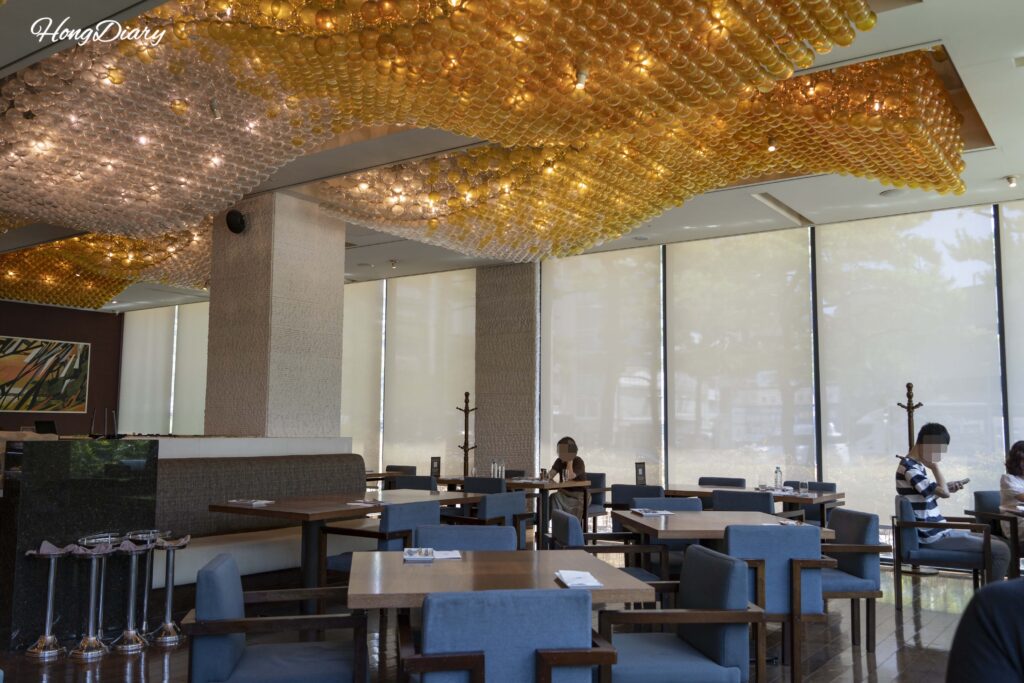
Edward Kwon’s influence is noticeable in how the buffet is designed. Compared to the massive spreads you’ll find at beachside hotels in Haeundae, Ristorante keeps things intentionally tighter. The total number of dishes is smaller, but the kitchen trades quantity for consistency. Korean, Japanese, Chinese, and Western sections each get a focused lineup rather than a bloated one — and I could tell from the first plate.
Walking Through the Buffet Line
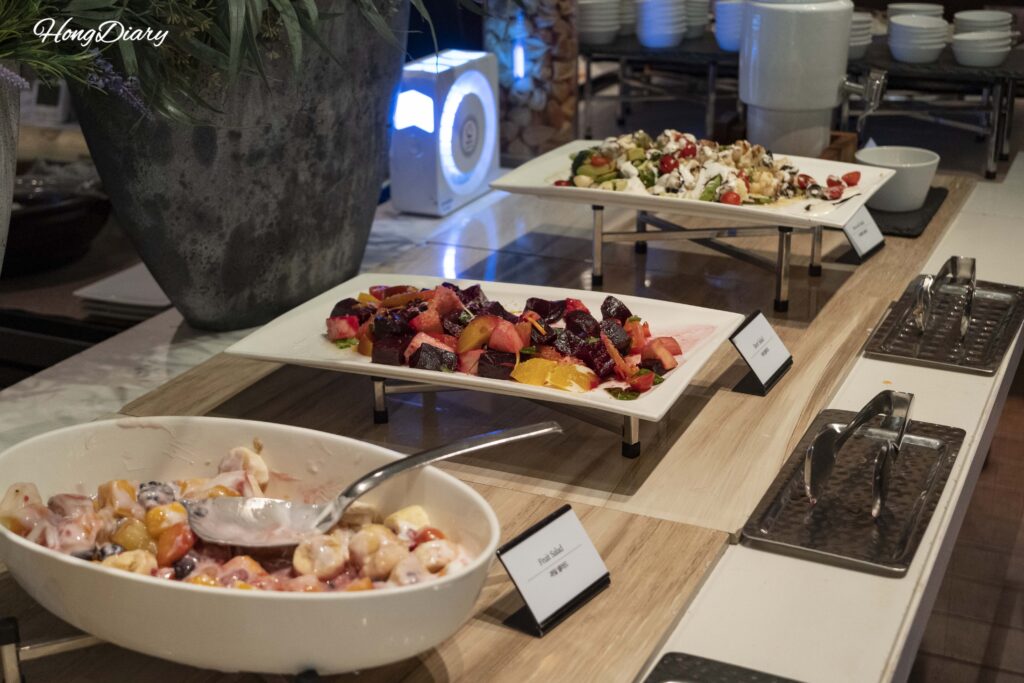
I started at the salad station, which was more generous than I’d expected for a lunch service. Mushroom salads, a seafood mix, seasonal fruit, and assorted greens were all laid out. A light opening round — and a smart way to pace before the heavier sections ahead.
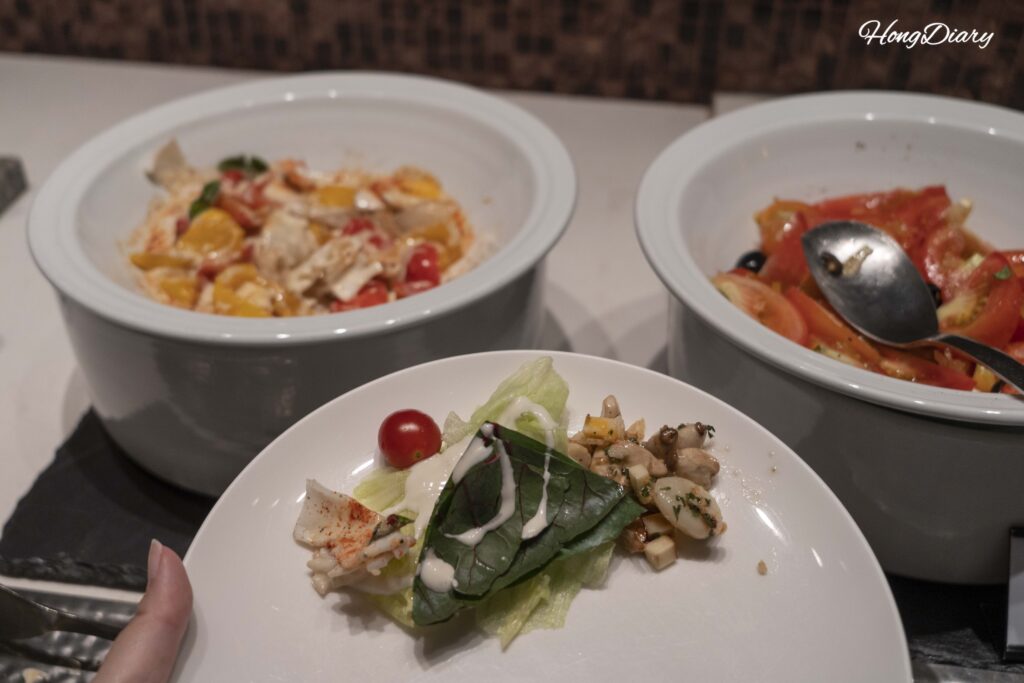
The seafood and sushi counter sat right beside it. Red crab legs, shrimp, octopus, and — this was a genuine surprise — starry flounder sashimi, a flatfish prized for its firm, chewy texture that gets nuttier the longer you chew. Having any sashimi at a lunch buffet is already a plus, but starry flounder specifically pushed this well past what I’d anticipated. I liked it so much I went back for another plate.
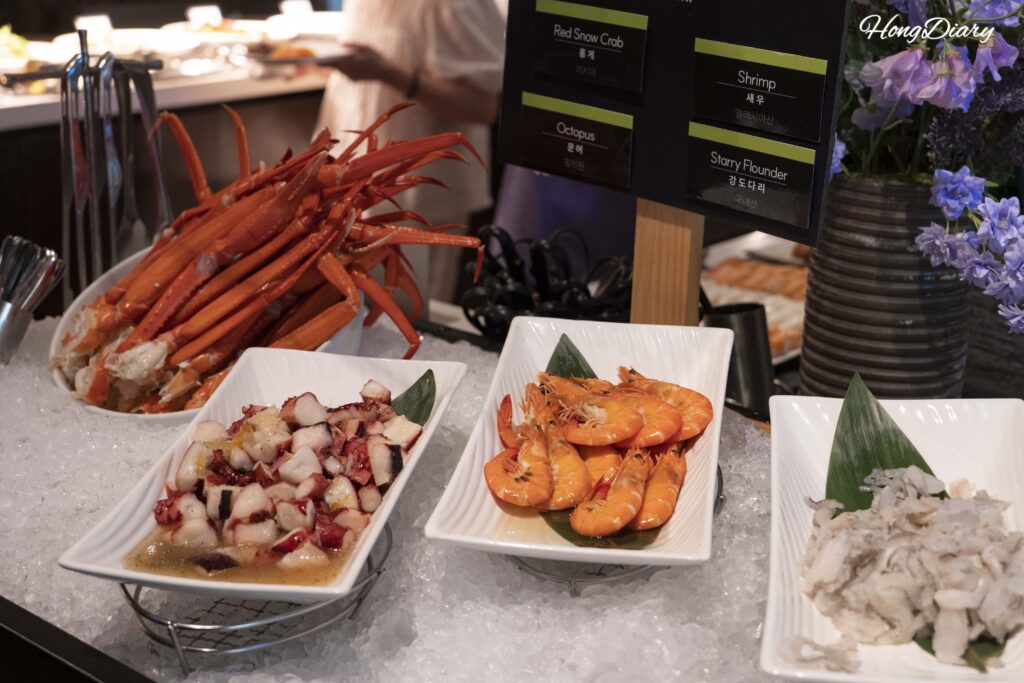
On the sushi side, the counter offered spear squid, salmon, raw shrimp, and blanched shrimp nigiri, along with inari sushi (rice wrapped in sweet fried tofu) and tuna kimbap rolls (Korean seaweed rice rolls). When a tray emptied out, the chef restocked it within minutes — no hovering or waiting required. Guests who prefer cooked options had plenty to work with here without touching anything raw.
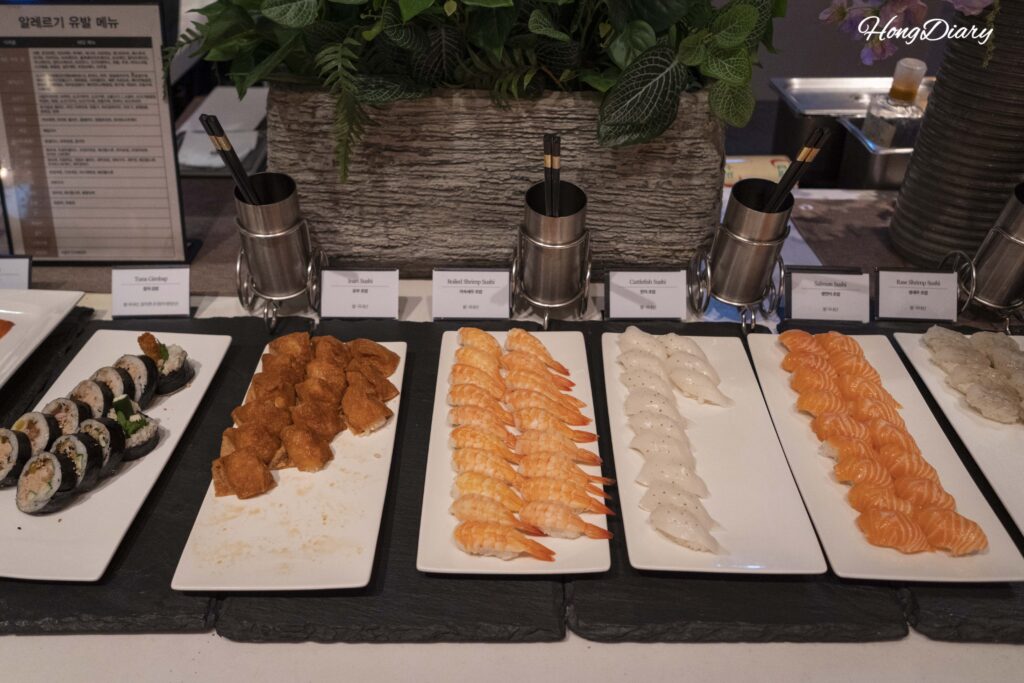
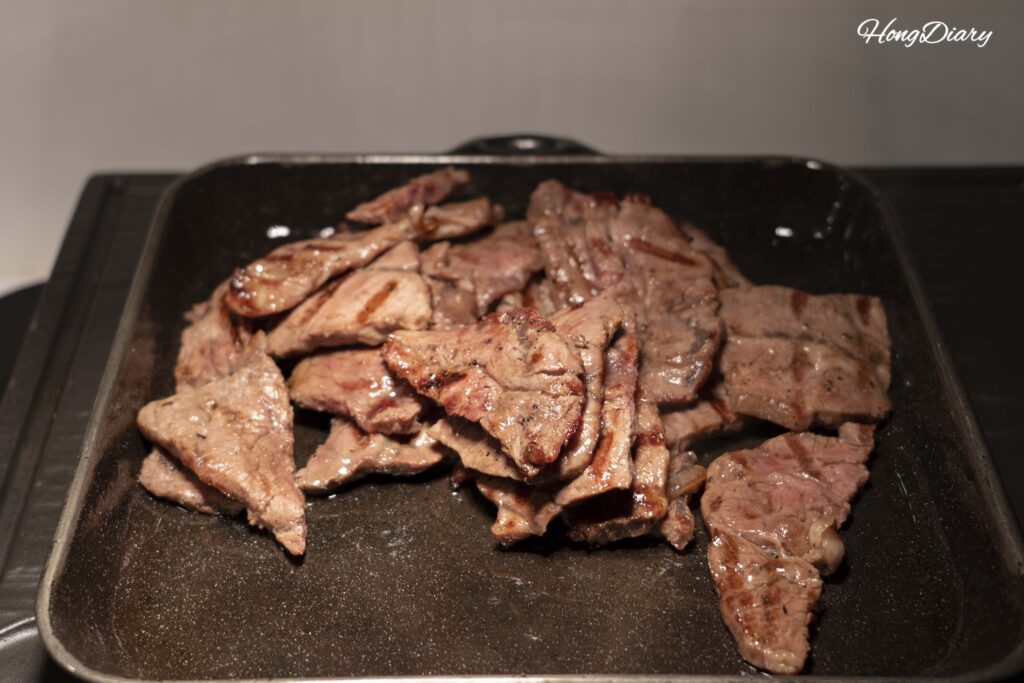
Then came the hot food section, and this is where the meal really earned its keep. The steak was, without question, the single best thing I ate all afternoon. I’ve been disappointed by buffet steak more times than I’d like to admit — tough cuts sitting under heat lamps too long, overcooked past the point of rescue. But what came off the carving station here was genuinely good. Cooked to a clean medium, tender, with juiciness still intact. Whole-grain mustard, steak sauce, roasted garlic cloves, and grilled vegetables sat alongside for pairing. It felt closer to something from an à la carte menu than a buffet line. I went back for seconds without hesitation.
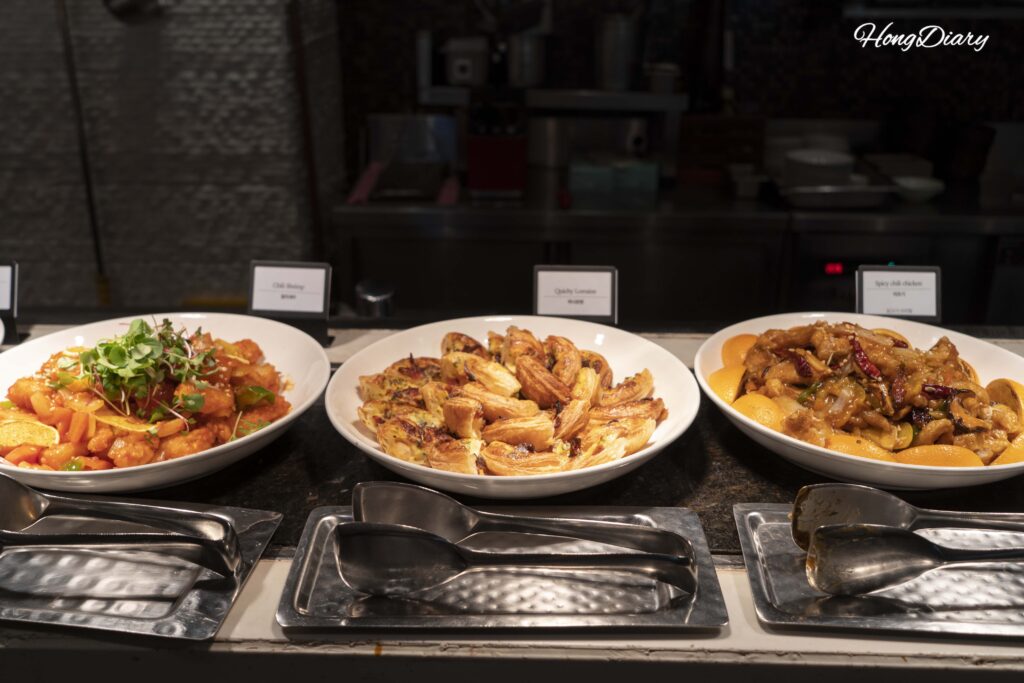
The rest of the hot lineup held its own. Pork ribs, meatballs, dongpoyuk (Chinese-style braised pork belly), chili shrimp, and lajigi (crispy chicken in a sweet-spicy chili glaze) filled the warming trays. Instead of padding the section with the usual stir-fries and sweet-and-sour pork, the kitchen leaned into Chinese-inspired dishes with actual depth — a choice that kept each trip to the counter feeling different.
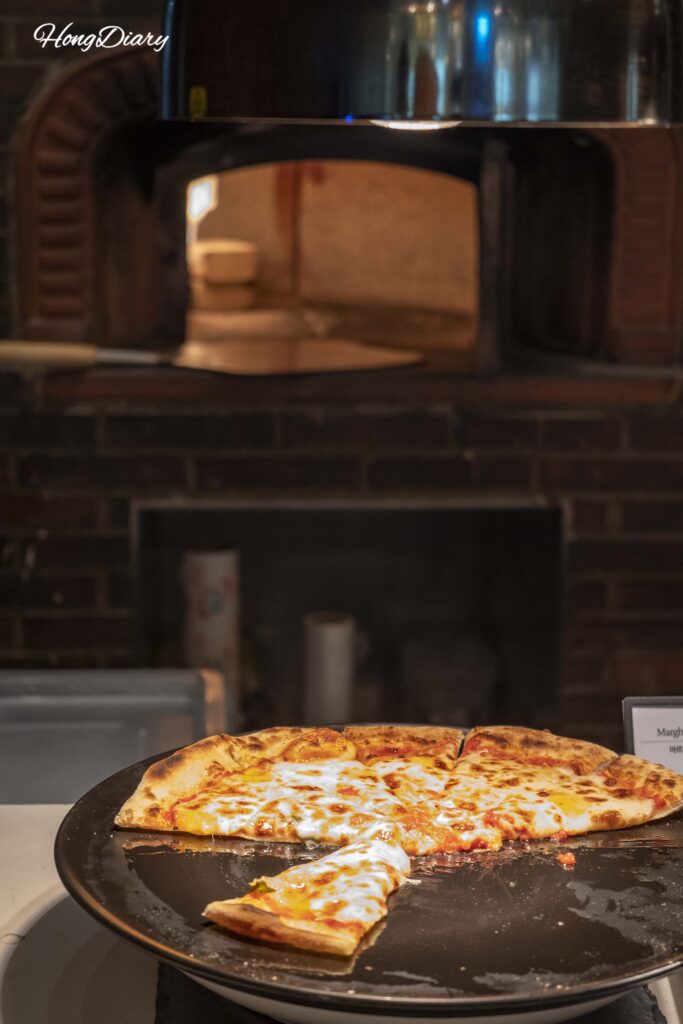
Two wood-fired pizzas — margherita and gorgonzola — were baked in a brick oven visible right behind the counter. The crust was crisp outside and chewy inside, clearly made fresh rather than reheated from frozen. It’s a small tell, but obvious from the first bite.
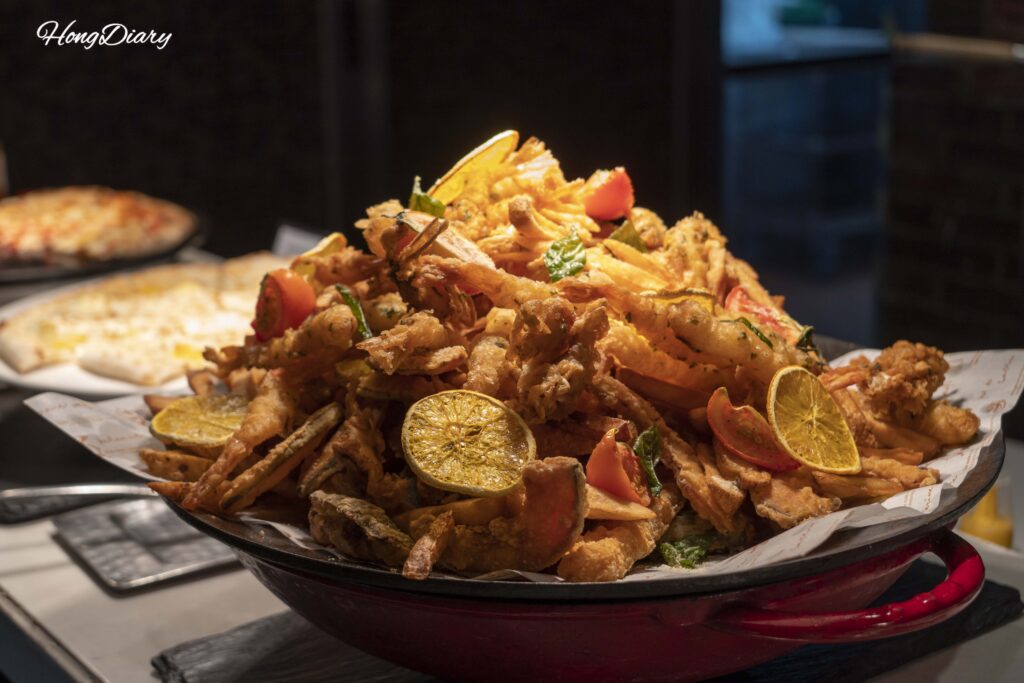
Right next to the pizza sat a generous mound of assorted tempura: shrimp, squid, kabocha pumpkin, basil leaves, and cherry tomatoes, all fried in a light Japanese-style batter. The colors alone were inviting, but the real trick is grabbing a bowl of steamed rice and piling the tempura on top to make a rough tendon bowl (tempura over rice). That combination was good enough that I’d recommend it even to someone who normally skips fried food at buffets.
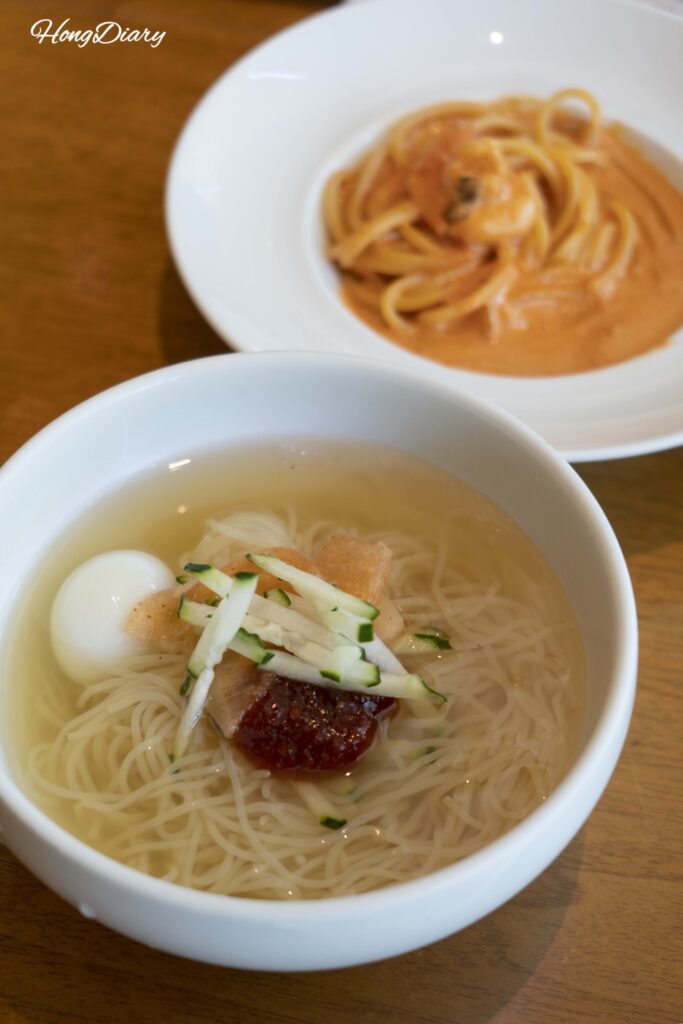
The live cooking station offered made-to-order dishes — a choice between pasta (tomato, cream, or rosé sauce) and milmyeon, Busan’s signature cold wheat noodles served either in chilled broth or tossed with spicy sauce. We ordered the rosé pasta and a bowl of the cold milmyeon. The rosé had a richness that’s harder to find than you’d expect, and the milmyeon paired well with the pork ribs from the hot section. That combination alone could have been a full meal.
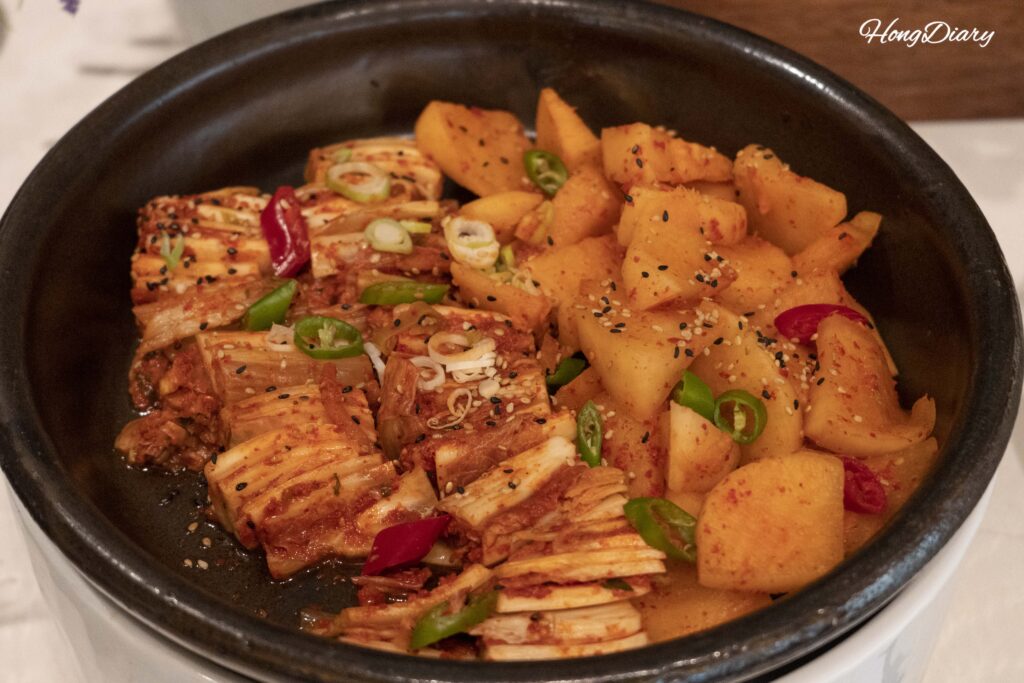
Nearby, the yukhoe — Korean beef tartare, seasoned with sesame oil and topped with egg yolk — was served soft and fresh, not frozen solid. The Korean corner also included kimchi, salted seafood, dried seaweed, and a warm pot of what I believe was dried radish green soup, along with a milder potato soup for anyone looking for something more neutral. For travelers who want to sample traditional Korean side dishes in a relaxed setting without a language barrier, this section serves as a comfortable starting point.
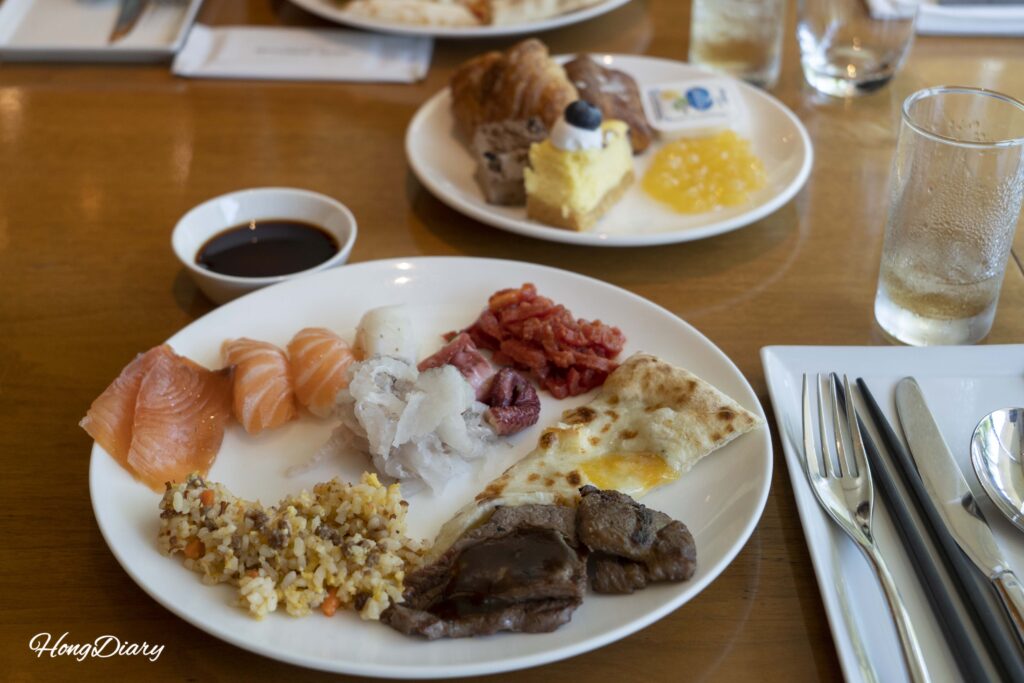
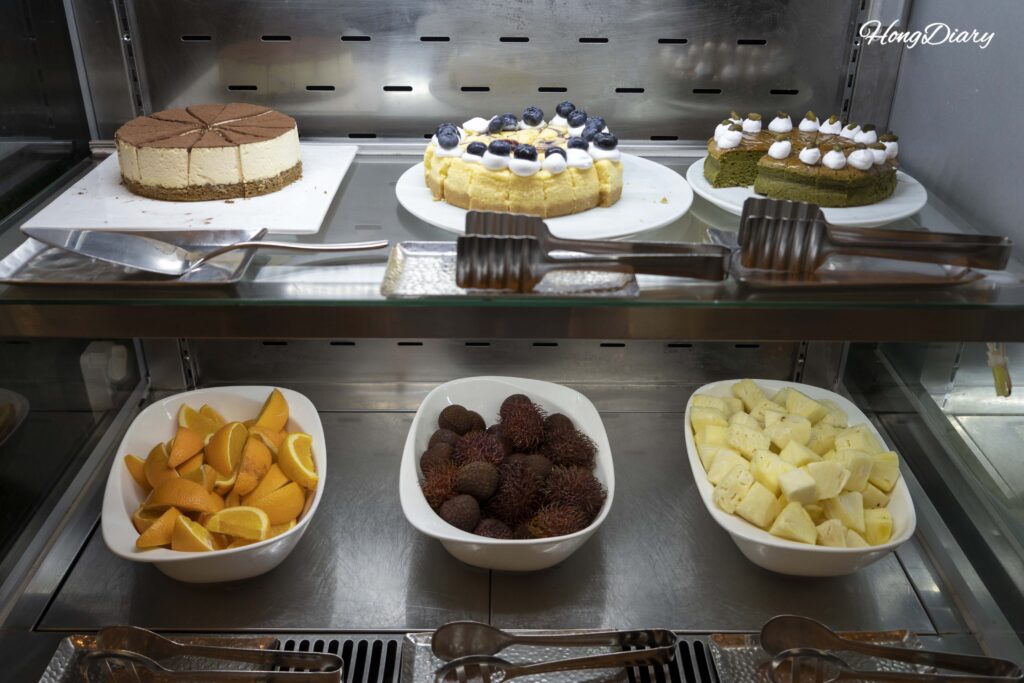
Even with a full stomach, the dessert station was hard to walk past. Butter rolls that were good enough on their own, egg tarts, macarons, and a few different cakes were all available. The tiramisu stood out — light, creamy, and restrained on sweetness, the kind that pairs well with a cup of coffee as a proper closing note. The fruit selection covered oranges, pineapple, shine muscat grapes, passion fruit, bananas, and rambutan — a generous tropical range for a lunch service.
How to Book and Get There
Reservations can be made through the CatchTable Global app, available on both the App Store and Google Play. You don’t need a Korean phone number — an email address is enough to register. That said, based on my own experience, walking in right at the start of lunch (12:00) without a reservation was perfectly doable.
Ristorante is a seven-minute walk from Exit 5 of Oncheonjang Station on Busan Metro Line 1. For drivers, the hotel’s underground garage is the most straightforward option, with the overflow parking building across the street as a backup. Four hours of parking come free with your meal — just register your plate number at the front desk or with your server.
After Lunch: Hurshimchung Spa and the Oncheonjang Neighborhood
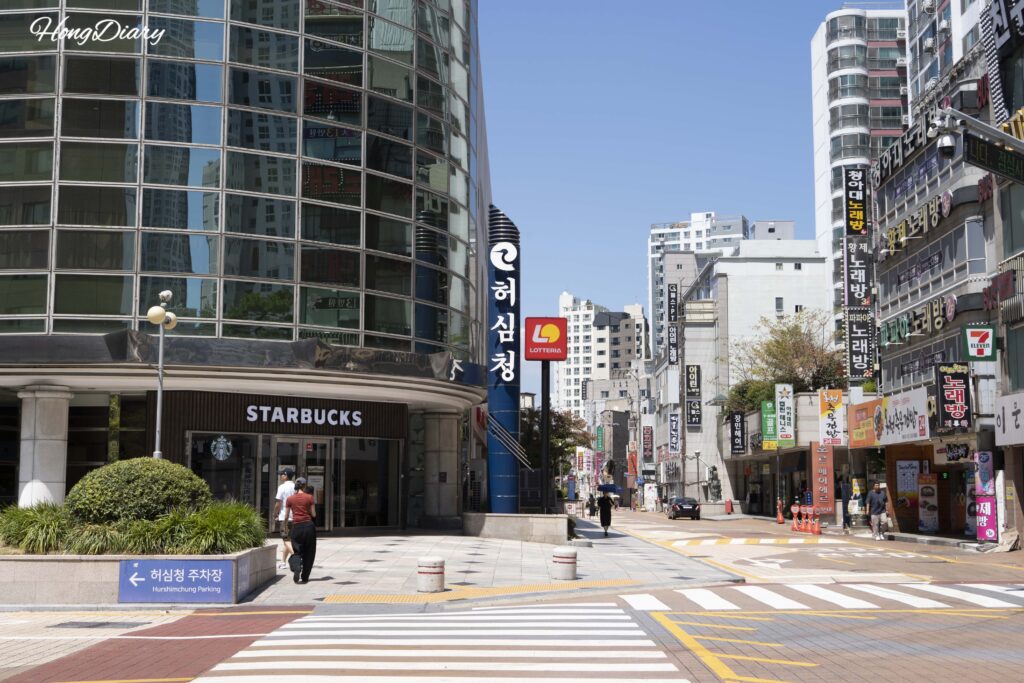
Leaving Oncheonjang right after lunch feels like a missed opportunity. Right behind Hotel Nongshim sits Hurshimchung, one of the largest public hot spring facilities in Korea. The name roughly translates to “empty your mind and rest,” and the sheer scale matches the ambition: over 40 different bath types, including cave baths, outdoor pools, and mineral-rich thermal water drawn from the natural springs that made this district famous centuries ago. The building also houses a bakery, a craft beer bar, a sauna, and a restaurant — so spending a half day here isn’t difficult at all.
Some hotel stay packages include Hurshimchung admission. Mine came with two tickets, which made the whole day — lunch at Ristorante followed by a long soak at the spa — feel like one seamless plan. If you’re considering an overnight stay to make the most of both, you can check room availability and rates here.
Personally, when I want variety and a social atmosphere, I head to Hurshimchung. When I want a quieter soak on my own, I go to Nokcheon Oncheon Hotel nearby — a smaller hot spring property where the thermal water runs directly into each guest room. Both are within walking distance of each other, and switching between them depending on my mood has become part of how I use this neighborhood.
There’s also Spa Yunseul-gil, a foot bath trail near the hotel where you can soak your feet while walking through a tree-lined path. It’s currently closed through August for the summer season, but it’s worth planning around if you’re visiting in cooler weather.
And beyond the spas, the neighborhood itself rewards a slow walk. Oncheonjang is a place where tall apartment towers rise above narrow streets still lined with retro market stalls, old-school barbershops, and family-run eateries that haven’t changed their signs in decades. One corner puts you on a busy commercial strip with coffee chains and convenience stores; the next opens onto a quiet alley with hand-painted shop fronts and the steady hum of an old ventilation fan. It’s a side of Busan that most international visitors never encounter — and for me, that contrast is exactly what makes it worth coming back to.
The Hotel Nongshim Busan buffet at Ristorante isn’t trying to compete on sheer size or spectacle. What it delivers instead is a thoughtfully curated lunch at a fair price, inside a neighborhood that most travelers haven’t found yet. Add a soak at Hurshimchung, an hour of wandering the local streets, and maybe a night at the hotel — and you’ve put together one of the most genuinely local days you can have in Busan.
Hotel Nongshim Buffet FAQ: Reservations, Parking, and Dining Guide
Is the Hotel Nongshim Busan buffet at Ristorante worth the price?
For a lunch priced at ₩55,000 (~$37 USD / ~€31 EUR) per adult, the quality-to-cost ratio is strong. The menu leans toward fewer dishes with higher execution — the steak carving station, fresh sashimi including starry flounder, and made-to-order pasta and milmyeon all stood out. If you prioritize food quality over sheer volume, this buffet delivers well for its price bracket.
How do I make a reservation at Ristorante without a Korean phone number
Download the CatchTable Global app from the App Store or Google Play and register with your email address — no Korean phone number is required. You can book directly through the app. Alternatively, walking in at the start of a meal period (12:00 for lunch) is also a realistic option, especially on weekdays.
How do I get to Hotel Nongshim from Haeundae or Busan Station?
Take Busan Metro Line 1 to Oncheonjang Station and use Exit 5. The hotel is a seven-minute walk from there. From Haeundae, transfer at Seomyeon Station from Line 2 to Line 1 heading toward Nopo. From Busan Station, it’s a direct ride northbound on Line 1 — roughly 25 minutes with no transfer needed.
What is milmyeon, and is it available at the buffet?
Milmyeon is a cold wheat noodle dish that originated in Busan. It’s served either in a chilled broth or mixed with a spicy sauce, and it’s considered one of the city’s signature local foods. At Ristorante, it’s prepared to order at the live cooking station — you choose your style and a chef makes it fresh on the spot.
Can I visit Hurshimchung Spa without staying at Hotel Nongshim?
Yes. Hurshimchung is a public hot spring facility open to anyone, located directly behind Hotel Nongshim. It features over 40 different bath types including outdoor pools, cave baths, and saunas. Admission is available at the door. However, some hotel stay packages include Hurshimchung tickets, which can make combining a meal, spa visit, and overnight stay more convenient.
Is the Oncheonjang area worth visiting as a tourist?
Oncheonjang offers a side of Busan that most international visitors miss. The Dongnae hot springs trace their history to the Joseon Dynasty, and the neighborhood blends high-rise apartments with retro market alleys, family-run restaurants, and quiet backstreets. Paired with a meal at Hotel Nongshim and a soak at Hurshimchung, it makes for a full and distinctly local day away from the usual beach-district itinerary.
Is there free parking at Hotel Nongshim, and how does it work?
The hotel provides up to 240 minutes (four hours) of complimentary parking in its underground garage. You need to register your vehicle at the front desk or with your server to activate the free window. After that, additional time costs ₩1,000 (~$0.67 USD / ~€0.57 EUR) per 10 minutes. If the main garage is full, a separate parking building sits directly across the street.