
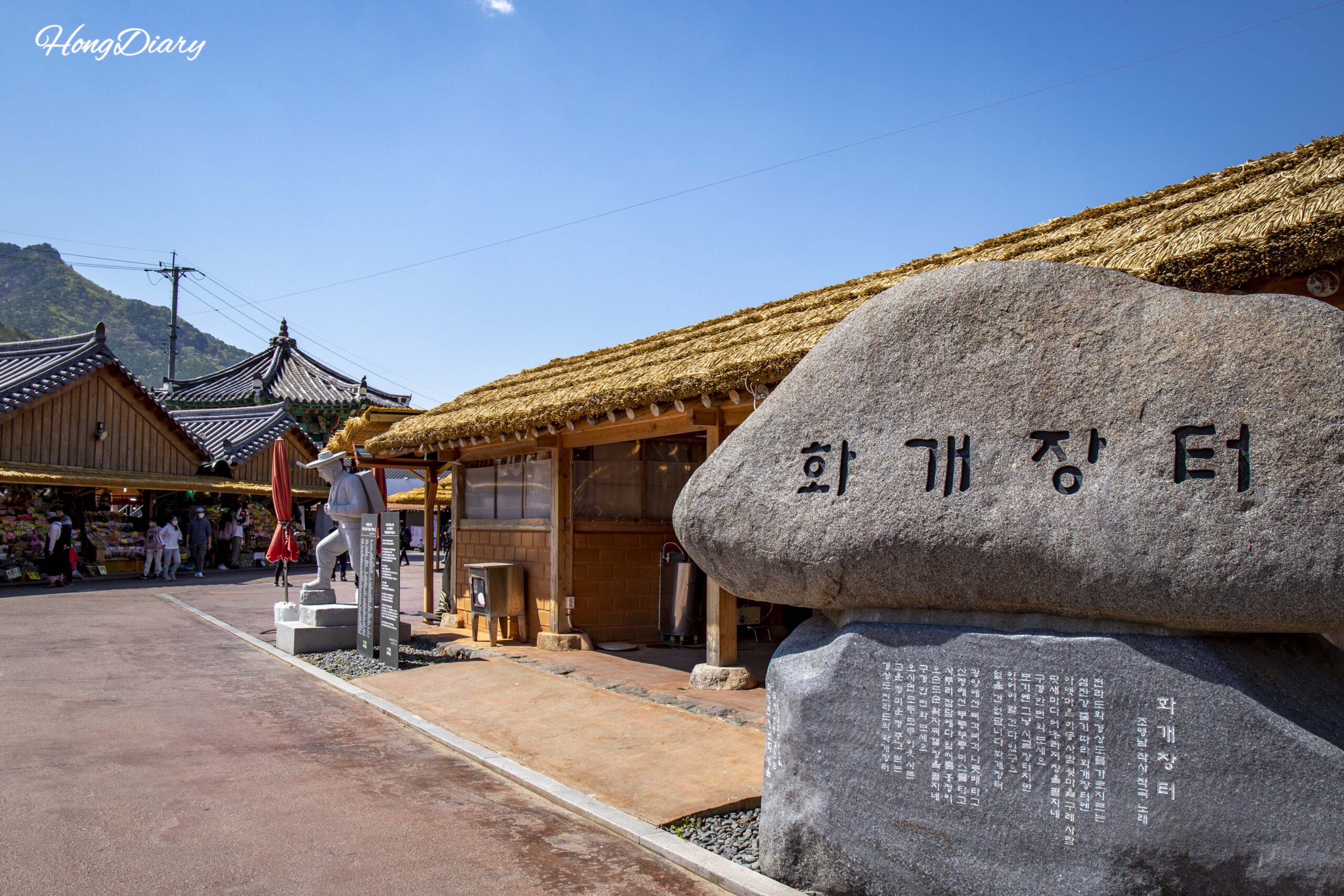
For years, every time I took the bus from Busan to Gurye, it would stop briefly at Hwagae Market — just long enough to stretch my legs, never long enough to actually look around. I always told myself I’d come back properly. When I finally did, in early April with the last of the spring air still hanging around, I realized I’d been underestimating this place the entire time.
Hwagae Market sits in Hwagae-myeon, Hadong-gun, Gyeongsangnam-do — right at the point where the provinces of Gyeongsang and Jeolla meet. That geographic detail isn’t just trivia. For centuries, this border location made Hwagae a natural gathering point for traders from both regions, and the market that grew here became a symbol of exchange between Korea’s east and west. The Seomjin River runs just behind the market, and in spring, the cherry blossom road leading from here to Ssanggyesa Temple draws visitors from across the country. But even outside cherry blossom season, the market itself has more than enough to justify the trip — especially if you come hungry.
Table of Contents
Visitor Info & Transport
| Detail | Info |
|---|---|
| Address | Tapri, Hwagae-myeon, Hadong-gun, Gyeongsangnam-do |
| Hours | 09:00 – 18:00 (open daily) |
| From Busan | Busan Seobu (Sasang) Bus Terminal → Hwagae Terminal (intercity bus, ~2.5 hrs, ₩16,400 / $11 USD / €9 EUR). Departures: 08:30, 10:00, 11:30, 14:30, 17:30 |
| From Seoul | Seoul Nambu Terminal → Hwagae Terminal (~3.5 hrs, ₩32,100 / $21 USD / €18 EUR). Departures: 06:40, 09:00, 11:00, 13:00, 14:30, 16:20, 17:40, 19:30 |
| From Bus Stop | 225 m walk (~3 min) from Hwagae Bus Terminal to the market |
| Parking | First hour free, then ₩500 / 30 min, ₩100 / 10 min after. Card payment only. Additional lots nearby if the main one is full |
Bus schedules were current at the time of my visit but may change. Check before you go.
A Market Where Two Provinces Once Came to Trade
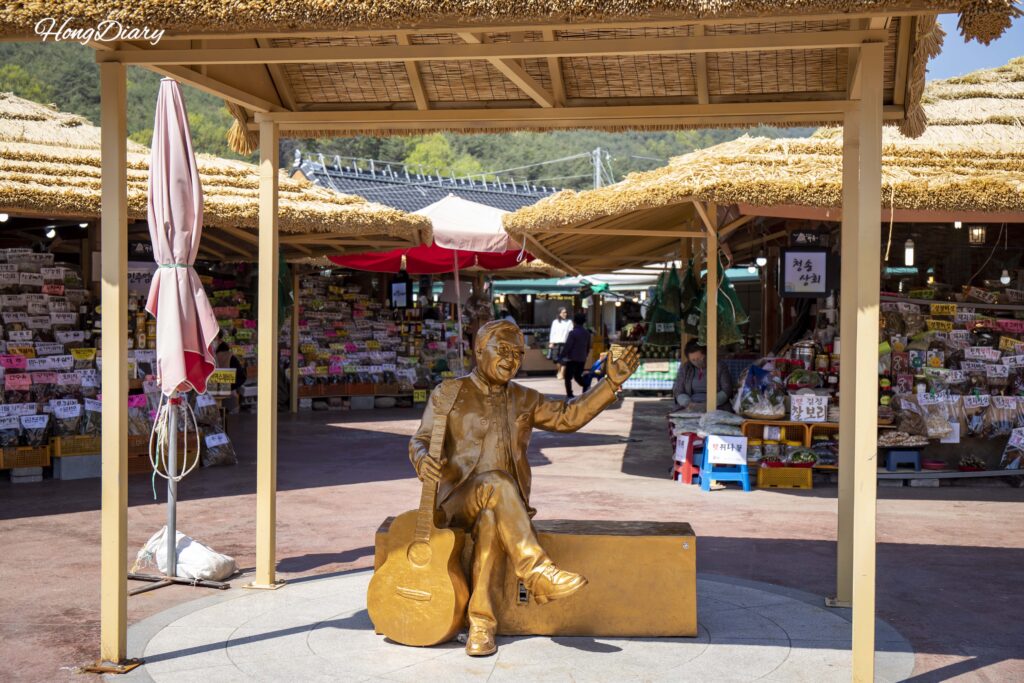
There’s no exact record of when Hwagae Market first opened, but historical documents mention a five-day rotating market operating here during the Joseon Dynasty, and some accounts push the origins back to the Samhan period — well over a thousand years ago. The market’s location at the border of Gyeongsang-do and Jeolla-do made it a rare meeting point for two regions with distinct dialects, cuisines, and customs. In Korean culture, Hwagae Market carries a symbolic weight: it represents the idea of exchange and reconciliation between east and west.
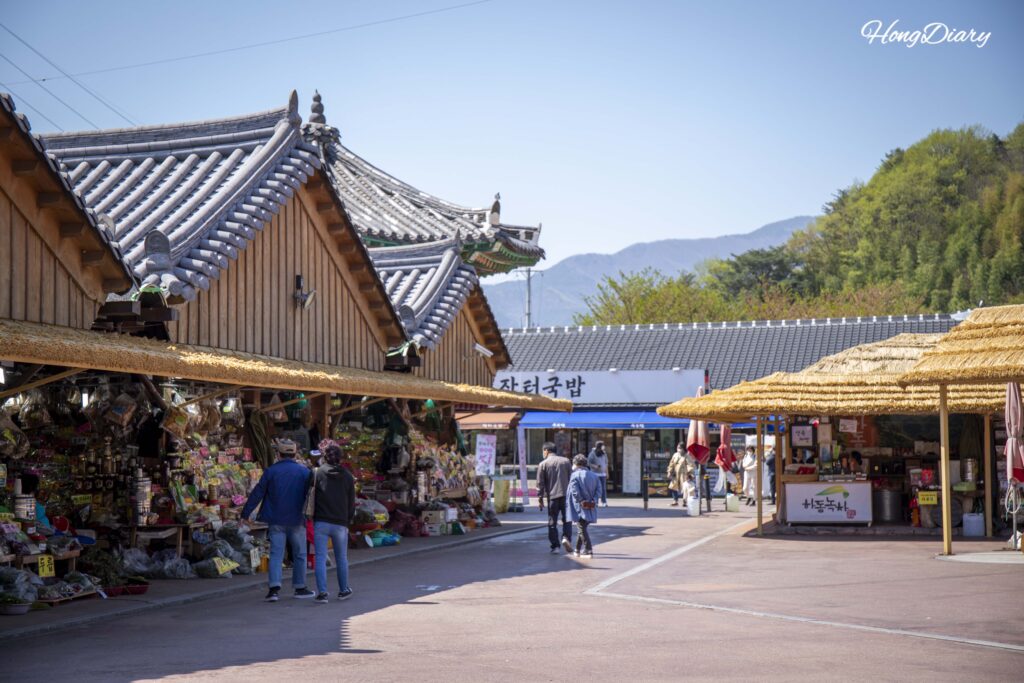
The market is also the setting of Kim Dong-ri’s novel Yeokma (The Stagecoach) and the subject of a well-known Korean folk song. For Korean visitors, these references add a layer of nostalgia. For international visitors, what you’ll notice first is the look of the place: the buildings have thatched straw roofs, and the whole market is laid out in a single main lane that you can walk end to end in about ten minutes. It’s small compared to something like Gwangjang Market in Seoul or Gupo Market in Busan, but that’s part of the appeal — it feels like stepping into a countryside market from another era, except everything is clean, well-maintained, and open every day.
What to Eat — Sweetfish, Cherry Oysters, and Mugwort
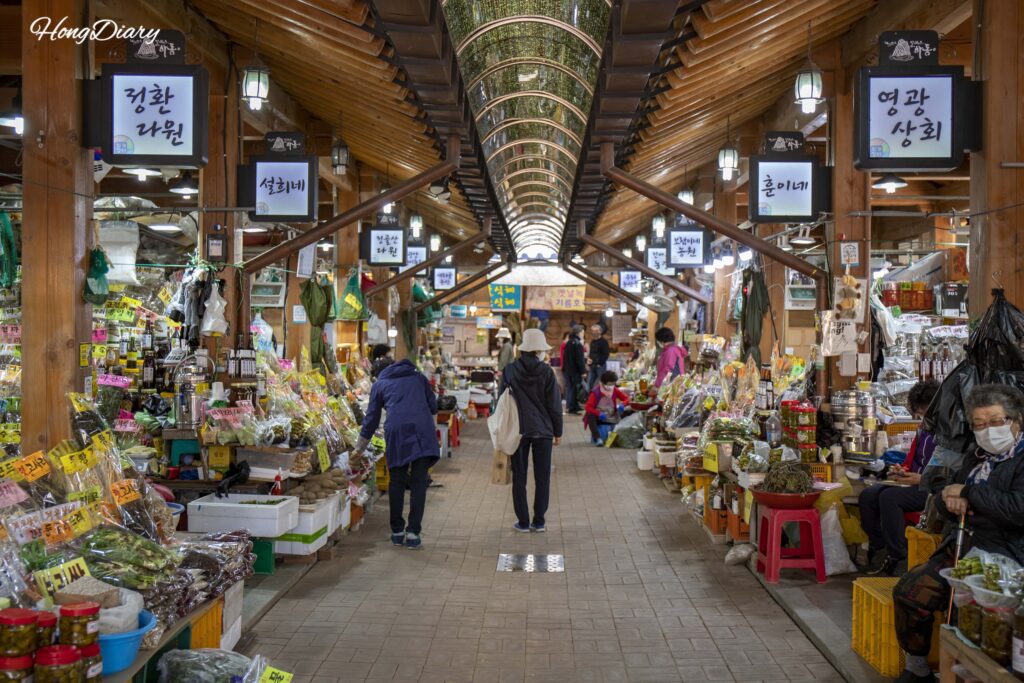
Hwagae Market is where products from Hadong, Jirisan Mountain, and the Seomjin River all converge. Wild greens, grains, freshwater seafood, mountain herbs — the variety reflects the richness of the surrounding landscape. But a few items here are things you’re unlikely to find anywhere else.
Sweetfish Tempura
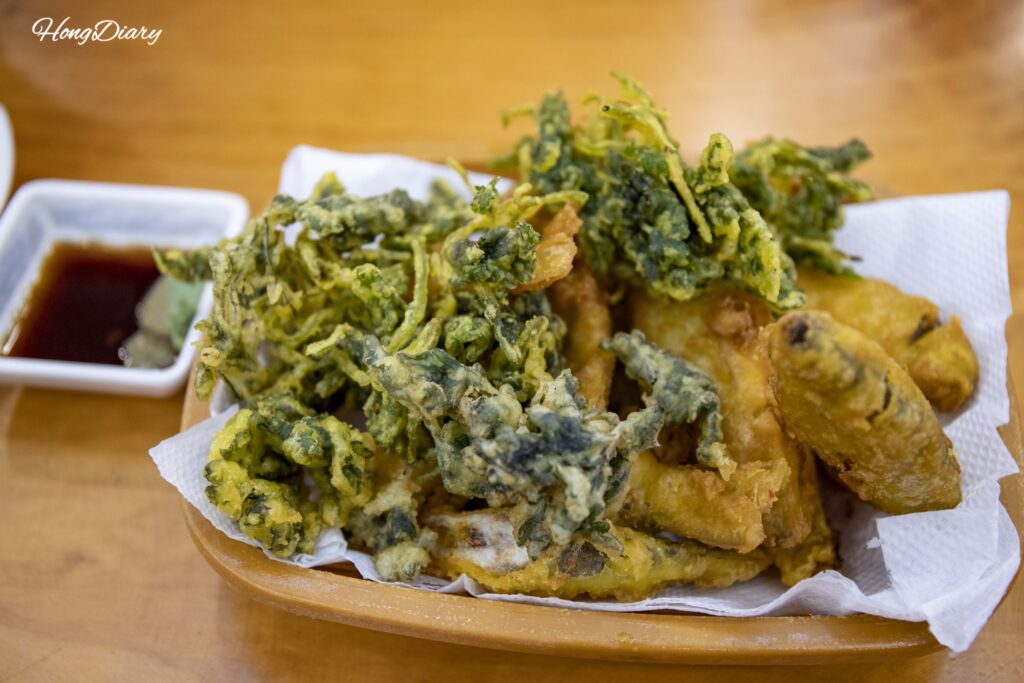
Sweetfish — known as euneo in Korean and ayu in Japanese — are small river fish that migrate upstream in early spring. When I visited in early April, they were in season and being sold as tempura. Each fish was split lengthwise and deep-fried bone-in — no filleting, no deboning. The size was bigger than I expected, and the bones turned out to be thicker than I anticipated — I couldn’t quite chew through all of them. But the flavor was clean and mild. The vendor threw in mugwort tempura as a bonus, and eating the two together was a good combination: the herbal fragrance of the mugwort balanced out the fried fish nicely.
Mugwort (ssuk) is one of Korea’s most common wild herbs. It’s used in soups, rice cakes, and tempura, and its fragrant, slightly bitter flavor is a defining taste of early spring in Korea. If you visit during March or April, you’ll see people gathering it along roadsides and riverbanks across the country.
Cherry Oysters — The Ones I Didn’t Try
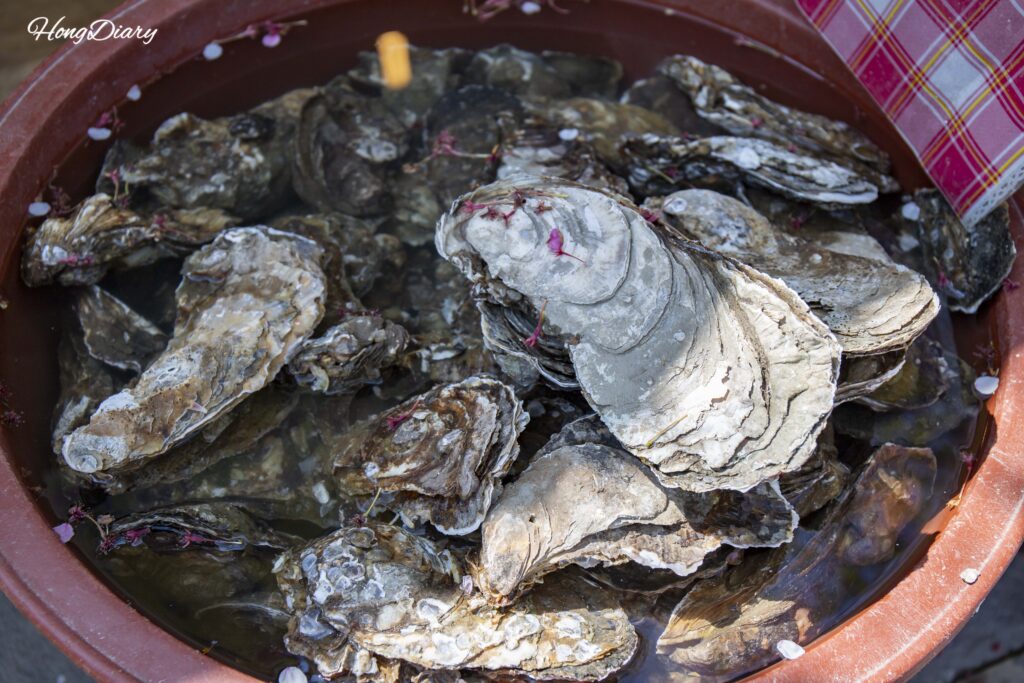
I should have eaten these. Cherry oysters — beotgul — are freshwater oysters harvested from the Seomjin River during cherry blossom season, which is how they got the name. The fact that oysters come from a river is already unusual, but the size of these was what caught my eye: they’re significantly larger than the ocean oysters most people are used to. They’re considered a delicacy even among Korean food enthusiasts.
I’d already eaten a full lunch before arriving and couldn’t fit more in, so I passed. Looking back, Hwagae Market isn’t the easiest place to get to, and I should have made room. If you visit, don’t make my mistake — try them.
Hadong Wild Green Tea
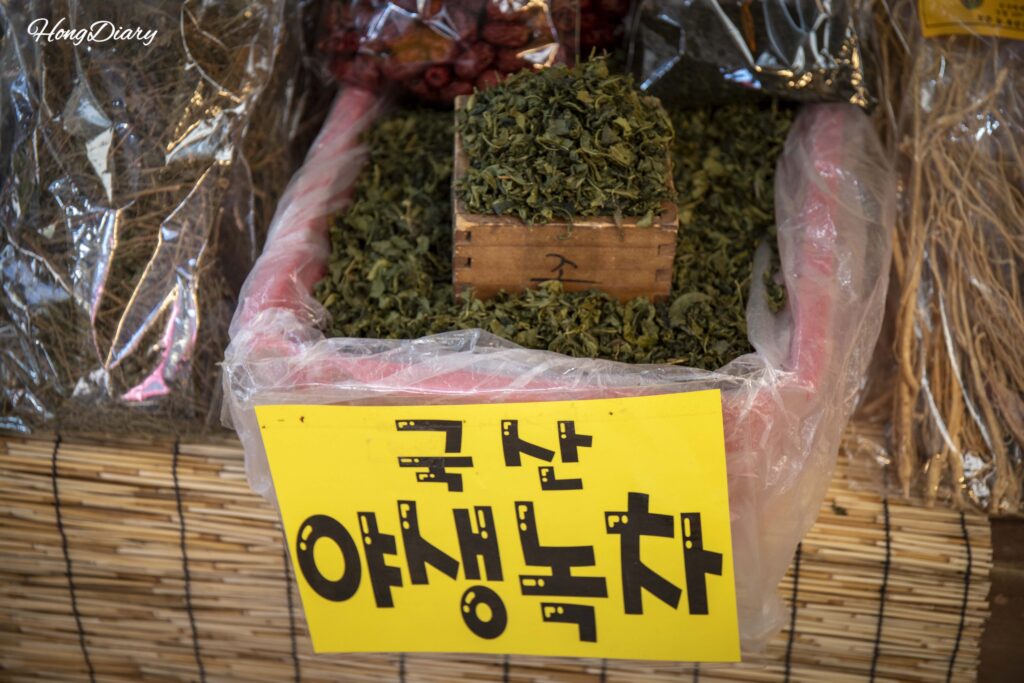
Hadong is one of Korea’s most important regions for wild green tea. The tea grown here isn’t from manicured plantation rows — it comes from plants that grow naturally on the hillsides around Jirisan. Several stalls in the market sell loose-leaf tea and packaged sets, and if you’re looking for a souvenir that’s lightweight, local, and genuinely tied to the region, this is a strong option.
Green Tea Makgeolli and Other Local Drinks
The market also sells several varieties of makgeolli — Korea’s traditional rice wine. I found Hwagae Market makgeolli, Hadong green tea makgeolli, and Gurye sansuyu (cornelian cherry) makgeolli. I’d tried the sansuyu version on a previous trip to Gurye, so this time I bought a bottle of the green tea makgeolli to take home. The color was a soft jade green, the texture smooth, and the green tea flavor was present but subtle — not bitter or overpowering. A good bottle to bring back.
More Market Finds
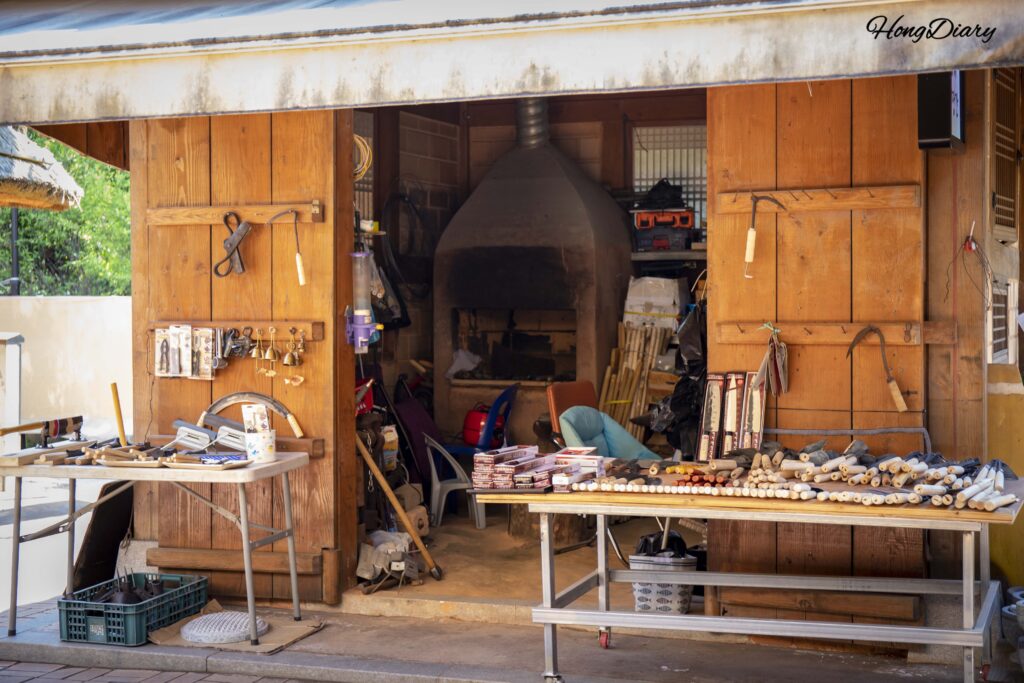
Beyond the food, there were a few things that caught my attention. An actual working blacksmith shop sits inside the market — the kind of thing you’d expect in a folk village but not in an active marketplace. Vendors also sell freshwater clams (jaecheop), which are typically made into a clear, light soup that Koreans drink as a hangover remedy after a night of drinking.
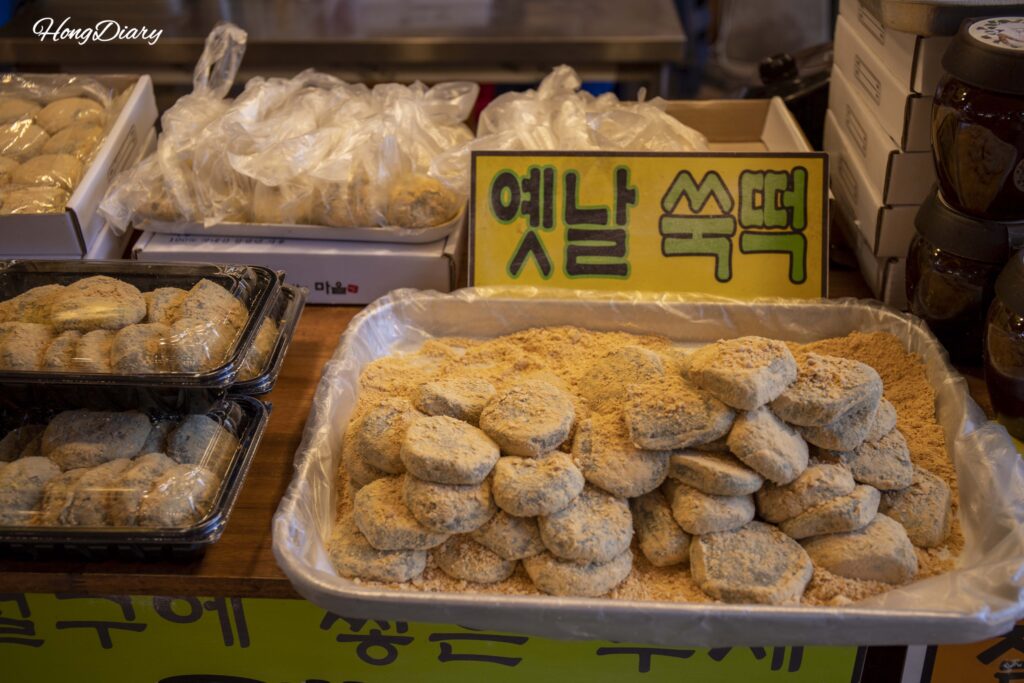
And then there’s the lineup of traditional Korean snacks: mugwort rice cakes (ssuk-tteok), barley bread (bori-ppang), sweet rice punch (sikhye), roasted corn, hotteok (sweet filled pancakes), and beondegi (steamed silkworm pupae — an acquired taste, to put it mildly). I was too full to try everything, and that’s my one real regret about this visit. Next time, I’m arriving on an empty stomach.
The Seomjin River Walk
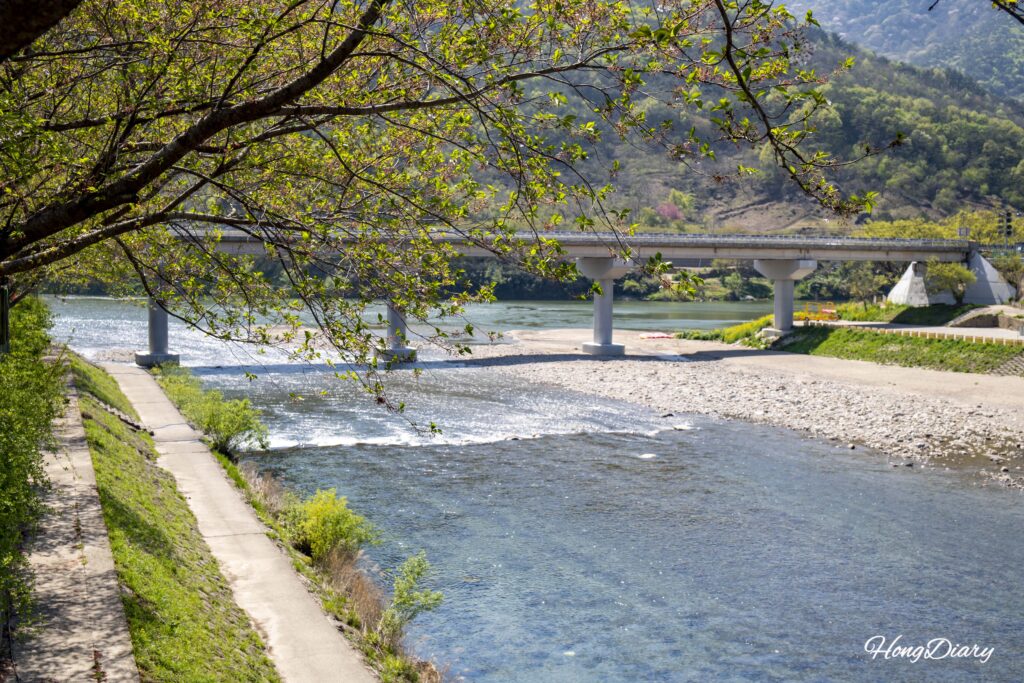
After walking the market, I wandered behind the buildings and found a path leading down to the Seomjin River. The weather was clear and warm, and the water was so transparent I stood there watching it for a while before I realized how long I’d been staring. You don’t have to go far — just a short walk from the back of the market gets you to a bridge and a stretch of riverbank where the pace drops to zero.
In spring, the cherry blossom road that runs from the market to Ssanggyesa Temple — a 4 km stretch with over 1,200 trees — turns into one of the most photographed spots in the country. I missed the full bloom by a few weeks, but even without the blossoms, the river and the mountains behind it were enough to make me stay longer than I’d planned.
Hwagae Market isn’t on the scale of Korea’s famous big-city markets, and it doesn’t try to be. What it offers instead is a setting you can’t replicate — a centuries-old border market between two provinces, with food that comes straight from the river and the mountains around it, and a river walk that makes you forget you’re at a market at all. Come hungry, and leave time for the water.
Frequently Asked Questions About Hwagae Market
How do I get to Hwagae Market from Busan?
Take an intercity bus from Busan Seobu (Sasang) Bus Terminal to Hwagae Bus Terminal. The ride takes about 2.5 hours and costs ₩16,400 / $11 USD / €9 EUR. Departures are at 08:30, 10:00, 11:30, 14:30, and 17:30. From the bus terminal, the market is a three-minute walk (225 m). Schedules may change, so check before your trip.
How do I get to Hwagae Market from Seoul?
Take an intercity bus from Seoul Nambu Terminal to Hwagae Bus Terminal. The ride takes about 3.5 hours and costs ₩32,100 / $21 USD / €18 EUR. Departures are at 06:40, 09:00, 11:00, 13:00, 14:30, 16:20, 17:40, and 19:30. The market is a three-minute walk from the bus terminal.
What are the opening hours of Hwagae Market?
The market is open daily from 09:00 to 18:00, year-round. It originally operated as a five-day rotating market but now functions as a permanent daily market.
What food should I try at Hwagae Market?
The standout items are sweetfish tempura (in season from March to April), cherry oysters from the Seomjin River (available during cherry blossom season), and mugwort tempura or mugwort rice cakes. Hadong wild green tea and green tea makgeolli are popular souvenirs. Freshwater clam soup, barley bread, and traditional Korean street snacks are also available throughout the market.
What are cherry oysters (beotgul)?
Cherry oysters are large freshwater oysters harvested from the Seomjin River during the cherry blossom season, which is how they got their name. They are significantly larger than typical ocean oysters and are considered a delicacy among Korean food enthusiasts. They are available at Hwagae Market primarily in spring.
Is there parking at Hwagae Market?
Yes. The main parking lot is directly across from the market entrance. The first hour is free, followed by ₩500 per 30 minutes and ₩100 per 10 minutes after that. Payment is by credit card only. On busy days, there is an additional Hwagae Market public parking lot nearby and a Hasang public lot across the bridge.
Is there anything else to do near Hwagae Market?
The Seomjin River runs just behind the market and offers a pleasant riverside walk. In spring, the 4 km Hwagae Cherry Blossom Road — lined with over 1,200 trees — connects the market to Ssanggyesa Temple and is one of the most popular cherry blossom spots in Korea. The Hadong area is also known for its wild green tea fields and can be combined with a visit to Jirisan National Park.