
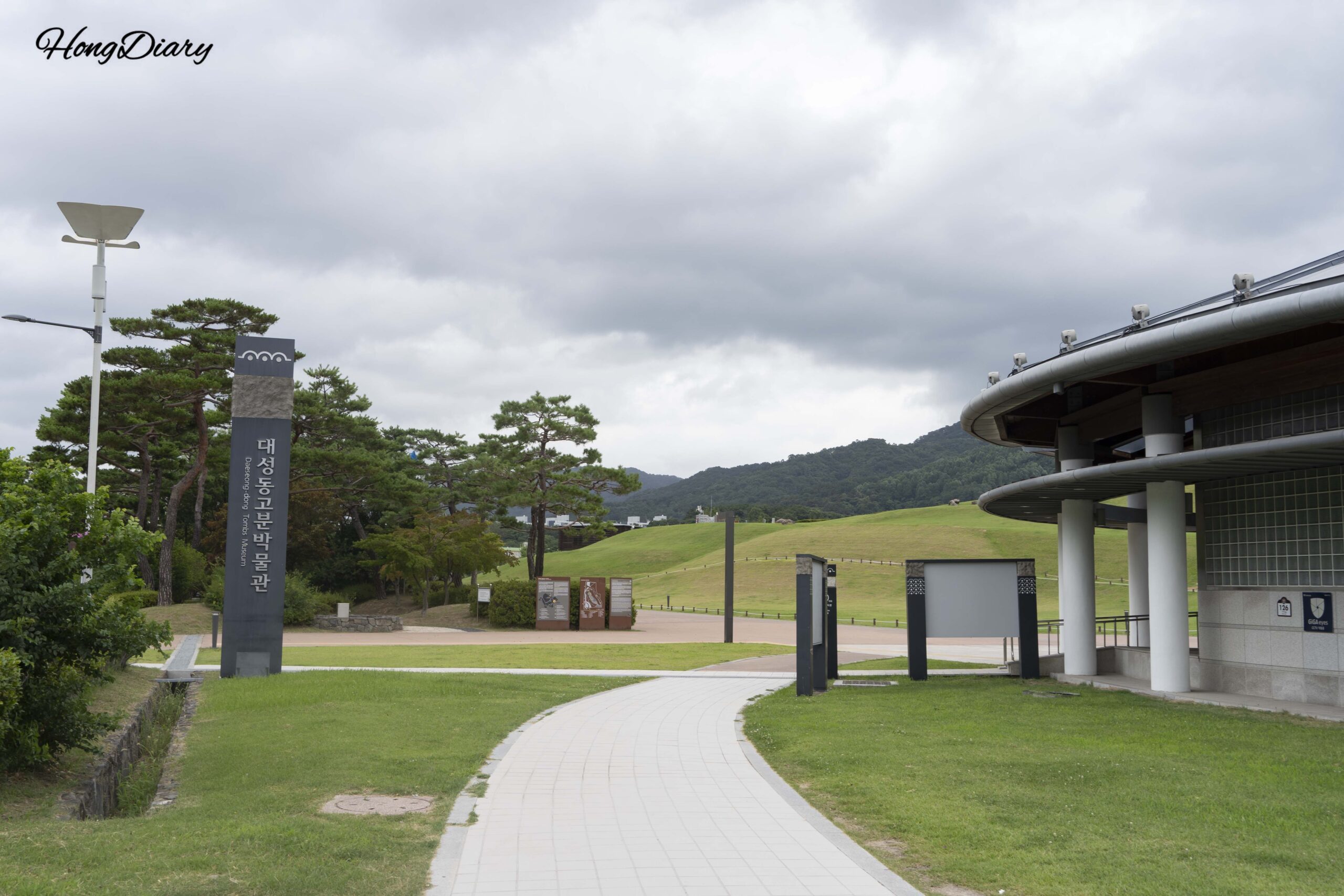
Somewhere in Gimhae, about 25 minutes by light rail from the airport, there’s a low hill that doesn’t look like much from a distance. No towering monuments, no dramatic ruins. Just grass, a walking trail, and a quiet museum at the base. But underneath that hill, across five centuries of Gaya civilization, the rulers of Geumgwan Gaya buried their dead — and when a new king needed a tomb, they didn’t look for new ground. They tore into the graves of their predecessors and built on top of them. Layer over layer, reign over reign, stacked into the same ridge. That detail alone makes the Daeseong-dong Tombs unlike any other burial site I’ve visited in Korea.
The Daeseong-dong Tombs sit at 126 Gaya-ui-gil in Gimhae-si, Gyeongsangnam-do — the heartland of the ancient Geumgwan Gaya kingdom. Gimhae itself is a small city sandwiched between Busan and the coast, and its light rail system connects most of the major historical sites in a single line. The tombs are a five-minute walk from Museum Station (Exit 2) on the Gimhae Light Rail, and just 14 stops — roughly 25 minutes — from Gimhae International Airport. That accessibility makes this an easy half-day trip even if you’re just passing through the region. In 2023, the Daeseong-dong Tombs were inscribed as a UNESCO World Heritage Site as part of the “Gaya Tumuli” designation, which covers seven ancient tomb clusters across southern Korea dating from the 1st to the 6th century.
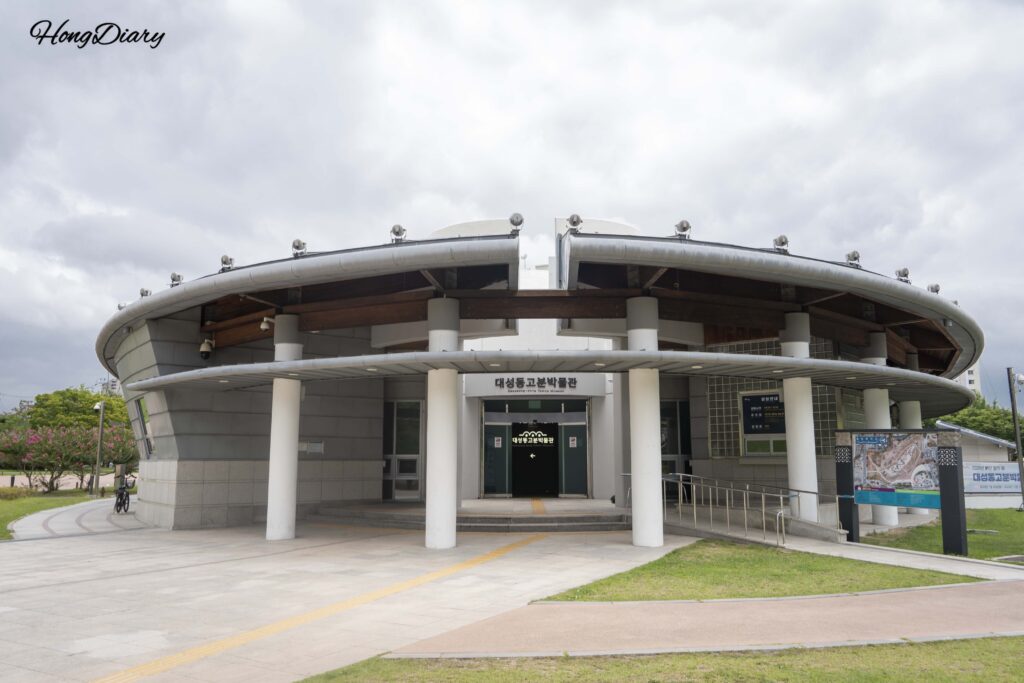
Table of Contents
Visitor Info & Transport
| Detail | Info |
|---|---|
| Address | 126 Gaya-ui-gil, Gimhae-si, Gyeongsangnam-do |
| Hours | 09:00 – 18:00 (last entry 17:30) |
| Closed | Every Monday, January 1, Seollal (Lunar New Year) and Chuseok day |
| Admission | Free (museum + outdoor site) |
| Parking | Free outdoor lot at the museum |
| Getting There | Gimhae Light Rail → Museum Station, Exit 2 → 5 min walk |
| Getting There | From Gimhae Airport: 14 stops on the light rail (~25 min) |
| Time Needed | 1.5–2.5 hours (museum + outdoor tombs + photo spots) |
Start at the Museum, Then Walk the Hill
The museum sits right beside the tomb site, and I’d recommend going in before heading outside. The exhibitions give you just enough context — who the Geumgwan Gaya were, what they buried with their dead, how the site was discovered — that the grassy hill afterward feels less like a park and more like what it actually is: a layered graveyard of an ancient iron kingdom.
The Daeseong-dong Tombs Museum is also the only nationally registered excavation institution in Gyeongsangnam-do Province. The team here conducts its own annual archaeological digs, and newly unearthed artifacts are reflected in the exhibitions shortly after. That means the museum isn’t static — each visit can look slightly different from the last.
The permanent exhibition is divided into five themed sections, and the layout is designed to be followed in order. Replicas, scale models, and video materials are used throughout, making it accessible even for visitors with no background in Korean history or for families with young children.
“The Last Resting Place of Kings”
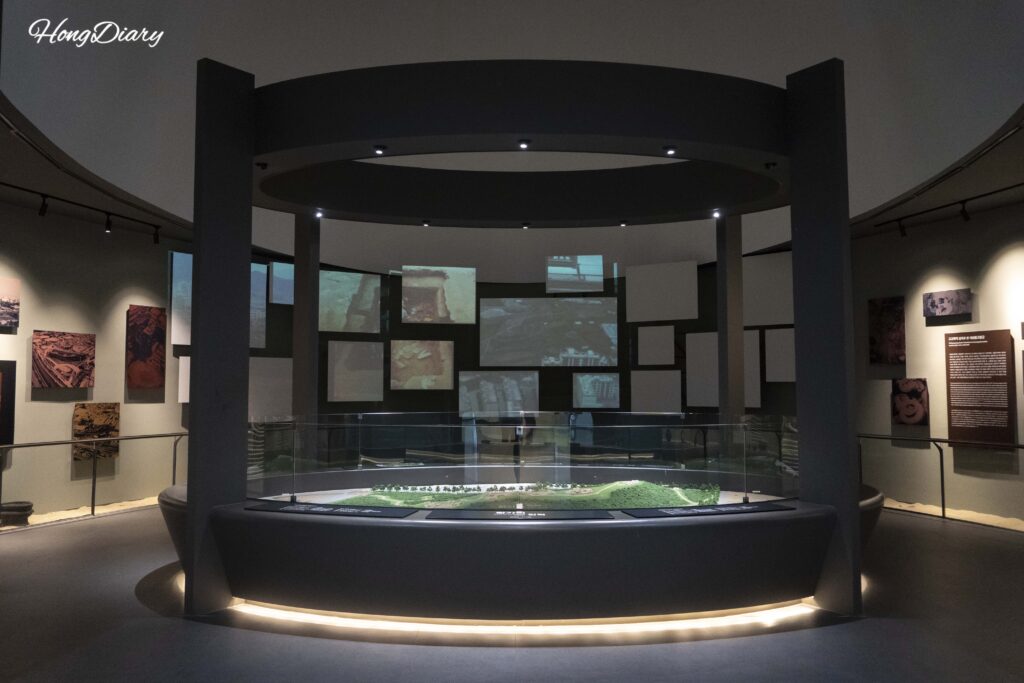
The first thing you see when you enter the main exhibition hall is a central display titled “The Last Resting Place of Kings.” It provides a chronological overview of Geumgwan Gaya’s history and the excavation timeline of the site. I’d suggest spending a few minutes here before moving deeper — it acts as a map for everything that follows, and the rest of the exhibition flows more naturally once you have this framework in mind.
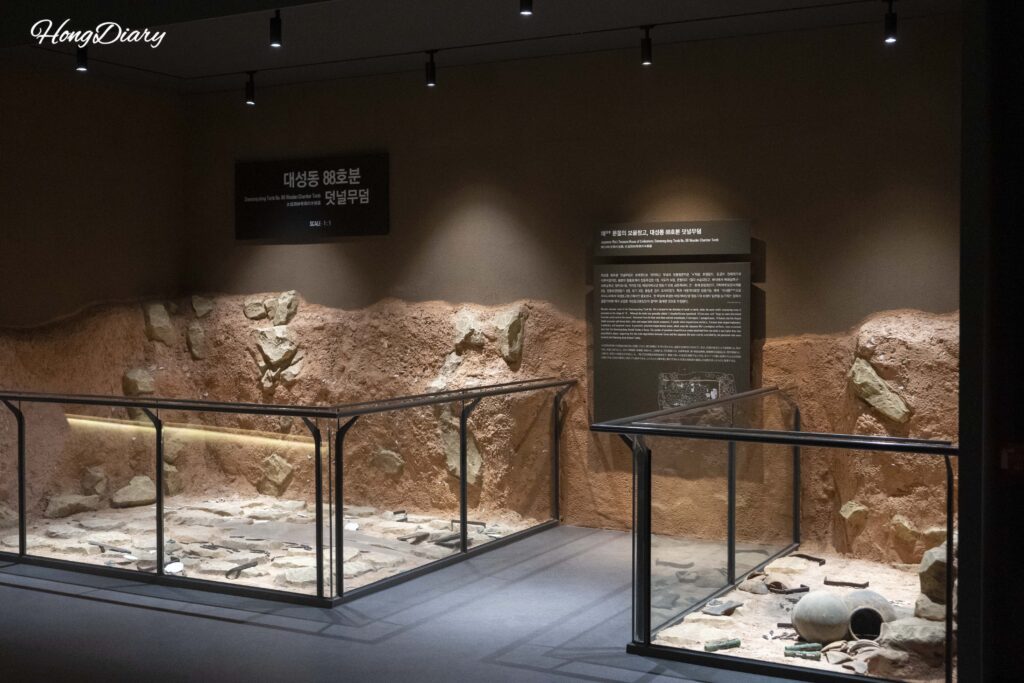
From there, the exhibition moves through three main sections: “Society Before King Suro” (the pre-Gaya period), “The King’s Tomb Revealed” (the excavation and what was found inside), and “The Unfinished Story of Geumgwan Gaya.” The path takes you from the kingdom’s origins through its burial customs — including evidence of human sacrifice — and forward to the questions that remain unanswered.
What I appreciated about the layout is that it doesn’t assume you already care about Gaya history. It earns your attention by showing you the objects and letting the story build.
The Triple Jar Burial — Found Here First
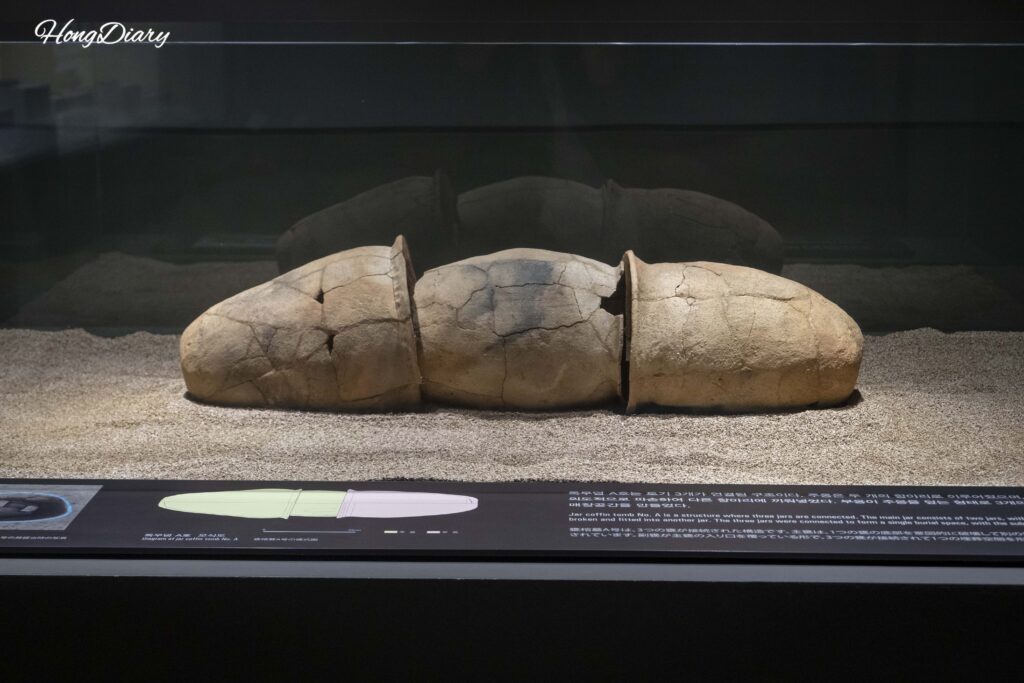
One exhibit that stopped me was a three-tiered jar burial — a structure made of three connected clay vessels used to hold remains (either a body or cremated bones). This type of burial was first discovered at the Daeseong-dong site, and seeing the actual excavated form in the museum made the practice feel far more real than any textbook description. The scale of the jars and the way they interlock is something you need to see up close to appreciate.
Iron, Trade, and the Gaya Network
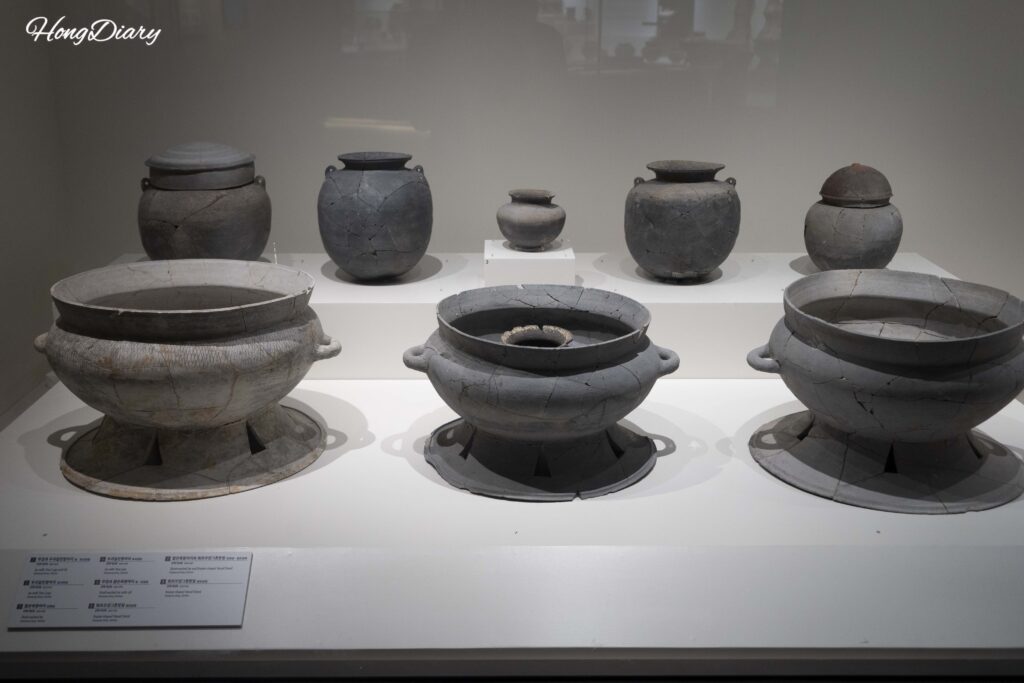
Even from my limited memory of Korean history classes, one thing always stuck: Geumgwan Gaya was a major iron producer. The Gaya confederacy sat at the center of East Asia’s ancient trade network, and the artifacts on display make that tangible. Bronze mirrors and dragon-decorated belts from China, bronze pots linked to northern cultures in what is now Manchuria, and ceremonial bronze objects connected to Japan — all excavated from these tombs.
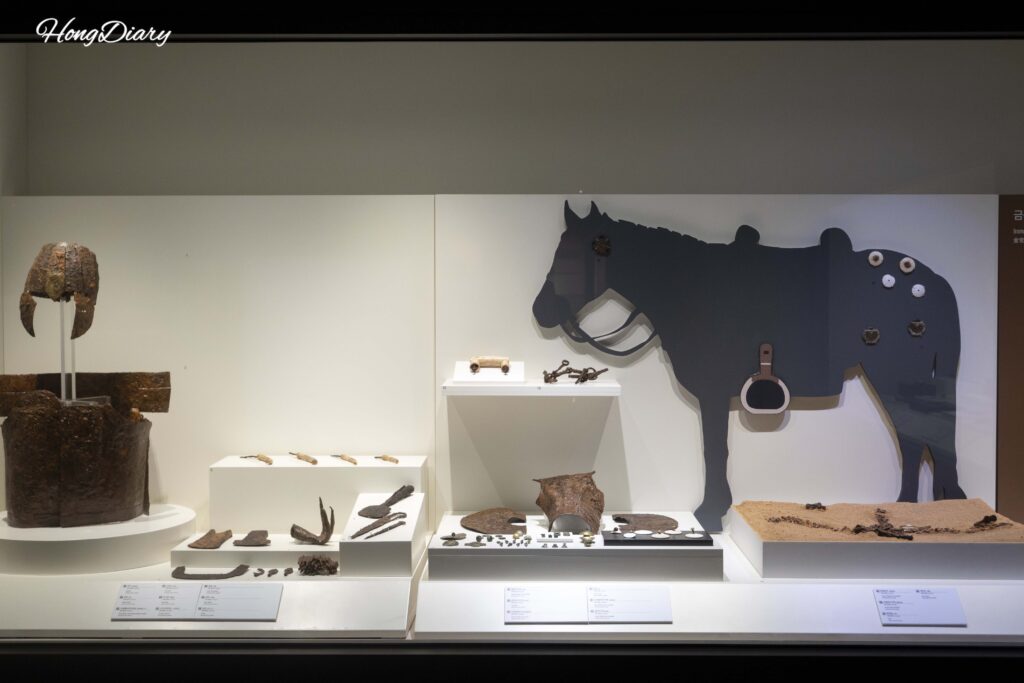
It’s one thing to read that a small kingdom on the southern coast of Korea was trading with China, the Korean north, and Japan simultaneously. It’s another to stand in front of the physical proof and realize how connected this region was nearly two thousand years ago.
Walking Over the Tombs
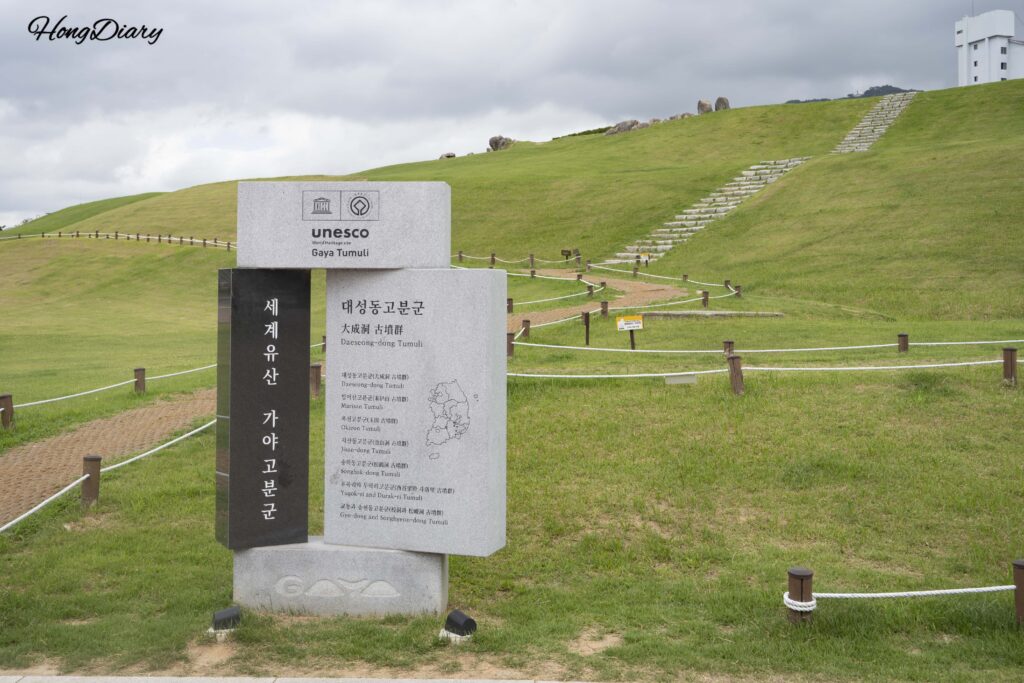
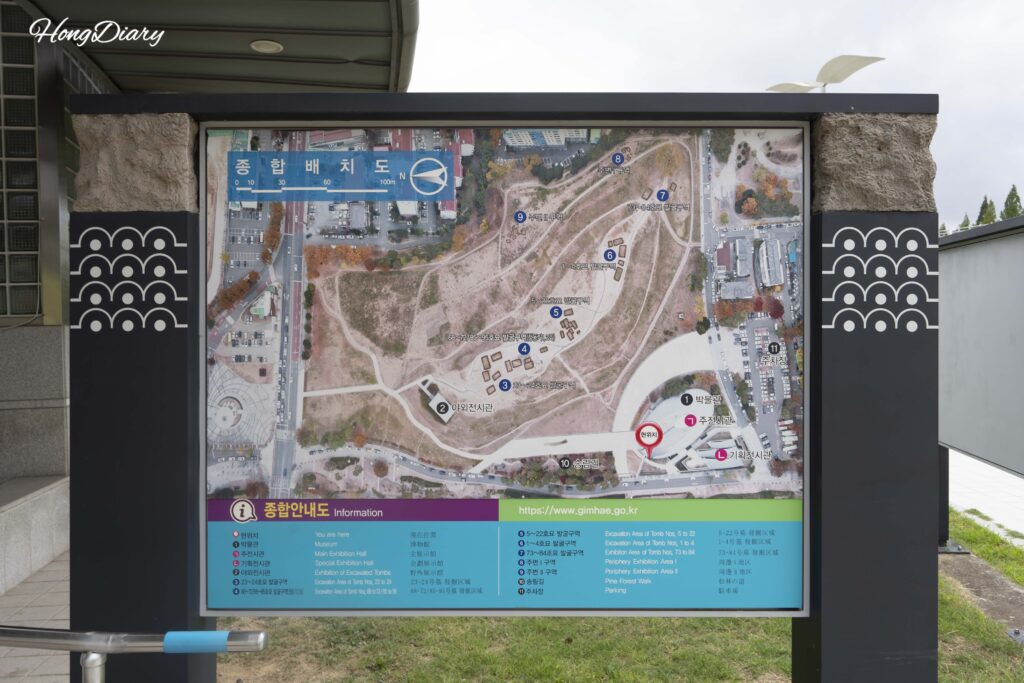
After finishing the museum, I walked outside to the tomb site itself. A well-maintained trail loops around and over the hill, passing through the excavation zones: Tombs 1–4, Tombs 5–22, and Tombs 23–24.
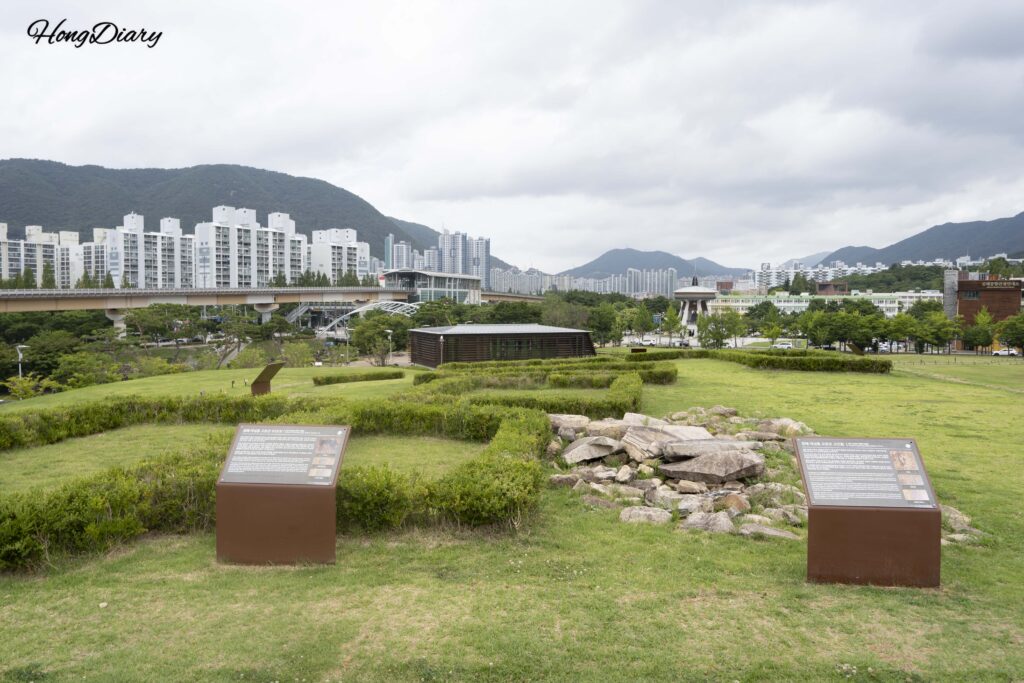
The defining feature of the Daeseong-dong Tombs — and the reason they matter to archaeologists — is the overlapping construction. Over two confirmed phases, newer tombs were built directly on top of older ones, deliberately destroying the earlier graves in the process. This isn’t something you see at most Korean burial sites. It suggests a political culture where each new ruler asserted authority by physically claiming the burial ground of their predecessor — not beside them, but over them.
Walking the trail knowing this, the hill feels different. The ground you’re standing on isn’t a single layer of history. It’s several centuries compressed into one small ridge, each generation literally on top of the one before.
There’s also an outdoor exhibition area where Tombs 29 and 39 have been preserved in their excavated state — if you visit, check the location on the site map before heading out so you don’t walk past them.
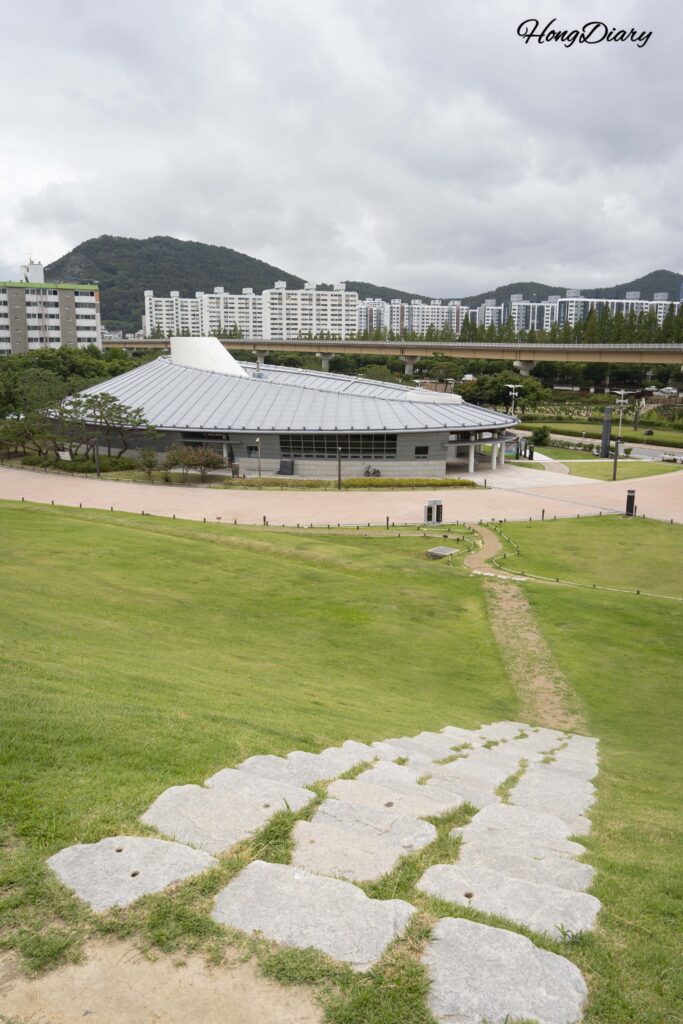
One more thing: the hilltop has a well-known photo spot — a lone tree standing at the top of the ridge with open sky behind it. The day I visited, temperatures hit 38°C, so I skipped it and headed back after seeing the excavation sites. If you go on a cooler day, make the walk up. The view from the top looks out over the surrounding neighborhoods and back toward the museum.
Gimhae by Light Rail
The Daeseong-dong Tombs work well on their own, but Gimhae’s light rail system makes it easy to build a full day of stops without needing a car.
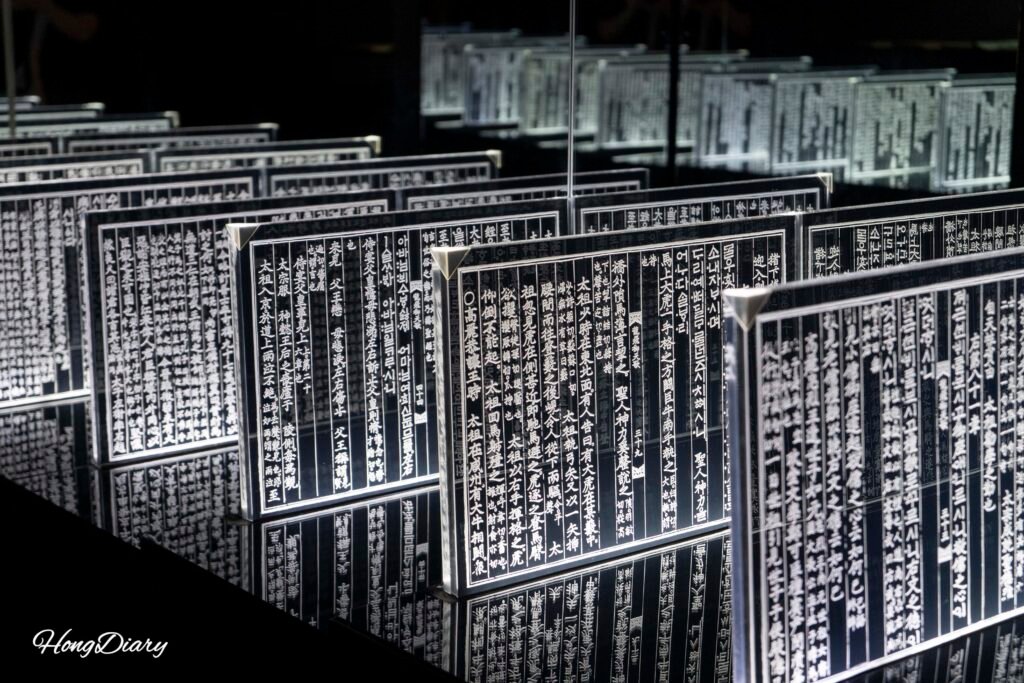
A few stops down the line, the Gimhae Hangeul Museum is another free stop that surprised me with how well it’s put together — interactive exhibits on the Korean writing system, almost no crowds, and a building that’s worth the visit on its own.
Combined with the Daeseong-dong Tombs and the nearby Royal Tomb of King Suro, a single afternoon on the Gimhae Light Rail covers more ground than most visitors expect from a city that doesn’t appear on the typical tourist itinerary.
The Daeseong-dong Tombs are free, reachable by light rail in minutes, and sit on a hill that holds more history beneath its surface than most landmarks display above it. For anyone interested in what Korea looked like before the unified kingdoms, this is one of the most direct windows into that world — quiet, uncrowded, and still being excavated.
Frequently Asked Questions About Daeseong-dong Tombs
How much does it cost to visit the Daeseong-dong Tombs?
Everything is free — the museum, the outdoor tomb site, and parking. There is no admission fee for any part of the complex.
How do I get to the Daeseong-dong Tombs from Busan or Gimhae Airport?
From Gimhae International Airport, take the Gimhae Light Rail. The Museum Station is 14 stops away, roughly 25 minutes. Use Exit 2 and walk about five minutes to reach the museum. From central Busan, take Busan Subway Line 3 to Daejeo Station, transfer to the Gimhae Light Rail, and ride to Museum Station.
What are the opening hours and when is the site closed?
The museum and tomb site are open daily from 09:00 to 18:00, with last entry at 17:30. They are closed every Monday, January 1, and on the day of Seollal (Lunar New Year) and Chuseok.
Why are the Daeseong-dong Tombs a UNESCO World Heritage Site?
In 2023, the Daeseong-dong Tombs were inscribed as part of the “Gaya Tumuli” UNESCO World Heritage designation, covering seven ancient tomb clusters across southern Korea. The tombs span the 1st to 5th centuries and are considered a key site for understanding the political development of the Geumgwan Gaya kingdom, which was a major iron-producing power and trade hub in ancient East Asia.
What is the overlapping tomb construction at the Daeseong-dong Tombs?
Over two confirmed phases, newer royal tombs were built directly on top of older ones, deliberately destroying the earlier graves. This overlapping construction — where successive rulers claimed the same burial ridge — is rare among Korean tomb sites and is one of the features that makes Daeseong-dong archaeologically significant.
How long does it take to see the Daeseong-dong Tombs and museum?
A thorough visit covering the five-section permanent exhibition inside the museum and the outdoor trail through the excavation zones takes about 1.5 to 2.5 hours. Add extra time if you want to visit the outdoor exhibition of Tombs 29 and 39 or climb to the lone tree photo spot at the top of the hill.
Should I visit the museum before or after walking the outdoor tomb site?
The museum first. The permanent exhibition provides context on Geumgwan Gaya’s history, burial customs, and the excavation timeline. Walking the outdoor site afterward feels more meaningful once you understand what lies beneath the surface and why the overlapping construction matters.