
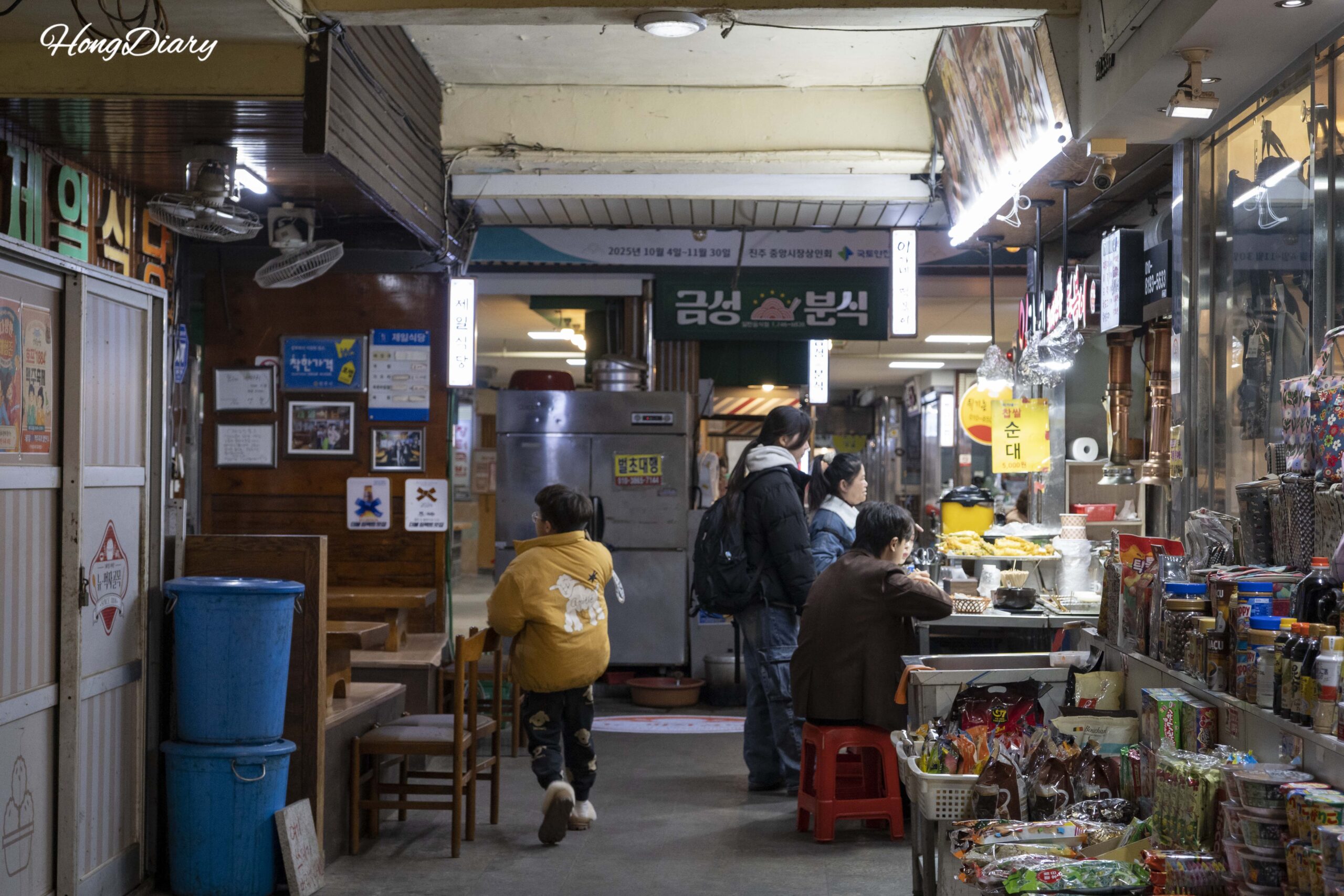
There’s a small city about an hour and a half west of Busan that most tourists never hear about. No viral TikToks. No long lines of influencers posing with street food. Just a covered market where vendors have been selling the same recipes for decades, and two dishes so good that I rearrange my schedule every year to come back for them. This is Jinju Jungang Market, and if you’re planning a trip beyond Seoul and Busan, it deserves a spot on your list.
Jinju sits in the heart of Gyeongsangnam-do (South Gyeongsang Province), a mid-sized city along the Nam River in southern South Korea. There’s an old Korean saying — “North is Pyongyang, South is Jinju” — a nod to the city’s long reputation for rich harvests and scenic beauty. Today, it’s best known for Jinjuseong Fortress, where evening walks along the riverside are quietly spectacular, and the Namgang Yudeung Festival (Lantern Festival), which lights up the river with thousands of floating lanterns every October. Getting here from Busan takes roughly 90 minutes by intercity bus (around ₩12,000 / $8.00 USD / €6.80 EUR), making it an easy day trip or a comfortable overnight side trip from Korea’s second-largest city.
Table of Contents
Essential Information: Jinju Jungang Market Visitor Guide (Hours, Location & Getting There)
| Detail | Information |
|---|---|
| Name | Jinju Jungang Market |
| Address | 8-1, Jinyangho-ro 547beon-gil, Jinju-si, Gyeongsangnam-do |
| Getting There (from Jinju Station, KTX) | Bus No. 210 from Jinju Station stop → 14 stops (~20 min) → get off at Jungang Market (Kookmin Bank) stop → 200m walk (~3 min). Taxi: ~₩11,000 / $7.30 USD / €6.20 EUR |
| Getting There (from Jinju Intercity Bus Terminal) | Walk ~500m (~8 min). Taxi: ~₩4,600 / $3.10 USD / €2.60 EUR |
| Market Hours | Most shops open early morning to evening (hours vary by vendor) |
| Night Market | Every Saturday, 6:00 PM – 11:00 PM (April – October, except July) |
| Market Sections | 3 zones: Hanbok & Fabric shops, Fresh Produce & Seafood, Food Alley |
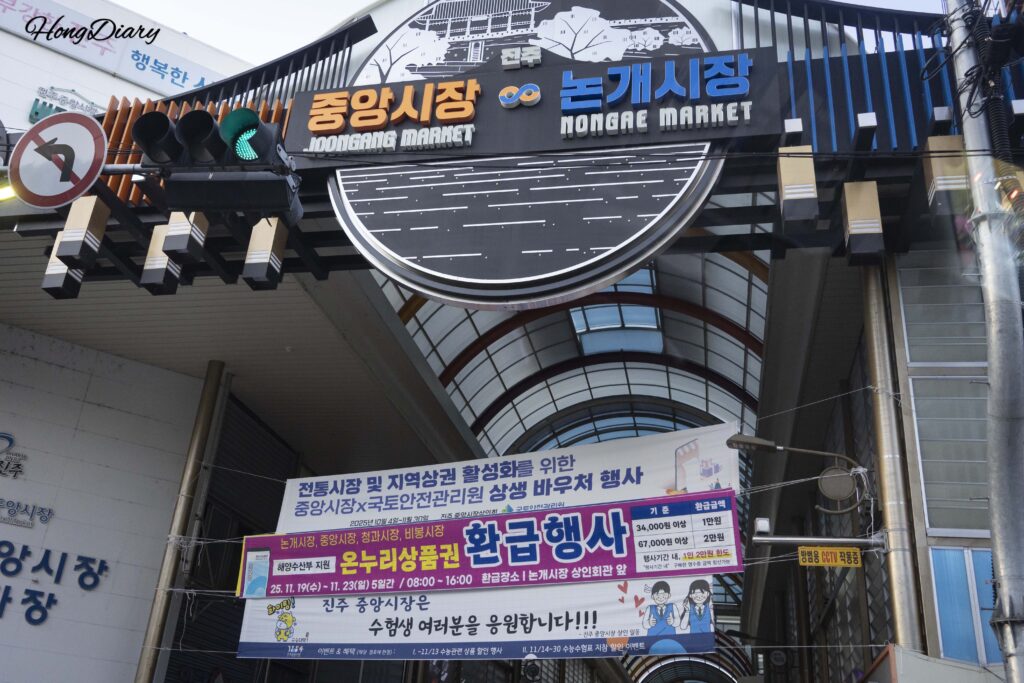
A Market Built on 140 Years of Fire and Resilience
Jinju Jungang Market traces its roots back to 1884, when it was established as “Jinju-jang” during the reign of King Gojong. For over 140 years, this market has been the economic backbone of the Gyeongsangnam-do region, serving as the central trading hub of “Jinju Sangmusa,” the city’s powerful merchant association that once controlled commerce across southern Korea. It wasn’t just a place to buy and sell — it was where locals gathered, shared news, and kept the city’s culture alive.
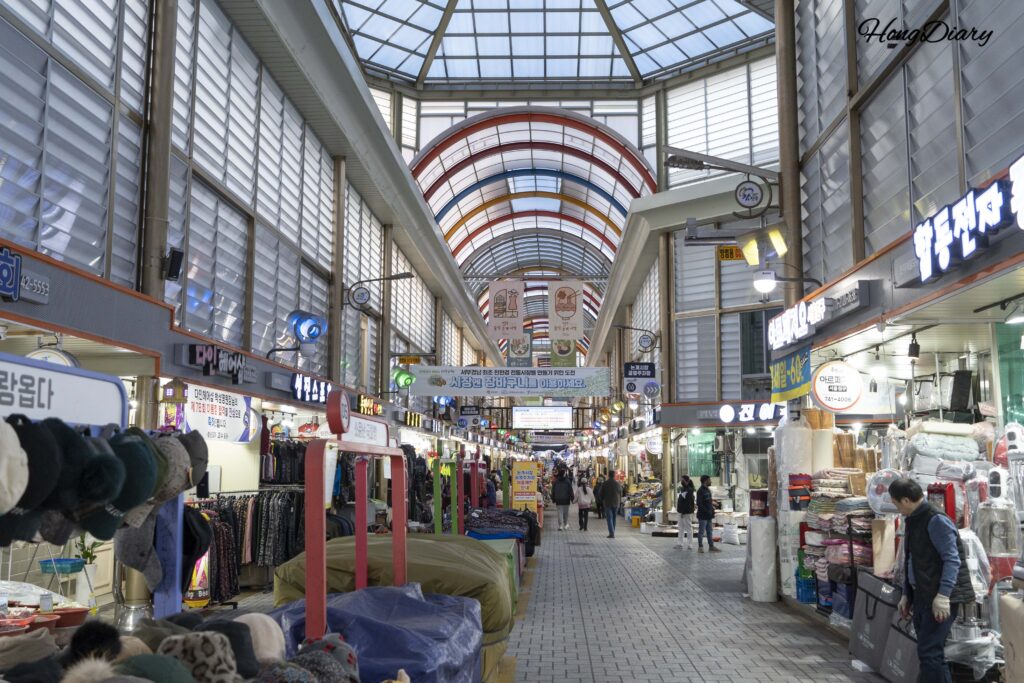
In 1966, a devastating fire swept through the market and leveled much of it. But Jinju rebuilt. Today, the market stretches along a massive 980-meter retractable arcade, keeping vendors and shoppers dry during the rainy summers and warm during the chilly winters. The covered structure connects Jinju Jungang Market with the adjacent Nongae Market, so you can wander through both without stepping outside.
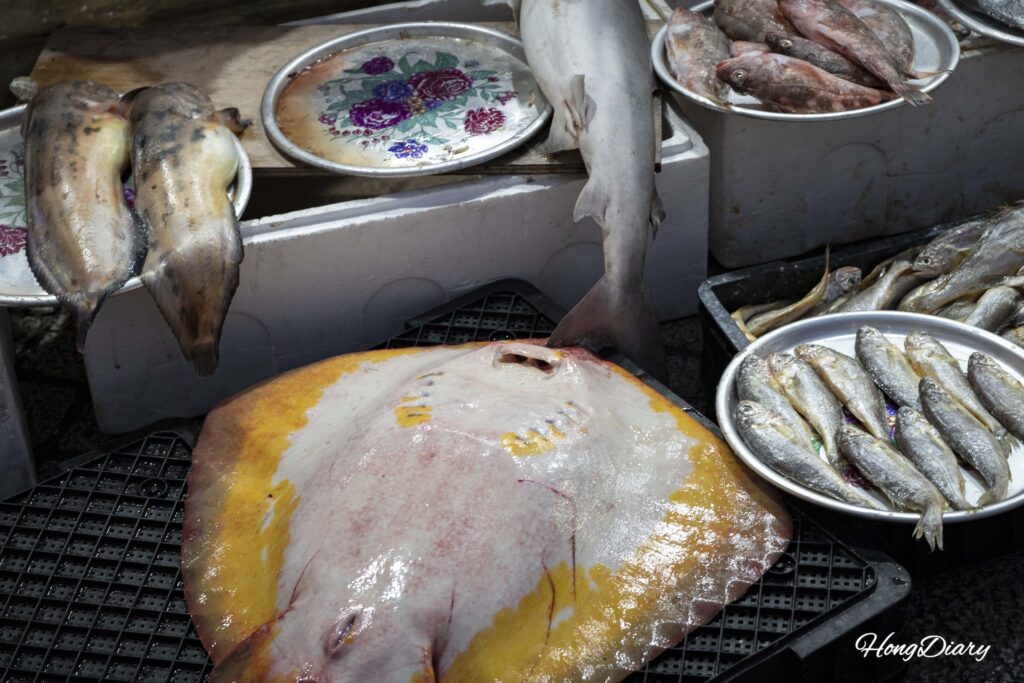
The market is split into three distinct zones. One section is dedicated to hanbok (traditional Korean clothing) and fabric shops, a nostalgic stretch that feels like stepping back a few decades. Another is packed with fresh produce and seafood stalls, where you’ll see ajumma (market ladies) sorting through seasonal vegetables and arranging glistening fish on ice. The third — and the one you’re probably here for — is the meokja-golmok, or “food alley.”
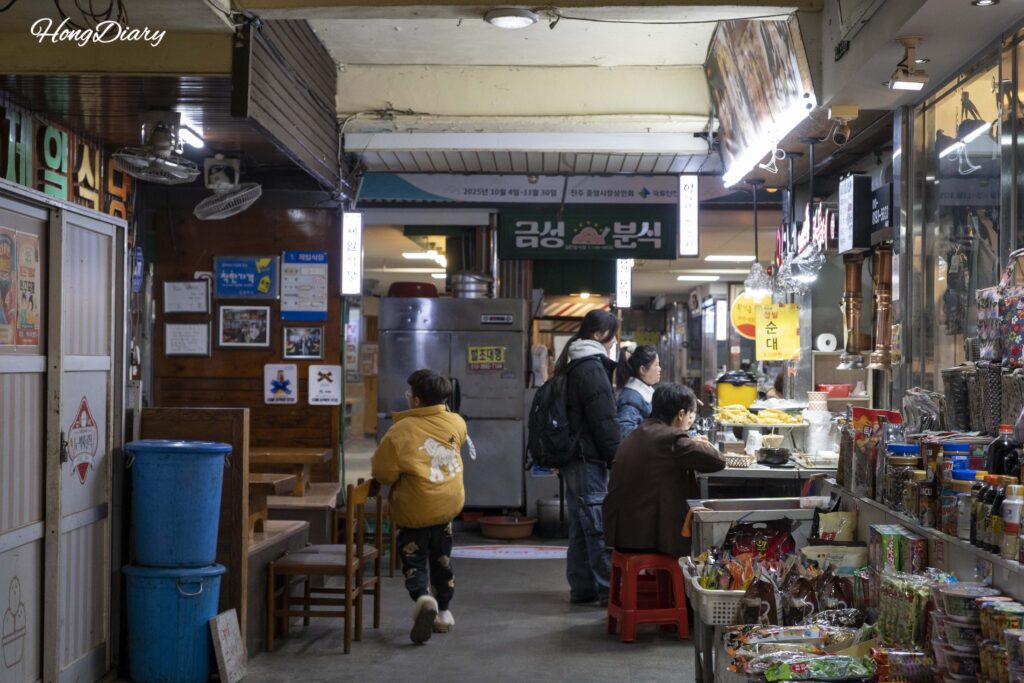
The market was designated as a Culture and Tourism Market by the Korean government in 2011, and the early morning hours are especially lively. Starting around 2:00 AM, a wholesale dawn market kicks off with vegetable and fish auctions that supply the region’s restaurants and households. You don’t need to wake up that early to enjoy the market, but knowing this gives you some context for the sheer volume of fresh ingredients moving through here every day.
Walking Into the Food Alley
My personal approach to Korean traditional markets has always been the same: skip the research, walk slowly, and eat whatever catches your eye. There’s something about wandering through narrow aisles lined with steaming pots and hand-lettered signs that makes any pre-made itinerary feel pointless. That said, having a few recommendations in your back pocket never hurts.
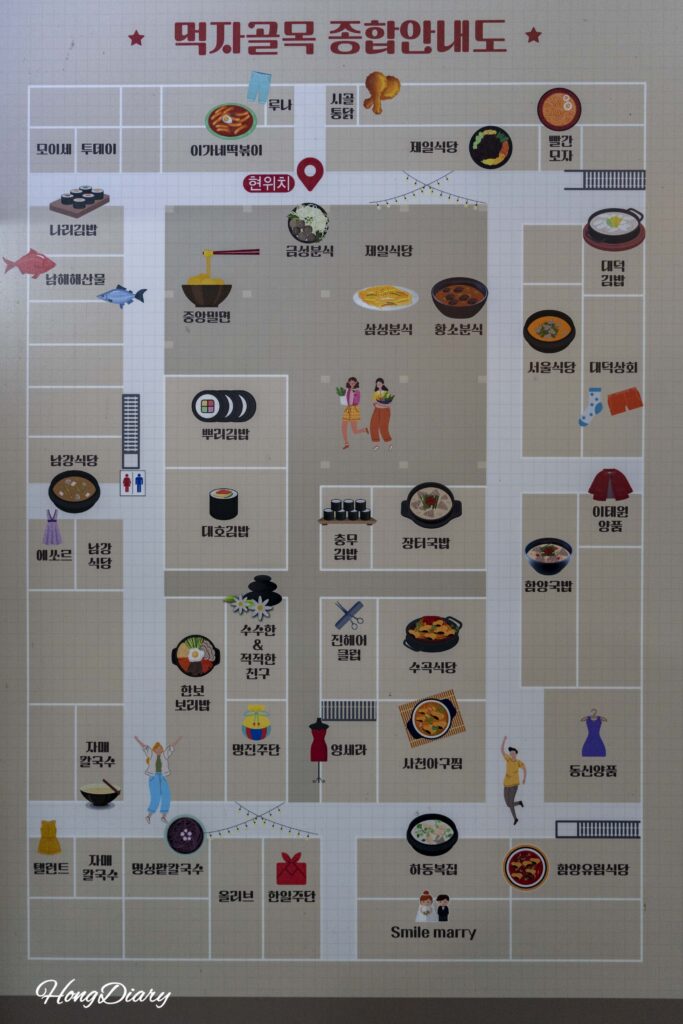
Over several visits to Jinju Jungang Market, I’ve tried a lot of things along this eating strip. Some were fine. A few were forgettable. But two stood out so clearly that they’ve become the entire reason I keep coming back — Jinju-style kkulppang (honey bread) and Jinju-style yukhoe bibimbap (beef tartare rice bowl). These two aren’t just market snacks. They’re regional specialties with their own history, and each one tastes noticeably different from versions you might find elsewhere in Korea.
Taste is subjective, of course, and even a well-known local favorite might not hit the same way for everyone. Take these as personal recommendations, not gospel — but I will say that these two are a big part of why Jinju stays on my travel calendar every year.
Jinju Honey Bread (Kkulppang): Crunchy, Sticky, and Nothing Like What You’ve Tried Before
If you’ve spent any time on the southern coast of Korea, you’ve probably heard of kkulppang — literally “honey bread” — from Tongyeong, a port city about an hour south of Jinju. Tongyeong’s version is soft and chewy, almost donut-like, because the corn syrup soaks into the dough. Jinju’s version is a completely different experience. The syrup is coated on the outside and hardens into a shell, giving each piece a firm, cookie-like crunch when you bite into it. Same name, very different textures.
Despite the name, kkulppang actually uses very little real honey. The sticky glaze is mostly mulyeot (corn syrup), and the surface is generously coated with roasted peanut powder and sesame seeds. Crack through the crispy shell and you’ll find a filling of sweetened pat (red bean paste) — not overpowering, just enough to balance the nuttiness and sweetness of the coating.
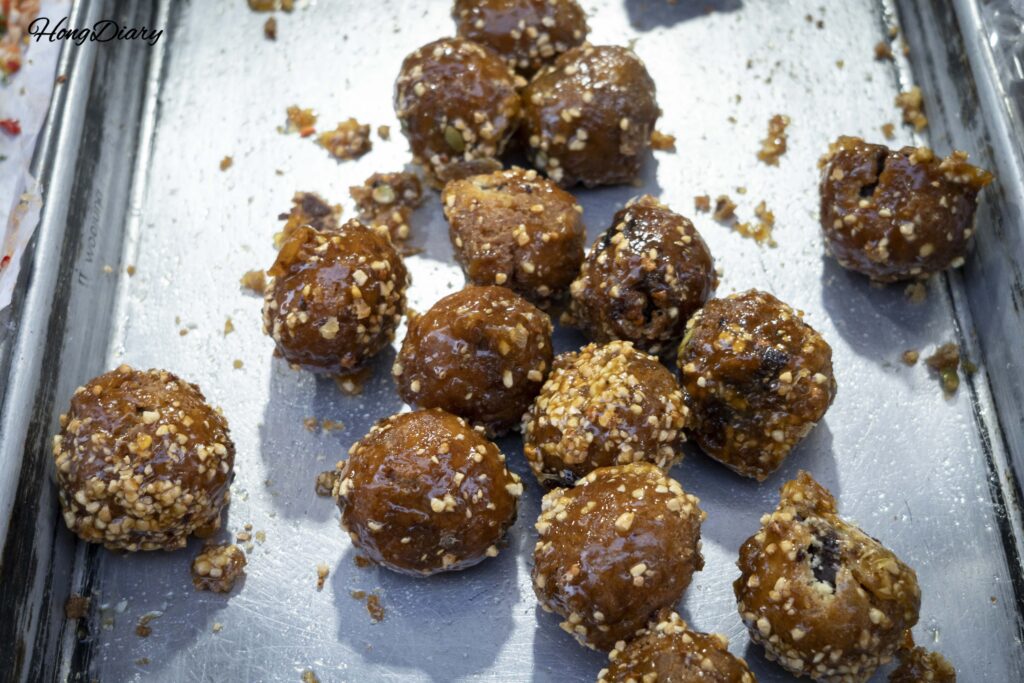
If you’re not a fan of red bean (it’s an acquired taste for some), there are newer versions filled with goguma (sweet potato), wandukong (green pea), or yuja (citron) paste instead. Ask the vendor what fillings they offer — most shops near the market entrance carry at least two or three varieties.
One tip: the sweetness pairs really well with something cold. A glass of cold milk or an iced americano from a nearby cafe cuts right through the sticky coating and makes the whole thing even better.
I personally recommend Songa Kkulppang, a shop right inside the market. They also sell a great selection of Korean-style donuts alongside the honey bread, so you can grab a mixed bag if your group has different preferences.
Honey Bread Prices at Songa Kkulppang
| Package | Contents | Price |
|---|---|---|
| Small Package | 6–7 pieces | ₩7,000 / $4.70 USD / €4.00 EUR |
| Large Package | ~10 pieces | ₩10,000 / $6.70 USD / €5.70 EUR |
If you’re traveling with two or three people, the small package is more than enough to share. They’re filling, and you’ll want to save room for what comes next.
Jeil Restaurant: The Yukhoe Bibimbap That Brings Me Back Every Year
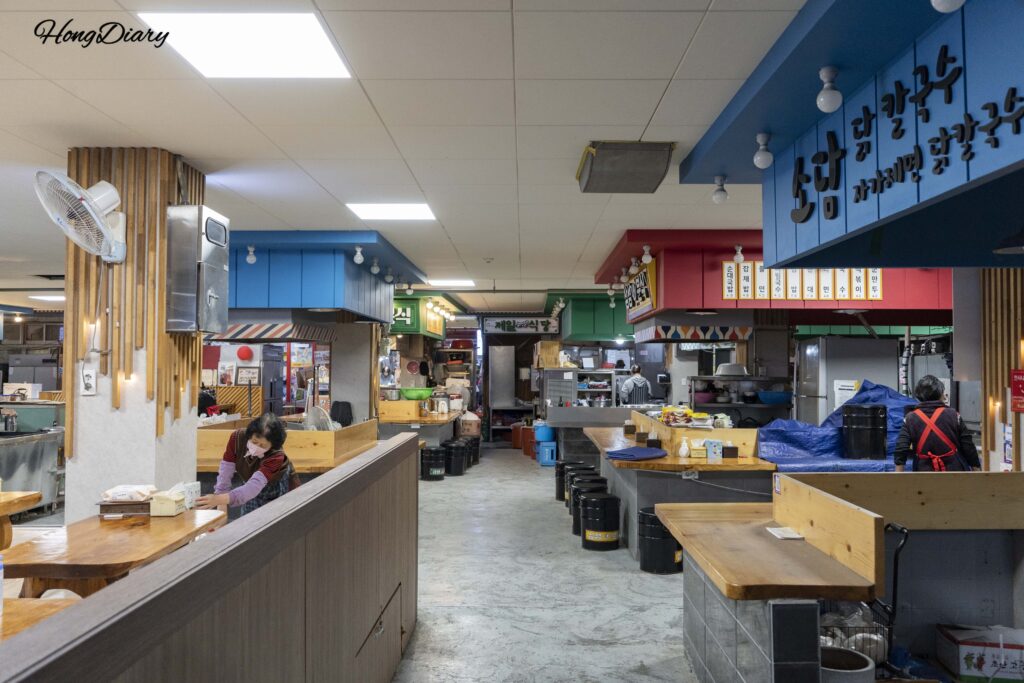
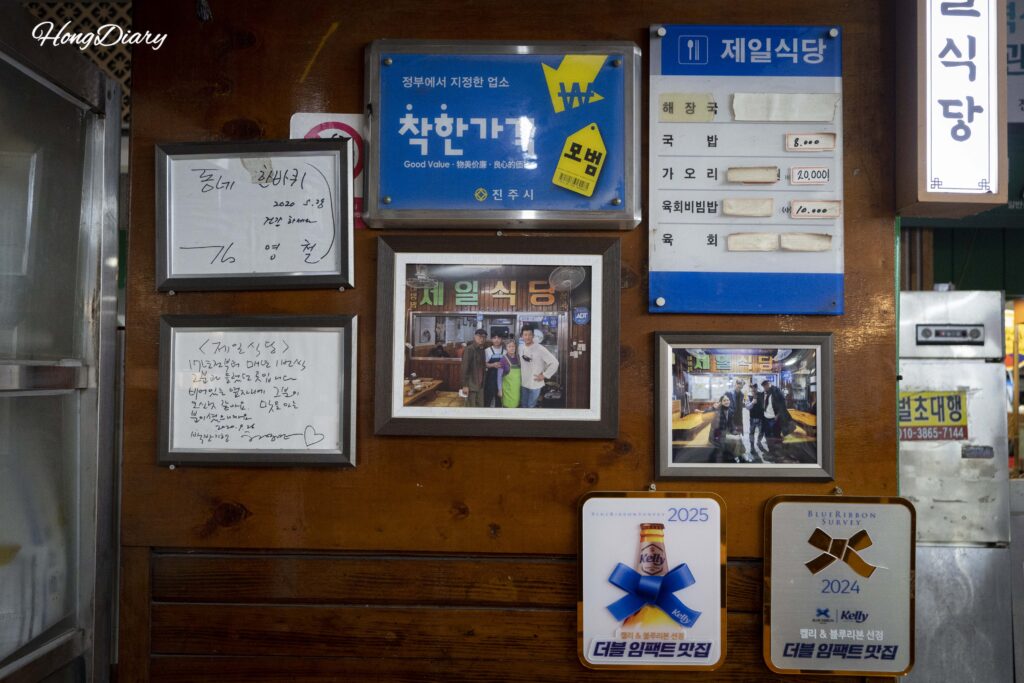
Walk deeper into the row of stalls at Jinju Jungang Market and you’ll find Jeil Restaurant, a place that’s been serving what many locals consider the definitive version of Jinju-style yukhoe bibimbap — a mixed rice bowl topped with yukhoe (thinly sliced raw beef seasoned with sesame oil, garlic, and a touch of spice). This isn’t a trendy restaurant chasing social media hype. It’s a no-frills institution that’s earned its reputation through decades of consistency, featured on multiple Korean broadcasting networks over the years.
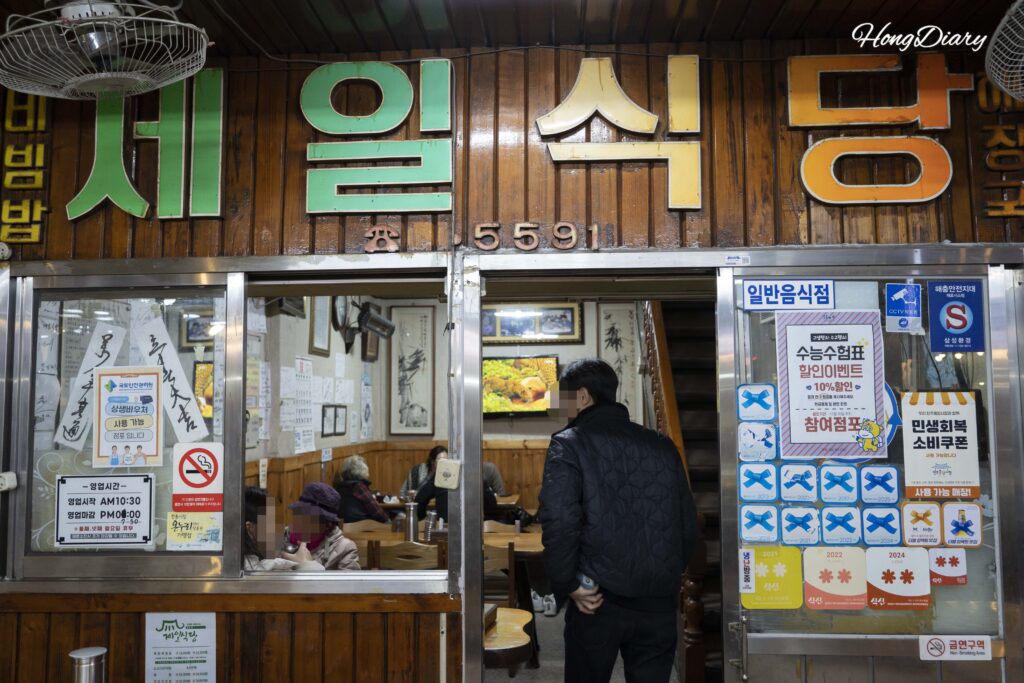
When most people think of bibimbap, they picture the Jeonju version — a colorful bowl piled high with large-cut namul (seasoned vegetables) and topped with an egg. Jinju flips the script. Here, the vegetables are finely chopped and mixed into the rice so everything blends together seamlessly. On top sits a mound of yukhoe — strips of fresh raw beef dressed in a sweet-spicy marinade that glows red against the bed of rice beneath it.
Mix everything together with a spoon, take a big bite, and the textures hit all at once: soft, finely cut greens melting into the rice, chewy strands of seasoned beef that are somehow both sweet and savory, and a gentle kick of heat that builds without overwhelming. It’s one of those dishes where every component disappears into a single, cohesive flavor rather than competing for attention.
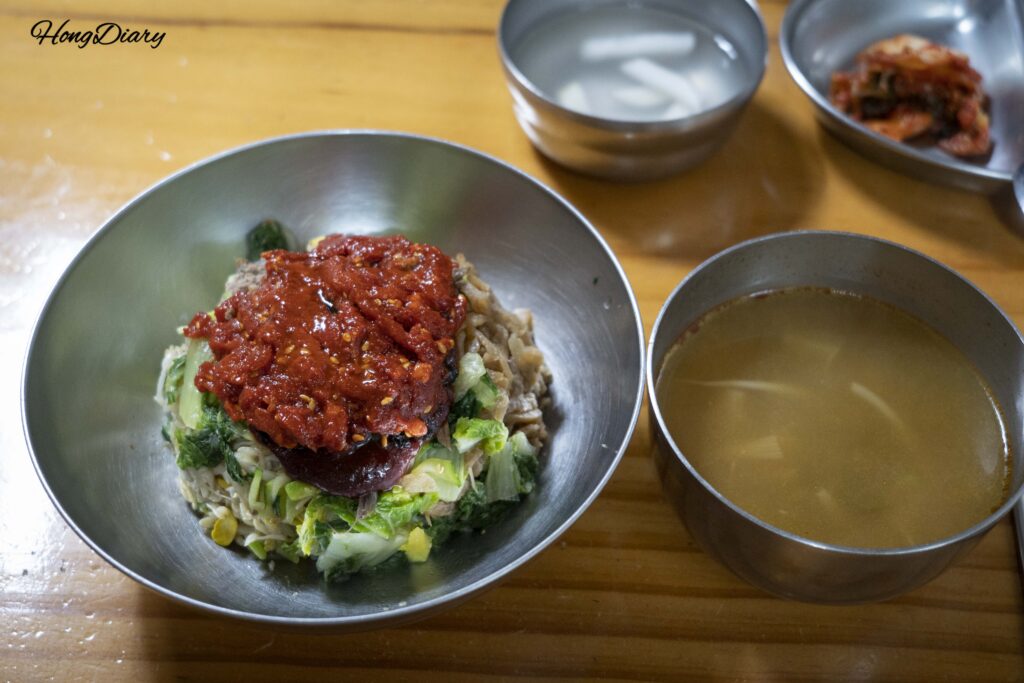
Every order of bibimbap at Jeil Restaurant comes with a bowl of seonji-guk (beef blood soup) on the side. Before you skip past it — give it a try. The broth is deep, rich, and slightly peppery, and it acts as a perfect palate cleanser between bites of the intensely flavored bibimbap. Together, the two make a combination that’s hard to match anywhere else I’ve eaten in Korea.
A practical tip for first-timers: If the idea of raw beef makes you uneasy, just ask the staff to cook the meat when you order. They’ll sear the beef before adding it to your bowl, no questions asked. It changes the texture but keeps the seasoning intact.
Jeil Restaurant Menu & Prices
| Menu Item | Price |
|---|---|
| Yukhoe Bibimbap (beef tartare rice bowl) — Regular | ₩10,000 / $6.70 USD / €5.70 EUR |
| Yukhoe Bibimbap — Large | ₩12,000 / $8.00 USD / €6.80 EUR |
| Seonji-gukbap (beef blood soup with rice) | ₩8,000 / $5.30 USD / €4.50 EUR |
| Yukhoe (raw beef tartare, standalone plate) | ₩35,000 / $23.30 USD / €19.80 EUR |
Jeil Restaurant Hours
| Detail | Info |
|---|---|
| Open | Daily, 10:30 AM – 7:00 PM |
| Last Order | 6:50 PM |
| Closed | No regular holidays |
| Note | They close early when ingredients sell out. A lunchtime visit is your safest bet. |
Before You Leave Jinju
Stepping back out into the market after a heavy lunch, the afternoon heat hits and the aisles are quieter than you might expect. A few vendors fan themselves next to their stalls. An older woman trims bean sprouts under a desk fan. Somewhere behind the honey bread counter, someone wipes sweat and drops another batch into the fryer.
Jinju Jungang Market isn’t the biggest traditional market in Korea, and it won’t overwhelm you with the kind of sensory overload you might find at Gwangjang or Jagalchi. What it offers instead is something quieter — a 140-year-old rhythm of daily life that’s survived fires, economic shifts, and the slow pull of modernization. The food here tastes like it belongs to this specific place, not like a version calibrated for tourist crowds.
If you’re visiting Jinju, pair the market with an evening walk through Jinjuseong Fortress. The fortress walls overlook the Nam River, and on clear nights the reflections on the water are worth lingering for. For those visiting between April and October (except July), the Olbam Night Market runs every Saturday from 6:00 PM to 11:00 PM and adds a livelier dimension to the market after dark.
A bowl of yukhoe bibimbap at Jeil Restaurant and a bag of crunchy kkulppang from Songa — that’s the combination that keeps pulling me back to Jinju Jungang Market, year after year. Some trips are about ticking off famous landmarks. This one has always been about two dishes that I simply can’t find anywhere else.
Frequently Asked Questions (FAQ) about Jinju Jungang Market
How do I get to Jinju Jungang Market from Busan?
The easiest way is by intercity bus from Busan to Jinju Intercity Bus Terminal, which takes about 90 minutes and costs around ₩12,000 ($8.00 USD / €6.80 EUR). From the terminal, the market is just a 500-meter walk (about 8 minutes). If you arrive at Jinju Station via KTX, take Bus No. 210 from the station and ride 14 stops to the Jungang Market (Kookmin Bank) stop, then walk 200 meters to the entrance.
What is yukhoe bibimbap, and is it safe to eat raw beef in Korea?
Yukhoe bibimbap is a Jinju regional specialty — a mixed rice bowl topped with yukhoe (thinly sliced raw beef seasoned with sesame oil, garlic, and a mild chili-based marinade). Korean restaurants that serve yukhoe source extremely fresh, high-grade beef specifically intended for raw consumption, so it’s considered safe. If you’d prefer not to eat raw meat, you can ask the staff at Jeil Restaurant to cook the beef before adding it to your bowl.
What is the difference between Jinju honey bread (kkulppang) and Tongyeong honey bread?
Both are deep-fried dough balls filled with sweetened red bean paste and coated in corn syrup, but the texture is distinctly different. Tongyeong’s version absorbs the syrup into the dough, making it soft and chewy like a moist donut. Jinju’s version has a hardened syrup coating on the outside, giving it a firm, cookie-like crunch. Jinju kkulppang is also covered with roasted peanut powder and sesame seeds.
When is the Jinju Jungang Market night market open?
The Olbam Night Market operates every Saturday from 6:00 PM to 11:00 PM, running from April through October (closed in July). It features additional street food stalls, local crafts, and a more festive atmosphere compared to the daytime market.
How much does a meal at Jeil Restaurant in Jinju Jungang Market cost?
A regular-sized yukhoe bibimbap (beef tartare rice bowl) costs ₩10,000 ($6.70 USD / €5.70 EUR), and the large version is ₩12,000 ($8.00 USD / €6.80 EUR). Each order includes a complimentary bowl of seonji-guk (beef blood soup). They also serve seonji-gukbap (soup with rice) for ₩8,000 ($5.30 USD / €4.50 EUR) and a standalone yukhoe plate for ₩35,000 ($23.30 USD / €19.80 EUR).
Is Jinju Jungang Market worth visiting if I’ve already been to larger markets like Gwangjang or Jagalchi?
Yes, but for different reasons. Jinju Jungang Market is smaller and quieter than Seoul’s or Busan’s famous markets, and it doesn’t have the same tourist infrastructure. What it offers is regional food that you genuinely can’t find elsewhere — Jinju-style yukhoe bibimbap and crunchy kkulppang are both distinct from anything served in bigger cities. The 980-meter retractable arcade also connects to the adjacent Nongae Market, giving you plenty to explore without the typical tourist crowds.
Can I visit Jinju Jungang Market as a day trip from Busan?
Absolutely. The intercity bus from Busan takes about 90 minutes each way, and the bus terminal is within walking distance of the market. You can comfortably explore the market, eat at Jeil Restaurant, grab honey bread, and still have time for an evening walk along the Nam River at Jinjuseong Fortress before heading back. For a more relaxed pace, an overnight stay in Jinju also works well.