
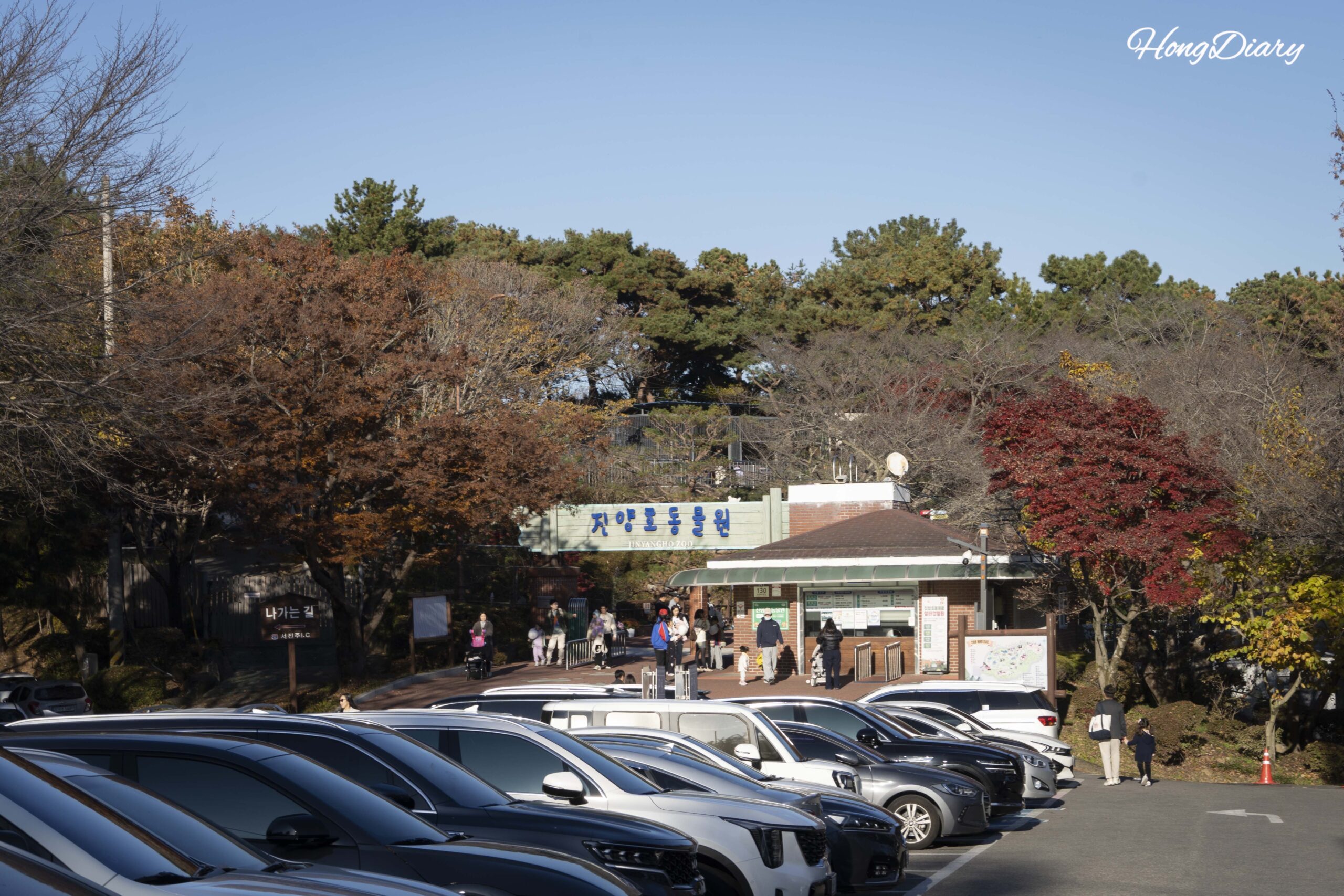
This trip to Jinju was unplanned. We had originally come just to check out a local market, but when I started searching for something to do with a child in the area, Jinyangho Park kept coming up. A zoo with cheap admission, a lakeside observatory, and walking trails — all in one place. On a previous trip to Jinju by public transit, this park was too far out of reach. Now that we had a car, it seemed like an easy afternoon stop. We drove over expecting a fun family outing. What we got was more complicated than that.
Jinyangho Park sits along the shore of Jinyangho Lake, a large artificial reservoir on the western edge of Jinju in Gyeongsangnam-do province. The lake was formed in 1970 when the Namgang Dam was built at the point where the Gyeongho and Deokcheon rivers converge. The surrounding park was established in 1998 and has grown into a complex that includes a zoo, an observatory, a pier, a water museum, and several walking trails. It has also served as a filming location for Korean television, and is a known habitat for endangered Eurasian otters — though spotting one requires patience and quiet timing.
Table of Contents
Essential Information: Jinyangho Park & Zoo Visitor Guide
| Detail | Information |
|---|---|
| Location | Jinyangho Park, Jinju-si, Gyeongsangnam-do |
| Zoo Hours | March–October: 9:00 AM – 6:00 PM / November–February: 9:00 AM – 5:00 PM (last admission 1 hour before closing) |
| Zoo Closed | Every Tuesday |
| Admission | Adults ₩1,000 ($0.67 USD / €0.57 EUR) · Youth ₩800 ($0.53 USD / €0.45 EUR) · Children ₩500 ($0.33 USD / €0.28 EUR) |
| From Jinju Station (KTX) | Bus 200 → 24 stops → get off at Jinyangho Samgeori, then walk 1.6 km (~35 min). Taxi: ~₩15,000 (~$10.00 USD / ~€8.48 EUR) |
| From Jinju Bus Terminal | Bus 120 → 21 stops → get off at Jinyangho Park, then walk 1 km (~25 min). Taxi: ~₩11,000 (~$7.33 USD / ~€6.22 EUR) |
| Parking | Free lot at the zoo entrance |
| Observatory | Currently closed for renovation — expected to reopen in November 2026 |
| Note | Outside food is not allowed inside the zoo. A small snack shop operates inside |
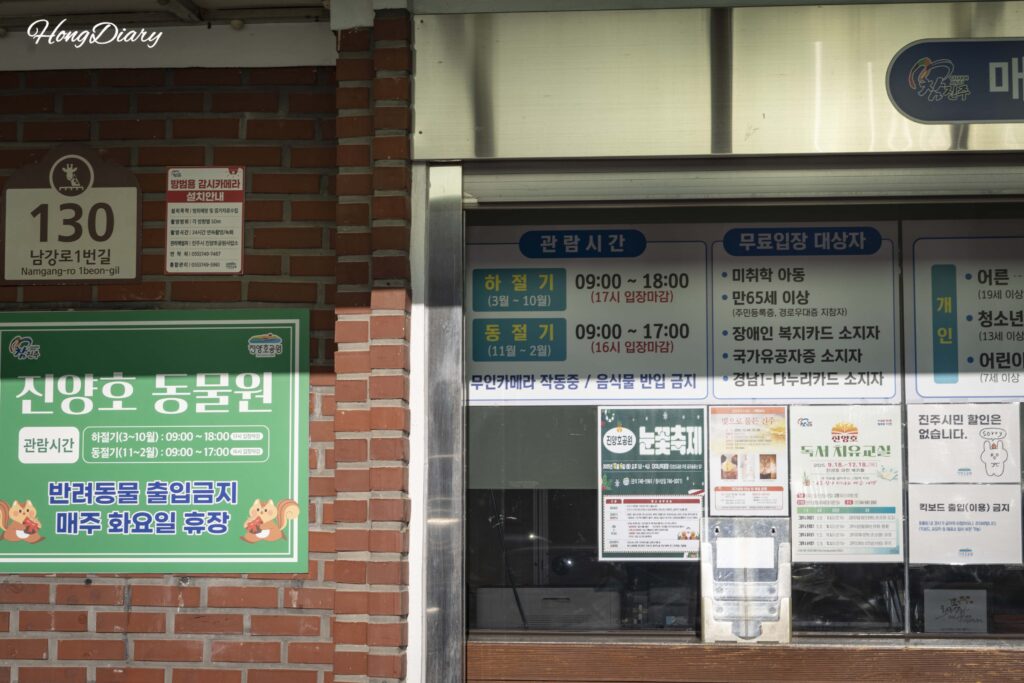
What We Found at the Zoo
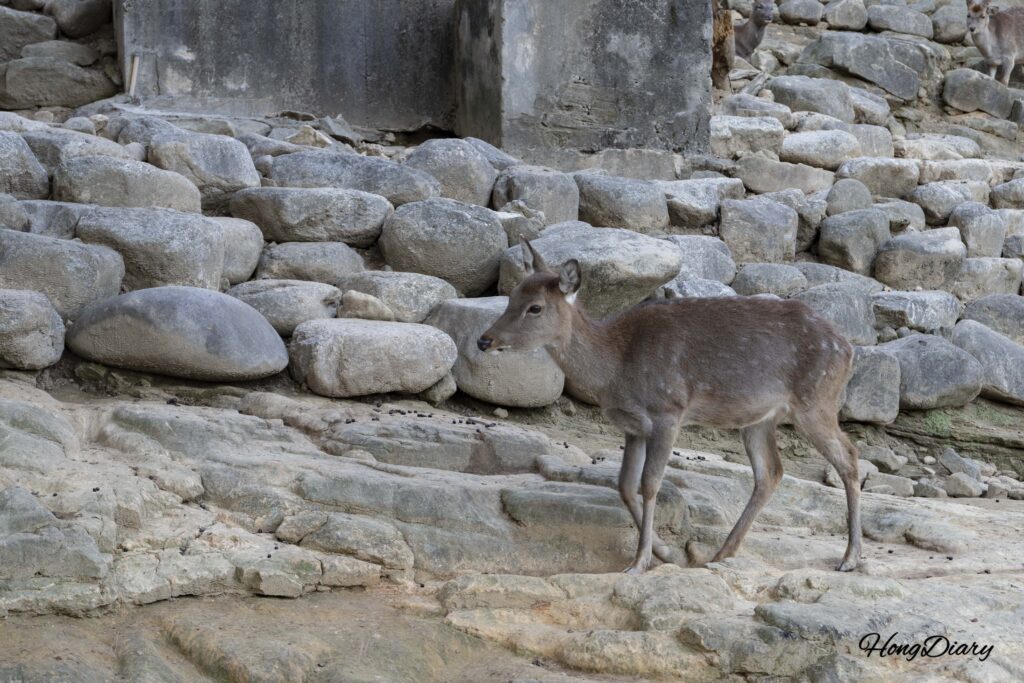
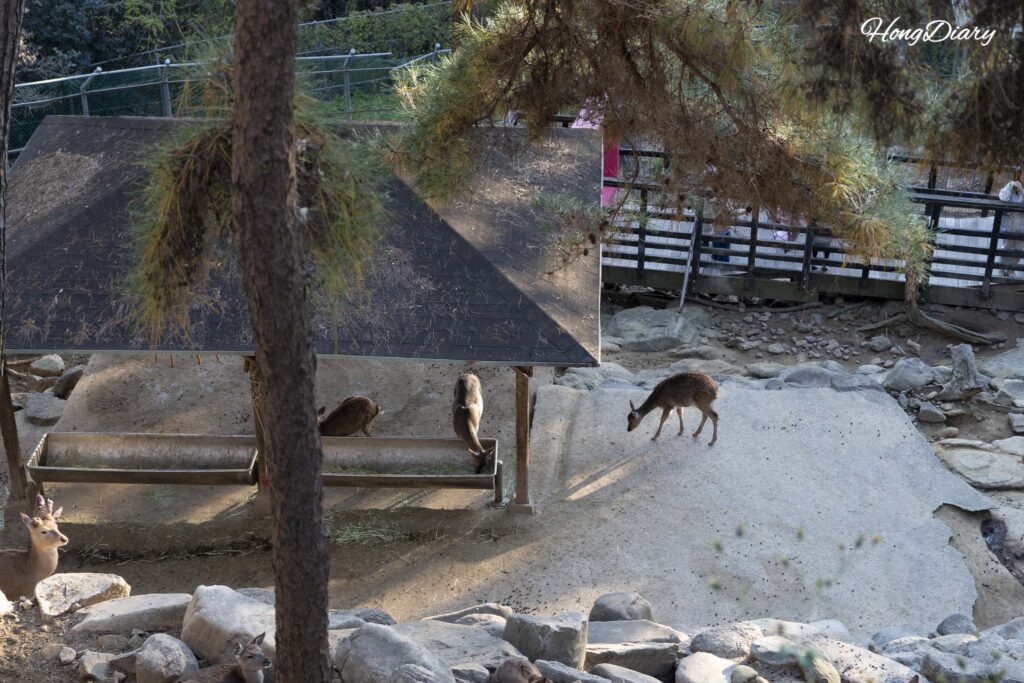
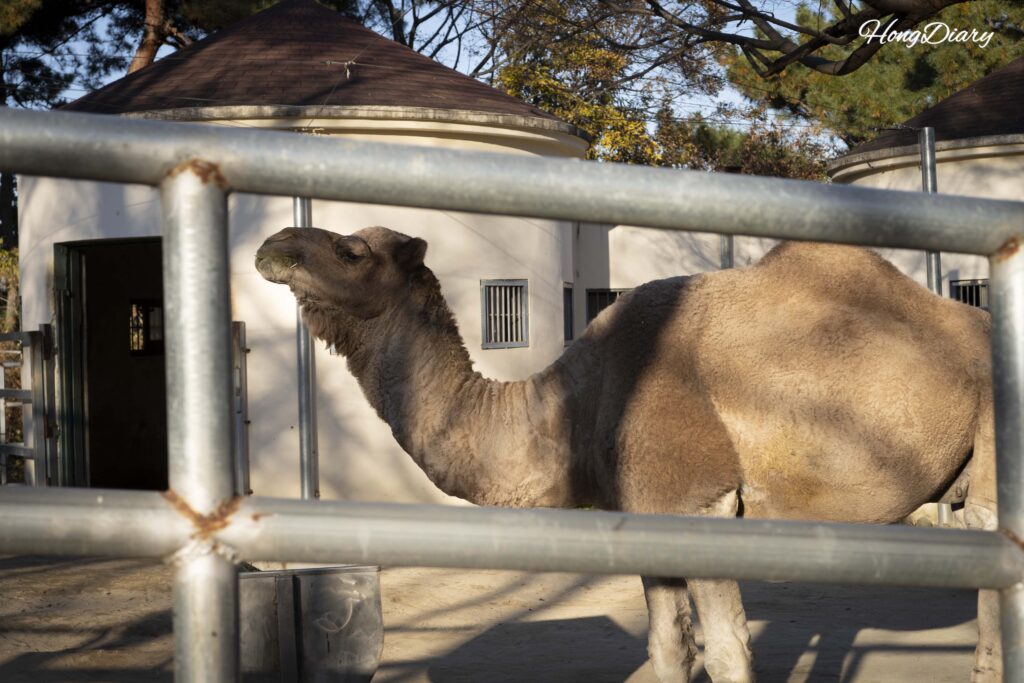
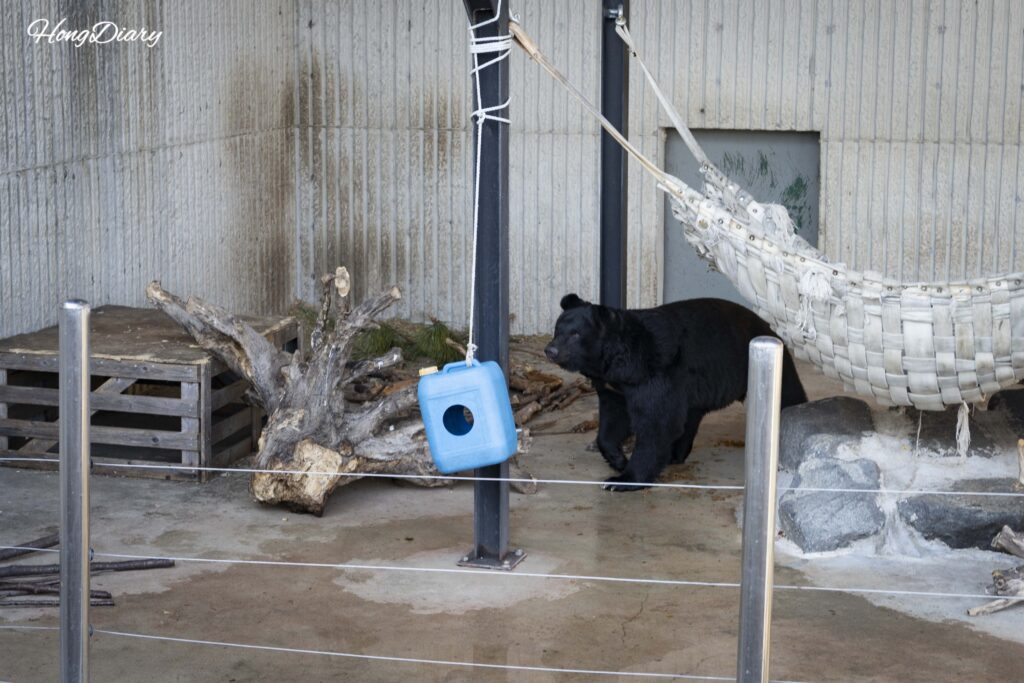
Jinyangho Zoo opened in 1986 and is a public zoo managed by Jinju city government. If you search for “Jinju Zoo” online, this is the place that comes up — the official name is Jinyangho Zoo, but locals and search engines tend to use both. It is small — you can walk through the entire circuit in about 40 minutes at a relaxed pace — but it houses around 50 species, including tigers, bears, eagles, monkeys, camels, deer, and seals.
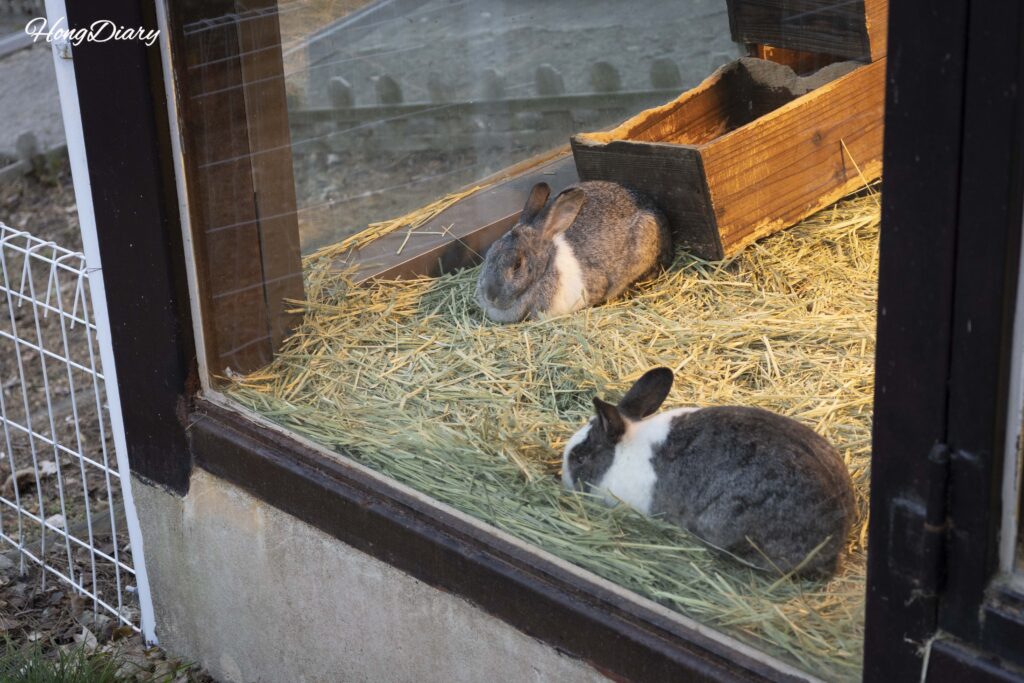
The admission price is almost symbolic. At ₩1,000 ($0.67 USD / €0.57 EUR) per adult, it is one of the cheapest zoo entries I have seen anywhere. For families with young children, the appeal is obvious: a short outing, a few animals, and some time outdoors.
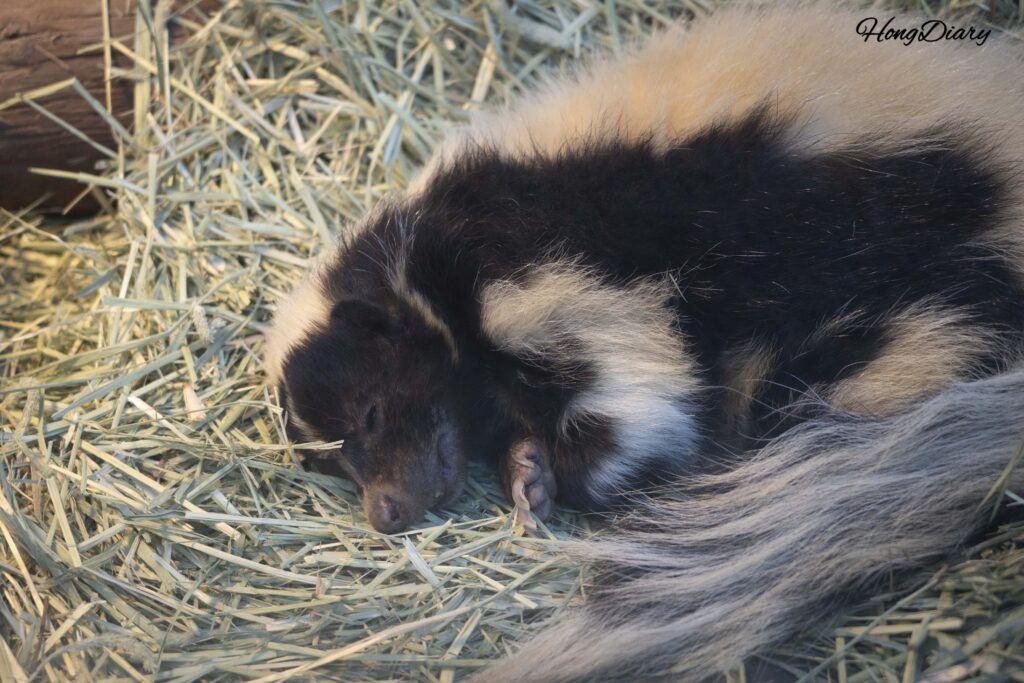
My child was happy enough seeing the rabbits and the deer up close. There was a moment — watching my kid press their face against the fence to get a better look at the deer — that reminded me of being on the other side of that equation, holding my own parent’s hand at a zoo as a child. Coming back as the parent this time felt different in a way I didn’t expect. The walking route is well-marked and loops through the entire zoo without backtracking, though some sections have steep inclines — if you’re bringing a stroller, expect a workout.
There is a small snack shop inside the zoo where you can buy drinks and simple snacks. It seemed like a fair number of visitors were stopping there to rest mid-route, especially families with children.
What I Didn’t Like — And Why I Can’t Recommend the Zoo
I want to be upfront about this. The zoo’s facilities are visibly aging, and the conditions I observed raised real concerns.
The enclosures for the larger animals were noticeably small. The seal enclosure, in particular, had a pool so shallow and narrow that I questioned whether the animal could move properly. I was told that many of the animals here are elderly, which may explain the low activity levels I saw — but the cramped conditions did not seem like a healthy environment regardless of age.
What troubled me more was the visitor behavior. Despite clear signs at the entrance banning outside food and warnings throughout the zoo not to feed the animals, I watched multiple visitors hold snacks up to the enclosures while their children looked on with excitement. Others shouted at the animals without being stopped. No staff were visibly present to enforce the rules during our visit.
There is an irony in the zoo’s setup that made this worse: food is banned from entering the zoo, yet a snack shop operates inside it. Visitors buy food, eat it while walking past enclosures, and some inevitably offer it to the animals. The warning signs lose their meaning when the environment contradicts them.
I understand that as a small public zoo with limited municipal funding and staffing, there are constraints. But after walking through the entire facility, I did not feel good about the experience. The combination of deteriorating infrastructure, animal welfare concerns, and a lack of visitor management left me with a clear conclusion: I would not recommend visiting this zoo in its current state.
There is, however, a reason for cautious optimism. Jinju city has announced plans to relocate the zoo to a new site roughly seven times the size of the current one, with a target completion around 2028. The new facility is expected to prioritize animal welfare and ecological education over simply housing as many species as possible. If that plan comes through, a future visit might be a very different experience.
The Lake That Made Up for It
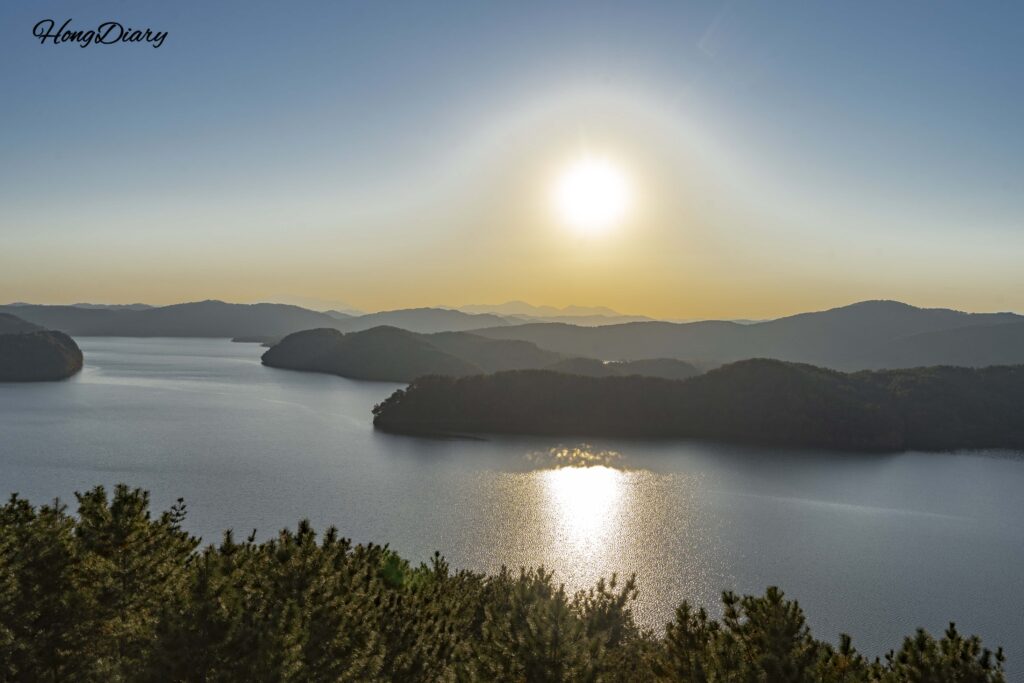
After leaving the zoo, we drove up the hill toward the observatory. It is closed for renovation until November 2026, so we couldn’t go inside. But the parking lot of a nearby hotel offered an unobstructed view of Jinyangho Lake — and that alone changed how I felt about the visit.
The lake is large. At roughly 29 square kilometers, it stretches wide between layered mountain ridges, and the evening light was hitting it at just the right angle. The surface caught the last of the sunset and spread it across the water in a quiet, glowing sheet. It was the kind of view that doesn’t need a caption.
Jinyangho Lake is also home to a population of Eurasian otters, designated as a natural monument in Korea. Sightings are rare and depend on silence and timing, but knowing they are there adds a layer to the stillness.
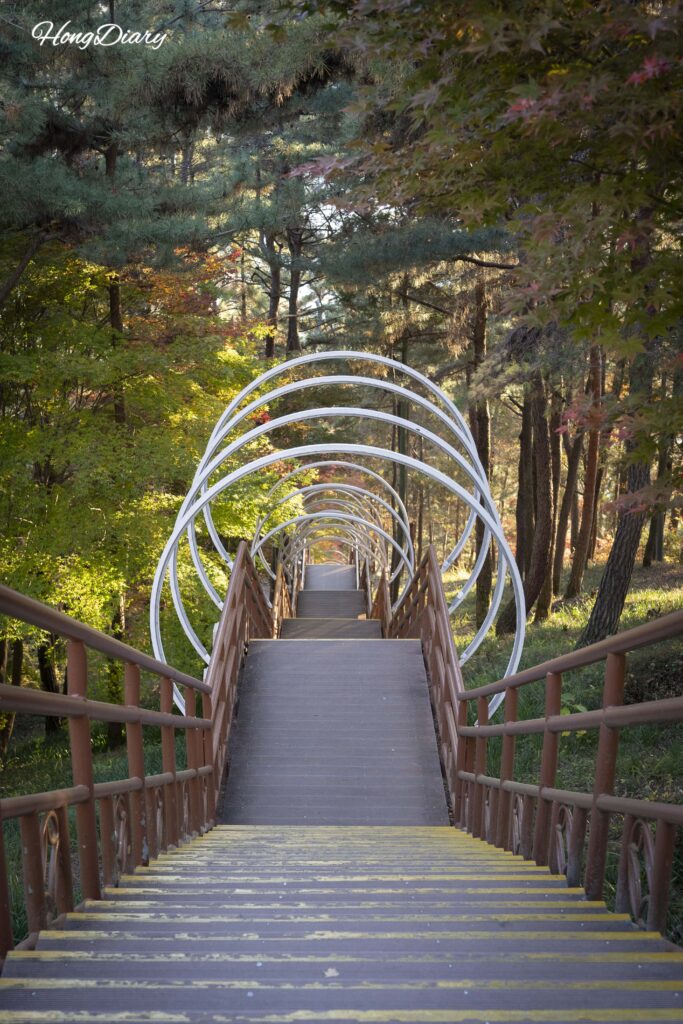
There are benches along the hillside where you can sit and watch the water. Below, a walking trail leads down through the trees toward the lake shore. If you have the energy, the walk is worth it — the air is clean, the path is quiet, and the scale of the lake from ground level is different from what you see from above.
Between the pier, the water museum, the trails, and the lakeside views, Jinyangho Park functions as a full outdoor complex. My honest advice: skip the zoo, bring a blanket, and sit by the lake instead.
More to See in Jinju
If you’re exploring more of Jinju, the city has a few other stops worth considering.
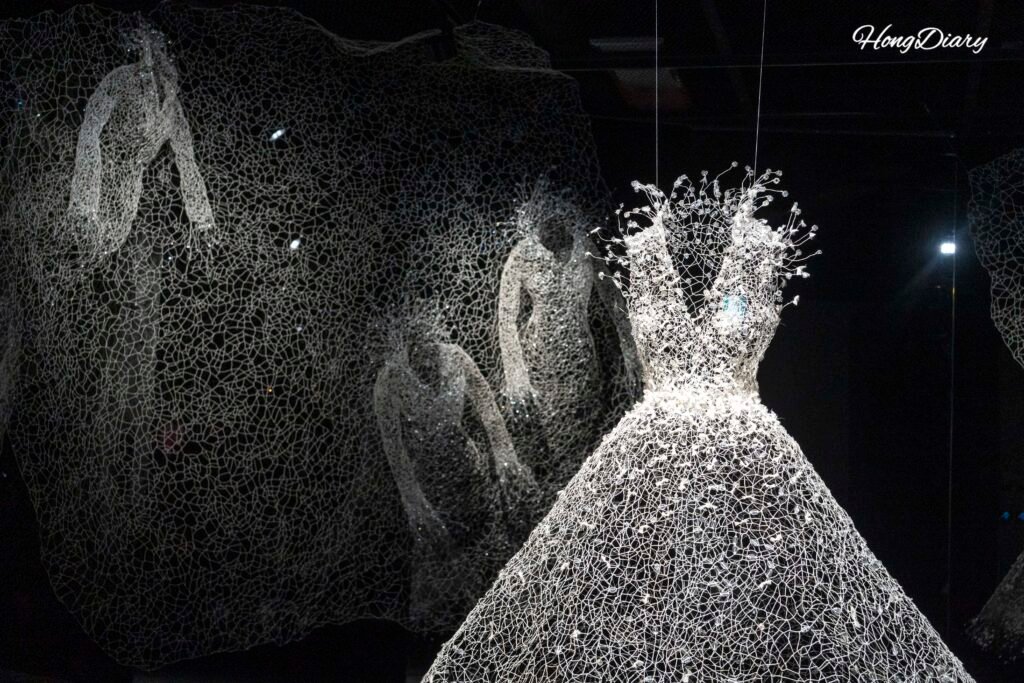
The Jinju Silk Museum is Korea’s only silk museum, and its current exhibition features the designer behind the PyeongChang Olympic snow fairy costumes — a surprisingly engaging visit even if textiles aren’t usually your thing.

And for a gentle outdoor walk, Jinju Agricultural Theme Park has greenhouses and seasonal flowers that make for a light stop on the way back.
Jinyangho Park in Jinju is a place I’ll remember for the lake, not the zoo. The sunset over the water, the quiet benches, the walking trail through the trees — that was the real visit. The zoo, in its current form, is not something I can endorse. But the park around it deserves the trip.
Frequently Asked Questions (FAQ) about Jinyangho Park and Zoo
How much does it cost to enter Jinyangho Zoo in Jinju?
Admission is ₩1,000 ($0.67 USD / €0.57 EUR) for adults, ₩800 ($0.53 USD / €0.45 EUR) for youth, and ₩500 ($0.33 USD / €0.28 EUR) for children. It is one of the cheapest zoo entries in Korea.
What animals can you see at Jinyangho Zoo?
The zoo houses around 50 species, including tigers, bears, eagles, monkeys, camels, deer, seals, rabbits, and skunks. It is a small public zoo managed by Jinju city government, operating since 1986. Note that the facility is aging and a relocation to a larger site is planned for around 2028.
Is Jinyangho Zoo worth visiting?
In its current state, the zoo’s facilities show significant aging. Enclosures for some larger animals are small, and visitor behavior — such as feeding animals despite posted warnings — goes largely unenforced due to limited staff. The lake and surrounding park are a better use of your time. The zoo is scheduled to relocate to a facility roughly seven times larger around 2028, which may improve the experience significantly.
Is the Jinyangho Observatory open?
As of mid-2026, the observatory is closed for renovation and is expected to reopen in November 2026. An alternative viewpoint is available from the parking lot of a nearby hotel on the hill above the zoo, which offers a wide view of the lake.
How do I get to Jinyangho Park from Jinju Station?
From Jinju Station (KTX), take Bus 200 at the station stop and ride 24 stops to Jinyangho Samgeori. From there, it is about a 1.6 km walk (~35 minutes) to the park. A taxi from the station costs approximately ₩15,000 (~$10.00 USD / ~€8.48 EUR). From Jinju Bus Terminal, take Bus 120 for 21 stops to the Jinyangho Park stop, then walk about 1 km (~25 minutes). A taxi from the terminal costs approximately ₩11,000 (~$7.33 USD / ~€6.22 EUR).
Are there otters at Jinyangho Lake?
Yes. Jinyangho Lake is a known habitat for Eurasian otters, which are designated as a natural monument in Korea. Sightings are rare and typically occur when the lake surface is calm and quiet. The otters are wild and not part of the zoo.
What else is there to do at Jinyangho Park besides the zoo?
Jinyangho Park includes lakeside walking trails, benches with sunset views, a pier, a water museum, and a children’s playground area. The park functions as a full outdoor complex. The lake itself — formed in 1970 at the convergence of the Gyeongho and Deokcheon rivers — covers roughly 29 square kilometers and is surrounded by mountain ridges, making it a scenic spot for walks, picnics, and quiet evenings.