
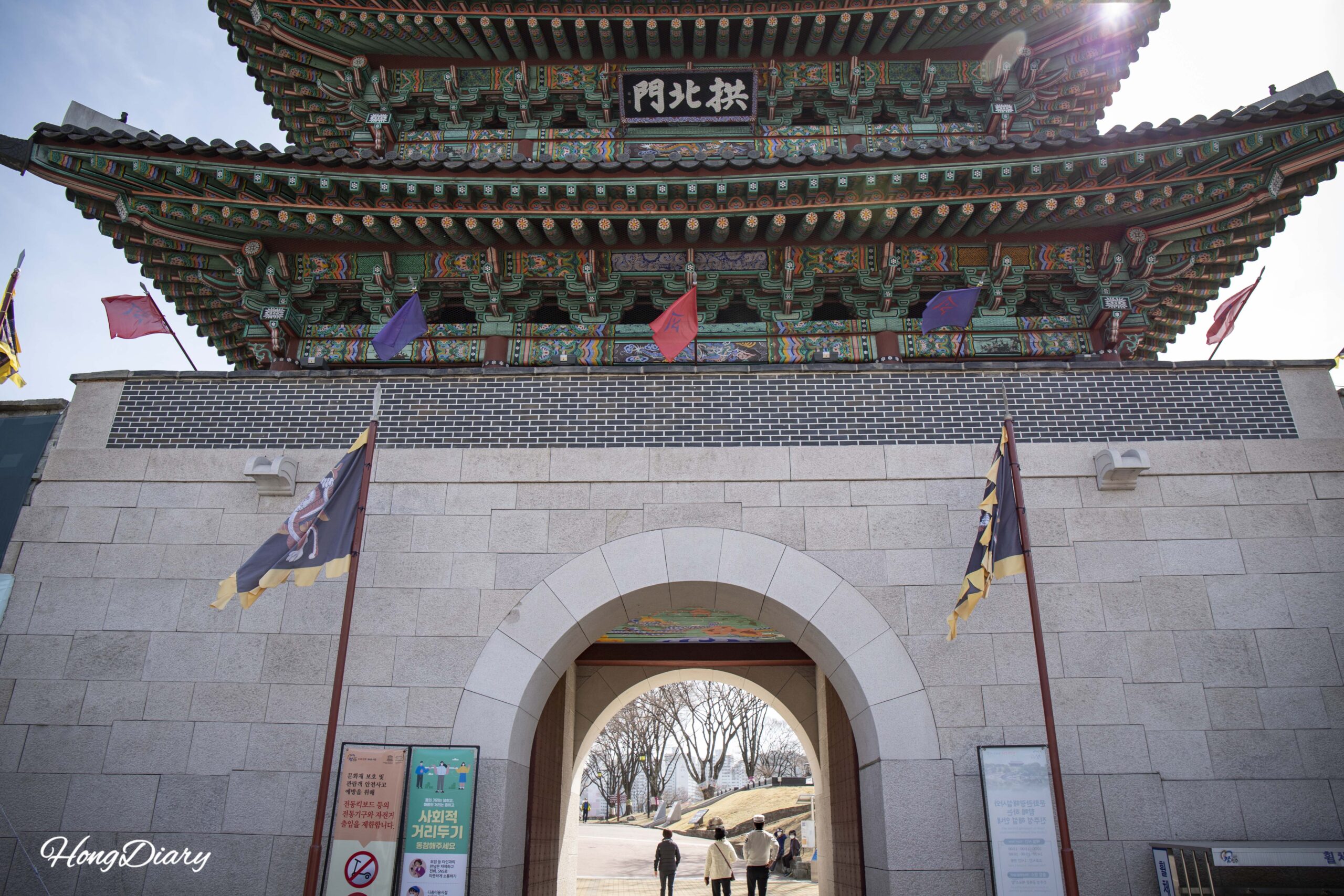
Most people only know Jinjuseong Fortress because of the Jinju Namgang Lantern Festival in October. I showed up on a regular day — no festival, no special event — and ended up walking the entire fortress twice. Once in the afternoon, when sunlight spilled across the stone walls and the river below looked impossibly calm. And again after 6 PM, when the gates reopened for free, the fortress lit up in gold, and jazz drifted from somewhere near the entrance. Jinjuseong Fortress turned out to be two completely different places depending on the hour, and both were worth the walk.
Jinju is a mid-sized city in the western part of South Gyeongsang Province (Gyeongsangnam-do), roughly one hour west of Busan by express bus or KTX. The fortress sits on the northern bank of the Namgang River, right in the center of town. Jinju was also designated as Korea’s first specialized night tourism city, which explains the carefully designed lighting along the fortress walls after dark — yet the city sees far fewer foreign visitors than Gyeongju or Busan, and it felt that way.
Table of Contents
Essential Visitor Information: Jinjuseong Fortress Hours, Admission, and How to Get There
| Detail | Info |
|---|---|
| Address | 626 Namgang-ro, Jinju-si, Gyeongsangnam-do |
| Hours (Mar–Oct) | 05:00 – 23:00 |
| Hours (Nov–Feb) | 05:00 – 22:00 |
| Ticket Office | 09:00 – 18:00 (free entry after 18:00) |
| Admission | Adults ₩2,000 (~$1.35 / €1.15) · Youth ₩1,000 (~$0.65 / €0.55) · Children ₩600 (~$0.40 / €0.35) |
| From Jinju Station (KTX) | Bus 134 → get off at Nonghyup Branch stop (~20 min), then walk 400 m (~10 min). Taxi costs ₩10,000–12,000 (~$7–8 / €6–7) |
| From Jinju Intercity Bus Terminal | Bus 120, 261, or 353 (~3–4 stops). Walking takes only ~10 min (700 m) — a pleasant stroll through this small city |
| Chokseoknu Pavilion | Open 09:00 – 18:00 (cannot enter after hours) |
| Jinju National Museum | 09:00 – 18:00, closed Mondays, free admission |
Walking Through Jinjuseong by Day
I entered through Gongbukmun, the main northern gate, and immediately noticed how different the place felt from what I had expected. For a fortress tied to one of the bloodiest battles of the Imjin War (1592), the grounds felt remarkably gentle — more like a well-kept neighborhood park than a somber historical site. The paths were clean and flat, lined with mature trees. Benches sat in the shade at regular intervals, and a warm breeze came in from the river side.
The stone walls stretch roughly 1,760 meters around the complex. During the Imjin War, General Kim Si-min defended this fortress with just 3,800 soldiers against an invading Japanese force of 20,000 — one of the three great victories of that war. A year later, in the second Battle of Jinju (1593), the fortress fell, and some 70,000 Korean soldiers and civilians died defending it. The story of Nongae, a woman who embraced a Japanese commander and threw them both off the cliff into the Namgang River, is still remembered here. You can walk down from Chokseoknu Pavilion to see Uiam, the rock where it happened.
But these heavy histories sit lightly on the grounds. Walking along the wall, I found myself slowing down without meaning to. The path curves gently toward the river, and before I realized it, I was standing in front of Chokseoknu Pavilion.
Chokseoknu Pavilion — One of Korea’s Three Great Pavilions
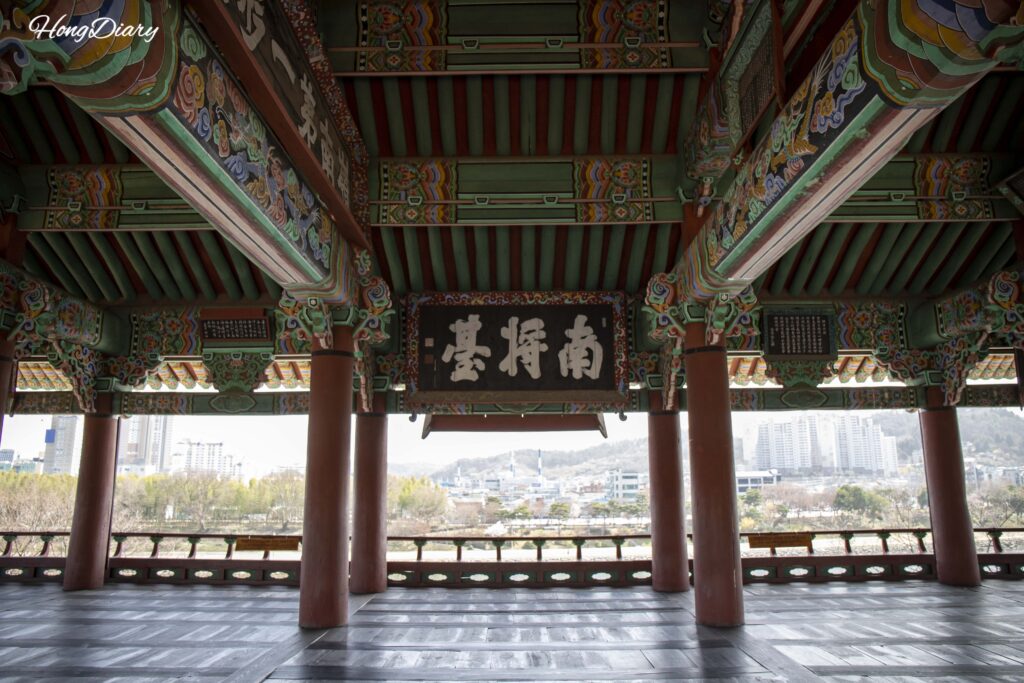
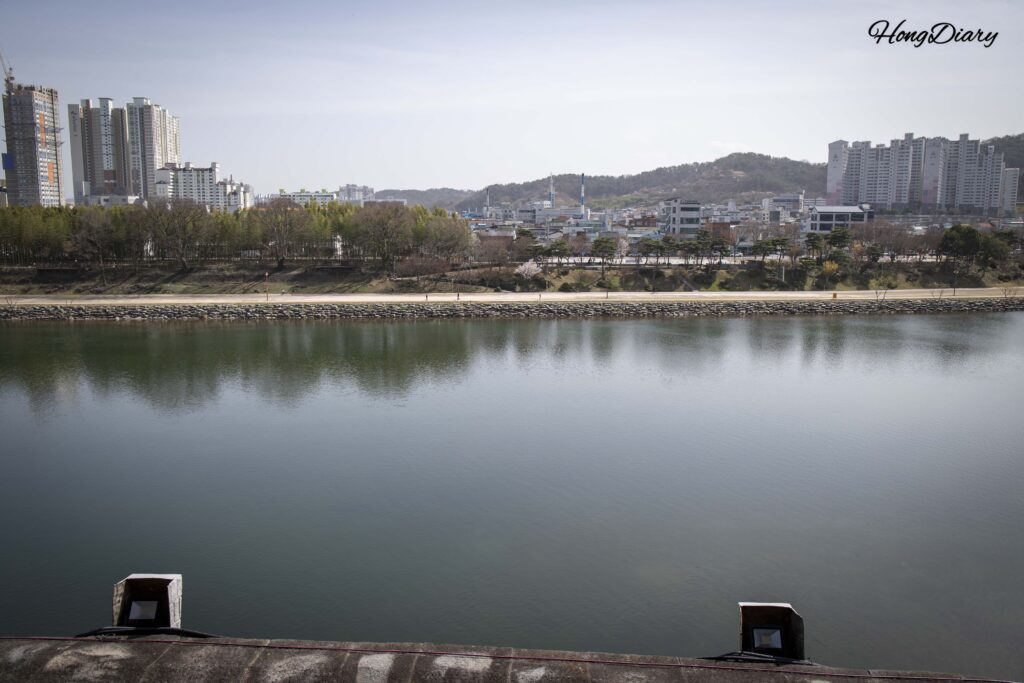
Chokseoknu sits on the edge of a cliff directly above the Namgang River, and the view from inside the open wooden structure is the kind that makes you stop talking mid-sentence. The pavilion is one of Korea’s three great nugak (open-air elevated pavilions), alongside Bubyeokru in Pyongyang and Yeongnamnu in Miryang. Four old signboards hang from the ceiling, along with poems and calligraphy by scholars who sat in this same spot centuries ago. Beyond the wooden columns, the Namgang River stretches out wide and still, with low mountains layered behind it — a view that landed Chokseoknu on CNN’s list of the 50 most beautiful places to visit in South Korea. The plaque that reads “Yeongnam Jeil Hyeongseung” — meaning the finest scenery in the Yeongnam region — felt earned rather than boastful.
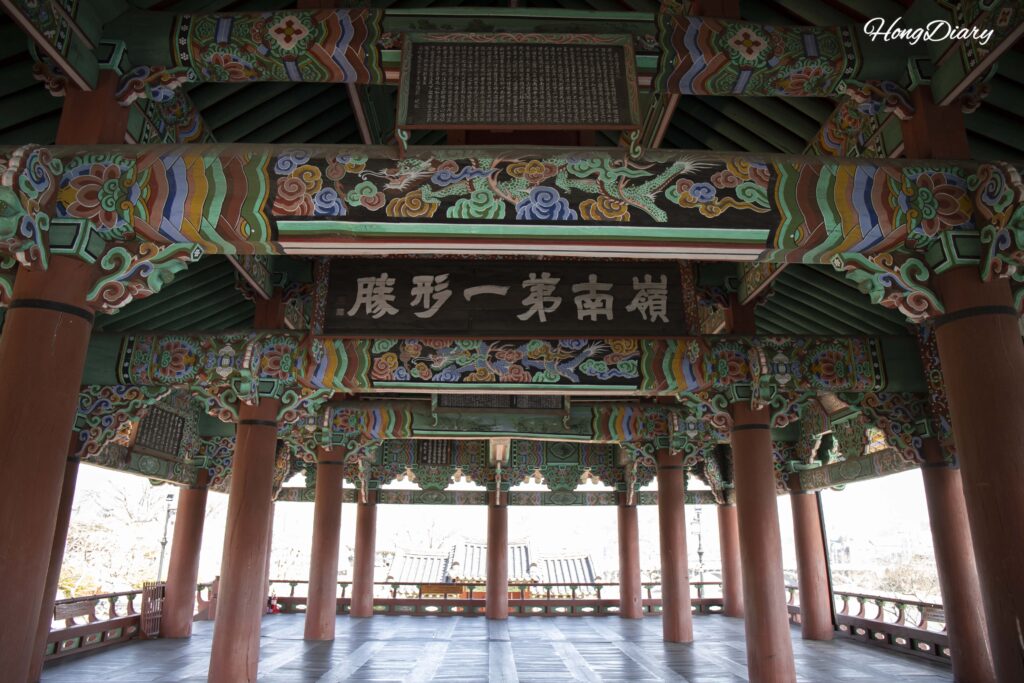
The history behind this pavilion, though, is more complicated than its graceful appearance suggests. Originally built in 1241 during the Goryeo Dynasty, Chokseoknu was burned to the ground during the Imjin War and rebuilt in 1618. In 1948, the newly formed South Korean government designated it a National Treasure. Then the Korean War came, and it burned again. The current structure was rebuilt in the 1960s, funded entirely by donations from Jinju citizens. Because it is a reconstruction rather than an original, it could not reclaim its National Treasure status. As of 2020, it holds a more modest designation as a Gyeongsangnam-do Tangible Cultural Heritage.
Compare that to Yeongnamnu Pavilion in Miryang, the only one of the three that still carries a National Treasure designation.
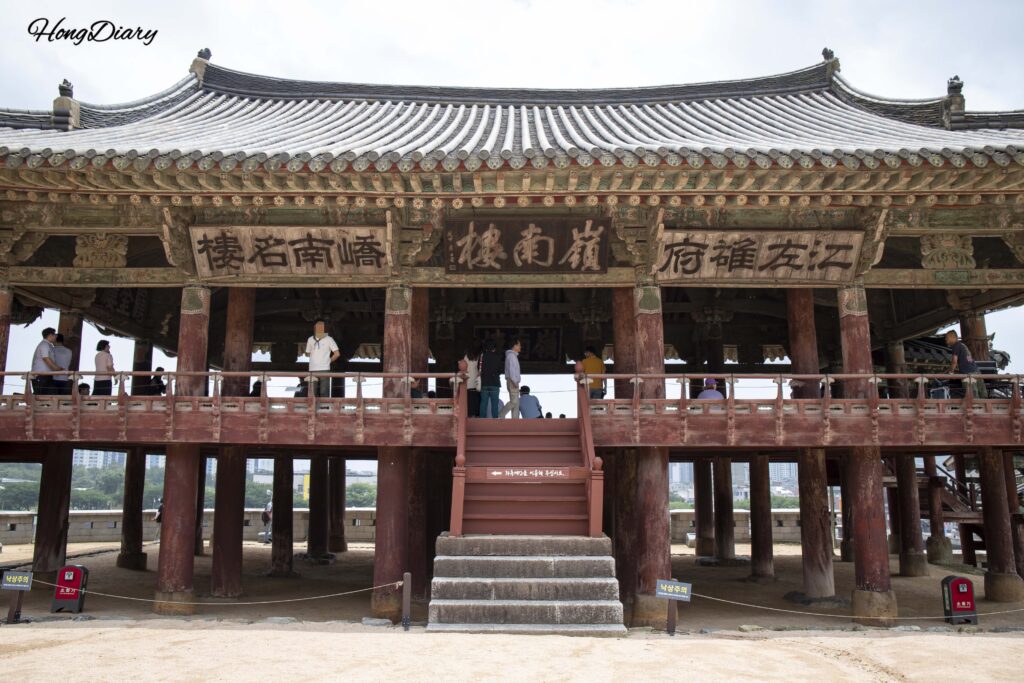
If you are curious about what that difference looks like in person, I visited Yeongnamnu and walked inside a pavilion that has stood since the Joseon Dynasty — a Korean National Treasure with free admission in the small city of Miryang.
The contrast between the two says a lot about what war costs a culture beyond the battlefield.
Chokseoknu is open from 9 AM to 6 PM. Outside of those hours, you can still see the exterior and the river views from the surrounding wall, but you cannot step inside the pavilion itself.
What Else to See Inside the Fortress
Just past the pavilion, a small outdoor photo exhibition displayed around 30 images of Jinjuseong as it looked in earlier decades. The old photographs showed a place that looked surprisingly similar to its current state — a sign of how carefully the restoration has been done over the years.
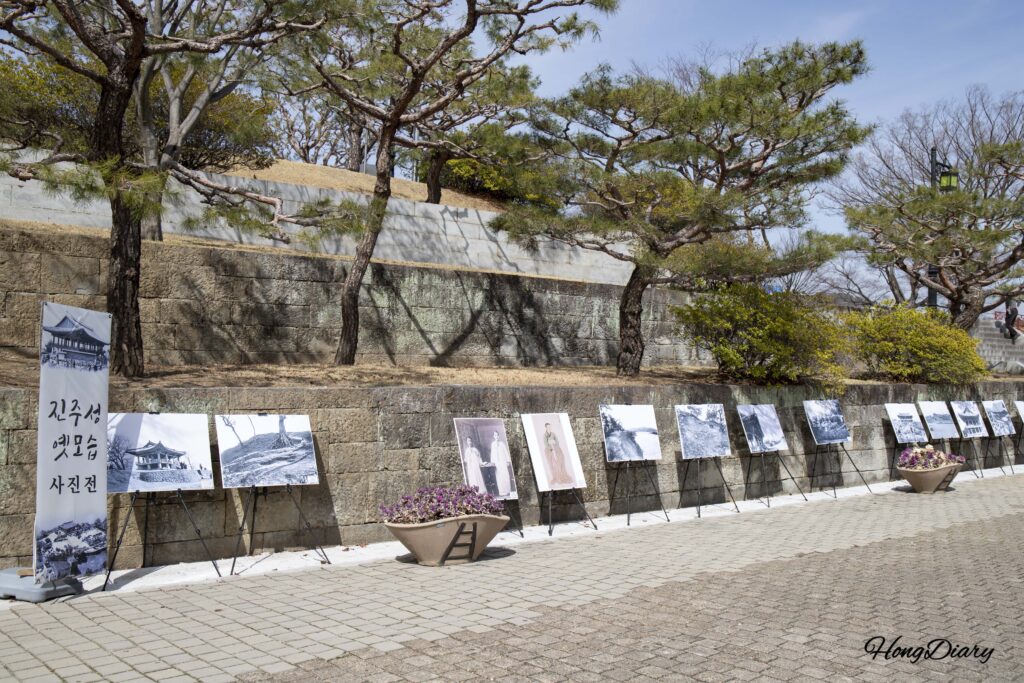
The rest of the complex offered enough variety to keep the walk from feeling repetitive. A few highlights worth noting:
| Spot | What to Expect |
|---|---|
| Kim Si-min Statue | Bronze monument to the general who led the first Battle of Jinju |
| Imjindaecheop Gyesasunuidan | Memorial altar honoring those who died in the Jinju battles |
| Uiam Rock | The cliff where Nongae’s story took place — stairs lead down from Chokseoknu |
| Jinju National Museum | Free admission, specializes in Imjin War artifacts. Closed Mondays. Open 09:00–18:00 |
| Hoguksa Temple & Changnyeolsa Shrine | Quieter corners of the fortress grounds, tucked into the western wooded area |
I visited on a Monday, so the Jinju National Museum was closed — something to keep in mind if your schedule is flexible. On any other day, it runs from 9 AM to 6 PM, and admission is completely free.
Even without the museum, the grounds kept me walking for well over an hour. Flowering trees lined the paths, the grass was bright green, and the shade felt generous. For a place soaked in war history, it managed to feel more restful than historical — the kind of spot where your shoulders drop an inch without you noticing.
Jinjuseong After Dark — Free Entry from 6 PM
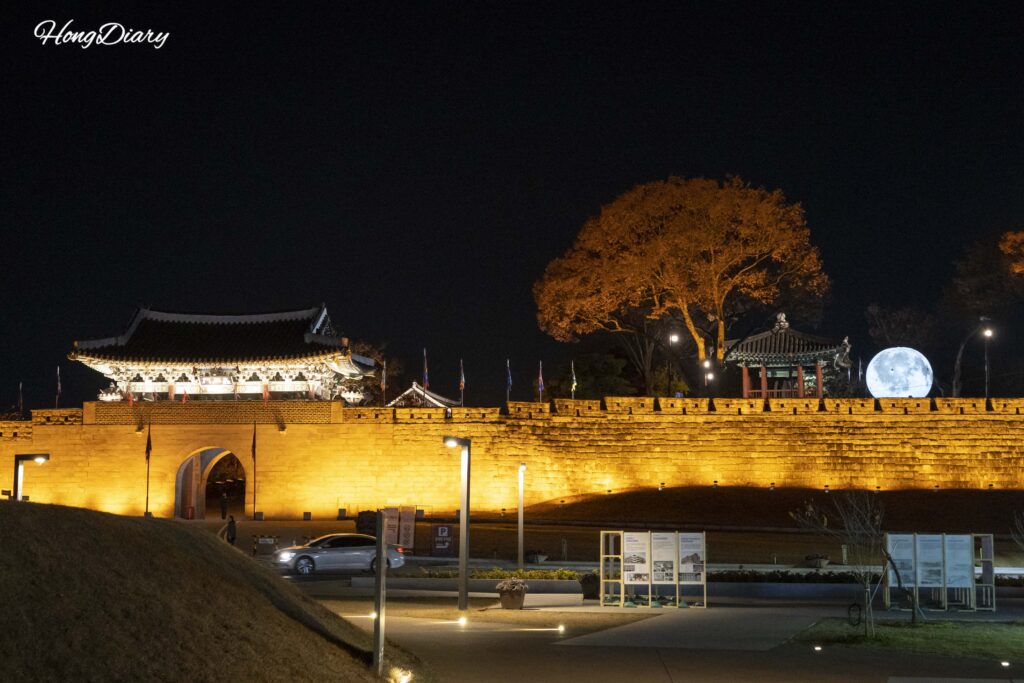
Here is the part most guides skip: after 6 PM, when the ticket office closes, Jinjuseong opens its gates for free. No ticket, no line — just walk in.
I came back in the evening after stopping by other parts of Jinju, planning to catch the night view as my last stop. Even the parking lot had plenty of space on a Saturday night. Stepping through the gate again felt like walking into a different place entirely. The daytime warmth was gone, replaced by something quieter and more deliberate.
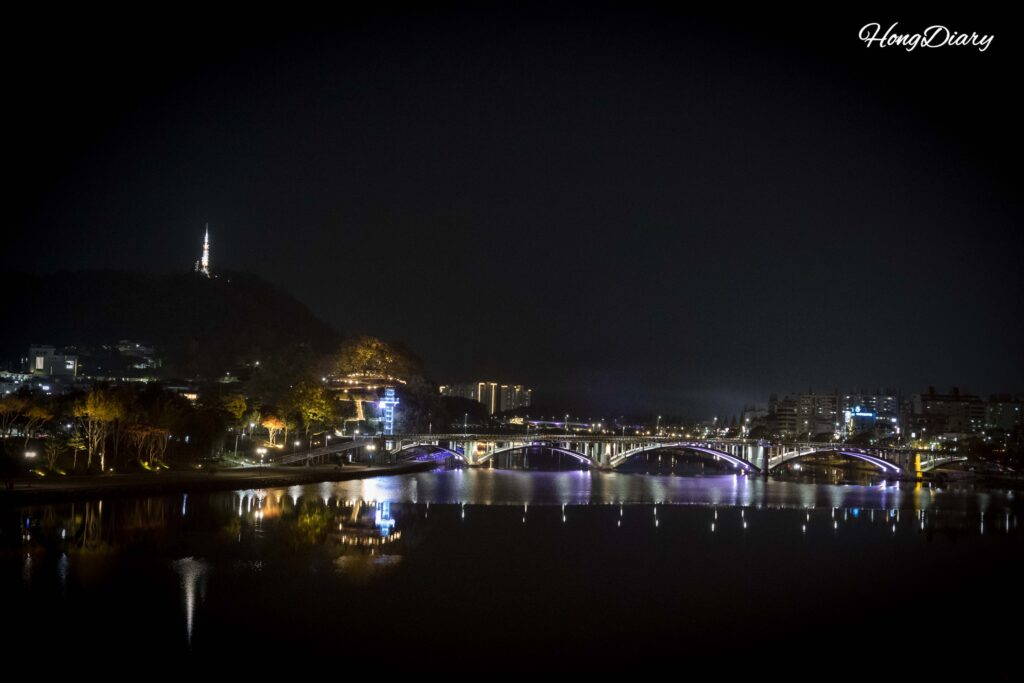
The fortress walls were lit with a warm, restrained glow — not the aggressive floodlighting you see at some Korean landmarks, but a softer tone that let the stone texture show through. The light reflected off the Namgang River below, spreading across the water in long, slow lines. The lighting felt intentional rather than decorative.
Near the entrance, a busking stage was running what sounded like a jazz set. The music carried across the grounds without overwhelming them, mixing with the cool night air in a way that made the walk feel almost cinematic. The last time I stood by this river at night was nine years ago — my first date with my husband in Korea, back when we had just started seeing each other. This time we brought our kid. Standing in the same spot with a stroller instead of butterflies felt like a completely different trip, and somehow a better one. Chokseoknu Pavilion was closed for the evening — you can see it from outside, but not step in — and its wooden silhouette against the night sky looked entirely different from its daytime self.
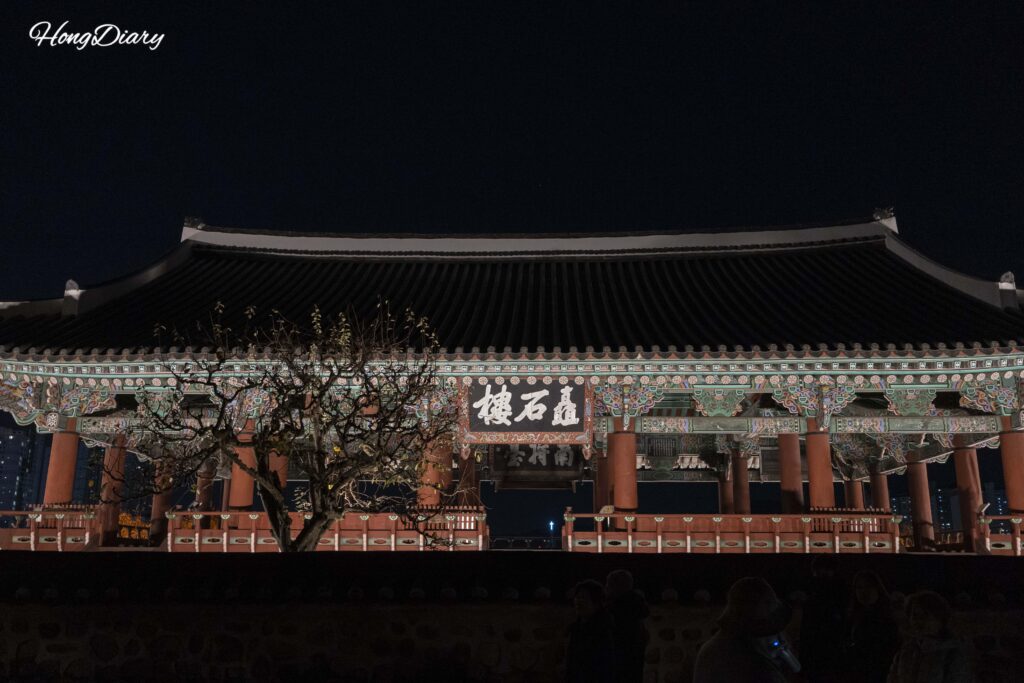
I climbed up to a moon-shaped photo zone on higher ground and found a wide-open view of the Namgang River, the Jinju Daecheop History Park on the opposite bank, and the city lights stretching out beyond.
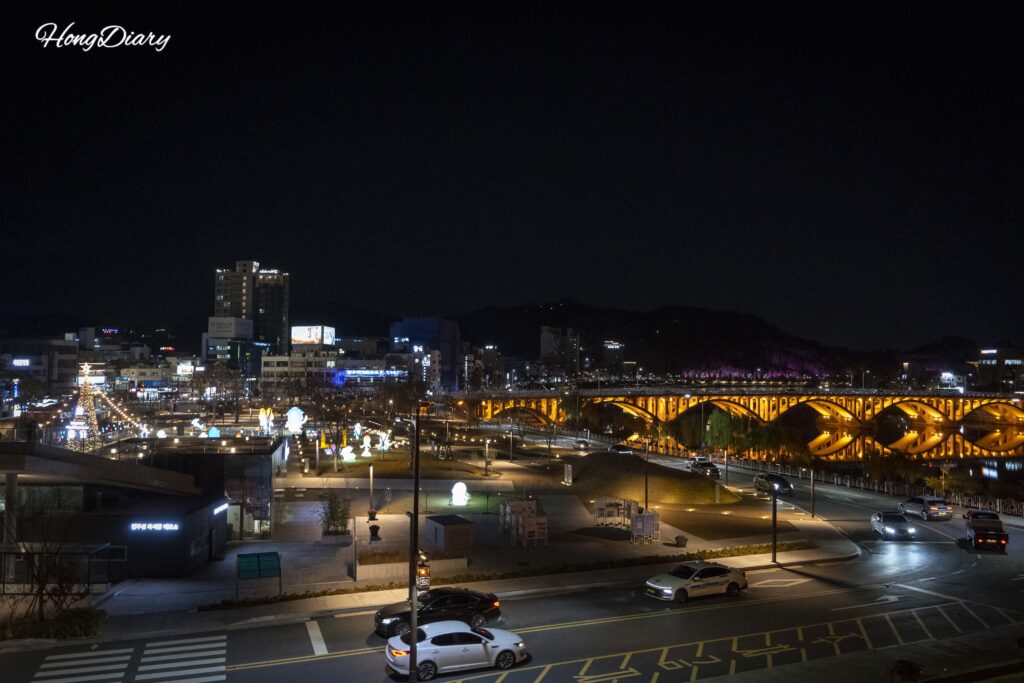
The paths were flat and well-lit enough to walk comfortably with a stroller or young children, and the pace of the few other visitors felt unhurried.
The fortress grounds are surprisingly spacious, but the night loop went by faster than I expected. If I had more time, there were additional viewpoints along the Namgang River south of the fortress — Jinju clearly has more night scenery than a single evening can cover.
Tips Before You Go
Timing your visit: If you want both the daytime and nighttime experience, arrive around 3 or 4 PM. Spend the afternoon walking the fortress and visiting Chokseoknu (open until 6 PM), step outside for dinner nearby, then come back after 6 PM for free night entry.
Getting there on foot: If you are arriving at Jinju Intercity Bus Terminal, consider skipping the bus entirely. The walk to the fortress is only about 700 meters — roughly 10 minutes — and it takes you through the center of this compact city. Jinju is small enough that walking feels more rewarding than waiting for a bus.
Shoes: The paths inside the fortress are mostly flat and paved, but the stairs down to Uiam Rock and some sections near the western shrines can be uneven. Comfortable walking shoes are enough; hiking boots are unnecessary.
Monday visitors: The Jinju National Museum is closed every Monday. If the museum matters to you, plan around it.
Worth More Than Just the Lantern Festival
I had always assumed Jinju was an autumn-only destination — a city you visit in October for the lantern festival and then move on. Walking Jinjuseong Fortress on an ordinary day proved that assumption wrong. The Korea Tourism Organization has named it one of Korea’s Top 100 Tourist Attractions for eight consecutive years, and after seeing both its daytime calm and its nighttime glow, I understand why. The afternoon light on the Namgang River, the weight of Chokseoknu’s story, the quiet surprise of the fortress after dark — none of these needed a festival to feel worth the trip.
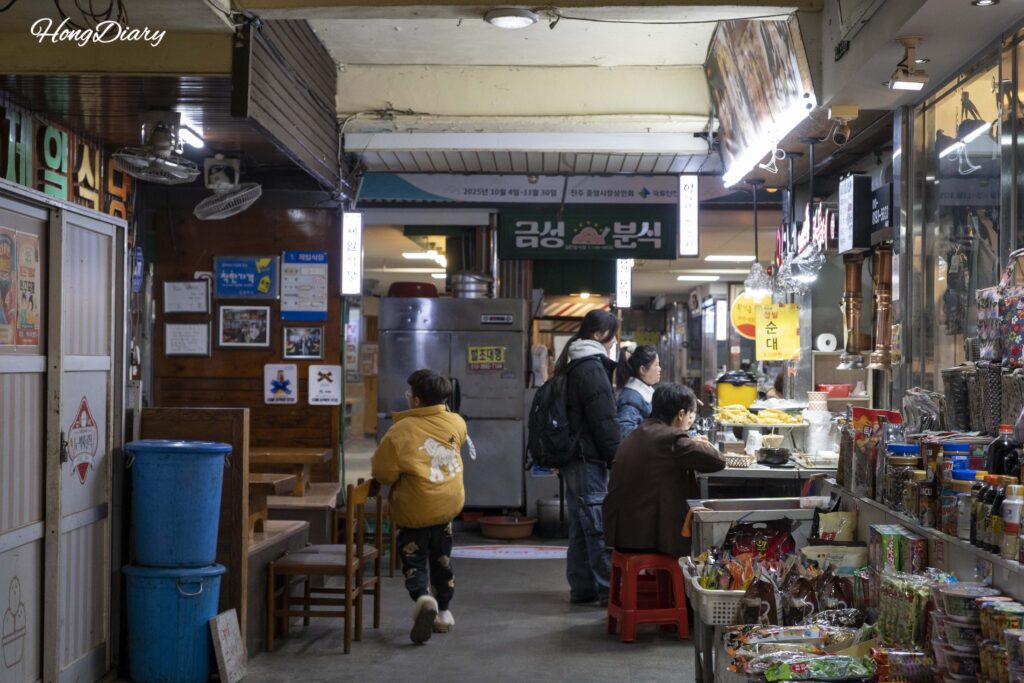
Jinju has more to offer within easy reach of the fortress, too.
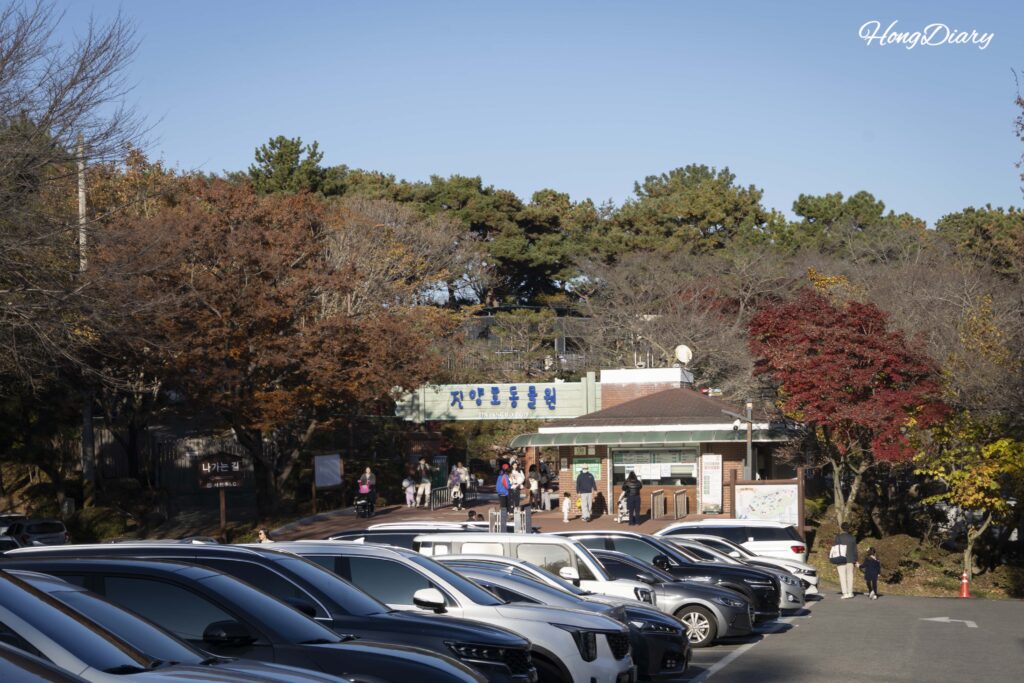
If you have an extra hour and access to a car, Jinyangho Lake is a quieter destination on the outskirts of the city where the sunset alone is worth the drive — though I would skip the nearby zoo and just sit by the water.
Jinju is one of those Korean cities that does not try too hard to impress you. It just waits for you to slow down enough to notice what it has. Jinjuseong Fortress, by day and by night, is the best place to start doing exactly that.
Frequently Asked Questions (FAQ) About Visiting Jinjuseong Fortress
How much does it cost to enter Jinjuseong Fortress?
Admission during ticket office hours (09:00–18:00) costs ₩2,000 ($1.35 / €1.15) for adults, ₩1,000 ($0.65 / €0.55) for youth, and ₩600 (~$0.40 / €0.35) for children. After 6 PM, the fortress is completely free to enter.
Is Jinjuseong Fortress free at night?
Yes. The ticket office closes at 6 PM, and from that point onward, the fortress gates are open to the public at no charge. The grounds remain accessible until 11 PM in summer (March–October) and 10 PM in winter (November–February).
How do I get to Jinjuseong Fortress from Jinju Station or the bus terminal?
From Jinju Station (KTX), take Bus 134 and get off at the Nonghyup Branch stop (about 20 minutes), then walk roughly 400 meters. A taxi costs ₩10,000–12,000 (~$7–8 / €6–7). From Jinju Intercity Bus Terminal, the fortress is only about 700 meters away — a 10-minute walk through the city center, which is often more pleasant than waiting for a bus.
What are the opening hours for Chokseoknu Pavilion inside Jinjuseong?
Chokseoknu Pavilion is open from 9 AM to 6 PM daily. You can only step inside the pavilion during these hours. After 6 PM, you can still view the exterior and the Namgang River scenery from the surrounding fortress walls, but the pavilion itself is closed.
Why is Chokseoknu not a National Treasure even though it is one of Korea’s three great pavilions?
Chokseoknu was originally designated a National Treasure in 1948, but it was destroyed during the Korean War. The current structure was rebuilt in the 1960s using donations from Jinju citizens. Because it is a reconstruction, it could not reclaim National Treasure status and is currently classified as a Gyeongsangnam-do Tangible Cultural Heritage (designated in 2020). In contrast, Yeongnamnu Pavilion in Miryang — another of the three great pavilions — still retains its National Treasure designation.
Is the Jinju National Museum inside Jinjuseong Fortress worth visiting?
The Jinju National Museum is located within the fortress grounds and focuses specifically on artifacts from the Imjin War (Japanese invasions of 1592–1598). Admission is free. It is open daily from 9 AM to 6 PM, but it is closed every Monday. If you visit on a Monday, you will find the museum shut, so plan accordingly.
Can I visit Jinjuseong Fortress with young children or a stroller?
Yes. Most of the paths inside the fortress are flat and paved, making them accessible for strollers and comfortable for young children. The night walk is equally manageable, with well-lit pathways throughout the main areas. The only exception is the staircase leading down to Uiam Rock below Chokseoknu Pavilion, which is steep and uneven.