
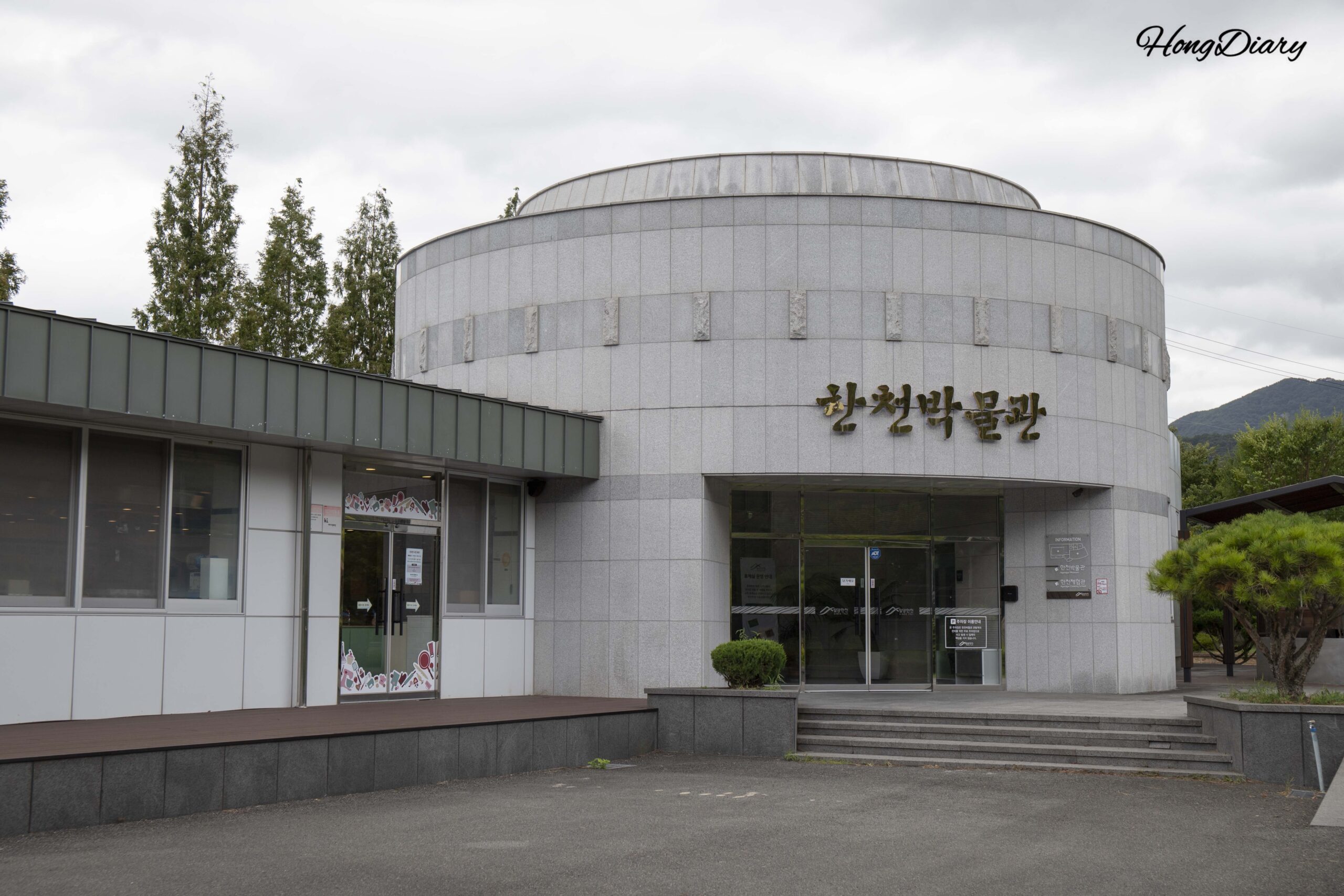
Most people who visit South Korea stick to Seoul, Busan, maybe Gyeongju if they’re feeling adventurous. But tucked into a quiet valley in Gyeongsangnam-do, there’s a place where you can learn how red seaweed becomes jelly, make your own desserts from scratch, and sit down to a full meal built around an ingredient you’ve probably never thought twice about. I’m talking about the Miryang Agar Museum, and it turned out to be one of the most unexpectedly absorbing stops I’ve made in this country.
The museum sits in Sannae-myeon, a rural township in the eastern hills of Miryang, a small city in South Gyeongsang Province about 35 minutes from Busan by KTX train. Miryang itself is known mostly for Yeongnamnu Pavilion, one of Korea’s three great historical pavilions, and Pyochungsa Temple deeper in the mountains. But the Sannae-myeon area has its own claim to fame: the wide daily temperature swings and clean mountain water here have made it one of Korea’s traditional agar-producing regions for generations. The park sits at the foot of these mountains, right along the road that leads toward the popular Eoreumgol (Ice Valley) area, so it’s easy to pair with a cable car ride or a hike if you’re spending the full day in this part of Miryang.
Table of Contents
Essential Visitor Information: Miryang Agar Museum
| Detail | Information |
|---|---|
| Full Name | Miryang Agar Theme Park (includes the Miryang Agar Museum) |
| Address | 58-31, Bongui-ro, Sannae-myeon, Miryang-si, Gyeongsangnam-do |
| Hours | 09:00 – 18:00 (closures announced separately) |
| Getting There | From Miryang Intercity Bus Terminal, take Eoreumgol Bus 1, 2, or 3 → get off at Songbaek Station → head toward Sannae-myeon Office, cross Bongui Bridge, turn right |
| Parking | Free parking lot in front of the museum |
| Facilities | Agar Museum, workshop space, Restaurant Majung (2F), gift shop |
| Chuseok 2026 Closure | October 5 (Sun) – October 9 (Thu) |
For your reference, admission to the museum is free.
A quick heads-up on that last line: the park closes for several days during Chuseok, Korea’s harvest festival, so double-check the dates before making the trip during autumn holidays.
What Is Agar, and Why Does Miryang Make It?
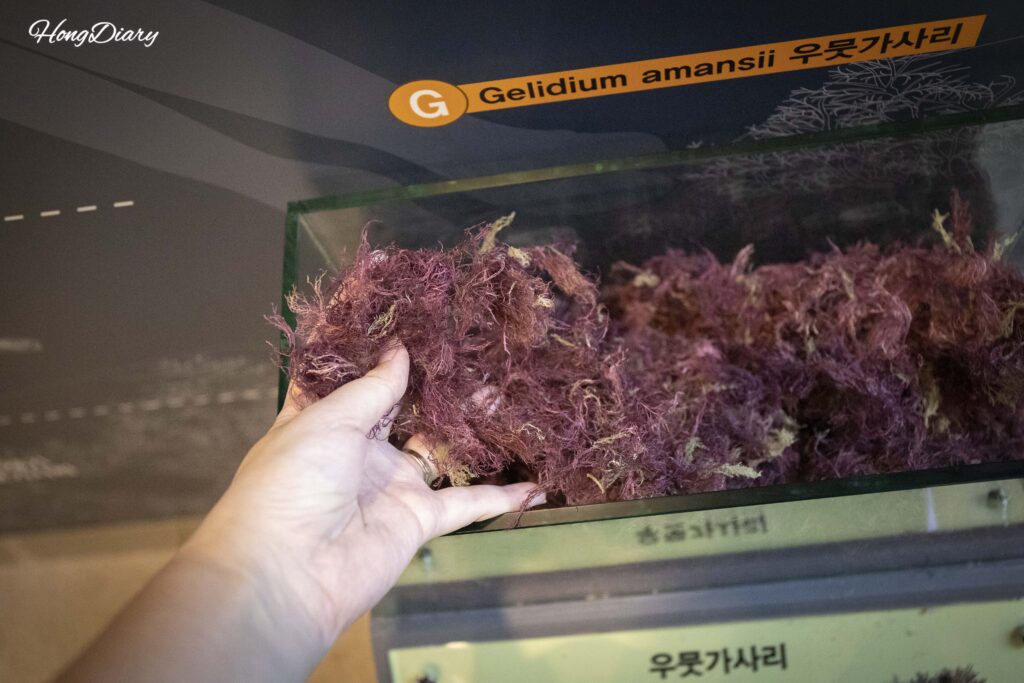
Before getting into the museum itself, it helps to understand what agar actually is, because even many Koreans only have a vague idea.
Agar — sometimes called agar-agar outside of Korea — is a natural gelling agent made from red algae, specifically a type of seaweed called umugasari in Korean. The raw seaweed is boiled down into a soft, translucent jelly called umu, then repeatedly frozen and thawed outdoors until it dries into lightweight, papery strips. Those strips are agar: flavorless, calorie-free, and packed with dietary fiber. If you’ve ever eaten Korean yangaeng (sweet red bean jelly, similar to Japanese yokan), pudding, or fruit jelly in Asia, chances are agar was the ingredient holding it all together.
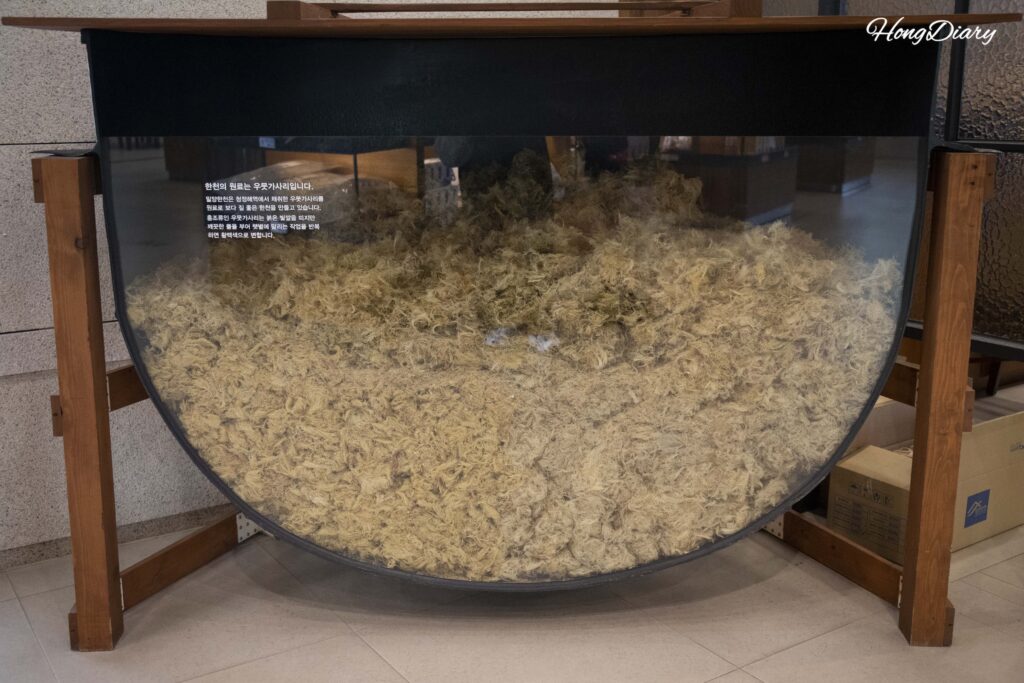
Sannae-myeon became a hub for agar production because the conditions are nearly ideal. Winters here are cold enough to freeze the seaweed extract overnight, and daytime temperatures climb just high enough to thaw it again. Repeat that cycle for a couple of weeks in clean mountain air, and you get agar. It’s a process that relies entirely on nature’s rhythm, which is part of what makes this region’s product distinctive.
Here’s a fun local detail you won’t find in guidebooks: if you ever wander through a Korean traditional market and spot locals drinking kongmul — a thick, milky beverage made from ground soybeans — look closely at the translucent, noodle-like strands floating inside. That’s umu, the raw jelly form of the same seaweed that becomes agar. It’s been eaten across Korea, China, and Japan for over 1,300 years.
Inside the Museum: From Seaweed to Dessert
The Miryang Agar Museum is compact but well-organized, covering everything from the origins of agar to the tools used in traditional production.
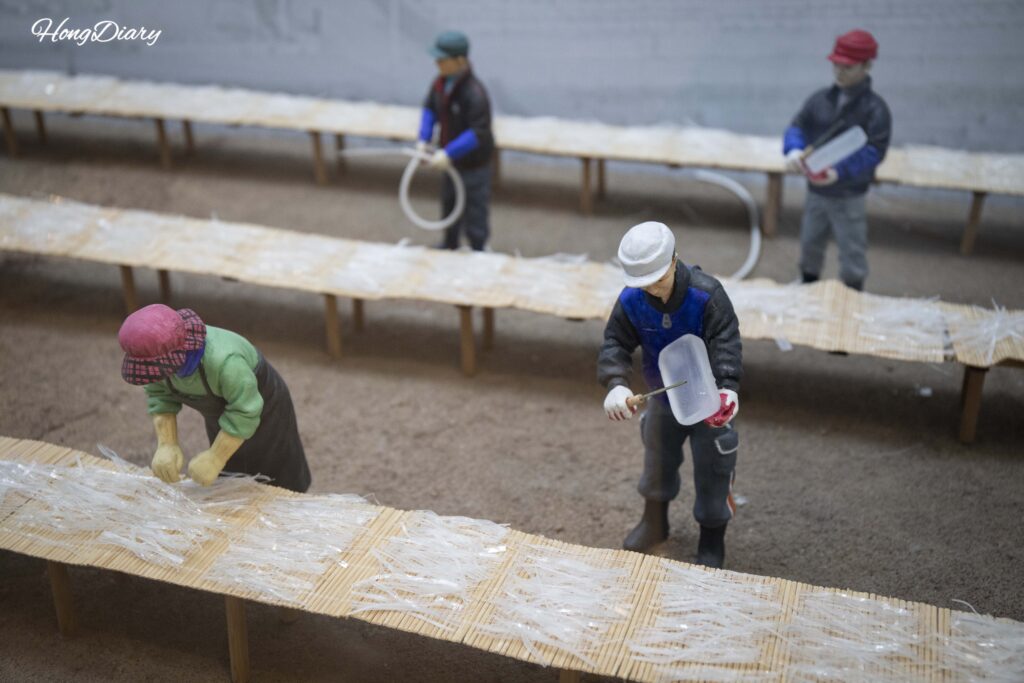
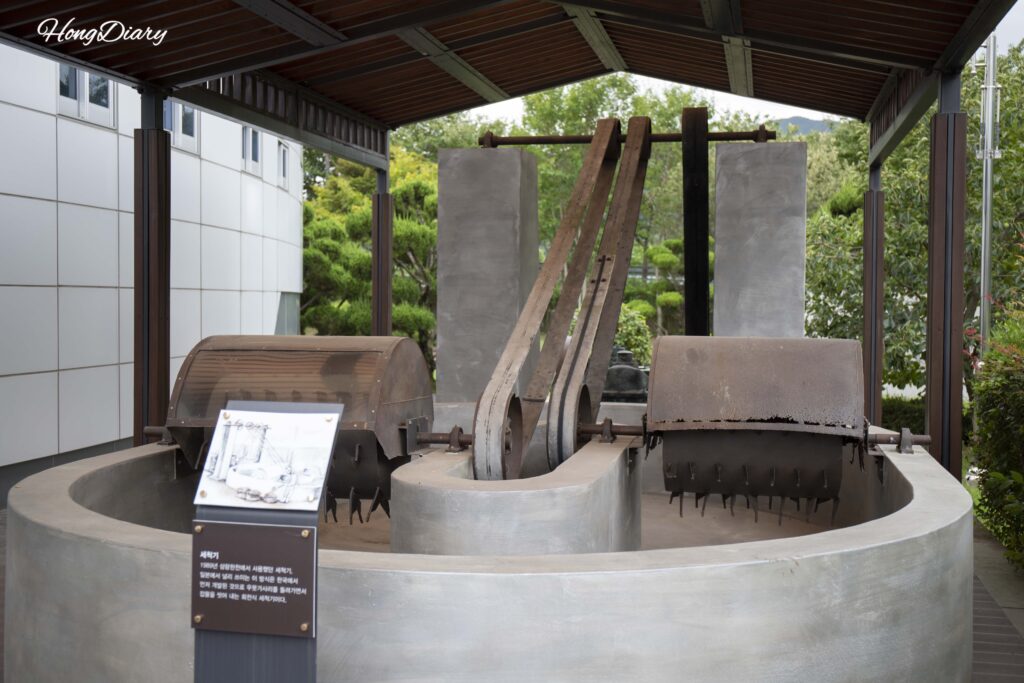
The exhibits trace how umugasari is harvested, cleaned, boiled, and then put through repeated freeze-thaw cycles. Display cases hold old washing machines designed specifically for cleaning seaweed, large iron cauldrons (gamasot) used for boiling, and wooden drying racks. Miniature dioramas recreate the full production process step by step, which makes it easy to visualize even if you can’t read the Korean signage.
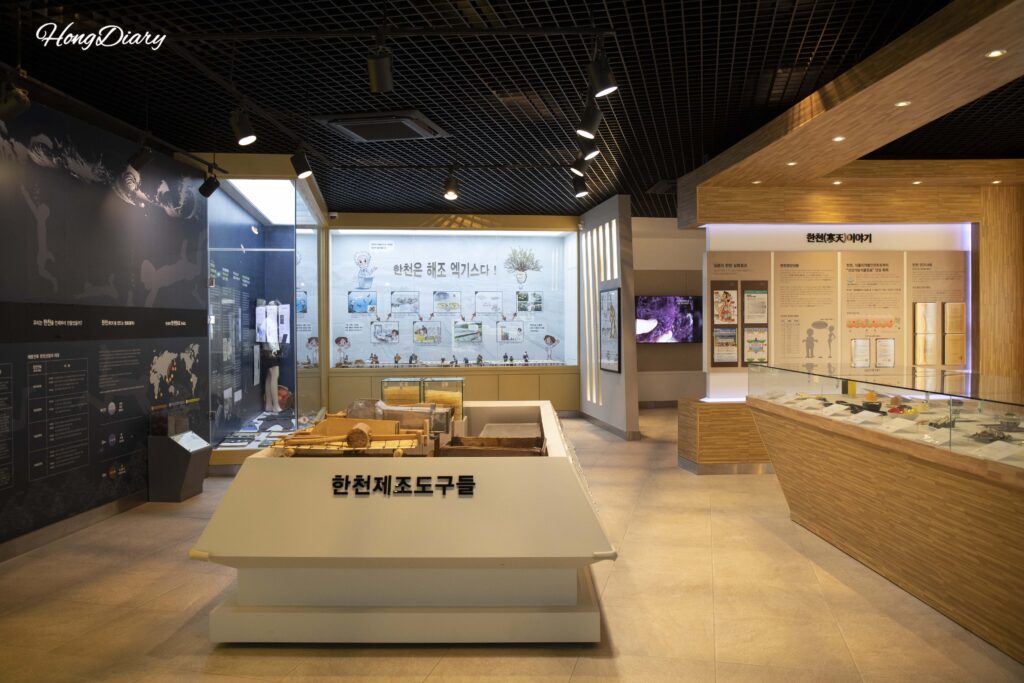
One section that caught my attention was the food display area, where replica dishes show just how many things can be made with agar. I’d only ever thought of jelly and yangaeng, but the models included agar noodles, agar-infused rice dishes, and even agar-based drinks. It expanded my understanding of the ingredient’s range.
The Accidental Discovery
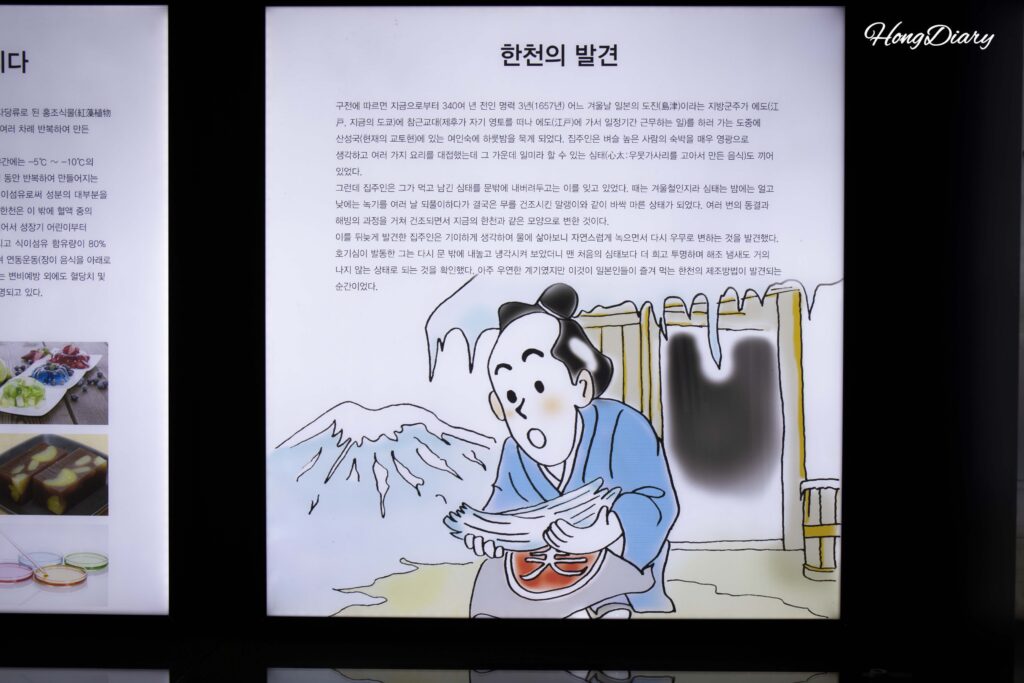
The most engaging part of the museum, at least for me, was the story of how agar was first created — and it happened entirely by accident.
According to historical accounts, in the winter of 1657, a regional lord was traveling to Edo (modern-day Tokyo) for sankin-kotai, the mandatory system that required feudal lords to periodically serve in the capital. He stopped overnight at an inn in what is now Kyoto Prefecture. The innkeeper, honored by such a high-ranking guest, prepared an elaborate meal that included tokoroten, a soft jelly made from boiled red seaweed.
After the lord left, the innkeeper tossed the leftover jelly outside and forgot about it. Over the following days, the jelly froze each night, thawed each morning, and gradually dried into something brittle and pale. When the innkeeper eventually noticed and tried boiling the dried substance in water, it dissolved back into a jelly — but this time it was whiter, more transparent, and had almost no seaweed smell. He repeated the process and got the same result. That accidental freeze-dry cycle became the foundation of agar production, a technique that hasn’t fundamentally changed in over 360 years.
From Jeju’s Waters to Miryang’s Mountains
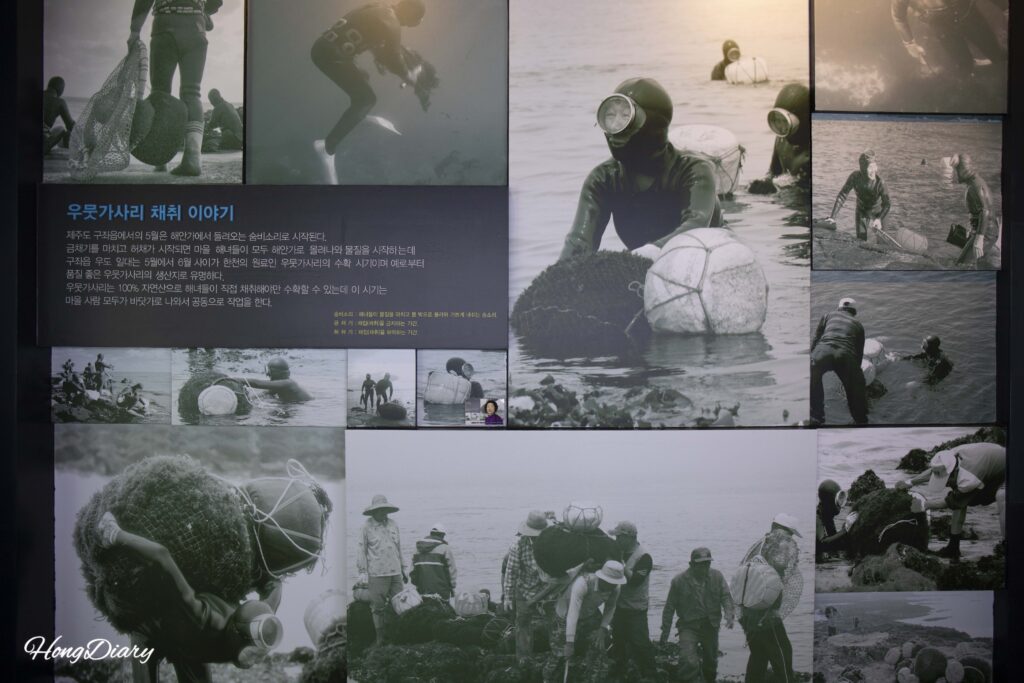
The museum also connects the story to Korea’s own seaweed culture. The umugasari used at this facility comes from the coastal waters around Jeju Island, Korea’s southernmost province. The exhibition explains how the raw seaweed is harvested off Jeju’s shores and then transported to Miryang’s mountain climate, where the natural freeze-thaw conditions do the rest. It’s a neat illustration of how two very different Korean landscapes work together to produce a single ingredient.
Hands-On Workshops: Make Your Own Agar Desserts
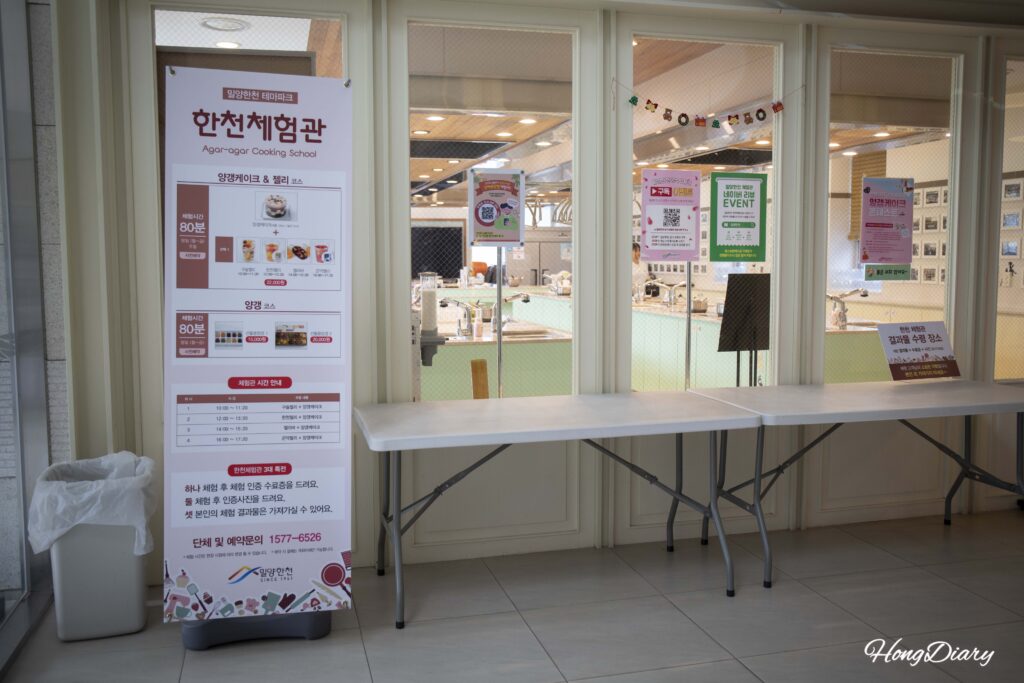
Directly across from the exhibition hall is the workshop space, and this is where the Miryang Agar Museum shifts from informational to genuinely interactive.
The most popular option is the Yangaeng Cake & Jelly Course. You make one yangaeng cake (a firm, sliceable block of sweet bean jelly) plus one type of jelly, and the whole session runs about 80 minutes. It costs ₩22,000 ($15 USD / €12 EUR) per person.
The type of jelly you make depends on which time slot you book:
| Session | Time | Jelly Type |
|---|---|---|
| 1st | 10:00 AM | Marble Jelly (small, bead-shaped agar jellies) |
| 2nd | 12:00 PM | Agar Jelly (classic block-style jelly) |
| 3rd | 2:00 PM | Jelly Bar (stick-shaped, portable agar snacks) |
| 4th | 4:00 PM | Konjac Jelly (made with konjac root, a starchy plant) |
There’s also a weekday-only Yangaeng Course for those who just want to focus on making gift-quality yangaeng. Two options are available: a set at ₩15,000 ($10 USD / €8 EUR) and a larger one at ₩20,000 ($13 USD / €11 EUR).
A few practical notes on booking: reservations can be made online if there are same-day openings, but spots are first-come, first-served and close one hour before each session. For group bookings or the weekday yangaeng course, you’ll need to call ahead at 1577-6526. If the workshop is your main reason for visiting, book in advance — walk-in availability isn’t guaranteed.
Once you finish, you receive a completion certificate and a photo, and everything you made is yours to take home. For families, this part alone can justify the trip.
I didn’t get to try the workshop this time — my child was still too young to participate — but it’s at the top of my list for a return visit. Even without the hands-on session, watching other visitors work through the process gave me a good sense of what to expect.
The Gift Shop and Restaurant Majung
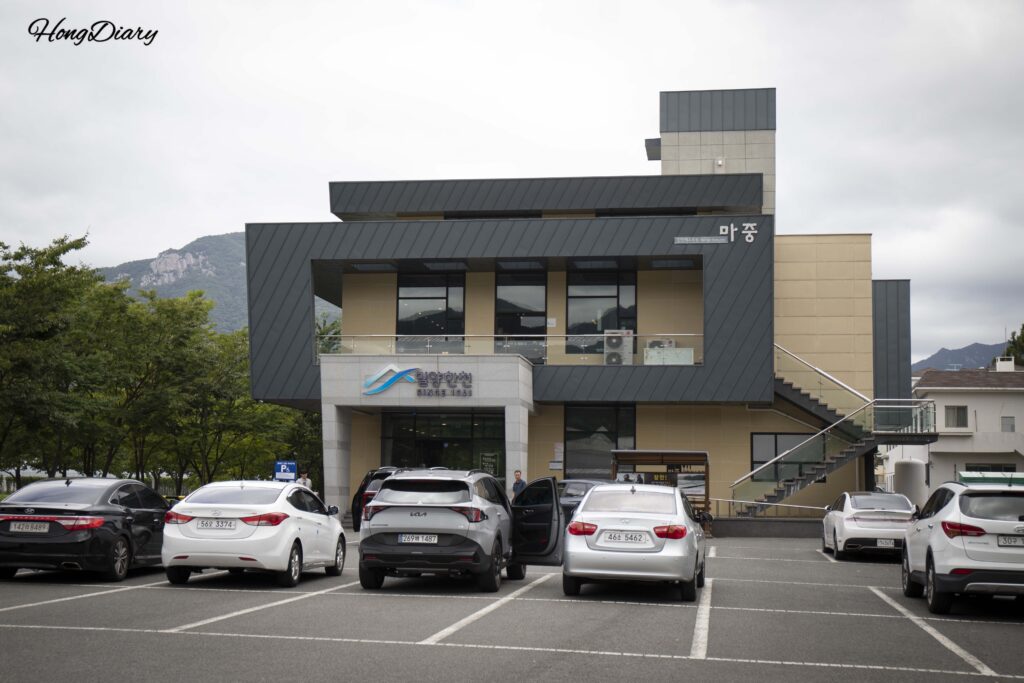
After the museum and workshop, the building directly across the parking lot houses both the gift shop and Restaurant Majung on the second floor.
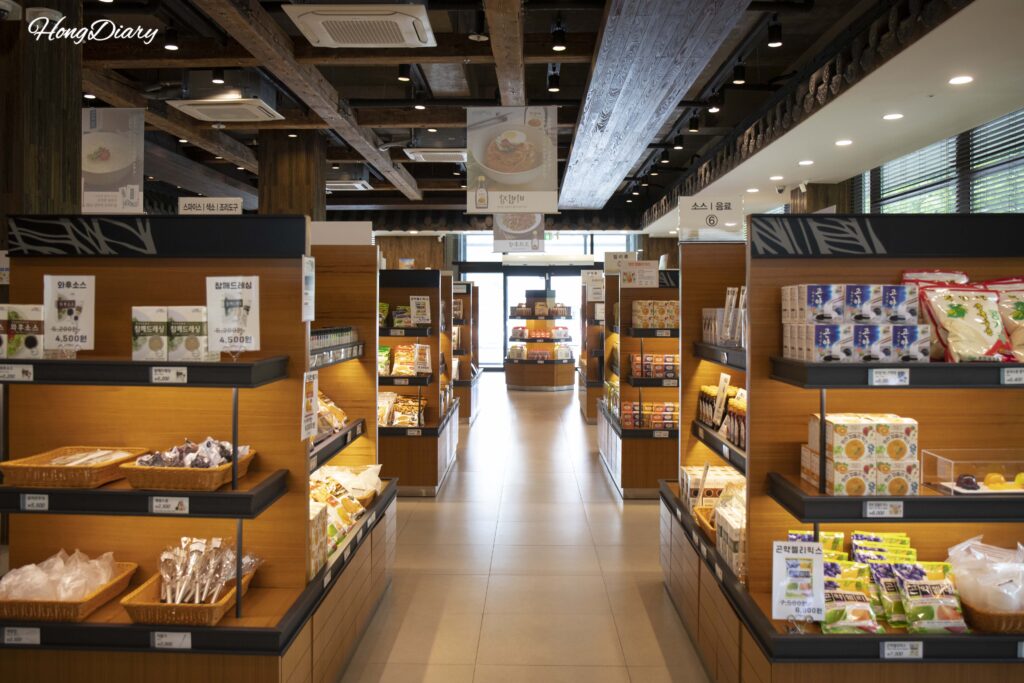
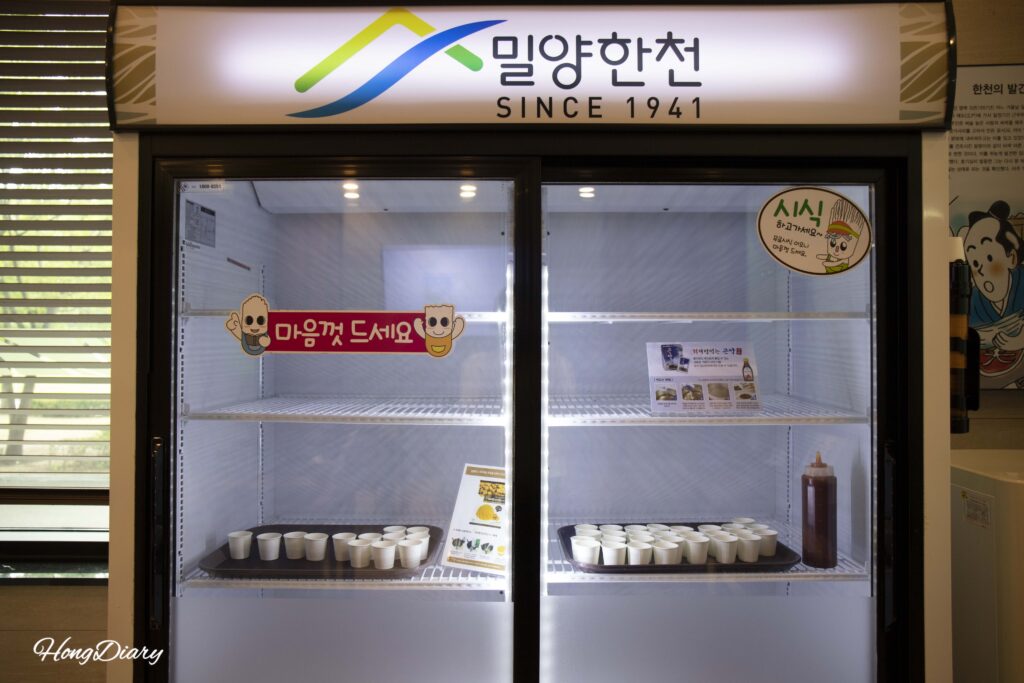
The gift shop sells agar products made on-site: yangaeng sets in flavors like red bean and green tea, as well as various jellies and agar-based health foods. Free samples are available, so you can taste before buying. Packaged yangaeng gift boxes are neatly wrapped and make decent souvenirs. Since the park is close to Miryang’s Eoreumgol (Ice Valley) area, the shop also carries locally pressed apple juice made from the region’s famous apples. I ended up picking up a box of assorted yangaeng and a bottle of the apple juice.
What’s on the Menu at Restaurant Majung
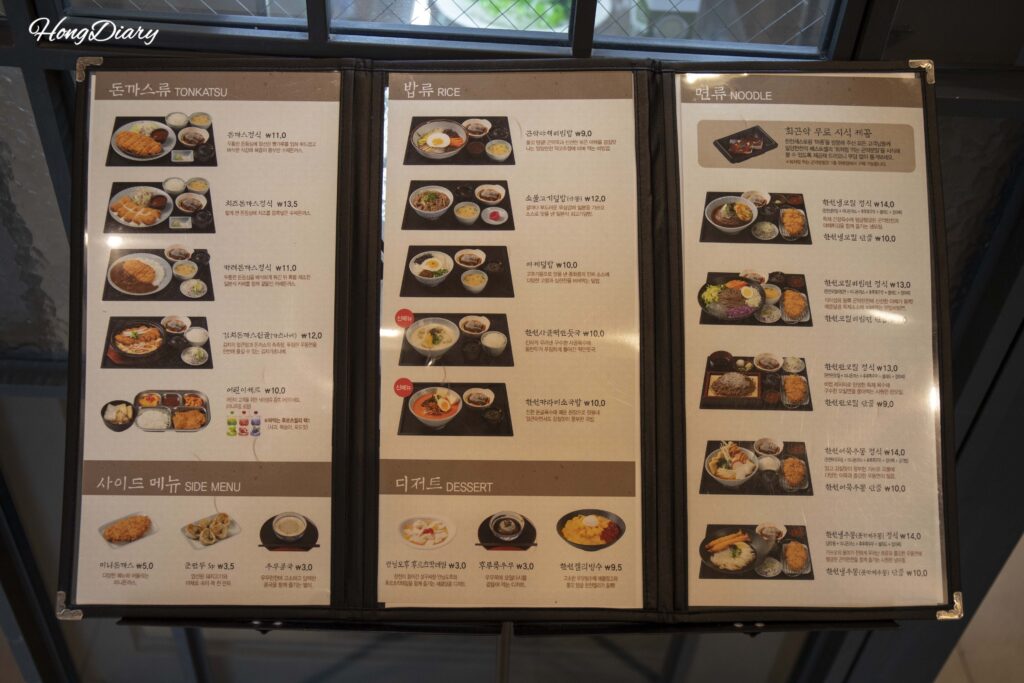
Head upstairs and you’ll find Restaurant Majung, which builds its menu around agar-infused dishes. The prices are reasonable for a sit-down meal at a tourist facility, and the variety is broader than I expected.
Highlighted Menu Items:
| Category | Dish | Price |
|---|---|---|
| Tonkatsu | Pork Cutlet Set (donkkaseu jeongsik) | ₩11,000 ($7 / €6) |
| Tonkatsu | Cheese Tonkatsu Set | ₩13,500 ($9 / €8) |
| Rice | Konjac Vegetable Bibimbap (gongyak yachae bibimbap) | ₩9,000 ($6 / €5) |
| Rice | Beef Bowl (sogogi deopbap, similar to Japanese gyudon) | ₩12,000 ($8 / €7) |
| Noodles | Agar Cold Noodle Set (hancheon naeng-udong jeongsik) | ₩14,000 ($9 / €8) |
| Noodles | Agar Fish Cake Udon Set | ₩14,000 ($9 / €8) |
| Dessert | Agar Jelly Bingsu (shaved ice with agar jelly toppings) | ₩9,500 ($6 / €5) |
| Kids | Children’s Set | ₩10,000 ($7 / €6) |
Beyond the highlights, the menu includes a few more rice dishes like majae deopbap (₩10,000 / $7 / €6), an agar-based bone broth rice cake soup (₩10,000 / $7 / €6), and several noodle variations in the ₩13,000–14,000 range ($9 / €7–8). Side dishes like mini tonkatsu (₩5,000 / $3 / €3), fried dumplings (₩3,500 / $2 / €2), and a cold soybean noodle soup (₩3,000 / $2 / €2) round things out. There’s also a note on the menu offering a free tasting of sliced konjac (hoe-gonnyak), a chewy, translucent side dish made from konjac root.
The agar-based noodle dishes are worth trying if you’re curious about how agar works in savory cooking — it’s not something you’ll find on menus elsewhere.
One honest regret: I skipped lunch here because I was in a hurry to get to Pyochungsa Temple. The winding mountain road between the two made me carsick, and I spent the whole drive wishing I’d just eaten at Majung first. Learn from my mistake.
Before You Go: A Few Things I Wish I’d Known
The Miryang Agar Museum is the kind of place where half a day slips by before you realize it. Between the museum, the workshop, shopping, and a meal, the hours add up fast. Here are a few tips to make the most of it:
Plan your meal here. Restaurant Majung is the only dining option in the immediate area. If you skip it and head deeper into the mountains, you won’t find much until you’re well past Sannae-myeon. Eat before you leave.
Book the workshop in advance. Same-day spots fill up, especially during weekends and school holidays. Call 1577-6526 or check the online reservation system at least a day or two ahead.
Check holiday closures. The park shuts down for several days during Chuseok (Korea’s harvest festival in autumn). For 2026, the closure runs from October 5 through October 9. Seollal (Lunar New Year) may have similar closures, so confirm before visiting during major holidays.
Driving is the easiest option, but if you’re relying on public transit from Miryang, the Eoreumgol buses (lines 1, 2, or 3) from the intercity bus terminal will get you there.
Wrapping Up: A Half Day Well Spent in Miryang
The Miryang Agar Museum won’t make it onto any “Top 10 Korea” lists anytime soon, and that’s part of what I liked about it. There were no tour buses in the parking lot, no English-language audio guides, and no crowds. Just a well-curated museum, a genuinely hands-on workshop, and a restaurant serving food you won’t find anywhere else. The flow from exhibit to experience to eating felt natural, and I walked away knowing a lot more about an ingredient I’d been consuming for years without ever thinking about it.
If you’re building a Miryang itinerary, the agar museum pairs well with a few other spots in the area.
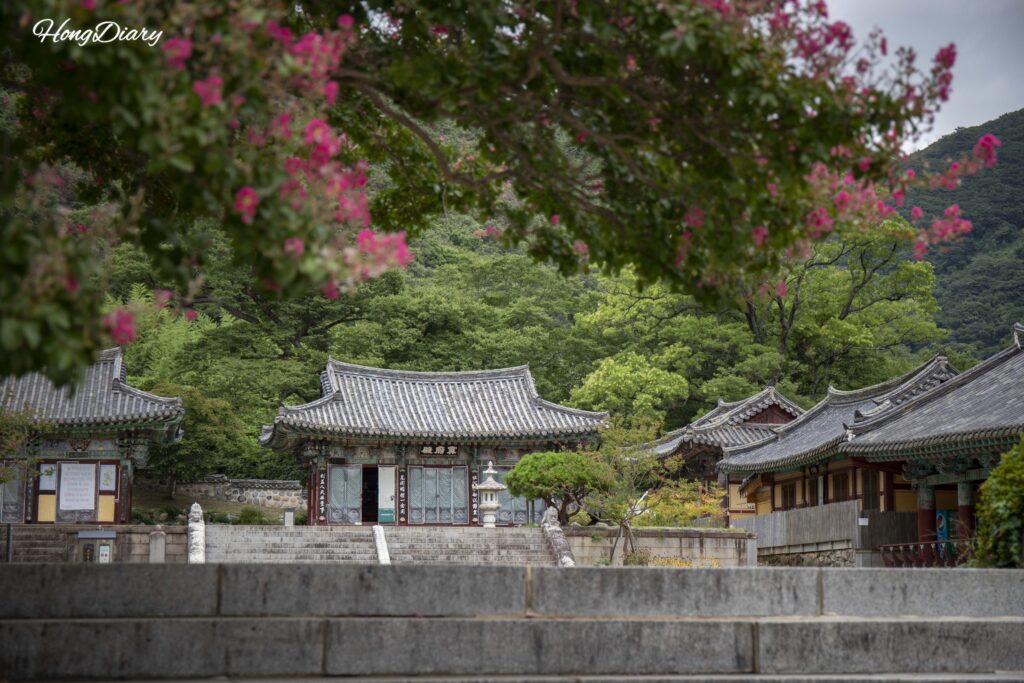
Pyochungsa Temple is about 35 minutes further into the mountains and worth the drive for its warrior monk history and late-summer crape myrtle blossoms.
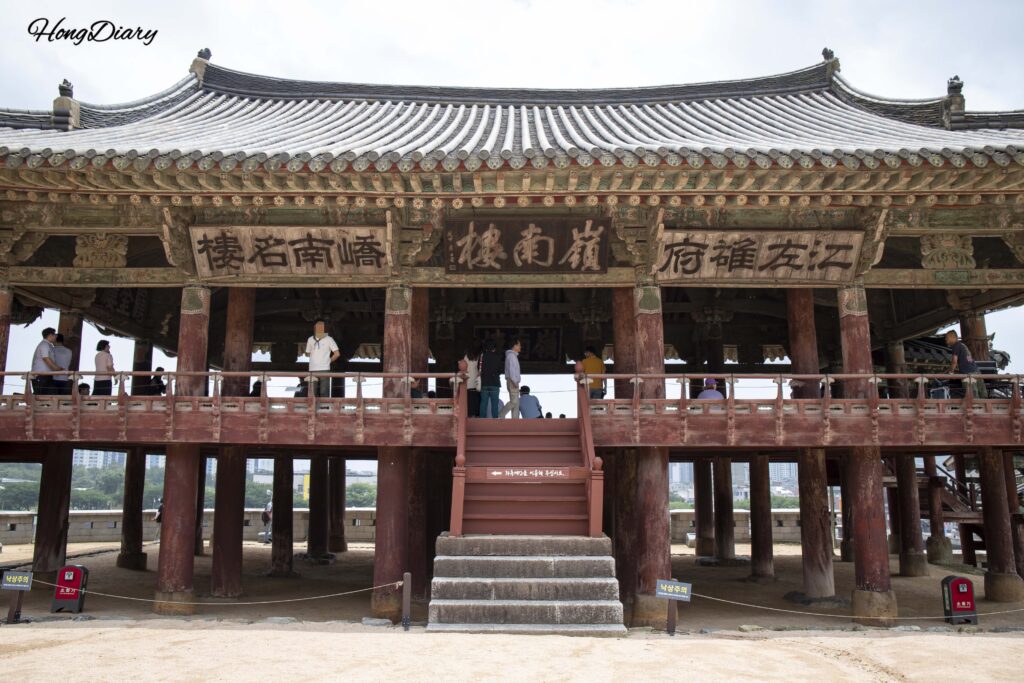
Back in downtown Miryang, Yeongnamnu Pavilion is a designated National Treasure where you can actually sit inside the centuries-old structure and look out over the Miryang River — one of the most quietly striking experiences in the region.
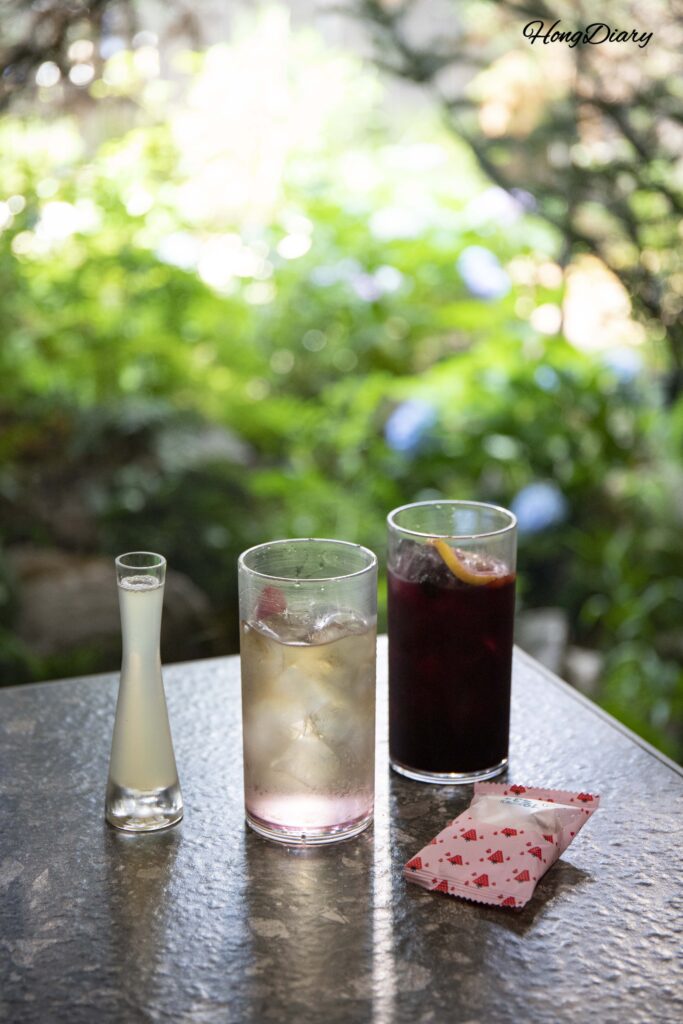
For a coffee break afterward, Yeoldudal Cafe offers a themed room for every season of the year, which sounds gimmicky until you actually walk through it.
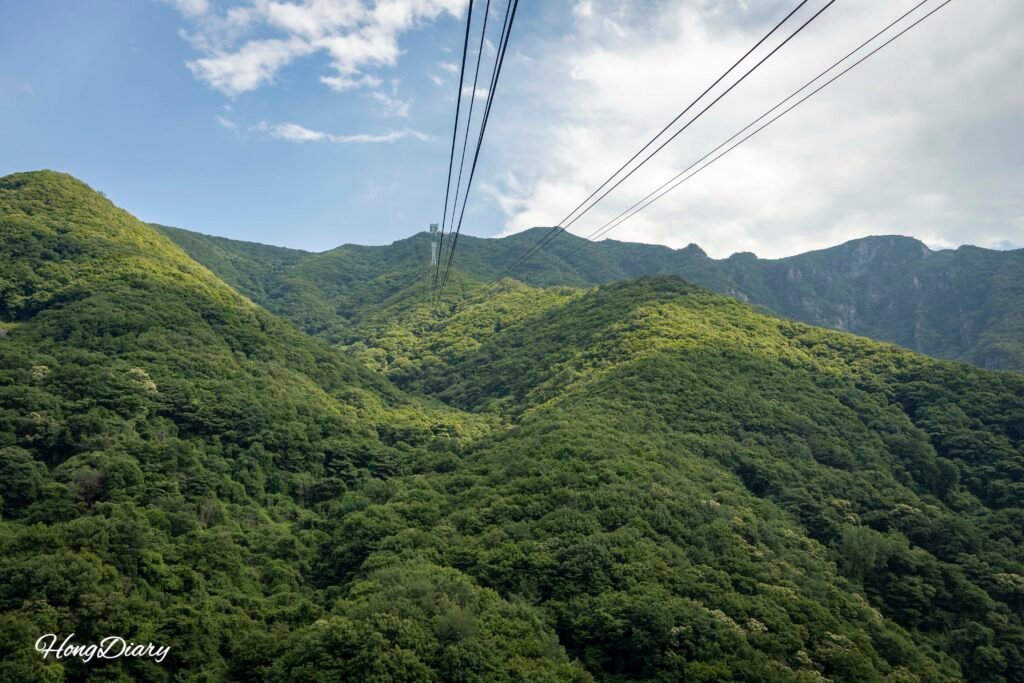
And if the mountain scenery along the road to the agar museum caught your eye, the Ice Valley Cable Car — Korea’s longest — takes you up into the Yeongnam Alps for panoramic views of the same ridgelines you drove through.
Miryang is one of those Korean towns that rewards curiosity over planning. The Miryang Agar Museum is a good example: a place I nearly skipped, and one I’m glad I didn’t.
Frequently Asked Questions (FAQ) About the Miryang Agar Museum
What is the Miryang Agar Museum?
The Miryang Agar Museum (also called Miryang Agar Theme Park) is Korea’s only facility dedicated entirely to agar, a natural gelling agent made from red seaweed. Located in Sannae-myeon, Miryang, Gyeongsangnam-do, it combines an exhibition hall covering the history and production of agar, a hands-on dessert workshop, a gift shop selling locally made agar products, and Restaurant Majung, which serves agar-infused dishes.
How do I get to the Miryang Agar Museum from Busan?
The fastest route is by KTX train from Busan Station to Miryang Station, which takes about 35 minutes. From Miryang, take Eoreumgol Bus 1, 2, or 3 from the intercity bus terminal to the Sannae-myeon area. If you’re driving, the museum is roughly 1 hour and 15 minutes from central Busan via the Gyeongbu Expressway. Free parking is available on-site.
What workshops are available at the Miryang Agar Museum?
The main workshop is the Yangaeng Cake & Jelly Course, an 80-minute session where you make a yangaeng (sweet bean jelly) cake plus one type of jelly. Four sessions run daily at 10:00 AM, 12:00 PM, 2:00 PM, and 4:00 PM, each featuring a different jelly variety. A weekday-only Yangaeng Course focused solely on gift-quality yangaeng is also available. Advance reservations are strongly recommended.
How much does the agar dessert workshop cost?
The Yangaeng Cake & Jelly Course costs ₩22,000 ($15 USD / €12 EUR) per person and includes all materials, a completion certificate, a photo, and everything you make to take home. The weekday Yangaeng Course is available in two sizes: ₩15,000 ($10 USD / €8 EUR) and ₩20,000 ($13 USD / €11 EUR).
What exactly is agar, and how is it different from gelatin?
Agar (also called agar-agar) is a plant-based gelling agent derived from red algae, specifically a type of seaweed called umugasari. Unlike gelatin, which comes from animal collagen, agar is entirely vegan, calorie-free, and rich in dietary fiber. It sets at room temperature and holds its shape in heat, making it the preferred gelling agent for Asian desserts like yangaeng (sweet bean jelly), fruit jellies, and puddings.
Is there a restaurant at the Miryang Agar Museum?
Yes. Restaurant Majung is located on the second floor of the building across from the museum. It serves a full menu of agar-based dishes, including agar cold noodle sets (₩14,000 / $9 USD / €8 EUR), konjac vegetable bibimbap (₩9,000 / $6 USD / €5 EUR), tonkatsu sets starting at ₩11,000 ($7 USD / €6 EUR), and agar jelly bingsu for dessert (₩9,500 / $6 USD / €5 EUR). It also offers a free tasting of sliced konjac as a complimentary side.
When is the Miryang Agar Museum closed?
The museum operates daily from 09:00 to 18:00, but it closes for several days during major Korean holidays. For 2026, the Chuseok (Korean harvest festival) closure runs from October 5 through October 9. Similar closures may apply during Seollal (Lunar New Year). Always check the current schedule before visiting, especially if your trip falls during a holiday period.