
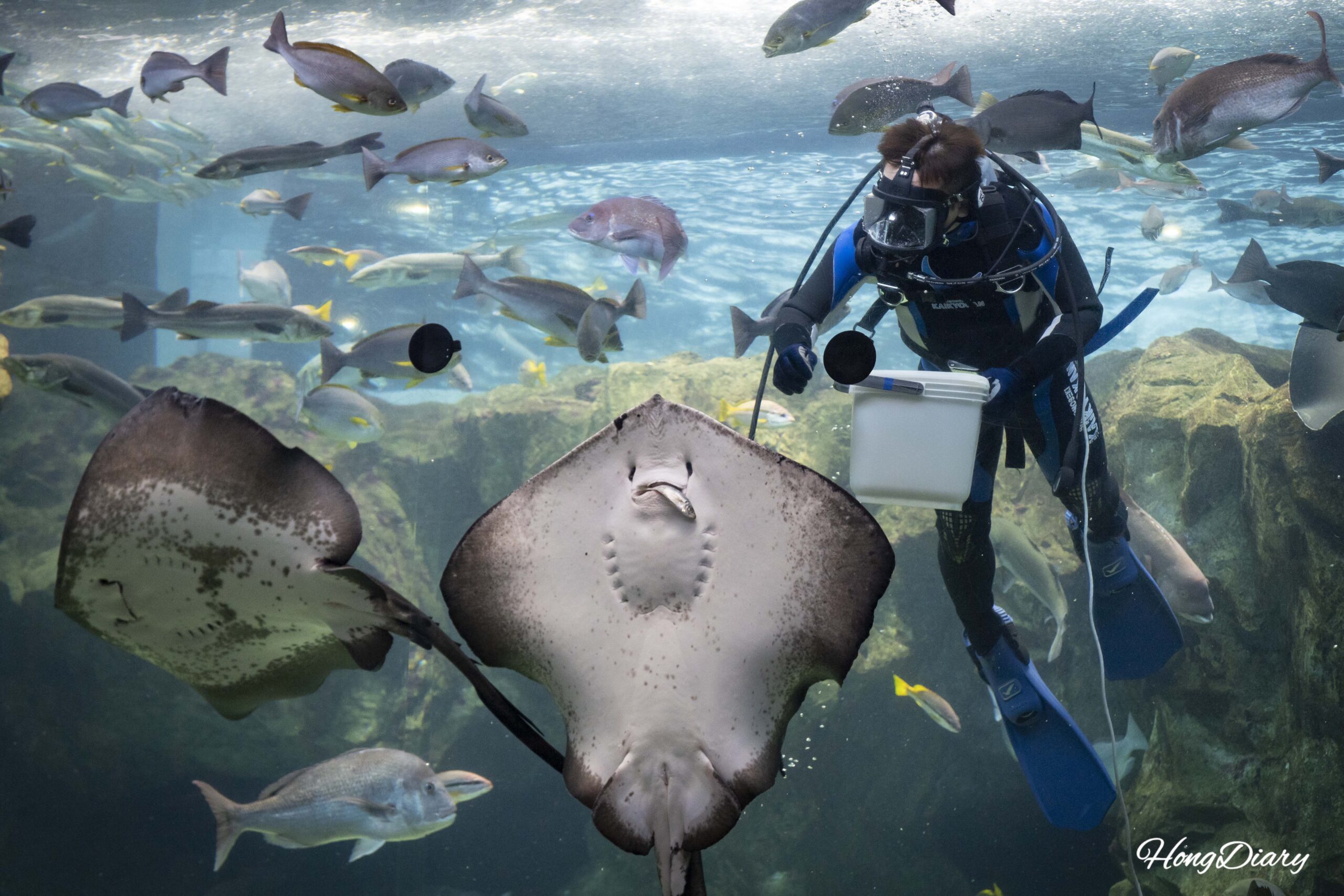
Scroll through reviews of Kaikyokan Aquarium in Shimonoseki, and a pattern shows up fast: “small,” “pricey for what it is,” “not as impressive as Osaka or Okinawa.” I have visited this aquarium multiple times over the years, and after its eight-month renovation wrapped up in August 2025, those lukewarm takes made me curious enough to come back with my family and see for myself what had actually changed — and whether I had been giving this place too much credit.
Shimonoseki sits at the western tip of Honshu in Yamaguchi Prefecture, where the Kanmon Strait separates the main island from Kyushu. The city handles over 80% of Japan’s fugu supply — earning it the title of Japan’s pufferfish capital — and compared to Osaka or Fukuoka, it draws far fewer tourists, which means shorter lines and a quieter, more local atmosphere.
Table of Contents
Basic Info — Kaikyokan Aquarium at a Glance
| Detail | Information |
|---|---|
| Official Name | Shimonoseki Municipal Aquarium Kaikyokan (市立しものせき水族館 海響館) |
| Address | 6-1 Arcaport, Shimonoseki, Yamaguchi 750-0036, Japan (〒750-0036 山口県下関市あるかぽーと6-1) |
| Hours | 9:30 AM – 5:30 PM (last entry at 5:00 PM) |
| Closed | Open year-round |
| Admission | Adults (incl. high school): ¥2,500 (~$15.80 USD / ~€14.10 EUR) · Middle/elementary school: ¥1,200 (~$7.60 USD / ~€6.80 EUR) · Children 3+: ¥500 (~$3.15 USD / ~€2.85 EUR) |
| Website | kaikyokan.com (Japanese, English, Korean, Chinese) |
| Estimated Visit | 2 – 2.5 hours including shows |
| Scale | Basement & 3 Floors · ~70 tanks · 550+ species · 55,000+ creatures |
Prices in this guide are converted at approximately $1 USD ≈ ¥158 / €1 EUR ≈ ¥177 (as of October 2026). Rates may fluctuate.
Getting There
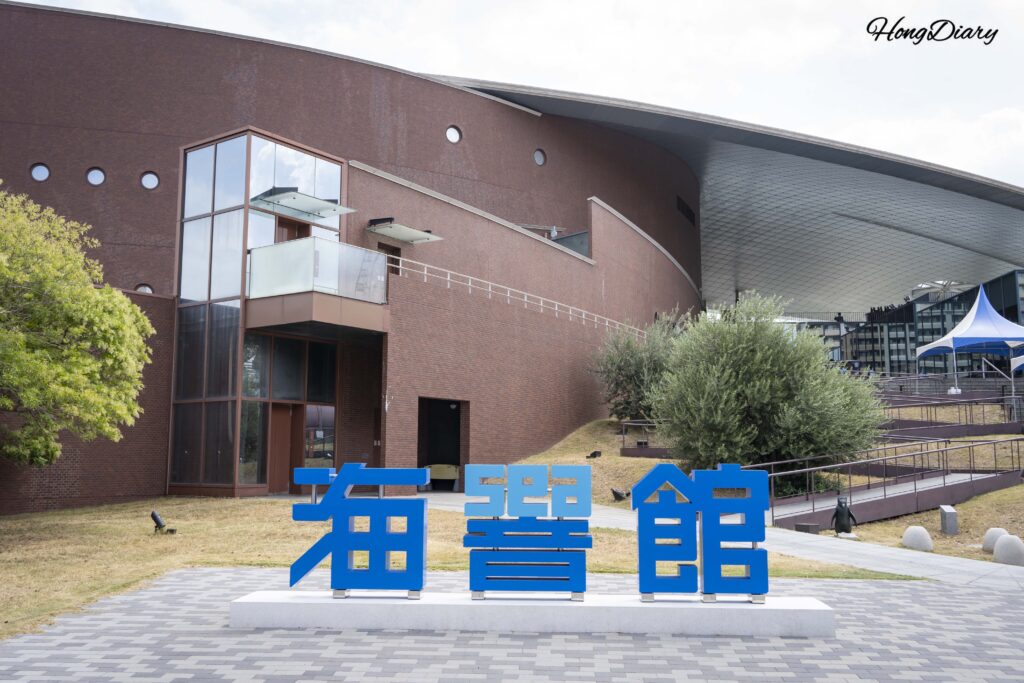
Shimonoseki is reachable by ferry from Busan, South Korea — a detail that makes it a natural first stop for travelers crossing over from Korea — and by train or bus from Fukuoka and Kitakyushu on the Kyushu side.
From Shimonoseki Station: Most local buses heading toward the waterfront stop at Kaikyokanmae (海響館前). The ride plus the short walk from the bus stop takes roughly 10–15 minutes total, covering about 270 meters on foot after you get off. If you prefer a door-to-door option, Uber is available in Shimonoseki. The fare from Shimonoseki Station to Kaikyokan runs roughly ¥1,400–¥1,600 (~$8.85–$10.15 USD / ~€7.90–€9.05 EUR) depending on traffic and time of day.
From Mojiko or Kokura (Kyushu side): Head to Marine Gate Moji (マリンゲートもじ) and catch the Kanmon Ferry. Tickets cost ¥400 one-way for adults (~$2.55 USD / ~€2.25 EUR) and ¥200 for children (~$1.25 USD / ~€1.15 EUR), cash only. The crossing to Karato Terminal takes about five minutes, and from there the aquarium is a three-minute walk (200 meters).
Proximity to Karato Market: Kaikyokan sits roughly a six-minute walk (450 meters) from Karato Market (唐戸市場), one of Shimonoseki’s most popular attractions. If you are planning to visit both, it makes sense to block them into the same half-day. Keep in mind that Karato Market’s sushi stalls — the main draw for most visitors — only operate on certain days, typically Friday through Sunday. The schedule can shift, so check the market’s official site at karatoichiba.com before your visit. On days without the sushi event, the market is noticeably quieter and the stalls stay closed.
Tickets and Combo Deals
You can buy tickets at the staffed counter or the self-service kiosks right at the entrance. Card payments are accepted at both.
Standard Admission (2026)
| Category | Price |
|---|---|
| Adults (incl. high school) | ¥2,500 (~$15.80 USD / ~€14.10 EUR) |
| Middle / elementary school | ¥1,200 (~$7.60 USD / ~€6.80 EUR) |
| Children aged 3+ | ¥500 (~$3.15 USD / ~€2.85 EUR) |
Annual Pass
| Category | Price |
|---|---|
| Adults | ¥5,000 (~$31.65 USD / ~€28.25 EUR) |
| Middle / elementary school | ¥2,400 (~$15.20 USD / ~€13.55 EUR) |
| Children aged 3+ | ¥1,000 (~$6.35 USD / ~€5.65 EUR) |
The annual pass pays for itself in two visits and includes discounts at partnered facilities across Yamaguchi and Fukuoka Prefectures. If you travel to Shimonoseki more than once a year, this is a straightforward deal.
Combo Tickets (available at each facility’s ticket counter)
| Combo | Adults | Junior |
|---|---|---|
| Kaikyokan + Hai! Karatto Yokocho Ferris Wheel (はい!からっと横丁, 3-min walk) | ¥2,800 (~$17.70 USD / ~€15.80 EUR) | ¥1,400 (~$8.85 USD / ~€7.90 EUR) · Child: ¥900 (~$5.70 USD / ~€5.10 EUR) |
| Kaikyokan + Kaikyo Yume Tower (海峡ゆめタワー) | ¥2,800 (~$17.70 USD / ~€15.80 EUR) | ¥1,200 (~$7.60 USD / ~€6.80 EUR) |
| Kaikyokan + Kanmon Strait Museum + Kyushu Railway Museum | ¥3,000 (~$19.00 USD / ~€16.95 EUR) | ¥1,260 (~$7.95 USD / ~€7.10 EUR) |
The Kaikyokan-plus-Yume Tower bundle saves ¥550 for adults and ¥450 for juniors compared to buying separately.
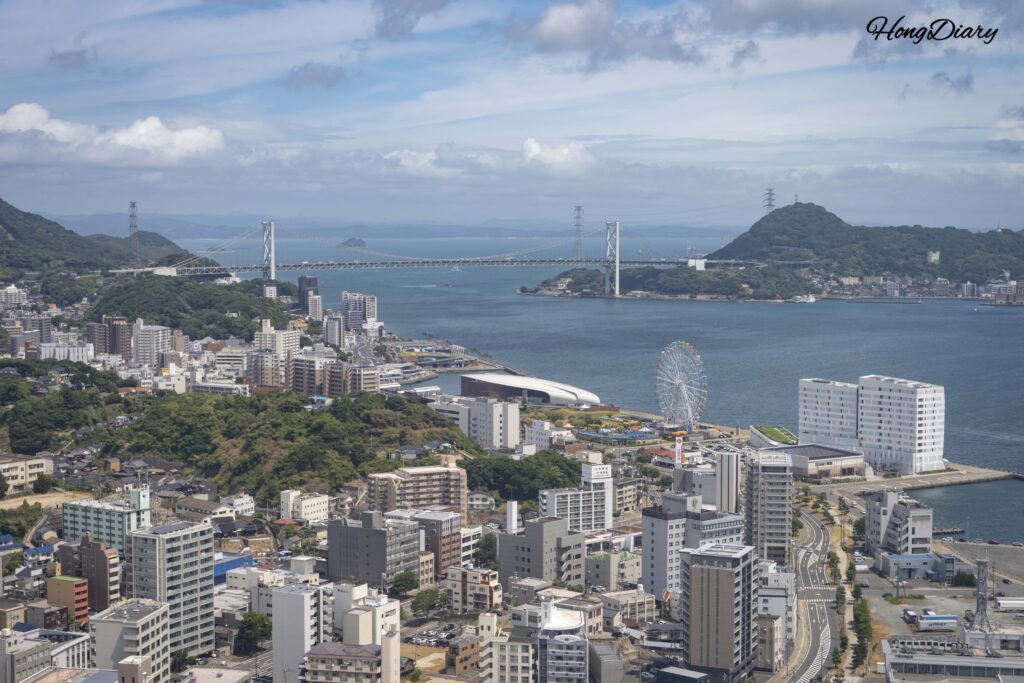
I personally recommend this one — the tower is one of the most rewarding viewpoints in the city and I covered it in detail in a separate guide: Kaikyo Yume Tower: Where Honshu Meets Kyushu — A Floor-by-Floor Guide to Shimonoseki’s Best-Kept View.
The three-way combo (Kaikyokan, Kanmon Strait Museum, Kyushu Railway Museum) is valid for 5, 5, and 7 days respectively from the purchase date, so you do not need to visit all three on the same day. Prices and partnerships may change, so confirm on the official site before your trip.
For reference, Shimonoseki residents pay significantly less — ¥1,000 for adults (~$6.35 USD / ~€5.65 EUR), ¥450 for juniors (~$2.85 USD / ~€2.55 EUR), ¥200 for children (~$1.25 USD / ~€1.15 EUR) — which is honestly enviable.
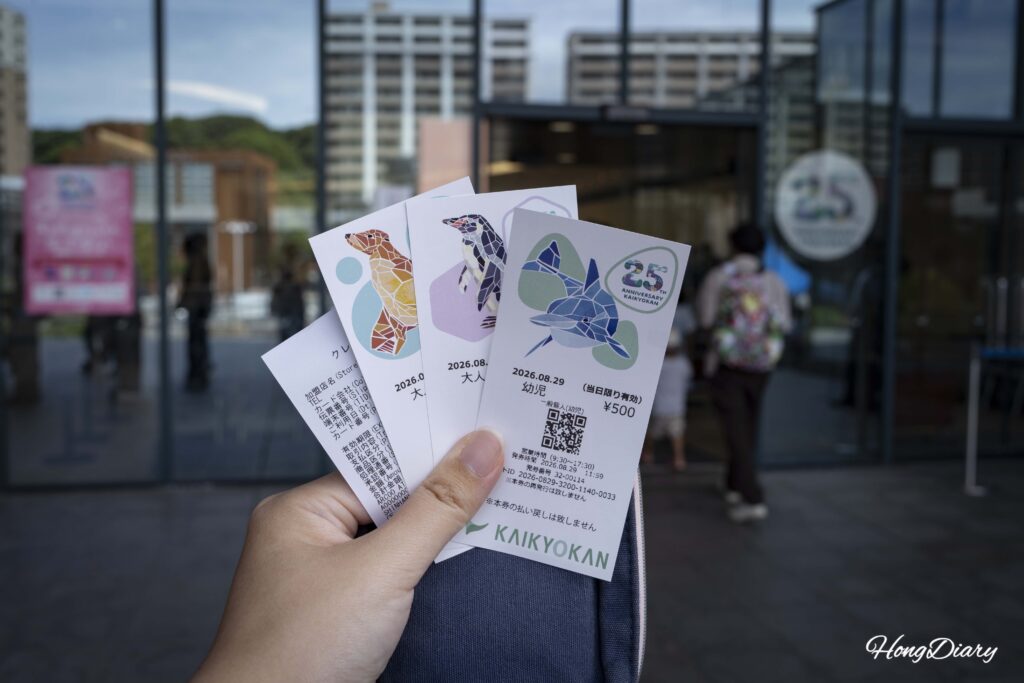
One small detail worth mentioning: your printed ticket comes with an illustration of a different marine animal — a seal on one, a penguin on another, a dolphin on the next. In all my visits, I have never gotten a duplicate. It is a minor thing, but collecting and photographing the tickets has become a small ritual for me, and it is the kind of touch that sets the mood before you even walk inside.
Walking Through Kaikyokan — Zone by Zone
The aquarium follows a fixed route from the 3rd floor down to ground level, passing through the basement, and then out to the outdoor areas. Below is a quick overview of what each section covers, followed by the full walkthrough.
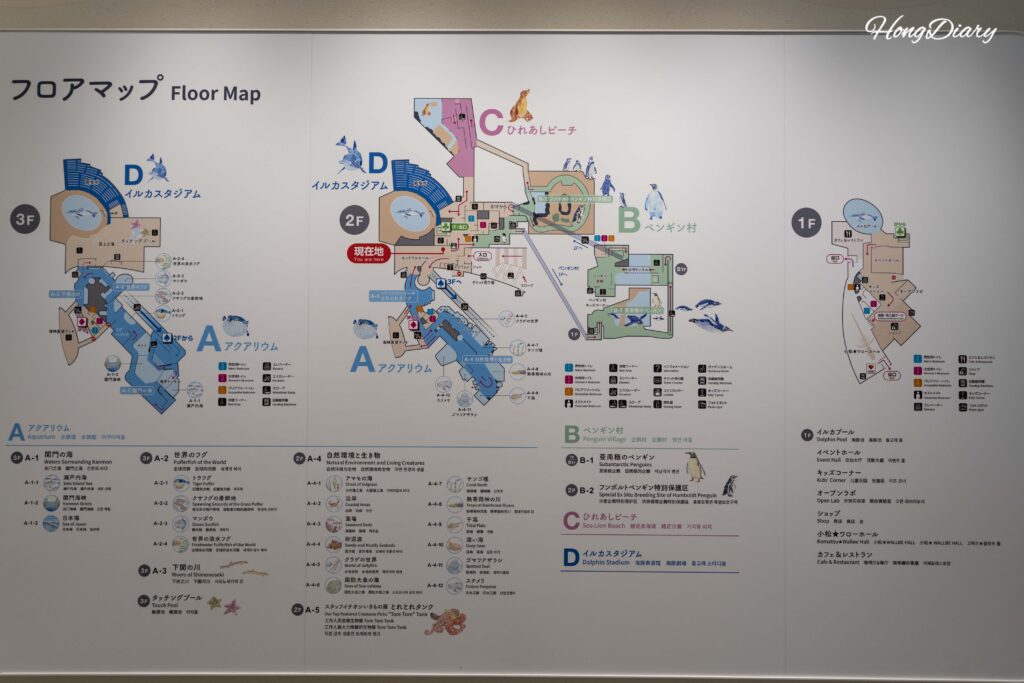
| Zone | What You Will See | Est. Time |
|---|---|---|
| A-1 Sea of Kanmon | Strait current tanks, panoramic window with Kanmon Bridge view | 15 min |
| A-1-1 Sardine Tunnel | 50,000 sardines schooling overhead | 10 min |
| A-2 Fugu World | 100+ pufferfish species, tiger pufferfish, spawning grounds, ocean sunfish | 20 min |
| A-3 / A-4 Rivers, Jellyfish, Coral, Tropics | Shimonoseki’s freshwater life, jellyfish gallery, coral reef tank, Amazon zone | 25 min |
| A-4-11 / A-4-12 Seals and Porpoises | Spotted seals, finless porpoises (sunameri) | 10 min |
| B-1 / B-2 Penguin Village | Sub-Antarctic penguins, Humboldt penguin reserve, underwater tunnel | 20 min |
| C Finfoot Beach | Sea lion exhibit (new post-renovation) | 10 min |
| D Dolphin Stadium | Dolphin and sea lion show (15–20 min) | 30 min |
| Shop / Restaurant / Exit | Gift shop “naminowa,” restaurant with strait view, blue whale skeleton | 15 min |
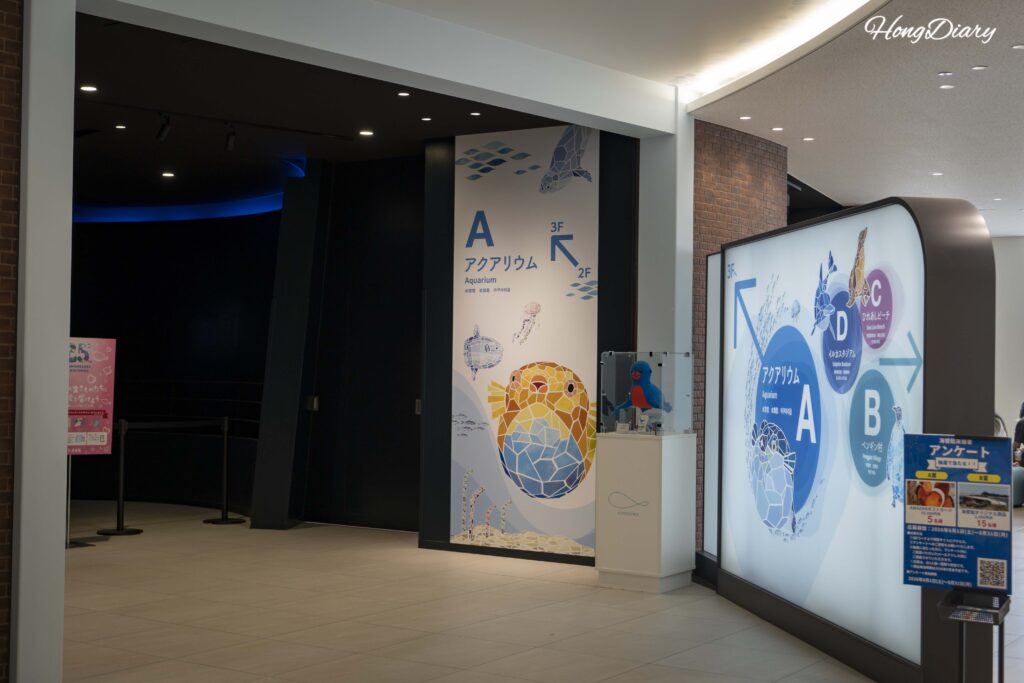
The Sea of Kanmon — Where the Aquarium Meets the Strait
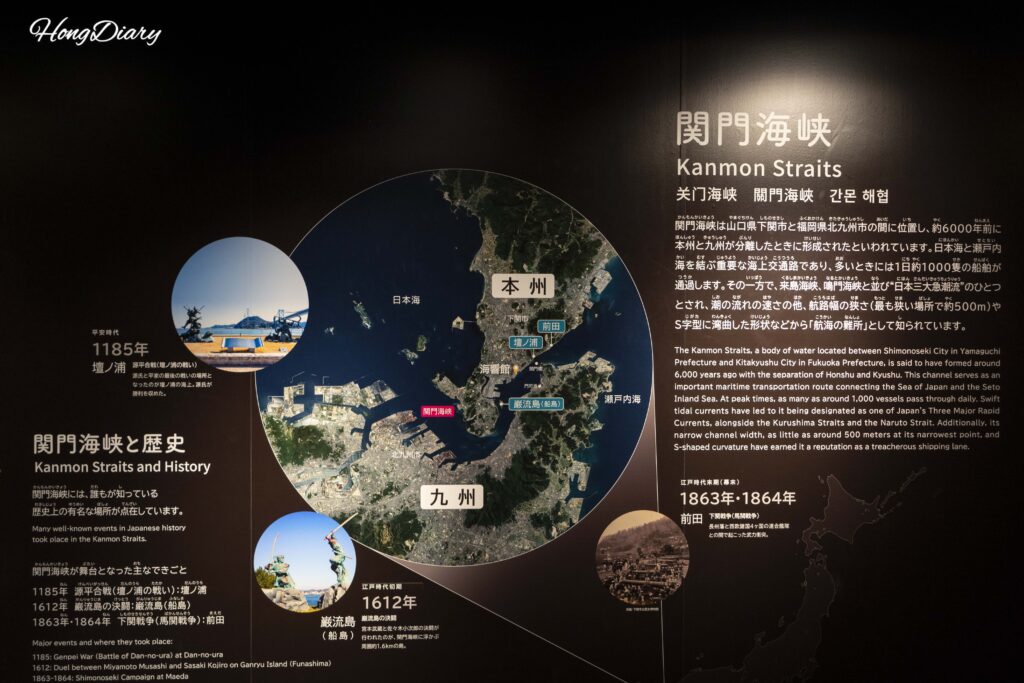
The first exhibit space recreates the rapid tidal currents of the Kanmon Strait with dedicated tanks showing the marine life that thrives in these fast-moving waters. The tanks alone are worth a look, but here is what most people walk right past: step back a few meters from the glass and turn around. The entire far wall is a floor-to-ceiling window, and through it you can see the Kanmon Bridge and the actual strait stretching out in real time.
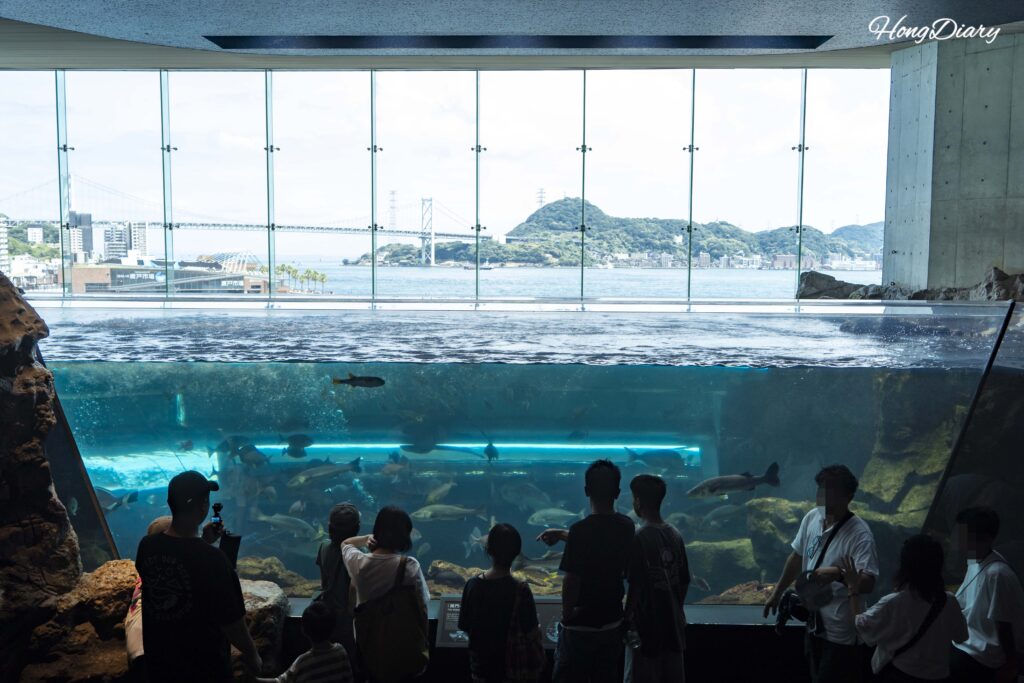
That combination — the underwater habitat in front of you and the living seascape behind you — makes this opening section feel unlike any aquarium entrance I have experienced elsewhere. The natural light flooding through the windows also takes away that boxed-in feeling that some aquariums struggle with, and this sense of openness comes back at several points throughout the building.
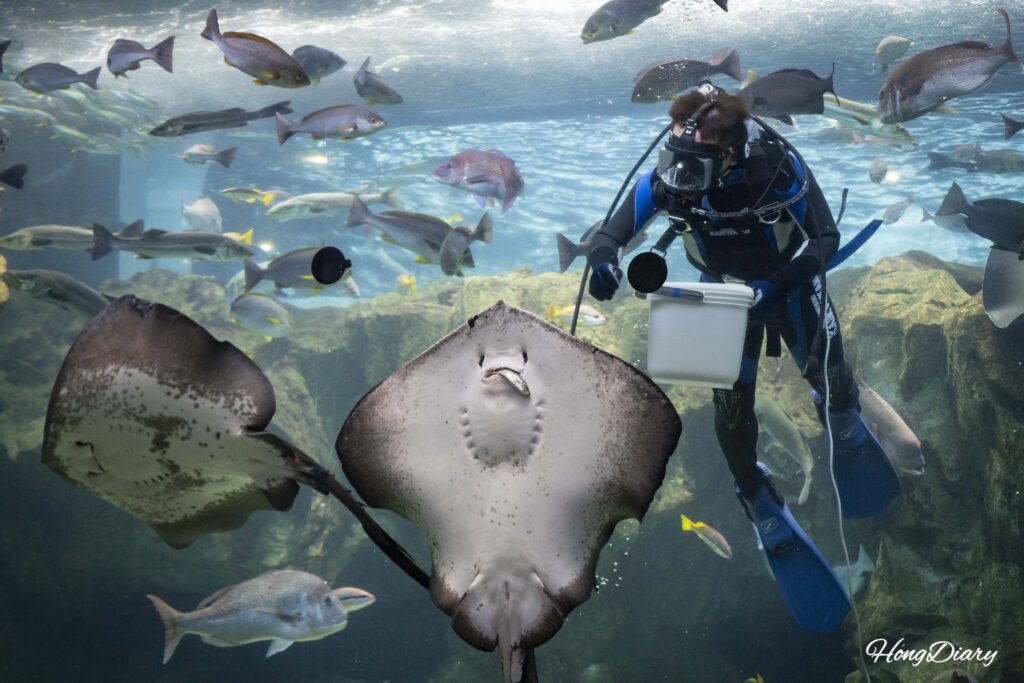
Signage throughout the aquarium is displayed in both Japanese and English, so international visitors can follow along without needing a translation app.
The Sardine Tunnel
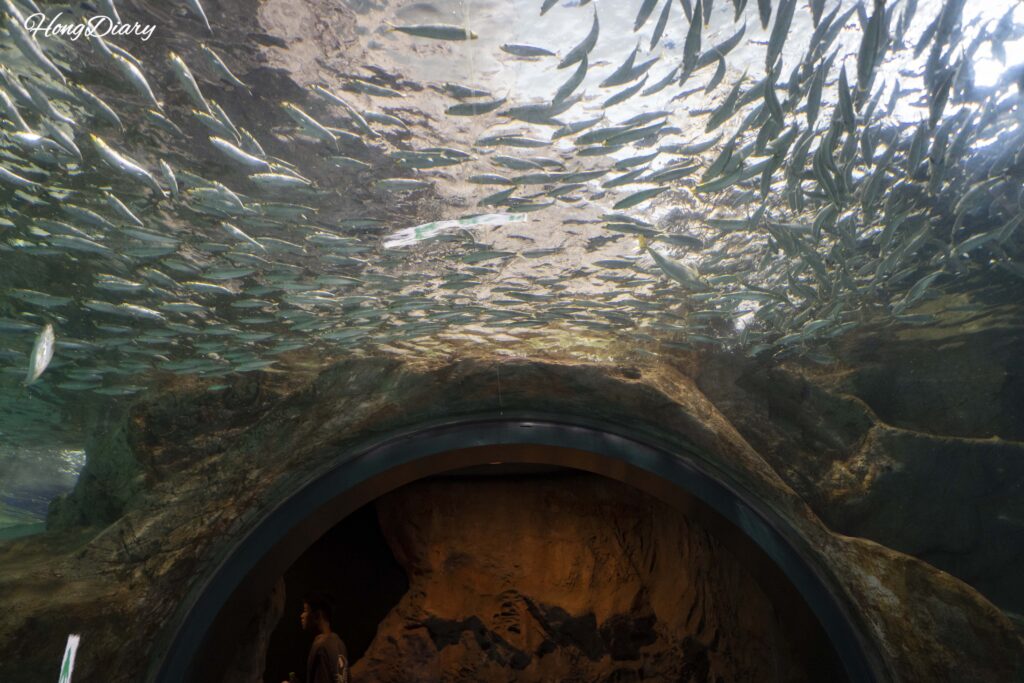
The corridor narrows into a tunnel-style tank overhead, and roughly 50,000 sardines school in a swirling mass above and around you. It is a classic aquarium moment — the kind of thing that stops people mid-step to pull out their phones — but there is a local layer to it. Sardines are one of Yamaguchi Prefecture’s signature catches, paired with a unique setsubun tradition (the early-February festival marking the start of spring) of warding off bad luck by eating both a large fish, such as whale, and a small fish. Knowing that small detail makes the tunnel feel less like a generic spectacle and more like a window into local identity.
Fugu World — Over 100 Species Under One Roof
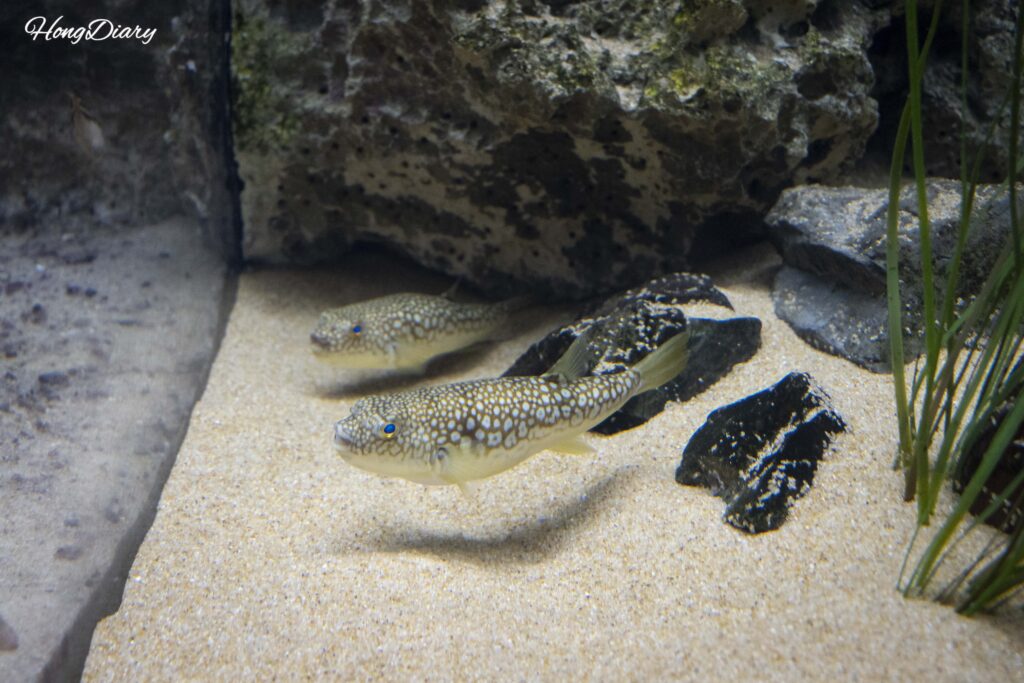
This is the section that defines Kaikyokan and the one that sets it apart from every other aquarium in Japan. Shimonoseki handles the vast majority of Japan’s fugu supply, and this exhibit reflects that heritage with one of the world’s largest collections of living pufferfish — over 100 species, from common varieties to species most visitors have never seen before.
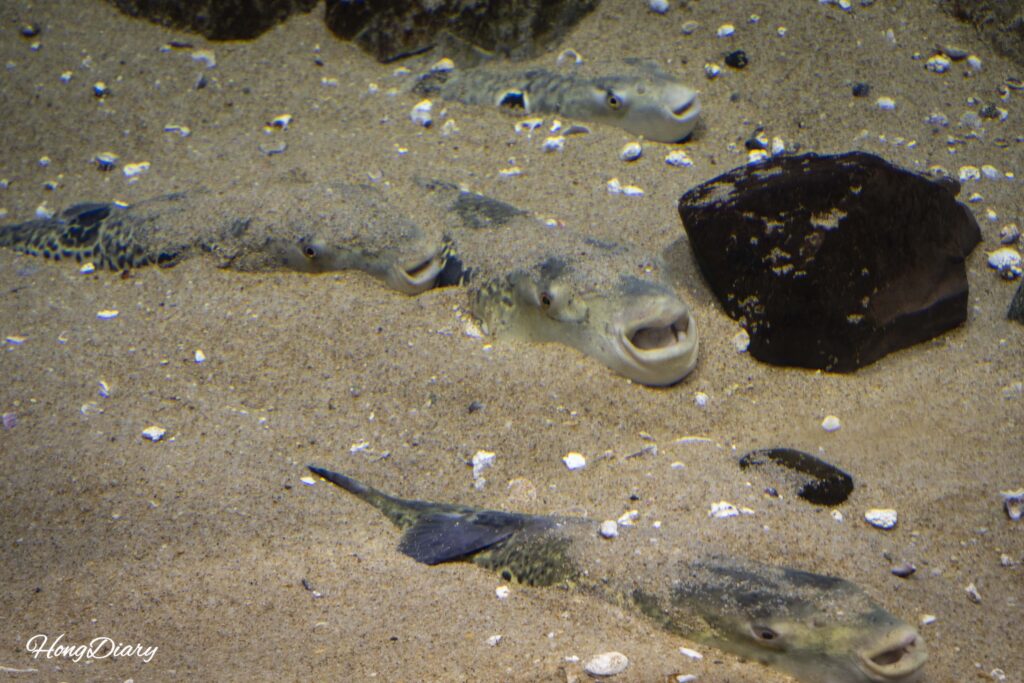
The tiger pufferfish (torafugu) area comes first, and it nearly fooled me. The tank looked half-empty at first glance — plenty of rock and sand, a few pufferfish drifting around, but not much action. Then my kid pointed at the sand: “Something’s sticking out down there.” Dozens of tiger pufferfish were buried just beneath the surface, their eyes barely poking out, sleeping in the substrate. The species gets its name from faint stripe patterns on its body, and watching them rest nose-up in the sand was genuinely one of the more memorable things I have seen in any aquarium.
From there, the route passes through the fugu spawning grounds, a section on pufferfish in Japanese food culture, and then opens into a sprawling gallery of global pufferfish species — tiny ones no bigger than a thumb, others bristling with spines, a few that looked more like tropical reef fish than anything you would associate with fugu. It felt less like walking through an exhibit and more like visiting a pufferfish village.
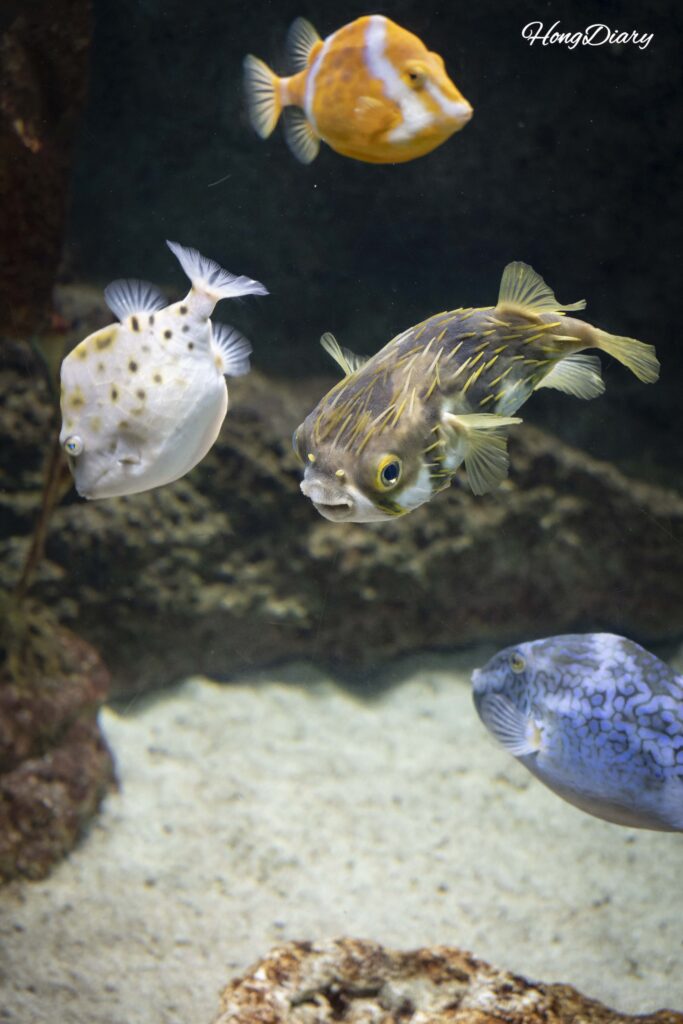
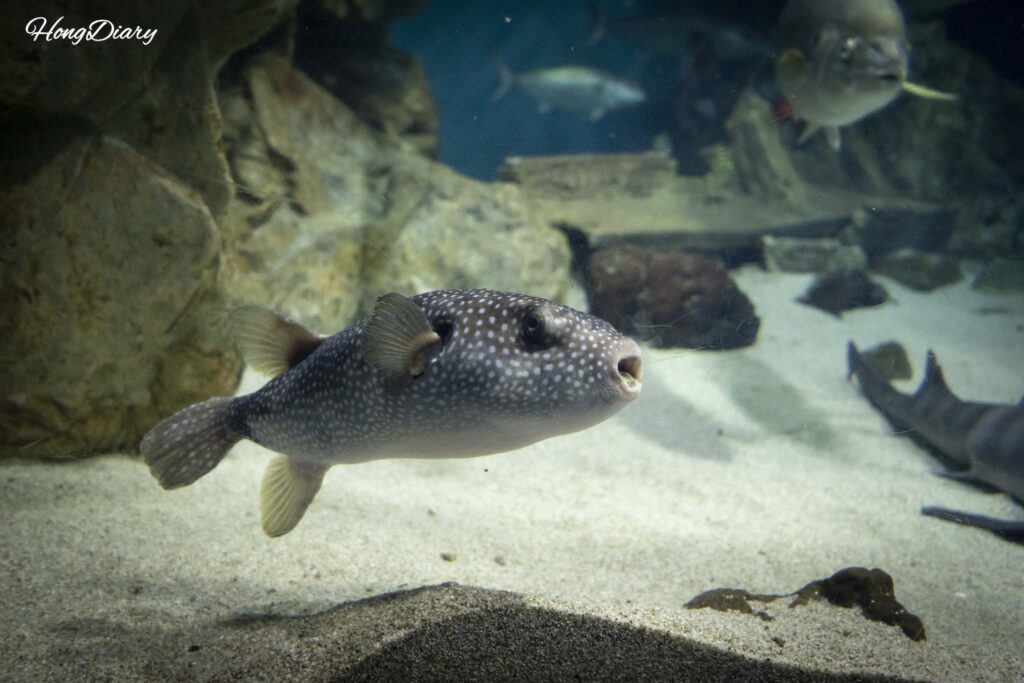
The ocean sunfish (manbou) tank is also in this section. The sunfish was active and drifting slowly toward the viewing glass when I visited, but I noticed what appeared to be damage or a skin condition around its mouth area — possibly from contact with the tank walls, though I could not confirm the cause. It was hard not to feel a bit uneasy about it. The rest of the tank, however, was spotlessly maintained.
Jellyfish, Coral, and the Amazon
After the fugu galleries, the route shifts through several smaller environments: Shimonoseki’s rivers and freshwater ecosystems, a jellyfish gallery, coral reef tanks, and a tropical rainforest section.
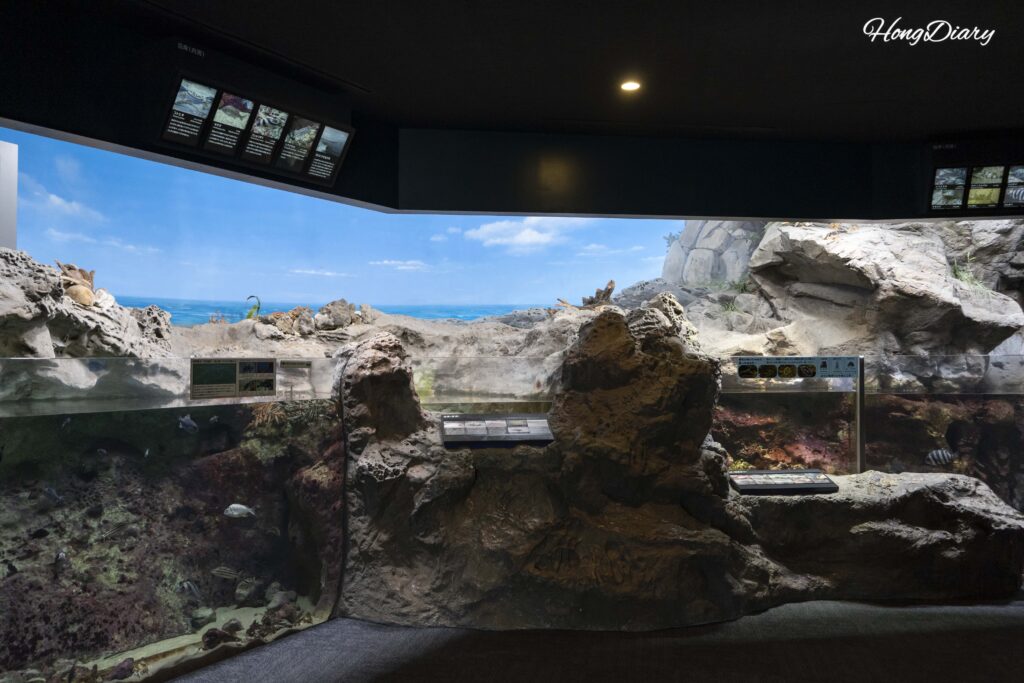
I spent about 30 minutes here, largely because of my husband. He never cared much about aquariums — or any hobby, really — until two years ago, when he started keeping six Ornate Diamondback Terrapin turtles at home and built a sump-style overflow tank in our living room. Since then, every aquarium visit turns him into the most excited person in the building, and our five-year-old barely keeps up. He stood in front of the blackwater Amazon tank for a solid five minutes, staring at the driftwood layouts and filtration setups the way some people study paintings. The section included arapaima and other large Amazonian species that dwarfed any adult standing next to the glass, all set against natural-looking substrates and dense planting. The crowd was thicker here, so I could not get good photos, but the scale of the freshwater exhibits was more impressive than I expected.
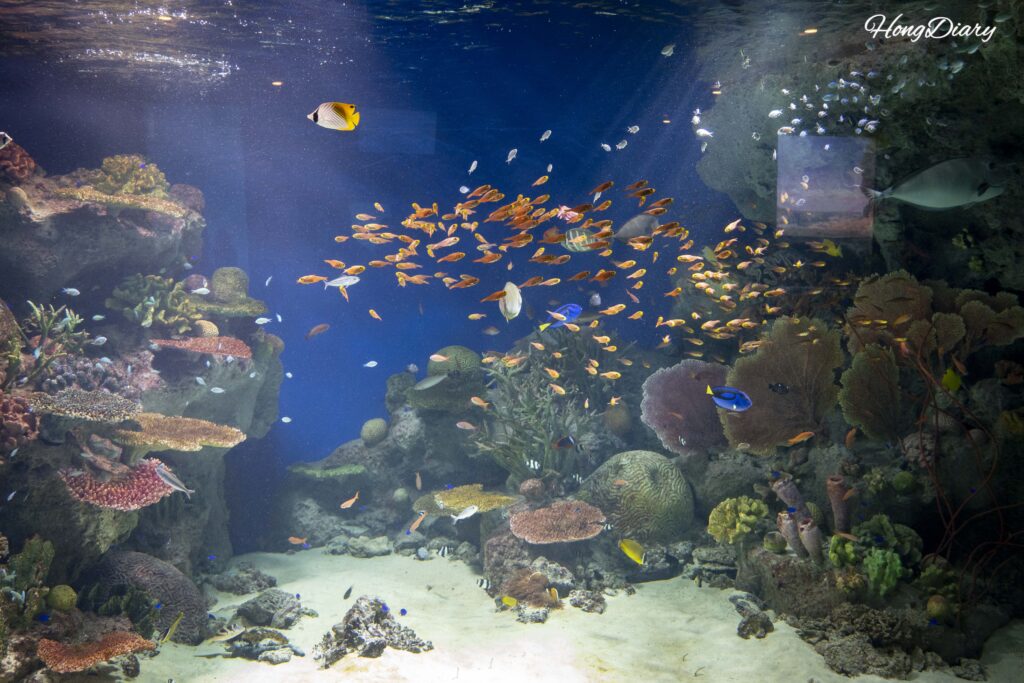
Nearby, there is a large colorful reef tank flanked by benches where visitors can sit and watch the fish drift by. After an hour-plus of walking, that pause felt earned. Take it.
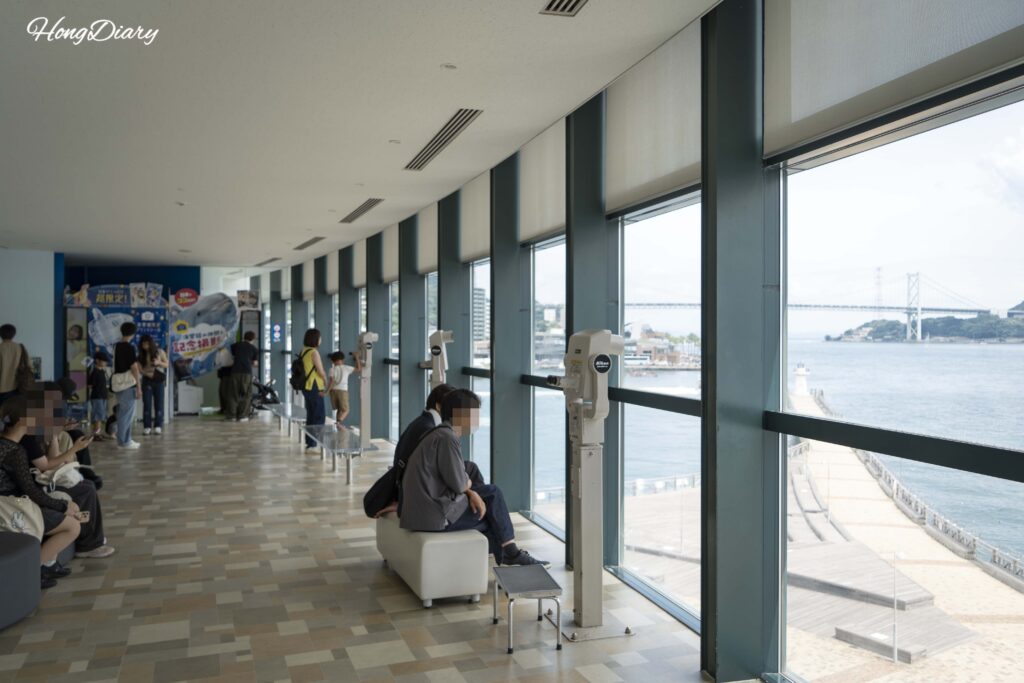
Between sections, the building also offers rest spots with views of the Kanmon Strait through large windows — another reminder that Kaikyokan’s location is doing a lot of the heavy lifting in terms of atmosphere.
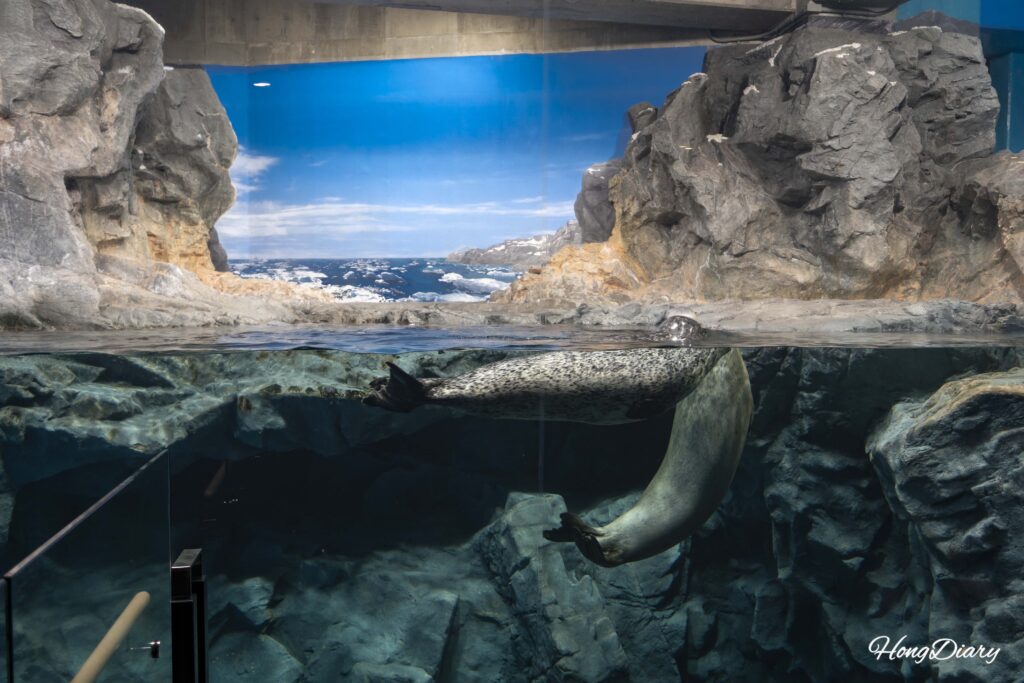
Past the rest area, the route leads through the spotted seal and finless porpoise (sunameri) tanks. The spotted seals were active — one drifted past the viewing glass in lazy circles while visitors lined up for photos. The sunameri, small beakless cetaceans native to the Kanmon Strait, moved through the water with a quiet, unhurried rhythm that felt like a deliberate change of pace before the louder sections ahead.
The Staff Pick Tank — and a Takoyaki-Shaped Octopus House
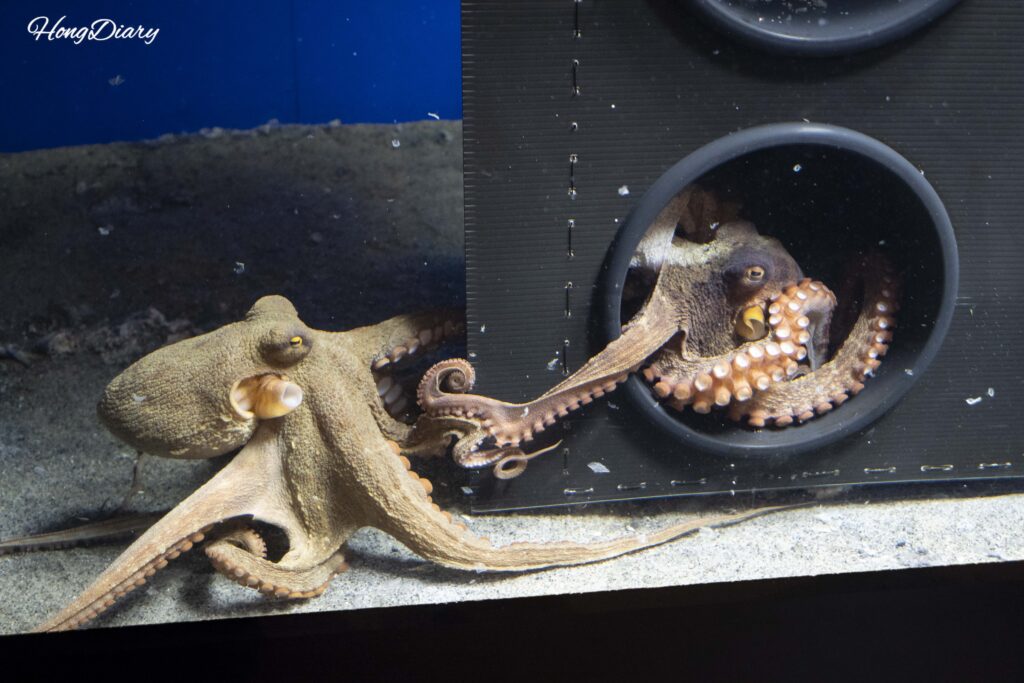
One curious detour: a “Staff’s Recommended Creatures” display features octopuses housed in small compartments shaped like a takoyaki (octopus ball) cooking mold, complete with takoyaki-themed illustrations on the walls nearby. If you are not familiar, takoyaki are fried octopus snacks — so housing live octopuses in a vessel that mimics the food made from them is, at best, an odd creative choice. It’s a style of humor you encounter occasionally in Japanese attractions, and reactions will vary. I found myself staring at the label (“Staff’s Top Pick!”) and feeling a bit conflicted.
Penguin Village — Japan’s Largest Penguin Exhibit
This is one of Kaikyokan’s signature attractions, and it lives up to the claim. The penguin area spans two main zones: an indoor sub-Antarctic section on the lower level (B-1) and an outdoor Humboldt Penguin Special Protection Area on the upper floor (B-2).
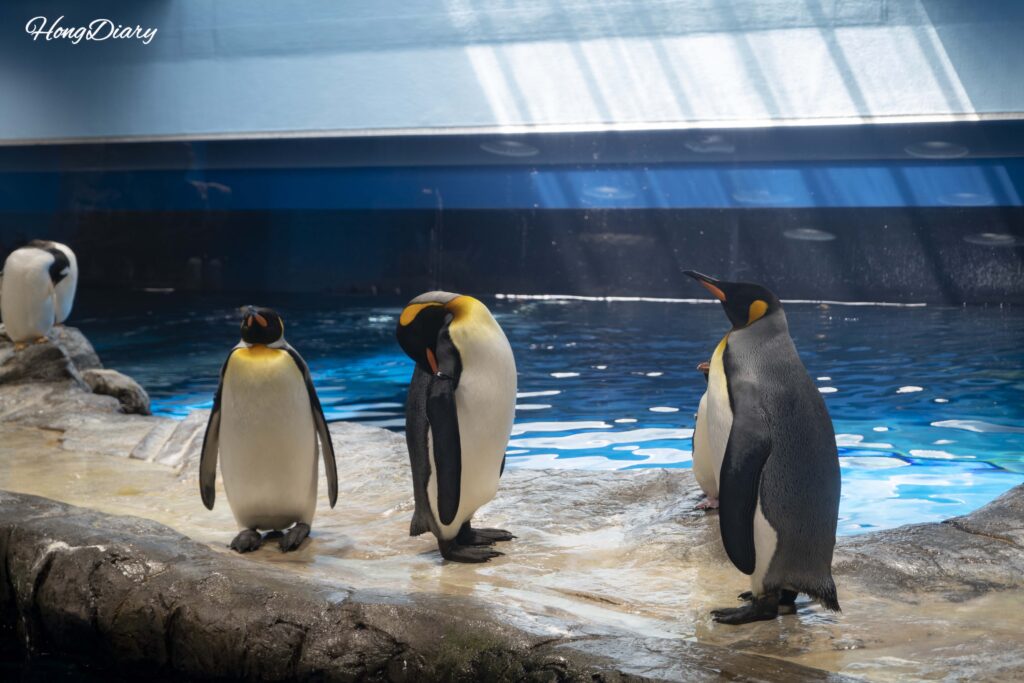
The indoor section features a tunnel-style walkway where penguins swim directly overhead and alongside you, sunlight filtering through the water and casting shifting patterns across the corridor. It is the closest you will get to feeling like you are walking through their habitat rather than watching from outside it.
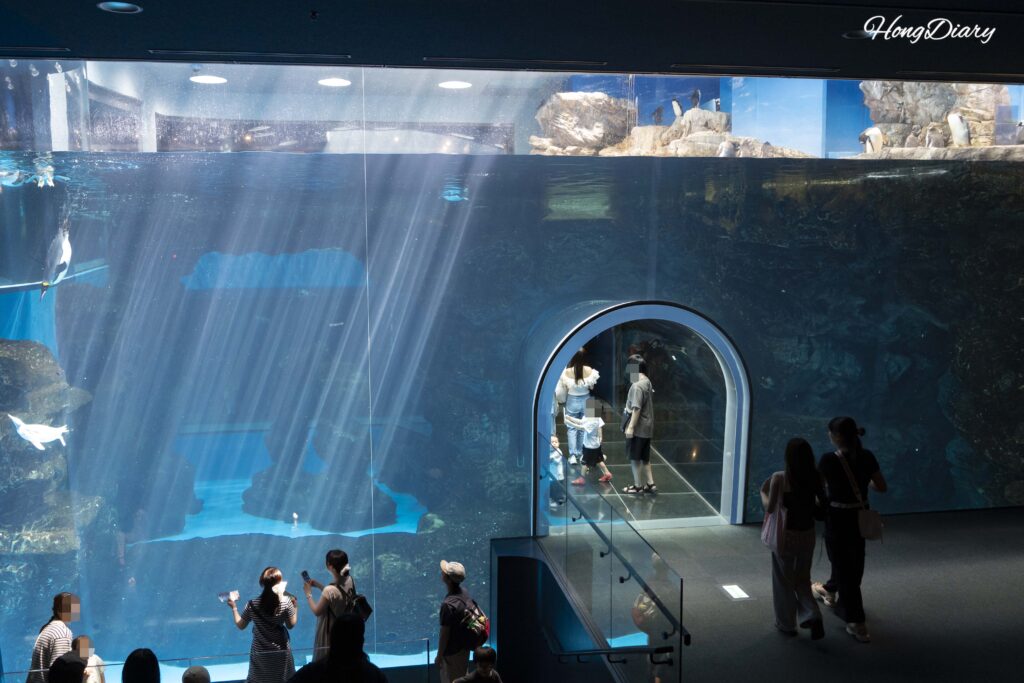
Upstairs, the Humboldt penguin reserve is modeled after the species’ natural range along the coasts of Peru and Chile. This is an outdoor enclosure, so on warm days you can walk at eye level with penguins basking in the sun, occasionally locking eyes with one that tilts its head at you. The Humboldt penguin is classified as a vulnerable species, and seeing them this close in a habitat designed around their natural range adds a layer of awareness to the visit.
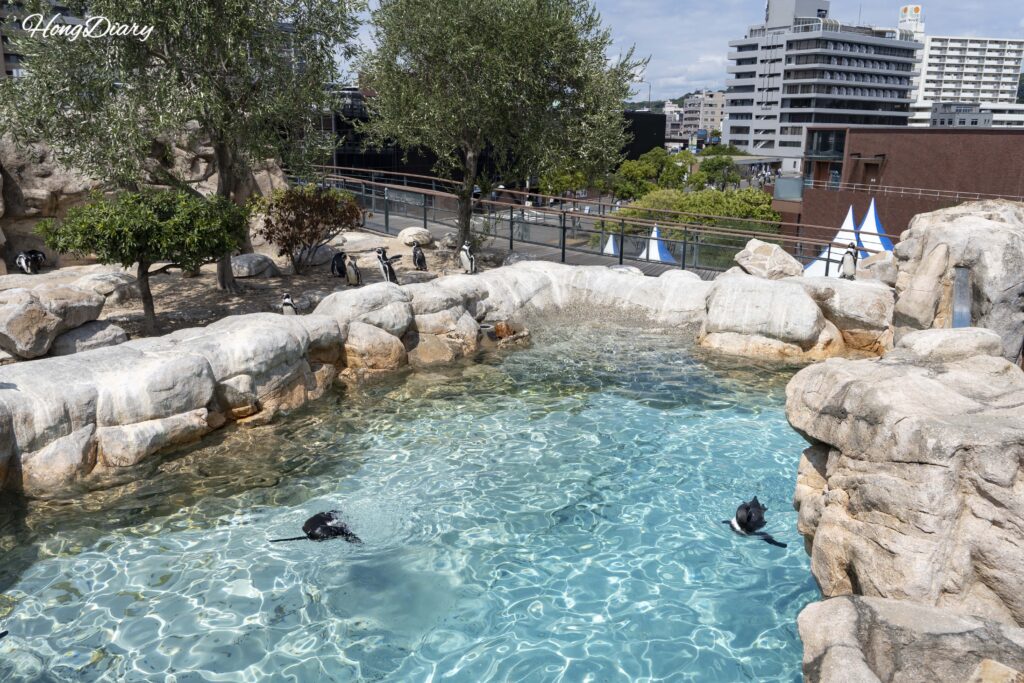
Fair warning: because it is an open-air space, the smell from penguin droppings can be noticeable on hot days. On the afternoon I visited, the heat also meant fewer visitors in this section, so I had plenty of room to enjoy it quietly. My kid, less patient with the heat, bolted toward the vending machines near the Dolphin Stadium after about ten minutes.
The Dolphin and Sea Lion Show
The Dolphin Stadium sits in Zone D, an outdoor arena with a roofed seating area. Shows run three to four times daily — on my visit, sessions were at 11:00 AM, 12:30 PM, 2:00 PM, and 3:30 PM — but the exact schedule changes, so check the official website or the signboard near the entrance on the day of your visit. Each performance runs 15–20 minutes and features dolphins and sea lions performing together.
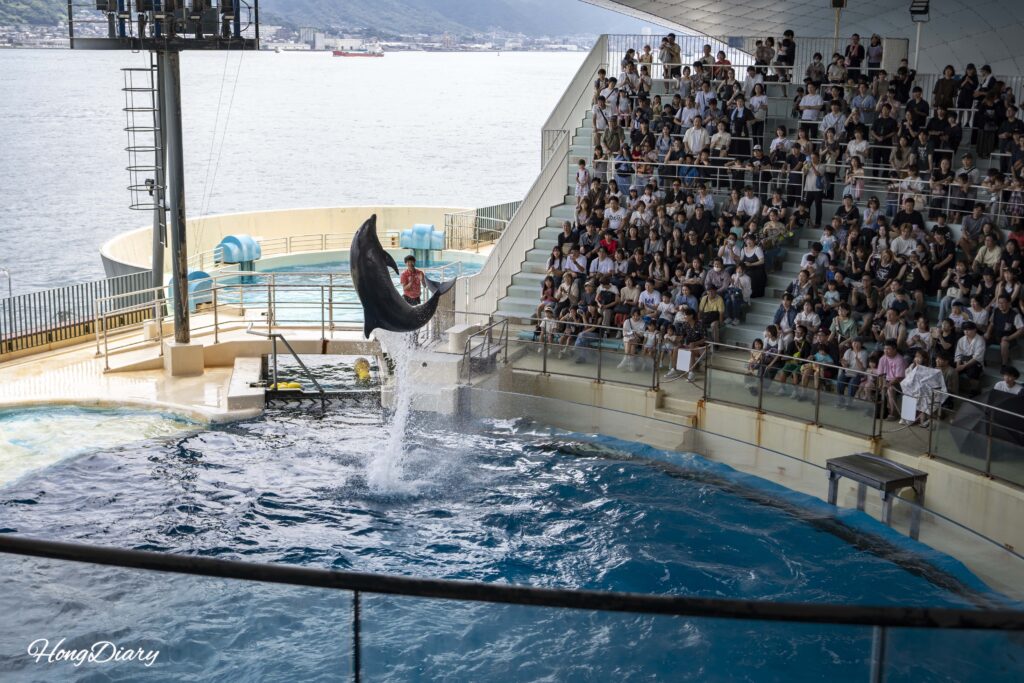
If you want a seated view, arrive at least 30 minutes before showtime. I did not, and ended up wedged into a standing crowd, barely managing to take photos on tiptoe while my husband held our kid on his shoulders. The energy from the staff was infectious — the whole audience clapped and cheered along — and the show is entirely in Japanese, but the atmosphere carries it. Language was never a barrier.
One note: front-row seats can catch splash during cooler months when the dolphins are particularly active, so keep that in mind if you are carrying electronics.
Gift Shop, Restaurant, and the Blue Whale
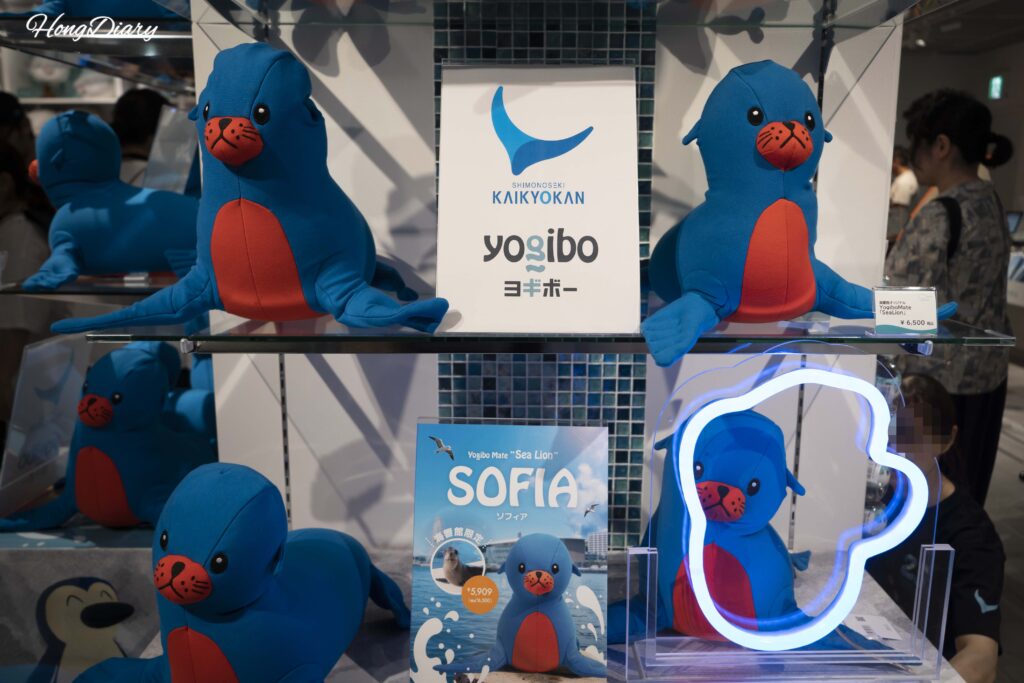
Before the exit, you pass through “naminowa,” the gift shop stocked with marine-themed plush toys, stationery, and local goods. A spotted seal plush caught my eye at ¥6,500 (~$41.15 USD / ~€36.70 EUR) — tempting but ultimately resisted.
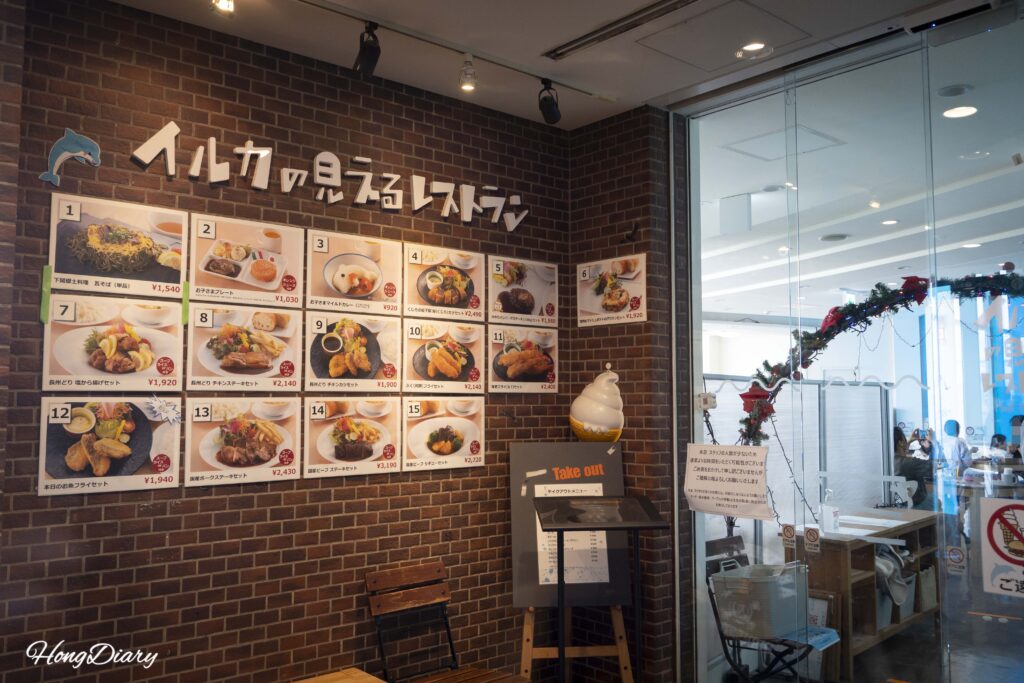
The on-site restaurant sits near the exit with views overlooking the dolphin pool. It operates on weekends and holidays from 11:00 AM to 4:30 PM (extended to 7:30 PM during Night Aquarium events). The menu has about 15 options, from a children’s curry plate at ¥920 (~$5.80 USD / ~€5.20 EUR) to fried fugu at ¥2,140 (~$13.55 USD / ~€12.10 EUR), plus desserts like ice cream and pudding. I have never actually eaten here — every time I visit Kaikyokan, it coincides with a Karato Market sushi day, so the market wins — but for families spending a full day at the aquarium, it is a convenient option.
Look up before you leave: suspended from the ceiling in the final hall is a full-body skeleton of a blue whale — the only one of its kind on display in Japan. After two-plus hours of live exhibits, ending on a 26-meter skeleton puts the scale of ocean life into a different kind of perspective.
Stroller and wheelchair users: Kaikyokan is notably well-designed for accessibility. Free stroller and wheelchair rentals are available at the entrance. Elevators connect every floor along the main route, and at the Dolphin Stadium, staff actively guide visitors to designated parking areas for strollers and wheelchairs. This was one of the things that stood out to me as a parent — the entire flow felt planned with mobility needs in mind.
What Most Visitors Miss — and Why Kaikyokan Is Worth Your Time
The reviews that call Kaikyokan Aquarium in Shimonoseki “small and overpriced” are not wrong about the size. It is smaller than Osaka’s Kaiyukan or Okinawa’s Churaumi. But those reviews tend to treat an aquarium like a checklist — biggest tank, rarest fish, most Instagram-worthy angle — and Kaikyokan is not playing that game.
What makes this place stick with me is the accumulation of smaller details. The opening gallery where the tank and the actual Kanmon Strait share the same frame. The sardine tunnel that ties into a local setsubun tradition most visitors never hear about. The sand full of sleeping tiger pufferfish that you would miss entirely if a five-year-old did not point at the ground. The husband who used to find aquariums boring but now kneels in front of blackwater tanks evaluating substrate choices. These are not things that show up in a star rating.
The renovation cleaned things up noticeably — sharper lighting, better flow between sections, the new Finfoot Beach sea lion area — and the overall condition of the tanks and facilities felt well-maintained. That said, the ocean sunfish’s apparent mouth injury and the takoyaki-themed octopus display are the kinds of things that might land differently depending on your sensitivity to how animals are exhibited. Awareness around captive animal displays is shifting, and it is fair to sit with that discomfort. Those moments aside, the aquarium’s effort to reproduce local ecosystems — from the strait currents to the river habitats to the penguin climates — felt more intentional than most aquariums I have visited in Japan.
If you are building a Shimonoseki itinerary, pairing Kaikyokan with Karato Market makes for a satisfying waterfront half-day.
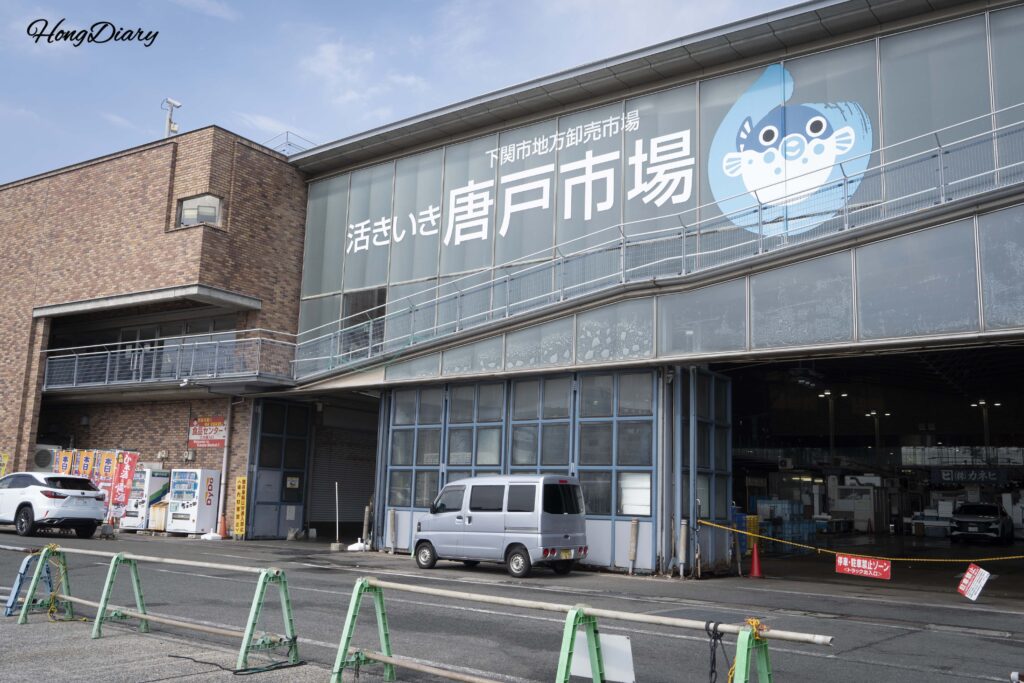
The market is a six-minute walk away, and I put together a complete guide to timing your visit around the weekend sushi event: I Built My Own Sushi Tray at Karato Market and Ate It by the Kanmon Strait.
Shimonoseki is the kind of city that does not fight for your attention the way Osaka or Tokyo does. It sits quietly at the edge of Honshu, holding onto its fishing heritage, its fugu culture, and an aquarium that mirrors the strait right outside its windows. Kaikyokan is not the biggest aquarium in Japan, and it is not trying to be. But if you walk in knowing where to look, it is one of the most genuinely local ones — and that, for me, has always been the better experience.
Frequently Asked Questions About Visiting Kaikyokan Aquarium
How much does it cost to enter Kaikyokan Aquarium in Shimonoseki?
Standard admission as of 2026 is ¥2,500 for adults including high school students (~$15.80 USD / €14.10 EUR), ¥1,200 for middle and elementary school students ($7.60 USD / €6.80 EUR), and ¥500 for children aged three and older ($3.15 USD / €2.85 EUR). Tickets can be purchased at the staffed counter or self-service kiosks at the entrance, and card payments are accepted. An annual pass is also available at ¥5,000 for adults ($31.65 USD / ~€28.25 EUR), which pays for itself in just two visits and includes discounts at partnered facilities across Yamaguchi and Fukuoka Prefectures.
Prices converted at approximately $1 USD ≈ ¥158 / €1 EUR ≈ ¥177 (as of October 2026). Rates may fluctuate.
How do I get to Kaikyokan Aquarium from Shimonoseki Station or Kyushu?
From Shimonoseki Station, most local buses stop at Kaikyokanmae, and the total travel time including the short walk from the bus stop is about 10–15 minutes. Uber is also available in Shimonoseki, and the fare from the station to the aquarium runs roughly ¥1,400–¥1,600 (~$8.85–$10.15 USD / ~€7.90–€9.05 EUR). If you are coming from the Kyushu side — Kokura or Mojiko — take the Kanmon Ferry from Marine Gate Moji. The one-way fare is ¥400 for adults (~$2.55 USD / €2.25 EUR) and ¥200 for children ($1.25 USD / ~€1.15 EUR), cash only. The ferry crossing takes roughly five minutes to Karato Terminal, and the aquarium is a three-minute walk from there.
How long should I plan to spend at Kaikyokan Aquarium?
A thorough visit including the exhibits and one dolphin show takes approximately 2 to 2.5 hours. The aquarium follows a fixed walking route from the 3rd floor down through the basement and all major zones to the outdoor areas — the Kanmon Strait tanks, fugu galleries, penguin village, and dolphin stadium — with rest areas and benches positioned throughout. Families with young children or visitors who want to catch multiple show times may want to allow closer to three hours.
When is the dolphin and sea lion show, and how do I get a good seat?
Shows typically run three to four times daily, with sessions around 11:00 AM, 12:30 PM, 2:00 PM, and 3:30 PM during the schedule I experienced. However, the exact times and frequency change seasonally and depending on animal conditions, so check the official Kaikyokan website or the signboard near the entrance on the day of your visit. Each performance lasts about 15–20 minutes. To secure a seated spot, arrive at the Dolphin Stadium at least 30 minutes before showtime. The show is conducted entirely in Japanese, but the energy and visual spectacle make it enjoyable regardless of language.
Is Kaikyokan Aquarium family-friendly and accessible for strollers or wheelchairs?
Yes, Kaikyokan is well-designed for families and visitors with mobility needs. Free stroller and wheelchair rentals are available at the entrance. Elevators connect every floor along the main route, and at the outdoor Dolphin Stadium, staff members guide visitors to designated stroller and wheelchair parking areas. The walking paths are spacious enough for easy navigation, and the building includes multiple rest areas with seating — including benches in front of large display tanks and spots with views of the Kanmon Strait — so parents and older visitors can take breaks throughout the visit.
Are there combo tickets that include other Shimonoseki attractions?
Yes. A combo ticket bundling Kaikyokan with Kaikyo Yume Tower is available at ¥2,800 for adults (~$17.70 USD / €15.80 EUR) and ¥1,200 for juniors ($7.60 USD / €6.80 EUR), saving ¥550 and ¥450 respectively compared to buying each ticket separately. Another combo pairs the aquarium with the Hai! Karatto Yokocho Ferris Wheel located a three-minute walk away at ¥2,800 for adults ($17.70 USD / €15.80 EUR). A three-facility pass covering Kaikyokan, the Kanmon Strait Museum, and the Kyushu Railway Museum costs ¥3,000 for adults ($19.00 USD / ~€16.95 EUR), with validity periods of five to seven days so you do not need to visit all three on the same day. All combos are sold at each facility’s ticket counter.
Can I visit Karato Market and Kaikyokan Aquarium on the same day?
Absolutely — in fact, it is one of the most efficient ways to spend a day on the Shimonoseki waterfront. Karato Market is roughly a six-minute walk (450 meters) from Kaikyokan. The key detail to plan around is that the market’s popular sushi stalls only operate on specific days, usually Friday through Sunday. On those days, you can grab fresh sushi at the market in the morning and then walk over to the aquarium afterward. On weekdays without the sushi event, the market is open but the stalls are closed and the atmosphere is much quieter. Check the market’s official website at karatoichiba.com for the latest schedule before your visit.