
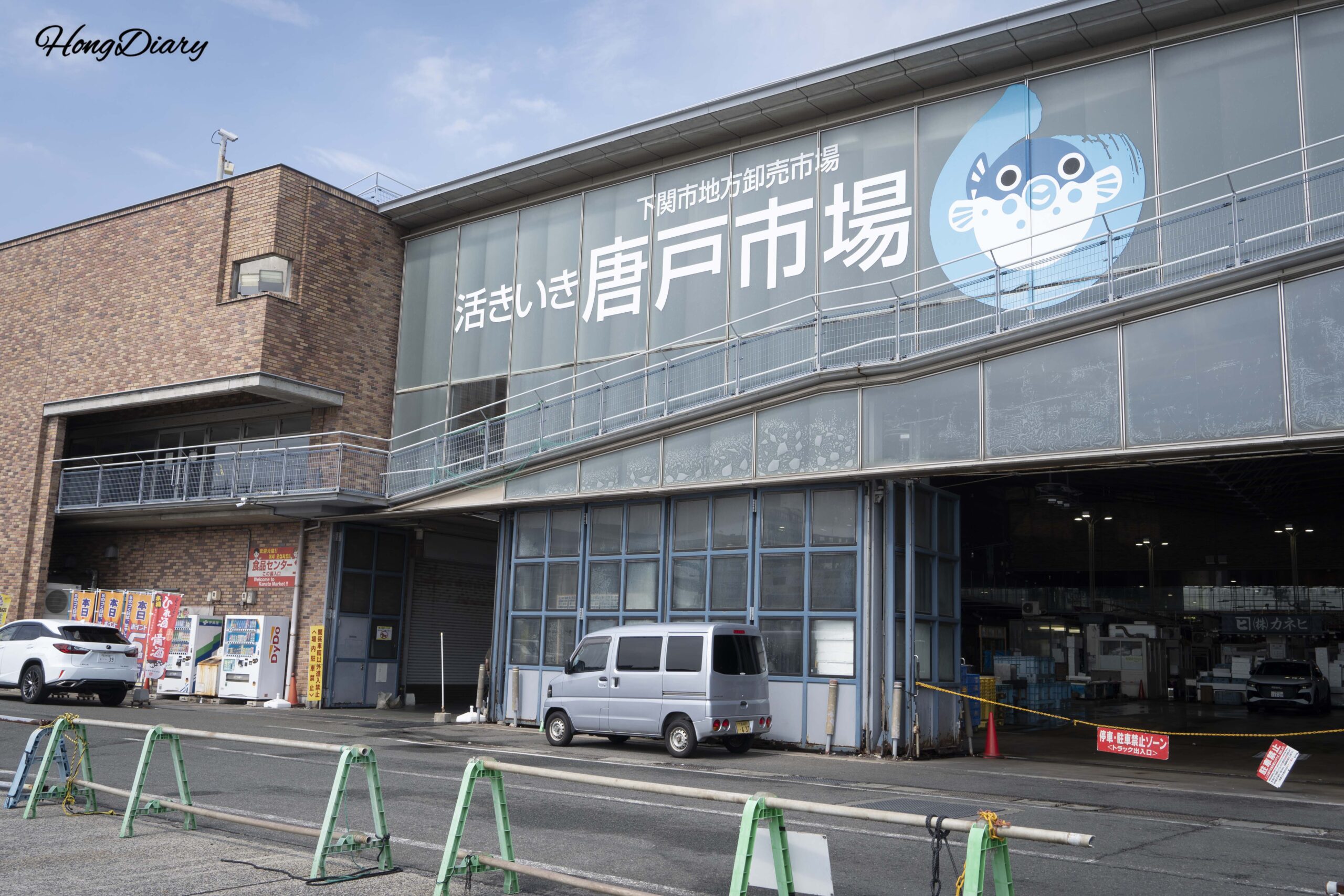
Sitting on a concrete ledge with a plastic tray of hand-picked sushi, watching cargo ships drift through the Kanmon Strait while the Kyushu coastline shimmered across the water — that was the moment I understood why Karato Market in Shimonoseki keeps drawing people back. This is not a polished restaurant experience. It is a loud, crowded, rain-or-shine fish market where you walk from stall to stall, point at the pieces you want, and build your own tray one nigiri at a time. And then you eat it all outside, right by the sea.
Table of Contents
Karato Market Essential Information: Hours, Location & Quick Facts
| Detail | Information |
|---|---|
| Official Name | Karato Market / Karato Ichiba (唐戸市場) |
| Address | 5-50 Karato-cho, Shimonoseki, Yamaguchi 750-0005, Japan (〒750-0005 山口県下関市唐戸町5-50) |
| Phone | +81 83-231-0001 |
| Regular Market Hours | Mon–Sat: 5:00 AM – 3:00 PM / Sun & Holidays: 7:00 AM – 3:00 PM (hours vary by shop) |
| Sushi Event Hours | Fri & Sat: 8:00 AM – 3:00 PM / Sun & Holidays: 7:00 AM – 3:00 PM |
| Sushi Event Days | Fridays, Saturdays, Sundays, and national holidays only |
| Admission | Free |
| Payment | Cash recommended — some stalls accept cards, but many do not. Bring yen to be safe. |
| Official Website | karatoichiba.com |
Prices in this guide are listed in Japanese yen (¥) with approximate conversions in USD and EUR. Exchange rates used: $1 USD ≈ ¥154 / €1 EUR ≈ ¥173 (as of September 2026). Rates may fluctuate.
Shimonoseki sits at the southwestern tip of Honshu, Japan’s main island, separated from Kyushu by the narrow Kanmon Strait. For centuries this port city has served as a gateway between Korea and Japan, and it remains one of the only Japanese cities reachable by overnight ferry from Busan. It is also widely considered the fugu (blowfish) capital of Japan, handling more of the country’s catch than anywhere else — which means seafood is deeply woven into the local identity. Karato Market is where that identity becomes something you can taste.
Karato Market is a working wholesale fish market open every day. However, the sushi stalls that most visitors come for are not a permanent fixture — they only appear during a special weekend event called Iki-iki Bakangai (活きいき馬関街), held on Fridays, Saturdays, Sundays, and national holidays. If you show up on a Tuesday expecting sushi trays, you will find a regular wholesale market instead.
How to Get to Karato Market Shimonoseki
There is no train station right at the market, so getting there requires a bus, ferry, or car. Here are the main routes.
From JR Shimonoseki Station by Bus
This is the most common route. Exit the station and head to the ground-floor bus terminal. Bus stops are numbered 1 through 4, with queue lines marked on the pavement. Every bus departing from stops 1–4 stops at Karato, so you do not need to memorize a specific route number. The ride takes roughly 10 minutes, and the fare is ¥260 (~$1.69 / €1.50).
A quick note on how city buses work in Japan, since the system is different from most countries: board from the rear door, take a numbered ticket from the machine as you step on, and pay when you exit through the front door. The fare display above the driver shows your amount based on your ticket number. Have coins or small bills ready — most bus machines do not accept credit cards.
If you want to visit Kaikyokan (the Shimonoseki aquarium) before heading to the market, avoid bus numbers 121 and 127, as those skip that stop. The aquarium is only a 6-minute walk (about 450 meters) from Karato Market along a scenic waterfront deck, so combining both in one morning is easy.
Walking from JR Shimonoseki Station is technically possible — about 34 minutes on foot — but I would not recommend it. I tried it back in 2015 on my first visit to this city, drawn in by the quiet harbor and rows of docked fishing boats. The route runs along an industrial road with heavy truck traffic and almost no pedestrians. It felt isolated, and I would not repeat it, especially with luggage or children.
From Shin-Shimonoseki Station (Shinkansen)
If you are arriving by bullet train, take Bus No. 36 from the east exit. The ride is about 25 minutes (18 stops). Get off at the “Karato” stop and walk 6 minutes (roughly 400 meters) to reach the market.
From Mojiko or Kitakyushu by Ferry
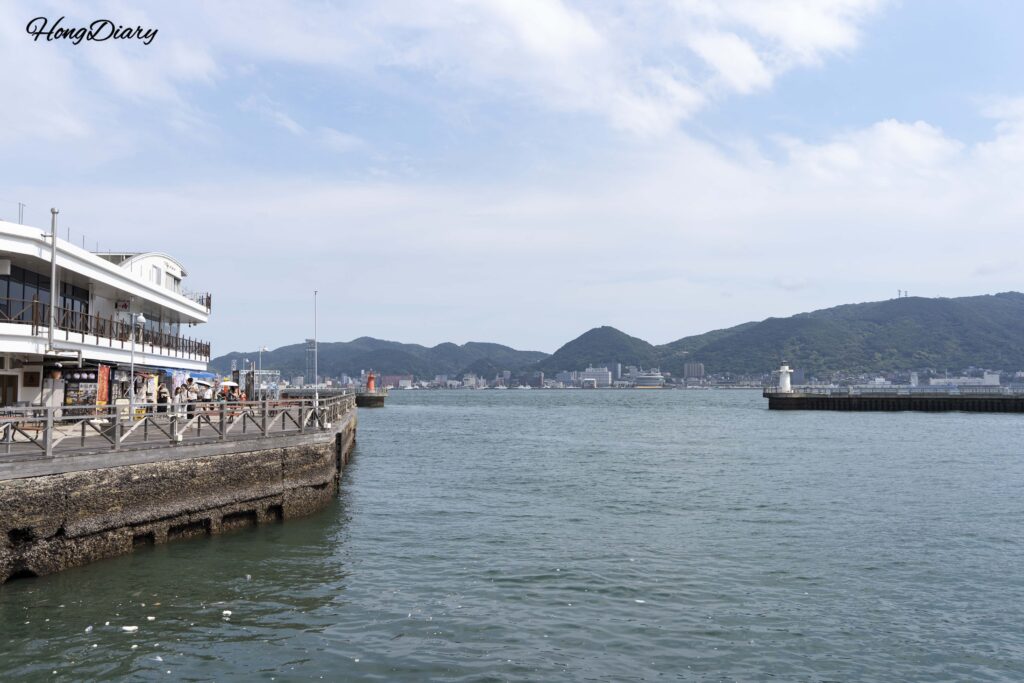
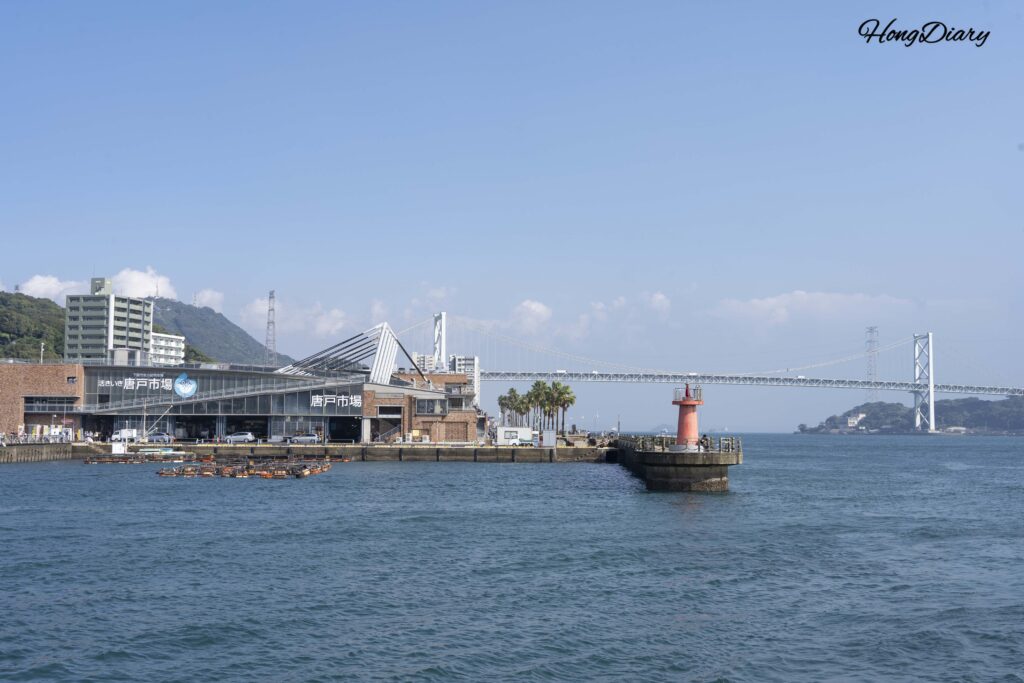
If you are coming from the Kyushu side — say, after visiting Mojiko Retro or arriving from Kokura — the Kanmon Strait ferry is the fastest and most scenic option. Head to the Kanmon Ferry Mojiko Port boarding point, officially called Marine Gate Moji (マリンゲートもじ). Tickets cost ¥400 per adult (~$2.60 / €2.31) and ¥200 per child (~$1.30 / €1.16), cash only. The crossing takes just 5 minutes, landing at the Karato Terminal. From there, it is a 3-minute walk (290 meters) to the market entrance. You will pass through Kamon Wharf (カモンワーフ), a small waterfront shopping mall with restaurants and souvenir shops, and then follow the boardwalk straight to the market.
By Taxi or Uber
Uber operates in the Shimonoseki area. A ride from JR Shimonoseki Station to Karato Market costs roughly ¥1,600 (~$10.39 / €9.25). This is a solid option for families or groups, especially if you are traveling with small children or heavy bags.
Coming from Busan, South Korea?
Shimonoseki is one of the rare Japanese cities you can reach by overnight ferry from Busan. Two ships operate this route: the Seonghee and the Hamayuu. I took the Seonghee with my family and stayed in a Korean-style ondol floor cabin — a heated floor setup where you sleep on mats, no beds. The Hamayuu, on the other hand, offers Japanese-style tatami rooms and a wider range of shared cabin options including bed-style berths. The two ships feel quite different, so it is worth knowing what you are booking.
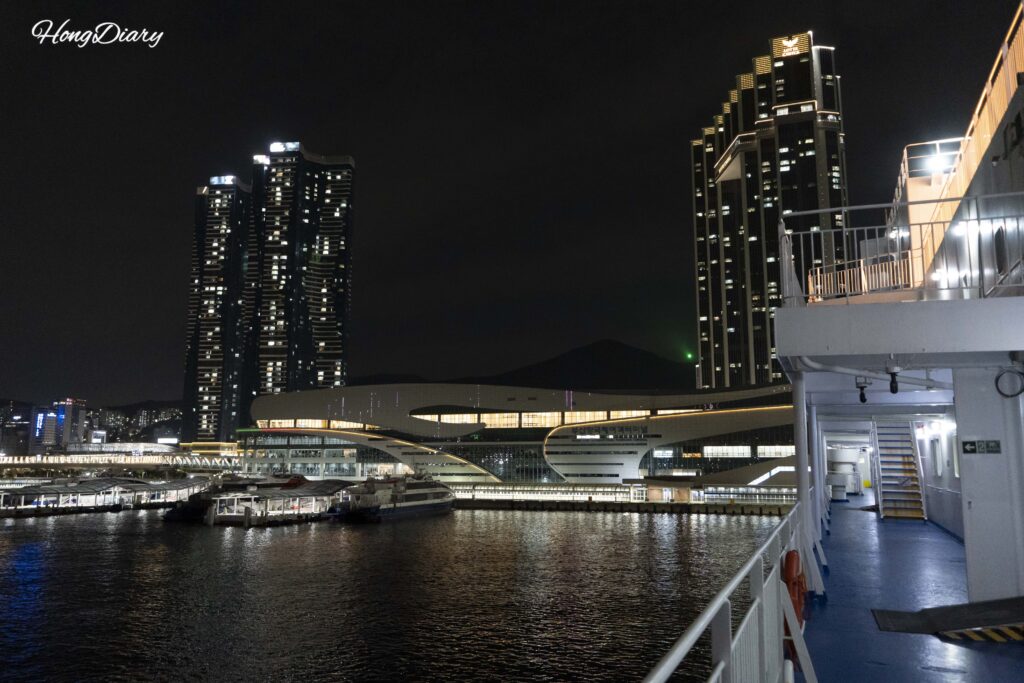
If you are considering this route, I put together a detailed breakdown of what it is actually like inside the Seonghee, including cabin types, onboard facilities, and fares.
Before boarding, it helps to know what to expect at the departure point.
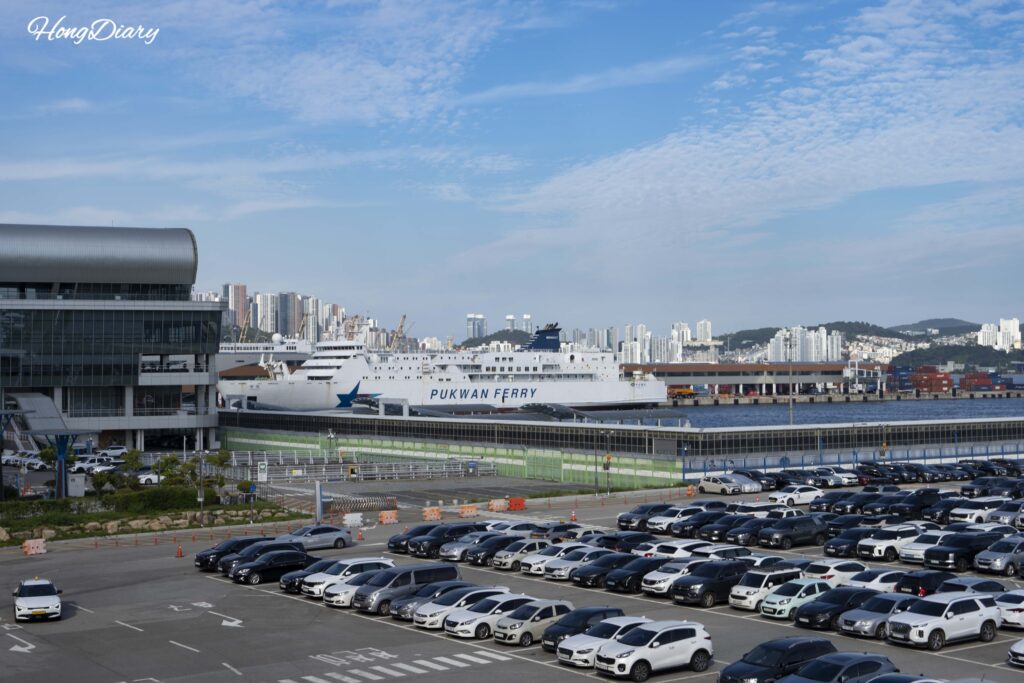
I covered everything inside the Busan International Ferry Terminal — the shops, how to fill out Visit Japan Web, luggage rules for each ferry line — in this terminal guide.
When to Visit — Understanding the Weekend Sushi Event
This is the single most important thing to plan around. Karato Market operates daily as a wholesale fish market, but the experience most visitors are looking for — walking between open sushi stalls, picking pieces one by one, and eating by the waterfront — only happens during a recurring event called Iki-iki Bakangai (活きいき馬関街). The name translates roughly to “Lively Bakan Street,” with Bakan being the old historical name for Shimonoseki. Think of it as a weekend sushi festival held inside a working market. Dozens of vendors set up stalls every Friday, Saturday, Sunday, and national holiday. Outside of those days, the sushi stalls simply do not exist.
| Day | Sushi Event Hours |
|---|---|
| Friday & Saturday | 8:00 AM – 3:00 PM |
| Sunday & National Holidays | 7:00 AM – 3:00 PM |
| Monday – Thursday | No sushi event (regular wholesale market only) |
Sushi Event Calendar: October–December 2026
Below is the confirmed schedule based on the official Karato Market website. Bold dates are when the sushi stalls operate. All other dates are regular market days with no sushi event.
| Month | Sushi Event Dates | Hours | Notes |
|---|---|---|---|
| October | Every Fri–Sun: 2–4, 9–12, 16–18, 23–25, 30–31 | Fri & Sat 8:00 AM – 3:00 PM / Sun & Holidays 7:00 AM – 3:00 PM | Oct 12 (Sports Day) = holiday hours |
| November | Every Fri–Sun: 1, 3, 6–8, 13–15, 20–23, 27–29 | Same as above | Nov 3 (Culture Day) & Nov 23 (Labor Thanksgiving) = holiday hours |
| December | Every Fri–Sun: 4–6, 11–13, 18–20, 25–27 | Same as above | Check the official website for possible year-end closures |
Always double-check the official calendar before your visit. Stall participation and hours can shift depending on weather and ingredient availability. The closing time is 3:00 PM across the board, but popular items sell out well before that.
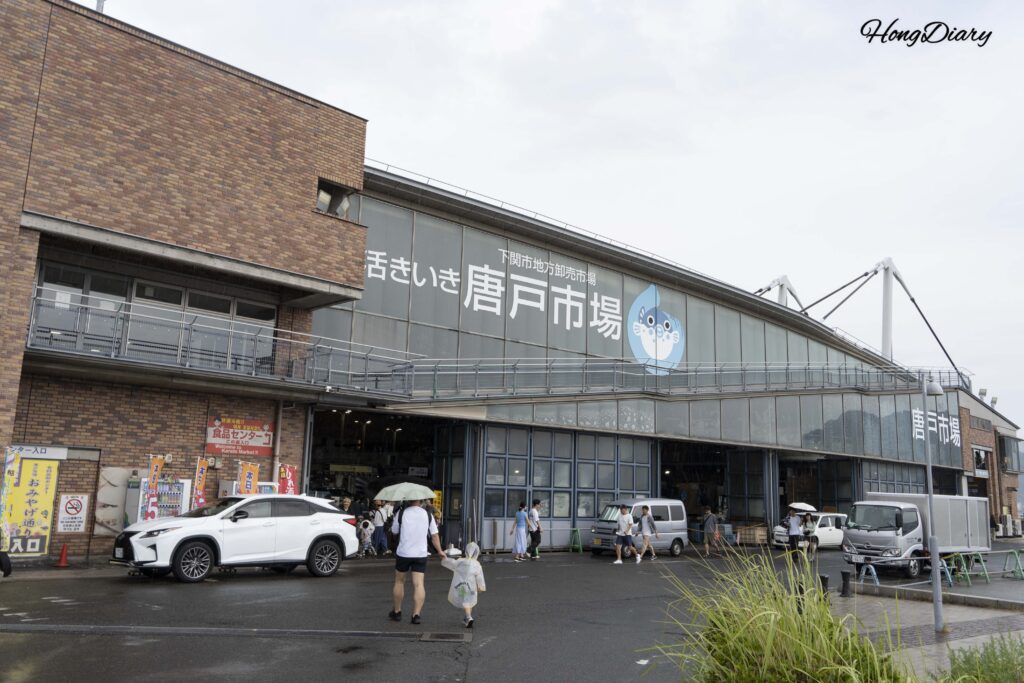
A word about weather: Shimonoseki’s skies can shift fast. The day I visited started bright and cloudless, then a sudden downpour hit within the hour. The market building itself is indoors, so browsing and buying sushi stays dry. But the walk from the bus stop or ferry terminal to the entrance is exposed, and — more importantly — the waterfront deck where most people sit and eat is completely open-air. Pack a compact umbrella or a rain poncho so you are not stuck eating inside if the sky turns on you.
How to Order at the Sushi Stalls
If this is your first time at a Japanese fish market, the ordering system might feel unfamiliar. Here is how it works — and one quirk that catches most first-timers off guard.
Walk along the first-floor corridor and browse the stalls. Each vendor displays their sushi in open refrigerated cases with handwritten price tags (mostly in Japanese, though some have photos). When you find a stall you like, point at the pieces you want, and the staff will place them into a plastic takeout tray. Pay at that stall before moving on.
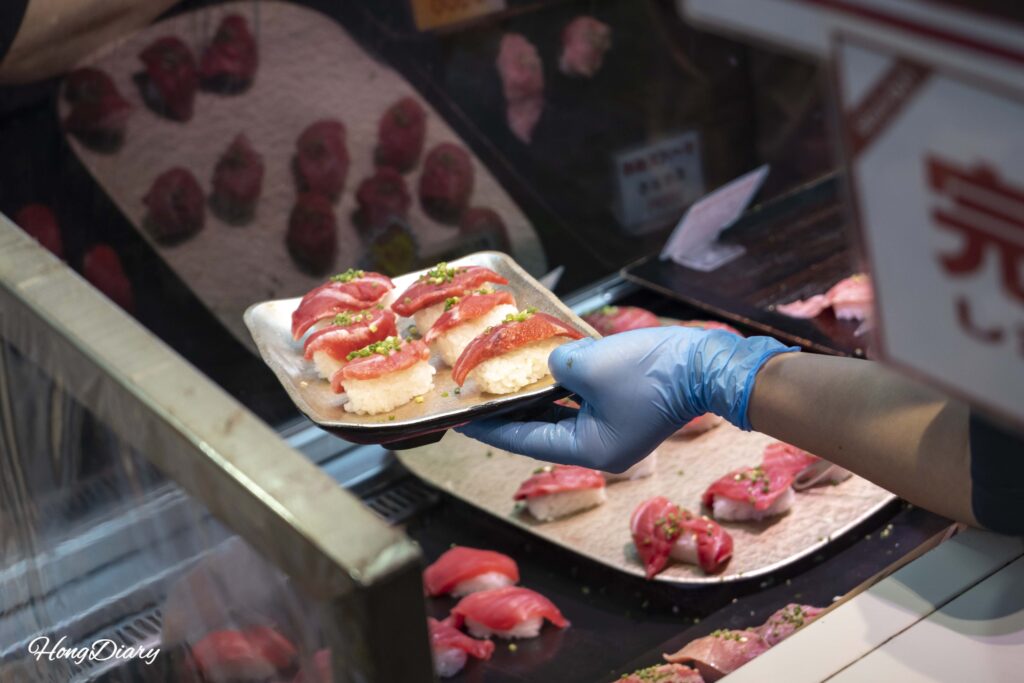
Here is the part that surprises people: if you visit a second stall, hand them your existing tray. They will add your new pieces directly into the empty spaces in the same box. This means your tray gradually fills up as you hop from shop to shop. It is a small but important thing to know — if you do not offer your tray, you may end up juggling multiple boxes.
There is no pressure to buy everything from one place. In fact, part of the fun is comparing what each stall offers. One might specialize in fatty tuna cuts, another in local fugu, and a third in cooked items like tempura or croquettes. I personally prefer wandering and picking a few pieces from different vendors rather than waiting in a long line at the most popular stall. It gives you more variety and saves time.
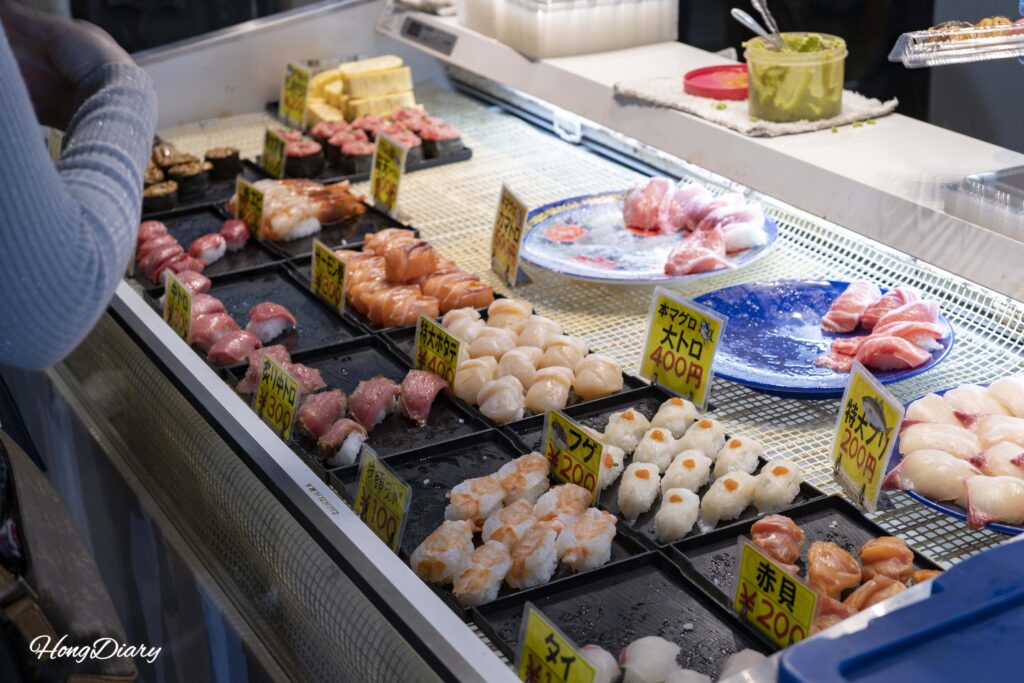
The most famous stall is Takesho (タケショー), which consistently has the longest queue. The line often stretches far down the corridor. It is well-regarded, but keep in mind that spending 30–40 minutes waiting means less time exploring everything else. I skipped it and was glad I did — the variety across other stalls was more than enough.
What to Eat — Sushi and Seafood Prices
Signature Sushi at Karato Market (Per Piece)
The stalls carry dozens of varieties, but certain items stand out as either local specialties or exceptional value. This table is based on prices observed during my visit and the market’s own reference list:
Tuna and Specialty Cuts
| Item | Japanese Name | JPY | USD | EUR | Notes |
|---|---|---|---|---|---|
| Tuna Belly (Harami) | まぐろ腹身 | ¥100 | $0.65 | €0.58 | Solid value for tuna belly |
| Negitoro (Minced Tuna & Scallion) | ネギトロ | ¥100 | $0.65 | €0.58 | Served as gunkan — a seaweed-wrapped “battleship” style roll |
| Premium Lean Tuna | まぐろ極上赤身 | ¥200 | $1.30 | €1.16 | Clean, tender red meat |
| Tuna Crown (Noten) | 脳天 | ¥300 | $1.95 | €1.73 | Rare cut from the top of the head — only a tiny amount per fish |
| Seared Tuna Belly (Aburi Toro) | 炙りとろ | ¥300 | $1.95 | €1.73 | Lightly torched for a smoky, buttery finish |
Shimonoseki Specialties
| Item | Japanese Name | JPY | USD | EUR | Notes |
|---|---|---|---|---|---|
| Tiger Pufferfish (Torafugu) | とらふぐ | ¥300 | $1.95 | €1.73 | Shimonoseki’s signature — firm, clean, subtly sweet |
| Whale Tongue (Saezuri) | さえずり | ¥300 | $1.95 | €1.73 | Regional delicacy with a soft, gelatinous texture |
| Purple Sea Urchin (Murasaki Uni) | 紫うに | ¥800 | $5.19 | €4.62 | Locally harvested from Yamaguchi waters — rich, briny flavor |
Premium Fish
| Item | Japanese Name | JPY | USD | EUR | Notes |
|---|---|---|---|---|---|
| Longtooth Grouper (Kue) | 高級魚クエ | ¥500 | $3.25 | €2.89 | A high-end white fish prized across Japan |
| Blackthroat Seaperch (Nodoguro) | のどぐろ | ¥400 | $2.60 | €2.31 | Oily, rich, and served lightly seared (aburi style) |
Beyond these highlights, most stalls carry a wide range: salmon, yellowtail, shrimp, squid, egg (tamago), scallop, and more. Prices start as low as ¥100 (~$0.65 / €0.58) for items like egg sushi or negitoro, though most of the popular picks — the pieces worth lining up for — fall in the ¥250 to ¥500 range (~$1.62–$3.25 / €1.45–€2.89). Premium cuts like sea urchin and rare specialty pieces can go higher. Otoro (premium fatty tuna belly) tends to land between ¥500 and ¥700 (~$3.25–$4.55 / €2.89–€4.05) per piece depending on the stall.
For a full seafood bowl (kaisendon — sliced raw fish arranged over rice) expect to pay around ¥1,500 (~$9.74 / €8.67).
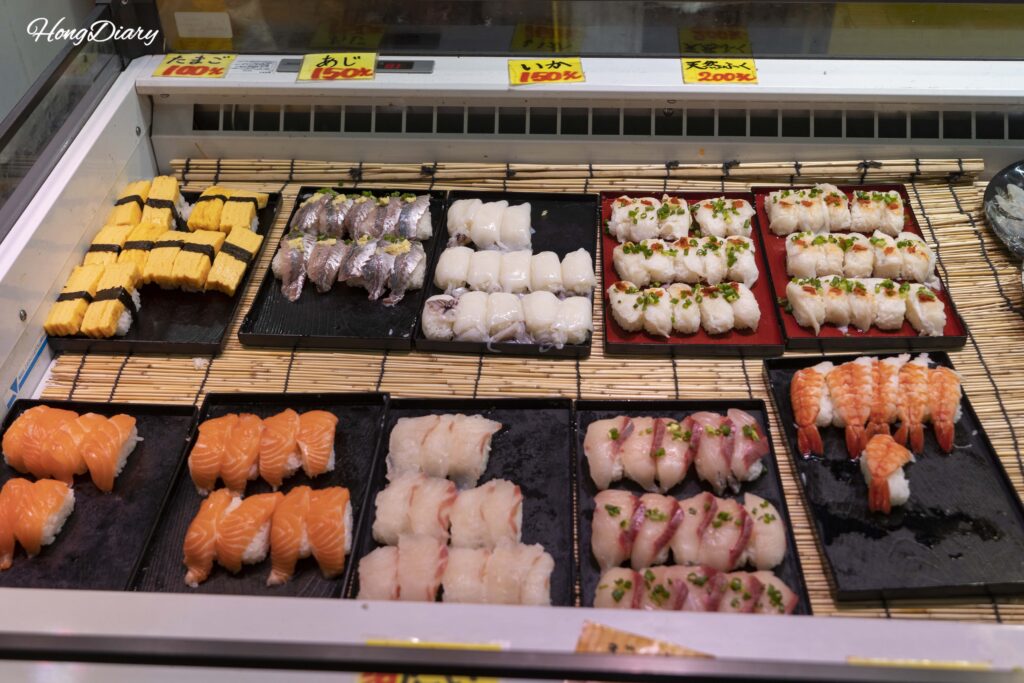
Non-Sushi Options
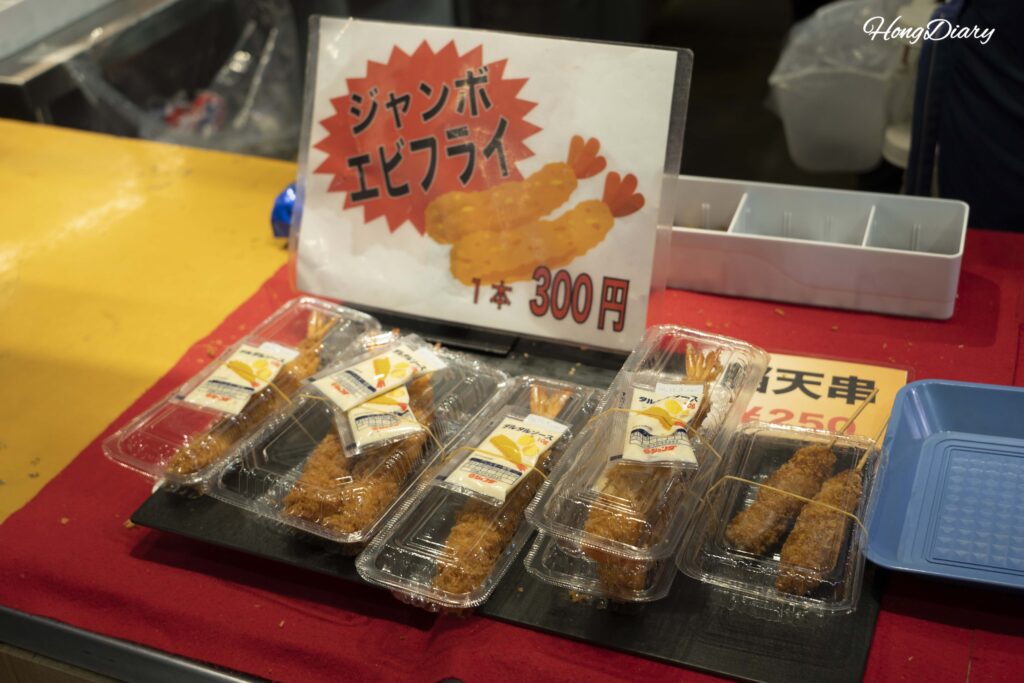
If raw fish is not your thing, or if you just want to mix things up, several stalls sell cooked items. Fugu tempura (fried blowfish), crab cream croquettes, mentaiko (spicy cod roe) cheese croquettes, and shrimp tempura are the most common. These typically cost between ¥200 and ¥300 (~$1.30–$1.95 / €1.16–€1.73) each.
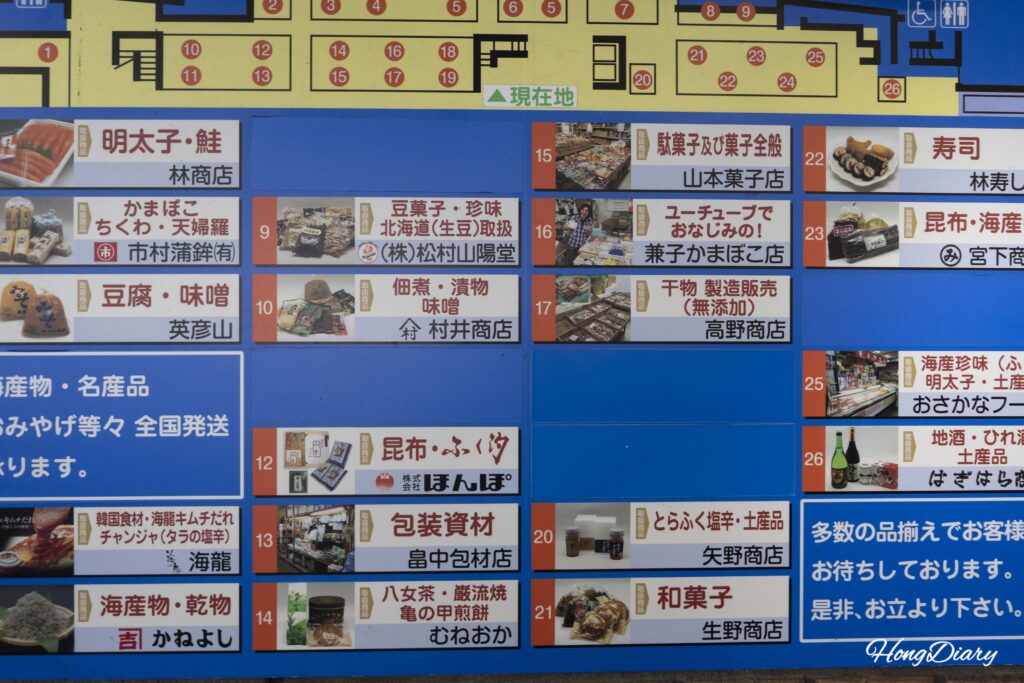
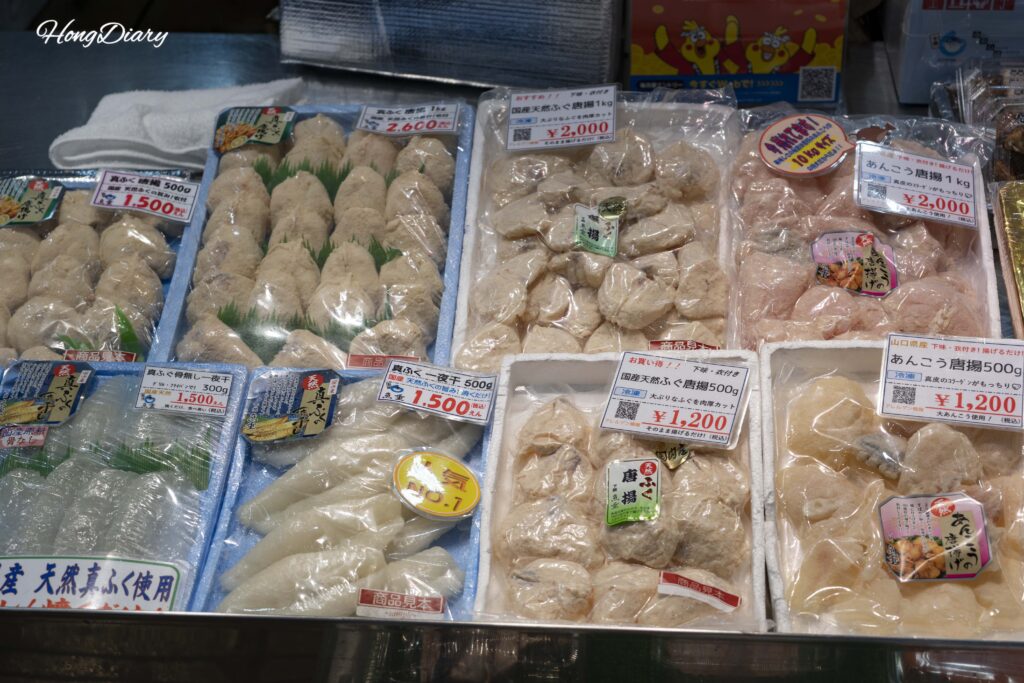
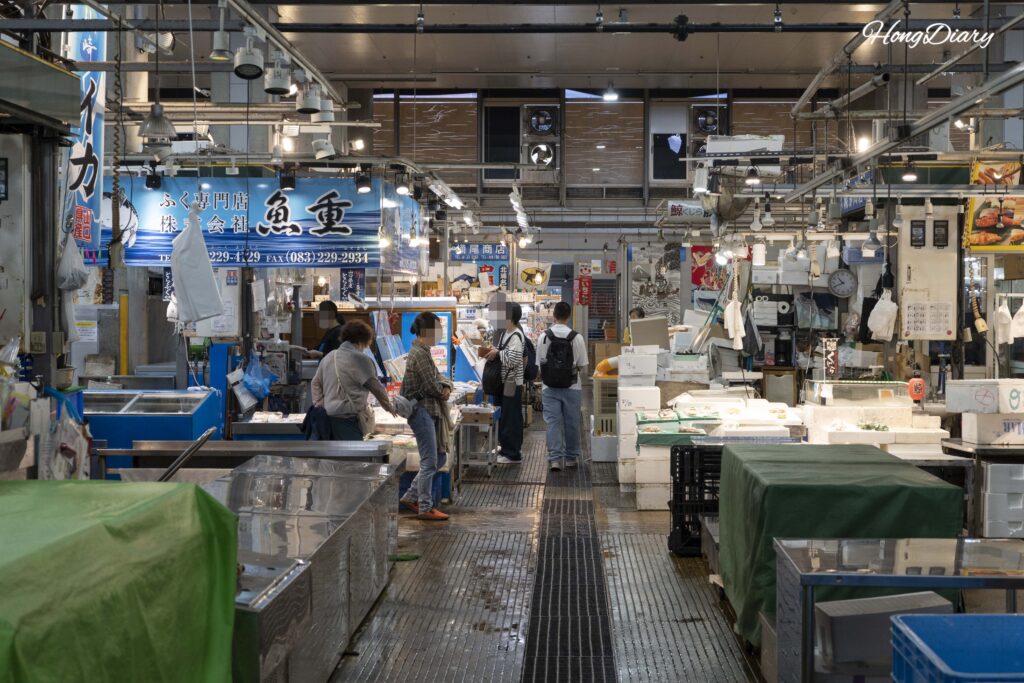
Walk deeper into the market and you will find stalls selling processed goods — fishcakes (kamaboko), dried seafood, and various Shimonoseki souvenirs. Prices here range from ¥1,200 to ¥2,600 (~$7.79–$16.88 / €6.94–€15.03). Even if you do not buy anything, browsing the stalls is entertaining — Shimonoseki’s fugu obsession is on full display, with pufferfish-shaped packaging on everything from crackers to keychains. Walk around any part of the city — the JR station, shopping malls, even random street corners — and you will spot fugu characters and fugu-themed products everywhere.
Fugu — Shimonoseki’s Star Ingredient
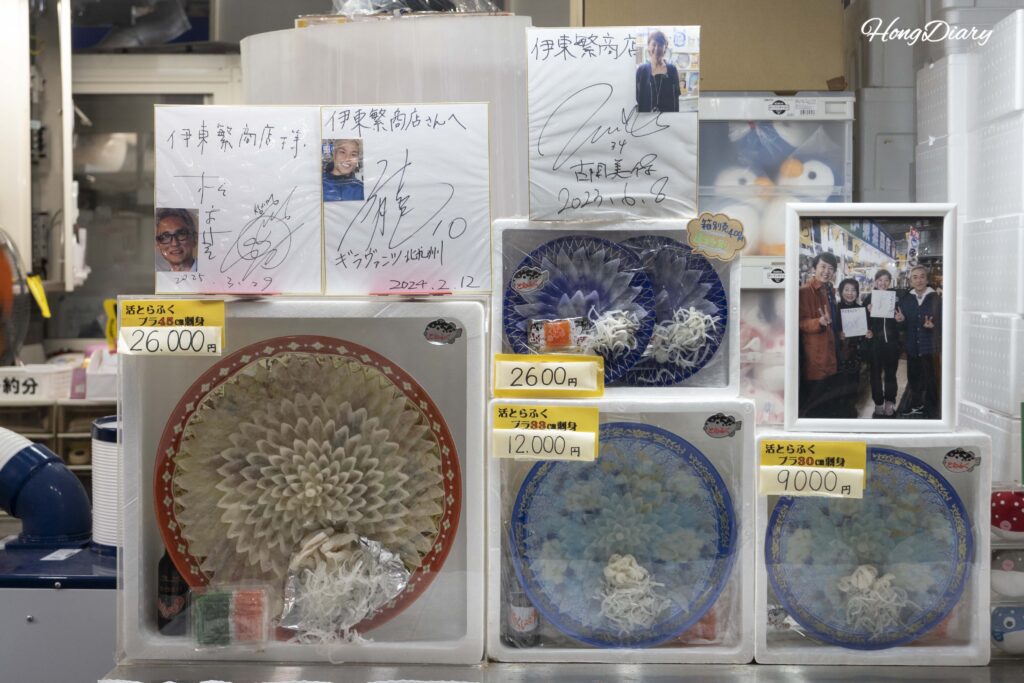
Shimonoseki is considered the fugu capital of Japan, and Karato Market reflects that. You will find fugu served as sushi (¥300 / ~$1.95 / €1.73 per piece), as thinly sliced sashimi, and deep-fried. Fugu sashimi plates start at around ¥1,300 (~$8.44 / €7.51), though prices vary significantly by stall. One shop known for celebrity visits — their walls covered in autographed photos from Japanese TV personalities — sells fugu sashimi platters ranging from ¥2,600 to ¥26,000 (~$16.88–$168.83 / €15.03–€150.29) depending on portion size. The range is enormous, so there is an entry point at nearly every budget.
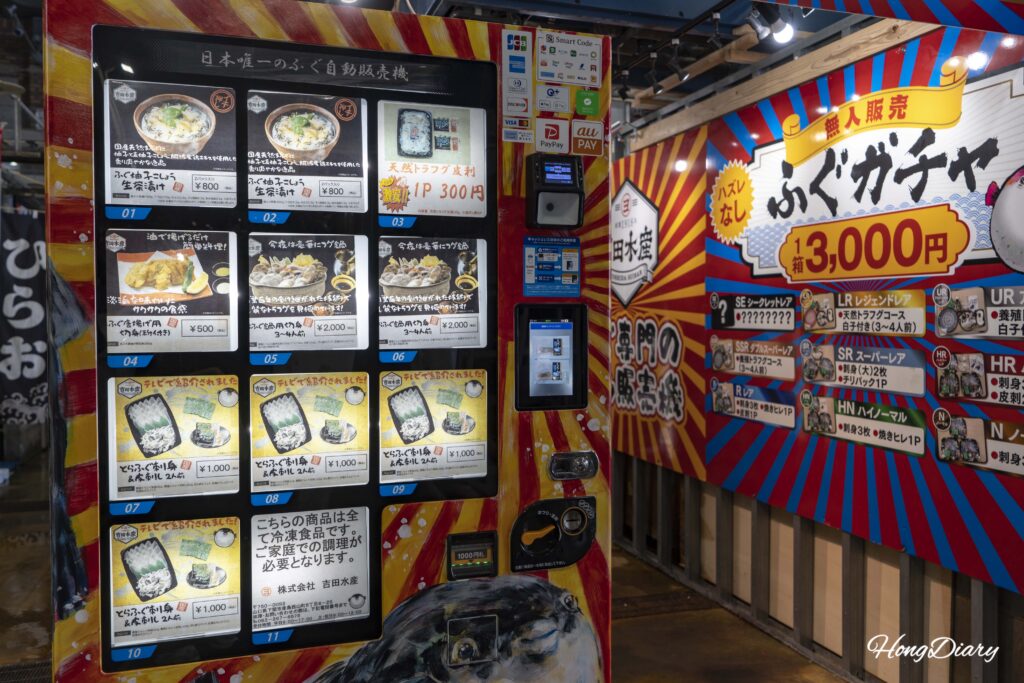
One stall that caught my eye was Yoshida Suisan (吉田水産), which operates a fugu vending machine — yes, a vending machine — stocked with packaged fugu products priced between ¥300 and ¥2,000 (~$1.95–$12.99 / €1.73–€11.56). It is a fun curiosity and makes for a unique souvenir if you are into that sort of thing.
Drinks
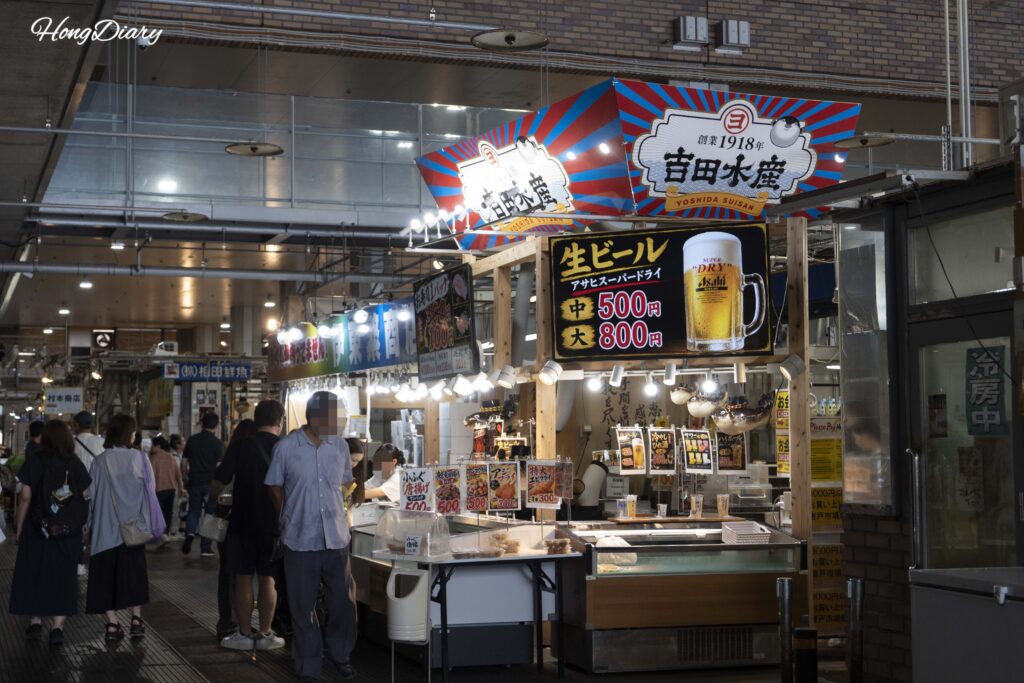
Several stalls sell Asahi draft beer — a medium glass for ¥500 (~$3.25 / €2.89) and a large for ¥800 (~$5.19 / €4.62). If beer by the sea sounds good to you, this is it. On the first floor, a small grocery center sells canned highballs, canned beer, soft drinks, and green tea at lower prices. I would have loved a cold beer with my sushi tray, but I was traveling with a toddler, so I stuck with vending machine green tea. Still no regrets — it paired well enough.
My Sushi Tray — An Honest Take
I filled a full tray at one stall: salmon, scallop, tuna belly, sea urchin, and a few others. My husband kept his modest — a lighter appetite after a quick breakfast earlier that morning. I also grabbed a crab cream croquette on the side.
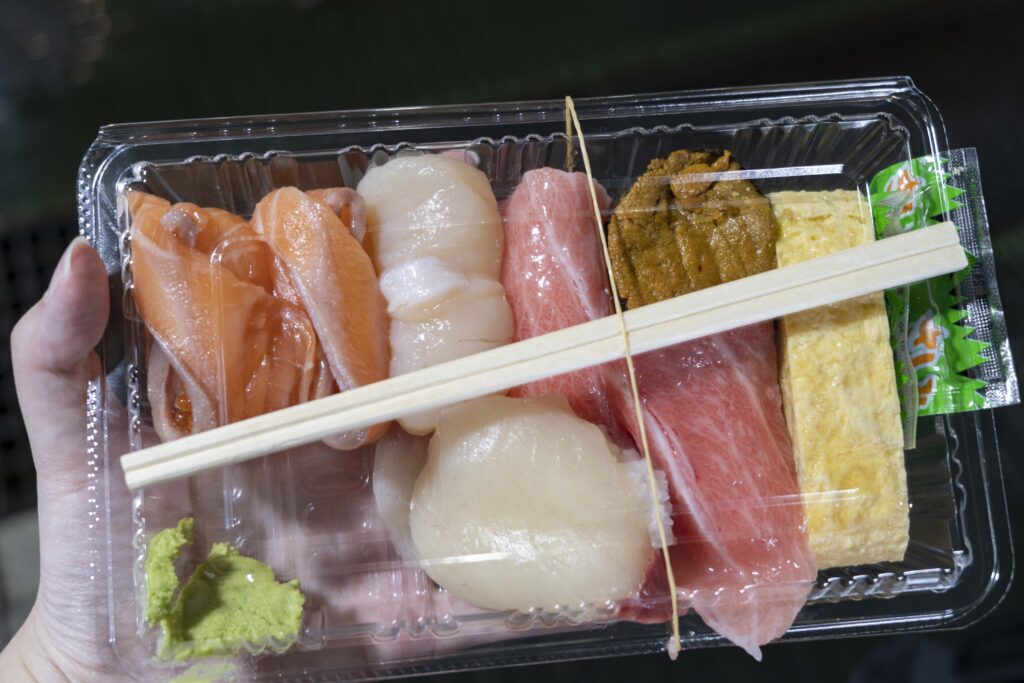
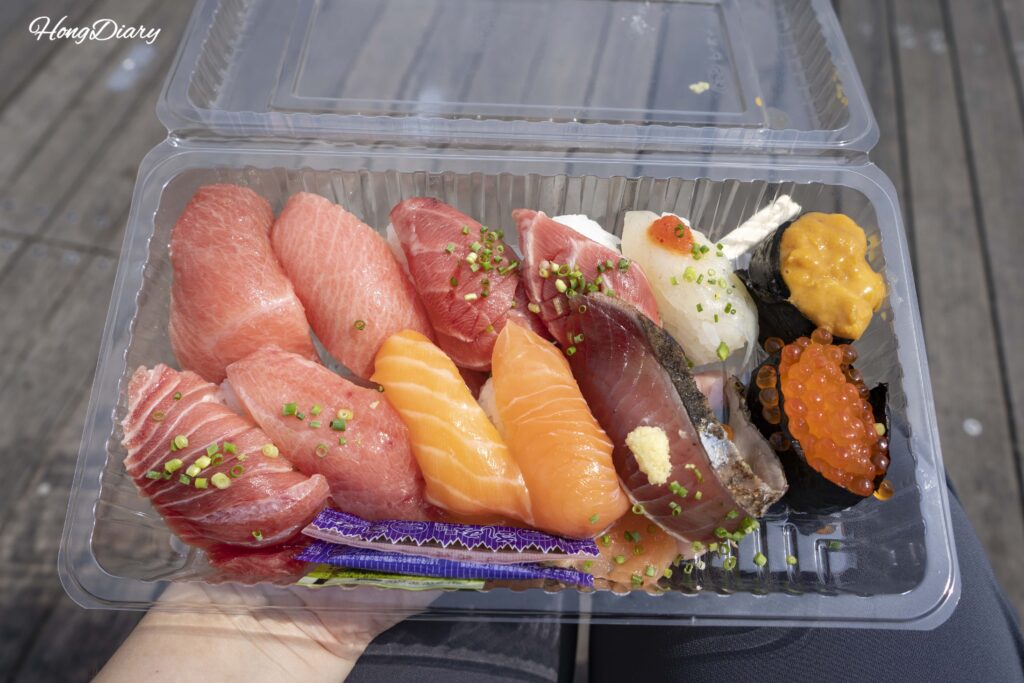
Most of it was good. The scallop was sweet and firm — one of the highlights. The tuna belly (harami) had that soft, fatty melt that makes Karato worth the trip. But not everything landed. The shrimp had a slightly fishy taste, and the sea urchin was disappointing — the color looked a bit dull when I picked it, and the flavor confirmed it. Quality varies from stall to stall since each vendor sources independently, so take an extra second to check the appearance before you point. If the uni looks muddy or pale, trust your instinct and skip it.
Overall, the value felt solid for what I got. A full tray plus a croquette on the side, and I walked away spending far less than I would at a typical sit-down sushi place.
Where to Eat — Waterfront Deck and Second-Floor Seating
The Outdoor Waterfront Deck (Free)
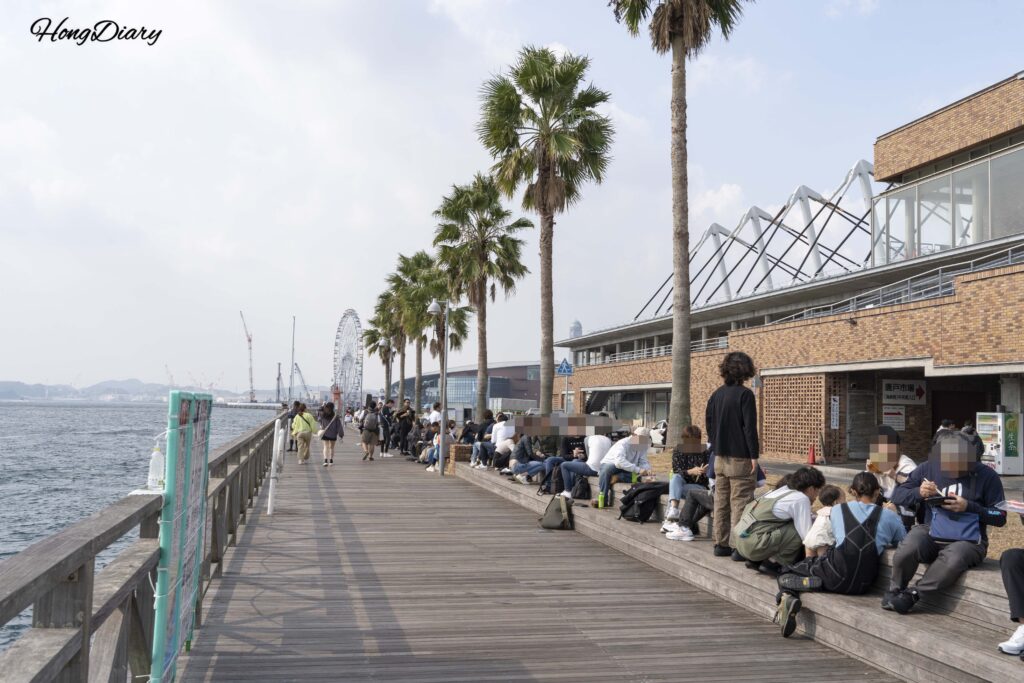
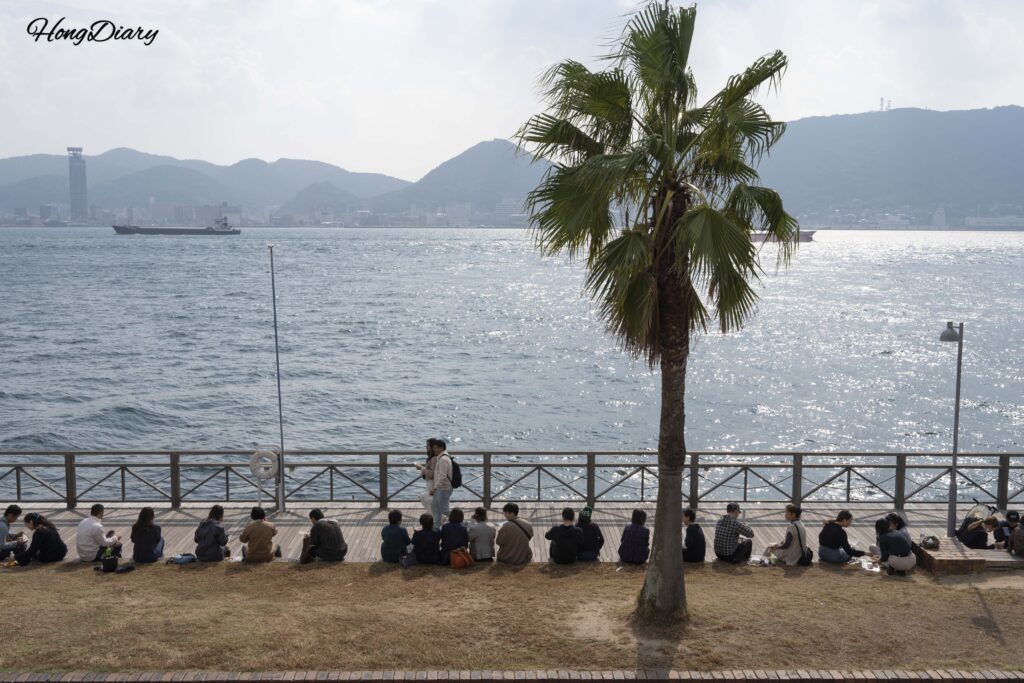
This is where almost everyone ends up, and for good reason. Exit through the market’s Kanmon Strait-side entrance and you are immediately facing the water. Concrete ledges and low walls double as seats. Across the strait, you can see Mojiko on the Kyushu side, ferries crossing back and forth, and the Kanmon Bridge arching in the distance. There are designated trash and recycling stations nearby, and vending machines if you need a drink. I would suggest picking up a bottle of green tea before sitting down — it is a good palate cleanser between pieces.
Second-Floor Indoor Seating (Paid)
If you prefer sitting at a table — or if the weather is bad — the second floor has a paid seating area. The fee at the time of my visit was ¥300 per hour (~$1.95 / €1.73), free for elementary school children and younger. You can bring in food purchased from the market downstairs. Operating hours are Fridays and Saturdays from 9:30 AM to 2:30 PM, Sundays from 8:30 AM to 2:30 PM (subject to change). When you pay, the staff gives you a ticket — hold on to it, because you will need it to re-enter if you step out to use the restroom.
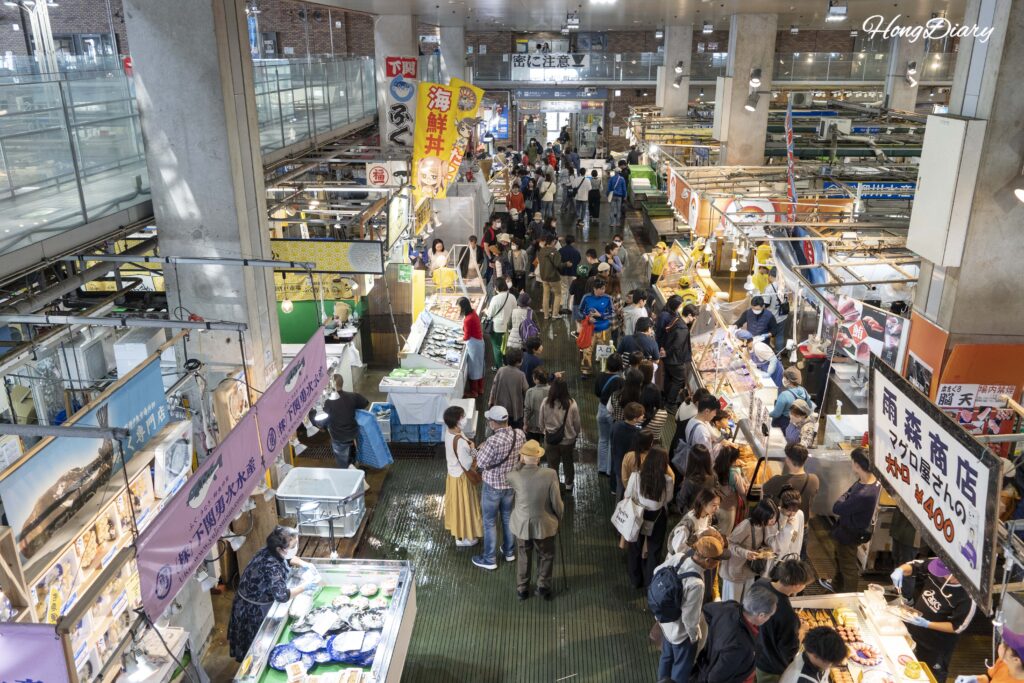
One warning: a conveyor belt sushi restaurant (kaiten-zushi) on the second floor has a waiting area with chairs. Visitors sometimes sit there to eat their market-bought food. There are signs posted asking people not to do this. Respect the seating rules — the chairs belong to the restaurant’s queue.
Tips Before You Go
Bring cash. While payment options vary by stall — some accept cards or mobile payment — the majority of sushi vendors still operate on cash only. Do not assume you can tap and pay everywhere. Withdraw yen beforehand. If you are arriving from abroad, 7-Eleven convenience stores have ATMs that accept most international cards.
Arrive early for the best selection. I got there right at 8:00 AM on a Saturday and found a solid variety, though not every stall was open yet. By late morning the crowd thickens considerably, and by early afternoon the most popular items — especially otoro — start selling out.
Late arrival is not the end of the world. If your schedule pushes you to 2:00 or 2:30 PM, do not give up on the visit. Several years ago, I arrived around 2:40 PM. Many premium picks were gone, but stalls were running clearance sales — my husband snagged eel nigiri that normally sells for ¥300 at just ¥100 per piece (~$0.65 / €0.58). If you are flexible about what you eat, the tail end of the market can be a bargain.
Check the weather and pack light rain gear. Shimonoseki sits on a strait where weather shifts quickly. Even if the morning sky looks clear, rain can roll in without warning. A compact umbrella or a disposable rain poncho fits easily in a daypack.
Trash disposal is well managed. After you finish eating on the waterfront, you will find sorted recycling stations along the deck. Separate your plastic trays, chopsticks, and drink containers as indicated. The area stays clean because people follow the system — do your part.
Eating handpicked sushi by the Kanmon Strait, watching ferries cross between Honshu and Kyushu — it is one of those quiet, specific travel moments that sticks with you longer than any famous landmark. Karato Market Shimonoseki does not try to be flashy. It is a working market that opens its doors to visitors on weekends and lets you eat exactly what you want, where you want, at a pace that feels like yours.
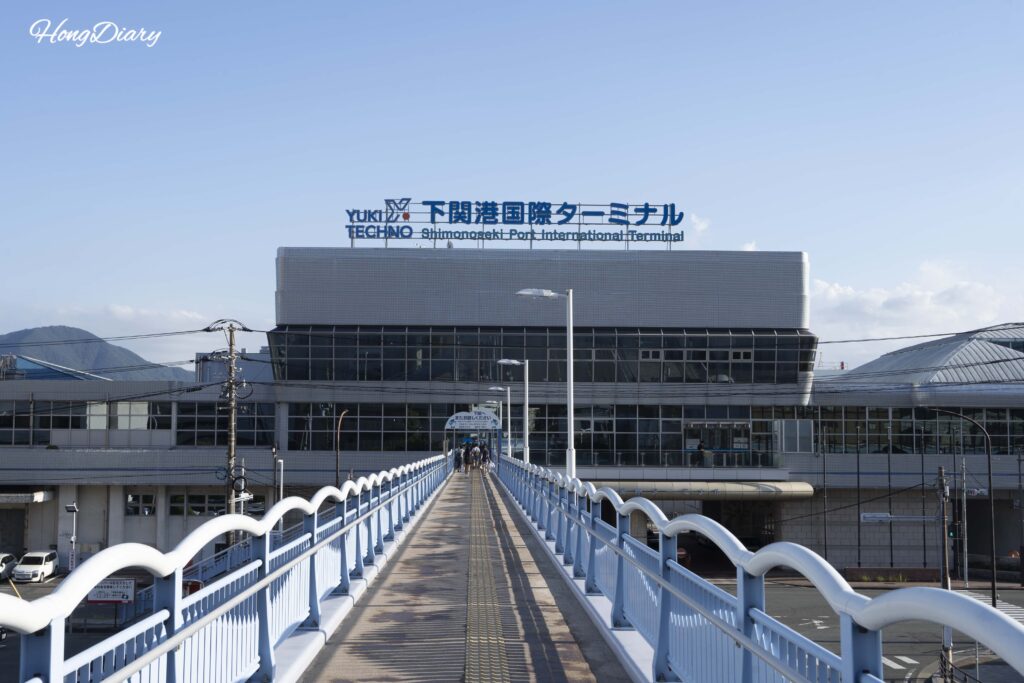
If you arrived by ferry and have some time between the market and your next move, the area around Shimonoseki Ferry Terminal has more going on than you might expect — Sea Mall, Daimaru department store, and a handful of useful stops. I covered all of that in this guide to the Shimonoseki terminal area.
Frequently Asked Questions (FAQ) About Karato Market Shimonoseki
What days does the sushi event at Karato Market Shimonoseki run?
The sushi stalls — officially called the Iki-iki Bakangai (活きいき馬関街) event — are not a permanent part of the market. They only set up on Fridays, Saturdays, Sundays, and Japanese national holidays. On Fridays and Saturdays, stalls open from 8:00 AM to 3:00 PM. On Sundays and national holidays, they open earlier at 7:00 AM and close at 3:00 PM. The rest of the week, Karato Market functions as a regular wholesale fish market without the sushi stalls. Always confirm exact dates on the official website at karatoichiba.com before visiting, as stall participation and hours can change based on ingredient supply or weather.
How do I get to Karato Market from JR Shimonoseki Station?
The easiest way is by local bus. Exit the station and head to the ground-floor bus terminal. Any bus departing from stops 1 through 4 will stop at Karato. The ride takes about 10 minutes and costs ¥260 ($1.69 / €1.50). In Japan, you board city buses from the rear door, take a numbered ticket, and pay the displayed fare when you exit through the front door. Alternatively, an Uber from the station to the market costs approximately ¥1,600 ($10.39 / €9.25). Walking is possible (about 34 minutes) but not recommended due to heavy truck traffic along the coastal road.
How much does sushi cost per piece at Karato Market?
Prices vary by stall and by topping. The most affordable pieces — such as tuna belly (harami), negitoro, and egg — start at ¥100 per piece ($0.65 / €0.58). The majority of sushi falls in the ¥250 to ¥500 range ($1.62–$3.25 / €1.45–€2.89). Premium items like otoro (fatty tuna belly) typically cost ¥500 to ¥700 ($3.25–$4.55 / €2.89–€4.05), and Shimonoseki’s signature torafugu (tiger pufferfish) sushi is around ¥300 ($1.95 / €1.73). A full tray with a good mix usually adds up to less than you would pay for a single sushi set at a sit-down restaurant.
How does the ordering system work at the sushi stalls?
Walk along the market corridor and browse the vendors’ refrigerated display cases. When you find a stall you like, point at the pieces you want — the staff will place them in a plastic tray. Pay at that stall, then move on to the next. If you visit a second stall, hand them your existing tray, and they will add your new pieces into the empty spaces. This “build your own tray” system lets you mix and match from multiple vendors. No reservations are needed. Cash is the safest option — while a few stalls accept cards, many still operate on cash only, so bring Japanese yen in coins and small bills.
Can I eat at Karato Market if I do not like raw fish?
Yes. Several stalls sell cooked options such as fugu tempura (fried blowfish), shrimp tempura, crab cream croquettes, and mentaiko (spicy cod roe) cheese croquettes. These items generally cost between ¥200 and ¥300 each (~$1.30–$1.95 / €1.16–€1.73). Some vendors also serve hot miso soup with fish broth and grilled seafood skewers. Beyond the sushi stalls, the inner section of the market sells fishcakes, dried seafood, and other processed goods that make for interesting souvenirs. There is plenty to see and taste even without ordering a single piece of raw fish.
Where is the best place to sit and eat at Karato Market?
Most visitors take their tray outside to the waterfront deck on the Kanmon Strait side of the market. It is free, open-air, and offers direct views of the strait, Mojiko across the water, and the Kanmon Bridge. Concrete ledges and low walls serve as informal seating. Recycling stations and vending machines are positioned nearby. For indoor seating, the second floor has a paid area at ¥300 per hour (~$1.95 / €1.73) — free for children of elementary school age and younger — where you can bring food purchased from the market downstairs. It operates from 9:30 AM to 2:30 PM on Fridays and Saturdays, and 8:30 AM to 2:30 PM on Sundays (times subject to change).
Can I visit Karato Market from Mojiko (Kyushu side) without going through Shimonoseki Station?
Yes. The Kanmon Strait ferry connects Mojiko directly to the Karato area. Board at Marine Gate Moji (マリンゲートもじ), near JR Mojiko Station. The crossing takes about 5 minutes and costs ¥400 per adult (~$2.60 / €2.31) and ¥200 per child (~$1.30 / €1.16), cash only. You land at the Karato Terminal, which is a 3-minute walk from the market entrance through the Kamon Wharf shopping area. This route is popular with visitors coming from Kokura or doing a Mojiko Retro day trip, and the short ferry ride across the strait is a pleasant experience in itself.
All prices in Japanese yen (¥). Approximate conversions: $1 USD ≈ ¥154 / €1 EUR ≈ ¥173 (as of September 2026). Rates may fluctuate.