
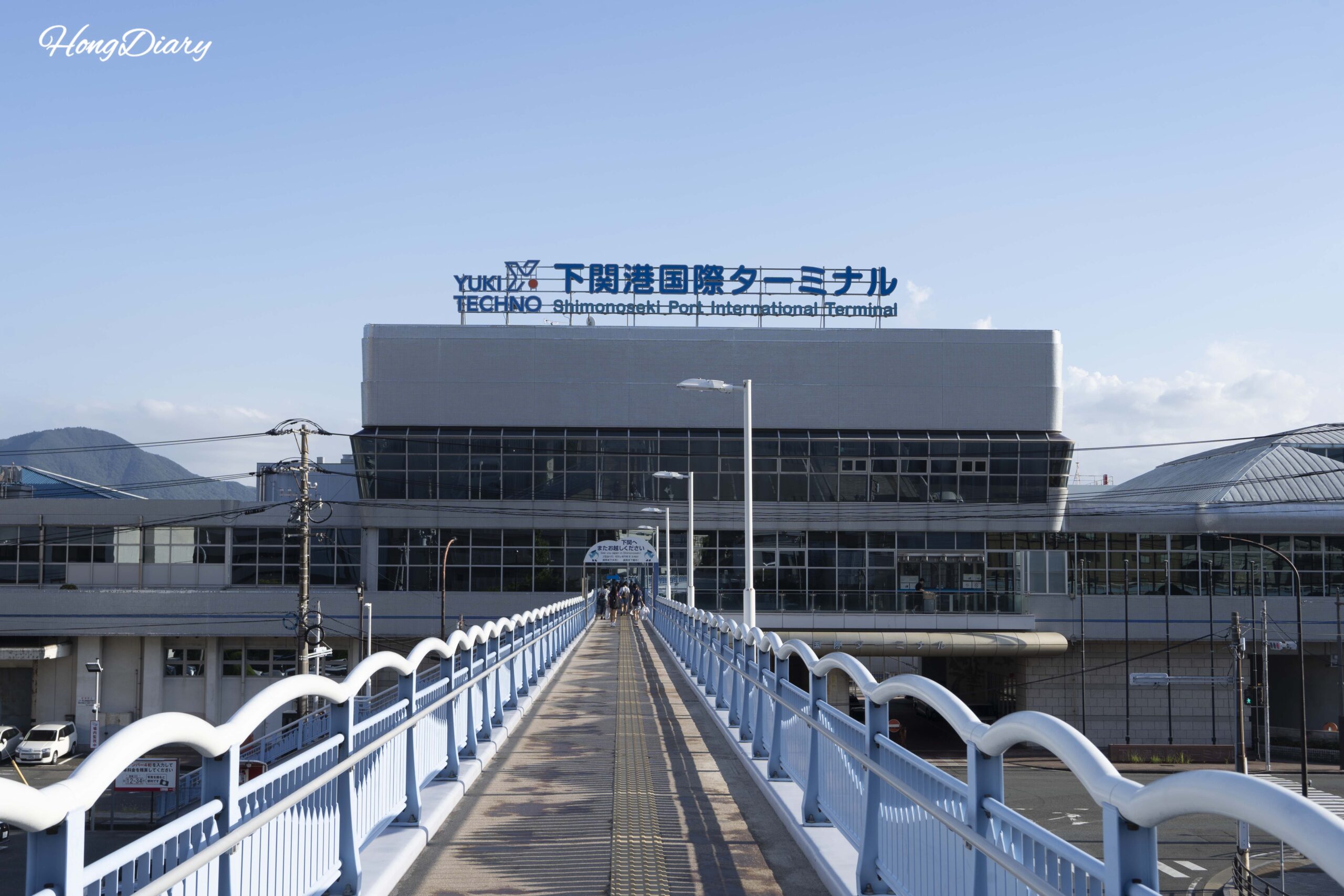
After more than a decade of taking the overnight ferry from Busan, the part I still look forward to most is stepping off at Shimonoseki Port International Terminal just before 8:00 AM. This Shimonoseki ferry terminal area guide covers everything within walking distance of the port — the terminal building, the elevated walkway, JR Shimonoseki Station, Sea Mall, and Daimaru Department Store — so you know exactly what to do between the gangway and your next train.
Table of Contents
Basic Info: Shimonoseki Port International Terminal
| Detail | Information |
|---|---|
| Official Name | Shimonoseki Port International Terminal (下関港国際ターミナル) |
| Address | 1-10-50 Higashiyamatomachi, Shimonoseki, Yamaguchi 750-0066, Japan (〒750-0066 山口県下関市東大和町1丁目10-50) |
| Ferry Operator | Kampu Ferry (関釜フェリー) in Japan / Pukwan Ferry in Korea — same company |
| Ships on This Route | Two ships alternate daily: Seonghee and Hamayuu |
| Arrival from Busan | Approximately 7:45 AM |
| Walk to JR Station | ~7 minutes via elevated walkway (open-air, no roof) |
| Tourist Info Desk | Inside the terminal, with area maps in English, Japanese, and Korean |
| Official Website | pukwan.co.kr (English, Japanese, and Korean) |
Prices converted at approximately $1 USD ≈ ¥154 / €1 EUR ≈ ¥173 (as of September 2026). Rates may fluctuate.
Shimonoseki sits at the westernmost edge of Honshu, Japan’s main island, in Yamaguchi Prefecture. The city faces Kitakyushu across the narrow Kanmon Straits — the channel where Honshu and Kyushu nearly touch — and has served as a maritime crossing point between Japan and the Korean Peninsula for centuries. The Kampu Ferry, known as Pukwan Ferry on the Korean side (same company, different name depending on which country you book from), operates daily overnight sailings between Busan and this terminal. Compared with Fukuoka, Osaka, or Tokyo, Shimonoseki draws far fewer international visitors, and that relative quiet is a large part of why I keep coming back.
Inside the Terminal
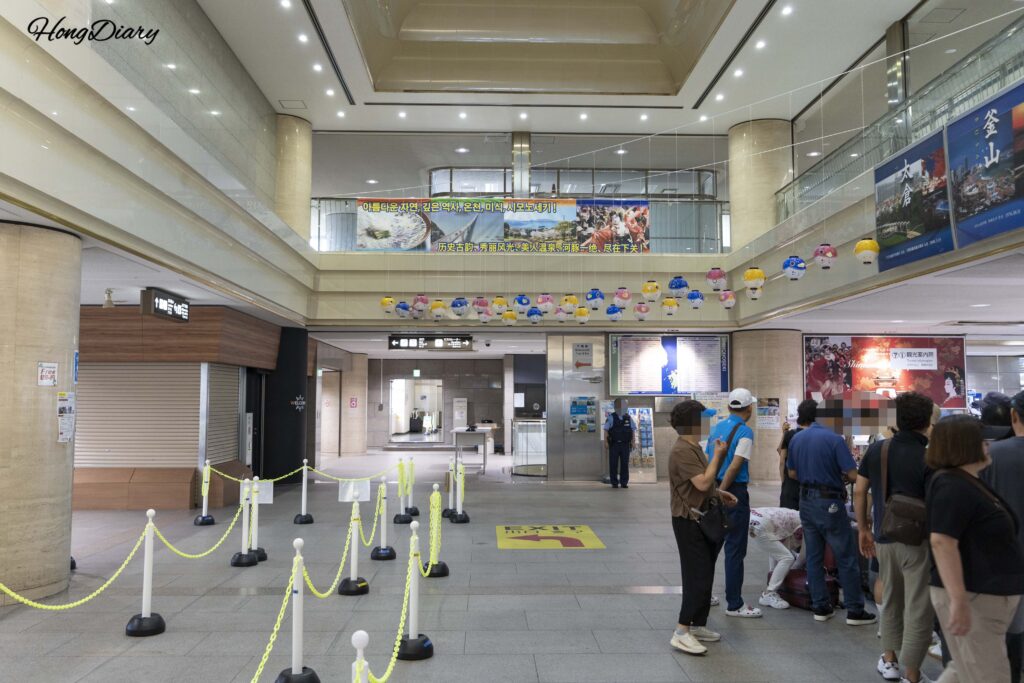
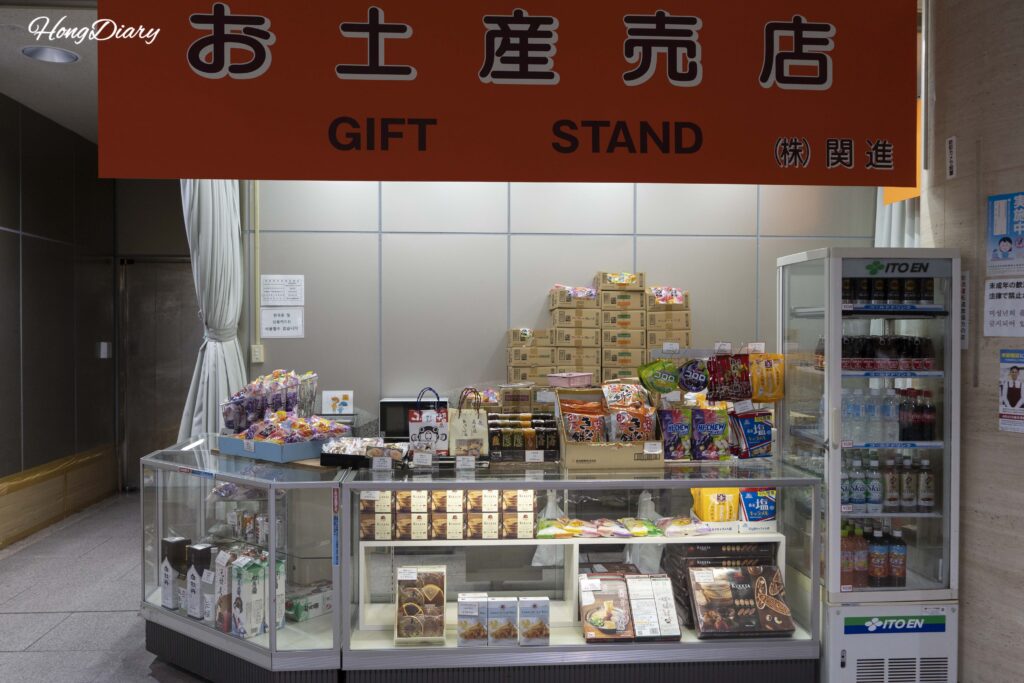
The terminal is a compact two-story building, and most of what you need is on the second floor. A small shop near the Kampu Ferry ticket counter sells boxed snack sets, packaged regional sweets, drinks, and basic souvenirs — the kind of last-minute items you might grab before boarding. Keep in mind it only accepts cash and tends to be open during ferry operating hours. When I arrived on morning sailings from Busan around 8:00 AM, it was always closed; on evening departures back to Busan, it was consistently open. The selection is limited compared to the shops at Sea Mall or Daimaru, but if you are already through the departure process and do not want to walk back out, it covers the basics.
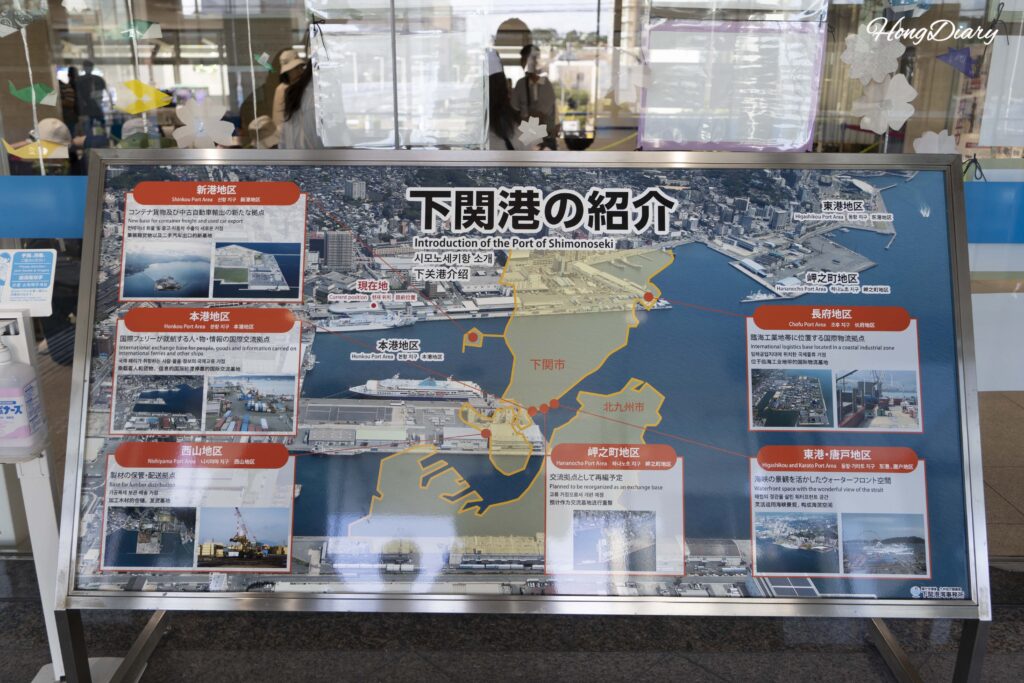
Nearby, a tourist information desk offers printed area maps with directions to JR Shimonoseki Station, local attractions, and bus stops. These maps come in English, Japanese, and Korean, and picking one up before leaving the building saves time later.
The second floor also has a row of gacha machines (capsule toy vending machines, popular throughout Japan), drink vending machines, an ice cream vending machine, and seating for passengers waiting to depart. What many people miss is that the first floor has additional seating as well — it tends to be emptier and more comfortable if you need a quieter spot. The smoking room is also on the first floor, near the main entrance, with signage pointing the way.
Luggage Storage
If you are departing for Busan later in the day and want to explore the area without dragging your bags, there is a temporary luggage storage area on the second floor, to the left of the Kampu Ferry ticket counter. This is not a coin locker system — you simply leave your bags in a designated open area. There is no attendant watching over it, so keep all valuables, electronics, and important documents with you. Storage is available until 6:00 PM.
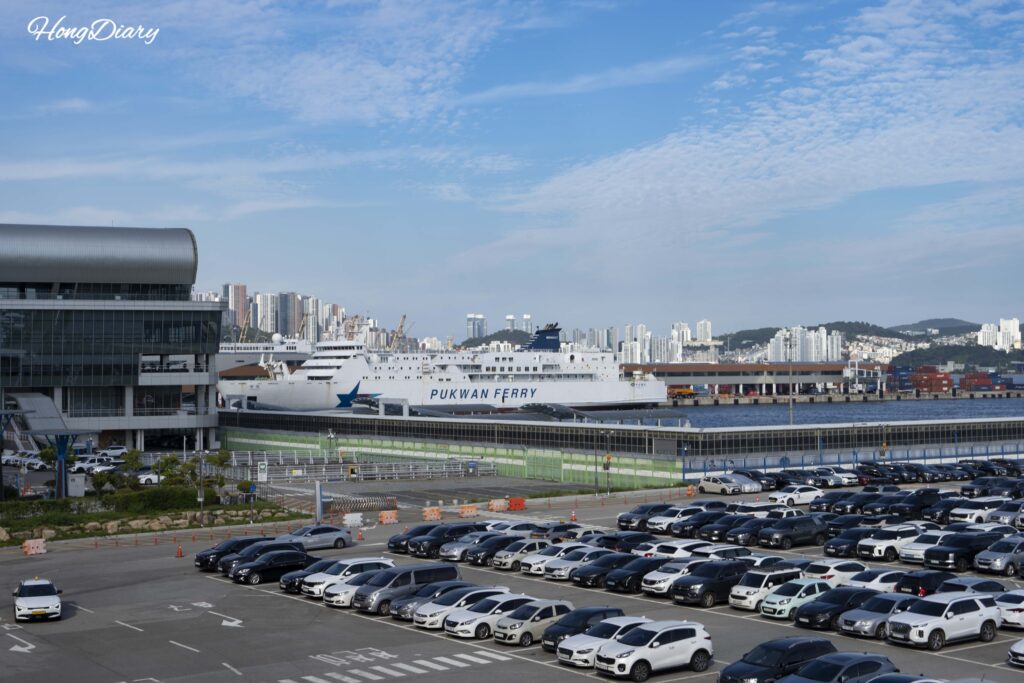
If you are beginning your journey from the Busan side and want to know what the departure terminal there looks like — including how to fill out Visit Japan Web, baggage rules by ship class, and what shops are inside — I covered all of that in my walkthrough of the Busan Ferry Terminal.
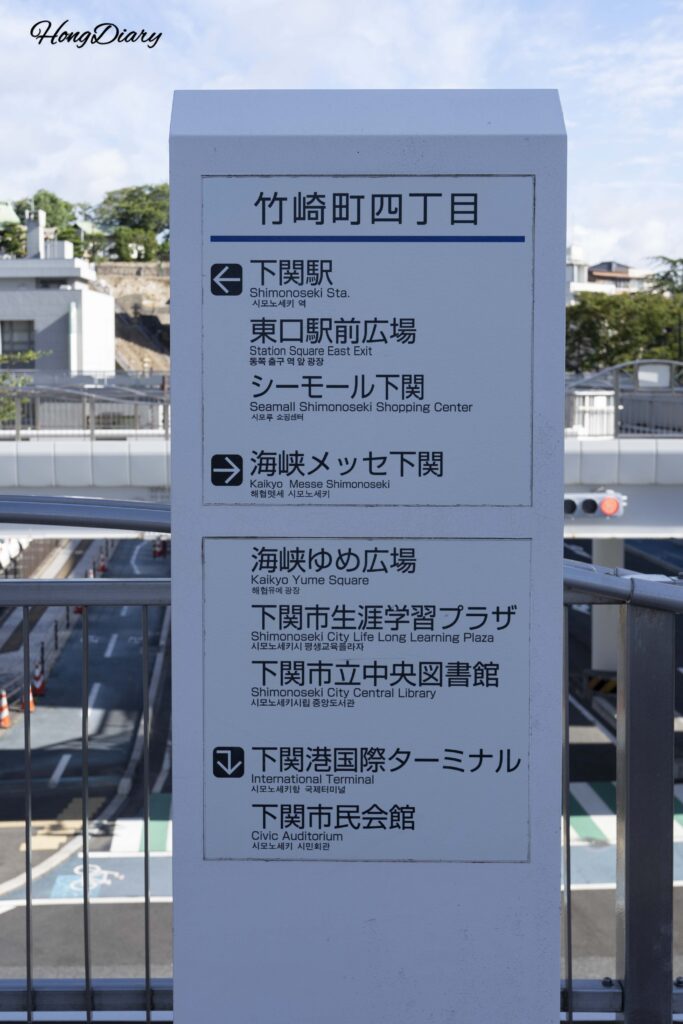
The Walkway to JR Shimonoseki Station
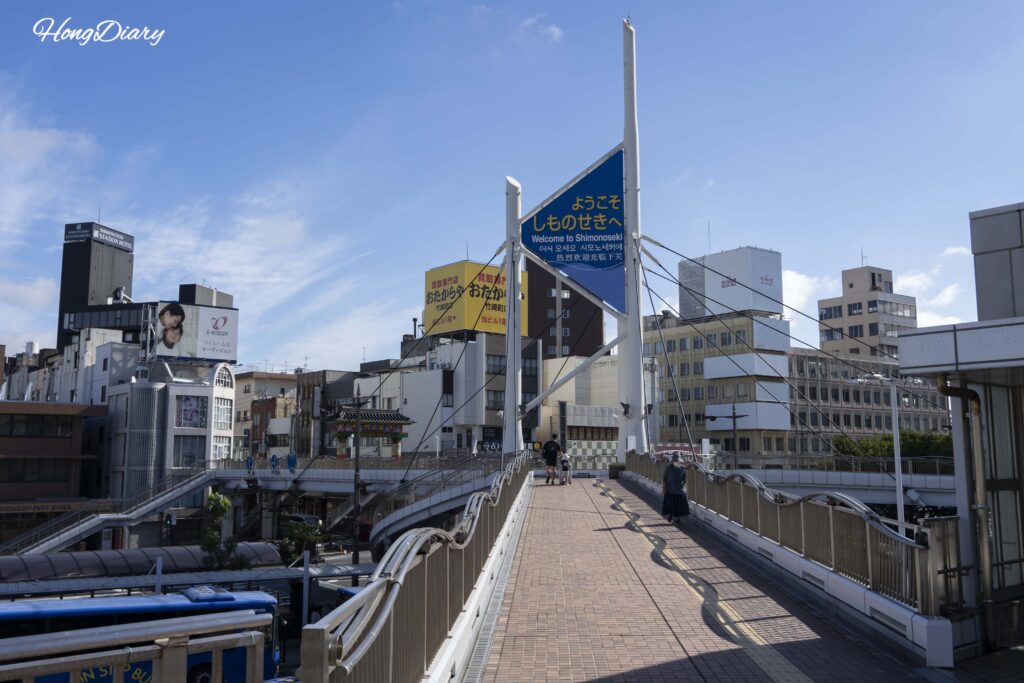
Step outside the second floor of the terminal building and you will find an elevated pedestrian walkway — a flat overpass that connects the port directly to the JR station area. It is open-air with no roof, so bring an umbrella if the forecast calls for rain. The entire walk takes about seven minutes at a relaxed pace, and because it stays above street level the whole way, you can roll a suitcase without dealing with stairs or traffic crossings.
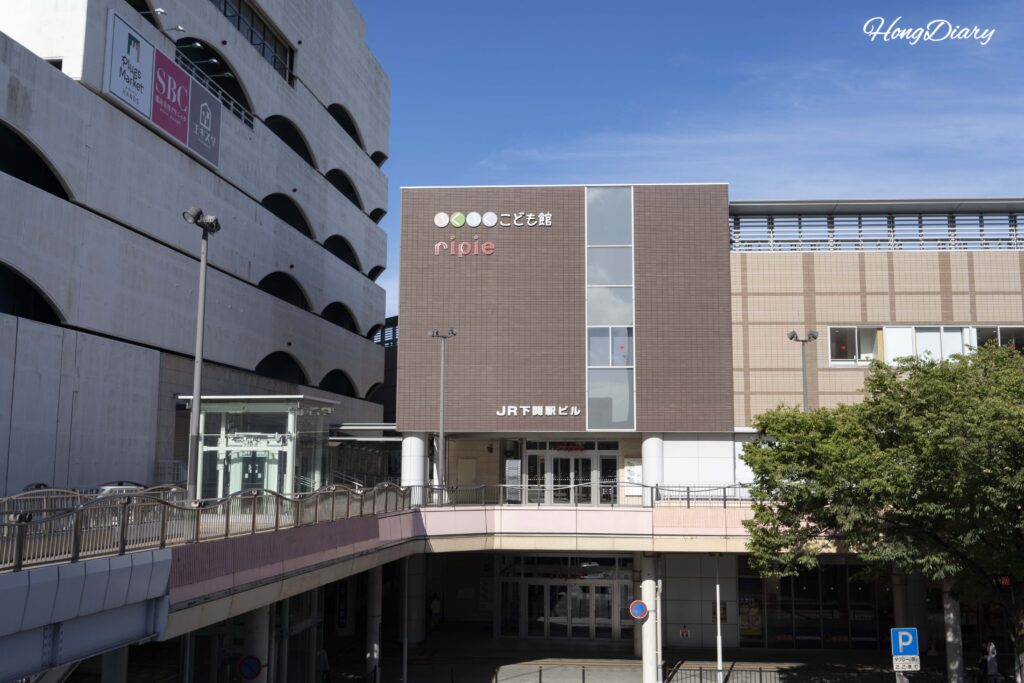
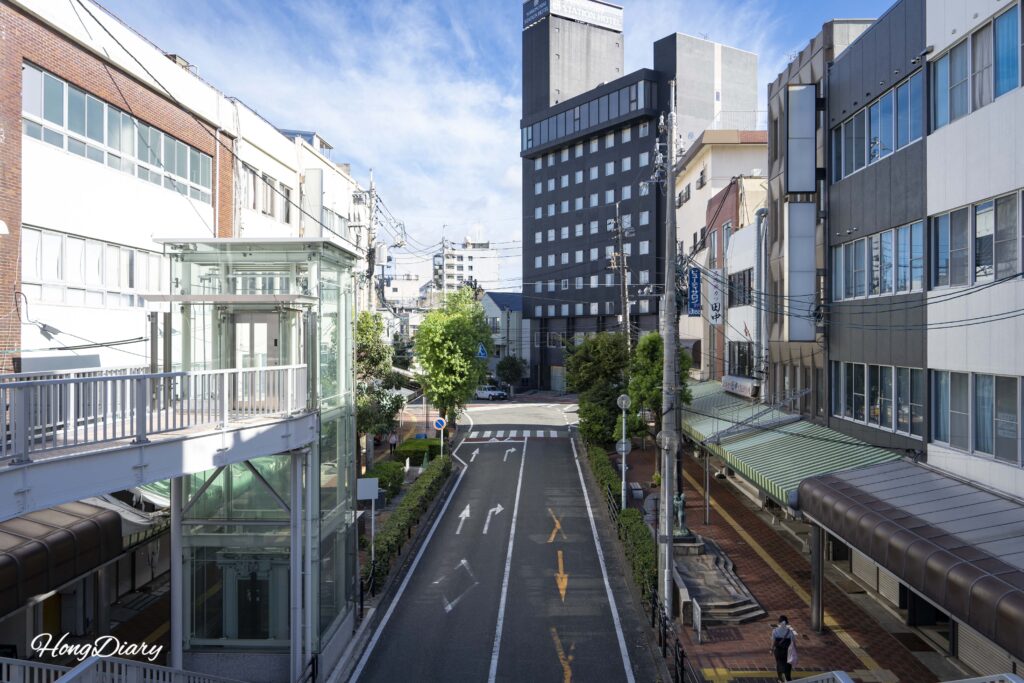
Along the way, you pass the Yamaguchi Bank headquarters building — when you reach it, turn left, and JR Shimonoseki Station comes into view directly ahead. From the walkway, you also get a clear look at the streets and bus terminal below.
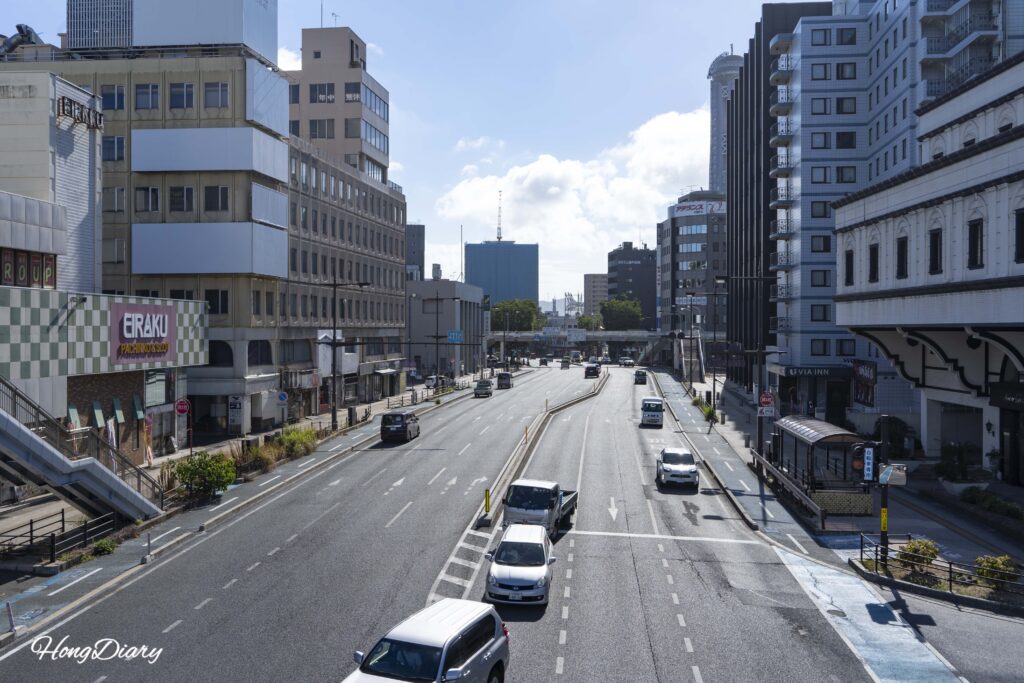
On the far right side of the view, partially hidden behind nearby buildings, you can spot the top of Kaikyo Yume Tower — Shimonoseki’s 153-meter observation tower and the city’s most recognizable landmark along the Kanmon Straits. The tower’s observation deck is open from 9:30 AM to 9:30 PM (last entry at 9:00 PM), with adult admission at ¥750 (~$4.87 USD / ~€4.34 EUR). It is about a 10-minute walk from JR Shimonoseki Station. I visit it two or three times a year and plan to write a separate post about it — the panoramic views are worth the detour, especially on clear days.
JR Shimonoseki Station (Ripie Building)
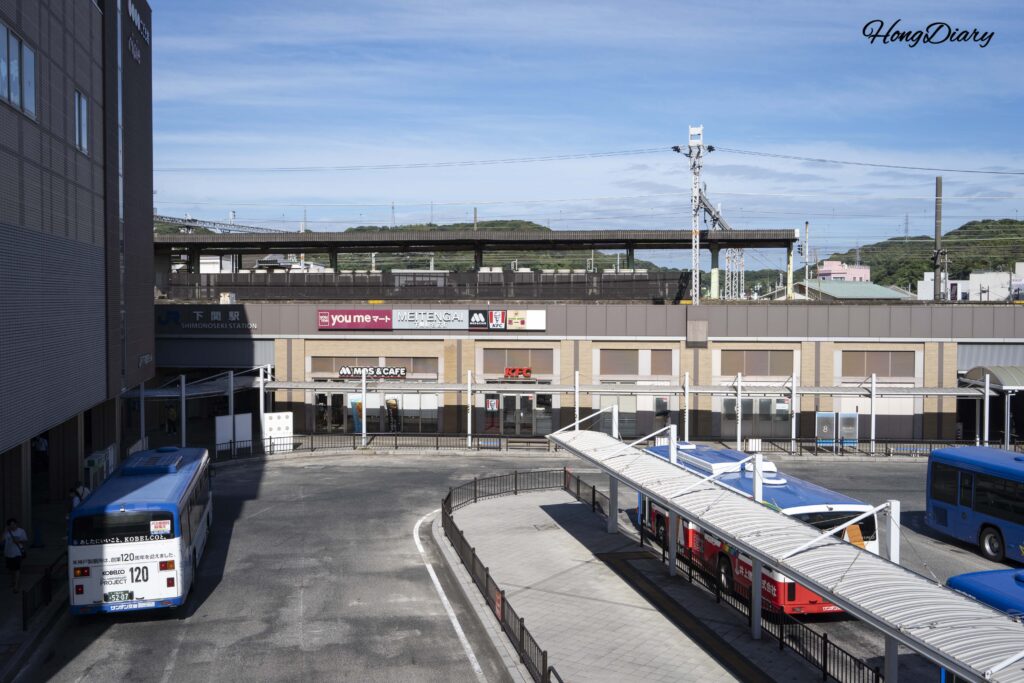
The station building goes by the name Ripie (リピエ) — you will see it written across the front of the structure. It is not a separate shopping mall; Ripie is simply the commercial name for the JR Shimonoseki Station complex, which houses the train platforms along with various shops and services under one roof.
Inside, you will find:
| Facility | What It Is |
|---|---|
| Midori no Madoguchi (みどりの窓口) | JR’s staffed ticket counter — buy or reserve train tickets, exchange JR Rail Passes, ask routing questions |
| Coin Lockers | Available in multiple sizes near the ticket gates; useful if Daimaru and Sea Mall have not opened yet |
| YouMe Mart (ゆめマート) | A mid-size supermarket inside the station; good for rice balls, bento boxes, warm tea, and snacks |
| Convenience Store | Located near the station entrance for quick purchases |
| Bus and Taxi Stands | Located right outside, at ground level beneath the elevated walkway |
A handful of cafes operate within the building as well. Vie de France is a popular Japanese bakery chain known for affordable pastries and sandwiches. Starbucks and Seattle’s Best Coffee are both here too, so grabbing a coffee while waiting for your train — or for the shops nearby to open — is easy. Seattle’s Best opens as early as 7:00 AM.
For anyone traveling with an infant or toddler, nursing rooms are available inside the Ripie building, and also inside both Sea Mall and Daimaru Department Store next door.
From this station, you can board JR trains on the Sanyo Main Line or the San’in Main Line to reach destinations across western Honshu. Common routes from here include Shin-Shimonoseki (for Shinkansen bullet train transfers), Kokura in Kitakyushu (about 15 minutes), and stations further into Yamaguchi Prefecture. Each direction uses a different platform, so check the overhead signs or Google Maps before boarding — the app reliably shows which train number, platform, and fare you need.
Express buses to Fukuoka also depart from the area around JR Shimonoseki Station. To buy a ticket, head down from the elevated walkway to the bus information counter (ticket office) at ground level. Buses to the Nishitetsu Tenjin Expressway Bus Terminal run frequently throughout the day, with the adult fare at ¥1,700 (~$11.05 USD / ~€9.85 EUR) and the ride taking roughly one hour and 50 minutes. A smaller number of buses head to Hakata Bus Terminal — only about four departures per day — so check the schedule at the ticket counter before planning around that route. After purchasing your ticket, walk toward the Starbucks side of the station to reach the express bus boarding area.
Sea Mall Shimonoseki
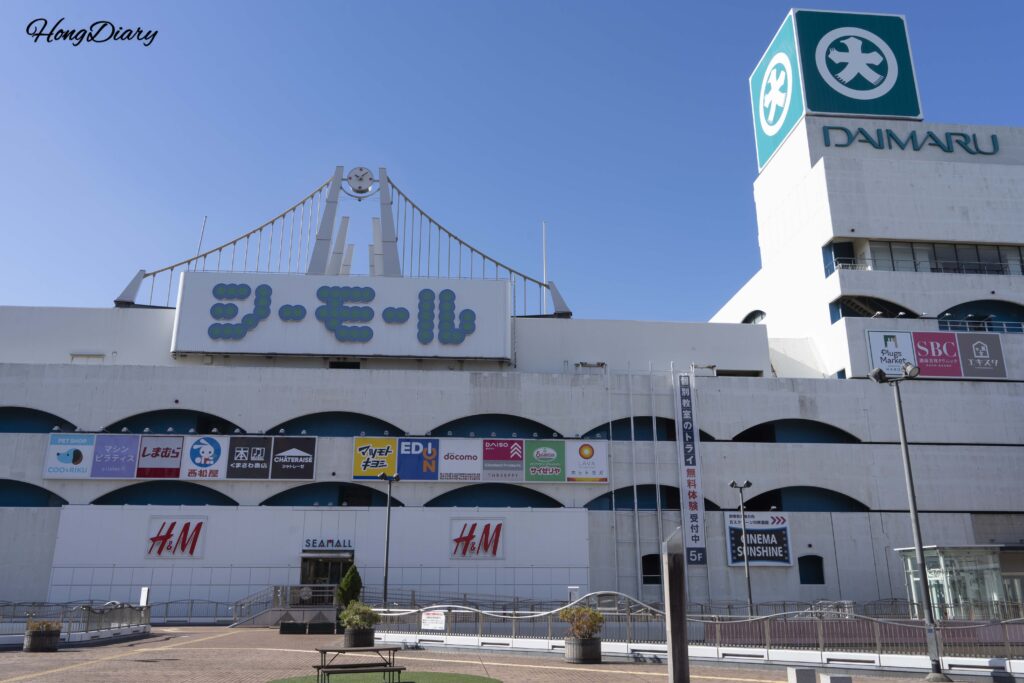
Directly adjacent to JR Shimonoseki Station — connected by the same elevated walkway you used from the ferry terminal — is Sea Mall (シーモール下関), the largest shopping center in Yamaguchi Prefecture.
| Detail | Information |
|---|---|
| Official Name | Sea Mall Shimonoseki (シーモール下関) |
| Address | 4-4-8 Takezakicho, Shimonoseki, Yamaguchi 750-0025, Japan (〒750-0025 山口県下関市竹崎町4-4-8) |
| Phone | +81 83-232-1118 |
| Hours | Shops: 10:00 AM – 7:30 PM / Food Court: 10:00 AM – 8:00 PM / MaxValu Supermarket (B1): 9:00 AM – 10:00 PM |
| Website | seamall.jp |
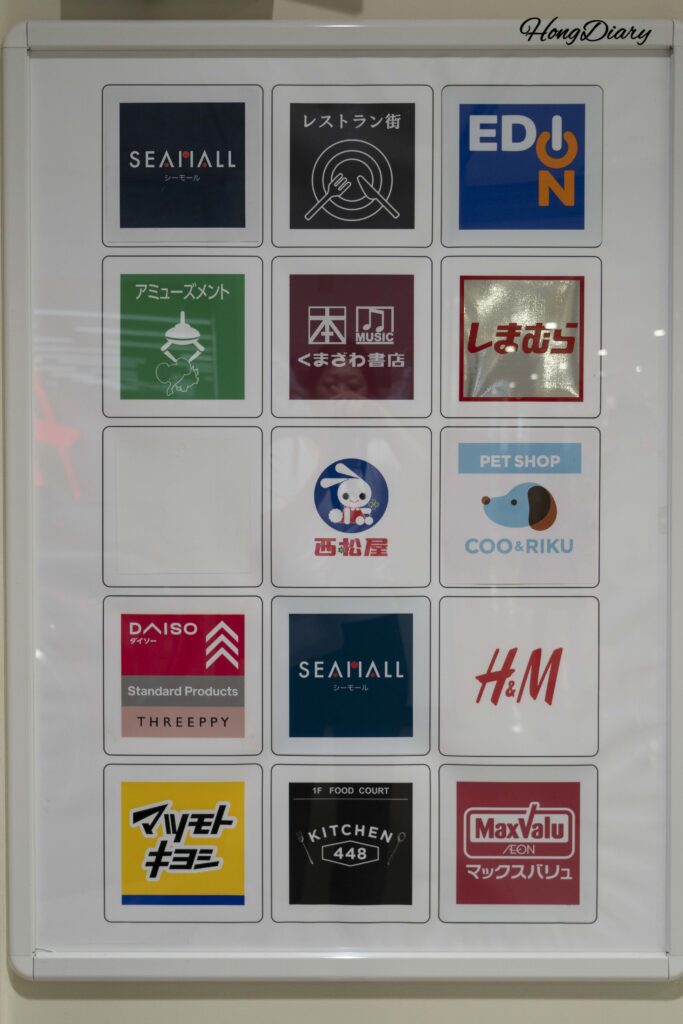
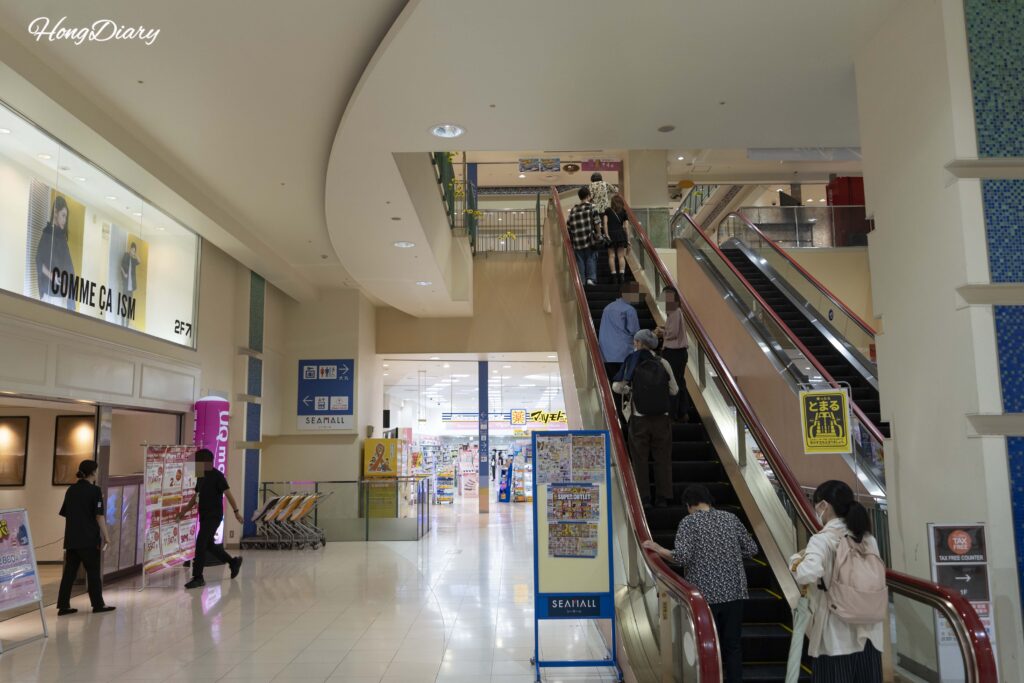
The mall opened in 1977 and the interior shows its age in places, but every shop space was occupied and the atmosphere felt active during each of my visits. Here is what stands out floor by floor:
First Floor
The ground level is where most of the practical shopping happens. Matsumoto Kiyoshi (マツモトキヨシ), one of Japan’s biggest drugstore chains, has a branch here — useful for picking up sunscreen, face masks, over-the-counter medicine, or cosmetics. Nearby, you will find Mister Donut, a beloved Japanese donut chain. I have a personal ritual of grabbing their chocolate donut coated in shredded coconut before every return ferry to Busan. Zetteria — a Japanese fast food chain serving burgers and sides — also sits on this floor.
Fourth Floor
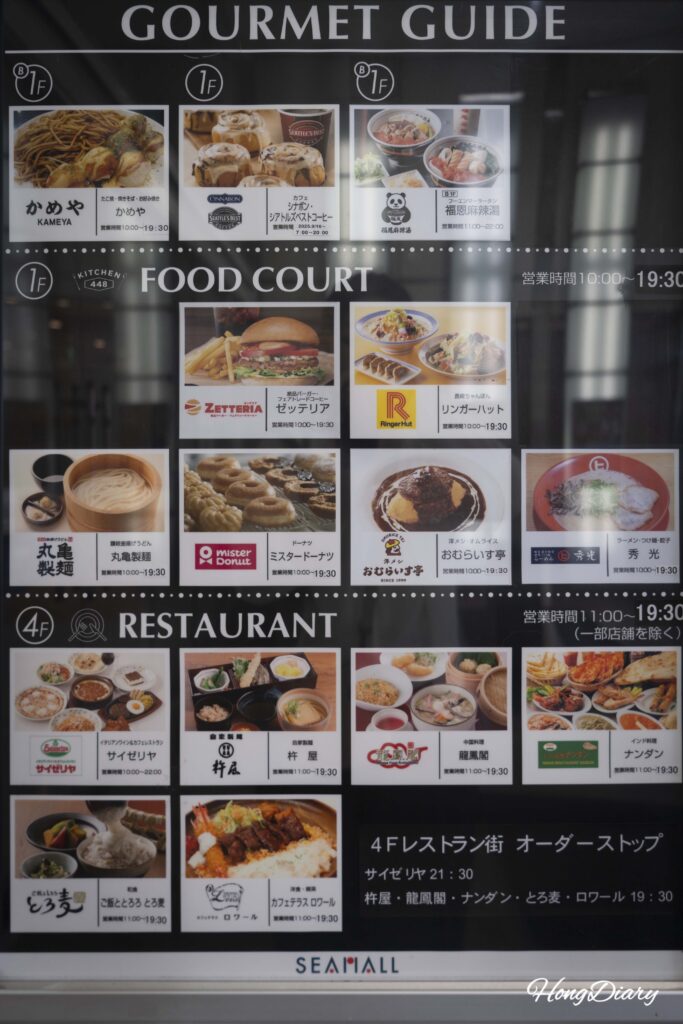
A dedicated restaurant area occupies much of this floor, open from 10:00 AM to 7:30 PM. Options range from Japanese set meals to casual chains.
Basement Level (B1)
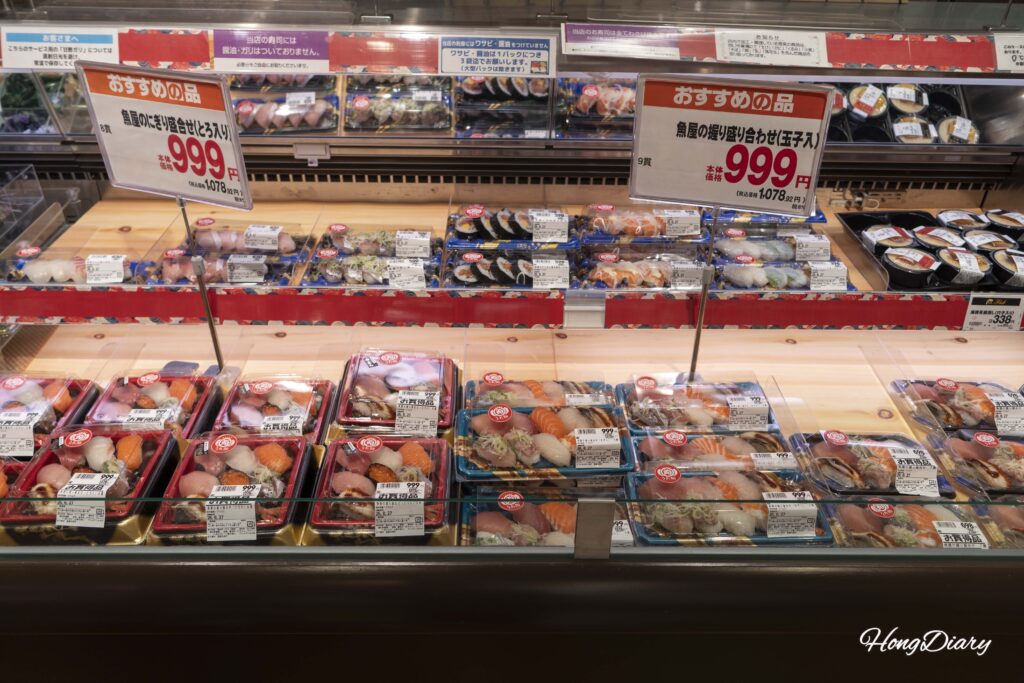
The basement houses a MaxValu supermarket, part of the Aeon Group’s chain of grocery stores found across Japan. It opens at 9:00 AM — earlier than the rest of the mall — making it one of the first places you can actually shop after an early morning ferry arrival. The prepared food section is the highlight: fresh sushi sets start from ¥999 (~$6.50 USD / ~€5.75 EUR), and you will also find bento boxes, onigiri (rice balls), side dishes, and drinks at supermarket prices. If you are boarding the evening ferry back to Busan, this is a smart place to stock up on dinner and snacks for the crossing.
Other Notable Shops
The mall also includes Daiso (Japan’s well-known 100-yen shop), Standard Products (Daiso’s more upscale lifestyle and household goods brand), H&M, SHOO·LA·RUE (a Japanese women’s fashion brand), one’s terrace (a variety goods store), and a cinema complex on the upper floors.
One important note on timing: most shops inside Sea Mall do not open until 10:00 AM. If your ferry from Busan docks around 7:45 AM, you will have roughly two hours to fill before the mall becomes accessible. The MaxValu basement supermarket at 9:00 AM and the cafes at JR Station are your best options during that gap. In my experience, Sea Mall gets the most use on departure days — when you are heading back to Busan in the evening and have the afternoon to browse and buy.
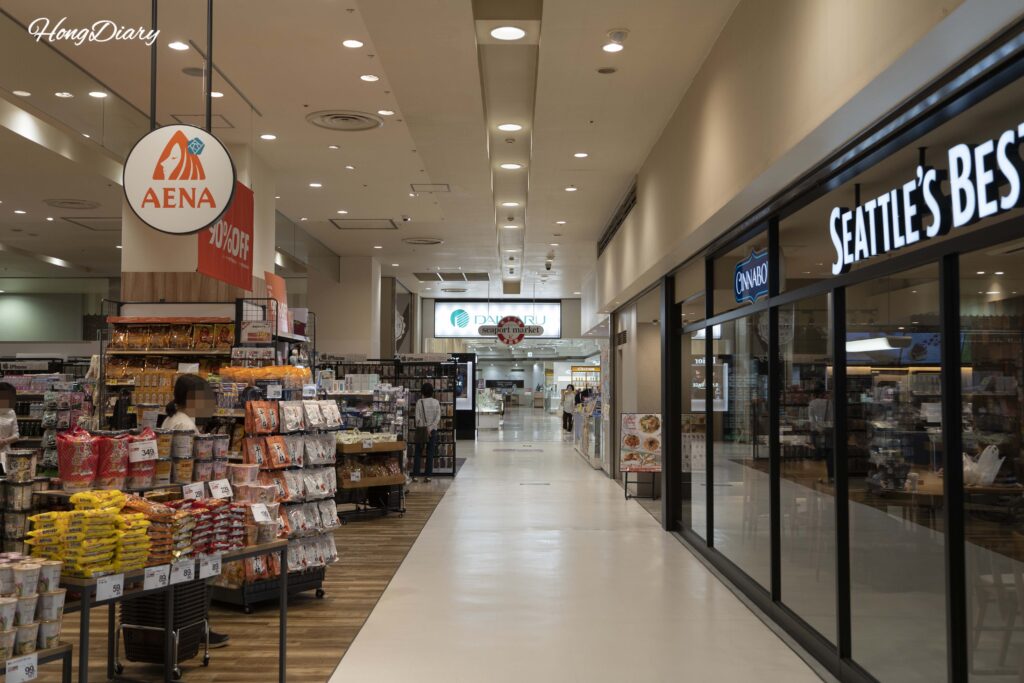
For the latest floor guide and store listings — which can shift — check the official website at seamall.jp.
Daimaru Department Store Shimonoseki
Right next door, physically connected to Sea Mall through an internal walkway, is Daimaru (大丸下関店) — one of Japan’s established department store chains with a history spanning more than 300 years. The Shimonoseki branch is smaller than its flagship locations in Osaka or Tokyo, but it carries the same standard of curated products.
| Detail | Information |
|---|---|
| Official Name | Daimaru Shimonoseki (大丸下関店) |
| Address | 4-4-10 Takezakicho, Shimonoseki, Yamaguchi 750-8503, Japan |
| Phone | +81 50-1783-1000 |
| Hours | 10:00 AM – 7:00 PM (hours may vary by floor; check before visiting) |
| Tax-Free Shopping | Available for eligible foreign visitors |
| Website | daimaru.co.jp/shimonoseki |
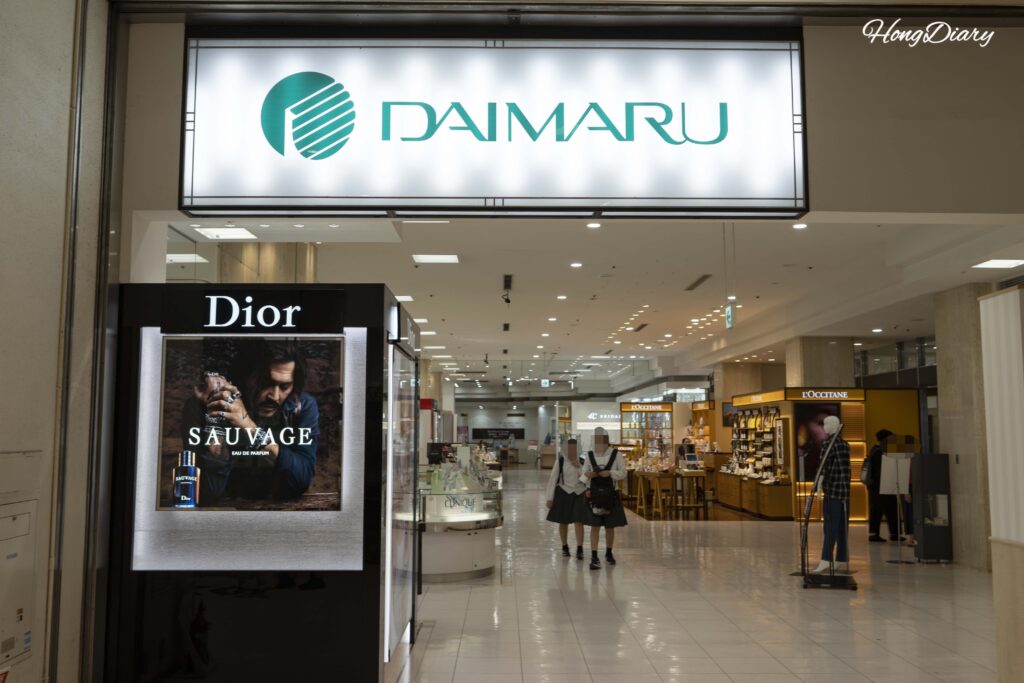
Basement Food Hall
The real reason to visit Daimaru is the basement food hall. It is organized the same way as department store food floors in Osaka or Tokyo — glass display cases filled with beautifully packaged sweets, regional specialties, and ready-to-eat items. Shimonoseki is known as the fugu (pufferfish) capital of Japan, and this food hall stocks a full range of fugu-related products: dried fugu snacks, fugu-flavored rice crackers, and fugu gift sets, all neatly boxed for souvenirs.
You will also find takeaway counters selling freshly made takoyaki (octopus balls) and fried chicken, which make for quick, affordable bites if you are in a rush before departure.
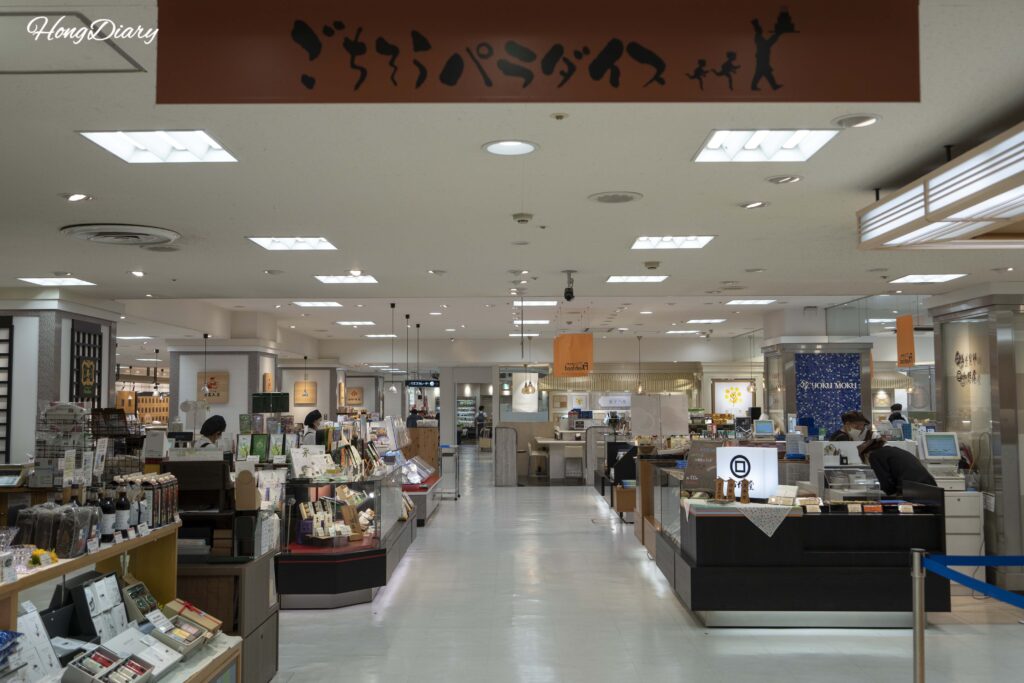
I personally skip souvenir shopping during my trips around Shimonoseki and save it all for the last stop. Between the MaxValu in Sea Mall’s basement and Daimaru’s food hall, I can pick up everything I need — snacks for the ferry, local specialties for gifts, and something warm to eat — all within a five-minute walk of the terminal.
Before You Board: Departure Checklist for the Ferry to Busan
If you are catching the evening ferry from Shimonoseki back to Busan, here is the schedule you need to work around. All times are local (Japan Standard Time, JST).
| Step | Time |
|---|---|
| Ticket and document processing deadline | 6:00 PM |
| Boarding procedure | 6:00 PM – 6:30 PM |
| Final boarding deadline | 7:00 PM |
| Departure | 7:45 PM |
| Arrival in Busan (next morning) | 7:45 AM |
If you are bringing a personal vehicle, vehicle check-in runs from 3:30 PM to 4:00 PM. Oversized luggage (items over 30 kg or bulky gear like bicycles) must be checked between 3:00 PM and 5:00 PM.
Port Departure Fees
On top of your pre-booked ferry ticket, you must pay additional fees in person at the terminal counter before boarding. As of late 2026, the combined total for departure from Shimonoseki — covering the facility usage fee, fuel surcharge, and international tourist tax — comes to approximately ¥5,520 (~$35.85 USD / ~€31.90 EUR) per adult. This amount changes monthly based on fuel surcharge adjustments, so always check the latest figures on the Pukwan Ferry official website before your trip.
These fees can only be paid in Japanese yen, in cash. Credit cards and foreign currency are not accepted. Make sure you have enough yen on hand before arriving at the counter.
Food for the Crossing
Outside food is allowed on board, and I recommend taking advantage of that — especially if your sailing is on the Seonghee. Two ships alternate on this route daily: the Seonghee and the Hamayuu. Their onboard facilities differ significantly. The Seonghee’s dining room serves a limited menu centered on Korean-style dishes like pork stir-fry, which may not appeal to every palate. The Hamayuu offers a wider selection, including karaage (Japanese fried chicken) set meals, kimchi jjigae (Korean kimchi stew) sets, curry, aji fry (deep-fried horse mackerel) platters, udon, and onigiri. On Hamayuu sailings, I typically eat onboard without bringing extra food; on Seonghee nights, I always grab a bento or sushi set from MaxValu and a donut from Sea Mall beforehand.
The two ships also have different cabin layouts — the Seonghee uses traditional Japanese-style floor rooms where you sleep on futon mats laid on tatami rather than in raised beds, while the Hamayuu has more conventional berth-style cabins.
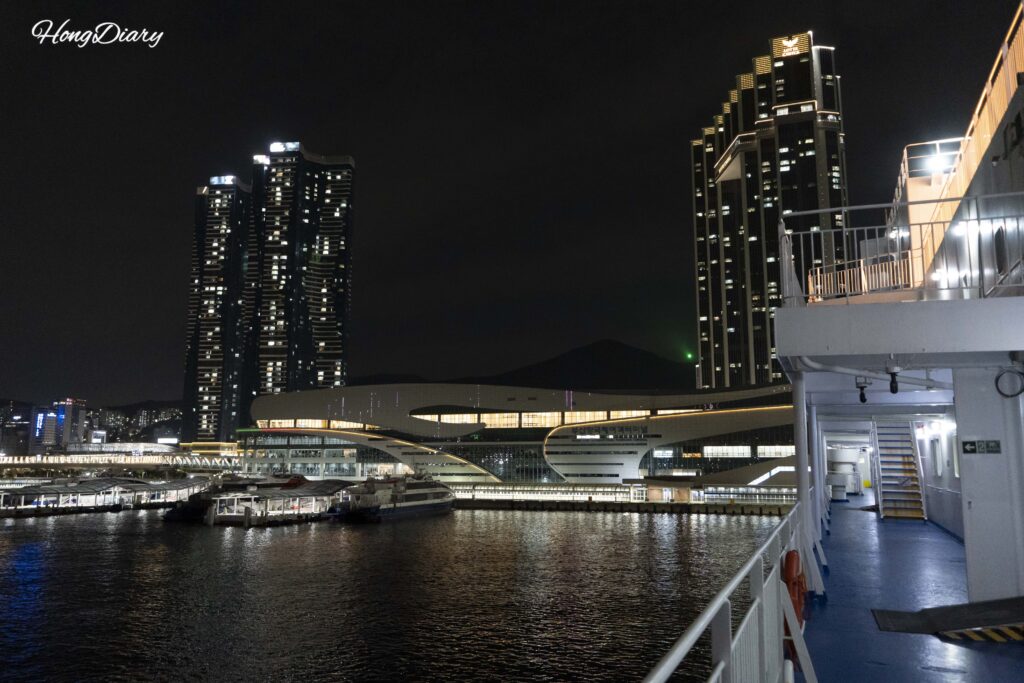
If you want to see what the Seonghee experience is actually like — cabin layout, pricing across all room classes, onboard facilities, and what to expect during the overnight crossing — I put together a detailed review: Busan to Shimonoseki Ferry: Cabins, Costs, and Everything Nobody Tells You.
Wrapping Up
Shimonoseki is not a city that overwhelms you with attractions. There is no sprawling theme park, no neon-lit entertainment district, no must-see temple that every guidebook insists on. What it offers instead is a slower, more honest version of Japan — one where the Kanmon Straits glitter outside a quiet observation deck, where a department store basement still feels like a neighborhood gathering spot, and where an entire morning can pass comfortably between a ¥999 sushi tray and a walk along an empty overpass.
Every time I visit — and after ten-plus years, I have lost count of how many trips that adds up to — the city stays in my head longer than I expect it to. If you are passing through Shimonoseki by ferry and treating the terminal area as nothing more than a transit stop, I hope this Shimonoseki ferry terminal area guide helps you see there is more here than a walkway between a boat and a train.
Shimonoseki Ferry Terminal FAQ: Luggage Storage, Port Fees, and Boarding Tips
How far is it from Shimonoseki Port International Terminal to JR Shimonoseki Station?
The walk takes about seven minutes. An elevated pedestrian walkway connects the terminal’s second floor directly to the JR station area, staying above street level the entire way. The path is flat and paved, so you can roll a suitcase without encountering stairs or road crossings. Note that the walkway is open-air with no roof, so carry an umbrella if rain is expected.
Can I store luggage at the Shimonoseki ferry terminal?
Yes. A temporary luggage storage area is located on the second floor of the terminal, to the left of the Kampu Ferry ticket counter. It is an open area — not coin lockers — where you place your bags yourself. There is no attendant, so keep valuables and important documents with you at all times. The storage area is available until 6:00 PM.
What are the departure fees when leaving Shimonoseki by ferry, and how do I pay?
As of late 2026, passengers departing Shimonoseki for Busan must pay approximately ¥5,520 (~$35.85 USD / ~€31.90 EUR) per adult at the terminal counter. This covers the facility usage fee, fuel surcharge, and international tourist tax. The total changes monthly based on fuel adjustments — check the latest amount at pukwan.co.kr before your trip. Payment is accepted in Japanese yen cash only; credit cards and foreign currency are not accepted.
What time does Sea Mall Shimonoseki open, and can I shop right after arriving on the morning ferry?
Most shops inside Sea Mall open at 10:00 AM, which means you will have about two hours to fill after a typical 7:45 AM ferry arrival. The earliest option is the MaxValu supermarket in the basement, which opens at 9:00 AM — where you can find items like fresh sushi sets starting from ¥999 (~$6.50 USD / ~€5.75 EUR). Seattle’s Best Coffee at JR Shimonoseki Station opens at 7:00 AM, making it a good place to wait with a drink until the rest of the area becomes accessible.
Is there a drugstore near Shimonoseki ferry terminal where I can buy toiletries or medicine?
Yes. Matsumoto Kiyoshi, one of Japan’s largest drugstore chains, has a branch on the first floor of Sea Mall, which is a seven-minute walk from the terminal via the elevated walkway. It carries cosmetics, sunscreen, over-the-counter medicine, face masks, and personal care items. Tax-free purchases may be available for eligible foreign visitors.
What is the difference between the Seonghee and Hamayuu ferries on this route?
Two ships — the Seonghee and the Hamayuu — alternate daily on the Busan to Shimonoseki route, and they differ in both cabin layout and dining options. The Seonghee uses traditional Japanese-style floor rooms where passengers sleep on futon mats on tatami flooring, and its onboard restaurant has a limited Korean-style menu. The Hamayuu has raised berth-style cabins and a broader dining selection including karaage (fried chicken) set meals, kimchi jjigae (Korean kimchi stew) sets, curry, aji fry (deep-fried horse mackerel) platters, udon, and onigiri. Both ships depart Shimonoseki at 7:45 PM and arrive in Busan at 7:45 AM the next morning.
How much does the observation deck at Kaikyo Yume Tower cost, and is it worth visiting?
Adult admission to the observation deck at Kaikyo Yume Tower is ¥750 (~$4.87 USD / ~€4.34 EUR). The tower stands 153 meters tall and is a 10-minute walk from JR Shimonoseki Station. The deck offers a full 360-degree view of the Kanmon Straits, the surrounding cityscape, and on clear days, the coast of Kyushu across the water. Because Shimonoseki sees relatively few tourists, the observation deck is rarely crowded — making it one of the more peaceful viewpoints you will find in Japan. Hours are 9:30 AM to 9:30 PM, with last entry at 9:00 PM.