
Gyeongju is a city where almost every attraction ties back to the Silla Dynasty. Temples, tombs, stone observatories — the list is long, and most of it is outdoors. So when the weather turned on me mid-trip and I needed a plan B, I started looking for something indoors that still felt connected to the city’s identity. That’s how I ended up at Donggungwon Gyeongju, a greenhouse botanical garden that traces its concept all the way back to the 7th century.
Donggungwon — officially called Gyeongju East Palace Garden in English — sits inside the Bomun Tourist Complex, a resort and recreation zone on the eastern edge of the city. The complex is about a 15-minute bus ride from the Gyeongju Intercity Bus Terminal (buses 10, 16, or 100-1) or roughly 30 minutes from Gyeongju KTX Station (bus 710). The garden is positioned near the entrance of the complex, close to the Bomun Lake walking trail, making it easy to fold into a broader day around the area. Gyeongju itself is about two hours from Seoul by KTX and an hour from Busan, and the Bomun area tends to be quieter than the city center around Hwangridangil and the royal tomb district.
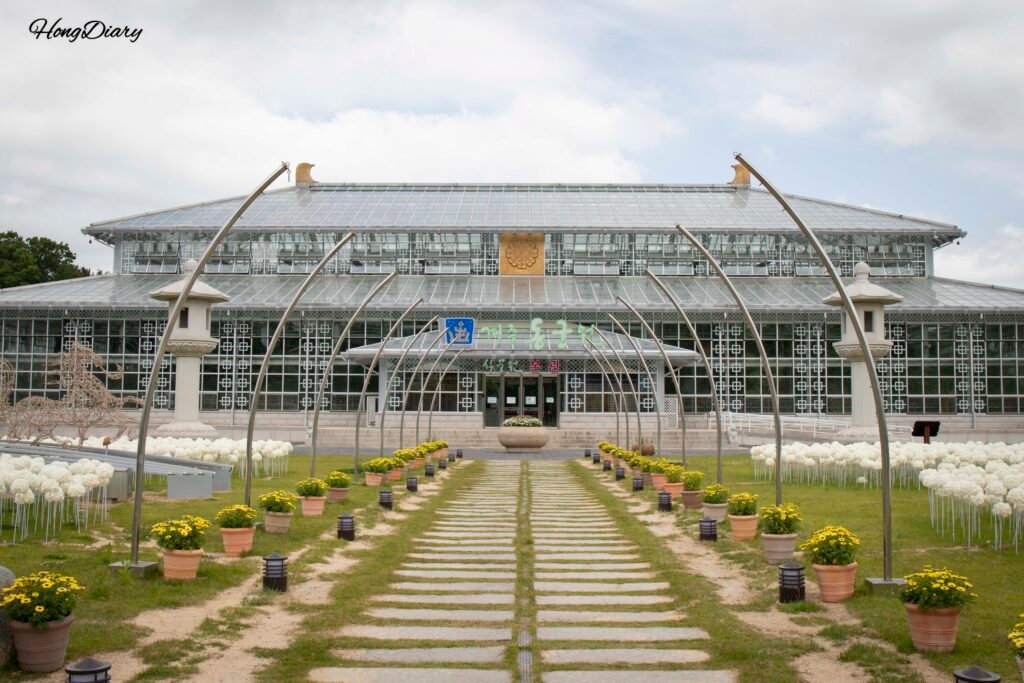
Table of Contents
Know Before You Go
| Detail | Info |
|---|---|
| Address | 74-14 Bomun-ro, Gyeongju-si, Gyeongsangbuk-do |
| Botanical Garden (Adults) | ₩5,000 / $3 USD / €3 EUR |
| Botanical Garden (Children) | ₩3,000 / $2 USD / €2 EUR |
| Bird Park — Adults (separate ticket) | ₩20,000 / $13 USD / €11 EUR |
| Bird Park — Children (separate ticket) | ₩15,000 / $10 USD / €8 EUR |
| Hours | Botanical Garden: 09:30–19:00 / Experience Halls: 09:30–18:00 |
| Closed | Every Monday (Bird Park stays open on Mondays) |
| Parking | Free |
| Extras | Free wheelchair and stroller rental at the information desk (ID required) |
A Garden Rooted in Silla History
The connection between this garden and Gyeongju’s ancient past isn’t just marketing. According to the Samguk Sagi (the historical record of the Three Kingdoms), King Munmu of Silla ordered the creation of a garden at Donggung Palace and Wolji Pond in 674 AD, where rare flowers, trees, birds, and animals were raised together. It’s considered the earliest documented botanical garden and zoo in Korean history.
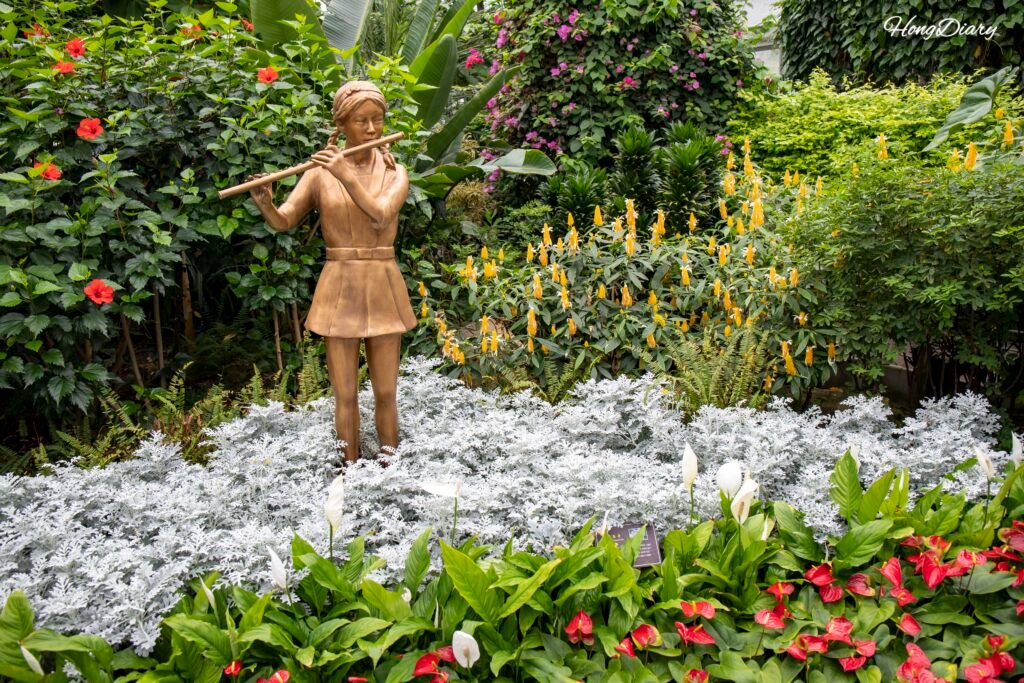
Donggungwon is the modern reinterpretation of that concept. The site used to be an agricultural experiment station and flower cultivation plot before the city of Gyeongju repurposed it into this greenhouse complex, housing over 400 plant species across Silla-style hanok buildings made almost entirely of glass. Even the small details — like a recreated Jamaejeong Well connected to the legend of General Kim Yushin, or a stream that references the ancient Anapji waterway — tie the space back to the Silla era in ways that feel specific to Gyeongju rather than generic.
Inside the Greenhouses
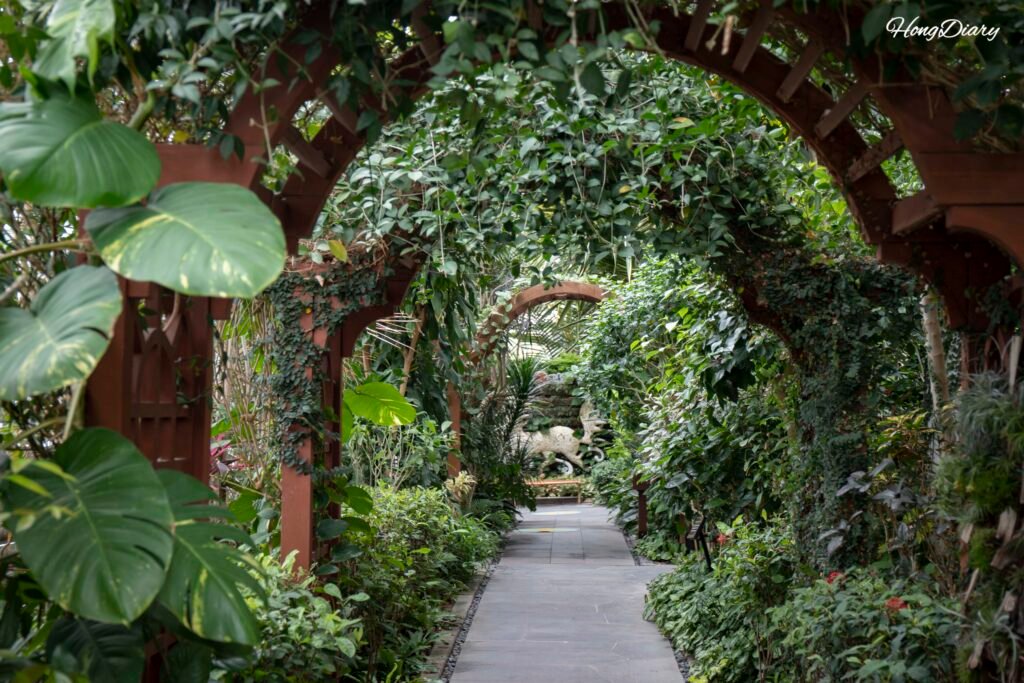
The walking route starts in Hall 2, which is split into themed sections: Palm Healing Garden, Fragrance Garden, Vine Flower Garden, Flower Festival Garden, and Healing Plant Garden. The variety here was wider than I expected — coconut palms, giant banana trees, moringa, ylang-ylang — and each plant had a small placard with its name and a brief description. Some I recognized from trips to Southeast Asia; most I’d never seen in person before.
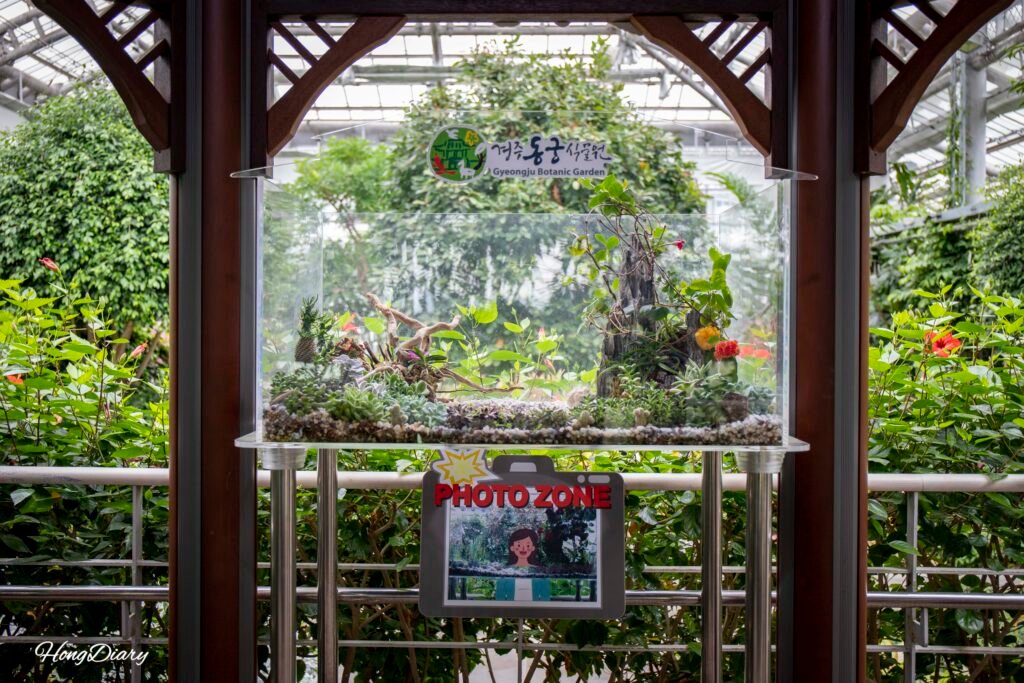
From there, the path leads into the Main Hall, which felt like a step up in both scale and curation. This section is organized into five zones: Flowering Tree Garden, Foliage Garden, Palm Garden, Tropical Fruit Garden, and Aquatic Garden. The Tropical Fruit Garden was the one that held my attention longest — rows of banana, mango, papaya, olive, coffee, mangosteen, and jackfruit trees, some with fruit still hanging from the branches. Seeing a full cluster of bananas growing overhead instead of wrapped in plastic at a grocery store hits differently.
Tucked into one corner of the Main Hall is a collection of carnivorous plants — Venus flytraps, pitcher plants, and a few species I’d never heard of. The display explains how they’re categorized by trapping method: sticky traps, snap traps, and pitfall traps. It’s a small section, but it was one of the spots where I noticed other visitors lingering the longest, leaning in close to the displays.
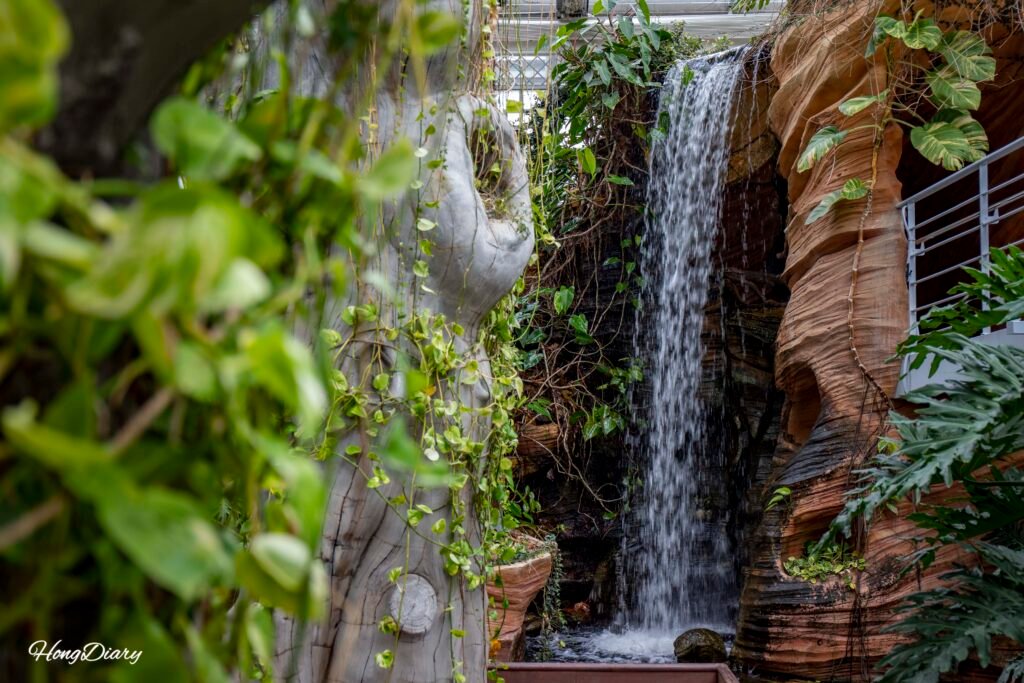
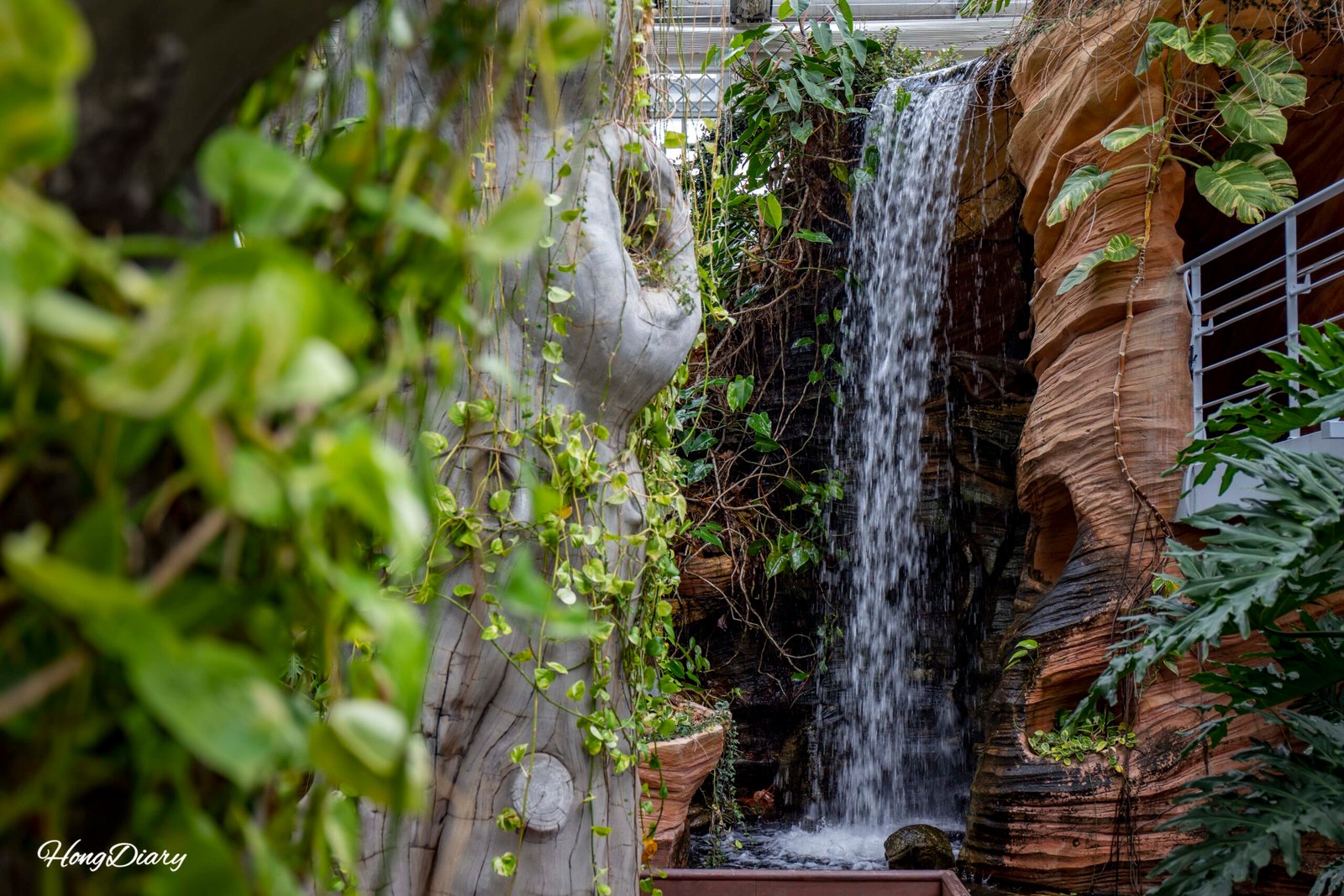
The Aquatic Garden, near the end of the Main Hall, was my favorite. An artificial waterfall runs alongside actual papyrus plants, and the sound of water after an hour of quiet greenhouse walking felt surprisingly refreshing. The stream here starts from a recreation of the Jamaejeong Well, and a nearby panel tells the story of General Kim Yushin and the well’s origins — the kind of detail that keeps the Silla thread running through the whole experience without feeling forced.
Before going outside, it’s worth picking up a Tour Book (₩2,000 / $1 USD / €1 EUR) at the entrance, Hall 3, or the Jukjirang area. It comes with a stamp trail covering 16 key plant locations throughout the garden, and if you complete all 16, you can exchange it at the information desk for a small souvenir — a seed pencil. The book also includes short stories about the Silla connections, a facility guide, and a coloring section, so it doubles as a lightweight activity for kids.
After the greenhouse walk, the route opens up to outdoor gardens and a musical fountain that runs on a fixed schedule (check the day’s times at the entrance — and note that it shuts down from December through March). I caught a show by accident and ended up sitting through the whole thing, which was a nice break before heading to the experience halls.
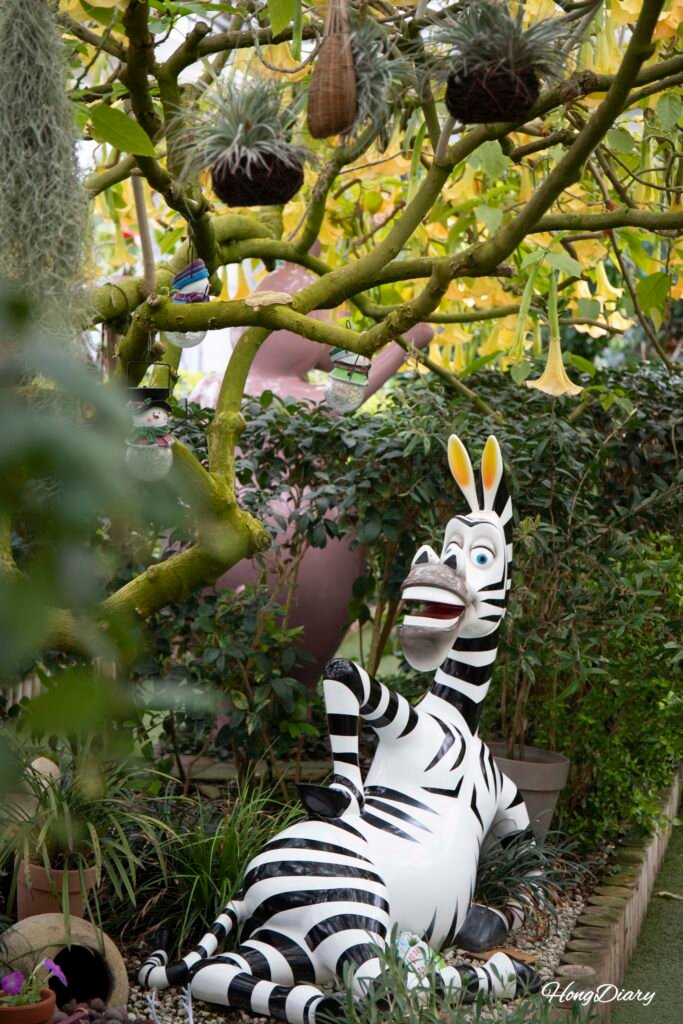
The standout among those was Hall 4, the Hide-and-Seek Garden. It’s a maze-like space filled with photo zones — angel’s trumpet flowers hanging thick from the ceiling, characters from the movie Madagascar tucked into corners — and it turned out to be where I spent the most time taking photos, even though I almost skipped it. Hall 3 houses a vine garden and insect ecology exhibit, and Hall 6 offers a flower-pressing workshop, both with separate activity fees. Hall 5 is an insect hatching facility and isn’t open to visitors.
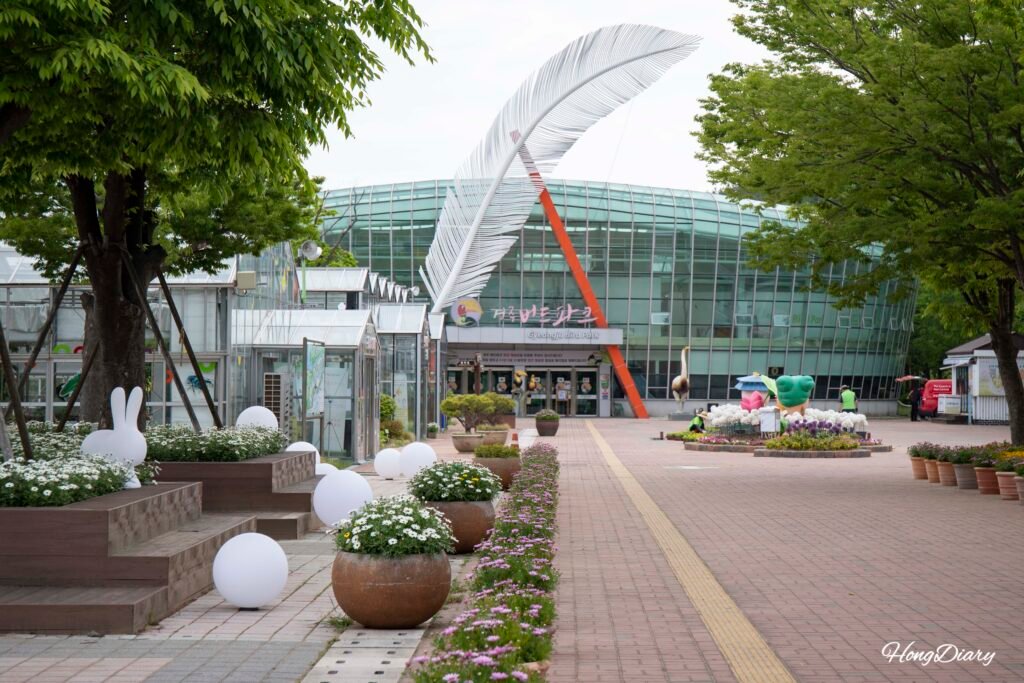
I ended up skipping the Bird Park this time. It operates on a separate ticket, and the price felt steep for a solo visit. That said, it houses 250 species and around 900 birds alongside koi, tropical fish, and reptiles, with a first-floor experience zone and a second-floor storytelling exhibit. If you’re visiting with kids, it’s probably the highlight — but as a solo traveler, I was content with the botanical garden alone.
Building a Day Around Donggungwon Gyeongju
The botanical garden and experience halls together took me about two hours at a relaxed pace, which leaves plenty of room to fill out the rest of a Gyeongju day. Because it’s entirely indoors (the greenhouses are climate-controlled year-round), Donggungwon Gyeongju works well as a morning stop on rainy days or a midday escape during summer.
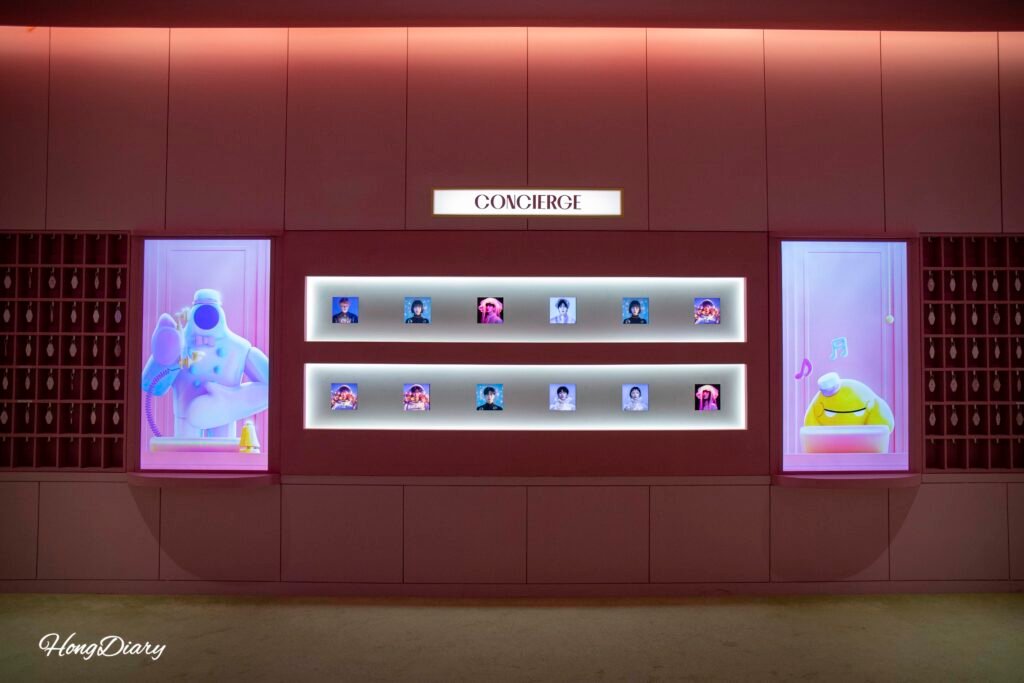
And if you’re in the mood for another indoor experience after Donggungwon, Cosmic Resort Gyeongju is an immersive media theme park that’s currently one of the most talked-about spots in the city.
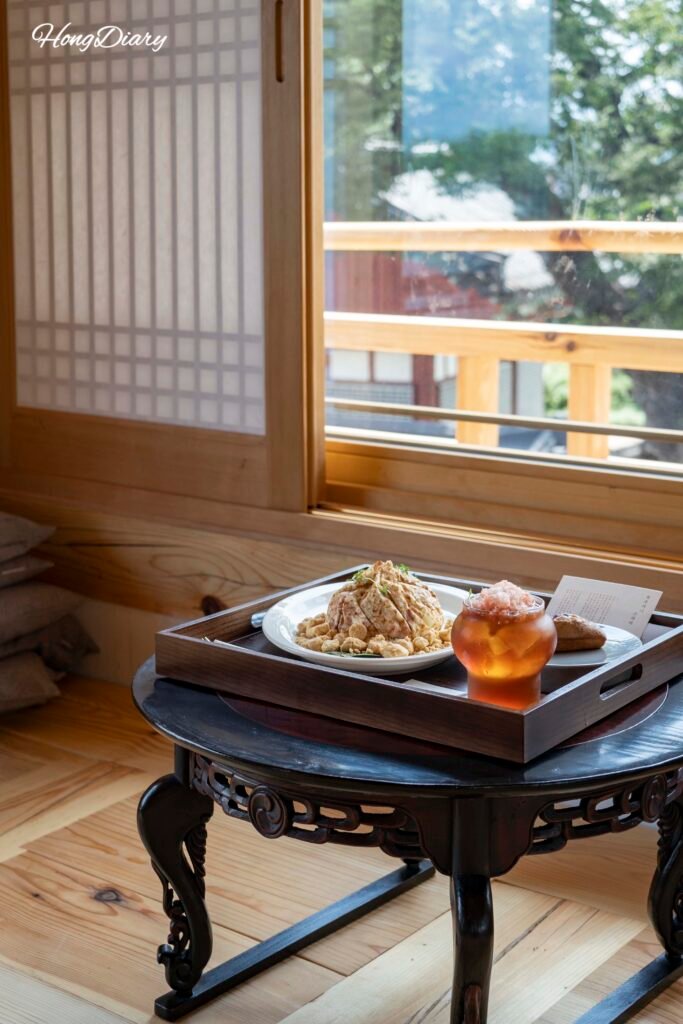
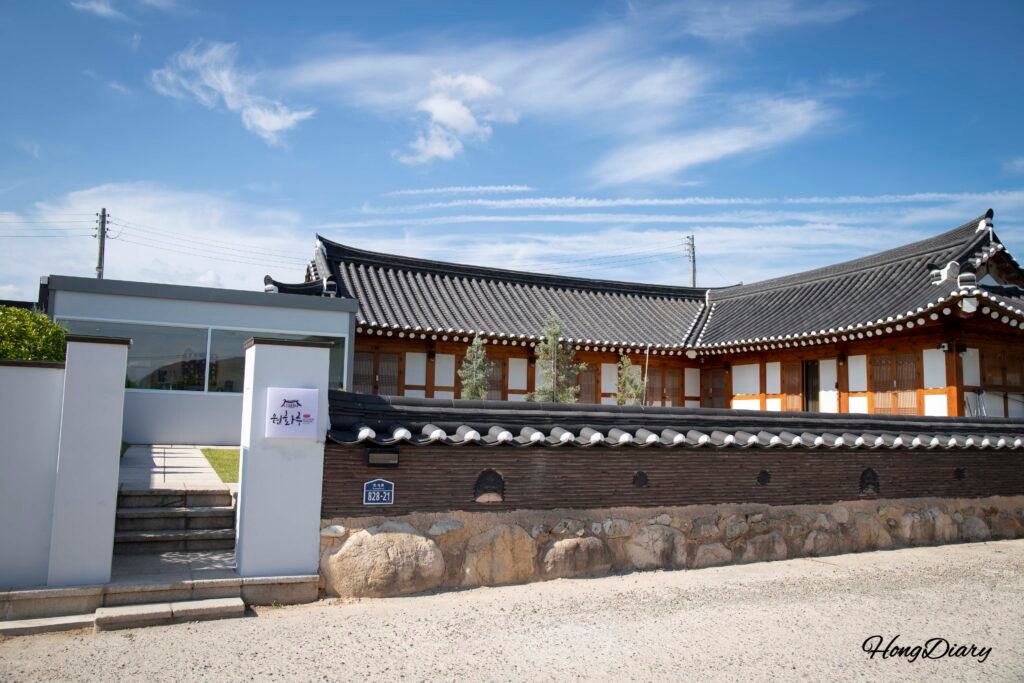
To wind down the evening, Bichae Bogette is a hanok cafe in Hwangridangil worth stopping by for the architecture alone.
Donggungwon Gyeongju isn’t the kind of attraction that makes a best-of list on its own — but as a piece of a full day in the Bomun area, especially when the weather pushes you indoors, it’s a genuinely useful stop with more depth than you’d expect from a greenhouse garden in a city known for stone and soil.
What is Donggungwon in Gyeongju?
Donggungwon, officially known as Gyeongju East Palace Garden, is a greenhouse botanical garden located in the Bomun Tourist Complex in Gyeongju, South Korea. It is a modern reinterpretation of what is considered Korea’s first botanical garden and zoo, originally established at Donggung Palace and Wolji Pond during the Silla Dynasty in 674 AD.
How much does it cost to visit Donggungwon?
The botanical garden admission is ₩5,000 ($3 USD / €3 EUR) for adults and ₩3,000 ($2 USD / €2 EUR) for children. The Bird Park requires a separate ticket: ₩20,000 ($13 USD / €11 EUR) for adults and ₩15,000 ($10 USD / €8 EUR) for children. Parking is free.
How do I get to Donggungwon from central Gyeongju?
From Gyeongju Intercity Bus Terminal, take bus 10, 16, or 100-1 and get off at the Donggungwon stop (about 15 minutes). From Gyeongju KTX Station, take bus 710 for approximately 30 minutes to the same stop. The garden is about a 50-meter walk from the bus stop.
How long does it take to visit Donggungwon?
The botanical garden and experience halls take approximately 1.5 to 2 hours at a relaxed pace. If you also visit the Bird Park, plan for an additional hour, bringing the total to around 3 hours.
What are the opening hours and closing days?
The botanical garden is open from 09:30 to 19:00 and the experience halls from 09:30 to 18:00. The garden is closed every Monday, though the Bird Park remains open on Mondays.
Is Donggungwon suitable for families with children?
Yes. The garden offers free stroller and wheelchair rental at the information desk (ID required). There is a stamp-collecting Tour Book (₩2,000 / $1 USD / €1 EUR) designed as a children’s activity, and the Hide-and-Seek Garden (Hall 4) is especially popular with younger visitors. The Bird Park, while separately ticketed, features hands-on exhibits with 250 species of birds.
Can I visit Donggungwon on a rainy day?
Yes. The main greenhouse buildings are fully enclosed and climate-controlled, making the botanical garden comfortable to visit in any weather. The experience halls (Halls 3, 4, and 6) are also indoors. Only the outdoor gardens, salamander habitat area, and the musical fountain (which is seasonal and closed December through March) would be affected by rain.