
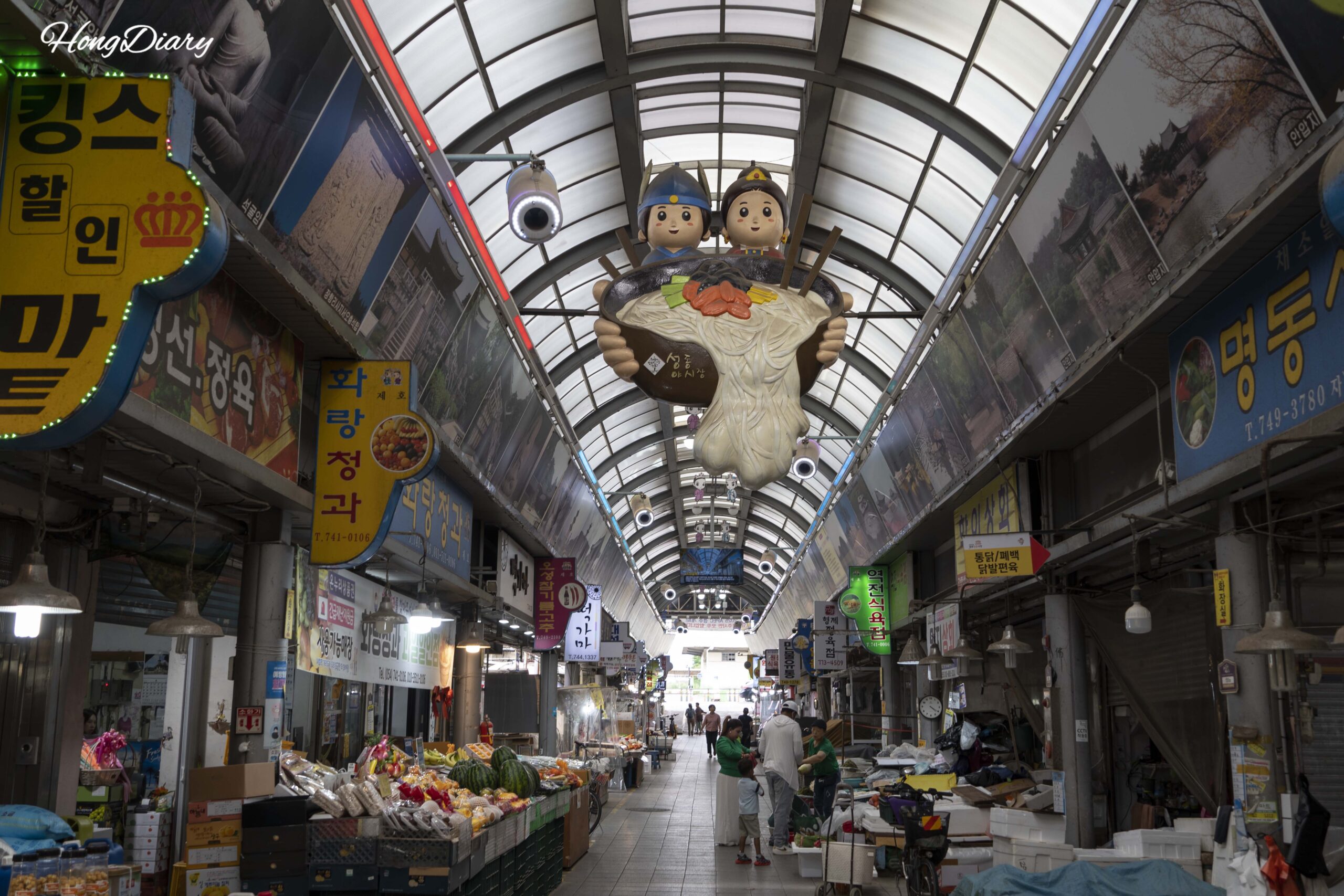
My husband and I make a point of hitting up traditional markets wherever we travel — it’s an easy way to grab a cheap, filling meal and get a feel for how locals actually live. So when he’d been scrolling through food blogs for days before our Gyeongju trip and finally looked up to say, “We have to go to Seongdong Market,” I knew there was no arguing. We were going. And honestly? He was right — what started as his pick ended up being my favorite meal of the entire trip.
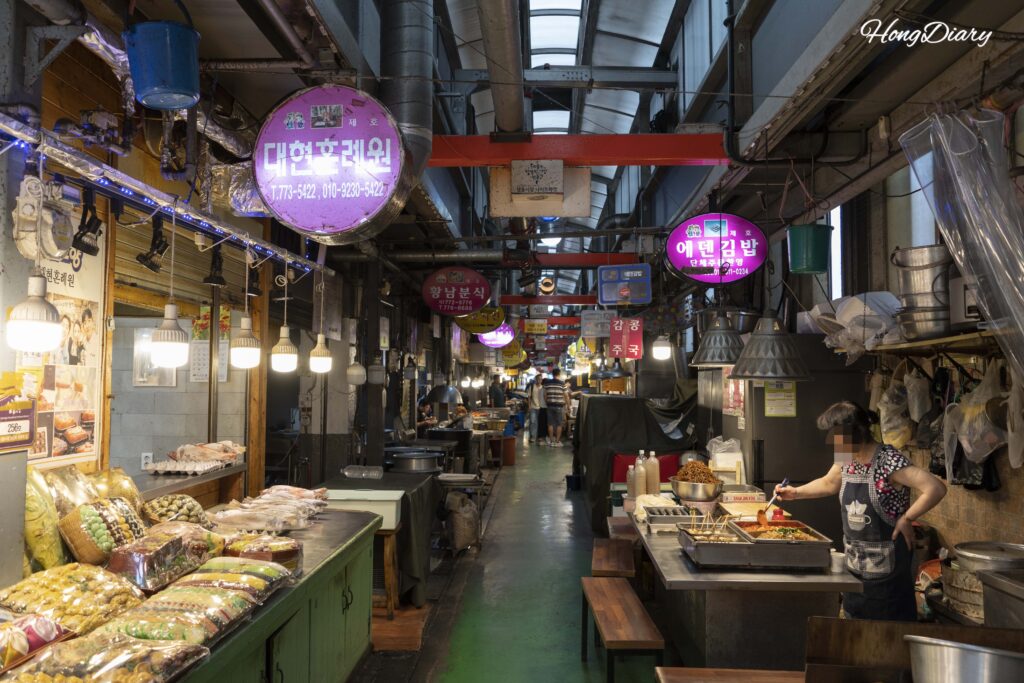
Seongdong Market sits right across from the old Gyeongju Station site in the heart of downtown, within Gyeongsangbuk-do province. The market opened in 1971 as a neighborhood marketplace serving residents of this UNESCO-listed city — the former capital of the ancient Silla Kingdom that ruled the Korean Peninsula for nearly a millennium. With roughly 300 shops and 30 street vendors packed into its covered alleys, it’s far smaller and quieter than Seoul’s Gwangjang Market or even Gyeongju’s own Jungang Market. Quite a few shops deeper inside were shuttered when we visited, so a full loop took maybe 20 minutes — but the active food stalls near the front and middle were where everything worth eating was concentrated. That locals-first atmosphere is exactly what sets it apart: you eat where Gyeongju residents actually eat, rather than where tour buses drop you off.
Table of Contents
Seongdong Market: Essential Visitor Info, Hours, and Location
| Detail | Info |
|---|---|
| Name | Seongdong Market |
| Address | 11 Wonhwa-ro 281beon-gil, Gyeongju-si, Gyeongsangbuk-do |
| Hours | 7:00 AM – 8:00 PM (individual shop hours vary) |
| From Gyeongju Intercity Bus Terminal | Bus 41 or 70 → 5 stops (~10 min) → Seongdong Market East stop |
| From Gyeongju Station (KTX) | Bus 50 or 70 → 23 stops (~30 min) → Seongdong Market East stop |
| Payment | Cash and cards both accepted; smaller stalls may prefer cash |
Burdock Kimbap — The Roll You Won’t Find Anywhere Else
The first thing that caught my eye walking into Seongdong Market Gyeongju was the burdock kimbap. Kimbap is Korea’s version of a seaweed rice roll — rice, vegetables, and fillings wrapped tightly in dried seaweed and sliced into bite-sized rounds. You’ll find it at pretty much every traditional market across the country. But here, it’s the burdock root that makes the difference.
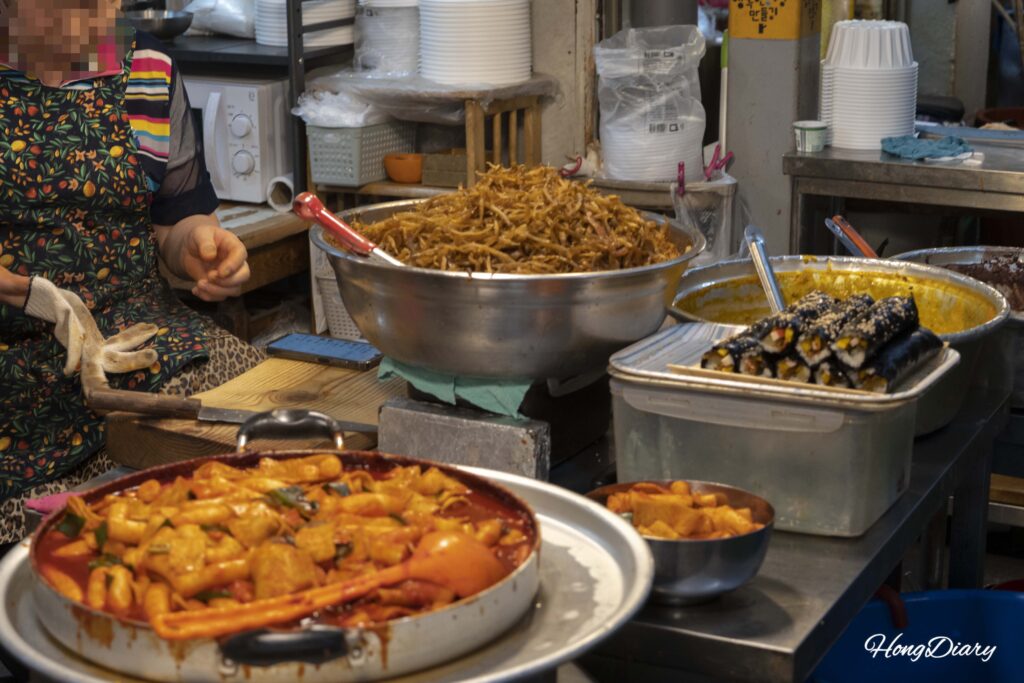
Stacks of braised burdock root — slow-cooked until sweet and earthy — sit piled high next to the rolling stations. The filling itself is minimal, but that caramelized burdock gives each piece a gently sweet, woody flavor you simply don’t get from standard kimbap rolls. Each serving comes packed into a lunchbox-style container, so it’s easy to grab and eat on the go or bring back to your accommodation for a light meal.
If you’re looking for Gyeongju’s more famous kimbap spots — Bobae Kimbap and Myeongdong Kimbap come up frequently online — those are elsewhere in the city. We skipped them this time because we were traveling with a baby, but the burdock version at Seongdong Market made it hard to feel like we missed out.
The ₩9,000 Korean Banchan Buffet — A Homestyle Feast in the Middle of a Market
Deeper inside the market, a cluster of restaurants runs a Korean banchan buffet. Banchan are the small side dishes — pickled vegetables, braised tofu, seasoned sprouts, kimchi, stir-fried anchovies, and dozens more — that come alongside any Korean meal. At these buffet spots, you grab a plate, load it up with whatever catches your eye, and the owner serves you a bowl of steaming rice and hot soup to go with it.
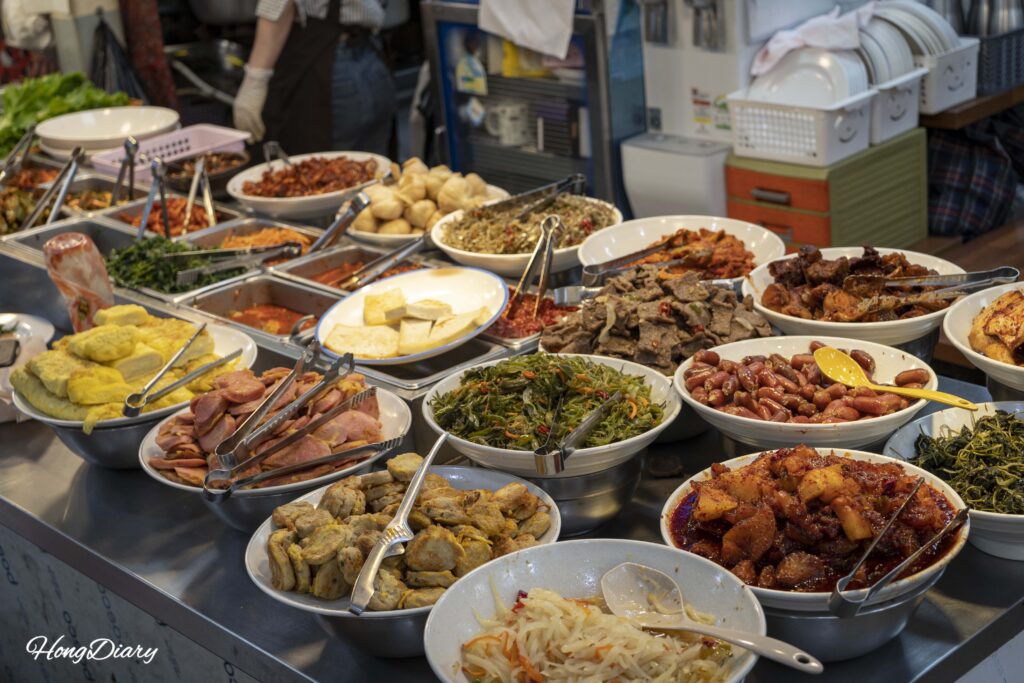
The price is ₩9,000 per person (approximately $6.00 / €5.09). For that, you get access to an enormous spread of homestyle banchan — the kind of cooking Korean grandmothers are known for. The selection changes daily depending on what’s fresh, and you can go back for seconds if one plate isn’t enough.
Most of the diners here were local residents, not tourists. A few families on vacation had clearly found the spot too, but the vibe felt more like a neighborhood cafeteria than a tourist attraction. That’s exactly what made it good — you could tell everything on those plates was made by someone who cooks the same dishes at home.
Oedong Chapssal Sundae — Why We Came and Why We Want to Come Back
This was the real reason my husband mapped out our route to Seongdong Market. Sundae (pronounced soon-deh — no relation to the ice cream) is one of Korea’s most iconic street foods. It’s a type of blood sausage made by stuffing pig intestines with glutinous rice, glass noodles, vegetables, and pork blood, then steaming everything until it firms up enough to slice. If you’ve had European blood sausage or British black pudding, the concept is similar, but the texture and flavor are distinctly Korean — lighter, chewier, and nuttier.
What surprised me was that sundae was the main event here, not just a side item. Most Korean snack bars sell it alongside tteokbokki and fried foods, but at the stalls in this part of the market, the sausage itself was front and center — and that made me curious enough to sit down and try it.
What makes sundae especially interesting for travelers is that every region in Korea makes it differently. Some areas use seafood. Others emphasize bean sprouts or perilla leaves. And the dipping sauces? They change depending on where you are in the country:
| Dipping Sauce | What It Is |
|---|---|
| Coarse salt | The simplest pairing — lets the sausage flavor come through |
| Ssamjang | A thick, savory paste made from fermented soybean and chili pastes blended with ground sesame and garlic |
| Chojang | A tangy, slightly spicy sauce made by mixing gochujang chili paste with vinegar and other ingredients |
| Saeujeot | Tiny salted fermented shrimp — briny and pungent |
Trying sundae in different Korean cities is like a built-in tasting tour, and Seongdong Market offered its own take.
Picking a Spot: Oedong Chapssal Sundae
We chose a stall called Oedong Chapssal Sundae, one of several sundae vendors inside the market. Honestly, we walked in because the owner looked welcoming — and then noticed a photo on the wall of a well-known Korean actor who’d visited, which felt like a decent endorsement. Their specialty is glutinous rice sundae, and they also offer a spicy version made with cheongyang chili peppers, one of Korea’s hottest chili varieties.
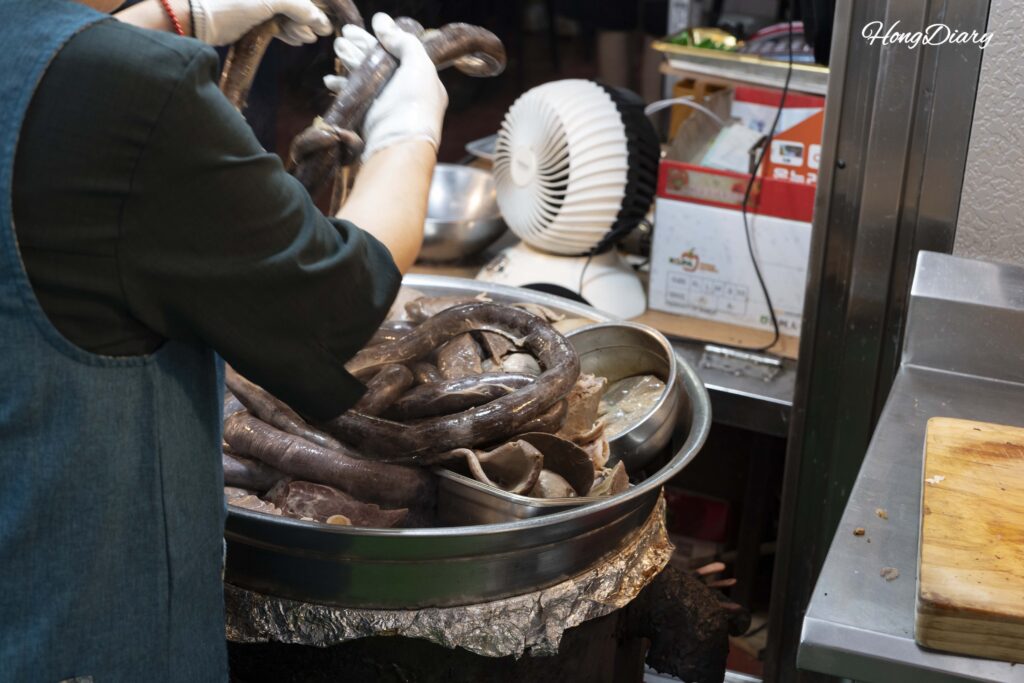
The menu board on the wall lists 5 different sundae combinations. Here are the main options:
| Menu Item | Price |
|---|---|
| Glutinous Rice Sundae Only | ₩6,000 (~$4.00 / €3.39) |
| Spicy Sundae | ₩7,000 (~$4.67 / €3.96) |
| Half & Half (Regular + Spicy) | ₩7,000 (~$4.67 / €3.96) |
| Spicy Sundae + Extra Organs | ₩7,000 (~$4.67 / €3.96) |
| Organs Only | ₩6,000 (~$4.00 / €3.39) |
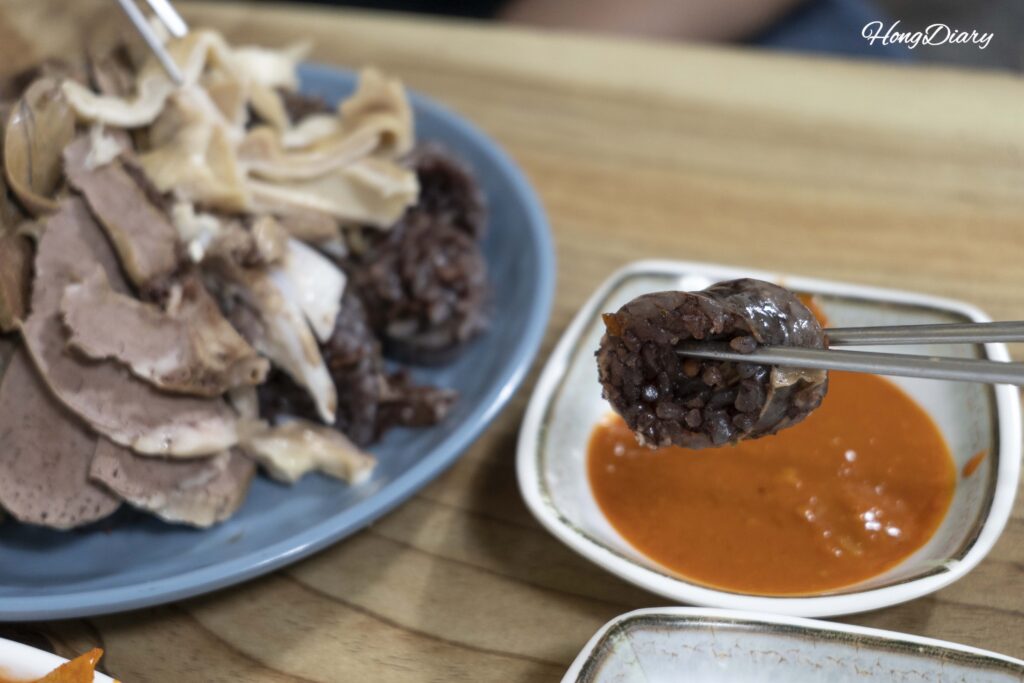
What We Ordered
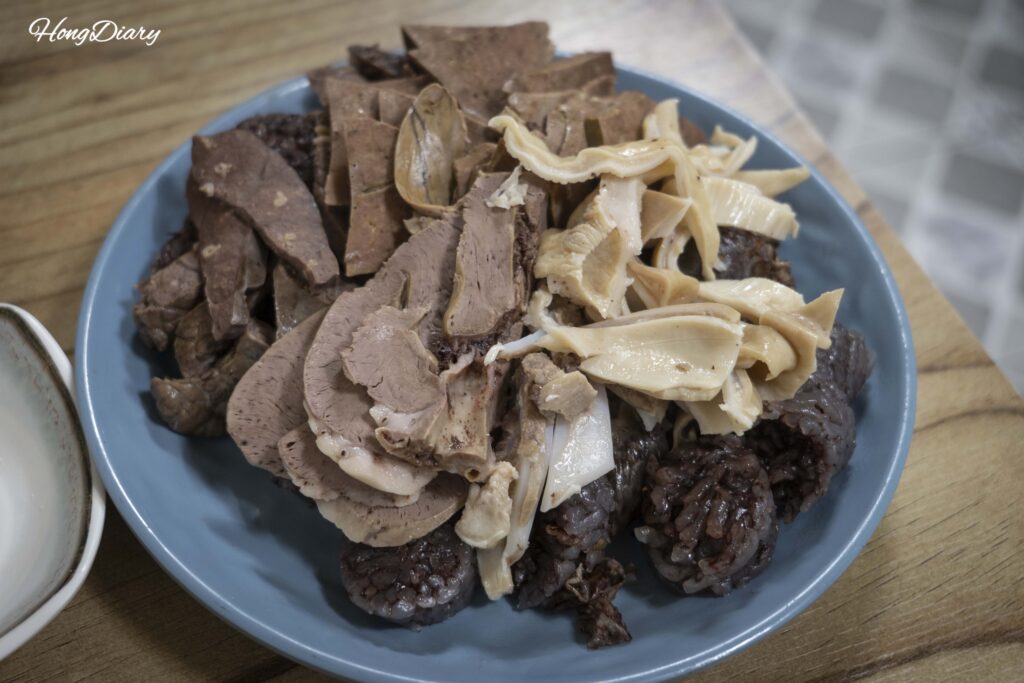
We went for the Spicy Sundae with Extra Organs at ₩7,000 (about $4.67 / €3.96). The “organs” here typically include steamed pork liver and lung — they might sound intimidating, but they’re steamed until tender and surprisingly mild. Regulars at this stall actually request extra on purpose.
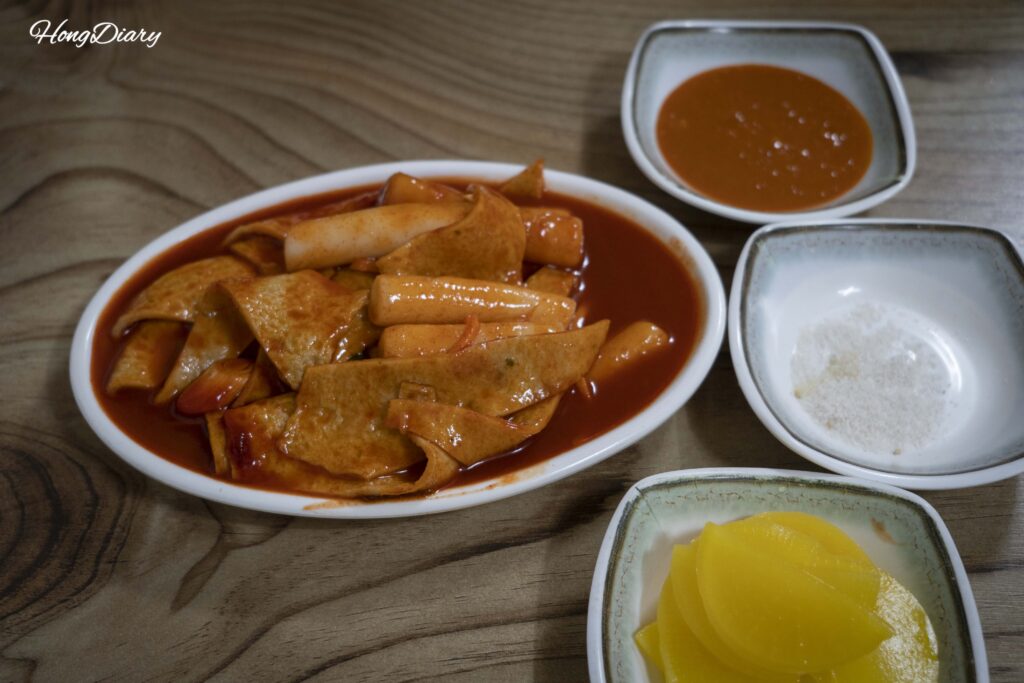
We also ordered a plate of tteokbokki on the side — chewy rice cakes simmered in a sweet-and-spicy red sauce. It’s one of the most common Korean snack foods, and it paired well with the richness of the sundae.
How It Actually Tasted
Compared to the average sundae you’d get at a typical Korean snack bar, the quality here was noticeably different. The organs tasted fresher, the casing had a better bite, and the spicy version delivered a mild but steady kick from the cheongyang chili that honestly didn’t need any extra sauce. The flavor stood on its own.
This single plate was enough to make me understand why my husband had circled this market on our itinerary. Oedong Chapssal Sundae is the kind of place you’d come back to Gyeongju for, even if you’d already seen every temple and tomb.
More Bites Around Every Corner
Beyond the three standouts above, Seongdong Market has the usual spread of Korean market snacks that make browsing fun even when you’re already full. We spotted dakgangjeong (crispy sweet-and-spicy glazed chicken bites), freshly made tteok (Korean rice cakes in various shapes and flavors), doughnuts, and grab-and-go banchan you could pack up and take back to your accommodation for a home-cooked-style dinner.
For travelers staying in a rental or guesthouse with a kitchen, the market is practical too. Meal kits, pre-packaged stews, and fresh sashimi are available to take away — so you can eat well without spending restaurant prices every night.
Parking at Seongdong Market
If you’re driving, parking is one less thing to worry about here. The market has its own parking lot, and on a weekday we had no trouble finding a spot. Rates are some of the cheapest we encountered in Gyeongju:
| Duration | Fee |
|---|---|
| First 30 minutes | ₩500 (~$0.33 / €0.28) |
| Every 10 minutes after | ₩200 (~$0.13 / €0.11) |
Even a full hour of parking runs you only about ₩1,100 (roughly $0.73 / €0.62) — less than what you’ll spend on a single roll of kimbap.
Wrapping Up — A Market Worth Showing Up Hungry For
Seongdong Market Gyeongju isn’t the kind of place that makes it onto most English-language itineraries, and that’s honestly part of what makes it worth going. It’s small enough to walk through in under an hour, but the food is distinct enough — burdock kimbap, the banchan buffet, that spicy sundae — that you’ll leave wishing you’d come hungrier.
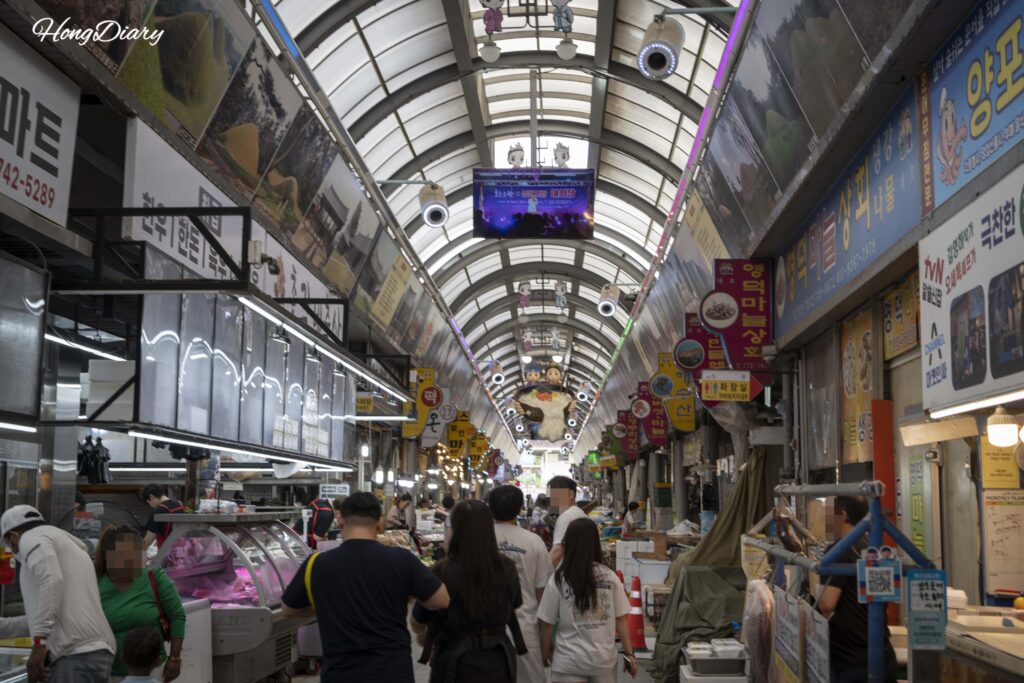
If you’re building out a longer Gyeongju trip, the city has plenty more to fill your days.
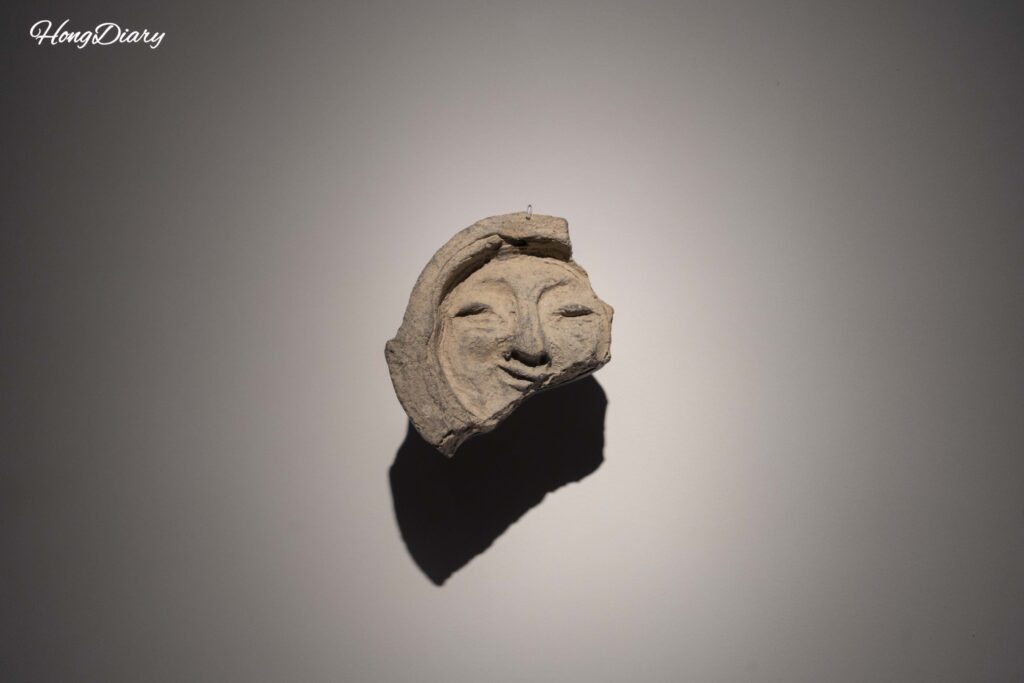
The Gyeongju National Museum houses original Silla-era gold crowns and relics that most visitors walk right past without realizing what they’re looking at — reading up before you go makes the visit significantly richer.
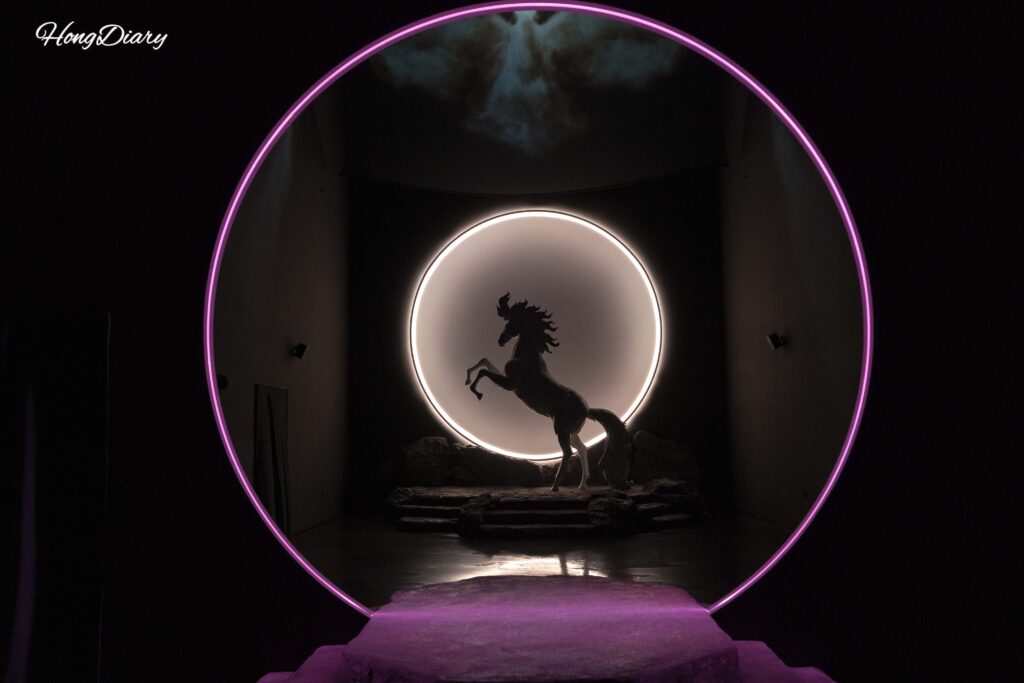
For something completely different, Flashback Gyerim is a 13-room immersive light exhibition in the Bomun Tourist Complex that brings Silla mythology to life through visual effects created by the team behind the Oscar-winning film Parasite.
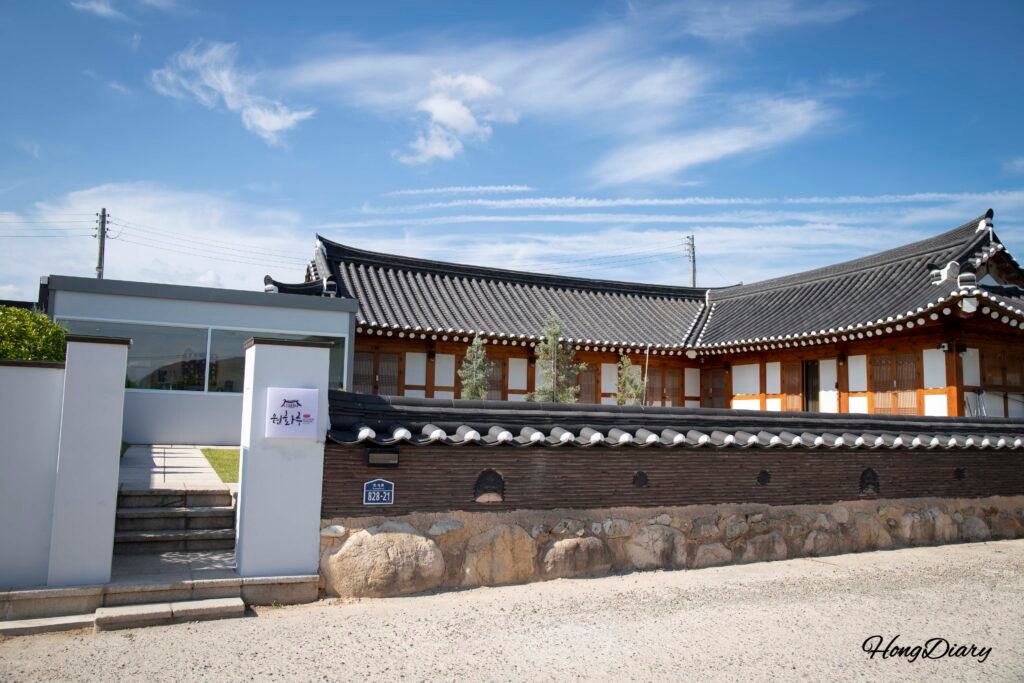
And if you need a place to stay that feels like part of the experience, Wonhwaru is a traditional hanok guesthouse with a resident cat, complimentary breakfast, and the kind of quiet you probably came to Gyeongju looking for.
However you fill your days, set aside at least one meal for Seongdong Market. The food is affordable, the atmosphere is unhurried, and you’ll eat the way locals here have been eating since 1971.
Practical Tips & FAQ: Parking, Getting There, and What to Expect
What is Seongdong Market in Gyeongju, and how is it different from Jungang Market?
Seongdong Market is Gyeongju’s largest traditional market, established in 1971 with around 300 shops and 30 street vendors. It sits across from the old Gyeongju Station site in downtown. Compared to the nearby Jungang Market, which has roughly 700 shops and draws more tourists, Seongdong Market is smaller, quieter, and more local-oriented. The food alley — featuring banchan buffets, burdock kimbap, and sundae stalls — is what most visitors come for.
What food should I try at Seongdong Market Gyeongju?
Three standouts are the burdock kimbap (seaweed rice rolls filled with sweet braised burdock root), the Korean banchan buffet where you build your own plate of homestyle side dishes with rice and soup for ₩9,000 ($6.00 / €5.09) per person, and sundae — Korean-style blood sausage. The spicy sundae at Oedong Chapssal Sundae, made with cheongyang chili peppers, is a local favorite and available from ₩6,000 ($4.00 / €3.39).
What is sundae, and is it safe for tourists to eat?
Sundae (pronounced “soon-deh”) is a Korean blood sausage made by stuffing pig intestines with glutinous rice, glass noodles, vegetables, and pork blood, then steaming it. It’s one of Korea’s most popular street foods, eaten by people of all ages. The sausage is fully cooked before serving and widely available at markets and restaurants across the country. Each region in Korea has its own variation and preferred dipping sauce, from coarse salt to fermented shrimp paste.
How do I get to Seongdong Market from Gyeongju Station or the Bus Terminal?
From the Gyeongju Intercity Bus Terminal, take Bus 41 or 70 for five stops (about 10 minutes) and get off at Seongdong Market East. From Gyeongju Station (KTX high-speed rail), take Bus 50 or 70 for 23 stops (about 30 minutes) and get off at the same stop. The bus terminal route is significantly shorter.
Is there parking at Seongdong Market, and how much does it cost?
Yes, the market has its own parking lot. The first 30 minutes cost ₩500 ($0.33 / €0.28), with ₩200 ($0.13 / €0.11) charged for every 10 minutes after that. A full hour costs roughly ₩1,100 (about $0.73 / €0.62). On weekdays, spots are generally easy to find.
What are the operating hours of Seongdong Market?
The market is open daily from 7:00 AM to 8:00 PM, though individual shop hours vary. Food stalls tend to be busiest during lunch, while produce vendors open earlier in the morning. Visiting on weekdays usually offers a calmer experience with shorter waits at the food stalls.
Can I use credit cards at Seongdong Market, or do I need cash?
Both cash and cards are accepted at Seongdong Market. Larger shops and restaurants generally take credit and debit cards without issue, while some smaller stalls and street food vendors may prefer cash. Bringing Korean won in small bills is still a good idea for quick purchases like kimbap, sundae, and individual snacks.